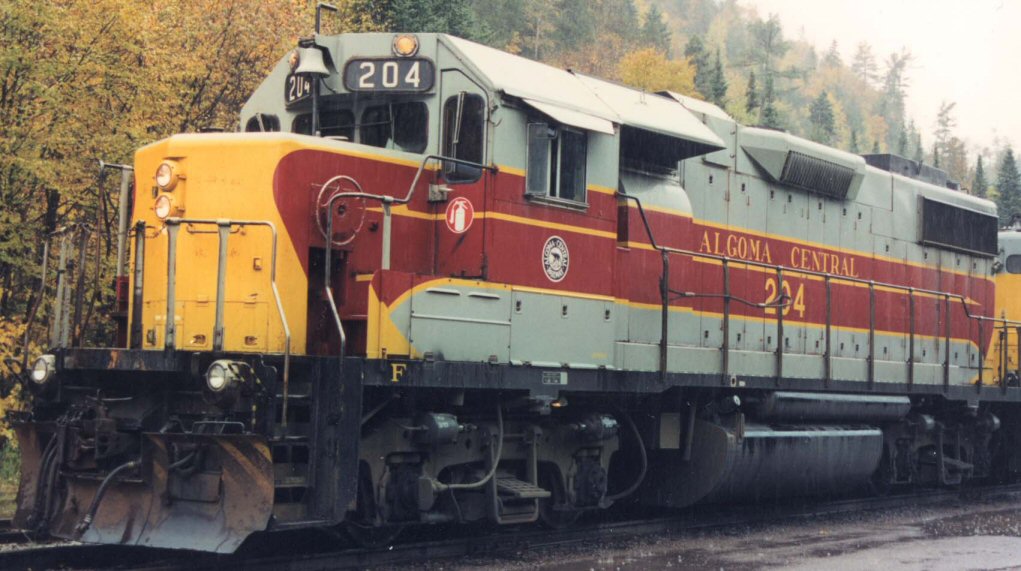




 Available Models Lettered For the ACR
N Scale - HO Scale - Other Scales
This is a list of commercially available models available in either ready to run or "shake the box" kit
form, lettered for the Algoma Central. The models listed here
are not necessarily accurate, but some of the items listed here will be good for building a fleet of
"close-enough" stand-ins with minimum effort for a more casual modeller.
For those modellers willing to put in the extra time and effort for a really accurate fleet,
see here.
For other suggestions and discussions on accurately modelling AC equipment, and histories of the prototype, see the Equipment Guide.
Manufacturer: Atlas
Scale: N
Accuracy Rating: Good
Time Frame: 1952-1985
Atlas's GP7 represents an early "Phase I" GP7 and is perfect for an ACR model. Just minor road-specific
details like bells, horns and MU stands need to be addressed.
Model Photo
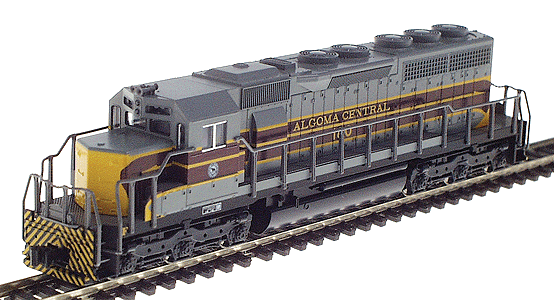
Manufacturer: Kato
Scale: N
Road Numbers: 180, 182
Accuracy Rating: Stand-in
Time Frame: 1971-1995
As with any mass-produced locomotive, there are a number of road-specific detail differences between the
commercial model
and the ACR prototype. The model is based on common US prototype features, and the AC units display common
Canadian features such as low headlights, cab front bell, snowplow, snowshields, ditch lights, Canadian style
vertical steps.
Model Photo
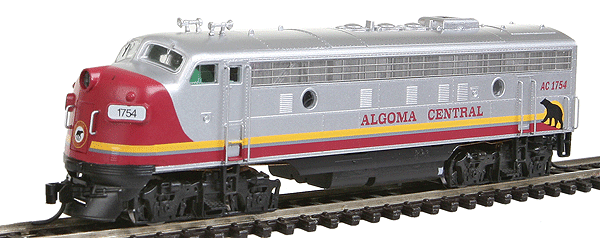
Manufacturer: Intermountain
Scale: N
Road Numbers:
Accuracy Rating: Stand-In
Time Frame: 1995-2002
The real ACR units were FP9 version which were 4' longer in the body than an F9.
Model Photo
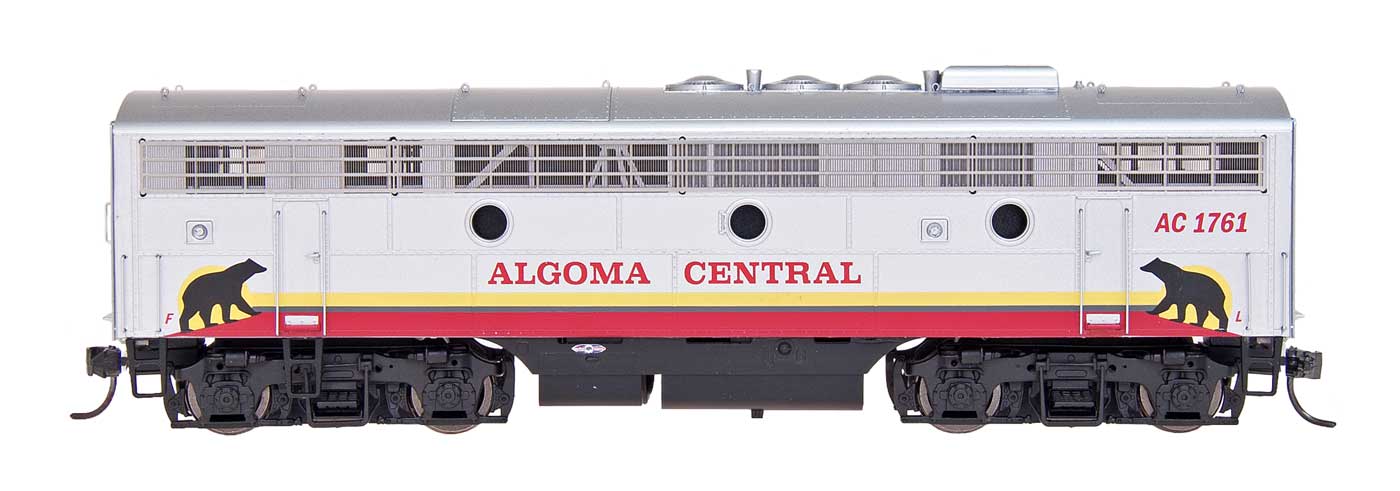
Manufacturer: Intermountain
Scale: N
Road Numbers:
Accuracy Rating: Good
Time Frame: 1995-2002
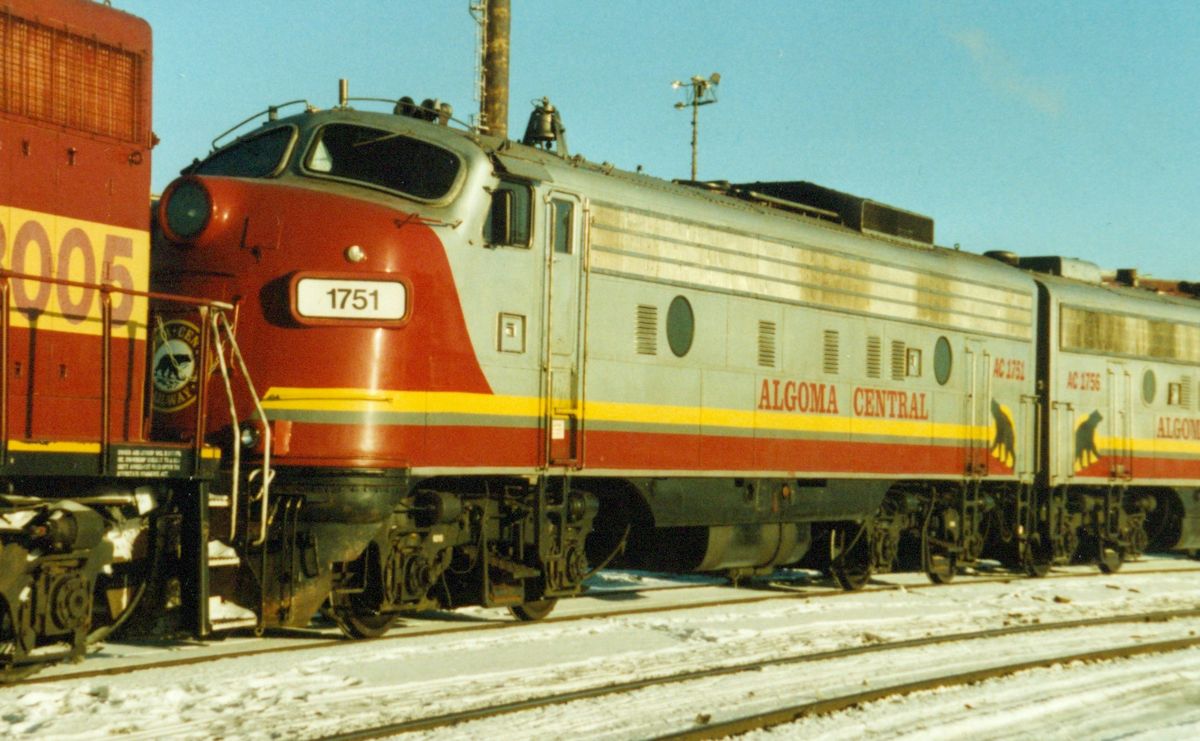
Prototype Photos
Manufacturer: Rapido Trains
Scale: HO
Road numbers: 1750, 1754, 1755
Accuracy Rating: Excellent
Appropriate Era: 1995-2001
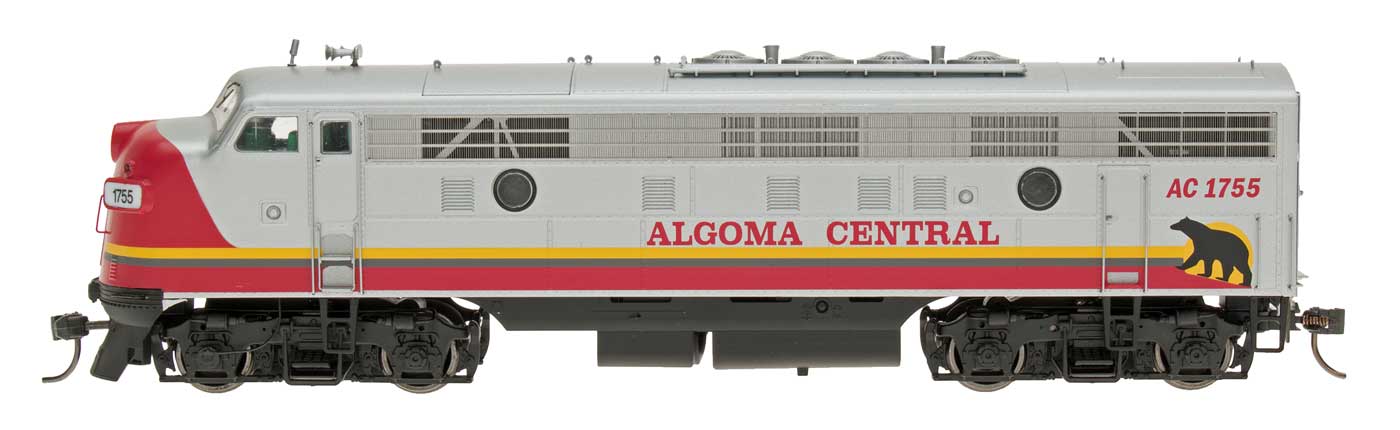
Rapido's model is specifically based on the GMDD built FP9s owned by CN and loaded with road-specific
details. These models feature accurate road number specific details for each unit represented.
Model Photo
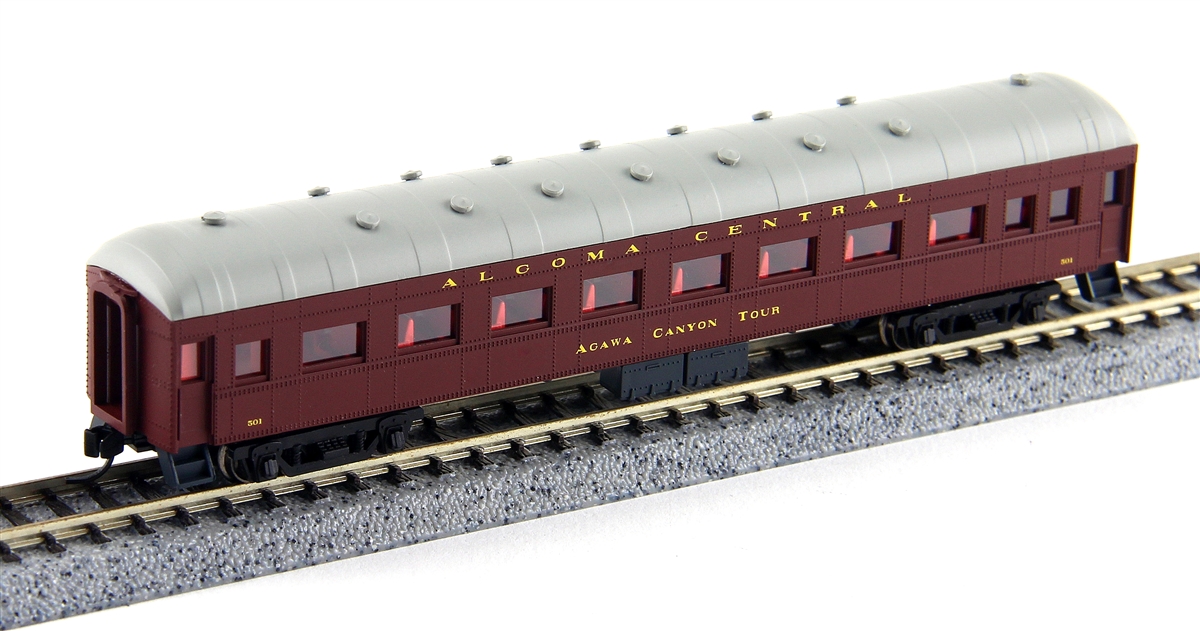
Manufacturer: Wheels of Time
Scale: N
Road Numbers: 501
Accuracy Rating: Stand-in
Time Frame: 1960s-1990?
Model Photo
Prototype Photo
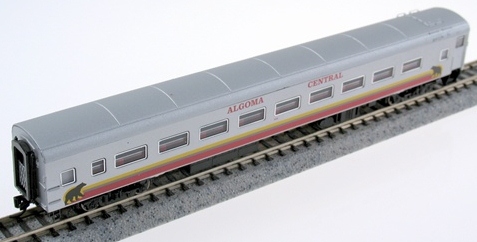
Manufacturer: Rapido Trains
Scale: N
Road Numbers:
Accuracy Rating: Excellent
Appropriate Era: 1992-present
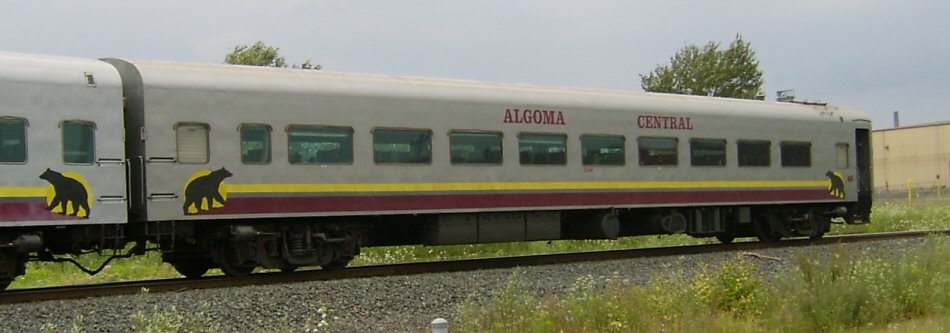
The Rapido coach is based on a CNR prototype, and the cars currently operated by the ACR are ex-VIA,
originally CN coaches of the same prototype. So Rapido's cars are dead-on in terms of detail..
Model Photo
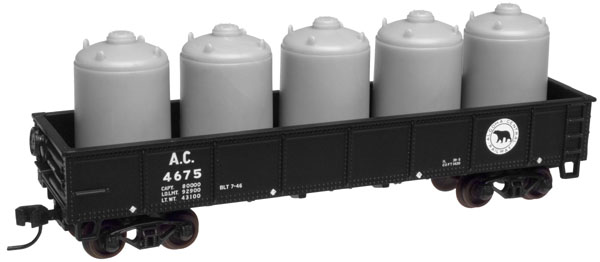
Manufacturer: Atlas (TrainMan)
Scale: N
Accuracy Rating: Stand-in/Poor
Time Frame: 1950s-1970s
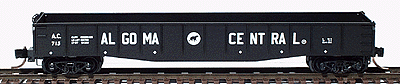
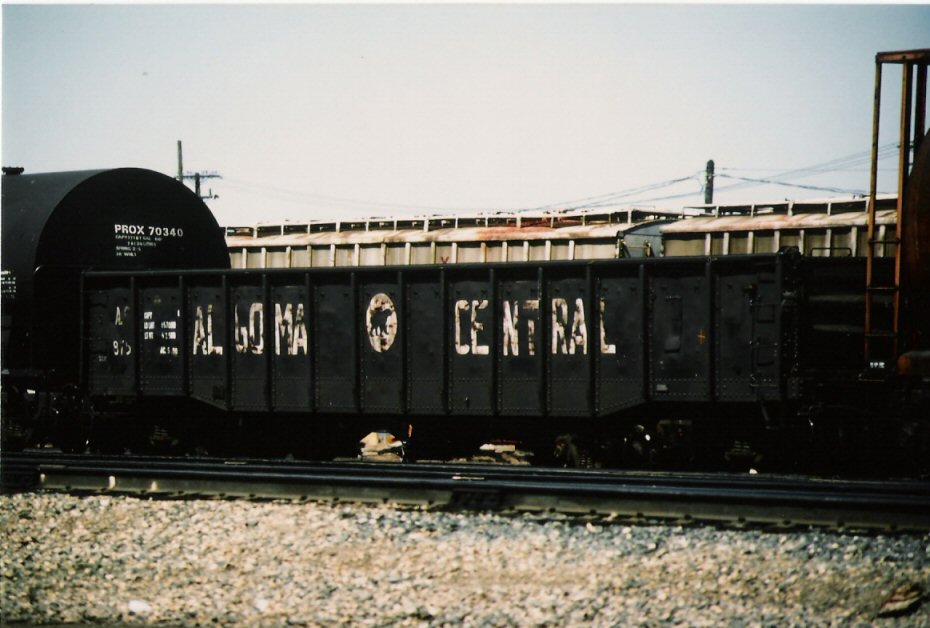
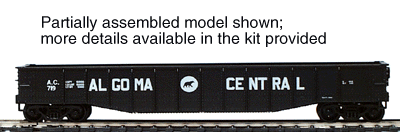
This is old Atlas train-set level tooling. The paint scheme and numbering is a decent representation of the
1960s-1970s paint scheme that was featured on the AC 4600-4800 series gondolas (their short length precluded the
post 1950s billboard style lettering), but these were custom built cars that don't bear
any physical resemblance to the model.
Model Photo
Prototype Photo
Manufacturer: Micro-trains
Scale: N
Accuracy rating: Stand-in
Time Frame: 1958-2000
Stand in for the AC 601-875 series 52' drop-end mill gondolas.
Manufacturer: Model Power
Scale: N
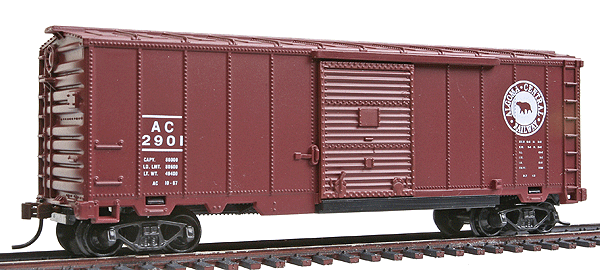
Road Number: 2901
Accuracy Rating: Stand-in
Time Frame: 1962-1970s
Only one car ever wore this paint scheme, and is represented by this car, although the model is not accurate
for the rebuilt steel boxcar.
Model Photo
Prototype Photo
Manufacturer: Micro-Trains
Scale: N
Accuracy Rating: Stand-in
Appropriate Era: 1974-1998
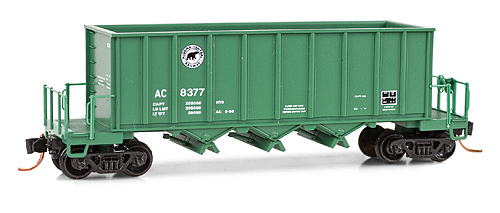
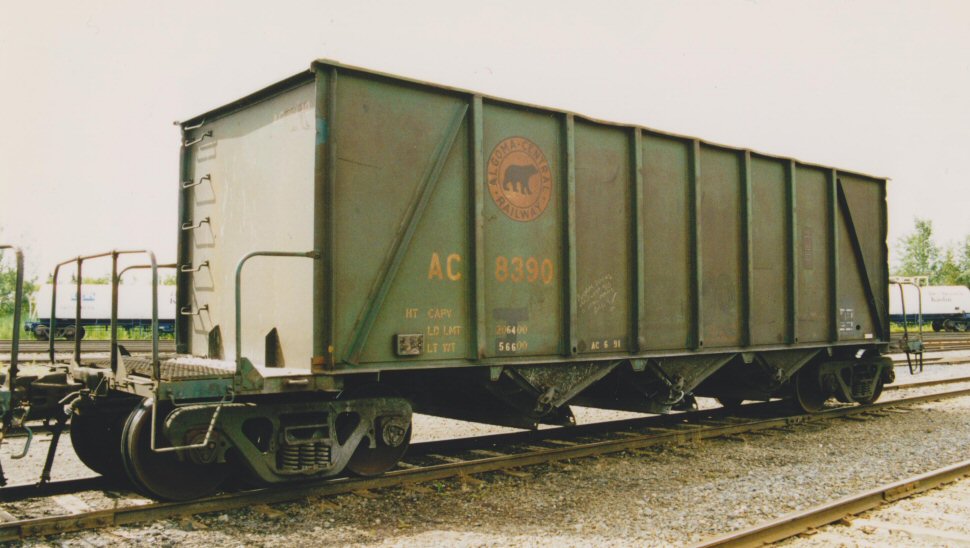
The Micro-Trains car is a slightly different Ortner body style with two outer vertical ribs instead of
diagonal braces as on the AC prototypes.
Model Photo
Prototype photo
Manufacturer: Rapido Trains
Scale: N
Road Numbers: 9607
Accuracy Rating: Stand-in/Poor
Appropriate Era: 1992-approx. 2000
Prototype photo
Manufacturer: Rapido Trains
Scale: N
Road Numbers: 9607, 9608, 9609
Accuracy Rating: Excellent
Appropriate Era: 1992-approx. 2000
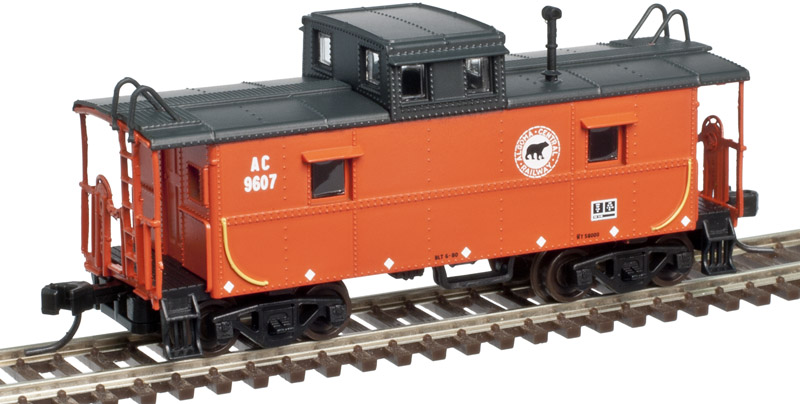
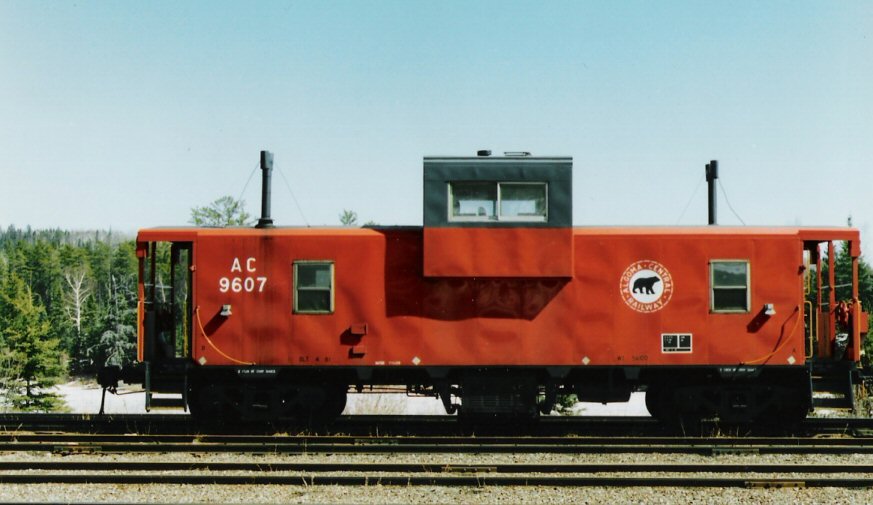
Model based on the CP prototype, lettered and accurate for AC 9607-9609 which were acquired from CP in 1992.
Model Photo
Prototype Photo
Manufacturer: Life Like (Proto 2000)
Scale: HO
Road numbers: 150, 170
Accuracy Rating: Good/Stand-in
Time Frame: 1960s-1980s
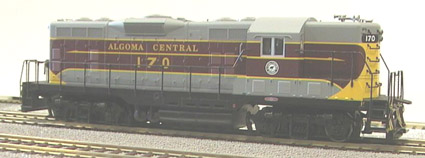
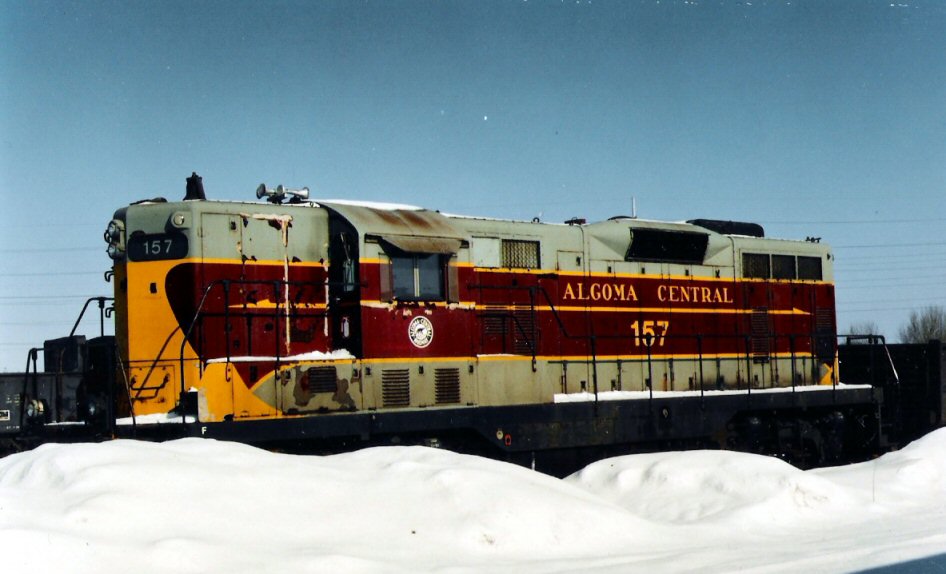
The ACR's GP7s were early "Phase I" units. The Life-Like model is a "Phase II" and has several detail
differences to the Algoma Central units. Basically, the dynamic
brake fan should be 36" diameter instead of 48" and the side sill skirts have cut-out holes where they should be
solid.
Walthers has since re-released the GP7 with the proper phase details.
This model is long out of production.
Note on time frame: the AC's GP7s were acquired in 1952, but originally had no road numbers on the sides.
The model lettering represents the 1960s+ version of the AC lettering scheme.
Model Photo
Prototype Photo
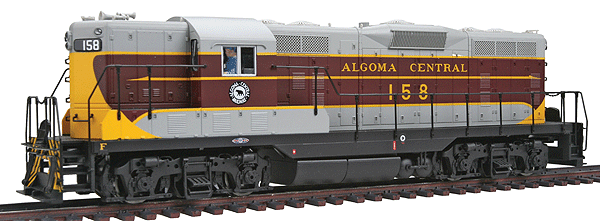
Manufacturer: Walthers (Proto 2000)
Scale: HO
Road numbers: 152, 153, 158, 161
Accuracy Rating: Good
Time Frame: 1960s-1980s
Walthers re-release of the Proto2000 model, this time as a "Phase I" model which is closer to
the AC units. Only minor details like MU connections, radio antennas and horn and bell locations would need to
be addressed.
Note on time frame: the AC's GP7s were acquired in 1952, but originally had no road numbers on the sides.
The model lettering represents the 1960s+ version of the AC lettering scheme.
Prototype Photo
Manufacturer: Atlas
Scale: HO
Road numbers: 101, 103, 104
Accuracy Rating: Good
Time Frame: 1979-1995
Note on time frame: Atlas models are lettered with road numbers for the series of units rebuilt by GMDD in
1979. Can be used for earlier time frame by renumbering.
Manufacturer: Life Like (Proto 2000)
Scale: HO
Road numbers: 172
Accuracy Rating: Good/Stand-in
Appropriate Era: 1963-1986
There are some slight differences between the
Life-Like model and the ACR units, mostly in the frame. The ACR's
GP9s were the last two GP9s ever built and they have GP20 style frames. The best way to make an accurate ACR
GP9 would be to take a factory-painted GP9 shell and mate it to a Proto2000 GP20 frame and drive.
This model is long out of production.
Model Photo
Prototype Photo
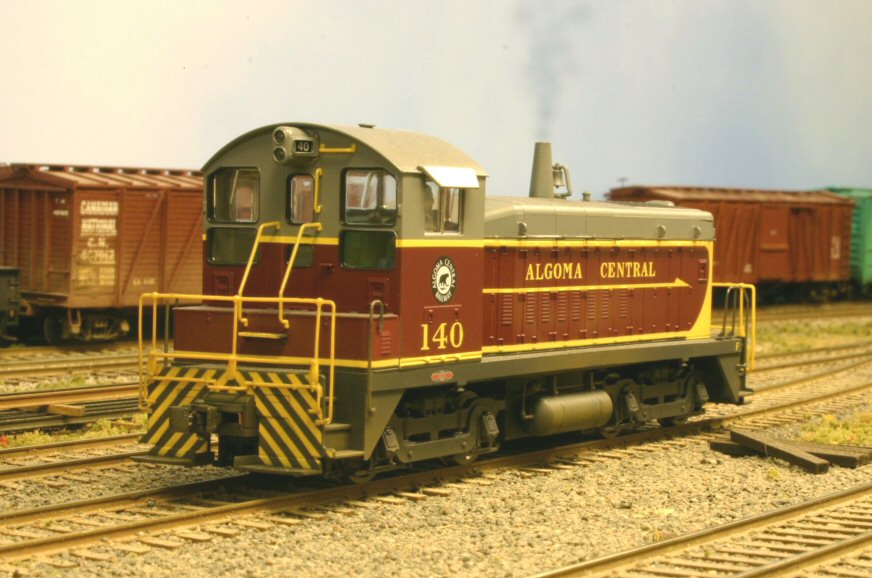
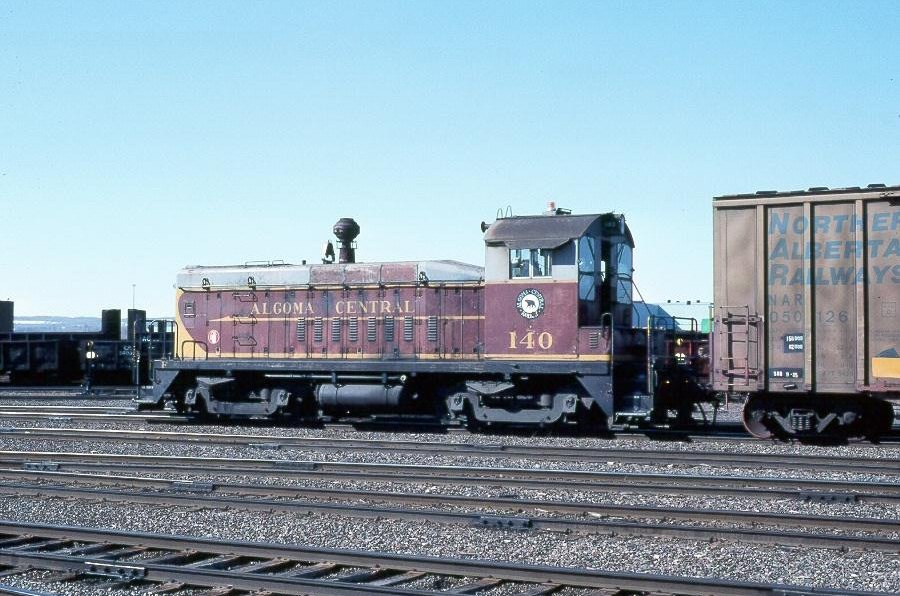
Manufacturer: Life Like (Proto 2000)
Scale: HO
Road Number: 140
Accuracy Rating: Excellent/Good
Appropriate Era: 1952-1995
The AC's two SW8s were pretty standard units, and these models are pretty good for the as-delivered appearance
of AC 140-141. Later on, the stack was shortened and fitted with a circular spark arrestor.
Model Photo
Prototype Photo
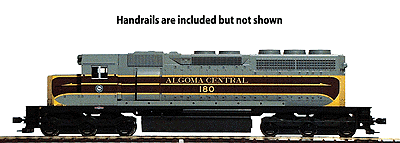
Manufacturer: Kato
Scale: HO
Road numbers: 180, 182
Accuracy Rating: Good/Stand-in
Appropriate Era: 1971-1990
As with any mass-produced locomotive, there are a number of road-specific detail differences between the
commercial model
and the ACR prototype. The model is based on common US prototype features, and the AC units display common
Canadian features such as low headlights, cab front bell, snowplow, snowshields, ditch lights, Canadian style
vertical steps.
Prototype Photo
Manufacturer: Bowser Trains
Scale: HO
Road numbers: Excellent
Appropriate Era: 1971-1990
Bowser's SD40-2 models are based on the Canadian GMDD units with road-specific detailing, making them follow
the configuration of the real AC units exactly.
Prototype Photo
Manufacturer: Life Like (Proto 2000)
Scale: HO
Road numbers: 203
Accuracy Rating: Good/Stand-in
Appropriate Era: 1981-1995
This was produced as a special limited run by Hobbycraft Canada with Life-Like. As with any mass-produced
locomotive,
there are a number of road-specific detail differences between the commercial model
and the ACR prototype. The model is based on common US prototype features, and the AC units display common
Canadian features such as low headlights, cab front bell, snowplow, snowshields, ditch lights, Canadian style
vertical steps.
Prototype Photo
Manufacturer: Atlas
Scale: HO
Road numbers:
Accuracy Rating: Good/Stand-in
Appropriate Era: 1981-1995
As with any mass-produced locomotive, there are a number of road-specific detail differences between the
commercial model
and the ACR prototype. The model is based on common US prototype features, and the AC units display common
Canadian features such as low headlights, cab front bell, snowplow, snowshields, ditch lights, Canadian style
vertical steps.
Model Photo
Manufacturer: Intermountain
Scale: N
Accuracy Rating: Stand-In
Time Frame: 1995-2002
The real ACR units were FP9 version which were 4' longer in the body than an F9.
Model Photo
Manufacturer: Intermountain
Scale: N
Accuracy Rating: Good
Time Frame: 1995-2002
Prototype Photos
Manufacturer: Rapido Trains
Scale: HO
Road numbers: 1750, 1754, 1755
Accuracy Rating: Excellent
Appropriate Era: 1995-2001
Rapido's model is specifically based on the GMDD built FP9s owned by CN and loaded with road-specific
details. These models feature accurate road number specific details for each unit represented.
Model Photo
Manufacturer: IHC (International Hobby Corp.)
Scale: HO
Accuracy Rating: Poor
Appropriate Era: None
None of the cars in this set remotely match any ACR prototypes, and the models are not of an overall high
quality. Several of these types were not even represented on the ACR at all (Sleeper, RPO)
and most were not represented in stainless steel, with a couple exceptions (diners 504, 506,
baggage 211/302, observation Canyon View).
Model Photo
Prototype Photo
Manufacturer: Rapido Trains
Scale: HO
Road Numbers: 72, 74, 75, 77
Accuracy Rating: Good *(see notes)
Appropriate Era: 1992-present
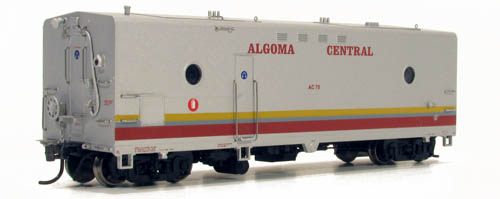
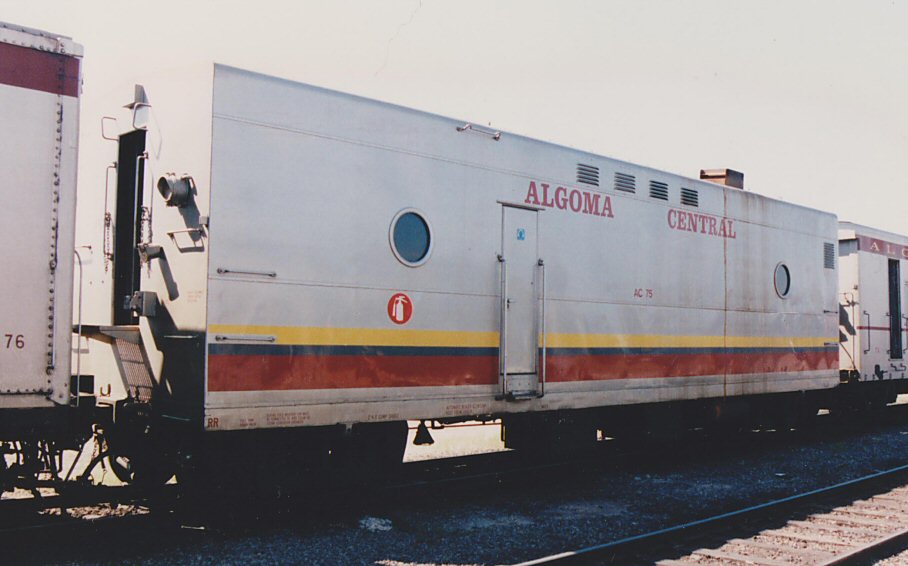
GMDD steam generator. Rapido road numbers 72, 74, 75 and 77, but only 75 and 77 are appropriate for this
type of car. One minor error crept
into the artwork for this car: the stripes should not continue across the side access door. (Corrected in second
run.)
Model Photo
Prototype Photo
Manufacturer: Rapido Trains
Scale: HO
Road Numbers: 307, 308, 309, 311
Accuracy Rating: Excellent *(see notes)
Appropriate Era: 1983-present
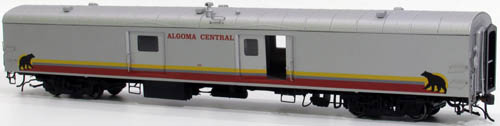
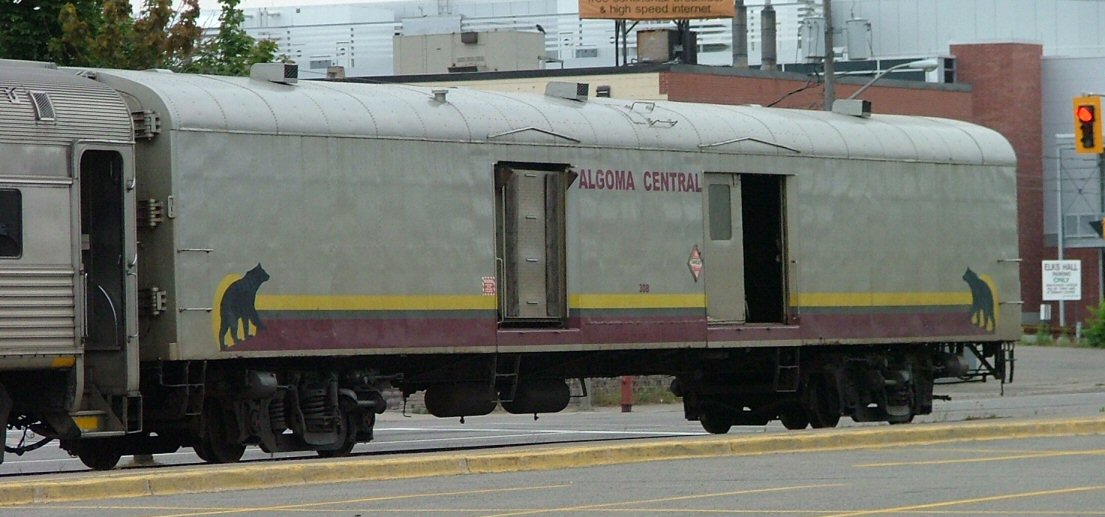
Representative of the AC's ex-CN baggage cars, acquired mostly in the mid 1980s. (Note that
308 and 309 have unusual hinged end doors, which are not represented on the model, as this is a
slightly different variation of ex-CN car. The rest of the car is pretty much the same.
Model Photo
Prototype Photo
Manufacturer: Rapido Trains
Scale: HO
Road Numbers: 5441*, 5462*, 5474*, 5483*, 5494* (first run), 5512, 5514, 5519, 5545, 5571
(second run)
Accuracy Rating: Excellent *(see Notes)
Appropriate Era: 1992-present
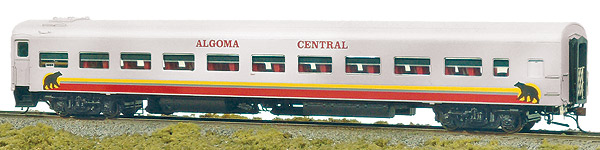
The Rapido coach is based on a CNR prototype, and the cars currently operated by the ACR are ex-VIA,
originally CN coaches of the same prototype. So Rapido's cars are dead-on in terms of detail. Unfortunately
the colour of the first run of AC cars is a little off, as they are a slightly tan colour rather than the pure
silver-grey
of the prototype. This was corrected for the more recent second run of AC car numbers.
Model Photo
Prototype Photo
Manufacturer: Athearn
Scale: HO
Road number: 715
Accuracy Rating: Stand-in
Appropriate Era: 1958-2000
Athearn's car is 2 feet short and has solid ends rather than drop ends. Only available in one number.
Unknown what (if any) actual
prototype the Athearn car was based on.
Prototype Photo
Manufacturer: Life-Like (Proto 2000)
Scale: HO
Road Numbers: 621, 650, 658, 672, 675, 703
Accuracy Rating: Stand-in
Appropriate Era: 1958-2000
The Proto 2000 car is a high-quality model of a 52'6" drop-end mill gondola, but is based on a US design
built by Greenville
Steel Car and Bethlehem Steel. This car has a deeper side sill and one extra side panel compared to the NSC cars
that
the ACR owned, but this is currently the best stand-in available. Available in 6 different numbers. This was
produced as a special limited
run by Hobbycraft Canada.
Prototype Photo
Manufacturer: Rapido Trains
Scale: HO
Road Numbers:
Accuracy Rating: Good/Stand-in
Appropriate Era: 1958-2000
The Rapido car follows a Canadian outline and matches the profile and rib/panel count and spacing of the
Algoma Central cars. The prototype AC cars do differ slightly in having stamped hat-section
ribs instead of Z angle, and are 6" taller in the height of the sides, however this is the closest any model
gets to the real AC cars.
Model Photo
Prototype Photo
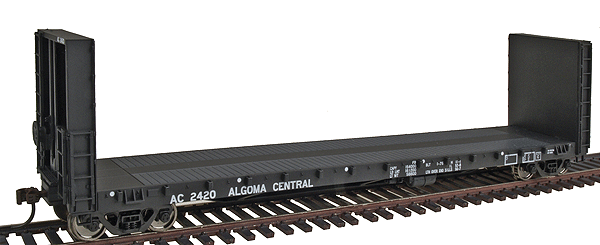
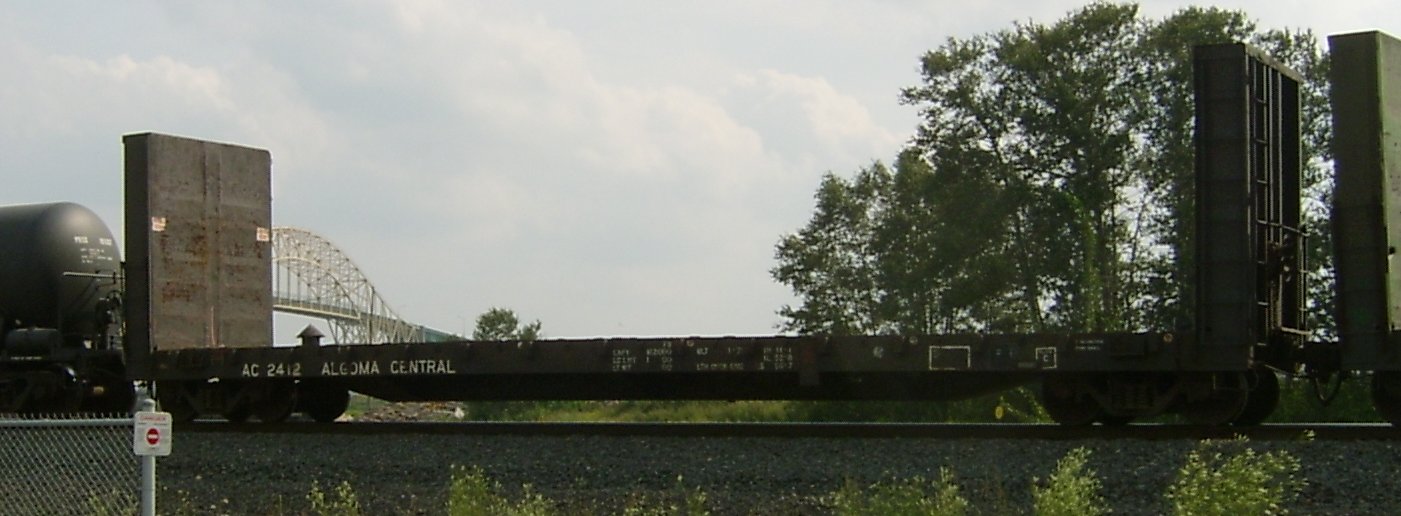
Manufacturer: Walthers
Scale: HO
Road Numbers: 2420, 2412, 2423, 2415, 2416
Accuracy Rating: Excellent
Appropriate Era: 1975-present
This is the first RTR release to be fully accurate for the Algoma Central. The model is based on the same
Hawker-Siddeley prototype acquired by the ACR and the lettering is accurate.
Prototype Photo
Manufacturer: Atlas
Scale: HO
Road Numbers:
Accuracy Rating: Stand-in
Appropriate Era: 1975-present
The new Atlas run of flatcars is based on the old TrueLine Trains tooling. This model has several detail
differences from the AC prototype, most notably the jacking pads on the side sills above the trucks.
Model Photo
Prototype Photo
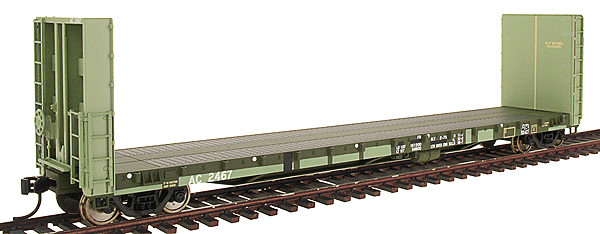
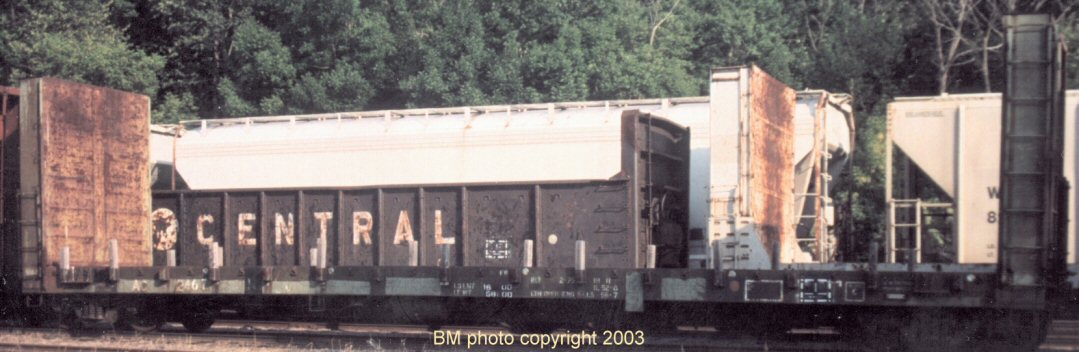
Manufacturer: Walthers
Scale: HO
Road Numbers: 2467, 2426, 2474
Accuracy Rating: Excellent
Appropriate Era: 1975-present
Model Photo
Manufacturer: Model Power
Scale: HO
Road Number: 2901
Accuracy Rating: Stand-in
Appropriate Era: 1952-1970s
Only one car ever wore this paint scheme, and is represented by this car, although the model's details are
not at all
accurate for the prototype car which was a steel-sheathed rebuild of an old outside-braced wooden boxcar..
Model Photo
Prototype Photo
Manufacturer: Model Die Casting/Roundhouse
Scale: HO
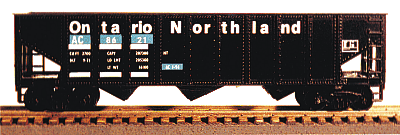
Road Number: 8600, 8629
Accuracy Rating: Stand-in/Poor
Appropriate Era: 1984-present
The MDC car is too short, and is missing three full panels at the right side of the car where the large
ONR logo should be. Also the colours are wrong. The MDC car is painted black, and the numbers re-marked in blue.
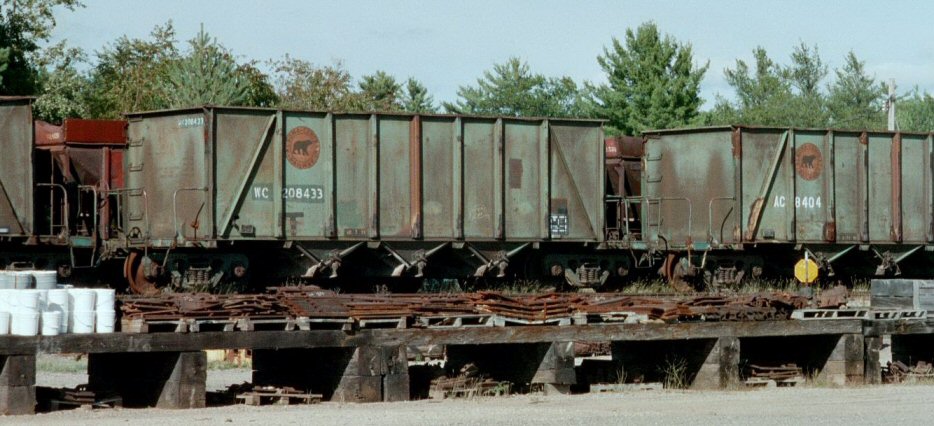
These cars were actually a (heavily weathered) dark forest green, and the reporting marks and numbers were
marked out in a lighter
green, definately not blue. Out of production.
Prototype Photo
Manufacturer: True-Line Trains (Hobbycraft Canada)
Scale: HO
Road Number: 6049, 6050, 6058, 6066, 6071, 6075
Accuracy Rating: Stand-in
Appropriate Era: 197x?-1984 (1984-present if renumbered by modeller into 8600-8629 series)
Once again, it's the ONR paint scheme on the completely wrong car (Atlas 90-ton hopper). The car body
is too short and has less panels than the prototype, and the lettering is squished in to fit on the car. Better
option than the MDC car though.
Model Photo
Prototype Photo
Manufacturer: Walthers
Scale: HO
Accuracy Rating: Good/Stand-in *(see notes)
Appropriate Era: 1974-1998
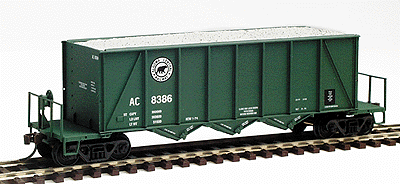
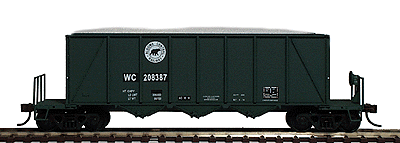
Lettering on these cars is pretty good (some minor errors in data and placement of the smaller lettering
crept in on later runs), but the interior features solid bulkheads, while the ACR cars had
steel tube bracing in a "V"-shape between each hopper. The bulkheads should be replaced with the bracing and
the interior repainted. This modification should be able to be completed without damaging the paint on the
exterior body.
Prototype Photo
Manufacturer: Walthers
Scale: HO
Accuracy Rating: Good/Stand-in *(see notes)
Appropriate Era: 1995-1998
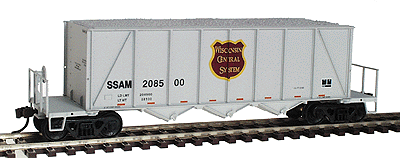
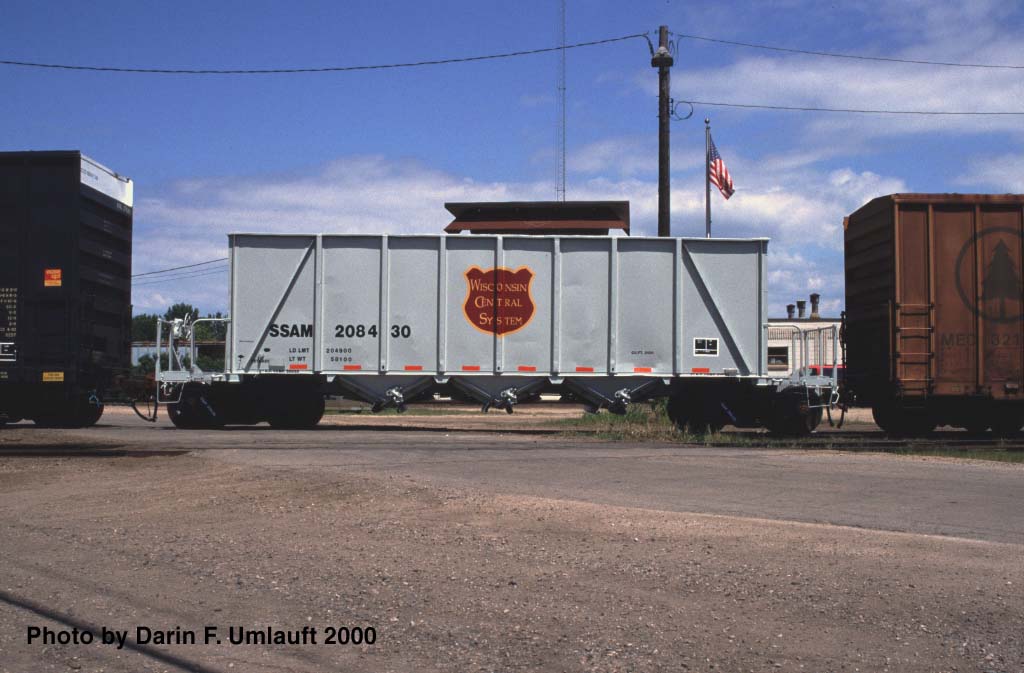
Walthers released this lettering scheme before doing the original ACR scheme. Their first attempt got
a lot of things pushed over onto the wrong body panel. Later runs largely corrected the lettering errors. See
reference above for interior detail differences.
Model Photo
Prototype Photo
Manufacturer: Walthers
Scale: HO
Accuracy Rating: Good/Stand-in
Appropriate Era: 1995-1998
See comments above about interior details.
Model Photo
Prototype Photo
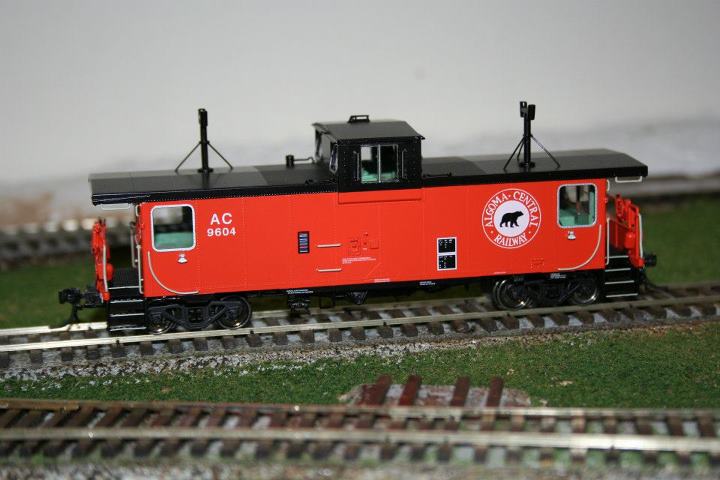
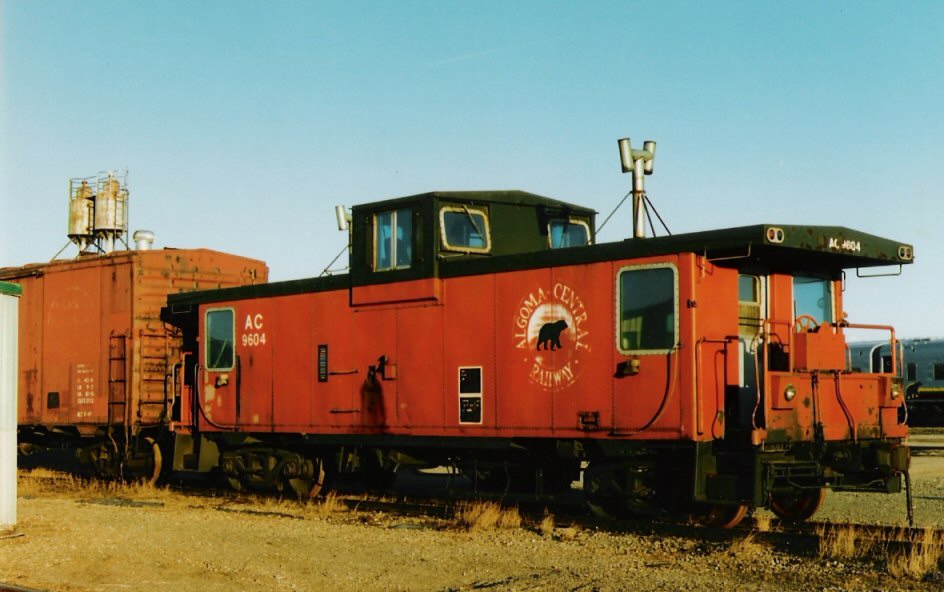
Manufacturer: Overland
Scale: HO
Road Number: 9604, 9605 (original logo), 960?, 960? (small logo)
Accuracy Rating: Excellent
Appropriate Era: 1976-1998
Factory painted brass. Overland offered two numbers in both the original large logo and 1990s smaller
repaint logo.
Prototype Photo
Manufacturer: True Line Trains
Scale: HO
Road Number: 9604
Accuracy Rating: Excellent
Appropriate Era: 1976-1998
RTR plastic.
Prototype photo
Manufacturer: Rapido Trains
Scale: HO
Road Numbers: 9607, 9608, 9609
Accuracy Rating: Excellent
Appropriate Era: 1992-approx. 2000
Model based on the CP prototype, lettered and accurate for AC 9607-9609 which were acquired from CP in 1992.
This page © 2001-2023 Chris VanderHeide