



 |
Windy Ridge Models American Flyer
Series |
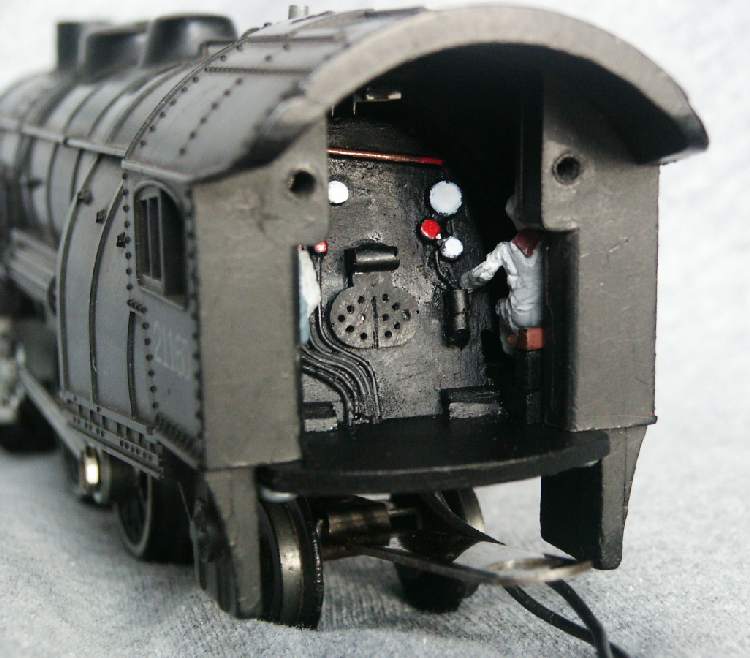
 Imagination
is a good thing. It lets modelers look past some things and only see what
they want to. No matter how you look at it, trying as hard as you can, one
spot on the flyer steam engines that just looks plain ugly is inside the cab. AC Gilbert's Engineers piled it full of wires, clips, brass knobs, plates and plugs,
and so forth. I recognize this issue and thought it would be nice to
provide an insert that could be installed and removed within a couple of
minutes that would be pleasing to the eye and maybe allow an Engineer and
Fireman a place to sit. Arttista makes a few figures for dressing a cab up so we started
with designing the cab using the Arttista characters #757 and #758, the
waving fireman and engineer. Imagination
is a good thing. It lets modelers look past some things and only see what
they want to. No matter how you look at it, trying as hard as you can, one
spot on the flyer steam engines that just looks plain ugly is inside the cab. AC Gilbert's Engineers piled it full of wires, clips, brass knobs, plates and plugs,
and so forth. I recognize this issue and thought it would be nice to
provide an insert that could be installed and removed within a couple of
minutes that would be pleasing to the eye and maybe allow an Engineer and
Fireman a place to sit. Arttista makes a few figures for dressing a cab up so we started
with designing the cab using the Arttista characters #757 and #758, the
waving fireman and engineer.
|
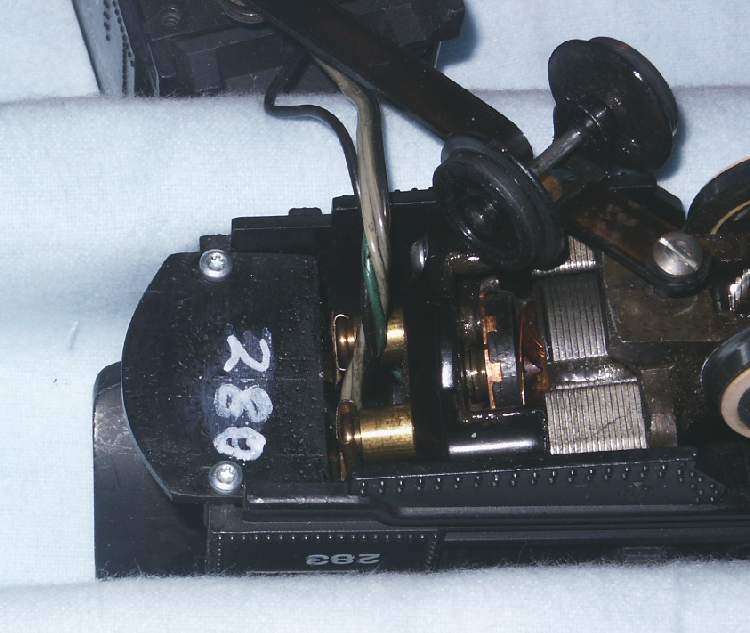 My main objective was to create a non-evasive module that could be removed and replaced
using the bosses that existed today. Keeping in
My main objective was to create a non-evasive module that could be removed and replaced
using the bosses that existed today. Keeping in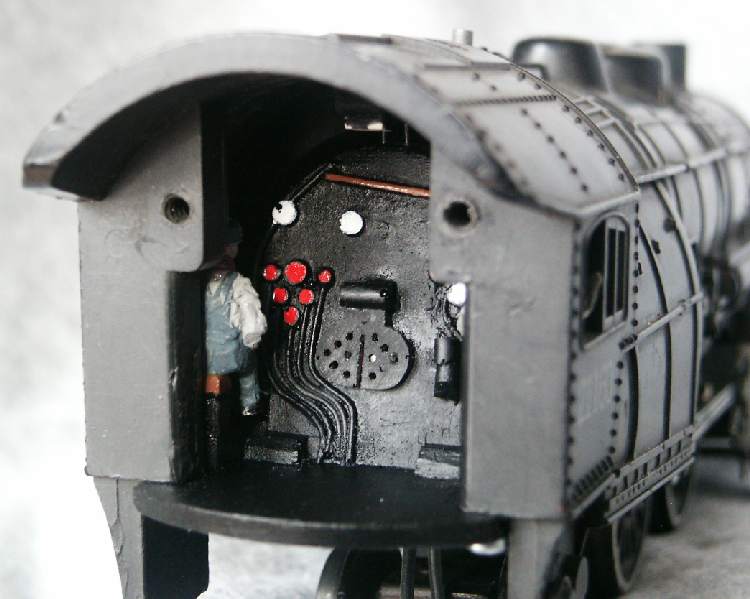 mind that the plastic formed in
the 50's is getting
more brittle each year, it needed to be fastened without causing any harm to the
host boiler shell. Special Torx head #8 screws and wrench can be purchased that are designed for hard plastic molded holes.
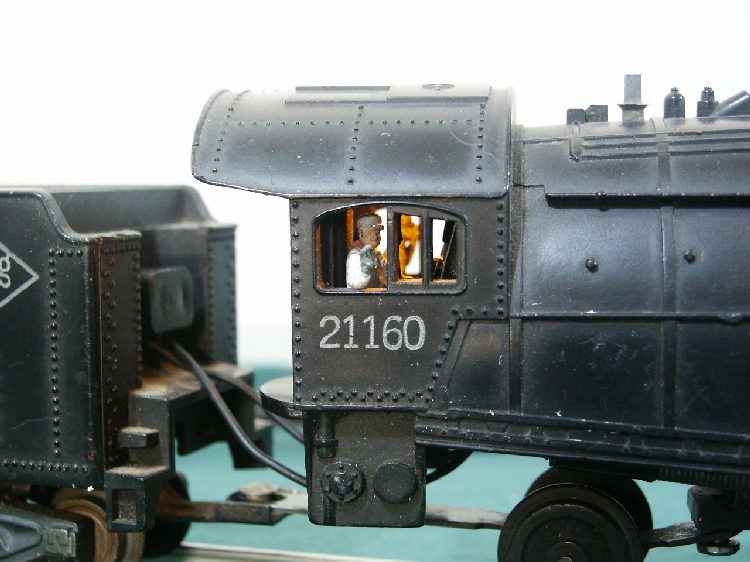
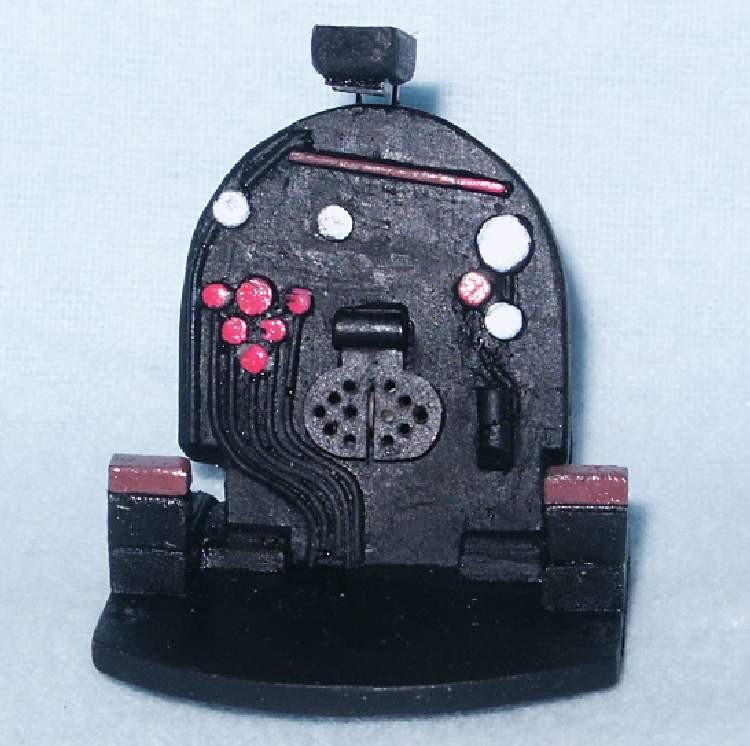
The cab insert, with
molded-in pick up terminals, is slid between the brush terminals and the two
vertical bosses that hold the drawbar on some of the models. The insert is made
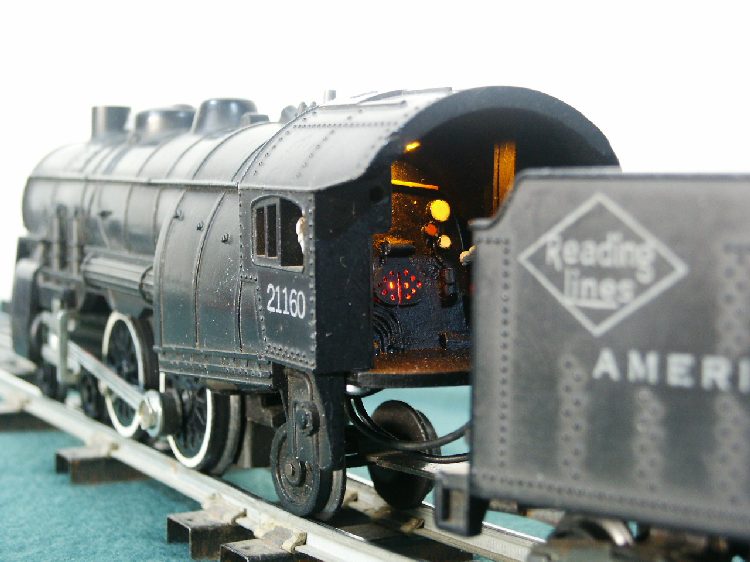
of temperature resistant resin and has rectifier and resisters for DC LED activation. The firebox lights up from behind the split and drilled
butterfly doors resembling a decent fire in the box whenever the throttle is
cracked. The over head cab light enhances the detail showing off
the cast gauges, valve knobs and throttle lever as well as figures if
you choose to add them. Reverse lever, whistle cord, and gauge faces could be added by
using fine wire placed in holes beside the overhead LED or in the firewall. How detailed you wish
to go is up to you.
mind that the plastic formed in
the 50's is getting
more brittle each year, it needed to be fastened without causing any harm to the
host boiler shell. Special Torx head #8 screws and wrench can be purchased that are designed for hard plastic molded holes.
The cab insert, with
molded-in pick up terminals, is slid between the brush terminals and the two
vertical bosses that hold the drawbar on some of the models. The insert is made
of temperature resistant resin and has rectifier and resisters for DC LED activation. The firebox lights up from behind the split and drilled
butterfly doors resembling a decent fire in the box whenever the throttle is
cracked. The over head cab light enhances the detail showing off
the cast gauges, valve knobs and throttle lever as well as figures if
you choose to add them. Reverse lever, whistle cord, and gauge faces could be added by
using fine wire placed in holes beside the overhead LED or in the firewall. How detailed you wish
to go is up to you. 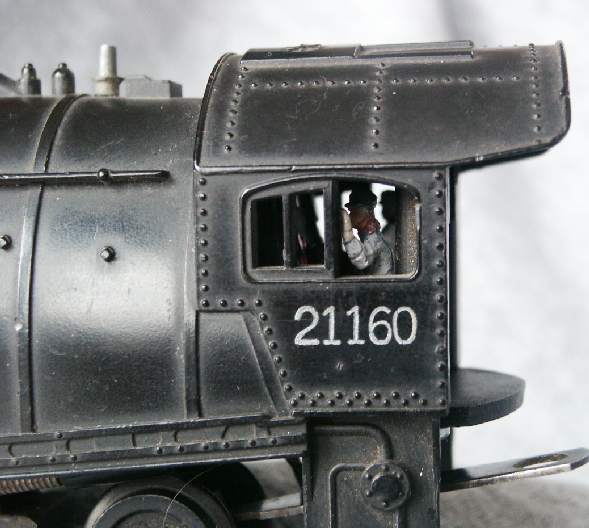
 There is one thing worth mentioning, every model series (280's, 290's, 300's, 310's) is unique and different width so there is not "one size fits all". In some cases like the 290 and 310 the cab is shorter and the armature and rear bearing cap may need to be exchanged allowing room for the hardware. In a effort to save cost, most of his creations were interchangeable. On the rear of the slip in
cab module is a curved walk panel that is slightly above the tender front ledge if you
have decided to move wires and shorten the drawbar to move the tender closer for
greater realism. Most of the features on the examples shown are cast
using the typical AC
Gilbert
level of accuracy. My opinion is that it looks better than the
back of an open field motor and a glob of wires. But then again these Flyers we play
with are classics, as are we so the choice is ours.
There is one thing worth mentioning, every model series (280's, 290's, 300's, 310's) is unique and different width so there is not "one size fits all". In some cases like the 290 and 310 the cab is shorter and the armature and rear bearing cap may need to be exchanged allowing room for the hardware. In a effort to save cost, most of his creations were interchangeable. On the rear of the slip in
cab module is a curved walk panel that is slightly above the tender front ledge if you
have decided to move wires and shorten the drawbar to move the tender closer for
greater realism. Most of the features on the examples shown are cast
using the typical AC
Gilbert
level of accuracy. My opinion is that it looks better than the
back of an open field motor and a glob of wires. But then again these Flyers we play
with are classics, as are we so the choice is ours.
On some models with overhead plugs and wiring harnesses, a standard rectifier system and/or replacing the wire harness will be needed to clean up the path of vision from the overhead plug so based on the model, some wiring may be necessary.
 Grandma always
used to say "there is always room for improvement" and we can take on
that challenge.
Grandma always
used to say "there is always room for improvement" and we can take on
that challenge.