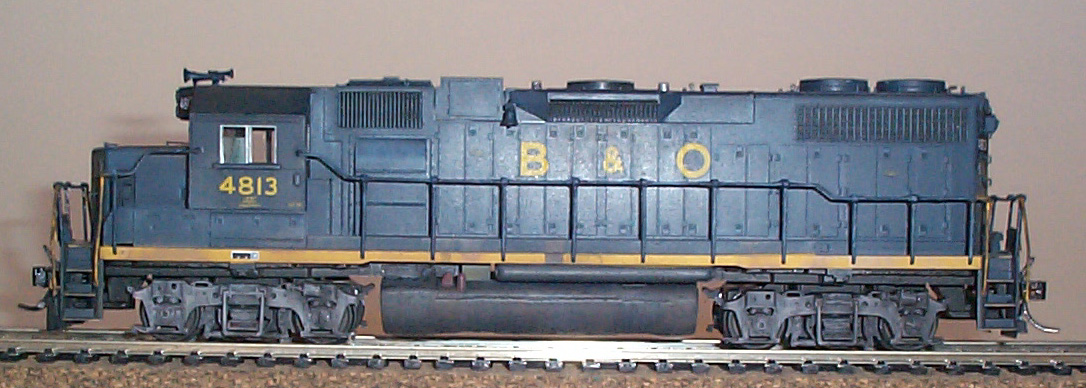




Below is a Dean Heacock pic of the real #4813.
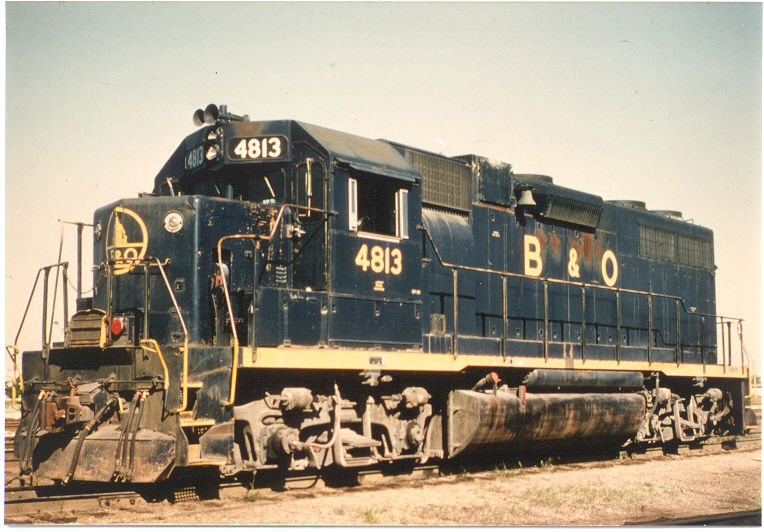
Dean Heacock Photo
How to:
1. Purchase a GP38-2 undecorated kit from
Athearn.
2. SHELL: Drill holes for all the grab irons
and
lift rings. There are grab iron locations marked on the
front of
the nose, the right side of the nose, the top of the nose, and
the back
of the long hood. All the lift rings are on the top of the
long hood.
There are about 10 or so of each. Also drill two holes on
the top
back of the long hood for the fan grab iron.
3. SHELL: Sand off the small square with the
three
little posts on either side of the coupler. This is the
molding for
the m.u. hoses. There are two squares on the front pilot
and two
on the rear pilot.
4. SHELL: Sand off the foot boards on the
front
only. These are the protrusions at the bottom of the pilot
where
someone would stand to ride the locomotive. Drill two
holes in the
front pilot to accept the Details West Chessie pilot. The
back foot
boards are fine, or you can replace them with Details West #130
rear plow.
I left the kit ones attached.
5. SHELL: While you have the drill out,
drill each
of the hand rail stancions so they are a little bigger.
They come
just a little too small to fit the stancions right out of the
box.
6. CAB: Drill a hole centered on top of each
of
the six windows. This will be where the windshield wipers
attach.
7. CAB: Drill out the holes for the
handrails attach.
There are two on each side of the cab. They are just a
little too
small to fit the wire right out of the box.
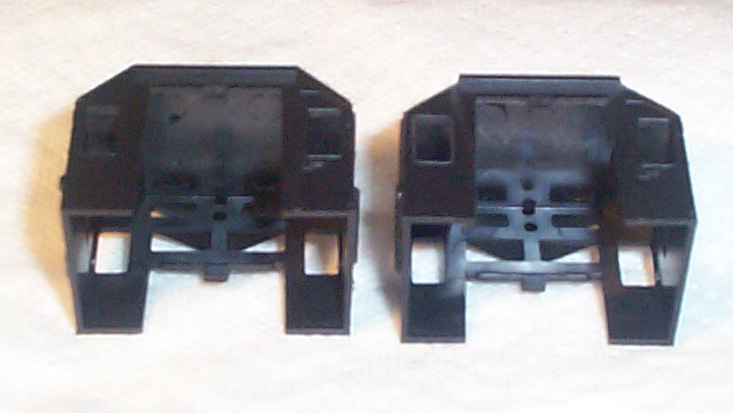
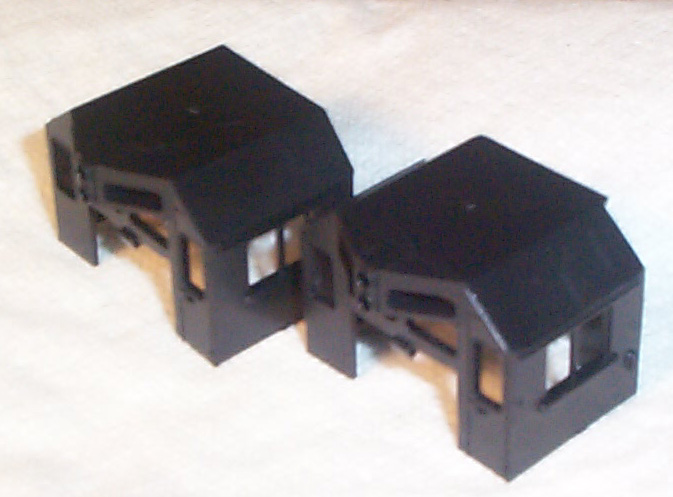
8. CAB: Sand off the over hang on the back
of the
angled part of the cab. Do not sand off any material from
the flat
part (top of the roof), only sand off the overhang on the part
of the roof
that slants down to meet the sides. See pics below for
clarity.
9. SHELL: Prime a Details West 3 Chime
Leslie
horn, 2 pairs of mu hoses, a curved fan grab iron, a side
mounted bell,
2 uncoupling levers, and enough grab irons to fill all spots
they belong
(around 12 or so).
10. SHELL: Super glue in lift rings
into
the holes on the top of the long hood. I don't prime these
before
I put them in. Prime them carefully when the glue is
dry. Try
not to fill the hole of the inside of the lift ring with
paint. Super
glue on the Chessie pilot on the front of the shell, in the two
holes you
drilled in step number 4. When dry, super glue on the mu
hoses on
the front and rear pilots.
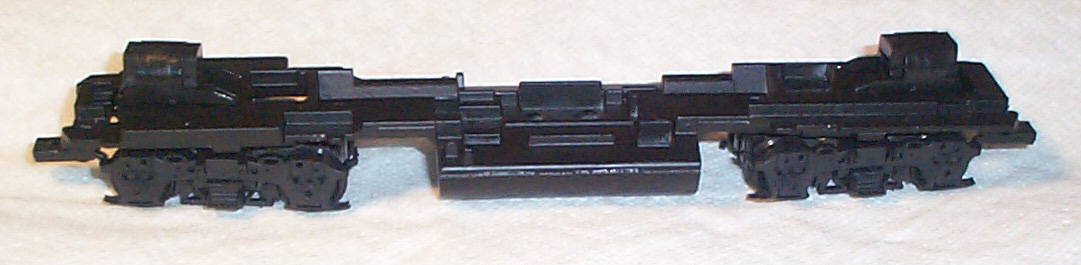
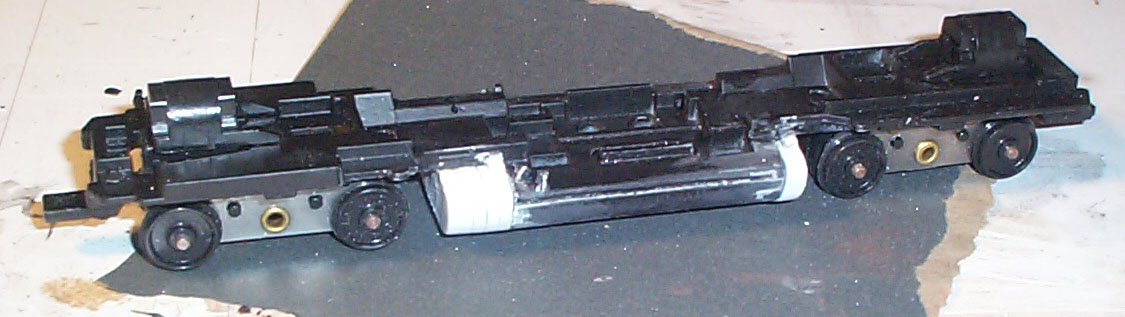
11. FRAME: Super glue pieces of sheet
styrene (plastic)
to the front and back faces of the fuel tank. Build up the
sheets
unitl the fuel tank almost hits the trucks as you turn
them. The
trucks should not contact the fuel tank, but should be
close. Sand
(this will take a while to do well) the plastic sheets when the
glue is
dry to the shape of the fuel tank. This whole process will
replicate
the look of a larger fuel tank. The one on the kit is way
too small
for the Chessie GP38's. See picture below for clarity.
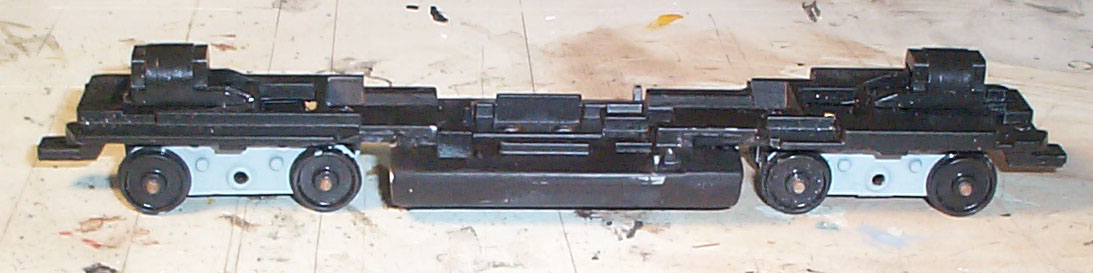
12. FRAME: Prime the metal pieces
behind
the plastic truck sideframes with an enamel primer. You
will have
to remove the truck sideframes to do this. When dry, paint
the wheel
faces rust colors and the parts between the wheels black.
13. SHELL: Prime the sides of the shell
where the
yellow stripe will be. No need to prime the whole
thing. The
areas that will eventually be dark blue do not need to be
primed.
14. SHELL: Paint the whole shell
C&O
Enchantment blue. When dry paint the side sills UP Armor
Yellow,
then paint the long tube and jacking points on the bottom of the
side sill
blue.
15. SHELL: Paint the inside of the vents on
the
sides and the fans on the top black to give added depth.
16. SHELL and CAB: Spray with gloss coat and
decal.
I used Microscale's B&O/C&O hood unit sheet.
17. SHELL and CAB: When dry, drybrush with
successively
lighter shade of blue. Use some rust shades as well on the
top.
18. FRAME: Add the truck side frames
back
on. Drybrush the frames and fuel tank with shades of greys
and browns.
Overspray the side frames and fuel tank with a light dusting of
railroad
tie brown to give it a nice dusty look.
19. SHELL: Add on detail parts of mu
stand,
drop step, mu hoses, wipers and horn. Add window glazing
to the cab.
I attach the clear plastic with white glue, all other parts with
super
glue. Snap the cab into the shell.
20. SHELL: Prime the bottom 1/2 of
each hand
rail stantion, the ends of the handrail pieces for the front and
back,
and the ends of the long hand rail pieces. Paint the ends
blue.
Attach the handrails. Super glue the stantions to the
rail.
When the glue is dry, prime the rest of the hand rails and paint
blue.
Paint the parts seen below yellow. Weather the handrails
like you
did the rest of the shell.
21. Attach the shell to the frame, it just
snaps
in. You are done. Enjoy your GP38.
Below is a pic of my GP38 still in the box.
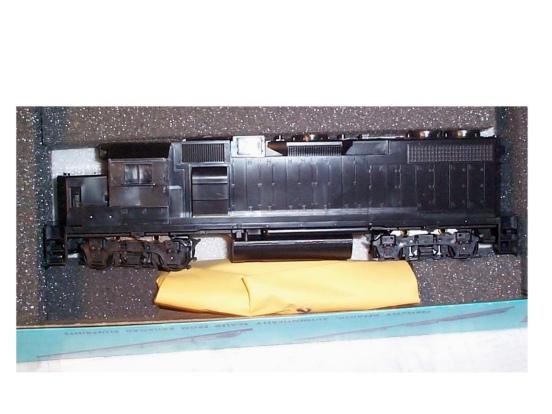
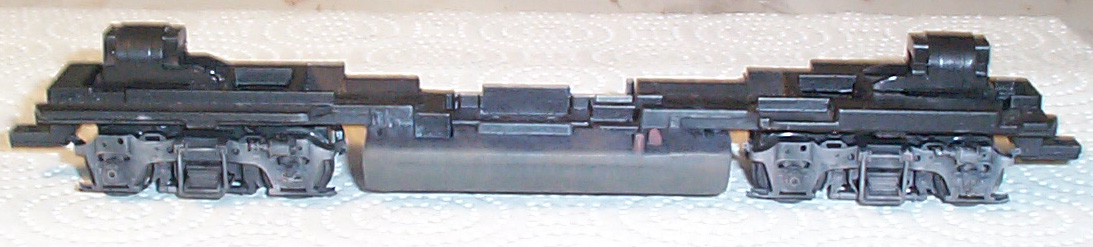
Below is a pic of the frame as it came out of the
box.
Notice how small the fuel tank is.
Below is a pic of the frame with the fuel tank
extensions
added.
Below is a pic of the frame with the sides
primered.
I painted the fuel tank black with a brush, just to see how my
sanding
job looked.
Below is a pic of #4813's frame with the wheels
painted.
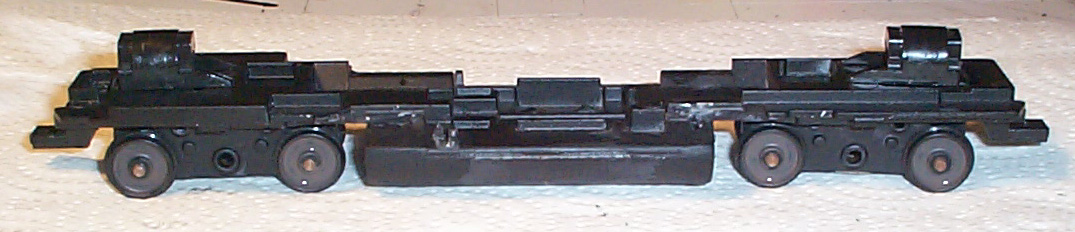
Below is a pic of #4813's frame completely done
and ready
to mate with the shell.
Below are two pics of the cab with the over hang
removed.
The cab on the left in each pic is the GM50 cab, but that is
exactly how
the GP38 cab looked coming out of the box.
Below is a pic of the shell primed. Note I
only
primed the sidesill (the area that will eventually be yellow).
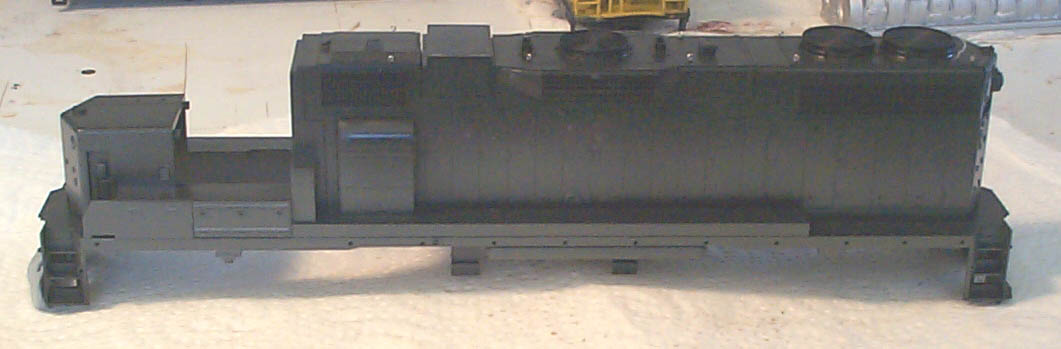
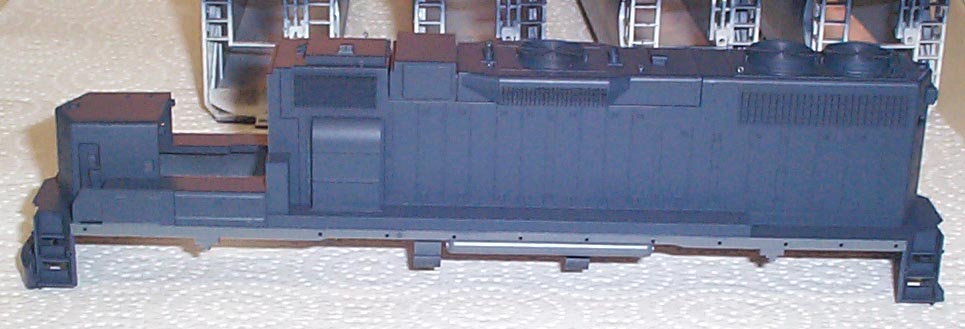
Below is the shell after painting blue. The
side
sill is still grey and will be painted yellow next. The
long tube
under the side sill in the middle of the shell will eventually
be blue
and weathered until it is a dark grey color (very common look
for this
part on older engines).
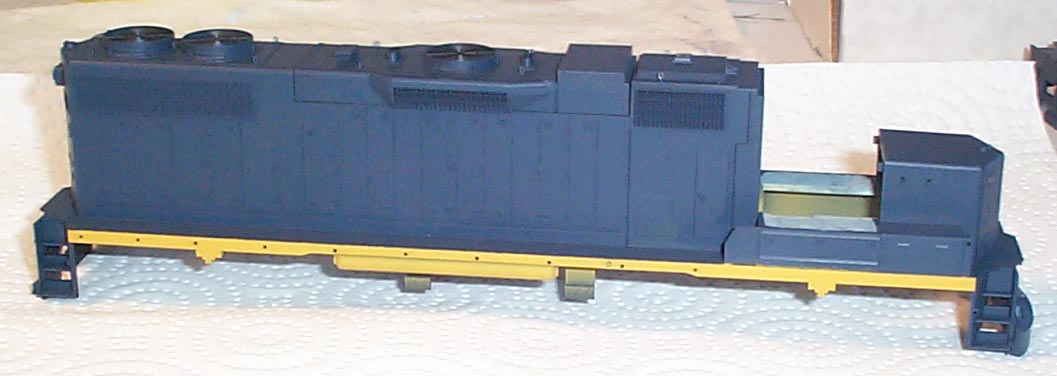
Below is the side sill painted yellow. The
long
tube and the jacking points will be painted blue later.
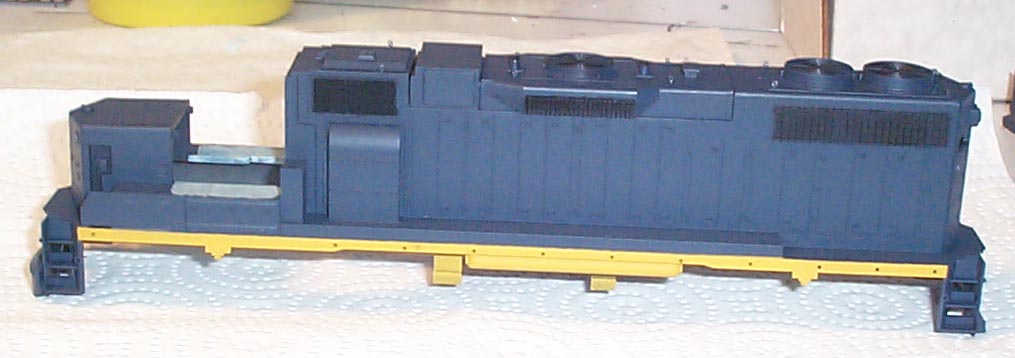
Below is the shell with the vents painted
black.
The three fans on the top are also painted black inside.
This gives
a feeling of depth to them. Compare with the photo above
for the
difference.
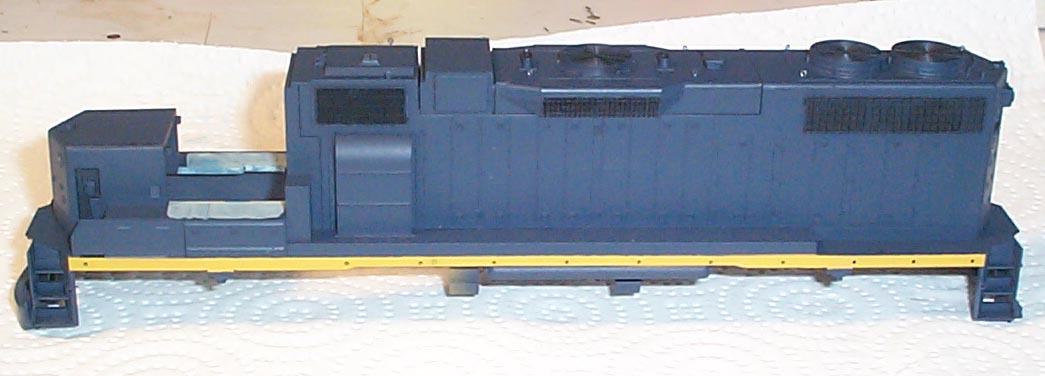
Below is a pic of the shell with the bottom tube
painted
blue and the jacking points as well. The shell is ready to
be given
a gloss coat and decals.
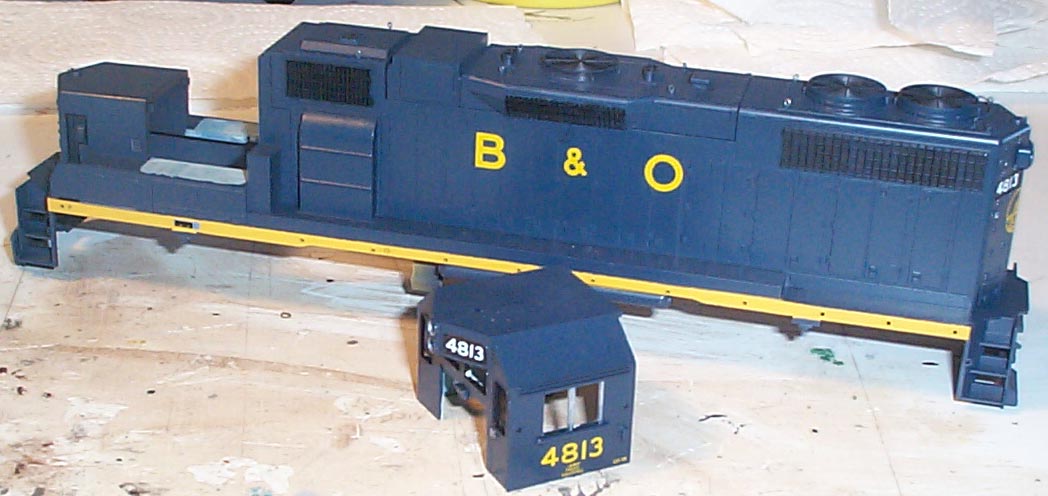
Below is a pic of the shell and cab decaled.
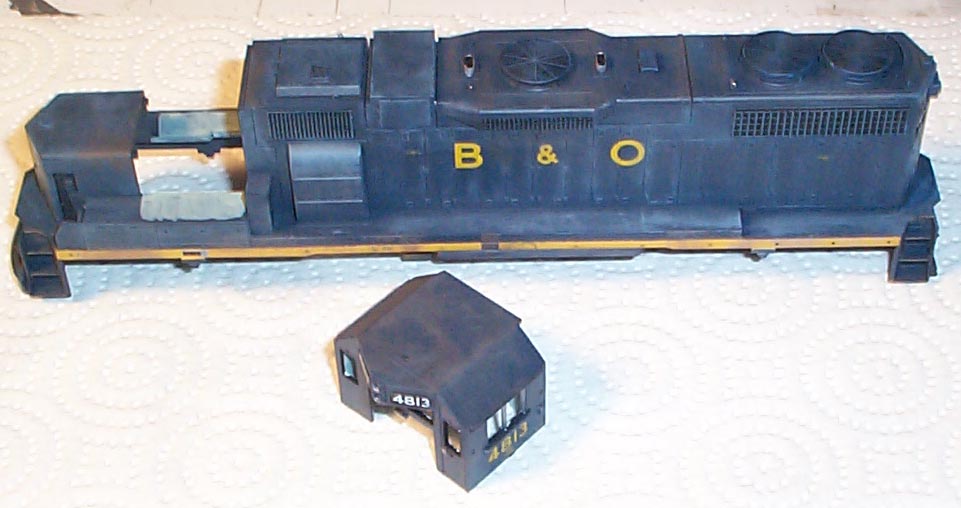
Below is a pic of the shell and cab drybrushed.
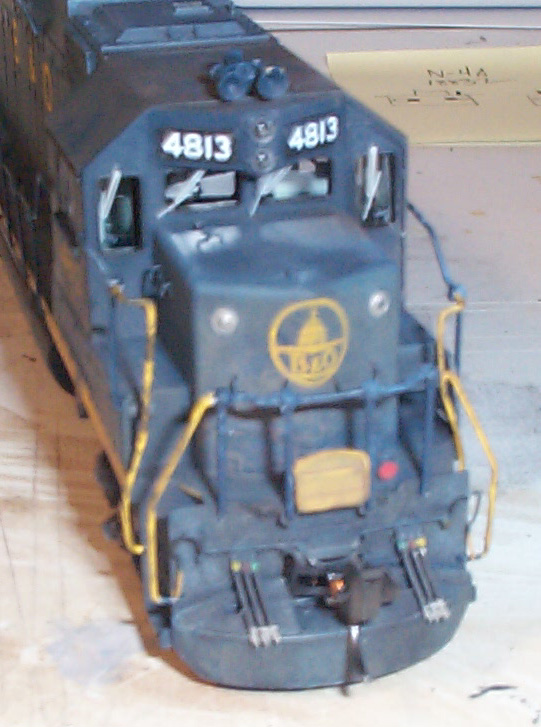
Below is a slightly out of focus view of the
front.
The horn, wipers, drop step, mu stand, mu hoses, and Chessie
Rock Pilot
all make the front of this unit appear much better than the
original kit.
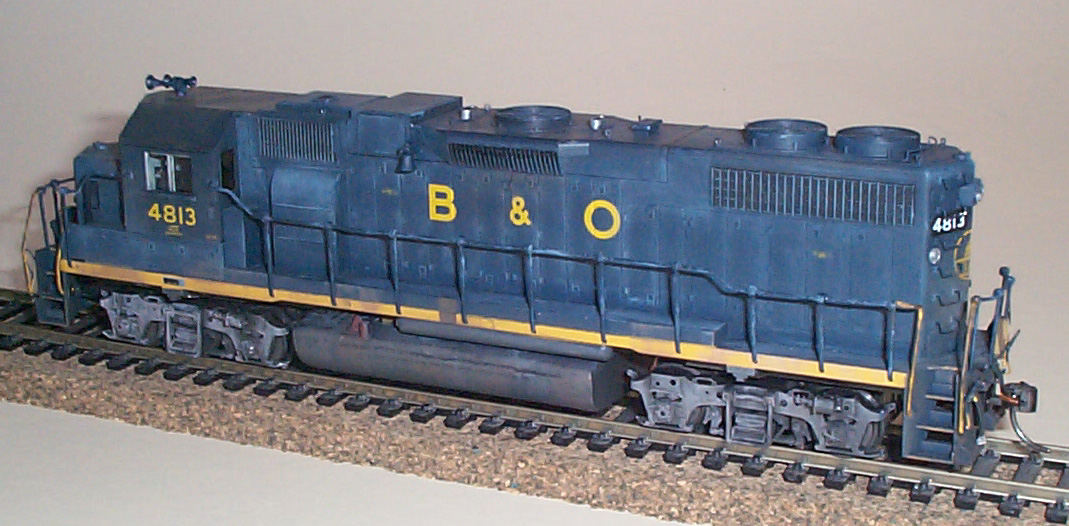
Below a 3/4 rear view of the unit. It shows
the
grab irons and fan grab iron on the back.
Below is a 3/4 view of the unit. Much of
the details
on the front pilot can be seen here. I took these pics
before I put
the wipers on. The wipers can be seen two pictures above
this one.
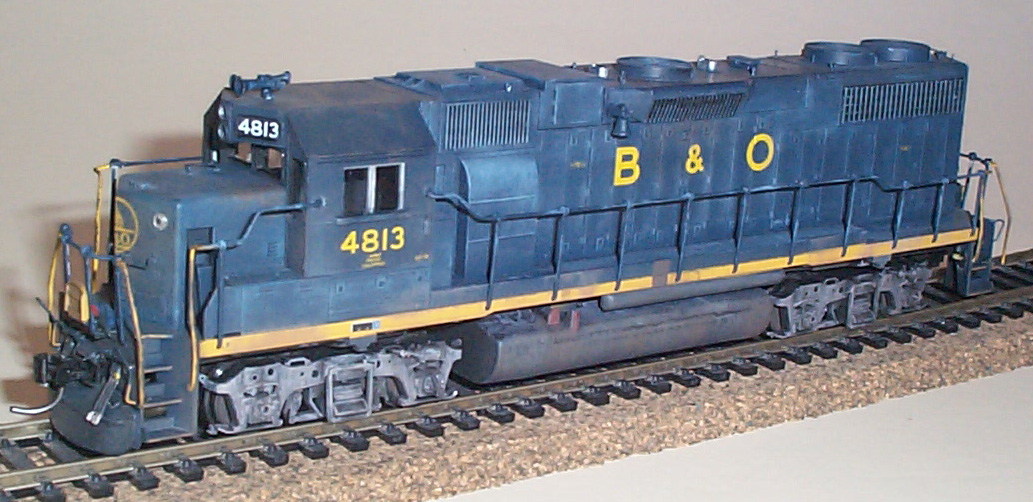
Below is a top view showing the location of the
air filter
box. Also note the walkways are worn.
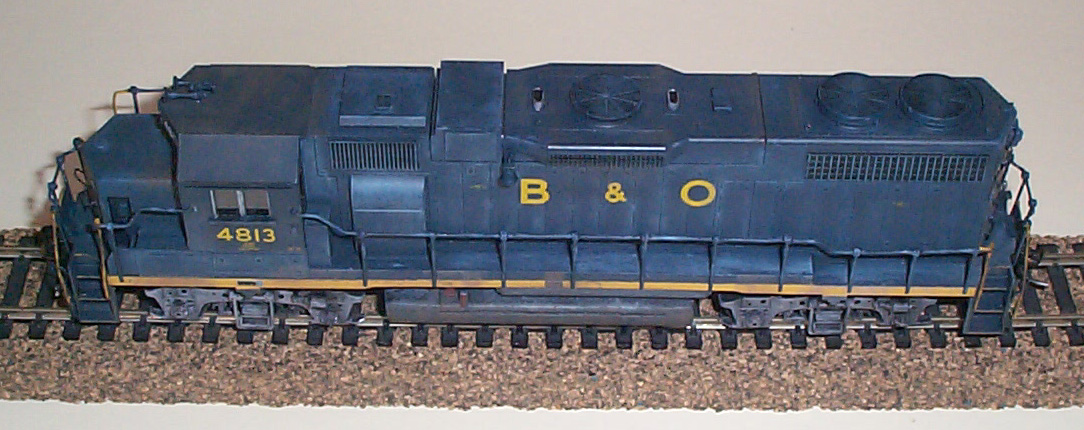
Below is a perfect profile shot of the
unit. It
really highlights how long the fuel tank is compared to before.