




Along the path to the outside exhibits.
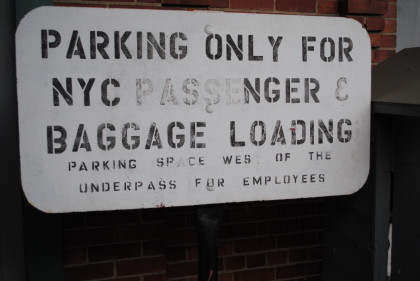
A period New York Central parking sign.
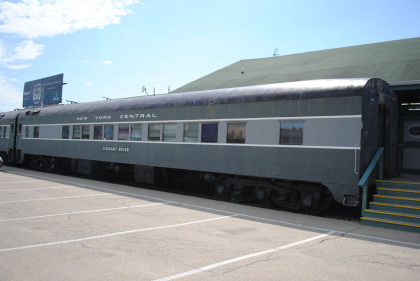
New York Central coach "Elkhart River", ex. Illinois Central 2691, nee Illinois Central 2234 built by Pullman in 1918.
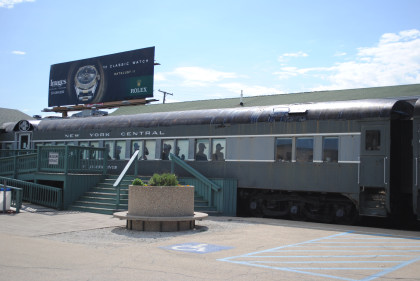
Illinois Central coach 3664 built by Pullman in 1918, later modernized and became Illinois Central 2694. Now lettered New York Central "St. Joseph River" and houses the museum's archives.
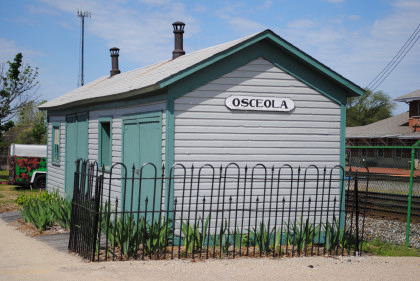
The tool shed from Osceola, Indiana, about five miles away.
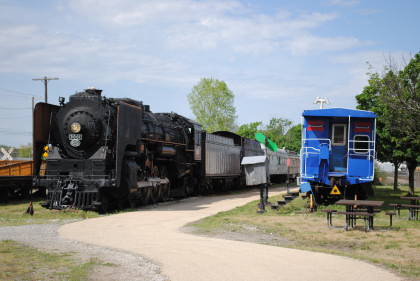
Museum scene.
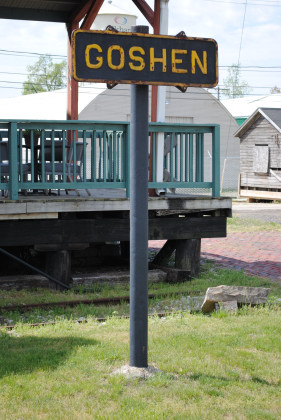
Station sign from Goshen.
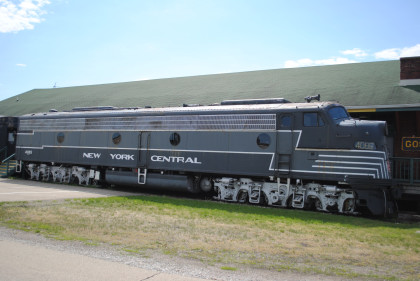
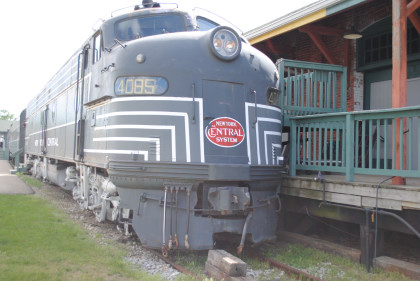
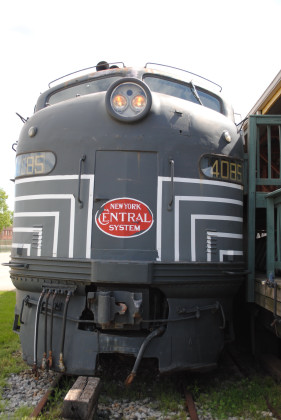
New York Central E8A 4085, built by Electro-Motive Division in 1953. It had the distinction of being the lead unit on the 20th Century Limited when the train departed Chicago for New York City for the final time on 3rd December 1967.

The view from the cab.
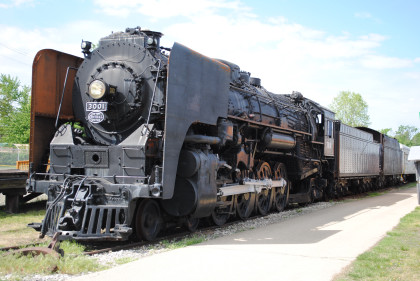
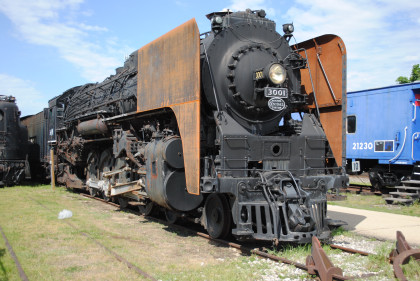
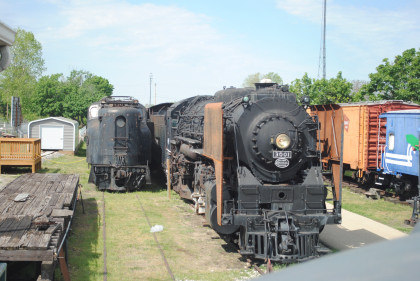
New York Central 4-8-2 3001, built by American Locomotive Company in 1940 and delivered to the New York Central for its first assignment in Elkhart that October. 3001 hauled both freight and passenger trains, including the 20th Century Limited. In 1957, it was sold to the City of Dallas to replace Texas & Pacific 638 at the Texas State Fairgrounds. In 1984, it was traded to the National New York Central Railroad Museum in exchange for former Pennsylvania Railroad GG1 4903.
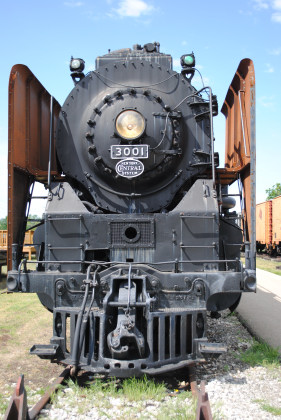
The face of the steam engine.
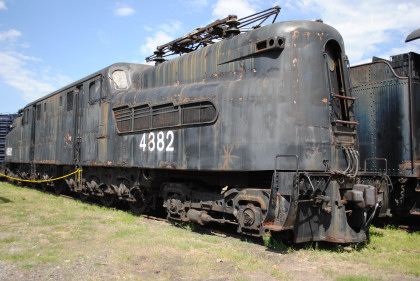
Pennsylvania Railroad GG1 4882 built by the railroad in 1939. The GG1 was designed to haul 12-14 passenger car consists on the railroad's electrified sections between New York, Washington, DC and Harrisburg, Pennsylvania. 4882 served on the Pennsy, Penn Central, Conrail, Amtrak and finally, New Jersey Transit. Retired in 1983, it was one of the last three GG1s to be used in revenue service, but had the honour of being the last GG1 to run under its own power when it pulled 4877 and 4879 into the Matawan, New Jersey yard after a "Farewell to the GG1s Day". It arrived in Elkhart in 1989 and was repainted in Penn Central livery in 1998. Today, it is the only one of the sixteen surviving GG1 locomotives to wear the black Penn Central livery.
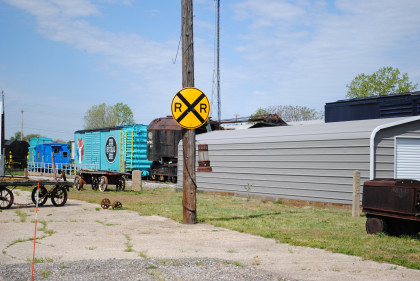
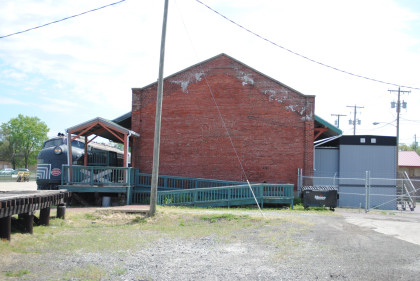
Museum scenes.
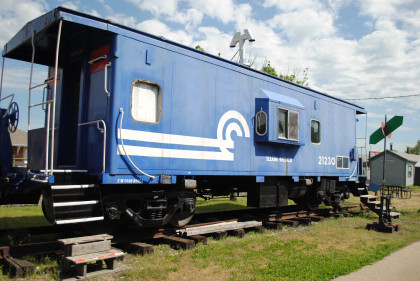
Conrail bay-window caboose 21230 built by Fruit Growers Express in 1978 and is the only survivor of the three units built. It ended its days as part of the wreck train in Selkirk, New York and was donated by Conrail in 1997.
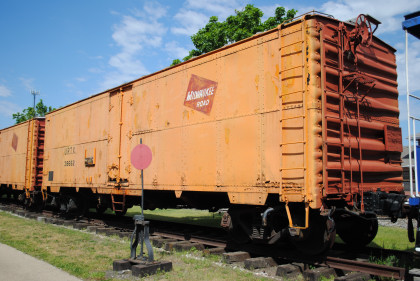

Union Refrigerator Transit Company refrigerator car 38662 built by General American in 1954 and leased to the Milwaukee Road.
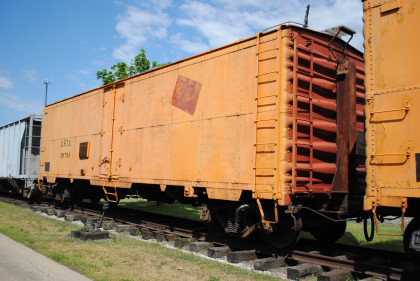
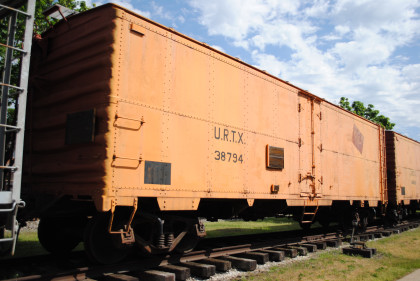
Union Refrigerator Transit Company refrigerator car 38794 built by General American in 1954 and leased to the Milwaukee Road.
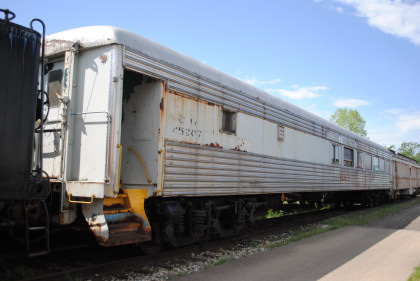
Conrail maintenance-of-way car 45907, ex. Penn Central 4573, nee New York, New Haven & Hartford grill-dining car 953 built by Pullman-Standard in 1949. It was a less-formal alternative to the full dining cars and twin-unit diners that many railroads owned. When owned by Conrail, it served as part of the wreck train in Selkirk, New York and donated by them in 1997.

New York Central one dome tank car 16039, built by the railroad in 1952 and donated by Sturgis Metal & Iron in 2006.
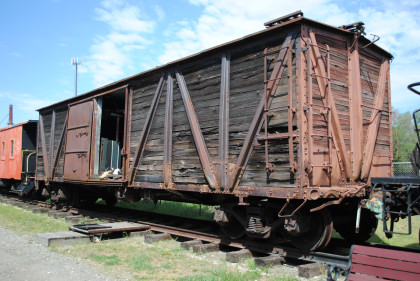
Pennsylvania Railroad wooden box car 499656, with steel reinforced sides.
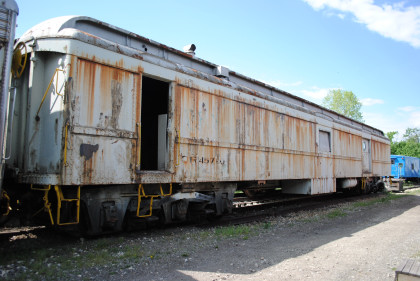
Conrail maintenance-of-way car 45710, ex. Pennsylvania Railroad RPO-baggage car 710, nee New York Central 9036). When owned by Conrail, it served as part of the Selkirk, New York wreck train and donated by Conrail in 1997.

New York Central transfer caboose 18136 built by the railroad in 1967 from a 1949 box car.
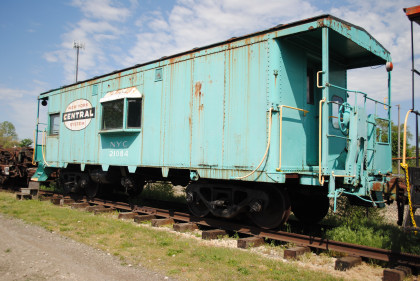
New York Central bay window caboose 21084, built by the railroad in 1963.
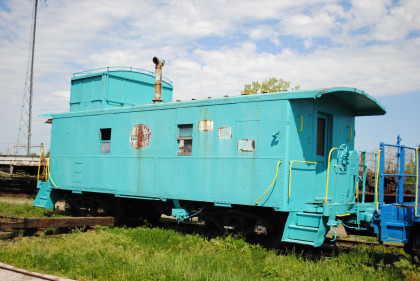
New York Central standard wooden caboose 19211 built by the railroad circa 1910.
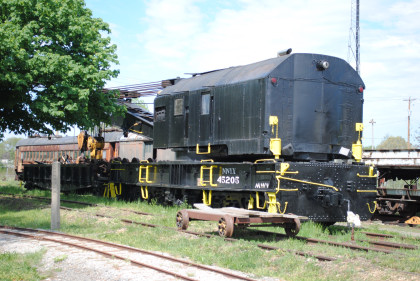
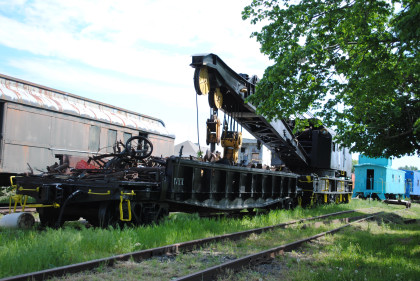
New York Central idler car 504472 for crane X-13 built by Industrial Brownhoist in 1949. It was the first of four oil fired, self propelled steam cranes built by the company, and was based in Selkirk, New York then donated by Conrail in 1997.
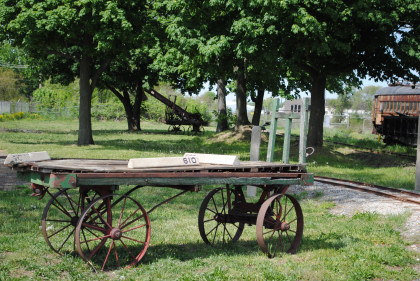
A baggage cart.
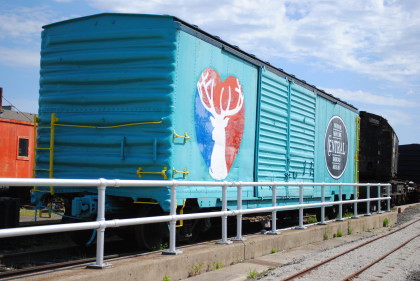
Baltimore & Ohio double-door box car 288257, built by the railroad in 1957.
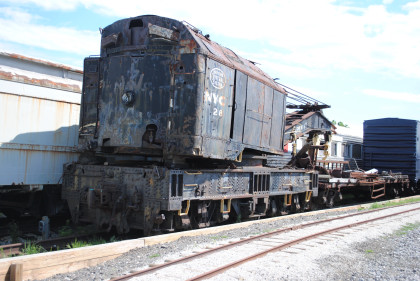
New York Central 150-ton capacity crane X-28, built by Industrial Works in 1923 and based at the railroad's large Harmon Yard in Croton-on-Hudson, New York.
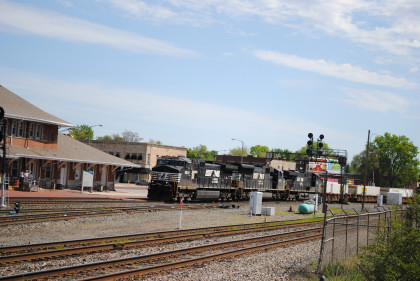
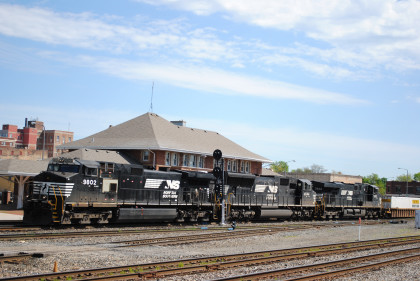
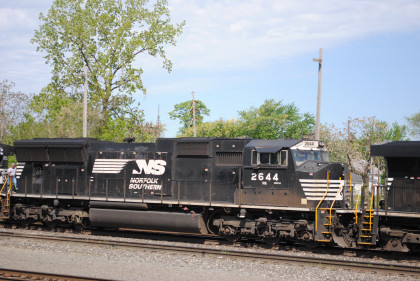
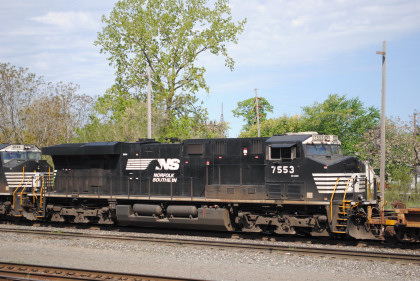
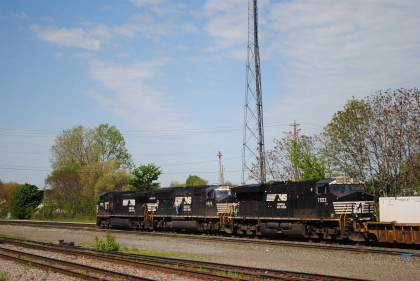
Norfolk Southern 9802 West went through.

Museum scene.
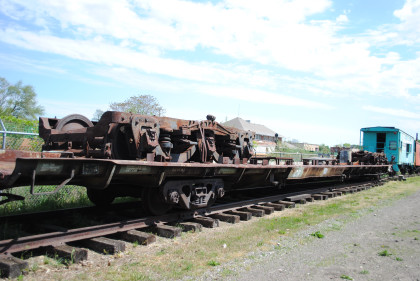
Merchants Despatch flat car 725023, donated by Norfolk Southern in 2007.
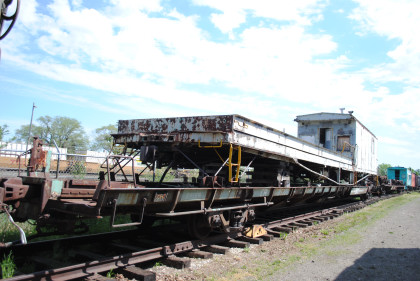
Merchants Despatch flat car 725220, donated by Norfolk Southern in 2007.
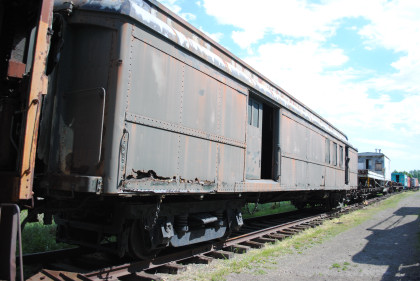
New York Central railway post office-baggage car 5104, nee-Michigan Central 1016, built by the Standard Steel Car Company in 1914. It was converted for work train service in the 1950's.

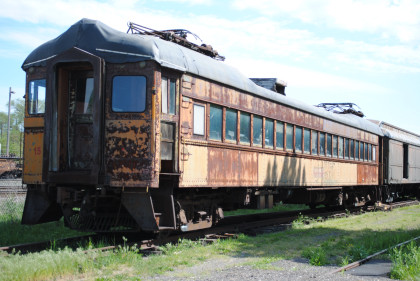
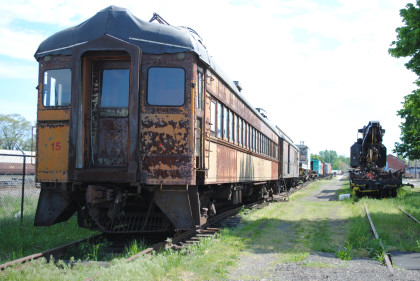
Chicago, South Shore and South Bend electric commuter car 15 built by Pullman-Standard in 1926. It was the first of the South Shore's cars to be lengthened to 78 feet by adding a new section in the middle.
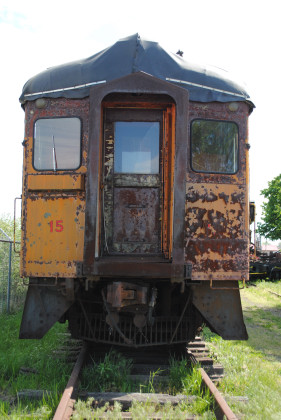
The face of Chicago, South Shore and South Bend 15.
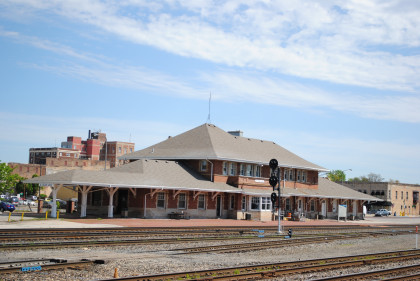
A western view of the Elkhart station.
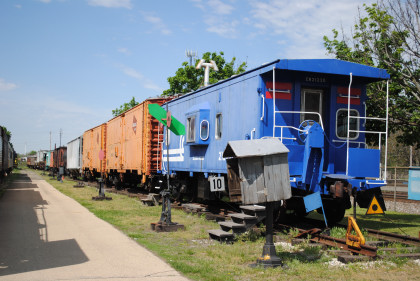
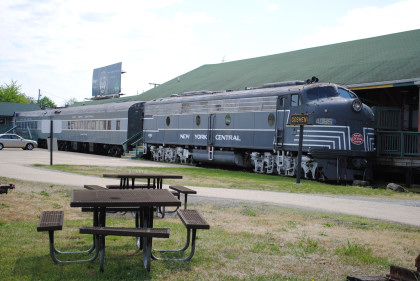
Two museum views.
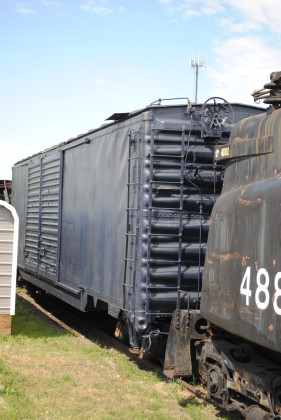
Baltimore & Ohio fifty foot double-door box car 288121 built by the railroad in 1957.
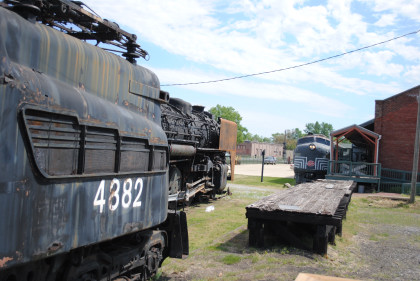
I wonder if this view ever occurred when all three engines were in service at Sunnyside Yard in New York City? I returned inside and thanked the Museum staff for my visit.
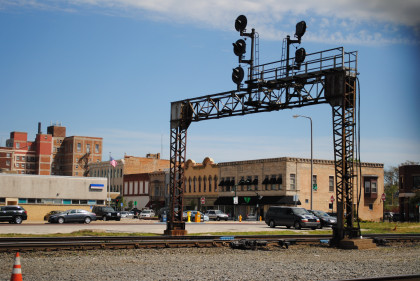
The signal bridge in Elkhart.
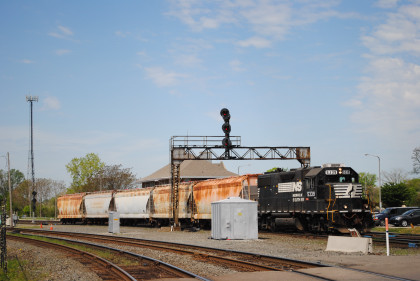
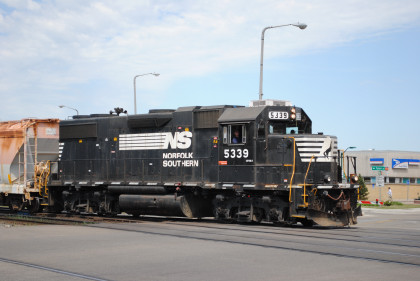
Norfolk Southern GP38 5339, nee Conrail 8172, built by Electro-Motive Division in 1977, leading a local.
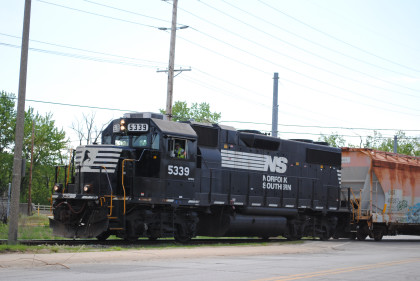
I drove via a detour to my next destination in town and was amused to see the same local here then found a parking lot next to where the Elkhart & Western motive power was kept when not in use. This railway is owned by Patriot Rail and is a Class III shortline operating three unconnected lines in northern Indiana. The first, the Elkhart Branch, is in and around the city of Elkhart in Elkhart County, the second, the Argos Branch, radiates from Argos in Marshall County and the third, the Monon Branch, operating from Monon to Monticello in White County.
Pioneer Railcorp created the Elkhart & Western Railroad on May 1, 2001, from a ten-mile stretch of the Michigan Southern Railroad. The Elkhart Branch begins at its junction with the Norfolk Southern Railway near the center of Elkhart, then crosses the St. Joseph River which it follows westward, and finally ends on the northeast side of Mishawaka, in neighboring St. Joseph County. The Argos Branch runs from Walkerton (via Plymouth and Argos) to Argos and operations are based there. In March 2023, the owner of the Argos Branch, Fulton County Railroad, gave up EWR's operating rights of the line from Argos to Rochester. The Rochester & Erie Railway (RERY) was created to operate this segment. EWR remains the operator of the Argos Branch from Argos northward.
In January 2018, CSX sold 9.58 miles of track running from Monon to Monticello to E&W. Operations began in August serving the only customer on the line, Monticello Farm Service. EWR was acquired by Patriot Rail after it purchased Pioneer Lines in August 2022.
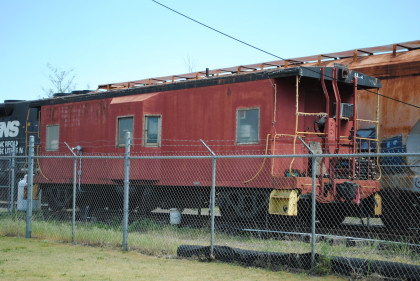
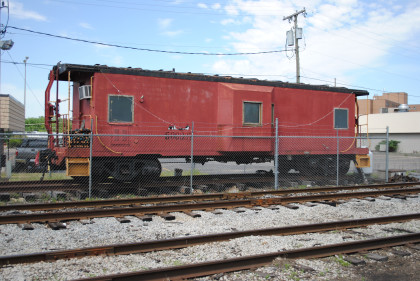
Elkhart & Western caboose 500007, ex. Alabama Railroad 500007, exx. Buffalo Southern Railroad, exxx. Norfolk Southern, nee Southern X538, built by Gantt Manufacturing in 1971.
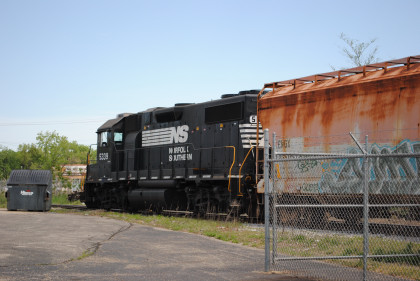
Norfolk Southern 5339 was here to interchange cars with this shortline.
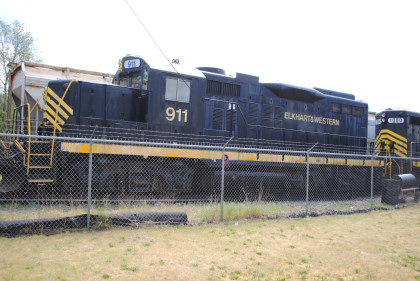
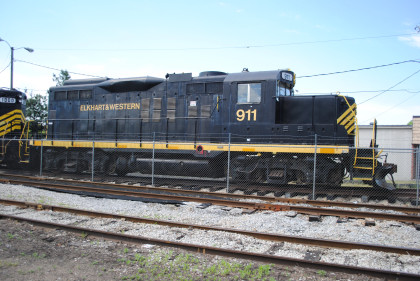
Elkhart & Western GP9 911, ex. Pioneer Rail Equipment 911, exx. Minnesota Valley 315, exxx. Minnesota Central Railroad 315, nee Milwaukee Road 315 built by Electro-Motive Division in 1959.
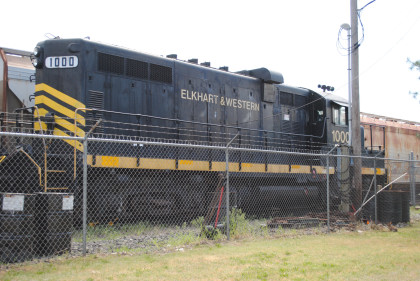
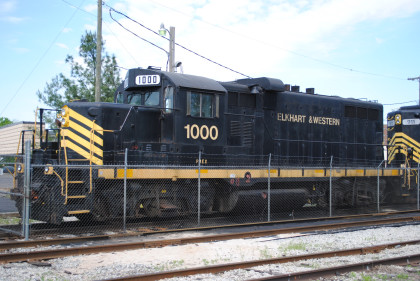
Elkhart & Western GP10 1000, ex. Pioneer Rail Equipment 1000, exx. Illinois Central Gulf 8465, exxx. Illinois Central GP10 8465, exxx. Burlington Northern GP7 1522, nee Great Northern GP7 622, built by Electro-Motive Division in 1950.
After a very successful time in Elkhart, I started my westward drive.