




We were now on the top of Pikes Peak. I would walk around the summit counter-clockwise.
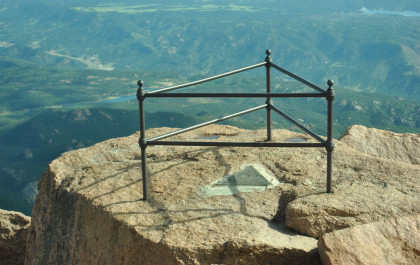
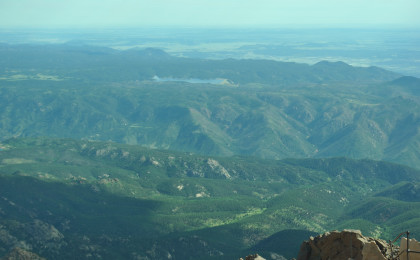
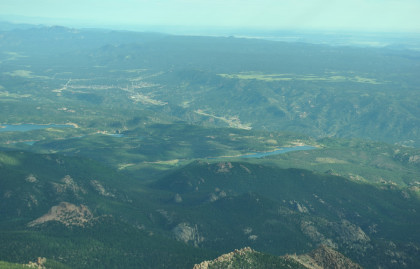
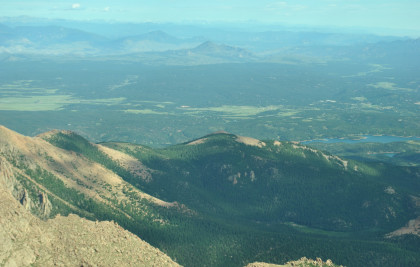
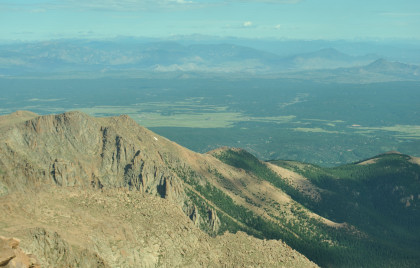
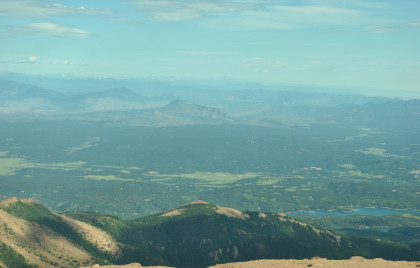
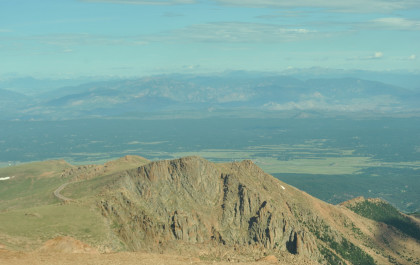
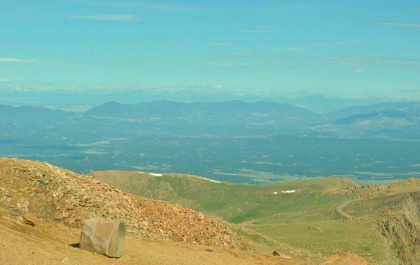
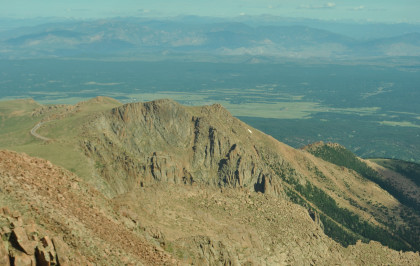
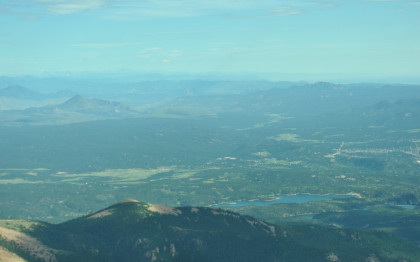
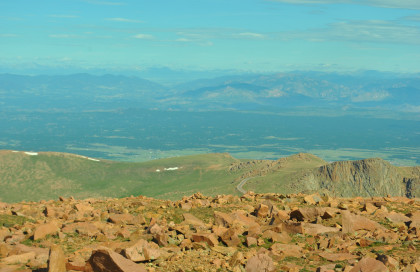
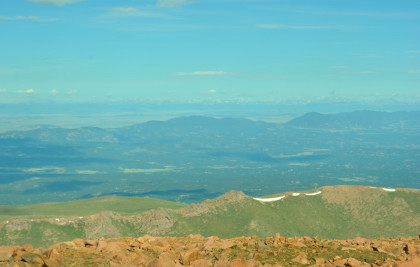
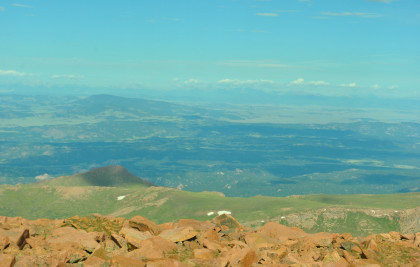
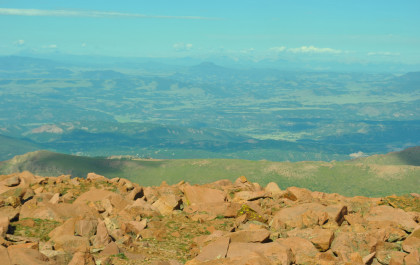
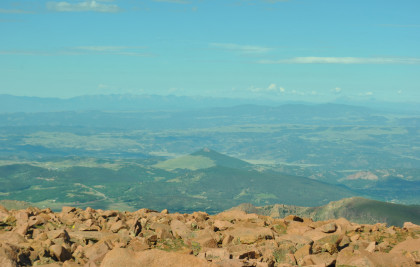
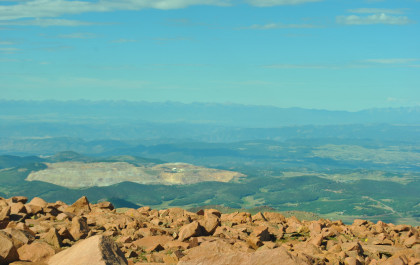
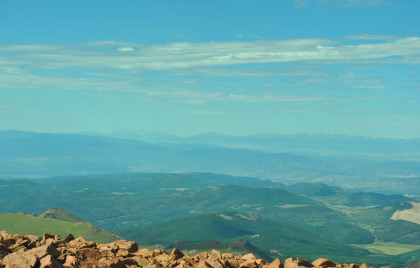
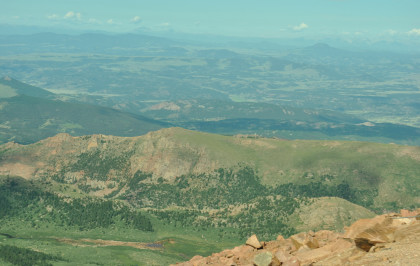
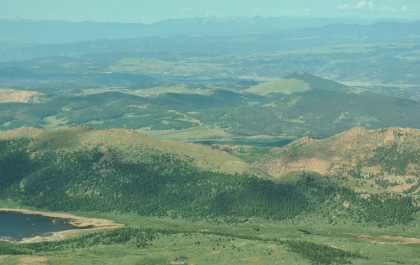
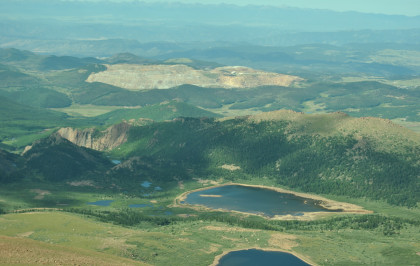
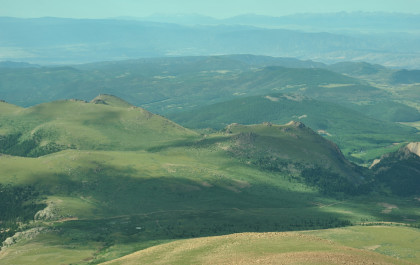
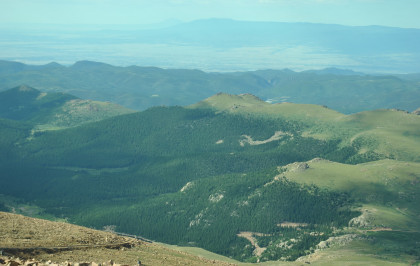
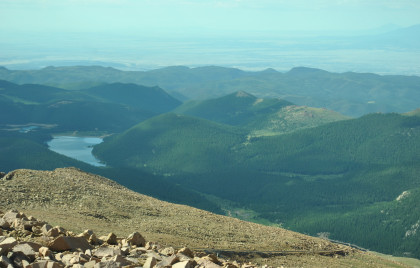
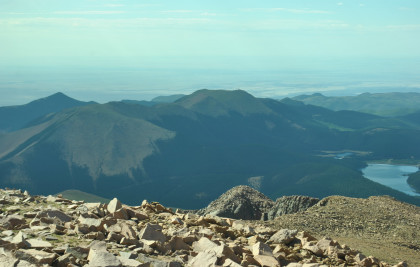
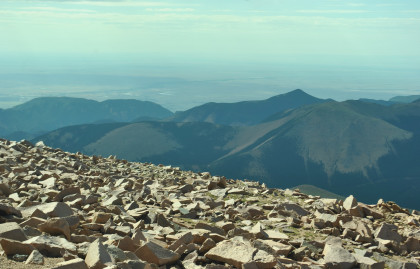
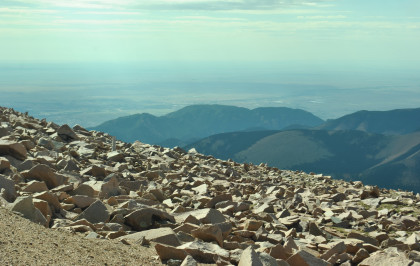
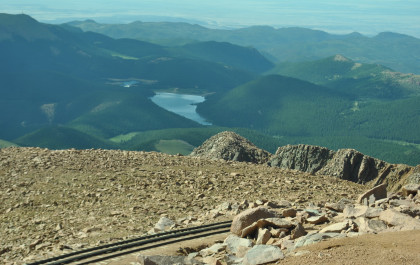
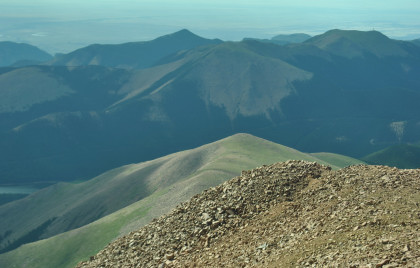
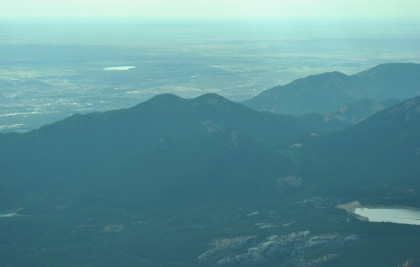
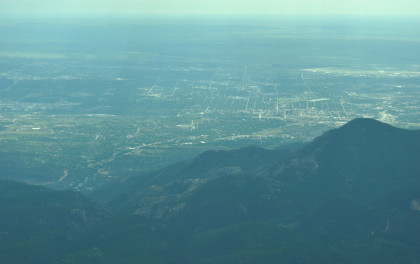
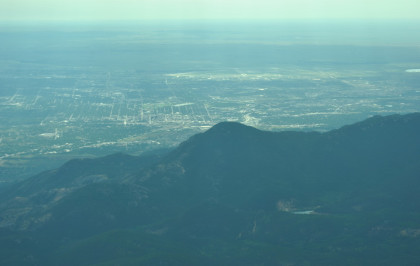
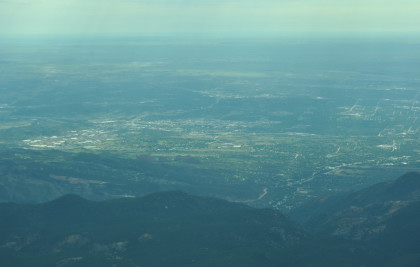
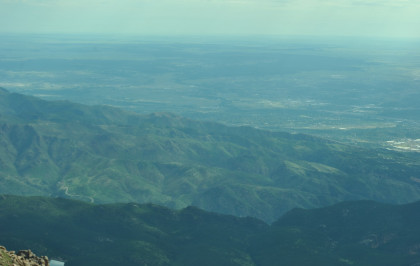
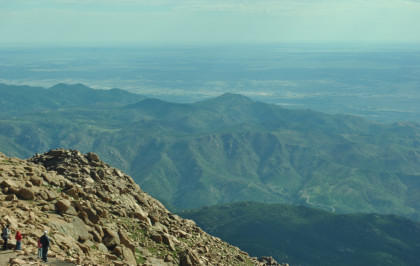
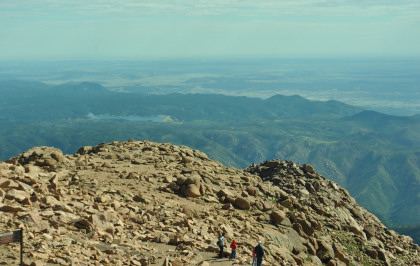
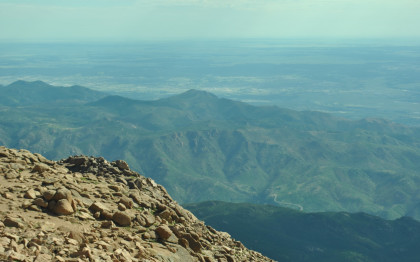
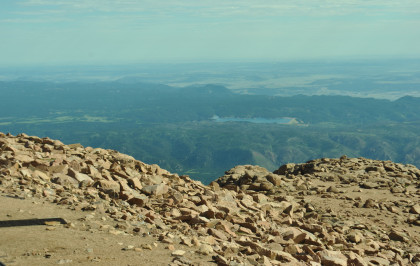
The views from the summit of Pikes Peak.
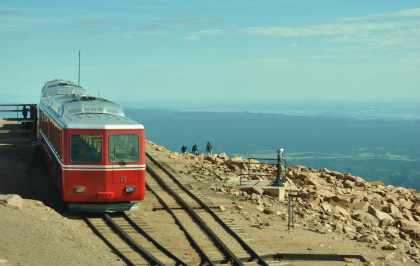
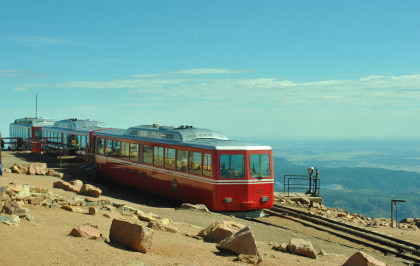
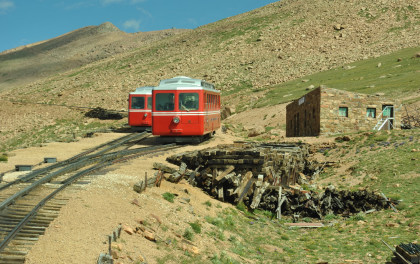
The trains at the summit. I went inside the Summit House and bought a doughnut.
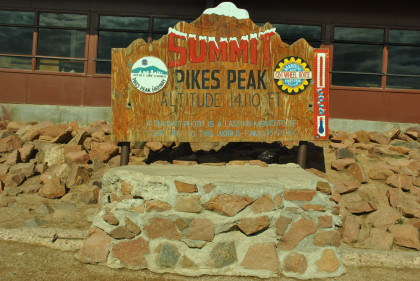
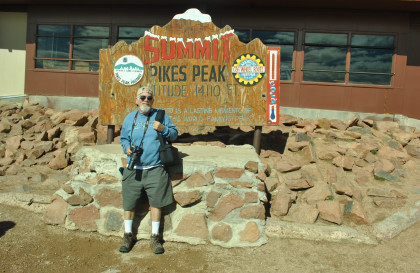
The Pikes Peak Summit sign at 14,110 feet above sea level.
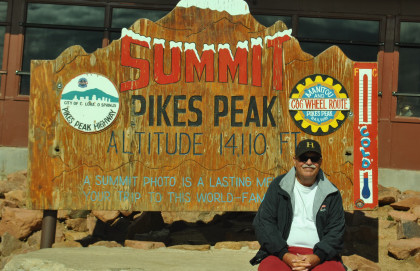
The author.
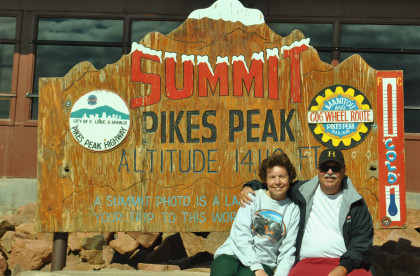
Elizabeth and I.
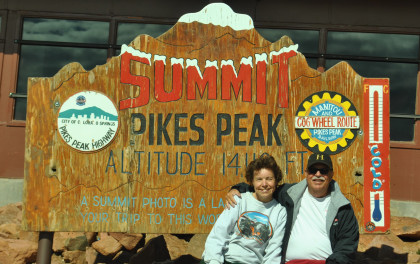
Elizabeth.
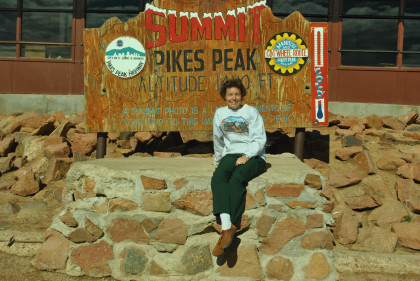
Sofie Navarro.
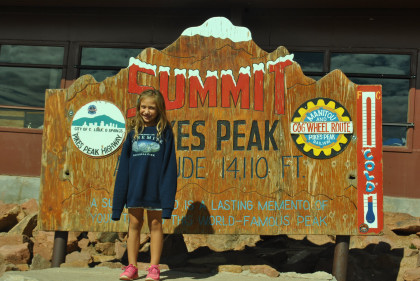
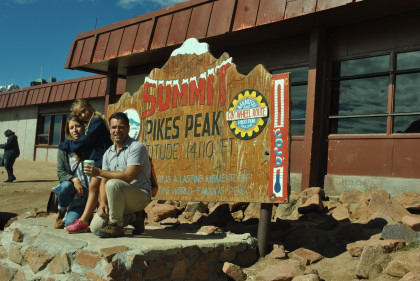
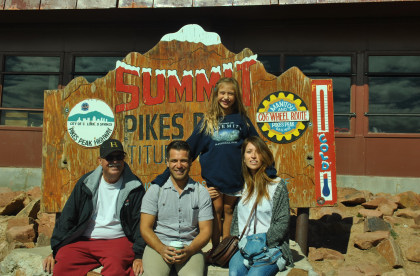
The Navarro family.
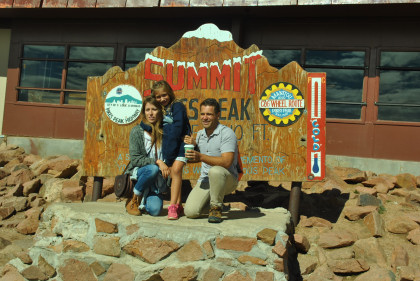
The Navarro family and I.
Robin Bowers at the sign. A few minutes later, we all boarded the train for the journey down the mountain.
On the way back down, we passed trains at Windy Point. We returned to the base station at Manitou Springs and it was time to say goodbye to the Navarro family. What were the odds that they could be on a train with me in Colorado, and seated with me? It had been a fantastic trip on the Manitou and Pike's Peak Cog Railway.
The Drive Back to DenverWe left Manitou Springs and drove east on US 24 to Colorado Springs.
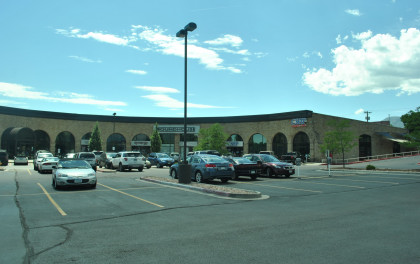
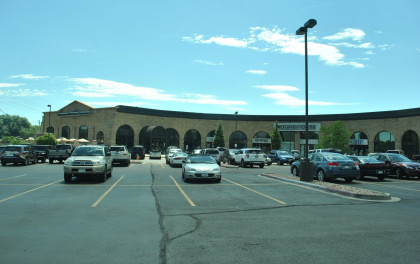
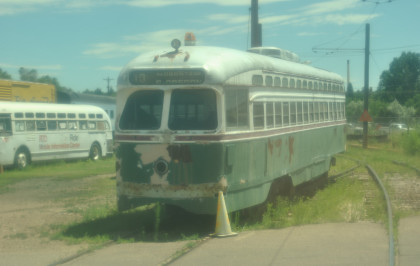
The Colorado Midland Railroad roundhouse, built in 1889, still stands in Colorado Springs but has a much different use today. Next we stopped by the Colorado Springs & Interurban Railway to see if we could ride as we did not have an opportunity on July 16th. Once there, we met the same gentleman who had been there on Saturday and he agreed to give us the ride.
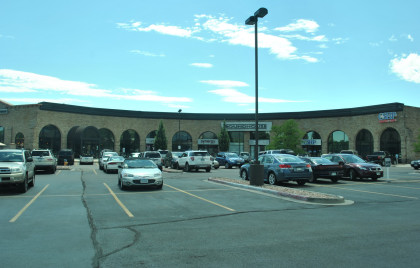
SEPTA PCC 2129 would do the honours.
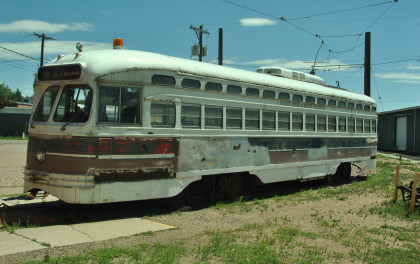
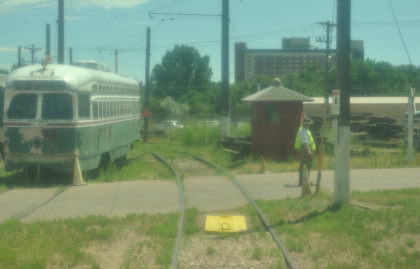
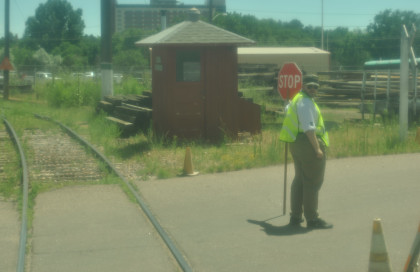
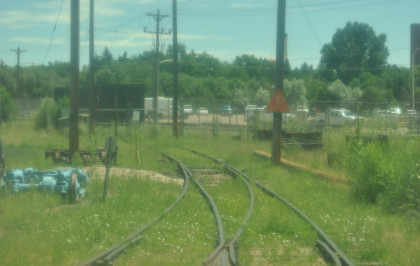
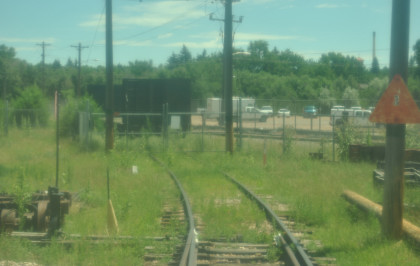
After our two rides on their former Rock Island trackage, we thanked our operator and flagman before we departed for the Air Force Academy. Robin is a veteran and wanted to see the Chapel, as did I. We stopped at the North Gate where I had to show identification, followed the signs to the Chapel and parked in the visitor parking lot and walked onto the grounds.
As aviation advanced after the Wright Brothers’ first flight, the nation’s military aviation service followed a constantly growing lineage from 1907 to 1947. Officials discussed the establishment of an aeronautical academy for decades, and when the Air Force became a separate service in 1947 under the National Security Act, plans for an Air Force Academy officially got underway. Harold E. Talbott, the Secretary of the Air Force at that time, appointed a commission to assist him in the selection of a permanent site. After traveling 21,000 miles and considering 580 proposed sites in 45 states, the commission recommended three locations – Alton, Illinois; Lake Geneva, Wisconsin; and Colorado Springs, Colorado.
As the Cold War continued, the nation’s reliance on airpower as the primary agent of deterrence highlighted the need for more Air Force officers. Initially, the U.S. Air Force Academy’s cadet strength was set at 2,529. On March 3, 1964, President Lyndon B. Johnson signed Public Law 88-276, authorizing both the Academy and West Point to expand to the Naval Academy’s strength of 4,417. The Vietnam War was the first war in which Academy graduates fought and died. Capt. Lance P. Sijan, Class of 1965, was severely injured when his F-4 exploded on a bombing run November 9, 1967. He managed to evade capture for 45 days despite a fractured skull, mangled right hand and a compound fracture of his left leg. He died a prisoner of war on January 22, 1968 and became the first Academy graduate to be awarded the Medal of Honor in March 1976. Sijan Hall was named in his memory.
On June 28, 1976, a group of 157 pioneering women joined the Cadet Wing. Thanks to then-Academy Superintendent Lt. Gen. James R. Allen and his relentlessly optimistic leadership, the incorporation and transition was relatively smooth. Ninety-seven of the original female cadets completed the program and graduated May 28, 1980.
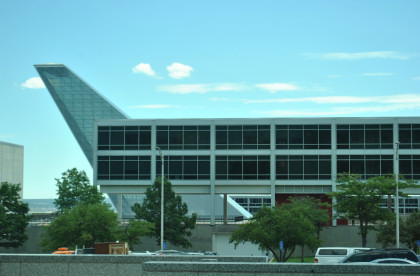
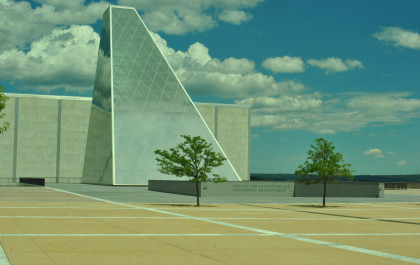
Polaris Hall, named for the North Star, is home to the Center for Character and Leadership Development. The CCLD is an inspiring example of the U.S. Air Force Academy’s focus on developing leaders of character for the nation’s Air Force and Space Force.
Crowned with an intricate framework of glass and steel, the 43,000 square feet Polaris Hall features a large, centrally-located lecture hall, state-of-the-art meeting and collaboration rooms, as well as the Honor Board Room. The 105-foot tower points directly toward Polaris, the North Star, and symbolizes the core values of the Academy. It’s here that cadets, instructors, military leaders, and public and private officials come together for conversations that help instill in Academy’s graduates, the integrity and moral compass that will guide them for years to come.
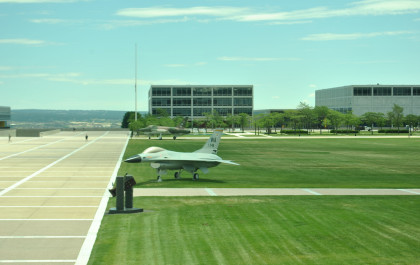
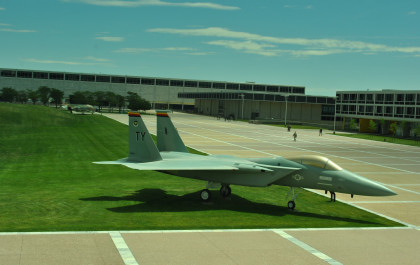
The main buildings in the Cadet Area surround a large pavilion known as The Terrazzo, designed by landscape architect Dan Kiley. The name comes from the walkway’s terrazzo tiles that are set among a checkerboard of marble strips. Models of planes are on display.
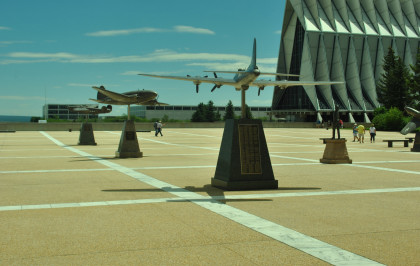
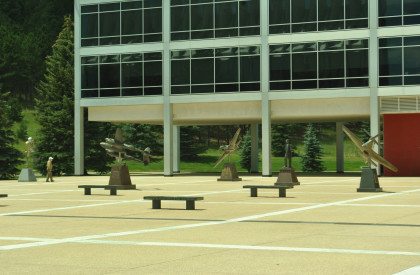
Models of military aircraft.
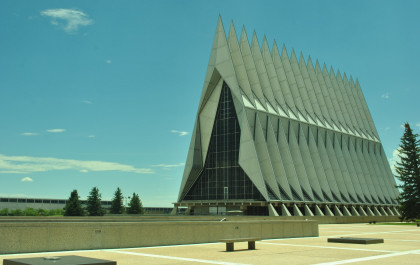
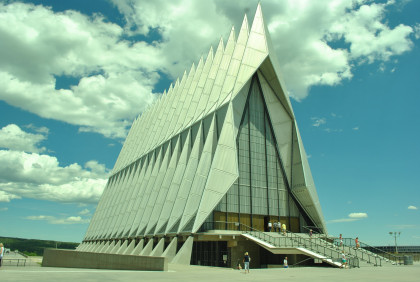
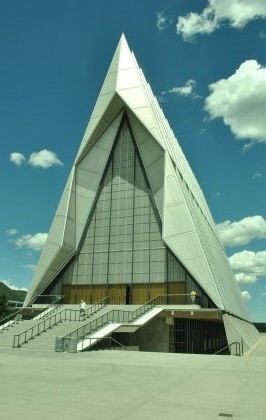
The Air Force Academy Chapel. This aluminum, glass, and steel structure features 17 spires that shoot 150 feet into the sky. It is considered among the most beautiful examples of modern American academic architecture. It serves as an all-faith center of worship for cadets and includes Protestant, Catholic, Jewish and Buddhist chapels, an All-Faiths Room, and a Falcon Circle, each with its own entrance. The Chapel is capable of holding services in all rooms at one time. In addition to the main office in Sijan Hall, chaplains and Religious Affairs Airmen are also assigned to each of the four cadet groups. Chaplain offices are provided in both halls. Chaplains provide all cadets with daily opportunities for worship, regular visitation within the cadet-training areas, and are available to provide confidential counseling and mentorship.
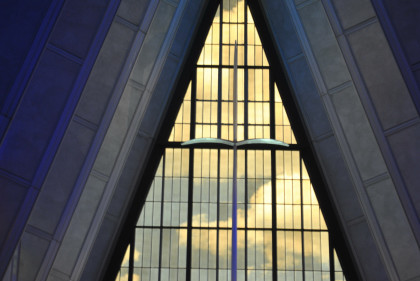
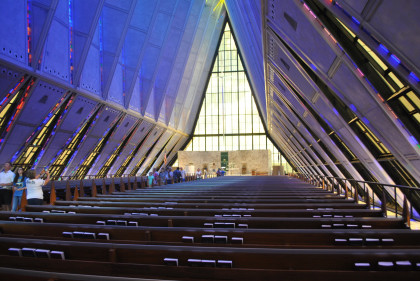
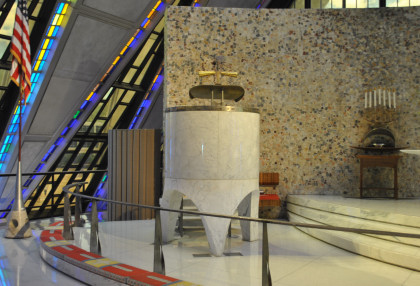
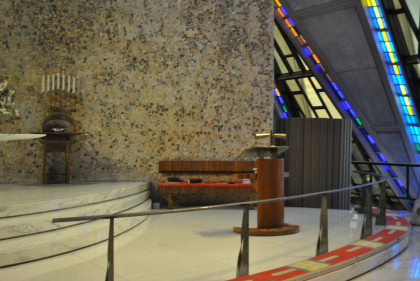
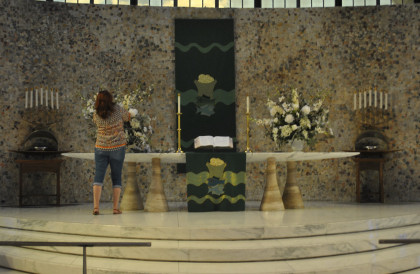
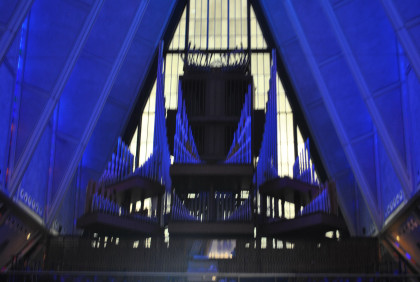

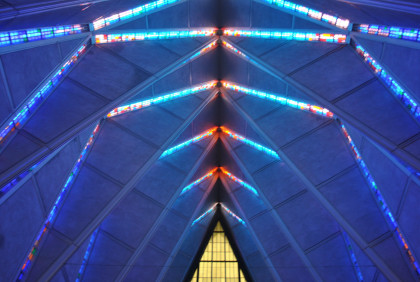
The interior of the Protestant Chapel which is on the upper level.
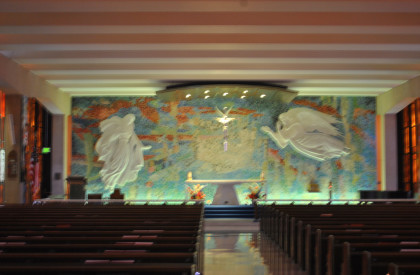
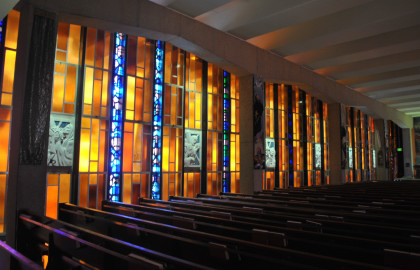
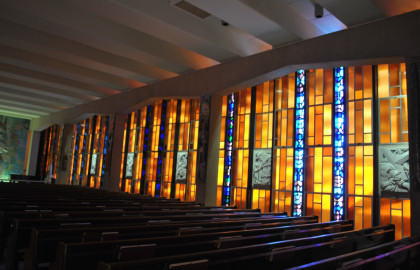
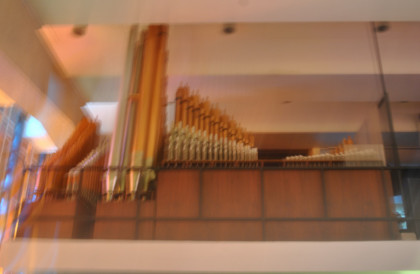
The Catholic Chapel on the lower level, where Jewish and Buddhist Temples were also located.
While it was sunny when we arrived, we exited to pouring rain as we quickly made our way back to the car and drove via Palmer Lake before going around a traffic jam in Larkspur, then returned to Denver, dropping Robin off at the Super 8 and Elizabeth and I checked into the Quality Inn next door.
Here the Internet worked extremely well and we worked on travelogues until about 6:15 PM.
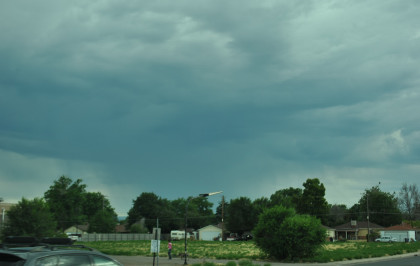
We walked to the Holiday Inn under stormy skies.
The 2016 NRHS Convention Banquet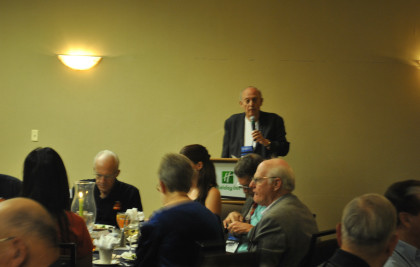
John Goodman, Convention Chairman, welcomed everyone.
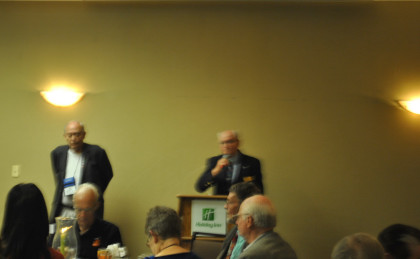
Jim Ferris, of the C.P. Huntington Chapter gave the invocation. The meals were served late and my portion of steak was much too small.
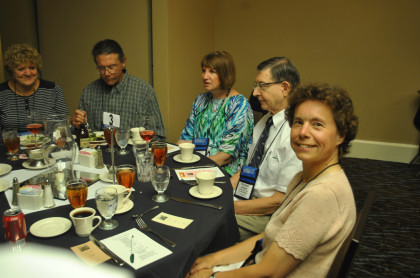
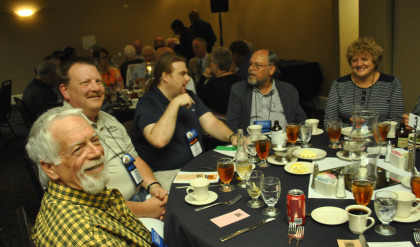
My tablemates for this banquet.
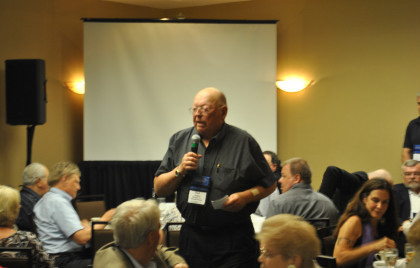
Carl Jensen then talked about the two NRHS Rail Camps which was followed by baskets being passed around to collect donations for this program. We all gave $1,407.50, then someone wrote a cheque for the same amount, bringing the total to $2,907 for the evening.
NRHS President Al Weber then introduced our guest speaker, Union Pacific Railroad's Edgar E. Dickens, head of the steam program.
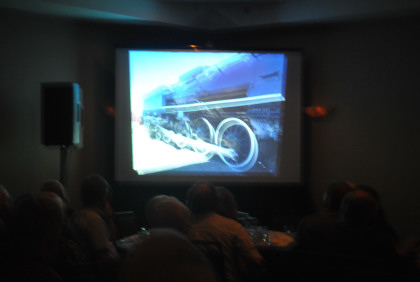
Ed Dickens explained the process of the complete rebuilding of Union Pacific 844 aided by a Powerpoint presentation.
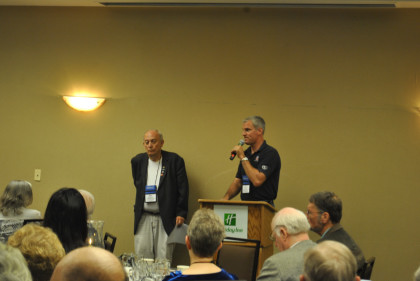
There were several questions at the end of his presentation.
Skip Waters was taking it all in. After that the banquet was over, Robin, Elizabeth and I walked back to our hotels for the night.
| RETURN TO THE MAIN PAGE |