




I arose at the Hotel Roanoke then went for a walk while Robin slept.
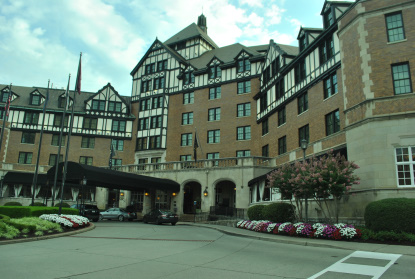
On a hill dominating the city of Roanoke’s downtown, the sprawling half-timbered Tudor Revival structure stands on the site of the original hotel erected in 1882 by the Norfolk and Western Railway, the same year the company established its headquarters in Roanoke. The present building, though architecturally unified, has had a complicated evolution. The dominant portion dates from 1938 and was designed by Knut W. Lind, a hotel specialist and partner in the New York firm of George B. Post & Sons. Attached are wings dating from 1931, 1946 and 1954. The original hotel, rebuilt in 1899 following a fire, was demolished for the present structure. The Hotel Roanoke closed in 1989 and was donated to Virginia Tech. Following extensive restoration and the addition of a large conference center, the hotel reopened in 1995.
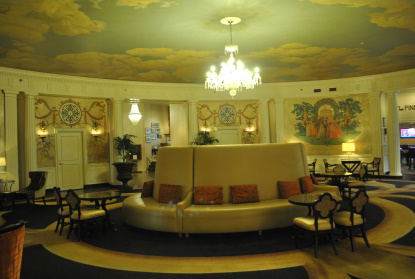
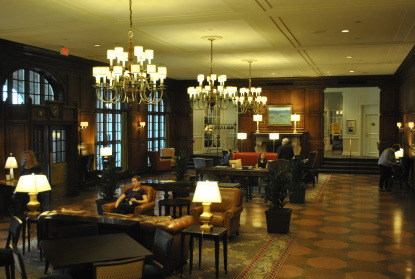
The lobby area. I walked out onto the glass bridge over the Norfolk Southern mainline.
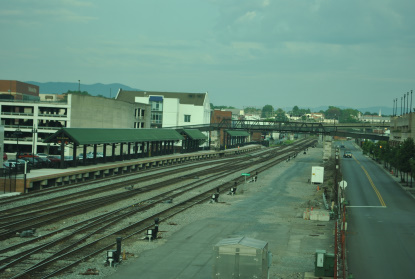
Looking west are the main lines, the Amtrak station and downtown Roanoke.
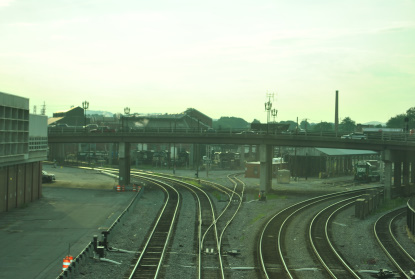
Looking east, the main line splits, with the right going to Norfolk and left to Harrisburg. The Roanoke Shops are in the middle.
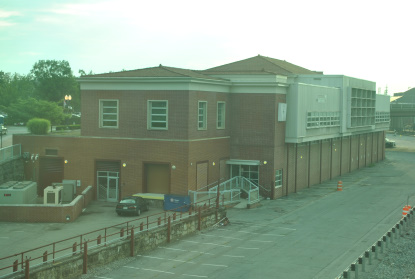
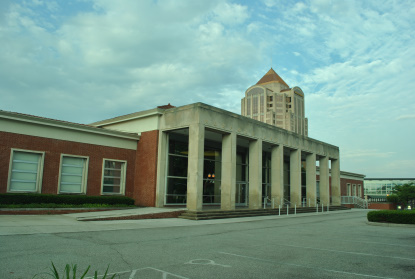
The Norfolk and Western station that houses the O. Winston Link Museum and the Roanoke Visitor Center. I returned to the room, we packed and called Enterprise to pick us up, which they did in the car we rented, a Ford Fiesta.
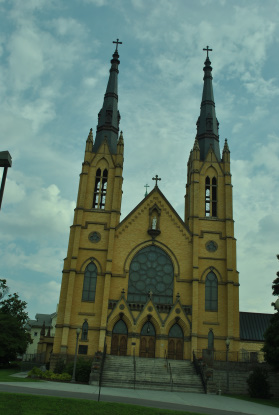
The Basilica of St. Andrew, also known as St. Andrew's Catholic Church, built in 1900-1902, is a buff brick church on a stone foundation in the High Victorian Gothic style. It has a cruciform plan and features two tall Gothic towers which flank the main entrance and are square in plan. On each tower are two small lancet windows, two large pointed-arch stained-glass tracery windows, and sets of double pointed-arch openings at the belfry. Also on the property is a rectory built in 1887. The church replaced an earlier small brick church built in 1883.
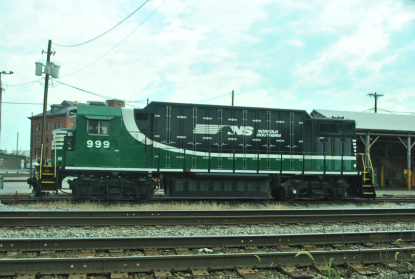
Norfolk Southern BP4 999, a battery-powered rebuilt GP38 locomotive built by the Altoona Shops, which has a power output of 1,500HP. The diesel prime mover was replaced with 1,080 12-volt lead-acid batteries and associated control equipment.
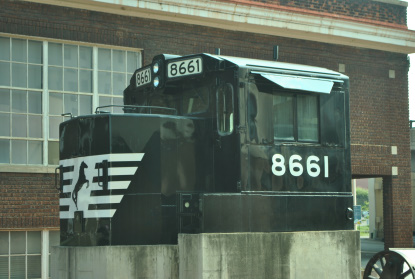
The cab of Norfolk Southern 8661 outside the Virginia Museum of Transportation.
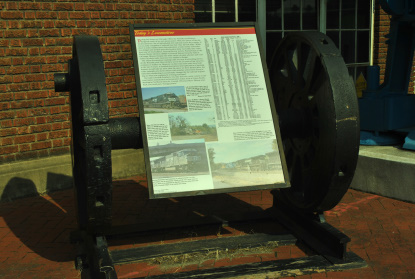
"Today's Locomotives" information board.
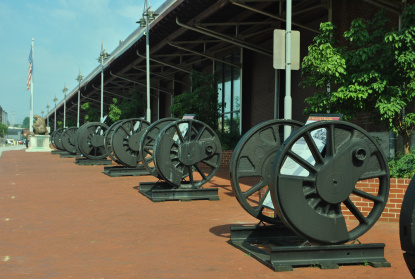
The museum building is at the western end of the David R. and Susan S. Goode Railwalk, which extends from the museum to the O. W. Winston Link Museum. It is named after David R. Goode, President, Chairman and CEO of the Norfolk Southern from 1992 to 2006, and his wife Susan. During Goode's tenure, Norfolk Southern donated a number of artifacts from the old Farmville line for use in the railwalk, which parallels the old Norfolk & Western rail tracks.
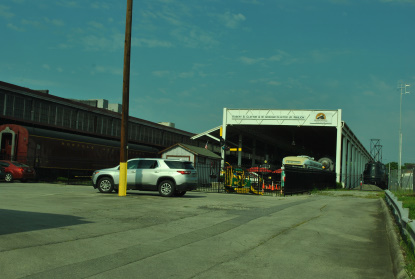
The museum from the east side.
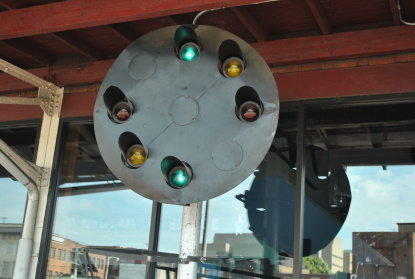
A Norfolk and Western tri-colour signal in front of the museum.
Virginia Museum of TransportationThe Virginia Museum of Transportation began its life in 1963 as the Roanoke Transportation Museum located in Wasena Park in Roanoke. The museum at that time was housed in an old Norfolk & Western Railway freight depot on the banks of the Roanoke River. The earliest components of the museum's collection included a United States Army Jupiter rocket and the famous N&W J Class Locomotive 611, donated by Norfolk & Western Railway to the city of Roanoke where many of its engines were constructed. The museum expanded its collection to include other pieces of rail equipment such as a former DC Transit PCC streetcar and a number of horse-drawn vehicles including a hearse, a covered wagon and a Studebaker wagon.
In November 1985, a flood nearly destroyed the museum and much of its collection. It forced the shutdown of the facility and the refurbishment of 611. In April 1986, the museum re-opened in the Norfolk and Western Railway freight station in downtown Roanoke as the Virginia Museum of Transportation. The museum has earned that title, being recognized by the General Assembly of Virginia as the Commonwealth's official transportation museum.
Norfolk & Western 611 and Norfolk & Western 1218 were originally property of the city of Roanoke due to the museum's original charter. On the April 2, 2012, VMT's 50 Birthday, the city officially gifted the locomotive titles to the museum.
The Norfolk and Western Railway freight station was listed on the National Register of Historic Places in 2012. The station consists of two clearly identifiable sections, both of which were completed in 1918. They are the two-story, fifty-bay-long, freight station proper which was built parallel to the railroad tracks and now is oriented south, and the one-story-with-basement brick annex that formerly housed the offices of the Shenandoah and Radford divisions of the Norfolk and Western. The building closed for railroad freight business in 1964.
Our VisitRobin and I was greeted by Courtney, Acting Director of the Virginia Museum of Transportation who assigned us a tour guide to take us through the railyard behind the old freighthouse that has the indoor displays of this museum. This was Robin's first visit and my second.
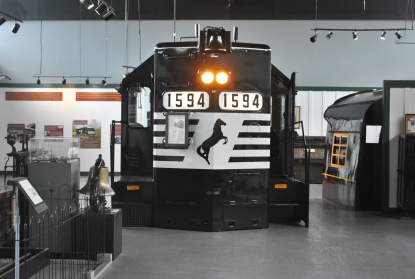
Norfolk Southern SD40 1594 locomotive cab.
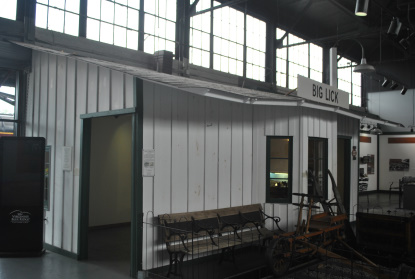
The Big Lick station display.
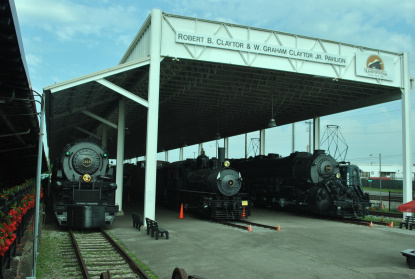
Three rows of steam engines, diesel locomotives and passenger equipment are on display under the covered Robert B. Claytor and W. Graham Claytor Junior Pavilion.
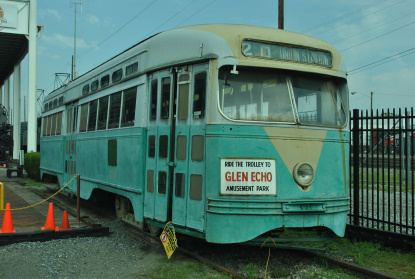
Capital Transit PCC 1470, built by St. Louis Car Company in 1945. It was part of an order of standee-window cars, but unlike the all-electric standee window PCC cars built for St. Louis, Philadelphia, Toronto and other cities, Washington’s cars retained air operated appliances and elements of the original body styling. In late 1944, the War Production Board relaxed some of its restrictions which permitted the return of stainless steel window sash and stanchions, and chrome plating on the upper portion of the seat frames. Capital Transit 1470 also features an auto-trolley catcher. Located at the rear of the car, the device pulls the trolley pole down from the wire and holds the pole in a spring base.
Capital Transit 1470 was based at the Northeastern Division (Eckington) and operated frequently on the Maryland line to Branchville. After retirement, the car was sold in 1963 to the City of Roanoke on behalf of the Virginia Transportation Museum. It was deaccessioned in 2021 and donated to the National Capital Trolley Museum in Baltimore, Maryland.
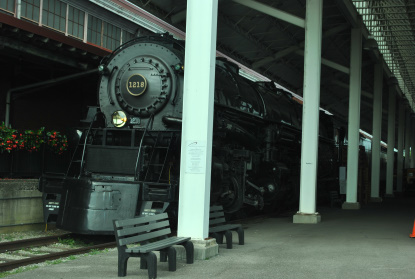
Norfolk & Western 2-6-6-4 1218 built by the railroad in 1936. The A Class was designed to haul fast freight at sustained speeds on all parts of the N&W system and effectively pushed to the limit of the railroad's operating envelope. It was almost at the maximum for track and curvature clearances, with a wheel base that was as long as feasible but still able to use existing turntables. All the As were retired by the N&W between 1958 and 1959. Except for 1218, all the engines were later scrapped.
After retirement in 1959, 1218 was used by Union Carbide as a backup boiler in one of its industrial plants. In 1965, F. Nelson Blount bought it for his Steamtown collection but then sent it to Roanoke, where it went on display and eventually became the property of the city. In 1985, Robert B. Claytor, then president of the Norfolk Southern, arranged for 1218 to be restored for the company's steam programme and on 16th January 1987, it was fired up for the first time in nearly thirty years. It then hauled many excursions until the end of the 1991, after which it went for overhaul, which was still in progress when Norfolk Southern cancelled its steam programme in late 1994. As a consequence, the engine went into storage. 1218 reappeared for a feature in Vanity Fair Magazine with the renowned photographer O. Winston Link in 2001 and was then returned to the Virginia Museum of Transportation on 14th June 2003.
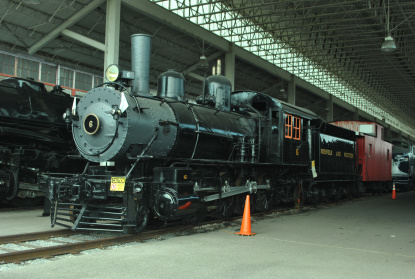
Norfolk & Western 2-8-0 6 built by Baldwin in 1897 as helpers on the railroad's Flat Top Mountain to Elkhorn Tunnel grade in Virginia. Originally, this locomotive was numbered 352 but in May 1917, it was one of two sold to the Virginia Carolina Railroad (two had already been sold in 1914) and renumbered 6. When the N&W later acquired the Virginia Carolina in January 1920, it remained 6 and operated on the Clinch Valley line out of Bluefield, West Virginia with its twin 7. 6 retired from active service in January 1955 and was subsequently donated to the museum. 7 was donated to the City of Bluefield in 1955 and is on display in Bluefield City Park.
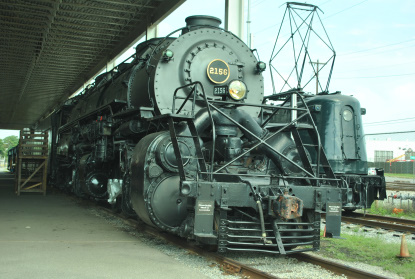
Norfolk and Western YA 4-8-8-4 2156 built by Norfolk Southern in 1942. It was on loan from the National Museum of Transportation in Kirkwood, Missouri.
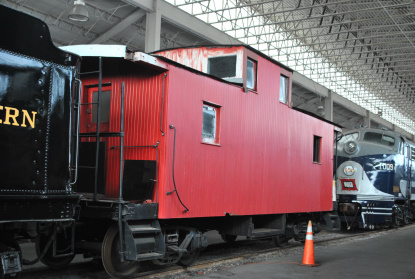
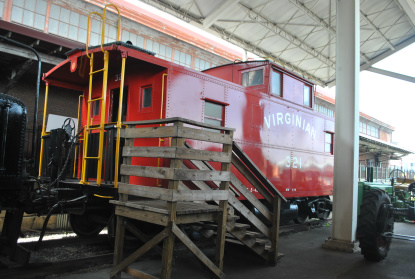
Virginian Railroad caboose 321, built by St. Louis Car Company in 1949.
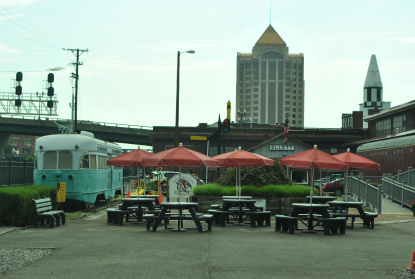
Museum view.
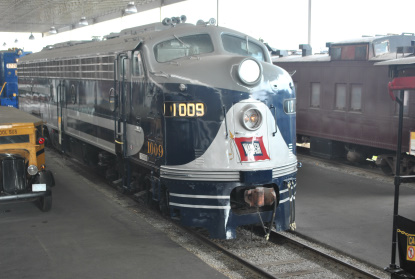
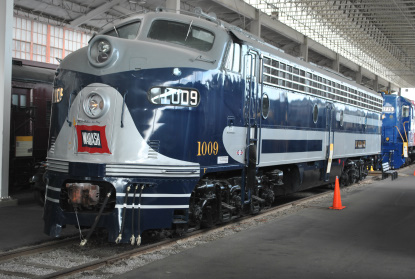
Wabash Railroad E8A 1009 built by Electro-Motive Division in 1951, and was 10,000th diesel-electric built by the company. It hauled streamliners such as the Blue Bird and Banner Blue. In 1964 the N&W acquired the Wabash and donated 1009 to the museum on retirement.
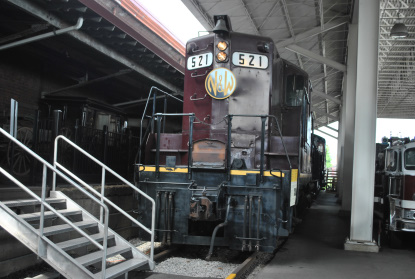
Norfolk & Western Redbird GP9 521, built by Electro-Motive Division in 1955. It was one of only twenty-one that the railway equipped with steam generators so they could haul passenger services. The N&W GP9s were nicknamed "Redbirds" for their distinctive livery.
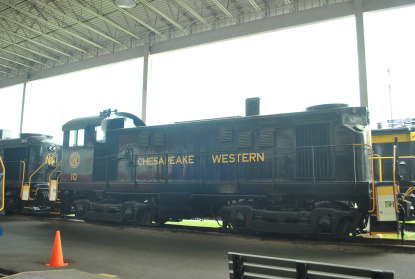
Chesapeake Western T6 10 built by American Locomotive Company in 1955. Fifty-seven T-6s were built by Alco from 1958 to 1969, forty for the Norfolk & Western in 1959. The "T" stood for Transfer, meaning it was capable of faster transition and higher sustained speeds than Alco's regular "S" series switchers. Construction began on the Chesapeake Western in 1895 at Harrisonburg, Virginia. The line was bought by the General Manager, Don Thomas, in 1938 with the N&W's help and the N&W took control in 1954. 40 was transferred to the Chesapeake Western Railway by the N&W, along with two other T-6s in 1964. 40 was renumbered CHW 10. Retired in 1985, it was donated to the museum by Norfolk Southern that year.
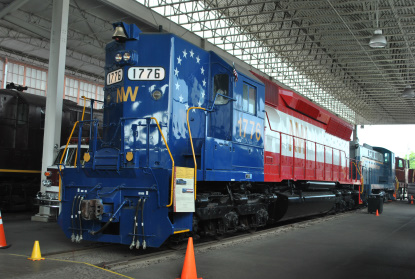
Norfolk & Western SD45 1776 in bicentennial livery built by Electro-Motive Division in 1970. Repainted red, white and blue in May 1974 in celebration of the US Bi-Centennial, it went on a tour of the fourteen states in which the N&W operated with a coal hopper and piggyback trailer in similar colours. In November 1978, it was returned to a standard N&W black livery but, before donating it to the museum in 1990, Norfolk Southern repainted the locomotive in its bicentennial scheme.
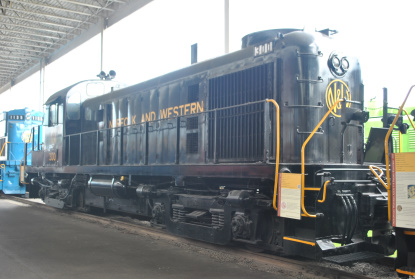
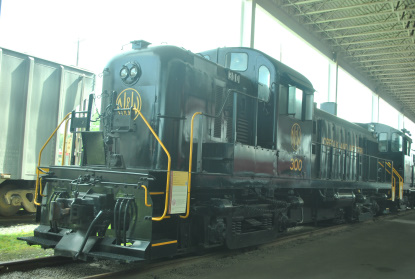
Norfolk and Western RS-3 300 built by American Locomotive Company in 1955 and is one of four RS-3s delivered to railway that year which were the first diesel-electric locomotives owned by the railroad. 300 operated on the N&W's Lynchburg, Virginia to Durham, North Carolina branch. The railroad bought another four of the units the following year.

Chesapeake Western DS-4-4-660 662 built by American Locomotive Company in 1946. It was one of the first diesel locomotives ordered by this western Virginia shortline. Along with DS-44-660, 661 and 663, these three Baldwin built first-generation diesel locomotives completely transitioned the Chesapeake Western from steam to diesel power. They were retired in 1964, replaced by Alco T-6 units and 662 and 663 ended up in the Virginia Scrap Iron & Metal scrap yard in Roanoke. They sat there rusting for over forty years along with three N&W Class M steam locomotives which, collectively, became known as the "Lost Engines of Roanoke". Virginia Scrap Iron & Metal donated the engines to the Virginia Museum of Transportation, which set up a series of partnerships to save all five engines from destruction.
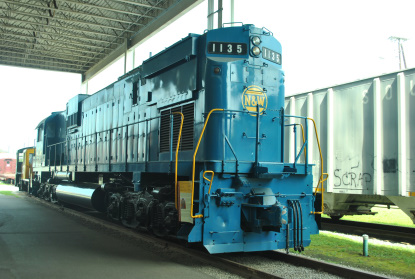
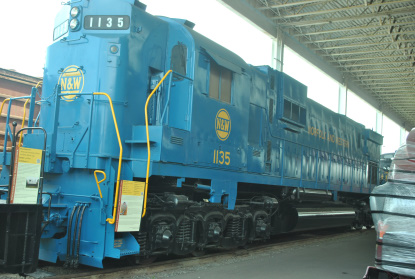
Norfolk and Western C-630 1135 built by American Locomotive Company in 1967, one of ten which were designed with the high short hoods that were mandated by N&W operating policy. Seventy-seven C-630s were built by Alco from 1965 to 1967. In addition to the N&W units, three were built for the Atlantic Coast Line, four for the Chesapeake and Ohio, eight for the Louisville & Nashville, fifteen for PRR, twelve for the Reading, fifteen for Southern Pacific and ten for the Union Pacific. Fifty-four C-630M units were also built by Montreal Locomotive Works.
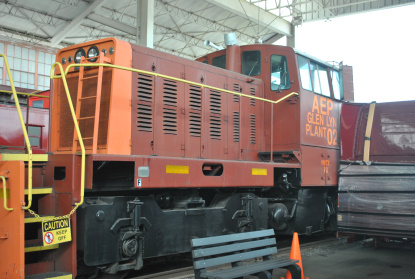
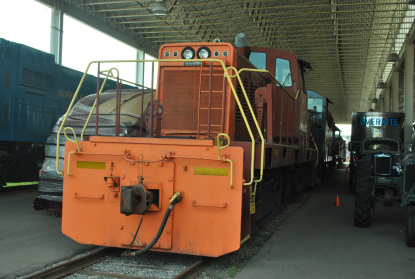
American Electric Power Company Glen Lyn 85-ton center-cab switcher 02 built by General Electric.
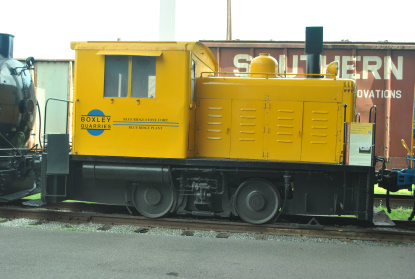
Ridge Stone Company 30DM31 un-numbered built by Whitcomb Locomotive Works in 1941 for Houston Shipbuilding. At some point, it was purchased by Blue Ridge Stone and worked as a switcher at the company's complex in Roanoke. Blue Ridge Stone was part of the Boxley company founded by William Wise Boxley. Boxley partnered with J. C. Carpenter to build railroads, working on the New York Central, C&O, B&O and N&W. In 1908, the pair opened their first quarry. Boxley eventually ceased railroad construction, although production of ballast and crushed stone continued, and the company has continued to diversify into the 21st Century.
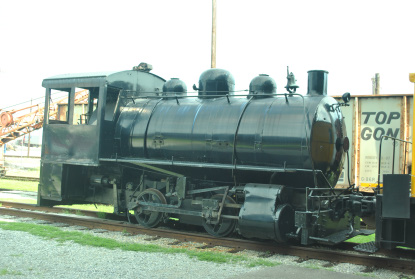
Celanese Porter Fireless 1 built by H.K. Porter in 1943. Powered from a reservoir of compressed air or steam, which is filled at intervals from an external source, fireless locomotives were typically employed for industrial switching at sites where a conventional locomotive was too noxious or risky, such as in a mine or a food or chemical factory like the Celanese plant. Powered from a reservoir of compressed air or steam, which is filled at intervals from an external source, fireless locomotives were typically employed for industrial switching at sites where a conventional locomotive was too noxious or risky, such as in a mine or a food or chemical factory like the Celanese plant.
Celanese Fiber started out as "Cellonit Gesellschaft Dreyfus and Co" in Basle, Switzerland, in 1912. In 1916, operations were extended to Britain and two years later, to the United States when the plant opened at Amcelle between Cumberland and Cresaptown, Maryland. That year, the British business changed its name to "British Celanese Limited" and the United States business adopted the name "Celanese Corporation of America" in 1927. The company specialised in plastics and chemicals, particularly fabrics and yarns.
Although the Baltimore and Ohio transported freight and workers to and from the plant at Amcelle, there was also a sizeable network of rail lines on the property. Celanese was a major local employer and most families in Amcelle had relatives working for the company (at one point, 13,000 people worked there). The plant was closed in the 1960s and then torn down to provide space for a new federal prison.
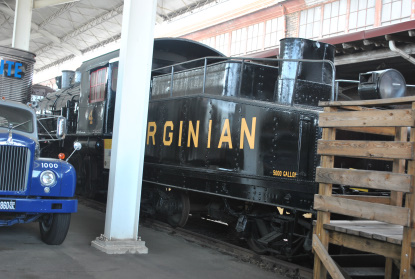
Virginian Railroad 0-8-0 4 built by Baldwin in 1910. It is the only Virginian steam locomotive to have survived. After retiring from service in 1957, 4 was gifted to the City of Princeton, West Virginia, where it went on static display in front of the Mercer County Court House. Unfortunately, exposure to the weather and vandalism led to quite rapid deterioration in its condition. Following a disputed trade of a caboose by the Norfolk & Western in 1960 and a bout of litigation, 4 was refurbished in the N&W shops and donated to the museum in 1963. It finally joined the collection in 1967, just in time for the museum's dedication on 17th June that year.
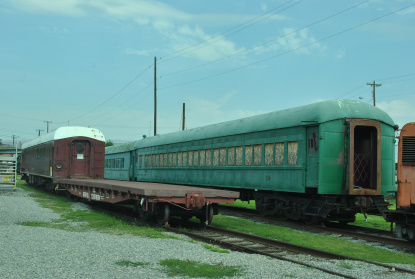
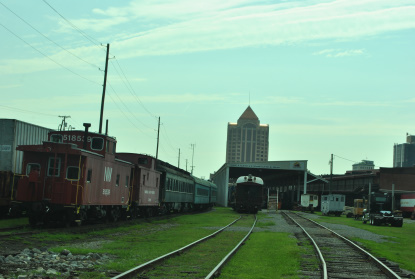
Museum scenes.
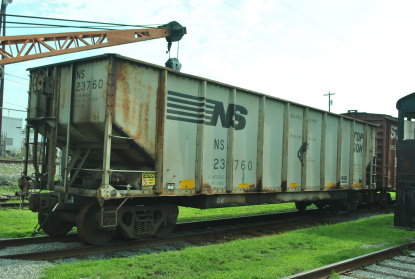
Norfolk Southern hopper car 23760 built by Norfolk Southern.

Mead Corporation 36 inch gauge switcher 200 built by Plymouth in 1935. It worked at Mead Paper Mills in Lynchburg, Virginia until retired in 1981. It was then donated to the museum by Mead Corporation. Since it had undergone some changes in its forty-six years with the company, Carter Machinery of Salem, Virginia, later restored it to its original condition. Mead Paper Mills started out as Heald's Bark Mills in 1846 with a large paper manufacturing factory on the Lynchburg River and adopted the name Mead in 1882. It has survived a number of acquisitions and mergers and is today part of the Rock-Tenn Company.
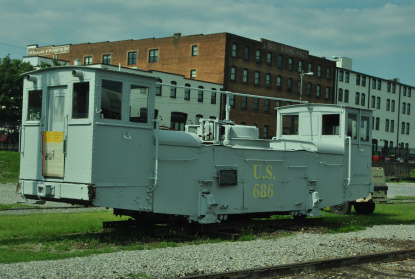
Panama Canal Company mule 686 built by General Electric in 1914. It ran along rails parallel to the canal, pulling ships through the Gatun, Pedro Miguel and Miraflores locks at the west end. These so called "mules" were actually used for side-to-side and braking control in the narrow locks, with forward motion provided by the ships' engines. Each mule had a winch operated by the driver, which was played in or out to keep the ship centered in the lock while moving from chamber to chamber. The mules run on rack tracks, to which they were geared. Only three or four "mules" have survived.
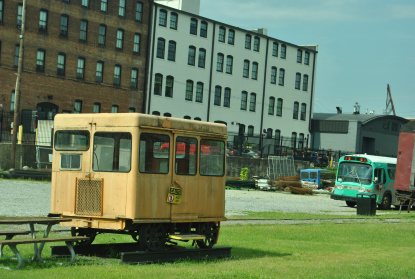
Track speeder of unknown origin.
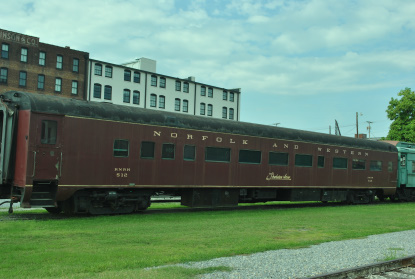
Norfolk and Western 58-seat coach 512 "Powhatan Arrow" built by Pullman-Standard in 1949 and owned by the Roanoke Chapter of the National Railway Historical Society.
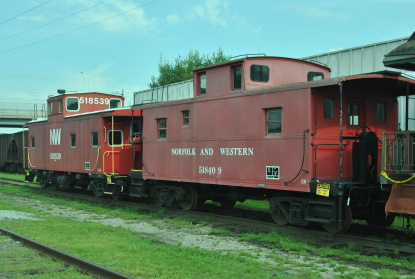
Norfolk and Western caboose 518539, built by International Car in 1969, and Norfolk and Western caboose 518409, built by the railway in 1940.
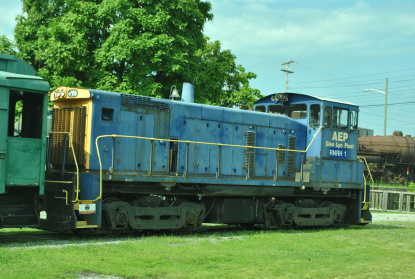
American Power Company Glen Lyn Plant SW1000 1, built by Electro-Motive Division in 1969. It is owned by the Roanoke Chapter of the National Railway Historical Society.
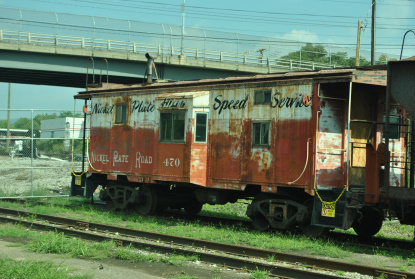
Nickel Plate Road bay window caboose 469, built by International Car in 1969.
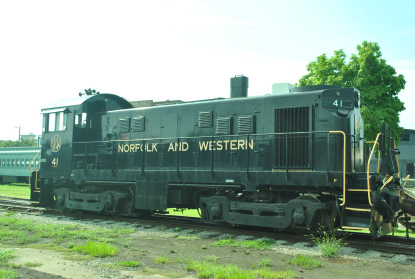
Norfolk and Western T6 41, built by American Locomotive Company in 1959 and represents one of the final batches of diesel locomotives purchased by them. The T-6 was a rugged and versatile switcher designed for both yard and light road freight service. Originally delivered to the Norfolk & Western as #41, the locomotive was later sold to the Chesapeake & Western Railway, where it was renumbered 11. In December 1988, the Roanoke Chapter NRHS acquired the unit, preserving this important piece of N&W diesel heritage for future generations.
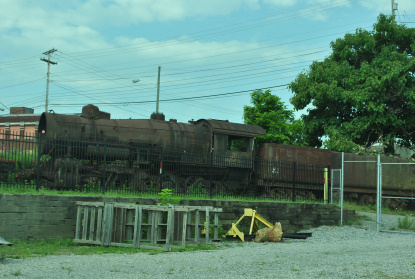
Norfolk & Western 4-8-0 1151 built by Norfolk and Western in 1911. It is one of five surviving Norfolk & Western 4-8-0 locomotives. Retired and sold to Virginia Scrap Iron & Metal in 1950, along with M2 1118, M2c 1134 and 2-8-0 917, the so called "Lost Engines of Roanoke" languished in the company's Roanoke yard in South Jefferson Street for nearly fifty years, later joined by Baldwin built Chesapeake Western DS-4-4-600 switchers 662 and 663, along with other rolling stock and tenders.
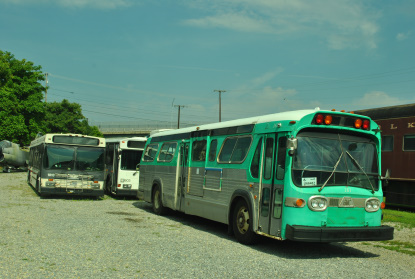
Part of the museum's collection of buses.
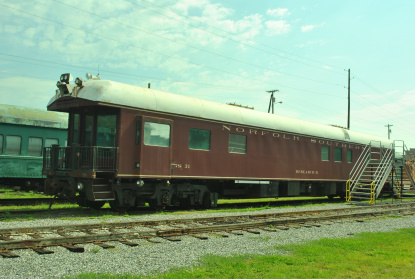
Norfolk and Western Research Car NS 31, ex. Southern 21, exx. Southern R-1, nee Pullman sleeping car 2483 "McCown" built by the company in 1925. It was converted to a track geometry car in the mid 1960's to research and monitor track integrity and had onboard computers which measured track width, rail wear, banking and other track measurements. Half of the car was used for research and the other half contained living quarters for the crew, including a kitchen, dining area and pull down sleeping berths. It was later donated to the Museum by the Norfolk Southern Corporation then in 2007, it was loaned by the Museum back to Norfolk Southern, updated with new technological equipment and returned to service for two years and went to Norfolk Southern.
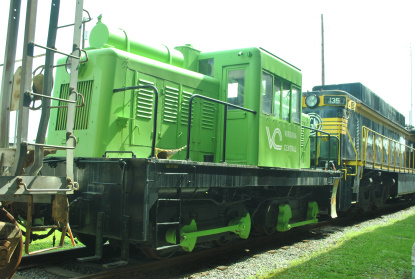
Virginia Central 50 ton diesel-electric switcher 3, built by H.K. Porter built in 1926 for the Virginia Central, the former narrow gauge Potomac, Fredericksburg & Piedmont Railroad. It originally operated thirty-eight miles of track between Fredericksburg and Orange, Virginia. In 1926, the Potomac, Fredericksburg & Piedmont was converted to standard gauge and its name was changed to the Virginia Central Railway. In 1938, the entire line was abandoned except for a one mile segment in Fredericksburg which survived until 1983. The 3 appears to have been donated to the museum some time after the main segment of the VC ceased operations.

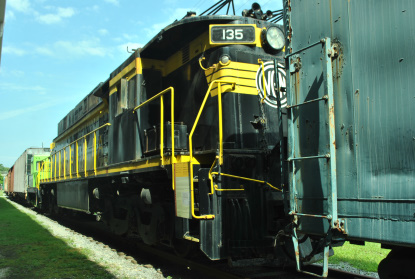
Virginian Railroad EL-C E33 135 built by General Electric in 1956. The VGN merged with the Norfolk & Western in 1959. The N&W saw diesels as the future of motive power and electrification was discontinued in 1962. The EL-Cs were then sold to the New York, New Haven & Hartford in 1963. Reclassified as EF-4s 300-310 (one unit was used for spare parts for the other eleven) on the New Haven, ten of the remaining EL-Cs survived on the Penn Central as well as its successor, Conrail, where they were reclassified E-33 4601-4610. They were finally retired in 1981 when Conrail ended its electrified operations.
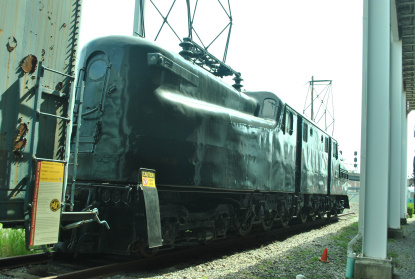
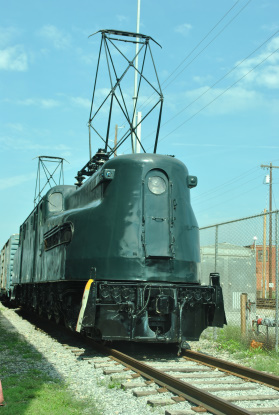
Pennsylvania Railroad GG-1 4919, nee Pennsylvania Railroad 4917, built by the railroad in 1943. It operated under Pennsy, Penn Central, Conrail and Amtrak until retiring in 1970. Until recently, 4919 had the original Brunswick Green coloured body, with the PRR standard Clarendon lettering. Prior to 1942, the lettering was Futura style. GG1s were geared to operate at 110 mph hauling PRR's main line passenger trains between New York, Washington, DC and Harrisburg over the six hundred and fifty-six miles of the system that had been electrified by 1938. They were also geared for lower speeds to haul freight. The GG1 was the longest serving class of locomotive in the world, including steam and diesel: eight still hauled daily New Jersey Transit runs in 1983. They were also the fastest US catenary-supplied electric locomotives until Amtrak's Metroliner arrived in 1969.
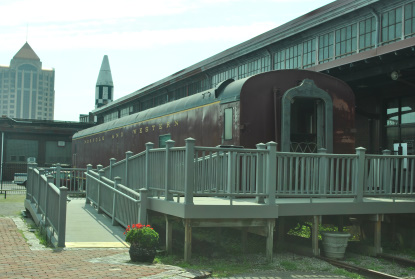
Norfolk & Western Safety Instruction Car 418, ex. Wabash cafe/lounge 1750, nee Boston and Maine diner-bar-lounge 70 "Bald Eagle" built by Pullman-Standard in 1947. It was rebuilt by Norfolk and Western as a safety instruction car, a mobile classroom.
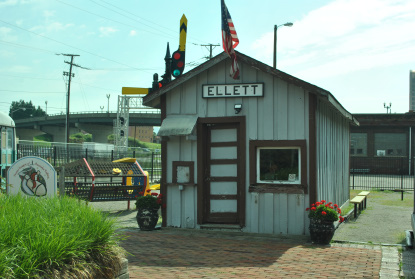
The Virginian Railway freight shanty from Ellett, Virginia.
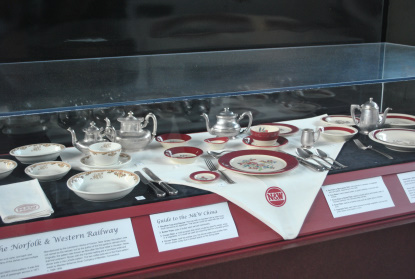
Norfolk and Western dining car china. This museum has an auto gallery and an aviation gallery; Robin was given a tour of the latter while I watched Return of the Norfolk and Western 611. Once Robin returned, we thanked Courtney and visited the gift shop before departing this wonderful museum.
| RETURN TO THE MAIN PAGE |