




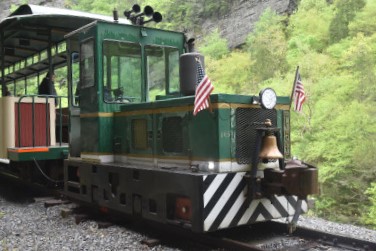
While the National Railway Historical Society's spring conference really started tomorrow in Johnson City, Tennessee, an afternoon pre-conference event had been announced so Elizabeth and I amended our travel plans accordingly. After a good hearty breakfast at Bob Evans, we drove to Bristol.
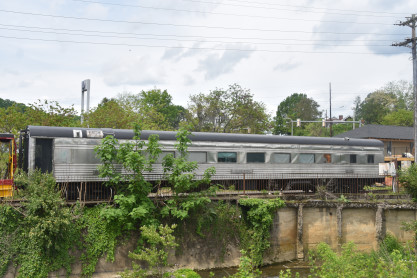
As we were driving to the station, Elizabeth spotted two items of interest which are the beginning of the Wes Davis Greenway, a pedestrian and bicycle trail built on a former rail bed. Here is Southern Railway coach 819 "Bristol", built by Pullman Standard in 1951.
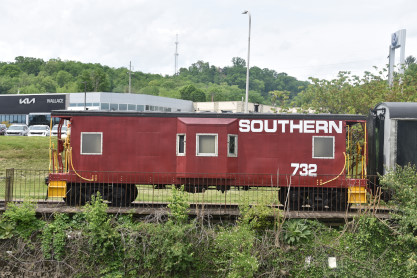
Southern Railway bay window caboose X732 built by the railroad, year unknown. We made our way to the station and crossed the state line into Virginia.
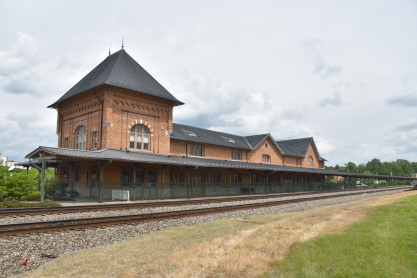
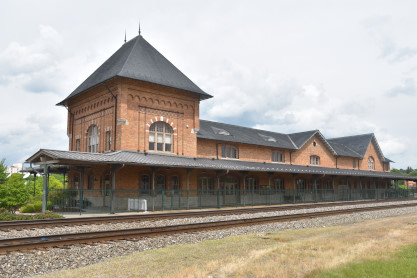
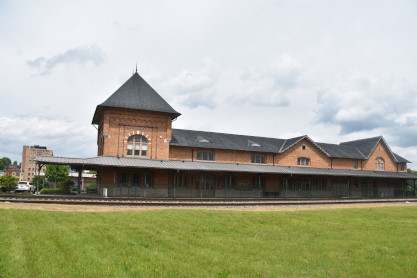
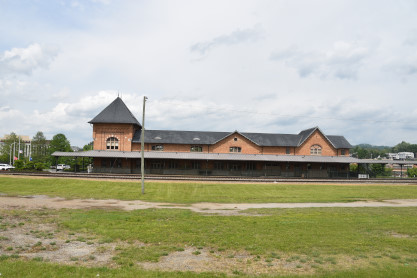
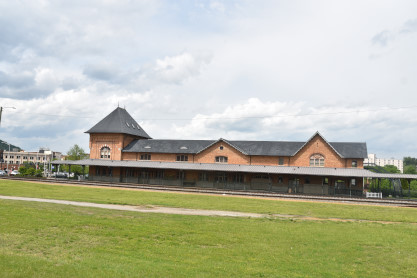
Bristol Norfolk and Western/Norfolk Southern station. Rail service first reached Bristol from Knoxville in 1856 via the East Tennessee and Virginia Railroad, a predecessor of the Southern Railway, and from Lynchburg via the Virginia and Tennessee Railroad, a predecessor of the Norfolk and Western Railway. Built in 1902, the brick edifice consisted of a tower section, a long seven-bay, one-story mid-section and a six-bay, two-story east end. The tower has a hipped roof with deep overhanging eaves supported by long sawn brackets. Stylistically, the station fits into the pattern of early 20th-century American eclecticism, combining Romanesque with various European vernacular modes. Associated with the station is a brick freight house constructed in 1883 and expanded in 1891.
Several N&W and Southern Railway trains served the station into the late 1960's, namely the Birmingham Special from New York City to Birmingham and branch to Memphis, the Pelican from New York City to New Orleans and the Tennessean from Washington to Memphis. Passenger service ended with the discontinuance of the Birmingham Special on April 30, 1971, when Amtrak assumed control for intercity passenger service in the United States. The station was listed on the National Register of Historic Places in 1980 as the Bristol Railroad Station. Around 2017, with Amtrak extending one daily Northeast Regional round trip to Roanoke, Bristol officials began advocating for a further extension to Bristol.
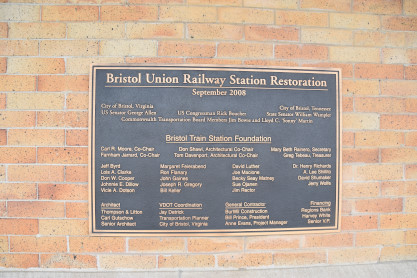
Bristol Station restoration plaque.
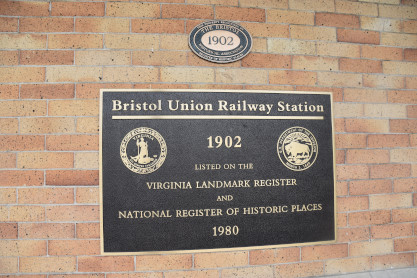
Bristol Union Railway Station Virginia Landmark Register and National Register of Historic Places plaque.
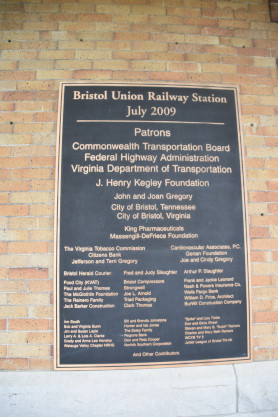
Bristol Union Railway Station July 2009 plaque.
Bristol Train Station Virginia/Tennessee Weddings, Business and Special Events sign.
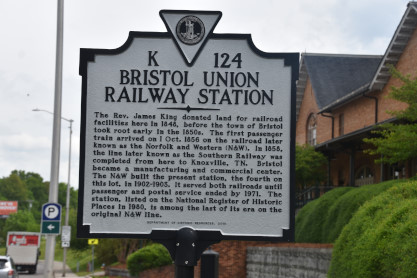
Bristol Union Railway Station historical plaque.
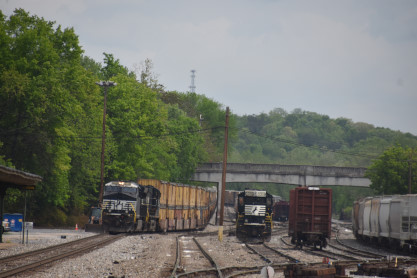
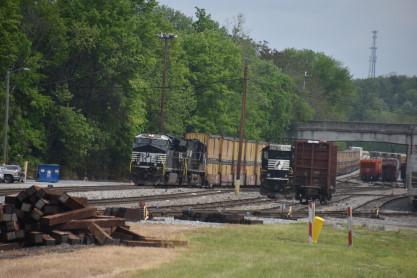
A double stack train waiting to depart.
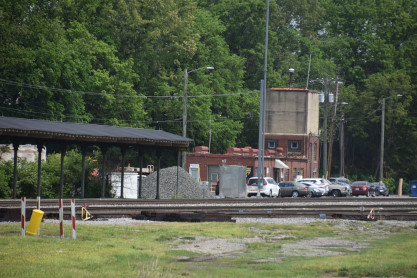
The tower oversees yard operations. We the drove back to our hotel and a little later, took Tennessee Highway 321 to Tennessee Highway 362, then Tennessee Highway 361 and turned left onto US Highway 19E, taking that to Doe River Gorge Road to end and followed the signs.
Doe River Gorge Ministries"Let this be written for a future generation, that a people not yet created may praise the Lord". Psalm 102:18. Since its inception, Doe River Gorge has been a series of God’s miraculous provisions. He has provided in ways and at times that could only have come from His hand. He has done "exceeding abundantly beyond all that we could have asked or thought…to Him be the glory forever and ever". This written history is meant to glorify God and Him only. Names of people He has used to accomplish His will are simply servants who have been honored and humbled to be a part of His work. This history is still being written and will not be complete until he returns.
Since his college years, Terry Maughon had a dream of beginning a new ministry in East Tennessee for the purpose of reaching young people for Christ. During his years of training at Moody Bible Institute and working in camps during the summer, his dream was greatly enhanced. In 1981, working as a youth minister for Grace Fellowship Church in Johnson City, Tennessee he began conducting summer camp programs using rented facilities. As these programs grew from year to year, others began to see the need and value for an expanded ministry and a new facility. Two of those who would become instrumental in the formation and development of Doe River Gorge were Dr. Larry Graham and Mr. Jeff Blackburn. For several years, both of these gentlemen had encouraged Terry to pursue his vision and had joined with him in praying for God's will and timing. Through the encouragement and prayer support of Larry and Jeff, as well as that of many friends, God began to work in miraculous ways to bring this dream to reality.
In 1985, Terry and a friend, Gary Gilliam, hiked the Doe River Gorge. As they walked along the old railroad bed they were awed by the beauty and majesty of God's creation as well as the potential to develop programs within the Gorge for the purpose of reaching young people for Christ. When they got to the second trestle bridge, Terry and Gary sat down on the bridge and prayed, "Lord, if there is to ever be a new camp in East Tennessee, it should be here". A Dream Becomes Reality. In July of 1987, two and one-half miles of property in the scenic Doe River Gorge were purchased at a cost of only one-fourth its appraised value. A new non-profit organization was formed, money began to be raised, and the dream of creating a place to share the love of Christ with young people was on its way to becoming a reality.
Doe River Gorge Railroad HistoryIn the early 1880s the East Tennessee and Western North Carolina Railroad built their narrow gauge line from Johnson City through the mountains to reach a source of high-grade iron ore in Cranberry, North Carolina. The Doe River Gorge provided passage through the first range but not without serious challenge. An entirely cut-and-fill route had to be blasted through the gorge above the rushing Doe River, hugging narrow ledges, squeezing through tight tunnels and crossing the river several times – an amazing civil engineering feat at the time. The narrow gauge line opened to Cranberry on July 3, 1882 and began hauling the iron ore as well as passengers and other freight. Later, the line was extended to Boone, NC and served the region for many years as a faithful little train that endeared itself to its people, eventually earning the nickname "Tweetsie."
The Doe River Gorge was the scenic centerpiece of a trip on the line. Special excursion trains would pause at Pardee Point in the heart of the gorge and passengers would disembark to take in the sheer cliffs rising hundreds of feet above the rushing river. The iron ore traffic died in the late 1920s, but the tenacious little line held on with meager trains of mixed freight and the mail contract. But as highways through the mountains improved, competition from trucks finally caught up with the beloved little narrow gauge. The last revenue train ran October 16, 1950 and the rails were pulled up in 1951. The standard gauge portion between Johnson City and Elizabethton continued to operate, becoming the East Tennessee Railway in 1983. Traffic to Elizabethton ceased in 2003, but the ET Railway still handles local Johnson City traffic and continues to maintain two diesel locomotives in the original enginehouse (that still has narrow gauge service pits).A few enthusiasts managed to save engine 12, combine car 15, and excursion car 11. After a season as the Shenandoah Central in Virginia, the equipment was purchased and came back "home" in 1957 to form the basis of the Tweetsie Railroad, just a few miles from the end of the old line in Boone, NC. 12 still operates there today and the Tweetsie crew keeps her in fine form.
The lure of the beautiful gorge and the lore of the ET&WNC remained in the hearts of many on the Tennessee side as well. In the late 1960s, about 2.5 miles of rail were re-laid on the gorge right-of-way and a train ran again as part of an amusement park. It operated until about 1974 and then again briefly around 1977. Doe River Gorge Ministries was formed and acquired the gorge property in 1987. By the summer of 1995 the facilities were sufficiently developed to begin the current Adventure Quest youth programs. The railbed remained and provided hiking access to adventure activities in the gorge. A few homebuilt pedal and gas powered railbikes or "go-carts" were tried out, but in many places the crossties had rotted to non-existence and by 1996 the track was totally unusable.
In 1998 a small group of volunteers began to restore the track with the goal of operating railbikes, small gas-powered motorcars and other light rail equipment again to provide logistical support to Adventure Quest and other DRG program activities in the gorge. By the summer of 2000, the little orange Fairmont motorcar and trailer could reach Pardee Point and hauled hundreds of kids there to jump in the river for white-water inner-tubing.
About this time Ken Riddle started coming by and offered his considerable railroad experience and connections. In late summer of 2000, he arranged for several loads of new railroad ties and a contractor to install them. By late September the track to Pardee Point (about 1.3 miles) was totally refurbished to accommodate heavier equipment. He'd also been sniffing out equipment and found steam locomotive "Rachel" which had been in storage since the 1997 closure of Nashville’s Opryland USA. Somehow he convinced Gaylord Entertainment to put her on loan. She arrived in late September and operated a few times that fall, just in time to mark the 50th anniversary of the last ET&WNC narrow gauge train in style! The hunt continued and he found some retired open passenger cars at Six Flags in Atlanta that they kindly donated in early 2001.
The cars were mechanically intact, but had much rotten wood, peeling paint and needed topside refurbishment. One was stripped down and rebuilt with new decking, sides and benches just in time for the 2001 season. The second made it through the season with a few repairs and was entirely rebuilt in the spring of 2002. During the 3 years of Rachel's tenure, thousands enjoyed the unique thrill of a steam train excursion into the breathtaking beauty of the Doe River Gorge. Old timers affectionately recalled trips on the Tweetsie while younger folk saw a glimpse of the past as they experienced a bit of the "steam generation".” Rachel returned to Nashville in the fall of 2003.n Trains continued to operate again in March 2004 with a completely overhauled 1977 Plymouth diesel locomotive. In 2005 and 2006, two more motorcars came into service, giving the little orange Fairmont a much-needed break. The motorcars, with their trailers, and the diesel train both provide ready access to points of scenic interest and Adventure Quest activities in the Doe River Gorge.
Our Visit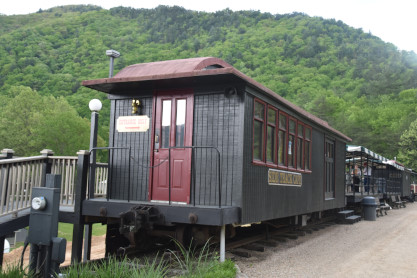
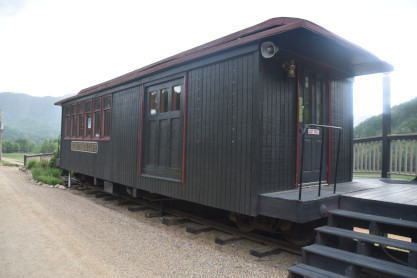
The Side Track Café.
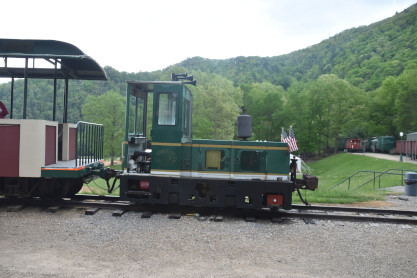
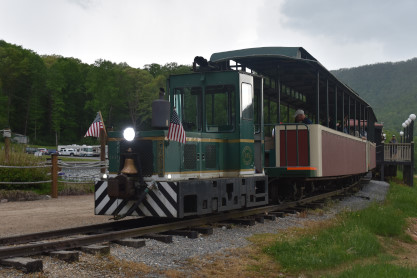
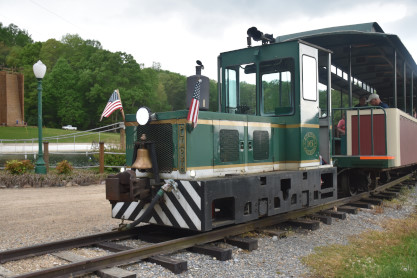
Doe River Gorge HSD 16 built by Plymouth in late 1977 and delivered in early 1978 to Peabody Coal Company. It was found rusting at a scrap dealer in Chilhowie, Virginia and purchased in 2002. Originally built to 42 inch gauge, the wheel base was converted to 36 inch by the organization to fit on the narrow gauge track.
On March 19th 2004, the newly-restored locomotive moved under its own power on rails and the next day, made a successful test run to Pardee Point with the two passenger cars. During the summer, Junior Adventure Quest campers and their parents are treated to an exciting trip on the train, passing through the historic tunnel into the gorge for over a mile of breathtaking views of the mountains and river. The same trip is included for participants of Saturday Day Quest as well.
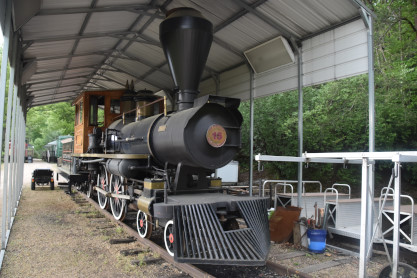
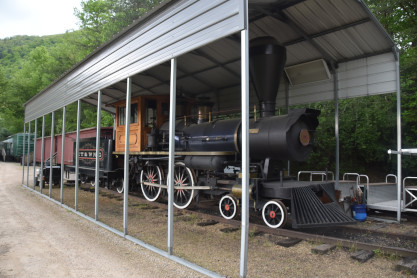
East Tennessee and Western North Carolina 4-4-0 15, built by Crown Metal Products in 1964 for Vegasland amusement park in Las Vegas, which did not get beyond turning the first shovel of dirt before one of the promoters ran off with the money. It was used as a steam source at Crown Metal's factory to test airbrake pumps until being sold to Pioneer City in 1966, after which it went to Carowinds, then Huntsville in orange and yellow lettered for Carowinds and Carolinas Railroad, possibly by way of South of the Border amusement park in Dillon, South Carolina. Doe River Gorge Ministries acquired it in 2014.
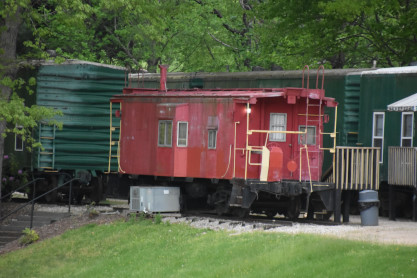
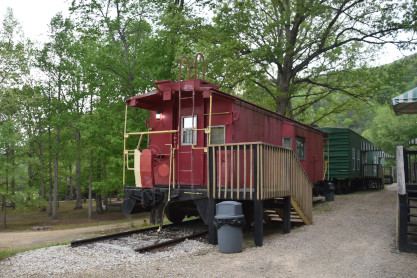
Nickel Plate bay window caboose 422, built by the railroad in 1956.
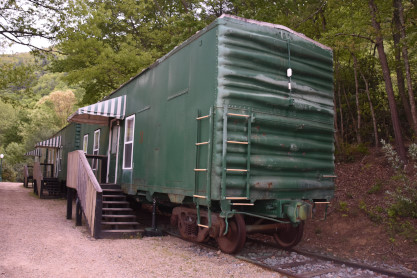
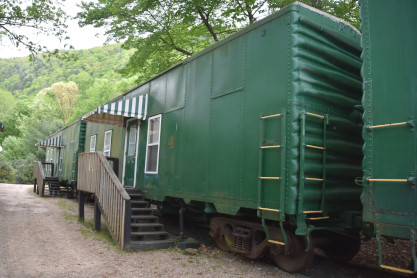
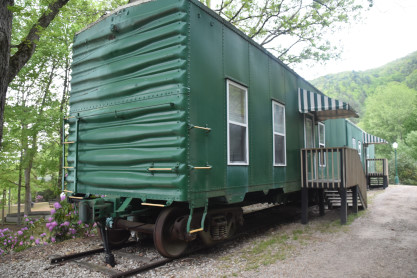
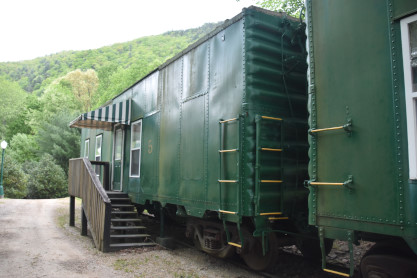
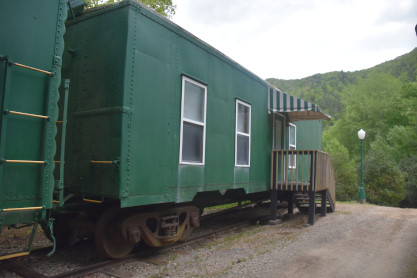
Modified box cars used for sleeping quarters and storage. These came from New Life Ranch Frontier Cove (formerly Dry Gulch, U.S.A.), a Western-themed Christian children's summer camp located on the western edge of Lake Hudson near Adair, Oklahoma. It was founded by Church on the move senior pastor Willie George in 1986 and at this time, he was producing The Gospel Bill Show, a Christian values-based television show that used the Western-themed town on the property as a set. Apart from religious services, camp activities include traditional ones such as basketball, obstacle courses, swimming, canoeing, and inner tube riding; and non-traditional ones such as carousel rides, bumper cars, and go-karts. The New Life Ranch Frontier Cove property, when it was owned by Church on the Move, had The Christmas Train (also known as the Dry Gulch & Silver City Railroad), a three foot narrow gauge heritage railroad opened in 1996, which utilized genuine steam locomotives and ran during the weeks leading up to Christmas. Each year, The Christmas Train entertained over 50,000 visitors. It was discontinued after the 2016 season.
In 2018, Doe River Gorge was presented with a "once-in-a-lifetime" opportunity when the owners of The Christmas Train offered to sell all of its assets to Doe River Gorge for a fraction of its value. The only caveat was that it be moved to Tennessee and continue to be operated for the glory of God. After much prayer and discussion, Doe River Gorge entered into a contract to take advantage of this miraculous opportunity. Over the twelve month period from September 2018 to August 2019, assets of The Dry Gulch Christmas Train have been acquired, transported to Doe River Gorge and paid in full. It took 57 tractor trailer loads and included two steam locomotives, 1.7 miles of track, 11 passenger coaches, 43 bible story murals and over 1,000 Christmas decorations.
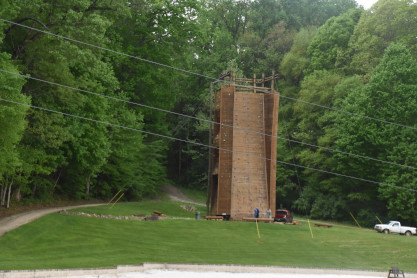
The facility's climbing tower.
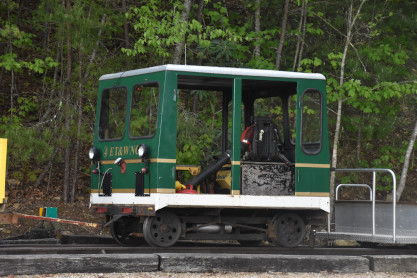
This Fairmont A-4 "gang car" was used by the Union Pacific Railroad in the Cheyenne, Wyoming area and would haul track maintenance gangs and a few small trailers with supplies and tools. It was purchased by Doe River Gorge volunteer Jeremiah Nave in early 2005, then disassembled and modified from the original standard gauge fit on the group's 36 inch track. On March 7, 2006, the reassembled chassis was moved to the track for testing and on March 14, the repainted body arrived from the paint shop. The paint scheme is the same as the diesel locomotive and is powered by a 4-cylinder Ford gas engine with a 4-speed manual transmission. An independent reverse lets it use all four gears in either direction. Like the new electric motor car, it has plenty of power and traction where the little orange Fairmont MT-19 was always a bit challenged by the loads it was asked to pull.
The two of us paid our cash fare to the employee on the train, boarded with the other conference attendees and were now ready to enjoy the ride.
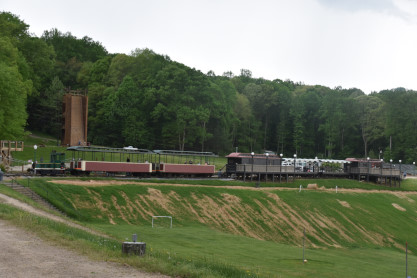
The train would take us into the Doe River Gorge.
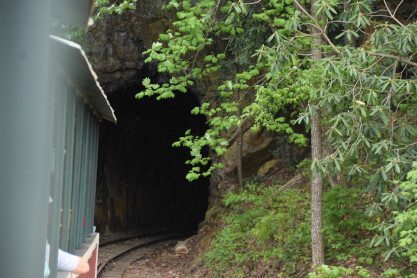
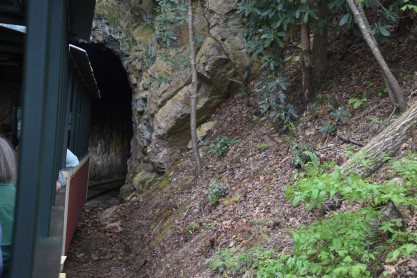
Right after departure is a tunnel.
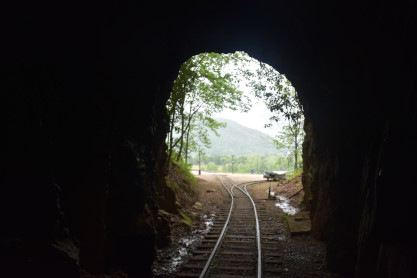
Tunnel One is 422 foot long.
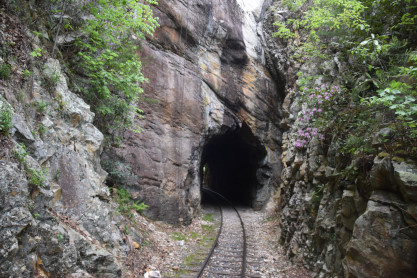
Exiting the tunnel.
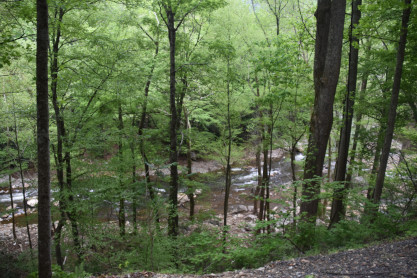
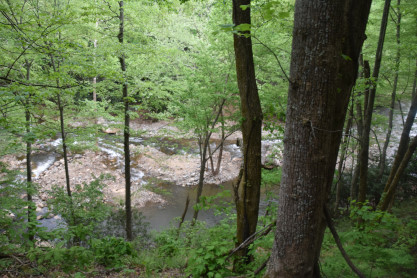
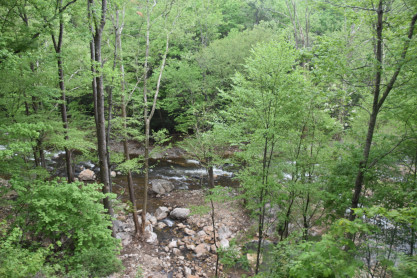
The Doe River is a tributary of the Watauga River and forms in Carter County near the North Carolina line, flows from the northern slopes of Roan Mountain, through Roan Mountain State Park and the center of Roan Mountain, then continues to flow west and is paralleled by US Route 19E. The stream then flows to the east of Fork Mountain into Elizabethton.
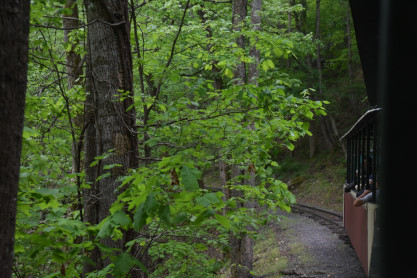
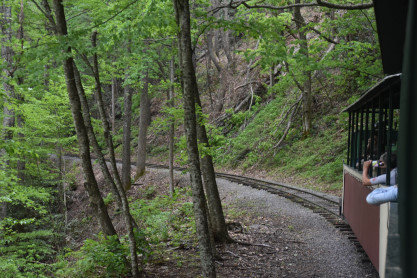
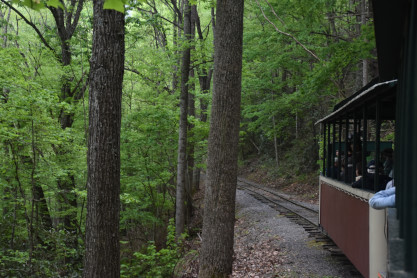
Rounding a curve.
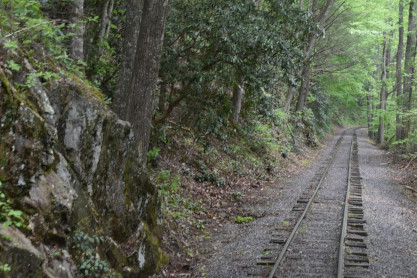
We are now in the Doe River Gorge.
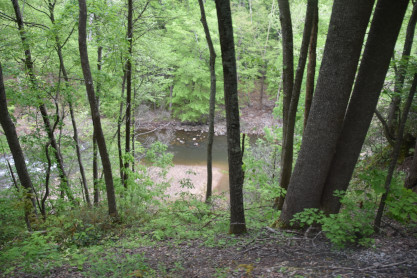
The Doe River.
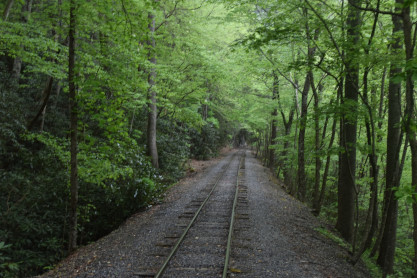
Springtime greenery in the forest.
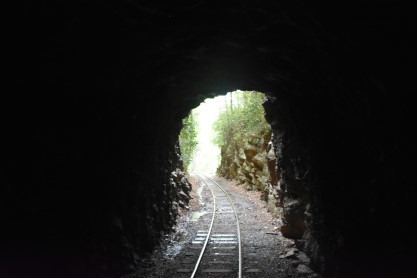
.
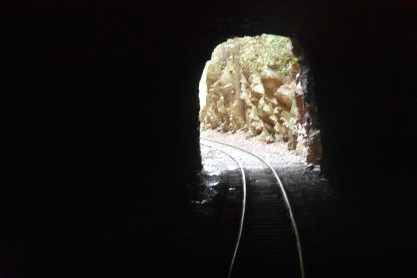
Entering Tunnel Two.
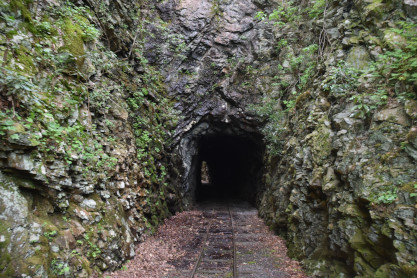
Exiting Tunnel Two.
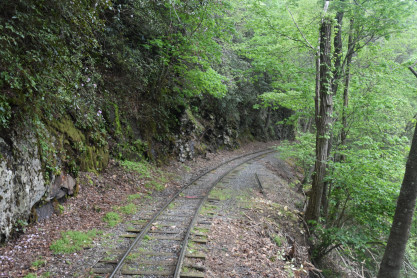
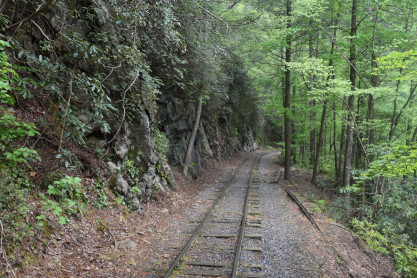
The view behind.
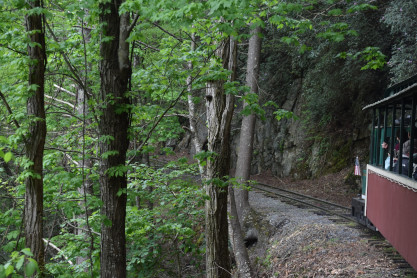
Making our way through the forest.
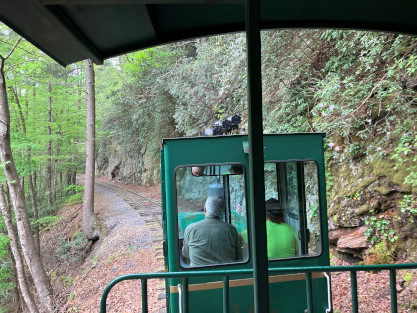
The diminutive locomotive leading our excursion.
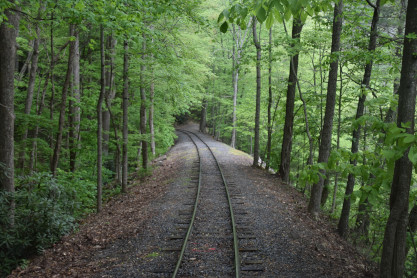
The view from the last car.
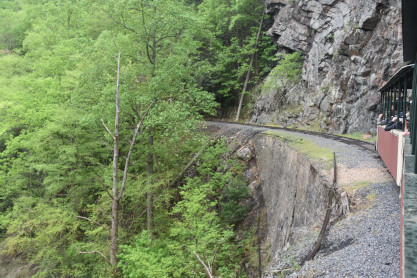
Curving around a retaining wall.
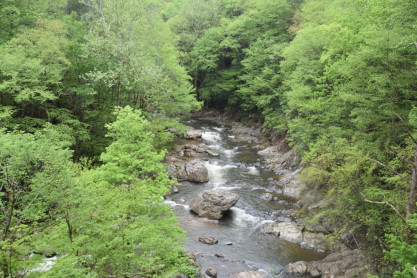
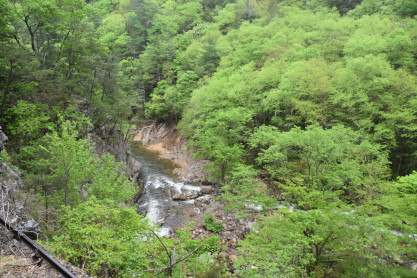
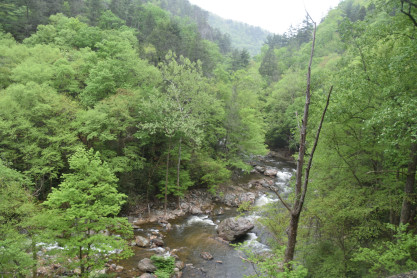
There were many opportunities to see the Doe River.
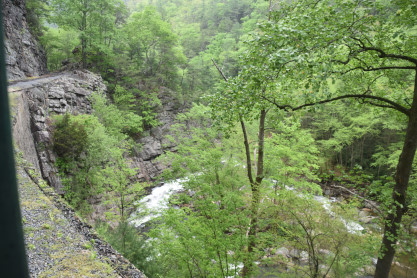
Riding on a ledge.
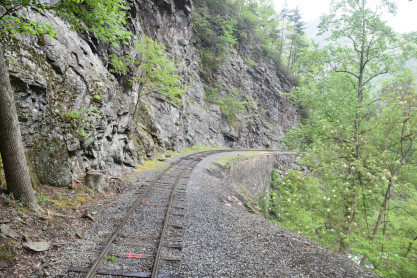
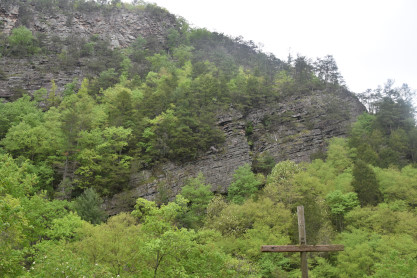
The cliffs and the gorge below
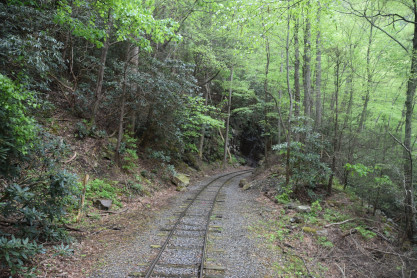
A very peaceful setting for a train ride.
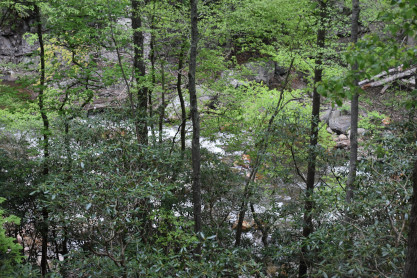
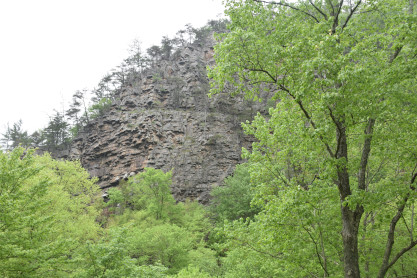
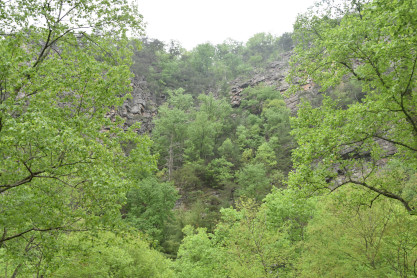
Deep in the Doe River Gorge.
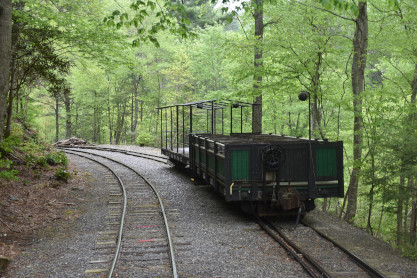
Two formerly-used open cars.
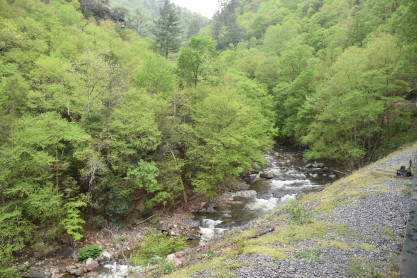
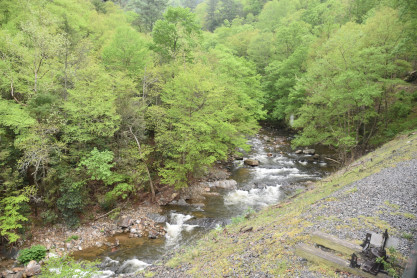
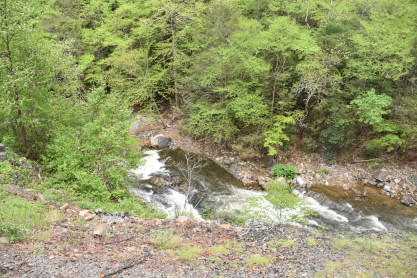
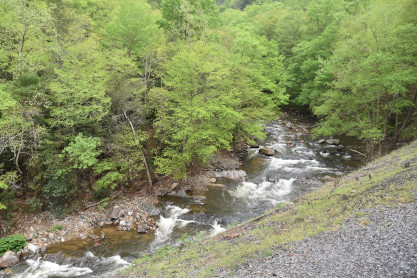
Looking down into the Doe River. We stopped at Pardee Point and were allowed to detrain.
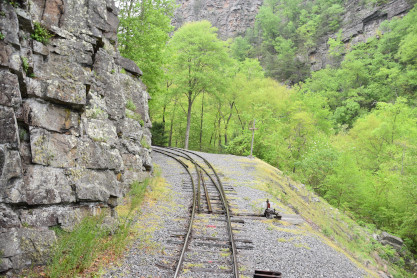
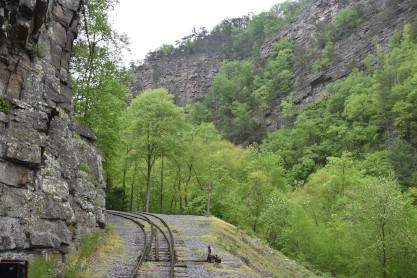
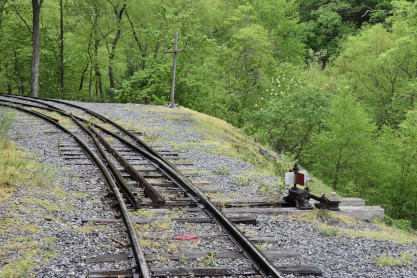
The siding in the Gorge.
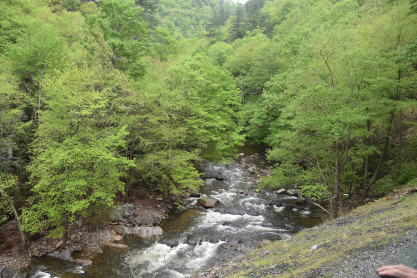
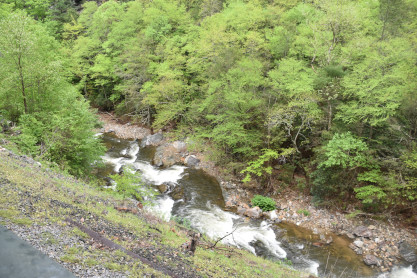
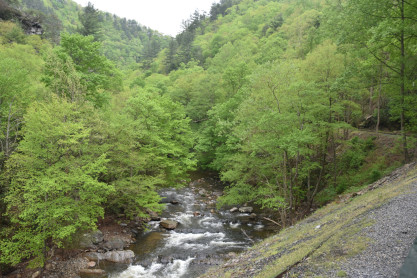
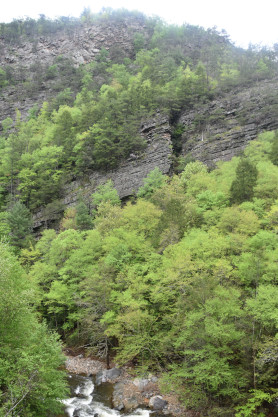
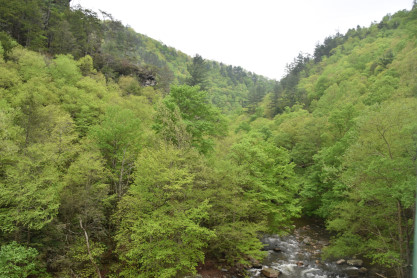
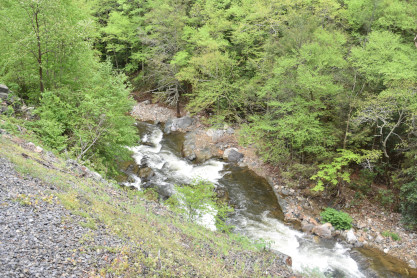
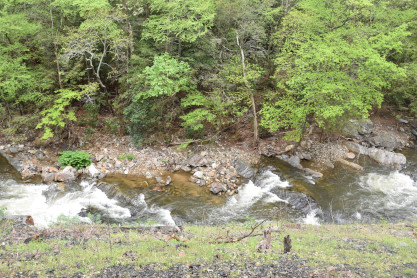
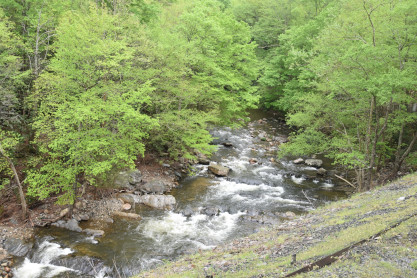
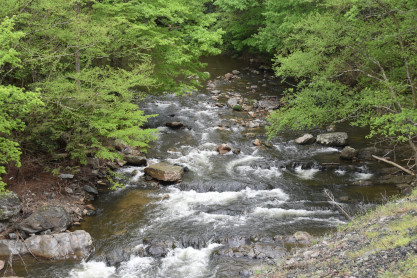
The Doe River.
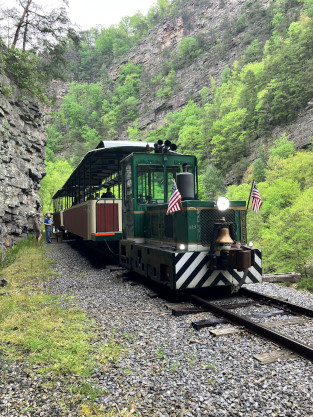
The train in the Doe River Gorge.
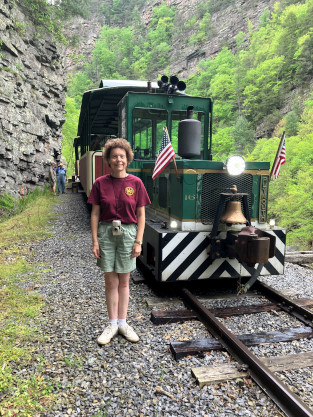
Elizabeth, my lovely wife.
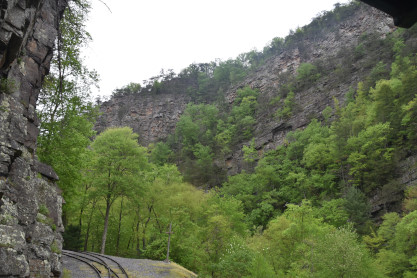
The tall rocks of the Gorge.
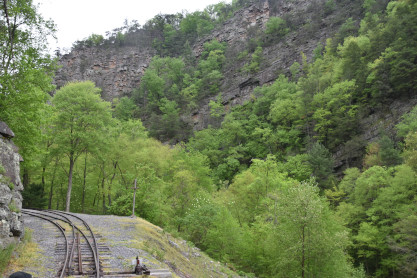
The end of the train was now the front and this was the view before we started the return journey.
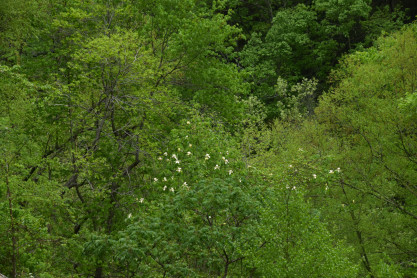
Blossoms are returning to the forest.
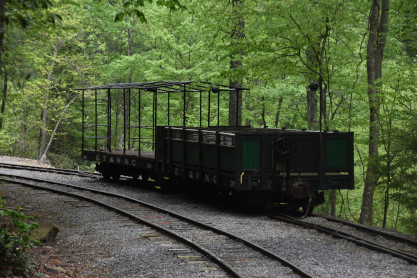
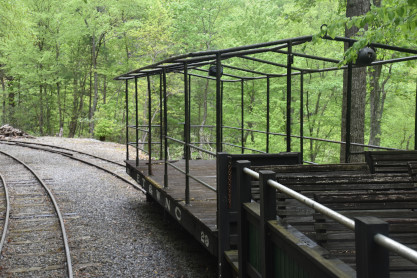
The open cars in the siding.
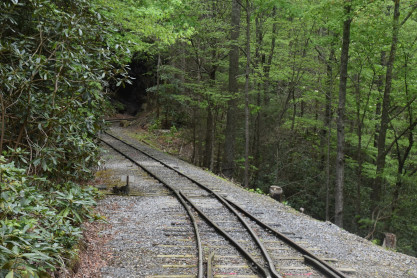
The west end of the siding.
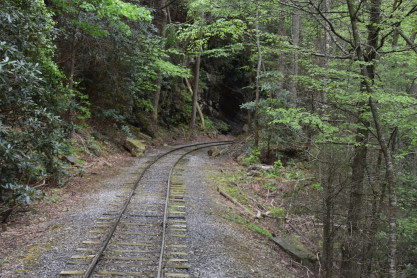
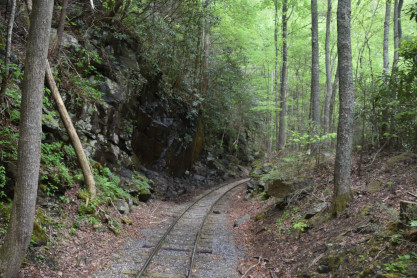
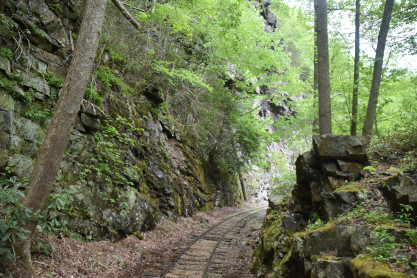
Rolling back to our starting point.
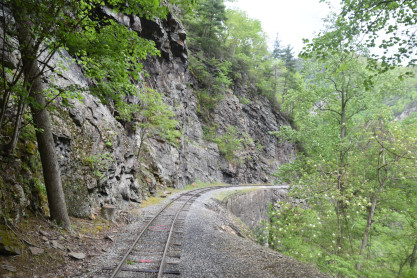
One of the curves in the Gorge.
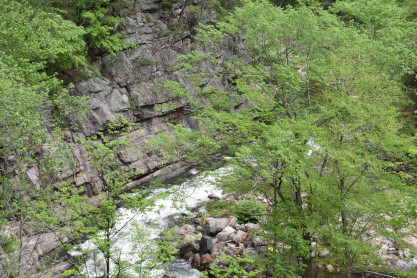
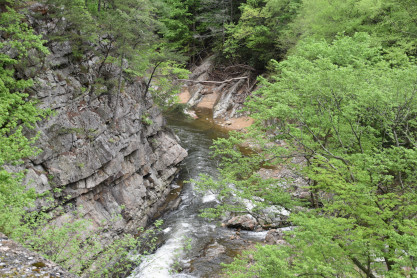
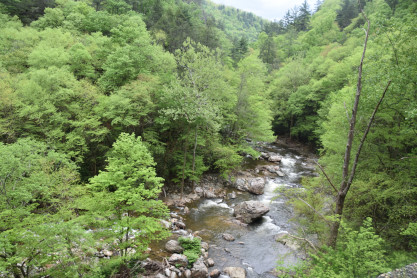
The Doe River below us.
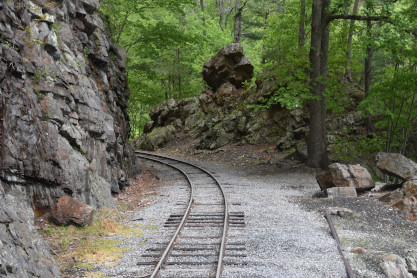
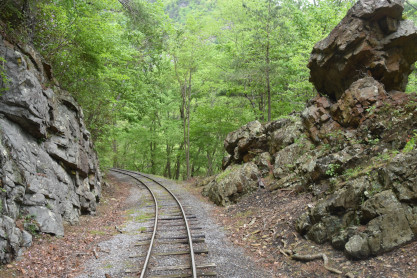
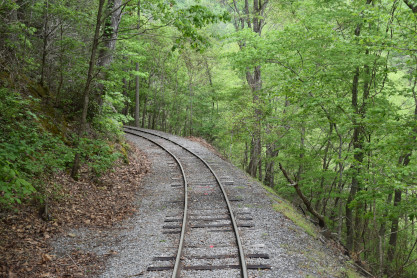
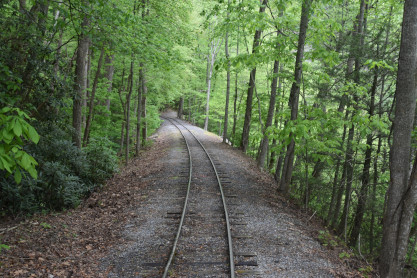
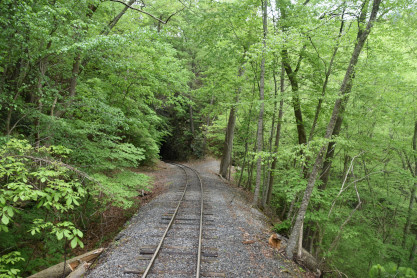
Deep in the forest.
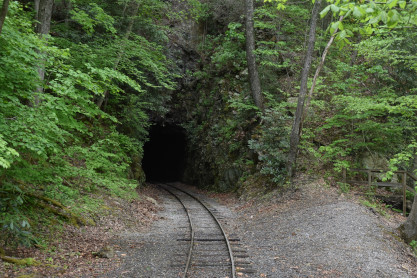
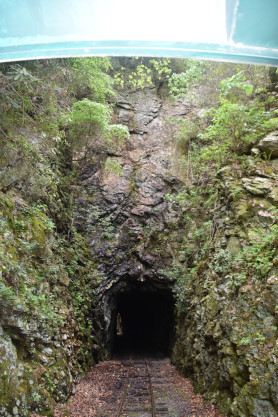
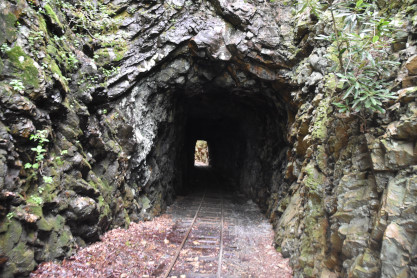
About to enter Tunnel 2.
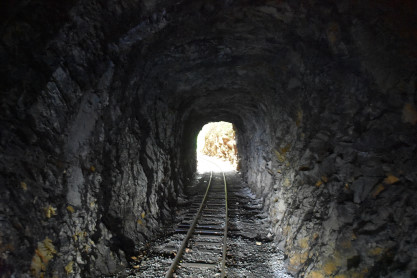
Inside the tunnel.
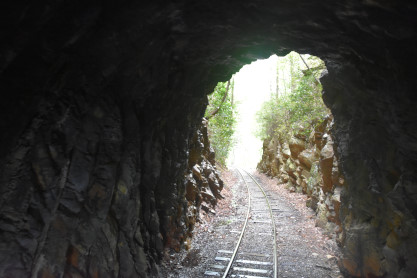
Exiting Tunnel 2.
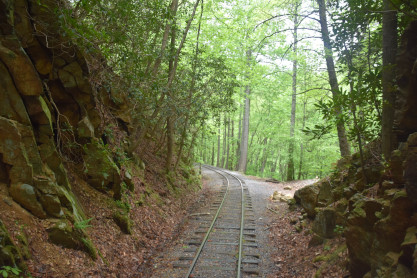
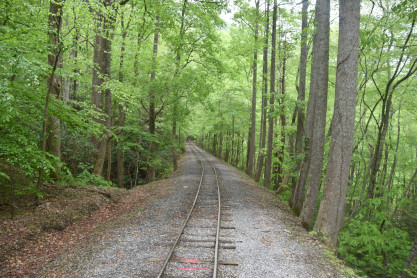
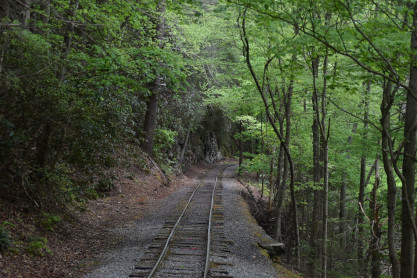
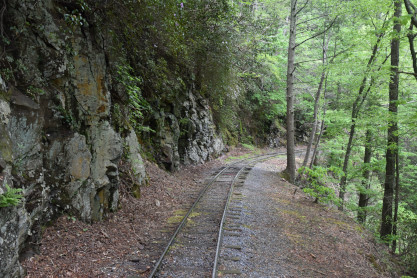
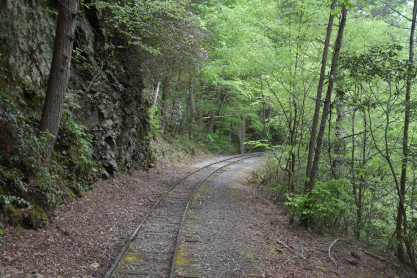
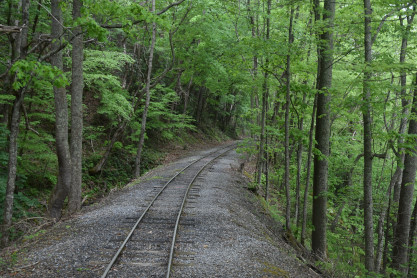
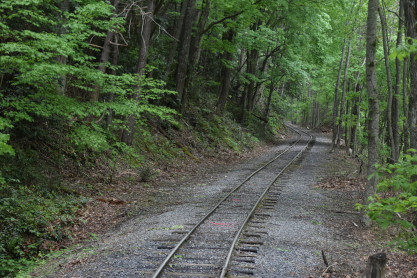
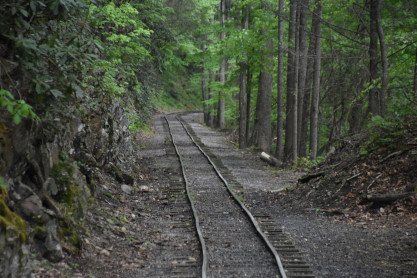
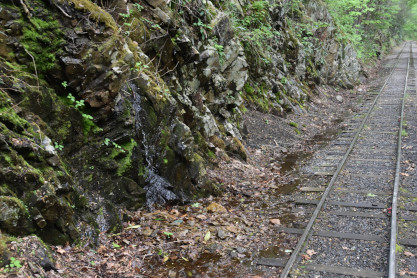
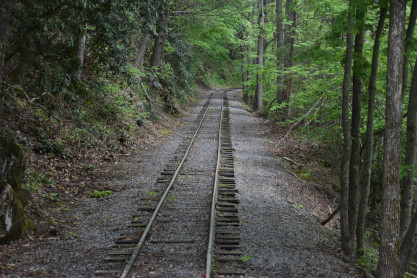
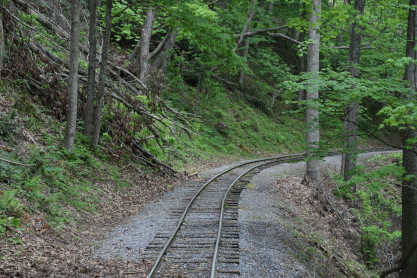
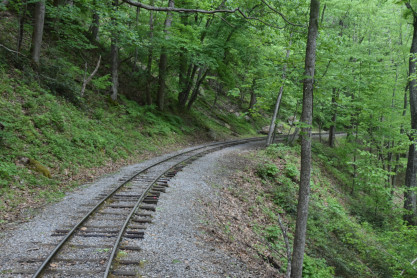
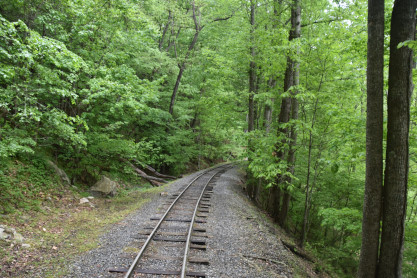
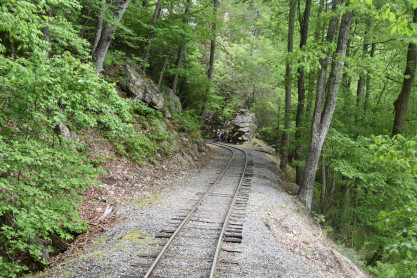
The area between Tunnel 2 and Tunnel 1.
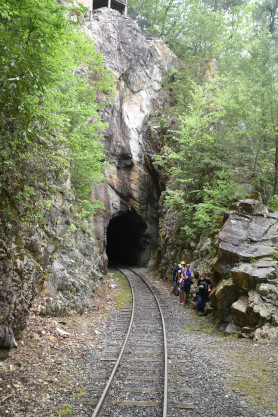
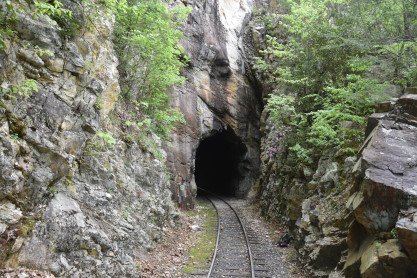
Approaching Tunnel 1.
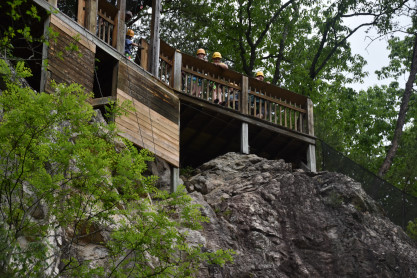
We were being watched from above.
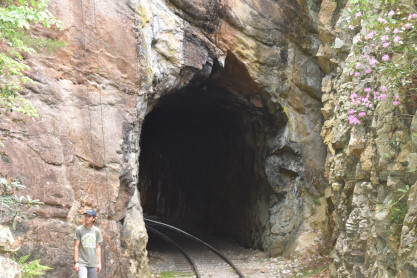
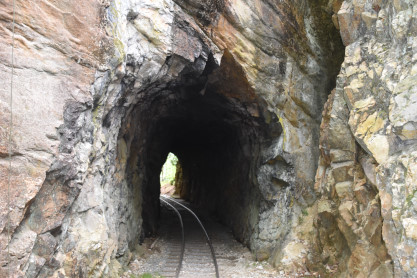
About to travel through Tunnel 1.

The interior of Tunnel 1.
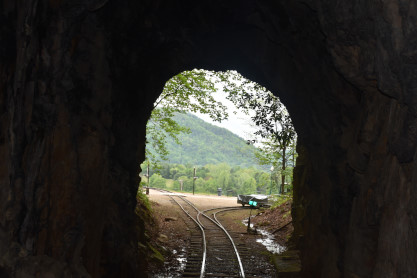
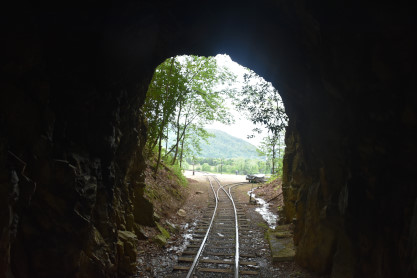
Exiting the tunnel.
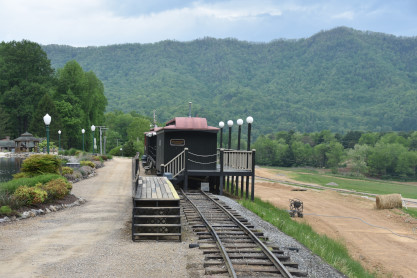
We returned to our starting point and it was announced that the engine house was open and if anyone wanted to have a tour, they could drive down and see it. After detraining after a most enjoyable ride, that is what Elizabeth and I did.
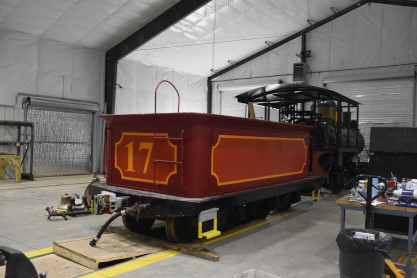
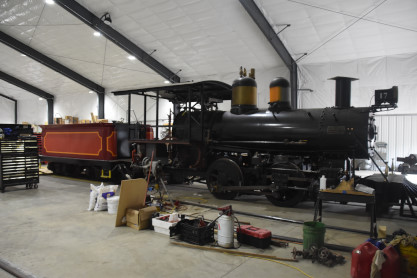
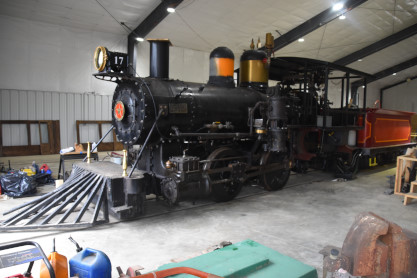
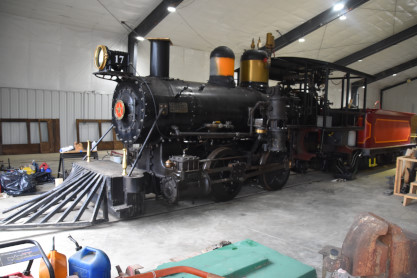
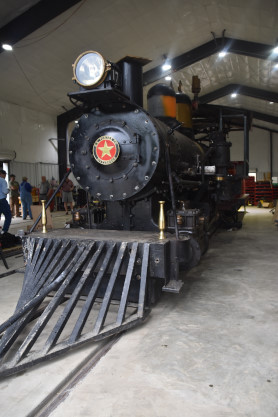
Carbon-Limestone Company 0-4-0T 17, built by H.K. Porter in 1928. Its number when built is unknown.
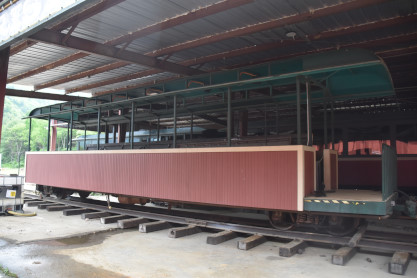
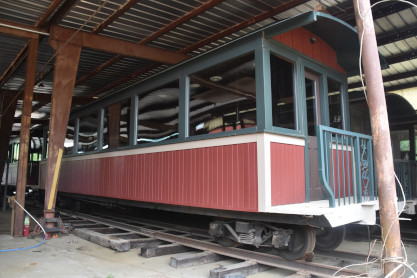
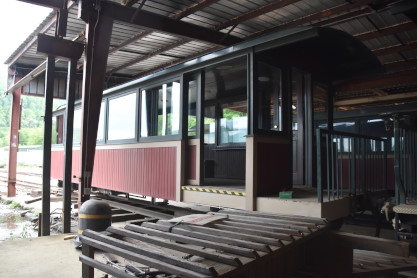
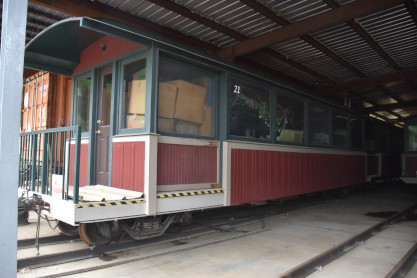
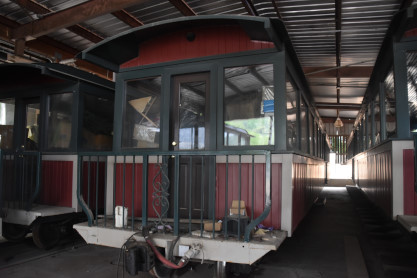
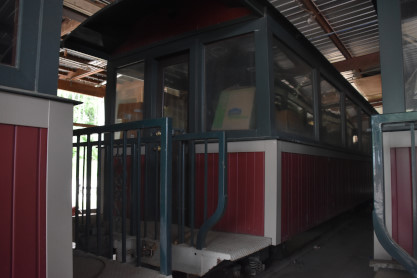
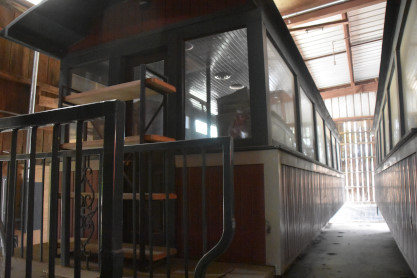
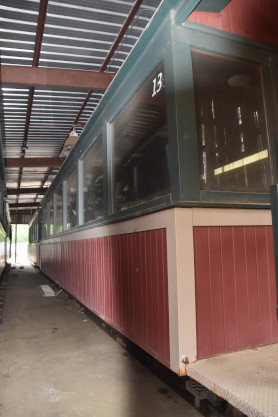
The passenger cars came from the Dry Gulch and Silver City Railroad.
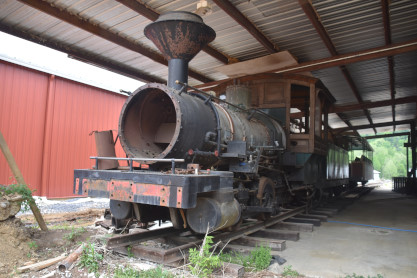
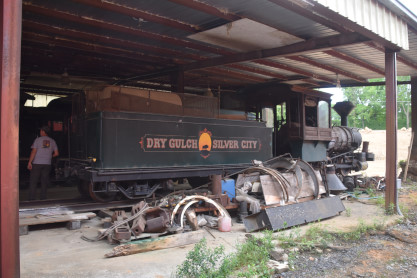
Doe River Gorge Ministries 0-4-0T 43, ex. Dry Gulch and Silver City Railroad. exx. David Barnhardt, exx. sold to Lake Land Development Corp. (Huff & Puff Railroad 1) 1966, exxx. sold to Arthur Seifert at Hilliard, Florida, nee Carbon Limestone Company 33 at Hillsville, Pennsylvania, built by H.K. Porter in 1942.
We returned to Johnson City and went to the Carnegie Hotel, the conference hotel, to pick our registration materials then drove the short distance to the Johnson City Railroad Experience for the reception.
| RETURN TO THE MAIN PAGE |