




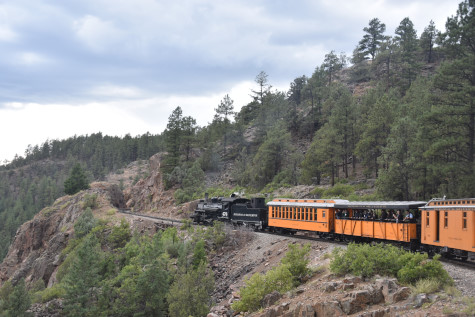
Elizabeth and I had breakfast at the hotel, Fairfield Inn and Suites, then drove the very short distance to the Durango and Silverton and parked into their lot. On the way to the station, we started our photography.
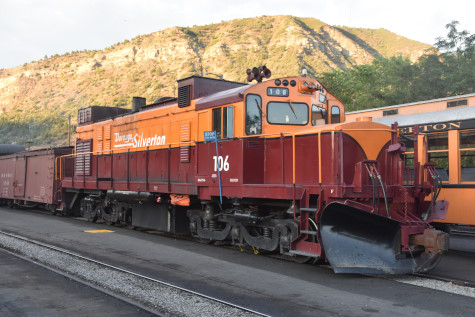
Durango and Silverton DL535 106, nee White Pass and Yukon 106, built by Montreal Locomotive Works in 1969. This was the power for the first train of the day.
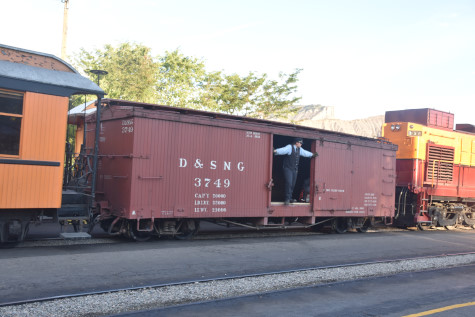
Durango and Silverton box car 3749, Denver and Rio Grande Western 3749, built by American Car and Foundry in 1903.
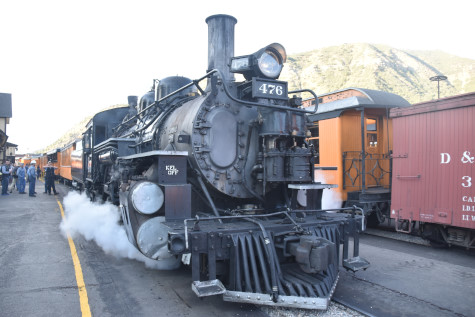
Durango and Silverton 2-8-2 476, Denver and Rio Grande Western 476, built by American Locomotive Company in 1923, which led the San Juan Express passenger train between Durango and Alamosa until 1951 when that service ceased. This was our steam engine for today and Saturday.
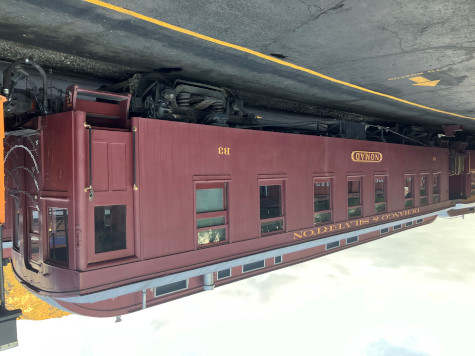
Durango and Silverton observation car B3 "Nomad". Built in 1878, "Nomad" was originally named "Fairplay". In 1886, it was rebuilt as Business Car N. It is reportedly the favorite car of Denver and Rio Grande president William Jackson Palmer. The "Fairplay" has hosted Presidents William H. Taft, Ulysses S. Grant and Theodore Roosevelt. While being owned by several parties between 1951 and 1982, "Fairplay" was renamed "Nomad". It was acquired by the D&SNG in 1982 and today, is the oldest private railroad coach still in service in the United States, running daily throughout the summer.
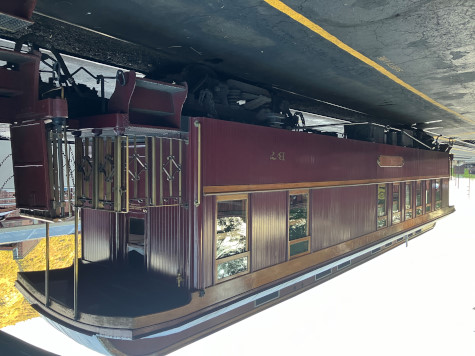
Durango and Silverton business car B7 "General Palmer", nee Denver and Rio Grande 17, built by Billmeyer & Small in 1880. It is owned by the Harper family, which owns the Durango and Silverton.
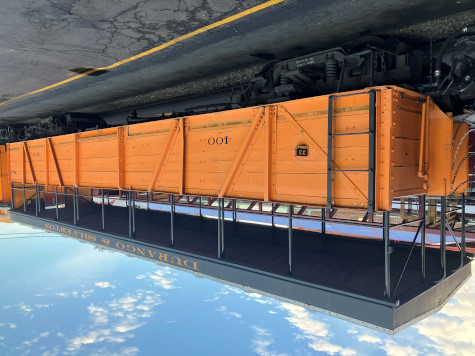
Durango and Silverton open gondola 400, built by Denver and Rio Grande Western in 1963, from gondola 9609 built by Pullman in 1916.
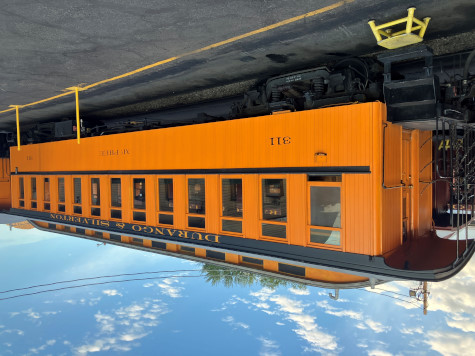
Durango and Silverton coach 311 "McPhee", nee Denver and Rio Grande Western 87, built by Jackson and Sharp in 1881.
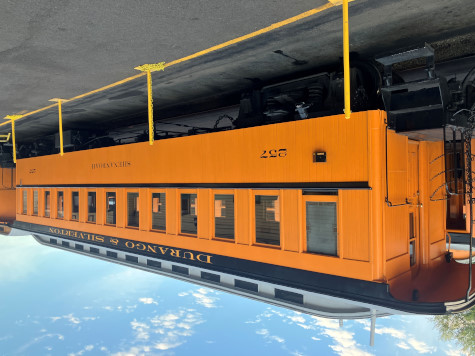
Durango and Silverton coach 257 "Shenandoah", ex. Denver and Rio Grande Western 257, exx. Rio Grande Southern 267, nee Denver and Rio Grande 43 "Terra Amarilla" built by Jackson and Sharp in 1880.
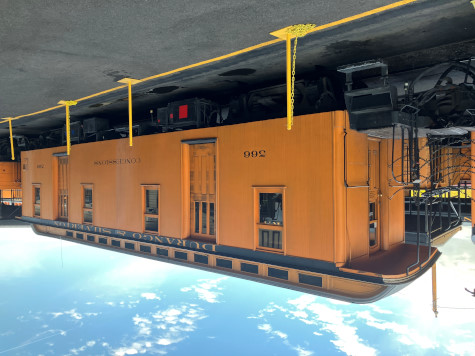
Durango and Silverton concession car 566, nee Denver and Rio Grande Western mail car 14, built by the railroad in 1882.
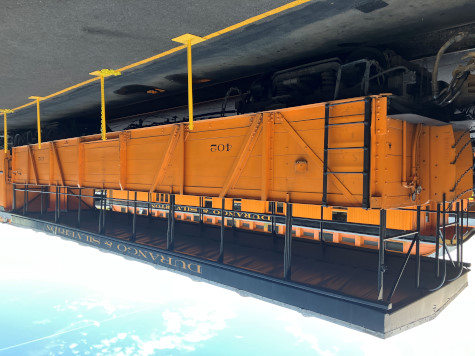
Durango and Silverton open gondola 402, built by Denver and Rio Grande Western in 1963 from gondola 9605, built by Pullman in 1916.
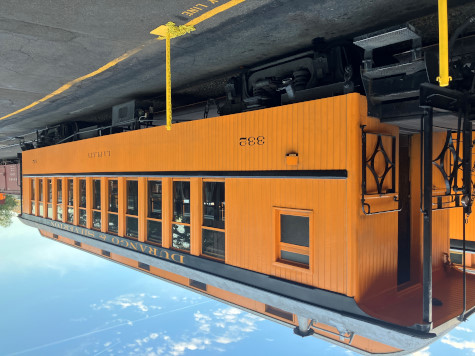
Durango and Silverton coach 332 "La Plata", nee Denver and Rio Grande Western in 1963, built by the railroad in 1964.
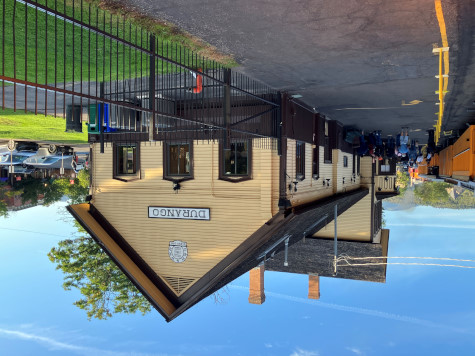
Durango and Silverton depot built in 1881. Those conference attendees who chose this excursion boarded the charter train and the two of us rode in one of the open gondola cars.
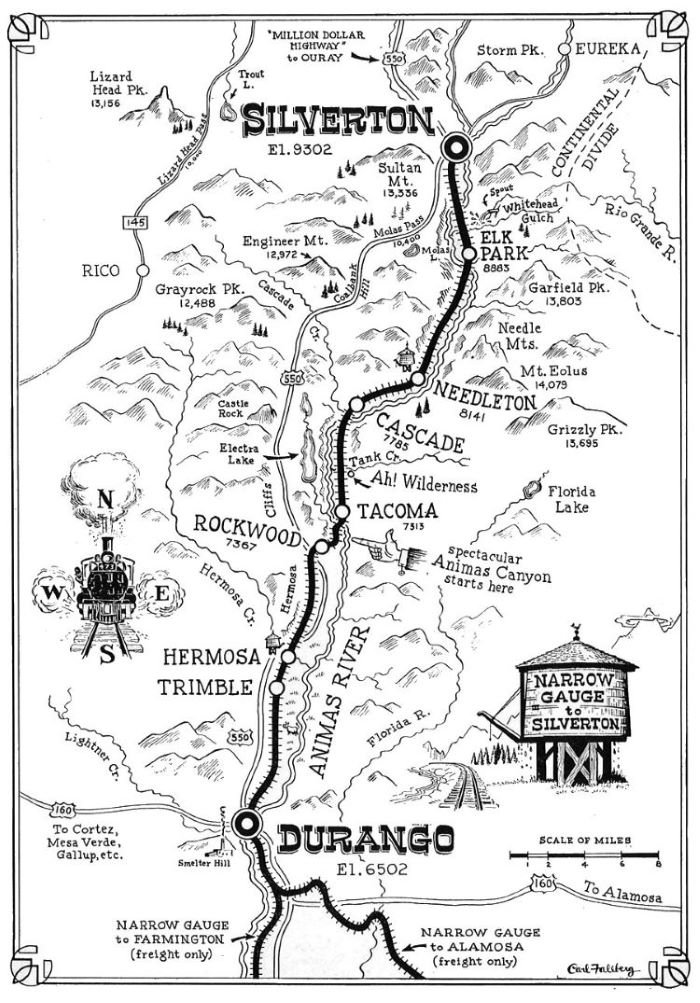
The route map of the Durango and Silverton Railroad.
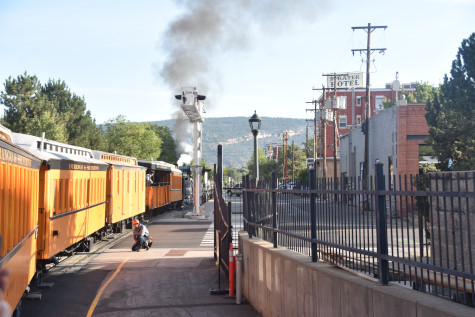
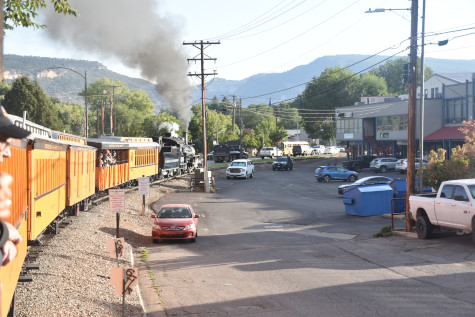
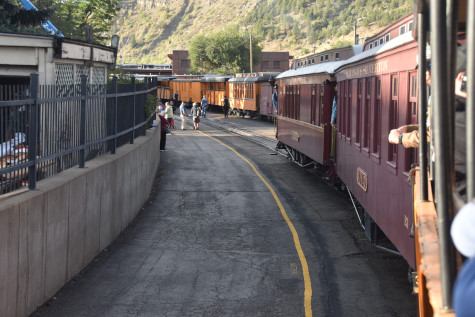
Our train departed on time.
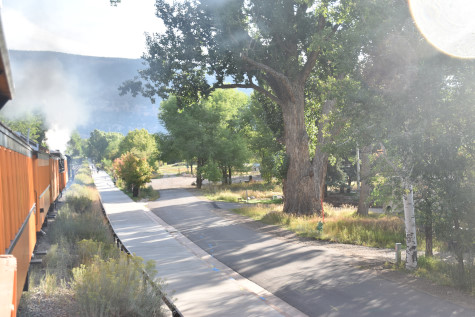
We left Durango and crossed the Animas River.
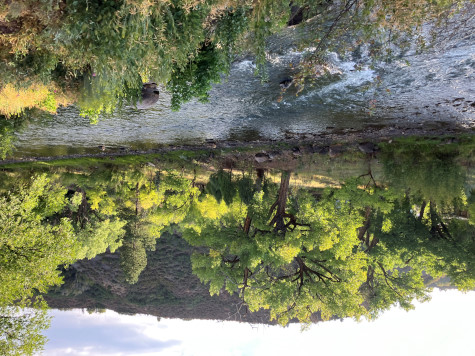
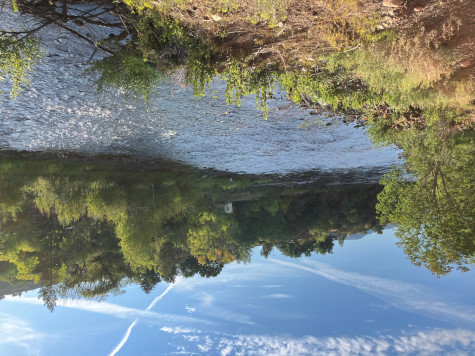
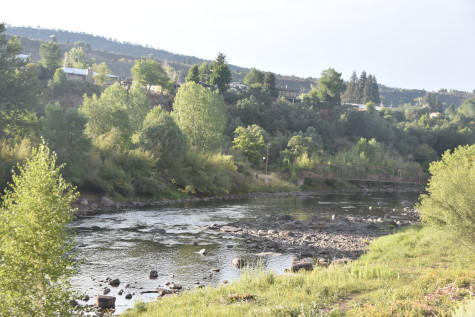
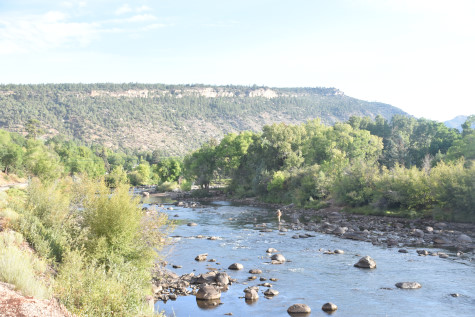
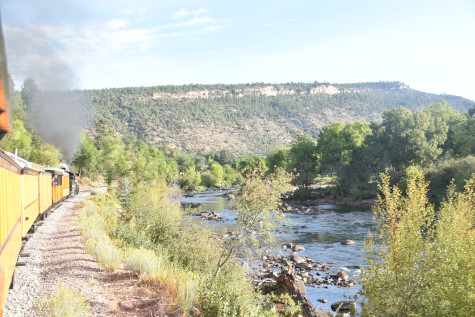
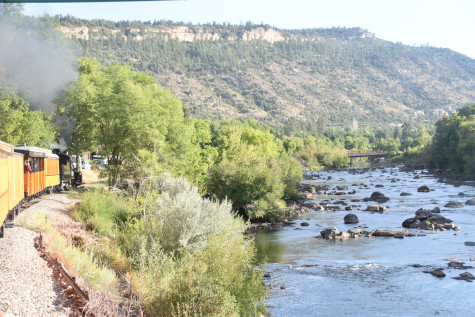
We followed the Animas River out of town.
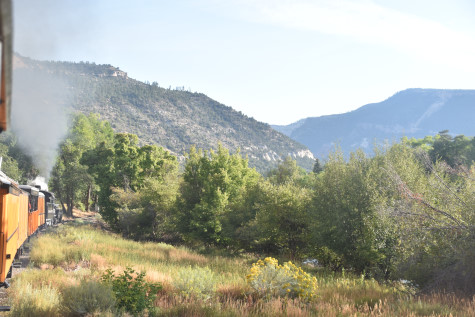
Destination Silverton.
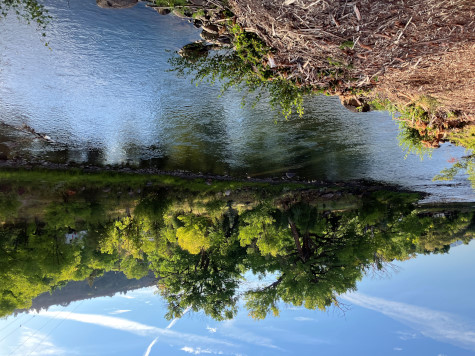
The river on a beautiful late summer's morning.
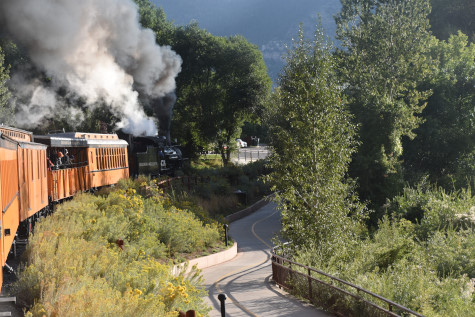
A bicycle trail paralleled the tracks.
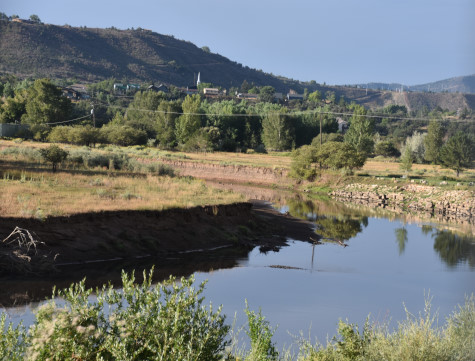
A bend in the river.
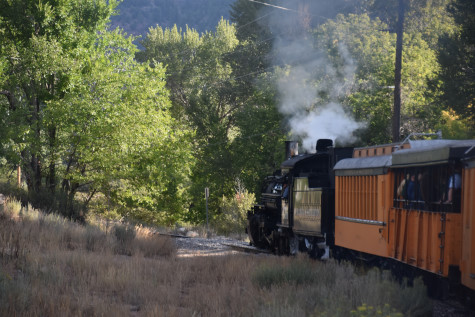
We then passed through the United Campground, where my parents and I stayed in 1985.
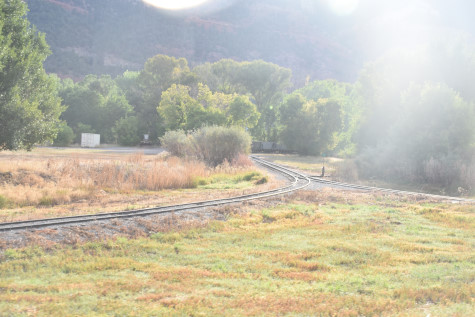
The wye to where their Polar Express train operates.
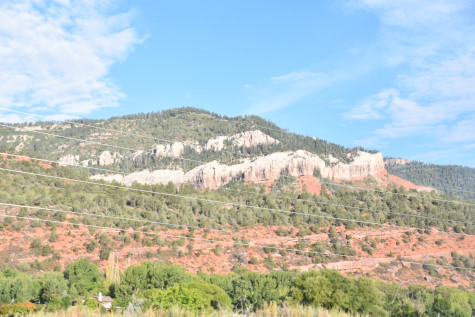
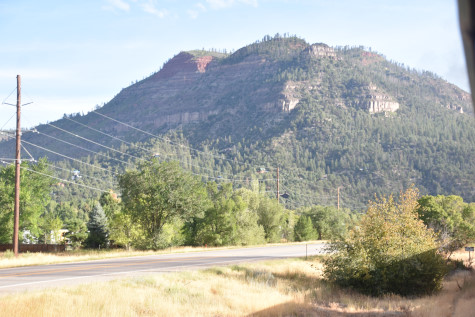
The mountains on the north side of the valley.
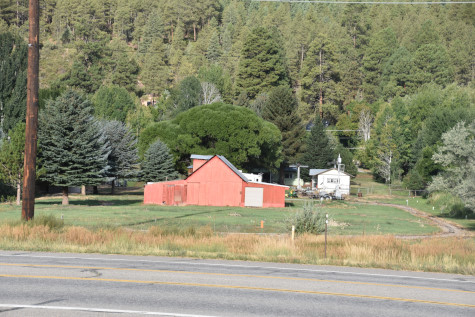
The live steam railroad I once rode with my friend Robin Bowers.
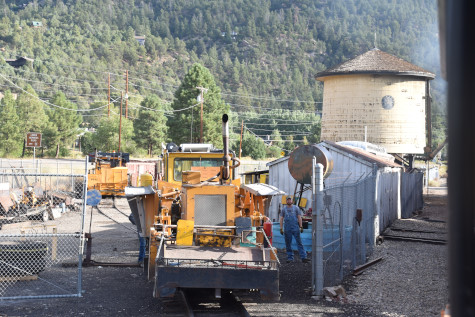
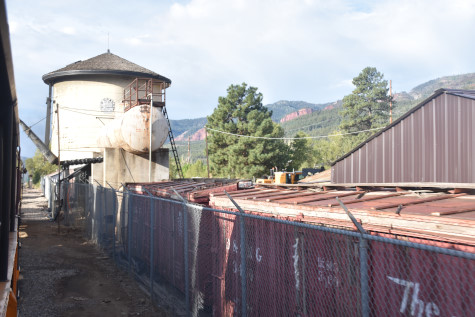
We climbed to Hermosa and its water tank.
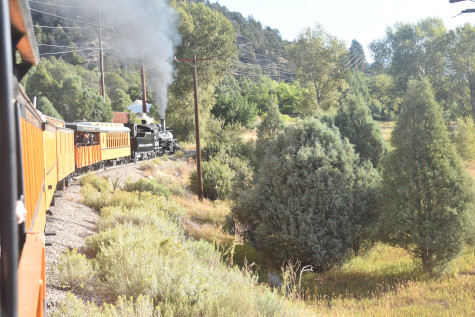
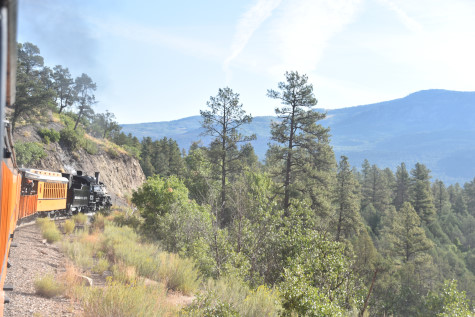
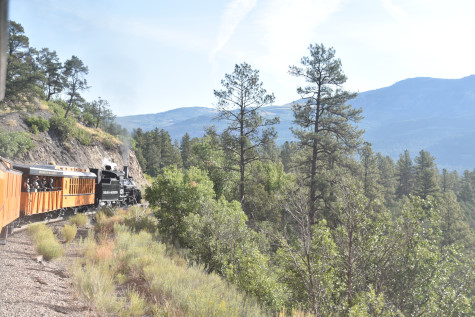
Here the climb really started.
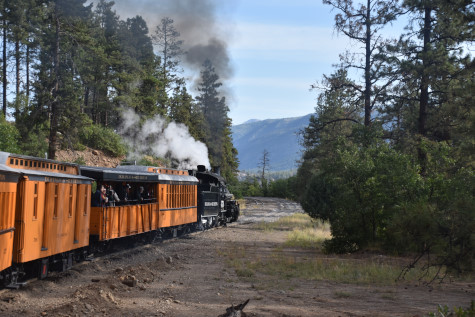
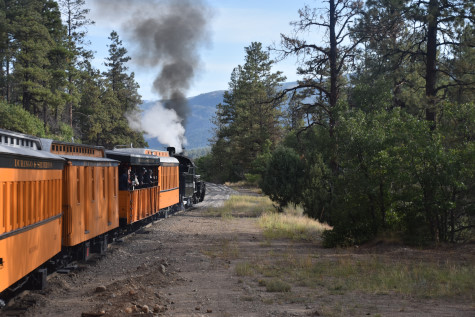
Pinkerton siding at Milepost 465.75.
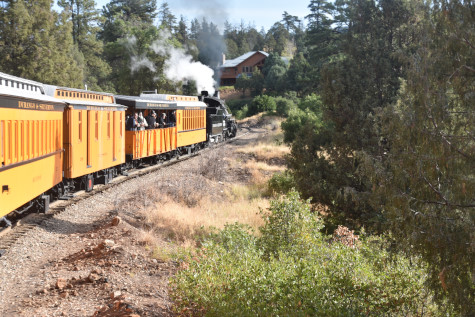
We rounded a few more curves to reach the US 550 bridge.
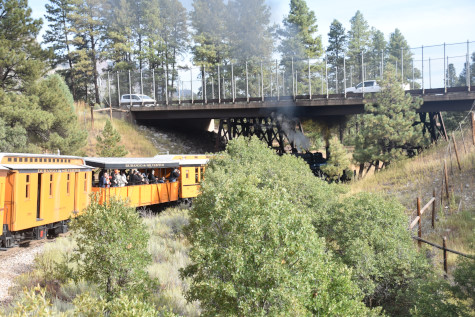
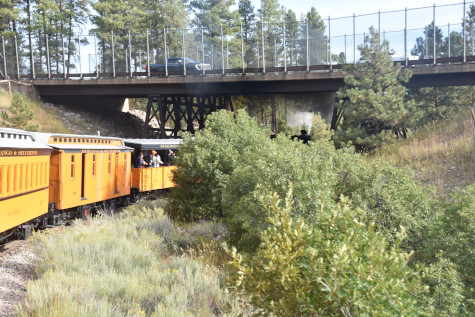
Going under that bridge.
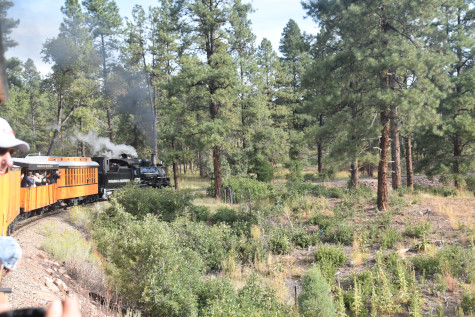
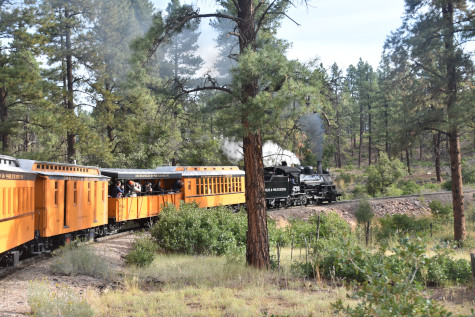
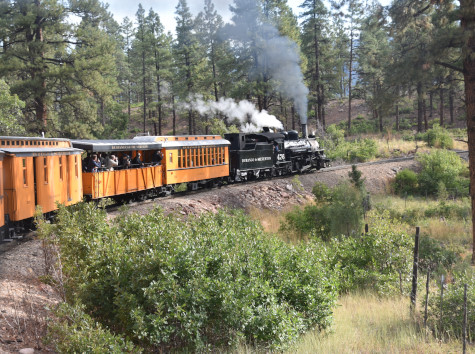
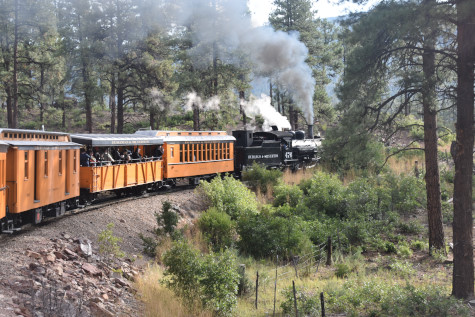
We curved to achieve elevation.
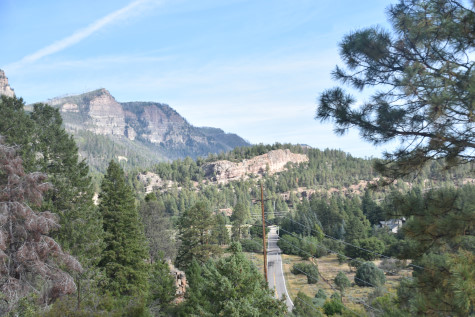
Colorado Highwy 250 below.
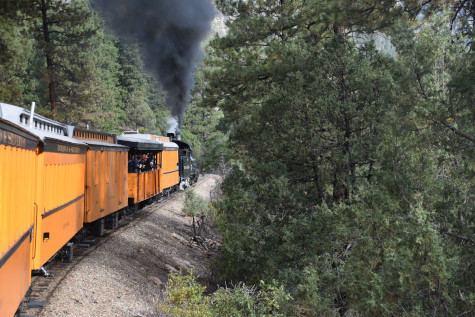
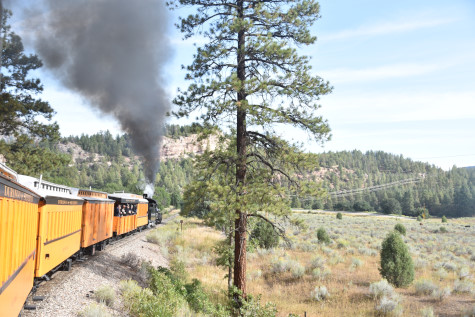
Climbing the grade to our next station.
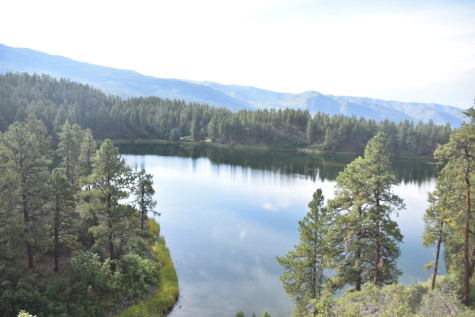
Shalona Lake.
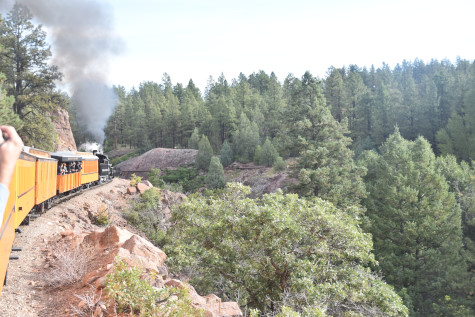
Climbing to an old friendly photo spot.
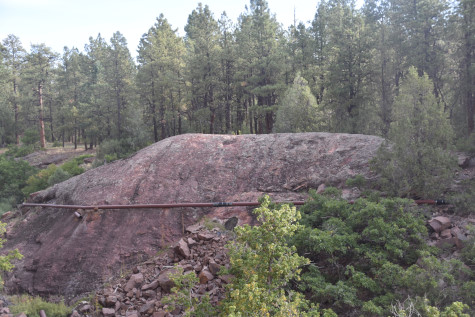
This rock outcropping at Granite Point was a photo runby location on two photo charters in which we participated.
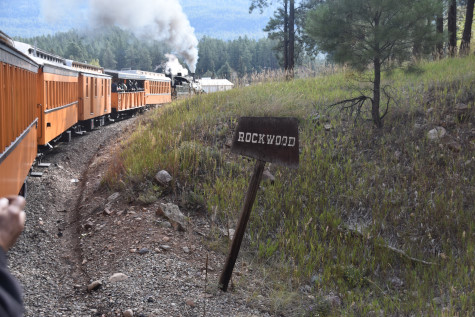
Coming into Rockwood, the last location where the highway traffic meets the train.
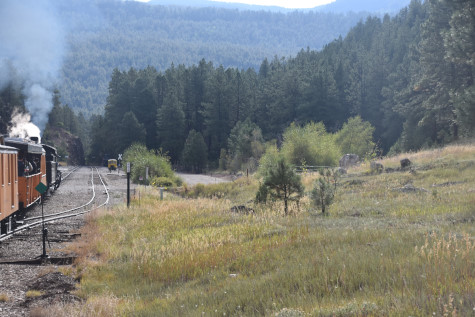
Rockwood siding Milepost 469.1.
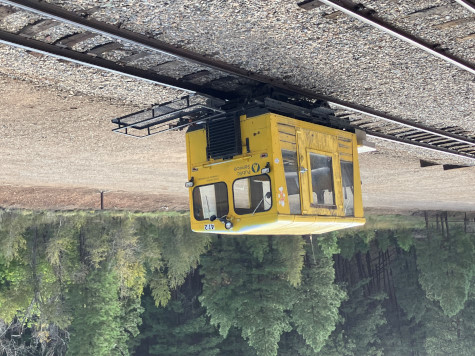
Fire speeder 472.
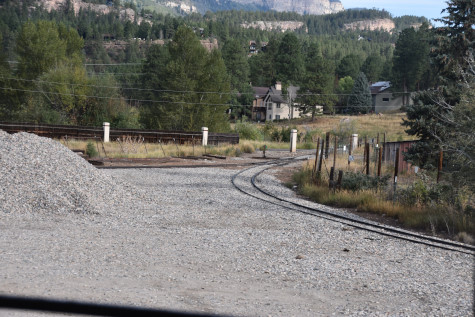
The Rockwood wye.
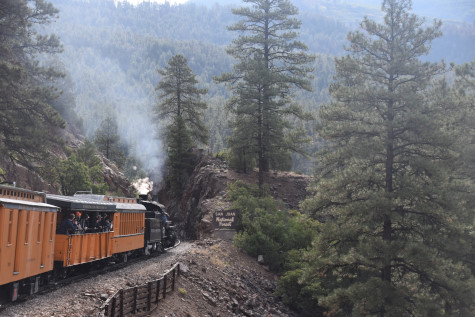
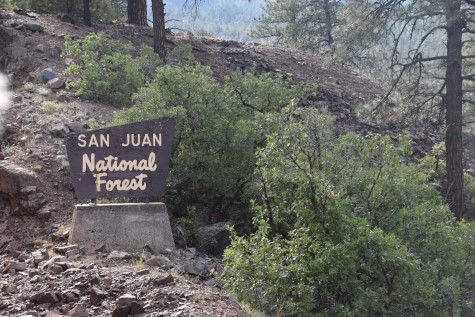
Entering the San Juan Forest.
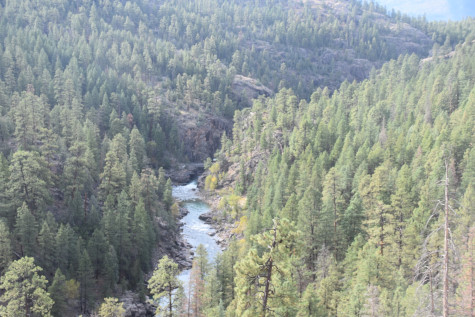
The Animas River far below.
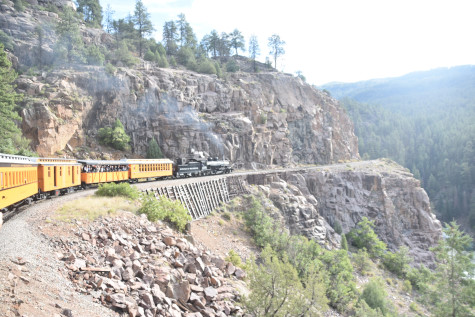
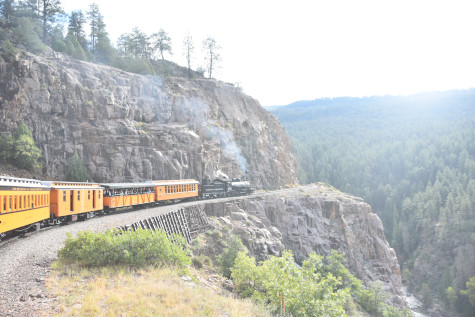
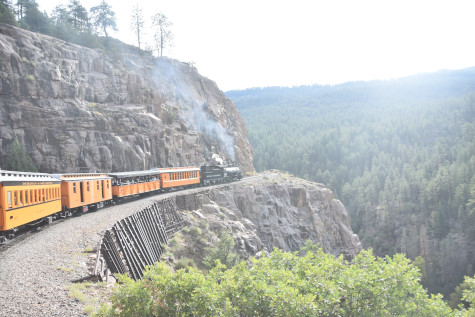
Riding the High Line above the river.
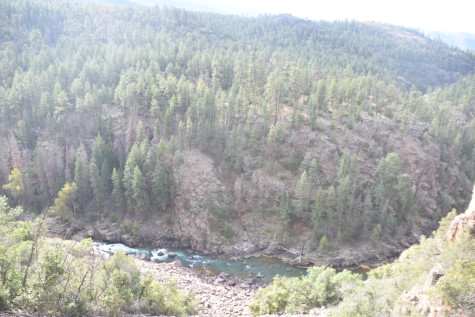
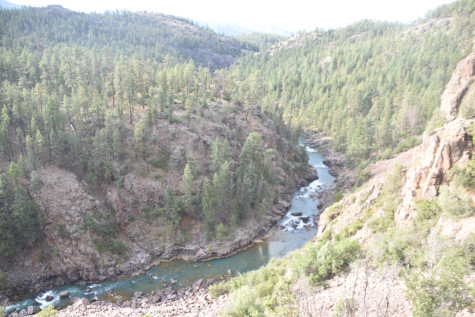
Everyone's cameras were alternating between the train and the river as we travelled through this very scenic area.
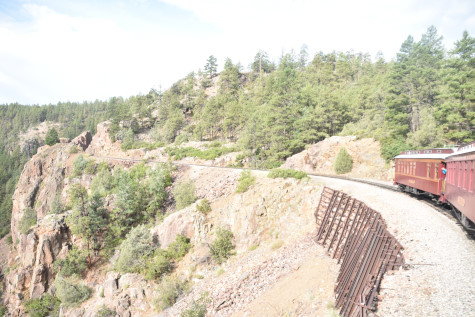
The rear of our train.
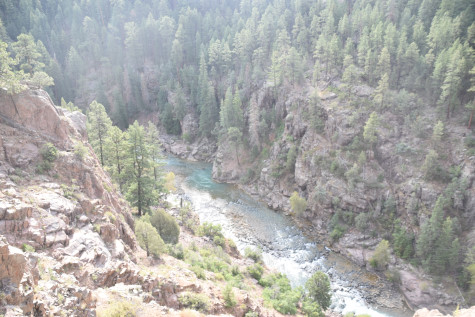
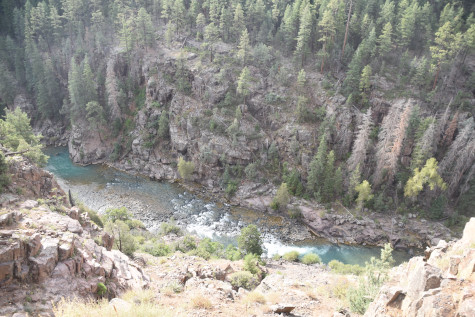
The Animas River is 126 miles long and originates at Animas Forks northeast of Silverton at an elevation of 11,120 feet, and flows southward to Farmington, New Mexico, where it joins the San Juan River.
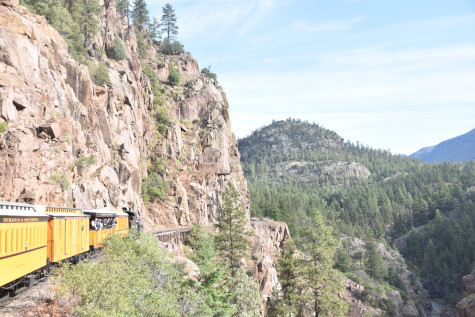
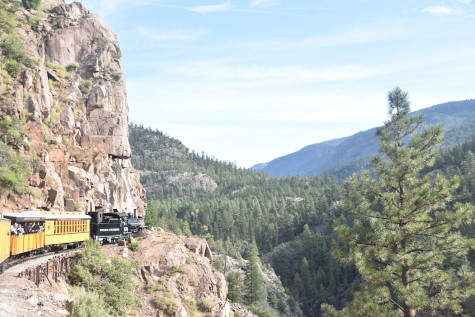
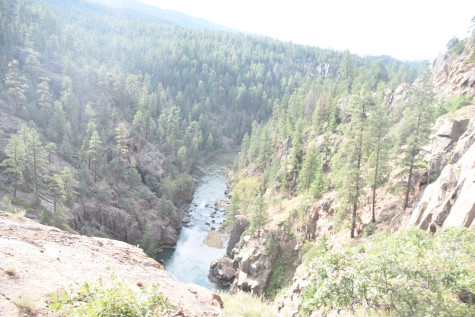
Continuing across the High Line.
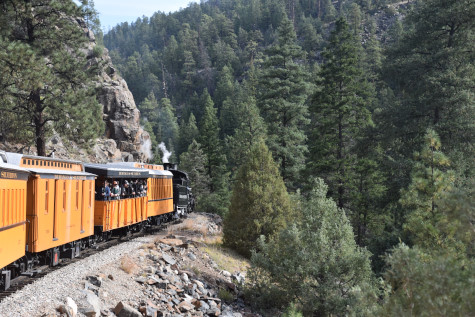
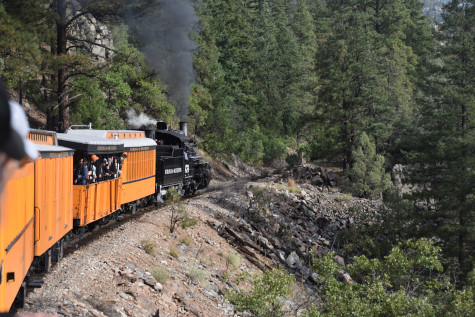
Curving to gain elevation.
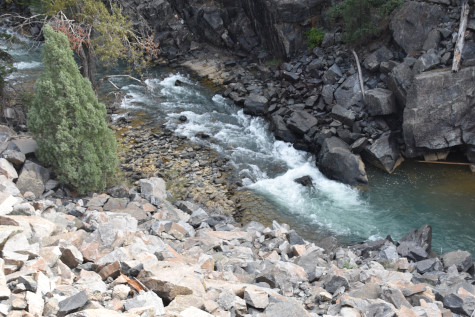
Known in Spanish as "El Río de las Ánimas", or "The River of Lost Souls", it was one of only a few undammed rivers in southwestern Colorado. The Upper Animas River Canyon bears the legacy of the longest hard-rock mining operations in southwestern Colorado. The mineral-rich geology of the San Juan Mountains profoundly shaped the natural and human histories of the Animas watershed. Moreover, the Animas River provides Coloradans a prism through which to view humanity's historic, and often troubled, relationship with the sensitive ecosystems of the southwest Rocky Mountains.
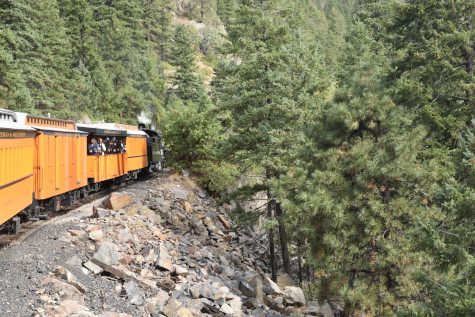
Climbing high above the river.
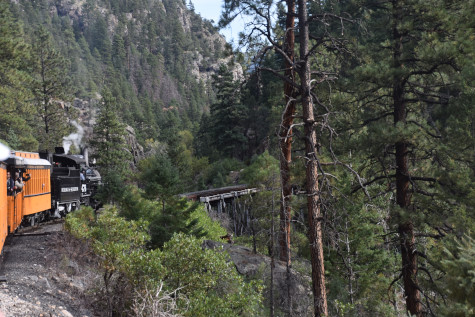
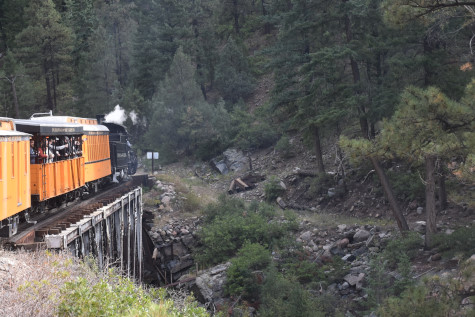
Crossing the Animas River the second time on the 190 foot long high bridge made of steel girders and a heavy wooden deck, Milepost 471.23.
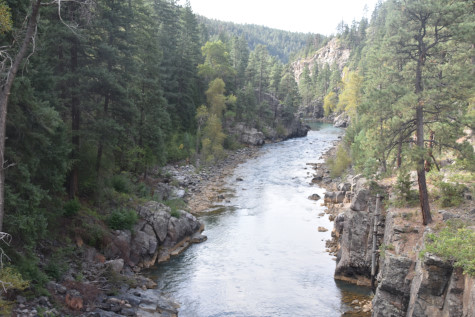
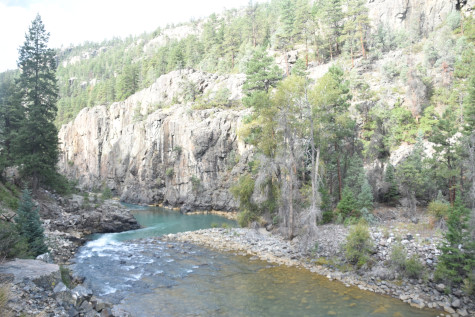
The river as we crossed it.
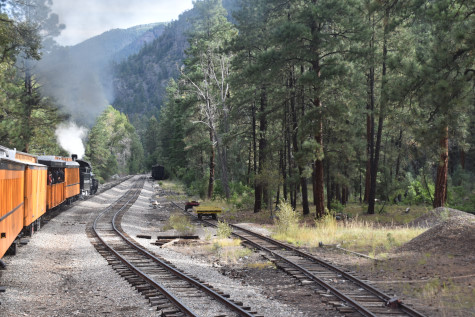
Tacoma, Milepost 472.3.
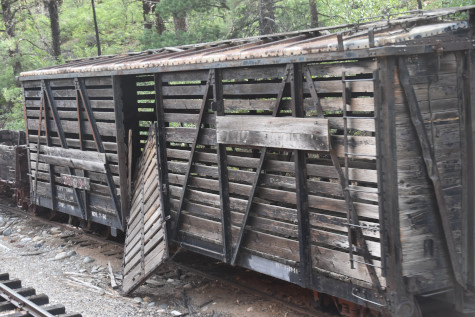
Durango and Silverton stock car 39091, nee Denver and Rio Grande Western 309091, built by the railroad in 1937.
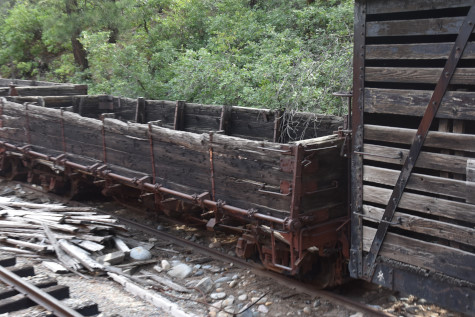
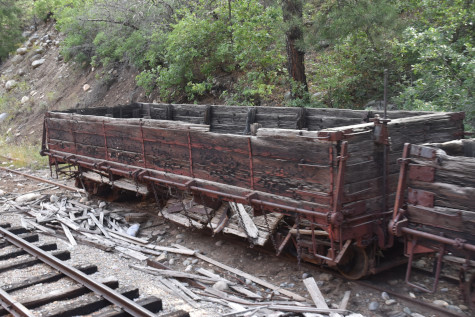
Cars left here by the railroad.
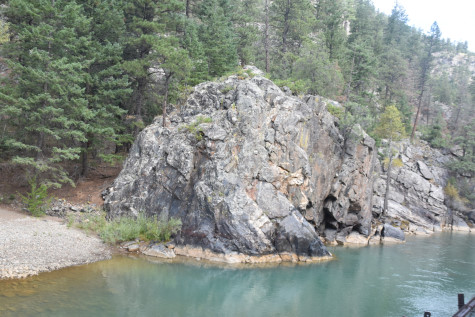
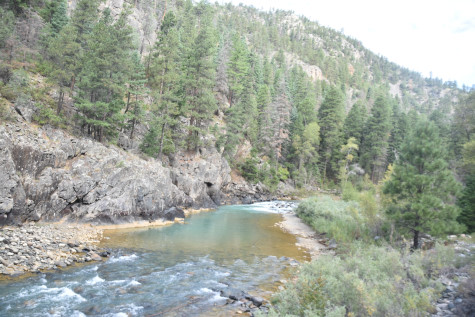
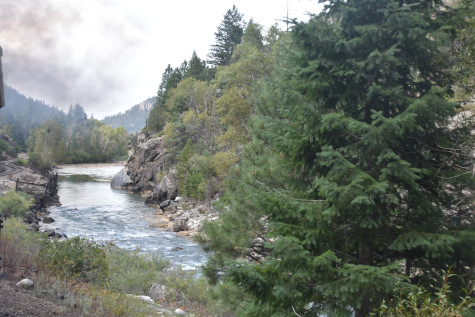
The ever-present Animas River, which we would follow all the way to Silverton.
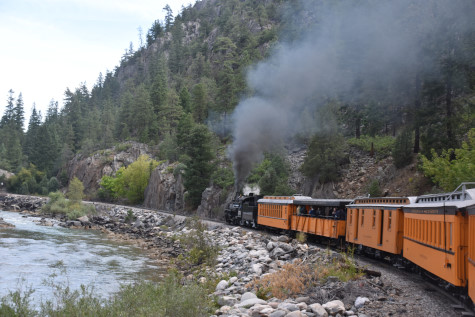
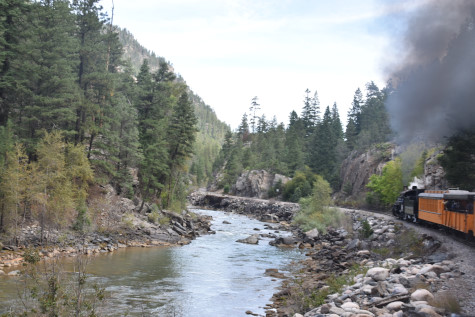
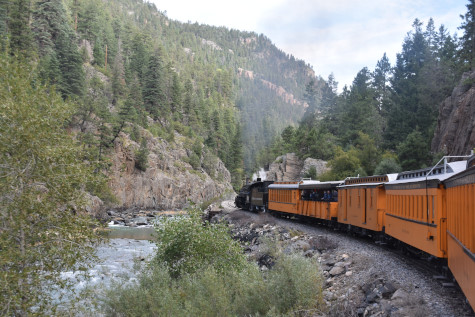
The river, the steam train and a beautiful morning.
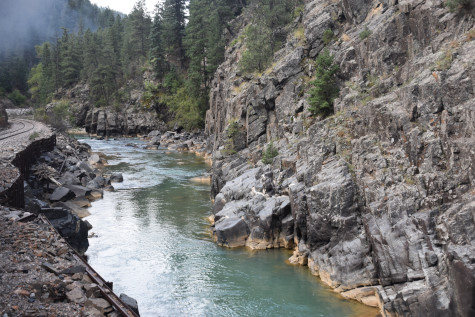
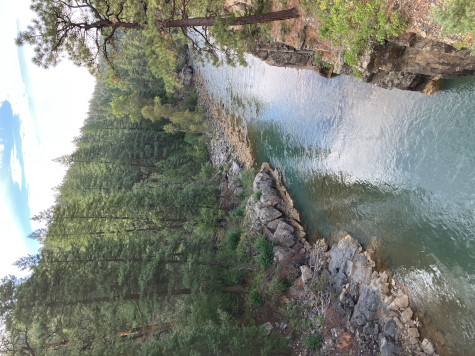
The rate and volume of stream flow in the Animas vary greatly by season and year. The typical seasonal minimum stream flow occurs during the winter months of November through March. The seasonal maximum occurs during the spring snowmelt period of late April through early June. The greatest stream flows in the Animas have occurred not as a result of the spring snowmelt but during the occasional late summer and early fall floods, which result from the monsoon rains this area receives. The largest of these floods on record came on October 5, 1911.
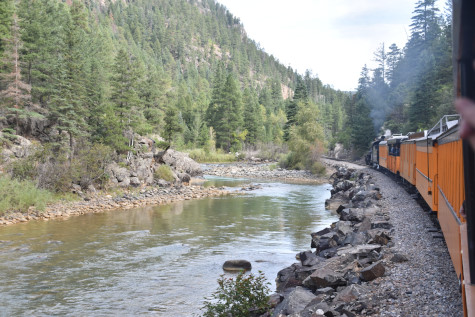
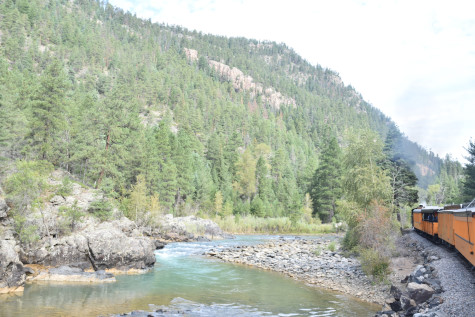
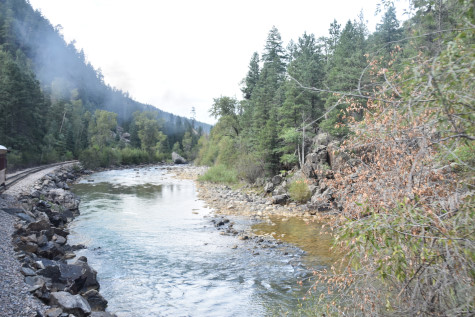
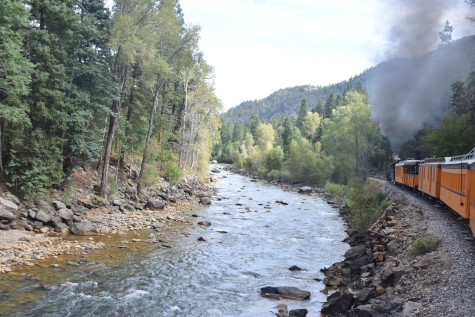
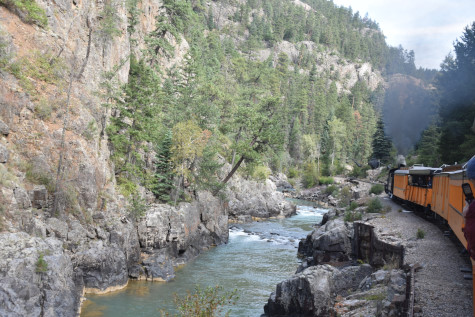
The Durango and Silverton Railroad features many curves.
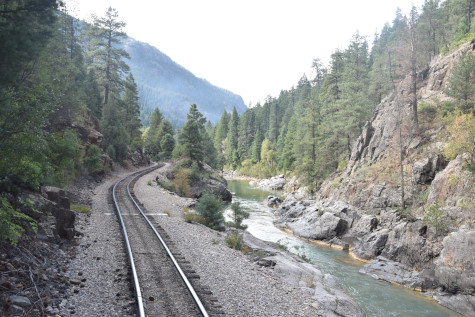
We both walked the train and spent some time in "General Palmer".
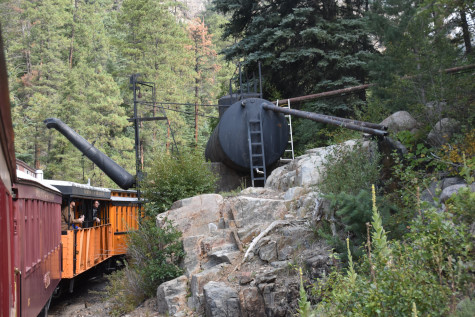
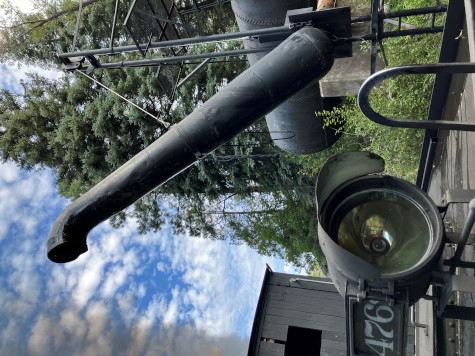
Tank Creek after took water.
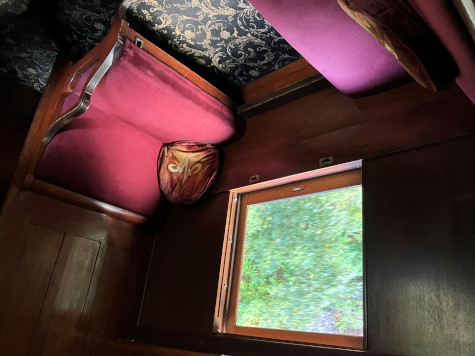
The very nicely padded seats in "Nomad".
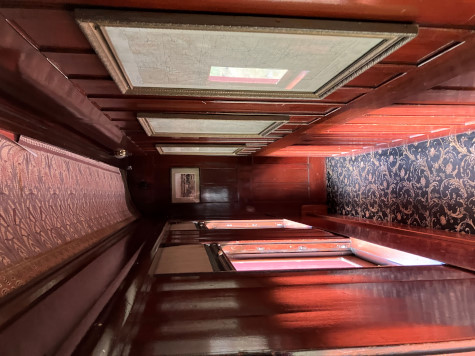
The hallway between the individual seating area and the parlour seating.
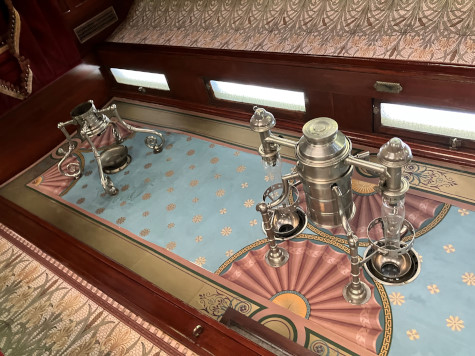
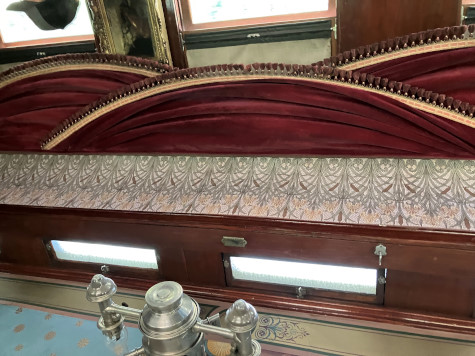
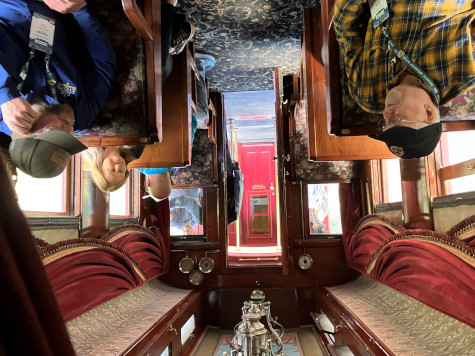
The furnishings of "Nomad" and some of the conference attendees enjoying the ambience.
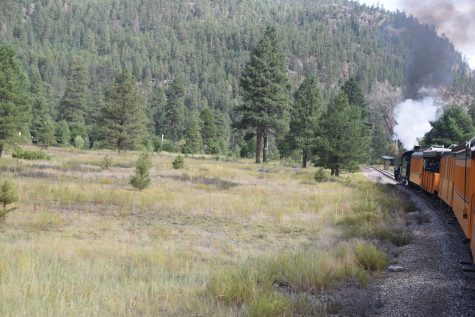
"Ah Wilderness" at Milepost 474.0.
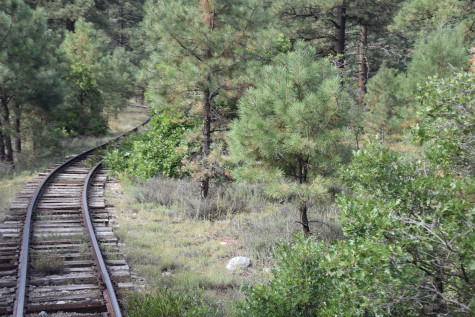
The siding at "Ah Wilderness" at Cascade Canyon.
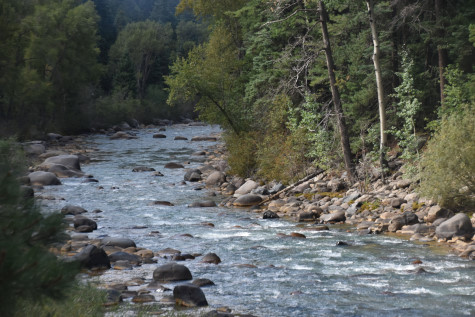
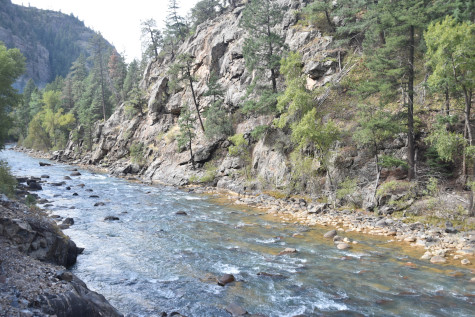
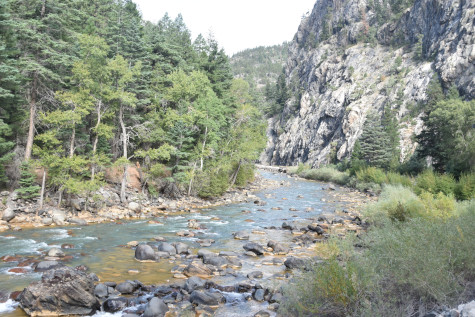
The river and the canyon.
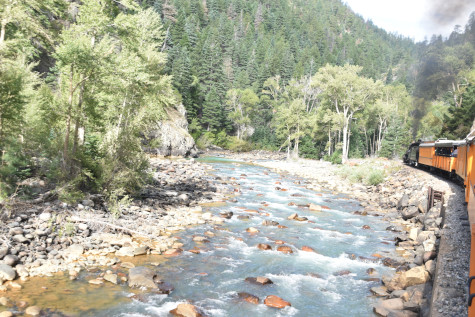
Durango and Silverton 476 leading the train.
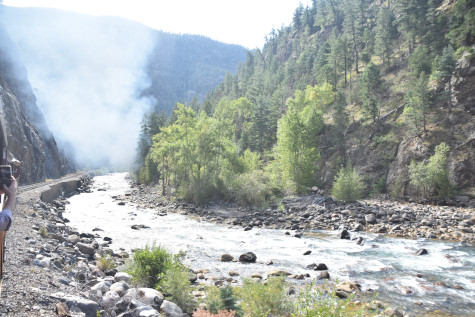
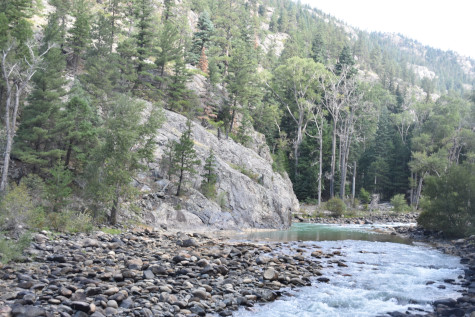
Smoke from the steam engine hangs over the river.
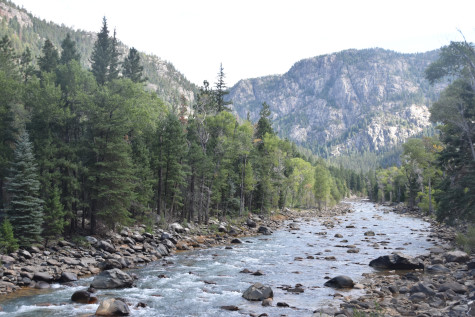
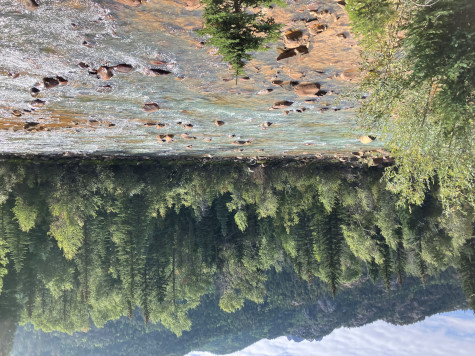
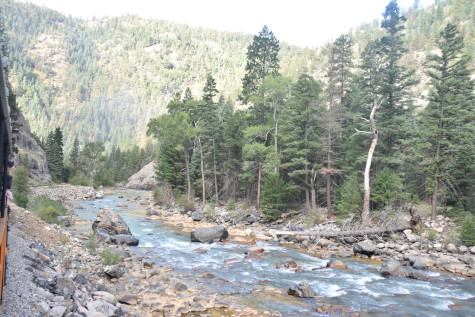
The fast-moving Animas River.
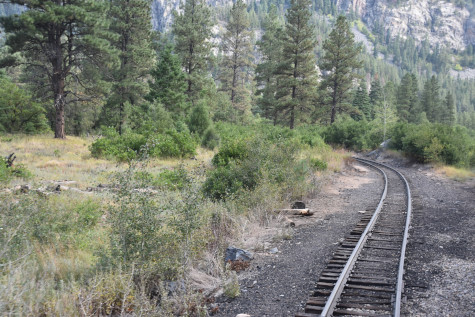
The wye track at Cascade Canyon.
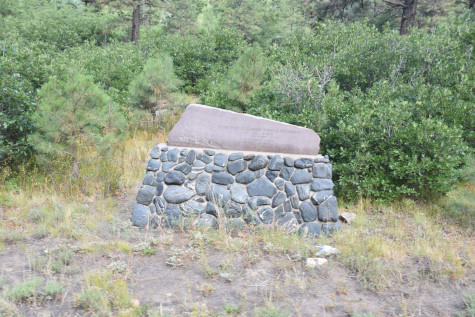
"To The Spirit of Colorado Mountain Railroading Then-Now-Henceforth in the 100th Year of the Durango-Silverton Narrow Gauge Railroad" plaque installed by the Intermountain Chapter of the National Railway Historical Society at milepost 477.55.
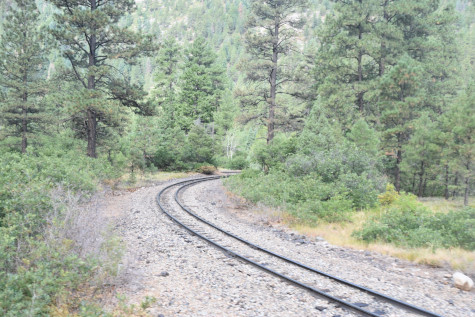
Cascade Wye that we would be travelling on in two days.
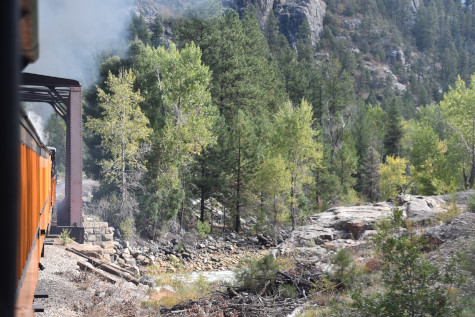
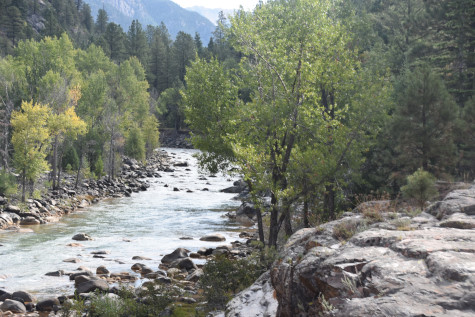
The third crossing of the Las Animas River, Milepost 477.80.
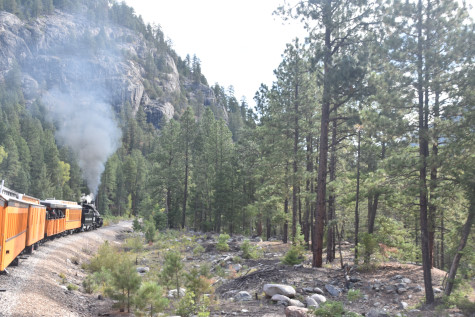
We re-entered the forest.
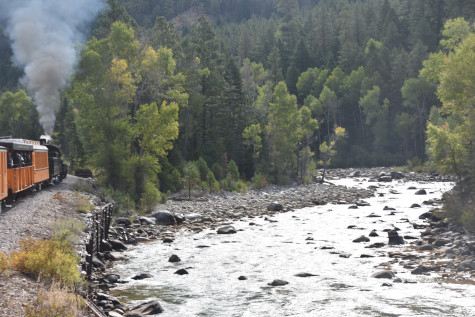
It was a beautiful day for a steam train ride.
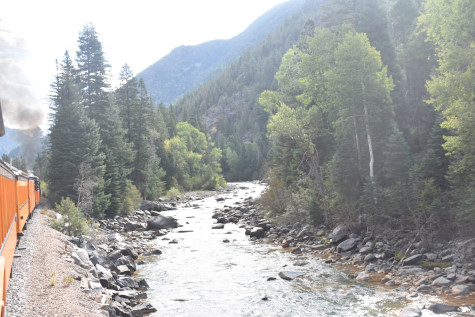
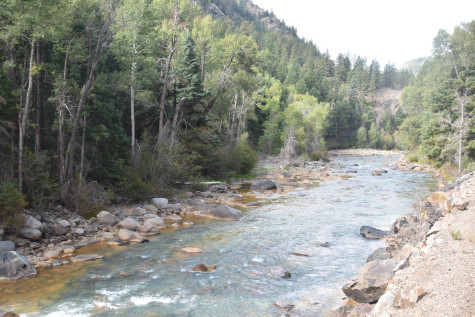
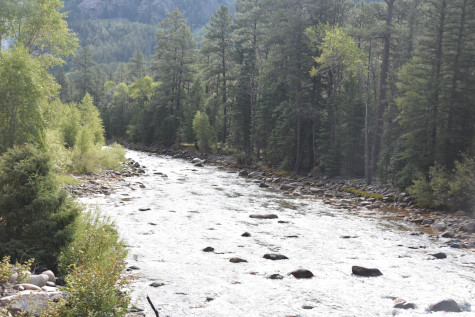
We never tire of seeing this river.
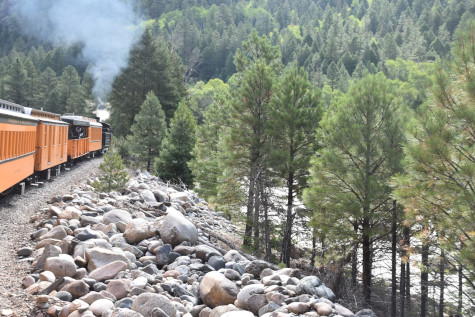
Proceeding through the forest.
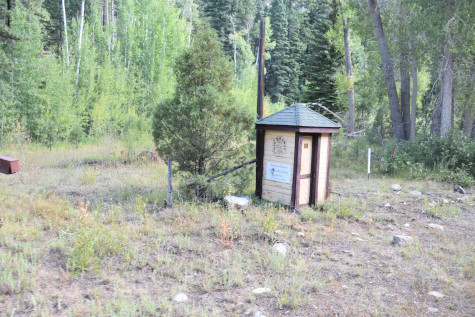
A telephone booth at Milepost 497.55.
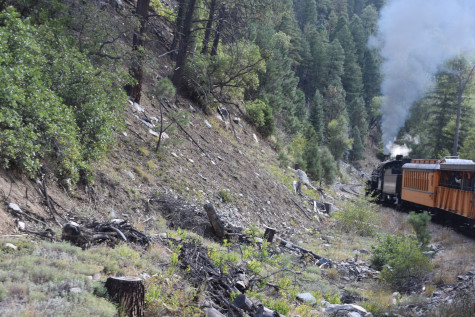
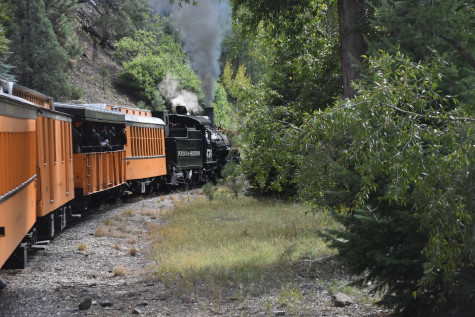
Curving to the left and the right to gain elevation.
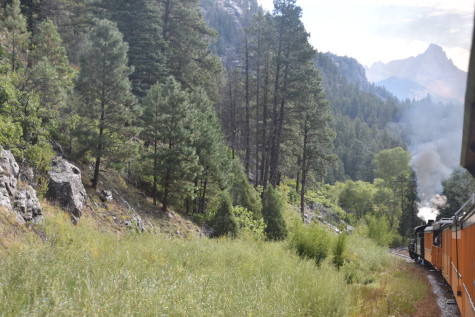
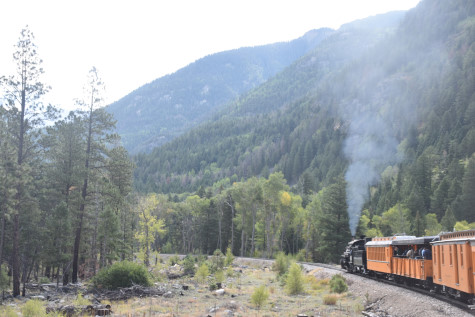
Pigeon Peak was very visible as we continued our northward journey.
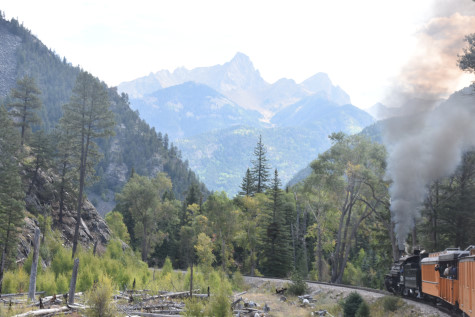
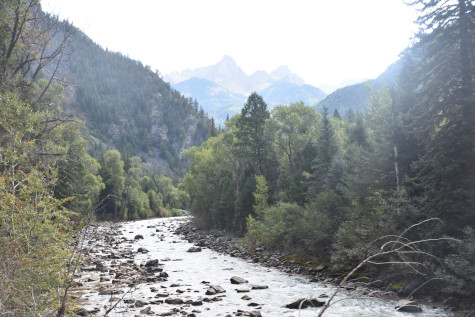
Milepost 479.5, where Pigeon, Turret and Eolus Peaks loom above the train.
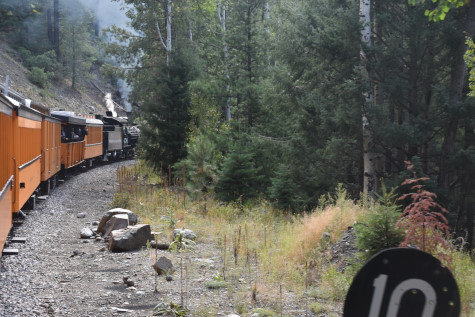
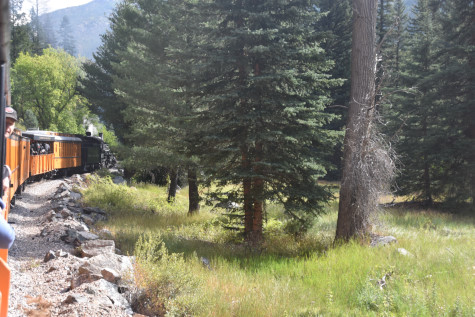
Approaching Needleton siding.
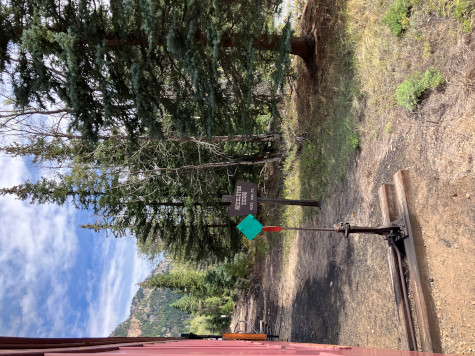
The Needleton siding signpost at 8,135 feet.
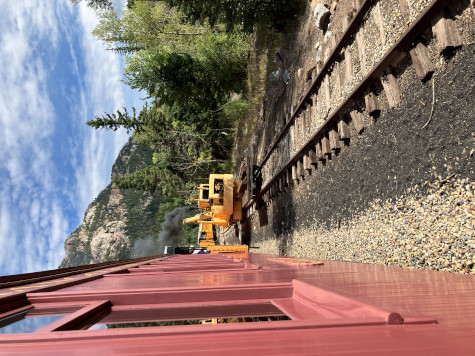
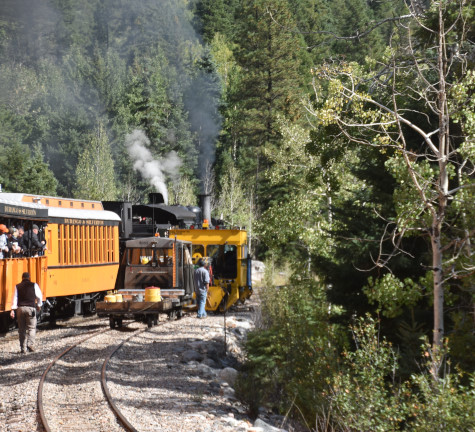
The siding at Milepost 484.0.
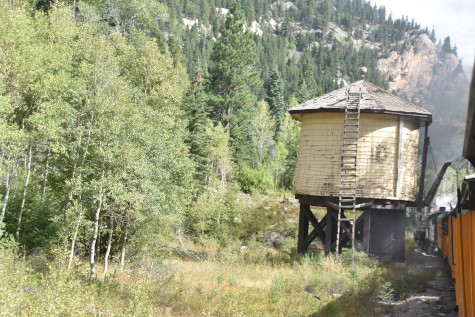
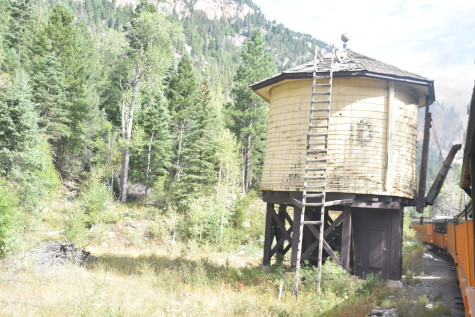
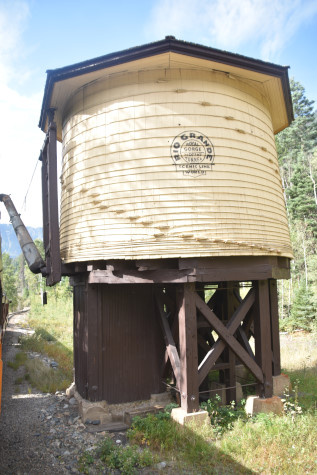
Needleton water tower at Milepost 484.4. It was built in 1881 and cosmetically restored between 2003 and 2004.
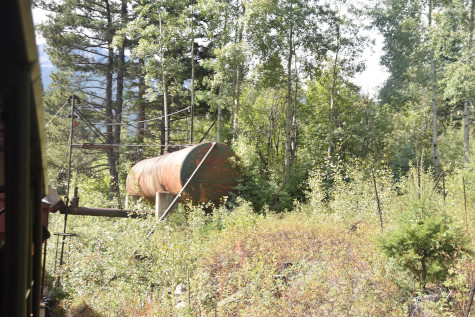
The currently-used tankcar-tank, set in the 1960's receives gravity-fed water from Watertank Creeek, as did the original tank.
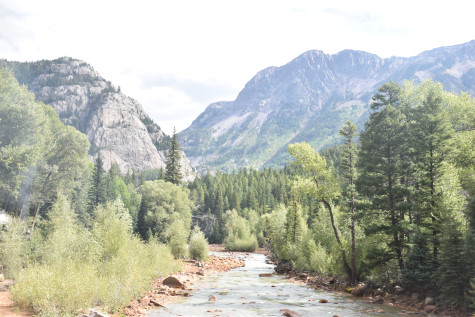
River, forest and mountains.
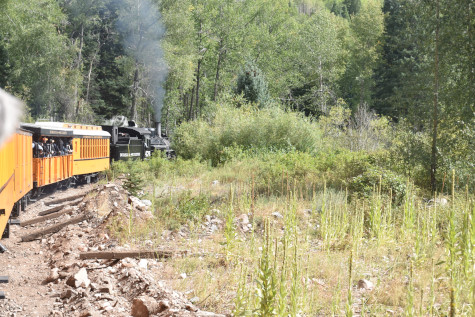
Rolling towards Silverton.
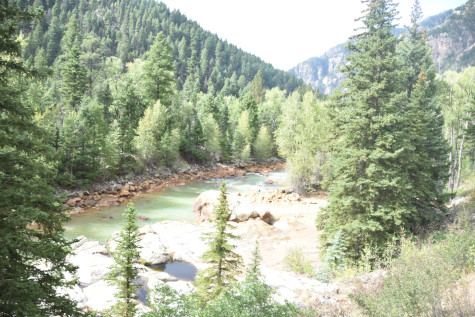
The Aminas River.
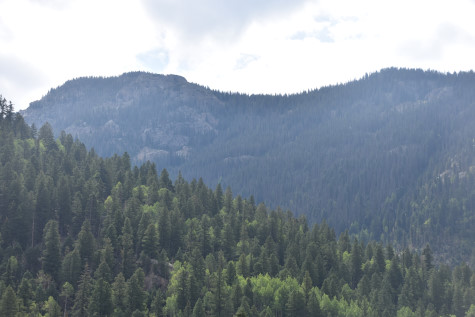
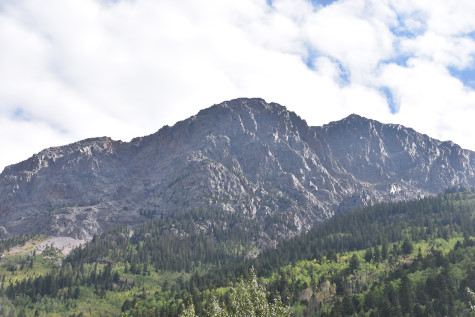
The Needles Range.
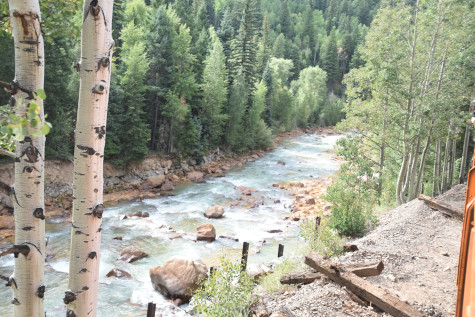
Birch trees along the river.
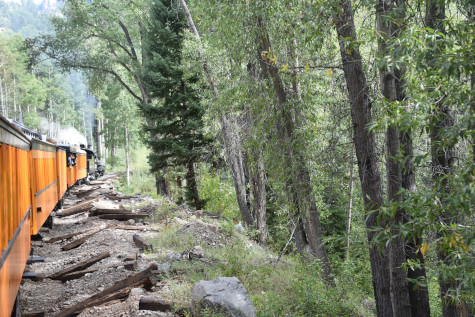
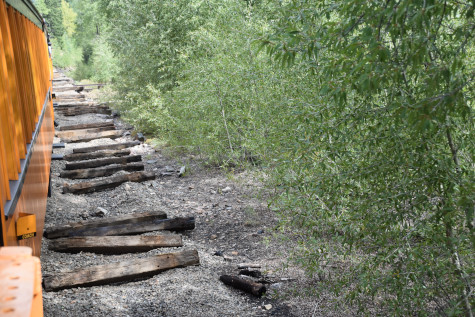
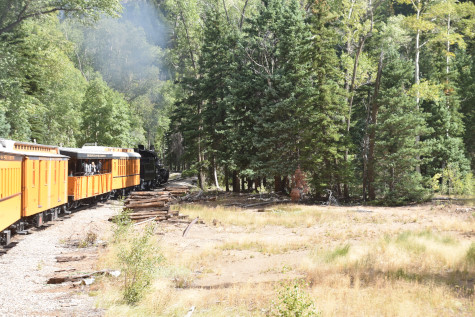
The railroad keeps its track well-maintained as evidenced by the old ties which have been replaced.
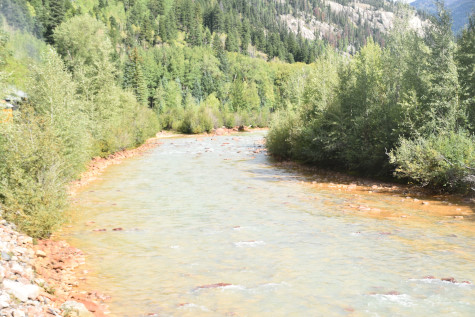
The wide and free-flowing Animas River.
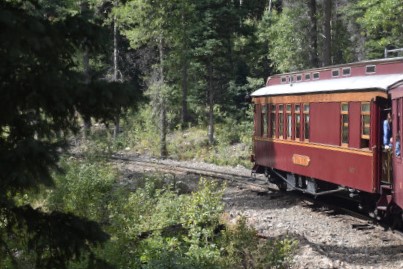
Private car "General Palmer" brings up the markers.
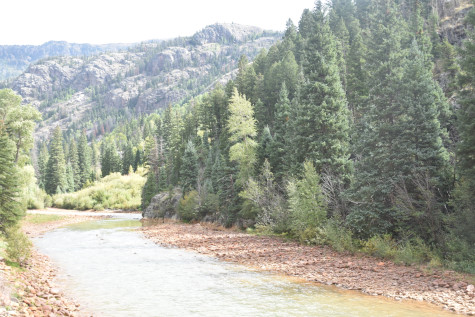
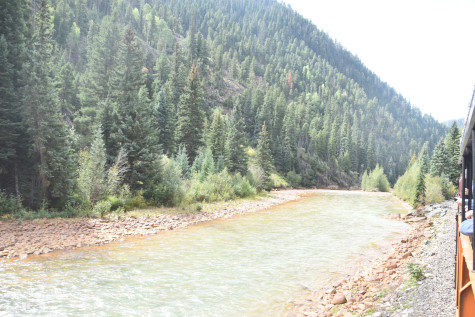
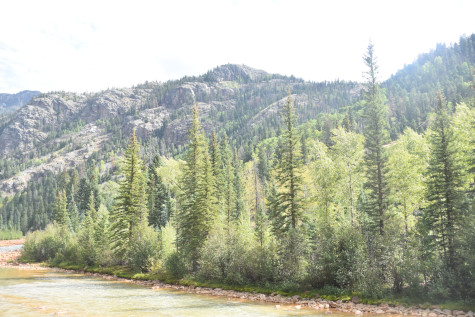
Scenery abounds on this route.
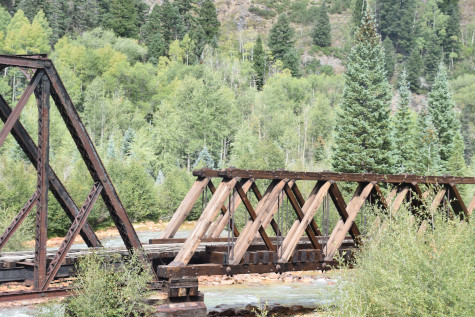
The fifty foot Elk Park Bridge, was installed over the Animas River in the late autumn of 1064. Periodic flodding had seriously weakened the abutments of the old trestle.
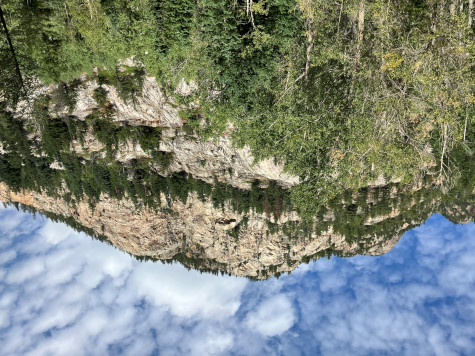
Garfield Peak, elevation 13,803 feet.
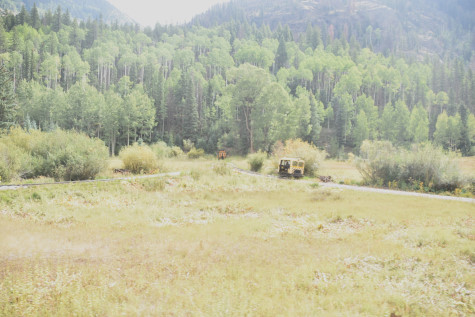
Elk Park wye.
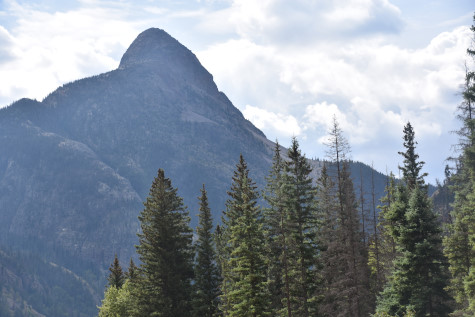
Mount Eolus, elevation 14,079 feet.
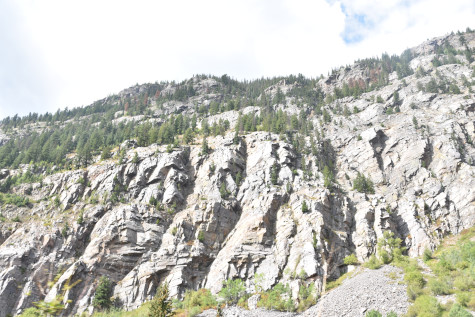
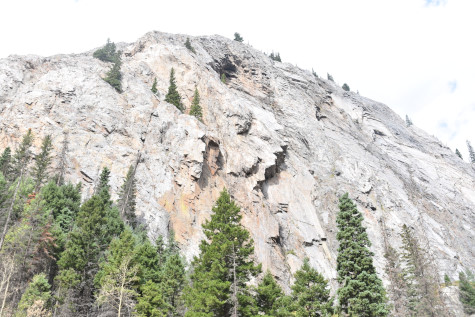
Sultan Mountain, elevation 13,336 feet.
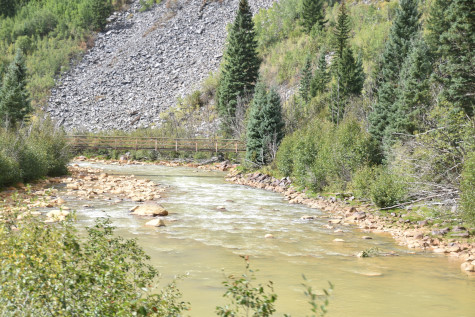
Animas River.
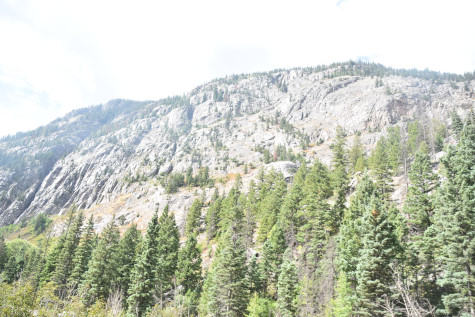
The mountains to the north.
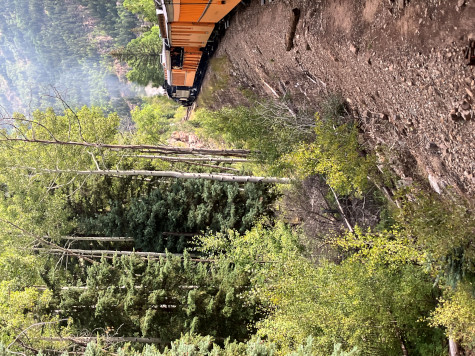
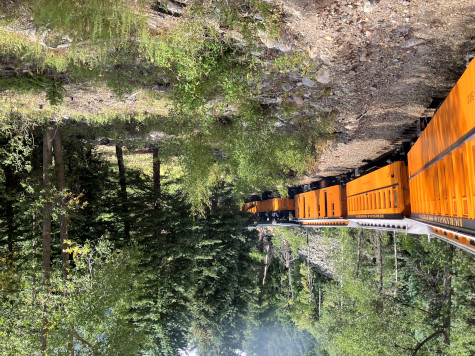
When on curves, I try to capture both the front and rear of the train.
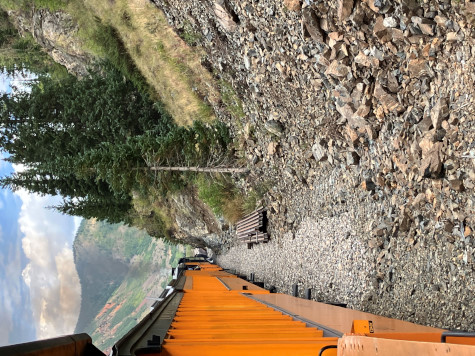
Crossing a small bridge.
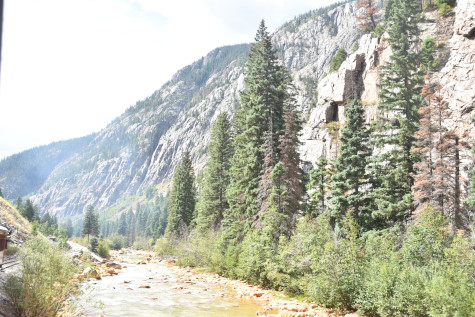
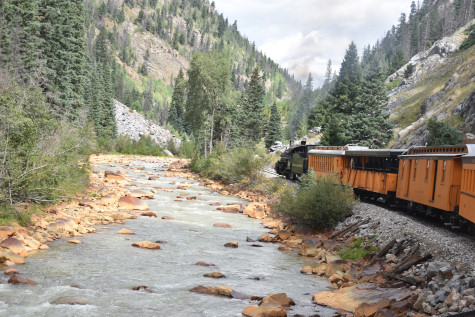
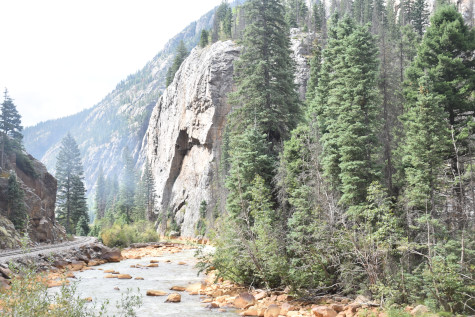
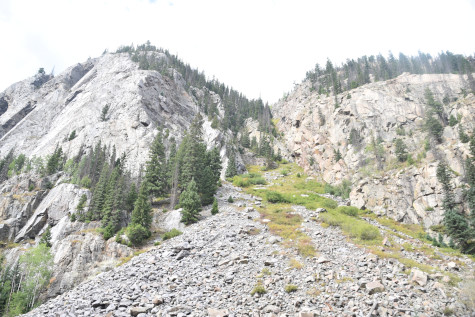
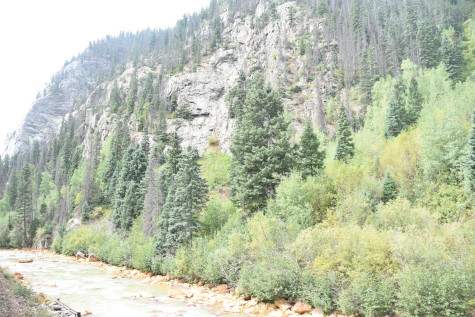
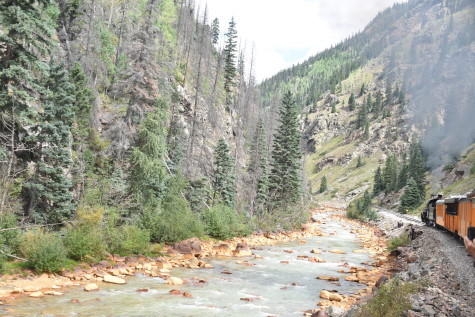
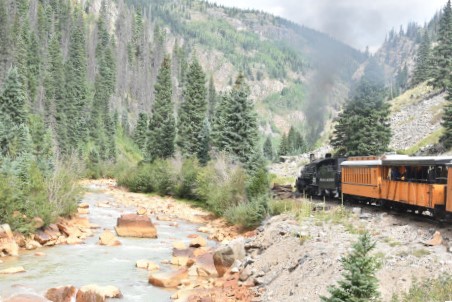
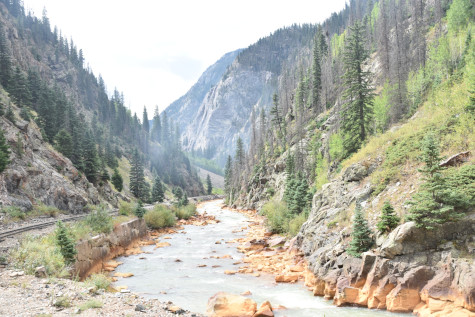
The beauty of the river as we rounded its curves.
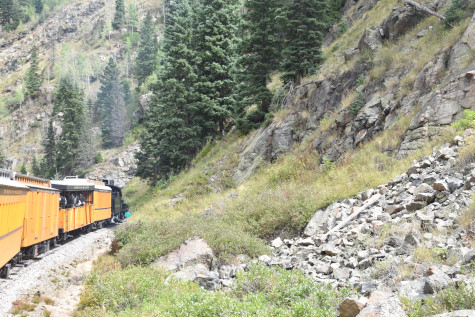
The train rounding an inside curve.
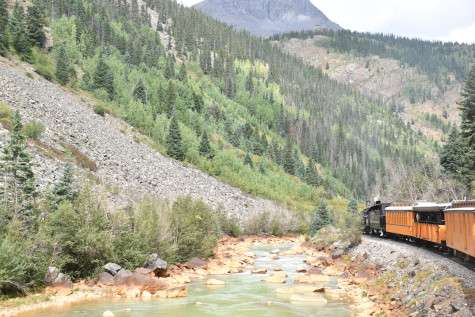
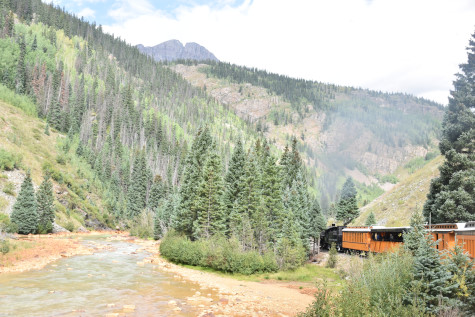
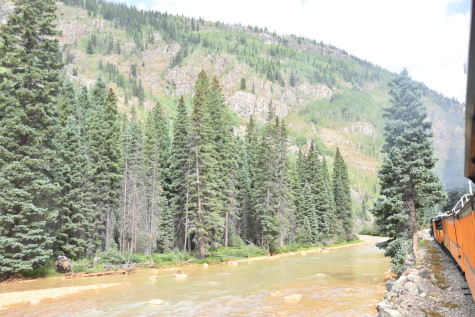
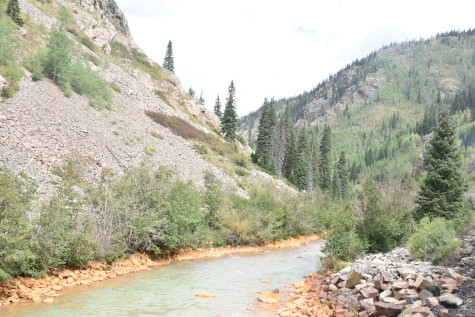
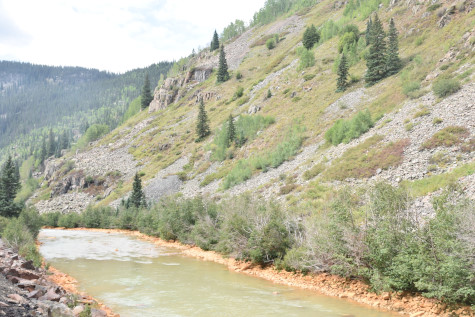
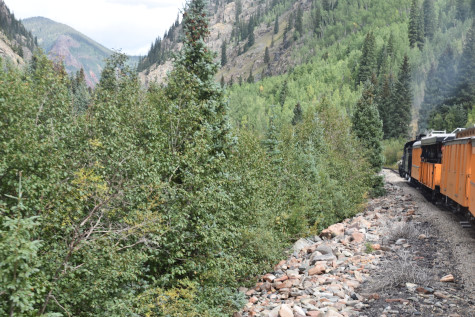
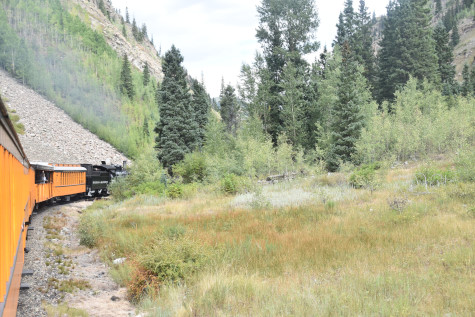
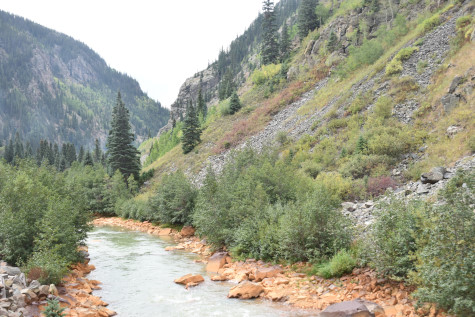
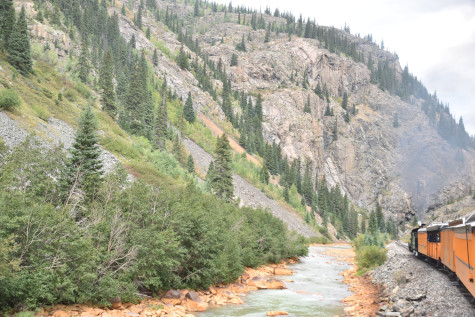
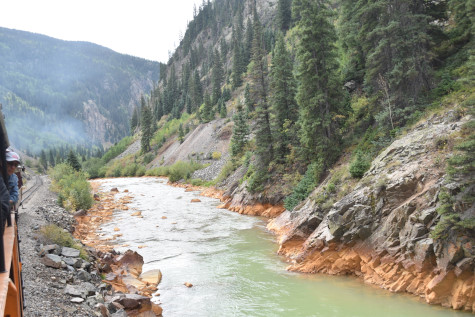
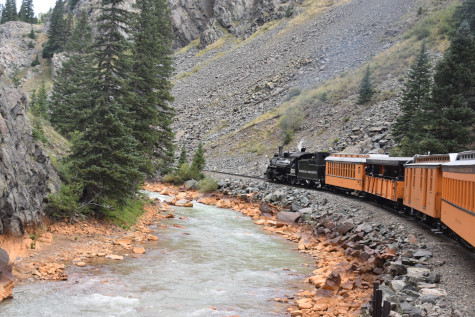
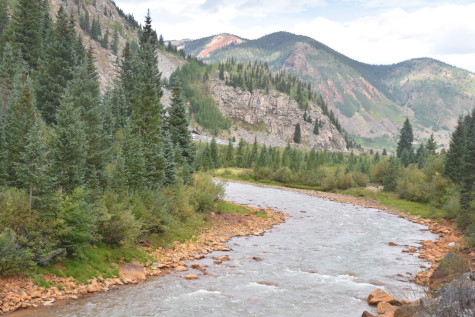
The journey from Milepost 490 to 495.25.
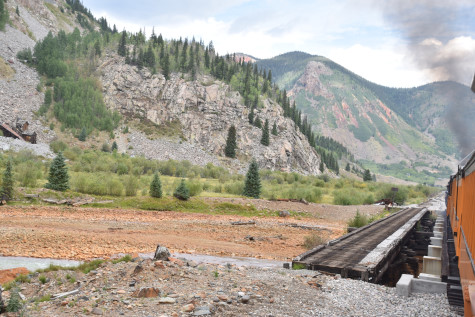
This was Elizabeth's and my first ride across the new bridge, known as the Silverton Bridge, at Milepost 495.25. For some background, the original bridge was replaced in approximately 1901 by one which utilized a combination of open deck wooden girders as well as two 60-foot-long Howe pony trusses. Trusses such as these are not uncommon on the Silverton branch, and several remain to this day. Examples of these bridges can be found at the north end of the 15th St. bridge, Hermosa Creek bridge, as well as the old bridge bypassed in 1964 just south of Elk Park. In 1932, the Howe pony trusses were removed and replaced with additional open deck timber girders along with additional support creating more, but shorter spans. The bridge has seen significant work over the years since 1932. Additional scour protection and support have been added as well as a check dam, however the work performed in 1932 left the bridge in roughly the same configuration which it remains in today. The work undertaken over the years resulted in a 242-foot open deck timber girder bridge with varying span lengths and span designs.
The Silverton branch continued to survive through the 1940's through the 1970's thanks to a newly developing market of tourism. The very automobiles and roads which spelled disaster to many railroads in the United States during that period allowed people the opportunity to ride this spectacular 45 miles of railroad which many of them had seen featured in Hollywood films. Even once the railroad was sold by the Rio Grande in 1981 to the newly formed Durango & Silverton Narrow Gauge Railroad, the bridge continued to serve the trains passing over it.
While the Durango & Silverton continued to make repairs to the structure over the years, bridge 495A never showed signs of excessive deflection, or failure of any kind. This is a true tribute to the railroaders who designed and built this bridge nearly 100 years ago. However, as necessary maintenance of the structure continued to increase and a third party engineering in-depth study of the D&SNG bridges concluded in 2017, it was jointly decided by the railroad and its consulting bridge engineers that more drastic steps were needed to ensure the long-term reliability and safety of trains passing over the Animas River at this location.
The Durango & Silverton immediately began exploring a plethora of options. Repair, retrofit and replacement were all considered. However, as repair and retrofit options were analyzed, the same issue kept rising to the surface, the substructure or support portion of bridge 495A. Not unlike many bridges of that time, the base of the bridge was not driven into the bottom of the Animas River. Instead, the bridge was supported by mudsills which simply rest on the floor of the river. This is why the check dam was built immediately downstream of the bridge, to stabilize the floor of the Animas River, and to slow down the flow of water under the bridge and to reduce scour during times of high velocity runoff.
This meant that no matter what retrofits or improvements were made to the girders or piers, the bridge would still simply rest on the floor of the river. Retrofitting the mud sills with driven piling meant removing the entire bridge above it. This quickly began to blur the line between retrofit and replacement of the bridge. By the time all options had been explored, the answer became clear. To accomplish this project correctly and ensure the long-term resilience of the bridge and the railroad, it was once again time to replace bridge 495A. In a twist of history repeating itself, the Durango & Silverton reached the same decision that the Denver and Rio Grande had arrived at numerous times before nearly 100 years ago.
The above and below description from Conserving a National Treasure
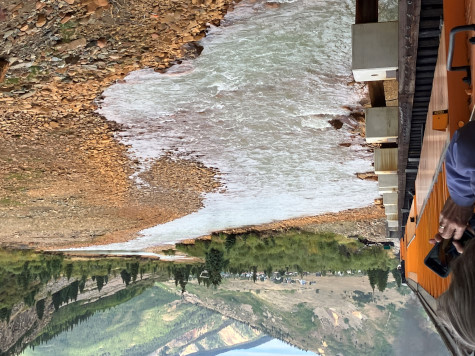
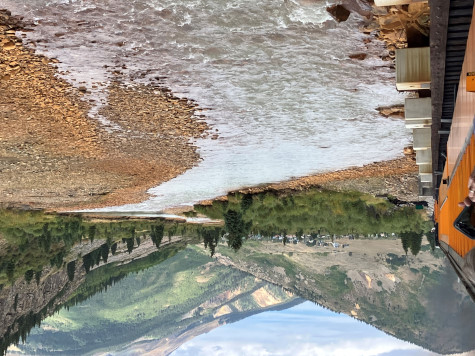
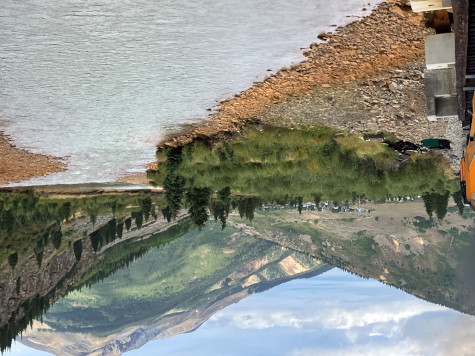
When it came time for choosing a design for the replacement bridge to be built at 495.24, the Durango & Silverton weighed the combination of the success of the 1964 replacement bridge at Elk Park, as well as the fact that the existing timber structure to be replaced at milepost 495.24 was of open deck girder design. A steel and concrete open deck design quickly became the clear choice for the new bridge. Such a design possessed several key benefits. It would help to keep the aesthetics of this bridge and surrounding area similar to the original. Also, the railroad had a proven positive history with the bridge at Elk Park. Not only did the bridge at Elk Park provide a proof of concept, but it was also a nod to the history of the Silverton branch by building a bridge which mimicked the design chosen by the Denver & Rio Grande over half a century ago.
To build the bridge during favourable weather conditions without interruption to train traffic, it would be necessary to build the new bridge parallel to this existing and realign the approaches to the bridge once completed. This would be once again similar to the bridge replacement at Elk Park. However, the Durango & Silverton still deals with the sharp curve created by the track realignment of that project, and it was of the utmost importance that the new alignment did not hinder the speed of trains through this section of track. Several alignments and locations were explored and tweaked, it was decided that the new bridge would be built parallel to the existing and just fifteen feet upstream. The new alignment actually decreased the track curvature to the south, and to the north, it would add a slight “S” curve to bring the track back to its original alignment. However, the reverse curve on the north approach could be executed gradually and without the need for sharp curves and speed reductions. The last challenge of realigning the track to this location was a rock outcropping on the south end standing in the way of where the new track needed to be placed. This, however, could be taken care of in the same way in which much of the Silverton branch was built by the Denver & Rio Grande, dynamite.
The Durango & Silverton began work with a number of contractors in bridge design, construction technique, blasting, river hydraulics, wetlands and associated environmental review. Conceptual drawings were created, wetlands delineated, and the general scope of the project was refined. While many similarities were taken from the Elk Park bridge, the new bridge at 495.24 would have some stark differences as well, due to how the Animas River and the tracks meet at this location. The elevation of the track possesses less clearance or “freeboard” above the water than it does at Elk Park, and the tracks do not cross the river as perpendicularly. The lower level of the track meant that in order to maintain adequate clearance between the low point of the girders and the high point of water, the girders had to be smaller.
The track over the bridge could be raised, but not to the full extent required to keep the bridge safety above the water flow in the event of flooding. Smaller girders means that more support is necessary. The new bridge would utilize nine piers of support, the Elk Park bridge utilizes just three. The piers of the Elk Park bridge are concrete which was poured in place into the riverbed. While these piers are a great support structure, they have a large surface area in the water and are exposed to the river’s hydraulic force as the water flows past. Placing nine poured concrete piers under bridge 495A would put a large footprint into the river and increase the forces to which it was exposed. Instead, each of the piers would be supported by 14” H pile and concrete pier caps would be cast off site and set into the place on top of the piling. This gives the bridge the support it needs and only has a footprint of 36.75 square feet in the river for the entire structure, an even smaller footprint than just the three piers at Elk Park create.
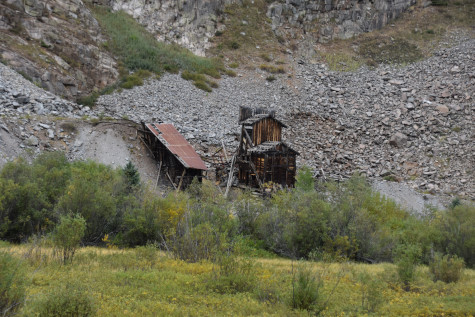
The Detroit Mine.
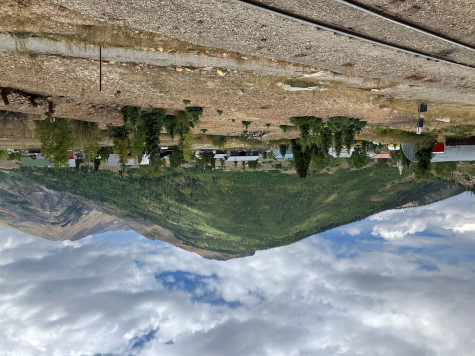
On the outskirts of Silverton.
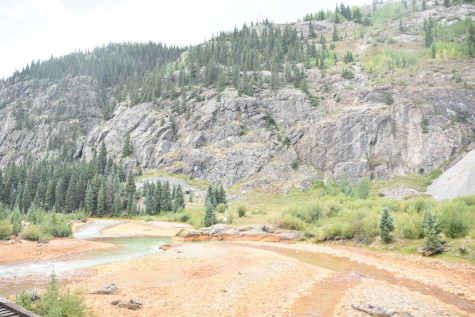
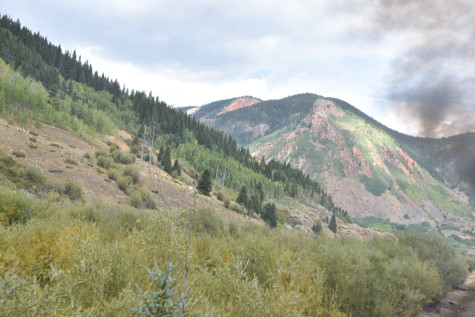
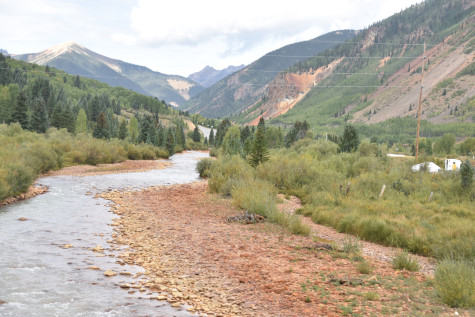
Nearing our destination.
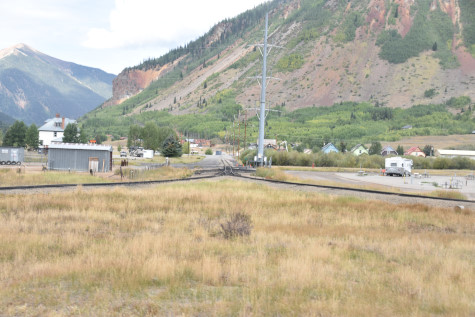
Silverton wye.
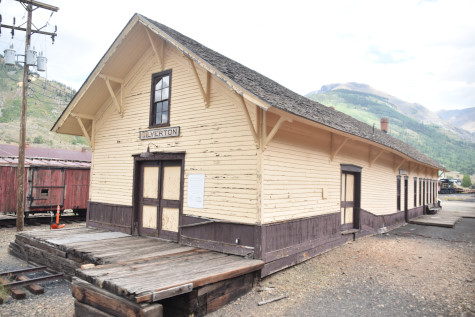
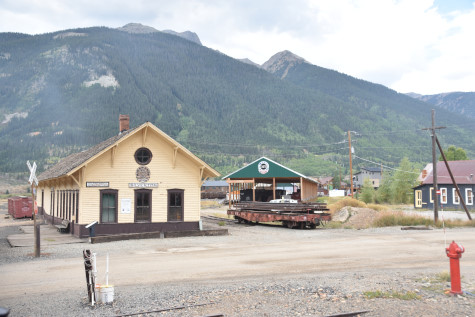
The Silverton depot built in 1888.
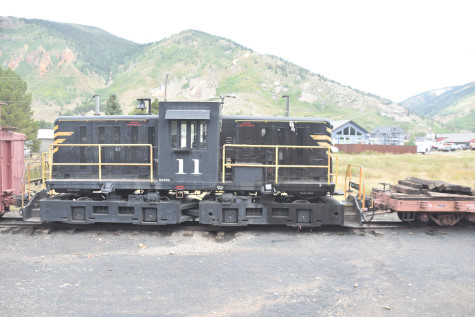
Durango and Silverton 98-ton center cab switcher 11, built by General Electric and United States Steel in 1950.
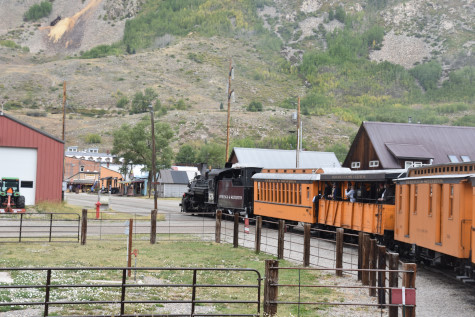
Curving onto East 12th Street.
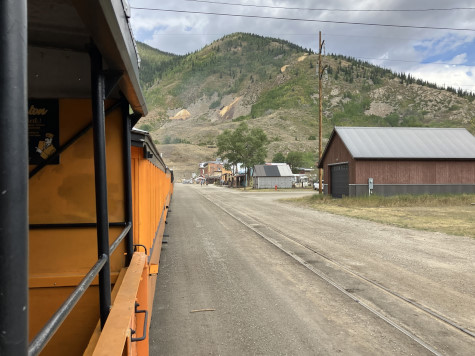
Travelling up East 12th Street to the junction with Blair Street, where the tracks end. Everyone detrained for lunch and a layover.
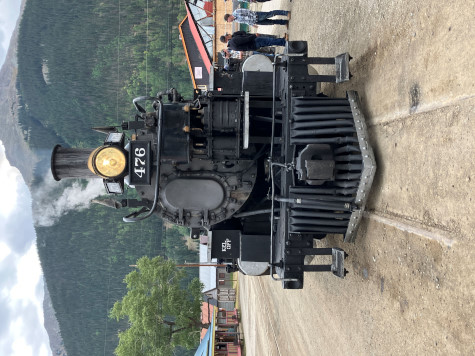
The front of Durango and Silverton 2-8-2 476.
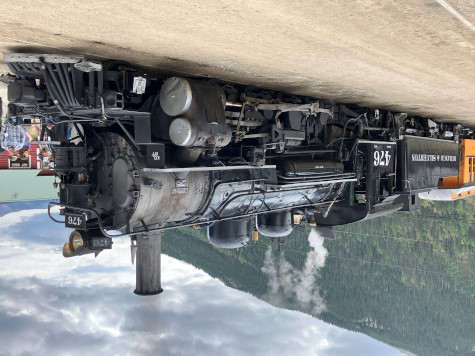
Durango and Silverton 2-8-2 476, nee Denver and Rio Grande Western 476, built by Baldwin in 1923.
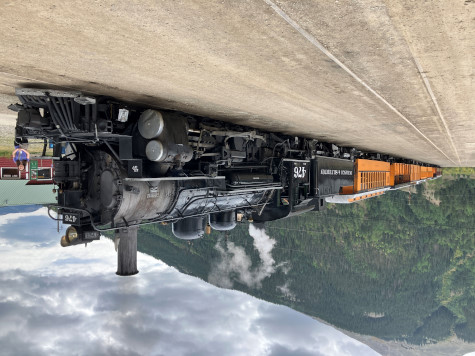
Our charter train at rest. Several of our group, including the two of us, went to High Noon Hamburgers.