



After lunch, we started to explore.
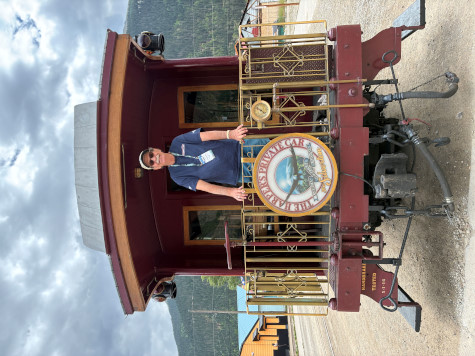
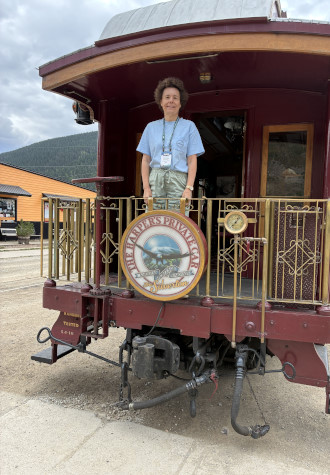
The author and his wife took turns on the platform of "General Palmer".
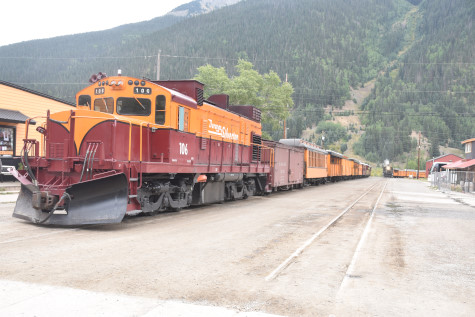
Durango and Silverton DL535 106 brought the first regular train of the day into Silverton, while our charter train proceeded to the wye for turning.
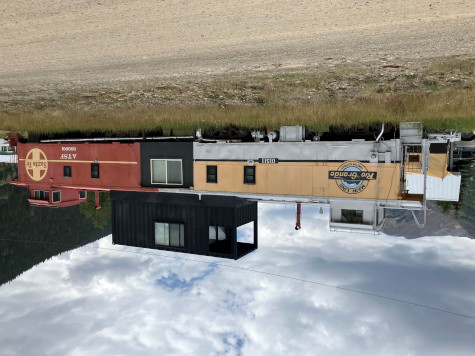
We walked down to the two cabooses.
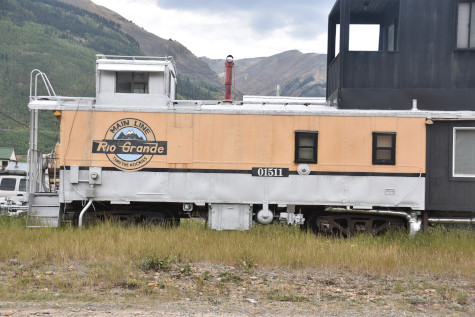
Denver and Rio Grande Western caboose 01511, built by International Car in 1966.
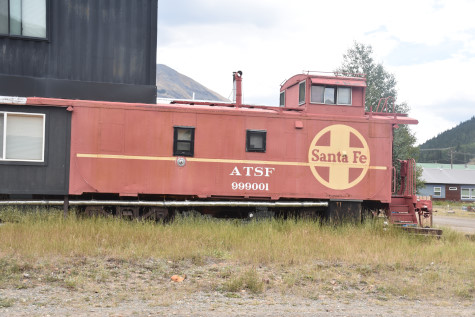
Santa Fe caboose 999001, built by American Car and Foundry in 1930.
The train on its way to the wye.
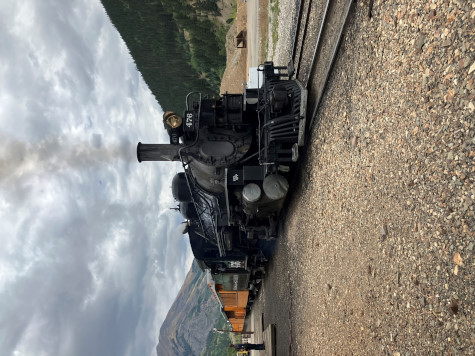
Reversing to the wye.
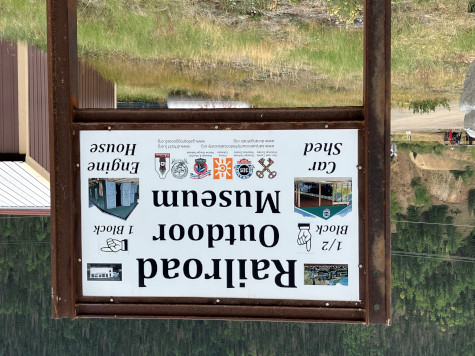
The sign for the Rio Grande 315 Railroad Historical Park.
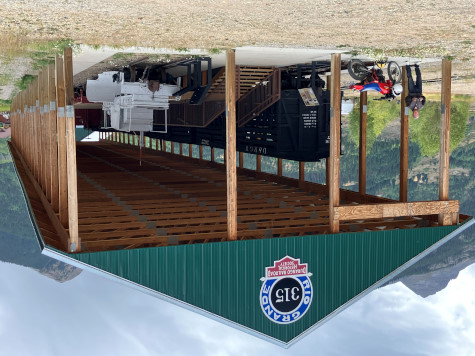
When D&S sold the north rail yard, between College 6th Street and 12th Street, except for its main line, our hopes for displaying our restored railcars in Durango disappeared. After pursing several possible sites along the D&S track in and north of Durango, the solution came via a joint vision of DRHS and the San Juan County Historical Society (SJCHS) to create the Silverton Historical Railroad Park.
The Park is centered on the Silverton Northern engine house, oil shed, and track. Additional tracks will be added for displaying up to a dozen railcars and their interpretive signs. The SN oil shed will be reconstructed and rehabilitated for practical use by DRHS and SJCHS.
The Durango Railroad Historical Society and the San Juan County Historical Society are the principal partners. Other partners are the Town of Silverton (permission to place track on the Cement Street right of way), Durango & Silverton Narrow Gauge Railroad (permission to connect to their track and an easement for two display tracks and car shed on their property), Galloping Goose Society of Dolores (permanent loan of track and ties), and City of Durango (first, permission to store Locomotive 315 in Silverton, then transfer ownership of the 315 to DRHS).
The railcars display track and shed are part of the joint strategic plan with the San Juan County Historical Society to create a Historical Railroad Park in Silverton to restore, display and maintain railroad equipment and to inform the public about the importance of narrow gauge railroads to the development of southwest Colorado. The park is supported by several other organizations: the Galloping Goose Society of Dolores permanently donated most of the rails and ties, the Town of Silverton gave permission to build track on its street right of way, and the Durango & Silverton Narrow Gauge Railroad gave an easement for the railcars display track, car shed, platform, and permission to connect to their track. The pair of railcars display tracks runs from the northwest corner of the D&S depot westward to the Silverton Northern track near the Silverton Northern engine house.
We had the area surveyed and engineering drawings produced in 2017, then revised in 2018. The 60 lb. and 75 lb. rails permanently loaned by the Galloping Goose Historical Society of Dolores had been stockpiled since June 2017. We purchased ties, 6 turnouts and other track materials in the summer of 2018. Work began in October 2018 with construction of the grade and addition of a base course of ballast.
In 2019 a track crew from Utah cut in the first turnout on an existing curve of the SN track immediately north of the Silverton Northern turnout to the D&S Shenandoah Loop, then laid a second turnout to two parallel display tracks, each about 220 feet long. After the track was laid ballast was added. The pair of tracks has space for a dozen railcars.
In 2020 the 36-ft wide by 224-ft long car shed was built. Essentially it is an open pole shed to provide easy access and viewing by the public at any time. The shed is important in helping to protect the railcars from sun and weather. We learned how important the shed would be when we investigated acquiring a restored trolley car from Aspen several years ago and found that it needed major restoration again after sitting outside with no protection for 15 years. In 2021 we added the DRHS logo as signs at both ends of the shed.
The above from Durango Railroad Historical Society
The emblem of the society.
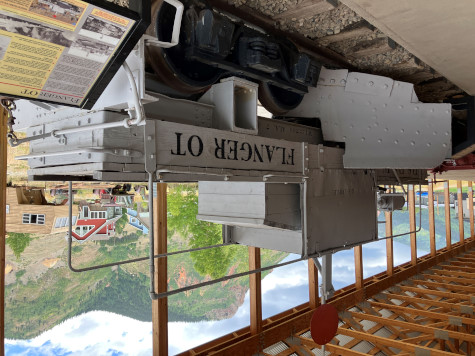
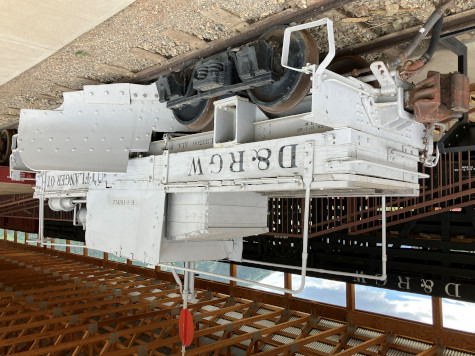
Flanger OT began life as Flanger AB-1 on the Crystal River Railroad, a short twelve-mile company line between its mine at Coal Basin to Redstone. The mine and railroad closed in 1909 and Denver and Rio Grande leased this flanger from November 1916 to December 1920, then bought it that month and retained the CR lettering and numbering for a year or so. It was used on the Lake City Branch in the 1920s and 1930s. When that branch was abandoned, it was used on the Ouray Branch and as a backup to Flanger OD on the line between Cerro Hill and Cimarron.
In 1943, it became the last narrow gauge flanger to be rebuilt with a steel frame. In the late 1940s and 1950s, it was moved to Crested Butte for backup duty. When the Gunnison-to-Salida line was abandoned in 1955, the flanger car was moved to Chama, New Mexico for backup duty. It was retired in September 1970 and sold to the scrap dealer, Floyd Reed, in Alamosa, who in turn sold it to Lindsey Ashby in November 1971, who took it to the Colorado Central Railway in Central City. When that line closed in 1980, the flanger was moved to Silver Plume for use on the Georgetown Loop Railroad.
In about 2004, the car was moved to the Colorado Railroad Museum in Golden for storage. In May 2014, the car was moved to the Silverton Northern track along Cement Street in Silverton as a favor to CRRM, which needed the space, and to Ashby, who was reserving the car for future purchase by the Durango Railroad Historical Society.
Flanger OT is significant to transportation because it represents the class of flangers used on the entire D&RG and D&RGW narrow gauge system from the mid 1880s until the end of narrow gauge operations in 1968. These cars were essential to keeping lines open in the winter so that trains could continue to haul passengers and freight. Reflecting their importance to the railroad, they were rebuilt several times, and eight remained in service until the abandonment of the San Juan Extension.
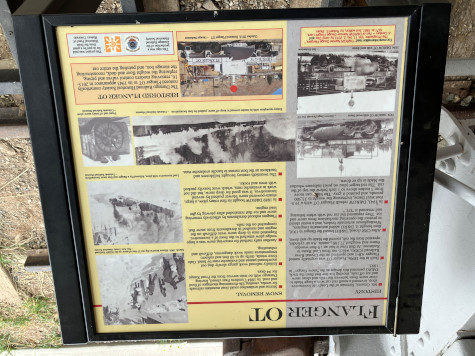
Flanger OT story board.
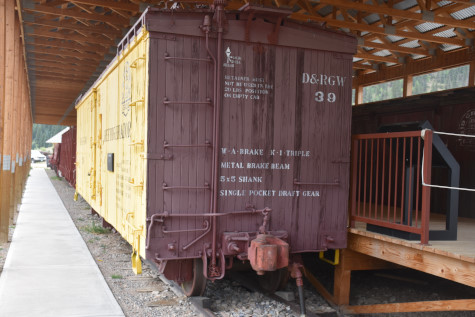
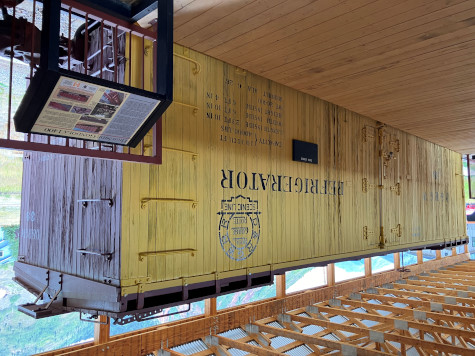
Denver and Rio Grande Western 30 foot refrigerator car 39, built by American Car and Foundry in 1908. It had been built into a structure at Sugar Junction along the former D&RGW Creede branch and was acquired by the museum in 2015 and underwent an extensive restoration.
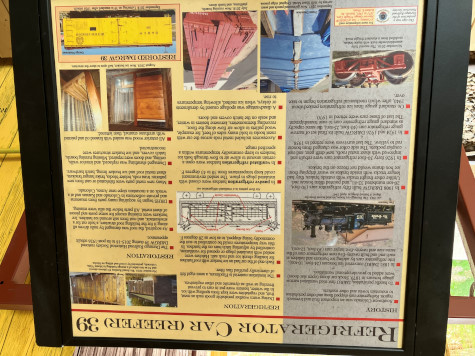
Refrigerator car 39 story board.
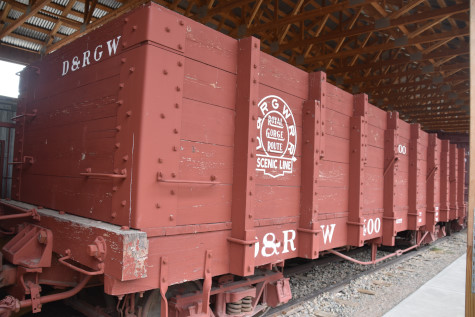
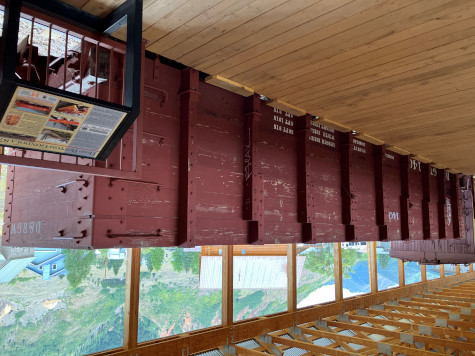
Denver and Rio Grande Western high-side gondola 1400, built by American Car and Foundry in 1902.
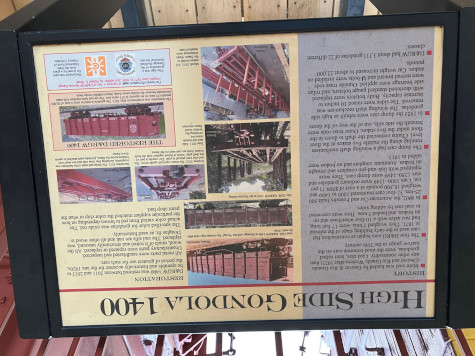
High-side gondola 1400 story board.
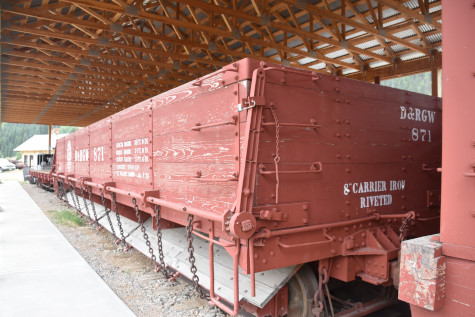
Denver and Rio Grande Western drop-bottom gondola 871, built by American Car and Foundry in 1904. The 800 series originally had slatted coke racks that raised their sides to the height of boxcars. In 1918, the coke racks were removed, six-inch side boards were added, the lever systems were altered, and under frames were stiffened with steel. Drop-bottom gondolas carried bulk material such as ore, coal, coke, sand, ballast and rock. The unique hinged unloading floors on these cars were activated by a complex mechanism of shafts, levers and chains. Before drop bottom cars were invented, material was shovelled out by hand.
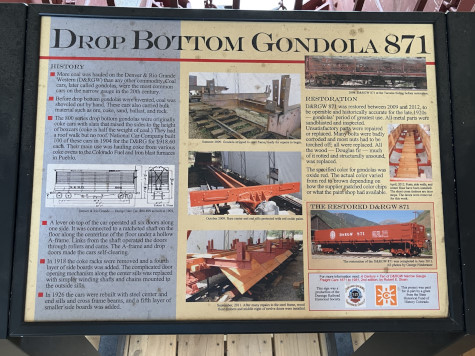
Drop-bottom gondola 871 story board.
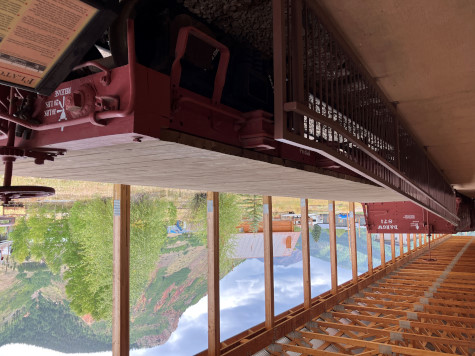
Denver and Rio Grande Western flat car 6215 built by the railroad in 1918. This was one of the first narrow gauge flatcars to enter service on the railroad since 1887. It had a capacity of 20 tons, was 34 feet long and the penultimate wooden flats D&RG built.
In 1937, D&RGW decided to rebuild the remaining fourteen cars in their Alamosa shop, using surplus standard gauge draft gear, brake cylinders and cut down cast steel truck bolsters. The trucks were also replaced. Additional angle iron and metal bracing was applied under the car and along the sills to increase strength and longevity. The resulting cars were two feet longer and their load capacity was increased to 30 tons.
Flatcars hauled diverse goods and products into and out of the mountains and valleys of southwest Colorado. D&RGW would have used them to haul ties and rails for track maintenance. Flatcar 6215 was in service until the end of D&RGW operations in 1968 and was sold to the scrapper Floyd Reed in Alamosa probably that year. Lindsey Ashby apparently purchased it in 1973 and moved it to Silver Plume for use on the Georgetown Loop Railroad. About 2004, the car was moved to the Colorado Railroad Museum in Golden for storage then in May 2014, the car was moved to the Silverton Northern track along Cement Street, pending purchase by DRHS which occurred early in 2016.
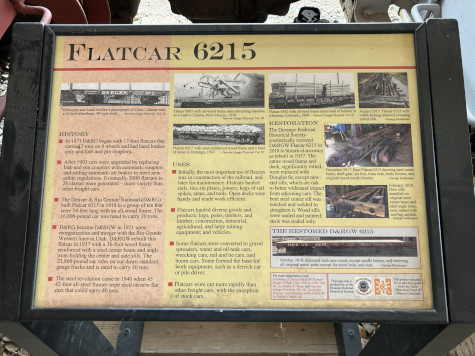
Flat car 6215 story board.
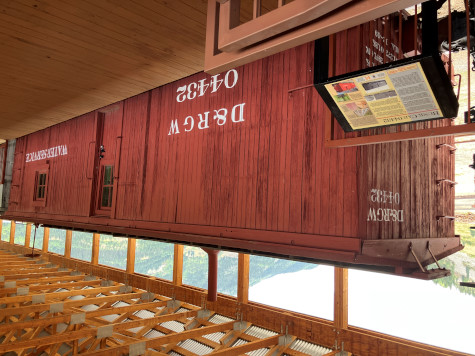
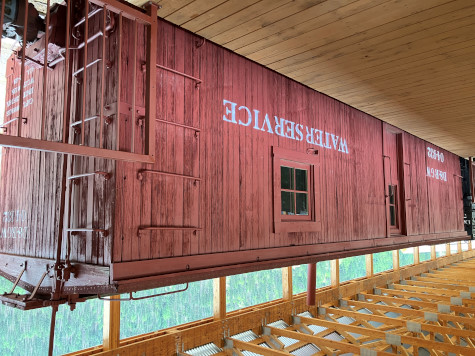
Denver and Rio Grande water car 04432, built by the railroad and Ohio Falls in 1895, from boxcar 4432. Used as a bunk car in Water Service, it was teamed with Tool and Material Car 04904, and was the living quarters for Water Service crews who maintained water supplies along the line. These two cars worked between Alamosa and Durango as well as to Silverton. It is a representative of bunk cars with three windows, two doors and a stack for the stove. Like Tool Car 04351, this car was sold for scrap to Floyd Reed Company in 1968 but was later bought by Lindsay Ashby. The companion car 04904 survives on the Cumbres and Toltec Scenic Railroad.
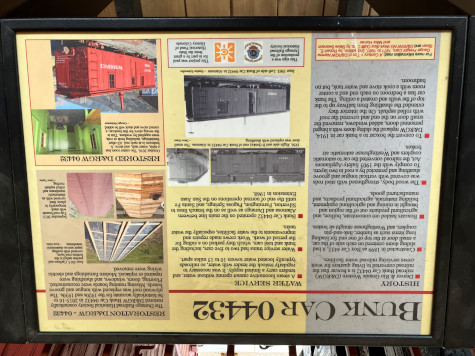
Water car 04432 story board.
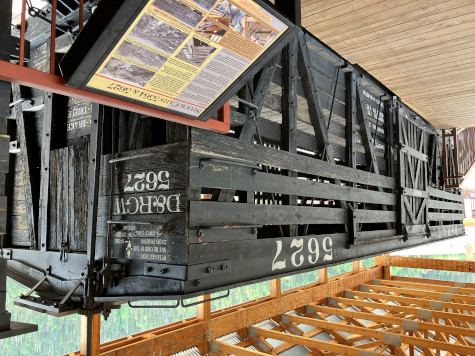
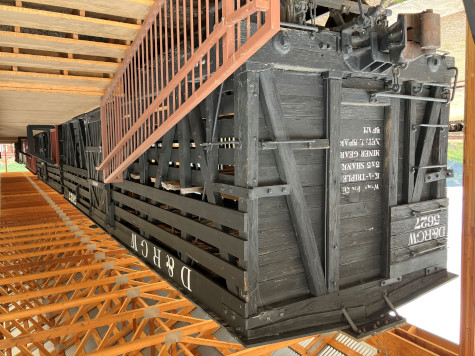
Denver and Rio Grande Western stock car 5627, built by American Car and Foundry in 1904. It is a single deck stock car used to transport cattle and horses. The livestock industry in Colorado had its origins in the early 1870's and saw rapid growth due to increasing demand for meat throughout the United States. By 1879, it was estimated that there were 900,000 head of cattle and 2,000,000 head of sheep in the State. The Denver and Rio Grande railroad responded by building five "fleets" of stock cars between 1873 and 1882 providing an alternative to driving herds along trails, a costly and sometimes dangerous occupation. These cars were 26 feet long and could haul up to nine horses or thirteen cattle.
The fleets lasted until 1904 when the last survivors were scrapped, a change in railroad legislation by the Interstate Commerce Commission made updating them to the new standards not worthwhile. Instead, the D&RG ordered 350 new 30 feet, 25-ton cars from American Car and Foundry. In 1926, the railroad rebuilt the cars making improvements to the doors, strengthening the structure and changing the paint colour from a shade of red to black. Much of the variation in the location of the side slats occurred at this time due to the work teams initially not having plans to work from, so they built them as they wanted; about a third of the cars are affected thus.
The cars were used intensely during the periods of the "stock rush" in the spring and autumn, where they would transport livestock from winter to summer pasture and vice versa. The spring rush started in June and run through July. Autumn movements started in October and ran through November and the first snow falls. Outside of these periods these cars were used to haul lumber, which could be loaded through an end door, ore and commodities unaffected by water.
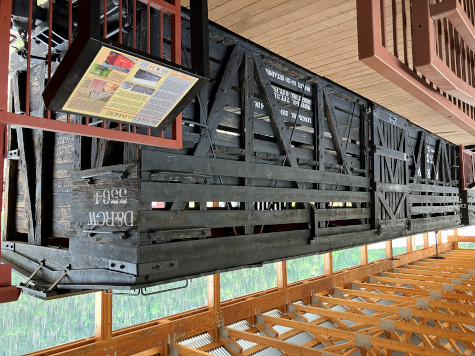
Denver and Rio Grande Western stock car 5564, built by American Car and Foundry in 1904. It is a double-deck car used for hauling sheep and hogs and was purchased with the help of a Colorado State Historical Fund grant from Lindsay Ashby. It had been displayed at the Georgetown Loop Railroad and subsequently stored at the Colorado Railroad Museum.
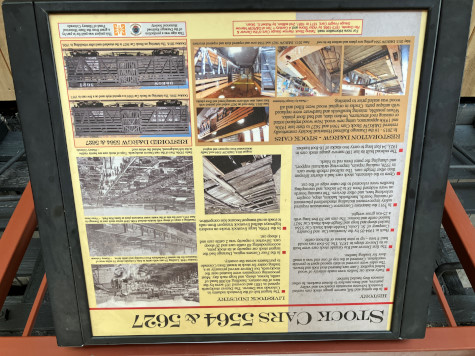
Stock cars 5564 and 5627 story board.
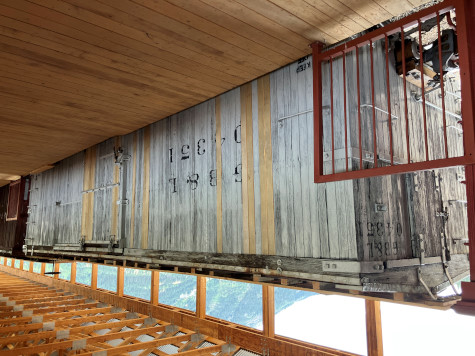
Denver and Rio Grande Western tool car 04351, built by the railroad from boxcar 4351. The railroad had a number of pre-made trains known as "wreckers"; the Alamosa Wrecker was the biggest. According to company records, others were in Salida, Gunnison, Durango and Chama, the smallest with just two cars: tool car 04351 and rail and tie car 06084, which has also survived. 04351 is listed as re-assigned to work service on 9/30/1914 and the 1920 ICC Valuation Survey listed it as a boxcar caboose. It replaced tool car 04909 in the Chama wrecker on 1/1/27, and the portable lighting equipment and 50-ton jacks were transferred to it. The car remained there until the end of operations in 1968, when it was sold for scrap to Floyd Reed Company but was later bought by Lindsay Ashby. It is one of the cars that has remained close to its original appearance as a revenue boxcar.
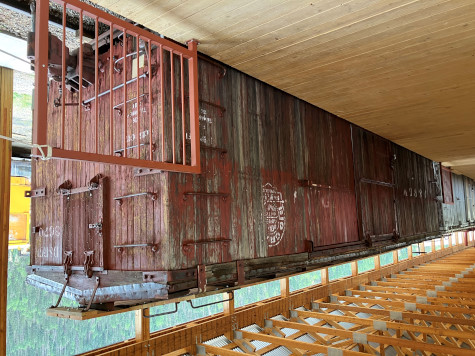
Denver and Rio Grande boxcar 3670, built by American Car and Foundry in 1904. It was 30 feet long and had a capacity of 25 tons, five more than the earlier 4000 series cars it replaced. The cars had greater interior height and larger door sizes and established a standard size car for shippers on the Denver & Rio Grande Railroad. Some had assigned payloads such as flour, sugar, beans and even ore concentrates, and would only carry those products. The cars had a tongue-and-grove board roof that had deteriorated to such a degree that the D&RGW rebuilt them in 1926 from the ground up, retaining the trucks and most of the metal fittings. Decayed wood was replaced with new, stamped steel. Murphy rooves were fitted on top of the planks and new door hardware was added.
Boxcar 3670 remained in service until about 1968, when D&RGW abandoned the main line from Alamosa to Durango. A large number of cars were sold for scrap to Floyd Reed Company in Alamosa, and Lindsey Ashby bought several, including boxcar 3670, which he moved to the Georgetown Loop Railroad. About 2004, the car was moved to the Colorado Railroad Museum in Golden for storage. DRHS bought the car from him in 2014 for $10,000 and moved it to Silverton.
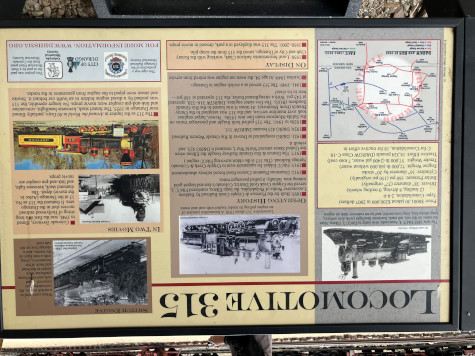
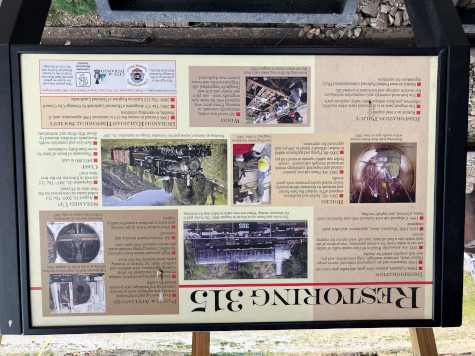
Locomotive 315 and Restoring 315 story boards. The steam engine is in Chama, New Mexico, undergoing restoration as of August 2025, but the history of it is as follows:
Durango Railroad Historical Society 2-8-0 315, ex. Denver and Rio Grande Western 315 1924, exx. Denver and Rio Grande Western 425, nee Florence and Cripple Creek 3 "Elkton", built by Baldwin Locomotive Works in 1895. It served the Florence & Cripple Creek for about 17 years then after the flood of 1912, the F&CC was financially unable to repair its roadway. 3 was isolated at Canyon City and put into storage at Colorado Springs, after the F&CC closed down in 1915. "Elkton" and her sister engines sat derelict until 1917 when five of them were purchased by the D&RG. D&RG bought a sixth sister in 1920. The engines were loaded aboard D&RG flat cars and moved to the D&RG Burnham Shops in Denver, where they were repaired and upgraded to help meet the increased transportation demands of World War I.
After the reorganization of D&RG and its merger with the Rio Grande Western in Utah in 1921, the railroad became the Denver & Rio Grande Western. 315 was first assigned to the Alamosa Division as a freight engine, where it was known to be in Chama around 1921-22 and in Durango around 1928. It was leased to the Rio Grande Southern for a period in 1926-1927, then on the Gunnison Branch in 1929 and idle in Salida for a few years after the stock market crashed and again in the late 1930s during a recession. It served the Ouray Branch out of Montrose 1933–1936 and again during 1939–1941. By the early 1940’s, as bigger locomotives came on the line, many of the smaller 2-8-0s were either being scrapped or used as yard engines.
In March 1941, 315 was sidelined for a few months then taken to Alamosa for repairs during September and October, and sent to Durango to become a yard or switch engine. At this time, it gained a rear light and had the road pilot replaced with a switchman platform. It was shopped again in 1945, receiving new flues and other major work. When converted to a switch engine, the cowcatcher was removed. Handrails and switchman platforms were added to the front and back of the locomotive, along with a backup light to the tender and a tool box on the cab roof.
In 1948, 315 was used in the Warner Brothers film "Colorado Territory" and when released in June 1949, it was the first of many films made by Hollywood in the Durango area, which saved the Silverton Branch line through tourism. 315 remained in service in Durango until October 1949. Jackson Clark and the Durango Rotary Club saved the steam engine from being scrapped by convincing the D&RG to lease it to the city for display and it was placed in Brookside Park on North Main Street in September 1950. Before being put on display, it was backdated by the D&RGW shops to resemble an engine of the 1870s era. This included the addition of the funnel stack, kerosene headlight and wooden cowcatcher used on the Emma Sweeney (Rio Grande Southern 20) in "Ticket to Tomahawk". In 1956, 315 became a Hollywood star again when Warner Brothers used it in "Around The World in 80 Days". During the making of this movie, the engine was pushed by a diesel locomotive disguised as a baggage car because 315 was no longer in operating condition. To make steam, the water legs were cut out of the tender to make room for a steam generator. Hoses and pipes routed the steam to appropriate points and oily rags in the firebox created plenty of black smoke.
When the D&RG was getting ready to abandon the Durango to Alamosa line, 315 was donated to the Chamber of Commerce in 1968. In 1986, it was moved to Gateway Park, now Santa Rita Park, to be near the new visitors center. Since being displayed in a park, 315 received numerous coats of paint and lost a number of parts. In October 2000, at the request of the DRHS, the locomotive was granted a historic landmark designation by the City of Durango. In December 2000, the Chamber of Commerce transferred ownership to the City of Durango.
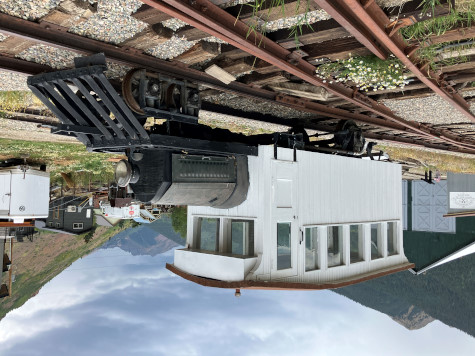
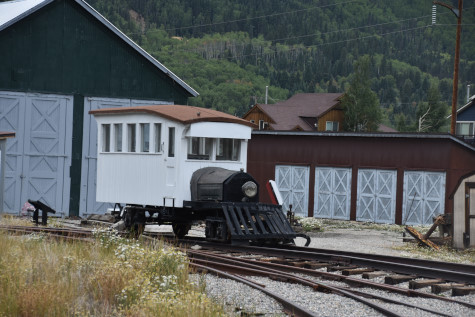
The Casey Jones, a home-built railbus built by the Silverton Northern Railroad mainly to provide the doctor in Silverton transportation up the line to where he was needed in cases of illness and accident when miners or their families or others along the line could not get through down to Silverton. Another use of it was to transport miners and others into Silverton and back up the line on an irregular basis.
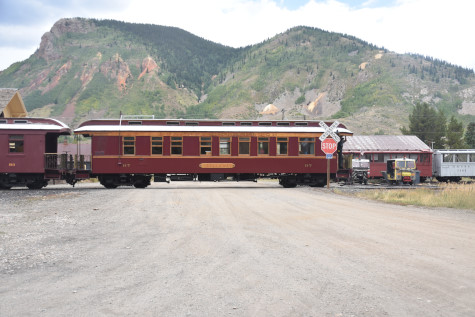
Our train returned from wyeing and we caught it crossing East 10th Street on its way back to the boarding area. The rear observation car was Durango and Silverton B7 "General Palmer".
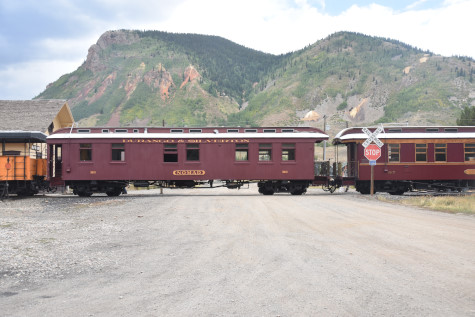
Durango and Silverton B3 "Nomad".
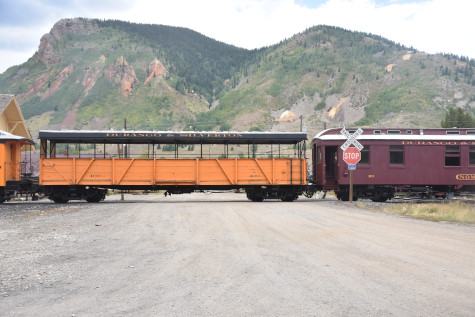
Durango and Silverton open air car 400.
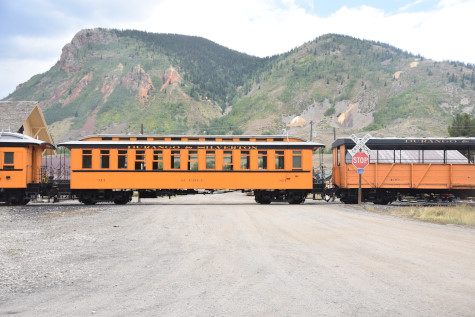
Durango and Silverton 311 "McPhee".
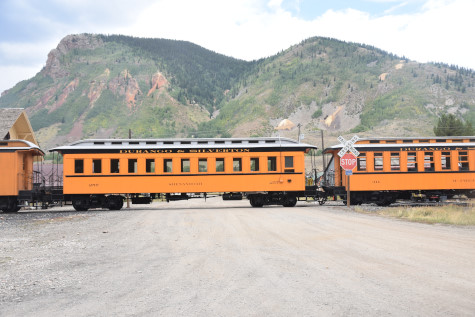
Durango and Silverton 257 "Shenandoah".
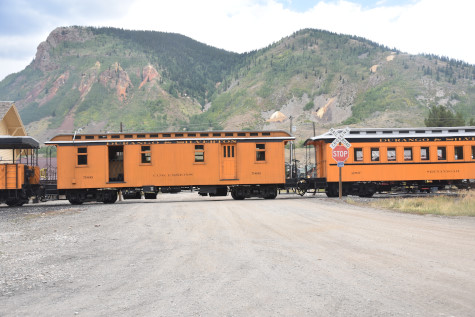
Durango and Silverton concession car 500.
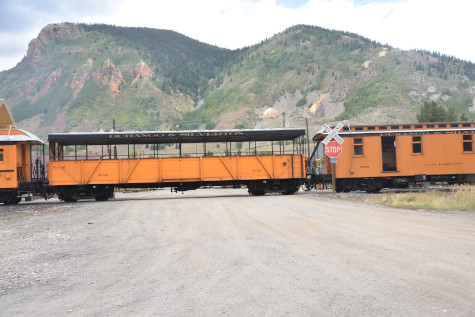
Durango and Silverton open air car 402.
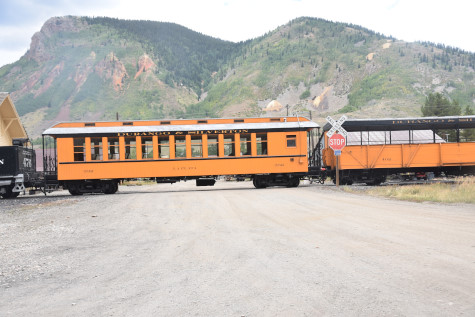
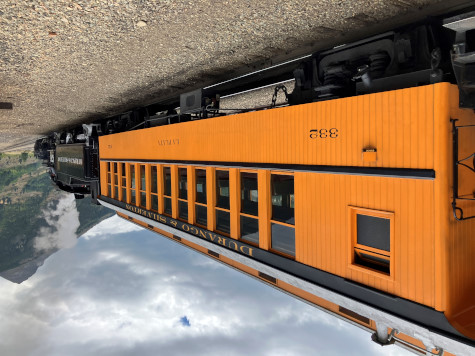
Durango and Silverton coach 332 "La Plata".
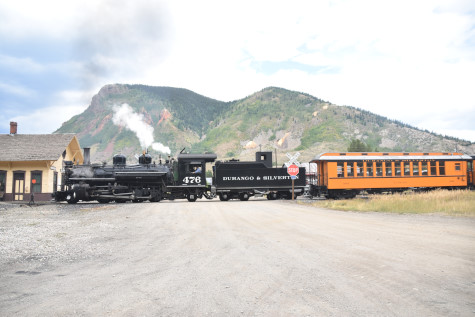
Durango and Silverton 2-8-2 476, nee Denver and Rio Grande Western 476, built by Baldwin in 1923.
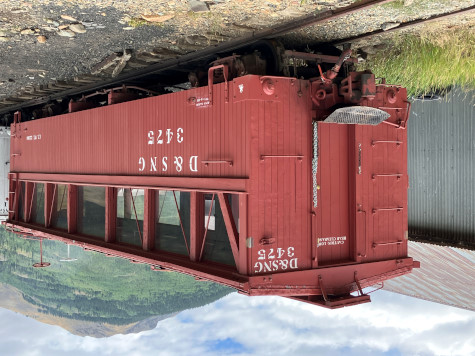
Durango and Silverton open gondola car 3475, ex Cumbres and Toltec Scenic coach 205, nee Denver and Rio Grande Western 3475, built by American Car and Foundry in 1904.
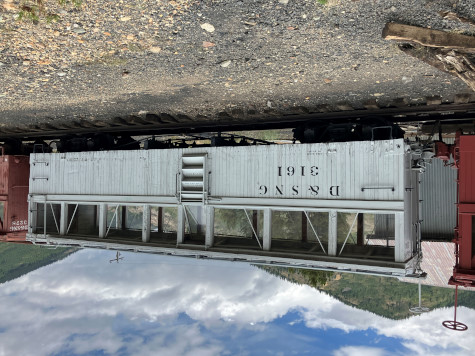
Durango and Silverton open gondola 3161, ex. Cumbres and Toltec Scenic coach 214, nee Denver and Rio Grande Western 3161, built by American Car and Foundry in 1904.
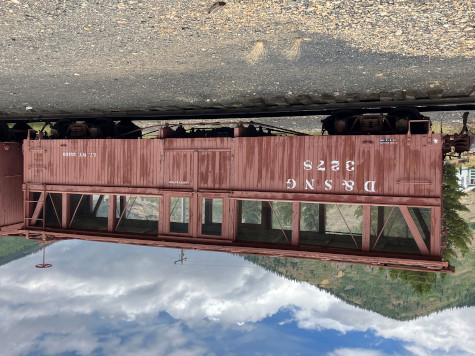
Durango & Silverton coach 3278, nee Denver and Rio Grande Western boxcar 206, built by American Car and Foundry in 1904.
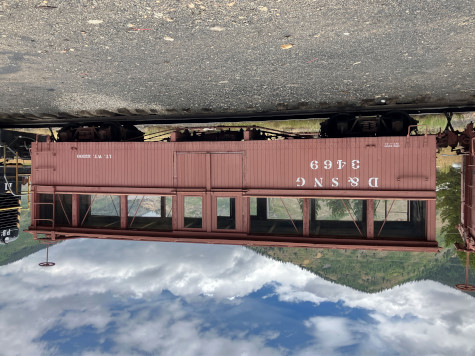
Durango & Silverton coach 3469, ex. Cumbres and Toltec Scenic coach 211, nee Denver and Rio Grande Western boxcar 211, built by American Car and Foundry in 1904.
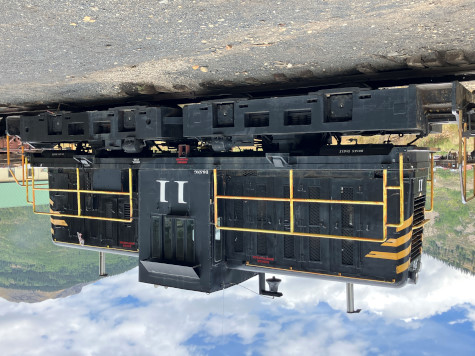
Durango and Silverton 98-ton center cab switcher 11 built by General Electric and United States Steel in 1950.
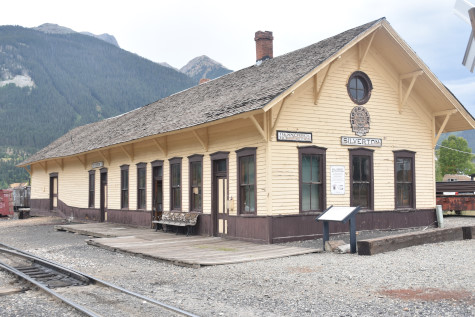
Located 45 railroad miles from Durango, Silverton was the northern terminus of a Denver & Rio Grande branch (later Denver & Rio Grande Western). In the 1950s, the railroad sought to abandon the line, but the Interstate Commerce Commission refused permission, because tourist ridership was on the upswing. To discourage railroad business, the D&GW first converted the Silverton depot to a trucking facility. The next step was demolition plans, but the railroad was persuaded to donate the building to the San Juan Historical Society. In 1975, the group was using the depot to store museum artifacts when someone dynamited the freight end. (The perpetrator was never found.) Partly by using materials salvaged from the explosion, the society rebuilt the damaged area. The group also re-roofed the depot with wooden shingles and painted it the "Rio Grande" color scheme of yellowish-tan and brown.
The depot's simple exterior has vertical boards to windowsill level, clapboards above, pedimented door and window openings and heavy brackets supporting the deep roof overhangs. About half the window panes are still old wavy glass. A circular window adorns the gable end of the waiting room, which contains benches and a stove (probably brought from other depots in the Rio Grande system), and the original two ticket windows. During the 1970s and 1980s, the depot was leased to a publishing house. The journey back to railroad use began when the Durango & Silverton sub-leased space for a ticket office. The railroad eventually purchased the entire building. The attic space has been remodelled for crew sleeping quarters.
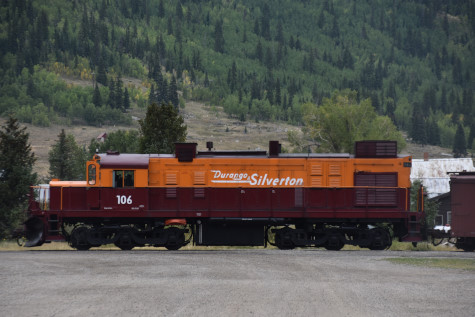
Durango and Silverton 106, nee White Pass and Yukon 106, was returning from wyeing.
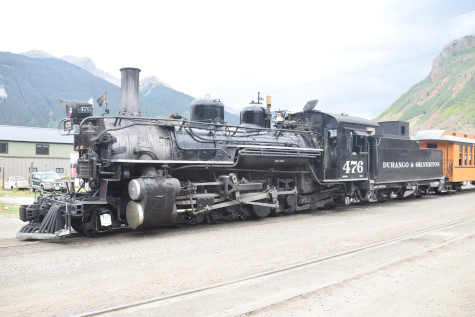
Durango and Silverton 2-8-2 476, nee Denver and Rio Grande Western 476, built by Baldwin in 1923.
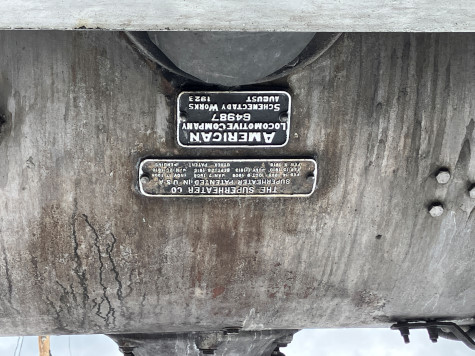
The builder's plate.
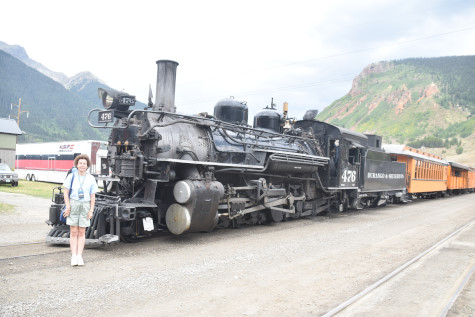
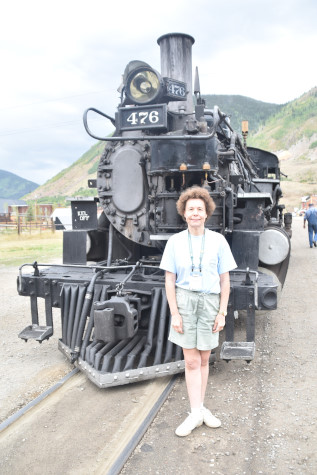
Elizabeth and the engine. This was the third time we had ridden behind 476.
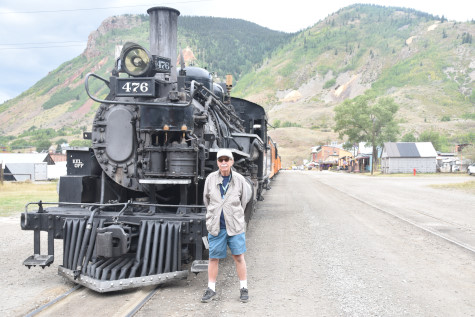
The author and the engine.
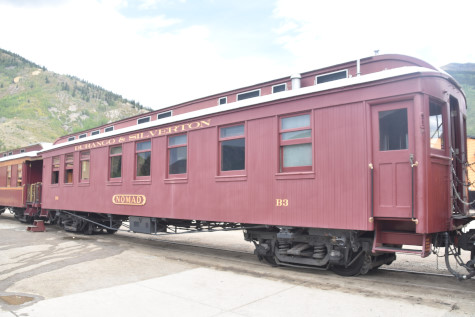
B3 "Nomad".
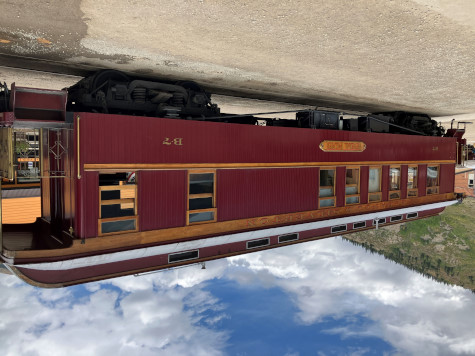
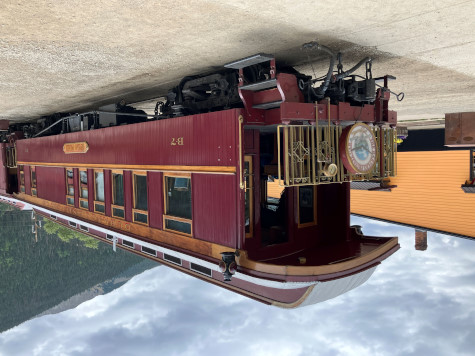
B7 "General Palmer".
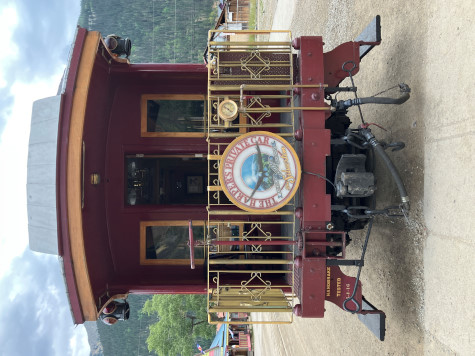
The rear platform.
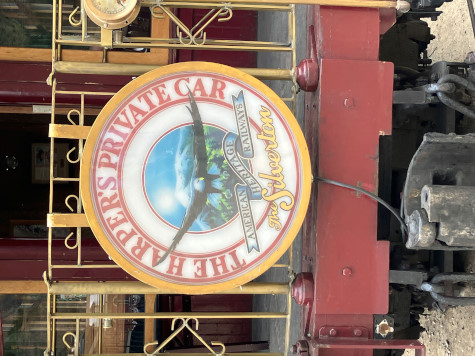
The drumhead of "General Palmer", the Harper's private car. Allen Harper is the president of American Heritage Railways, which owns Durango and Silverton Railroad, among others.
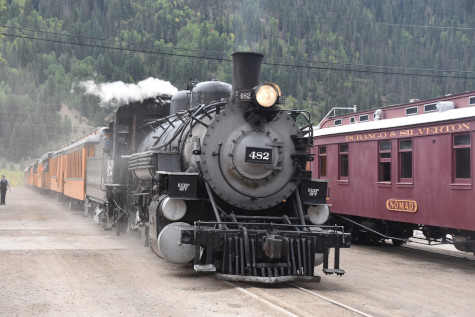
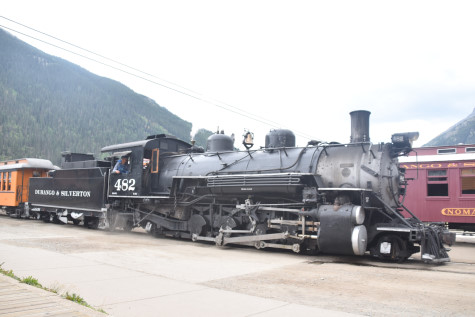
The third train of the day arrived led by Durango and Silverton 2-8-2 482, nee Denver and Rio Grande Western 482, built by Baldwin in 1925.
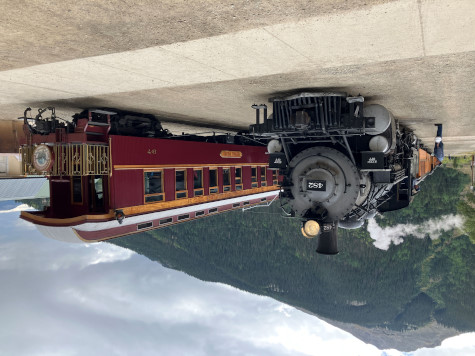
Durango and Silverton 482 and "General Palmer".
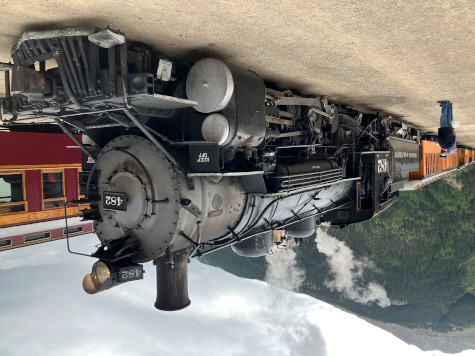
Durango and Silverton 482.
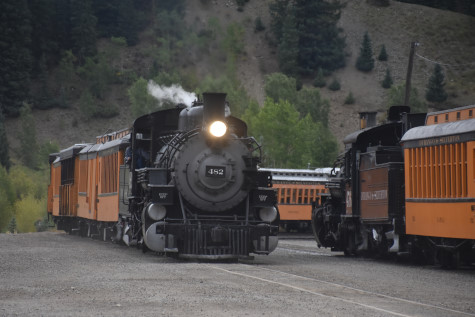
Reversing to the wye.
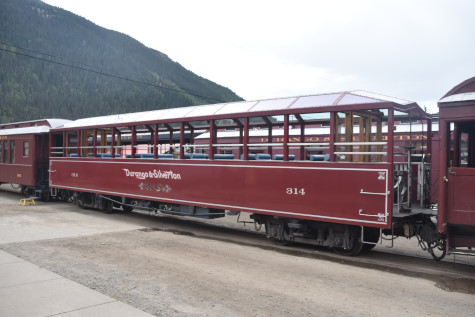
Durango and Silverton 314 "Knight Sky", based on Silver Vista design, built by the railroad in 2012.
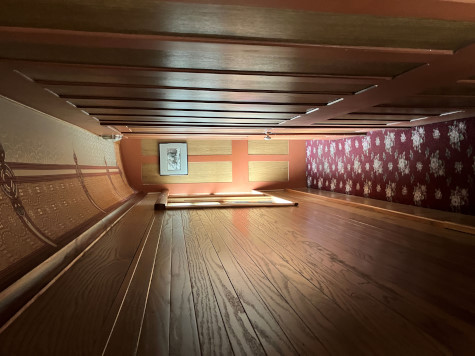
Back aboard, Elizabeth decided to return to "General Palmer and this is the hallway leading to it.
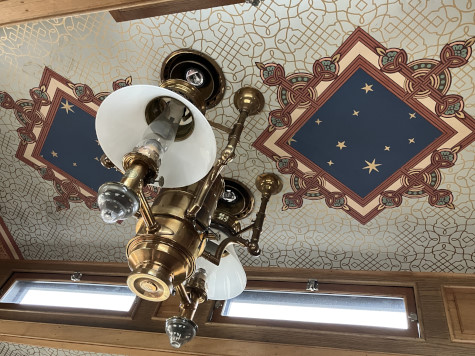
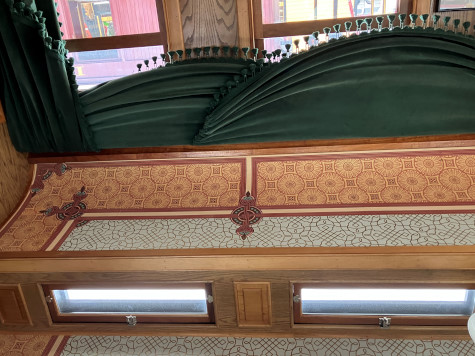
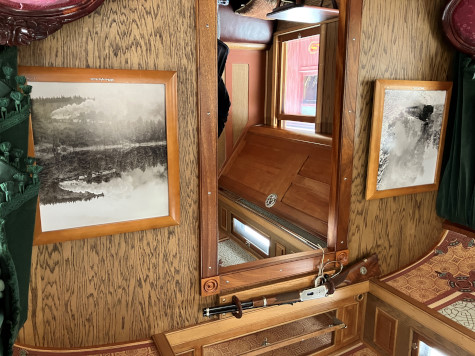
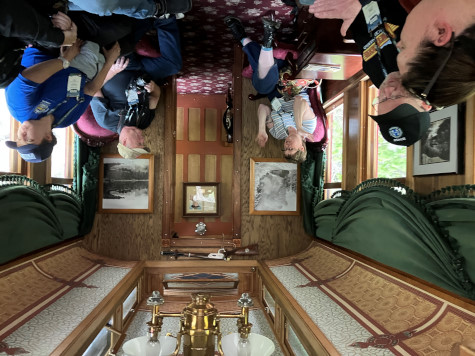
The interior of "General Palmer".
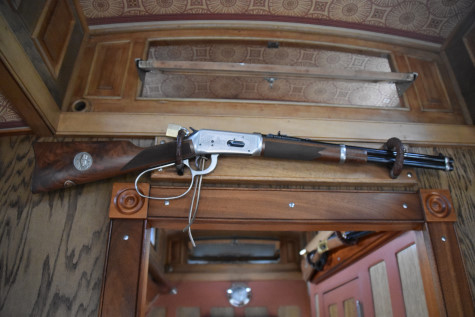
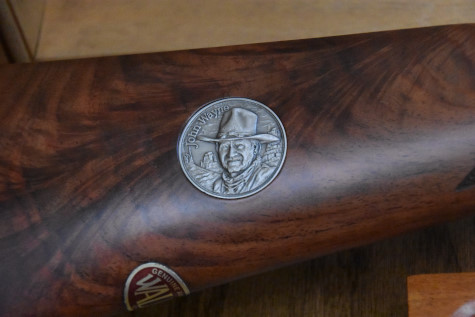
John Wayne's rifle.
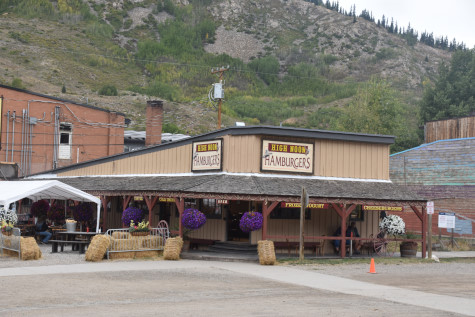
High Noon Hamburgers, where we had lunch.
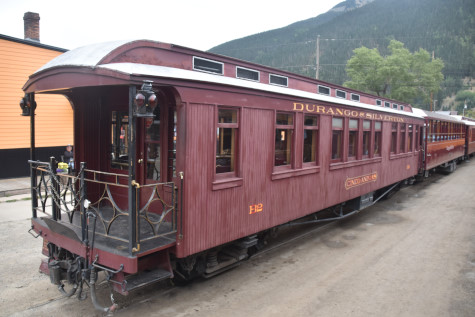
The view from "General Palmer" as we departed Silverton.
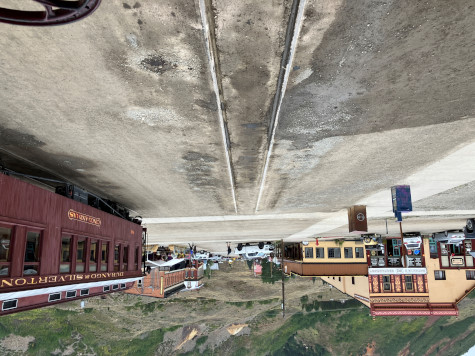
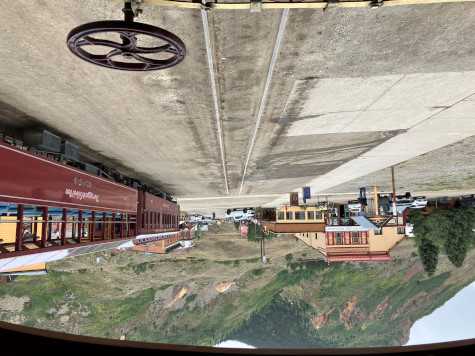
Leaving Silverton and travelling back to Durango.
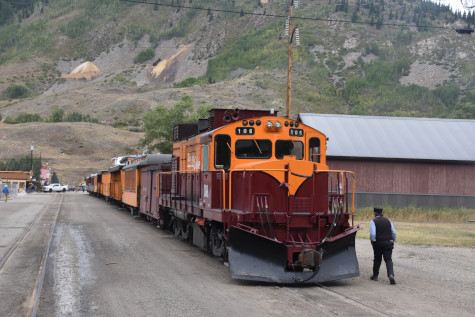
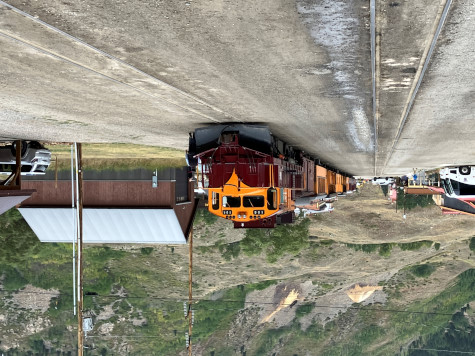
The first regular train from Durango.
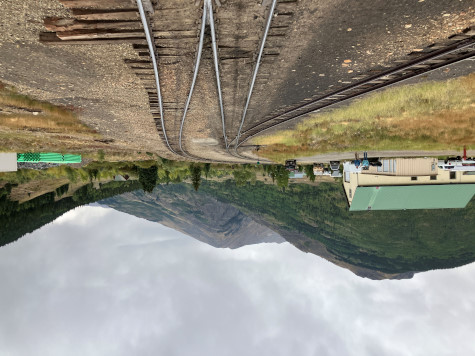
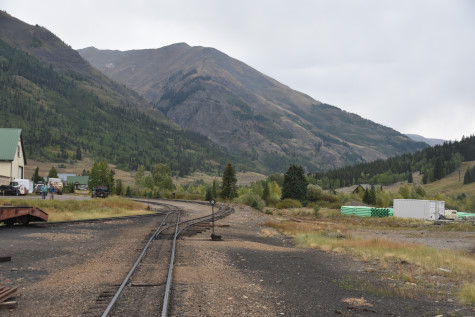
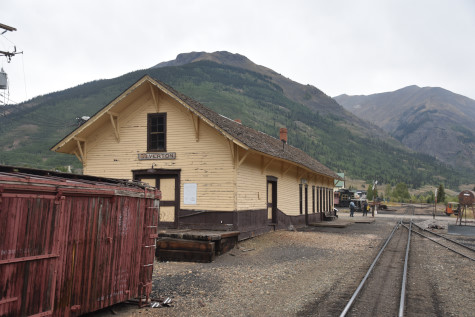
Views from the rear platform.
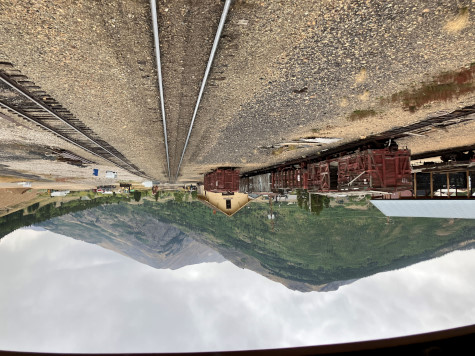
Leaving Silverton.
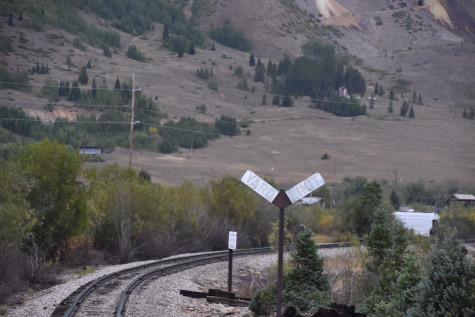
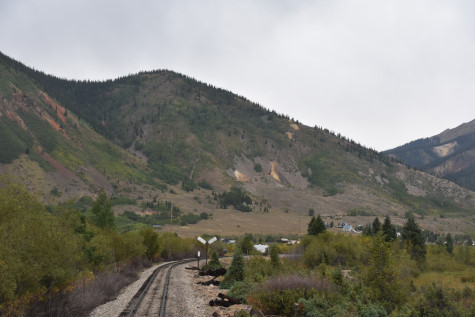
The yard limit sign post.
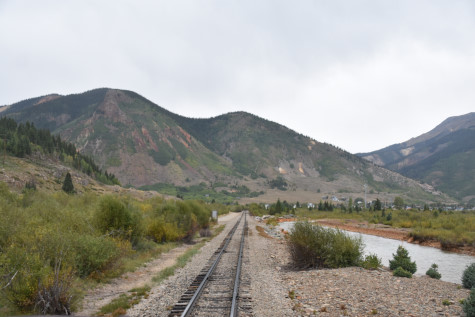
A rarity, a straight piece of track.
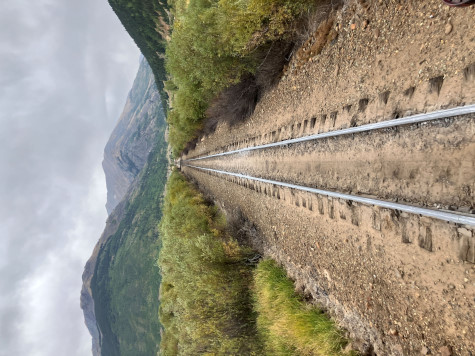
The fire speeder following our train.
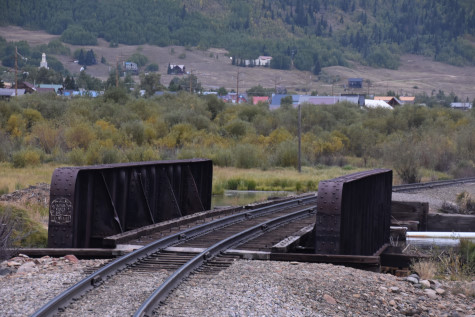
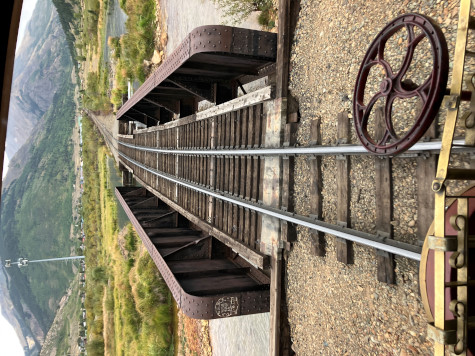
Crossing Mineral Creek, Milepost 496.15.
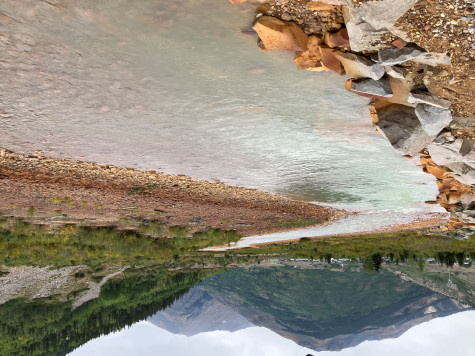
Animas River.
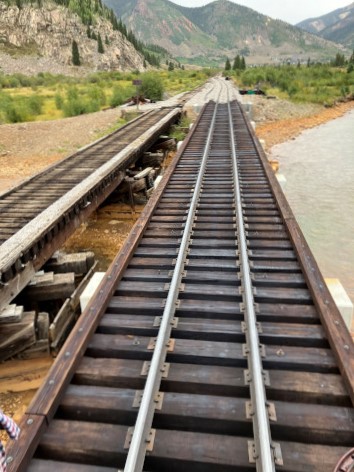
Crossing the Animas River on the new bridge.
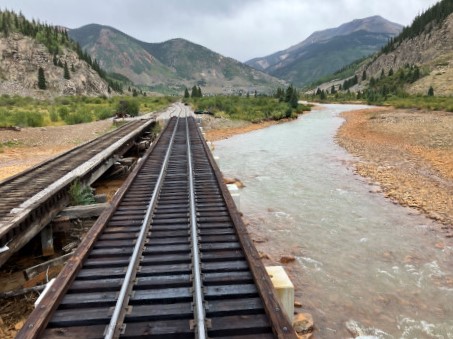
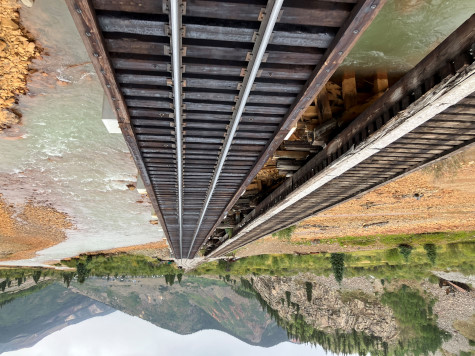
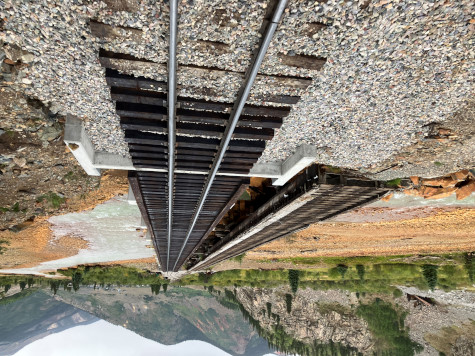
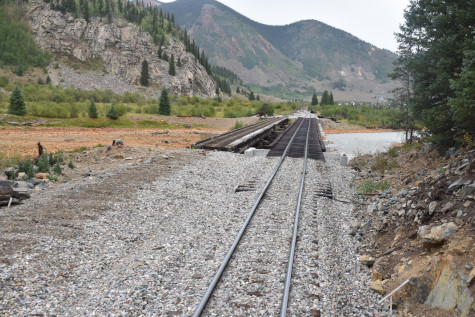
Continuing with the details about this bridge ... With the conceptual design and location of the bridge complete, one large question remained. What to do with the existing bridge once the new bridge is complete? Replacing, or affecting a structure such as bridge 495A is not something the Durango & Silverton takes lightly. The railroad is proud of its history and heritage and strives to keep both intact. In the case of the Elk Park replacement, the Rio Grande elected to leave the existing structure in place without track over it. To date, this decision has been inconsequential. The Durango & Silverton debated on whether to leave the existing Animas River Bridge in place for interpretation and to pay homage to the railroaders of years past who built the bridge, or if doing so could create unintended consequences in the future. In the end, the railroad elected to let the Animas River decide.
The Durango & Silverton contracted with a firm specializing in river hydraulics. By using information from several site visits as well as the United States Geological Survey Light Detection and Ranging (LiDAR) data, cross sectional areas of the Animas River at the bridge site were modeled under the conditions of potential flooding events. The supports of the existing bridge were never driven down into the river bottom. Instead, the bridge simply rested on mud sills which sit on the base of the Animas River. A check dam or "weir" was built just south of the bridge to provide stability under the mudsills and to slow water flow under the bridge, reducing scour. While the weir did its job to slow water flow, it also created an unnatural shelf in the riverbed, pushing both the base of the river and the water above it upwards. The shelf reduced the freeboard of the existing bridge to the point that in a one hundred year flood (one percent AC), the river would contact and even overtop the southern portion of both the existing and the new bridge.
When this scenario was produced from the hydraulic study results, it was clear that in order for the new bridge to maintain adequate clearance above the water in the flood event, the weir needed to be removed. Removing the weir possessed benefits outside of railroad purposes. It would remove an unnatural, manmade barrier in the river which had an affect on water flow and wildlife. By removing the dam, the Animas River would be allowed to flow naturally. However, removing the weir also meant that the velocity of the water under the existing bridge would increase, therefore increasing scour and could destabilize the footings of the old bridge. The likelihood of the old timber components washing out increased, creating a liability for the railroad. By virtue of the check dam requiring removal, the old bridge needed to be removed as well.
Over the course of three years, the railroad conceptualized and refined the bridge replacement project scope as well as searched and applied for funding sources which could help the railroad with the cost of the project. In July 2020, the railroad was awarded a grant from the Federal Railroad Administration’s Consolidated Rail Infrastructure and Safety Improvements program. Three years of additional planning, design, and permitting lay ahead, but with the help of the Federal Railroad Administration, the project officially had the green light and began forging its path towards construction scheduled to commence in the fall of 2023.
The above description from Conserving a National Treasure
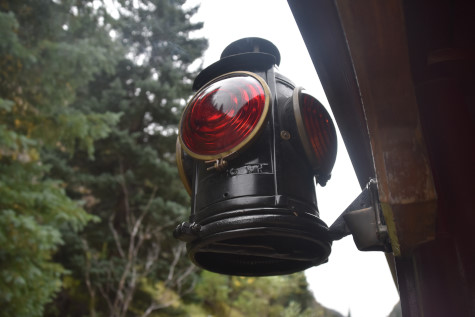
A touch of class on "General Palmer" this marker light; there was another on the other side.
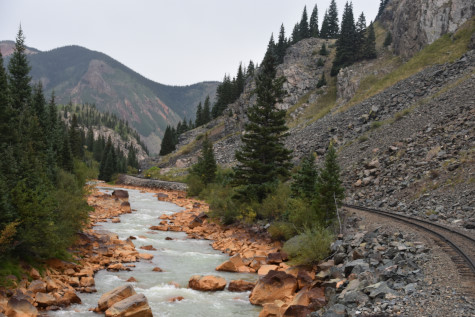
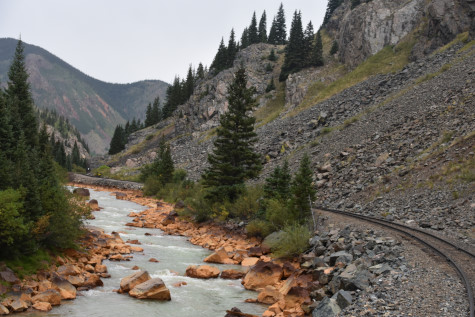
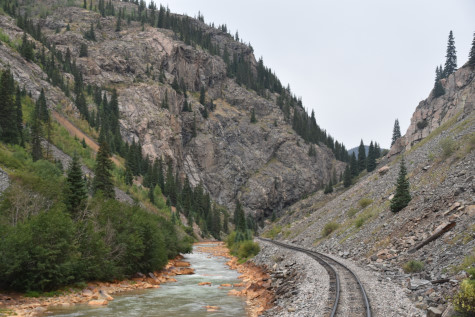
The views from the rear.
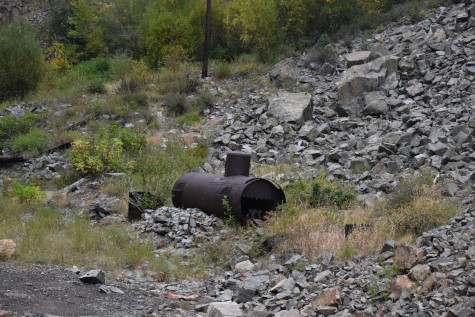
A boiler from a steam engine beside the right-of-way.
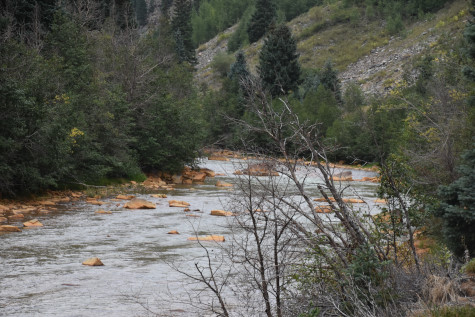
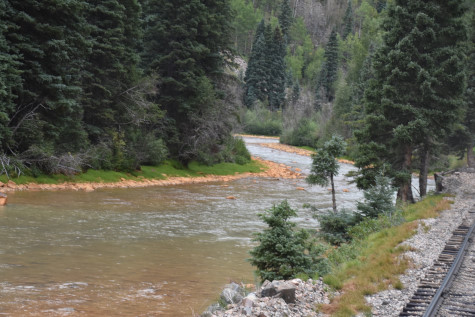
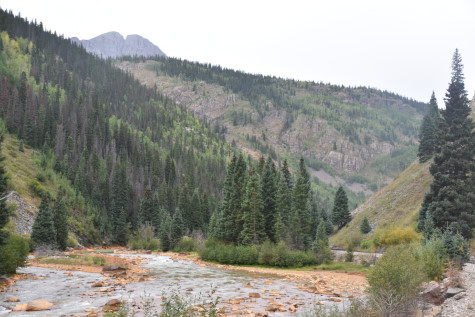
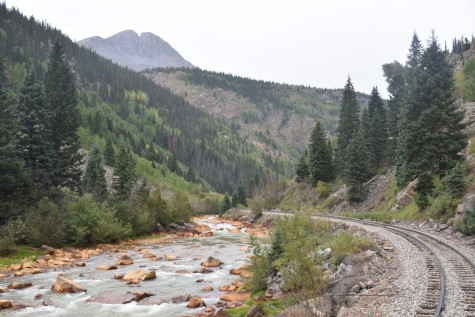
The Animas River flows south to Durango.
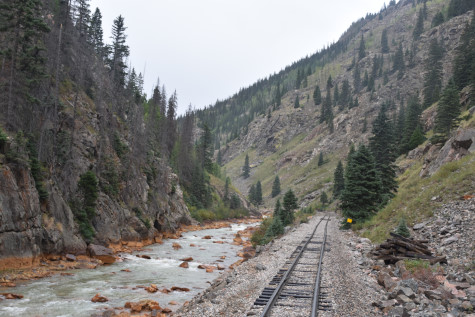
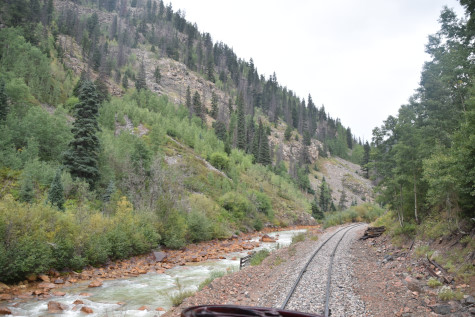
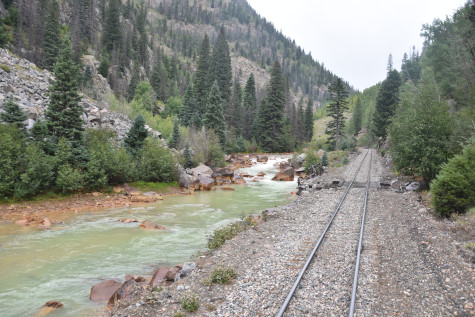
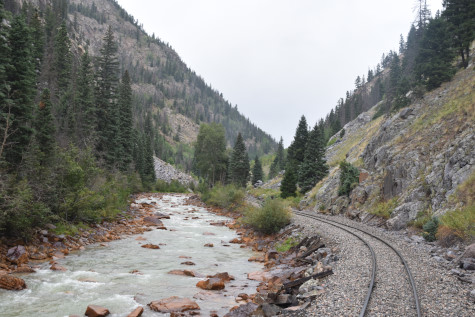
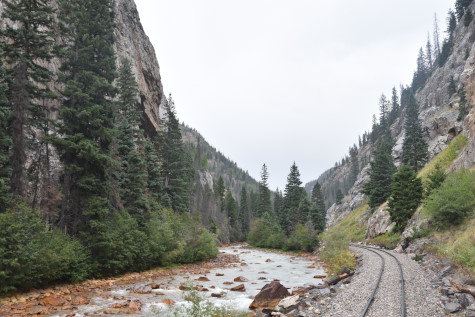
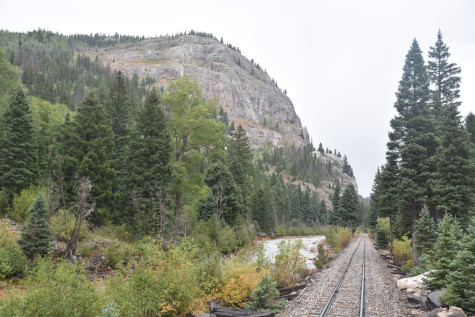
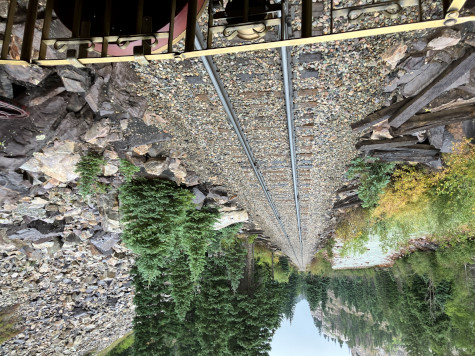
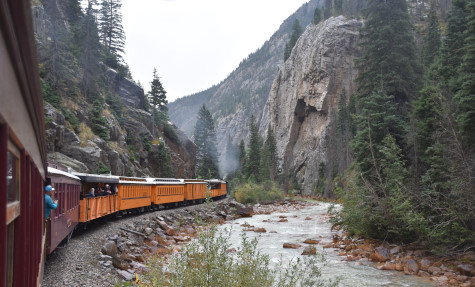
Elizabeth enjoying the view from rear platform as we made our way south.
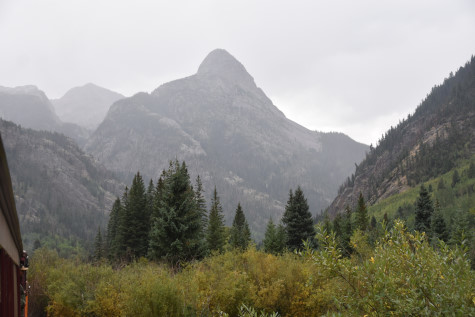
Needles Mountain at 1,4062 feet.
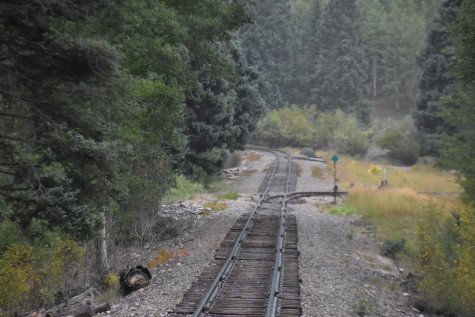
Elk Park wye, Milepost 490.70.
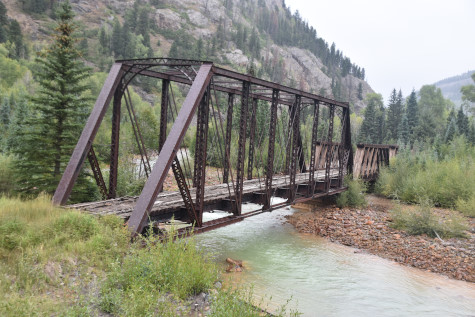
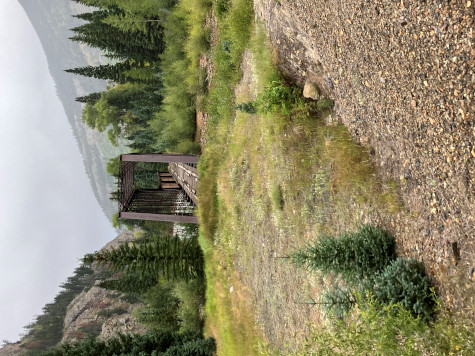
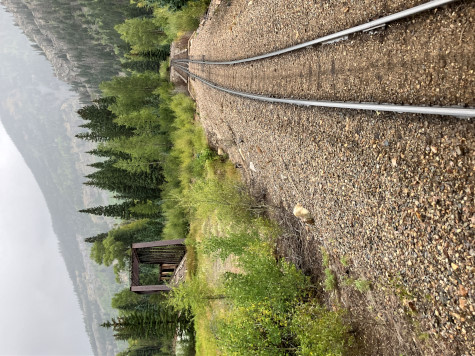
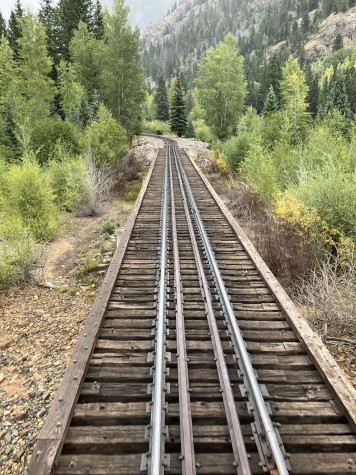
Crossing the Animas River, Milepost 498.87, with the former Elk Park bridge to the left.
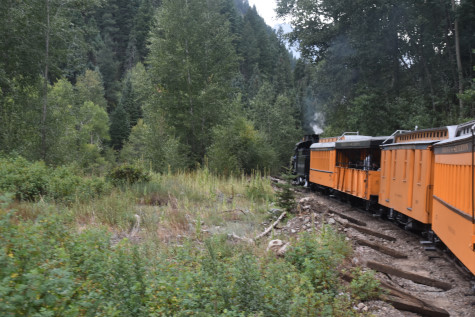
Rounding a curve.
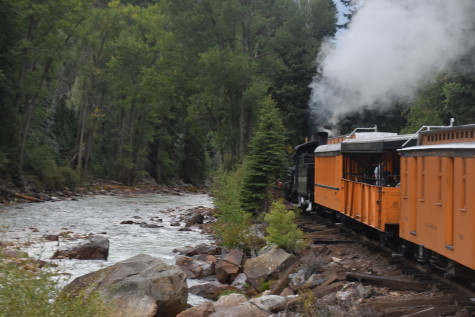
Skirting the Animas River.
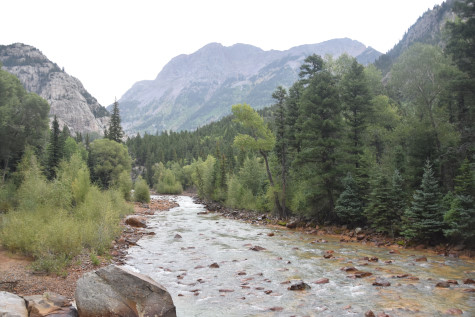
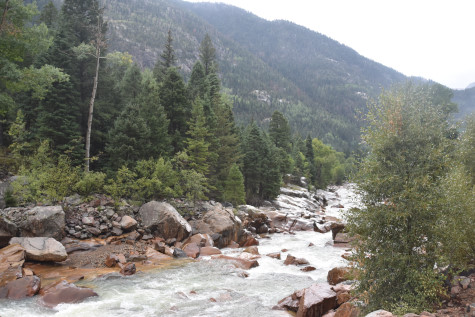
The mountains, the forest and the river.
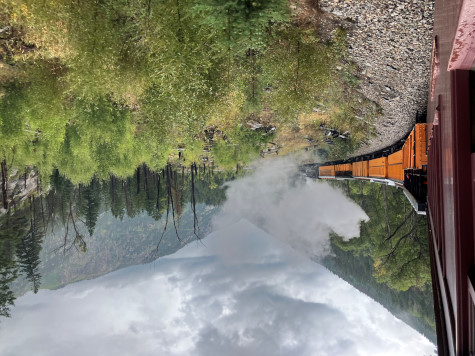
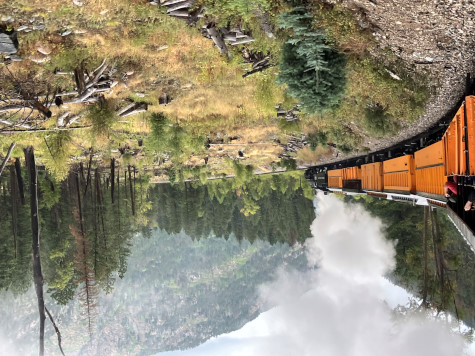
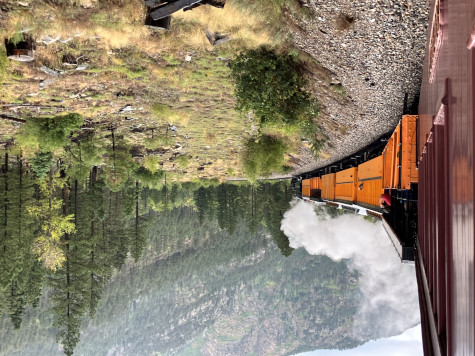
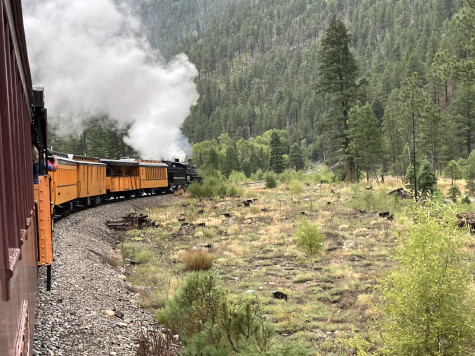
Passing the Goblin Fire location, the site of photo runbys on photo freight charters.
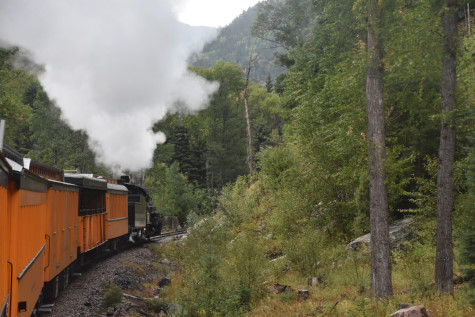
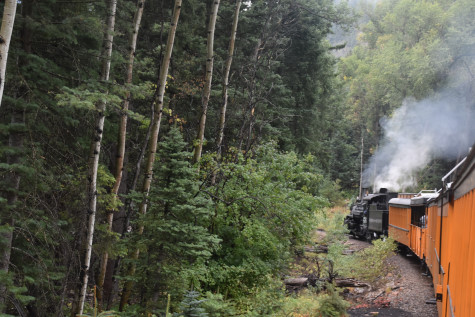
Curving through the forest.
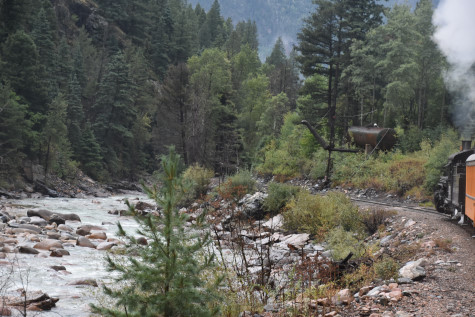
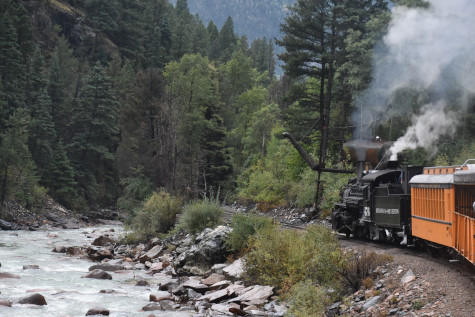
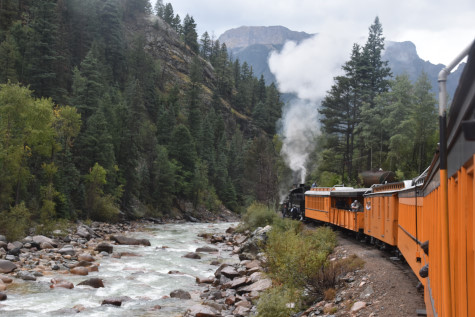
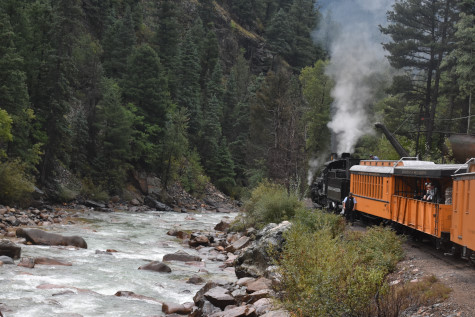
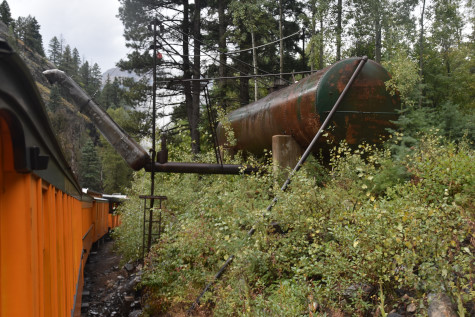
We stopped at the newer Needleton water tank.
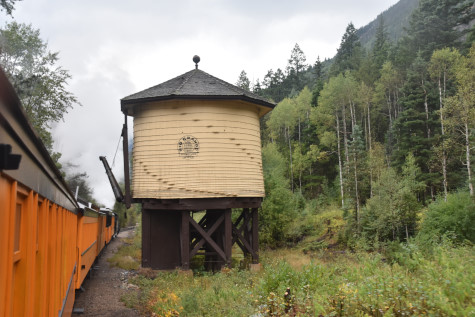
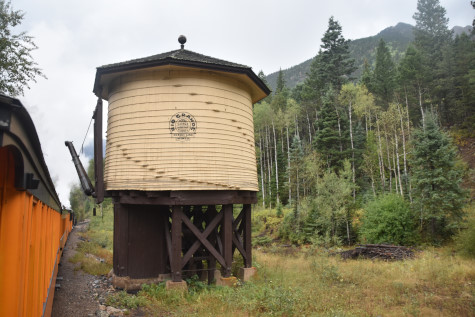
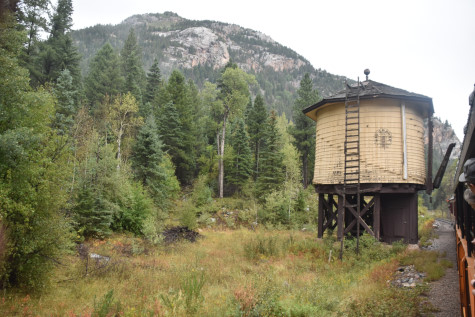
The original Needleton water tower, Milepost 484.4.
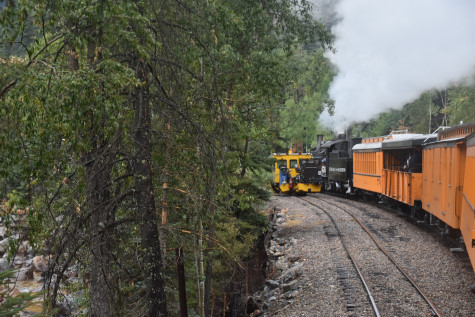
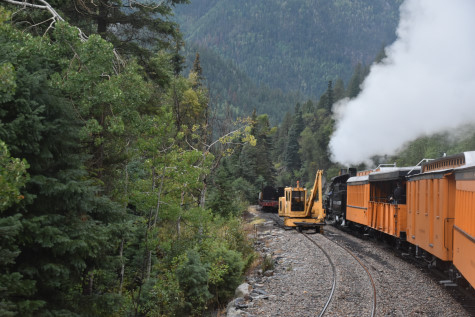
Needleton siding, Milepost 484.0.
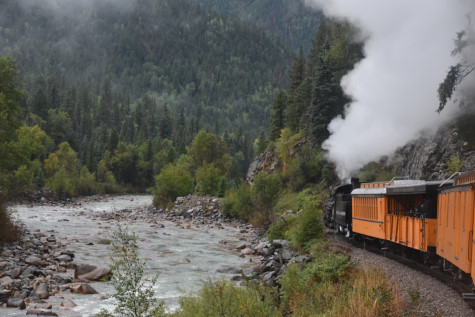
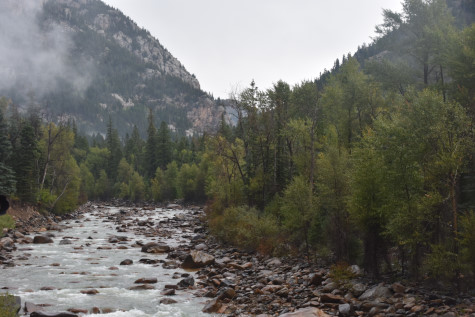
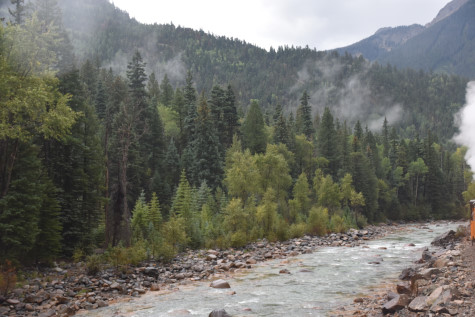
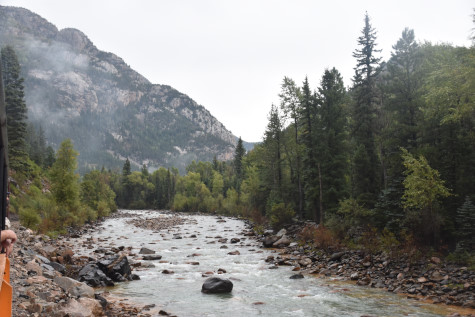
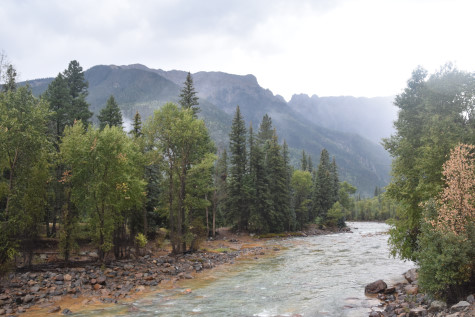
Rolling along the Animas River.
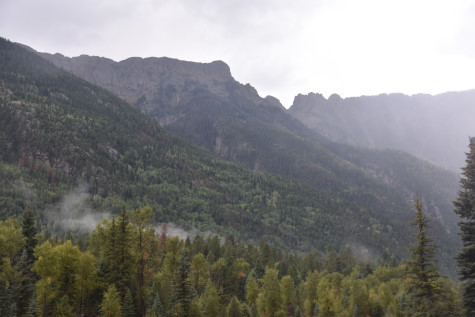
The weather was starting to deteriorate.
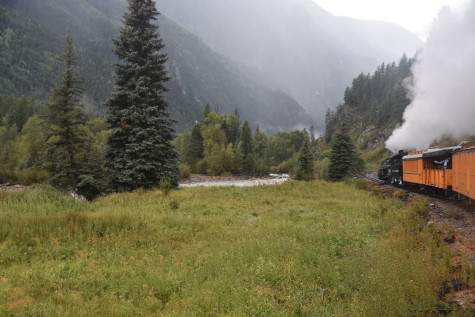
Cascade Canyon wye, Milepost 477.55.
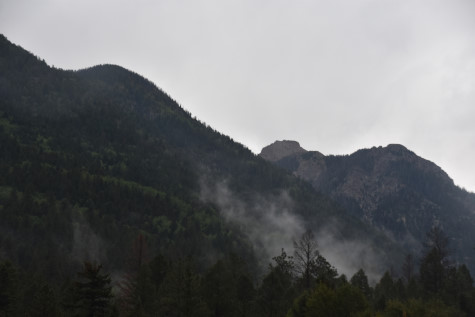
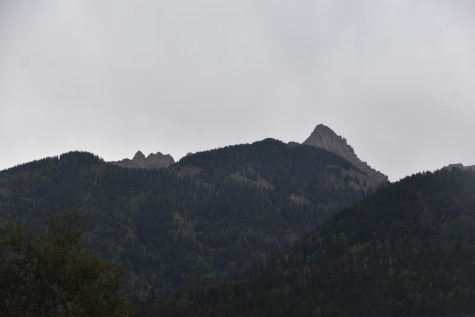
The Needles Range.
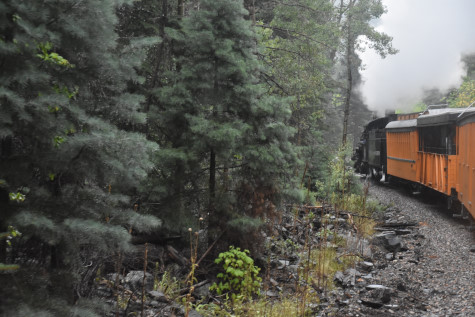
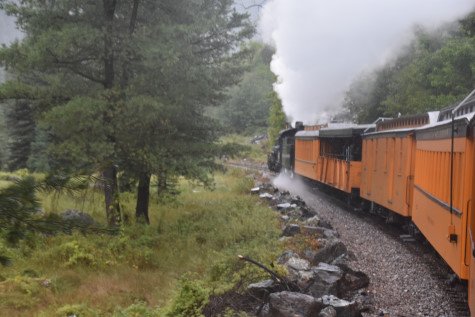
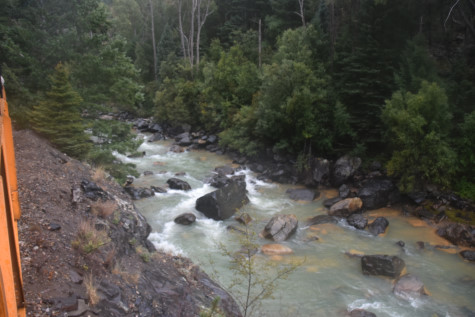
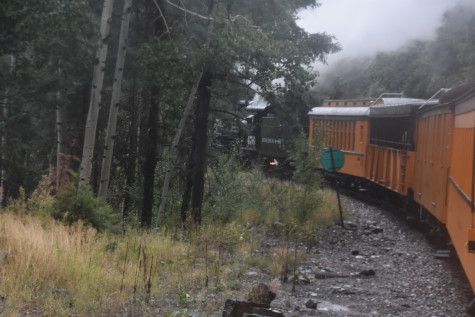
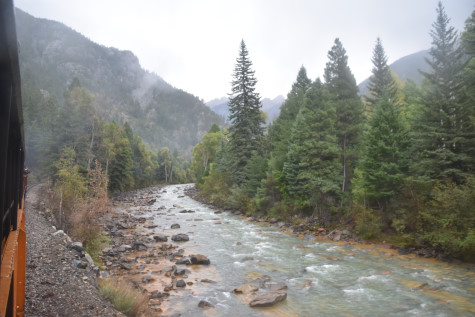
Curving through the forest as Durango and Silverton 476 led the train.
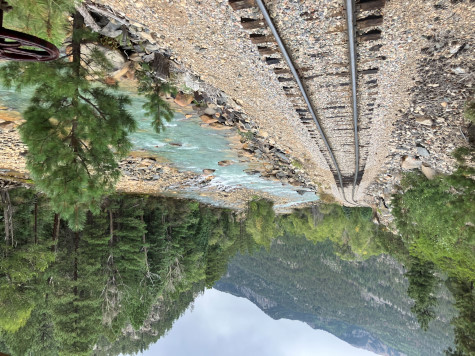
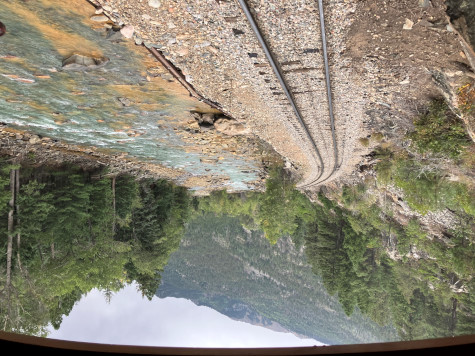
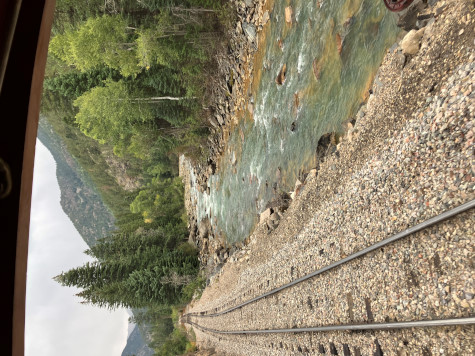
The Animas River as seen from the rear of "General Palmer", a popular place and those who spent time on the observation platform took turns.
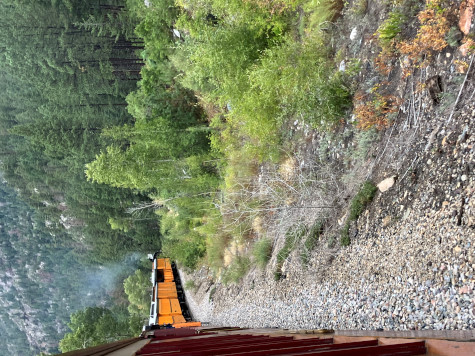
Steaming down the grade.
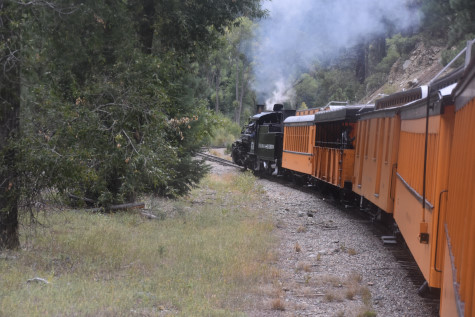
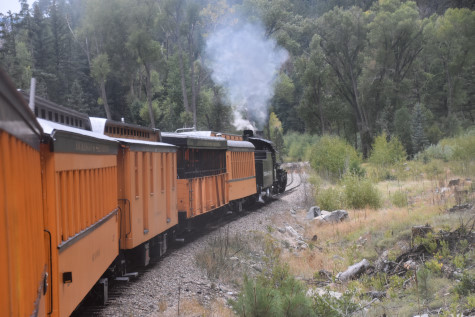
Making our way south back to Durango.
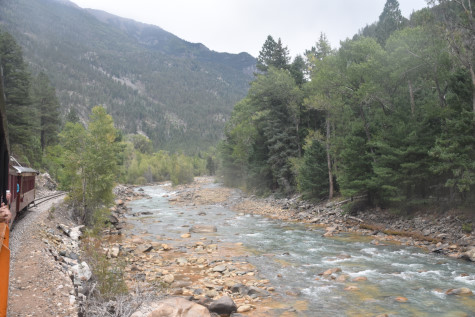
The rear of the train negotiated the curvature of the river.
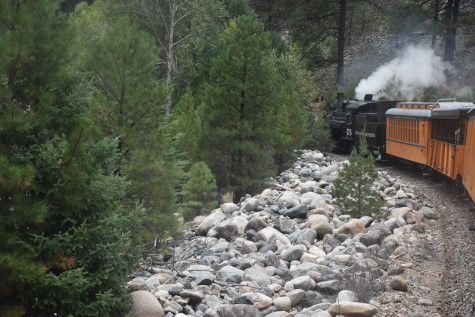
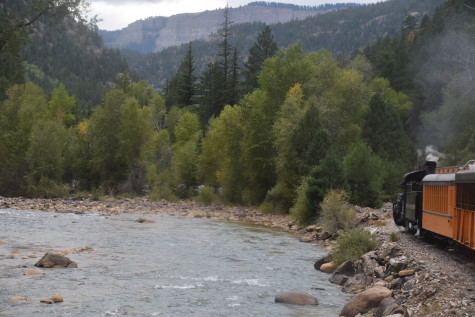
The route features travelling through the forest one minute and emerging to paralleling the river the next.
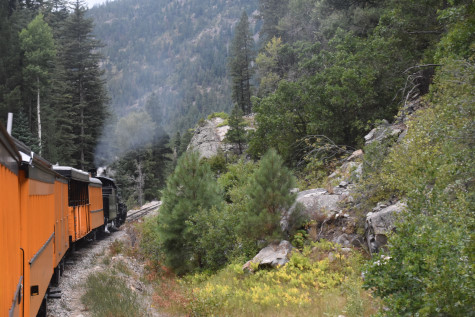
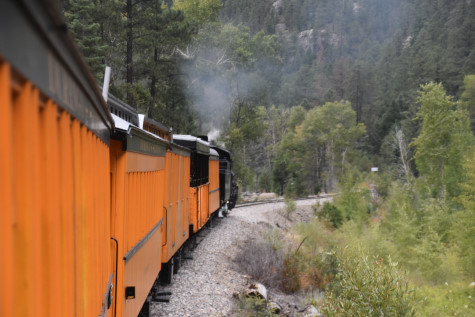
Near the Tefft spur. The location was originally named Tefft, named after early forest ranger Guy Tefft, and was located at milepost 477.9 of the Silverton Branch. Later D&RGW timetables (such as Colorado Division 3-A) misspell this as Teft. Regardless, the location is of note because of Otto Mears building a sawmill here in the 1910s that was served by a spur. Little of the sawmill remains, aside from its stationary boiler. The boiler is what remains of Silverton, Gladstone & Northerly steam engine 32, and is intact yet today.
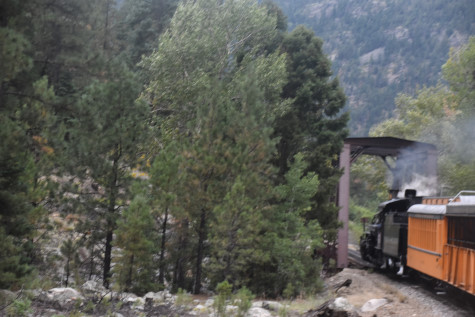
Approaching the Animas River crossing and the 1887 bridge.
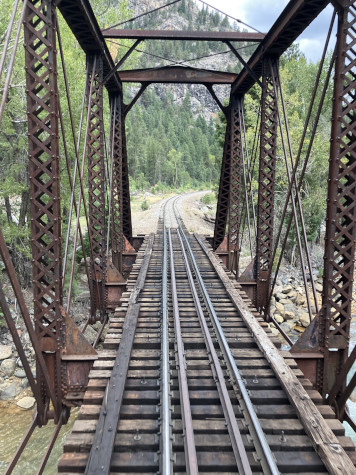
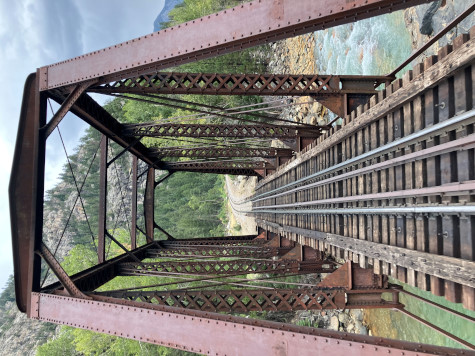
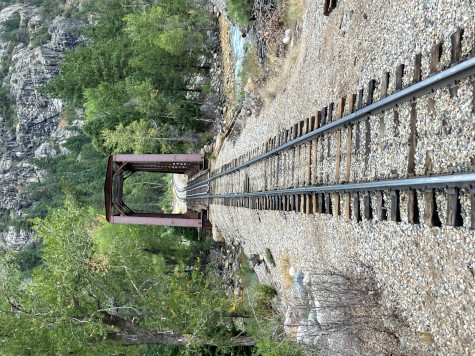
Crossing the Animas River on the steel-trussed Tefft bridge at MP 477.80.
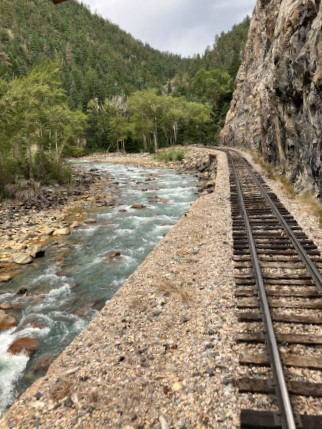
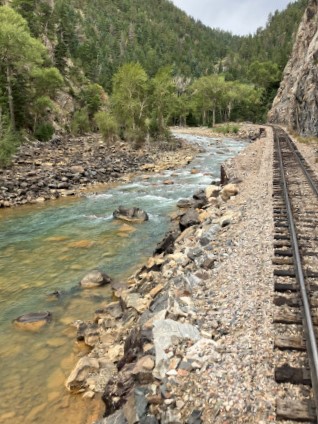
Running along a shelf above the river.
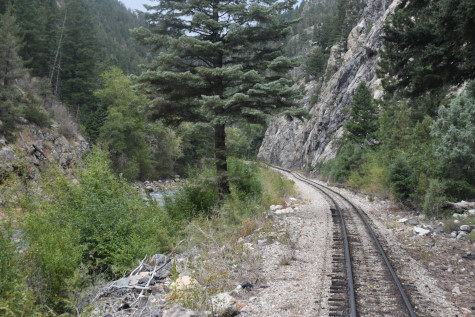
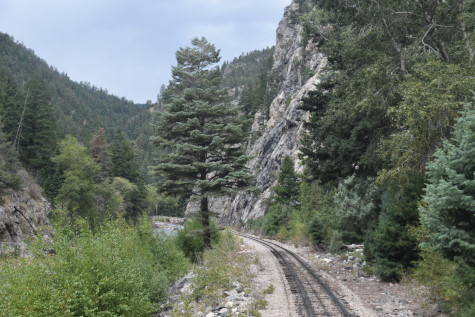
View from "General Palmer".
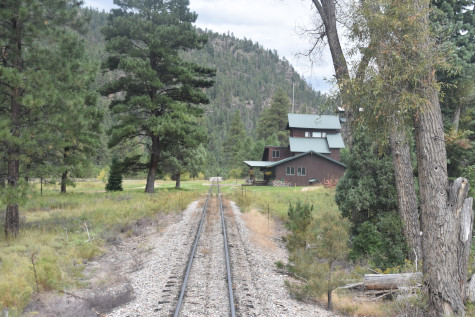
Tall Timbers, a luxury resort that has received the prestigious Mobil 4 star rating. The resort is accessible only by rail or Tall Timber's own helicopter service that also helps with local search and rescue operations.
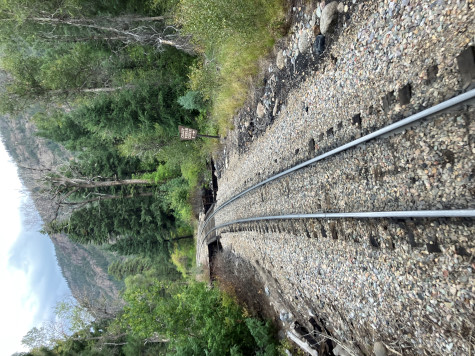
Crazy Women Creek.
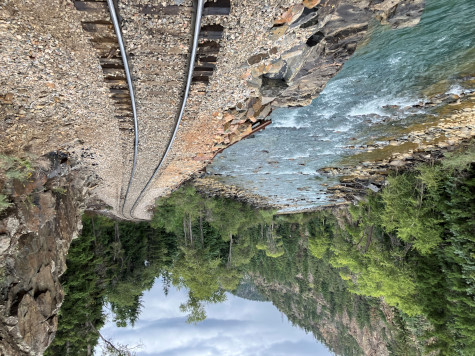
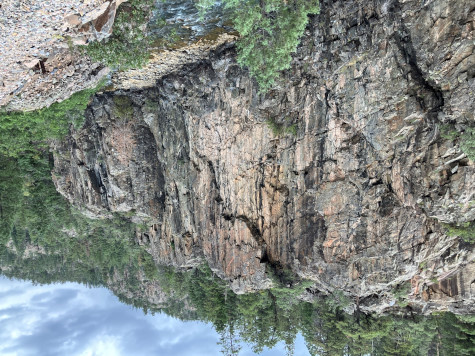
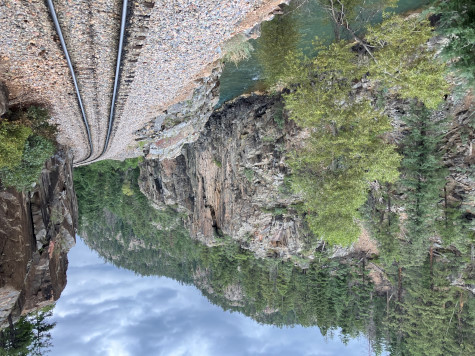
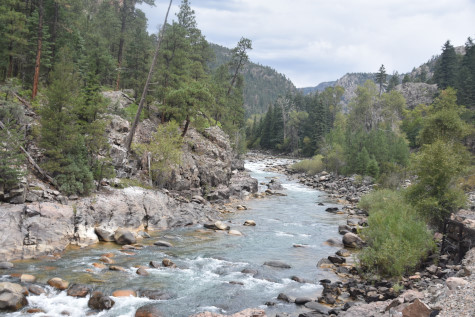
Views from "General Palmer".
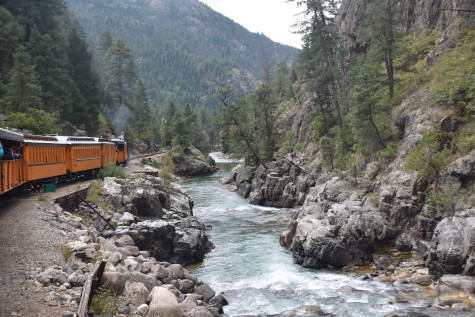
Our steam train leading its consist of Heritage Rail Alliance members.
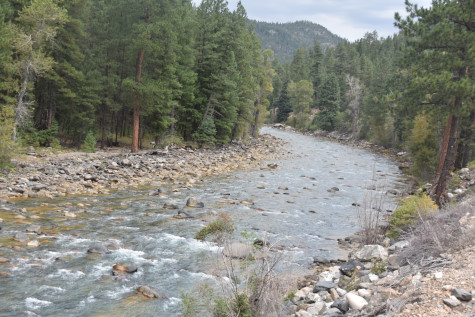
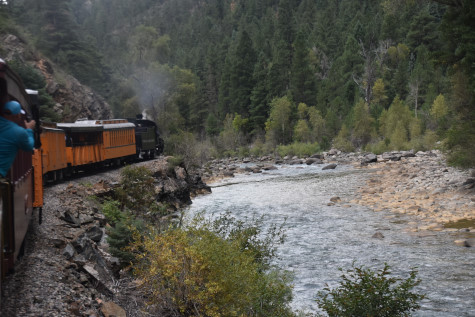
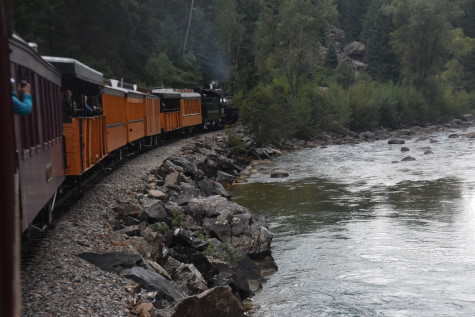
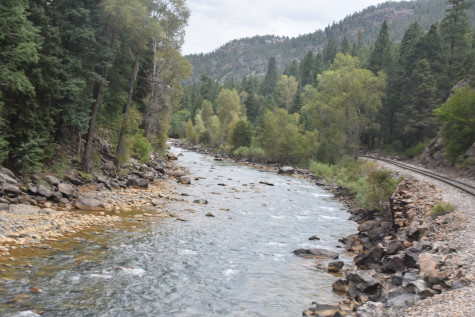
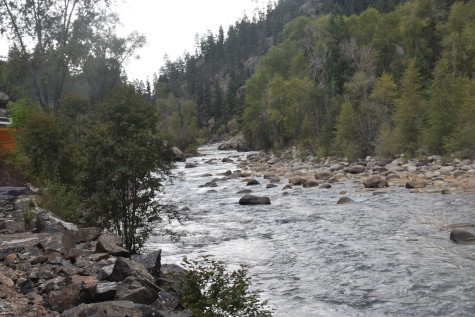
The very scenic Animas River canyon.
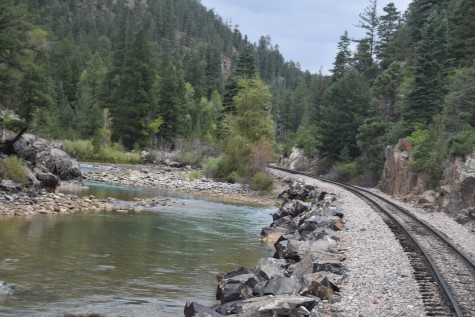
The view from the rear observation platform.
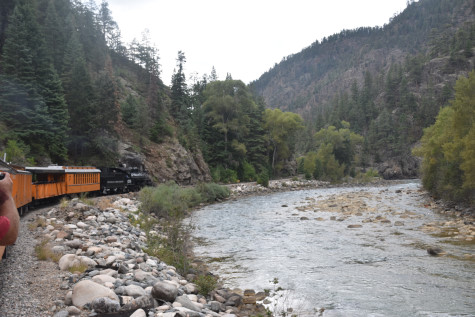
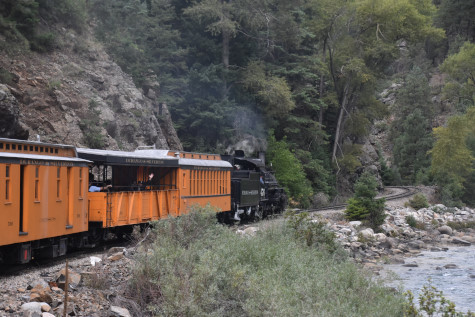
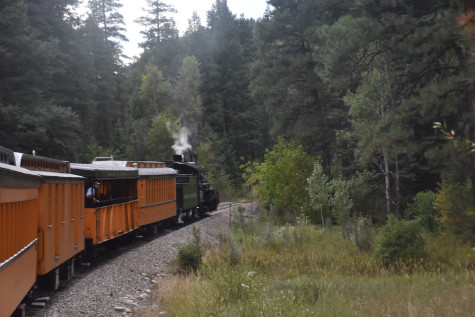
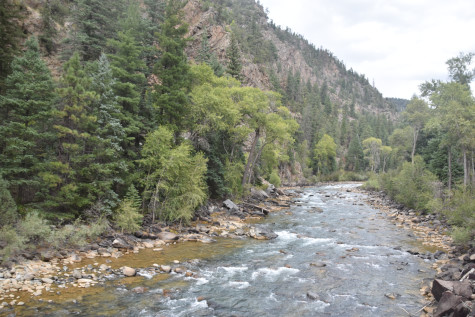
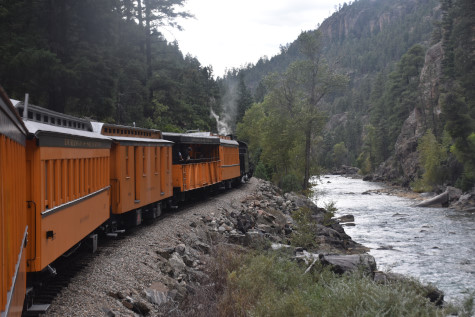
Nearing Hermosa.
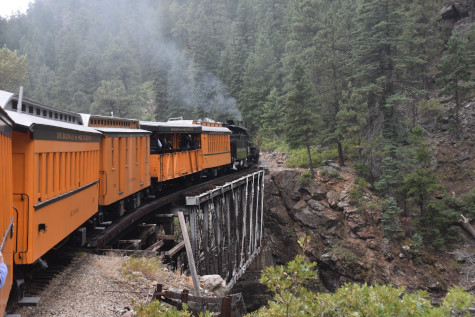
Crossing the High Bridge, Milepost 471.23. The current bridge was reinforced in 1981 to support the heavier K-36 series of locomotives {480's} that Charles Bradshaw, Jr. wanted to use on the line.
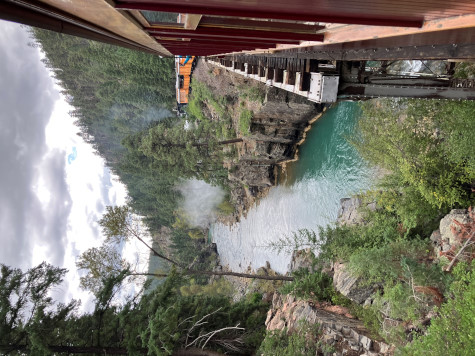
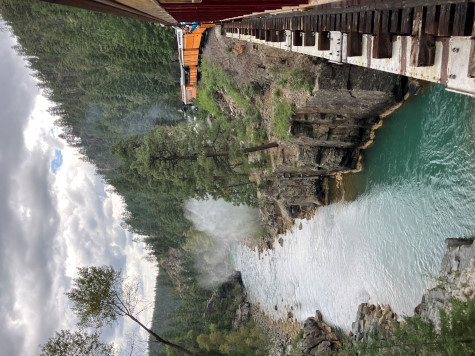
Our crossing of the bridge.
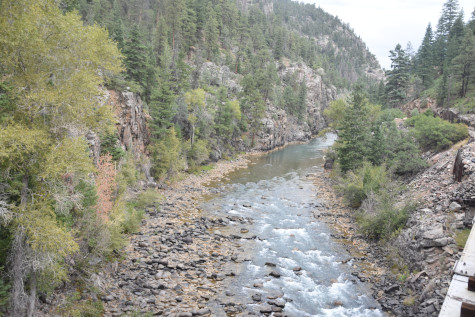
The Animas River as seen from the 1894 bridge.
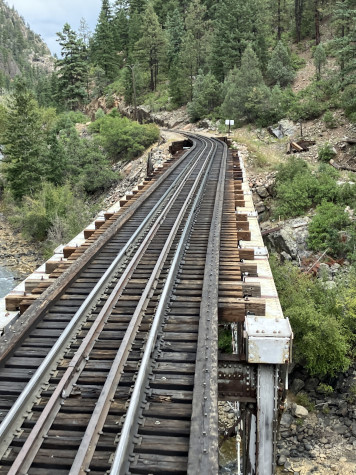
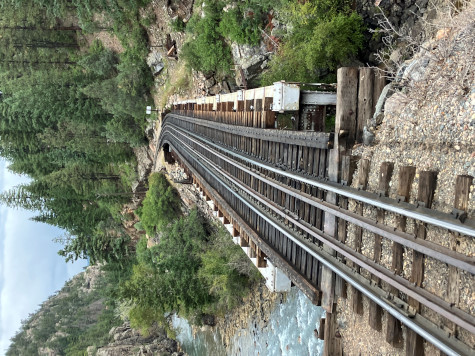
Coming off the High Bridge.
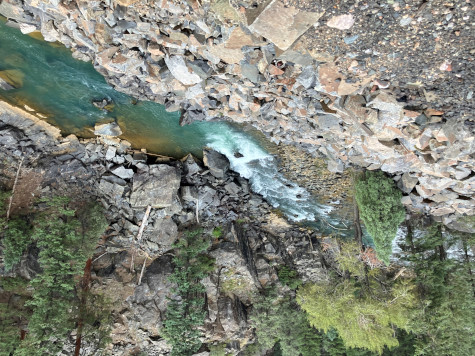
Looking down at the rapids
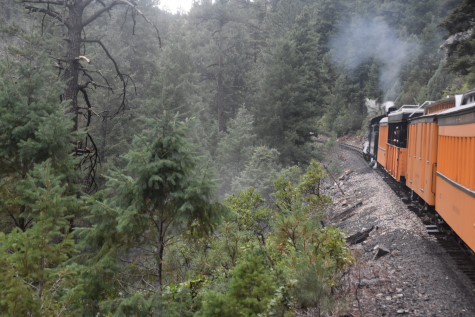
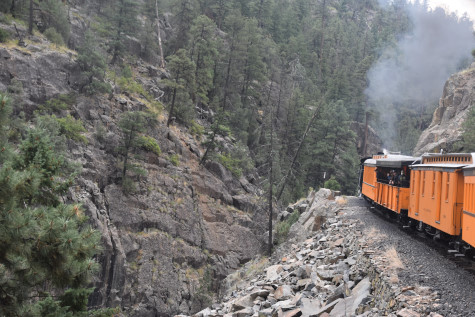
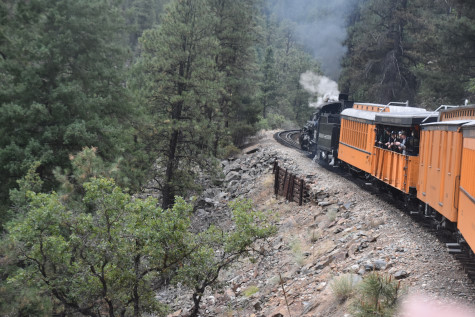
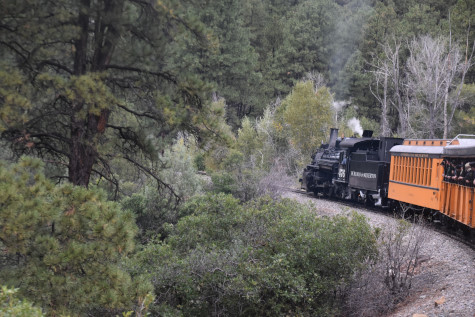
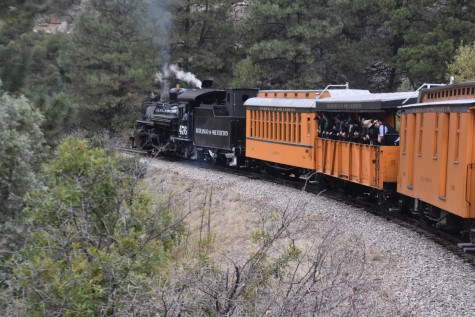
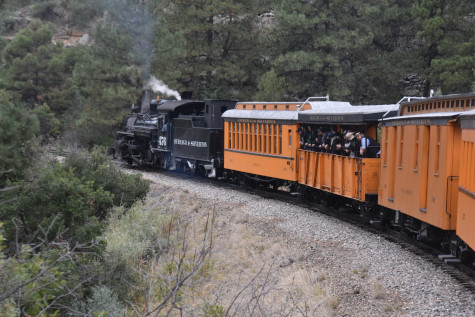
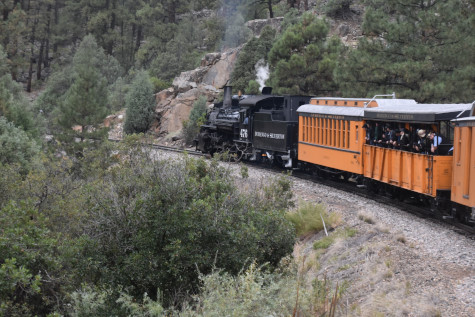
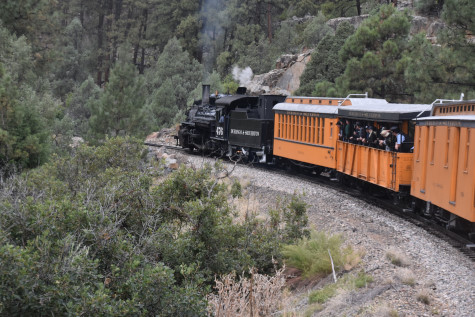
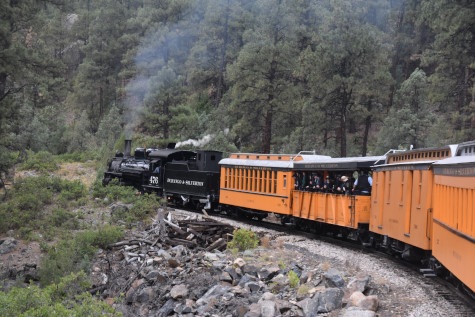
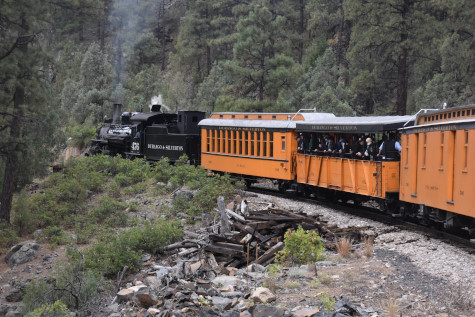
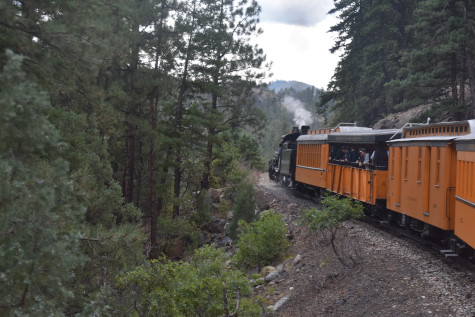
The journey up to the High Line.
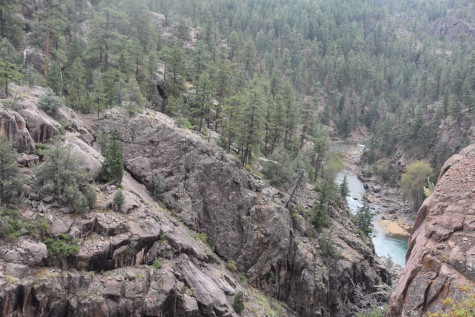
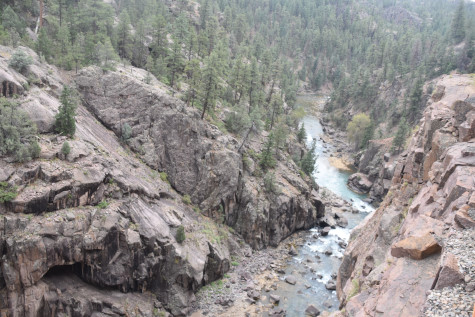
The Animas River now far below.
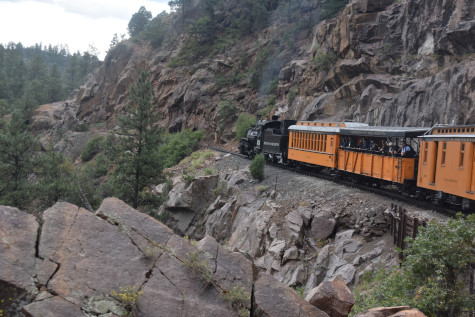
Riding on the High line.
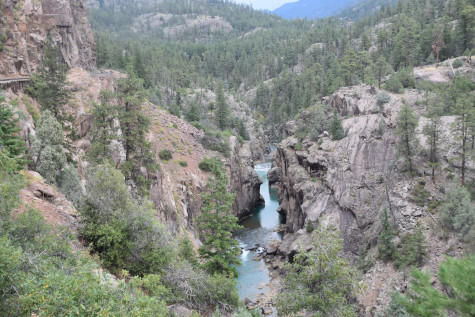
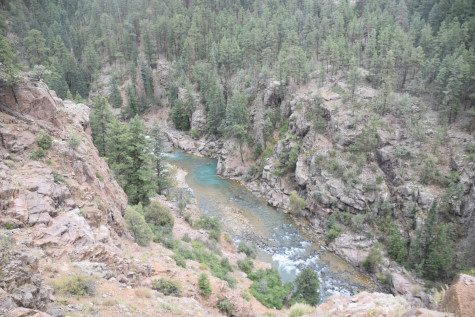
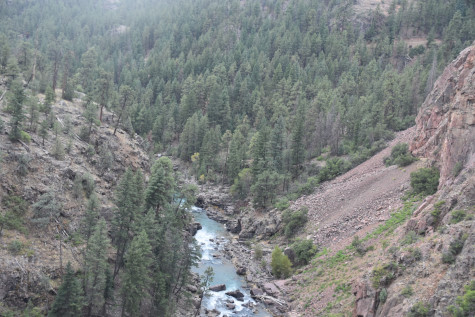
The river has become very narrow with rocky cliffs.
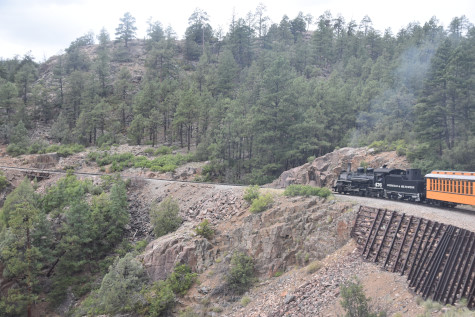
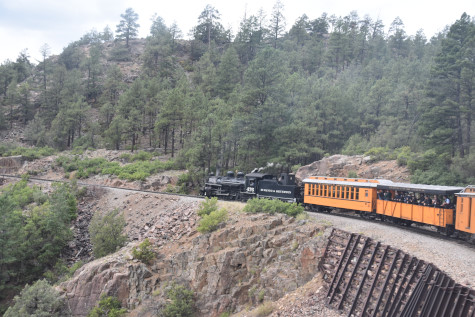
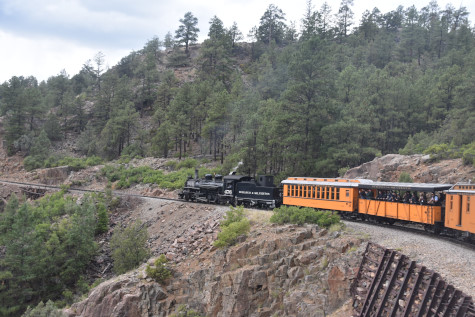
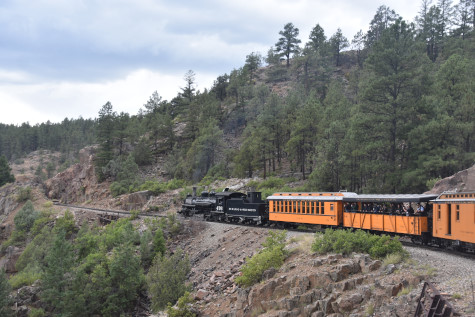
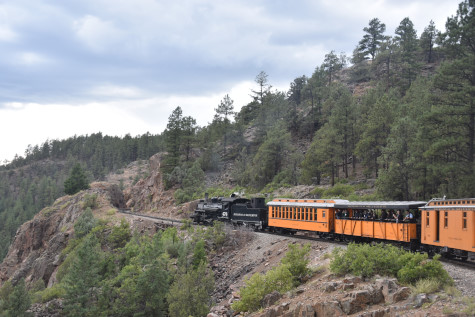
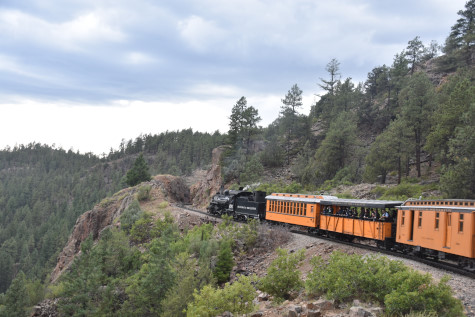
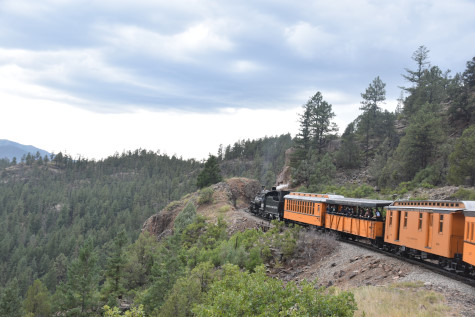
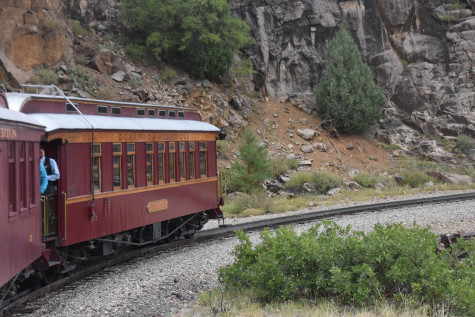
The train on the High Line.
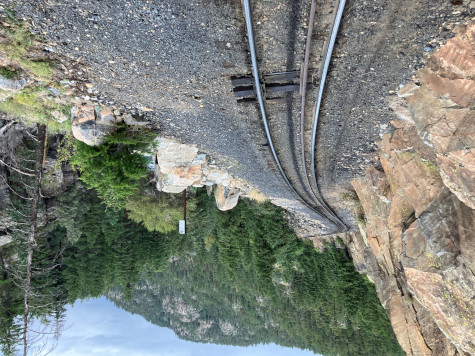
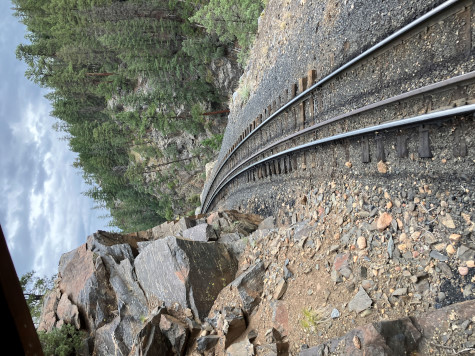
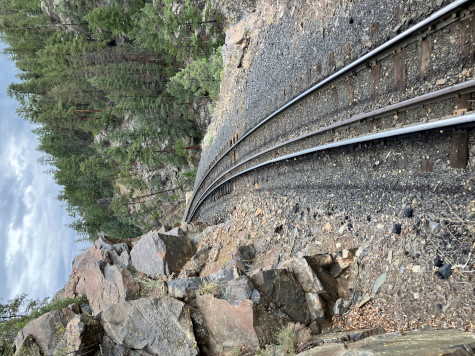
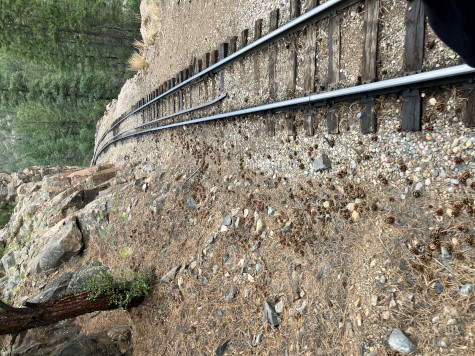
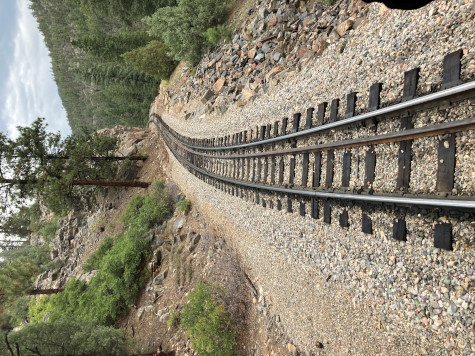
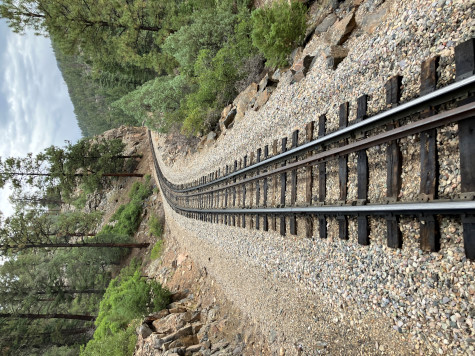
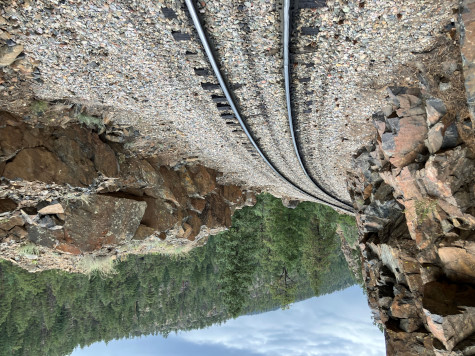
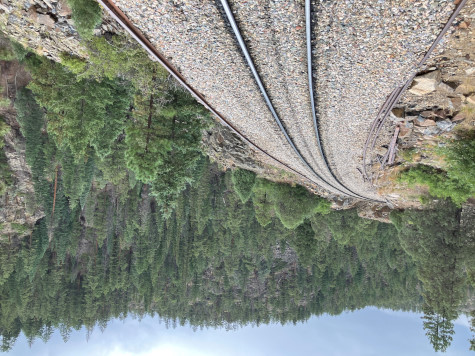
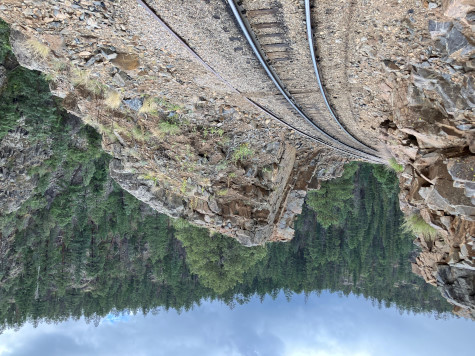
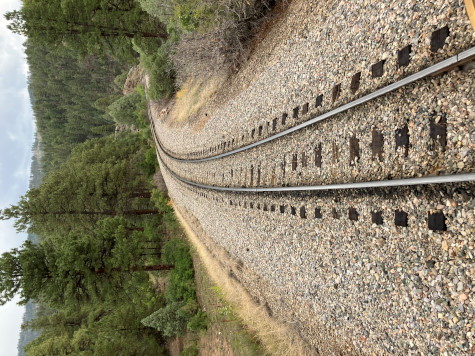
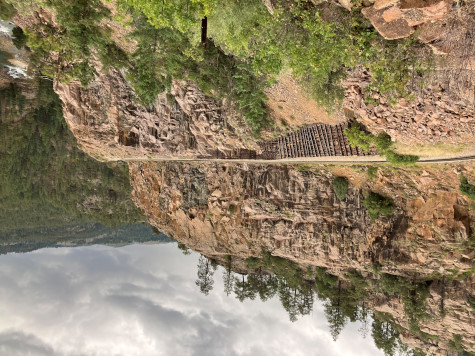
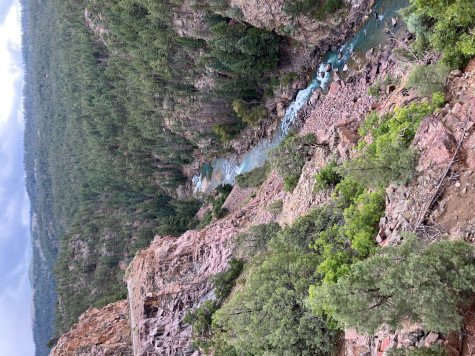
It was a special treat to ride on the platform of "General Palmer" on the High Line.
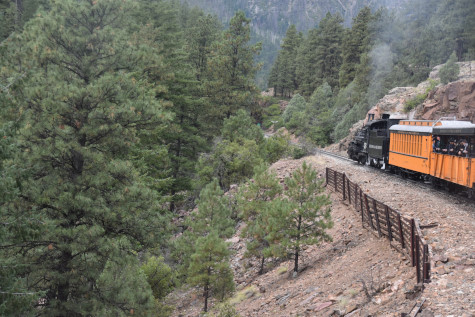
On the way to Rockwood.
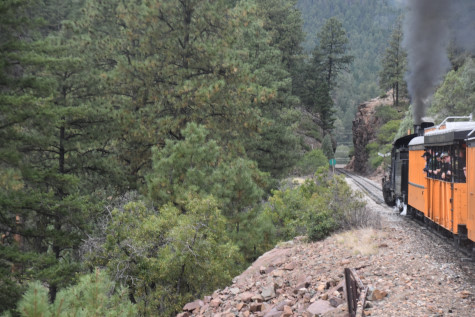
The Rockwood Cut, after which I went to the concession car for a lemonade which hit the spot. Upon our arrival in Durango, the two of us drove back to the Fairfield Inn and freshened up in preparation to return to the Double Tree Hotel for the reception and show and tell that evening.
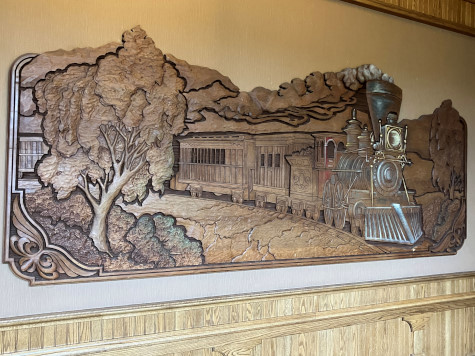
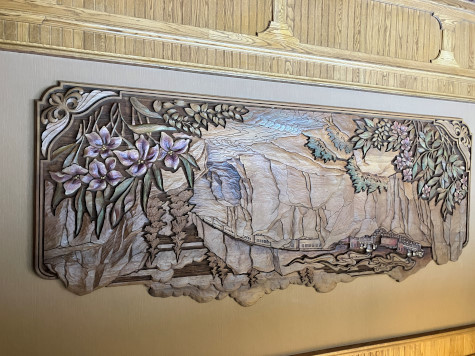
Bas relief sculptures in the lobby.
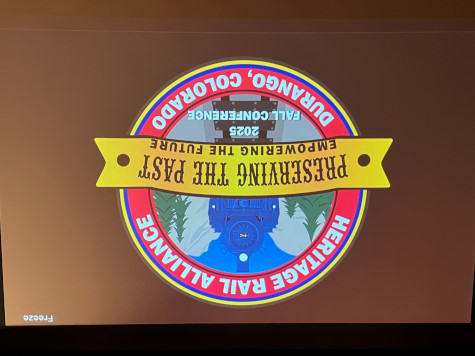
Emblem of the 2025 Conference -- Preserving the Past, Empowering The Future.
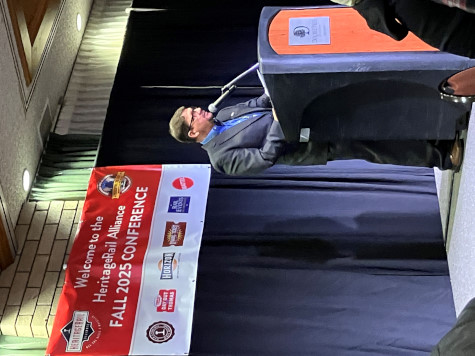
Terry Koller, President of the Heritage Rail Alliance (and Manager of Railroad Operations at the Georgia State Railroad Museum), welcomed everyone to this year's conference and gave an overview of the planned activities.
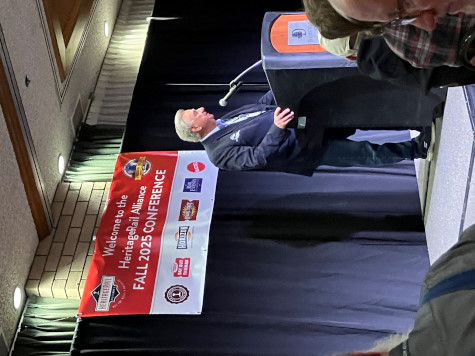
Allen Harper, President of American Heritage Railways, which owns the Durango and Silverton, then gave his and his family's welcome and thanked the attendees for their support.
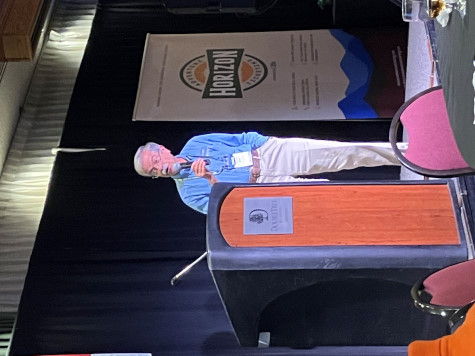
Craig Sansonetti, President of the Ma and Pa Heritage Village, provided an overview of next year's conference location.
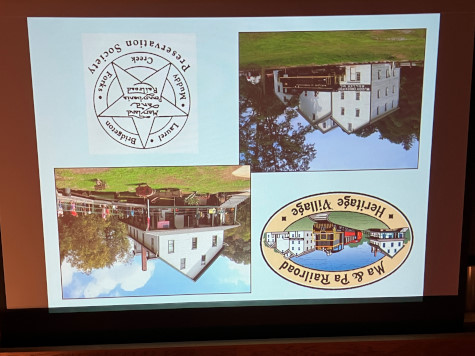
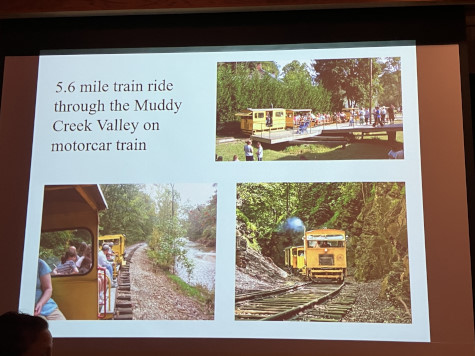
Many of the assembled were most intrigued with the prospect of the 2026 conference and more information would be given at the banquet. Once all had partaken of the charcuterie board of hors d'oeuvres, Terry started the Show and Tell portion of the evening. Elizabeth, representing the Fraser Valley Heritage Railway, presented a 15 minute program on the organization's current offerings of the Heritage Rail Adventure and the Sullivan Excursion. As with the other presentations, it was very well-received. We stayed for a couple more before returning to our hotel for the night.
| RETURN TO THE MAIN PAGE |