




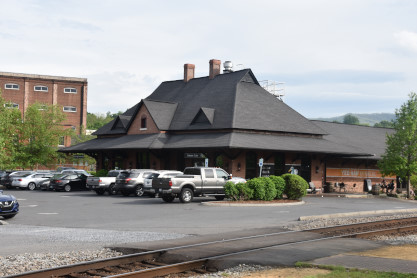
Elizabeth and I parked across the street from the Johnson City Railroad Experience and with some time before the reception, we walked over to the two stations.
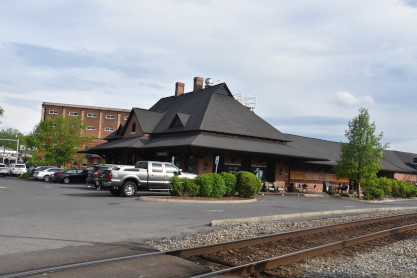
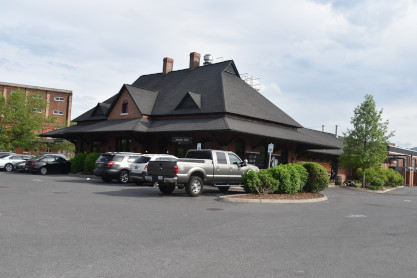
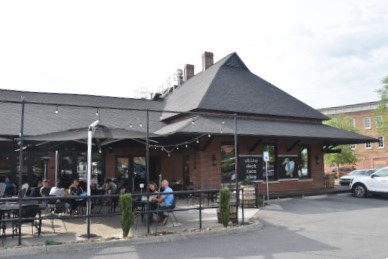
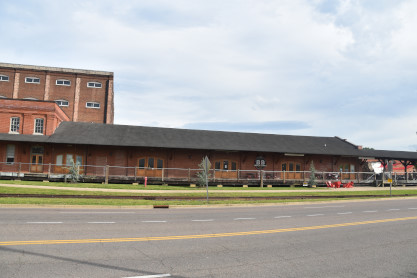
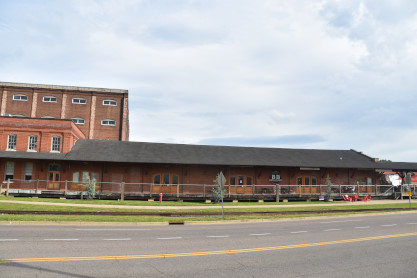
Johnson City East Tennessee and Western North Carolina freight station adjacent to the passenger station. The Division of Underground Storage Tanks was involved in the transformation from a train station in the 1880's and an auto repair center in the 1960's. The Tweetsie Railroad Depot was constructed and used from 1891 to the 1940's to transport passengers, iron ore and timber from the mountains of Northeast Tennessee and Western North Carolina. Damage to the rail lines from flooding resulted in the closure of the depot. The property was then operated by Free Service Tire between 1965 and 1988.
Four petroleum underground storage tanks and potential contamination were prohibiting economic reuse. Several government entities and others collaborated to assist with tank closure, site assessment, building renovation, utility relocation, and development. Today, the Yee-Haw Brewing Company Taproom and White Duck Taco Shop occupy the refurbished location.
The platform and additional depot space on the west end of the building remains owned by Joe Baker. A founder of Ole Smoky Moonshine and Yee-Haw Brewing, Baker purchased the then-dilapidated depot from the Johnson City Development Authority in 2012.
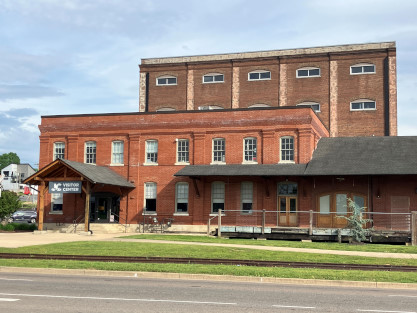
Johnson City Clinchfield, Carolina and Ohio station built in 1909, which has been re-purposed to be a Visitors Center and separate restaurant and bar. The Carolina, Clinchfield and Ohio Railway, which began as the Charleston, Cincinnati and Chicago Railroad, was built specifically to haul coal. George L. Carter bought the 3C's, reorganized it as the South and Western, then in 1908, with substantial financial backing, re-branded as the CC&O. With his headquarters in Bristol, Carter began searching for a suitable location in Johnson City. The Carnegie office building, later Empire Furniture, was first occupied by Carter in the vicinity of Fairview Avenue and Broadway. Unable to find enough land to accommodate, Carter decided to locate the yard, shops and an operating department in Erwin. In 1912, Carter moved his office from the Carnegie building to the Love-Thomas building on Ashe Street.
The Carolina, Clinchfield and Ohio Depot located at 300 Buffalo Street, Johnson City, was built in 1908 in the Colonial Revival style. Detailed information about the depot is given in a National Register of Historic Places Report, dated March 2008, from the Appalachian vertical files listed under Railroads-Tennessee East. Described as a good example of 20th century railroad architecture, the period of significance for this building was from 1908 to 1955. Buffalo Street was a significant thoroughfare, in the 1920s, on which all three train stations connected: CC&O, ET&WNC, and Southern Railway.
Constructed by Clinchfield Railroad Engineers, the building consisted of heavy duty concrete and oversized timbers for the foundation, brick walls, and a built-up, asphalt shingle roof. The report describes this depot as one of the more important Clinchfield depots constructed, because freight was handled in the same facility. There were two sections to the depot: a 5800 square foot, two-story passenger station, which featured arched doorways and prominent pilasters on the outside. The inside contained wood trim, wainscoting, column caps, and starburst patterned glass transoms. Walls were 1" x 3" beveled edge tongue and groove plain face wainscoting. The first floor featured nine- over-one, double-hung sash windows. A covered walkway led from the main entrance to the passenger platform.
There were separate entrances, waiting areas, and bathrooms for whites and African Americans. At one time, the central door facing Buffalo Street was designated as an entrance for white ladies and children only, for protection, according to Clinchfield Historian James Goforth, from the more unsavory characters that might be encountered on the rail. The second floor of the passenger station, used for eight separate office spaces, featured a central double- loaded hallway. The walls were the same as the first floor, however, according to the report, the upstairs hallway is a unique display of eye-level to ceiling fixed and moveable glass transoms. The overall effect of this in daylight hours is quite special, as the light from outside the building traverses the entire second floor through what is, in effect, a partial glass wall. Eight regularly spaced, six-over-six double-hung sash windows were set in arched openings.
The second section, a 6000 square foot, one-story freight house/depot with a loading platform, consisted of a basic, purely functional design. Masonry walls with wooden trusses support a gabled roof. A large open space, the freight house contained partitioned spaces for baggage and express, and also horse freight. The flooring was yellow pine. The uniqueness of the CC&O Depot is the all-encompassing combination design of a two-story passenger service with office space on the second floor, adjoining freight service, and interchange service, which transferred freight from one rail to the other. The CC&O had the only two-story depot. Because of this, the freight office was a beehive of activity. This depot is credited with spurring the growth of Johnson City's commercial development, because it handled more freight and shipped out more products than either Southern or ET&WNC. April, 1954, was the date of the last passenger train for the CC&O. The CC&O merged with Seaboard Coast Line Railroad in 1983, and became the CSX or Chessie Seaboard System. The building was used as a yard office until 1985.
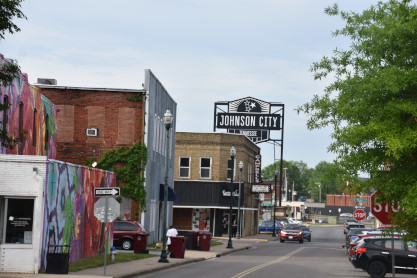
A sign announcing Johnson City, Tennessee before we walked back to the Johnson City Railroad Experience.
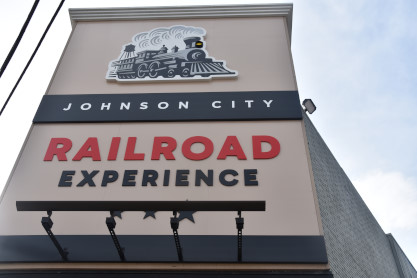
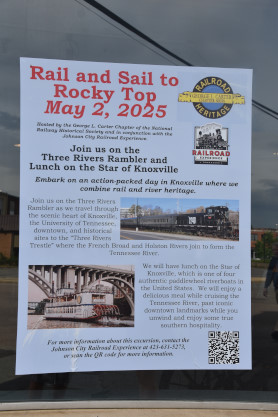
The George L. Carter Chapter of the National Historical Railway Society flyer in the window, promoting Rail and Sail to Rocky Top, which all conference attendees would be attending tomorrow. For the last few years, a dedicated group of advocates have been in search of an off ETSU campus location to move the George L. Carter Railroad Museum. We have looked at many buildings in downtown Johnson City and all were in various states of disrepair. But each time we analyzed the task of turning that building into a museum. Remodeling costs, parking, and location were the three main drivers that ruled a building in or out. Every location was ruled out until a few months ago when we toured the property experts building on the corner of 207 Boone/King Street just west of King Common's Park. The owner of the building is Sam Taylor. The building–move in ready; parking–over 100 spaces; and the location–two blocks from the original site of entrepreneur Henry Johnson’s 1850s water tank in downtown, checked all the boxes. Now, we must commit as a community that the value of the railroad museum can become a valued destination for families, visitors, and schools, while becoming a cornerstone location to tell our history.
But we also believe the history of Johnson City is not just told in a museum, it is a commitment from city leaders, educational institutions, business leaders and it's citizens to intentionally preserve and share our heritage, be inspired by the spirit of the entrepreneurship that was the core of the city’s growth and ensure that new people moving to our city are grounded in our history, not theirs. A city can grow in wealth and population, but its unique heritage, is what sets it apart from other cities and adds to a resident’s quality of life. The City of Johnson City would not be here but for the railroads and forward-thinking entrepreneurs. They took a risk, and at least, our generation should ensure we celebrate, learn and drive growth from the residues of their tenacity. Without protecting our culture by telling the stories of our history, a city becomes just "vanilla" or our culture bends to the ways of others. The mission of the Johnson City Railroad Experience is to provide a dynamic destination that tells the story of our region through the lens of its railroads. Through historical collections, educational exhibits, and immersive experiences, we aim to educate, inspire, and bring joy to individuals of all ages and backgrounds.
The meeting room that was set up with tables, chairs and a wide array of sandwiches, vegetable platters, meats, fruit and desserts. On the walls were many photographs, all by Dale R. Carlson. The captions for the following set of pictures are the titles of his work taken from his website.
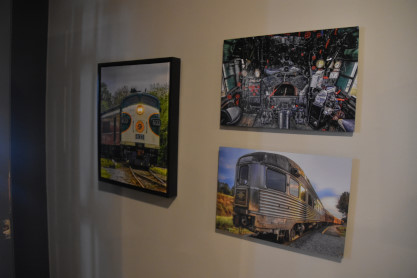
Southern FP7 6133 FP7, steam locomotive cab and the observation car with a drumhead from the Tennessee Valley Railway Museum.
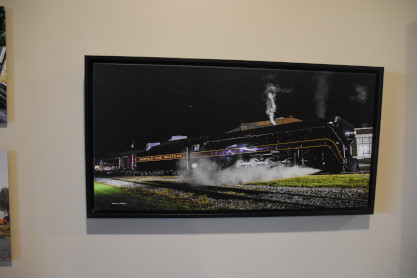
Norfolk and Western 4-8-4 611 built by Norfolk and Western shops in 1950.
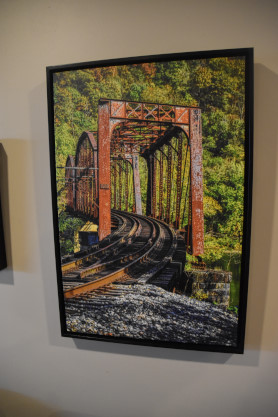
A bridge from the New River Gorge's Piney creek trestle.
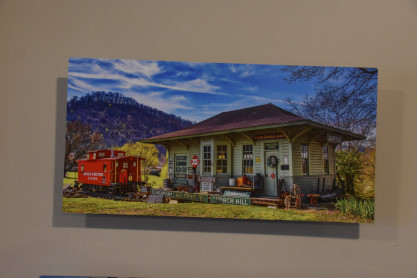
Fannon Train Museum.
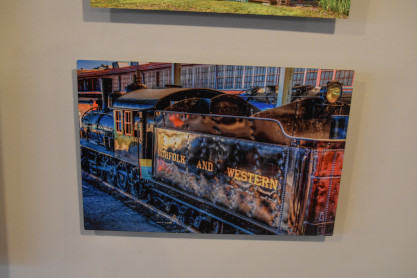
Steam ghost number 6.
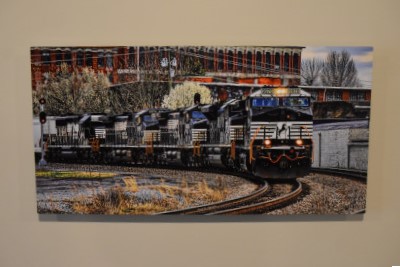
Norfolk Southern Quartet.
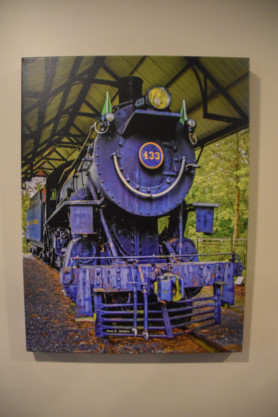
Molly 433.
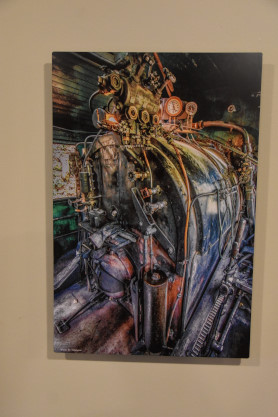
Steam office.
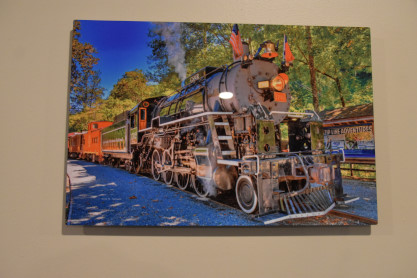
Locomotive 1702.
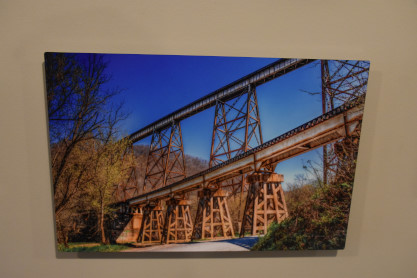
Copper Creek Trestle.
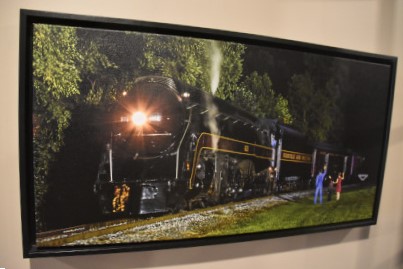
Waving to the 611.
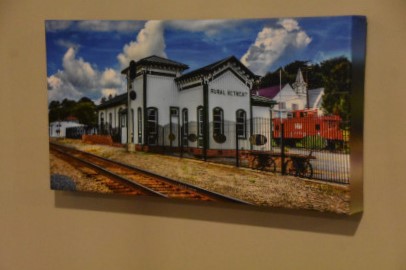
Rural Retreat Depot.
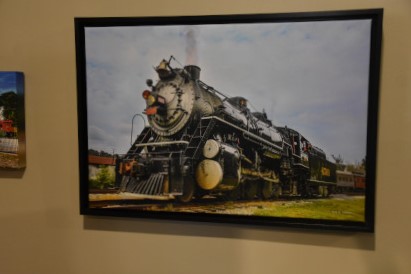
Southern Giant.
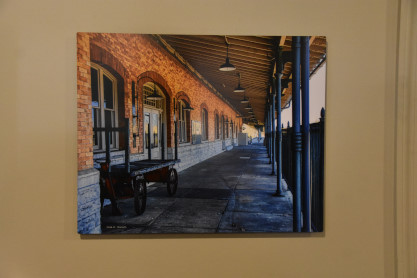
All Aboard!
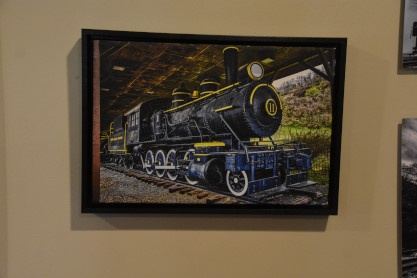
Old number 11.
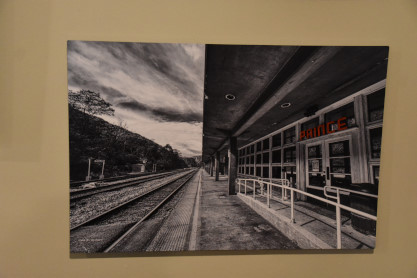
Retro Prince.
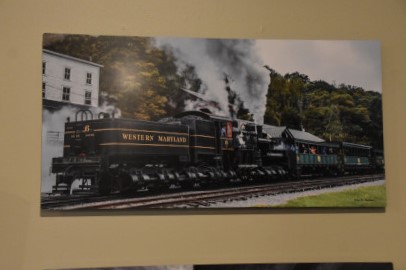
Bald Mountain excursion.
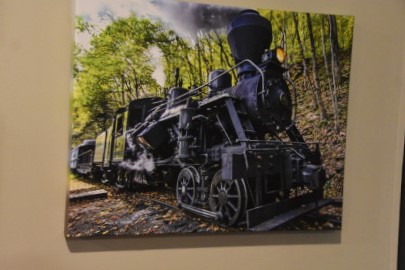
Iron Logging Horse.
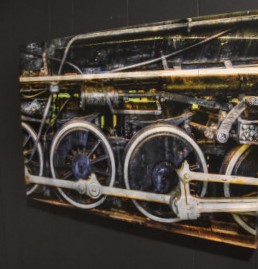
Steam Power.
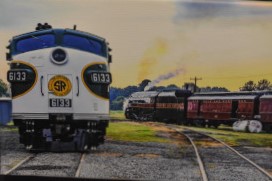
Steam to Diesel.
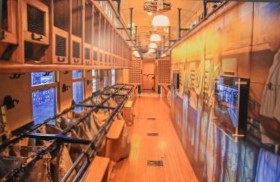
Post Office on Wheels.
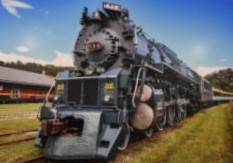
Greenbrier 614.
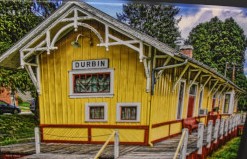
Durbin railroad station.
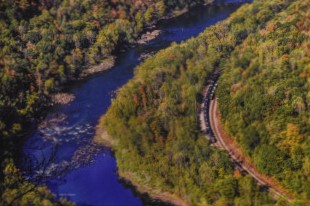
Long Black Train.
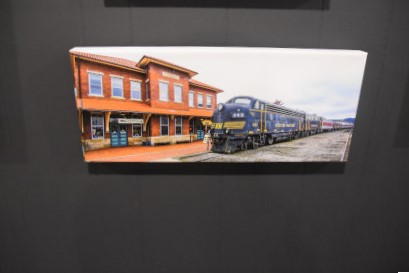
Elkins West Virginia Depot.
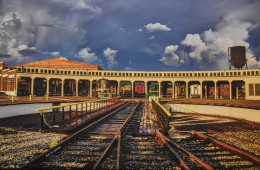
Elkins West Virginia Depot.
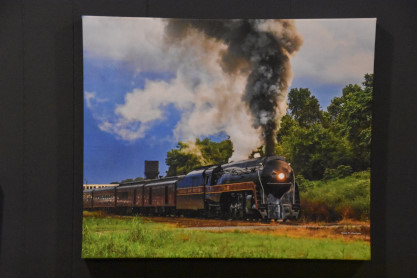
Full Steam 611.
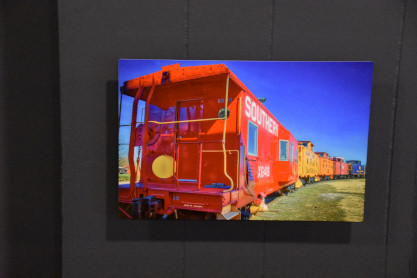
Caboose train.
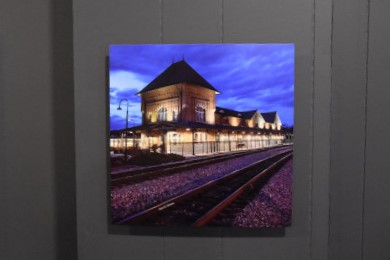
Bristol Depot Twilight.
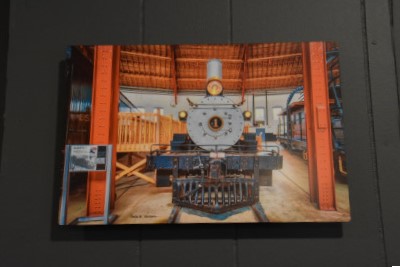
Clinchfield No 1.
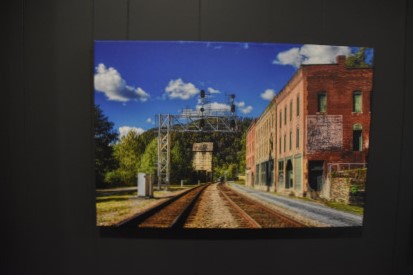
Time Moves On.
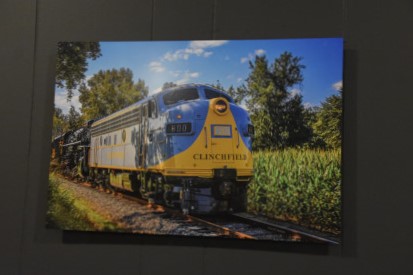
Clinchfield number 800.
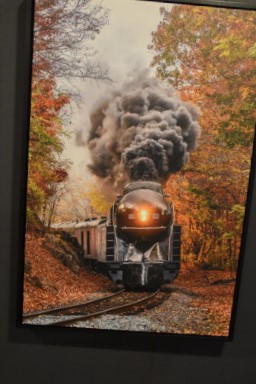
Steaming into Autumn.
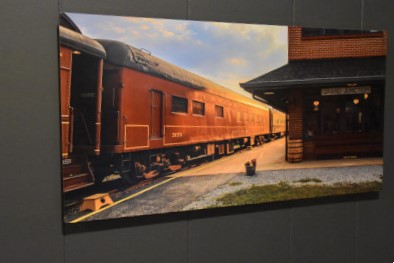
Grand Junction Depot.
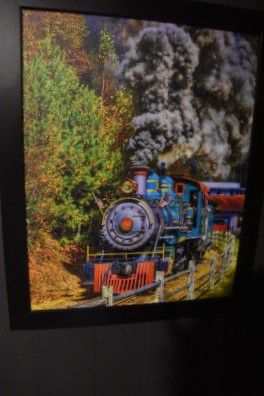
East Tweetsie and Western North Carolina number 12.
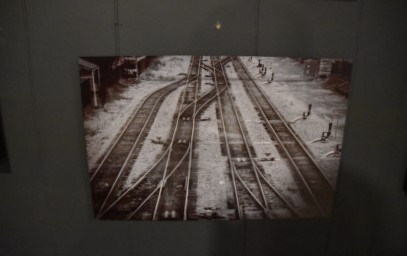
Tracks of Roanoke.
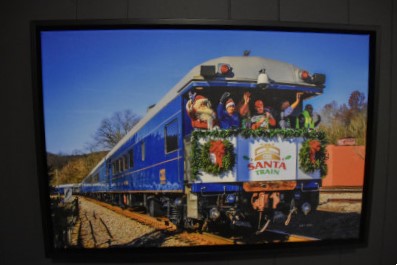
Santa Train 2018.
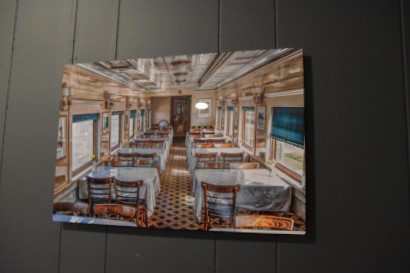
Dining on Wheels.
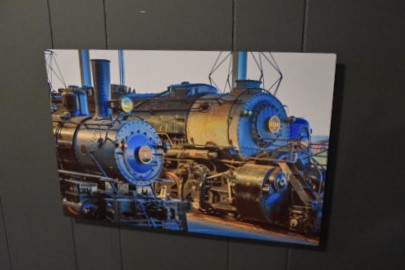
Big and Little.
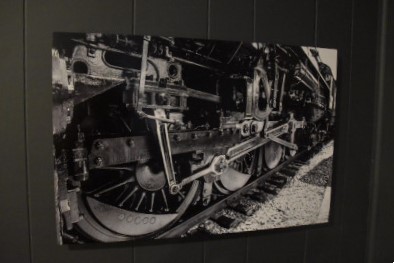
Steel wheels.
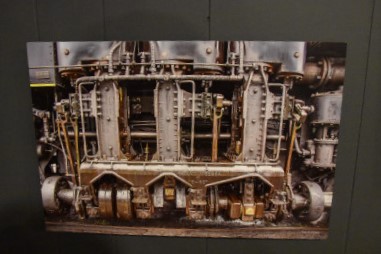
Shay motive power.
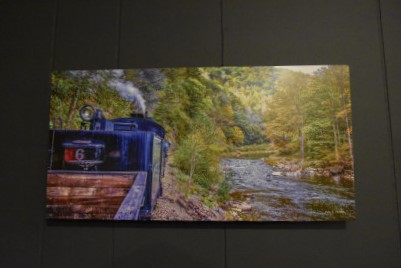
Mountain Rail. That ended Mr. Carlson's photographs.
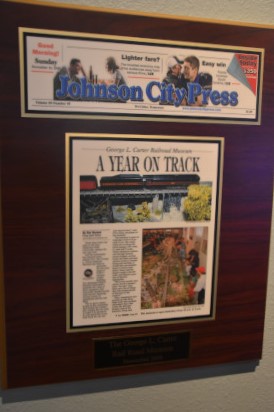
George L. Carter Railroad Museum, A Year On Track article from the November 16, 2008 issue of the Johnson City Press.
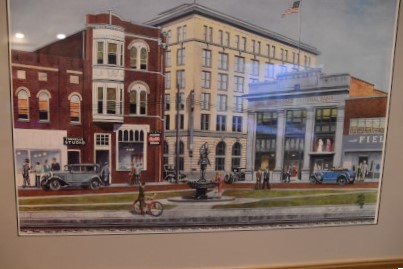
Tennessee National Bank, Tunnells Studio and Anderson Drugs.
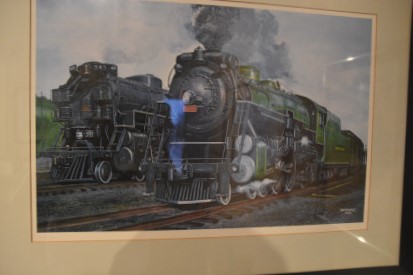
R.M. Sparks' painting of Southern 1395 and Southern 545.
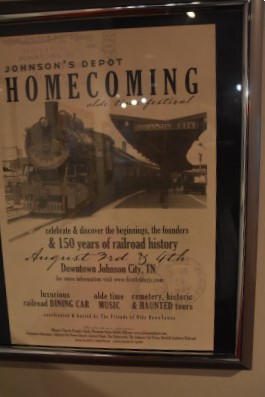
Johnson City Homecoming Olde Time Festival poster - Celebrate and Discover the Beginning and Founders and 150 years of Railroad History August 3rd and 4th.
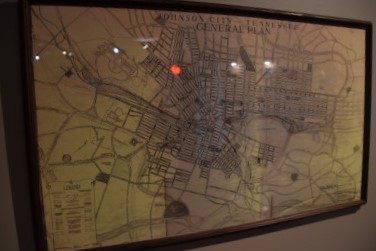
Johnson City, Tennessee General Plan.
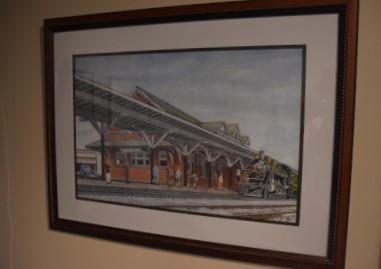
Johnson City railway station painting by Ted Laws.
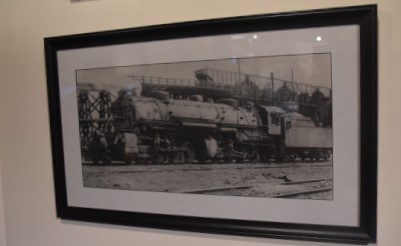
Picture of Southern Railway 2-6-6-2 741.
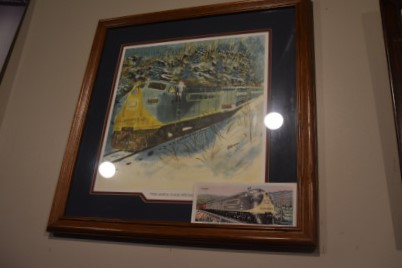
Clinchfield F3A 800. CSX railroaders at the Huntington Locomotive Paint Shop recently returned the Clinchfield 800 to its as-delivered grey and yellow paint scheme. The Clinchfield 800 has a storied past, having worn several CSX and CSX predecessor line paint schemes over its decades in service. This year, the engine adds another chapter to its historic run, returning to action to power the 75th annual Santa Train, a familiar role having powered the holiday train through Appalachia many times between 1979 and 1989.
The predecessor engine is an F3 locomotive built in 1948 by Electro-Motive Division originally for the Carolina, Clinchfield Railroad & Ohio Railroad as #800. In 1957, it was upgraded to full F7 specs including the installation of newer traction motors. It served the Clinchfield in freight service until it was later assigned to business train service for the Family Lines System and later the Seaboard System Railroad, both predecessors of CSX Transportation.
Working for the Seaboard System and later CSX, it wore locomotive #116 until it was retired in the early 1990’s. While working for the newly formed CSX, the locomotive wore the first CSX paint scheme of grey blue and black with the lettering CSX Transportation across the side. This paint scheme only lasted a week as leaders of the railroad determined how to represent the new line’s brand, ultimately changing the lettering to feature only the “CSX” letters. In 1990, the unit was repainted into the CSX YN2 "bright future" treatment before being leased to American European Express for luxury passenger runs between Washington, D.C. and Chicago and the Maryland Department of Transportation's MARC Train Service for commuter train service out of Baltimore.
After retiring the unit, the locomotive was donated to the Chesapeake & Ohio Historical Society, where it was painted into the C&O's passenger paint scheme and assigned 8016. The locomotive was stored at the NC Transportation Museum between 2014 and 2017, when it appeared during the "Streamliners at Spencer" event and was featured at the Texas Returns: 100 Years of Steam, highlighting CSX lineage and historical rolling stock from early steam engines to modern diesel locomotives.
In November 2017, the Clinchfield 800 rolled out of the CSX Huntington Locomotive Paint Shop, newly restored to its as-delivered grey and yellow paint scheme. CSX railroaders researched old drawings and talked to retired
Clinchfield engineers to ensure that the exterior and interior were restored to the original specifications used when the locomotive first rolled off the line in LaGrange, Ill. The Clinchfield Railroad became part of the Family
Lines System, later Seaboard System and CSX Transportation. The Chesapeake & Ohio, Baltimore & Ohio, and Western Maryland became the Chessie System in 1973. The Chessie and Seaboard Systems later merged to become CSX Transportation.>{/
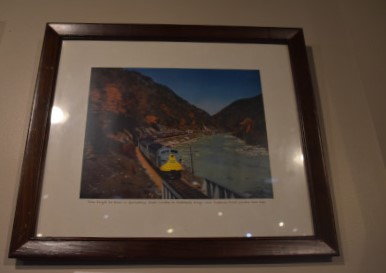
Time freight en route to Spartanburg, South Carolina in the Nolichucky Gorge near Tennessee-North Carolina state line.
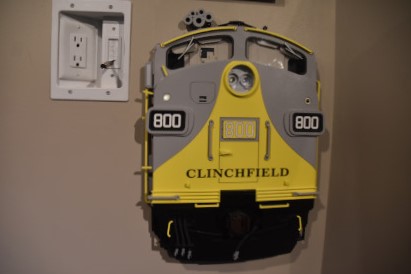
Bas relief of Clinchfield 800.
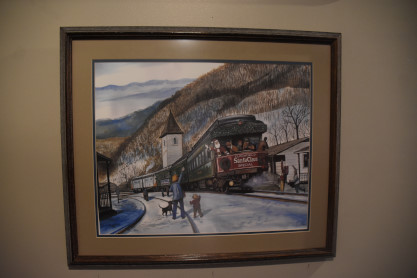
Clinchfield Santa Claus Special painting.
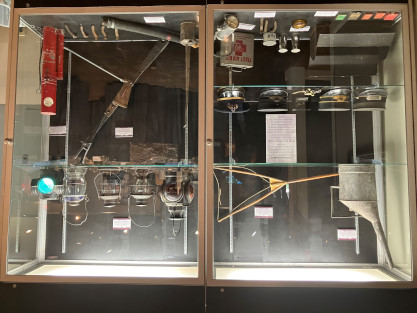
The East Tennessee & Western North Carolina Railroad Historical Society, also known as the Tweetsie Railroad Historical Society, is committed to preserving and celebrating the rich history of the ET&WNC Railroad, affectionately known as "Tweetsie." Based in Johnson City, Tennessee, the society focuses on the legacy of the narrow-gauge railroad that once connected Johnson City to Cranberry, North Carolina. Through the restoration of historical artifacts, publication of newsletters and magazines, and organization of annual conventions and events, the society provides valuable insights into the region's railroad heritage. They also collaborate with local institutions to offer educational programs and community outreach, ensuring that the history of the ET&WNC Railroad continues to inspire and educate future generations.
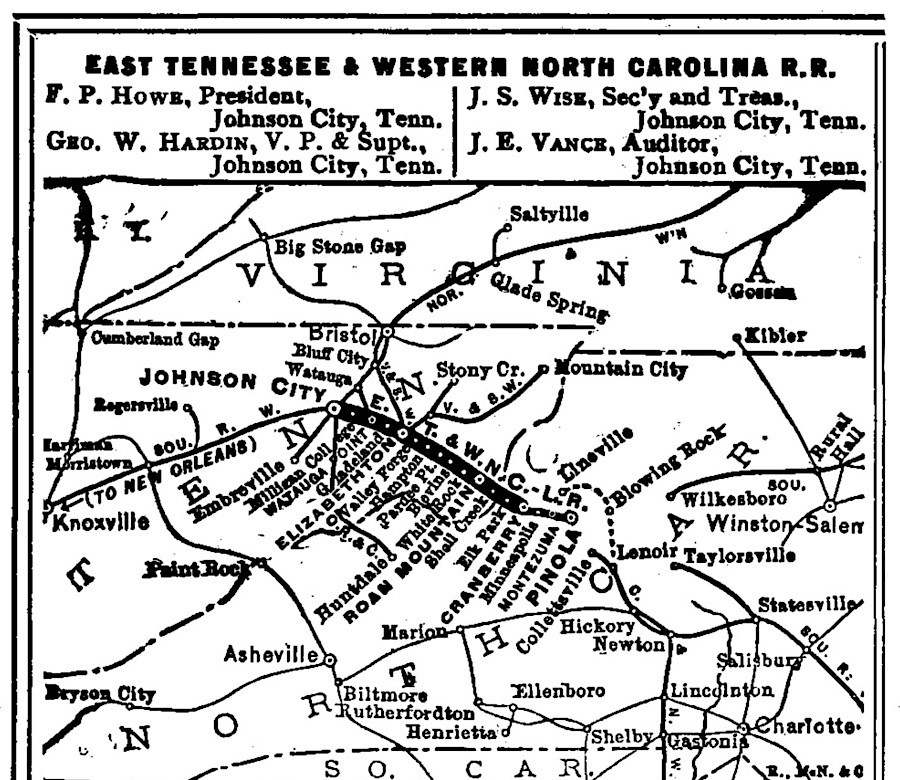
Map of the East Tennessee and Western North Carolina Railway.
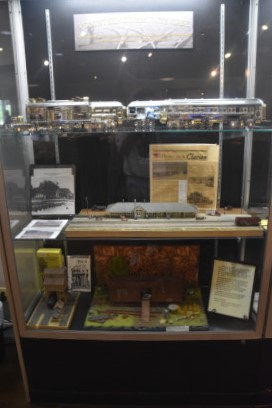
Clinchfield Railroad, the Empire Builder of Southwest Virginia and railroad memorabilia.
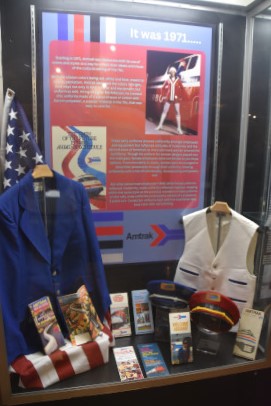
It was 1971 and President Richard Nixon signed the Rail Passenger Services Act (RailPax Bill) to allow passenger trains to keep running in this great nation. Railpax, which was quickly re-named Amtrak, used the patriotic colours of red, white and blue in their corporate identity.
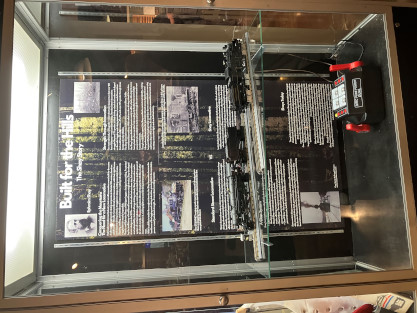
Built for the Hills, the Shay Story.
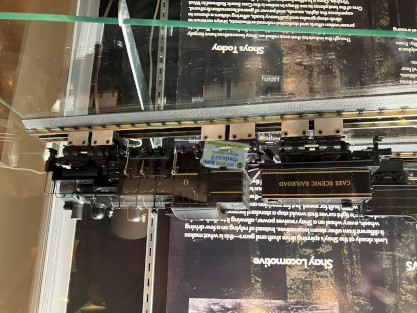
Model of Cass Scenic Railway 6.
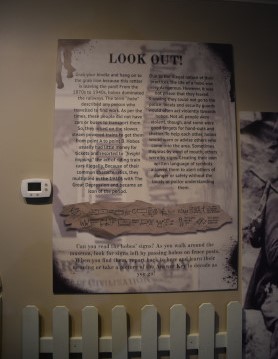
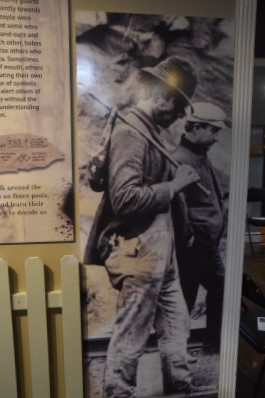
Look out for Hobo signs.
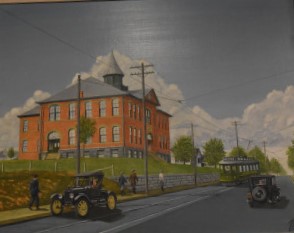
Johnson City Traction Company streetcar 3 painting by Ted Laws.
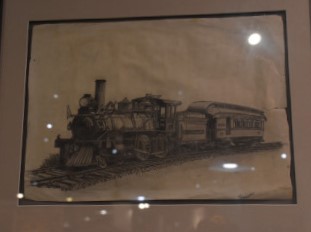
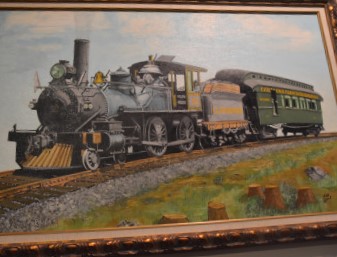
On the left is the sketch and on the right is the finished painting of Clinchfield 4-4-0 32 by Ted Laws.
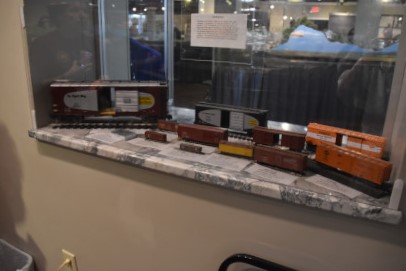
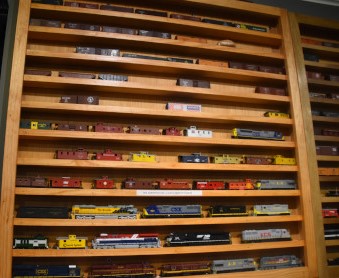
Display showing the variety of scales in which one can create a model railroad.
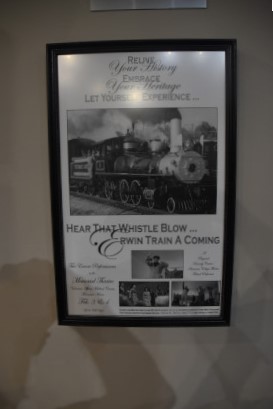
A poster for "Hear that Whistle Blow...Erwin Train A Coming", a play written by, and adapted from, oral histories collected by Bobby Funk, Professor at East Tennessee State University Theatre and Dance.
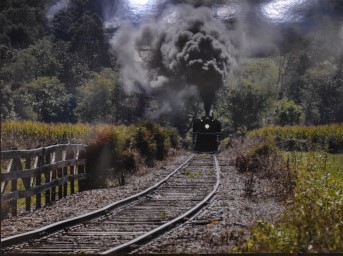
A steam train coming down the tracks.
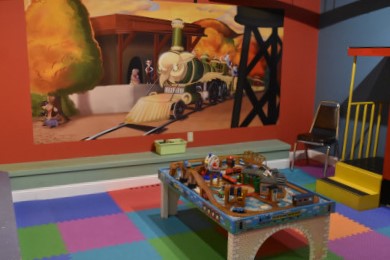
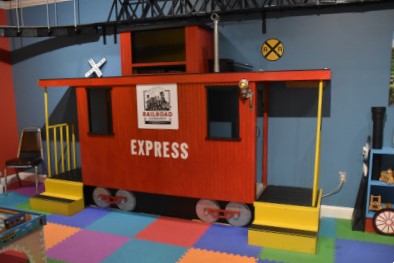
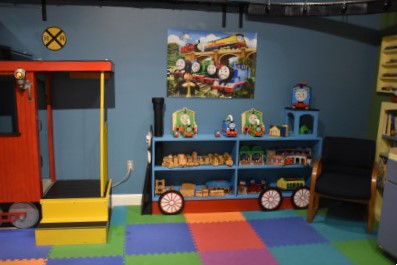
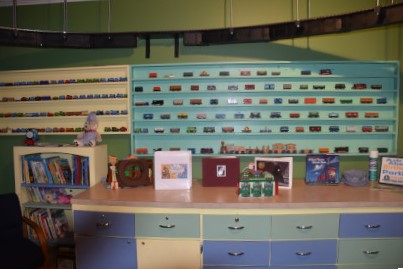
The children's play and activity room.
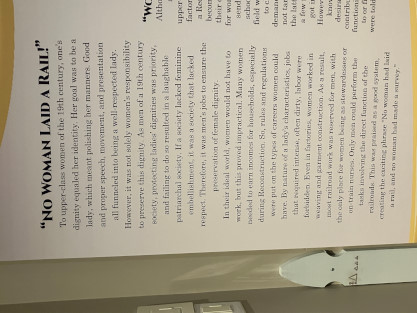
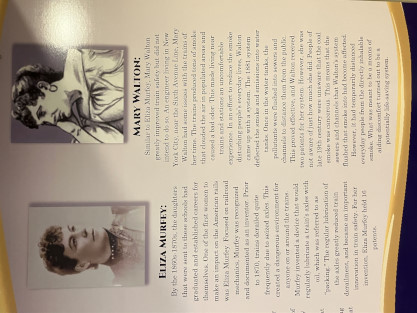
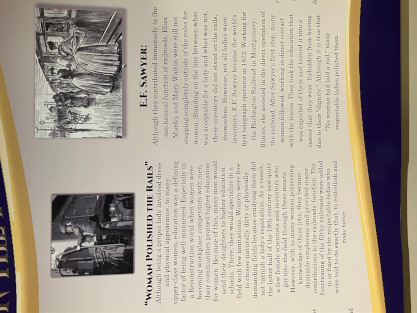
Women on the Railroad: Eliza Murfey, Mary Walton and E.E. Sawyer.
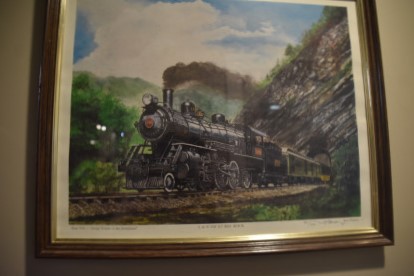
Great Trains of the Southland - Louisville and Nashville 152 at Bee Rock - painting by Ron Flanary.
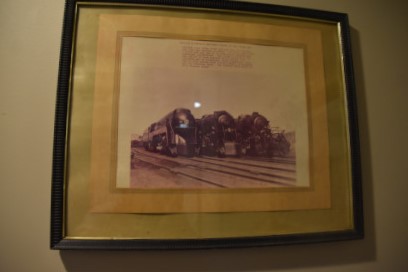
Norfolk and Western Giants of the Steam Age.
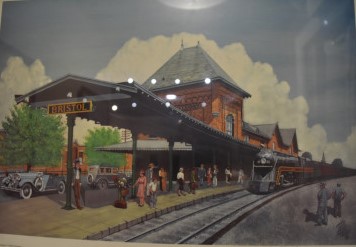
Bristol Railway station painting by Ted Laws.
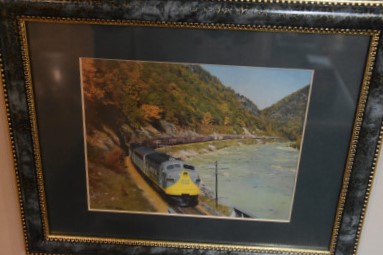
Clinchfield Railway F units pulling a freight train.
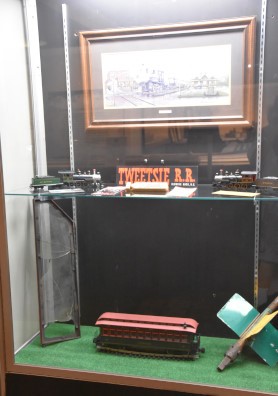
Tweetsie Railroad.
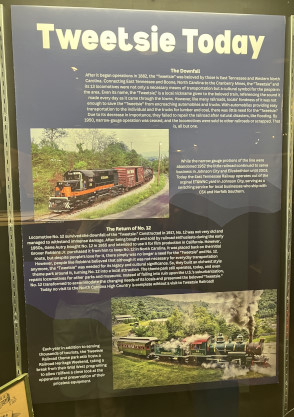
Tweetsie Today.
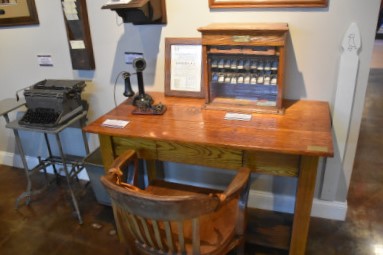
Eastern Tennessee and Western North Carolina railroad desk.
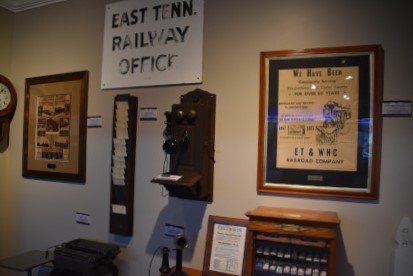
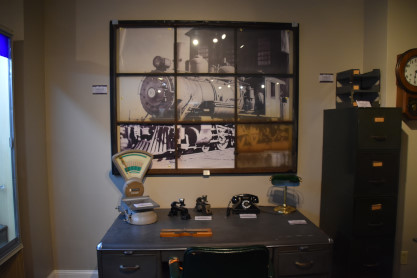
Eastern Tennessee Railway Office set-up.
The Mountain Empire Model Railroaders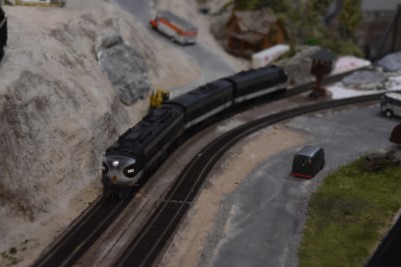
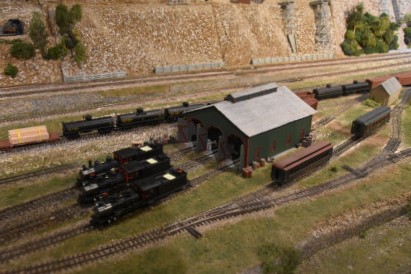
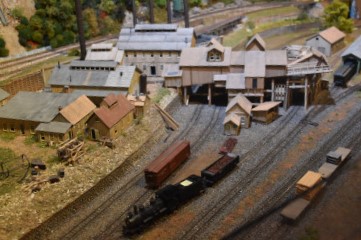
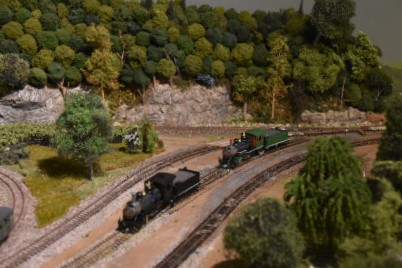
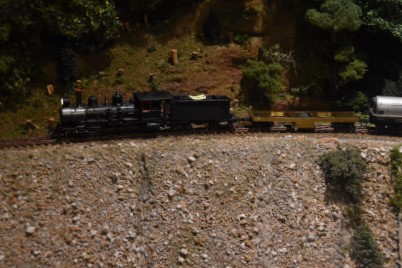
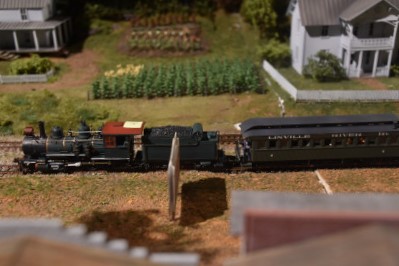
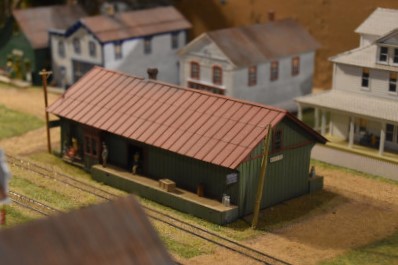
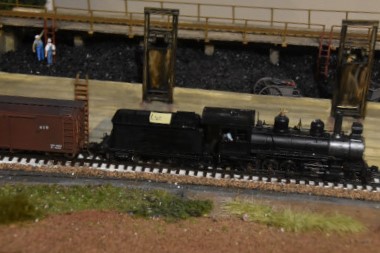
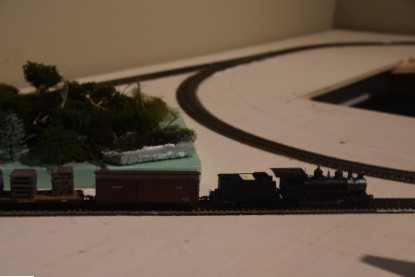
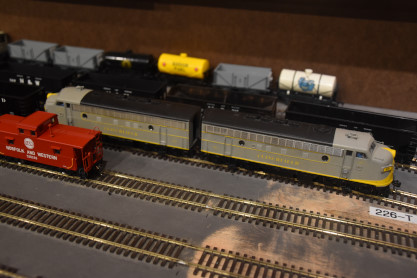
This is a dynamic and enthusiastic club based in Johnson City, Tennessee, dedicated to the hobby of scale model railroading. Comprised of individuals from various professions and backgrounds, including industry, education, government, and business, MEMRR members share a common passion for model trains. The club actively promotes, advances, and supports model railroading in the Tri-Cities metropolitan area. MEMRR members are responsible for creating and maintaining several detailed model railroad layouts, including a large 24x44 HO scale layout, an interactive G scale railroad, an N-scale display, and the museum's nationally recognized ET&WNC narrow gauge exhibit in HOn3 scale. These layouts are featured prominently at the George L. Carter Railroad Museum, where club volunteers provide insights into local historic railroads and the fundamentals of model railroading. In addition to their work on model layouts, MEMRR participates in community events, hosts educational workshops, and undertakes restoration projects to keep vintage model trains in excellent condition. The club's activities offer both educational and recreational opportunities for members and visitors, fostering a deep appreciation for the region's railroad heritage.
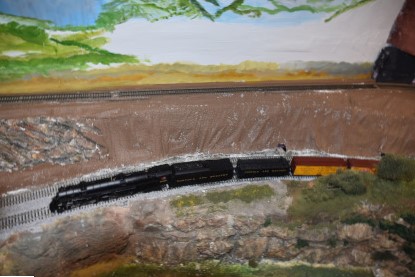
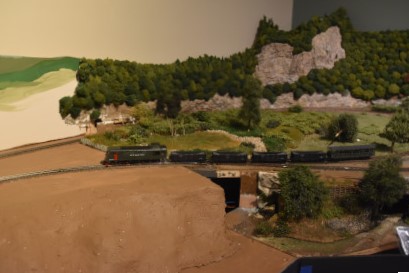
The previous layout which was a single plane race track that had room inside for assembling trains and switching activity. We had approximately 2.1 miles of track in this layout. That layout provided good platform since 2007, for our members to use their individual owned modules and assemble them to create a solid modeling platform. That layout had several modules of exceptionally quality and detailed scenery which we had in a new arrangement. One of the new modules is a bridge and valley arrangement created by Dr. Fred Alsop, that is inspired by the area north of Gate City known as Copper Creek which has dual bridge, one for the CSX and the other the Norfolk Southern.
New Layout at JCRELess than half of the original layout tables were able to be used and all but a very few required significant modification. We have been working on this project since January 2024 and have completed phase one of a three-phase
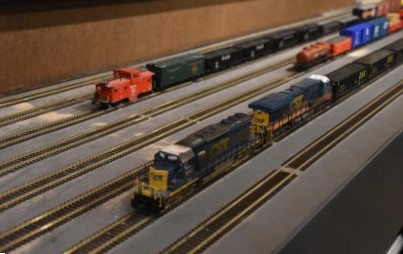
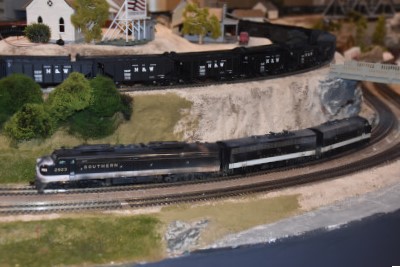
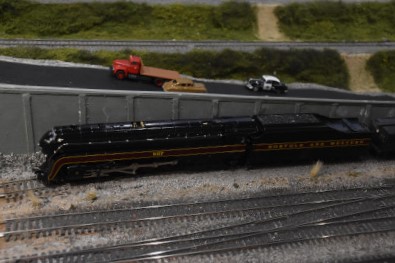
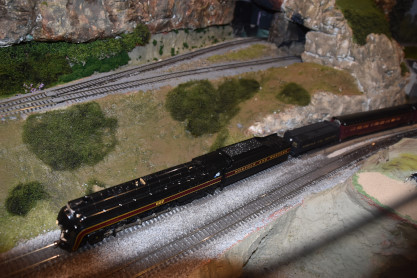
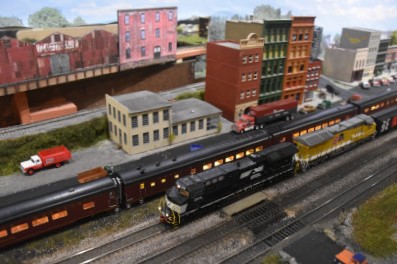
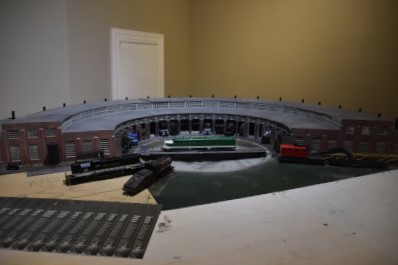
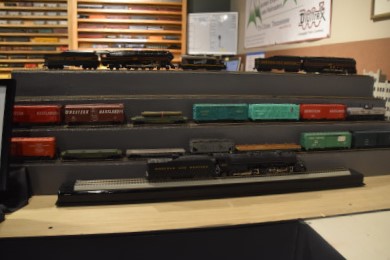
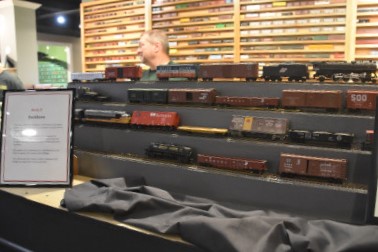
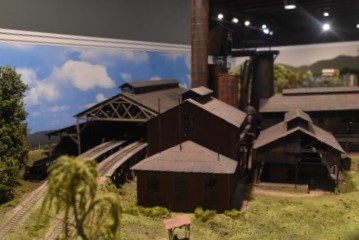
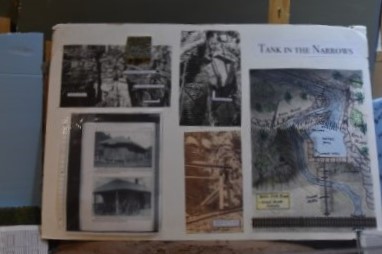
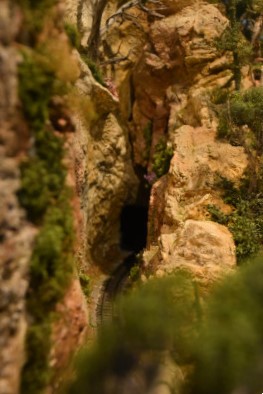
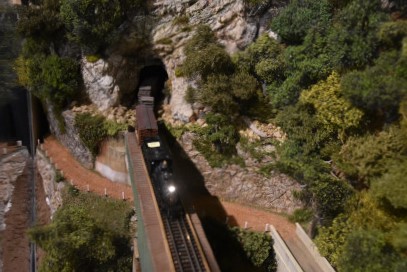
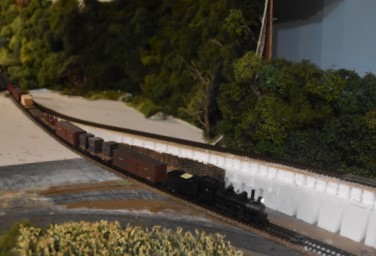
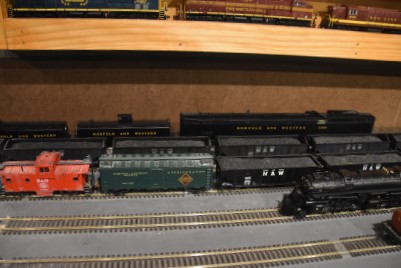
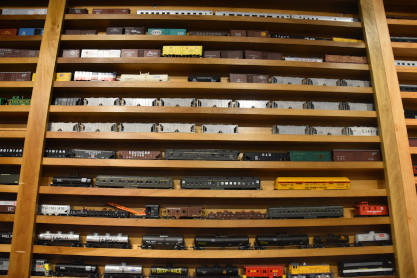
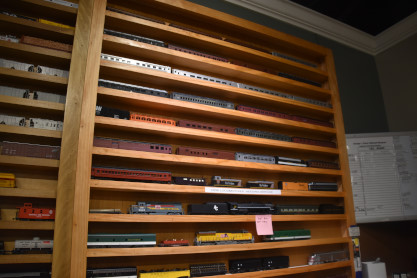
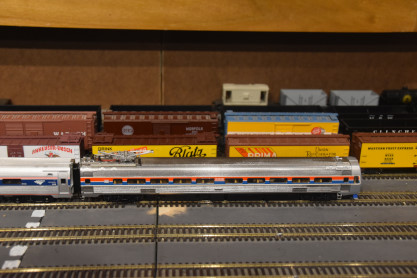
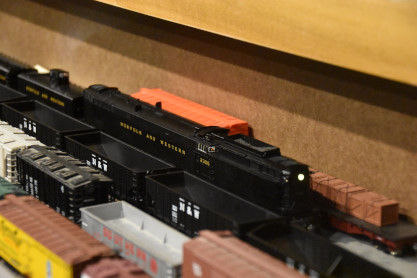
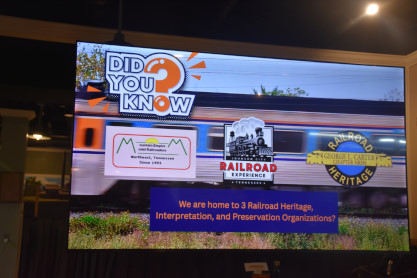
project. So not only will you be able to enjoy the operations of the trains, you will also be treated to watching the scenery and the appearance of the other two phases. Norfolk and Western 2-6-6-4 1240 built in the 1950's. A CSX train on the museum tracks. Southern Railway E8A 2923. Norfolk and Western J class 607. Norfolk Southern ET44AC 3625. The Roundhouse. Three Norfolk and Western steam locomotives. Area 5 of the layout. The extensive layout which has been constructed with alcoves that allows for the curvature of the terrain. Tweetsie train in the Doe River Gorge. Tank in the Narrows. More of the diorama, a work in progress. Baltimore caboose 294 among freight cars. A large collection of HO models. An Amfleet electric cab car. Norfolk and Western 2300 awaiting its turn on the layout. Clinchfield 819 pulling a freight train. After everyone had eaten, the attendees were called to gather in the museum area and a short informational video was shown; this was the first scene. We Are Home to 3 Railroad Heritage Interpretation and Preservation Organizations:
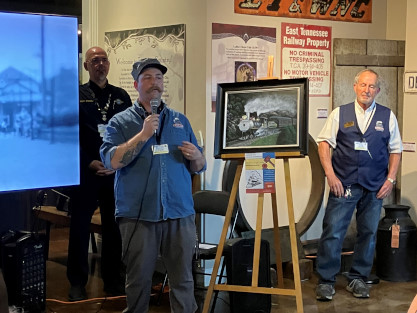
Mountain Empire Model Railroaders, Johnson City Railroad Experience and George L. Carter Chapter NRHS. Welcome National Railway Historical Society. Carson Sailor, the Vice-President of the George L. Carter Chapter, welcomed the conference attendees and spoke about the chapter's journey to this point. Scott Stodola, Chapter President looks on from behind and Dr. Fred Alsop
awaits his turn to speak. In his remarks, Scott mentioned that he had calculated the distance that each attendee had travelled to Johnson City and there were two members from Rosenberg, Texas, who had travelled the farthest,
specifically 1,061 miles. They were presented with a gift certificate from the museum's gift shop.
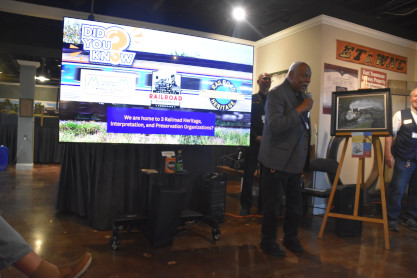
Tony White, President of the National Railway Historical Society, then addressed the group. After that, people had the opportunity to continue to look around the exhibits and mingle. The two of us soon drove back to the Holiday Inn and called it a night.
| RETURN TO THE MAIN PAGE |