




Elizabeth and I awoke early by necessity and while she enjoyed pastries at the Starbucks in the lobby of the hotel, I went to Dunkin' Donuts. Today, I was assigned to Bus 1 and once my passengers were on board, we departed the Graduate Hotel and travelled to Dearborn, Michigan and Greenfield Village.
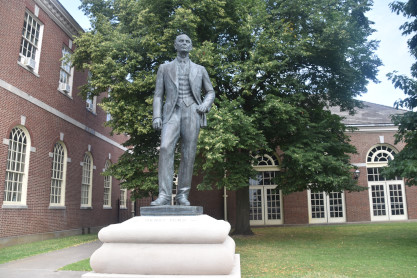
Henry Ford (1863-1947) statue near the front entrance of the Museum.
Upon entering, we will enter the giant Screen Experience Theater for a showing of "Train Time". Created by Stephen Low, the director of the celebrated IMAX® Experience "Rocky Mountain Express and his team, "Train Time" is captured on 15/70 mm motion picture film, the world's largest film format for exhibition in IMAX and other giant screen theaters. Mr. Low told us, "I'm really impressed that NRHS members are making such a long journey to see this film in its native format in a beautiful facility. On a stunning and kinetic rail journey across the North American continent, Train Time reveals the hidden inner workings of a modern railroad. Created for giant screens by the director of the celebrated IMAX® Experience Rocky Mountain Express and his team, Train Time is captured on 15/70mm motion picture film, the world’s largest film format.
Train Time follows the trek of a modern freight train through the communities it serves, revealing the beauty, vastness and diversity of the American landscape and the evolving role and remarkable heritage of railroading—a profession integral to the fabric of modern civilization.
Along parallel bands of steel we race: through prairie, mountains and desert, through cities and towns and wilderness. Along the way, railroaders and the tracks and trains themselves offer up a remarkable story of engineering, of frontier-taming and community-building, human ingenuity and industry.
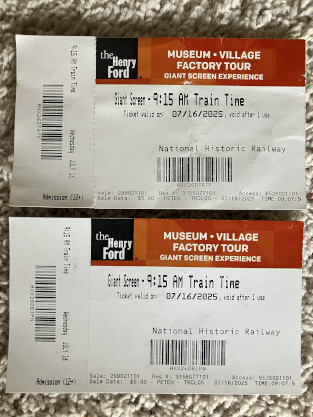
Our tickets for the film. All conventioneers were raving about it afterwards, which took us on a journey around the entire Burlington Northern Santa Fe Railway network from several dimensions.
Henry Ford Museum HistoryAlthough Henry Ford became one of the world's wealthiest and most powerful industrialists, he never forgot the values of the rural life he had left behind growing up on a farm. His interest in collecting began in 1914, as he searched for McGuffey Readers to verify a long-remembered verse from one of his old grade school recitations. Soon, the clocks and watches he had loved tinkering with and repairing since childhood grew into a collection of their own. Before long, he was accumulating the objects of ordinary people, items connected with his heroes and from his own past, and examples of industrial progress.
In 1919, Henry Ford learned that his birthplace was at risk because of a road improvement project. He took charge, moving the farmhouse and restoring it to the way he remembered it from the time of his mother's death in 1876, when he was 13. He and his assistants combed the countryside for items that he remembered and insisted on tracking down. He followed this up by restoring his old one-room school, Scotch Settlement School; the 1686 Wayside Inn in South Sudbury, Massachusetts (with a plan to develop a "working" colonial village); and the 1836 Botsford Inn in Farmington, Michigan, a stagecoach inn where he and his wife Clara had once attended old-fashioned dances. These restorations gave Ford many opportunities to add to his rapidly growing collections while honing his ideas for his own historic village.
In the early 1920's, Henry Ford moved his growing hoard of antiques into a vacated tractor assembly building. The objects fit every description. Large items hung from rafters; smaller ones sat on makeshift benches and racks. Watches and clocks hung along the wall. Henry and his wife Clara enjoyed sharing their relics with others. Once people learned Ford was collecting objects for a museum, they flooded his office with letters offering to give or sell him antiques. Ford also sent out assistants to help him find and acquire the kinds of objects he felt were important to preserve. Goods intended for the museum arrived in Dearborn almost daily -- sometimes by the train-car full. By the late 1920's, Henry Ford had become the primary collector of Americana in the world.
Henry Ford's SchoolIn September 1929, Henry Ford's Edison Institute school system began at Scotch Settlement School in Greenfield Village, with 32 grade school children. Students were taught using both traditional and progressive methods. Standard academic subjects like reading, arithmetic, geography and science were at the core of their studies. Pupils also used the artifacts and many of the historic buildings in the village for practical learning. Girls learned housekeeping skills while boys got experience operating machinery. Only when visitors pressed for regular access was the Village formally opened to the public. Ford made it clear that, despite the presence of paying guests, there was no place off-limits to the schoolchildren. As the original students grew older, grades and buildings were added to accommodate them and other students who attended the school. A high school with classrooms in the Museum was added in 1934, with the first graduating class in 1937. The Edison Institute of Technology -- a work-study engineering college -- was added in 1937, with classes and labs in the Recreation Building (later called Lovett Hall). Many historic buildings in Greenfield Village accommodated full-time student activities. It was "education through experience" everywhere. At its peak in 1940, 300 students were enrolled in the Edison Institute Schools. This school system also came to include rural schools in other parts of Michigan and other regions of the United States as well as in England and Brazil.
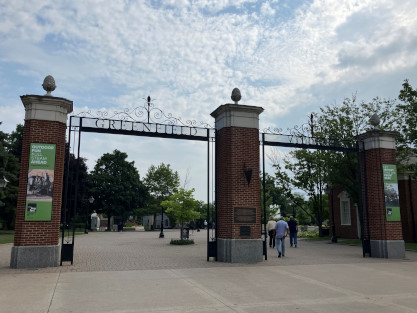
The gates to Greenfield Village. Henry Ford's historic village was to be organized around a village green, to include a courthouse, town hall, church, general store, tavern and school. Homes were installed along a road beyond the green. Industrial buildings, such as a carding mill, sawmill and gristmill were made operational. A centerpiece of the Village was the re-creation of the Menlo Park, New Jersey laboratory complex where Thomas Edison had invented his electric lighting system. Henry Ford engaged Ford Motor Company draftsman Edward J. Cutler to draw up plans. The first buildings began arriving in 1928. Labourers dug foundations, reconstructed buildings, cleared trees, laid out roads and hauled supplies through muddy fields. Some buildings were designed right in the Village, at Ford's request.
While Cutler labored in the muddy fields of Greenfield Village, architect Robert O. Derrick was designing a large indoor museum adjacent to the historical village to house the objects Ford had collected. Derrick suggested that the facade should resemble Independence Hall and related buildings of Philadelphia, with a large "Exhibition Hall" in back. Since Henry Ford had rejected the notion of storage rooms, nearly everything had to be exhibited out in the open. The twelve-acre museum contained a glorious assemblage of stuff. To Ford, that assemblage represented the evolution of technological progress.
For nearly a decade after the museum officially opened to the public in 1933, visitors found it a work in progress. The exhibits would not be completed until the early 1940s. Henry Ford decided on October 21st, 1929 as the dedication date for his new museum and village -- marking the fiftieth anniversary of Thomas Edison's first successful experiment with a suitable approach to manufacturing an incandescent lamp. The night of the "Light's Golden Jubilee" celebration, crowds cheered as President Hoover, Edison and Ford ceremoniously arrived in a train pulled by an 1850's locomotive. After an elegant dinner in the museum, the three men went out to the restored Menlo Park Laboratory in Greenfield Village. There, the 82-year-old Edison re-created the lighting of his incandescent lamp. The event was broadcast live over national radio. Henry Ford named his new complex The Edison Institute of Technology, to honor his friend and lifelong hero Thomas Edison.
Henry Ford didn't consider Greenfield Village finished upon opening. He continued to select homes, mills and shops that he felt best reflected the way Americans had lived and worked, or that were associated with famous people he admired. Individuals even began to offer Ford historic structures for his Village. By the mid-1930s, several Village shops were staffed by people demonstrating traditional craft skills, including glassblowers, blacksmiths, weavers, shoemakers and potters. Visitors to Greenfield Village not only had the pleasure of watching the craftsmen work, they could also buy samples of their hand-crafted products. Craftsmen like brick makers and sawyers supported the Village restoration efforts. By the early 1940's, Greenfield Village had grown to over 70 buildings.
Early on, Henry Ford's vision for his Museum and Village was to provide hands-on learning opportunities for students. His philosophy of education was "learn to do by doing". He believed that "by looking at the things that people used and how they lived, a better and truer impression can be gained than could be had in a month of reading." It was a way of learning that Ford had experienced during his own childhood, and the way, in fact, that he himself learned best. In Henry Ford’s Edison Institute schools, students would learn not only from books, but also from objects and hands-on experiences.
If any of our group wanted to visit the Henry Ford Museum, they would have to pay for themselves.
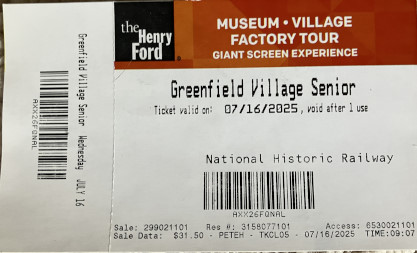
My ticket for Greenfield Village. Elizabeth's ticket is somewhere so safe she cannot locate it at the time being.
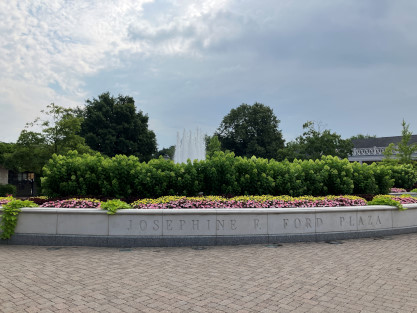
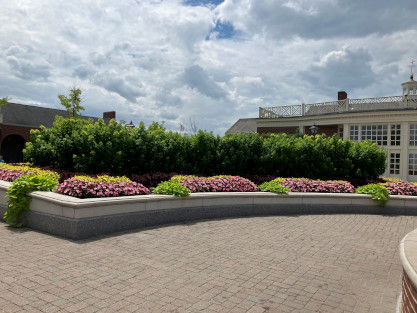
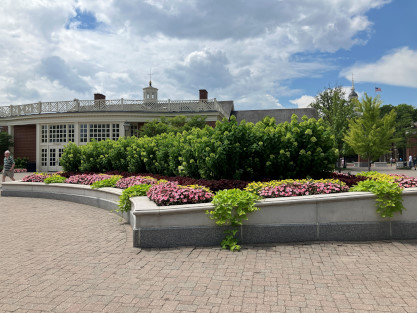
The Josephine E. Ford Plaza as one enters Greenfield Village.
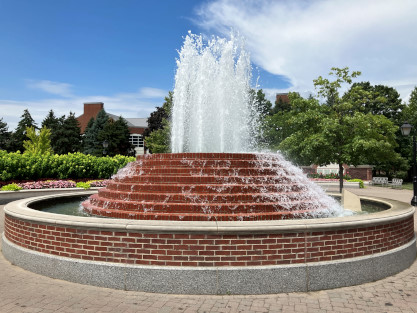
The fountain.
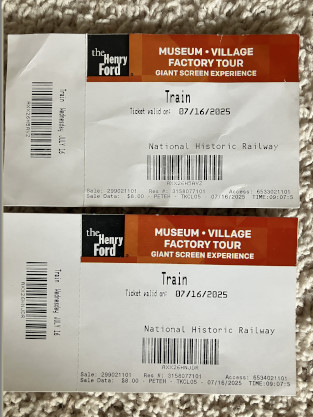
Our tickets for the train ride.
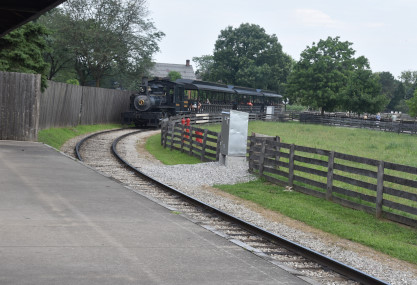
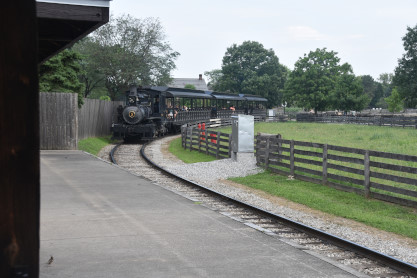
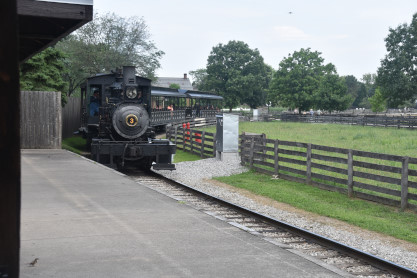
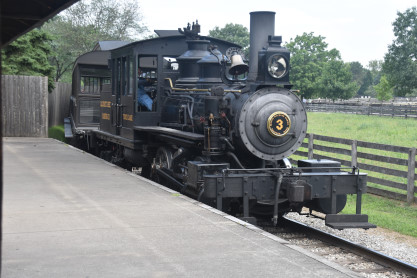
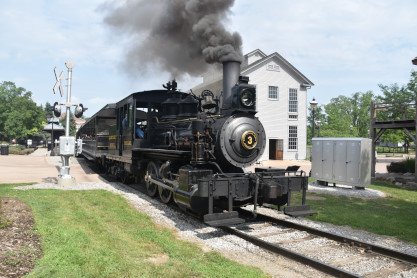
Calumet-Hecla Mining Company 0-6-4T 3 "Torch Lake" built by Mason-Bogie in 1873 at the Mason Machine Works. It began its service life on the Hecla and Torch Lake Railroad, which was a copper hauling line in northern Michigan. The Torch Lake was converted from narrow gauge to standard gauge when the locomotive was brought the Greenfield Village in the fall of 1968. In 1969, the Torch Lake began passenger service for the railroad. From 1969 to 1997, it was the oldest regularly operating steam locomotive in the United States. From 1997 to 2002, it had to have a major boiler overhaul then on July 26, 2002, the locomotive went back into daily passenger service for the Greenfield Village Railroad.
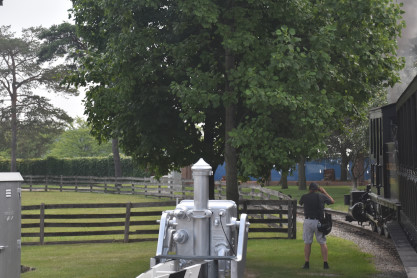
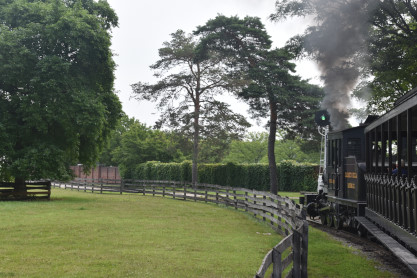
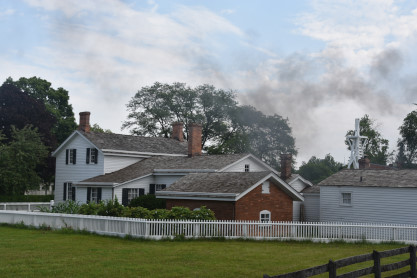
The start of the journey on the Weiser Railroad.
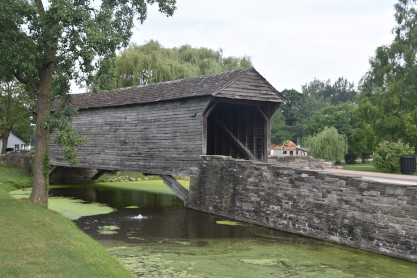
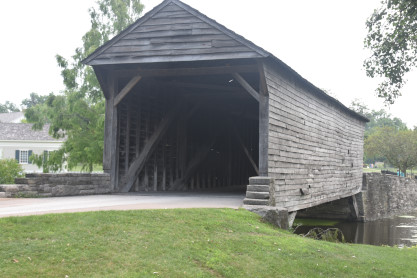
The Ackley covered bridge was originally constructed in 1832 in southwestern Pennsylvania. The single-span, 80-foot bridge's design dates back to 16th-century Italy and was adapted in a uniquely American way in the early 1800's. It is referred to as a multiple kingpost truss: a series of upright wooden posts, with all braces inclined from the abutments and leaning towards the center of the "kingpost".
This was originally a community project built by more than 100 men on land owned, and with materials donated, by brothers Daniel and Joshua Ackley. By the mid-1930's, it had fallen into serious disrepair, and when a modern bridge was constructed to replace it, the granddaughter of one of the builders purchased the hundred-year-old Ackley structure for about $25 and donated it to Henry Ford.
Simple and classic in its construction, the bridge was dismantled at its original location in late 1937 and shipped by rail to Dearborn. Modifications were made to ensure its longevity, and a number of basic preservation chores were undertaken in the six months between its arrival and the completion of reconstruction in July 1938.
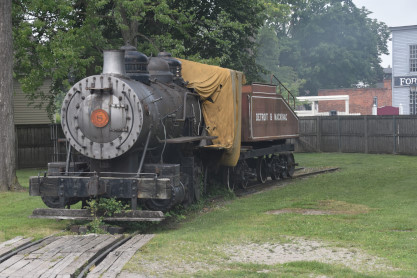
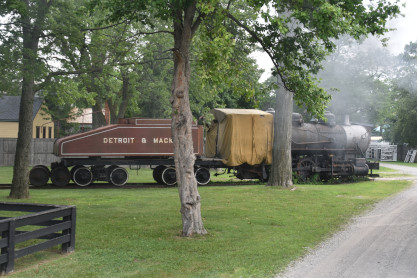
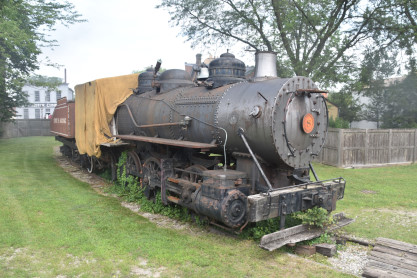
Detroit and Mackinac 0-6-0 8, ex. C.A. Pinkerton {Detroit and Mackinac} 8, exx. A. Fivenson Iron and Metal Co, exxx. Huron Portland Cement 6, nee Michigan Alkali 8 built by Baldwin in 1908. The Detroit and Mackinac rebuilt the locomotive during the 1970's and it ran on a limited basis for their railroad employees until the steam locomotive, three passenger cars, and a caboose were donated to the museum in 1979.
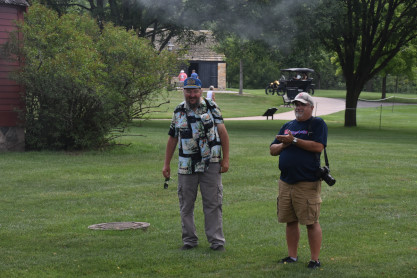
NRHS Director Emeritus and Railfan and Railroad editor Steve Barry, along with Mike Burkhardt, were photographing the train at various locations.
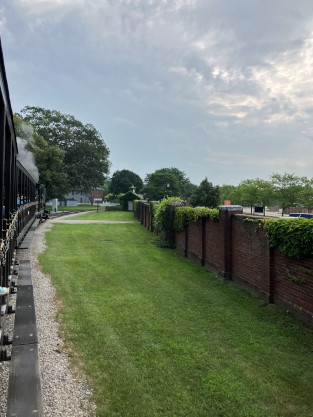
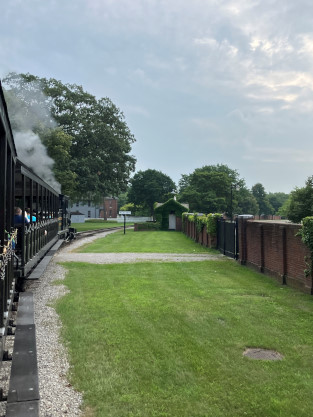
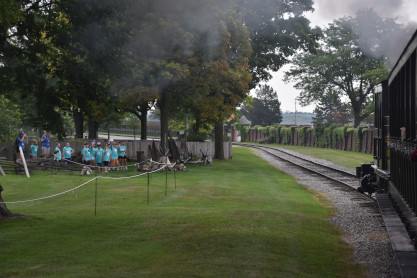
Continuing our journey around the loop. The last time we were here was in 2009.
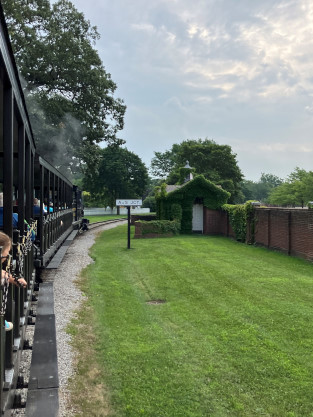
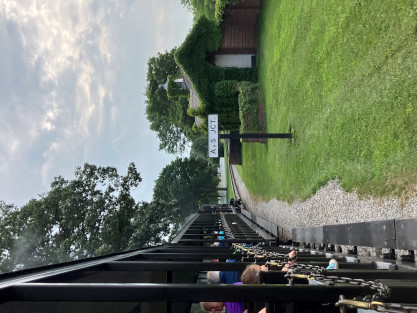
A&S Junction.
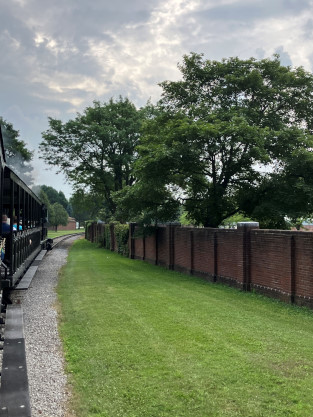
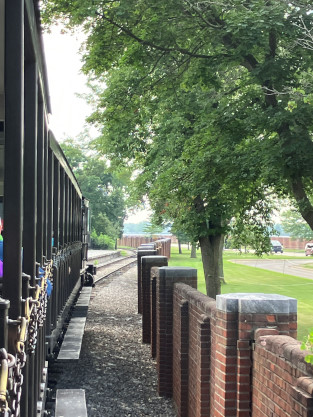
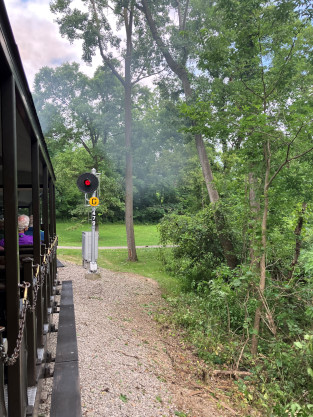
Right-hand views.
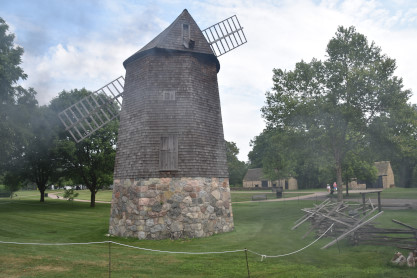
Farris windmill at the Dagget Farm.
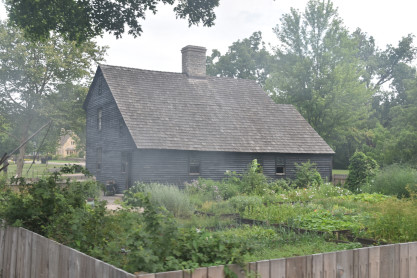
The Dagget Farmhouse.
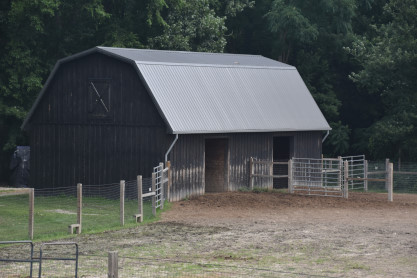
A barn used by the grounds crew.
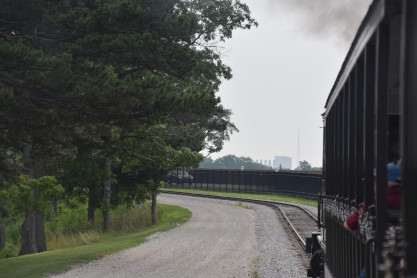
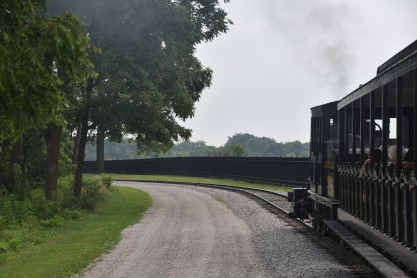
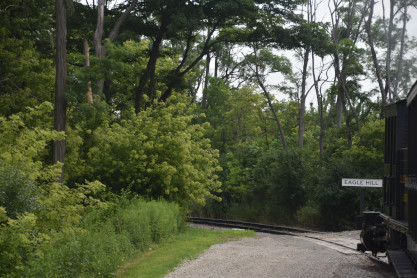
On the way to Eagle Hill signpost.
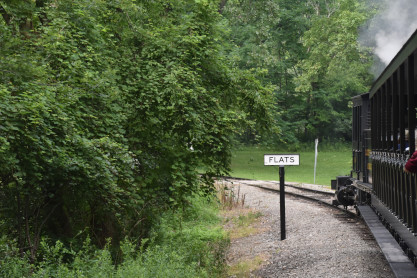
The journey to Flats signpost.
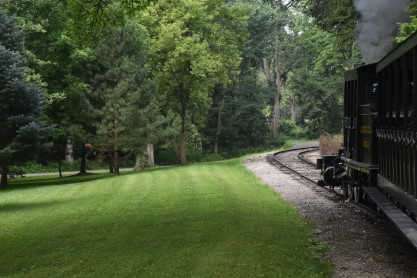
Rounding another curve.
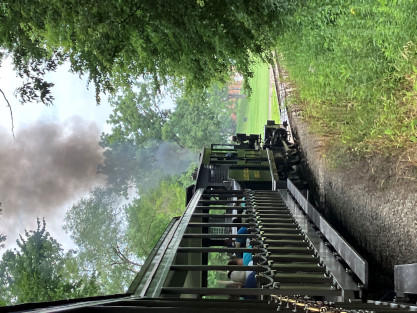
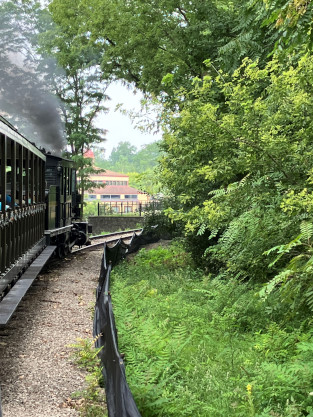
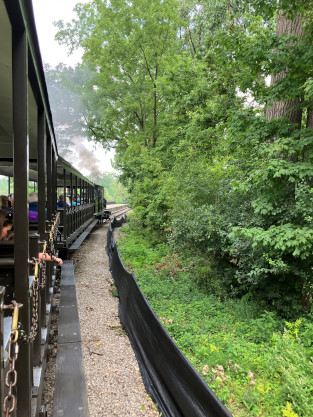
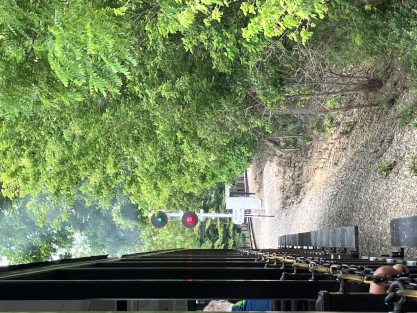
On the way to West Edsel.
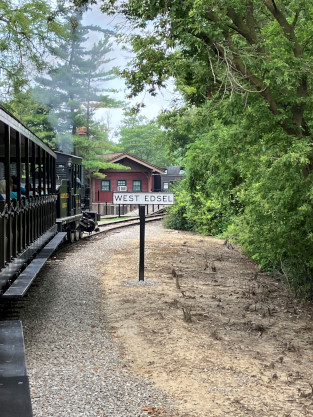
West Edsel signpost.
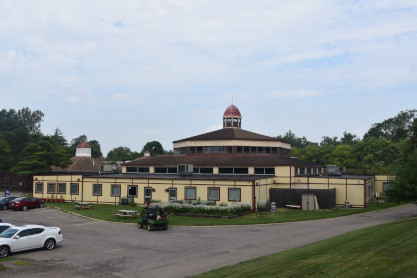
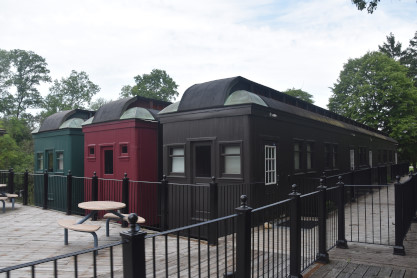
The Henry Ford Academy Village Campus.
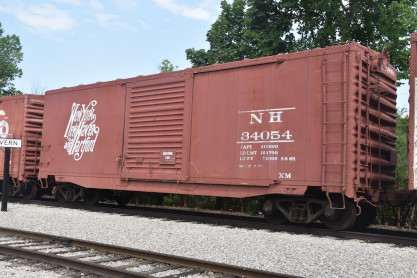
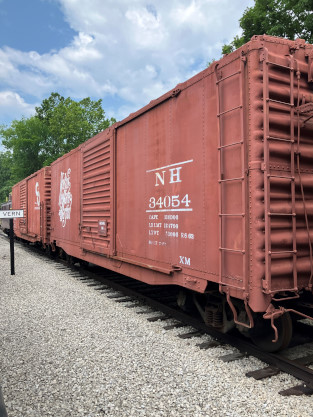
As we passed Vern signpost, on display was Chesapeake and Ohio box car 19464, built by American Car and Foundry in 1957, painted as New York, New Haven and Hartford 34054.
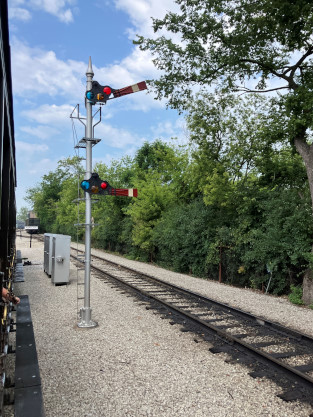
A semaphore signal.
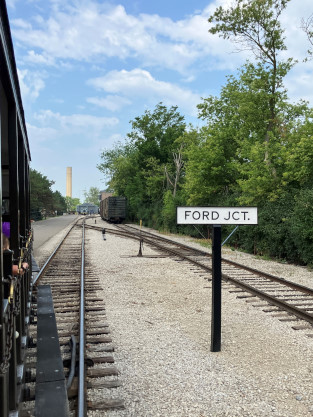
Ford Junction signpost.
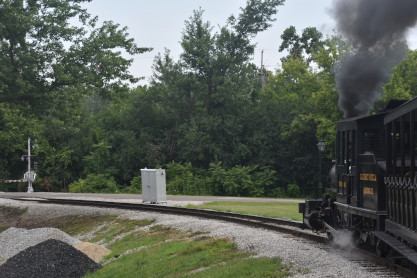
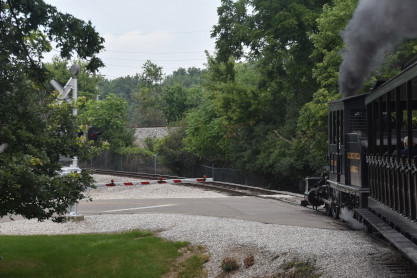
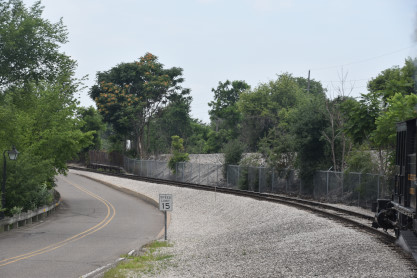
Rounding a few more curves.
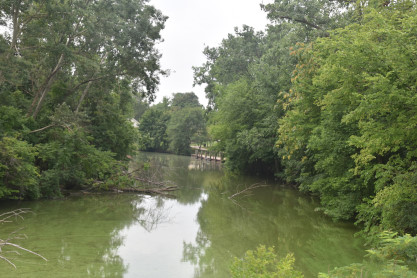
The Suwanee Lagoon.
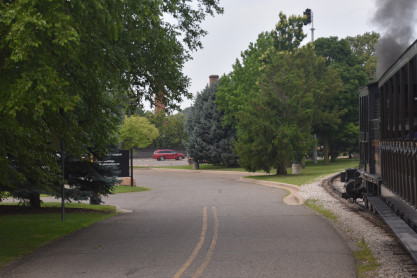
Nearing Smiths Creek station.
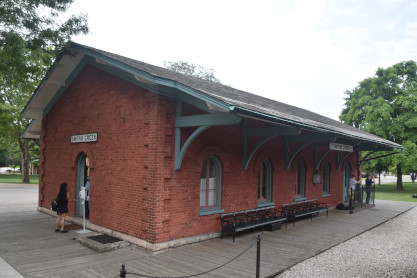
Smiths Creek station.
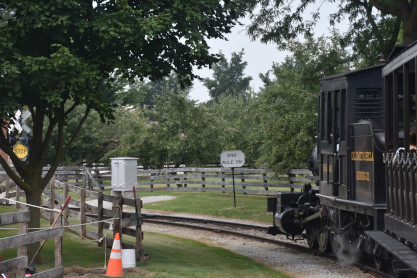
End Rule 261 signpost. Since the Weiser Railroad interchanges with the Canadian National, this sign is required. Rule 261 states "On portions of the railroad as designated in the timetable, trains will run with the current of traffic and be governed by instructions of the train dispatcher with regard to superior trains".
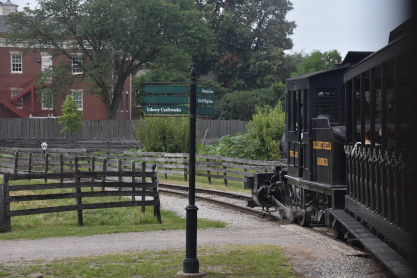
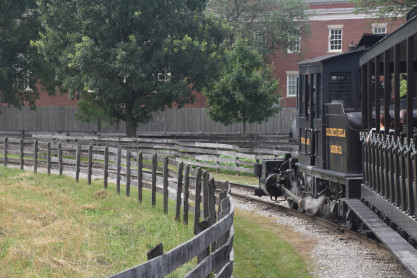
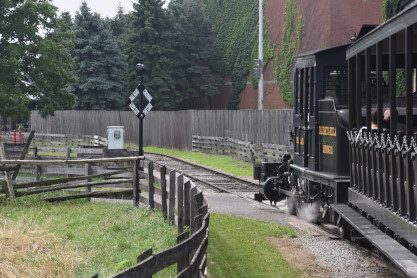
Finishing the journey aboard the three mile Weiser Railroad.
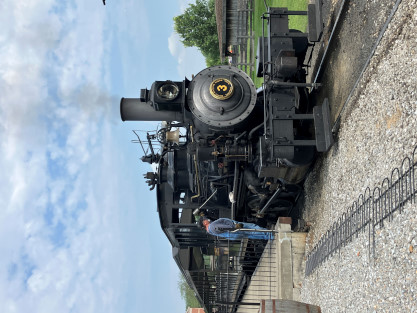
Calumet-Hecla Mining Company 0-6-4T 3 "Torch Lake" being serviced between runs.
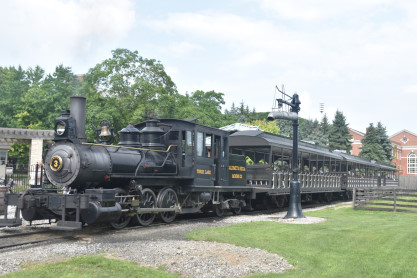
The train at rest.
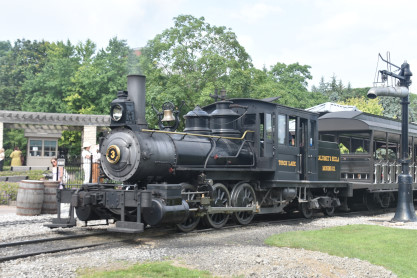
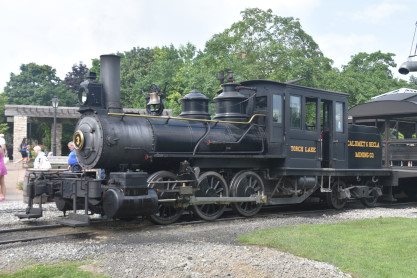
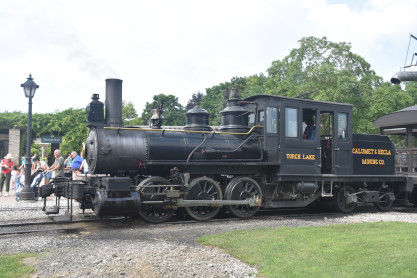
The steam engine at rest.
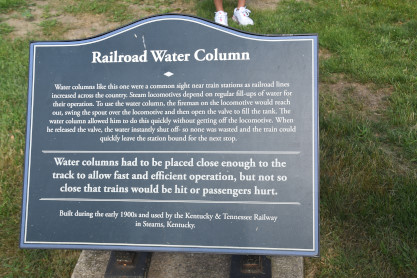
Railroad water column history board.
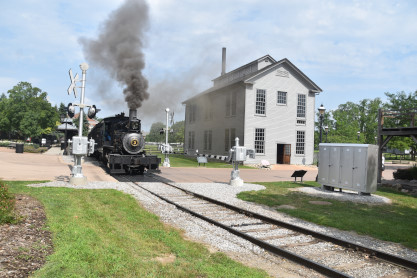
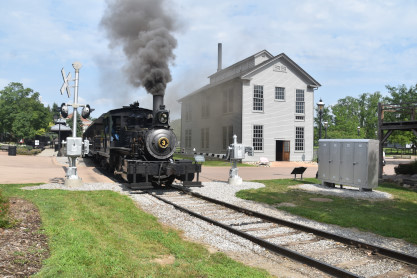
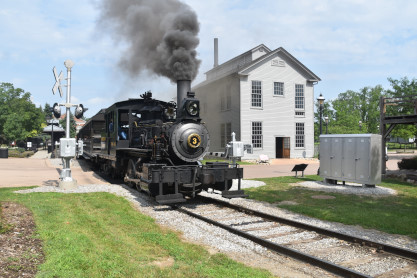
Starting the next run with several convention delegates aboard.
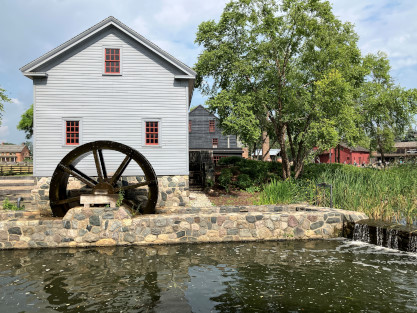
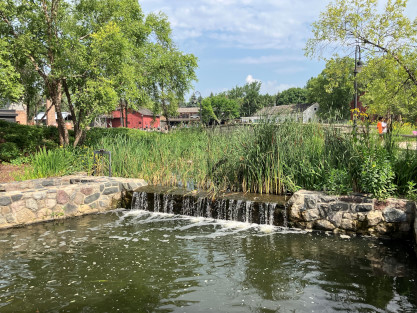
As Elizabeth and I walked over to the roundhouse area, we passed a water wheel between the Henry Ford Museum and Greenfield Village, along with its spillway.
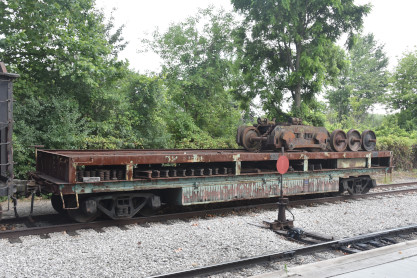
Wheelsets on an unknown flat car.
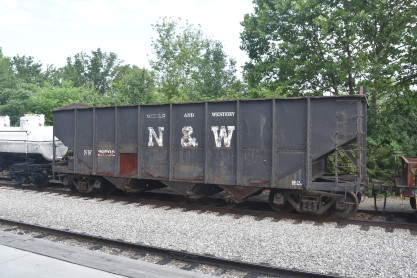
Norfolk and Western 3-Bay Hopper 28502, builder and year unknown.
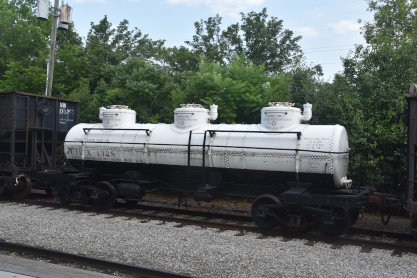
Union Tank Car three-dome tank car 1328, built by the company in 1937.
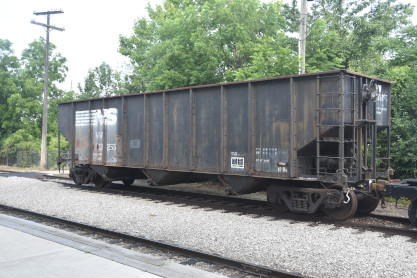
Norfolk Southern three-bay hopper 133265, nee Norfolk and Western 133265, built by the railroad in 1969.
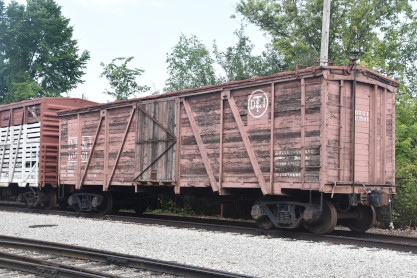
Detroit, Toledo and Ironton forty-foot box car 105601 builder unknown, but constructed in 1915.
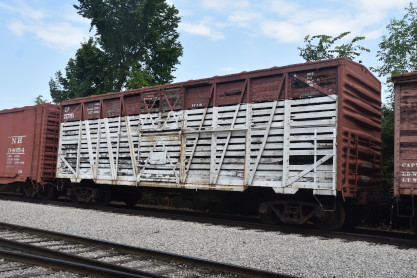
Canadian Pacific Railway stock car 277111, built by Canadian Car and Foundry in 1958 and rebuilt in the 1960's.
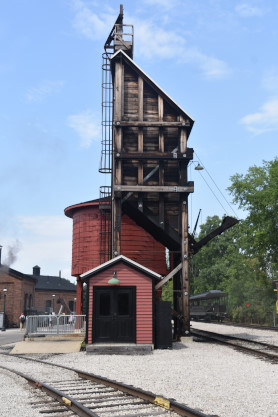
Acoustic Ceiling and Partition Co. Inc. was contracted to procure and install a late nineteenth-century coaling tower. This structure stores and loads coal for the historic steam locomotives used to transport visitors on the Weiser Railroad. Constructed of timber framing on a concrete foundation, it was modelled after a structure built in the late nineteenth-century in Marquette, Michigan. To meet current codes and Greenfield Village's specific requirements, the tower design had to be modified while remaining true to its historic precedent. ACP established a plan and a working CAD model that allowed them to procure the necessary materials meeting the architectural and structural design criteria, while delivering on schedule for the public to use. It was built in 2013-2014 and stores 50 tons of coal.
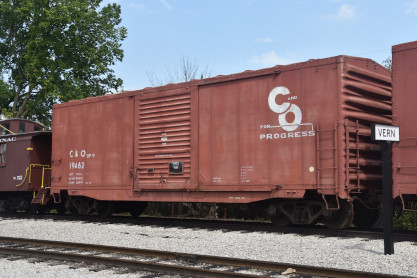
Chesapeake and Ohio box car 19462, built by American Car and Foundry in 1957.
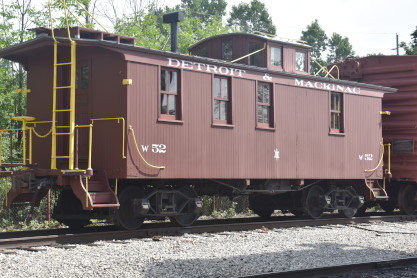
Detroit and Mackinac caboose W52, built in 1912. The railroad operated a 200-mile route between Bay City and Cheboygan along the Lake Huron shoreline. After sitting in a Tawas City park for five years, the caboose was donated by the railroad to Henry Ford in 1979.
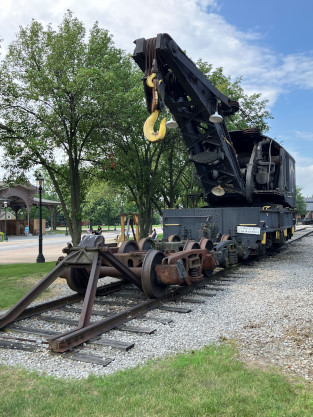
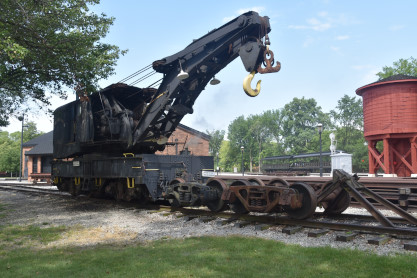
Detroit River Tunnel Company 120 ton crane 1, which was never used in that operation. Conrail donated it in 1986.
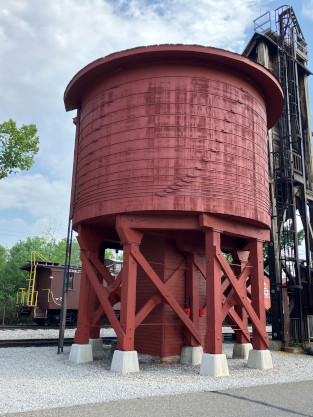
The Greenfield Village water tank whose capacity is 3,900 gallons.
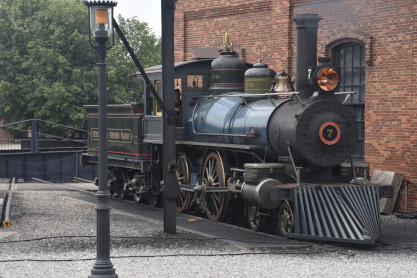
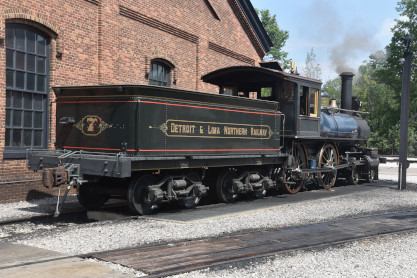
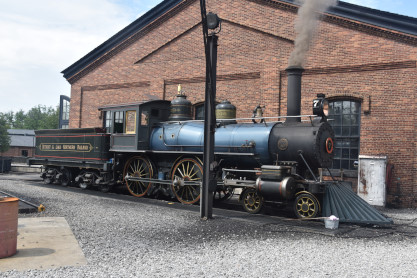
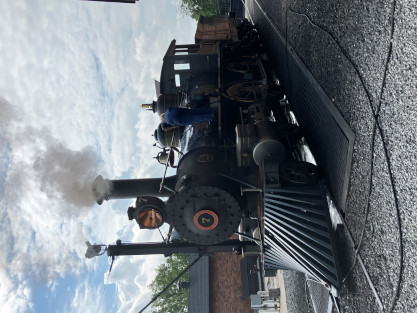
Edison Institute 4-4-0 7, ex. Henry Ford 7 1921, exx. Detroit, Toledo and Ironton Railroad 7, exxx. Detroit, Toledo and Ironton Railway 7, exxxx. Detroit Southern Railroad Company 7, nee Detroit and Lima Northern 7, built by Baldwin in 1897. It was Henry Ford's personal locomotive when he owned the DT&I.
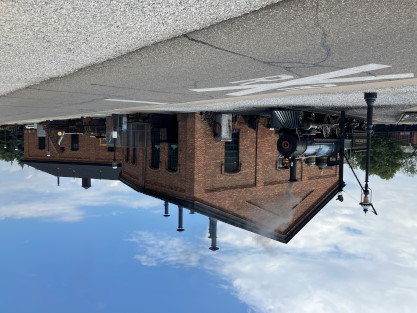
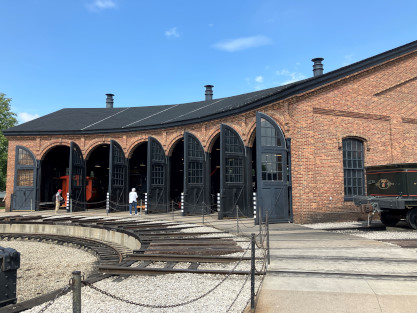

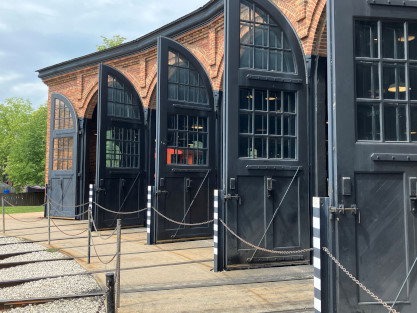
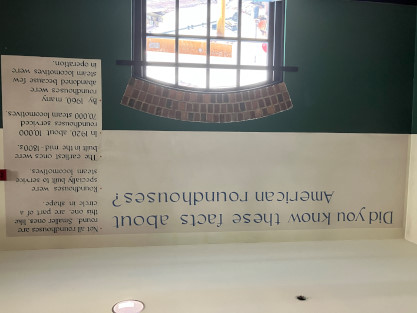
The replica Detroit, Toledo and Milwaukee roundhouse at Greenfield Village, built in 2000. The original roundhouse was opened in Marshall, Michigan, in 1884 and remained there for 105 years, at which time it was completely dismantled. The Henry Ford Museum purchased the remains of the roundhouse and reassembled it in Dearborn, restoring it to its appearance around the 1920's.
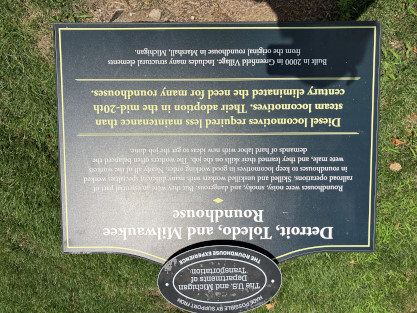
The roundhouse story board.
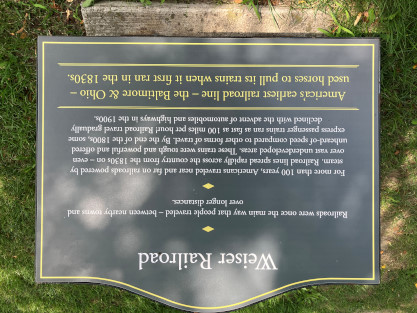
Weiser Railroad story board. Roundhouse tours were offered in a lottery format with those interested submitting their names at registration. That group was notified by e-mail and given one of four time slots. Elizabeth and I happened to be in the same group.
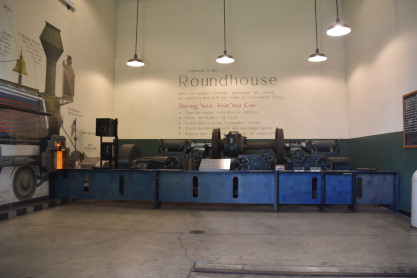
Welcome to the Roundhouse.
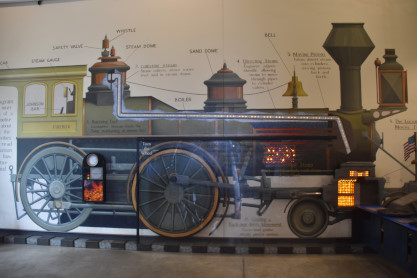
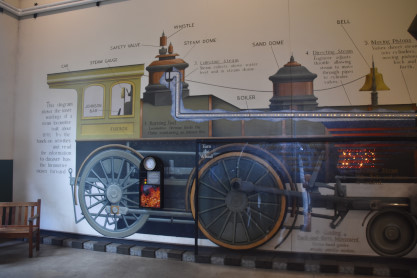
A detailed illustration of how a steam engine works. As it covers one wall of the entry area and is wide, I had to take two photographs.
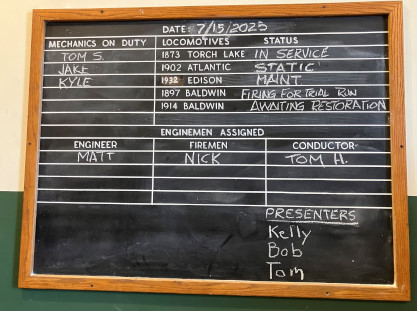
The assignment board and status of the steam engines.
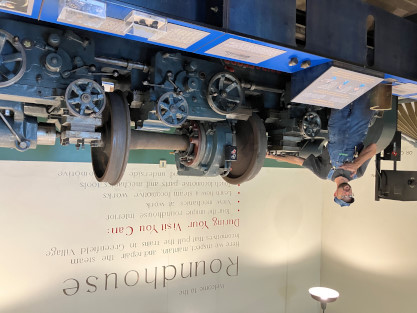
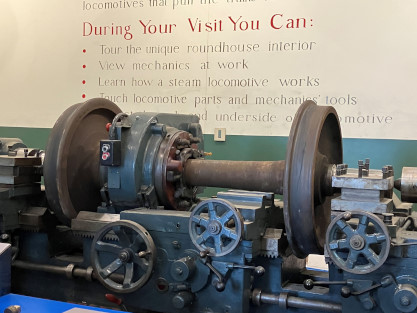
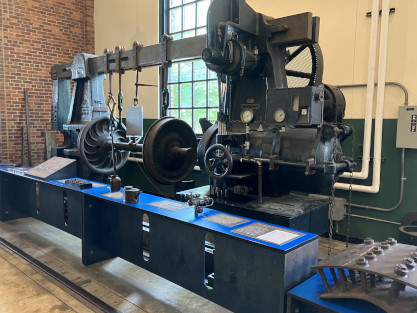
One of the three tour guides explaining and demonstrating the wheel press.
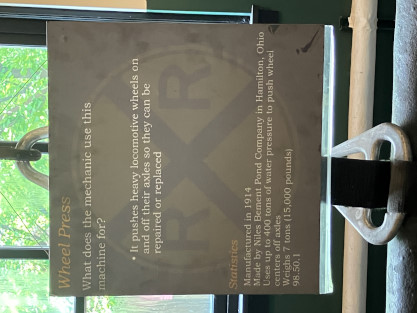
Wheel press information board.
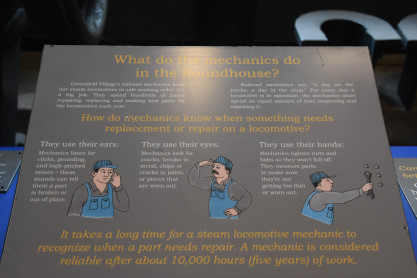
What do mechanics do in the roundhouse?
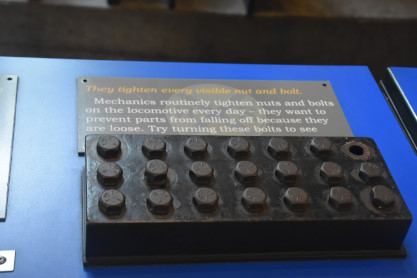
They tighten every visible nut and bolt.
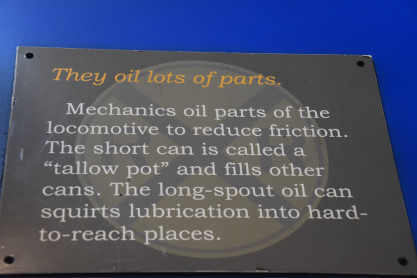
They oil lots of parts.
What chores must be done every day to keep the locomotive running safely?
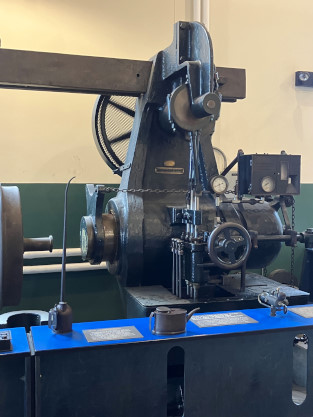
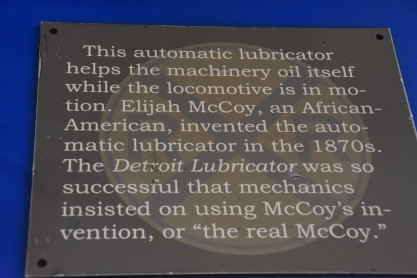
The automatic lubricator and its information board.
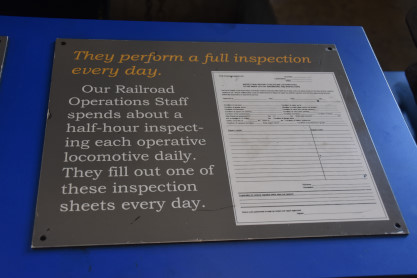
They perform a full inspection every day.
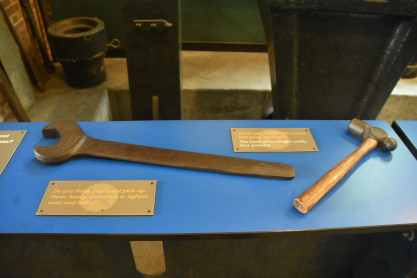
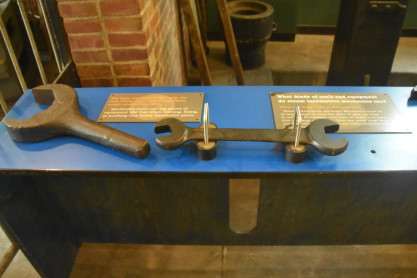
Hand tools of the roundhouse.
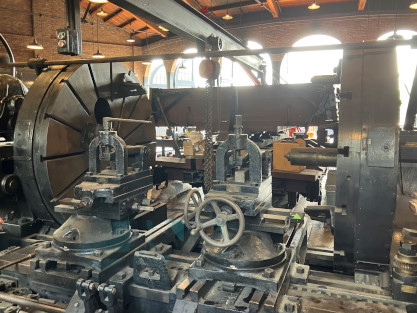
An active wheel press.
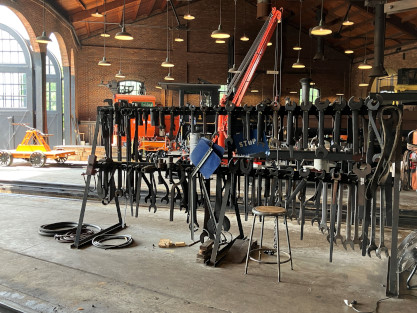
An assortment of spanners.
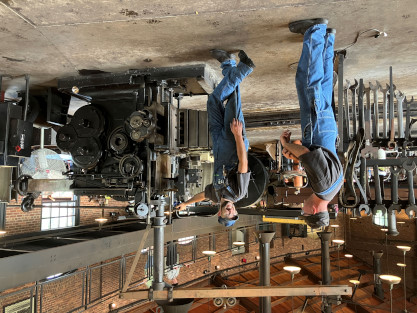
Our tour guide conversing with a colleague about the next demonstration.
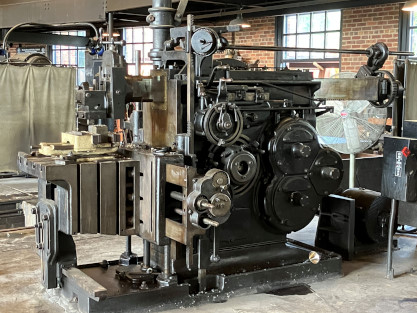
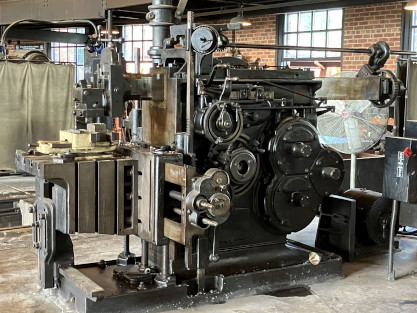
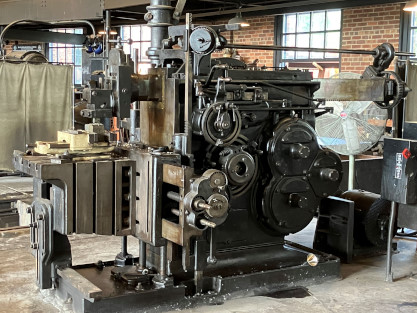
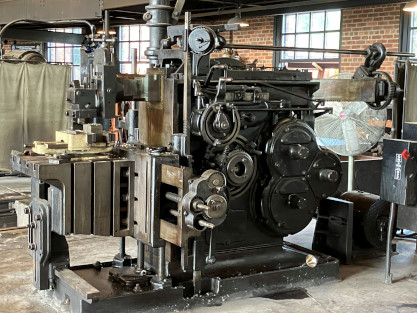
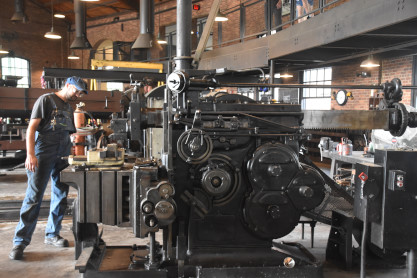
Our guide demonstrating a type of saw.
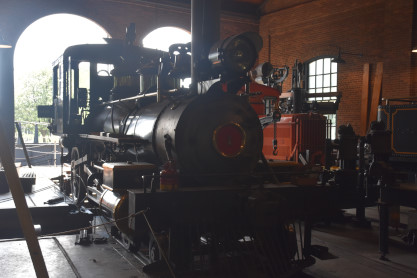
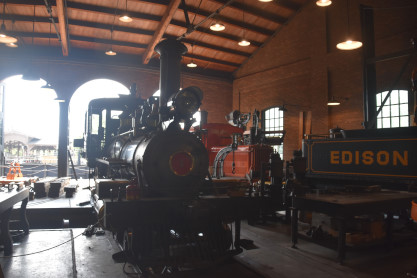
Greenfield Village 4-4-0 1 "Edison", based on an 0-4-0 switcher locomotive built about 1870 by Manchester Locomotive Company. Henry Ford purchased the switcher from Edison Portland Cement Company in 1932 and had it rebuilt into a 4-4-0 wheel arrangement by staff at Ford Motor Company's Rouge locomotive shop.
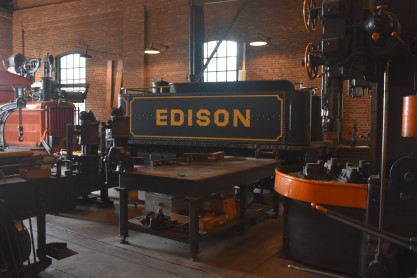
The tender of "Edison".
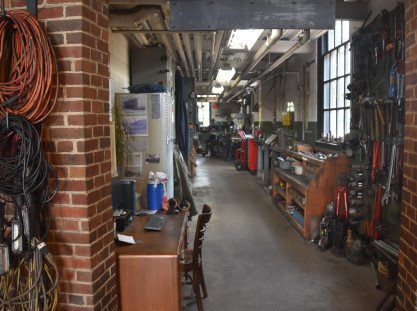
A hallway in the roundhouse.
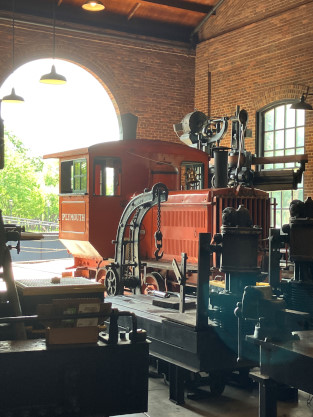
Plymouth JLC 14 ton gasoline switcher, nee Detroit Public Light built in 1927, is used for switching cars and cold locomotives.
We went upstairs to the mezzanine level.
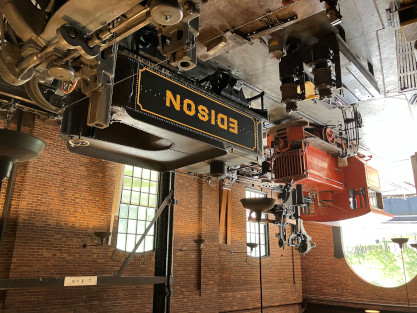
Looking down at the Edison tender and the Plymouth switcher.

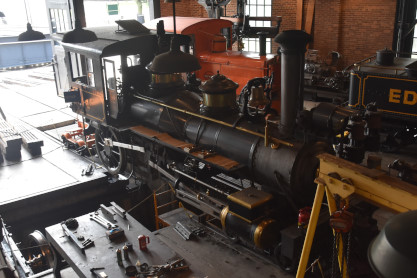
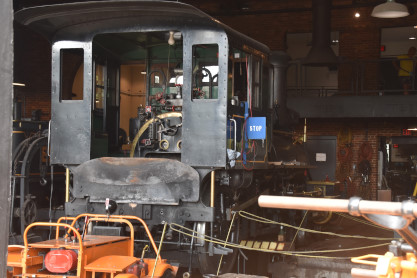
Greenfield Village 4-4-0 1 "Edison".
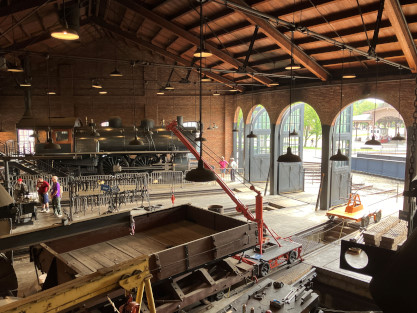


View from the mezzanine level.
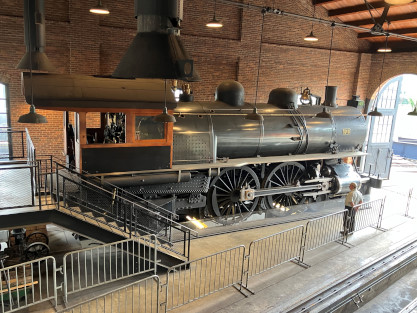
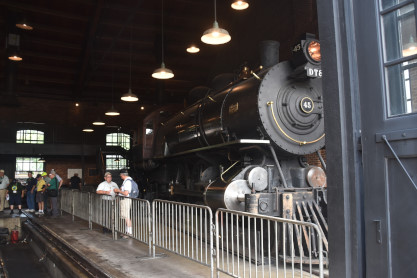
Edison Institute 4-4-2 8085, ex. Detroit, Toledo and Ironton 45 1926, exx. Michigan Central Railroad 8085 1915, exxx. Michigan Central Railroad 7953 1905, nee Michigan Central Railroad 254 built by American Locomotive Company in 1902 for fast passenger steamer between Detroit and Chicago. Henry Ford bought this Atlantic type from the Michigan Central for $50,000. Later it was refitted with gold brass and wood trim at the Ford Motor Company's Rouge Locomotive Shop in Dearborn.
This locomotive has been relocated from the Henry Ford Museum to the DT&M Roundhouse as part of the guided tour, so that visitors could look go into the work pit to see underside of an locomotive.

Interior of the cab.

Edison Institute 4-4-2 8085.
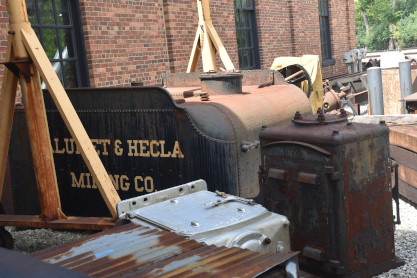
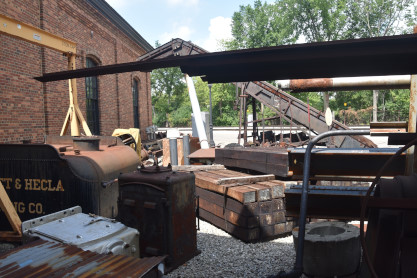
Storage area behind the roundhouse.
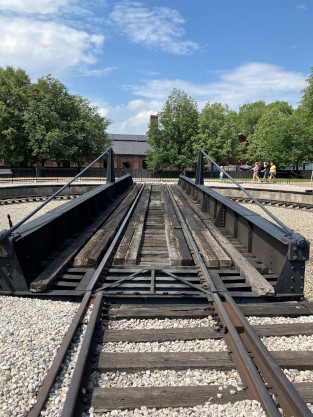
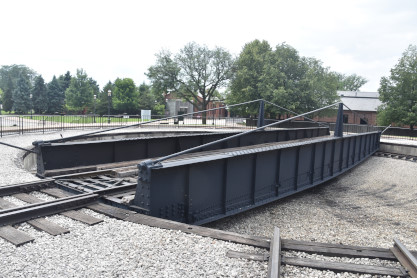
The 68.8 foot Armstrong turntable built by Detroit Bridge and Iron Works in 1901, which belonged to the Pere Marquette Railway. It was originally in Saginaw then moved to Petoskey in 1913.
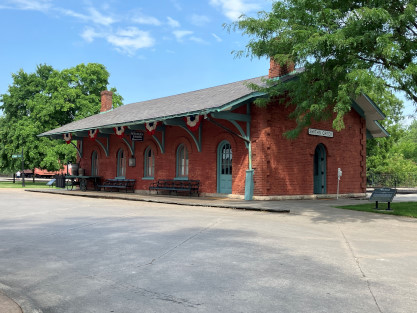
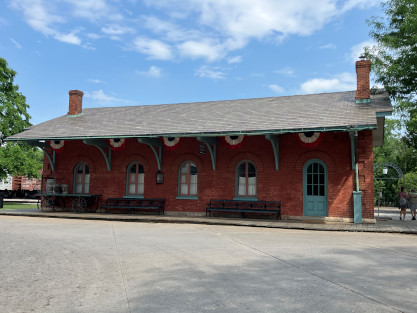
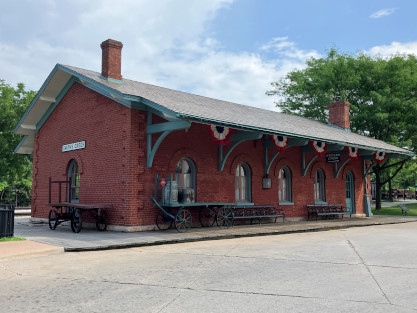
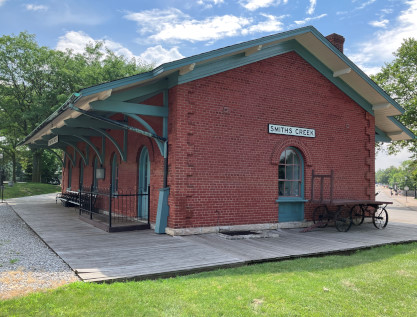
Grand Trunk Railway depot built in 1895 from Smiths Creek, 57 miles from Dearborn, where it was located at 8075 Main Street. Thomas Edison, who was one of the most prolific inventors in history, started out in humble beginnings. He worked on the Port Huron-to-Detroit Grand Trunk Railroad route as a teenager selling newspapers and candy. He would go by the Smiths Creek location every day on that route until 1863 when he accidentally set the baggage car on fire performing experiments on the train.
Edison told the story to Henry Ford and he found it amusing. In 1929 Ford bought the depot and moved it to Greenfield Village then that October, ceremonies were held for the official opening of Greenfield Village and Edison's 50th Anniversary of inventing a practical incandescent lamp. The event was called "Light's Golden Jubilee" and Ford, Edison, President Herbert Hoover, and others arrived by train to the Smiths Creek Depot. Other dignitaries in attendance were John D. Rockefeller, Jr., Orville Wright, and Will Rogers. Thomas Edison was a mentor and friend to Henry Ford until his death and it was his influence that caused Henry to press forward in his pursuit to bring the automobile to the common man.
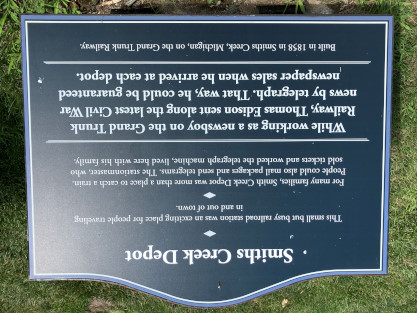
The depot's story board.

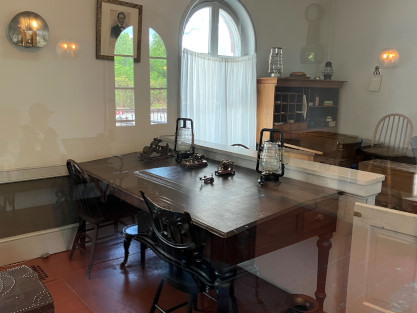
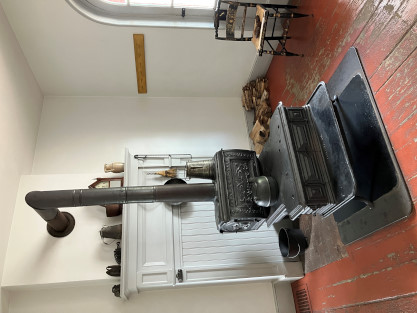
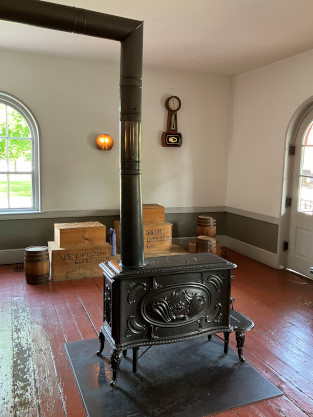
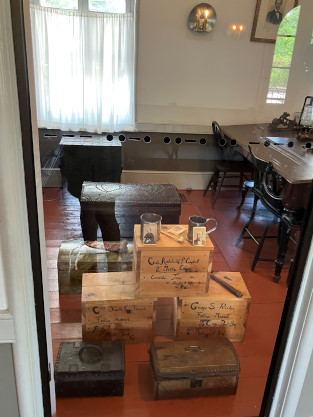
Interior views.
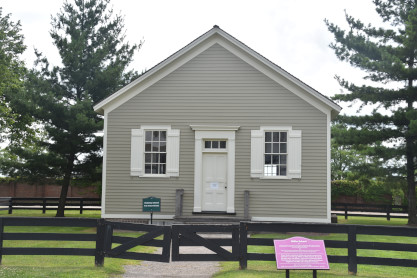
This wood frame building is a 1943 replica of the Miller School, of which Henry Ford attended from 1872 to 1874. The original stood in Springwells Township on Chicago Road (now Michigan Avenue or US 12), more than two miles from his home, where Ford's instructor at the Scotch Settlement School, John Brainard Chapman, was transferred. Mr. Ford changed schools at the same time to remain with his favourite teacher. It was here that Ford and his classmates constructed a steam turbine, a waterwheel and a forge to make castings.
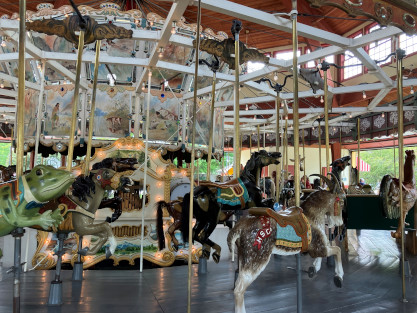
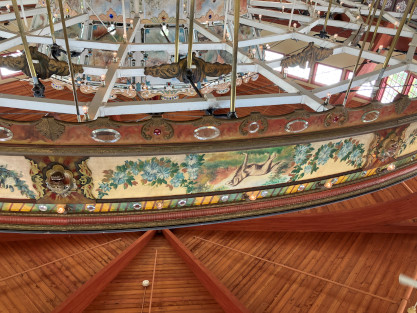
Elizabeth and I both rode the 1913 Herschell-Spillman Carousel. Colourful carousels were at the height of their popularity during the early 1900's and could be found all across America in amusement parks, city parks and seaside resorts. This "menagerie" carousel's hand-carved animals include storks, goats, zebras, dogs and even a frog. Although its original location is uncertain, this carousel operated in Spokane, Washington, from 1923 to 1961.
Time was not on our side as we had bus host duties to return to, so we made our way back to the bus loading area in front of Greenfield Village entrance.
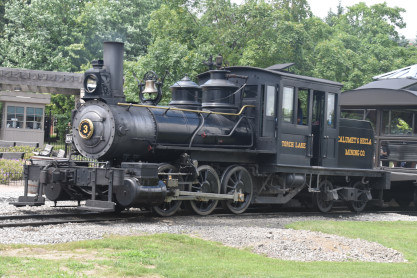
One final picture of Calumet-Hecla Mining Company 0-6-4T 3 "Torch Lake" before its next run around the grounds. While there was still more to explore, the convention itinerary was such that we needed to leave at 1:20 PM in order to get to Detroit and Michigan Central Station.
| RETURN TO THE MAIN PAGE |