




Elizabeth and I had another early start at the Graduate Hotel in East Lansing, Michigan and ate the breakfast snacks that we purchased last night prior to convening in the hotel lobby and waiting for the buses to arrive.
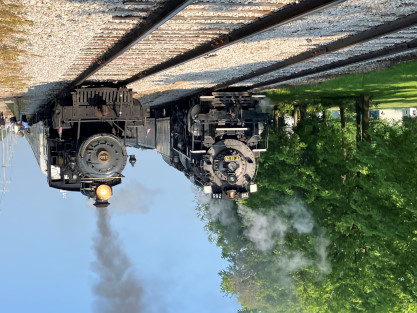
Today's excursion started at the Little River Railroad in Coldwater with the plan being to ride behind Little River 4-6-2 110 for the journey to Quincy, then Nickel Plate 2-8-4 765 would take us the rest of the way to Hillsdale for lunch, a planned photo runby and return to Hillsdale, where the buses would take us back to East Lansing.
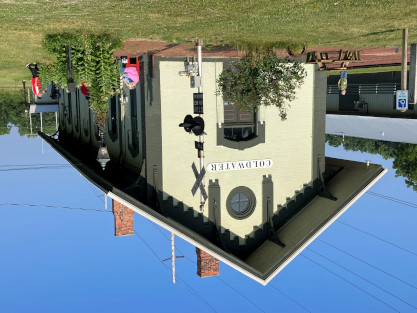
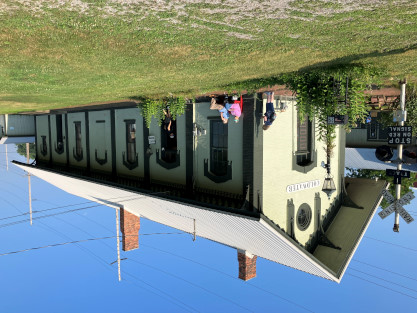
Coldwater Lake Shore and Michigan Southern depot constructed in 1883. The last regular passenger train departed from this station in 1956.
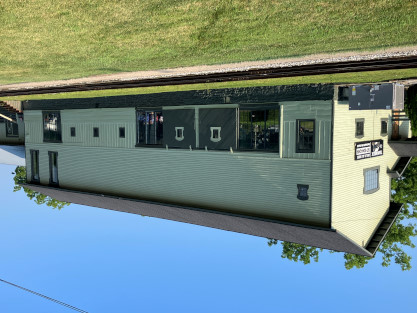
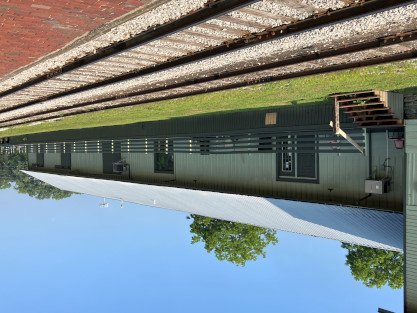
Coldwater Lake Shore and Michigan Southern freight house.
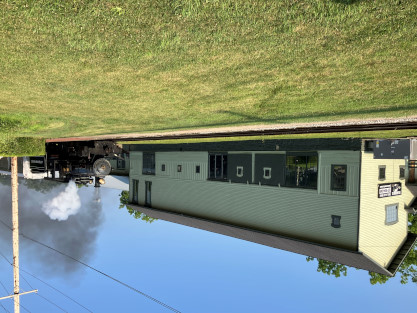
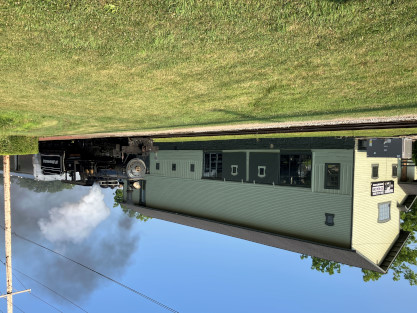
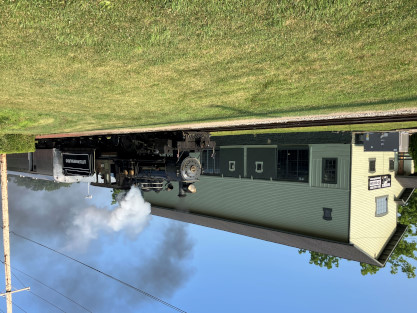
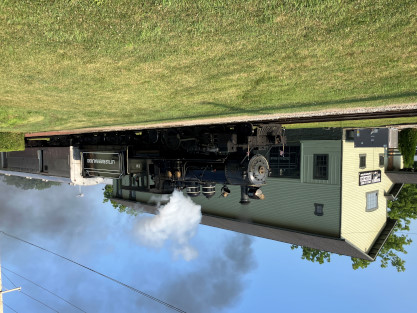
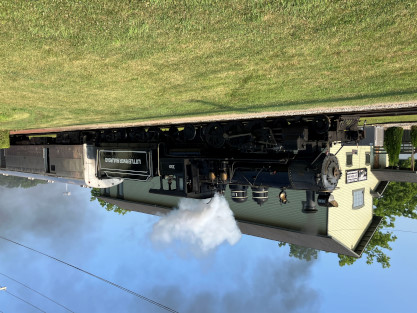
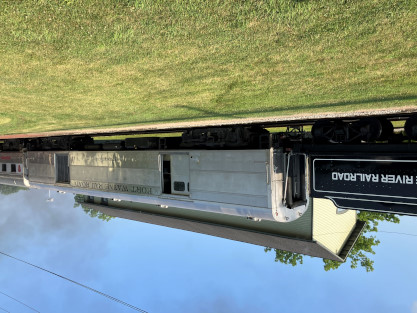
Photo runby one in the station area. Little River Railroad 4-6-2 110 was built by Baldwin in 1911, weighs about 58 tons and is the smallest Pacific built for a standard gauge railroad. It was custom-built for the original Little River Railroad in Townsend, Tennessee and ran until 1939 in what is now Great Smoky Mountain National Park. The engine hauled log trains from the forest to the lumber mill. In 1940, the engine was sold to the Smoky Mountain Railroad until the 1950's then in the 1960's, it was abandoned in Shook's Gap, Tennessee. In 1972, the engine was purchased by the current Little River Railroad in Coldwater, Michigan where it has run longer than in regular service.
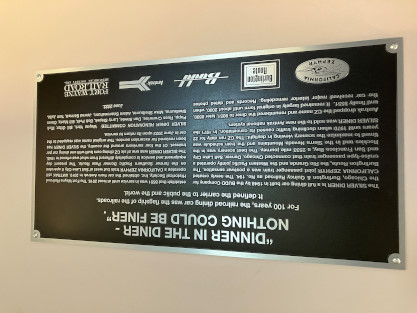
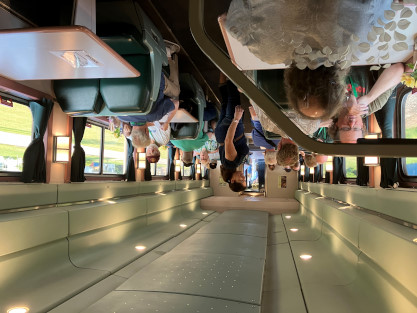
"Dinner in the Diner Nothing could be finer". This car, 8501 "Silver Diner" was built by the Budd Company as their 164. Amtrak dropped the Zephyr name and renumbered it as 8500 and finally 8551. Fort Wayne Railroad Historical Society obtained the car from Amtrak in 2019.
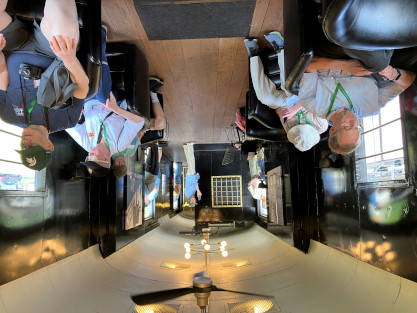
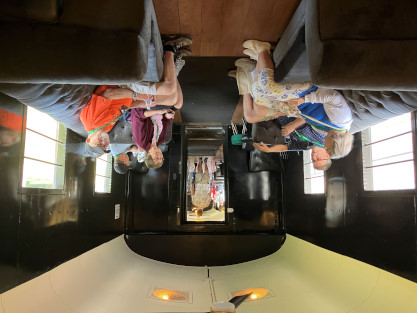
Conventioneers enjoying themselves in FWRX parlour car 5762, ex. Ringling Brothers Barnum and Bailey 63009 1999, exx. Union Pacific 904290 1982, exx. Union Pacific 904707, nee Union Pacific postal storage car 5762 built by St. Louis Car Company in 1962. It was in service as a stock car until the last circus trains were operated in May 2017.
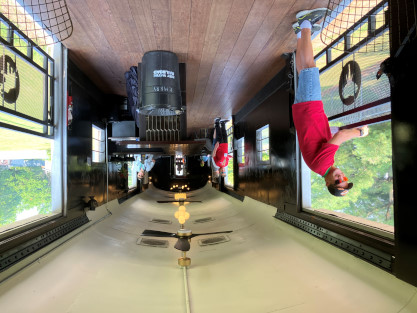
The interior of FRWX open air dining car 5735, ex. Ringling Brothers Barnum and Bailey 60019 1999, exx. Union Pacific 904261 1970, exxx. Union Pacific 24461 1969, nee Union Pacific postal storage car 5735 built by American Car and Foundry in 1957. It was in service as an elephant car until the last circus trains were operated in May 2017.
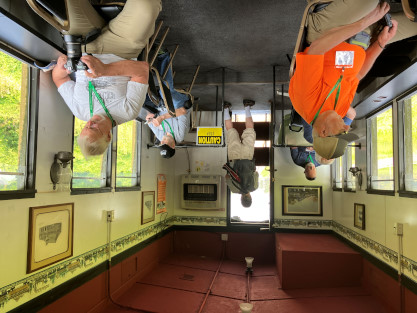
The interior of Little River Railroad troop sleeper 5205, nee United States Army xxxx, built by Pullman in 1943.
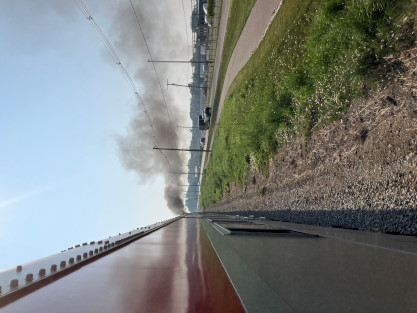
A view from the vestibule along the train.
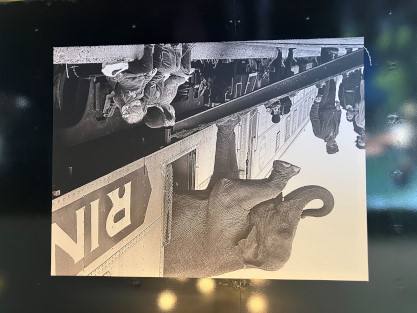
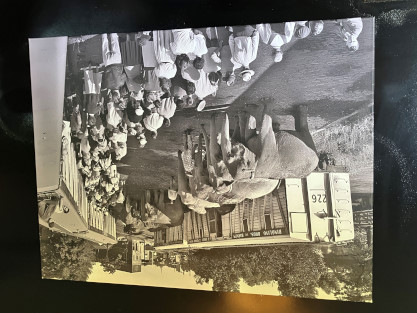
One of the posters of elephant unloading when it was used on the Ringling Brothers Barnum and Bailey Circus train. We arrived at Quincy and detrained for the engine swap.
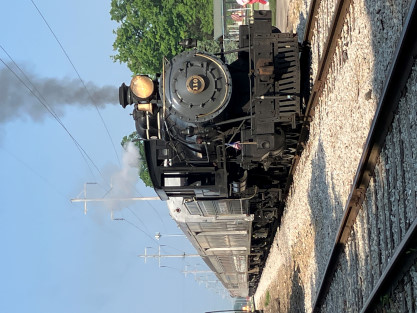
The train which brought us here.
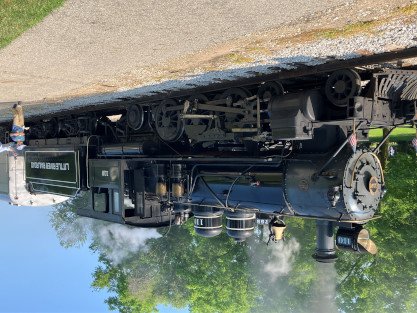
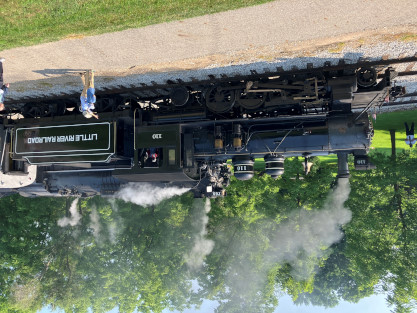
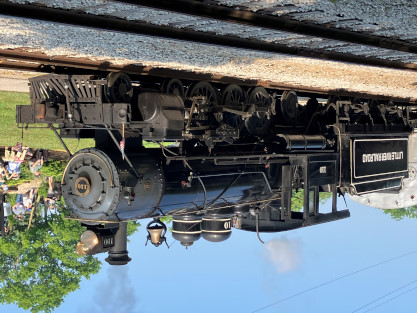
Little River Railroad 110.
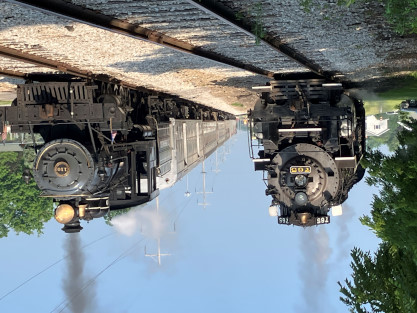
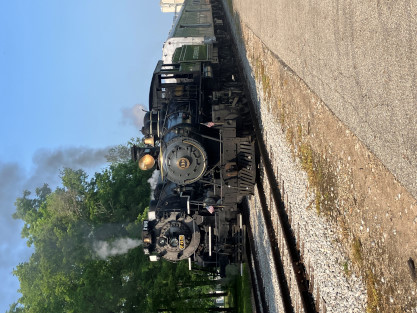
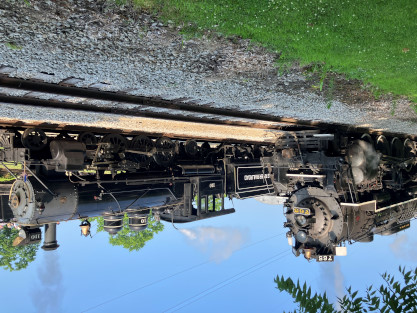
Nickel Plate 765 and Little River 110.
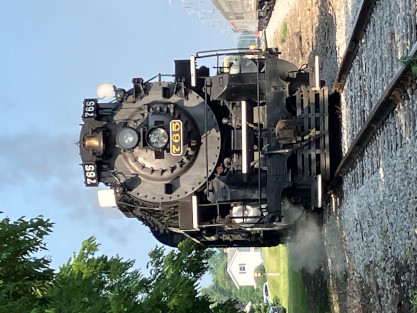
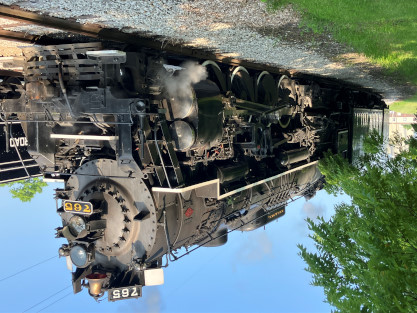
Nickel Plate 2-8-4 765 built by Lima in 1944. It was one of the Berkshire fleet known for its "superpower" technology and aesthetic charm. Once a fast-freight and passenger engine for the New York, Chicago & St. Louis Railroad - more commonly known as the Nickel Plate Road - the 765 is now a celebrated icon of American innovation and goodwill ambassador. Powered exclusively by volunteers as part of the Fort Wayne Railroad Historical Society's educational programs, the locomotive has been restored to the way it looked and sounded when it was originally built.
The plaque, mounted on the tender of 767/765, explaining the locomotive's preservation in 1963 as a "monument to a great period of development in our country -- the era of steam railroading". In the 1940's and 50's, the City of Fort Wayne, Indiana and the Nickel Plate Road sustained an interesting love-hate relationship. The iron roadbeds of the Nickel Plate, New York Central, Wabash and Pennsylvania railroads surrounded Fort Wayne. The Nickel Plate was nestled within the city; its West Wayne Yards were only blocks from downtown. The railroad's busy route on the northern end of the city kept Fort Wayne from expanding and persisted to displease motorists, who were constantly held up by the trains. Fort Wayne had already dealt with the problems inherent with ground level roadbed, as the Pennsylvania and Wabash to the south had elevated their tracks decades prior. To the north, a heated battle between the railroad and city ensued for years, with citizens chanting, "Elevate the Nickel Plate!".
With ground broken in 1947, the elevation of the Nickel Plate Road began in 1953 and ended in 1955 with a formal celebration that saw Nickel Plate Berkshire 767 parade across the elevated tracks, breaking a ribbon among station platforms crowded with spectators. A less informal event had been held some time before, when Nickel Plate Berkshire 765 became the first actual train to traverse the new rails. After earning the reputation as the "best of the west end" on the Fort Wayne Division, Berkshire 765 had been stored during its retirement in the enginehouse of the Nickel Plate Road in Fort Wayne. At the end of the steam era, several of the eminent Nickel Plate Berkshires locomotives were stored at the Nickel Plate's relatively new East Wayne yards, which had replaced the cramped quarters of the more urban West Wayne. Both 765 and 767 were among the sleeping sisters in the engine house and after sufficient slumber, 765 was fired up in 1958 to supply heat to a stranded passenger train in Fort Wayne. As other steam locomotives were scrapped, the engine would be saved at the request of the city that had once demanded the trains off the streets.
The City had asked for 767, but 765 proved to be in much better cosmetic and mechanical condition and, unlike other engines on the Nickel Plate, had been stored indoors for several years. During an inspection, 765 was deemed to be an ideal candidate for donation to the City of Fort Wayne. The roundhouse was asked to quietly change the locomotives' numbers and 765 -- renumbered as 767 -- was placed on display in Lawton Park within sight of the Nickel Plate elevation in May 1963. The real 767 was scrapped in Chicago in 1964. Fort Wayne's engine became a downtown showpiece, but after years of exposure to the elements, a group of local enthusiasts formed the Fort Wayne Railroad Historical Society to secure the locomotive for restoration. Seven days shy of the locomotive's 35th birthday on September 1st, 1979, 765 moved under its power for the first time in twenty-one years. The Fort Wayne Railroad Historical Society had become the first non-profit 501 corporation in the world to restore and operate a mainline steam locomotive.
After a series of test runs on the Toledo, Peoria & Western in 1980, 765 would begin its rise to stardom as a fan trip favorite. Leased by the Southern Railroad for 22 trips in 1982, the locomotive earned its stripes on routes through mountainous terrain and rocketed across the midwest in later excursions out of Chicago, Fort Wayne, Cincinnati, and Buffalo, New York, to name a few. 765's reach extended as far east as New Jersey and south to Georgia, and found a calling on the head-end of the New River Trains through West Virginia, carrying behind it the longest passenger train excursions in history. Throughout the 1980's and early 90's, the FWRHS successfully partnered with CSX, New Jersey Transit and Norfolk Southern. 765 was also seen in the company of other locomotives such as Nickel Plate 587 and Norfolk & Western "Northern" 611 and their respective caretakers.
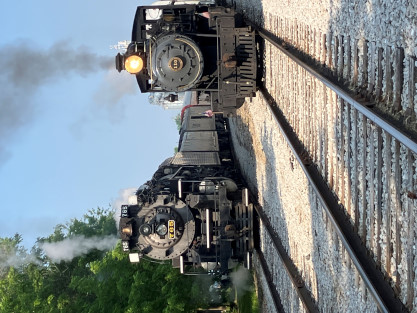
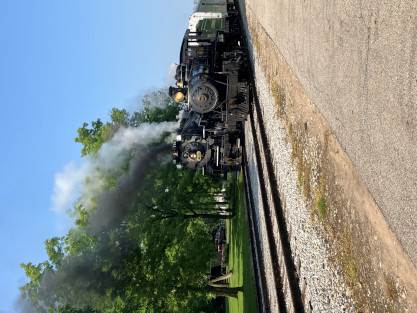
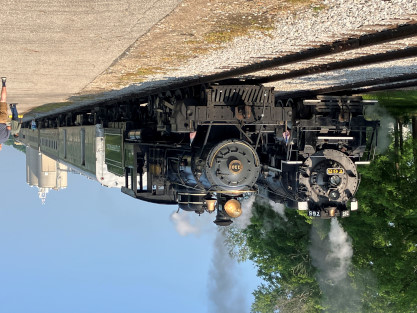
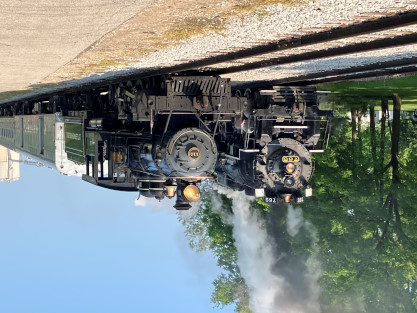
The two steam engines starting to move so they could switch, thereby allowing 765 to couple onto our train and leaving 110 in Quincy to return to Coldwater.
A brief video for the sounds of the steam engines.
A brief video of Nickel Plate 765 starting to move towards the switch.
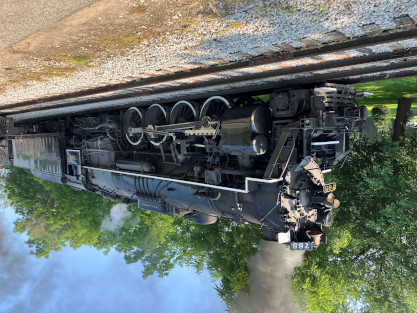
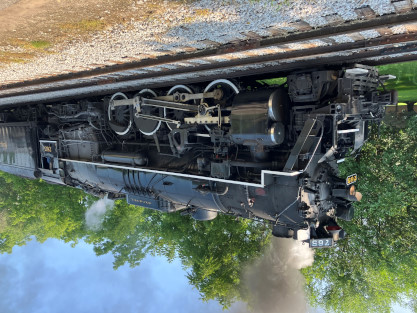
Nickel Plate 765.
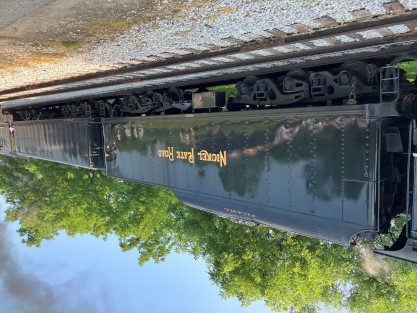
Nickel Plate 765 tender.
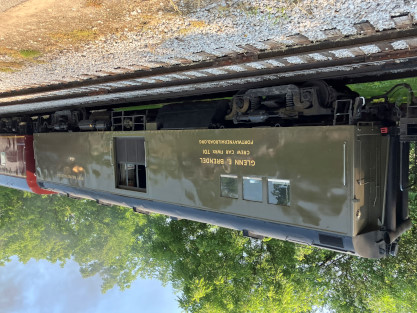
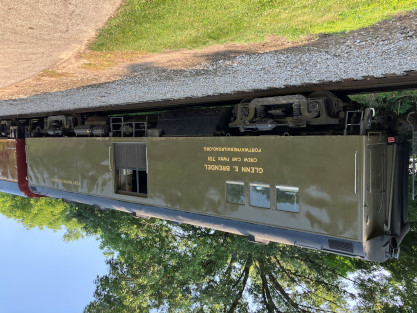
FWRX crew car 701 "Glenn E. Brendel", ex. Kentucky Railroad Museum concession car, nee United States Army kitchen car 89665, built by St. Louis Car Company in 1953. It was stored for over twenty years before being acquired by the Kentucky Railroad Museum and used as a concession car. In 1979, it was utilized on the 765's first excursions to Argos, Indiana in July 1980. It has been converted into a tool car for use on excursions with the 765. Changes include a generator, workbenches, tool cabinets, welder, steam locomotive servicing equipment and supplies and seating.
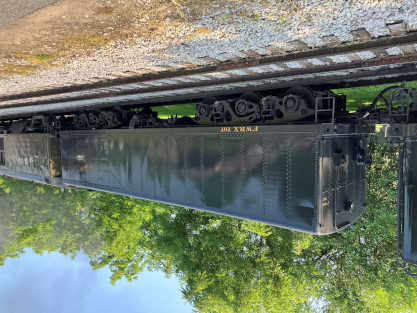
RPCX water tender 767, nee Louisville and Nashville 1900-series Lima Berkshire tender built in 1949.
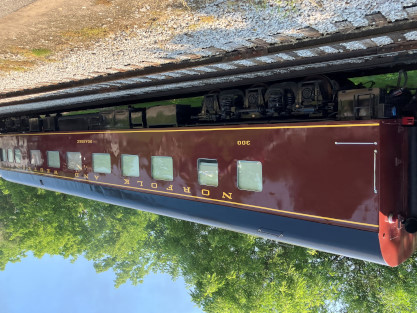
Norfolk and Western observation car 300 "Roanoke" built by Pullman in 1917. It was modernized by the Roanoke Shops in 1955, repainted and assigned the name "Roanoke" on October 15th, 1977. It was then re-numbered NS 5 on paper, but not the car itself, on December 2nd, 1985 then deemed surplus and sold at auction in 1987. It was rebuilt to Amtrak standards at Eastern Rail Services in 1988 and placed into warehouse storage in 1991. In 2019, it was acquired by the Norfolk and Western Business Car 300 Preservation Society, Inc.
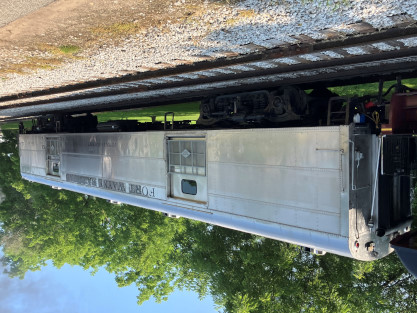
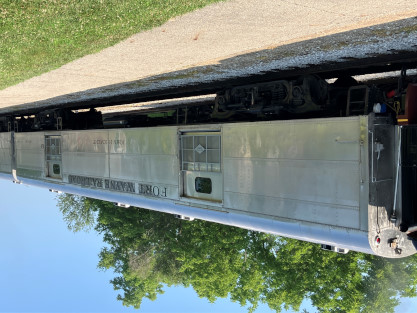
FWRX open air baggage car 3671 "John H. Emery, nee Santa Fe 3671 built by the American Car & Foundry in 1955 that once travelled some of the railroad's most celebrated passenger trains. "John H. Emery" was repurposed into an open-air car in 2022, enabling riders to enjoy the sights and sounds of historic railroading. This stainless steel baggage car operated on The Chief, Super Chief, El Capitan, Grand Canyon, and many others. These trains were part of the Golden Age of Railroading, circa 1920-1960, and this car routinely carried the shipments, personal effects, and luggage for passengers and railroad customers on a 2,227-mile journey between Chicago and Los Angeles. Between Santa Fe and later Amtrak, the car is estimated to have accumulated several million miles during its 64 years of regular passenger train service.
Acquired by the Fort Wayne Railroad Historical Society in 2019, the organization has transformed the baggage car into a unique open-air passenger car so that guests can enjoy the sights and sounds of historic railroading. It is named after the late John H. Emery, a lifelong railroad enthusiast, whose generous endowment to the Emery Rail Heritage Trust guarantees that the Golden Age of Railroading will continue to be preserved and enjoyed. In 2022, this car was completed with the assistance of their $10,000 grant and over 2,000 hours contributed by our members. The Fort Wayne Railroad Historical Society is proud to name this former Santa Fe car in John Emery's honor. It features an open floor plan, a spacious bar, historic lighting and decor, and four large gated doors. The Emery, as it's affectionately called, can host approximately 40 passengers.
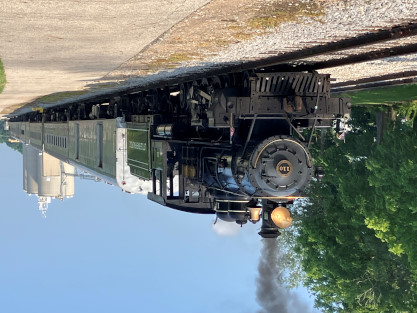
Little River Railroad 110 before it cut off the train.
Little River Railroad 110 cutting off the passenger cars.
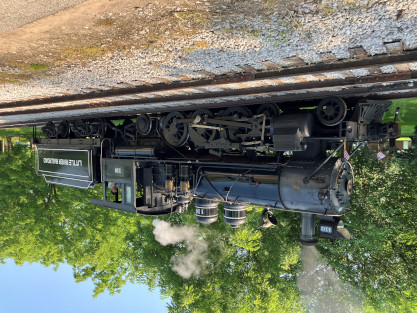
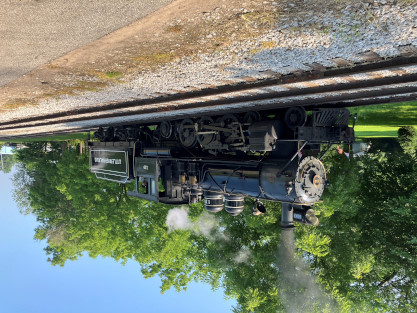
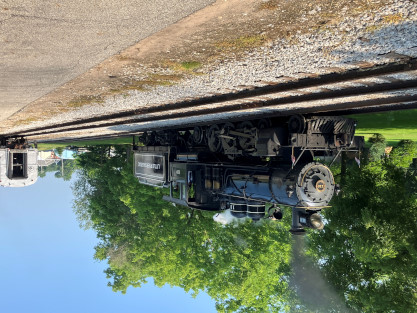
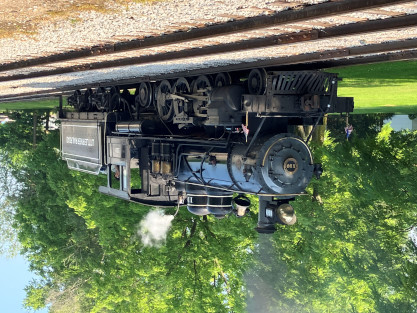
Little River Railroad 110 trip reversing back to the switch in Quincy.
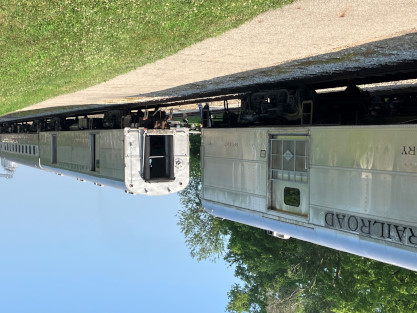
Switching baggage "John Emery" onto the convention train.
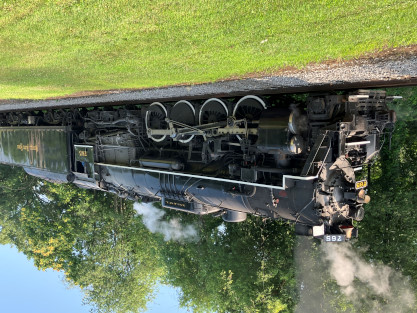
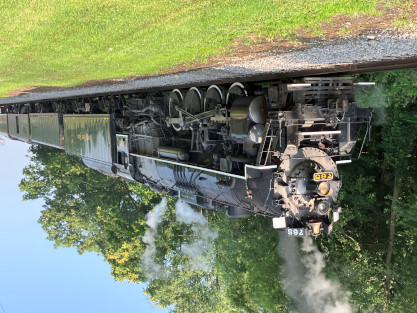
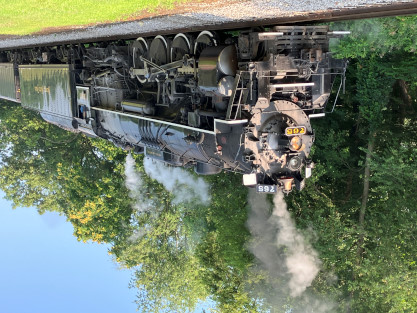
Nickel Plate 765 making it way down to the switch. Now for some of the train's consist.
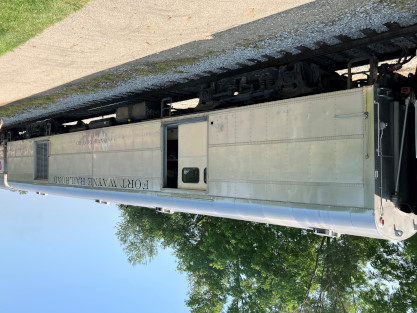
Fort Wayne Railroad Historical Society baggage car "David A. Donoho", ex. Amtrak 1252, nee Santa Fe 3679, built by American Car and Foundry in 1955. It was acquired via a donation from Amtrak in 2019. Thanks to a grant from the David A. Donoho Trust and Central Indiana Foundation, the car was upgraded into a head-end-power car that produces 480v of electricity for the passenger train, a vital necessity in daily operation.
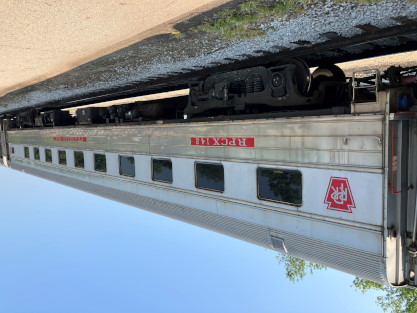
RPCX coach 142 "Franklin Inn", ex. Cuyahoga Valley Railroad NRHX 142, ex. Maryland Area Regional Commuter 142, exx. Southeast Michigan Transportation Authority 112 "Pleasant Ridge", exxx. Penn Central 1537, nee Pennsylvania Railroad 21 roomette sleeping car 8258 built by Budd Company in 1949. It operated through Fort Wayne, Indiana during its original careers. Converted to a traditional coach in 1963 for the World's Fair in New York City, 148 wound its way through commuter train service until were eventually obtained and renovated by the National Railway Historical Society (Washington DC Chapter) in 2008. It operated in occasional rail excursion service and was in limited seasonal use when purchased in mid-2022.
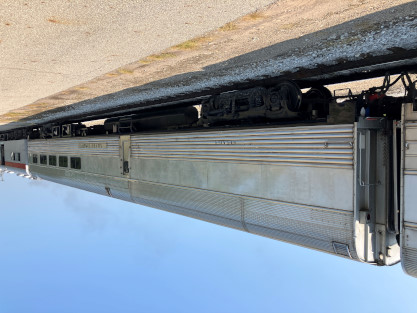
Fort Wayne Railroad Historical Society dining car 8551 "Silver Diner", ex. Amtrak 8551, exx. Amtrak 8500, nee Chicago, Burlington and Quincy 164 built by Budd Company in 1948. It was acquired from Amtrak in 2019 and restored in 2022.
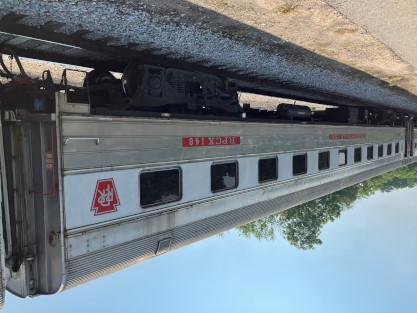
RPCX coach 148 "Collinsville Inn", ex. Cuyahoga Valley Railroad NRHX 148, ex. Maryland Area Regional Commuter 148, exx. Southeast Michigan Transportation Authority 108 "Hazel Park", exxx. Penn Central 1508, nee Pennsylvania Railroad 21 roomette sleeping car 8254 built by Budd Company in 1949. It operated through Fort Wayne, Indiana during its original careers. Converted to a traditional coach in 1963 for the World's Fair in New York City, 148 wound its way through commuter train service until were eventually obtained and renovated by the National Railway Historical Society (Washington DC Chapter) in 2008. It operated in occasional rail excursion service and was in limited seasonal use when purchased in mid-2022.
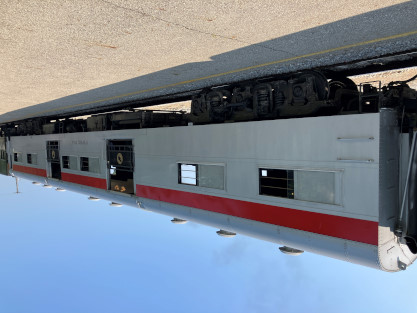
FWRX parlour car 5762, ex. Ringling Brothers Barnum and Bailey 63009 1999, exx. Union Pacific 904290 1982, exx. Union Pacific 904707, nee Union Pacific postal storage car 5762 built by St. Louis Car Company in 1962. It was in service as a stock car until the last circus trains were operated in May 2017.
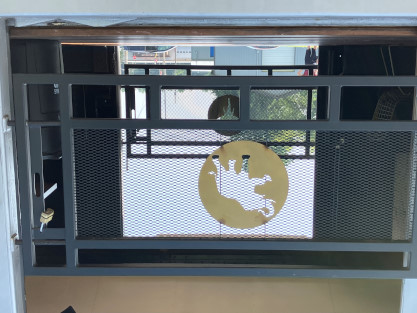
An outline of an elephant is a reminder of what this car once carried.
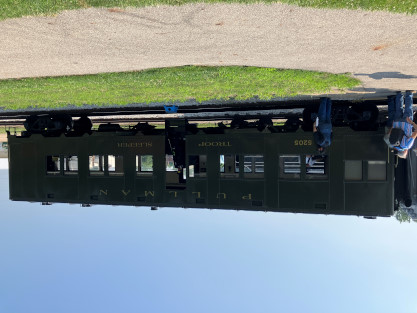
Little River Railroad troop sleeper 5205, nee United States Army xxxx, built by Pullman in 1943.
Back aboard and on the way to Hillsdale, we both spent much of the time in the open-door baggage car, with yet another nod to the car's former career.
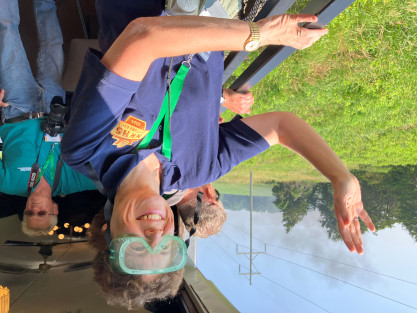
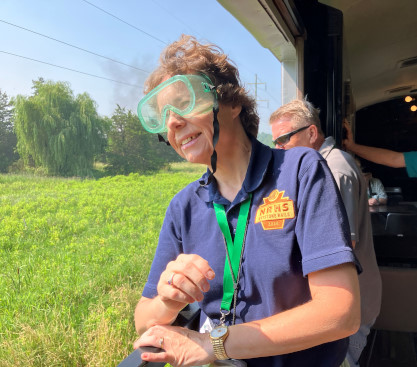
My lovely wife enjoying the scenery and sounds of Nickel Plate Road 765 in one of her favourite locations; the others are a fully open car and a vestibule. Photographs by Ron Gawedzinski, St. Louis Chapter national representative. We the ran the rest of the way to Hillsdale.
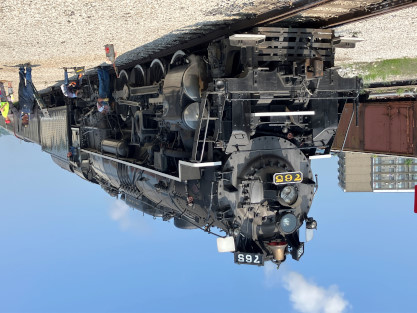
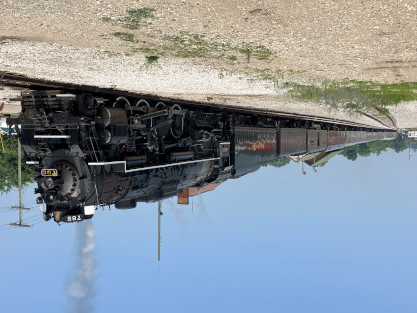
Nickel Plate 765 at rest. Everyone made their way to the Hillsdale Brewery across the street to where a build-your-own taco and nacho bar was set up. There was plenty of food and many choices. However, since I do not like tacos, I found somewhere else.
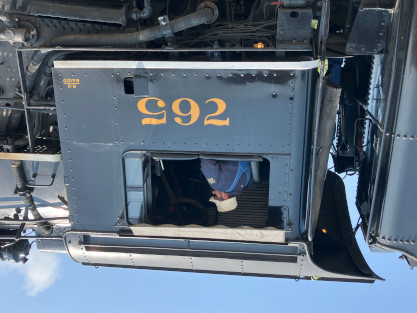
After lunch, Elizabeth returned to photography as the area was devoid of people.
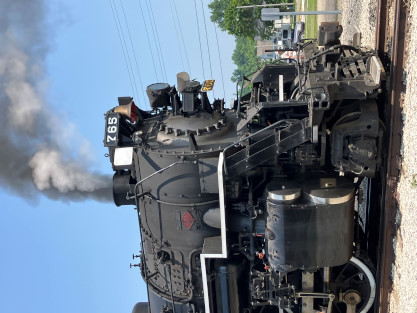
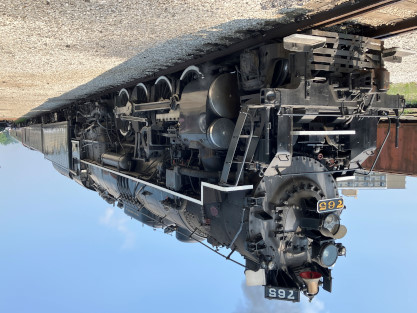
The front of Nickel Plate Road 765.
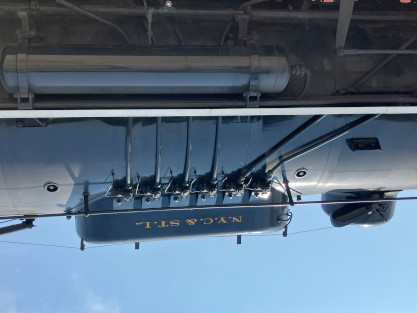
New York, Chicago and St. Louis Railroad initials, the official name of the Nickel Plate Road. Operating from 1881 to 1964, it served parts of the states of New York, Pennsylvania, Ohio, Indiana, Illinois and Missouri. Its primary connections occurred in Buffalo, Chicago, Cincinnati, Cleveland, Indianapolis, St. Louis and Toledo. The Nickel Plate Road was constructed in 1881 along the South Shore of the Great Lakes to connect Buffalo and Chicago, in competition with the Lake Shore and Michigan Southern Railway. At the end of 1960, NKP operated 2,170 miles of road on 4,009 miles of track, not including the 25 miles of Lorain & West Virginia. That year, it reported 9.758 billion net ton miles of revenue freight and 41 million passenger miles.
In 1964, the Nickel Plate Road and several other midwestern carriers were merged into the larger Norfolk and Western Railway. The goal of the N&W expansion was to form a more competitive and successful system serving 14 states and Ontario on more than 7,000 miles of railroad. In 1982, N&W was combined with Southern Railway to form the Norfolk Southern.
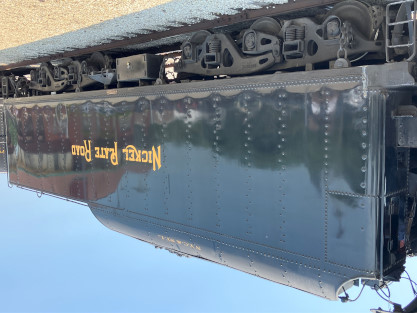
The steam engine's tender.
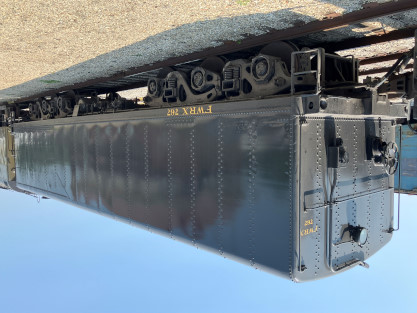
RPCX water tender 767, nee Louisville and Nashville 1900-series Lima Berkshire tender built in 1949.
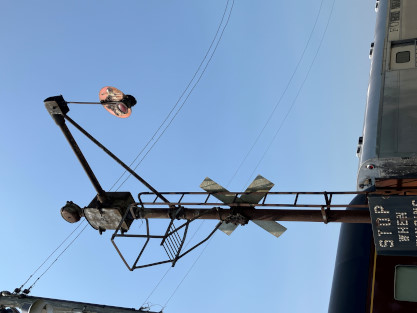
A wig-wag signal at Hillsdale.
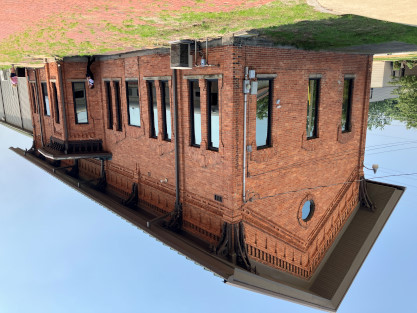
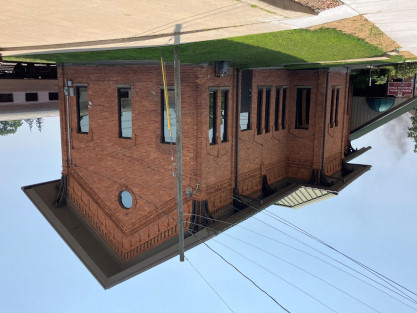
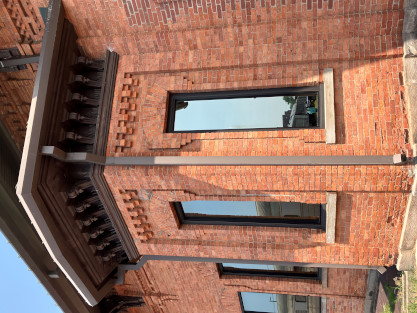
Lake Shore and Michigan Southern Hillsdale station built in 1881.
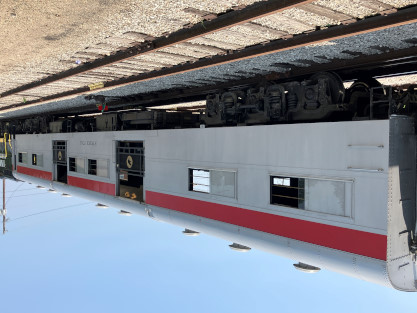
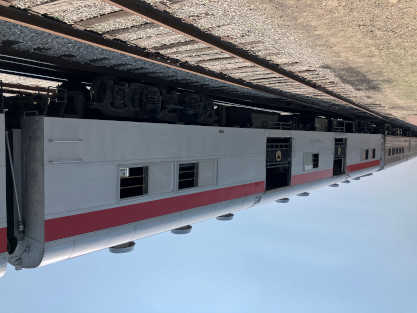
Fort Wayne Historical Society open air dining car 5735, ex. Ringling Brothers Barnum and Bailey 60019 1999, exx. Union Pacific 904261 1970, exxx. Union Pacific 24461 1969, nee Union Pacific postal storage car 5735 built by American Car and Foundry in 1957. It was in service as an elephant car until the last circus trains were operated in May 2017.
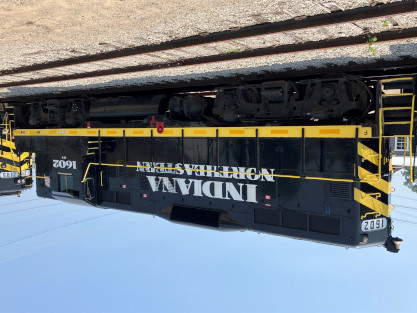
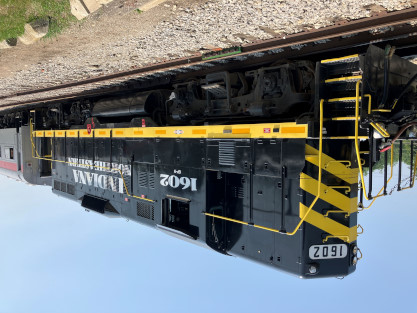
Indiana Northeastern GP9 1602, ex. Hillsdale County Railway Company 1766, exx. Burlington Northern 1766, nee Great Northern 693 built by Electro-Motive Division in 1957. Since 2022, there has been a partnership with Indiana Northeastern and the Fort Wayne Railroad Historical Society, which resulted in the Indiana Rail Experience series of excursions. A family-owned company, the Indiana Northeastern Railroad began operations in December 1992 on nearly 130 miles of track in southern lower Michigan, northeast Indiana and northwest Ohio. The Indiana Rail Experience operates seasonal excursions over the tracks of the Indiana Northeastern, including the Wabash Railroad, New York Central’s former Fort Wayne & Jackson line and the Lake Shore & Michigan Southern Railway. Six New York Central stations remain on the line.
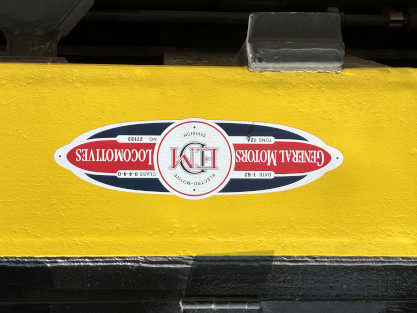
The classy builder's plate on 1602.
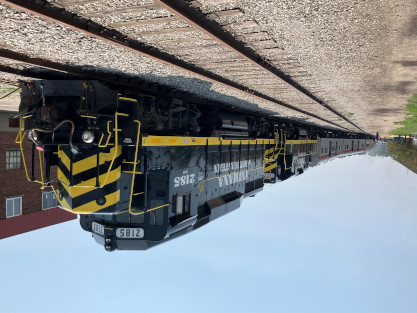
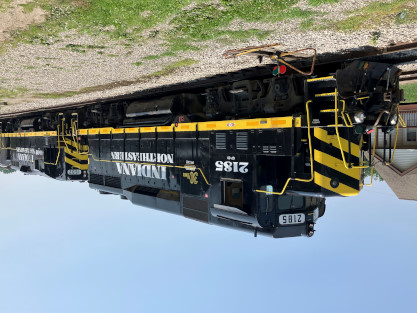
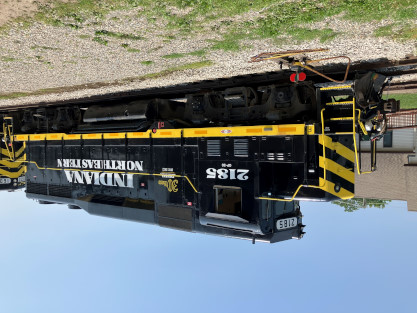
Indiana Northeastern GP30 2185, ex. Larry's Truck and Electric 2185, exx. Conrail 2185, exxx. Reading 3617, nee Reading 5517, built by Electro-Motive Division in 1962.
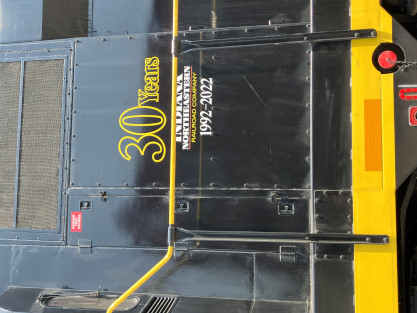
30 years Indiana Northeastern Railroad Company 1992 to 2022 emblem.
The classy builder's plate on 2185. Everyone returned to the train and we departed Hillsdale.
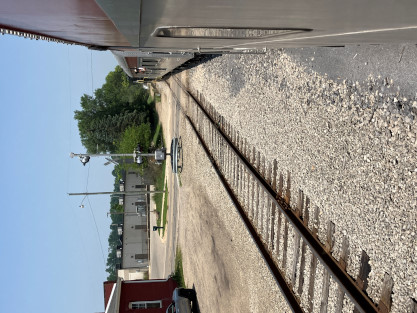
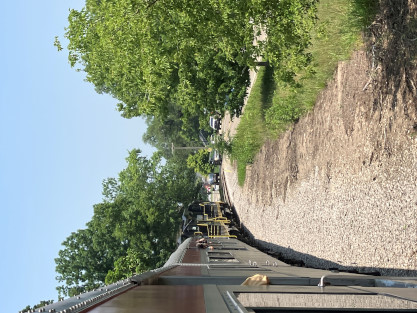
Proceeding to the wye.
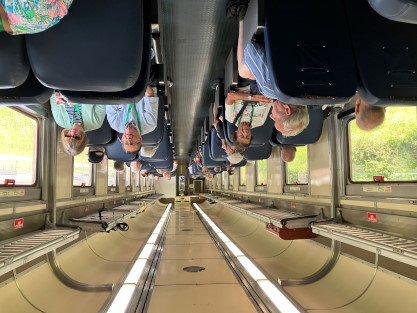
NRHS members enjoying the trip to Montgomery, site of the photo runbys.
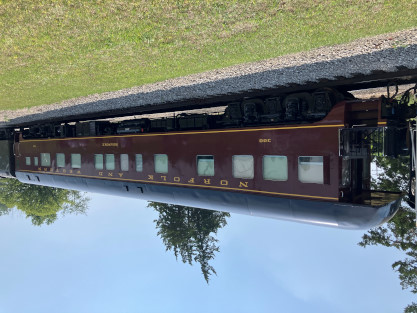
Norfolk and Western observation car 300 "Roanoke" built by Pullman in 1917. It was modernized by the Roanoke Shops in 1955, repainted and assigned the name "Roanoke" on October 15th, 1977. It was then re-nenumbered NS 5 on paper, but not the car itself, on December 2nd, 1985 then deemed surplus and sold at auction in 1987. It was rebuilt to Amtrak standards at Eastern Rail Services in 1988 and placed into warehouse storage in 1991. In 2019, it was acquired by the Norfolk and Western Business Car 300 Preservation Society, Inc. The train reversed for another photo runby.
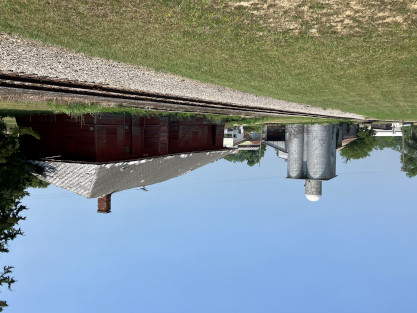
Montgomery Lake Shore and Michigan Southern combination depot, currently vacant.
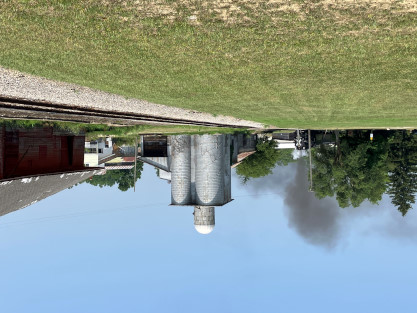
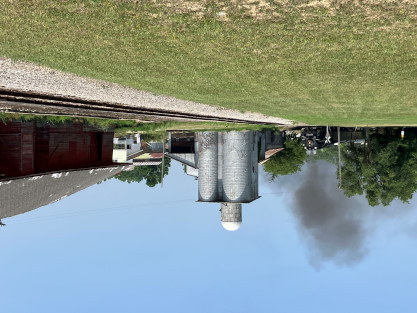
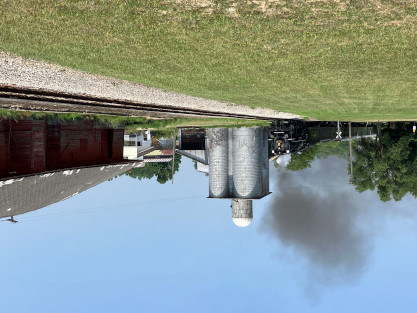
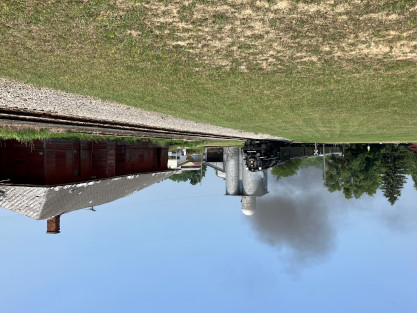
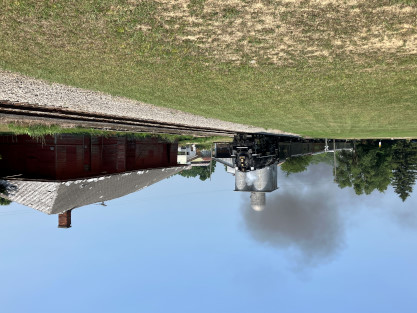
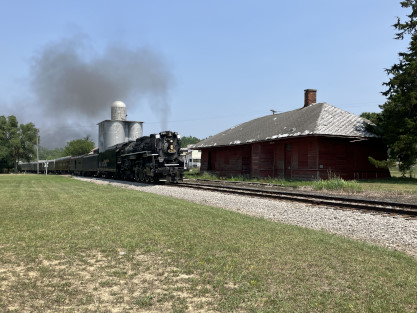
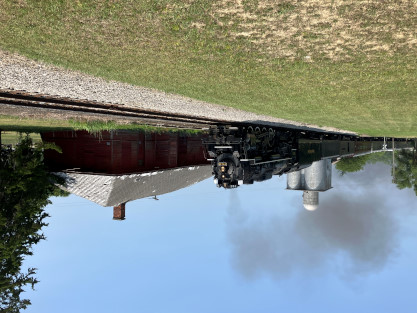
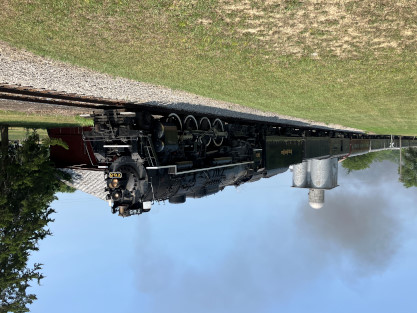
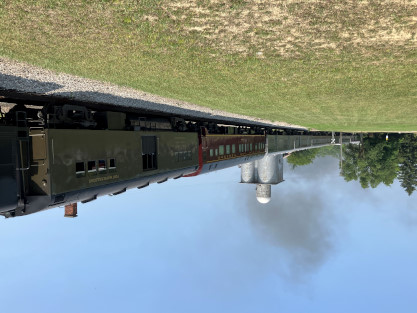
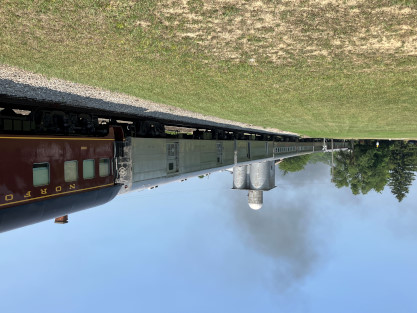
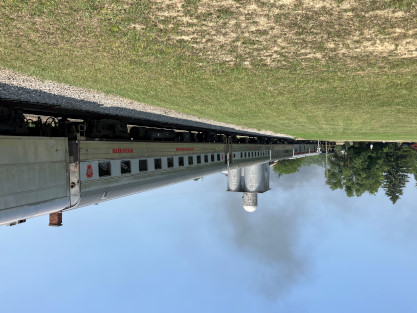
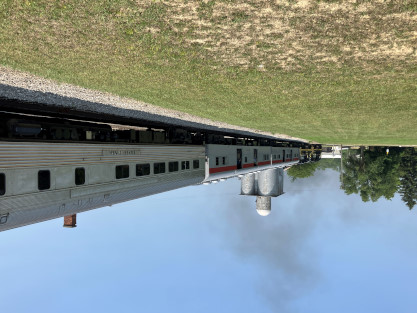
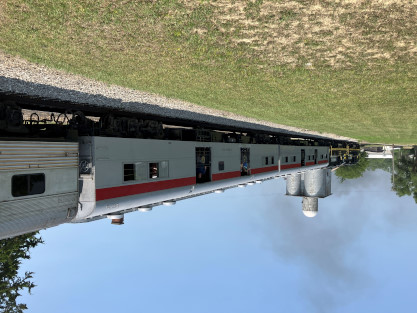
Photo runby one at Montgomery.
The second photo runby.
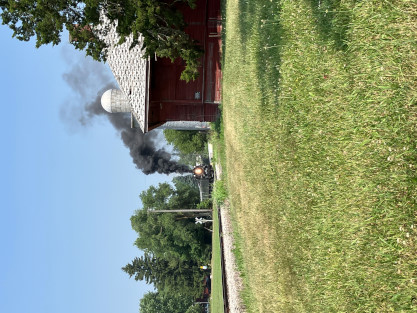
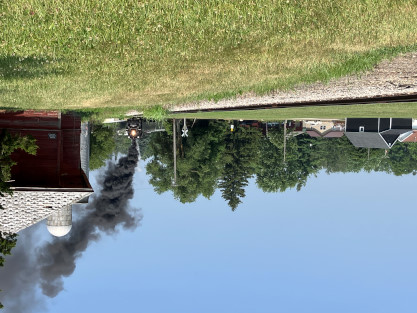
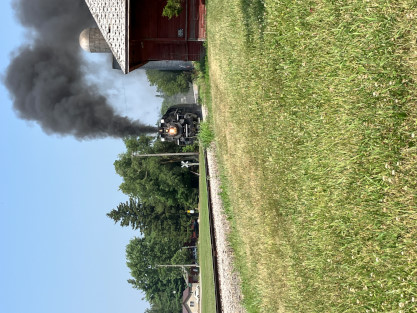
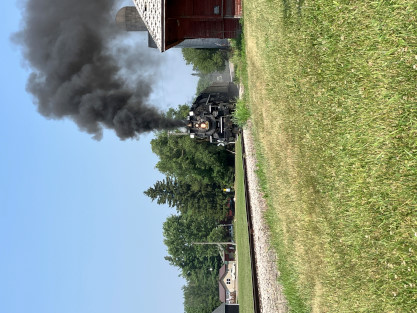
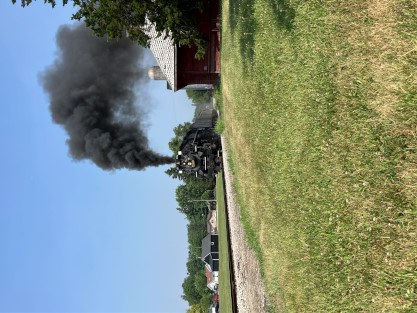
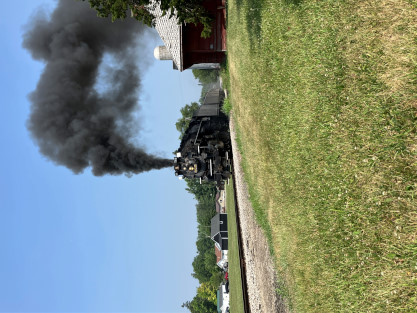
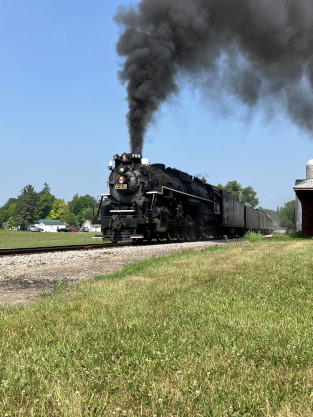
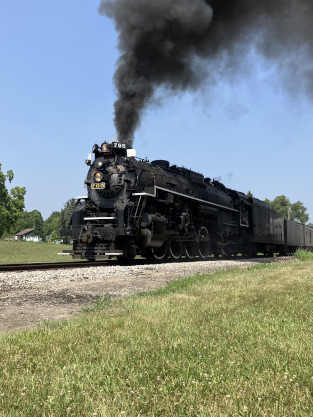
The third photo runby.
The last photo runby with the diesels leading.
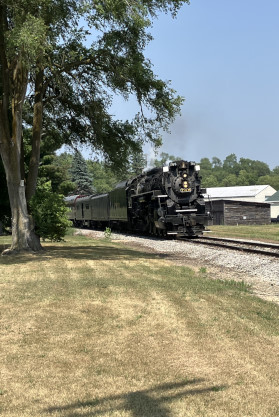
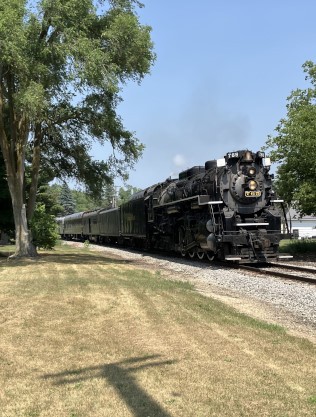
Reversing to pick us up. We relaxed on the return journey to Hillsdale, where the buses were waiting and after my bus was full, we departed for East Lansing. Once bus host duties were finished, Elizabeth and I went to Harper's Restaurant and Brewpub for dinner, returned to our room to catch up on e-mail and the Internet then retired early.
| RETURN TO THE MAIN PAGE |