




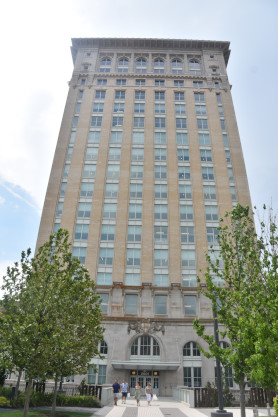
The building began operating as Detroit's main passenger depot in 1913 after the older Michigan Central Station burned on December 26, 1913. It was owned and operated by Michigan Central Railroad and was planned as part of a large project that included the Michigan Central Railway Tunnel below the Detroit River for freight and passengers. The former station's location on a spur line was inconvenient for the high volume of passengers it served. The new station placed passenger service on the main line.
The growing trend toward increased automobile use was not a large concern in 1912, as is evident in the design of the building. Most passengers would arrive at and leave from Michigan Central Station by interurban service or streetcar, due to the station's distance from downtown Detroit. The station had been placed away from downtown in order to stimulate related development that came in its direction. An ambitious project to connect the station to the Cultural Center via a wide boulevard was never realized. Nonetheless, the station remained active for several decades. Trains of the New York Central Railroad (the company that had acquired the Michigan Central), the Baltimore and Ohio Railroad and the Canadian Pacific Railway operated from the station.
At the beginning of World War I, the peak of rail travel in the United States, more than 200 trains left the station each day and lines would stretch from the boarding gates to the main entrance. In the 1940s, more than 4,000 passengers a day used the station and more than 3,000 people worked in its office tower. Among notable passengers arriving at MCS were Presidents Herbert Hoover, Harry S. Truman and Franklin D. Roosevelt, actor Charlie Chaplin, inventor Thomas Edison and artists Frida Kahlo and Diego Rivera. The other major station of Detroit was the Fort Street Union Depot.
In the 1920s Henry Ford began to buy land near the station and made construction plans, but the Great Depression and other circumstances squelched this and many other development efforts. The original design had not provided a large parking facility, so when the interurban service was discontinued less than two decades after MCS opened, it was effectively isolated from the large majority of the population who drove cars and needed parking to use the facility.
Named trainsA large assortment of passenger trains used the station: Baltimore & Ohio; the Ambassador to New York City (Jersey City CNJ terminal) via Pittsburgh and Washington, DC; the Shenandoah, route as above; the Cincinnatian to Cincinnati via Toledo and Dayton; the Great Lakes Limited to Louisville via Toledo, Dayton and Cincinnati; New York Central; the Canadian to Montreal and later Canadian from Niagara from Chicago in the west, to Buffalo and Toronto in the east (with Canadian Pacific carrying from Detroit to Toronto); the Dominion-Overseas to Montreal; Chicago Mercury to Chicago; the Cleveland Mercury to Cleveland; the Detroiter to New York City; the Empire State Express to New York City; the Mercury from Chicago to the west and Cleveland to the east; the New York Special from Chicago to the west and New York City to the east, via Southwestern Ontario; the North Shore Limited (westbound only) to Chicago to the west and from Toronto (pooled with Canadian Pacific's Chicago Express) and New York City in the east; the Northerner to Mackinaw City, Michigan via Bay City, Michigan; the Ohio Special (northbound known as the Michigan Special), to Cincinnati via Toledo and Dayton; the Queen City to Cincinnati via Toledo and Dayton; the Timberliner to Mackinaw City via Bay City; the Twilight Limited to Chicago; and the Wolverine from Chicago to New York City via Southwestern Ontario.
Decline and abandonmentPassenger volume did not decrease immediately. During World War II, the station was used heavily by military troops. After the war, with a growth in automobile ownership people used trains less frequently for vacation or other travel. Service was reduced and passenger traffic became so low that the New York Central attempted to sell the facility in 1956 for United States $5 million, one-third of its original 1913 building cost. Another attempted sale in 1963 failed for lack of buyers. In 1967, maintenance costs were seen as too high relative to the decreasing passenger volume. The restaurant, arcade shops, and main entrance were closed, along with much of the main waiting room. This left only two ticket windows to serve passengers and visitors, who used the same parking-lot entrance as railroad employees working in the building.
Meanwhile, service to various destinations was curtailed. By 1960 the New York Central ended its direct service south to Toledo, on its own timetable yielding that responsibility to the B&O. In 1963 the B&O moved its trains over to the Fort Street Union Depot. The New York Central ended the last of its trains bound north for Bay City in 1964. The pooled New York Central/Central Pacific trains were discontinued and the Canadian Pacific trains to Windsor ended in 1967; and the New York Central ended its named trains by the close of 1967. Any remaining New York Central trains were segmented operations between major cities. The trains run by the NYC's successor in 1968, the Penn Central continued the segmented operations at the station.
Amtrak assumed operation of the nation's passenger rail service in 1971, reopening the main waiting room and entrance in 1975. It started a $1.25 million renovation project in 1978. Six years later, the building was sold for a transportation center project that never materialized. On January 6, 1988, the last Amtrak train pulled away from the station after owners decided to close the facility. Amtrak service continued at a platform on Rose Street near the former station building until the new Detroit station opened several miles away in New Center in 1994. In July 1992, the Detroit Master Plan of Policies for the southwest sector's urban design identified the station as an attractive or interesting feature to be recognized, enhanced and promoted.
Moroun OwnershipControlled Terminals Inc. acquired the station in 1996. Its sister company, the Detroit International Bridge Co., owns the nearby Ambassador Bridge and both are part of a group of transportation-related companies which were owned by late businessman Manuel Moroun, Chairman and CEO of CenTra Inc. The company demolished the train shed in 2000, and converted the remaining tracks and platforms into an intermodal freight facility, named "Expressway" and operated by Canadian Pacific Railway. This facility was closed in June 2004.
In 2004, Detroit mayor Kwame Kilpatrick announced that the city was pursuing options to relocate its Detroit Police Department headquarters and possibly consolidate other law enforcement offices to MCS. However, in mid-2005, the city canceled the plan and chose to renovate its existing headquarters. In 2006 it was proposed that the station be redeveloped into a Trade Processing Center adapting the station as a customs and international trade processing center due to its proximity to the Ambassador Bridge. Although the City of Detroit considered the building a "Priority Cultural Site" in 2006, the City Council on April 7, 2009, passed a resolution to demolish the structure. Seven days later, Detroit resident Stanley Christmas sued the city of Detroit to stop the demolition effort, citing the National Historic Preservation Act of 1966.
In 2008, the station owners said that their goal was to renovate the decaying building. The estimated cost of renovations was $80 million, but the owners viewed finding the right use as a greater problem than financing. Moroun proposed making the station into a convention center and casino. Such a project would have cost $1.2 billion, including $300 million to restore the station. Dan Stamper, president of Detroit International Bridge, noted that the station should have been used as one of the city's casinos. In 2010, State Senator Cameron S. Brown and Mickey Bashfield, a government relations official for the building owner CenTra Inc., suggested that the station could become the Detroit headquarters of the Michigan State Police, include some United States Department of Homeland Security offices, and serve as a center for trade inspections. The development never came to fruition.
On March 25, 2011, in an effort to push forward a potential sale and redevelopment, Dan Stamper, spokesperson for Ambassador Bridge owner Manuel "Matty" Moroun, announced plans to work with the City of Detroit on funding replacement of the tower's roof, and installing new windows on the structure. Stamper told The Detroit News: "It would be much easier to help a developer to come up with a package to use the depot if some improvements were made". In June 2011, work began on partial asbestos abatement on the first floor; other work conducted included interior demolition work, removal of broken glass from first floor windows, and removal of water. In June 2012, electricity was restored to the interior. Lights then illuminated the main lobby.
On May 5, 2011, the Detroit International Bridge Company announced it engaged the Ann Arbor firm of Quinn Evans on behalf of the Moroun family that owned the building to oversee restoration of the roof and windows of the structure. Bridge Company owner Moroun stated, "We hope this is just the beginning of a renaissance for the depot." The once flooded basement was largely drained, with about four inches of water at its highest still remaining in a sub- basement of the building.
On June 10, 2014, it was reported that the owners of Michigan Central Station were moving forward with about $676,000 in rehab work, and had received permits to install a new 9,000-pound capacity freight elevator, which will allow for the smooth installation of new windows and roof work. In late 2014 work to install the elevator began.
In February 2015, the owners announced that they would replace more than 1,000 windows above the first level. In late April the city announced a land swap deal with the Bridge Company to transfer a 3-acre strip of Riverside Park near the Ambassador Bridge for 4.8 acres of adjacent property owned by the Bridge Company. As part of that agreement, the city would receive up to $5 million for park improvements, and the Bridge Company agreed to replace the windows in the train station. In July the Detroit City Council approved the land transfer. By December 2015, all of the new windows were installed.
By August 2016 the Moroun family had spent 10 years and $12 million on electricity, windows, and the elevator shaft, to revitalize the building. Matthew Moroun considered putting part of his family's operations in the 18-story Corktown building. In September 2017 the "Detroit Homecoming" event was held in the station, the first legal event to occur there since the building's closure in 1988.
Ford ownershipOn March 20, 2018, The Detroit News published an article noting the Ford Motor Company was in talks to buy the structure. On May 22, 2018, ownership of the building was transferred from the Moroun-owned MCS Crown Land Development Company LLC to New Investment Properties I LLC. Ford's representatives neither confirmed nor denied if this ownership exchange was made by them.
The Moroun family confirmed on June 11, 2018, that Ford was the new owner of the building. Ford purchased the station along with the Roosevelt Warehouse. Ford planned to turn the building into a hub for its autonomous vehicle development and deployment, and as an anchor for the company's Corktown campus. The building would hold both Ford offices and offices of suppliers and partner companies. The first floor concourse would reopen to the public with restaurants and retail. Housing will also be created on the top floors. Restoration and renovations were then anticipated to be completed by 2022. On June 19, 2018, Ford held a community celebration, in which local rapper Big Sean performed, and the building was opened to the public for the first time since its closure in the 1980s. According to local Detroit media outlets, Ford planned to renovate the station, the warehouse next door, and complete construction on the rest of its campus within four years, and is part of the company's $1 billion capital improvements project, which also included the creation of a development on the West side of Dearborn, Michigan, as well as a renovation of the company's main headquarters in Dearborn. As part of that $1 billion, Ford Land was seeking at least $250 million in tax and other incentives, and claimed that the project would not be financially feasible without the support of incentives.
In December 2018 Ford began Phase I of the building restoration. The work involved drying out the building and reinforcement of structural columns and archways. Phase II began in May 2019 and consisted of masonry restoration of the tower and concourse, retiling of the ceiling of the waiting room, and repair of the structural steel. 3-D scanning technology was used to recreate architectural details lost to exposure and vandalism. Restoration work on the building's masonry facade began in 2021. Work was supposed to be completed in 2022 but was delayed due to the COVID-19 pandemic in Michigan. The station reopened to the public on June 6, 2024. As part of its grand reopening, tickets for a free concert featuring Detroit performers were made available and sold out within five minutes.
Much of the passenger train infrastructure was demolished either after the 1988 cession of Amtrak service or during the renovation. In late 2023 Amtrak and VIA Rail Canada were studying the feasibility of connecting one Chicago- Detroit train to a Windsor-Toronto round trip. However the track arrangement at the current Amtrak Detroit station would require a time consuming and cumbersome backup move. Moving the connection to Michigan Central would simplify this operation. While there is space near the existing CPKC main line for a platform, the renovations no longer allow access from the rear of Michigan Central. A separate Amtrak building would be needed. In October 2025 an agreement was reached with the Michigan Central corporation, the state Department of Transportation, and the city to develop an multimodal facility just west of the station building. The timeline for environmental review, development, and construction is projected for an opening by the end of 2028.
In June 2025 Ford announced that NoMad, a luxury brand within the Hilton chain, will build 180 units (including 30 suites) on the 14th through 18th floors. The ground floor would also include a bar, lounge, and restaurant for the hotel, while the third floor would be converted to a "wellness" area. The hotel is anticipated to open in 2027.
ArchitectureThe building is of the Beaux-Arts Classical style of architecture, designed by the Warren & Wetmore and Reed and Stem firms who also designed New York City's Grand Central Terminal. Michigan Central was designed at the same time, and is seen as a spiritual twin to Grand Central in New York, as both were meant as flagship stations on Vanderbilt's rail lines, both were designed to have office towers in their original design concepts (though Grand Central's tower was never built), both have the same detailing, and were opened six months apart. The price tag for this 500,000-square-foot building was $15 million when it was built. Roosevelt Park creates a grand entryway for the station, which was fully realized around 1920.
The building is composed of two distinct parts: the train station and the 18-story office tower. The roof height is 230 feet. The original plan for the tower included a hotel, offices for the rail company, or a combination of both. The tower was used only for office space by the Michigan Central Railroad and subsequent owners of the building. The tower was never completely used; the top floors were never completely furnished, and served no function.
The main waiting room on the main floor was modelled after an ancient Roman bathhouse, with walls of marble and vaulted ceilings. The building also housed a large hall adorned with Doric columns that housed the ticket office and arcade shops. Beyond the arcade was the concourse, which had brick walls and a large copper skylight. From here, passengers would walk down a ramp to a tunnel from which the platforms could be accessed by stairs and elevators. Under the shed there were ten passenger platforms consisting of one side platform and five island platforms along ten paired tracks. In addition, one track served the Railway Express Agency mail service at the southern end of the shed. Immediately outside the shed were seven additional freight tracks. Below the tracks and building was a large area for baggage and mail handling and offices.
After the purchase of the building by Ford in 2018, several individuals came forward looking to return property and architectural features that were stripped and stolen from the station after its closing in 1988; the biggest item of note being the main station clock. The building renovation for Ford is being designed by Quinn Evans Architects of Detroit.
The very tall, imposing and magnificent station.
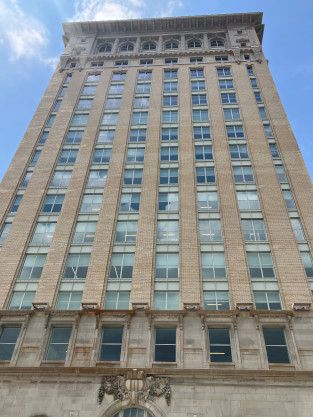
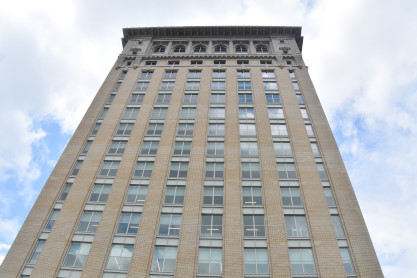
Michigan Central station against the summer sky.
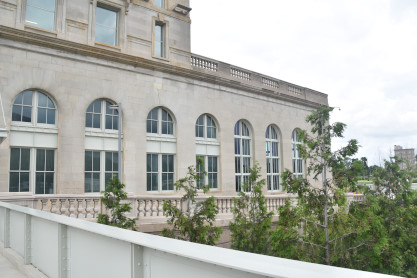
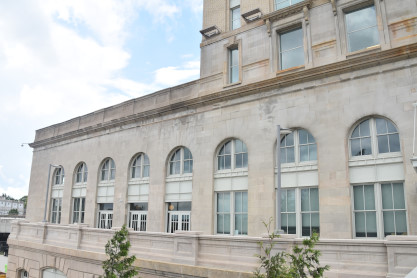
As we walked from the bus to the station.
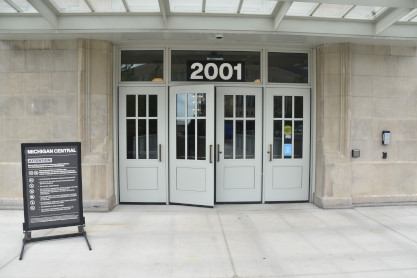
The entrance to this great station. When Ford purchased The Station in 2018, the building had been prey to the elements for decades. Trash and rubble filled every room. The first two years of work were focused on simply getting the building dry, safe, clean and ready for the restoration ahead.
Around 3.5 million gallons of water filled the basement, and it took a year-and-a-half to slowly drain the water. This was made more complicated when the team realized that in some areas, moisture was actually keeping materials intact. Some 4,000 cubic yards of debris were removed from the building, revealing over 1,000 holes in the floor. The foundation needed hundreds of truckloads of concrete to stabilize. Behind the walls, the team found supporting elements more akin to Swiss cheese than structural steel.
The damage to the building had worked its way down to the bones, and significant portions of the structure had to be replaced. Had the restoration begun even just a few years later, experts believe the building may have been unsalvageable.
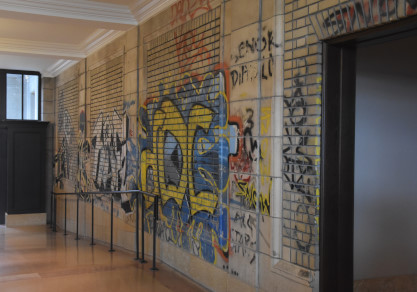
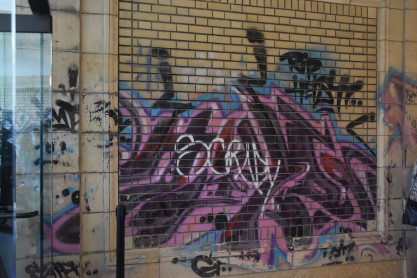
It was rather a surprise, at least for Elizabeth and I, to step inside this restored station and see graffiti. However, from 1988 to 2018, Michigan Central Station became an important location for graffiti artists who made the building their canvas. There was great respect for the graffiti found in The Station, including early work from Detroit's own Fel300ft - who says he learned and honed his craft here - and many other prominent artists.
As The Station changed hands, previous owners took steps to remove the graffiti, in some instances damaging the building's walls through improper cleaning techniques. Under Ford's ownership, the significance of the art was not lost on the restoration team. Local artists helped to assess each piece and to ascribe credit to the creators of the graffiti art where possible. The College of Creative Studies documented the work for archival purposes. Italian Renaissance art express who specialize in fresco preservation advised on how best to remove panels of fragile plaster for safekeeping.
The guidelines for landmark restoration required that The Station be returned to its original state, but it was important to the team that some of the art remain in place to preserve this chapter of the building's life.
It was here that everyone was split into three groups and given wireless earphones and a hand-held device so all could listen to the tour guide's commentary. While this may be the modern way of conducting group tours, both Elizabeth and I prefer a tour guide to have a wireless microphone themselves and speak to the assembled as an audience.
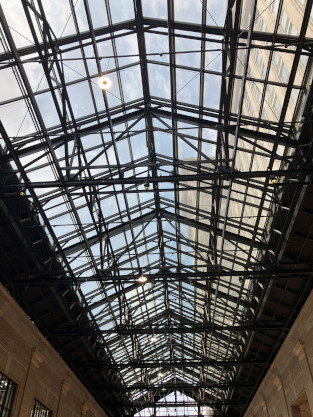
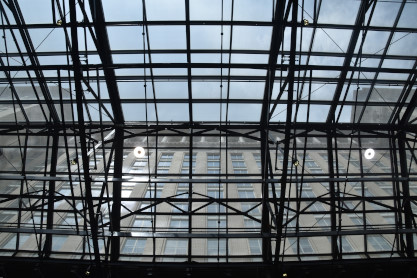
The glass vaulted ceiling.
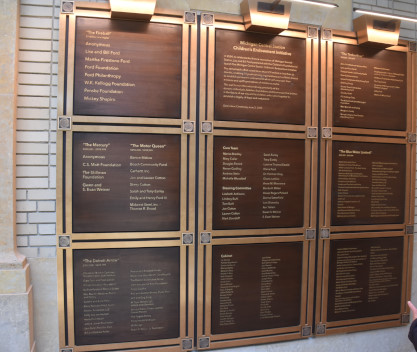
A perpetual nod to the donors, whether they be individuals, families, corporations or businesses, that made the restoration possible.
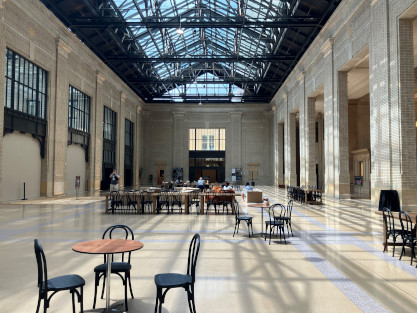
The Main Concourse looking west. The lower skylight, whose brass-framed glass was blacked out during World War II as a precaution against enemy bombing raids that never occurred was atop the Main Concourse, but not re-created.
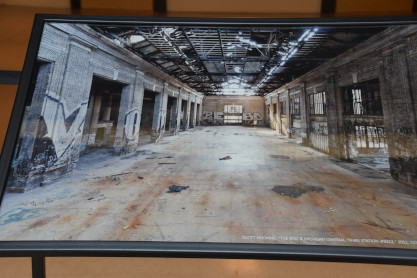
A stark comparison to what it looked like before restoration began.
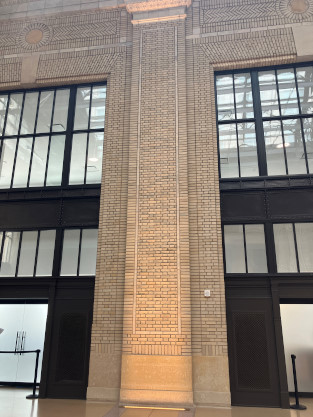
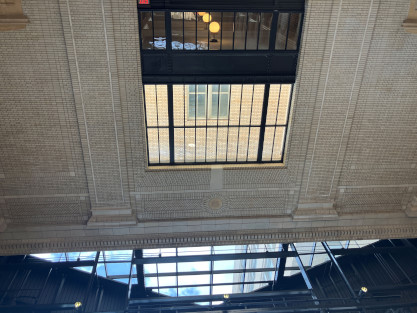
Intricate brickwork making up the columns that lead to the concourse arcade. A total of 8 million bricks were cleaned and tuck-pointed during renovation.
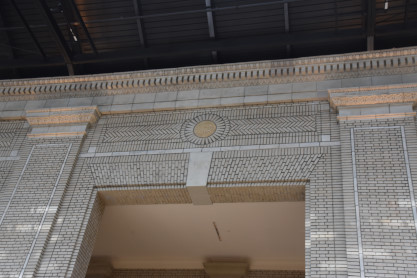
A close-up of the brickwork.
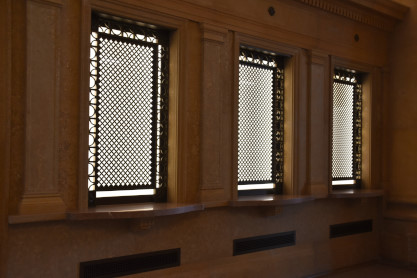
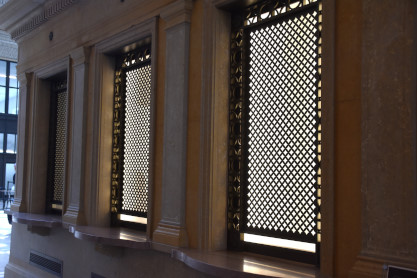
The ticket windows, part of the lobby.
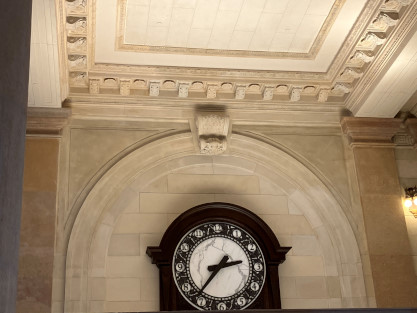
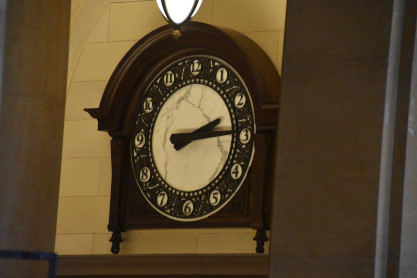
A replica of the original station clock, six feet tall, eight feet wide and weighs approximately 1,000 pounds. It took almost a year to recreate.
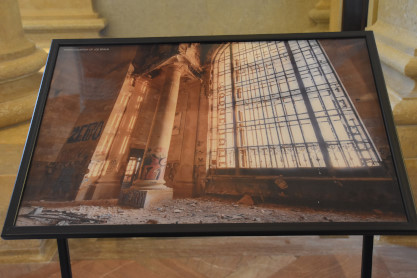
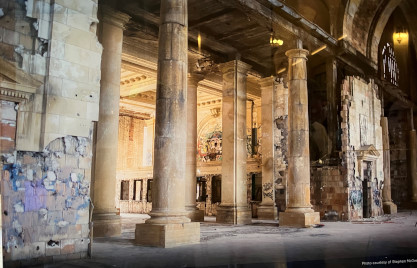
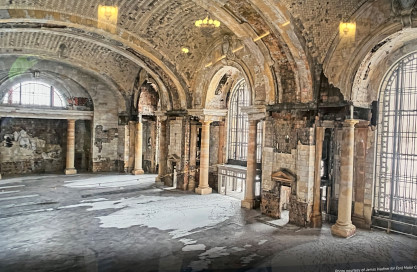
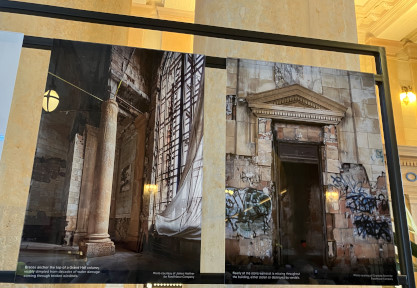
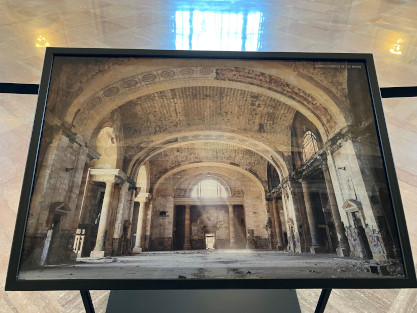
Photographs of the main waiting room looked like before restoration.
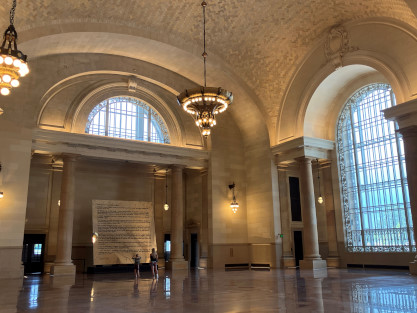
My first view of the magnificent waiting room.
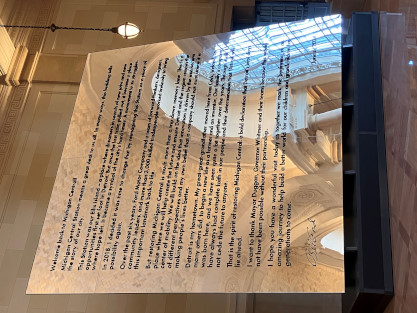
Welcome back to Michigan Central by Bill Ford, great-grandson of Henry Ford and executive chair of Ford Motor Company.
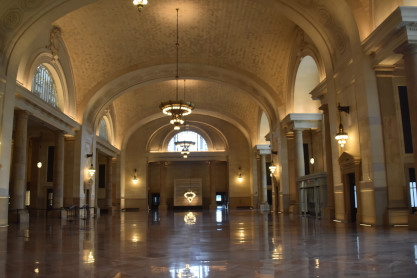
The design of the station's "General Waiting Room" was based on a Roman bath. The vaulted Guastavino tile ceiling is a technique for constructing robust, self-supporting arches and architectural vaults using interlocking terracotta tiles and layers of mortar to form a thin skin, with the tiles following the curve of the roof.
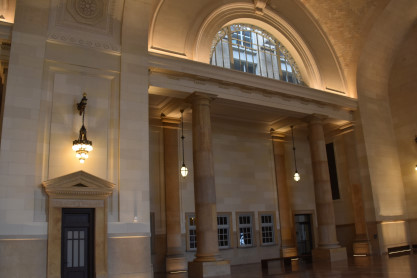
The original location of the telegraph station, drug store and telephone booths when station opened.
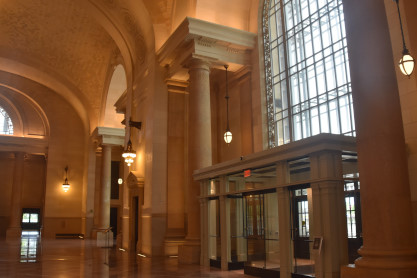
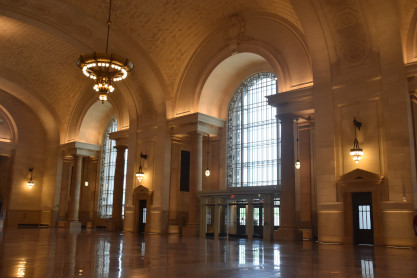
The north main entrance.
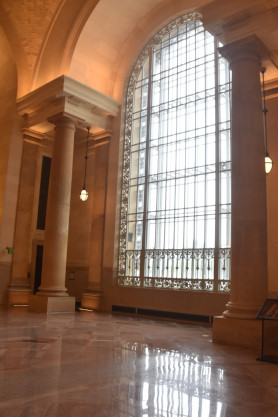
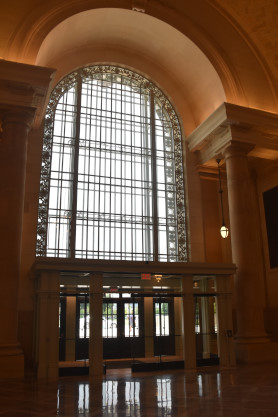
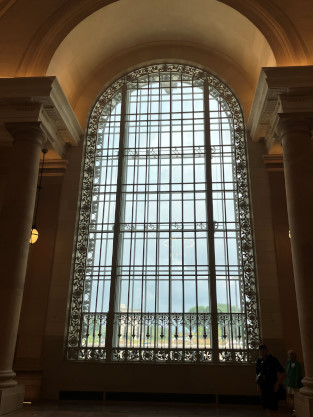
Three of the majestic arched windows. Originally designed to be cranked open for ventilation, they have been meticulously restored. The intricate mechanisms were recreated using 3D printing technology at the Ford Manufacturing Lab, based on remnants of the original filigree.
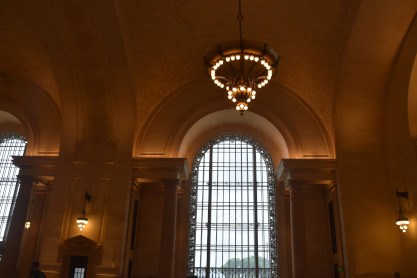
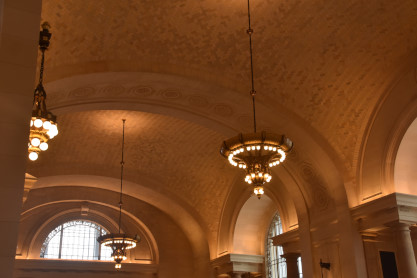
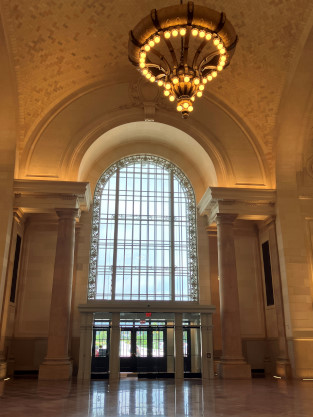
The recreated main chandeliers in the Main Waiting Room.
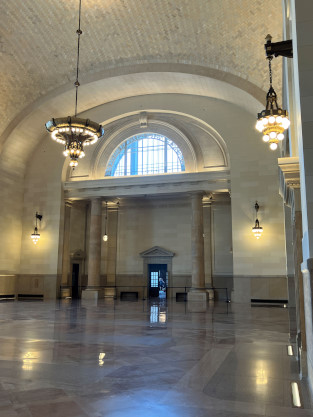
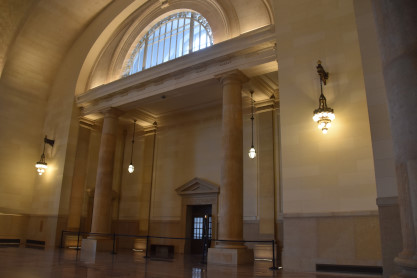
The entrance to the arcade that leads to the ticket lobby.
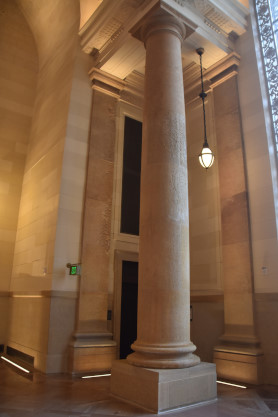
Stone columns in the main waiting room. Decades of water infiltration into the nooks and crannies of these 30 foot columns resulted in significant damage. The repeated freeze-thaw cycle over many years caused severe cracks and chunks to break off. While every effort was made to preserve as much as possible within the depot, a few sections of some columns required replacement due to the extent of the damage.
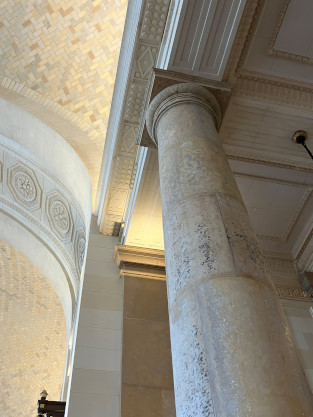
To make the new stone match the 110-year-old stone, experts mixed several different stone colours, like an artist using a palette, and then used a goose feather to painstakingly recreate the matching grain on the stone.
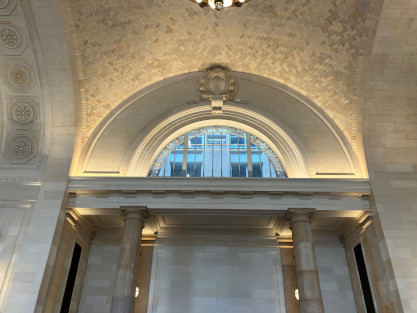
Detail of the main arched window.
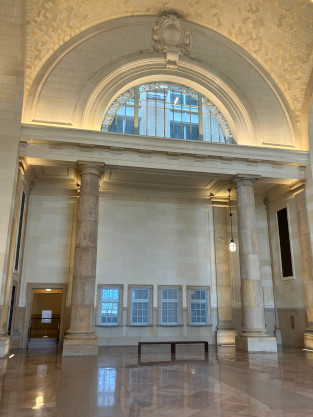
The north side of the main waiting room.
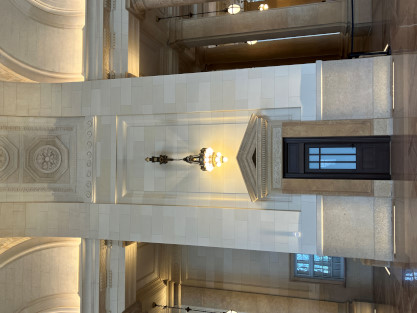
The base of one of the arched support columns.
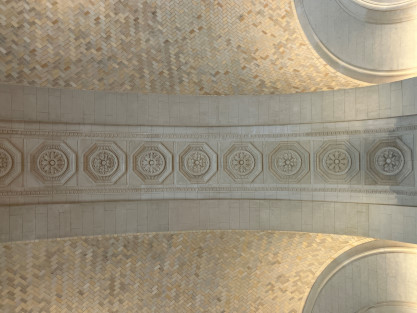
Detail of the ceiling. The missing ceiling medallions were re-created by making plaster molds of the few that survived. Ford Motor Company's dedication to restoration and preservation can be observed everywhere in the building.
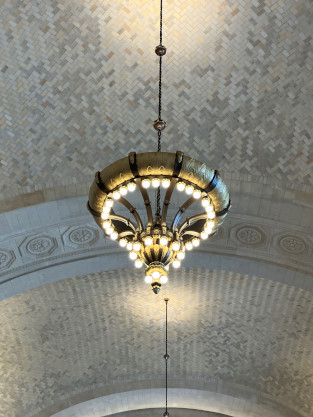
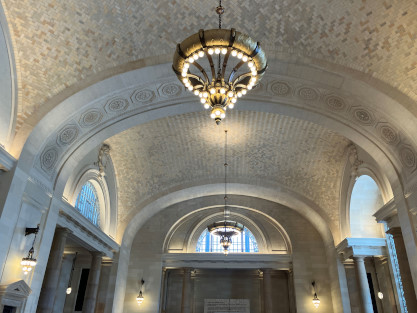
Each of three recreated main chandeliers in the Main Waiting Room weighs 2,700 pounds. This exquisite lighting fixture, missing when renovations began, has been meticulously recreated using photos, drawings and original documentation and now features modern programmable LED technology concealed inside.
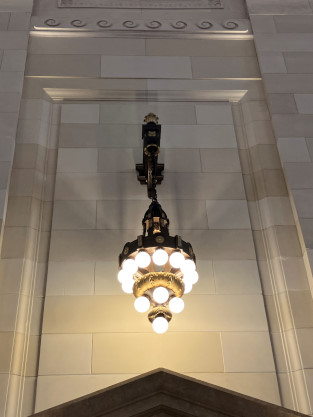
A decorative mount for one of the chandeliers.
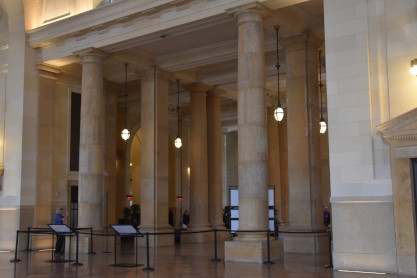
Arched windows and columnar entrances are along each side of this grand room.
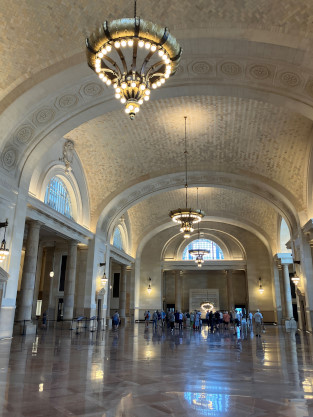
23,000 square feet of marble flooring were restored inside the station. Upon close examination, one can see where the terrazzo fills in the spots where the benches were once located. Nearby, there are noticeable worn indents where people used to dangle and place their feet and the grooves in the marble floor at the foot of the long wooden benches where people had waited.
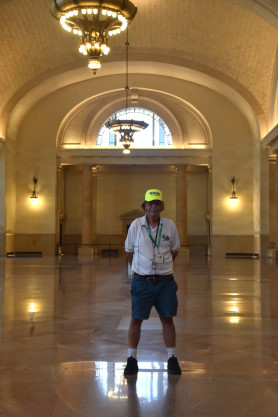
The author in Michigan Central station.
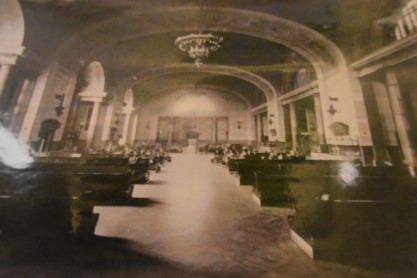
A photograph of the main waiting room in its heyday.
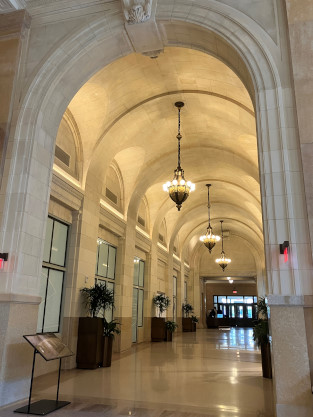
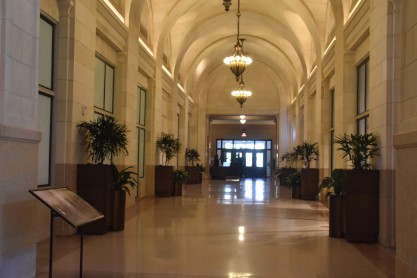
Most inter-city rail passengers at MCS entered the station via the East Entrance and proceeded through the barrel-vaulted arcade en-route to the centrally-located ticket office.
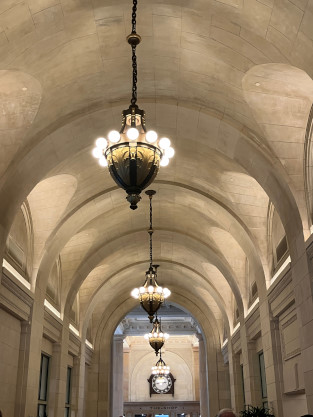
The beautiful chandeliers in the arcade between the waiting room and the ticket office.
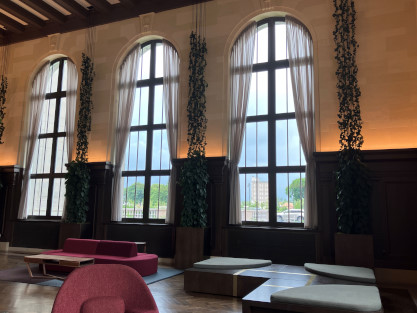
The former Women's Reading Room, otherwise known as the Women's Waiting Room.
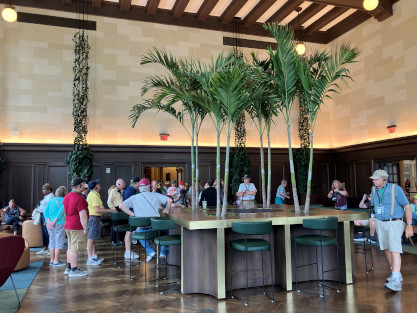
NRHS members awaiting the tour guide.
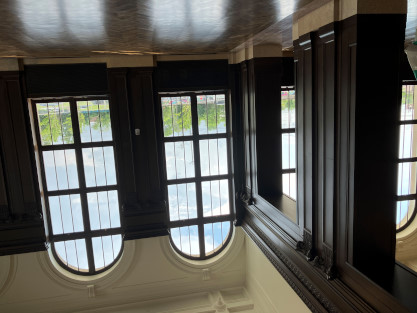
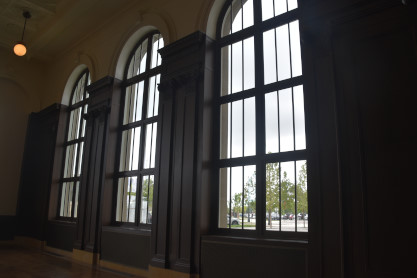
The waiting room windows.
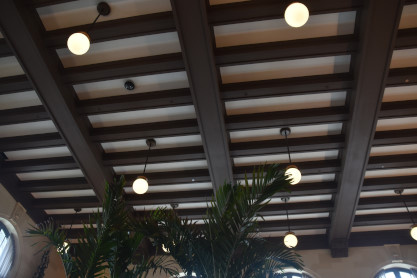
The ceiling.
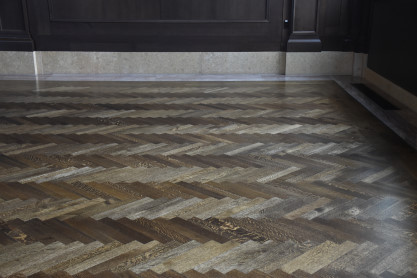
The hardwood floor.
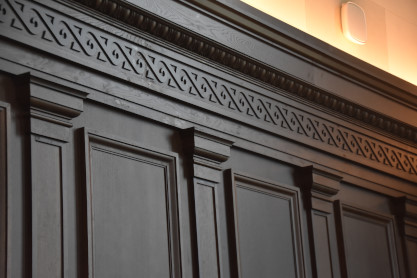
The beautiful wood work.
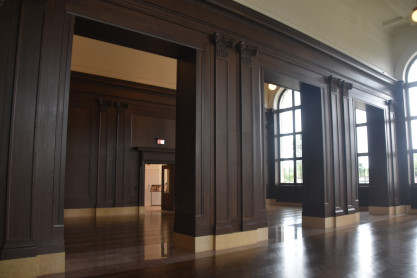
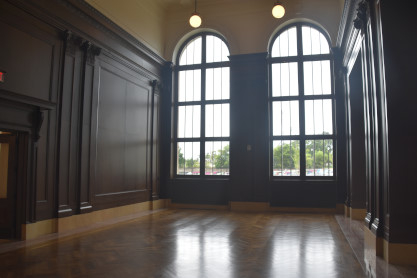
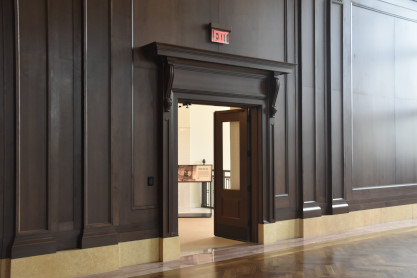
The men's waiting room.
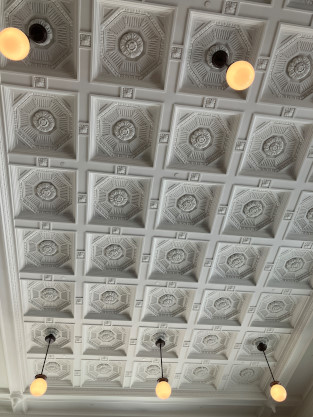
The ornate ceiling. 90,000 square feet of decorative plaster was restored or replicated inside the station during the restoration.
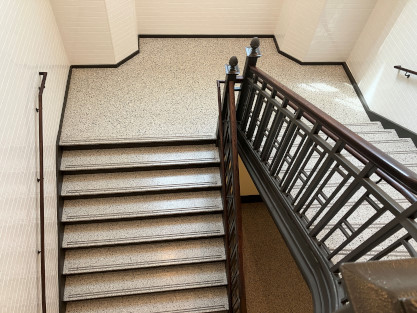
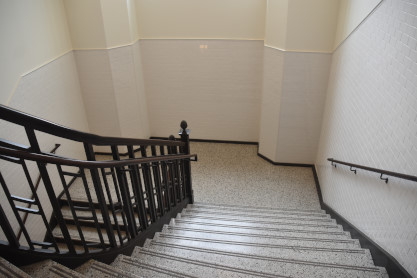
The staircase to the basement. Directly behind, opposite, is the following.
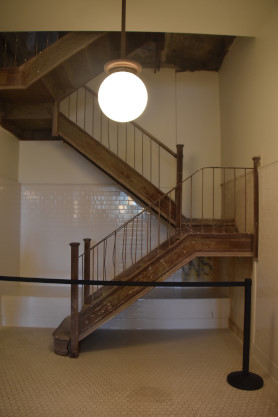
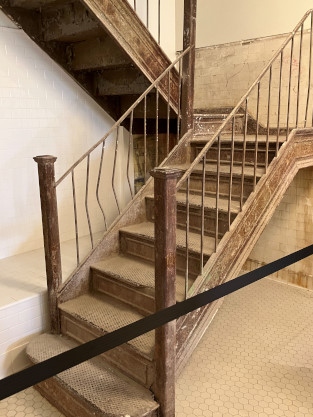
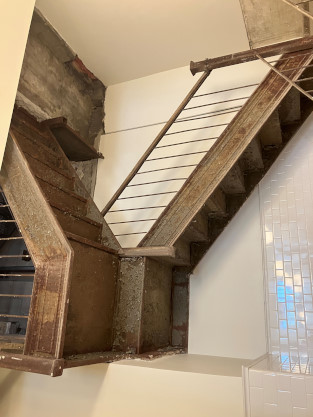
At some point in The Station's life, the staircase was walled off and kept concealed for years. Because the wall was not part of the original building, the restoration team removed it, uncovering this staircase for the first time in decades. Though there were other staircases in The Station when Ford acquired it, most were unsafe after decades of abandonment and had to be replaced to meet modern building codes. Because this staircase would not be used following the restoration, the team was able to preserve this piece of the past. This is the last surviving original staircase in The Station. It was originally used by workers to access a series of storage rooms on the floors above. The dumbwaiters here brought food from the basement kitchen to waitstaff on the main floor.
If you look closely at the wall behind the staircase, you can see where the original tiles meet the new, showcasing the incredible commitment of the 3,100 skilled tradespeople who worked to restore The Station to its original grandeur.
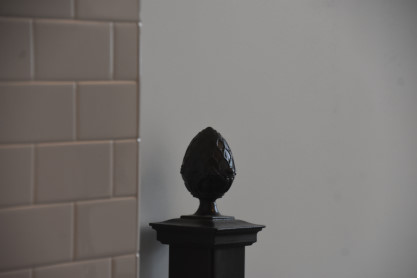
The acorn newel posts on the staircase. Acorns were found throughout the station and were associated the Vanderbilt family. Michigan Central Railroad was a subsidiary of New York Central Railroad, which was owned by William Vanderbilt.
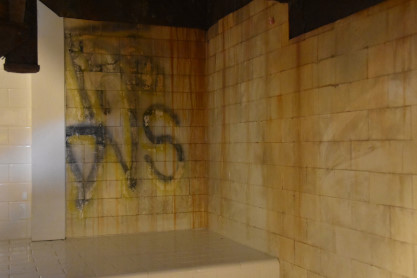
Preserved graffiti in the basement area. The tour concluded in the former restaurant where artifacts were on display in enclosed cases and photographic history boards gave an insight into the restoration process and several features.
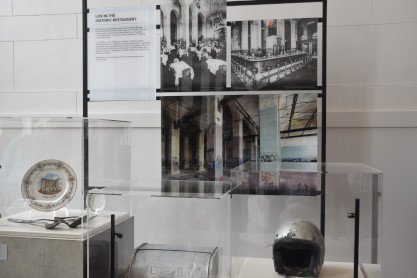
Life in the Historic Restaurant photographic history board.
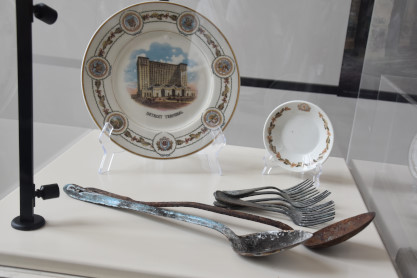
American Fruit Plate. Union News Company ran the restaurant at The Station and the diners ate off custom china. The silverware was discovered in the basement, which was once the restaurant's kitchen.
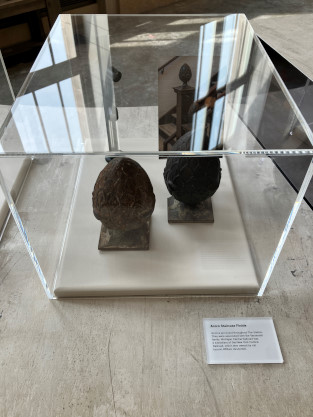
Original acorn staircase finials.
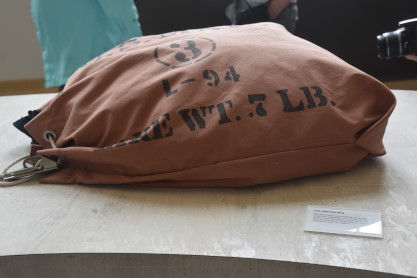
United States mail tote bag. The Book Depository building across the street was originally a United States postal facility. It moved millions of pieces of mail each day that were transported on trains coming through the station.
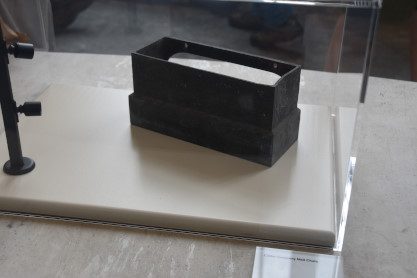
Cutler company mail chute.
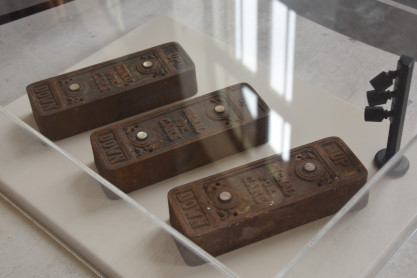
Elevator buttons.
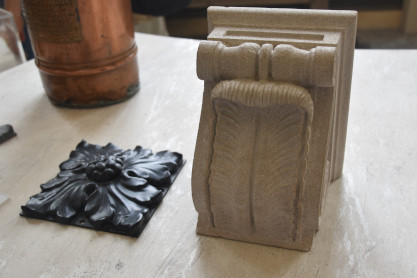
Decorative tile and carved stone, from which the restorers were able to replicate the patterns.
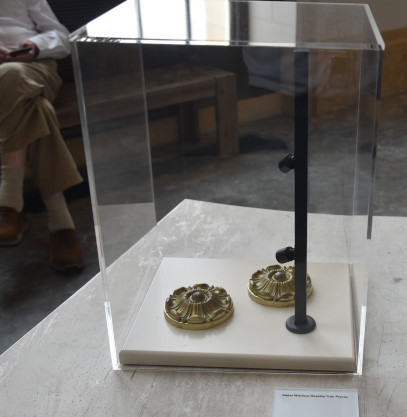
Metal window rosette trim pieces.
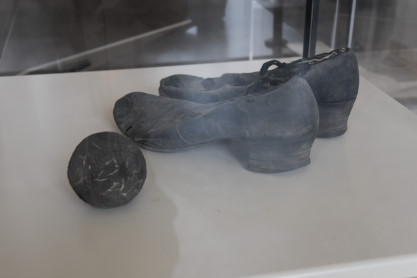
A baseball and a pair of shoes, other details unknown.
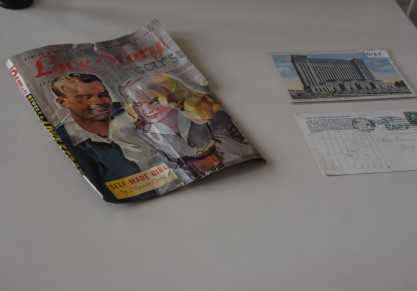
"Love Story" Magazine from September 27, 1941 and Michigan Central postcard dated March 17, 1916.
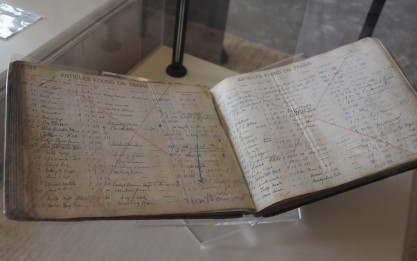
Articles found on trains June 24 to July 25, 1930.
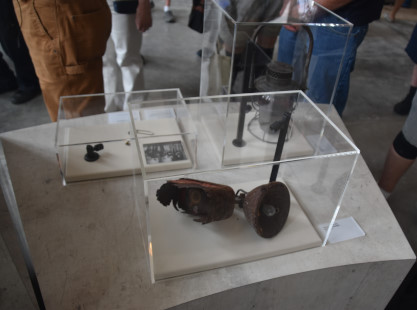
A rusted flashlight found during renovation.
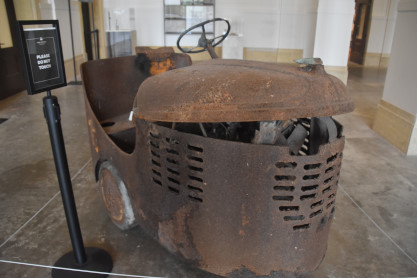
A rusted and fire-damaged baggage tractor found during restoration.
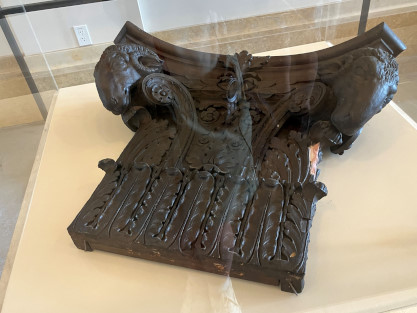
These intricate Rams' Head from the Historic Reading Room were among The Station's details that had been stolen and lost to time. It was clear that there once had been ornate trim in the room, but neither archival drawings nor old photographs were detailed enough for a re-creation.
With the help of leads called in by the community, the restoration team eventually found a private collector who lent one of the missing pieces. The team digitally scanned the Rams' Heads, then 3D-printed a prototype, and coated it with silicone to create a mold. The final pieces were cast with plaster and carefully painted by hand to resemble the originals.
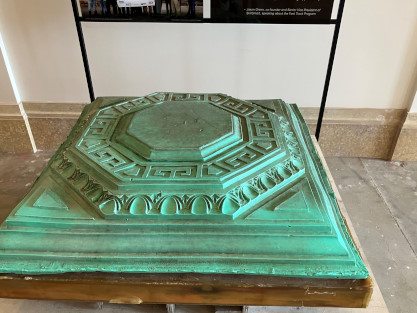
A plaster mold created during the lengthy restoration process. Detailed extravagance is core to the building's Beaux-Arts style. The original builders and artisans integrated decorative elements in ways that avoided excessive structural support. For example, many pieces of the original plaster and terracotta trim mimicked stone by using innovative finishes and the ceiling above received a similar treatment. Keeping with tradition, the restoration team used many of these same methods to painstakingly re-create the detailed trim that mimics stone and defines The Station's character.
Many unique skills were required to restore The Station, so Ford partnered with local companies and organizations to introduce a program called Fast Track that taught Detroiters the skills they needed in order to aid in the building's revival. The program helped 84 cohorts, many Detroiters, transition to paid, on-site work experiences. 86 percent of those who completed the 16-week program were hired into related construction industry jobs.
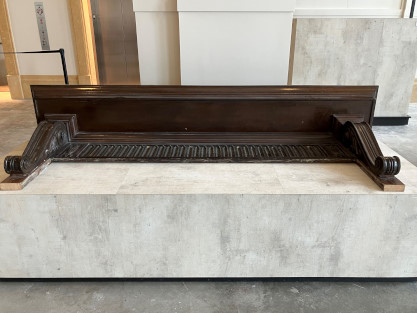
A piece of the original woodwork from one of the waiting rooms.
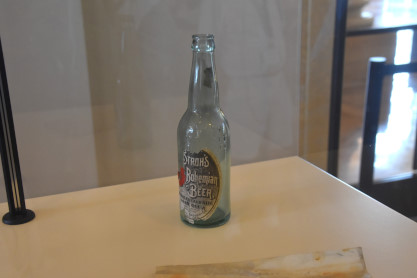
The Stroh's Bohemian Style Beer Bottle and message within were recovered during the restoration.
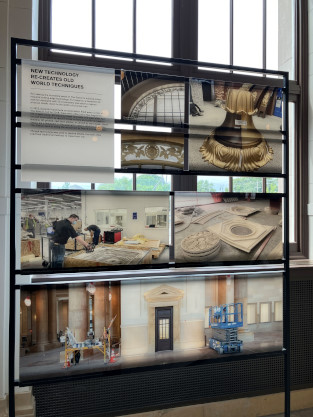
Re-creating the incredible detail of The Station's missing pieces required cutting-edge technology. For instance, a handheld 3D scanner equipped with fifteen cross-lasers was used to capture physical details down to the width of a human hair.
In 1913, beautiful handmade ornamentation filled every corner of The Station, but by 2018, there were often just a few fragments left of each piece. By scanning these remnants, the team often enough information to rebuild virtual models and guide re-creation. Whether 3D printed, cast from plaster, or carved by hand again, these details are a testament to the restoration team's devotion to getting The Station back to being the monument to Detroit it once had been. Though technology was used to capture details, the team often practiced traditional methods to make them real.
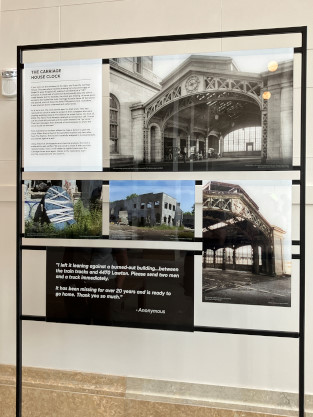
To the right of The Station is the Carriage House. This was where travellers arriving by horse and buggy or Model Ts were dropped off, making it somewhat of a "VIP" entrance. A clock cast of solid iron stood proudly atop the entry's metal facade, but for decades, the clock was missing. At some point, someone had scaled the rusty Carriage House's frame forty-five feet above the ground, and cut down the hefty 700-pound clock. Somehow, it was lowered down unharmed and carted away.
As it turns out, the clock bandit was not a thief at all. They had removed the clock in order to protect it from scrappers who stealing anything metal in The Station for scrap money. On June 15, 2018, the Henry Ford Museum received an anonymous call. It turns out the clock still survived and the caller wanted it to "go home". Their text messages then directed a Ford employee to where the clock would be returned.
Ford maintenance workers offered to make a detour to grab the clock. When they arrived at the specified location only two miles from The Station, they found it carefully wrapped in moving blankets and leaned against a wall.
Using historical photographs and chemical analysis, the clock's authenticity was verified. Soon, it will retake its rightful place over the Carriage House once again, thanks to the restoration team and the preservationist who saved it.
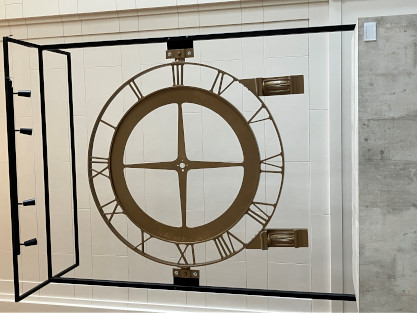
The original Carriage House clock.
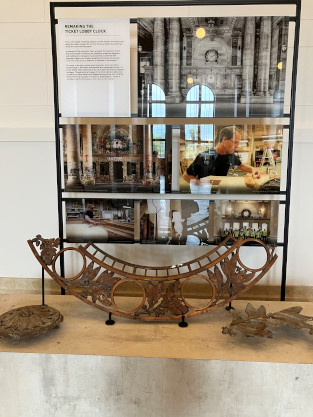
This is the largest remaining fragment of the original clock that hung above the ticket counter. By the time Ford purchased the building in 2018, the clock was long gone.
A member of the restoration team acquired this fragment, which was instrumental in verifying the geometry, as well as designing and building the mahogany clock assembly. Combined with historical imagery and original drawings, this was enough to re-create the clock as faithfully as possible to the original.
For some of the hand-caved wood elements, work was led by Andrei Marek, a Romanian woodworker who immigrated to the United States in the 1990s. Other elements of the clock were machined in Holland, Michigan. Though archival images of the clock exist and were used as reference, there were not any detailed photos of the trim. That left Marek with what he called "a margin of interpretation", but he is confident that the final piece is very close to the original.
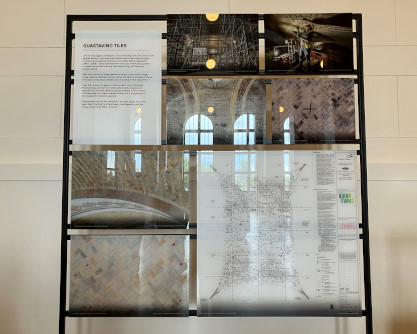
One of the biggest challenges of the restoration was the Grand Hall's vaulted ceiling. The original architects used the technique brought to America by Spanish engineer and builder Rafael Guastavino (1842-1908).Teracotta tiles were laid in an interlocking pattern to make a structurally strong, self-supporting and fireproof arched ceiling.
After two months of investigative mockups, construction began. Three massive scaffolds sat just below the ceiling, forty feet in the air. The maze of pipes and planks was nicknamed "The Dancefloor."
Over the course of a year, a masonry team from Pittsburgh, Pennsylvania, and Detroit individually tested, cleaned and restored 29,000 tiles, replacing approximately 1,700 of them. The final step: 8.7 miles of raised mortar joint, a signature of Guastavino method, were laid.
Experts say that had the restoration process begun just a few years later, the tiles may have been unsalvageable, and the ceiling would have likely collapsed.
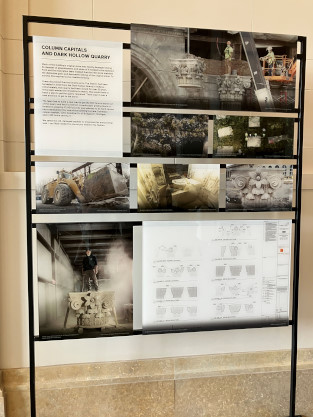
Much of the building's original stone was heavily damaged during its decades of abandonment, and some of it needed to be replaced. Ford and the restoration team insisted that the new stone matched the distinctive grain and decorative veining of the original stone. To achieve this required some creative thinking.
It was discovered that the limestone for The Station had been harvested in 1910 from the Dark Hollow Quarry in Indiana. Unfortunately, that quarry had been closed for over thirty years. If the team wanted limestone to match, they would have hatch a plan to get the quarry reopened. There was not even a road anymore to get to the stone.
The team had to build a new road to get the 600 tons of stone out of the quarry and back to Detroit. A particularly pristine block of limestone weighing 21,000 pounds was selected to be hand-carved into a replacement for one of the building's ornate Corinthian column capitals. John Goodrow Sr. of Bridgeport, Michigan spent 428 hours carving it.
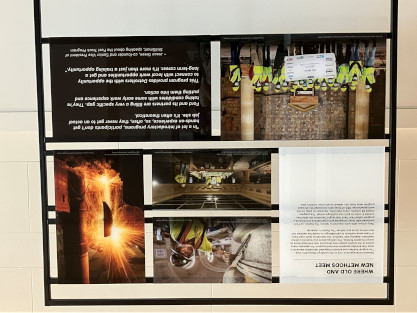
Where old and new methods meet.
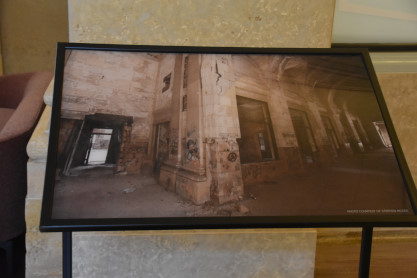
An example of the condition of the building and the monumental task ahead of the restoration team.
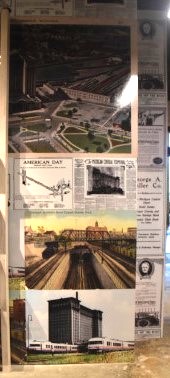
The walls of the gift shop were covered in historical photographs of the station and surrounding area.
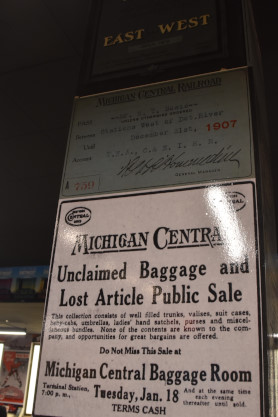
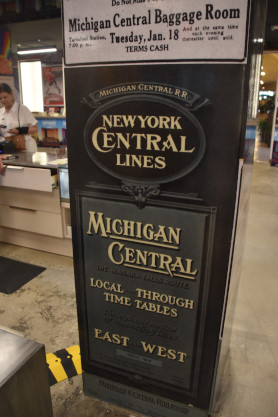
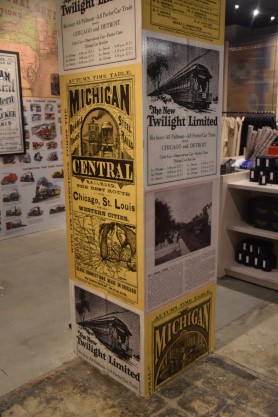
Each of the columns in the shop were covered with replica vintage Michigan Central and New York Central signs.
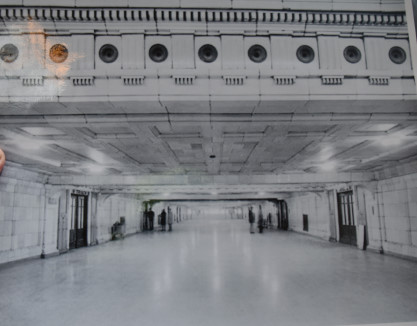
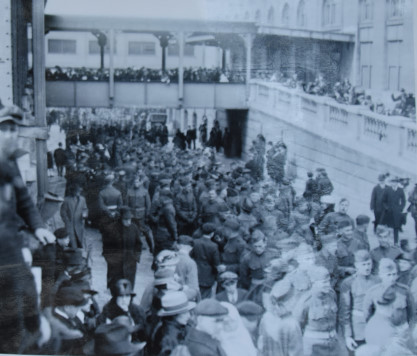
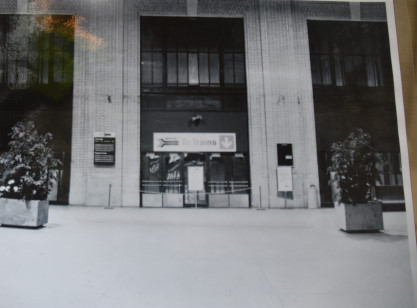
The tour guide handed around photographs depicting the station over the years. That ended this most fascinating tour and was the last event of the convention. Each group returned to their buses and were taken back to East Lansing. We went to Harpers Bar and Grill then attended the evening seminar where Doug Scott showed "Sumpter Valley Railway and a Date with a Daylight". We both caught up on our e-mail and the Internet before retiring for the night.
7/17/2025 Elizabeth and I arose and following our Internet duties, we went to Leo's Coney Island for a good breakfast then returned to the Graduate Hotel and spent most of the day in the Shadows Ballroom on the second floor for the business meetingd, comprising the plenary session of reports, the Advisory Council and the Board of Directors meetings. Several chapter representatives, Directors and other members joined via Zoom.
The audio-visual set-up, with equipment courtesy Dan Meyer, the society's AV coordinator.
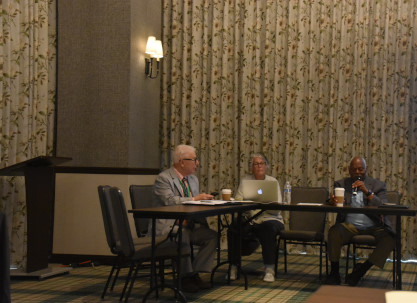
John Fiorilla (Legal Counsel), Ellen Scott (National Secretary) and Tony White (President) at the beginning of the plenary session.
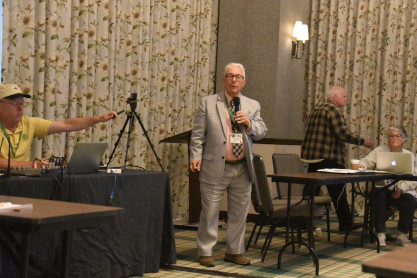
John Fiorilla giving the safety briefing to the assembled delegates.
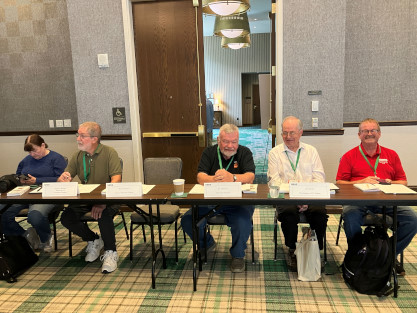
Getting ready for the Advisory Council meeting was Dawn Holmberg (Northstar Chapter), Stephen Himpsl (alternate for Lancaster Chapter), Joe Maloney (Tidewater Chapter), Jim Perry (Washington, DC) and Ed Fortuna (Lackawanna- Wyoming Valley Chapter).
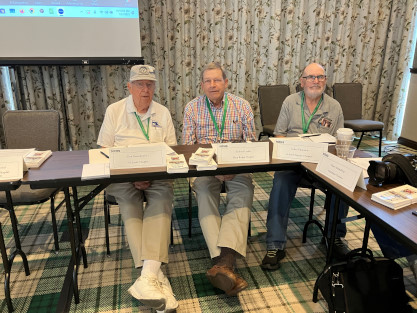
Ron Gawedzinski (St. Louis Chapter), Robert Leslie (Blue Ridge Chapter) and John Simanton (Inland Empire Chapter).
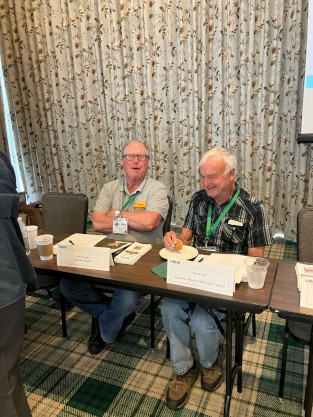
Bob St. John (Topeka Chapter) and Ken Eddy (Arkansas-Boston Mountains Chapter).
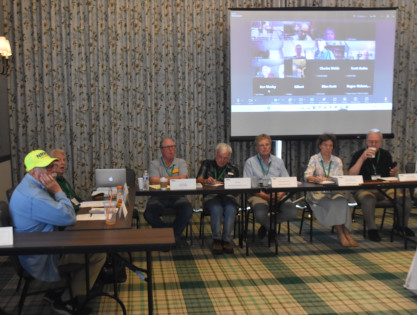
Doug Scott (Cape Cod, Potomac and Western Connecticut Chapters), Marlin Taylor (Delaware), Bob St. John, Ken Eddy, Robert Brewster (Intermountain Chapter), Elizabeth Guenzler (Central Coast Chapter and Advisory Council Secretary) and Richard Shulby (Baltimore and Piedmont Carolina Chapter and Advisory Council Chairman).
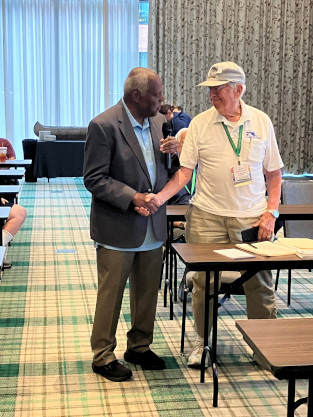
At the afternoon Board meeting, Tony giving Ron Gawedzinski a warm send-off as Ron was stepping down from his position as National Representative after many years of service. Later on, I went to Raising Cane's for dinner and Elizabeth went to Potbelly Sandwich Shop, before we called it a night.
| RETURN TO THE MAIN PAGE |