



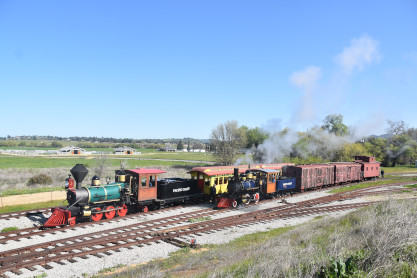
Anticipating an excellent day, Elizabeth and I engaged in our morning preparations before having breakfast at the Holiday Inn Express then drove to Santa Margarita and following the directions we had been given, entered the code to the gate and soon parked at the Pacific Coast Railroad and found Dak Dillon, who checked us off his manifest.
From early Native American inhabitants to Spanish padres, Mexican generals to itinerant outlaws, Santa Margarita Ranch boasts an illustrious cultural and historical pedigree that is unrivaled on California’s Central Coast. The ranch's majestic terrain was home to Native Americans for thousands of years. The Salinan and Chumash tribes converged here to live amid the fertile valley soils, mountain forests, plentiful water and abundant wildlife. The ranch was later settled by Franciscan missionaries in the 1770s as part of California's famed mission trail. The friars raised cattle, planted grapes and established Santa Margarita de Cortona Asistencia as an "assistance mission" between Mission San Luis Obispo to the south and Mission San Miguel to the north. They also erected the stone-and-mortar Asistencia building . The now-covered walls of the Asistencia still stand today, providing an elegantly rustic backdrop for many weddings and special events.
In 1841, the ranch was granted to Joaquin Estrada, a colorful ranchero who was known for hosting grand fiestas and rodeos. Estrada's gracious hospitality set the tone for generations to come at Santa Margarita Ranch. Since 1999, the 14,000-acre Santa Margarita Ranch has been owned by three longtime local winegrowing and ranching families: the Filipponis, Rossis and Wittstroms. Together, they have advanced the ranch’s legacy of hospitality while preserving its roots as a working cattle ranch and vineyard.
Ranch LandmarksWhen you visit the headquarters at Santa Margarita Ranch, you will see the following landmarks: The Asistencia building is regarded as the first stone-and-mortar structure built in California. The Asistencia served as a farmhouse, granary, chapel and lodging quarters during the Mission Period. Today, the original building is covered by a protective barn, but the impressive stone walls still stand. California’s original El Camino Real, the 600-mile "Mission Trail" connecting the state’s 21 missions, ran right through Santa Margarita Ranch. Remnants of El Camino Real are still visible today on the ranch. The charming Wells Fargo building dates back to the days when the ranch was an official stagecoach stop for Wells Fargo and other stage lines.
The original ranch house still stands today, although its adobe walls are now covered and protected by wood siding. For generations, this house has served as a hub for festivity and hospitality on Santa Margarita Ranch. Mission Vineyard Franciscan missionaries first planted grapes on the ranch in 1780. A classic head-pruned vineyard was later planted next to the Asistencia sometime in the 1800s. We have planted a new Mission-style vineyard in the same spot to honor the ranch’s winegrowing roots.
Mission PeriodThe establishment of nearby Mission San Luis Obispo de Tolosa in 1772 marked a monumental shift in the local landscape as livelihoods changed from hunting and gathering to farming and animal husbandry. This shift had an immediate— and at times cruel—impact on the local Native American culture. The padres introduced cattle, sheep, horses, farming and viticulture on what is now known as Santa Margarita Ranch. In 1787, Santa Margarita de Cortona was formally recognized as an "assistance mission” to Mission San Luis Obispo. The rock and mortar walls of the original Asistencia building still stand on the ranch today and have been declared a registered California Historical Landmark.
Rancho PeriodAfter Mexico secured its independence from Spain in 1822, the mission properties were privatized. In 1841, more than 17,000 acres, including what is now known as Santa Margarita Ranch, were granted to 26-year-old Joaquin Estrada. During hostilities between the Mexican and American governments, the ranch was used for strategy meetings led by General Jose Castro and the Mexican Governor of California, Pio Pico. Known for hosting epic rodeos and fiestas, Estrada set the pace for the "early California rancho hospitality" that endures on the ranch today. Drought and debt, however, eventually got the best of Estrada. In 1861, 11 years after California officially became the 31st state in the union, he was forced to sell the ranch to the Murphy family.
United States PeriodSanta Margarita Ranch prospered in the hands of Patrick Murphy, who was instrumental in bringing the Southern Pacific Railroad to the area, granting a right-of-way that led to the birth of the town of Santa Margarita. Like Joaquin Estrada, Patrick Murphy was known for hosting large fiestas and rodeos. Local folklore maintains that the notorious brothers Frank James and Jesse James passed through the ranch in 1874 while on the run and heading out to their Uncle Drury’s nearby La Panza Ranch. The ranch was sold to the Reis family in 1901, and it passed through several hands in the ensuing decades. Today, Santa Margarita Ranch is owned by three longtime local families who are dedicated to a advancing its heritage as a working ranch and vineyard.
Pacific Coast Railroad HistoryFounded in 2000 by Rob Rossi and lovingly built as part of a heritage revitalization project, this 3 foot narrow gauge scenic railroad features vintage steam locomotives, a picturesque loop of rolling hills and meadows, and a one- of-a-kind fleet of passenger coaches originally from Disneyland plus Rio Grande era freight. If you’re looking to capture the spirit of California's Central Coast—complete with billowing steam, historic charm, and wide-open vistas—then the Pacific Coast Railroad promises an unforgettable photography experience. For our event, our trains will alternate between passenger and freight consists. The passenger cars include three of the original Santa Fe & Disneyland Railroad Retlaw 1 passenger cars that are original to the theme park’s opening. The freight includes boxcars, gondolas and caboose.
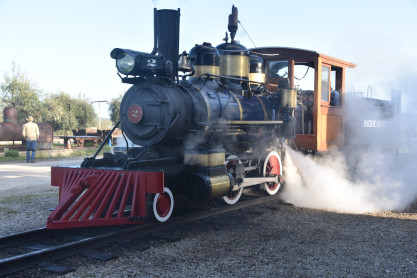
Pacific Coast Railroad 2-4-0 2 "Roger Linn", nee Lehigh Stone Company 800, built by the Vulcan Iron Works in 1922, began its life as a humble tank engine in a Lehigh, Illinois quarry. Retired in 1960, 800 and 802 were sold to Peter Burno of Spring Green, Wisconsin, who, in 1968, sold them to George Roose, president of Cedar Point amusement park. Roose, who is often credited for saving the venerable Sandusky, Ohio, attraction from its likely demise, had taken a cue from the success of Disneyland and Knotts Berry Farm and added a narrow-gauge steam railroad to the park that same year.
While 802 became the property of Cedar Point, Roose would retain personal ownership of 800, adding it to his ever-growing private collection. In the mid-1970s, Roose, intending to lease some of his collection to other parks, opted to have the locomotive rebuilt on spec. At Lakecraft Welding of Port Clinton, Ohio, Sam Conti transformed the rusted hulk into a 2-4-0 tender engine – which, following completion of its overhaul, made shakedown runs on the Cedar Point loopline.
In 1982, the present P.C.R.R. 2, along with what is now P.C.R.R. No. 3, was moved to Wild World of Largo, Maryland – today’s Six Flags America. While 3 did not operate there, 2 saw brief operation until the lease ended and both locomotives were returned to storage. In the late 1980s, the locomotive spent time at the Stuhr Museum in Grand Island, Nebraska, while the usual motive power of the Nebraska-Midland Railroad, former White Pass & Yukon 69, was out of service. 2 was later acquired by the late Bill Norred of Ventura County, California, and, on its way west, it passed through Shop Services of Mount Pleasant, Iowa, where it received additional rebuilding and acquired the number "2".
A citrus-packing warehouse became a stable for Mr. Norred’s iron horses - the present P.C.R.R. Nos. 2 and 3, and a Davenport 0-4-0T-turned-2-4-4 Forney. In 1995, Norred, who aspired to construct a Victorian-era village and steam railroad, traded his Davenport in exchange for the original Disneyland Railroad "Retlaw One" coaches. While Norred's dream would never come to pass, No. 2, in 1993, was moved to the Paramount Ranch in Malibu where it would gain the dubious distinction of being the only of Norred's three foot locomotives to operate under his ownership. It would spend the next five years beside Jane Seymour on the set of "Dr. Quinn: Medicine Woman", where it steamed into the homes of millions.
After Bill Norred’s death in 1999, his family sought a suitable home for the two remaining locomotives and four Disneyland coaches. The following year, a buyer was found in Rob Rossi, a Central Coast entrepreneur who had recently gained co-ownership of the historic Santa Margarita Ranch near San Luis Obispo. In 2004, the golden spike was driven on Rossi's private two-mile Pacific Coast Railroad, where 2 has served as the primary locomotive ever since.
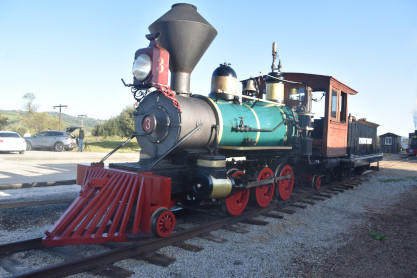
Pacific Coast Railroad 0-6-2T 3 "Melodia", nee Barker and LePine Sugar Cane Company in LaFourche Crossing, Louisiana, built by H.K. Porter in 1897. It was one of two to be purchased by the Barker & LePine Company, the other being a Baldwin 0-4-4RT which arrived in 1902. Curiously, neither locomotive carried a road number; the Baldwin was named "Maud L." for the two-year-old daughter of plantation co-owner J. Wilson LePine and it is speculated "Melodia B." was for a matriarch of the Barker family. Melodia was a common French woman's name and Melodia Switch was also the delivery location listed for Barker & LePine's locomotives on the Southern Pacific (Texas & New Orleans) Railroad.
After half a century hauling sugar cane on the company's Laurel Valley Plantation in Thibodaux, Louisiana, "Melodia B." was retired from active service and by 1953, was in the hands of Arthur LaSalle of Hilliard, Florida. LaSalle, who had purchased the "Maud L." in 1946, performed various locomotive restorations under the moniker of "American Railroad Equipment Company". In 1961, LaSalle overhauled and sold the "Maud L.," along with his Davenport 2-6-0 from the St. John Plantation, to George Roose of Sandusky, Ohio, where they became the first motive power of the Cedar Point & Lake Erie Railroad.
In 1960, LaSalle sold "Melodia B." to Hubert Mitchell Industries of Hartselle, Alabama, who again sold it shortly after to James Freeland of Hillsborough, North Carolina. It is believed Freeland, owner of the Daniel Boone Village amusement park, contracted Crown Metal Products of Elizabeth, Pennsylvania, to rebuild the locomotive into a 2-6-2. Crown, which specialized in the construction of 15"-36" gauge replica locomotives for amusement parks, modified the running gear to fit a stock Monroe Brothers boiler already on the floor for one of their three foot 4-4-0s. Rebuilt around 1963-1964, the locomotive remained in Hillsborough until 1970, when it was sold to Pat Hall, developer of the Carowinds theme park in Fort Mill, South Carolina.
When the park opened in 1973, the locomotive became No. 1 of the "Carolwinds & Carolinas Railroad"; retaining the name "Melodia" on one side of the cab while lettered "EPH" on the other in honor of the park's creator, Earl Patterson Hall. While the successful park continues operation today under Cedar Fair, LP, the three foot railroad was short-lived, closing in 1976 after just three seasons of operation. After time in storage at Carolwinds, the "Melodia", along with her consist of ornate coaches, were sold to George Roose, who maintained them as part of his personal collection. Leased briefly to Wild World in the early 1980s, the locomotive, which did not operate at the Largo, Maryland amusement park, was sold after Roose’s death to the late Bill Norred of Oxnard, California.
Like his other locomotives, Norred sent "Melodia" to Shop Services of Mount Pleasant, Iowa for a significant rebuild, which included lowering the boiler and making other cosmetic improvements to the locomotive. In 2000 the "Melodia" was acquired by Rob Rossi from the Bill Norred estate. One year previous, Disney traded the 1927 Davenport they had received in exchange for those coaches to Cedar Point, in turn acquiring the former Barker & LePine Forney "Maud L." Rebuilt by Boschan Boiler & Restorations of Carson, California, the locomotive went into service as Disneyland Railroad No. 5 "Ward Kimball" in 2005. To this day, Melodia's only stablemates from both the Laurel Valley Plantation and Carolwinds were operating within a 250-mile radius in Southern California.
The preceding information on both steam engines was taken from the Pacific Coast Railroad Blog of January 27, 2007.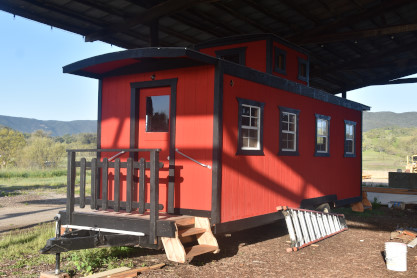
Caboose trailer.
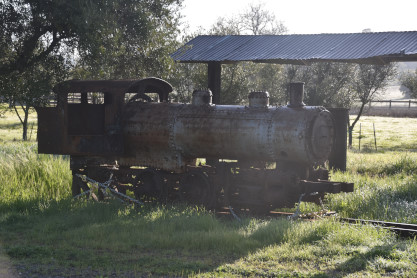
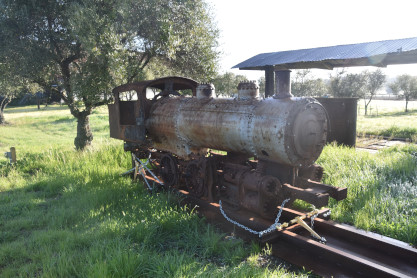
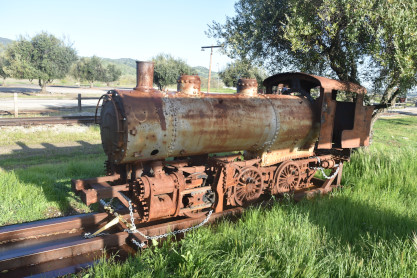
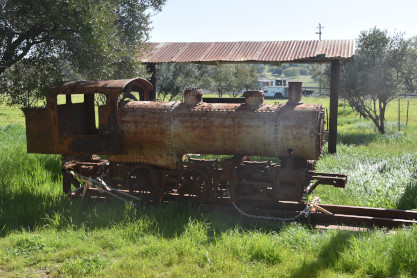
This could be Overfair Railway 0-6-0T 1500, built by Louis McDermott in 1914. This and all the other Swanton Pacific locomotives were damaged in the CZU Lightning Complex Fire that swept through California Polytechnic University's Swanton Pacific Ranch in August 2020 and Pacific Coast Railroad acquired the collection for future restoration.
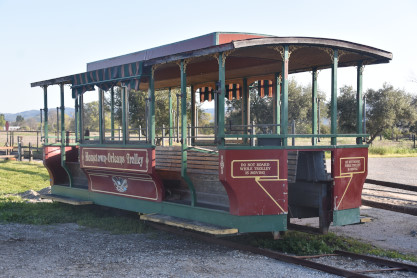
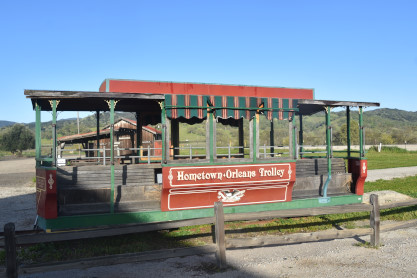
Hometown Orleans Street Railway trolley built by Custom Fabricators Trolley in 1976, which operated at Six Flags Great America and came to the ranch in the mid-1990's.
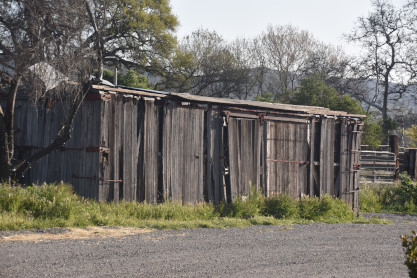
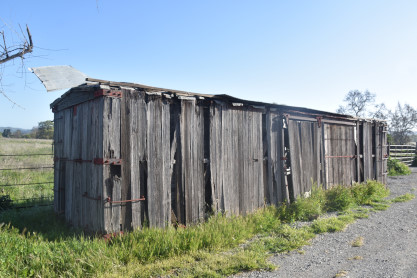
A wooden boxcar used for storage.
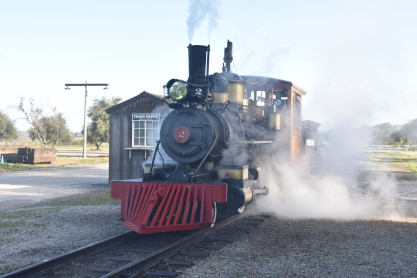
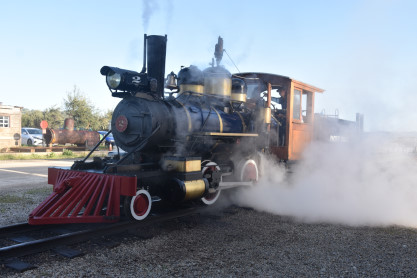
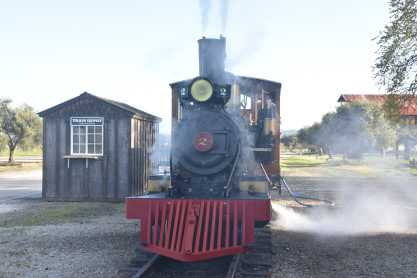
Pacific Coast Railroad 2.
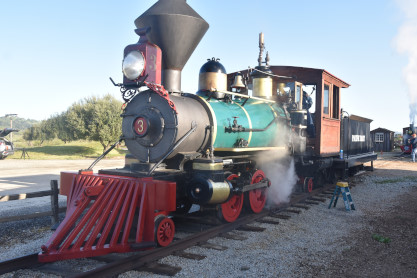
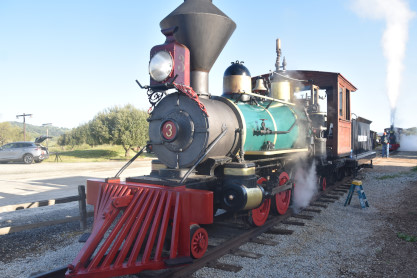
Pacific Coast Railroad 3.
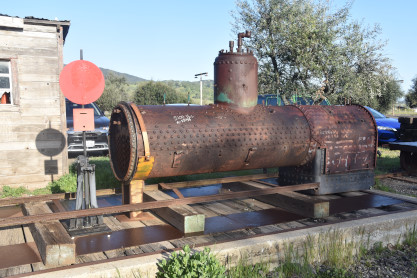
A locomotive boiler. To start the morning, we had a good walk to the upper yard.

Another Hometown and Orleans Street Railway trolley.
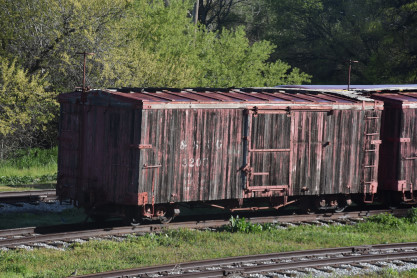
Denver and Rio Grande Western box car 3205, built by American Car and Foundry in 1904.
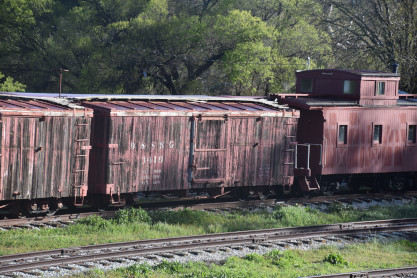
Denver and Rio Grande Western box car 3410, built by American Car and Foundry in 1904.
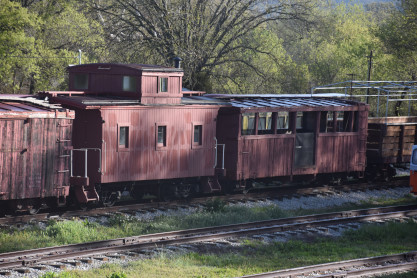
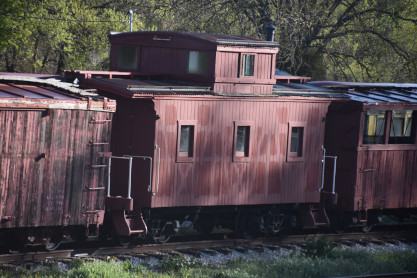
A former Cumbres and Toltec Scenic Railroad box car, identity unknown.
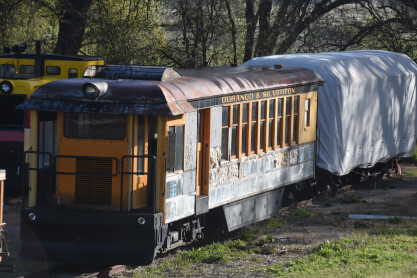
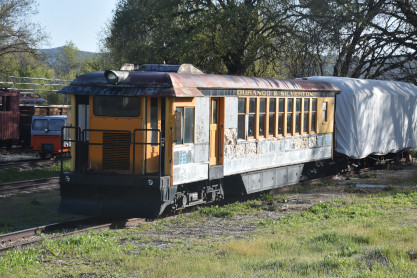
Durango and Silverton rail bus.


Model A Ford rail truck 4000.
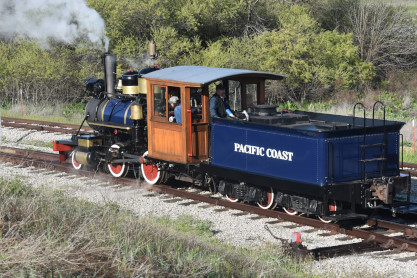

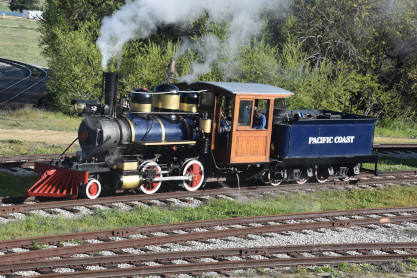
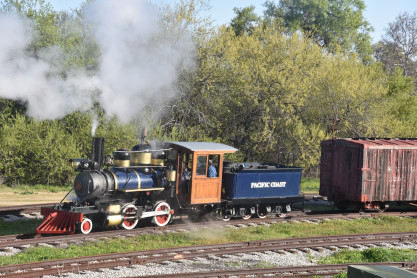
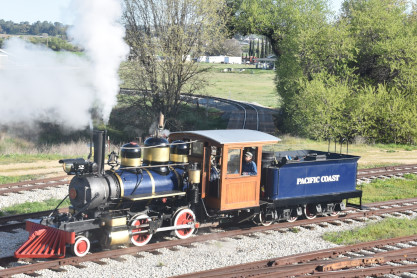
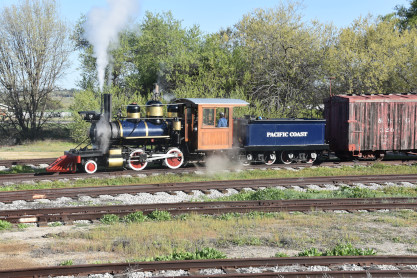
Pacific Coast Railroad 2 reversed from the boarding area to the upper yard to connect to our freight train. Photo runby one.

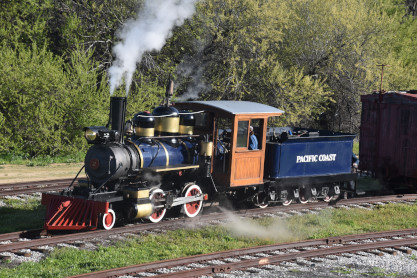
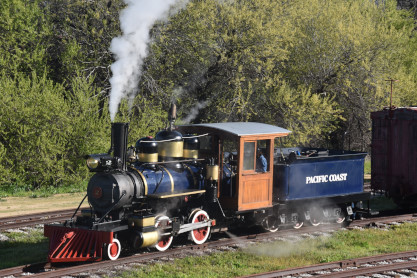
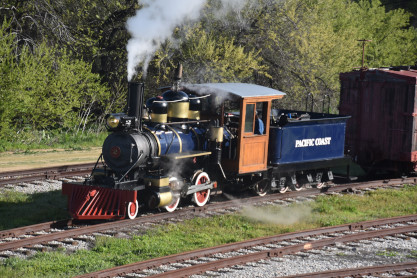
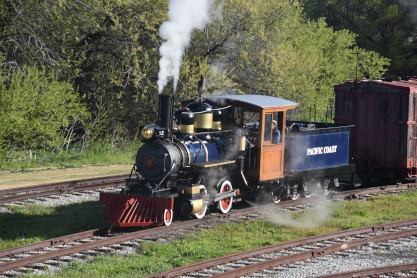
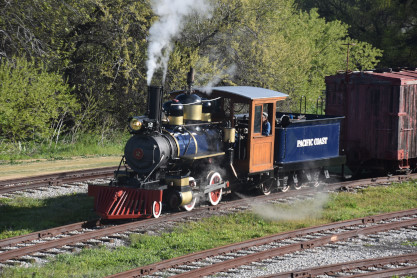
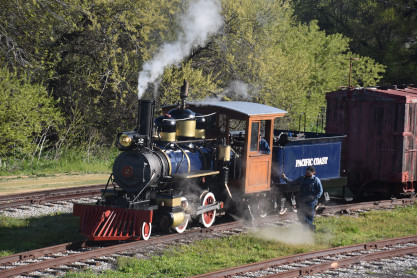
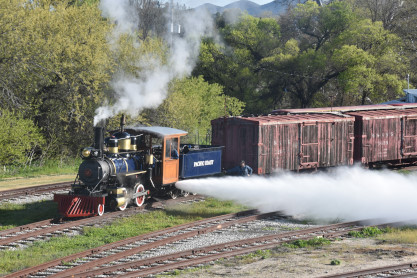
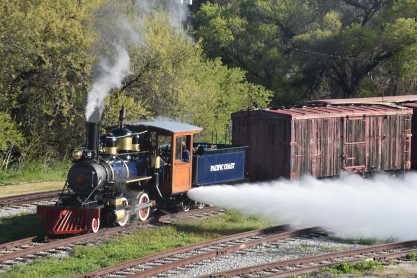
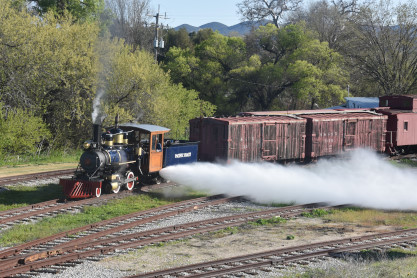
Pacific Coast Railroad 2 could not couple on to its train due to the difference in height of the coupler. Photo runby two.
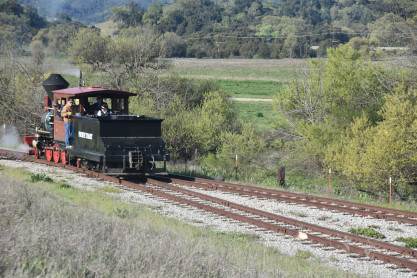
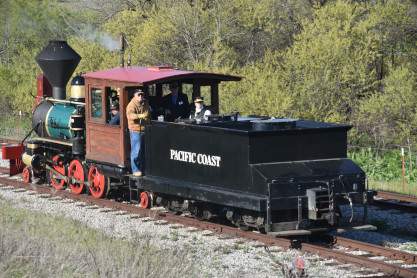
The crew radioed the crew of Pacific Coast Railroad 3, which also came down from the boarding area.
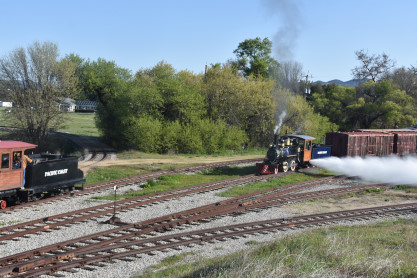
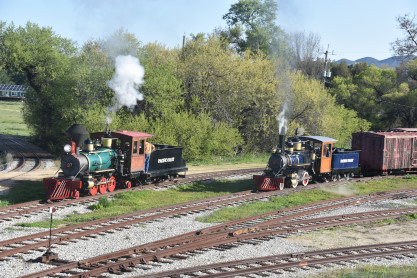
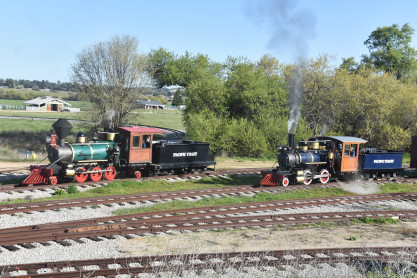
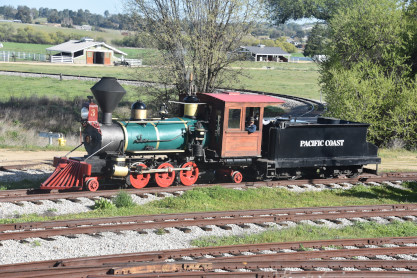

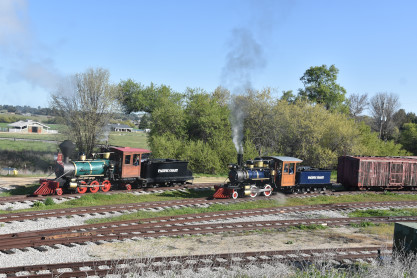
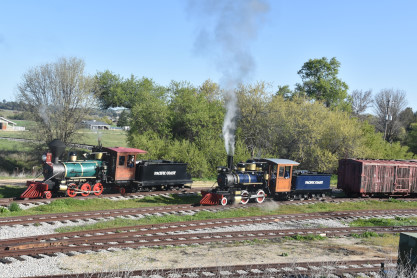

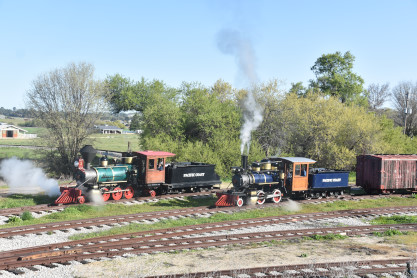
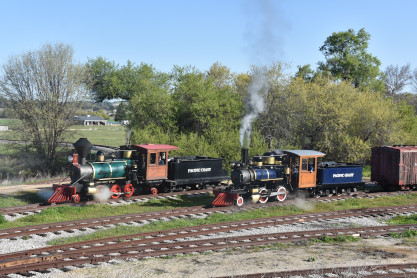

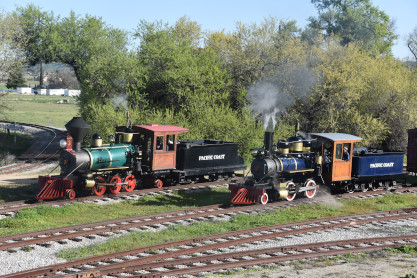
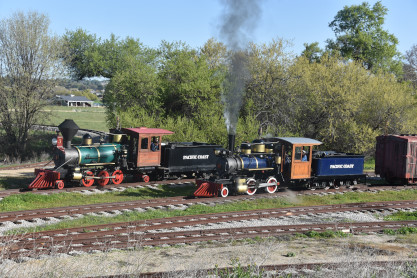
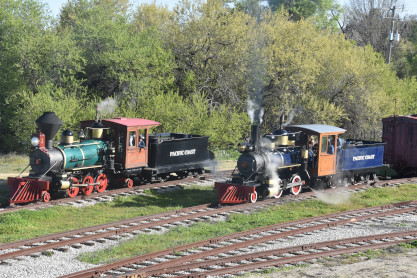
Pacific Coast Railroad 3 reversing to the passenger consist while 2 is worked on. Photo runby three.
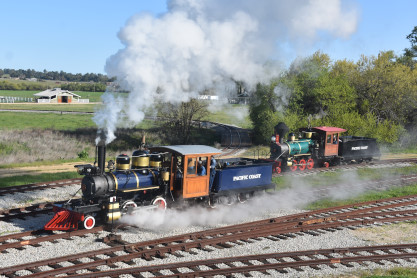
Pacific Coast Railroad 2 pulls forward and 3 remains still.

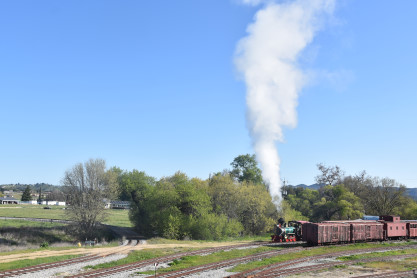
Pacific Coast Railroad 3 then retrieved its passenger train.
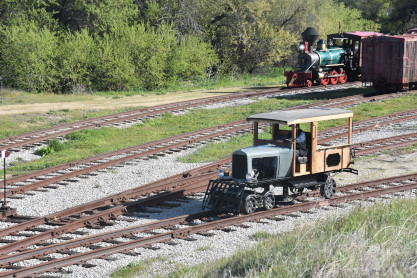
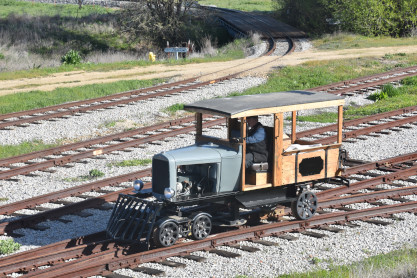
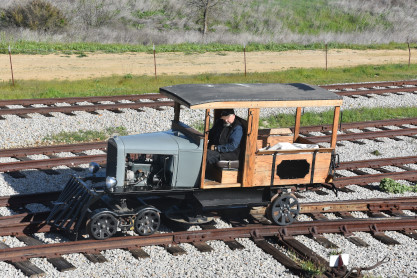
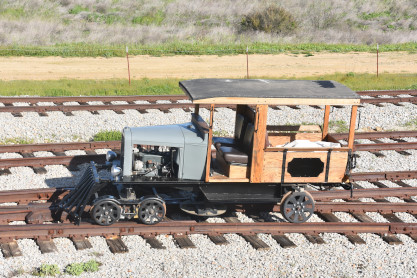
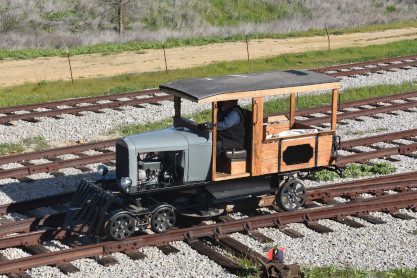
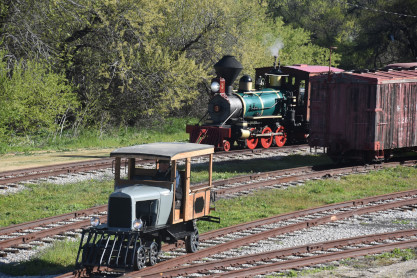
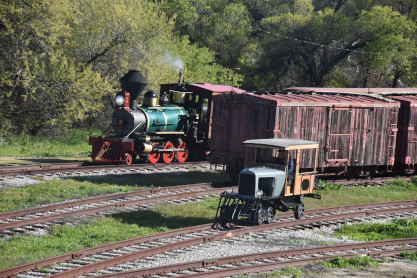
The Model A Ford 4000 made its way out of the yard to the boarding area.
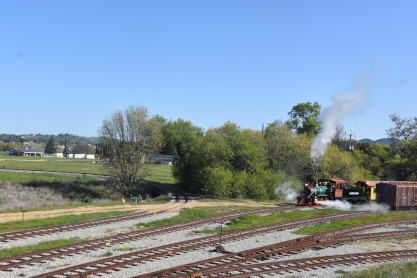

Pacific Coast Railroad 3 pulls its passenger train for photo runby four.
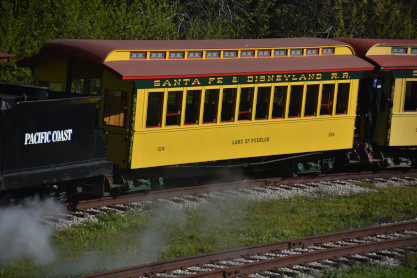

Former Disneyland Railroad coach 104 "Land of Pueblos" built by the Walt Disney Shops in 1955 and was part of the Retlaw 1 trainset used from Disneyland's opening in July 1955 until its retirement following the end of AT&SF's sponsorship of the railroad in 1974. Pacific Coast Railroad owner Rob Rossi acquired the coaches from the Bill Norred estate in 1999. The Norred family retains ownership of the combine, and the observation car from the set became the VIP car "Lilly Belle," which is still in service at Disneyland. This exquisite job was done by Sean Bautista and crew at the Hillcrest Shops in Reedley, California.
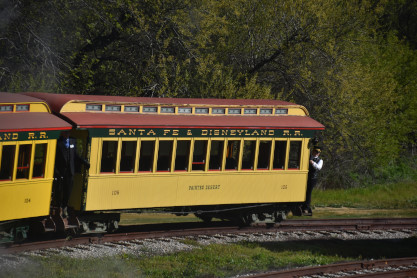
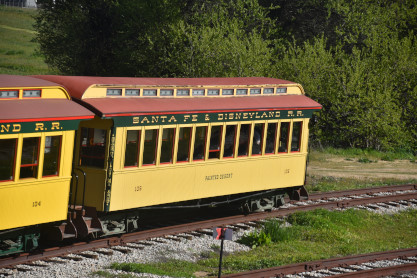
Former Disneyland Railroad coach 105 "Painted Desert" built by the Walt Disney Shops in 1955 and was part of the Retlaw 1 trainset.
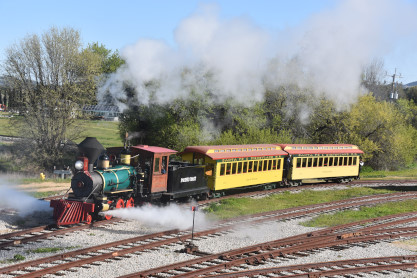

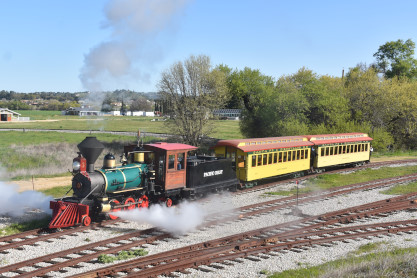
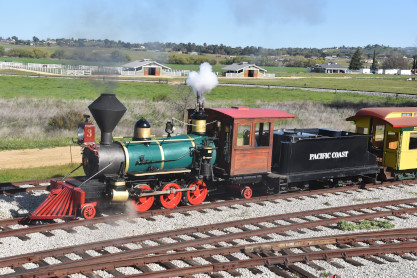
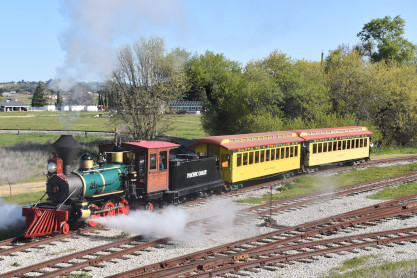
Pacific Coast Railroad 3 pulls the passenger cars away from the yard, photo runby five.

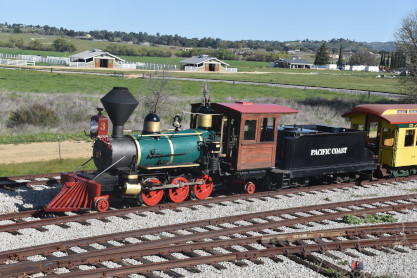
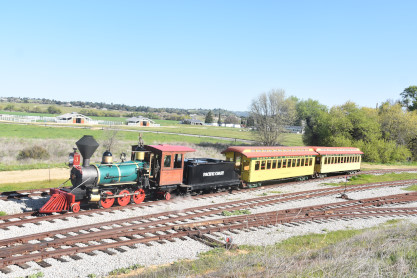
Pacific Coast Railroad 3 pulls the passenger cars.

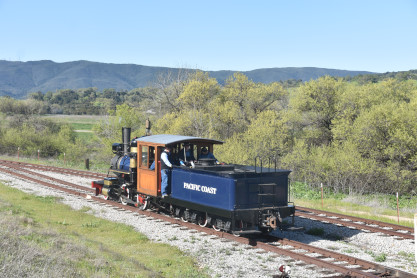
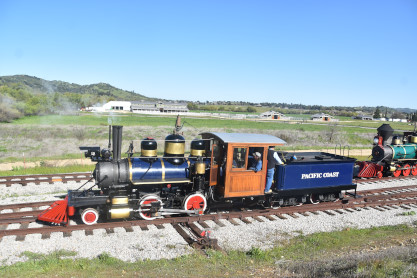
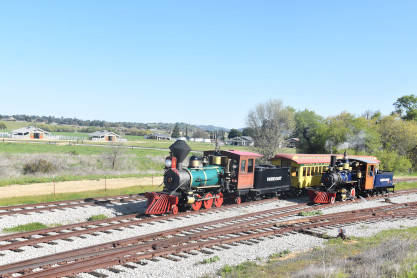
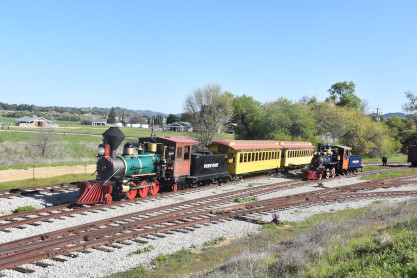
Pacific Coast Railroad 2 reverses to its train, photo runby six.
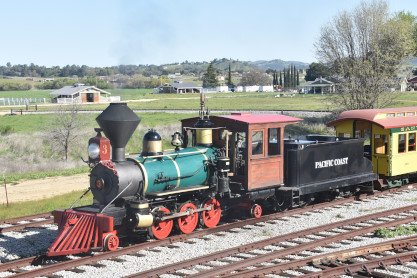
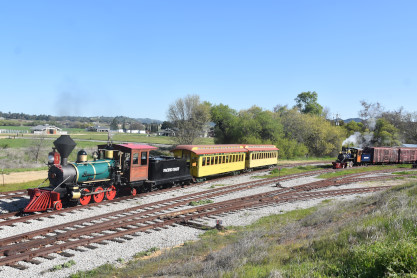
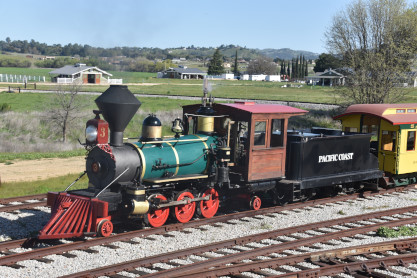
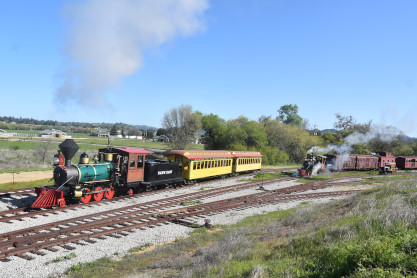
Pacific Coast Railroad 3 with its passenger train.
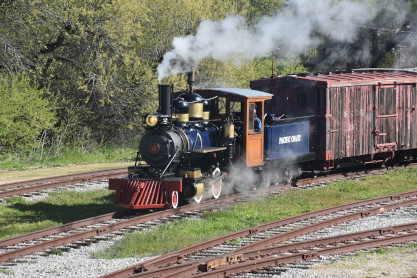
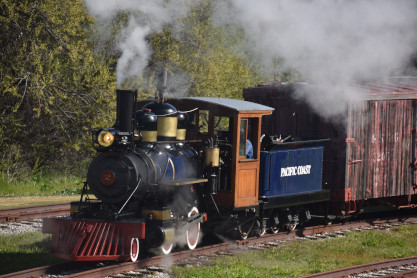
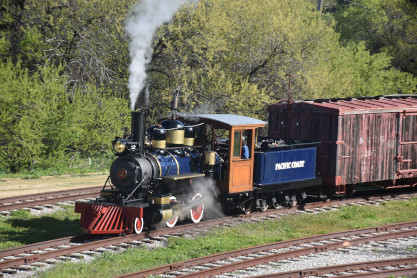
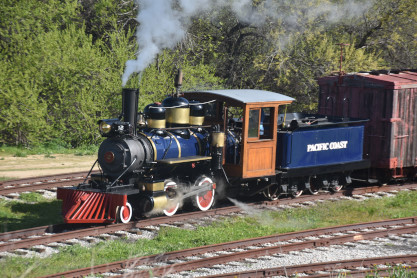
Pacific Coast Railroad 2 reversed to its train and coupled to it, photo runby seven.

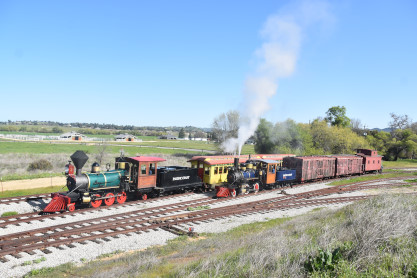

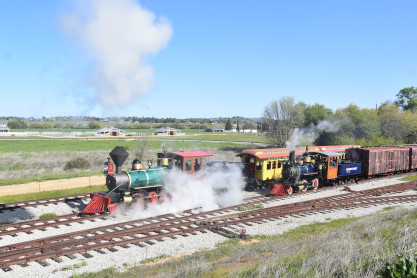
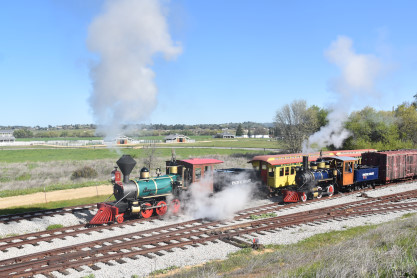
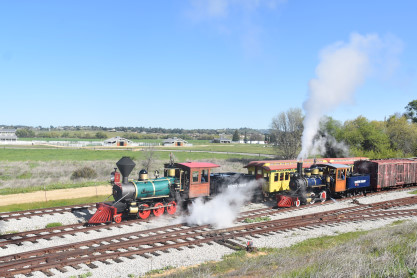
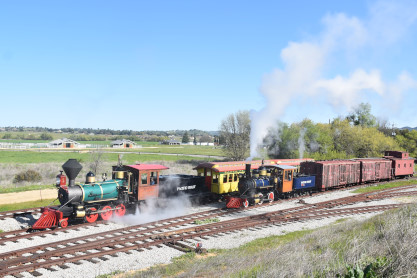

Pacific Coast Railroad 2 pulls its train, photo runby eight.
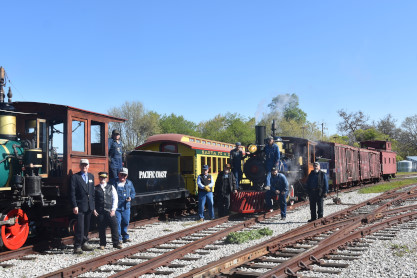
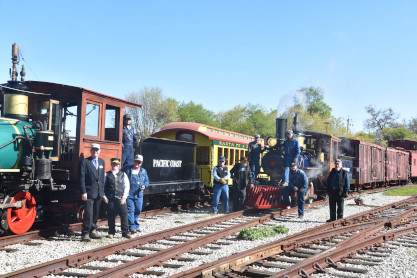
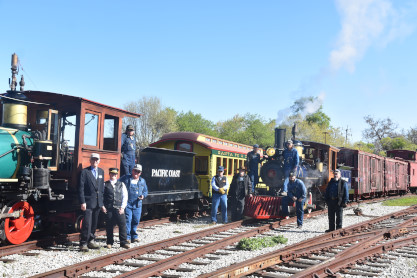
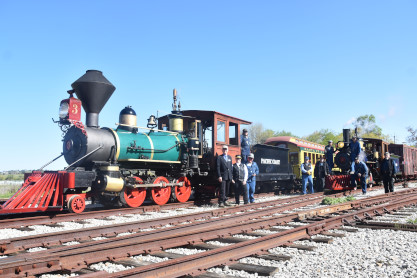
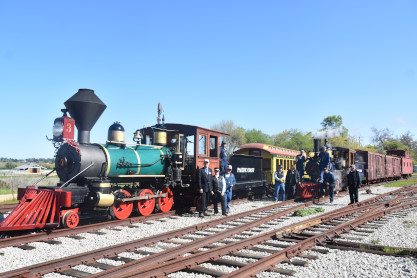
The railroad then requested that that crew pictures be done mid-morning rather than at the customary end-of-the day, static photo one. All participants then boarded the train.
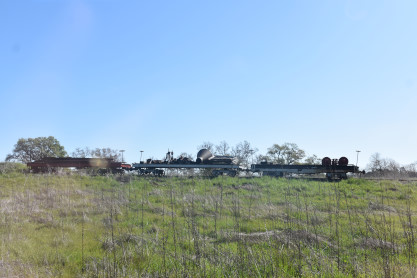
Flat cars on the spur track.
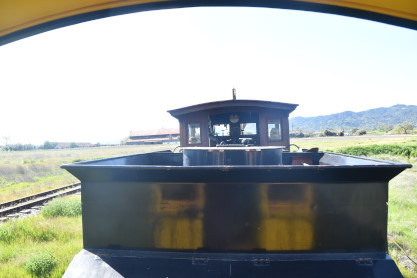
We were pulled by Pacific Coast 3 back to the station area.
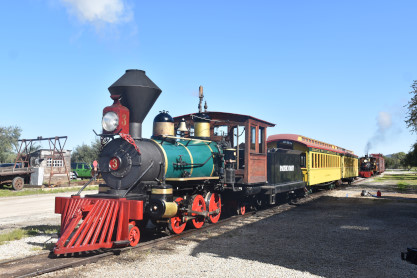
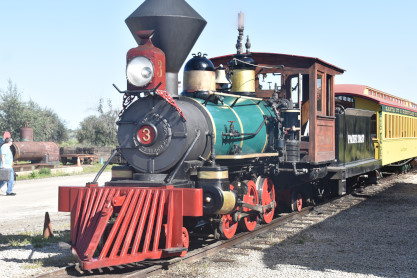
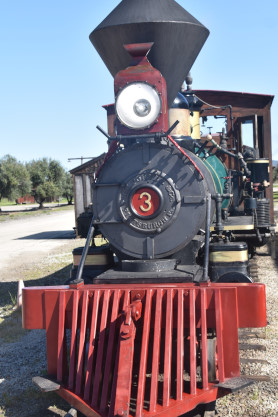
Pacific Coast Railroad 3 on our passenger train.
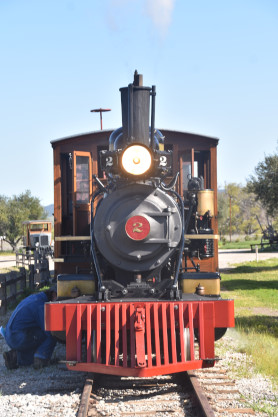
Pacific Coast Railroad 2 on our freight train.
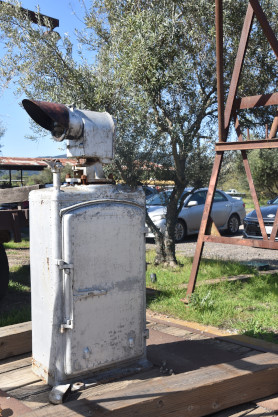
Southern Pacific Coast Line signal. We walked to the hill overlooking an oak tree and the tracks.

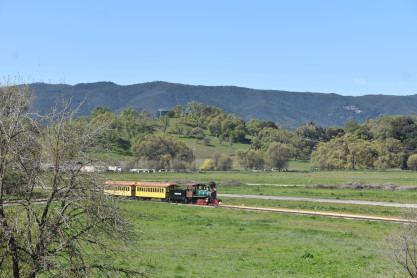
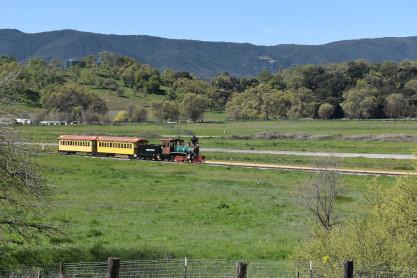
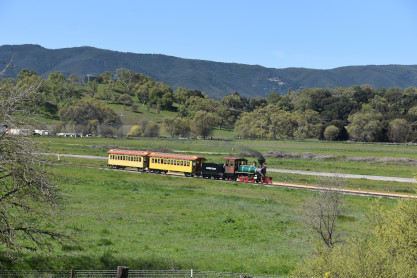
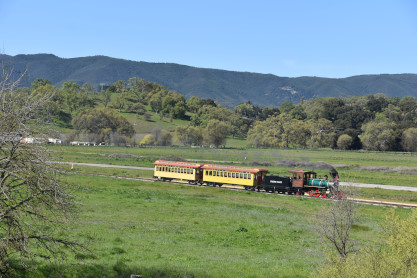
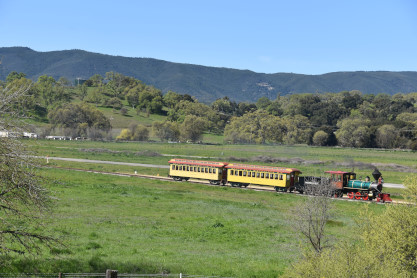

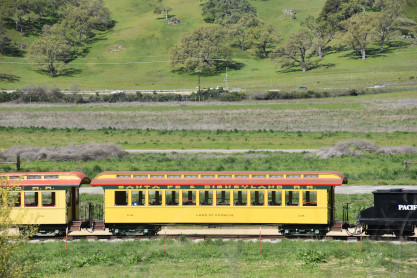
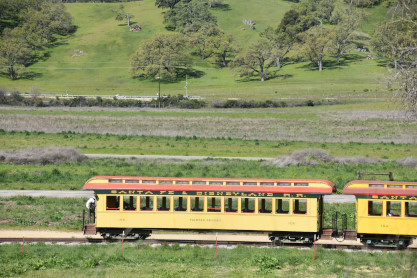
Pacific Coast Railroad 3 pulling our passenger train, photo runby nine.
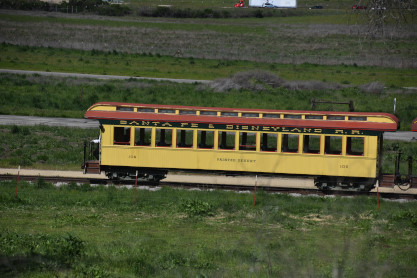
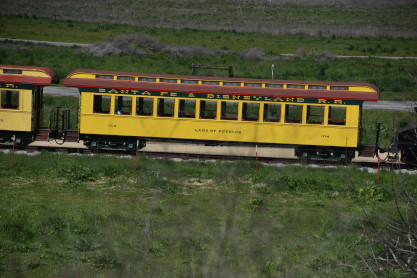
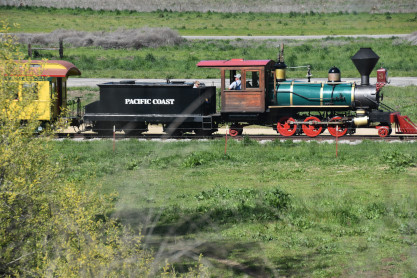
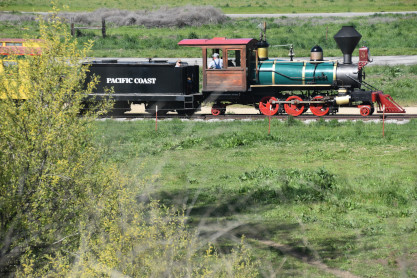
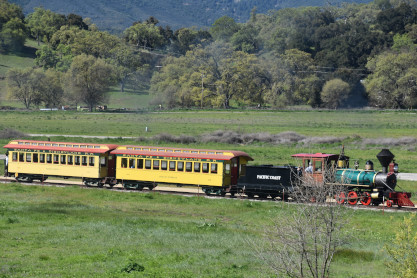
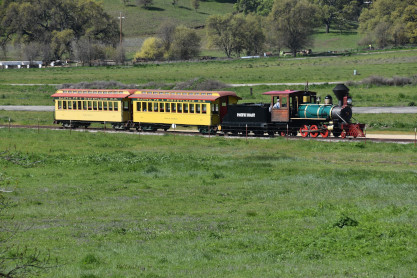
Pacific Coast Railroad 3 reversing for the next photo runby.
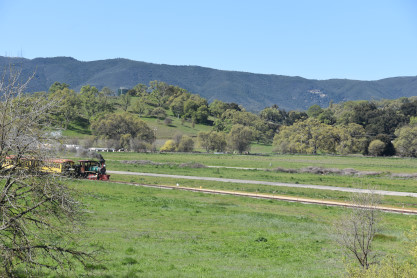
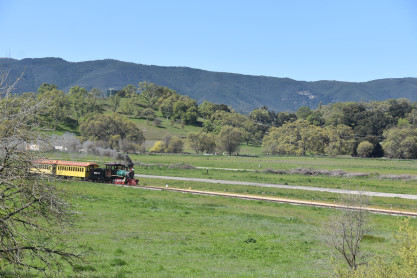
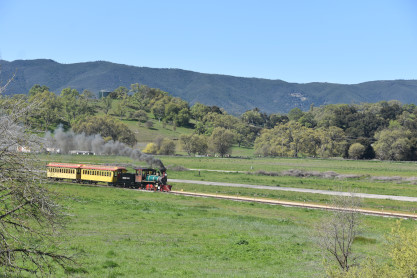
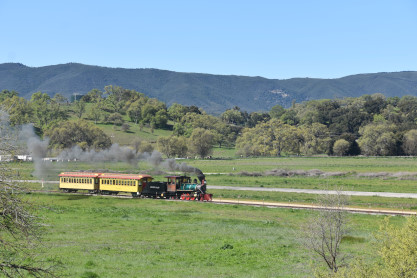

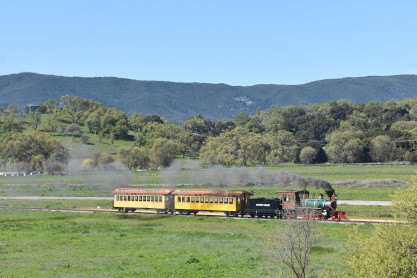
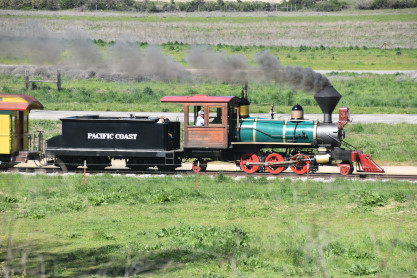
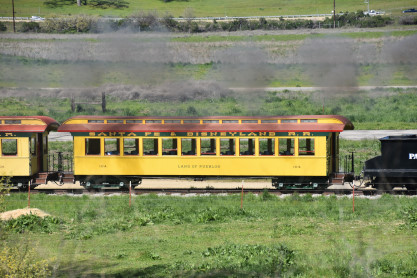
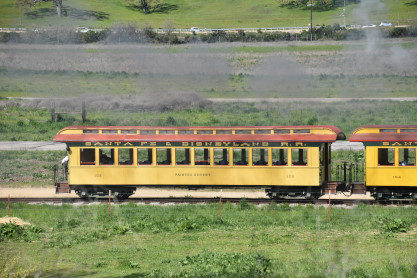
Pacific Coast Railroad 3 pulling the passenger train during photo runby ten.
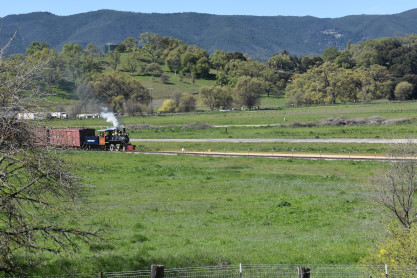
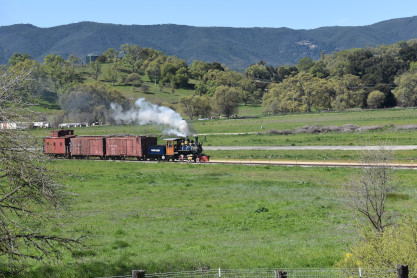
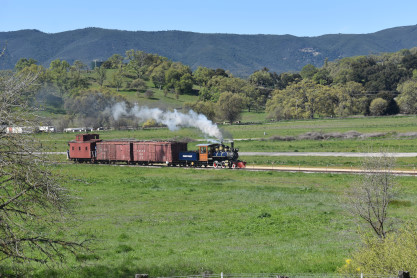

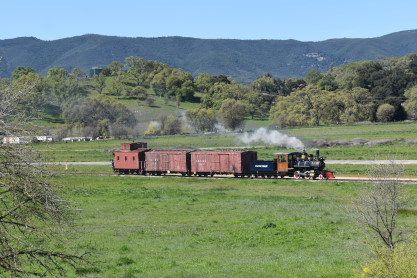
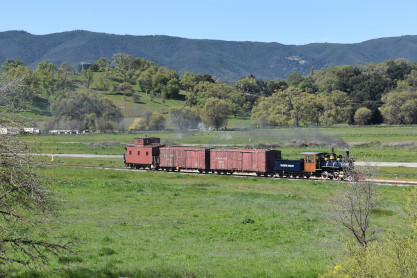


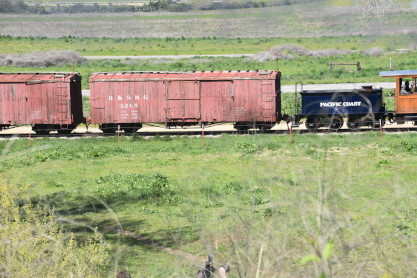
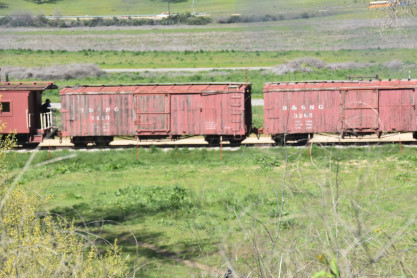
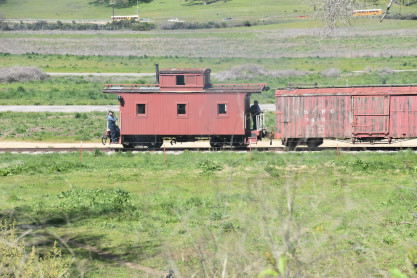
Pacific Coast Railroad 2 leading the freight train, photo runby eleven.
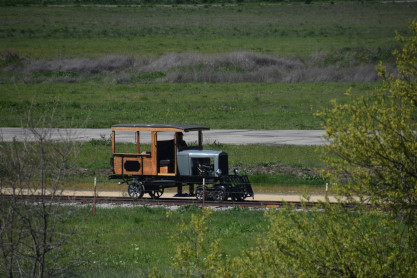
The Model A truck 4000 followed, photo runby twelve.
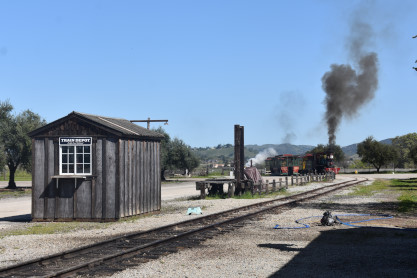
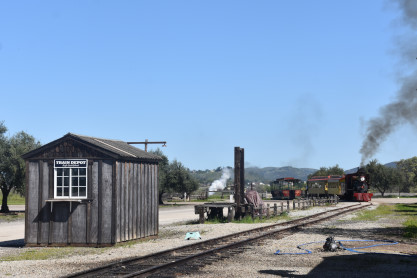
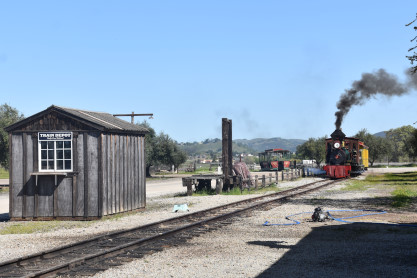
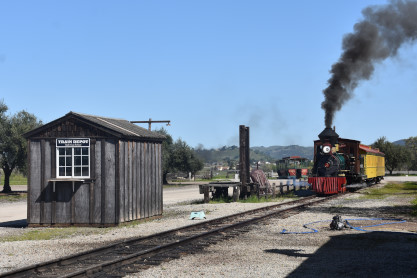
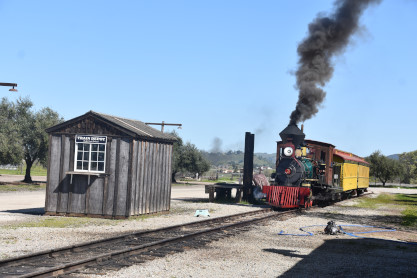
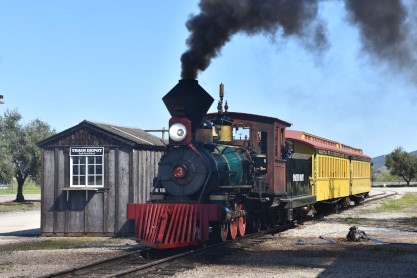
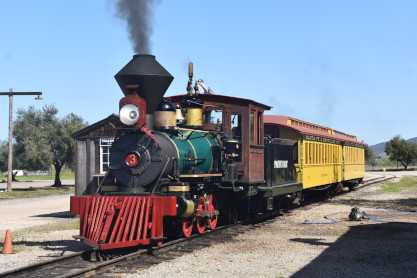
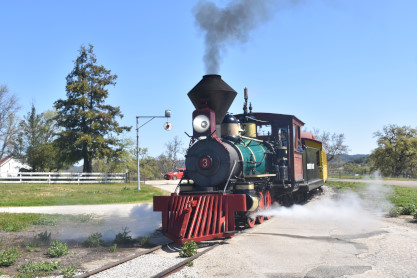
We returned to the boarding area and Pacific Coast Railroad 3 led the passenger train to us, photo runby thirteen. An early lunch had been organized consisting of sandwiches, breadsticks and cookies from a local store. Fortified and ready for more steam action, we rode the train a very short distance to the crossing, complete with a wig-wag signal.
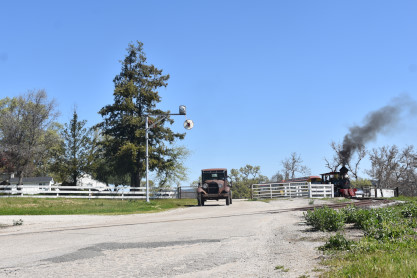
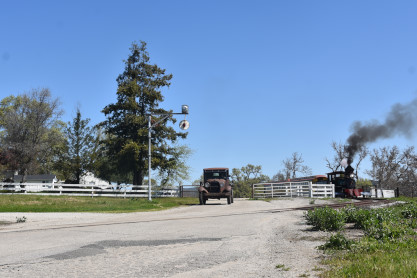

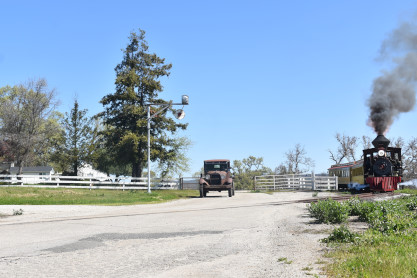
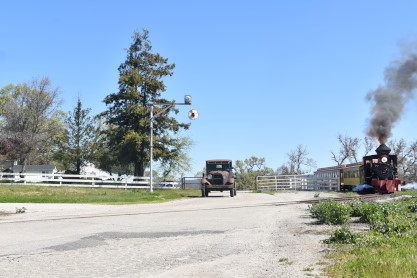
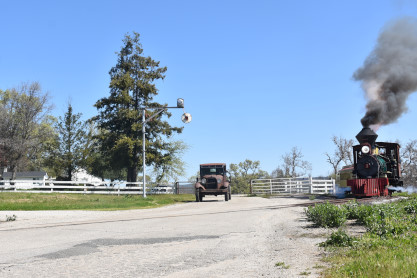
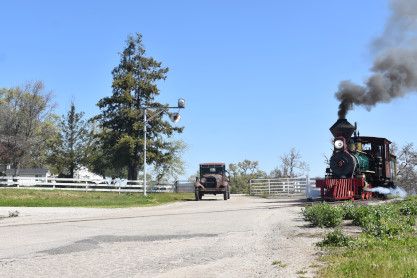
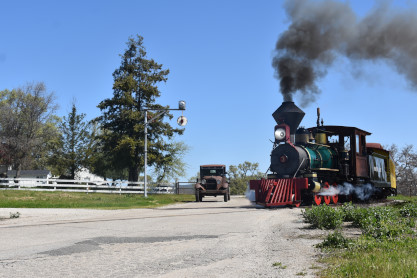
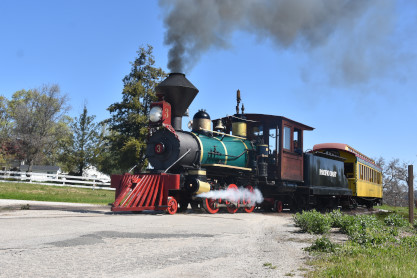
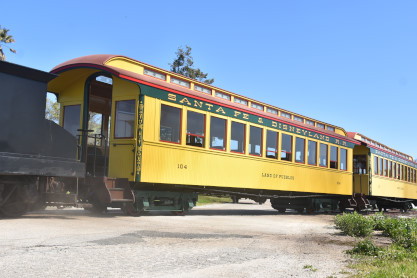
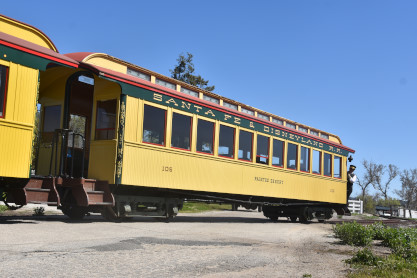
Pacific Coast Railroad 3 pulls the passenger train, photo runby fourteen.
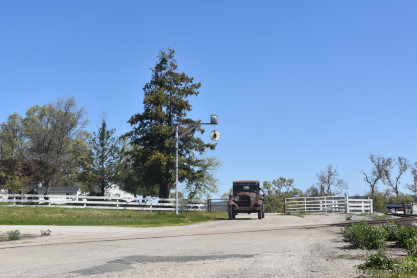
An antique truck at the crossing.
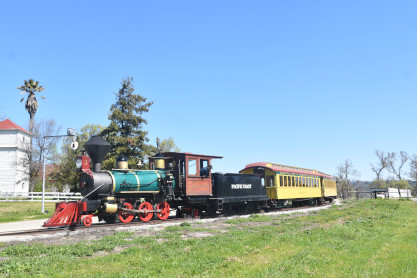
Pacific Coast Railroad 3 reversing.
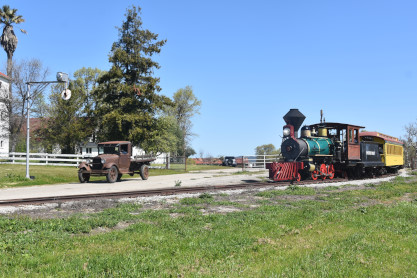
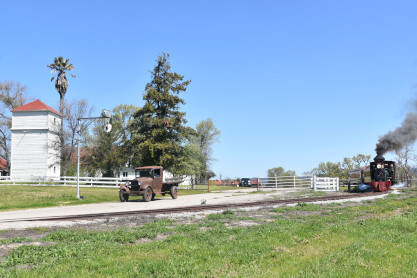


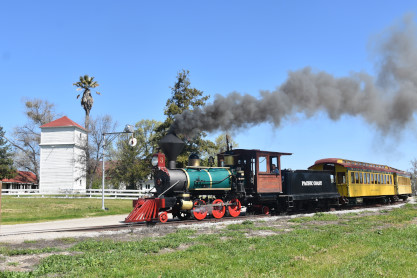
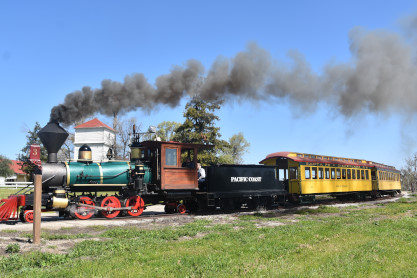
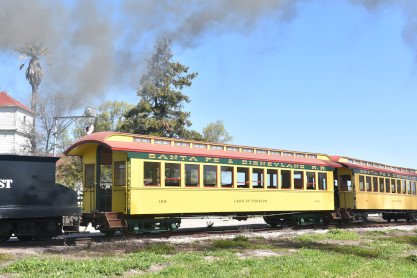
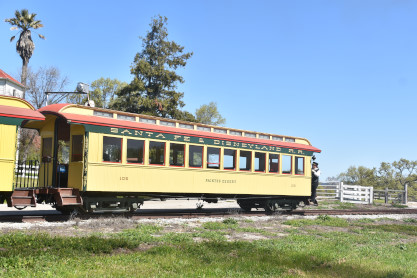
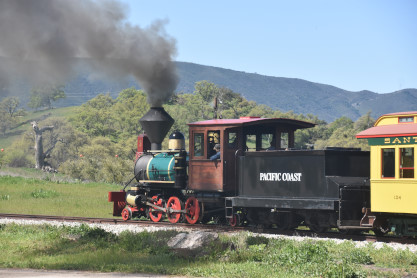
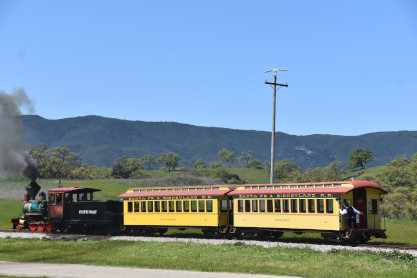
Pacific Coast Railroad 3 and its passenger train, photo runby fiftteen, after which it reversed.
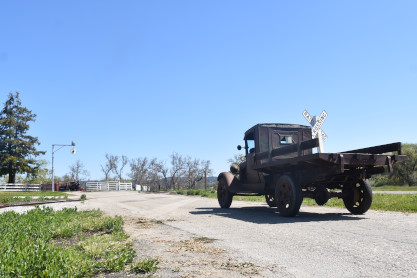
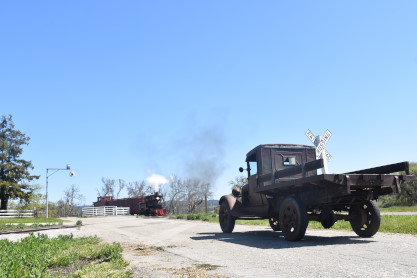
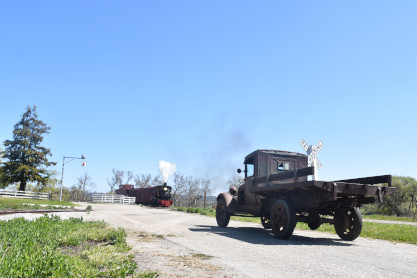

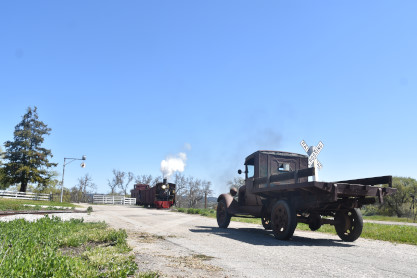
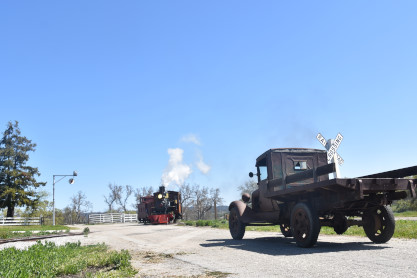

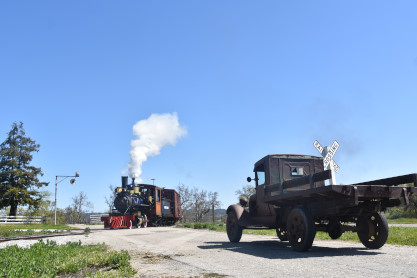
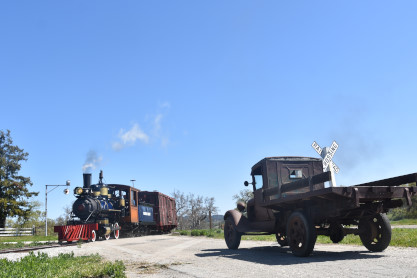

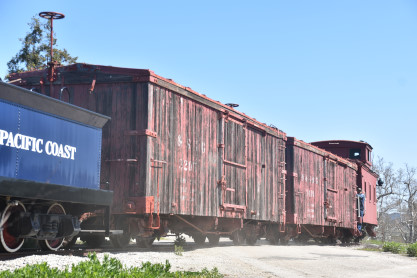
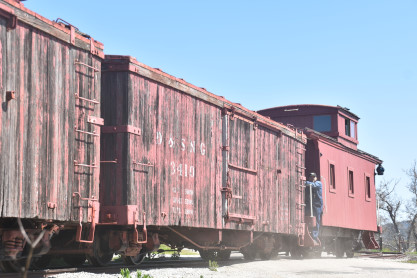
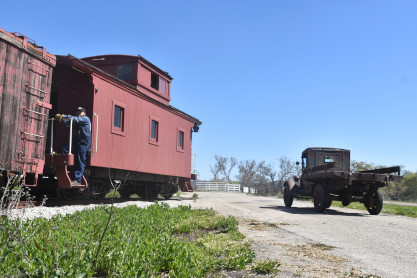
Pacific Coast Railroad 2 with the freight train, photo runby sixteen and the antique truck used as a prop.
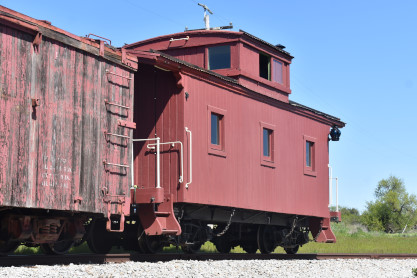
International Railways of Central America (Guatemala) wooden caboose S303 built in the early 1900s. It was used to haul bananas then became a hunting cabin. IRCA was an American-based company founded by Minor C. Keith and incorporated in New Jersey in 1904 which operated a large network of narrow gauge railways in Guatemala and El Salvador and became a subsidiary of the United Fruit company in 1936. The IRCA's Guatemalan division was nationalized in 1968, becoming the Ferrocarriles de Guatemala and the El Salvadorian division was merged with the Ferrocarril de El Salvador to form the Ferrocarriles Nacionales de El Salvador in 1975.
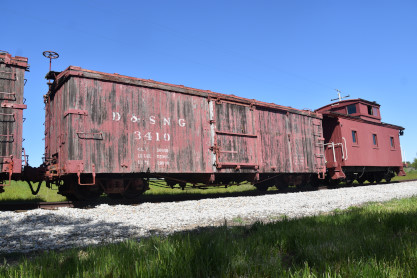
Denver and Rio Grande Western 3410.
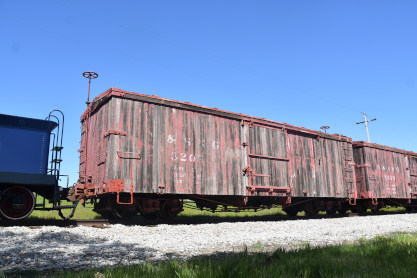
Denver and Rio Grande Western 3205.
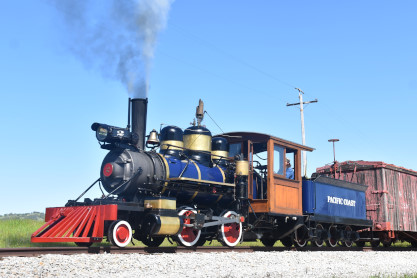
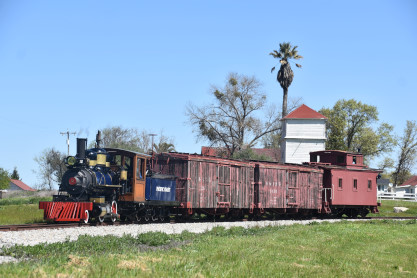
Pacific Coast Railroad 2.
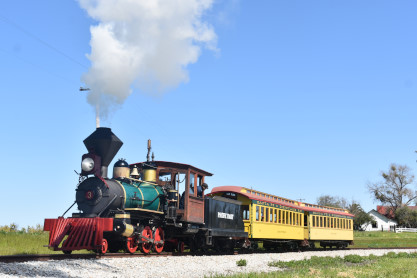
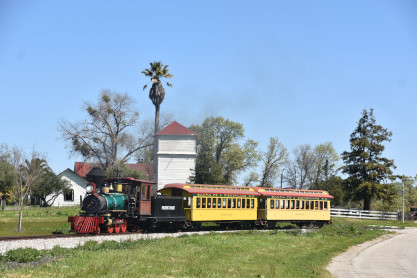
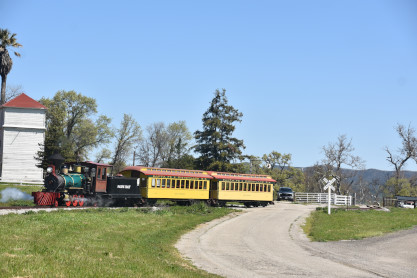
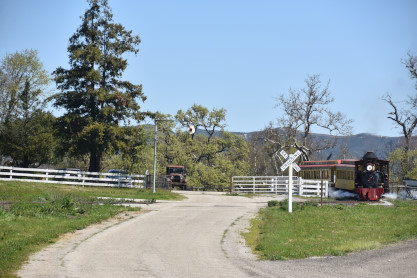
Pacific Coast 3 Railroad reversed.

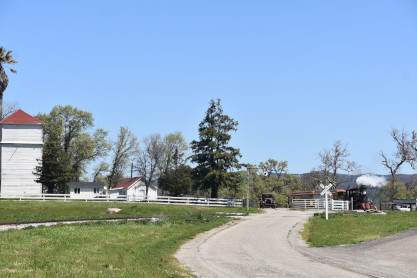
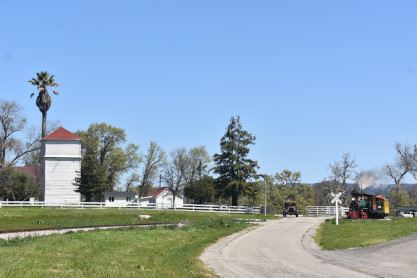
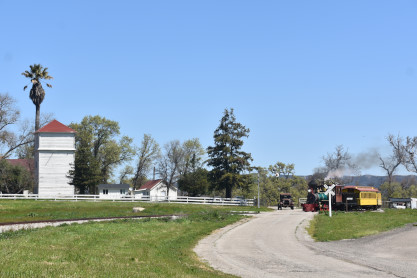
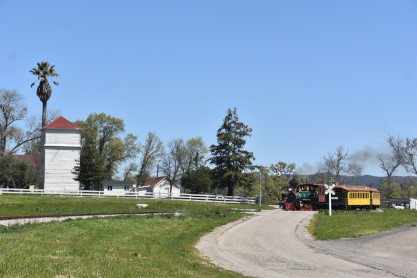
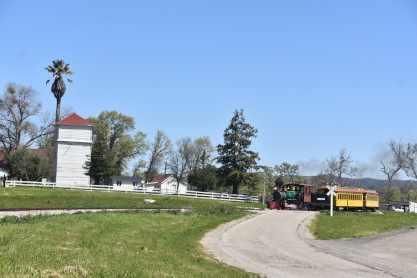
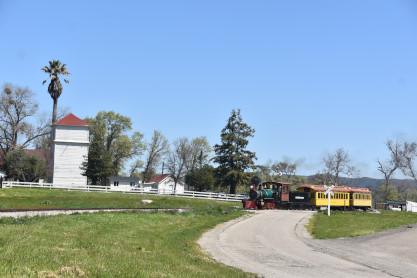
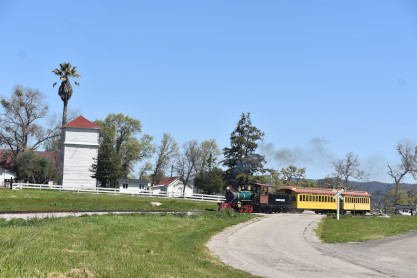
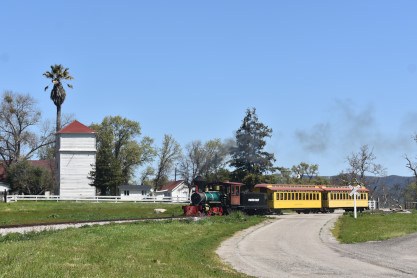
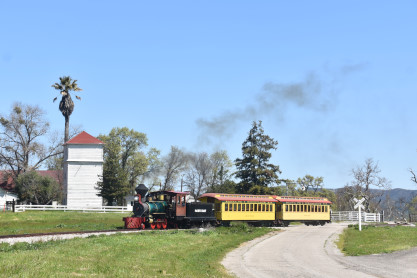


Pacific Coast Railroad 3 performing photo runby seventeen.
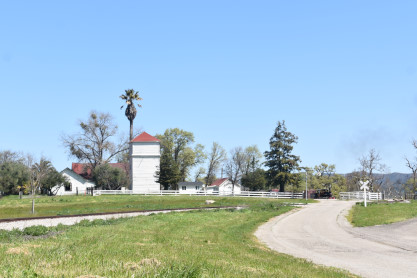
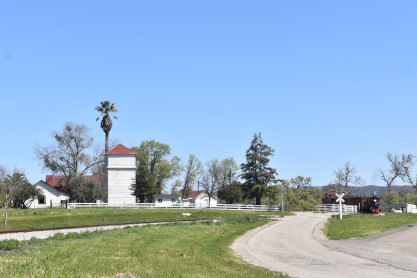
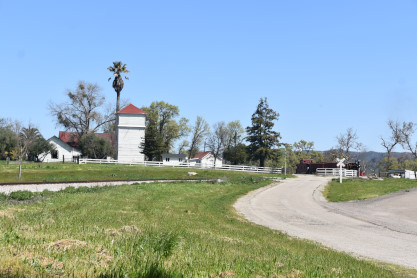
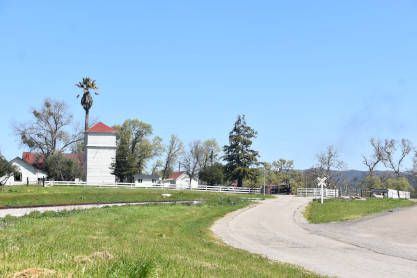
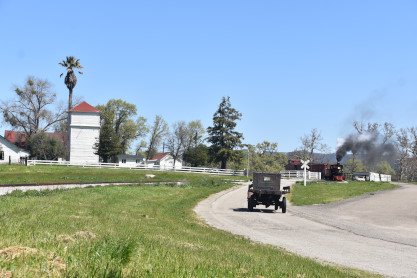
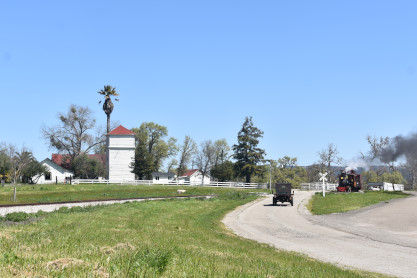
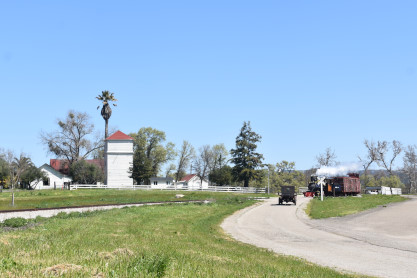
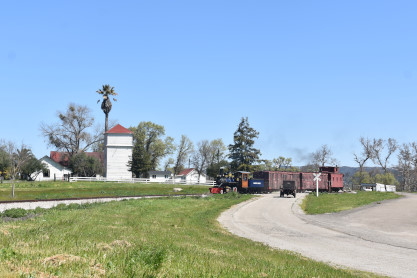
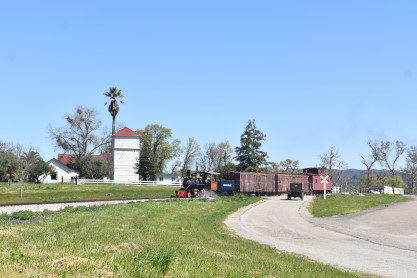
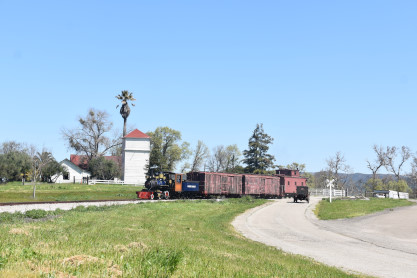
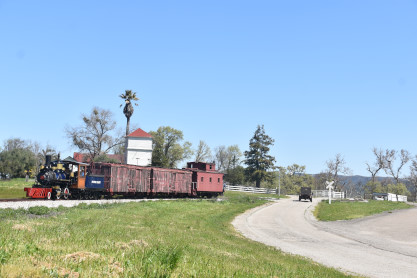

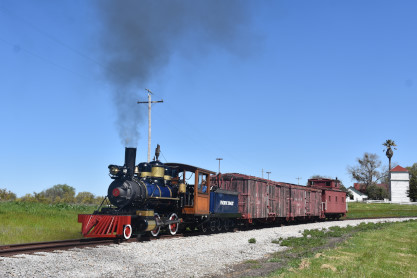
Pacific Coast Railroad 2 with the freight train, photo runby eighteen.
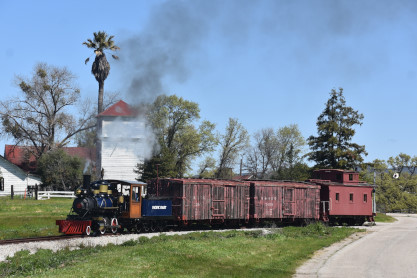
Pacific Coast Railroad 2 reversing. The passenger train reversed, picked us up and we went to the next photo runby location.
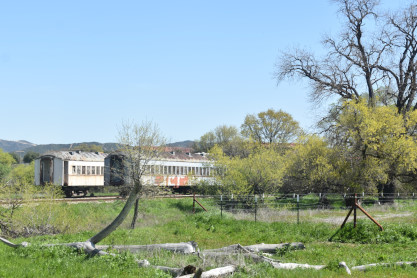
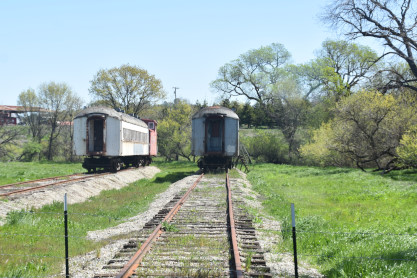
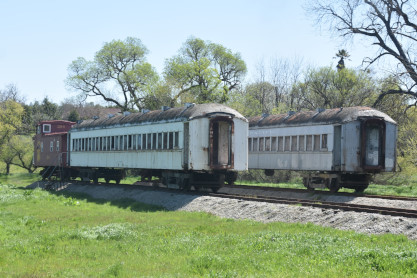
On the left is Southern Pacific interurban coach 2155, built by the Pullman Company in 1924 and on the right is Southern Pacific interurban coach 2085, built by the Pullman Company in 1924. Both were acquired from the Santa Clara Fairgrounds in San Jose.
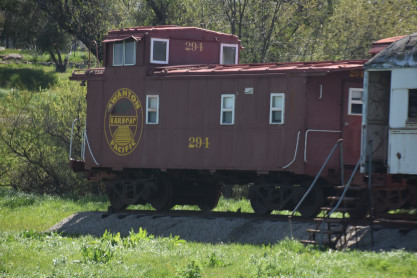
Swanton Pacific end cupola caboose 294, nee Santa Fe 999294, built by the company in 1949.
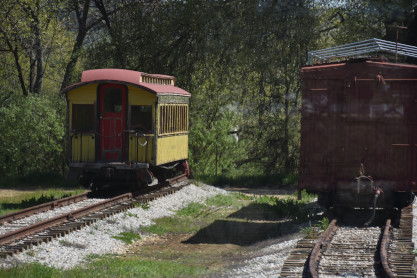
Former Disneyland Railroad coach 102 "Navajo Chief" built by the Walt Disney Shops in 1955 and was part of the Retlaw 1 trainset. Its name is in honour of the observation car "Navajo" that was on the rear of Santa Fe's Super Chief which entered service in 1937. It was retired in 1974.
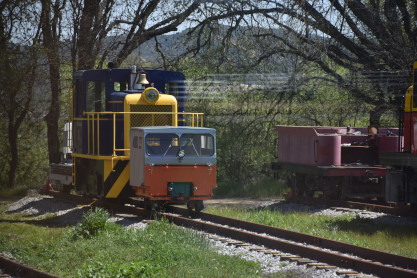
Behind the speeder is witcher 1 "Trudie Marie", history unknown.

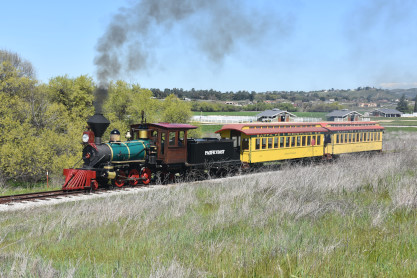
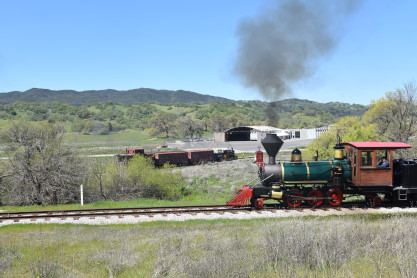
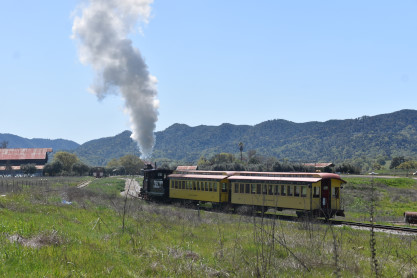
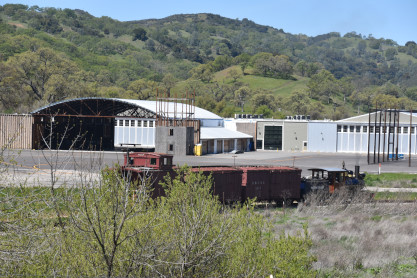
Passenger train runby nineteen with the freight train on its way to us near the airplane runway on adjacent property.
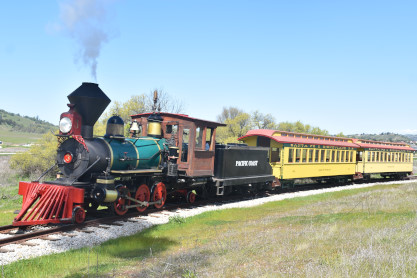
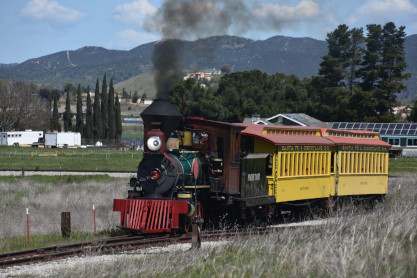
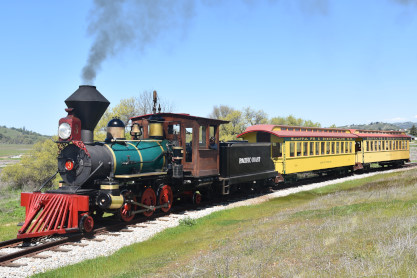
Pacific Coast Railroad 3 with the passenger train, photo runby twenty.