




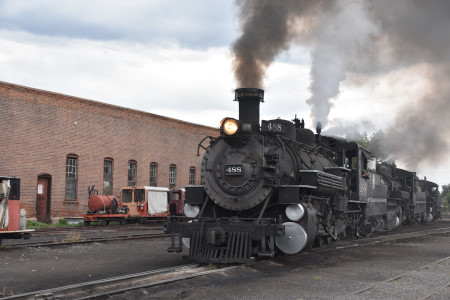
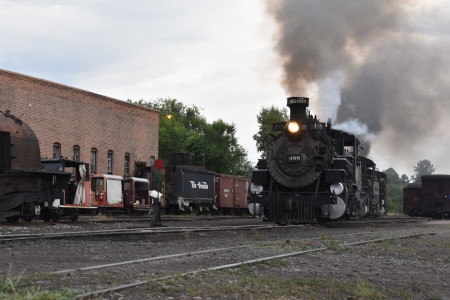
After the Chama Yard tour, about forty people gathered for the 5:30 PM Parade of Steam featuring the three active K36 steam locomotives, all of which had been painted as Denver and Rio Grande Western for the 100th anniversary events.
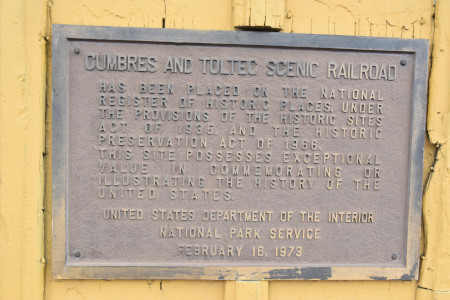
The National Register of Historic Places plaque on the Chama depot.
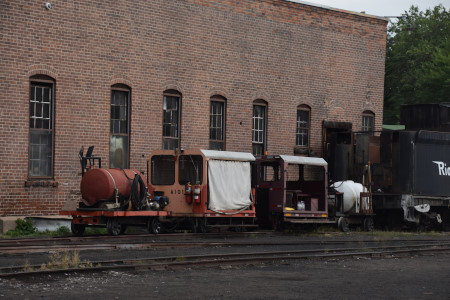
Fairmont Fire speeder A6 A101.

A deer wandering around the yard.
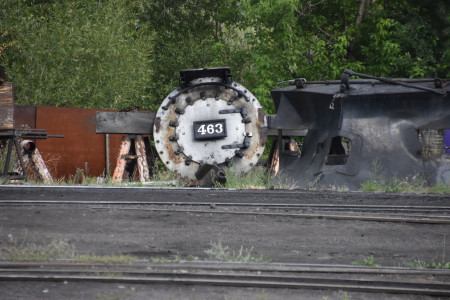
The door of Cumbres and Toltec Scenic 463.
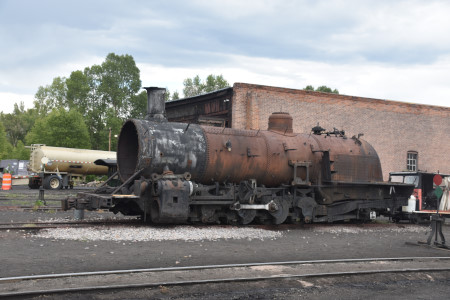
Cumbres and Toltec Scenic 2-8-2 K37 492, ex. Denver and Rio Grande Western narrow gauge 492, exx. Denver and Rio Grande Western 1021 1924, nee Denver and Rio Grande 1121, built by the railroad in 1928. After striking a rock near Navajo, New Mexico, on 6th August 1963, it was rebuilt with smokebox parts from 490, which had been retired the previous year. Although the narrow gauged K-37s are actually about two percent lighter than the K-36s, they were 3,600 lbs. heavier on the drivers and quite hard on the track. Crews considered them "stiff", they handled sharp curves badly and they were prone to derailing.
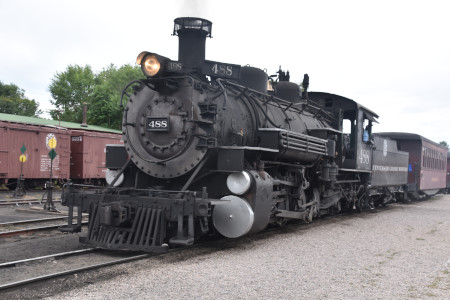

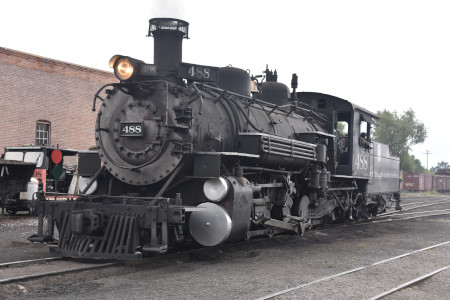
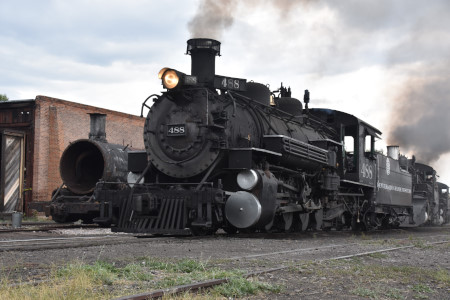
Cumbres and Toltec Scenic 2-8-2 488, nee Denver and Rio Grande Western 488, built by Baldwin in 1925.

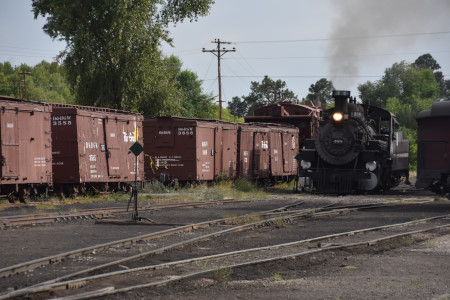
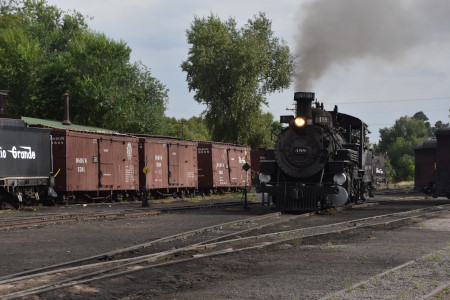
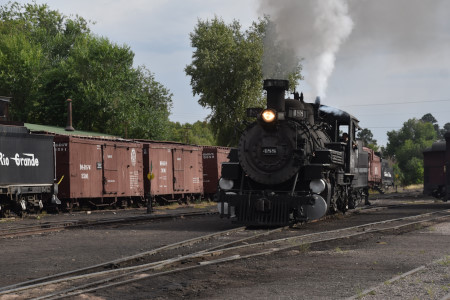
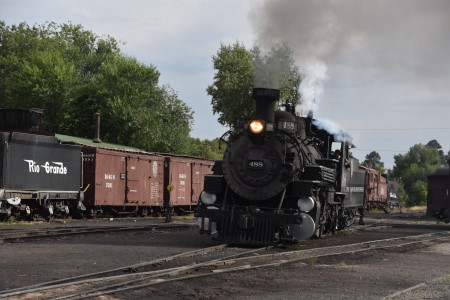
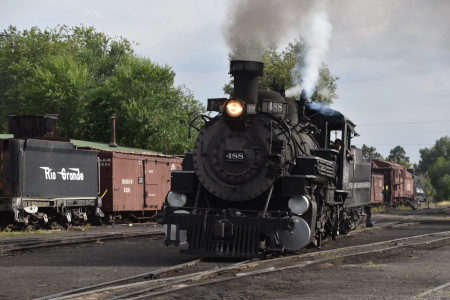
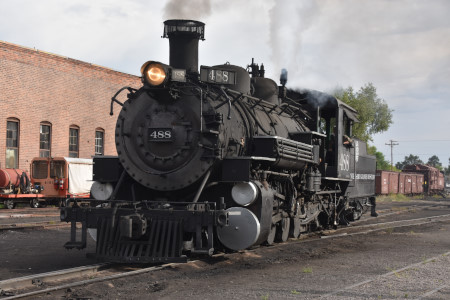
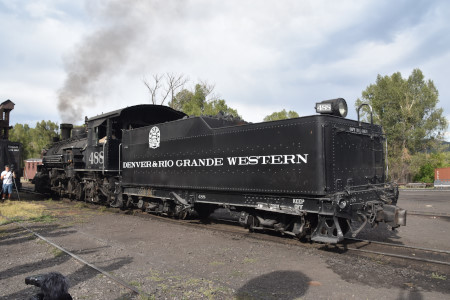
Cumbres and Toltec Scenic 2-8-2 488.
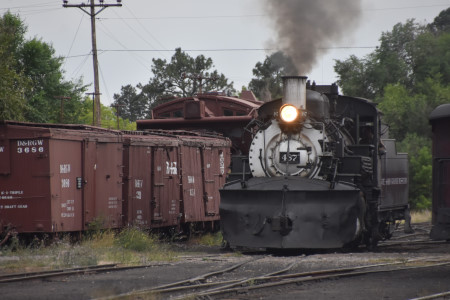
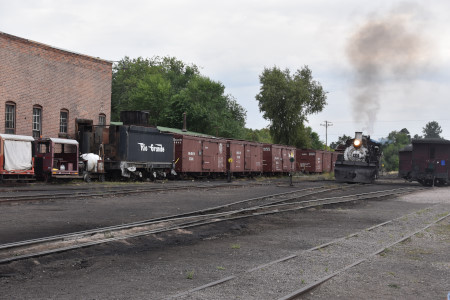
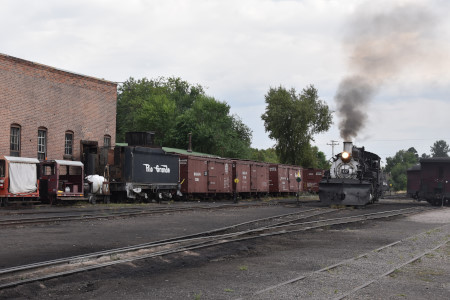
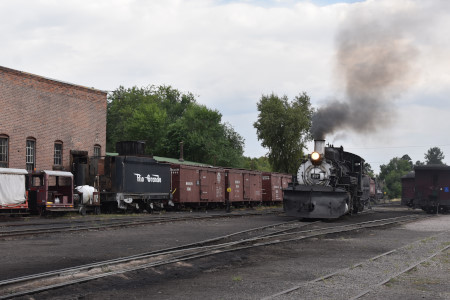
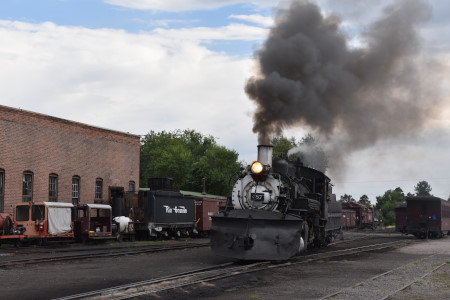
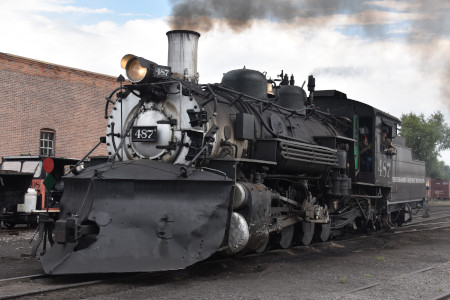
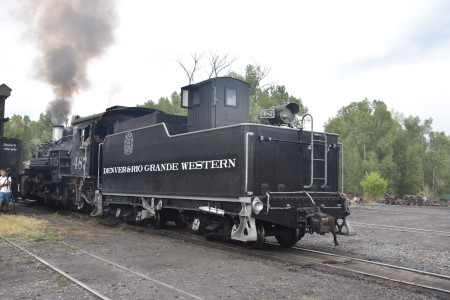
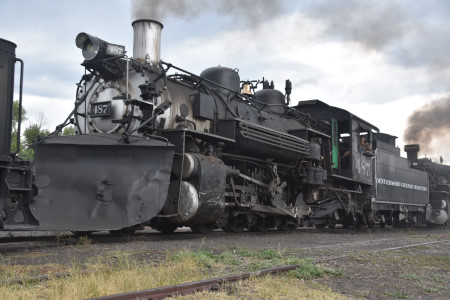
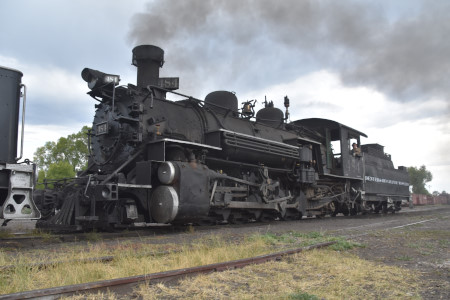
Cumbres and Toltec Scenic 2-8-2 487, nee Denver and Rio Grande Western 487, built by Baldwin in 1925. The product of nearly fifty years experience of mountain operations, this was one of the last narrow gauge engines bought by the railroad and were part of a general upgrading of its narrow gauge lines in the 1920s. Originally assigned to the Marshall Pass line between Salida and Gunnison, Colorado, as well as to helper service from Chama to Cumbres, they were later assigned to the Third Division out of Alamosa. Equipped with special valves to allow brake control between locomotives while double-heading, they became the workhorses of the narrow gauge railroad.
The K-36s were designed to haul freight trains but were occasionally used on passenger trains. The K-36s also worked on the Farmington Branch when traffic boomed in the 1950s with the development of the oil industry in the San Juan Basin. In 1955, the Farmington freight office handled more business than any other station on the D&RGW system.
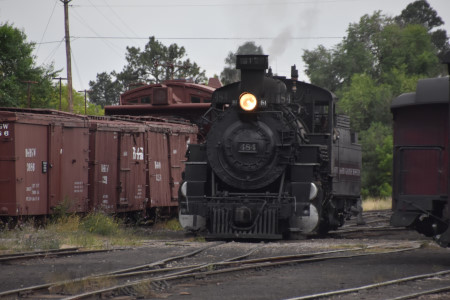
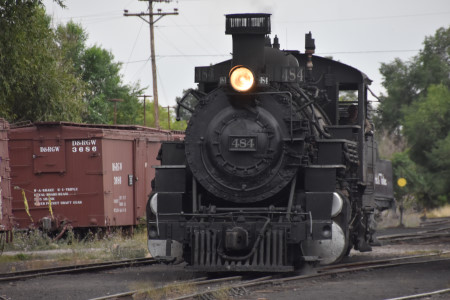
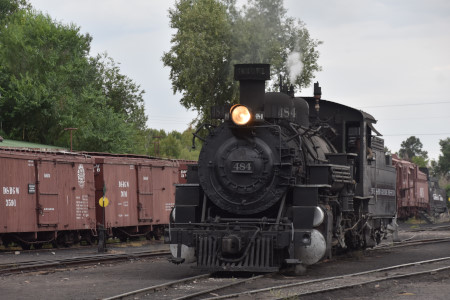
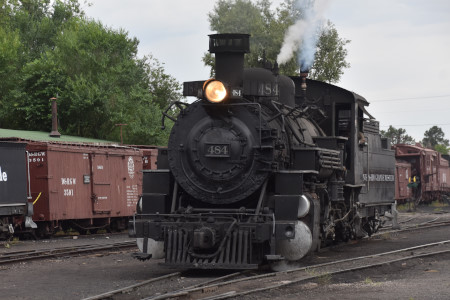
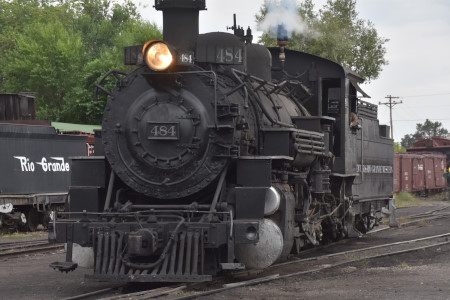
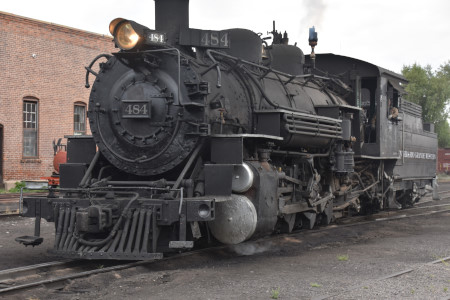

Cumbres and Toltec Scenic 2-8-2 484, nee Denver and Rio Grande Western 484, built by Baldwin in 1925. It hauled freight trains, as well as the San Juan, and was the helper engine from Chama to Cumbres on the last eastbound San Juan service on 31st January 1951. It also hauled the last D&RGW chartered excursion from Alamosa to Cumbres and return on 9th October 1966.
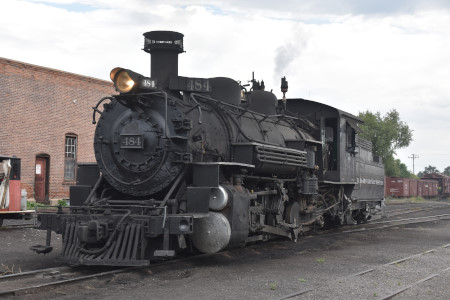
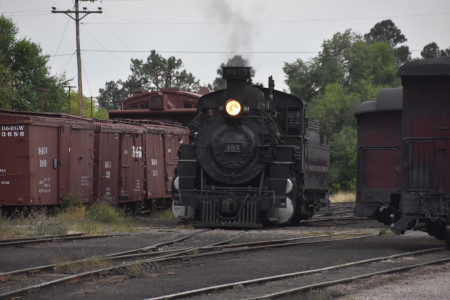
Cumbres and Toltec Scenic 2-8-2 484 switching in preparation for the triple-header.
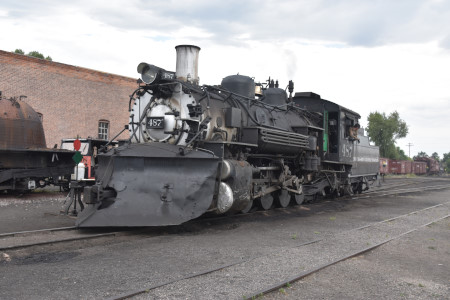
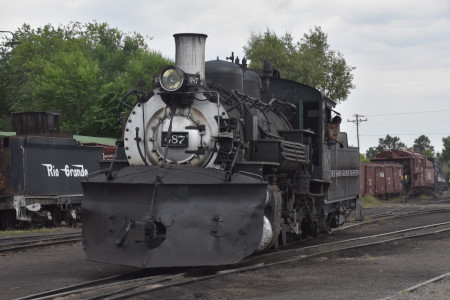
Cumbres and Toltec Scenic 2-8-2 487 switching in preparation for the triple-header..
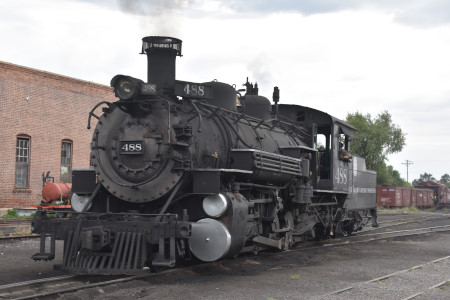
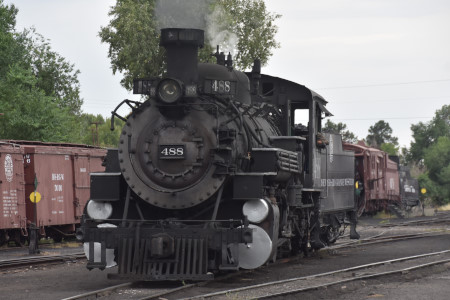
Cumbres and Toltec Scenic 2-8-2 488 doing the same thing.
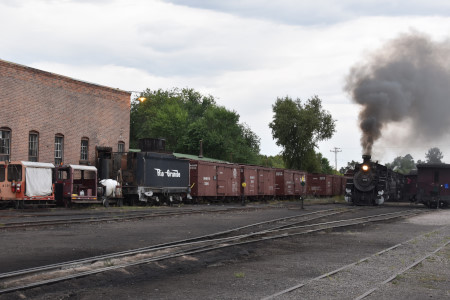
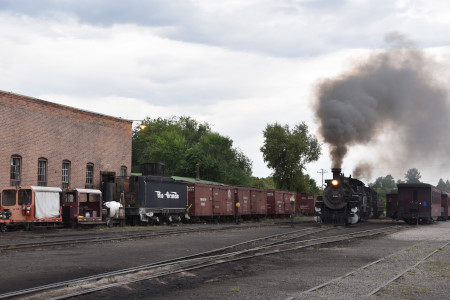
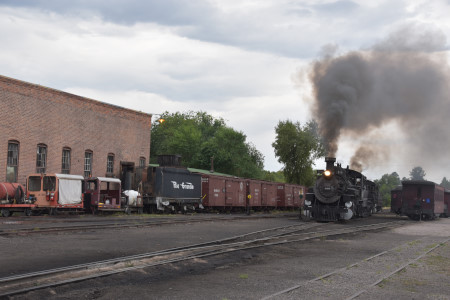
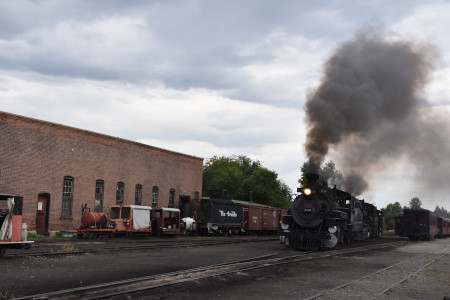
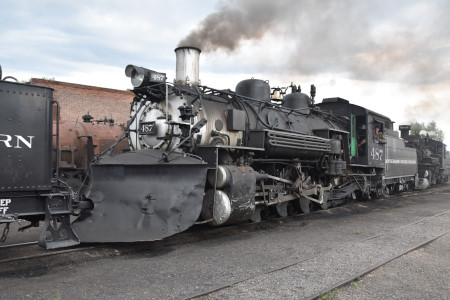
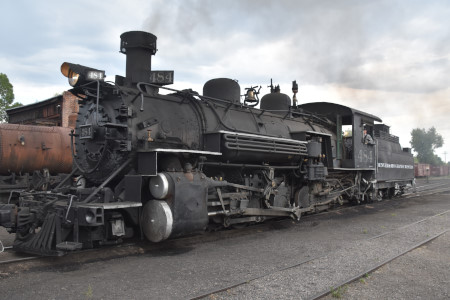
The triple-header with Cumbres and Toltec Scenic K36s 488, 487 and 484, built by Baldwin in 1925.
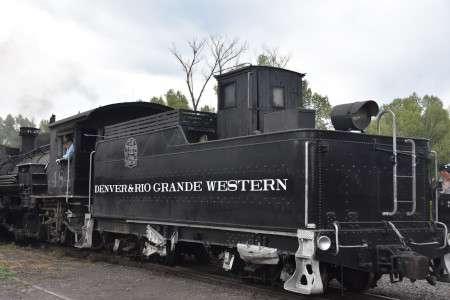
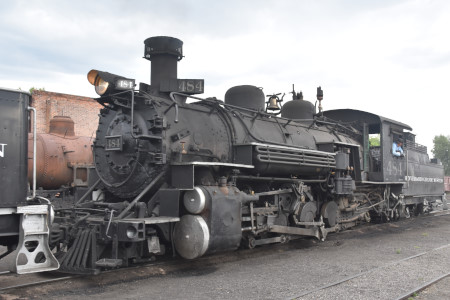
Cumbres and Toltec Scenic 2-8-2 K37 492.
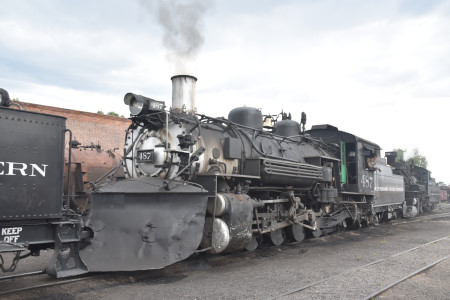
Cumbres and Toltec Scenic 2-8-2 K37 487.
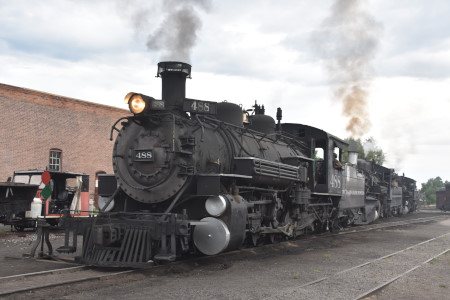
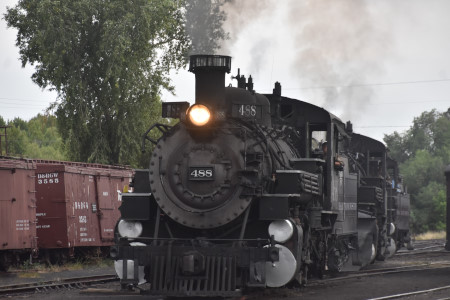
Cumbres and Toltec Scenic 2-8-2 K37 488 reverses in the yard.
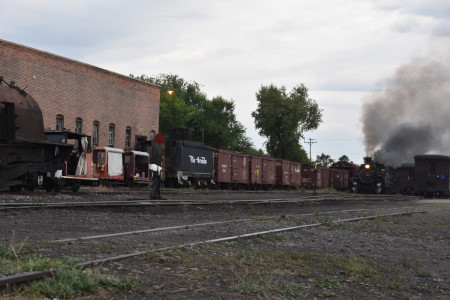
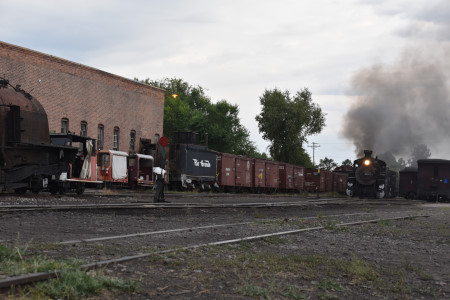
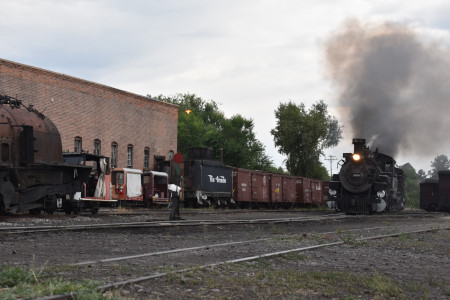
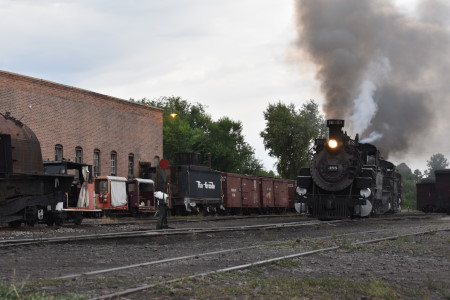
The last runby brought an end to this one-time Parade of Steam. I went to Subway for dinner then checked into the Branding Iron Motel for the next three nights.
| RETURN TO THE MAIN PAGE |