



Elizabeth went to Denny's for breakfast before she drove over to the Tru by Hilton, where the conventioneers boarded the bus and soon were off to Windsor, New York.
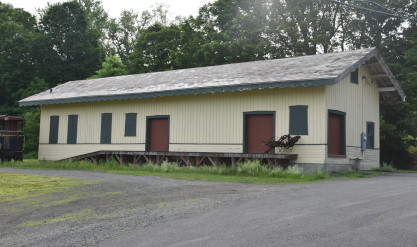
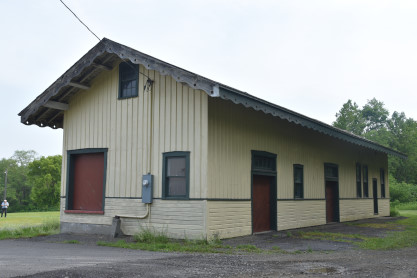
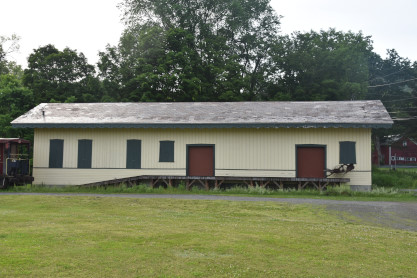

Windsor Delaware and Hudson depot dates from 1872. The history of the iron rails through Windsor began in 1853 and a company was formed for the purpose of constructing a railroad from Albany to Binghamton. During the Civil War years, it was completed as far south as Oneonta. After the war, work progressed and reached Nineveh, which served as a federal army recruiting depot. Overcoming obstacles, the last approximately forty miles were completed in January 1869 to Binghamton.
The Albany and Susquehanna Railroad passed into the possession of the Delaware and Hudson Canal Company then in 1872, the D&H constructed a branch rail line from Susquehanna, Pennsylvania through the towns of Windsor and Colesville, to a junction with the Albany line in Nineveh. At the turn of the century, eight passenger trains stopped at the Windsor depot and the railroad brought with it a new era of prosperity. In addition to its lumber, livestock, dairy and agricultural products, Windsor shipped by rail its most famous product, Windsor Whips which were shipped around the world and a local whip company maintained offices in New York City and in San Francisco. In return, the railroad delivered all types of commodities to the Windsor area as finished goods and raw materials for local industries. The decline of the railroad began in the 1960's and was followed by the closing of the Windsor depot.
Yankees from New England and others formed the town in 1807.
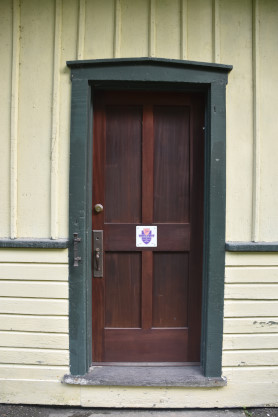
The station door.
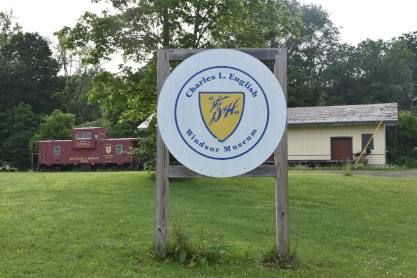
The Charles L. English Windsor Museum sign with the caboose and depot in the background.
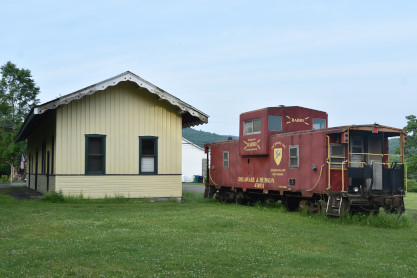

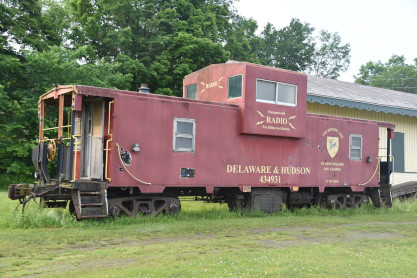
Canadian Pacific caboose 434931, built by the railway in 1971 and assigned to Delaware and Hudson, thus the paint scheme.
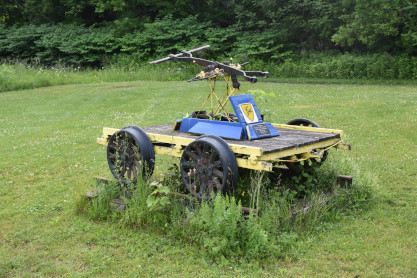
An original turn-of-the-century Delaware and Hudson hand car.
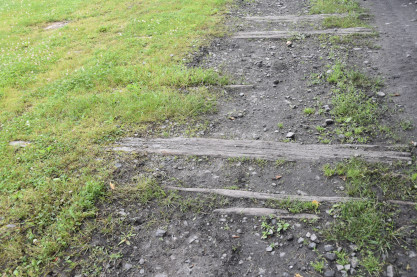
The remainder of the Delaware and Hudson right-of-way. We proceeded to our second stop of the morning.
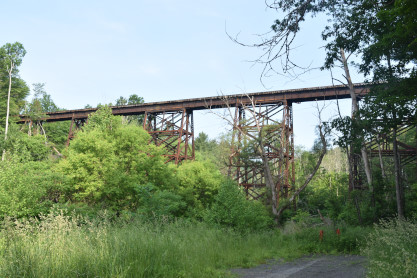
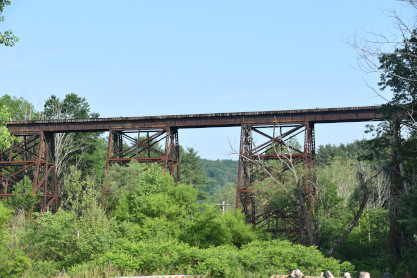
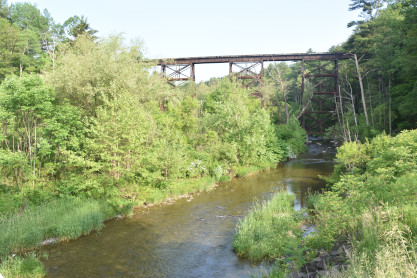
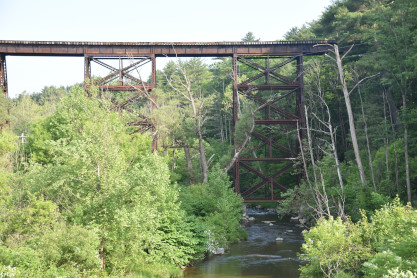
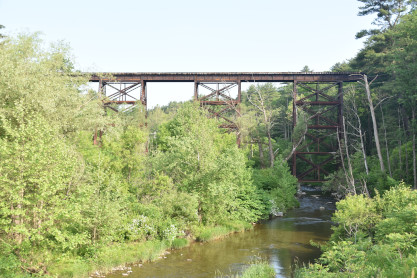
The Harpursville Railroad Bridge was erected over the Wylie Brook to carry the Delware and Hudson mainine between Binghamton and Albany. It is still in use by Norfolk Southern.
The Jefferson Railroad was chartered in 1864 with the goal of constructing a line between Carbondale, Pennsylvania with the Erie Railroad’s main line at Lanesboro to tap the rich anthracite coal in the Scranton-Wilkes Barre region to market to New York, New England and Canada regions. The line was financed and constructed by the Erie Railroad from 1869 to 1872. The Delaware & Hudson Railway gained trackage rights over the route in exchange, giving Erie trackage rights over the D&H's Gravity Railroad. The bridge over the Susquehanna River was replaced in 1908 with a three-span Pratt through truss.
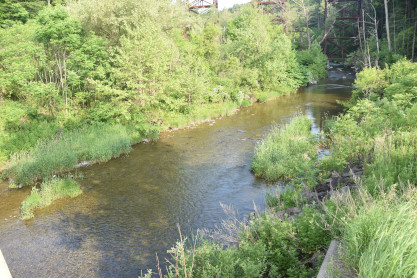
Wylie Brook beneath the trestle. We then were taken to Afton.
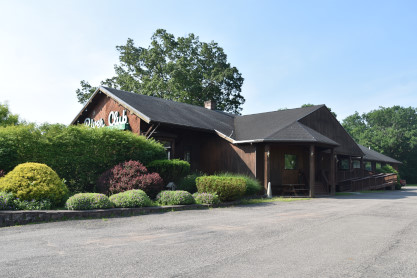
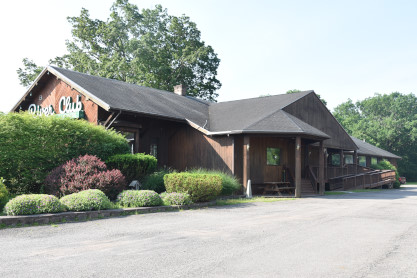
Afton Delaware and Hudson Afton combination depot. The rambling gabled wood depot dates from 1869 and is the River Club Restaurant. Afton was formed from the town of Bainbridge on November 18, 1857 and derives its name from the Afton Water, a small river in the parish of new Cumnock, Ayrshire in Scotland, immortalized by poet Robert Burns. In 1940, Afton had two large pasteurization plants and a feed mill.
Joseph Smith, the Mormon prophet, worked his miracles in the neighbourhood. On the Afton Fair Grounds stands the Mormon House and it was here on January 18, 1827 that Joseph married his first wife Emma Hale, an elopement. West of Afton in 1827, Smith dug up plates which late became part of the Book of Mormon.
Afton was a stop on Underground Railroad. Some houses had secret rooms and staircases as in a house on Pleasant Avenue.
Next the bus took us to Bainbridge.
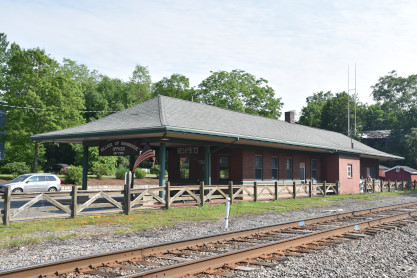
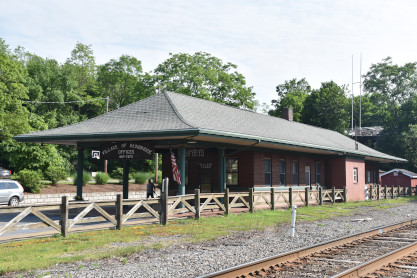

Bainbridge Delaware and Hudson passenger depot housing the Village of Bainbridge's office. The town was originally settled by European Americans circa 1788, first by a group called the Vermont Sufferers, people from land in eastern New York who had lost their claims due to land sales by Vermont for the same clams.
The town was formed in 1791 as the "Town of "Jericho" in Tioga County before the formation of Chenango County. The name Bainbridge was adopted in 1814 in honour of U.S. Navy Commodore William Bainbridge. In 1793 part of the village was used was used to form parts of the Towns of Norwich and Oxford, more of Bainbridge was used for the towns of Greene {1798 and 1999}.
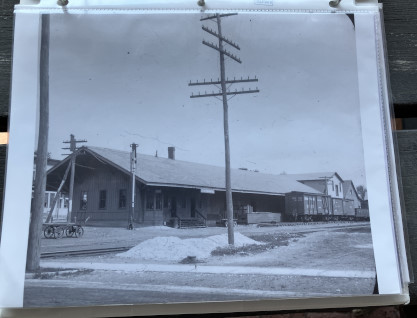
One of the Village councillors came out to see what this group of people were doing and once it was explained who we were, he went to get a binder of photographs; this is an in-service picture of the station.

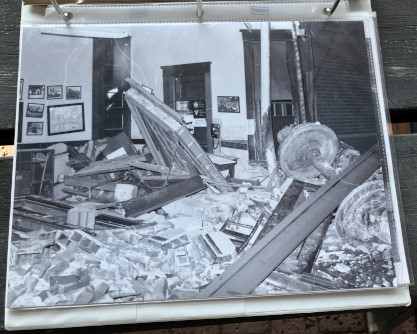
Part of the aftermath of a large derailment that occurred on January 7, 1966.
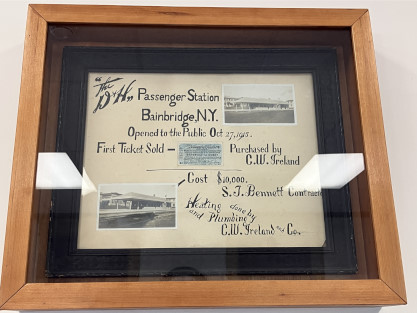
On the wall of the village office was the first ticket sold when the station opened on October 27, 1915.
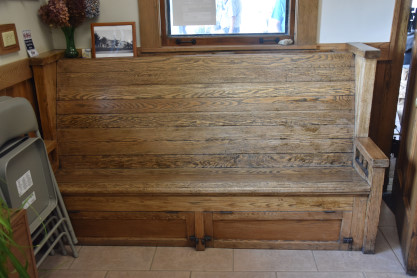
The station bench. The group continued their adventures by travelling to Unadilla.
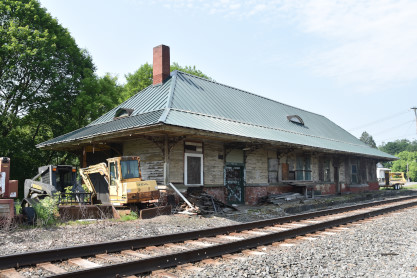
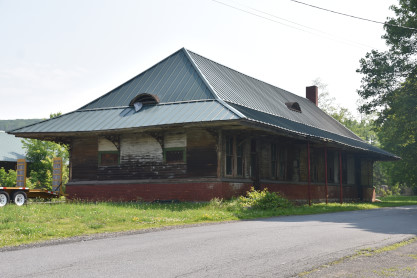
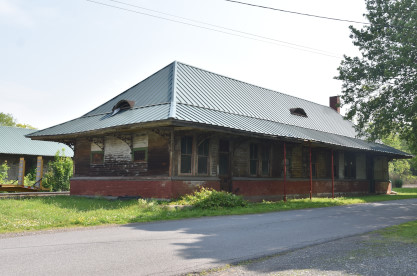

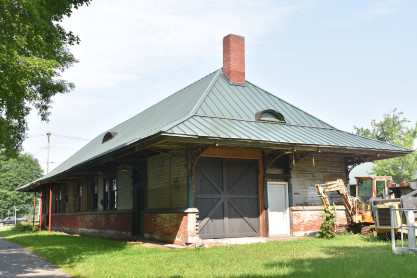
The Unadilla Delaware and Hudson passenger station is a wood structure built in 1904.
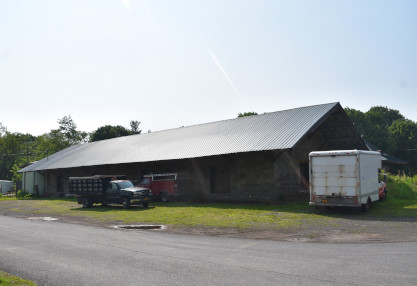
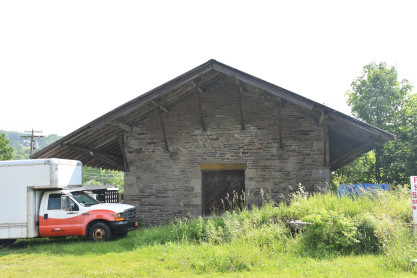
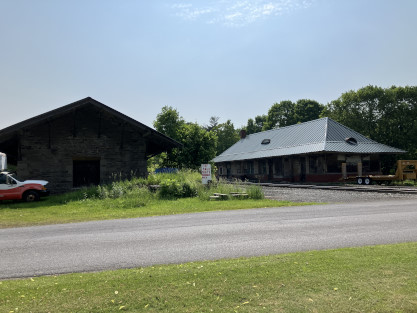
The Delaware and Hudson freight house, a stone structure, dates from 1866. The name Unadilla is derived from an Iroqouis word for "meeting place". The town was formed from part of the Town of Otsego in 1792. Later the size of the town was reduced by the formation of new towns: Butternuts, Milford and Oneonta in 1796. Otego {town}, New York in 1822, an addition to Butternuts in 1857. In 1827, the community of Unadilla set itself from the town by incorporating as a village. In 1892, the Van Cott family begin selling lumber and in 1906, it made the first Unadilla silo, beginning a product line serving farmers until the 1980's.
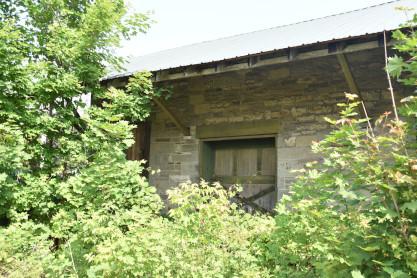
The freight station door and stonework. The next stop on the tour was West Oneonta.
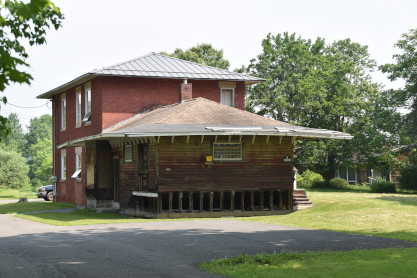
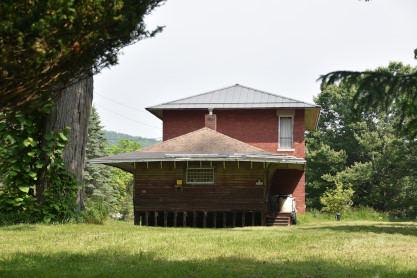
West Oneonta Southern New York Railway combination depot; the two story redwood/brick gabled depot dates from 1897. This was an electric rail lines that provided passenger and freight service but also provided electricity for customers along the line until about 1924. The railroad was previously called Oneonta, Cooperstown and Richfield Springs Railroad (1900-1906), Oneonta and Mohawk Valley Railway (1906-1908), Otsego and Herkimer Railroad (1908-1916) and Southern New York Power and Railway Company (1916 -1924).
The line was laid north of Oneonta. It reached Laurens in July 1901, Cooperstown in September 1901, Richfield Springs in the summer of 1902 and Mohawk by 1902. A carbarn, powerhouse, and dispatcher office were built in Hartwick. There was also a substation to power the line by the depot in Schulyer Lake. On April 19, 1901, the village trustees of Cooperstown unanimously voted to allow the line to enter via Chestnut Street to Main Street on the condition that no car carrying freight run on village streets except from the southern village boundary to the Cooperstown and Charlotte Valley Railroad.
By the 1920's, ridership numbers were falling. While the SNY still carried 61,403 passengers in 1928, the figures fell to 14,118 in 1931. In 1933, the SNY ended rail passenger service to concentrate on rail freight and the bus operations started in 1926.
In 1939, the SNY was sold to the H.E. Salzberg Company. Full operations continued for a year, but service ended to Cooperstown in 1940 and in 1941, permission was granted to abandon from West Onenota to Jordanville. The 1.5 mile stretch from Oneonta to West Oneonta was retained and freight service was offered with diesel locomotives. In January 1970, the SNY requested to close the remaining operation after the State Department of Transportation announced that a new connection road between the proposed Interstate 88 and State Road 23 would cut the line. Freight service ended on March 7, 1970 and the Interstate Commerce Commission approved the abandonment on May 26, 1971.
It was a short drive to Oneonta.
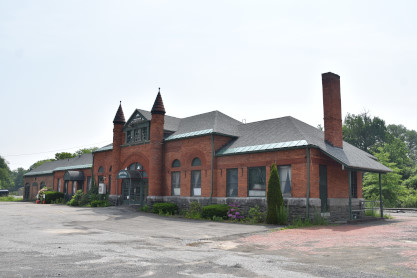
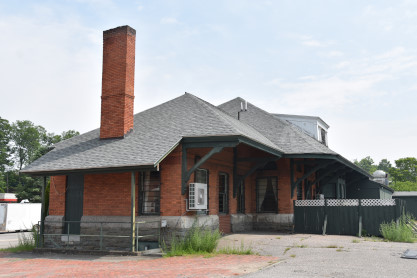

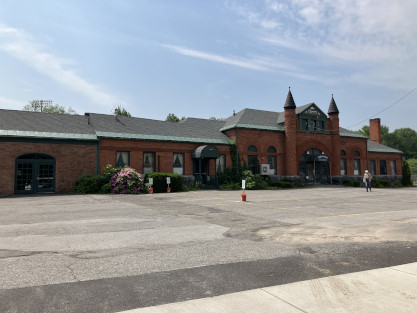
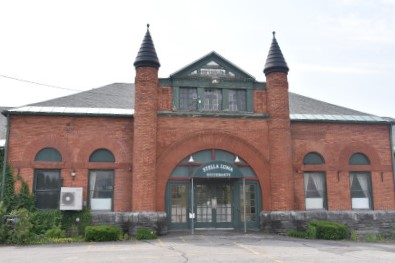
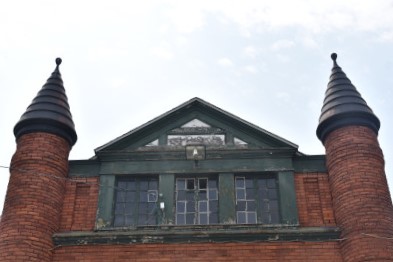
Delaware and Hudson passenger station built in 1892 to serve the Susquehanna division of the railroad, which ran between Albany and Binghamton. Passenger service to Oneonta ceased with the last passenger train running through the area in January 1963. The D&H line had been operating at a significant loss, with passenger patronage in a steady decline due in part to the advent of bus lines. It was repurposed as office space and in 2000, Vincenzo and Antonio Avanzato transformed the Market Street station into Stella Luna Stazione which closed in 2019.
The Delaware & Hudson Canal Company was incorporated by an act of the New York State Legislature in 1823 for purposes of operating a canal, which was completed in 1828 and was used for supplying New York City and other parts of the state with coal transported from Pennsylvania. Looking to obtain improved modes of transportation, an 1867 act of the state legislature allowed the company to construct, own and maintain railroads in the state. The company received authorization in 1899 to sell their canal and officially change its name to the Delaware & Hudson (D&H) Company.
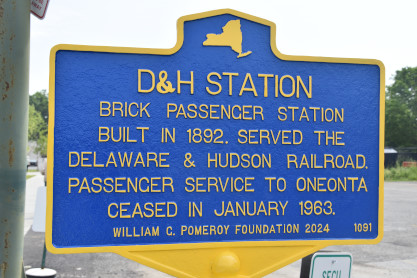
The historical sign for the depot.
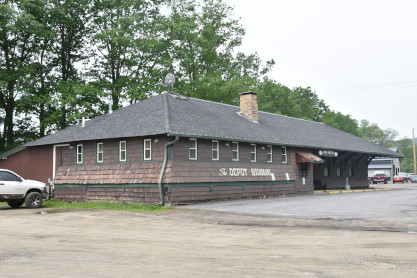
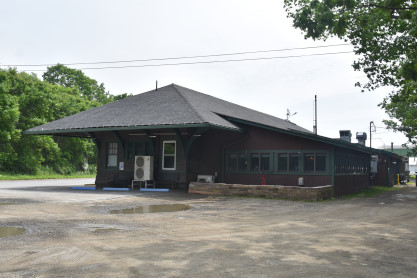
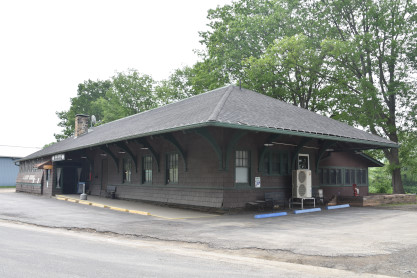
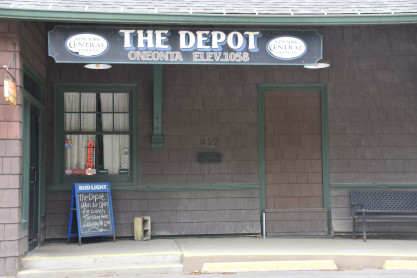
A little way down the road was Oneonta Ulster and Delaware combination depot, built in 1900 and houses the Depot Restaurant.
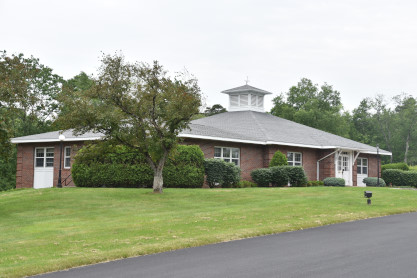

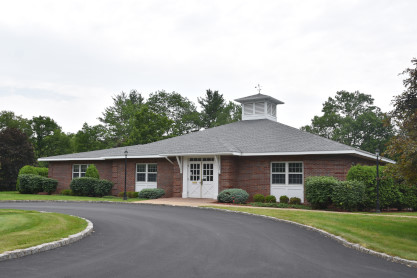
Oneonta Southern New York Railway combination depot. This large depot dates from the 1930s and houses the Harlem and Jervis law firm. Lunch was at Brooks House of BBQ then we continued area exploration.
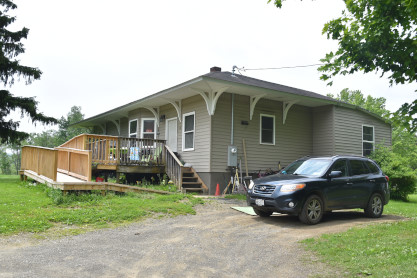
We stopped in Laurens for a bonus station, the Southern New York Railway depot built in 1901 and converted into a residence. Since we were very close to private property, we went no further. Our next stop was in Portlandville.
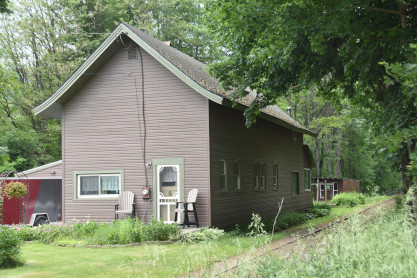
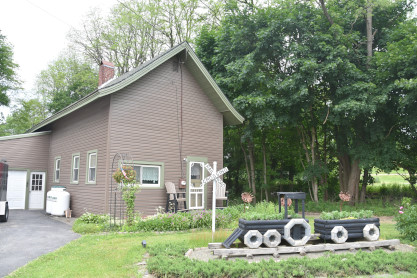
Delaware and Hudson Portlandville combination depot built in 1869 and also a residence.
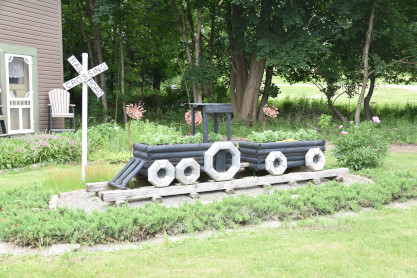
A train made out of wooden logs in front of the depot-turned-residence.
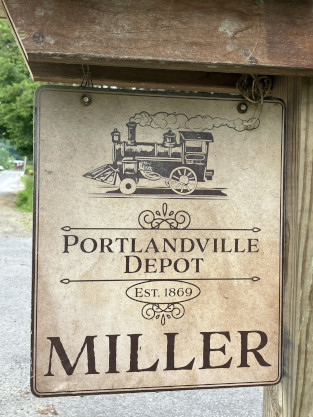
Portlandville Depot established in 1869 sign below the mailbox.
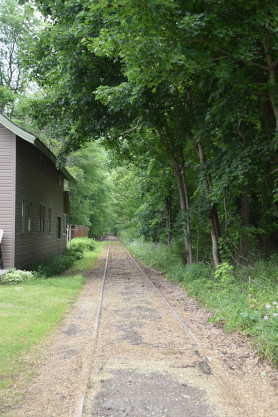
Delaware and Hudson Railroad track, on which the Cooperstown and Charlotte Valley Railroad hopes to operate in the future.
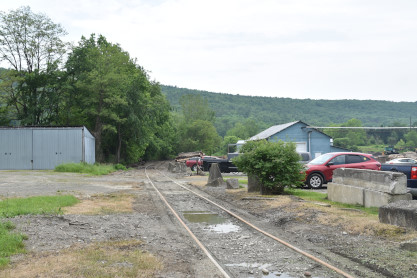
The opposite side of the road has the current tracks of Cooperstown and Charlotte Valley. It was here that Bruce Jacobs, President of the Leatherstocking Chapter of the National Railway Historical Society, which owns and operates the Cooperstown and Charlotte Valley, joined us to give a history and accompany us to Milford.
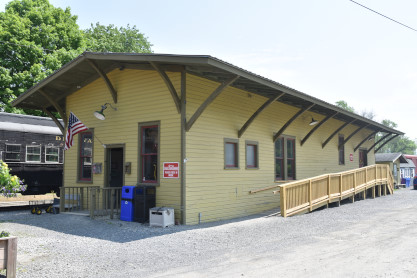
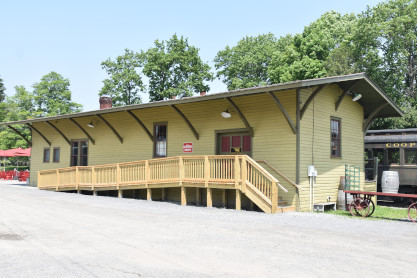
Milford Delaware and Hudson Cooperstown wood frame building, measuring 20 x 70, was erected in 1869 and served as a combination freight and passenger facility for the Cooperstown and Susquehanna Valley Railroad, predecessor of the CACV. The building underwent extensive alterations in 1903 when the line was taken over by the Delaware and Hudson Company, but the basic plan had been retained. The Society embarked on a total renovation of the structure, which was in poor condition at the time of acquisition, shortly after purchase. Roof repairs, reestablishment of utilities, painting and replacement of roof overhangs and brackets highlighted the renovations and a grand opening was held on June 6, 1996. The Depot has become the focal point of the CACV’s passenger operations, as well as a museum highlighting a small portion of the organization’s historical archives.
Everyone was given half an hour to look around the yards and Elizabeth took full advantage.
Cooperstown and Charlotte Valley Railroad sign.

The Rail Explorers railbikes sign, a second reason for Elizabeth and I to return.
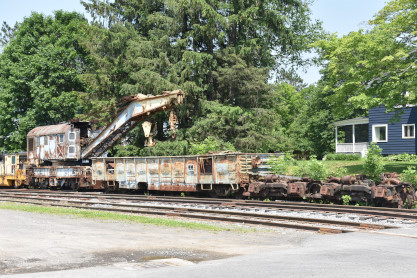
Cooperstown & Charlotte Valley 160 ton crane 30021, built by Industrial Works in 1926 with gondola car 30088.
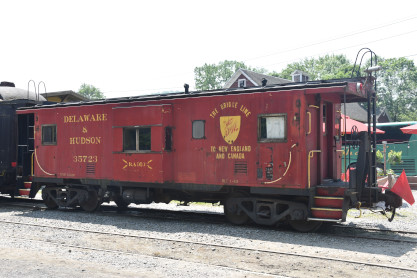
Delaware and Hudson bay window caboose 35723 built by International Car in 1968.
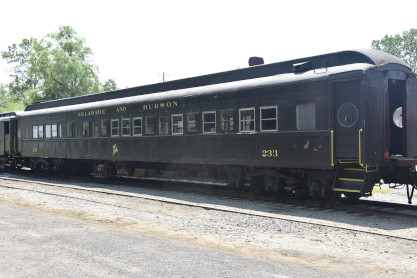
Cooperstown and Charlotte Valley coach 363, nee Delaware and Hudson 233, built by American Car and Foundry in 1916.
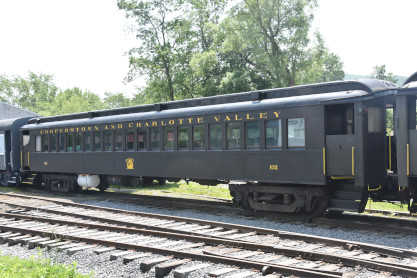
Cooperstown and Charlotte Valley 102, ex. converted to "Low Roof" M.U. Trailer 193, nee Delaware, Lackawanna and Western 3xx, built by Pullman Company in 1930.
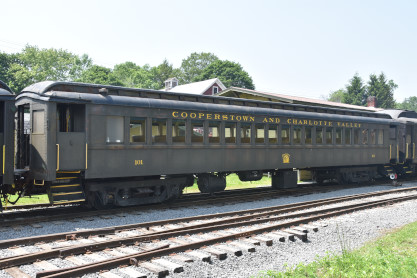
Cooperstown and Charlotte Valley coach 101, ex. converted to "Low Roof" M.U. Trailer 1930, nee Delaware, Lackawanna and Western 3xx, built by Pullman Company in 1930.
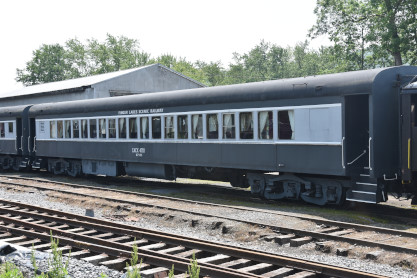
Cooperstown and Charlotte Valley coach 4701, ex. Finger Lakes Scenic Railway 4701, exx. Down East, Buffalo and Niagara Falls, nee Norfolk and Western 1642, built by Harlan & Hollingsworth in 1916. This was acquired in March 2025.

Charlotte and Cooperstown coach 1001, ex. Finger Lakes Scenic Railway 1001, exx. Down East, Buffalo and Niagara Falls, nee Norfolk and Western 1643, built by Harlan & Hollingsworth in 1916. This was acquired in March 2025.
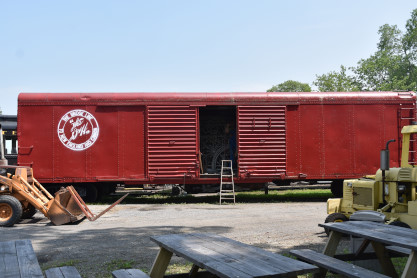
Box car of unknown origin.
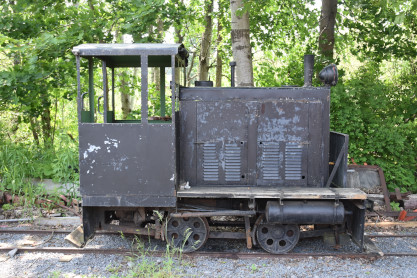
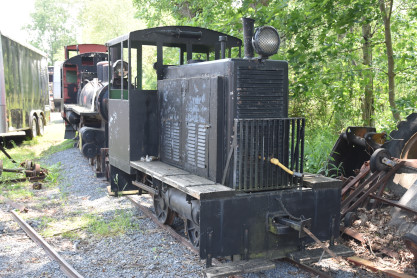
Cooperstown and Charlotte Valley DDT 1040, nee Indiana Ordnance Works US Army 1040, built by Plymouth in 1953. It was acquired in July 2023.
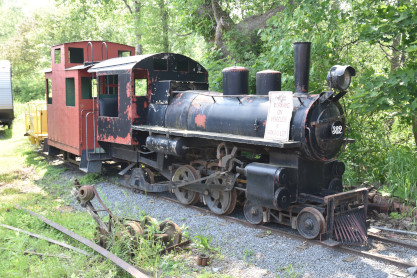
A narrow gauge amusement park-style steam engine, details unknown.

Cooperstown & Charlotte Valley refrigerator car 25008, nee Swift Refrigerator Line 25008, built by General American in 1954.
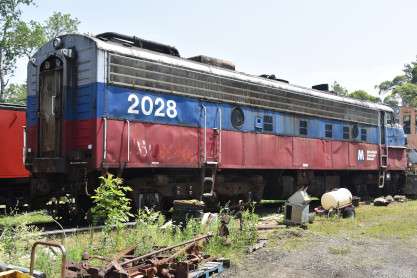
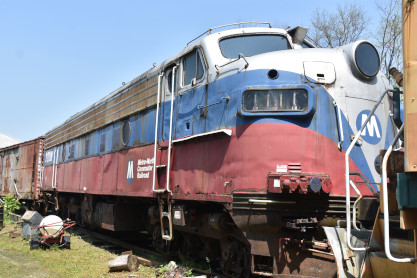
Charlotte & Charlotte Valley FL9 2028, ex. Conrail 5018, ex. Penn Central 5018, nee New York, New Haven and Hartford 2018, built by Electro-Motive Division in 1956.
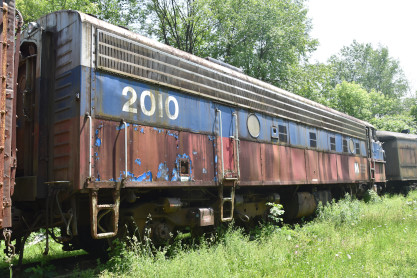
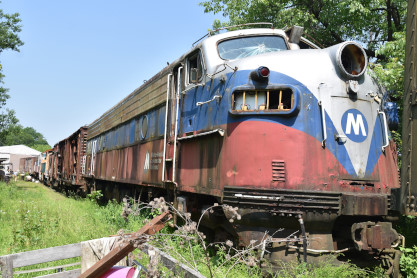
Charlotte & Charlotte Valley FL9 2010, ex. Metro North 2010, exx. Conrail 5037, exxx. Penn Central 5037, nee New York, New Haven and Hartford 2037, built by Elctro-Motive Division in 1956.
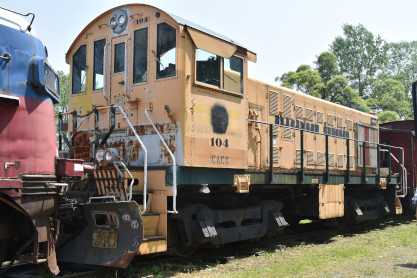
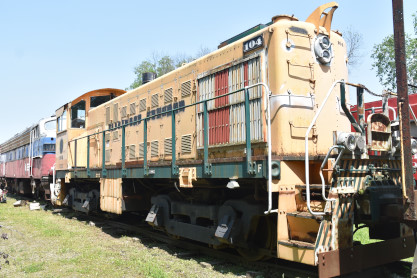
Cooperstown and Charlotte Valley S-4 104, ex. Claremont-Concord Railroad 104, exx. New England Southern Railroad Company 303, exxx. Green Mountain Railroad 303, nee Delaware and Hudson 3036, built by American Locomotive Company in 1950.
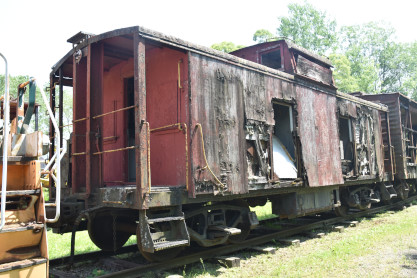
Delaware and Hudson center cupola caboose 35707R built by the railroad in 1907 as a boxcar and converted to caboose circa 1942.

Cooperstown and Charlotte Valley 36 foot box car 26644 heritage unknown and partially destroyed by vandal fire in October 2017.
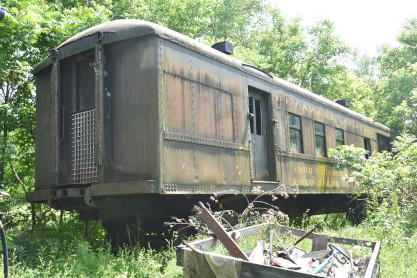
Delaware and Hudson baggage-railway post office car 703, built by American Car and Foundry in 1928.
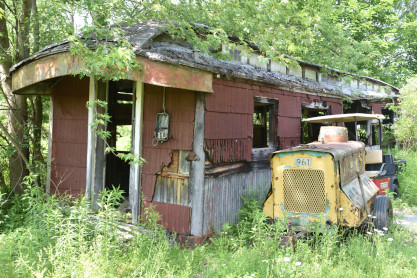
Delaware and Hudson wooden coach 294, built circa 1870. It is one of the oldest pieces of former D&H rolling stock still in existence today. The shingled siding comes from this car's use as a private residence in nearby Maryland, New York for many years before donation to the Leatherstocking Chapter NRHS.
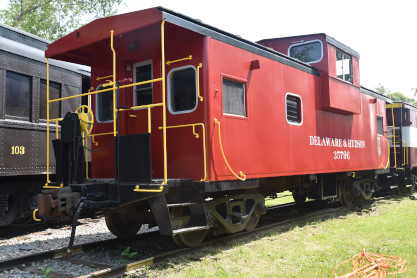
Cooperstown and Charlotte Valley wide vision caboose 35796, ex. Delaware and Hudson 35796, nee Reading 94115, built by International Car in 1971.
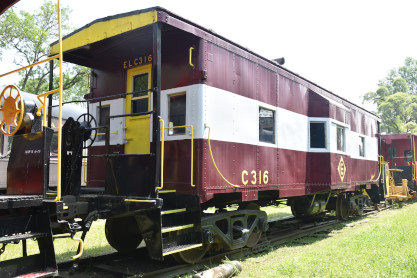
Cooperstown and Charlotte Valley bay window C316, ex. Erie Lackawanna C316, nee Erie C316, built by International Car in 1953.
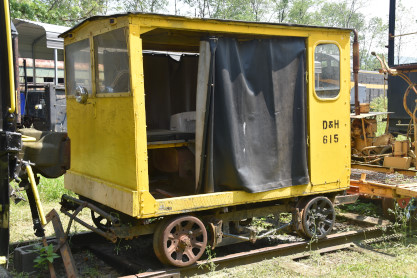
Cooperstown & Charlotte Valley speeder 615, built by Fairmont year unknown.
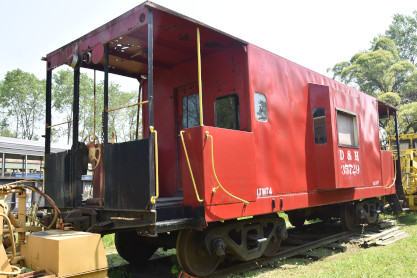
Delaware and Hudson bay window caboose 35729 built by the railroad in 1977 and acquired from Dryden, New York.
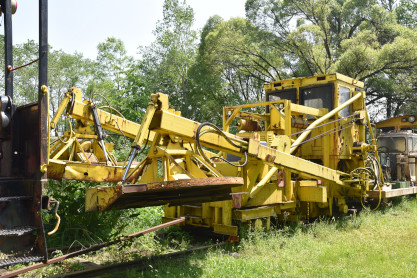
Delaware and Hudson Jordan spreader 35056 built by O.F. Jordan in 1956.
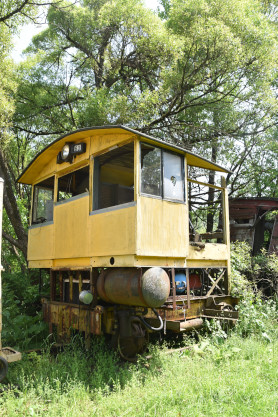
Cooperstown and Charlotte Valley volunteer Tex Gordons created this from many different machines, affectionately named "The Widget".
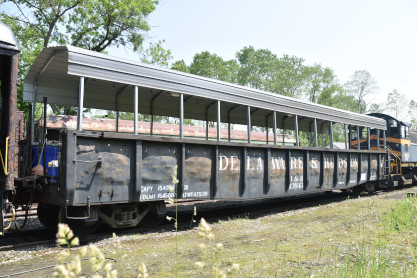
Delaware and Hudson gondola car 13843 open car rebuilt as an open-air car for passenger operations built by Pullman Standard in 1951.
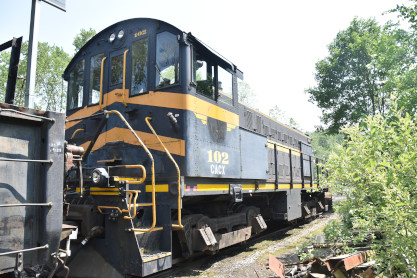
Cooperstown and Charlotte Valley S-4 102, ex. Claremont and Concord 102, exx. Washington County Railroad 406, exxx. Green Mountain Railroad 305, nee Delaware and Hudson 305, built by America Locomotive Company in 1959.
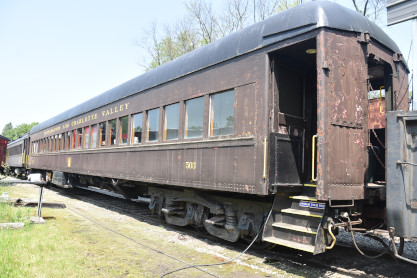
Cooperstown & Charlotte Valley diner 503, ex. Royal American Shows 72, exx. Richmond, Fredericksburg and Potomac 535, nee Richmond, Fredericksburg and Potomac 87, built by Bethlehem Steel in 1926.
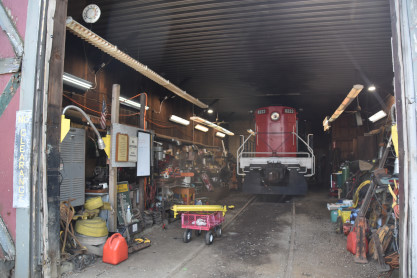

Cooperstown and Charlotte Valley S-7 8223, ex. Cooperstown and Charlotte Valley 3052 2015, exx. Atlas Specialty Steels 2002, nee Canadian National 8223, built by Montreal Locomotive Works in 1957.
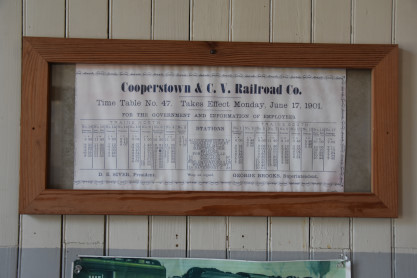
Elizabeth then went inside the station and found the Timetable board.
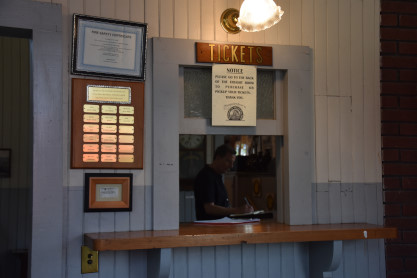
The ticket window.
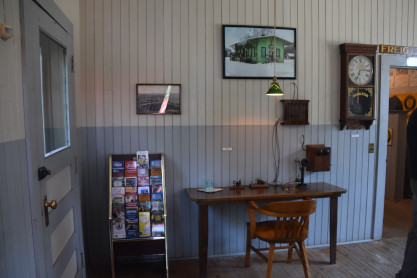
Interior scene.
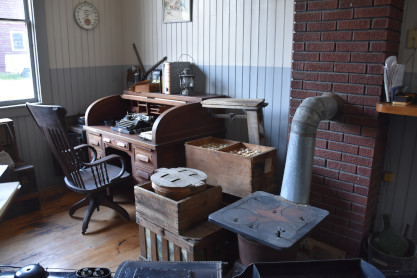
Station agent's desk.
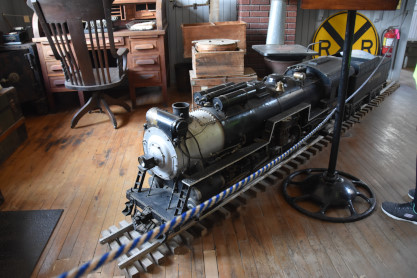
New York, New Haven and Hartford live steam engine, history and details unknown.
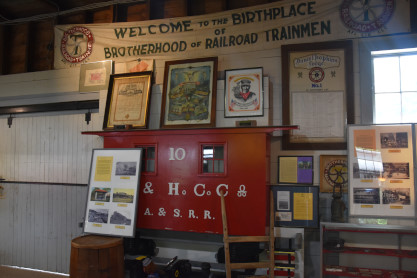
Welcome to the Birthplace of Brotherhood of Railroad Trainmen.
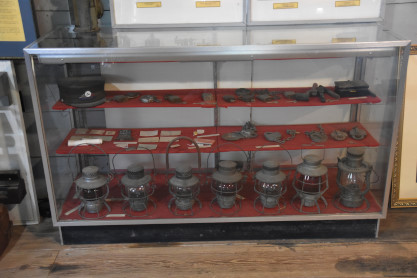
Display of railroad switch locks and lanterns.
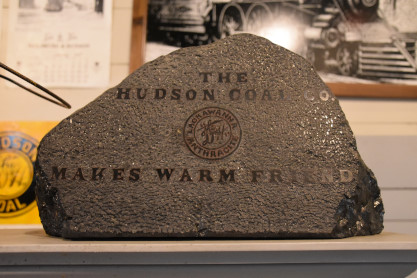
The Hudson Coal Co. Lackawanna Anthracite Makes Warm Friend.
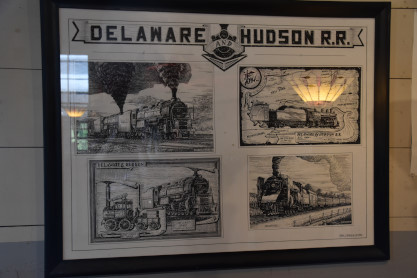
Delaware and Hudson Railroad pen and ink drawings by Tony Mongillo.
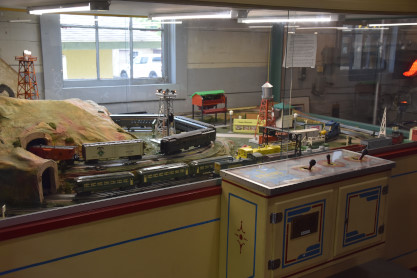 >
>
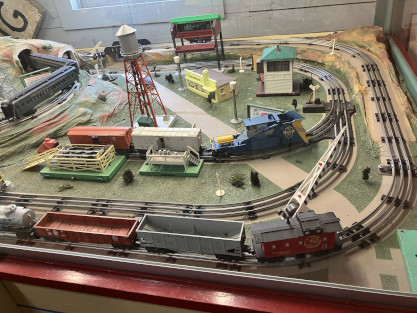
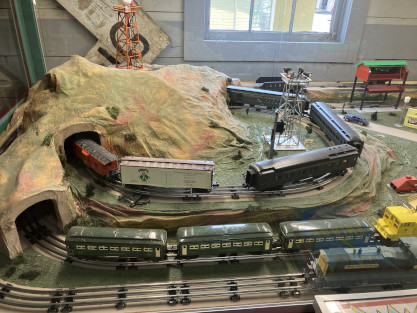
A 1954 Lionel Train exhibit acquired in 1996 from Walter Rich, president of the New York, Susquehanna and Western.
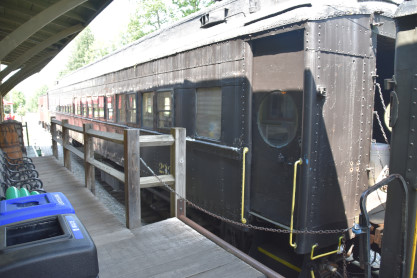
Cooperstown and Charlotte Valley 363, nee Delaware and Hudson 233, built by American Car and Foundry in 1918. Elizabeth briefly chatted with Bruce Jacobs before it was time to leave Milford and continue on to Cooperstown itself.
Due to the lack of parking in the downtown core, and the proximity of the Baseball Hall of Fame, the motor coach parked at the Delaware and Otsego Railroad headquarters and everyone walked to the three other stations, having been given a map of their location.
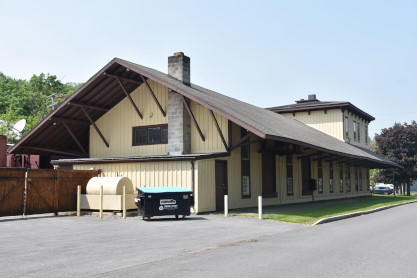
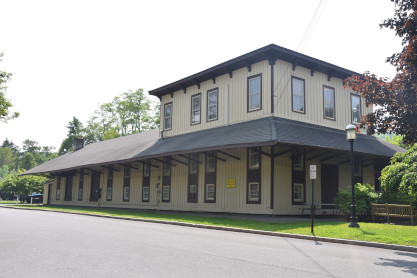
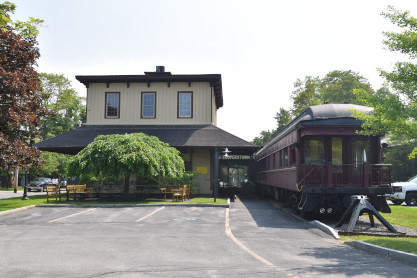
Cooperstown and Charlotte Valley combination depot serves as the Delaware and Otsego headquarters and was built in 1869.
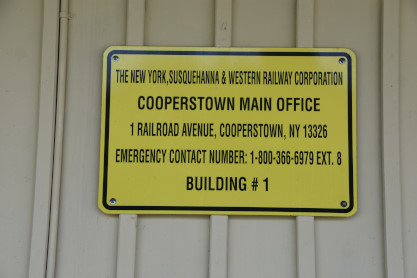
Cooperstown and Charlotte Valley headquarters.
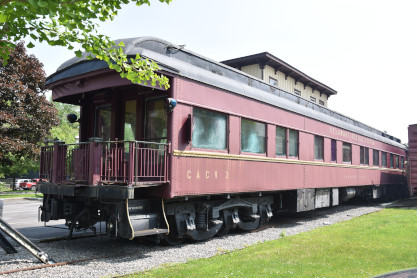
Cooperstown and Charlotte Valley business car 2, "Franklin Lakes", ex. Erie Lackawanna 300, exx. Delaware and Hudson 300, nee Cleveland, Cincinnati, Chicago & Saint Louis Railroad 400, built by the Pullman Company in 1928.
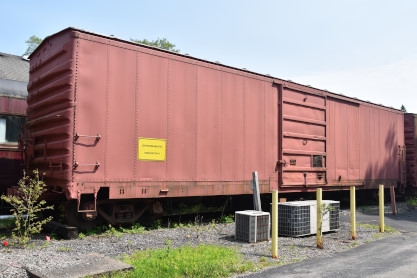
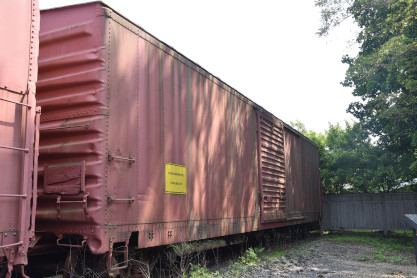

Cooperstown Main Office storage boxcars 2,3 and 4.
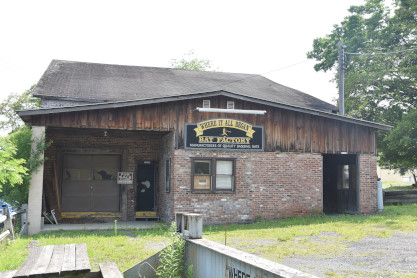
Delaware and Hudson stone freight depot, which was the site of the former Bat Factory and is a private residence.
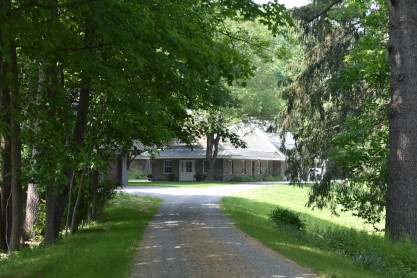
Delaware and Hudson stone passenger depot built in 1916. Since this was a private property, we could only photograph from the road. However, a few lucky members who happened to be there when the owners returned were given a brief tour. Unfortunately, Elizabeth was not one of them since she and others had progressed to the other two depots.


Southern New York Railway passenger depot built used after the 1917 trackage relocation. It has been a business.
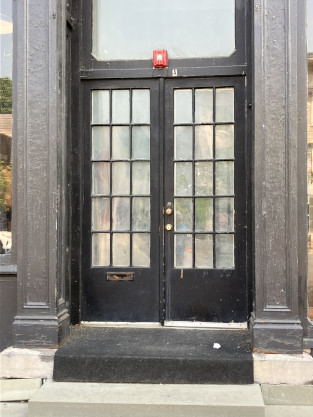
What remains of the original Southern New York Railway station. Located at 131 Main Street, it is bounded on both sides by baseball-related stores and while we naturally could not go inside, we surmised this must be the entrance. Everyone returned to the bus and we made our way to Edmeston.
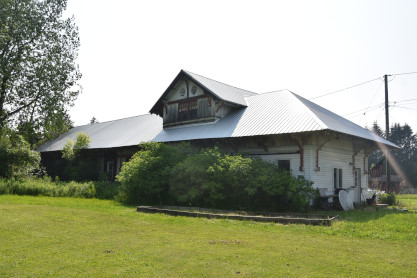
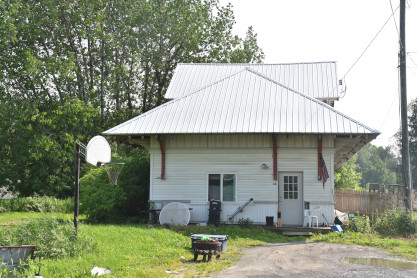
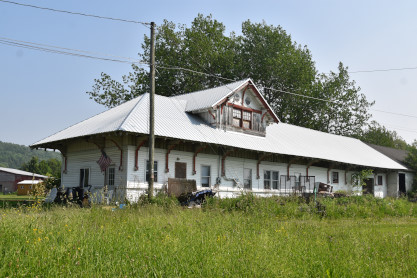
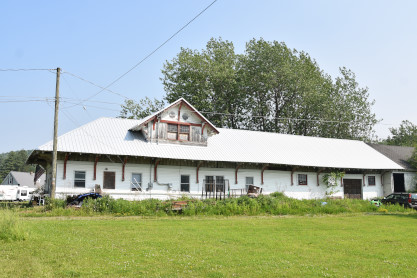
Edmeston New York, Ontario and Western wooden gabled combination depot built in 1907. The town of Edmeston extends as far as the Unadilla River, a line established by the 1768 Treaty of Fort Stanwick between the British and the Iroquois negotiated by Sir. William Johnson. The town's name came from the brothers Robert and Williams Edmeston, who had been granted 10,000 acres. Early settlers came from New England; for most of the settlers, it was planned as a stopover on a the way west. A strong Baptist influence came with the settlers. The town was established as Burlington in 1908.
Dairy farming has historically been the main business of the area. Cheese factories, creameries, livery stables, blacksmith shops and tanneries were create to support the dairy industry. One room schoolhouse were scattered throughout the town. By damming the creek power was created for foundries and mills. Hop growing and maple syrup production were in 1941 which operated seasonal occupations. The last spike of the Western Railroad from New Berlin was driven a Edmeston in January 1889, but rumored extension to Richfield Springs was never built. The branch line was sold to the Unadilla Valley Railway until abandonment in 1960.
The afternoon continued with a visit to New Berlin.
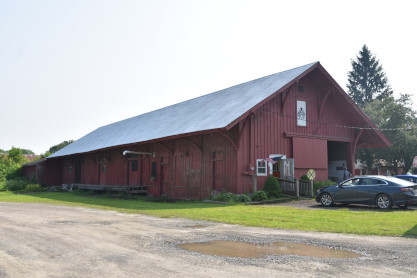

The wooden New York and Western depot constructed in 1869. The town of New Berlin was founded by a partition of the town of Norwich in 1807 and was named after Berlin, Germany, from where many settlers came. In 1821, the town changed its name to Lancaster, but went back to New Berlin the next year. In 1853, part of the town was used to form the town of Shelburne.
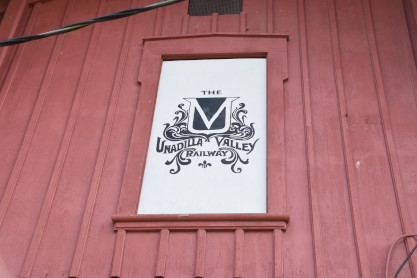
A reproduction of the emblem of the Unadilla Valley Railway.
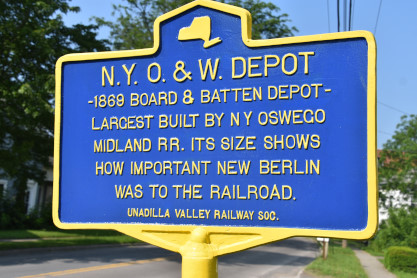
The historical plaque for the depot. Everyone was then welcomed inside.
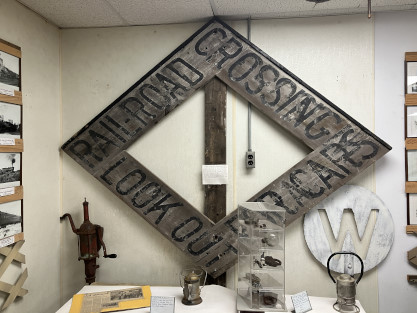
A old-style crossbuck.

Railroad memorabilia.

Delaware and Hudson Railroad photographs.
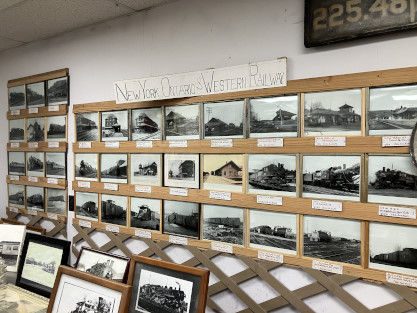
New York, Ontario and Western Railway photographs.

Southern New York photographs.
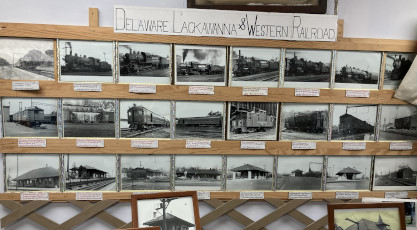
Delaware, Lackawanna and Western Railroad photographs.
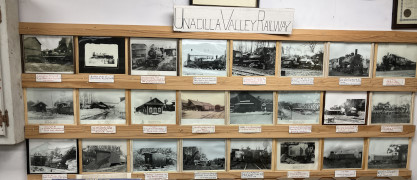
Unadilla Valley Railway photographs.
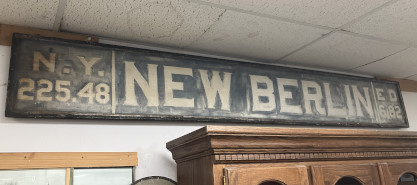
New Berlin station sign.
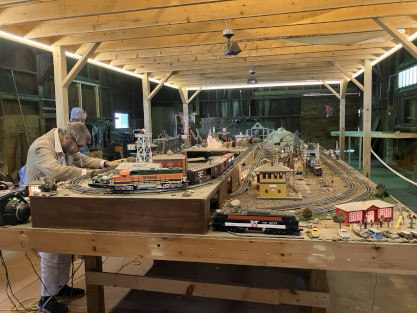
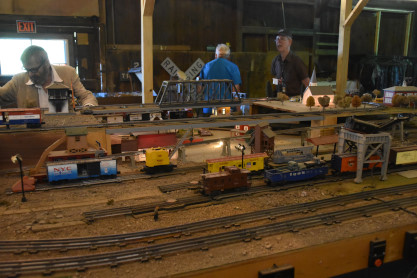
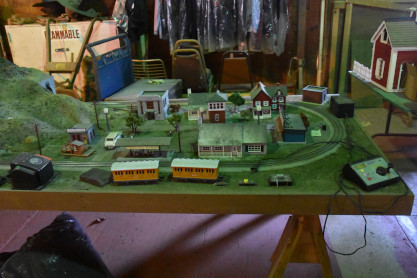
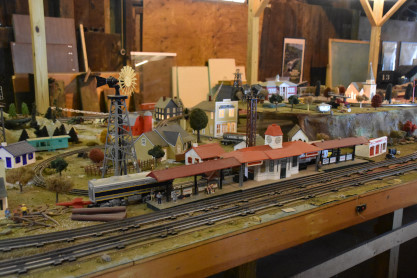
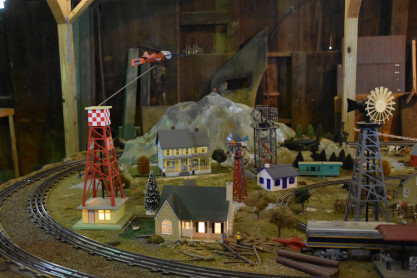
The HO scale layout in the freight portion of the depot.
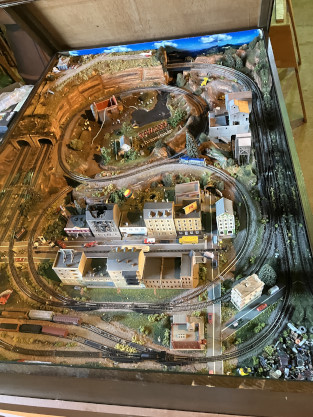
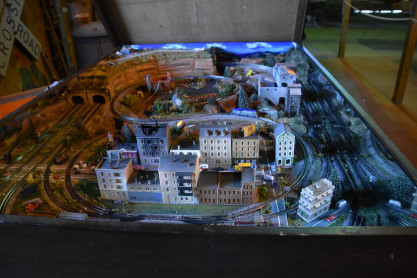
The N gauge layout donated by James Tergaskis.
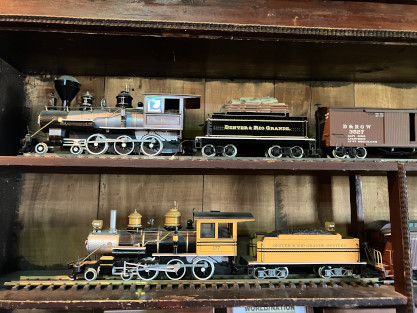
Two Denver and Rio Grande Western locomotives. Next the bus took us to Mount Upton.
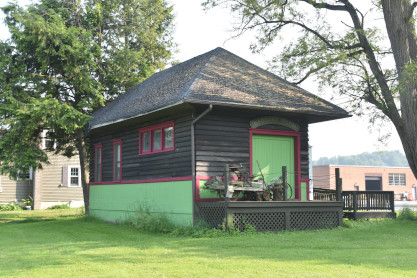

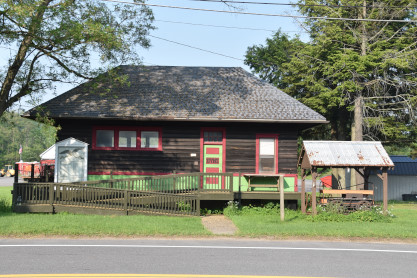
New York, Ontario and Western wooden depot from New Berlin Junction, built in 1969. The line on which the depot lay became the Unadilla Valley.
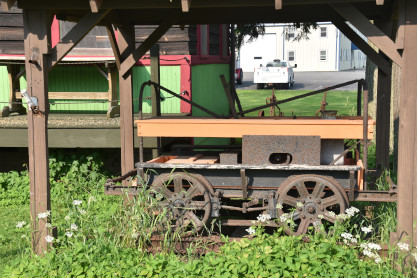
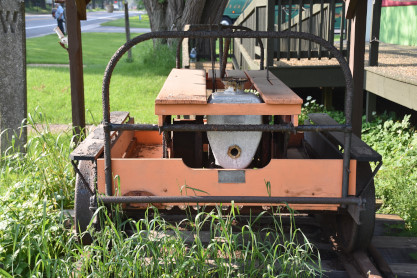
A speeder on display.
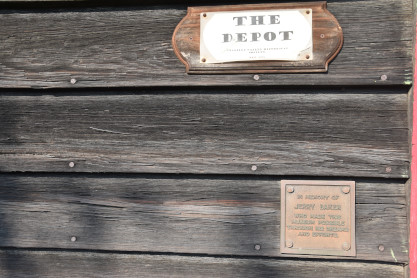
The depot has been home to the Unadilla Valley Historical Society since 1976 and there is a plaque to the memory of Jerry Baker, who made the museum possible through his dreams and efforts.
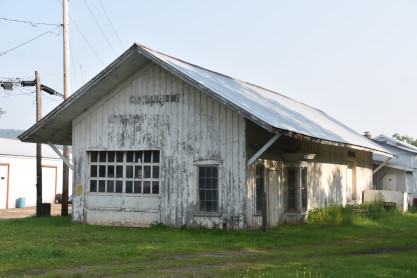
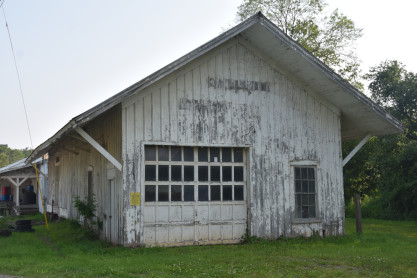
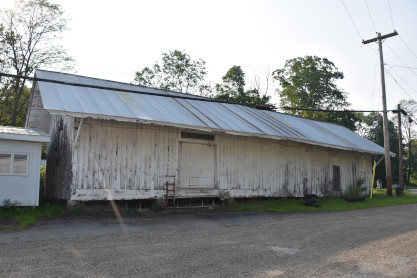
The New York and Western depot which served Mount Upton. We then proceeded to the last stop of the day.
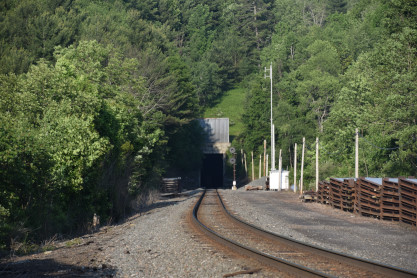
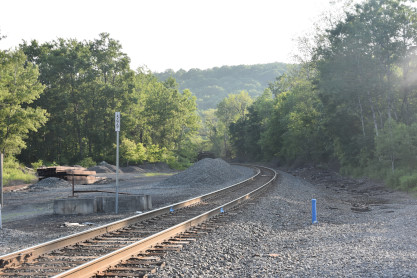
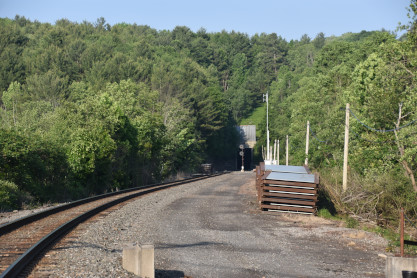
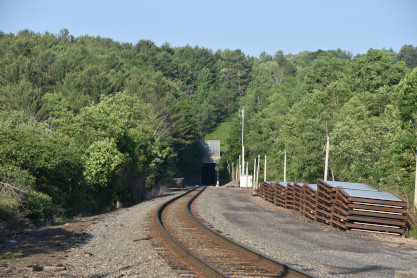
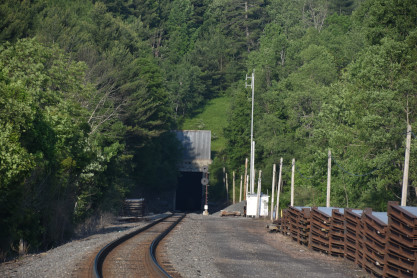
Belden Hill Tunnel is an active 2,240-foot tunnel located in the town of Colesville. The tunnel's west portal is located in the hamlet of Tunnel, a community which was settled by workers building the tunnel. Constructed between 1864 and 1868, the Belden Tunnel is one of the earliest railroad tunnels in the United States and has been designated as a state historic civil engineering landmark. In August 1869, the tunnel was the site of a railroad war between the Albany and Susquehanna Railroad and the Erie Railroad for control of the line between Albany and Binghamton. The tunnel was rebuilt in 1985 to accommodate higher and wider loads.
Construction and OpeningConstruction of the Albany and Susquehanna Railroad (A&S) from Albany, New York to Binghamton, New York began in 1853. The most difficult hurdle in the terrain along the route was Belden Hill in the town of Colesville, which was decided to be crossed with a tunnel. By January 1864, 45 miles of the line had been opened between Albany and Cobleskill. That spring, excavation of the west portal of the Belden Tunnel began, and the surrounding area that was settled by construction workers became known as the hamlet of Tunnel The tunnel was constructed by using drilling and blasting. For a distance of 323 feet at its west portal and 100 feet at its east portal, the tunnel was originally lined with stone walls and brick arches; the remainder of the tunnel was originally lined with timber and subsequently lined with brick and stone as the timber was only expected to last up to four years.
By December 1867, the tracks from Albany had been extended to Harpursville for a total distance of 120 miles. The remaining 22-mile segment of the line between Harpursville and Binghamton—including the Belden Tunnel—was completed on December 31, 1868 and the entire line was opened to train traffic in January 1869. The dimensions of the original tunnel were not large enough to accommodate newer types of rolling stock such as tri-level autoracks and high-and- wide loads, which had to be detoured around the Belden Tunnel via the Ninevah Branch. By the early 1980s, the structural condition of the tunnel was also rapidly deteriorating. In 1982, the D&H and New York State Department of Transportation began performing investigations and studies to enlarge and rehabilitate the tunnel. The D&H was subsequently purchased by Guilford Transportation Industries in 1984.
Reconstruction of the Belden Tunnel began on July 8, 1985. Rail traffic that had been using the tunnel was detoured along D&H's line between Nineveh, New York and Lanesboro, Pennsylvania during the project, which was expected to take about five months to complete. The $8 million project expanded the dimensions of the tunnel to a width of 18 feet and a height of 28 feet. The work was funded as part of a transportation bond issue that was approved by state voters in 1983. On October 24, 1985, a worker was killed inside the tunnel when a 1,000-pound concrete slab fell on him; the person was part of a five-person construction crew that was measuring the tunnel's dimensions. Rehabilitation of the tunnel was substantially completed by the end of the year and the tunnel was placed back into revenue service on December 28, 1985. The work remaining on the tunnel, which included installation of drains, shotcrete, and a portal door, was deferred until the spring of 1986 and was completed while the tunnel was used by rail traffic. A vertical lift door was installed at the west portal to protect the tunnel from the prevailing westerly winds. The door was opened and closed remotely and used a counterweight system.
The Belden Tunnel was designated as a state historic civil engineering landmark by the American Society of Civil Engineers and a plaque marking the designation was unveiled on September 17, 1987. Norfolk Southern Railway acquired the rail line in 2015. The vertical lift door at the tunnel's west portal was replaced with a roll-up door in 2021, which like the previous door, is also counterbalanced with weights.
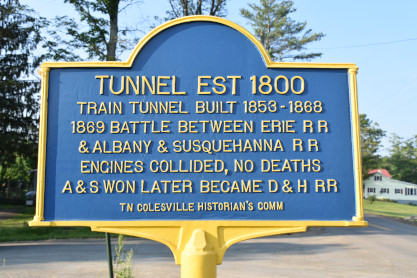
The tunnel historical sign. That completed the second day of station touring and the motor coach returned us to the hotel. Elizabeth went to Panera Bread for a light meal as she was not too hungry then returned to her hotel for the evening.