




After her morning preparations, Elizabeth drove over to Denny's for breakfast then went to the conference hotel to board the bus for the third day of the convention, with the first stop at Greene.
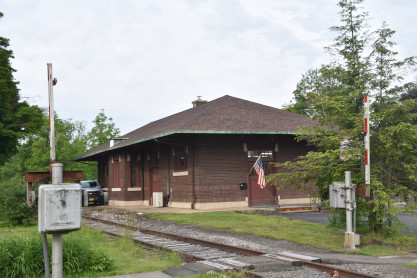
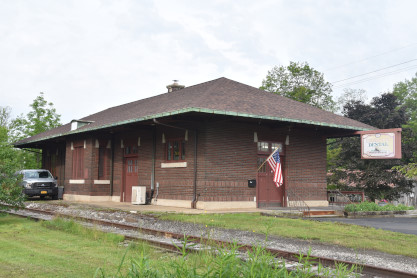
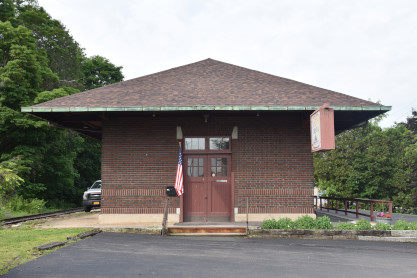
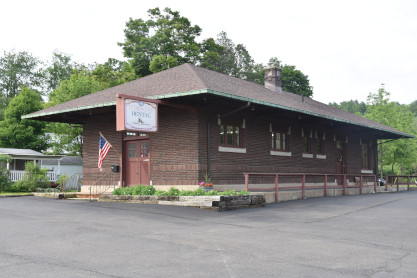
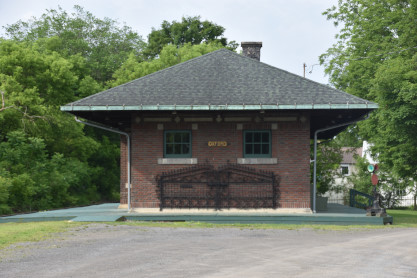
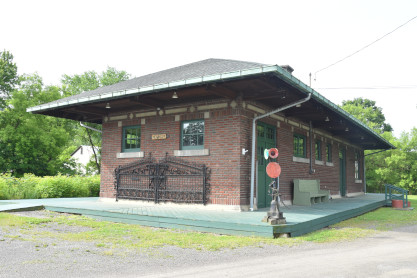
Delaware and Lackawanna and Western brick depot, constructed in 1914, which now houses Depot Dental.
Greene was named for General Nathaniel Greene and was originally called Hornby. The town was formed from the towns of Bainbridge and Union in 1798 then more land was added from Bainbridge (then Jericho) in 1799. The town was later reduced by the formation of new towns Coventry (1806) and Smithville (1808). Years later, more of Greene was taken to form part of the town of Barker in 1840 and another part of Greene was added to Coventry in 1843. The former Chenango Canal (1837) helped build the town's commerce until replaced by the railroad, which in turn, was replaced by Route 12 and State Highway 206.
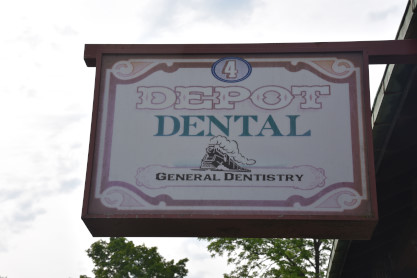
Depot Dental sign.
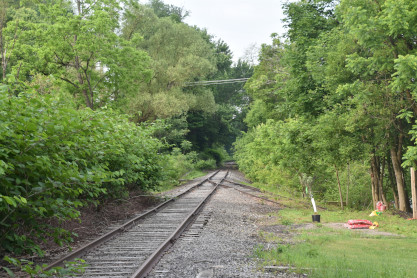
Delaware, Lackawanna and Western tracks outside the building. The bus took everyone to Oxford.
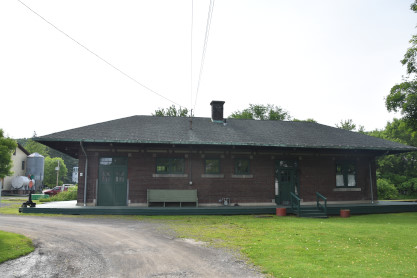

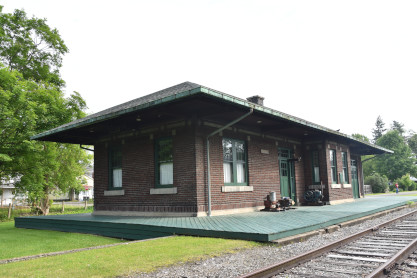
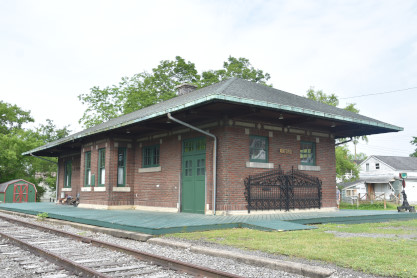
Delaware, Lackawanna and Western Oxford brick depot built in 1914, home to the Oxford Historical Society.
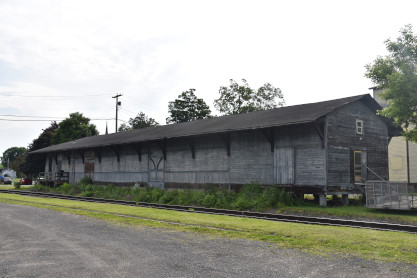
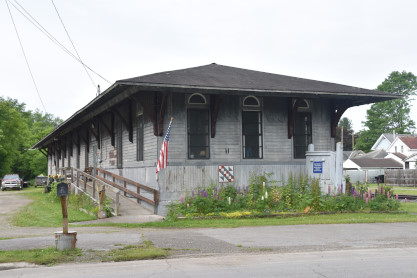
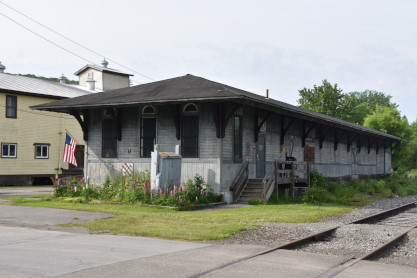
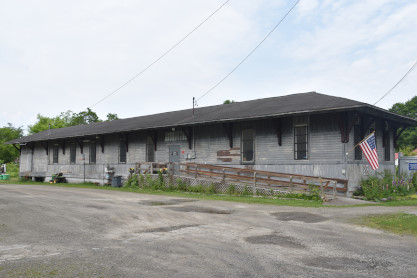
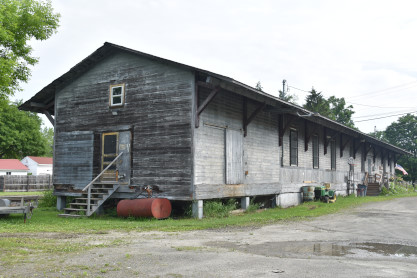
Delaware, Lackawanna and Western Oxford freight depot built in 1870's. The name Oxford derives from that of the native town of an early landowner from New England. The town is within the former realm of the Oneida and Tuscarora people. A tract of land was purchased by Benjamin Hovey from Oxford, Massachusetts and the first settlers arrived in the spring of 1789. The town of Oxford was established in 1793 from territory divided from the towns of Bainbridge and Union. The Chenango Canal (circa 1837} passed through the town and railroad service began in 1870.
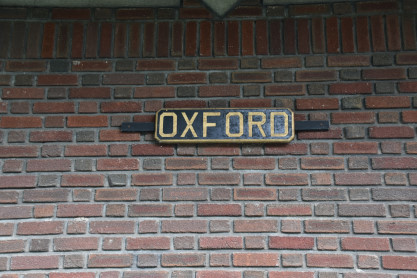
The town's name on the depot.
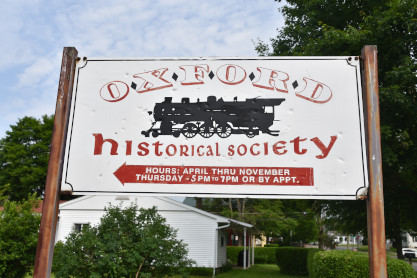
Oxford Historical Society sign. The third stop on today's tour was Norwich.
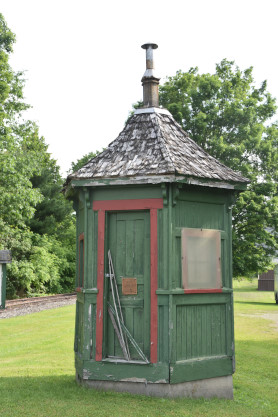
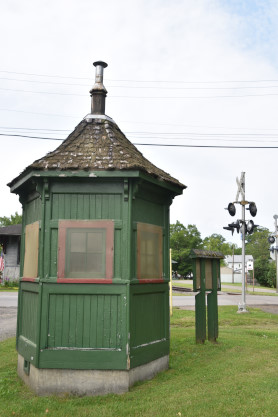
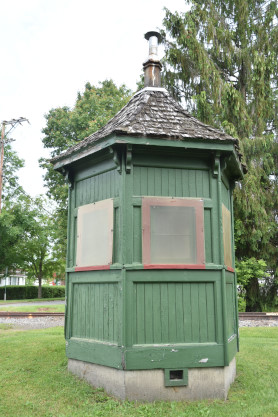
Delaware, Lackawanna and Western watchman's shanty from circa 1907.
City crossing gates were operated from such as this from 1907 to the 1960s. The Oxford Historical Society dedicated the restored shanty on August 28, 1988, which had been was discovered in a dilapidated condition on the property of Willard Roney, who gave the structure to the society. It took more than five years to locate a suitable site for the shanty and to restore it. Originally there were three such shanties at the Main Street, Merchant Street and Water Street crossings where the railroad passed through the center of the town. These shanties provided shelter and warmth for the persons who were hired by the railroad to stop pedestrian and vehicular traffic as trains approached the crossings. During the heyday of the railroad, there were as many as six regularly-scheduled passenger trains in each direction daily on the Binghamton to Utica division of the Lackawanna railroad. There were numerous freight and milk trains as well. These early guard houses were rectangular in shape. Sometime after 1905, they were replaced by hexagonal buildings from the design seen in this restored shanty. When automatic gates were installed, the watchman's job was eliminated, the shanties abandoned and one by one disappeared.
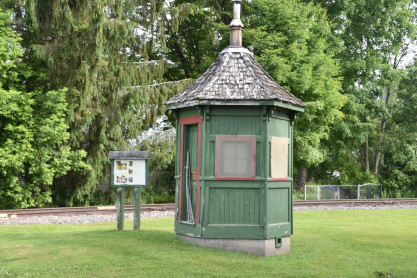
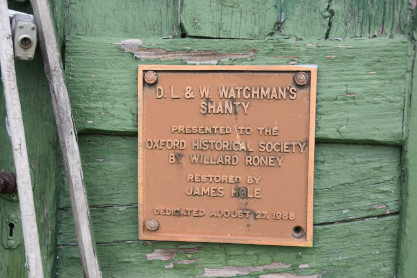
The shanty display and the donation plaque. Everyone then walked down to the freight house.
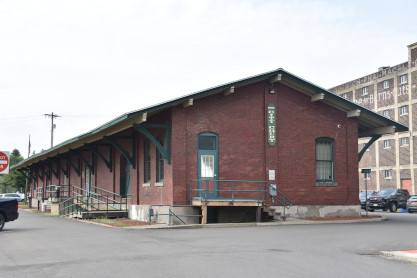
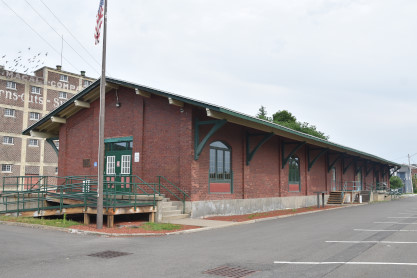
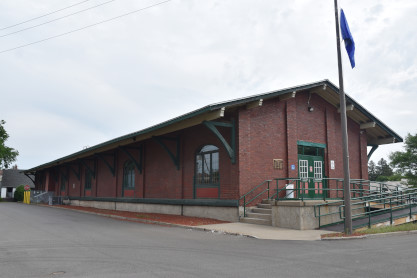
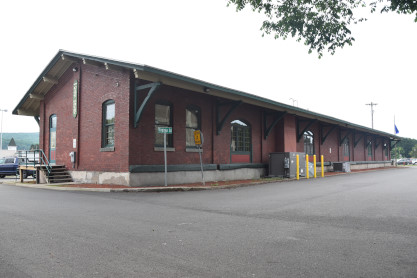
Delaware, Lackawanna and Western freight depot was built in the 1870's and the brick structure is Norwich City Court, a unique repurposing.
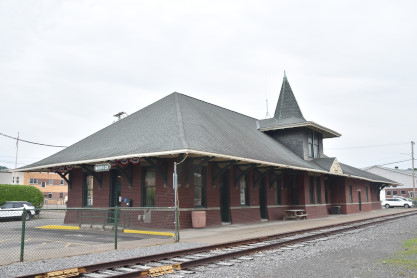
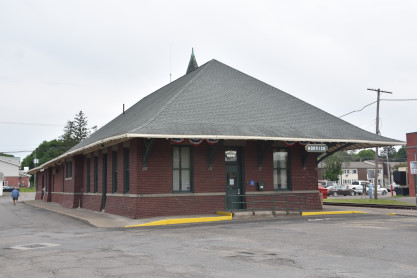
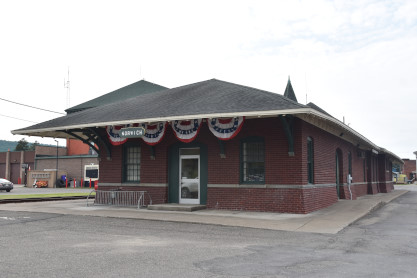

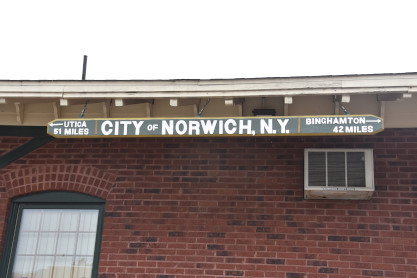
The Delaware, Lackawanna and Western brick passenger depot is City Hall. Norwich and the surrounding region have a long history. During the 18th Century, the area was dominated by the Iroquois Confederacy. The confederation of five nations consisted of the Mohawks, Oneidas, Onondagas, Cayugas and Senecas. Internal conflicts and European pressure eventually broke down the confederacy and many Iroquois left the area. Those remaining signed treaties with the American government ceding their land in return for goods and money. Early settlers came largely from New England, especially Massachusetts and Connecticut. These early residents brought with them the name "Norwich", originally brought from England to Connecticut, to name their new home in New York.
Norwich incorporated as a village on April 17, 1816 and incorporated as a city in 1914. When the Erie Canal began construction in 1817, the Chenango valley and the City of Norwich were still a frontier area. The success of the Erie Canal stimulated hopes and imaginations of inland residents with the prospect of better connections to markets and supplies. Despite an adverse report by the Canal Commissioners, the New York State Legislature authorized the construction of the Chenango Canal in 1833. The Chenango Canal connected the Erie Canal just west of Utica to the Susquehanna River at Binghamton. Construction began in 1834, and the canal opened in 1837. While the canal significantly improved passenger and freight movement for the Chenango valley, it failed to increase the population or have a radical impact on the valley's economy.
Ultimately, it was closed in 1878 due to declining revenues after the construction of railroads in the area. The earliest industry in Norwich included sawmills, gristmills, woolen mills and a hammer factory. As the area grew and manufacturing and transportation systems became more sophisticated, industry expanded to include the Norwich Furniture Company, the Norwich Silk Manufacturing Company, a piano and a violin factory and, most importantly for the long- term economic impacts on the City, the Norwich Pharmacal Company, started by the Reverend Lafayette Moore in 1885. Incorporated in 1889, it grew to be the principal industry of Norwich, manufacturing such products as Pepto-Bismol and Norwich Aspirin. Headquartered in the City, the company provided not only manufacturing jobs but a significant number of management, research and other professional opportunities.
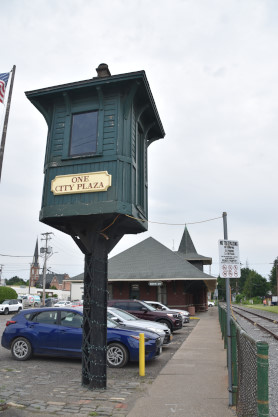
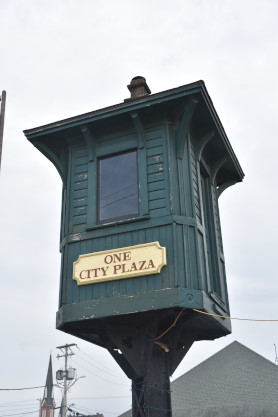
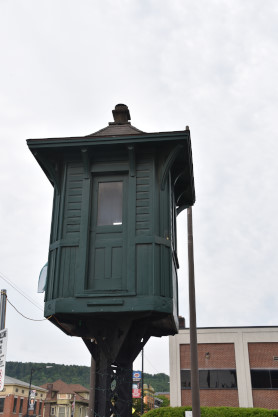
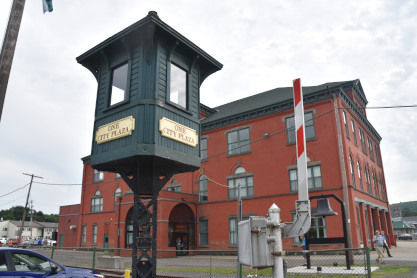
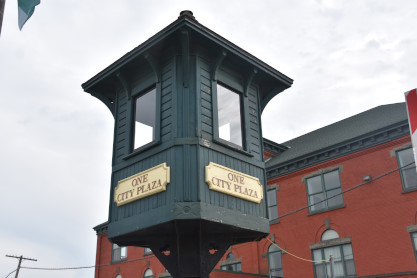
Delaware, Lackawanna and Western gatesman's tower dates from circa 1907 and originally stood southeast of the Front Street crossing.
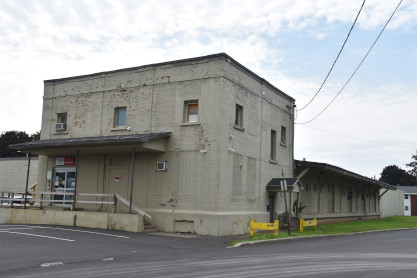
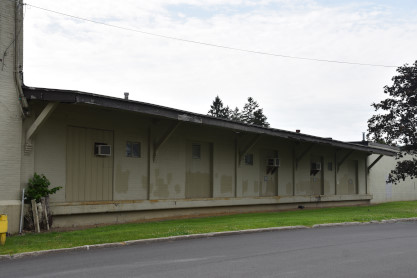
The last building of interest in Norwich was the New York, Ontario and Western freight depot. The conventioneers were then taken to Plymouth.
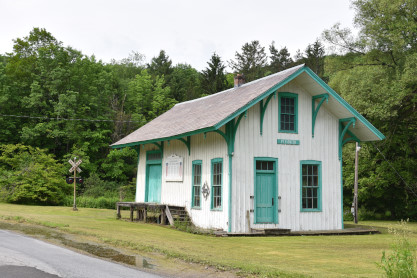
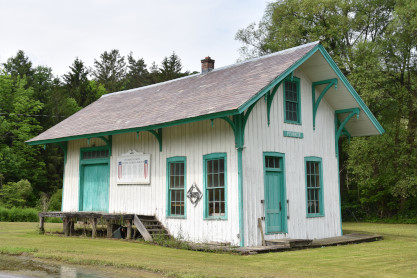
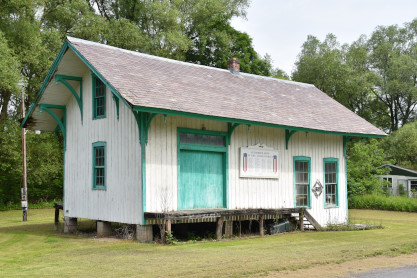

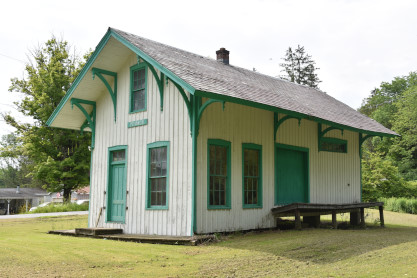
New York and Oswego Midland depot built in 1870. The town was formed from Norwich on April 7, 1806. Plymouth was also referred to as Frenchtown, Frank Town or Francistown in honour of its French inhabitants. John Young, Brigham Young's father, lived in a cabin in the area.
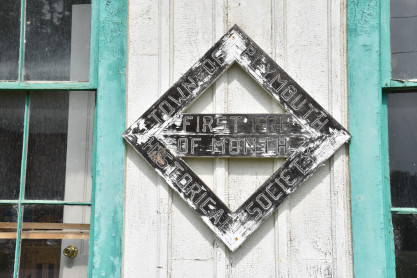
Town of Plymouth historical sign.
On the way to Cuyler, we went through the town of DeRuyter and stopped for its station, today's bonus depot.
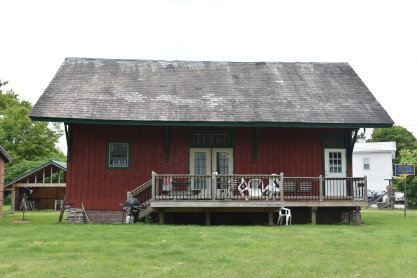
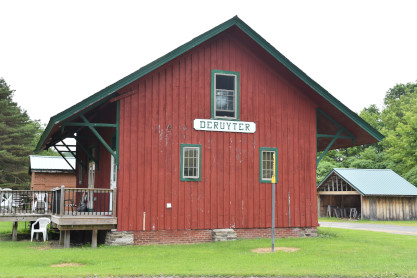
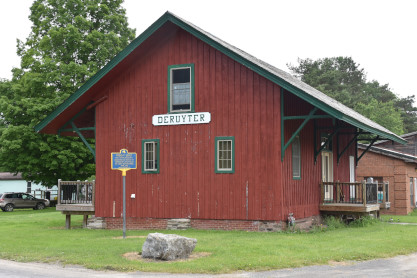
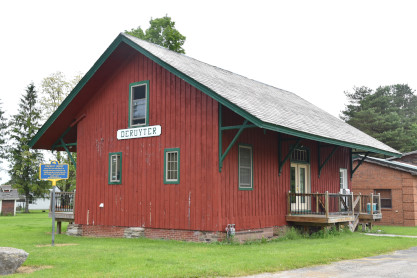
DeRuyter Midland Railroad freight house built in 1971.
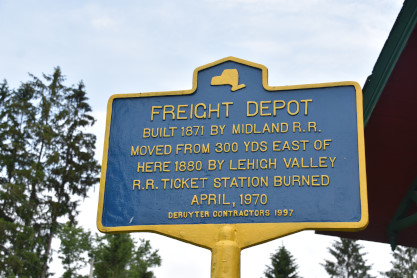
The historical marker. Next on the agenda was Cuyler.

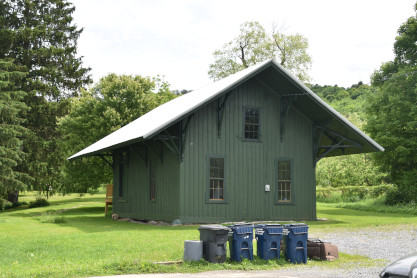
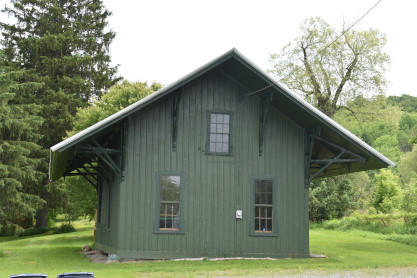
The New York and Oswego Midland [Lehigh Valley] depot. A $50,000 Community Resiliency, Economic Sustainability, and Technology (CREST) program grant was awarded to the town in February 2025 to renovate the historic 1872 structure into a town office and will go towards insulating the building and wiring it for electricity. Cuyler was in the former Central New York Military Tract and the area was first settled circa 1794. The town was formed from the eastern part of the town of Truxton in 1858.
Next on the agenda was Truxton.
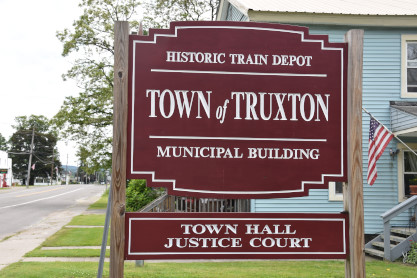
The Historic Town of Truxton Train Depot sign.
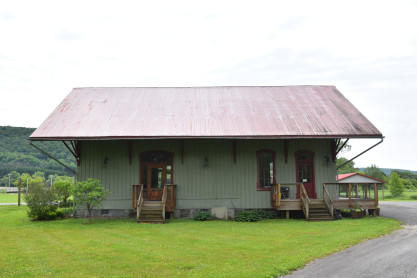

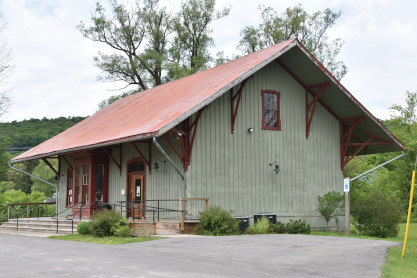
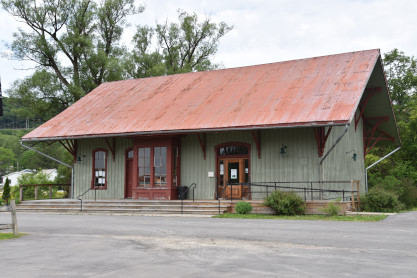
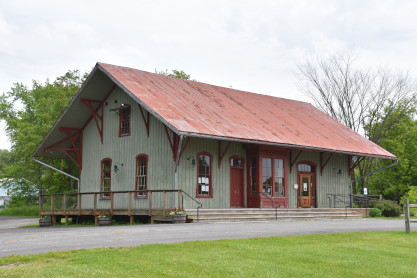
The wooden New York and Oswego Midland [Lehigh Valley] Truxton depot constructed in 1872. It is the town hall and was listed in the National Register of Historic Places in 2008. The building ceased use as a train station in 1967 and was then used by Agway as a warehouse. In 1991, it was sold to the town of Truxton for $1.00.
The town was formed part of the town of Fabius in Onondaga County when Courtland County was created in 1808. An addition was made in 1811 from the town of Solon.
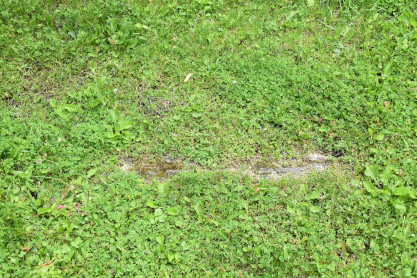
A remnant of the track that used to be here. Next, we were taken to Homer and had a surprise.

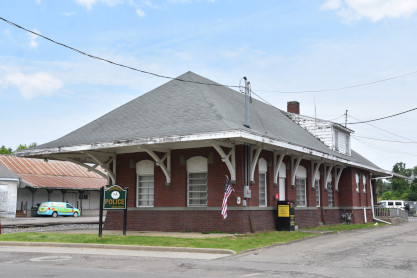
Delaware, Lackawanna and Western brick depoot, built in 1904 and is the police headquarters.
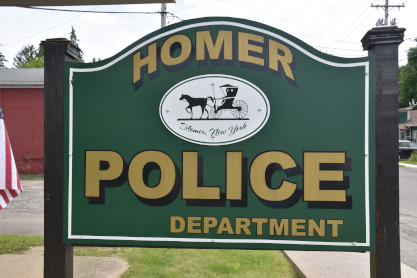
Homer Police Department sign.
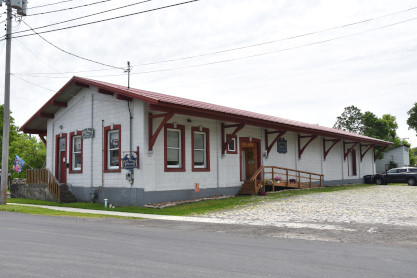
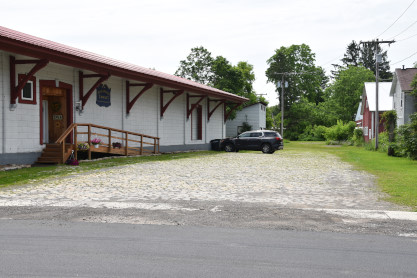
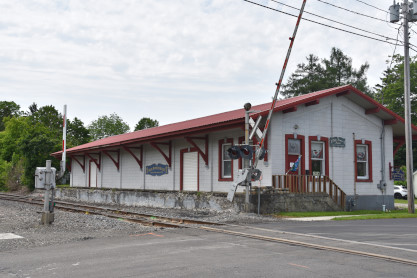
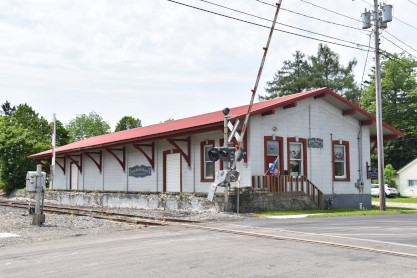
Across the tracks was the Delaware, Lackawanna and Western freight depot, built in 1907, and houses the Olde Homer House which sells traditional furnishing and gifts.
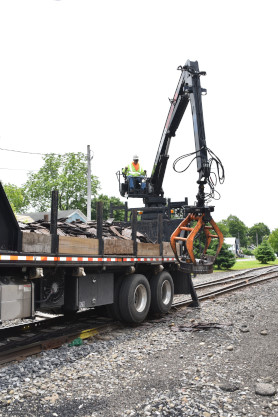
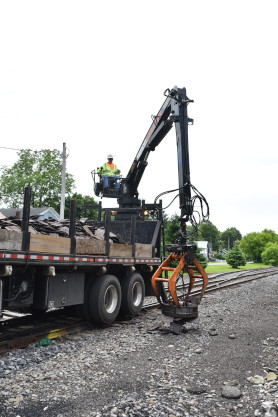
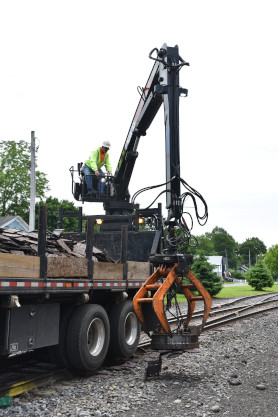
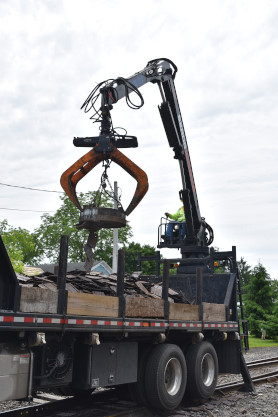
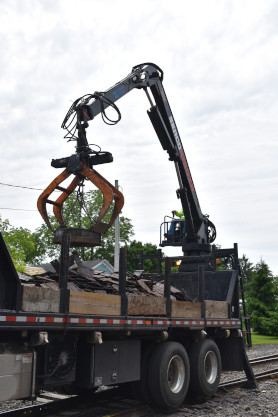
Timing could not have been better as there was a Railworks truck picking up tie plates with a huge magnet; something that Elizabeth (and most assuredly, others) had never seen before. Had we arrived ten minutes later, we would not have been able to witness this.
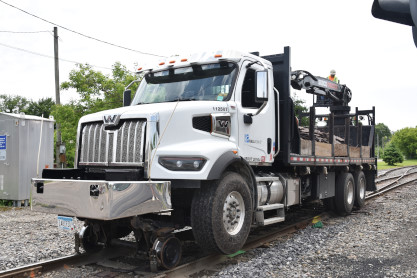
After probably more photographs of this standard practice than this truck had ever had, it proceeded to the next crossing and we went on our way to Cortland where we stopped for lunch and Elizabeth chose Arby's. After lunch, the bus took the attendees to the first of four stations in the city and as they were in close proximity, everyone walked to them.
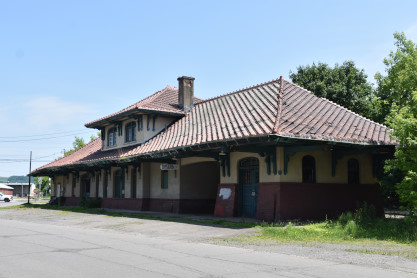
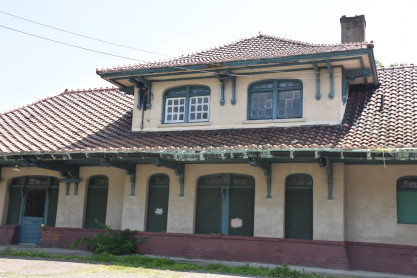
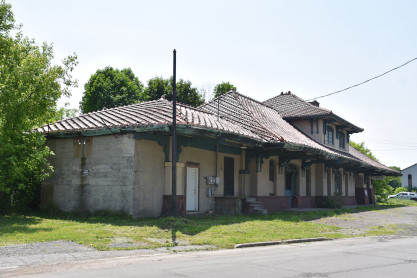
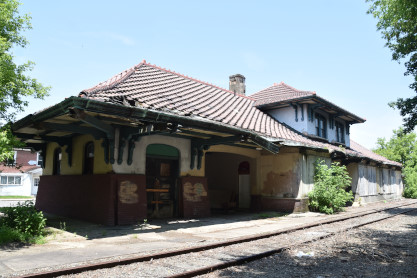
Cortland Lehigh Valley passenger depot built in 1910.
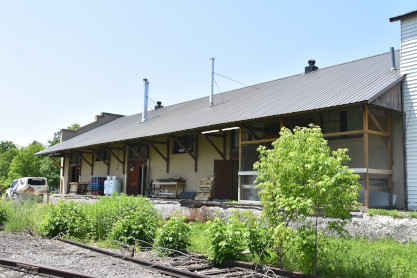
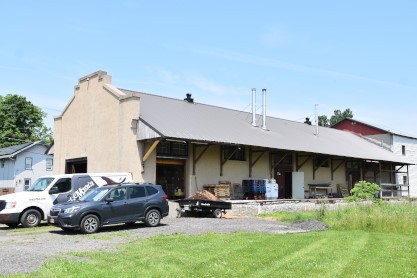
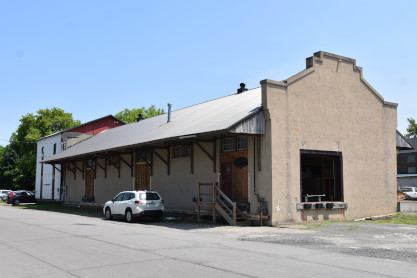
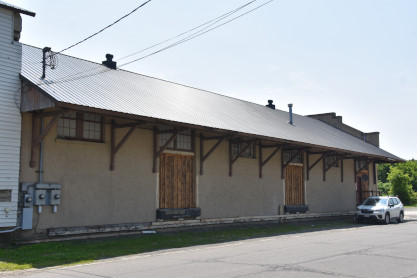
Lehigh Valley freight station built in 1904.
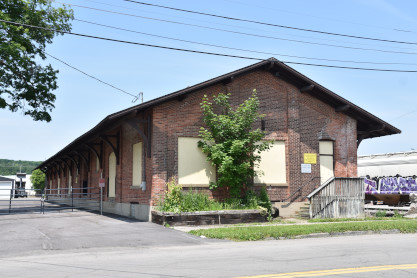
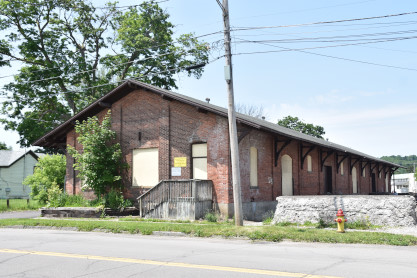
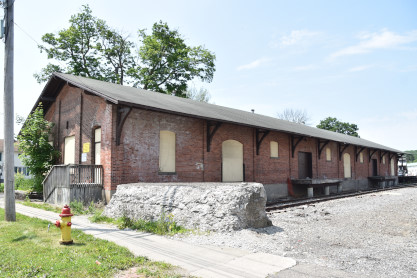
Delaware, Lackawanna and Western Cortland freight depot built in 1903.
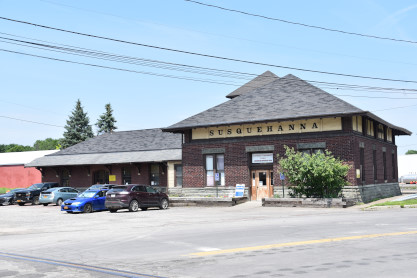
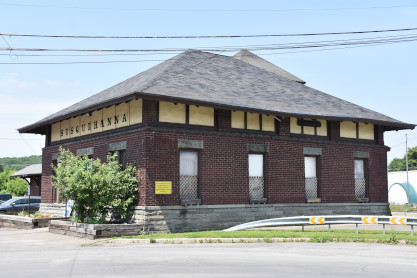

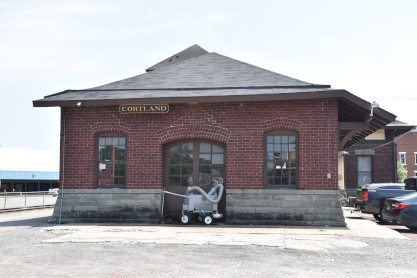
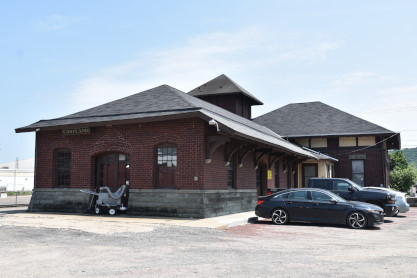
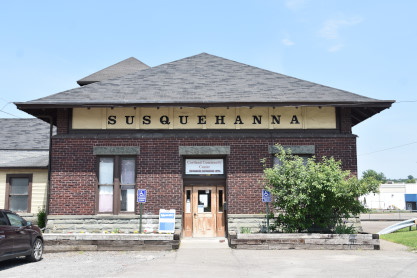
Delaware, Lackawanna and Western passenger depot built in 1903 and now the Cortland Community Center. It was located on the Lehigh Valley's Elmira and Cortland Branch and the tracks are owned by the New York, Susquehanna and Western Railway. The first railroad to reach Cortland was the Syracuse and Binghamton Railroad, a forerunner of the Delaware, Lackawanna and Western Railroad, which opened a line between Syracuse and Binghamton on October 18, 1854. It was joined in 1872 by the New York and Oswego Midland Railroad, which extended west from its existing line at Norwich to Freeville, New York. This line was later leased by the Elmira, Cortland and Northern Railroad, which in turn became part of the Lehigh Valley Railroad in 1896.
The original combination station, originally called Cortland Station, but re-named Susquehanna Station in 1904, was replaced by the present building. It was constructed in 1910–1911 to a design by architect Isaac G. Perry, who also designed several other railroad stations in New York State, at a cost of $10,000. The brick building measured 155 by 50 feet and stood two stories tall with sufficient space for a waiting room, baggage room, a "women's retiring room", a smoking room and a ticket office. The second floor was given over to company offices. Its formal opening occurred on April 4, 1911.
Traffic declined on the Elmira and Cortland Branch after World War I, and the Lehigh Valley gradually reduced service throughout the 1930's and 1940's. The last scheduled passenger service between Cortland and DeRuyter ended on April 25, 1948. Limited service remained in the form of mixed trains but even these ended south of Cortland on April 30, 1950, leaving a roundtrip between Cortland and Canastota. This was effectively withdrawn after 1954. Lackawanna passenger service ended on September 15, 1958 and the railroad abandoned the branch north of Cortland in 1967. Most of the branch south of Cortland was out of service by the mid-1970s. Conrail, successor to the Lehigh Valley, abandoned all but three miles within the vicinity of Cortland.
The station was listed on the National Register of Historic Places in 1982.
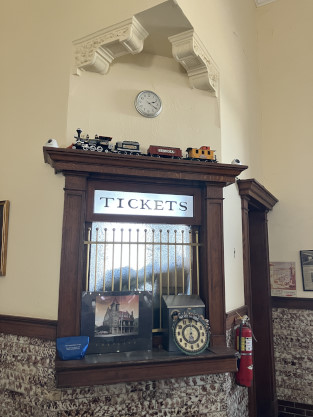
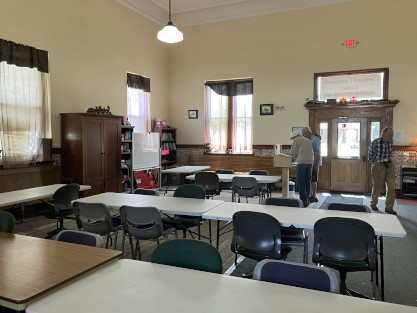
The interior of the station.
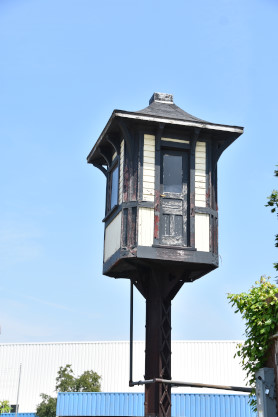
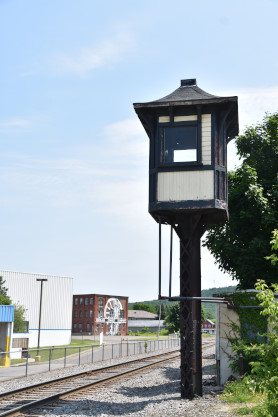
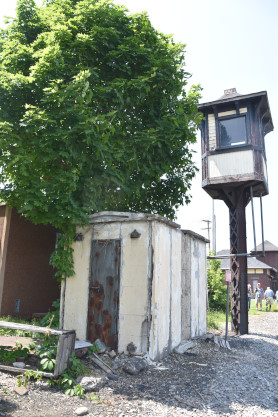
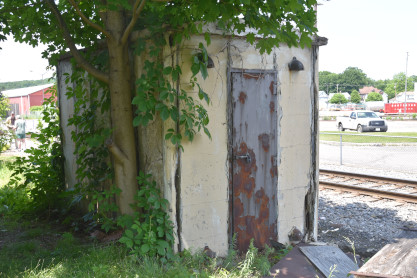
Delaware, Lackawanna & Western Railroad crossing guard house on Central Avenue at Pendleton Street near the station.
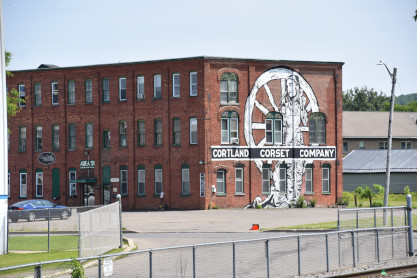
While not a station, this edifice, as seen from the Cortland Community Centre, still stands as testament to Cortland's role in America's great industrial age. The Cortland Corset Building, located at 75 East Court Street, in its heyday, employed more than 700 women, many of them Italian immigrants. The large industrial brick building, built in multiple stages starting in 1923, quickly became an anchor for the small city, which sits between Ithaca and Syracuse. It transformed into a burgeoning center for the production of ladies undergarments, particularly corsets. More than 100 years later, the Cortland Corset Building was still producing women's undergarments through a four- person partnership, Cortland Foundations (now Rago Shapewear). But by the turn of the 21st century, due to growing pressure on the American clothing industry from Asia, the partnership ended, and two of the partners — Peter Muehlbauer and John Dailey — opted out of the garment business and took over ownership of the Cortland Corset Building as part of their exit agreement.
Cortland Foundations stayed on as a tenant, but there was still a lot of space to add more. Muehlbauer and Bailey added a twist to the type of "tenant community" they wanted to develop. Today, Cortland Corset Building is a re-purposed factory with an owner philosophy of incubating artists and sharing the tenants' goal of supporting an art hub. The building currently houses more than a dozen artistic and wellness retail and studio.
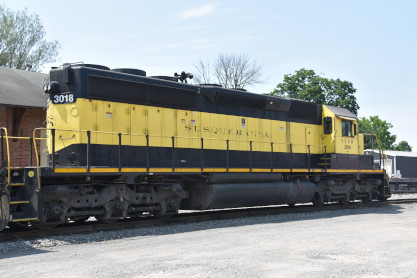
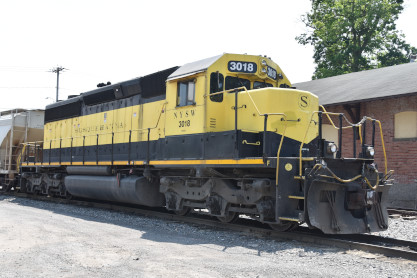

Continuing the tradition of seeing at least one locomotive per day so far, New York Susquehanna and Western SD40-2 1978, ex. Big Dog Lines 3267, exx. Norfolk Southern 3267, nee Southern 3267, built by Electro-Motive Division in 1978, was sitting on the track behind the station. We continued on our station hunting journey and arrived at McGraw.
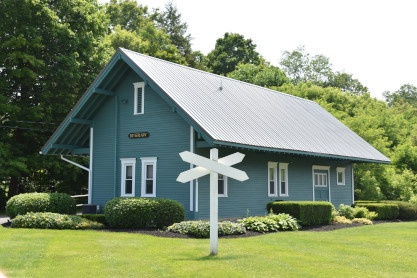
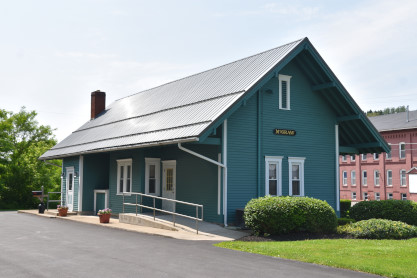
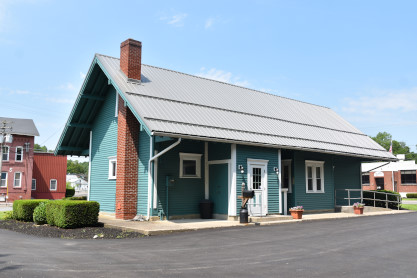
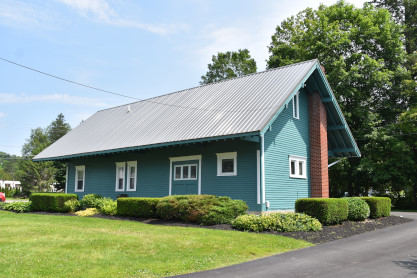
McGraw Delaware, Lackawanna and Western combination depot. McGraw is named after Samuel McGraw from Vermont who first settled here in 1805. An ashery was established to convert hardwood ashes into lye, potash or pearlash. Originally it was called McGrawville and was incorporated in 1869. The village was home to New York College, an institution founded by Free Baptists in 1849, which was the first American college accepting all students including women and African- Americans. A smallpox epidemic, along with social and political opposition, brought about its closure in 1859 or 1860.
The bus took all to Cincinnatus.
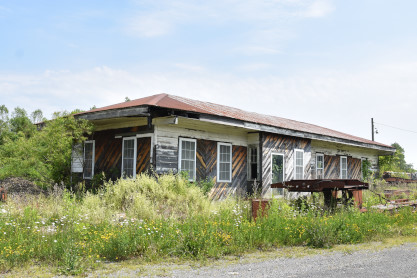
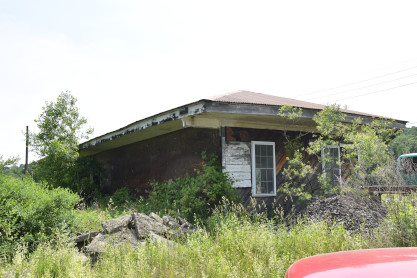
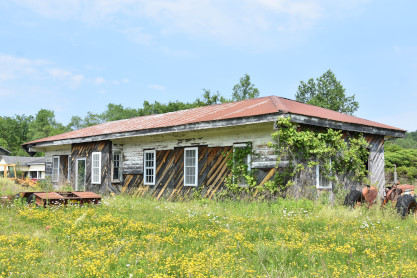
Cincinnatus Delaware, Lackawanna and Western wooden depot built in 1918. The town was named after Roman general Lucius Quinctius Cincinnatus. The region was part of the Central New York Military Tract used to pay soldiers of the American Revolution. Oneida tribe members persisted in Cincinnatus's early history. The town was formed from the town of Solon in 1804 then in 1818, Cincinnatus was split so that part of it was used to create the towns of Freetown, Willet and Marathon, which was first called Harrison.
Marathon was the next stop on our adventure.
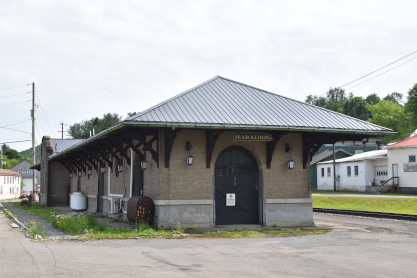
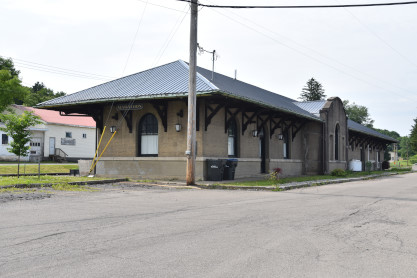

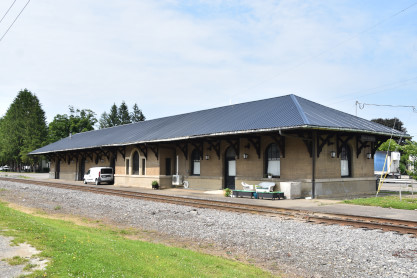
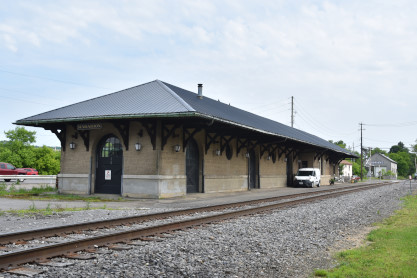
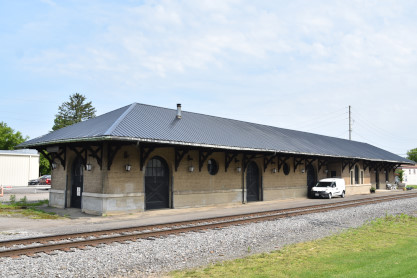
Delaware, Lackawanna and Western Marathon combination depot built in 1906 and was the largest concrete one built by the railroad. They were separate rooms for freight, express and baggage, as well as the waiting room at the south end. On the far side of the depot was a siding where a box car of less-than-carload freight could be placed for unloading.
Marathon was a regular stop for all passenger trains,. The Delaware, Lackawanna and Western's Syracuse Branch opened through Marathon on October 18, 1854 and the track now belongs to the New York Susquehanna and Western.
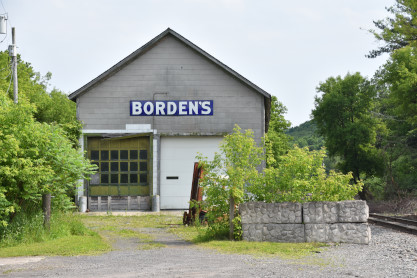
Marathon had a Borden's creamery, flour mill, a tannery and a Climax Road Machinery Company, which manufactured steam rollers and graders, a coal dealer, stock yards, machine manufacturing and an electric power plant. The Borden brand name has a rich history that traces its roots back to Gail Borden, an entrepreneur and inventor who lived during the 1800's. Though he pursued several career paths throughout his lifetime, Mr. Borden is best known for revolutionizing the dairy industry by developing the first successful commercial method of condensing milk. With Mr. Borden’s invention, dairy products could be preserved for long periods of time and could be shipped across hundreds of miles for the first time.

These aquilegia, more commonly known as columbine, caught Elizabeth's eye as they are not a common flower and it reminded her that her parents used to have some in their garden. Back aboard the motor coach, the penultimate town of the day was Whitney Point.
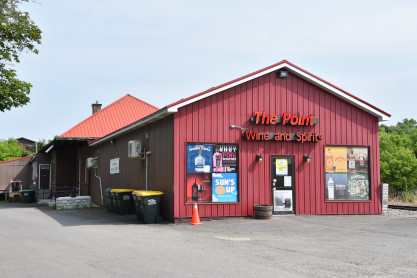
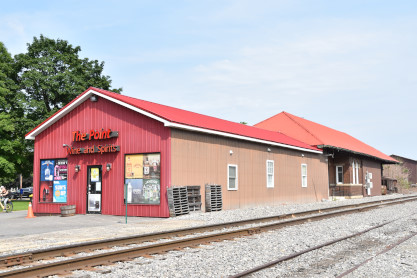
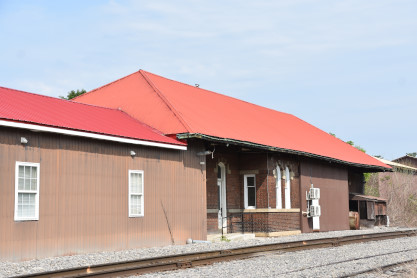
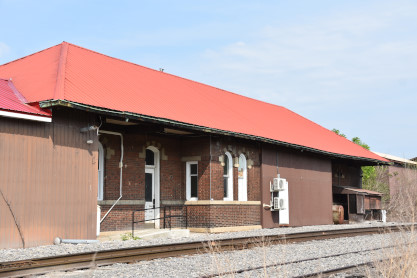
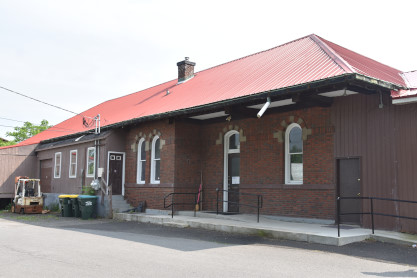
The Delaware, Lackawanna and Western combination brick depot in Whitney Point was built in 1905 and has been changed considerably, now home to Point Wine and Spirits which offers weekly tastings. The town's name comes from Thomas and William Whitney. The town was first settled around 1791 and flourished after the arrival of Whitney Family around 1800. The Broome County Fair has been held here since 1874.
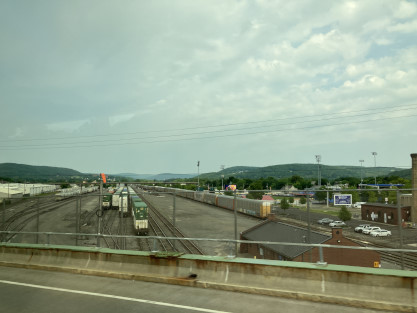
On they the way back to Binghamton, we crossed New York, Susquehanna and Western, former Erie Railroad, yard before stopping at the station. While this stop was planned for tomorrow morning, rain was forecast so as we were ahead of schedule, the decision was made to visit here today.
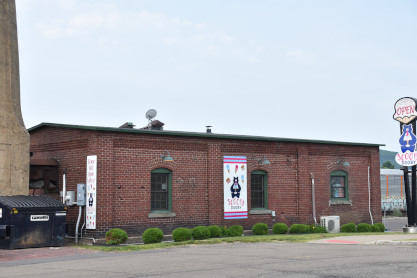
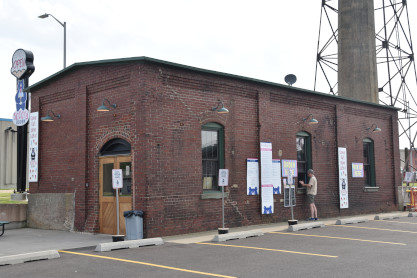
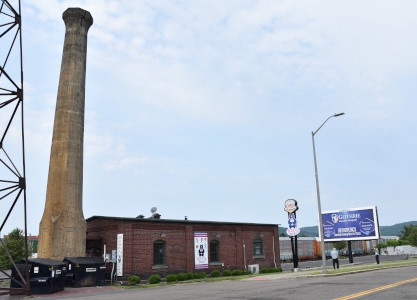
Delaware, Lackawanna and Western boiler house, completely restored by current station owner Mark Yonaty, and is now Scoopy Dooby's Ice Cream.
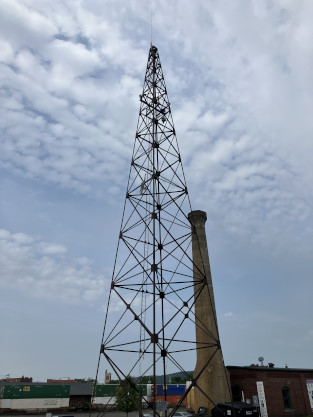
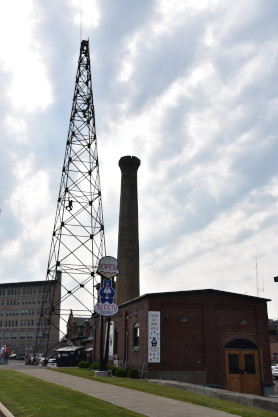
Marconi Tower, the site of famed radio inventor Guglielmo Marconi's pioneering experiment successfully demonstrating that radio could be used to communicate to fast-moving vehicle. Until this time, radio communication had previously been conducted between ground stations and to slow-moving ships at sea. The 97 foot tower is the last remaining of four such towers erected by Marconi to test the feasibility of transmitting telegraph signals to trains moving along the adjacent railroad line.
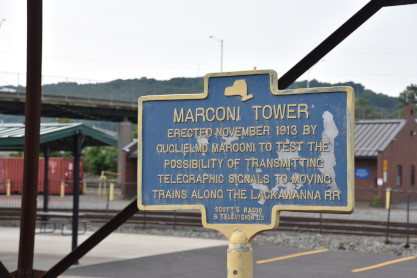
Marconi Tower Historical Board.
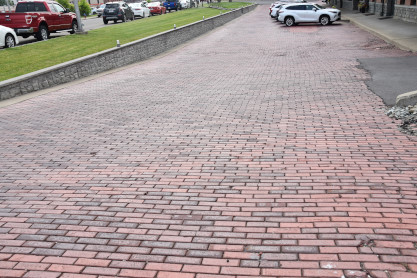
The original brick street in front of the depot.
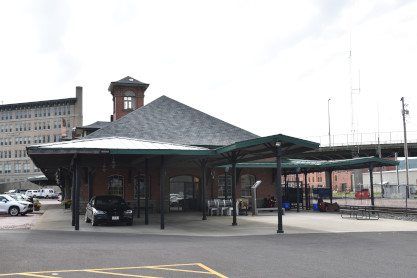
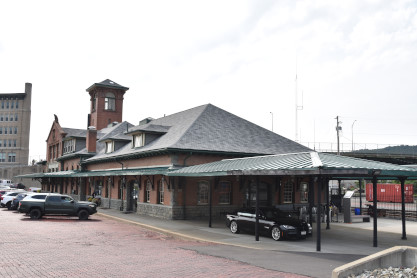
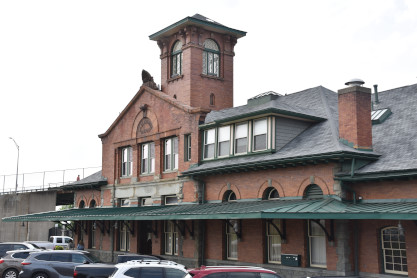
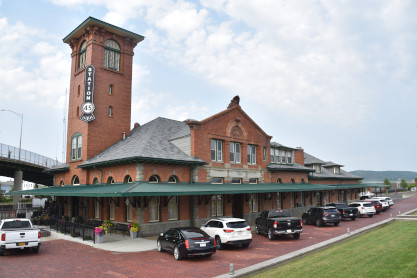
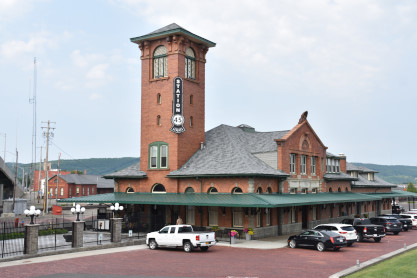
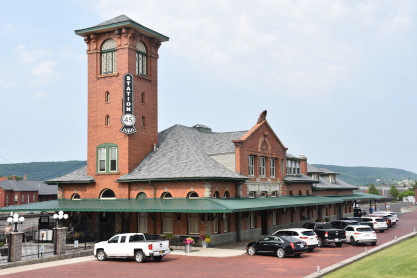
Delaware Lackawanna and Western Binghamton station built in 1899 as a freight station but remodelled into a combination depot built in 1901. The architect was William Samuel Huckel Jr. of Philadelphia and features a five-story Italian Renaissance campanille, segmental-arched doorways and windows, brick corbeling and an octagonal chimney. It was clad in brick and stone with tile roof.
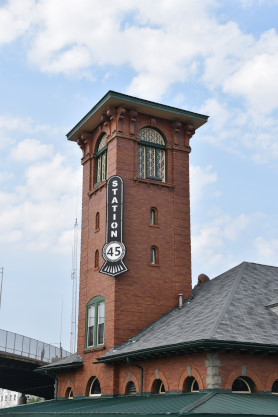
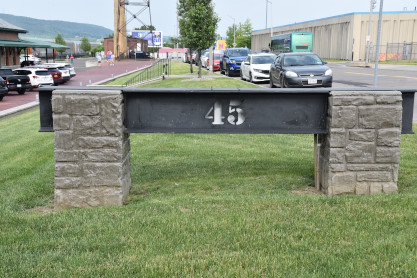
The station had a Union News facility and a lunchroom, but is now Station 45, an American chop house. It was extensively restored by Bryden and Trozze in the 1980's.
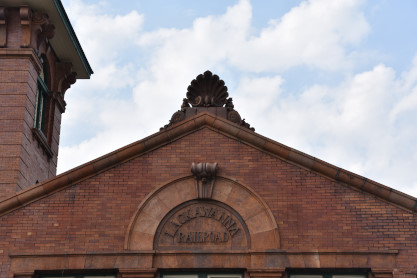
Lackawanna Railroad lettering and the ornate architecture.

Delaware Lackawanna and Western-1900 designated an historic landmark Binghamton Commission on Architecture and Urban Design.
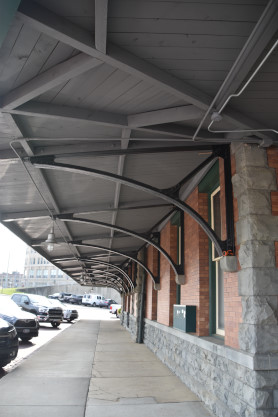
The walkway along the station. Elizabeth and others then walked on the path on the bridge and photographed through two holes in the fencing.
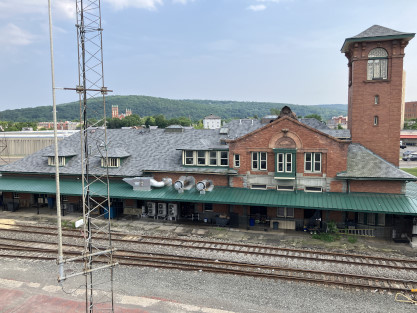
Delaware Lackawanna and Western Binghamton station.
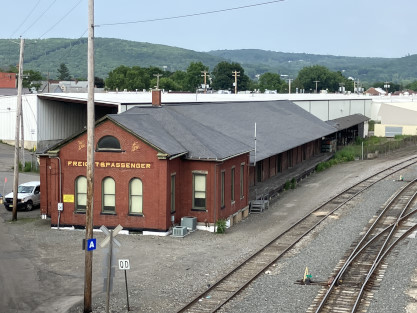
Delaware and Hudson freight station. Everyone returned to the hotel and Elizabeth went to hers, then about an hour later, she drove to My Uncle's Place, a local restaurant and bar, for the convention dinner.
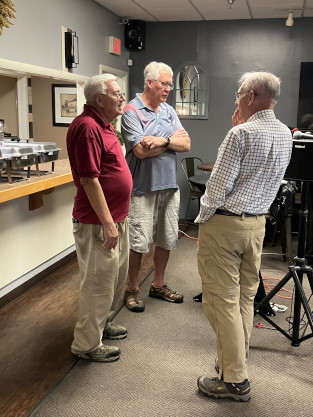
Jim Kelling, Society Business Manager Jim Dent and Board member Andy White chat before dinner.
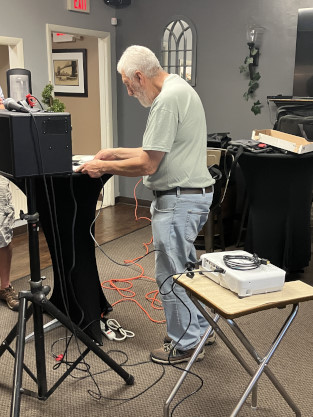
Bob Pastorkey, our guide and Vice-President of the Susquehanna Chapter of the National Railway Historical Society, setting up for his program of Stations and Railway Structures of the Binghamton area.
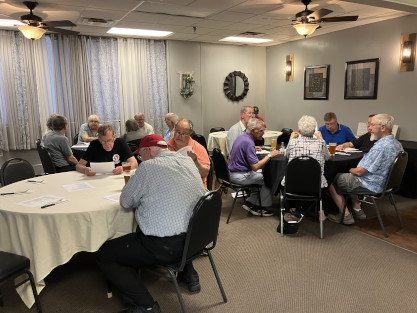
Conventioneers before dinner. Ted Xakellis, one of the organizers, asked Elizabeth to say grace and she was very honoured to do so.

Jim Kelling, Society member, providing an overview of next year's convention, which he is in charge of and will be based in Detroit, Michigan.
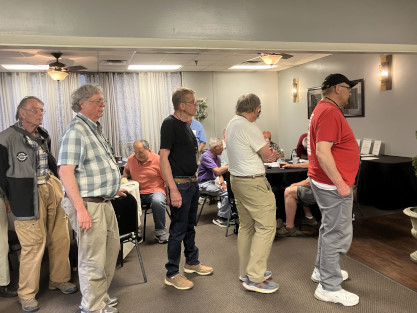
Queuing for the buffet meal.
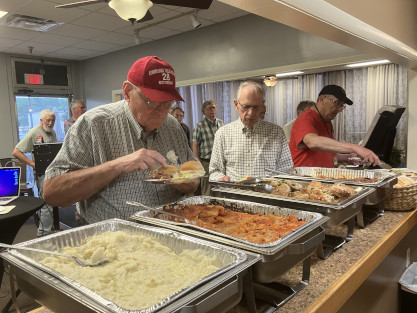
The selection of salad, chicken, pulled pork and pasta with rolls, then ice cream and mini cupcakes for dessert. Everyone enjoyed their meals and there was plenty for seconds. The presentation was most interesting, after which everyone returned to their hotel for the night.