




Elizabeth checked her e-mail and the Internet before going Panera Bread for breakfast, which very close to the convention hotel. Everyone boarded the same bus as the last three days and were taken to the first stop in Owego.
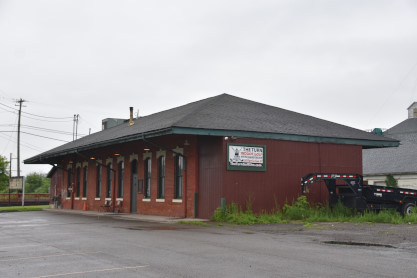

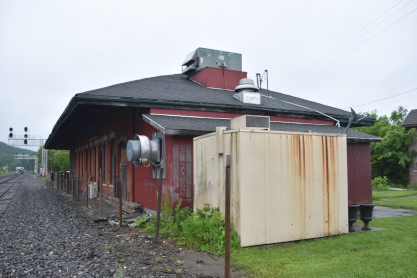
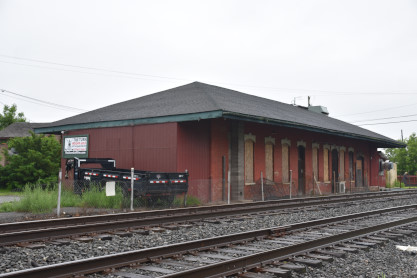
Owego Erie Railroad depot built in 1879. The town was first settled around 1876 but the original town was created at the time Tioga County was formed in 1791 and was reduced by formation of later towns. "Owego" is a derivative Iroquois word "Ahwaga of the" which means "where the valley widens". Confusion of the location of the village of Owego caused the legislature to have the towns of Oswego and Tioga switch names in 1813, so that Owego village was within the same-named town.
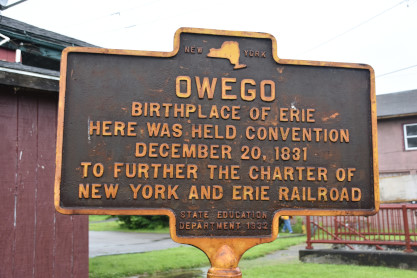
Owego historical sign.
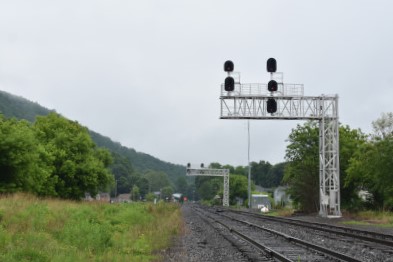
The former Erie mainline. The second city visited today was Ithaca.
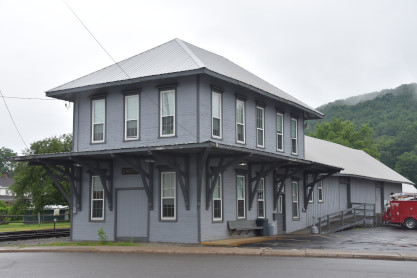

The attractive two-story green Lehigh Valley Ithaca combination depot was built in 1869.

The Owego and Harford Line sign on the station.
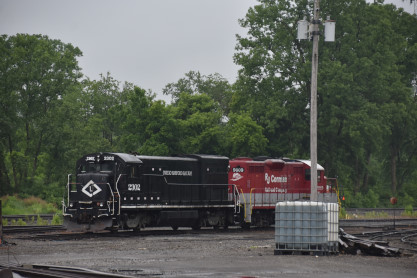
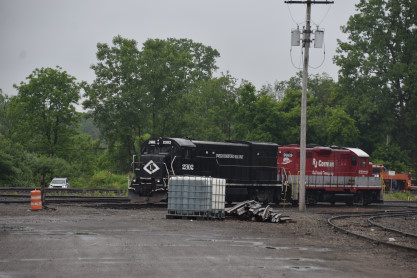
A nice surprise was Owego and Harford Railway U23B 2302, ex. Luzerne and Susquehanna 2302, exx. Lehigh Railway 2302, exxx. Providence and Worcester 2208, exxxx. New York Susquehanna Western 2208, exxxxx. New York Susquehanna and Western 2302, exxxxxx. Big Dog Lines 2208, nee Conrail 2794, built by General Electric in 1977; and R.J. Corman GP9 9009m, nee Baltimore and Ohio 6591 built by Electro-Motive Division in 1958.
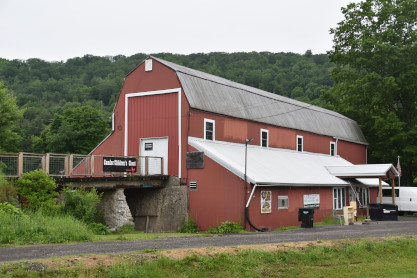

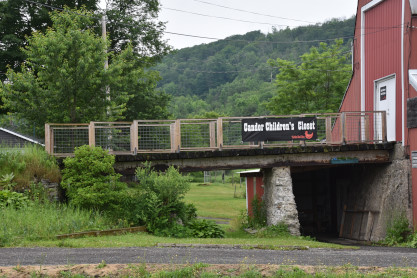
We stopped in Candor for the former Ithaca and Owego Railroad coal storage site, now the Children's Closet & Boutique.
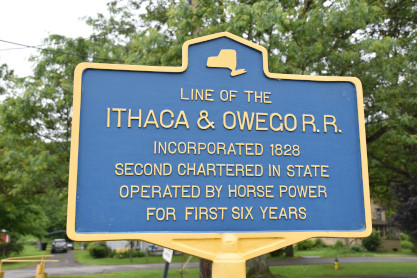
The Ithaca and Owego Railroad historical sign.
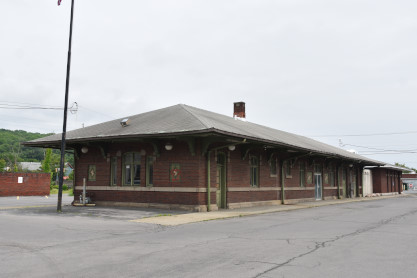
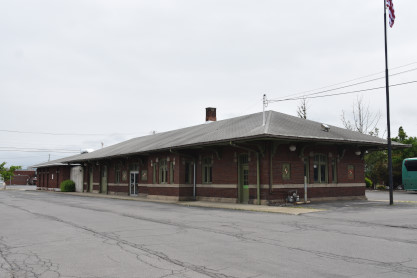
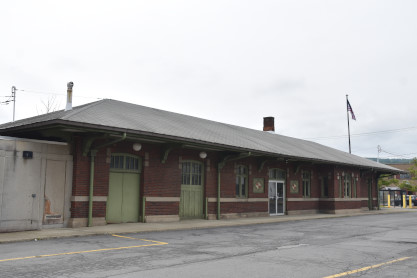
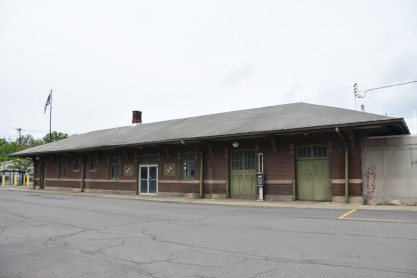
Delaware, Lackawanna and Western Ithaca passenger depot built in 1912.
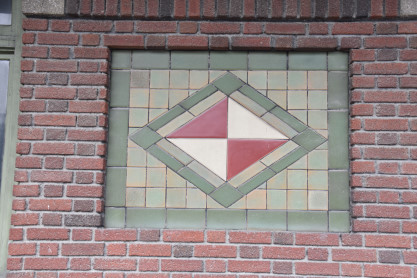
There were several of these decorative tiles around the station which were original to the building.
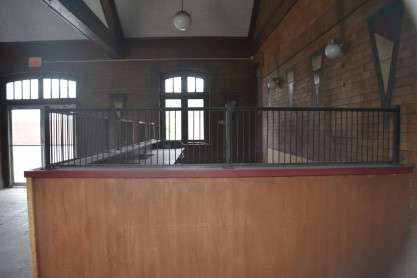
The interior of the station as seen through the locked doors.


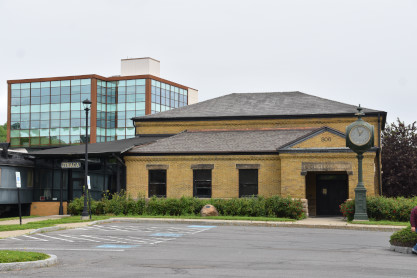
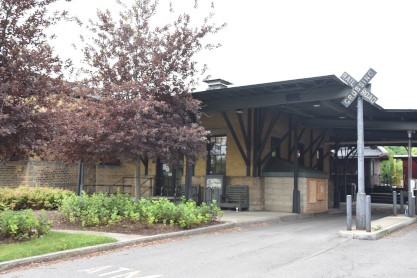
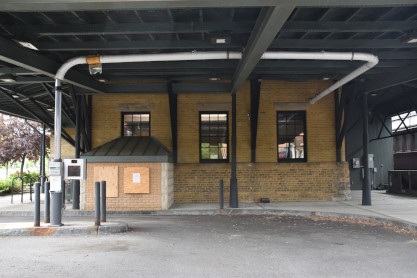
The Lehigh Valley Railroad station was designed by local architect A.B. Wood and built in 1898 by the Lehigh Valley Railroad in a classical revival style with a Romanesque feeling. It is a massive square building with extensions and sheltering roofs for baggage operations. At one corner is the entrance marquee and a four sided street clock mounted in a Corinthian column. The main waiting room section has a hipped roof and features a pedimented porte cochere. The freight station is a long, gray painted frame building with a two-story clapboarded section and a long freight storage part. Lehigh Valley passenger trains making stops there included the Black Diamond, Maple Leaf and Star.
It was used as a passenger station until February 4, 1961. In 1966, local resident Joseph O. Ciaschi, an early local leader in the historic preservation movement, converted the abandoned building into a restaurant called The Station Restaurant. Patrons could dine in the former passenger waiting room, baggage claim or the ticket-office-turned-bar room. However, the piece-de-resitance was the rail coaches, which had been converted into dining cars. Instead of reading from a traditional "book style" menu, a large ring of entrée "tickets" sat on each table. As an example, if your choice was a T-bone steak, one would tear the ticket from the ring and the server, replete with a black vest, pocket watch and black railroad conductor's hat, would ask for the specifics. As replies were given, the waiter would punch the ticket with the choices. And while the railcar remained stationary, the illusion created was that of dining aboard a moving train.
The LVRR tore out the tracks running into and out of Ithaca, leaving only a short piece of rails behind the building. Along with selling the property, it also sold the owner several passenger coaches, a caboose and a tiny switch engine. The restaurant operated until September 2005, when it was closed and the building was converted for use as a branch office of the Chemung Canal Trust Company, an Elmira-based bank. he building was listed on the National Register of Historic Places in 1974.
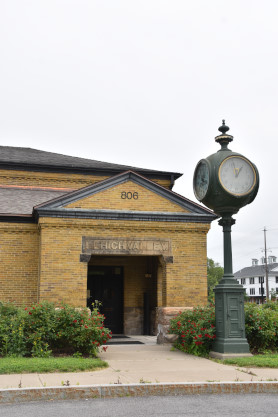
The 18-foot Seth Thomas, four-faced railroad clock is authentic. The time on the clock faces never changed, with each set to the time when the last Black Diamond Express departed Ithaca.
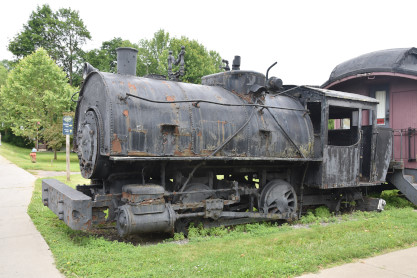
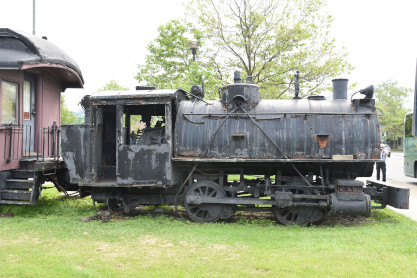
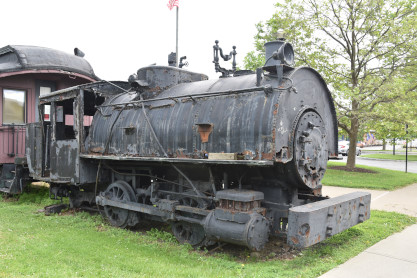
Solvay Process Company 0-4-0T 63, ex. sold Joseph Ciaschi 1969, exx. Rail City 1955, exxx. Allied Chemical & Dye Corporation 10, exxxx. merger Allied Chemical & Dye Corporation 63 1947, exxxxx. sold to Solvay Process Company 63, nee built for stock by Alco Cooke in 1928.
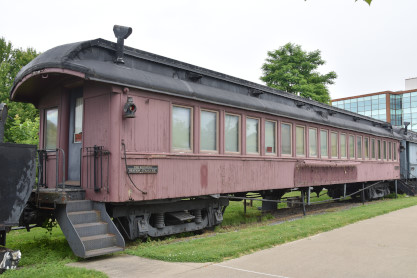
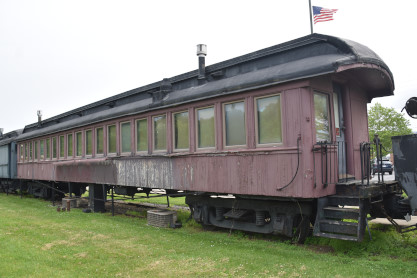
Boston and Maine coach 1290 built by Laconia in 1910.

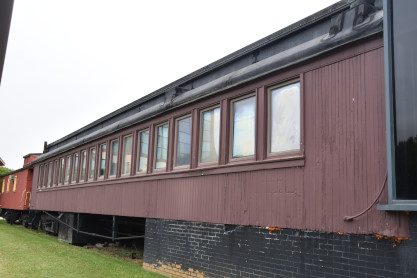
Boston and Maine coach, number unknown, built by Laconia in 1910.
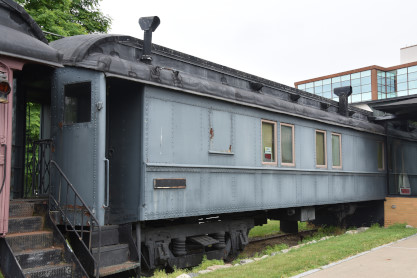
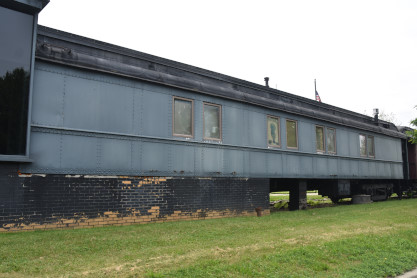
Lehigh Valley heavyweight coach 94140, converted to maintenance-of-way service, builder and year unknown.
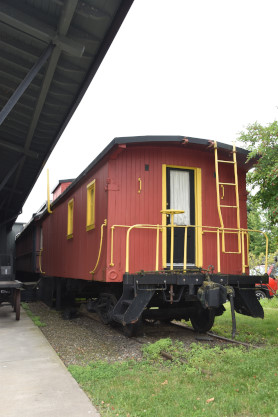
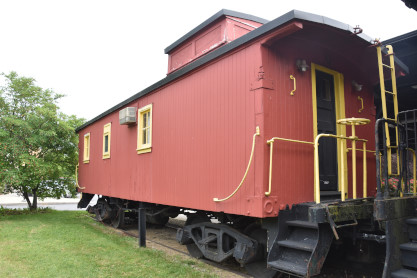
New York Central caboose 18385 built by the railroad, year unknown.

This uniquely-shaped and placed plaque states "Originally the Lehigh Valley passenger terminal, "The Station" restaurant was created by Joseph O. Ciaschi in 1965. It is listed on the National Register of Historic Places".
The bus took all of us to East Ithaca.
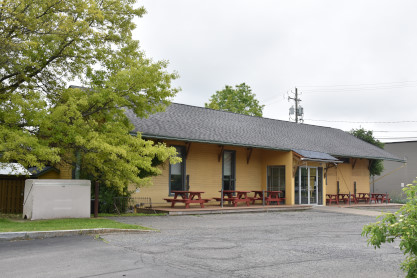
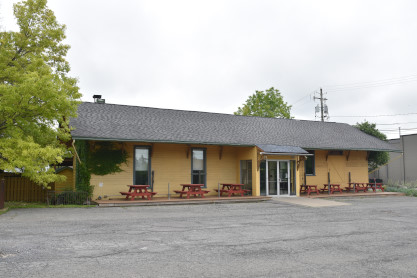

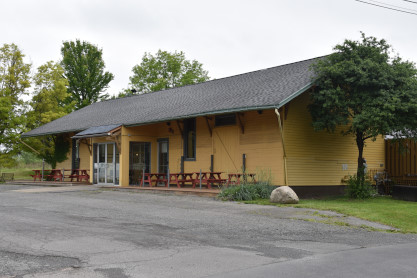
East Ithaca Lehigh Valley wooden combination depot built in 1876 and is now the Agave Southwest Restaurant. We then made our way to Berkshire.
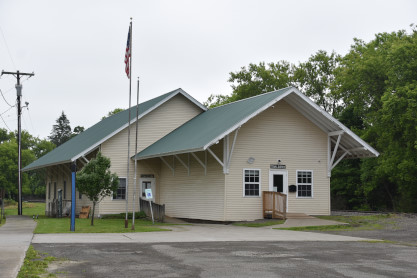
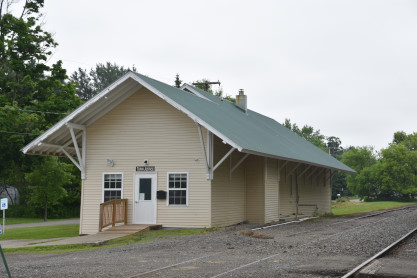
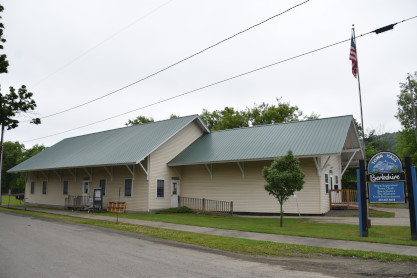
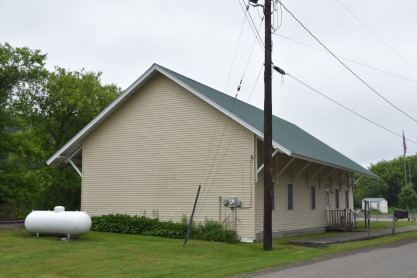
Berkshire Lehigh Valley combination depot which serves as Berkshire Town Hall. The first settlers arrived circa 1791. The town is named after Berkshire County, Massachusetts and was originally called "Browns Settlement. The Town of Berkshire was established in 1808 from the Town of Union in Broome County and in 1822, Berkshire was made part of Tioga County. The Town of Newark Valley, as the "Town of Westfield", was created from part of Berkshire in 1828. An additional part of Berkshire was lost in 1831 to found the town of Richford, then called Arlington.
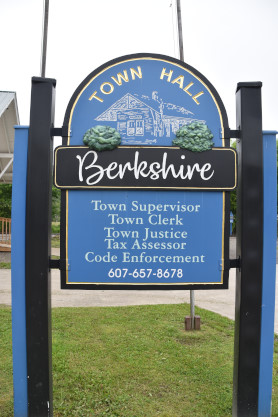
The town hall of Berkshire.

The former Lehigh Valley track. Newark Valley was next on the list of towns to be visited and also served as the lunch location.
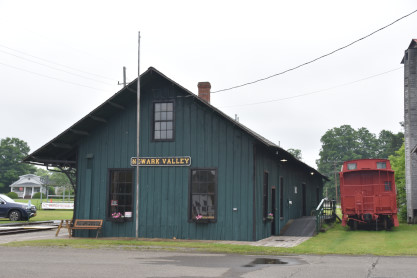

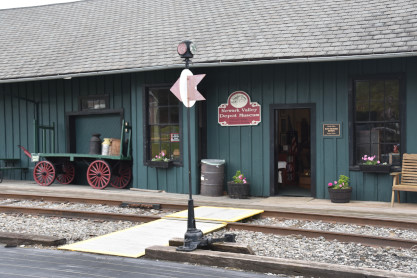
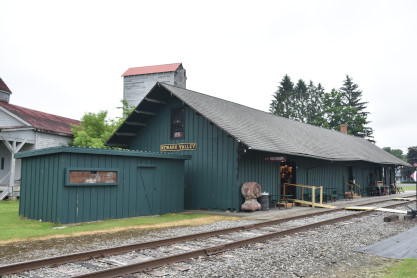
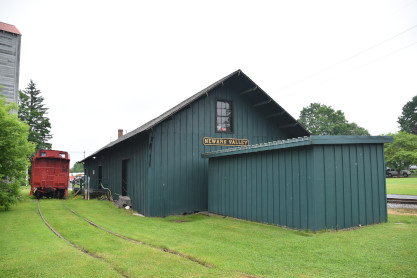
Lehigh Valley Newark Valley combination depot built 1869. The first official freight train of the Southern Central Railroad pulled into Newark Valley on March 8, 1870. Passenger service started within one month and thus began over 100 years of service to the communities on the east branch of the Owego Creek. Today the depot has been restored to the 1910 period, and contains a variety of railroad artifacts and memorabilia.
The town was named after Newark, New Jersey and in 1824, the town changed its name to Newark at the suggestion of a settler from New Jersey, but then changed the name to Newark Valley in 1862 to avoid a conflict with the name of a village in Wayne County.
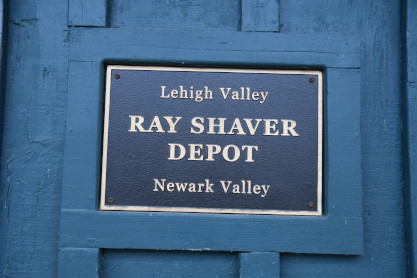
Lehigh Valley Ray Shaver Depot.
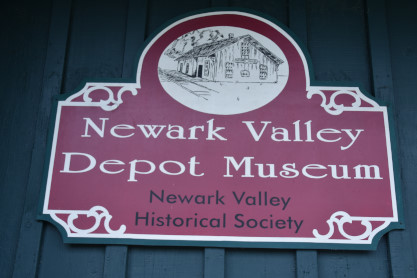
Newark Valley Depot Museum, Newark Valley Historical Society.
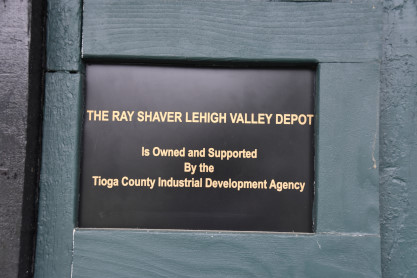
The Ray Shaver Lehigh Valley Depot is owned and supported by the Tioga County Industrial Development Agency.
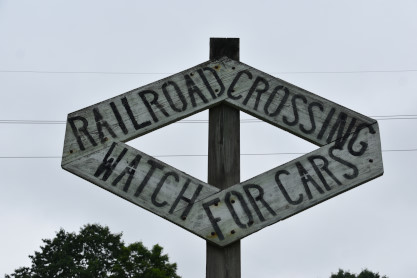
An old-style railroad crossing sign.
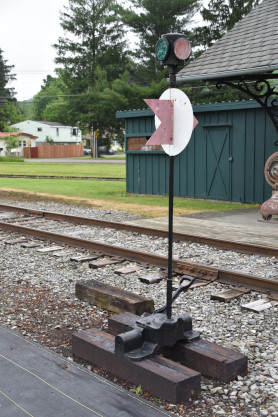
A switch stand.
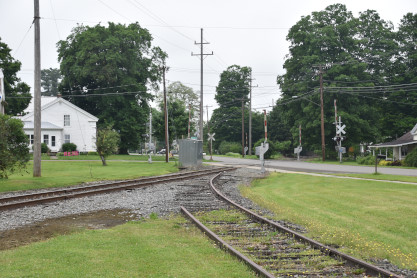
An old siding to a former industry.
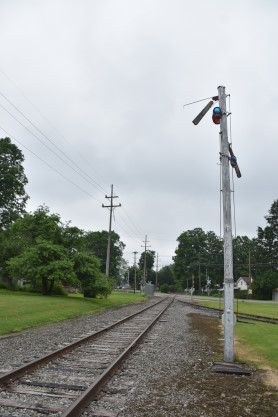
Trainorder signal.
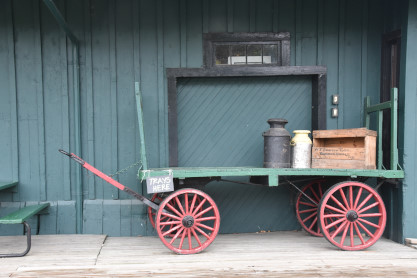
A baggage cart.
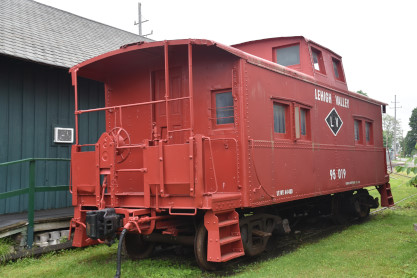
Lehigh Valley caboose 95019 built in 1942, builder unknown.
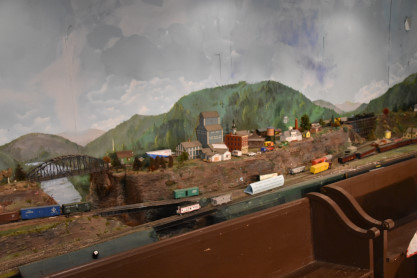 >
>
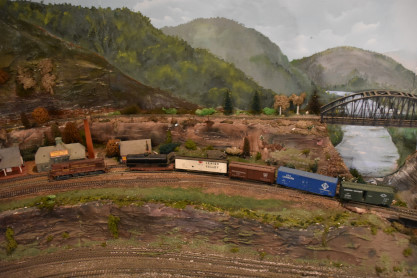
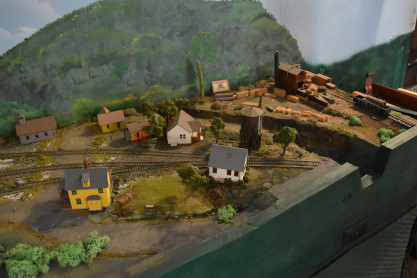
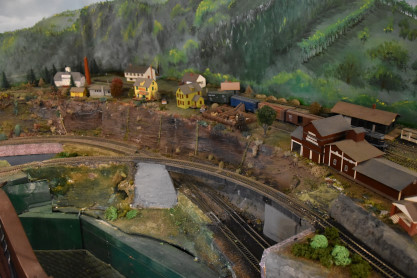
The HO scale railroad depicting the northern Tioga County segment of the Lehigh Valley Railroad, originally built by Ray Shaver and refurbished by Ken and Marty Schneider and Carrie Tornatore. After a good look around the premises, everyone enjoyed lunch in the freight portion of the station amongst the displays on the wall.
The station has been modified to include a kitchen and the Historical Society puts on community events throughout the year. Two volunteers served us our pre-ordered meals and we had a choice of desserts.
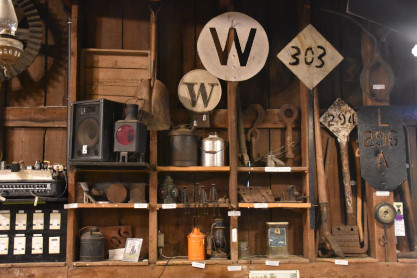
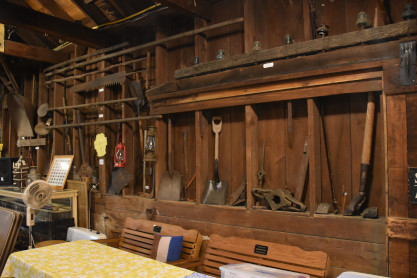
Railroad memorabilia.
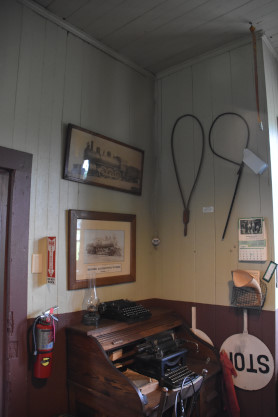
Agent's desk.
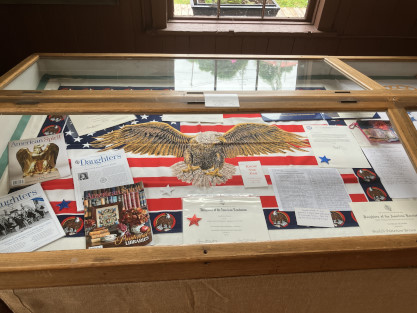
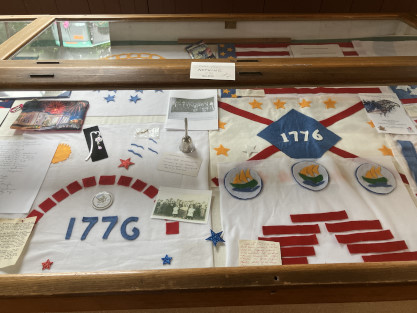
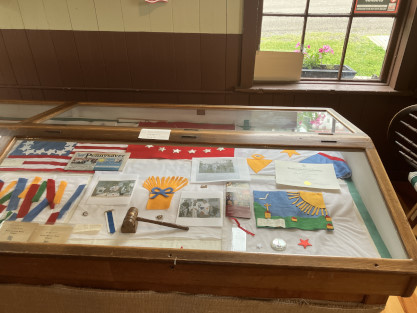
A large display commemorating the Daughters of the American Revolution. The bus then took us all to Flemingville.
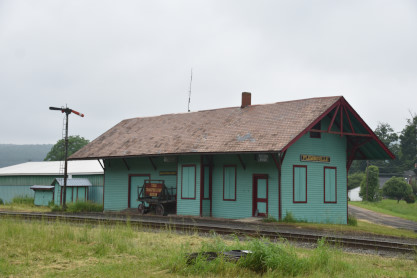
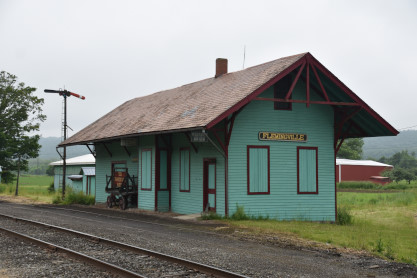
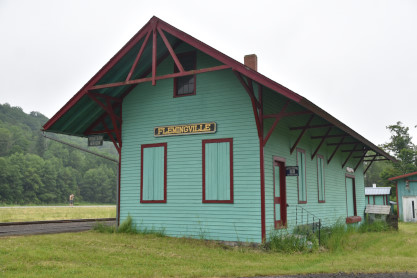
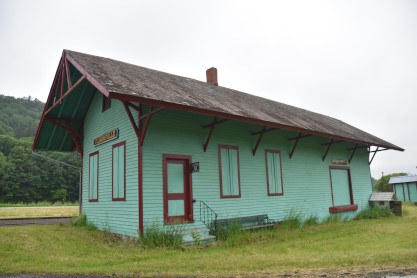
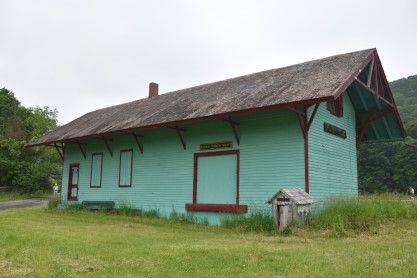
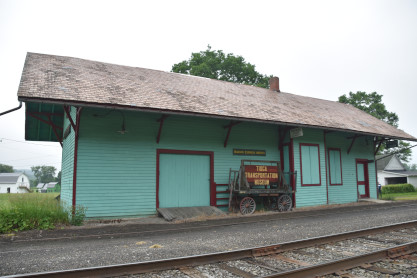
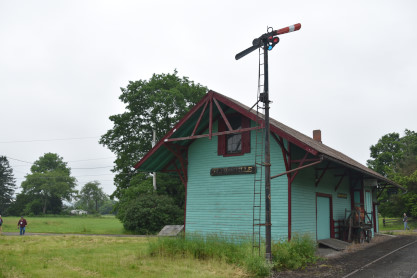
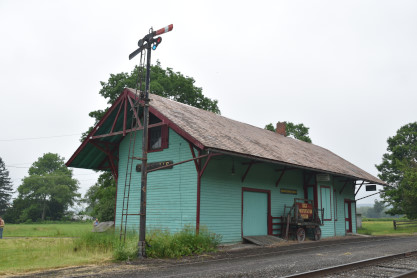
Lehigh Valley Flemingville wooden passenger depot built in 1902 and closed in 1935. The Tioga Transportation Museum opened for business here in 1975 and was the starting point for their excursion train, which started in 1984 as a Flemingville-to-Newark Valley run, but later expanded to the entire length of the line between Owego and Harford Mills.
The town was named for Captain David Fleming from New Jersey who moved here in 1808. He served in the War of 1812 as captain and fought in the battles of Sacketts Harbor, Lake George, Erie and more.

The Carriage House part of the station.
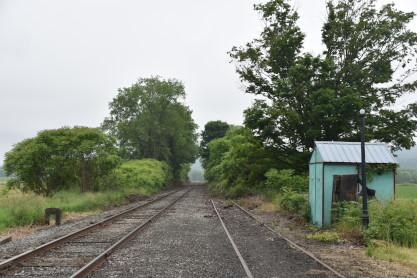
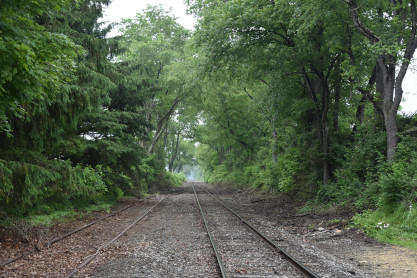
Looking down former Lehigh Valley, now Owego and Harford, tracks.
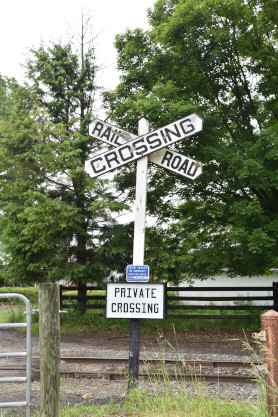
The crossbucks, a holdover from the Tioga Transportation Museum. Next on the agenda was the historic town of Horseheads.
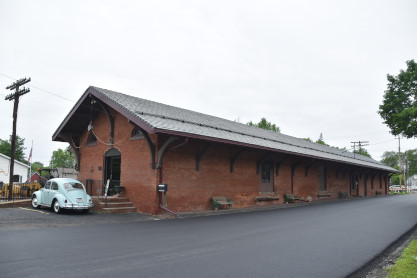
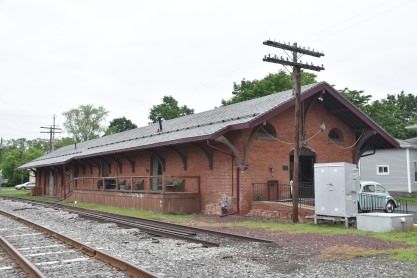
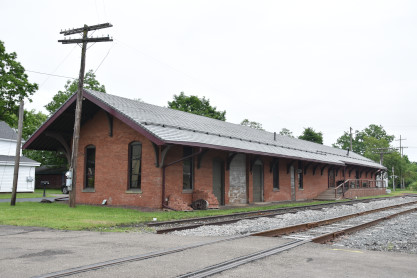
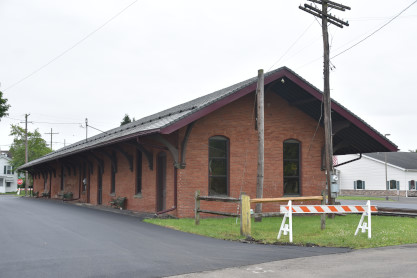
The Pennsylvania Railroad brick combination depot dating from 1866, which is the home of the Horseheads Historical Society.
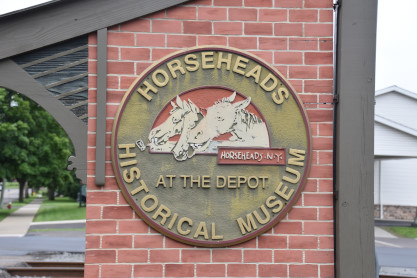
Horseheads Historical Museum at the depot. Horseheads is the first and only town and village in the United States dedicated to the service of the American Military Horse. A twenty-eight square mile memorial, unparalleled in American Military History, is the proud distinction that enshrines the town and Village of Horseheads. September 24, 1779 hallmarks the time and hallowed ground where lie the true relics and sun-bleached skulls of the American Military Pack horses of the armies of Major-General John Sullivan. These peaceful servants of General Sullivan and his officers, with about 5,000 "ragged rebels" (as expressed by King George III) brought forth a gallantry in the American Revolutionary War's western campaign against the Six Nations of Native Americans (Iroquois).
Burdened down with heavy military equipment in their 450-mile journey through a wooden wilderness from Easton, Pennsylvania over to Wyoming, and on up the Susquehanna River Trail to Elmira, New York, they continued north through Horseheads to the Finger Lakes Region and west to Geneseo. Returning the same route to Horseheads, these military pack horses had reached the end of their endurance. Here, General Sullivan, through humanitarian reasons was compelled to dispose of these partners in the cause of American freedom.
A few years later, the skulls of the horses were arrayed along the trail in defiant fashion by a few returning Native Americans, as a gesture that the same fate would be met by any settler, should he attempt to homestead on this location. The first settlers, reading these Native American signs, promptly built their homes on the spot. The Town and Village of Horseheads rose in tribute to glorify the event. This location, first known as "The Valley of Horses Heads", was later changed to Horseheads.
The Village was incorporated on May 15, 1837 as "Fairport", not Horseheads originally, because of its location on the Chemung Canal which had then been in operation nearly four years. The sixteen-mile feeder canal coming down the valley from Corning joined the Chemung Canal just a short distance northeast of Hanover Square. The important office of the Toll Collector was located here, and all boats and barges were required to stop, have their cargoes weighed and pay tolls on same. There was a lock on West Franklin Street where old and young gathered to watch the boats "locked through". There were many people who loved the old revolutionary-born name and urged its return. Due to their efforts, the name Horseheads was restored in 1845. Again in 1885 the name was changed to North Elmira but just one year and much political fireworks later, the old name was returned.

National Register of Historic Places plaque.
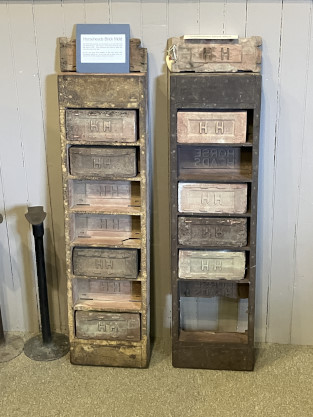
Horseheads brick molds.
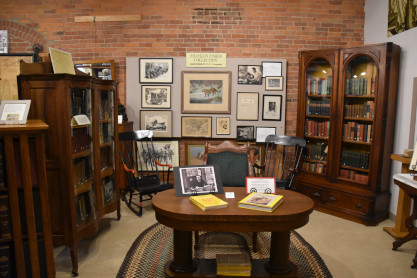
One area of the Historical Society's collection.

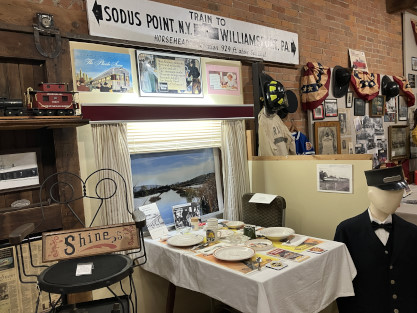
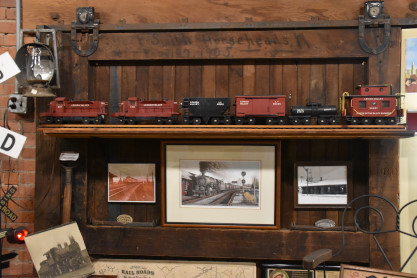
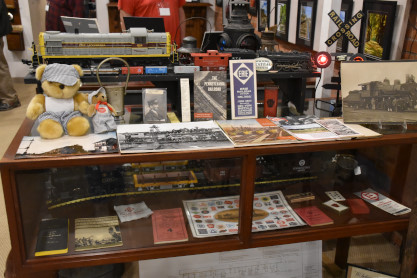
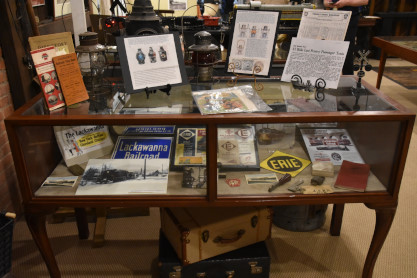
A variety of local history was displayed inside the depot and these are the rail-related ones.
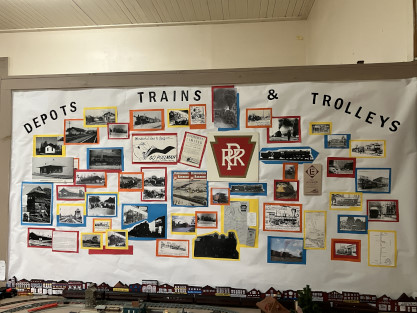
Depots, Trains and Trolleys.
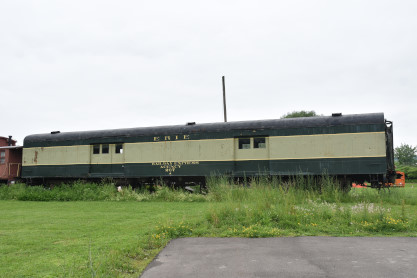
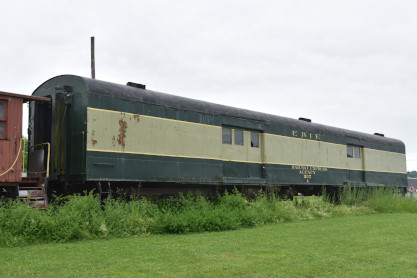
On the way to the next station, we stopped at a second location in Horseheads. Erie Railroad baggage car 207, Railway Express Agency, built by American Car and Foundry in 1950.
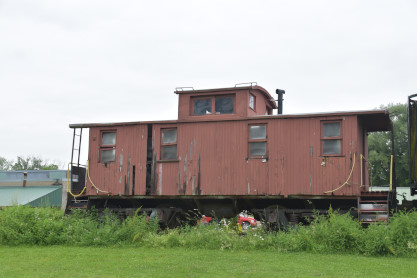
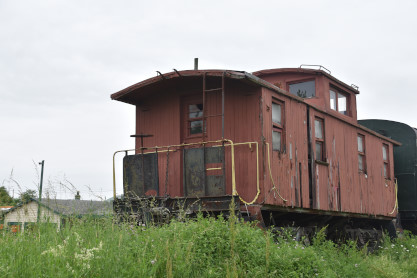
Delaware, Lackawanna & Western caboose 738, built by the railroad, year unknown.
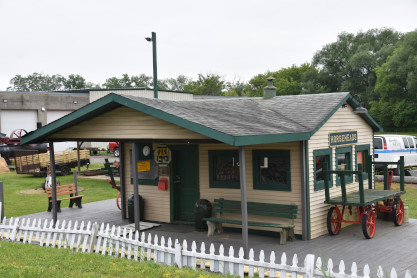
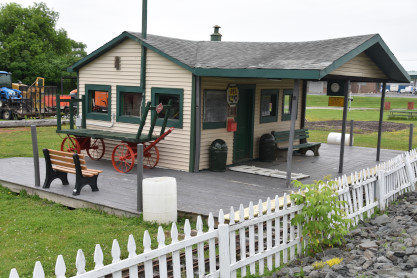
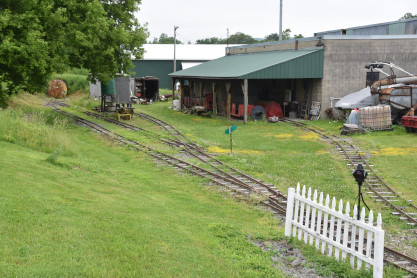
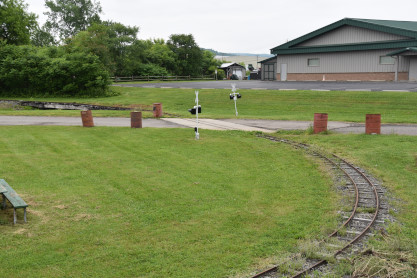
Adjacent to the above was the miniature railroad of the Sullivan family which was started in 1966. It was a one mile oval but is not operating anymore. We resumed the journey to Elmira.
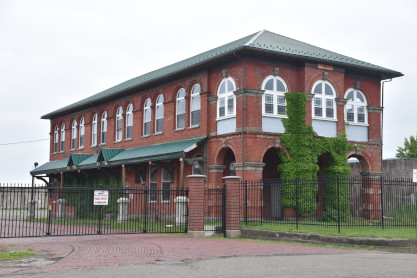
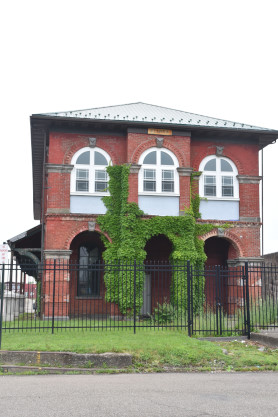
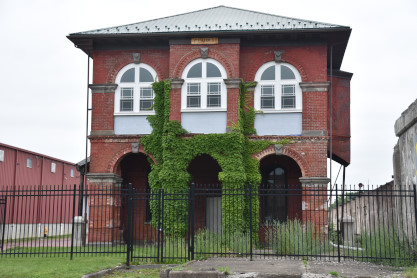
Erie Railroad Elmira passenger station built in 1867 was used jointly with the Pennsylvania Railroad which had service to Williampost, Penn Yan, Canandaigua and Rochester. In 1835, construction for the New York and Erie Railroad commenced in Deposit, New York and although it would take 16 more years to complete the line all the way to Dunkirk, this early groundwork set the stage for Elmira's future as a crucial railroad hub. The city, located in the Southern Tier of New York State, was well-positioned to become a key junction for various railroads, linking it to major cities in the Northeast and beyond.
On October 2, 1849, the first New York and Erie train arrived in Elmira, marking the start of regular passenger service just six days later, with two trains each way per day. This event coincided with the construction of Elmira's first railroad depot. The city's population at the time was around 3,000, but the arrival of the railroad signalled the town's growing importance as a transportation and industrial hub.
In 1850, the Canandaigua & Corning Railroad changed its name to the Elmira, Canandaigua & Niagara Falls Railroad, reflecting the evolving ambitions of the local rail network. Elmira's role as a key transit point continued to grow in the coming years, particularly as the Elmira & Williamsport Railroad opened in 1854, facilitating the movement of lumber, coal, and iron between Pennsylvania and New York’s Feeder Canal, Junction Canal, and the rail lines in Elmira.
Railroad competition increased as multiple companies vied for dominance in the region. The Northern Central Railroad took over the Elmira & Williamsport line in 1863, adding Elmira to the network of the burgeoning Pennsylvania Railroad. This increasing importance of Elmira is reflected in the New York & Erie Railway's renaming to the New York, Lake Erie, and Western Railway in 1875, and eventually to the Erie Railroad in 1895.
As the 20th century progressed, changes in transportation technologies, particularly the rise of automobiles and airplanes, led to the gradual decline of passenger rail services in Elmira and across the United States. In 1956, the Pennsylvania Railroad ended its passenger services in Elmira, followed by the last steam locomotive passing through the town in 1957.
Other railroads soon followed suit. The Lehigh Valley Railroad discontinued its passenger services in 1961, and the Erie-Lackawanna Railroad, which formed from the merger of the Erie Railroad and the Delaware, Lackawanna & Western Railroad in 1960, ended its passenger services in 1970. By the time Conrail absorbed the Erie-Lackawanna in 1976, Elmira’s days as a major railroad hub were largely over.
In 1983, Hilliard Corporation purchased the Erie Depot along with other properties on Railroad Avenue. Although much of the street has changed, with modern buildings replacing the old street front, the Erie Depot still stands as a monument to Elmira’s past. Hilliard’s preservation efforts reflect a growing interest in maintaining the town’s historic landmarks, even as the function of the railroad has largely shifted from passenger services to freight.
In 1998, Norfolk Southern took over Conrail's operations in the Southern Tier, ensuring that Elmira's connection to the broader rail network continues, though in a different form and struggled, forever linked to the fate of the trains that once ran through their streets.
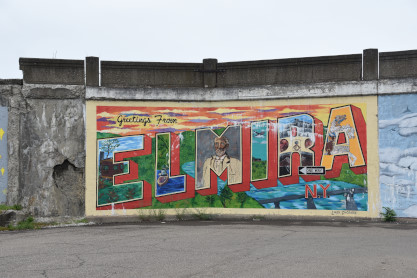
Greetings from Elmira.
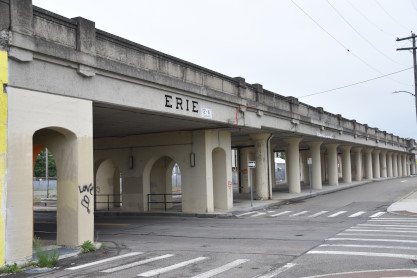
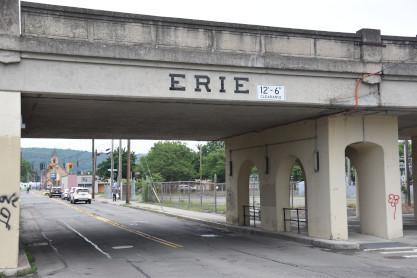
The tracks through Elmira are all elevated and each road underpass has "Erie" in tile above as a permanent reminder of the city's railway history. Back aboard the motor coach, we made our way to Pine City.

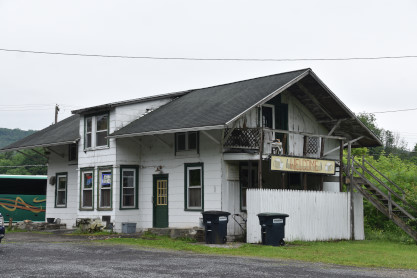
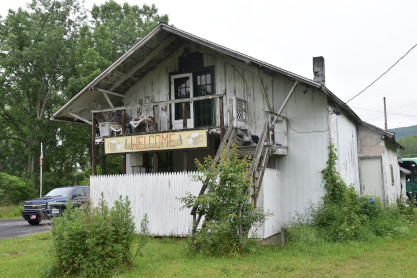
Pine City Erie wooden combination depot built in 1890. The next stop on our two was Nichols.
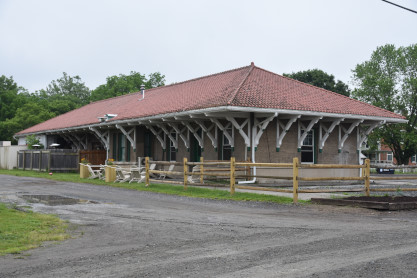
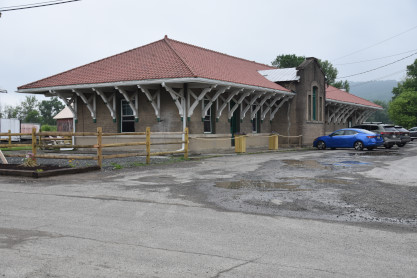
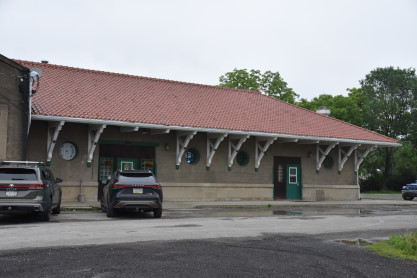
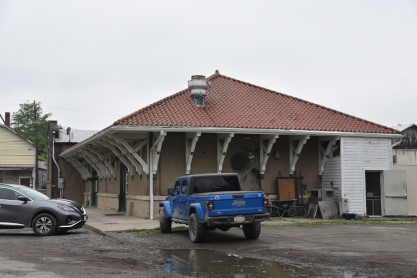
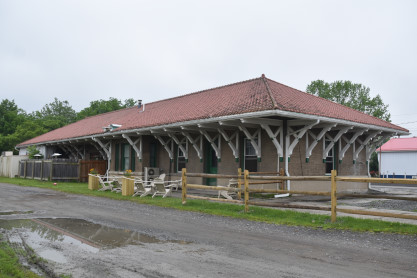
Nichols Delaware, Lackawanna and Western concrete station built in 1907. The town is named after Colonel Nichols, an early landowner. In 1779, Sullivan Expedition passed through the area, destroying the native settlements of those who sided with the British against America in the Revolutionary War. The first permanent settlers arrived before 1787 but were regarded as squatters by the first official settlers who arrived in 1791. The town was established in 1824 from part of the town of Tioga.
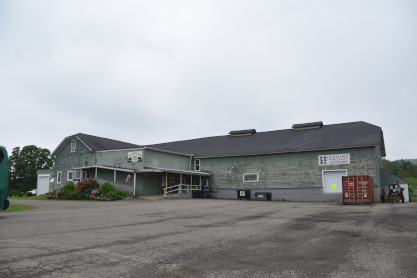
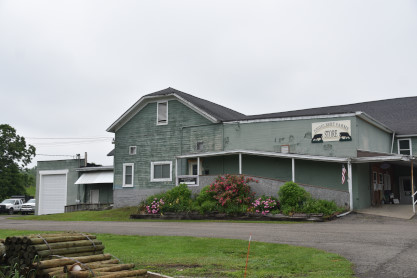
Also in Nichols was the former Borden's Creamery which was serviced by the Delaware, Lackawanna and Western Railroad. The penultimate stop of the day was Apalachin.
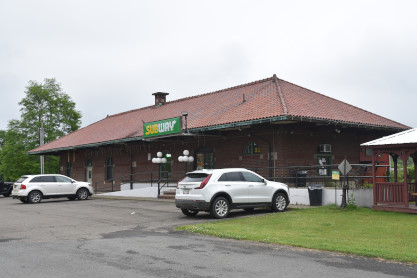
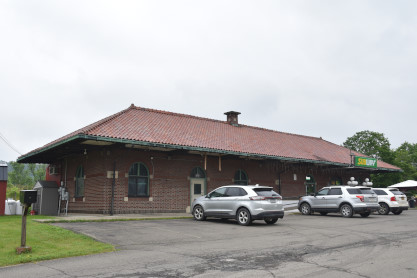
Apalachin Delaware, Lackawanna and Western brick depot built in 1912 which has become a Subway. Apalachin is in the Southeastern section of the town of Owego. On November 14, 1957, the so-called Apalachin Meeting occurred at the nearby home of Joseph "Joey the Barber" Barbara. Over 100 members of the Mafiosi from the United States, Cuba and Italy met to iron out various issues in the underworld. The gathering was quickly broke up when a curious New York State Trooper turned up and spotted expensive cars near the home and participants fled into the nearby woods. Over 60 underworld bosses were caught and later indicted. One of the most direct and significant outcomes of the Apalachin meeting was that it helped to confirm the existence of a nationwide criminal conspiracy a fact that some, including Federal Bureau of Investigation Director J. Edgar Hoover, had long refused to acknowledge.
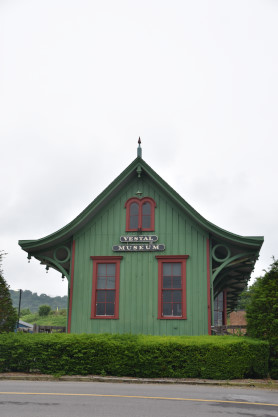
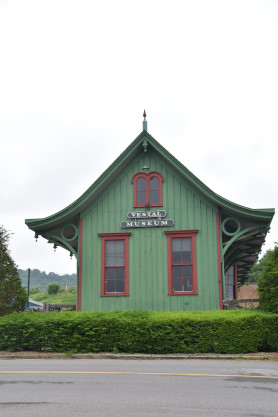
The last station of the convention the unique pagoda-style depot in Vestal. The Delaware Lackawanna & Western Railroad built its mainline across New York State to Buffalo in the early 1880's. Many new towns were now on the expanded DL&W mainline, and each new town needed a depot. The Lackawanna designed a new style of depot for many of these New York state towns, a style which would become a DL&W icon. The "Pagoda Style" depot was first built around 1883 for the new expansion to Buffalo, but it is most strongly associated with the DL&W of the Southern Tier and Western NY. These were "combination" depots, which acted as both passenger stations and freight stations, and had facilities for both under one roof. A total of 31 of these depots were built by the DL&W and at least five more were on the Erie.
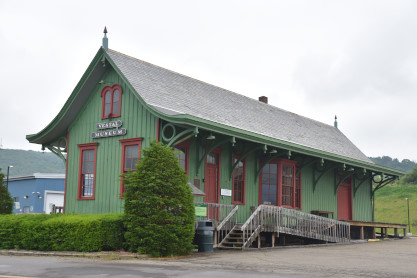
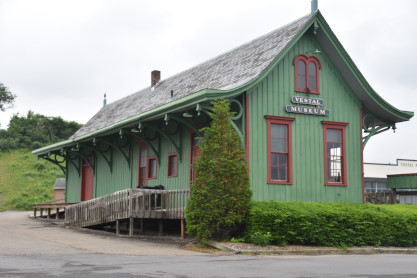
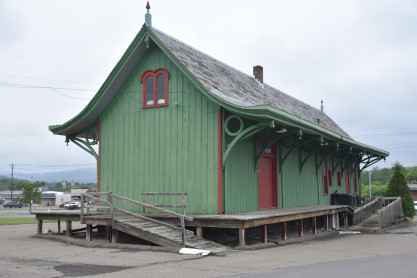
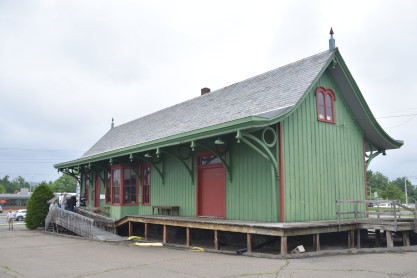
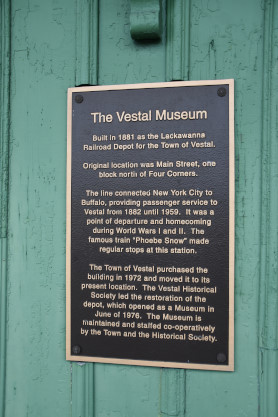
Vestal Delaware, Lackawanna and Western wooden depot built in 1881, home to the Vestal Museum. In the mid-1970's the town of Vestal purchased the depot. The Great Vestal Train Wreck of 1901 was the most spectacular. It was in 1881 that the DL&W Railroad introduced a new, simple station that would later be known as "pagoda" style. With its steeply pitched roof, distinctive curve over the eaves and circular roof supports, the building had a very unique and somewhat oriental look. The Vestal station would serve as a model for several other stations built in this style on the route west of Binghamton, including those in Apalachin, Elmira, Horseheads, Nichols, and several other locations. The station in Apalachin eventually burned, and over the years it and most of the others were replaced by brick or stone structures. The Vestal station is one of very few pagoda stations that survive to this day. The station was originally located on Main Street in Vestal, one block north of Four-Corners, where Route 17 is today. Located on the south side of the tracks the station was part of a complex that included the Rounds Coal Company building (recently relocated to the Rail Trail,) and a large wooden coal tipple. The Rounds building had a large drive-through opening where trucks loaded with coal would be weighed. The coal was then dumped in the tipple, where it was sorted by size and loaded into train cars. The station handled a steady flow of traffic for many years. In 1949 the DL&W Railroad launched a streamlined passenger train named after the company's well-known advertising mascot, Phoebe Snow. The Phoebe Snow would make daily stops at the Vestal station on its route from Hoboken, New Jersey, to Buffalo, New York. In August, 1959, Phoebe Snow would make her last stop at the Vestal station.
For the next eight years the building sat empty. In 1967 Vestal Supervisor Edwin L. Crawford, fearing the community would "lose a sense of history" with the loss of the old station, made an unsuccessful attempt to have it donated to the town. Instead, it would serve as a storage warehouse for a local lumber and supply company and continue to deteriorate. Finally in 1971 the station was sold at auction.
The Town of Vestal had the winning bid and planned to use the building for a museum. There was one condition with the sale, the building had to be relocated.
In December 1972, one month after the third and final deadline to move the building passed, the dilapidated, 73-foot long, 63 ton train station was loaded onto a truck and slowly driven one half mile to its present location, next to the Vestal Library. After an extensive restoration effort, the museum opened for business in June 1976. Today, still owned and managed by the Town of Vestal with support by the Vestal Historical Society, the Vestal Museum serves the community with ongoing exhibits and educational programs.
In 2006, an attempt was made to list the building, a local historic landmark, on the National Register of Historic Places. However, because the building was no longer located in the context for which it was built, the designation could not be granted and to qualify, the building would have to be moved again, this time back to a spot slightly east of the original location along the Rail Trail.
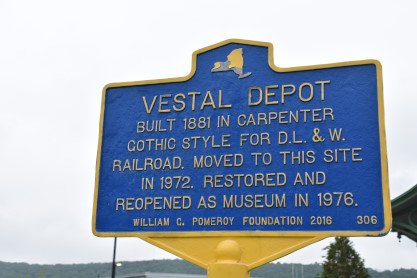
Vestal Depot plaque.

The bay window in this museum.
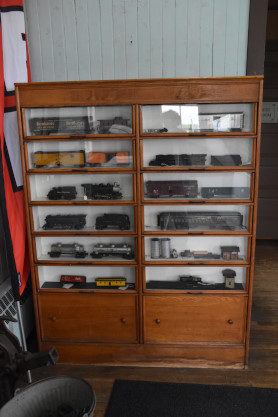
Models of locomotives and freight cars.
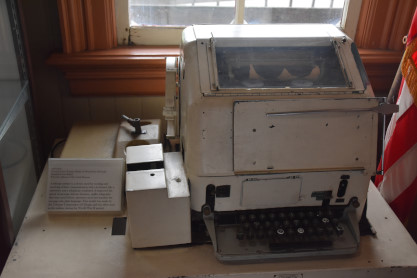
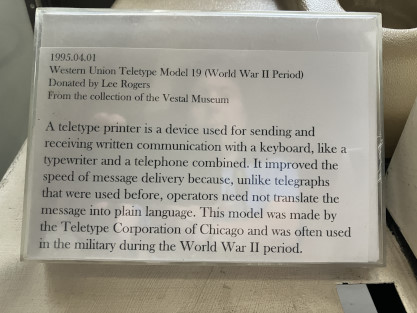
Western Union teletype model 19.
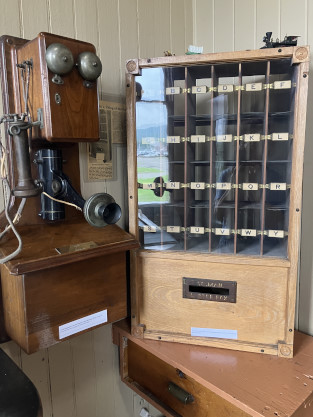
A section of postal boxes from the Crane General Store in 1878.
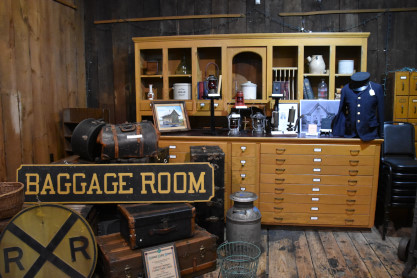
Display in the freight portion of the station.
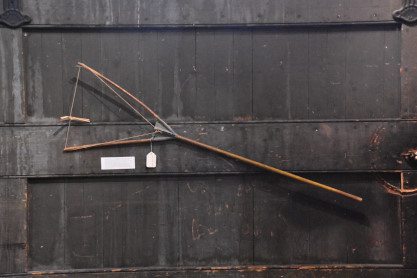
Train order fork from the Erie station at Endicott. The stick was used by railroads to communicate orders to the train engineer. The telegrapher watched for the train from the bay window at the depot and if the dispatcher wanted to send an order a train, the telegrapher would roll up the order, attach it using a slip knot onto the string of the "Y" shaped stick and race to the edge of the train platform. The trainman would grab only the string with the order attached and would then give one copy to the train engineer and one copy to the conductor.
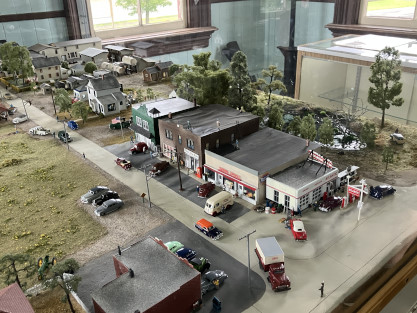
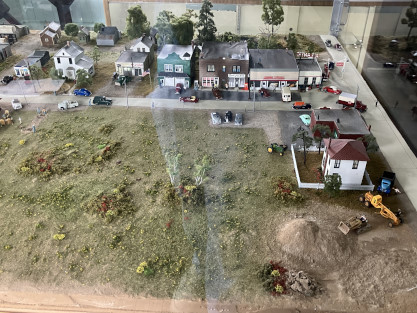
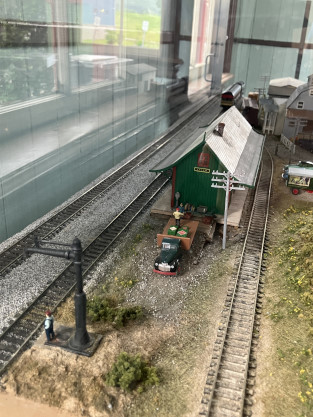
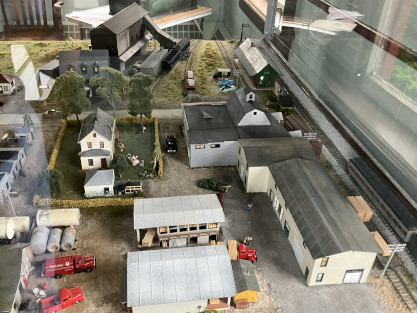
In 2015, a team of five volunteers offered to construct a diorama depicting Vestal's depot and North Main Street as it looked during 1948-1952.
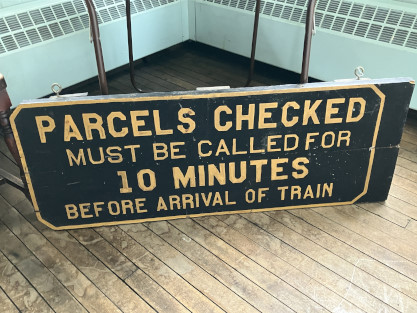
A sign that would not be seen these days. That brought the 50th Railroad Station Historical Society convention to a close. Upon returning to the convention hotel, Elizabeth went to Subway for dinner, returned to her hotel and called me at home.
6/16/2025 My wife started the drive to Columbia after having a good breakfast at Bob Evans, but stopped at Elmira.
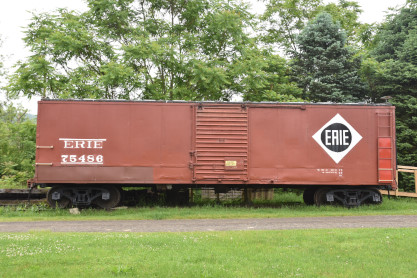
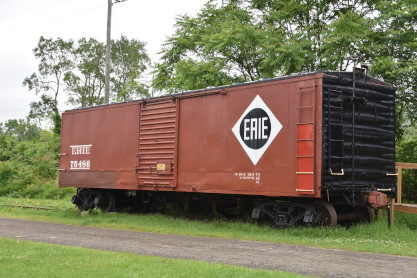
Erie Railroad 40 foot box car box car 7548 builder unknown, but constructed in 1928 and used in general freight service for many years before being repurposed. It was saved by the Chemung Valley Railway Historical Society in 2006 and moved to Eldridge Park in Elmira in 2007. Restoration has been undertaken by members of the society and the car will be used as the centerpiece in a railroad exhibit at the park. The Society was formed in 1996 with the goal of preserving the history of the railroads in the Chemung Valley area through the collection of photographs, memorabilia, artifacts and rolling stock.
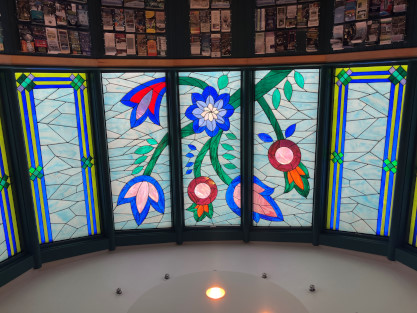
One of the rest areas in New York that Elizabeth visited had a stained-glass window, something that she had never seen at a rest area before.

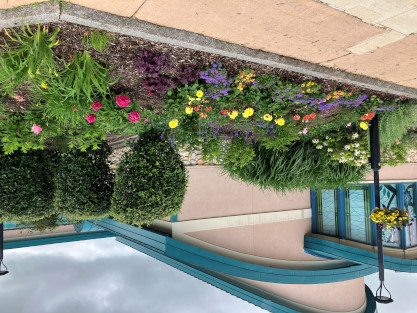
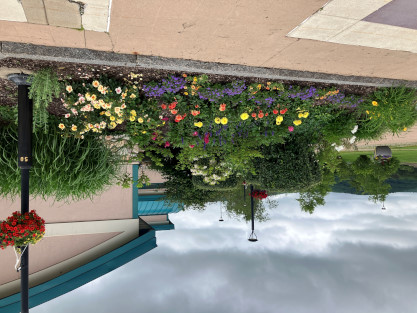
A well-kept garden area surrounding the rest area. She made her way to Toledo, Ohio and went to Panera Bread for dinner then checked into the Fairfield Inn for the night.
6/16/2025 After breakfast at Bob Evans, Elizabeth drove to Effingham and checked into the Country and Suites then walked over to Cracker Barrel for dinner. It was strictly a driving day.
6/17/2025 The day started with breakfast at the hotel then the resumption of the drive home, arriving at 11:30 AM.
| RETURN TO THE MAIN PAGE |