




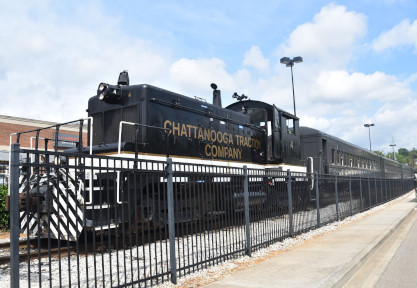
The motor coach transported the conference attendees from Knoxville Locomotive Works to the Three Rivers Rambler station and we all debussed.
Three Rivers Rambler InformationThe Three Rivers Rambler is a unique tourist train operation that uses both steam and diesel equipment to take passengers on a memorable 11 mile journey in Knoxville.
It is operated by Knoxville and Holston Railroad, established in 1998, which has approximately 20 miles of track in the Knoxville area. Their business is in three main areas: Coster Yard, downtown Knoxville near UT campus and the Forks of the River Industrial Park. The railroad is conveniently located near Interstates 40, 75, and 81 with multiple spots available for transloading services. The KXHR interchanges with Norfolk Southern so goods can be sent or received from virtually anywhere in North America. The KXHR handles a variety of freight such as steel, petroleum, plastics, recyclables and lumber. In 2012, the KXHR was awarded 2012 ASLRRA President's Safety Award, a first for any G&O company.
Gulf & Ohio Railways, established in 1985, is a holding company for the Three Rivers Rambler and four short line railroads, including the KXHR in Knoxville. G&O railroads operate on 200 miles of track, using approximately 40 locomotives, to haul freight for over 90 industrial customers. With over 70 full and part time employees, G&O plays an important role in the local economies where it operates.
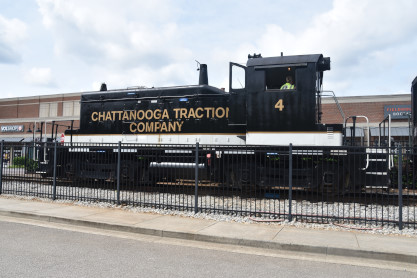
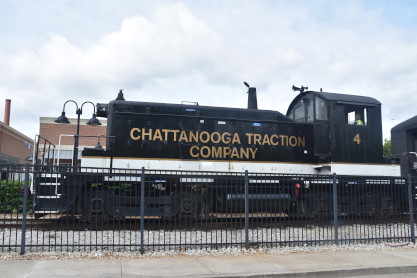
Chattanooga Traction Company SW1 4, ex. R.J. Corman 1002, exx. Southern 1002, nee Chattanooga Traction Company 4, built by Electro-Motive Division in 1947.
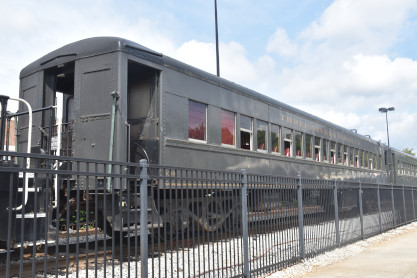
Knoxville and Holston coach 4 "Trustworthy" nee Reading 9116, built by Harlan and Hollingsworth in 1930.
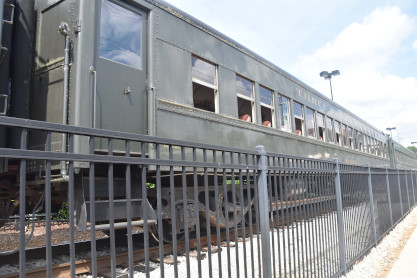
Knoxville and Holston coach 3 "Intrepid", nee Reading, number unknown, built by Harlan and Hollingsworth in 1930.
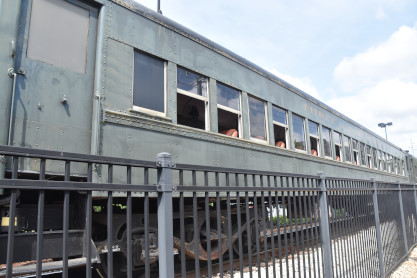
Knoxville and Holston coach "Resilient", nee Reading, number unknown, built by Harlan and Hollingsworth in 1930.
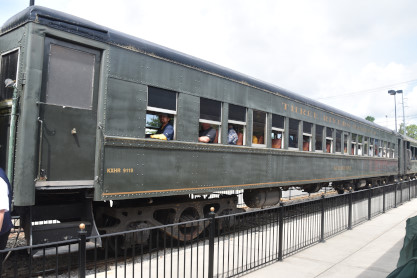
Knoxville and Holston coach 9119 "Steadfast", nee Reading 862, built by Harlan and Hollingsworth in 1930.
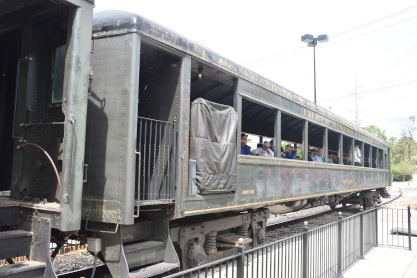
Knoxville and Holston coach 1292 "Observant", nee Reading, number unknown, built by Harlan and Hollingsworth in 1930.
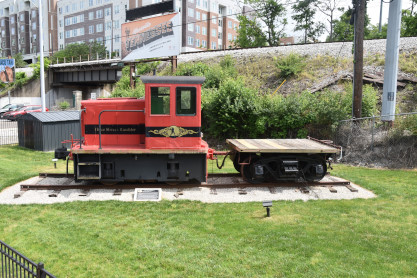
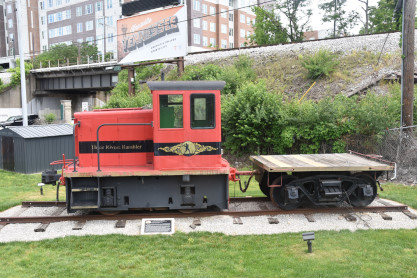
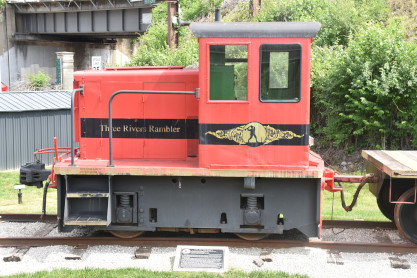
On the other side of the tracks was a display of Three Rivers Rambler 25 ton switcher 150, ex. Laurinburg & Southern Railway 150 1989, exx. Toledo, Angola & Western Railway 150, exxx. Dana Corporation 150, nee Bethlehem Steel 150, built by General Electric in 1943. It was acquired by Knoxville and Holston Railroad in 2015 and transferred to the Three Rivers Rambler. Nicknamed "John Henry" after the steel driven man. The African-American folk hero John Henry worked on a railroad construction crew in the 1870's. According to legend, Henry won a contest against a steam-powered drill but died when his heart gave out after the race. His story is immortalized in one of America's most famous folk songs.
The Norfolk & Western Railway recognized this folk hero in 1954 when they purchased an experimental steam-turbine engine named "Jawn Henry." Built by Baldwin Locomotive Works, No. 2300 weighed 409 tons and was 161 feet long. Though it performed well, coal dust and water got into the motors and the boiler controls were unreliable. The enormous engine lost the contest against the efficient diesel and was scrapped in 1957.
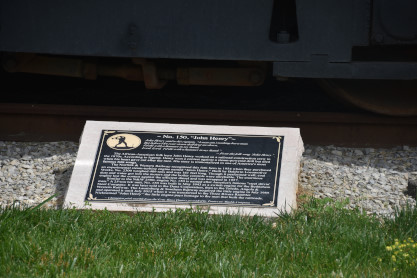
To construct a railroad tunnel, the folk hero John Henry hammered a drill bit into rock to make holes for explosives. According to legend, Henry won a hammering contest in the 1870's against a steam-powered drill but died when his heart gave out after the race. His story is immortalized in one of America's most famous folk songs. In the 2006 book, "Steel Drivin' Man: John Henry, the Untold Story of an American Legend," Scott Nelson contends that the ballad was based on a real person. The 20-year-old New Jersey-born African-American freeman, John William Henry, was a working in the headquarters of the 3rd Army Corps in 1863. Nelson speculates that Henry, like man African Americans, might have come to Virginia to work on the clean-up of the battlefields after the Civil War. Arrested, and in all likelihood unfairly tried for burglary, he was among the many convicts leased to work on the C&O Railway.
The owner of the C&O Railway, Collins Huntington, had recently made a bet with the government of Virginia that he could build a line linking eastern Virginia to the Ohio River within six years. Huntington wagered that if he finished by 1872, the railroad would belong to him; if he failed he would give every inch of track to the state. To win the bet, Huntington had to find a way to tunnel through the Allegheny Mountain range - using manpower and/or steam-powered drills. Nelson believes that John Henry's famous contest took place at one of the C&O tunnels, Lewis Tunnel, in West Virginia, where newspaper stories and records indicate prisoners worked beside steam drills night and day. Records for John William Henry ended in 1873, suggesting that he had died. The evidence assembled by Nelson, though suggestive, is circumstantial. Nelson himself stresses that John Henry's heroic story is representative of the thousands of laborers who gave their lives to the railroad system.
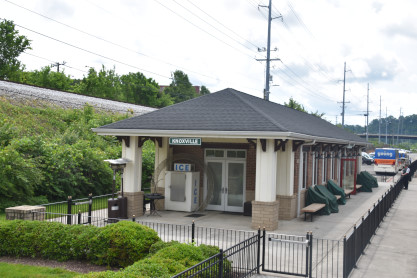
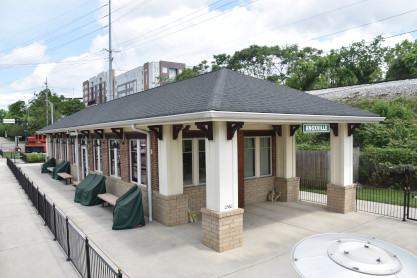
We departed the passenger station built in 2014.

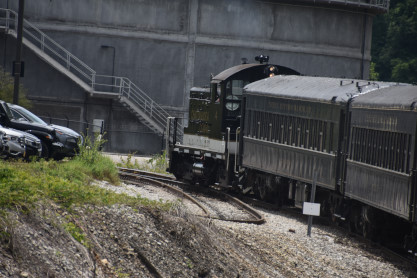
Nearing the Tennessee River.
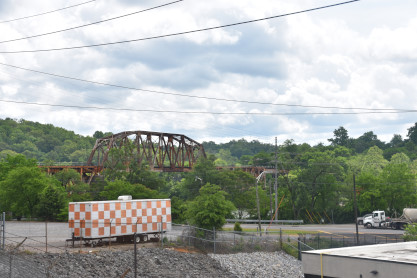
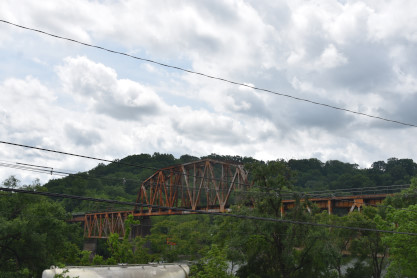
The CSX Railroad bridge across the Tennessee River.
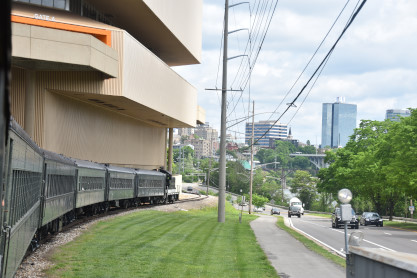
Running beside the Sherri Lee Parker Stadium of the University of Tennessee.
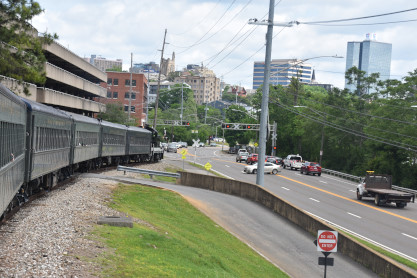
Crossing United States Highway 11.
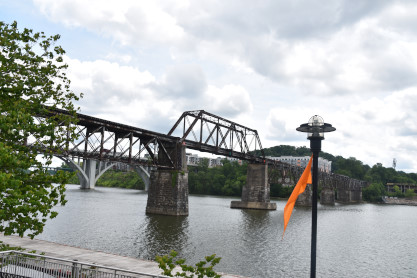
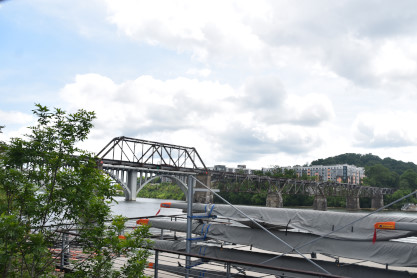
The Norfolk Southern trestle bridge across the Tennessee River.
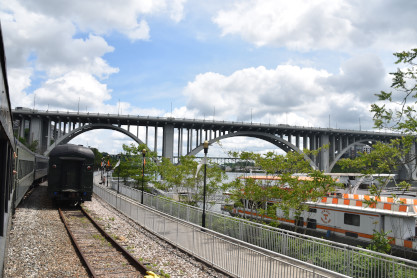
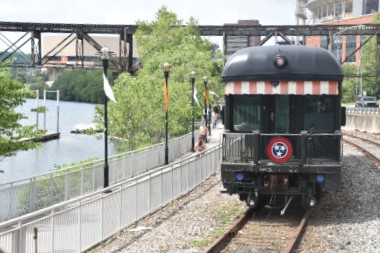
On a siding, we passed Gulf & Ohio business car 30 "Tennessee", ex. Seaboard System 309, exx. Seaboard Coast Line 309, exxx. Atlantic Coast Line 309, exxxx. Atlantic Coast Line 308:1 1944, nee Pullman "Manhattan", built by Pullman in 1916.
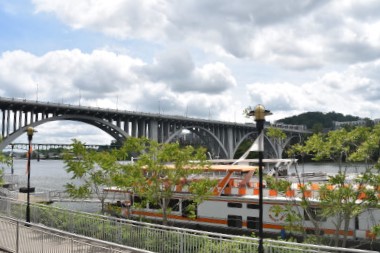
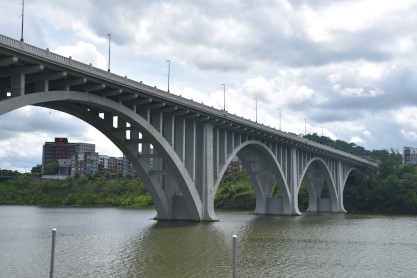
Henley Street bridge.
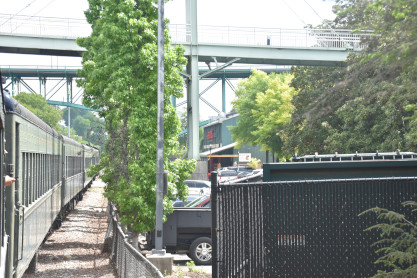
Going under the Henley Street bridge.
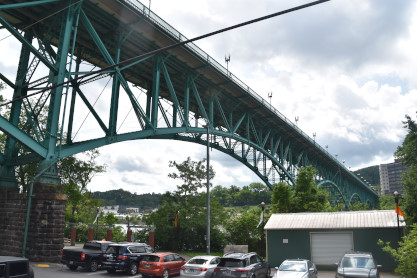
Gay Street bridge constructed in 1898 and is the oldest of the four vehicle bridges that connects Downtown Knoxville with South Knoxville. Originally equipped with trolley tracks, the bridge accelerated the growth of the "Island Home Park" on the south side of the Tennessee river, which was previously isolated from downtown Knoxville.
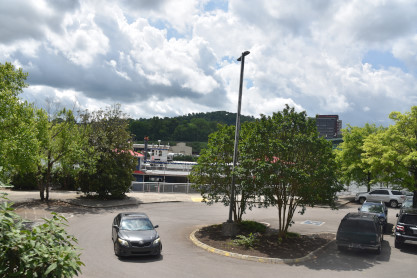
While partially obscured by the trees, this was our destination on the return trip. Experience the Star of Knoxville! This authentic paddlewheeler is fully enclosed, air conditioned, and heated for year round comfort. The vessel is equipped with two bars, a dance floor, band stage, and is exquisitely decorated for the most elegant dinner and entertainment available. From black tie events like weddings and receptions to a casual event like a football charter the atmosphere is right for any occasion.
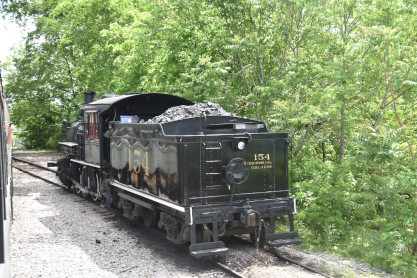
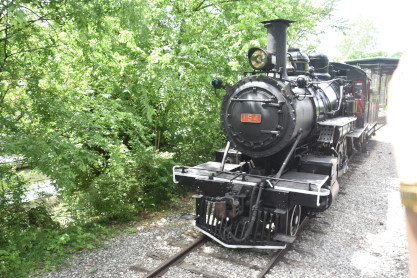
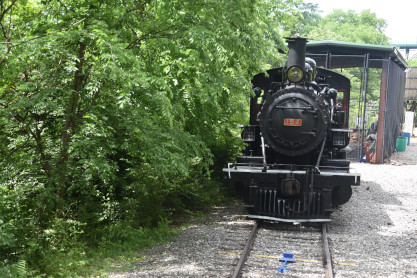
Southern Railway 2-8-0 154, nee East Tennessee, Virginia & Georgia Railway Company 466, built by American Locomotive Company in 1890. It served in the East Tennessee area until it was given to the City of Knoxville to be put on display in August 1953. In the last few years of its active career for the Southern Railway, the locomotive was leased to the Smoky Mountain Railroad between Knoxville and Sevierville. Since 1953 the locomotive has been on public display at Chilhowee Park in Knoxville. In 1989 the locomotive was given to the Old Smoky Railway Museum, which donated the locomotive to the Gulf and Ohio Railways in August 2008. The City of Knoxville and the Old Smoky Chapter of the National Railway Historical Society cared for and maintained the locomotive while on static display which kept it in a condition that makes this restoration possible. At the completion of the restoration, 154 will become the oldest operating Southern Railway steam locomotive and also the oldest operating locomotive built by the Schenectady Locomotive Works.
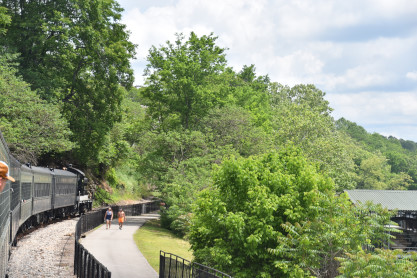
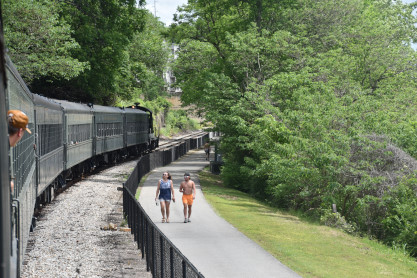
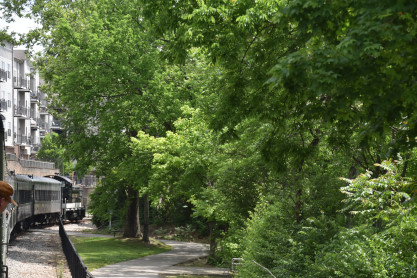
A bicycle and pedestrian trail paralleled our route.
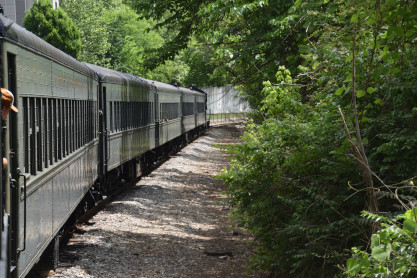
A forward view of our train.
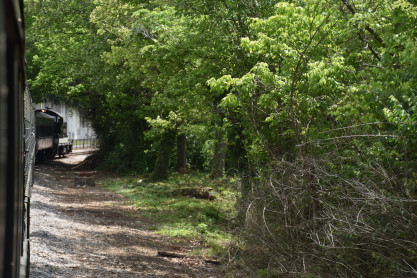
The engine can be seen on this curve.
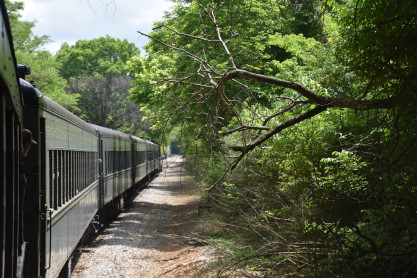
Another forward view.
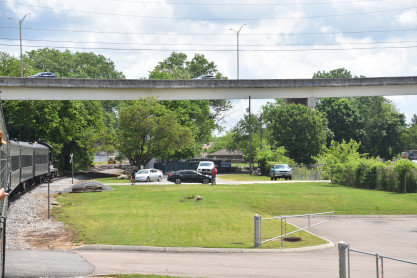
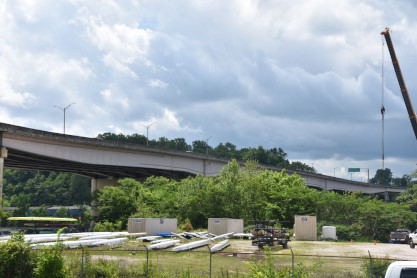
Travelling under the James White Parkway.
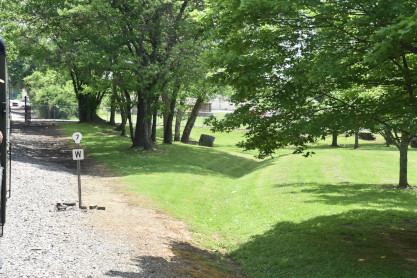
Milepost 7 signpost.
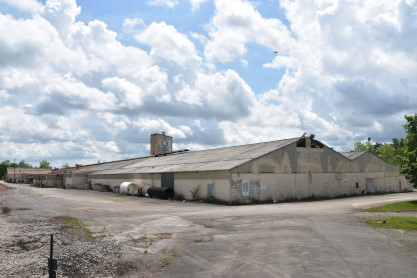
Former General Shale Brick Production Plant.
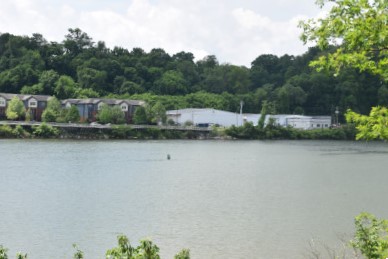
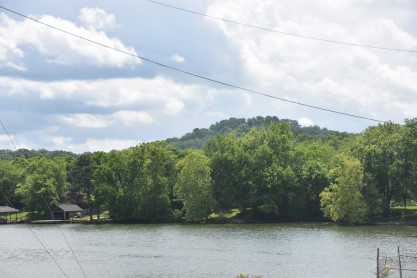
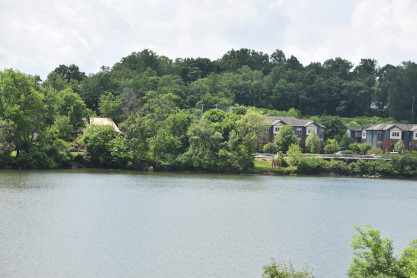
The Tennessee River.
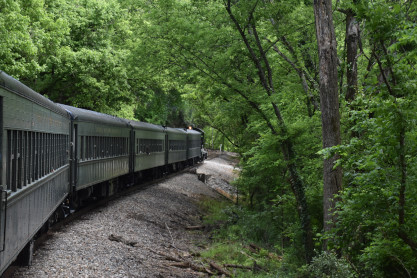
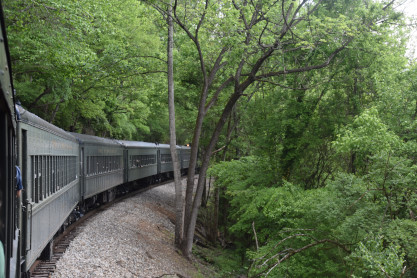
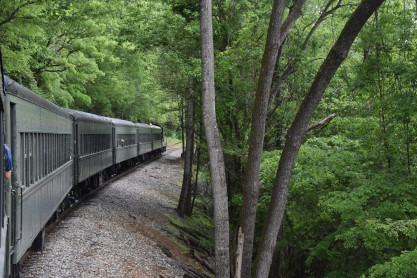
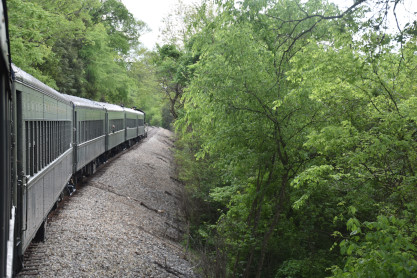
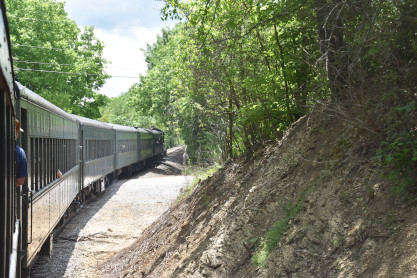
Making our way along the Tennessee River.
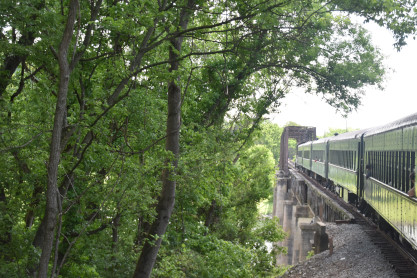
About to cross the Holston River on a three-span Warren through-truss bridge constructed in 1913 from dismantled single-track bridges at Strawberry Plains & Charleston, Tennessee. It is 850 feet above the river.
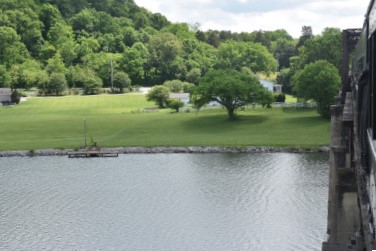
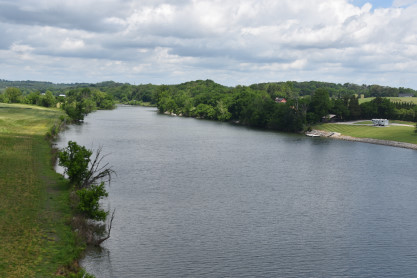


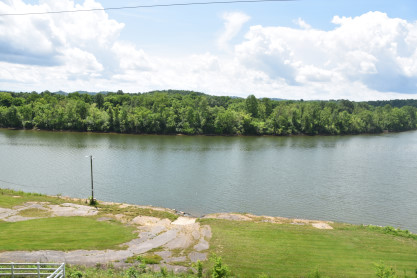
Under the breathtaking Three Rivers Trestle, the French Broad and Holston Rivers' confluence forms the Tennessee River. The French Broad River flows 218 miles from Transylvania County, North Carolina and the Holston River flows 136 miles from Kingsport, Tennessee. The Tennessee River is the largest tributary of the Ohio River. At 652 miles long, the river flows from Knoxville towards Chattanooga and then crosses into northern Alabama. The river then creates the upper-most border between Alabama and Mississippi before returning to Tennessee. Once in Tennessee, the river defines the boundaries between "Middle" and "West" Tennessee. The final part of the river's run is in Kentucky, where it flows into the Ohio River at Paducah Kentucky.
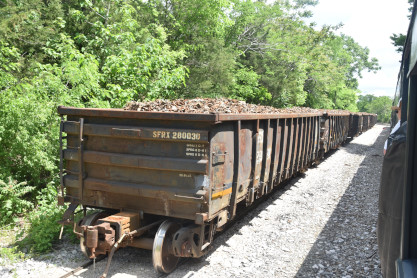
A line of freight cars at our turn-around point.
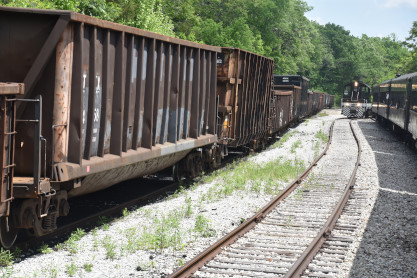
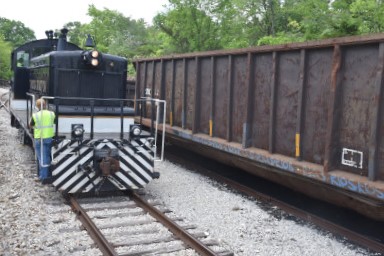
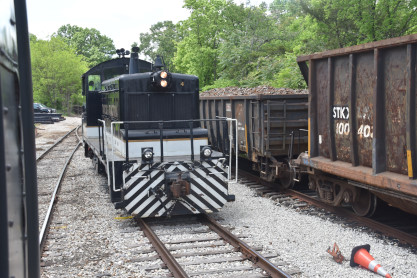
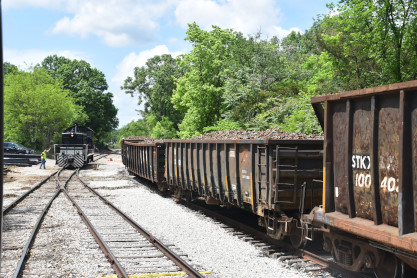
The locomotive then around the train.
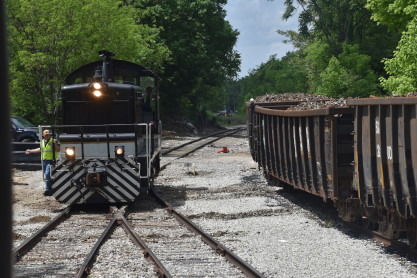
The locomotive then coupled to our trainset.

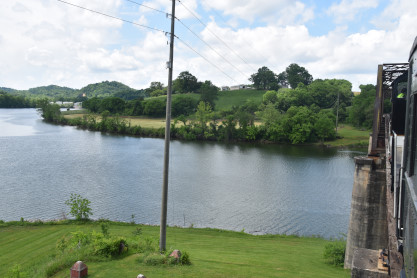
We crossed the Holston River on the return trip.
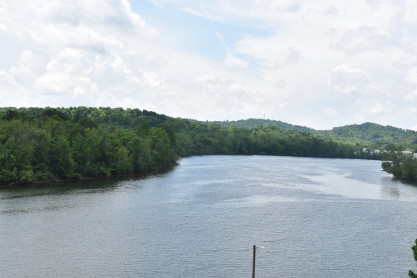
The Tennessee River.
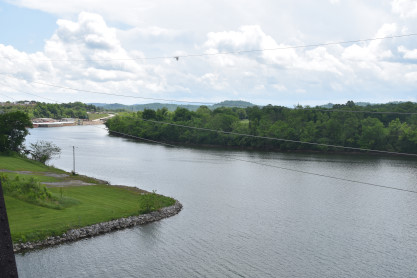
The junction of the Holston River and the French Broad.

A barge on the Tennessee River.
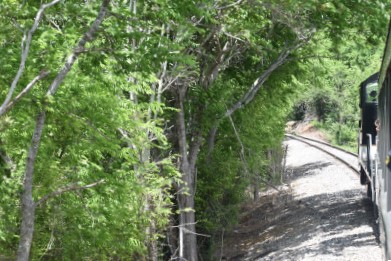
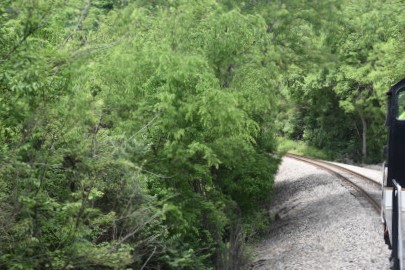
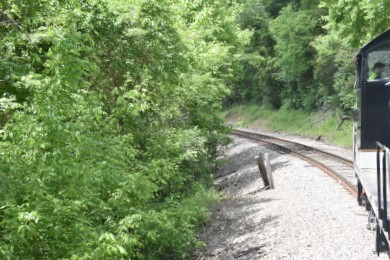
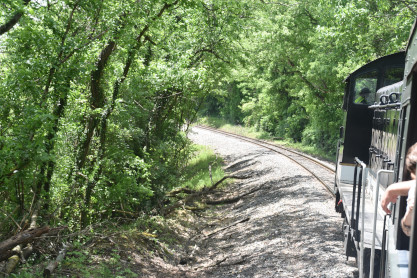
Part of the journey back.
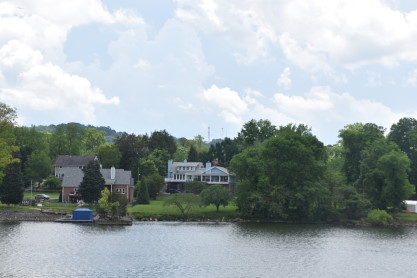
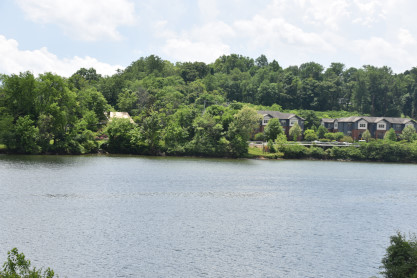
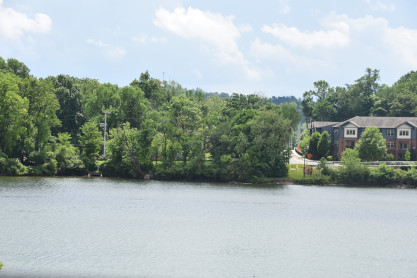
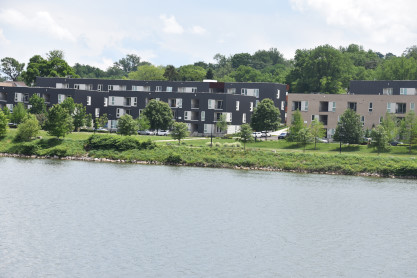
Various homes across the river.
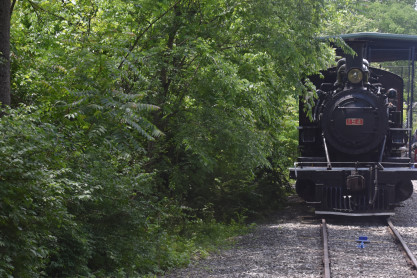

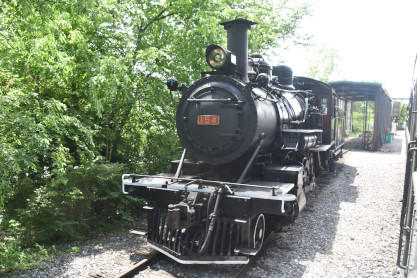
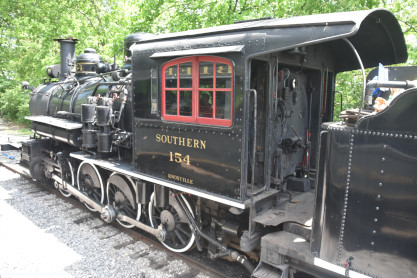
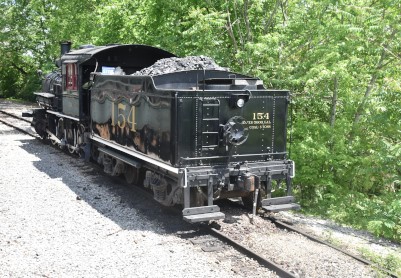
We passed Southern Railway 2-8-0 154, nee East Tennessee, Virginia & Georgia Railway Company 466, built by American Locomotive Company in 1890 again, then arrived at the River Boat Landing, where everyone detrained and walked the short distance onto the riverboat.
| RETURN TO THE MAIN PAGE |