




This year's National Railway Historical Society spring conference was held in Johnson City, Tennessee and since Elizabeth is Secretary of the Advisory Council and also the National Representative for the Central Coast Chapter, it was natural that we would attend. Also, the tours and excursions held the day before were of great interest.
We left our house in Columbia, Missouri at 9:30 AM and Elizabeth drove to the first rest area on Interstate 70, where we switched drivers then I drove east to Kentucky, where Elizabeth took over, taking us into Tennessee. We had dinner at Jimmy John's then I then drove the rest of the way to the Best Western Plus Sunset Inn in Nashville for the night.
I drove to Cracker Barrel in Mount Juliet and to the two rest areas where we switched drivers again.
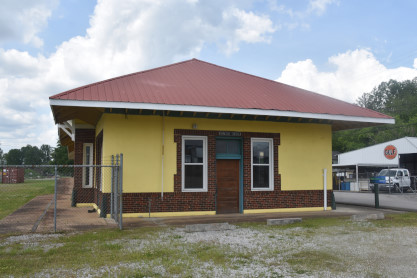
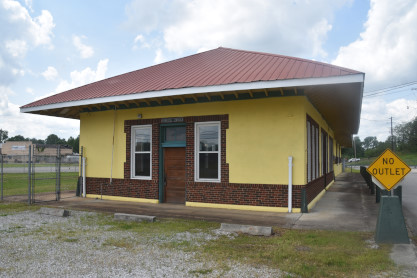
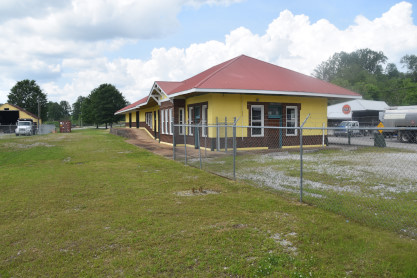
Nashville, Chattanooga and St Louis Sparta station built in 1917.
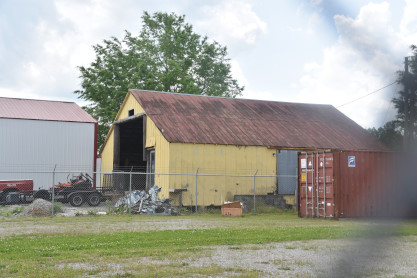
Nashville, Chattanooga and St Louis freight station, year of construction unknown.
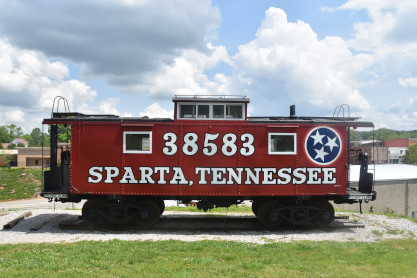
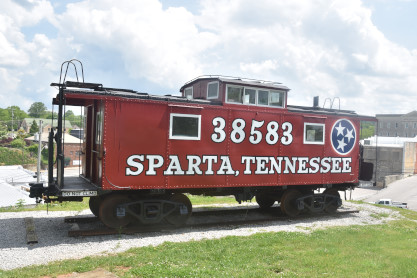
Seaboard System caboose 11078, nee Clinchfield 1078, builder and year unknown. It was formerly in Carthage Junction where it was built into a relocated station. Its current number of 38583 is the Sparta zip code.
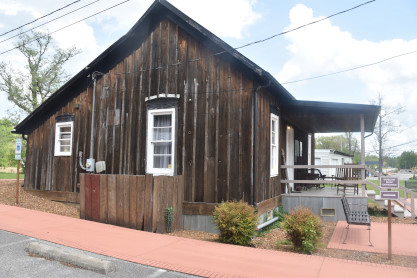
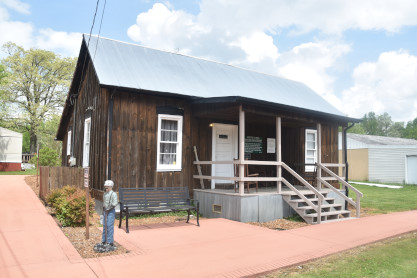
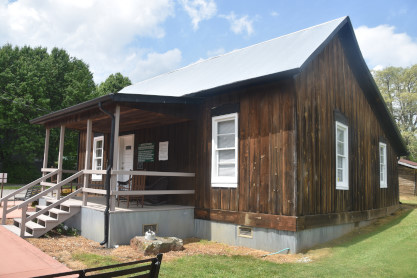
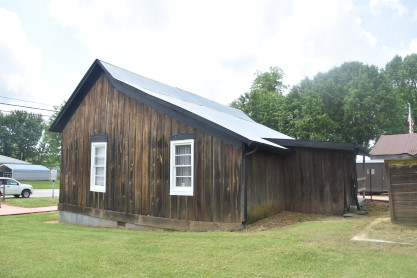
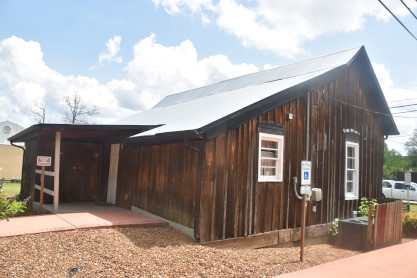
De Rosset Railroad Section House Museum which was closed when we were there. "Mining on the Mountain" is dedicated to preserving the history of the coal mining communities on the Cumberland Plateau of White County Tennessee and is operated by Bon Air Mountain Historical Society, a non-profit museum which operates a museum of coal mining history and artifacts, as well as a trail at the Ravenscroft Mine site.
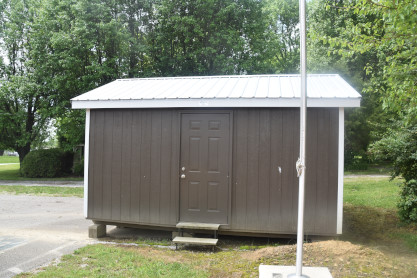
A shed on the property.
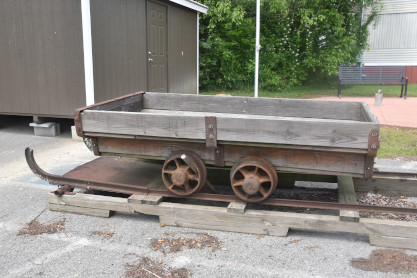
A mining cart on rails. We next drove to Spring City and timed our arrival well as we heard a freight train approaching.
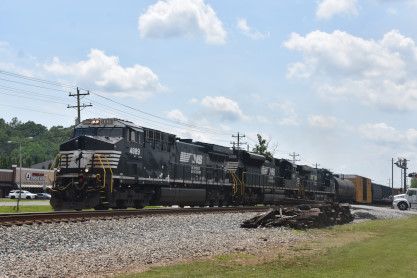
Norfolk Southern 4889 North.
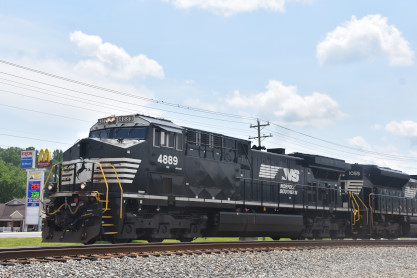
Norfolk Southern AC44C6M 4889, nee Norfolk Southern 9703, built by General Electric.
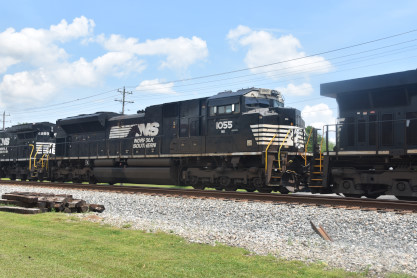
Norfolk Southern SD70ACe 1055 built by Electro-Motive Division in 2011.
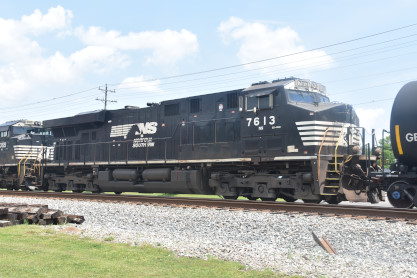
Norfolk Southern E44DC 7613 built by General Electric.
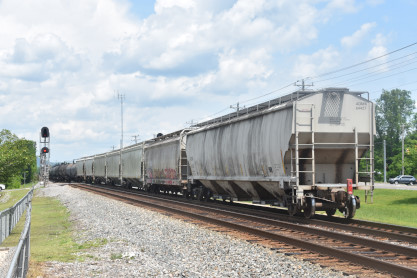
The rear of the freight train.
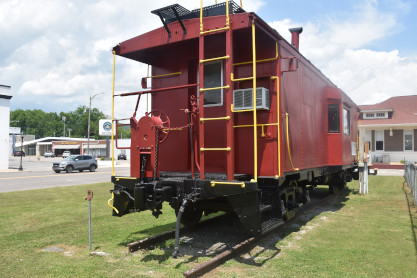
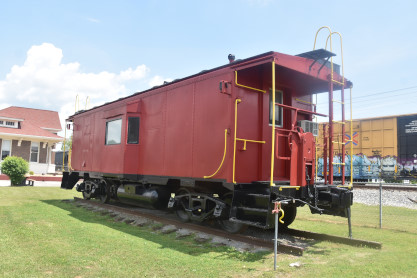
Nickel Plate caboose 484 painted red as Southern 1908, built by International Car in 1962.
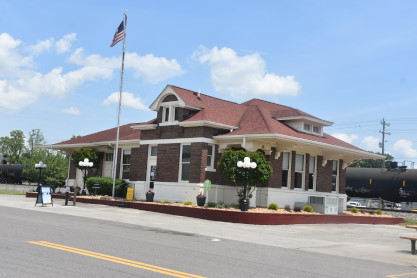
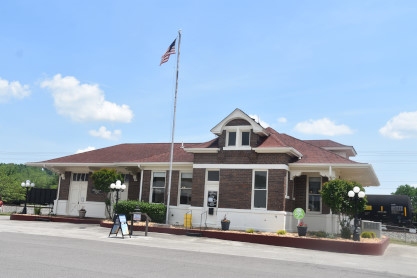
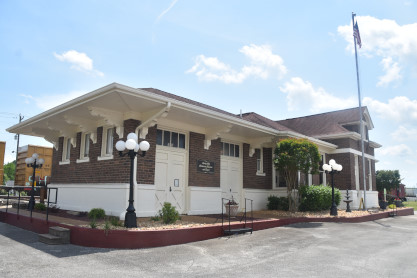
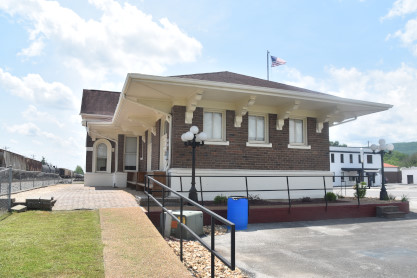
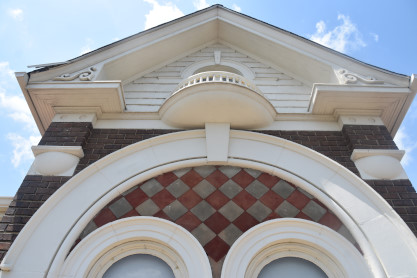
Spring City Southern station built in 1908. The depot was originally built by the Queen and Crescent Railroad of Cincinnati for the purpose of extending travel and commerce to the South. It was decommissioned in the 1960s and was nearly demolished before being saved, restored in the 1990s and converted into the Spring City Historical Museum and the Chamber of Commerce.
We then made our way to Bulls Gap. In 1792, John Bull, a gunsmith, received a North Carolina land grant for fifty-five acres of land on Bays Mountain near an important east-west passageway over the mountain. Bull operated a stageline through this passageway which became known as Bull's Gap. The first post office in the area was Bays Mount, which was located approximately a mile-and-a-half from the current town of Bull's Gap.
In 1857, when the East Tennessee and Virginia Railroad began construction of a line from Bristol to Knoxville, the area was known as Branchville. Upon completion of the Rogersville line by the Rogersville and Jefferson Railroad in 1870, the town was re-named Rogersville Junction by the railroad. Around this same time period, the Bays Mount post office was moved into the community and was renamed Bull's Gap at the request of the residents. In 1904, the railroad changed the name of Rogersville Junction to Bulls Gap to end the confusion of two names for one community. The name of Bulls Gap appears to have been the town name commonly used by the residents for a long period before it was officially adopted by the post office and the railroads.
The East Tennessee and Virginia Railway built the first tracks through the Bulls Gap area. Constructed by slave labour under adverse conditions of mud and water, combined with company financial problems caused by the panic of 1857, the last 130 miles took over a year to build. Completed in 1858, the ET&V line connected with the East Tennessee and Georgia Railroad and provided a route from Bristol to Atlanta with connections to Washington, DC, Knoxville, Memphis, Augusta, Charlestown and others. In 1866, the ET&V and ET&G formally consolidated to form the East Tennessee Virginia and Georgia Railroad.
Upon completion of the ET&V line in 1858, plans were made to build a line to Rogersville. However, with the advent of the Civil War, the Rogersville line was not built. Because of the important railroad line through the mountains, Bulls Gap became a strategically important location for both armies during the war. BullsGap became a fortified town and between 1863 and 1865, many battles were fought to gain control of the town and its railroad. Throughout most of the war, the Federal forces retained control of Bulls Gap and the town.
After the war, Bulls Gap and the damaged railroads began a period of rebuilding. The earlier-planned Rogersville connector was completed in 1870 by the Rogersville and Jefferson Railroad, and the Town of Bulls Gap, once again, began to grow and prosper at the junction of the two lines. Around the turn of the century, the rail lines through Bulls Gap became part of the Southern Railway system and the town continued to grow. In the 1920s, Southern had several railroad structures in the community including water towers, sand houses, a depot and dormitory among others.
The early development patterns and the late nineteenth and twentieth century growth of Bulls Gap reflect the economic impatience the railroad held for the community. The commercial centre of the town was built between the railroad junctions and close to the depot. The hotels were built close to both the tracks and the depot, and residential growth extended outwards from the town centre. As the importance of the railroad in town life dwindled and the automobile became a more important factor of life, the growth and development patterns changed. The new business and residential areas became oriented to US Highway 11E and State Road 66. As the passenger service on the railroad disappeared, so did the activities in the old town centre. The depot was eventually torn down, as were many of the old railroad sturctures, the commercial buildings became vacant and the railroad hotels, no longer needed for passengers, were converted into apartments. Although there was no longer any passenger service to the town, the tracks are still a vital part of the Southern Railway system.
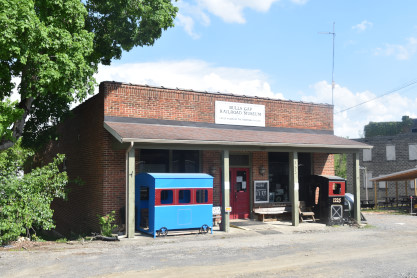
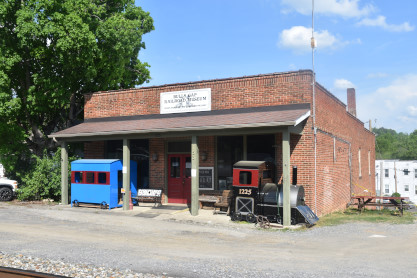
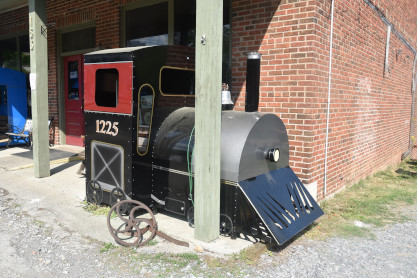
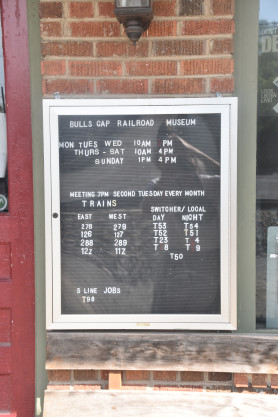
Gilley's Hotel, home of the Bulls Gap Railroad Museum, which has a large model railway layout, memorabilia and souvenirs. This historic landmark, built in the mid-1850's, still stands on the main line between Bristol and Knoxville. Acquired by the museum in 2003, it gave them a much larger building than their previous location in the old Quillen Store Building. The hotel's history is very intertwined with the history of the railroad and the town and was originally the Smith Hotel, which became well-known for its food and accommodations up and down the line until it was destroyed by fire in 1883. The Smith family rebuilt the hotel in the same location and by 1884, it was up and running again, bigger and better than ever.
In the very early 1900s, the Gilley name became forever linked to the hotel when Rufus Henry Gilley acquired the property and continued to serve the growing rail industry in Bulls Gap. Before the Great Depression began in 1929, Gilley had expanded operations by adding a wing that provided an office and dining room and hosted grand parties.
Next I drove to Rogersville.
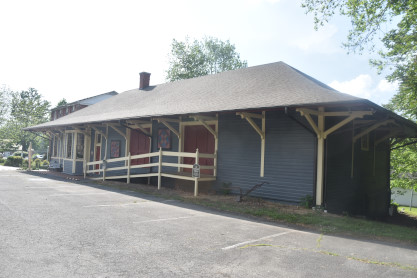
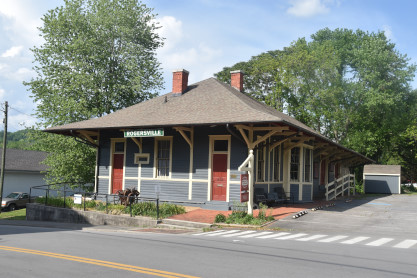
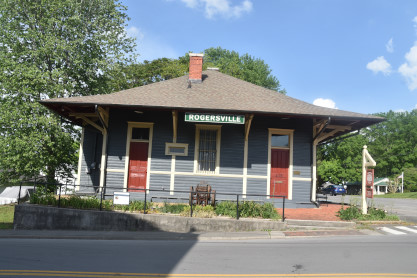
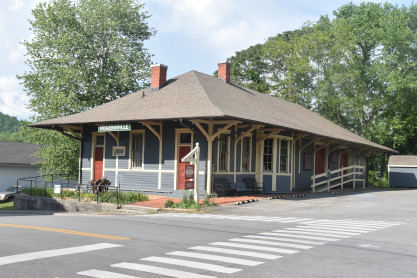
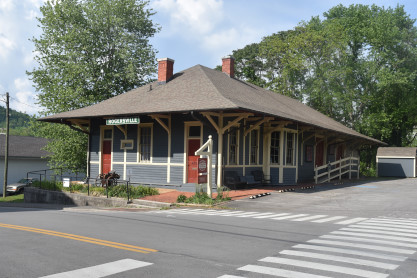
Rogersville Southern station built in 1890, but plans for it go back to Civil War times, as the original deed for the building is dated 1861. It is home to the Rogersville Heritage Association and the Tennessee Printing Museum and was donated to Hawkins County by the Southern Railway Company in July 1986. The county entered into a lease agreement with RHA in May 1987.
Our last stop of the day was Kingsport.
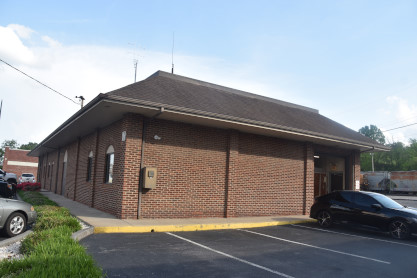
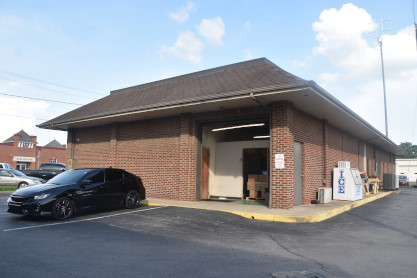
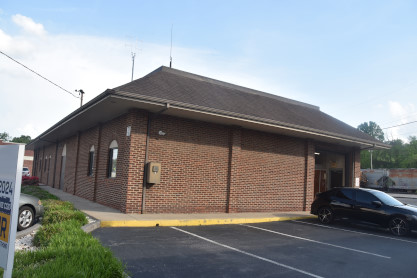
CSX office in Kingsport.
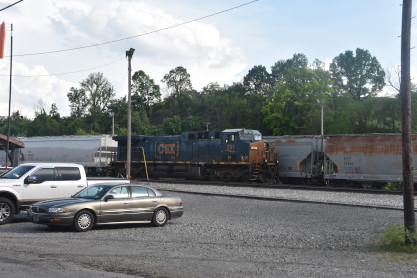
CSX AC44CW 291 built by General Electric in 1997, as a DPU on a freight train.
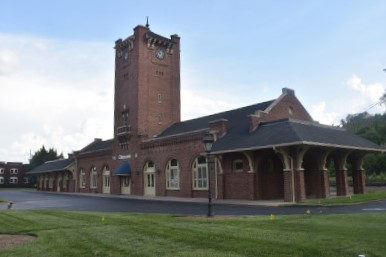
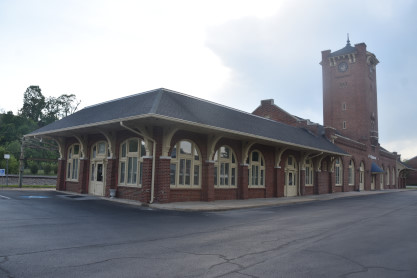
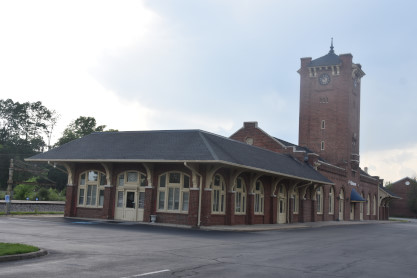
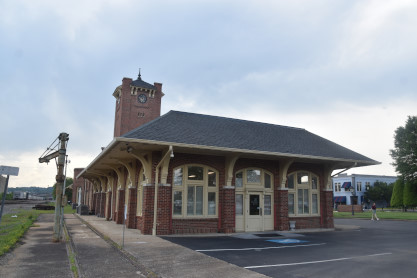
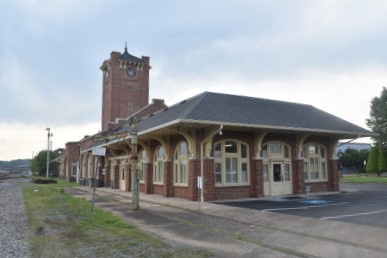
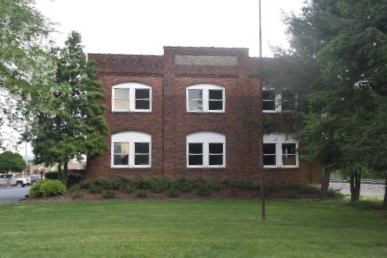
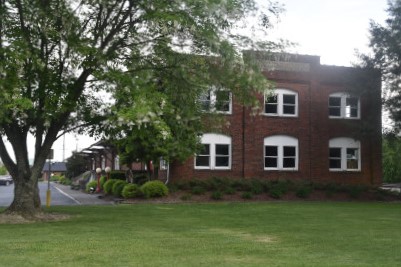
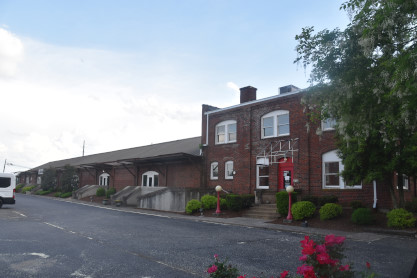
This Clinchfield Railroad station was one of several buildings New York-based architect Clinton Mackenzie designed for the planned city of Kingsport, Tennessee. Inspired by both the City Beautiful and New South movements, the city of Kingsport changed the landscape of Sullivan County and is the best representation of industrial New South Kingsport. Built in 1916 at the southwest end of Broad Street, the city’s main artery, the eclectic building with its imposing clock tower was intended to serve as a focal point for the business district and as a symbol of the town's emerging industrial economy and its prosperity.
In its earliest days, Kingsport's economy depended largely on commerce generated by its location on the Great Road between Nashville and Washington, DC, as well as its position as the farthest upstream point from which flatboats could be launched on the Holston River. When steamboats and railroads replaced flatboats and long-distance road transportation, Kingsport became isolated because the railroad built through eastern Tennessee in 1859 was routed well south of the town, and the Holston River was not navigable for steamboats. Combined with the effects of the Civil War, Kingsport went into steady decline. In 1908, however, the town's fortunes revived when the Carolina, Clinchfield and Ohio Railroad connected Kingsport with Virginia's coal deposits. Kingsport became an industrial center and experienced rapid growth between 1910 and 1915. Building on this growth, John B. Dennis and J. Fred Johnson established the Kingsport Improvement Company in 1915, resulting in what Margaret Wolfe has identified as "the first thoroughly diversified, professionally planned, and privately-financed city in twentieth-century America".
The landscape architecture firm of John Nolen in Cambridge, Massachusetts, is given the most credit for designing and building the planned city, but many firms and individuals were involved. Landscape architect Earl S. Draper, still an employee of Nolen when he began to work on Kingsport, is perhaps most responsible for the overall design. Draper later headed the Tennessee Valley Authority's Division of Land Planning and Housing. Draper hired Clinton Mackenzie to serve as principal architect for the new town. Mackenzie was a director of the National Housing Association and Tenement House Commissioner for the State of New Jersey. He was deeply committed to town plans that accommodated the needs of the working classes. Employing a mixture of period revival styles and elements of the Arts and Crafts movement, Mackenzie designed much of the housing and commercial architecture throughout Kingsport, including the Kingsport Inn, the YMCA, and a clubhouse for the Federal Chemical Company. Mackenzie also designed a never executed "separate-but-equal" satellite community for African Americans to be called "Negro Village".
For the Clinchfield Railroad station, the focus of the new town, he fused several styles notably the Beaux-Arts, Italianate and Colonial Revival. The result is a rectangular, one-story, red-brick building with a central clock tower articulated with four chimney-like masses at the corners and at the top, bold Italianate brackets supporting a pyramidal roof. Most of the brickwork is laid in stretcher bond, but the indented central bay of each side of the tower is laid in Flemish bond. The building has corbelled brickwork between arched openings and the roof and on the tower. But for a few of the windows in the tower, all windows and doors are arched. There is a portico at the northwest end. The central portion of the building has a gable roof; mansard roofs cover the southeast wing of the building as well as the portico at the northwest end. The eaves are supported by large knee brackets. There is a small brick balcony supported by brick corbelling below one of the facade windows on the tower.
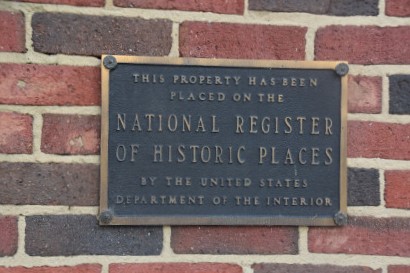
The National Register of Historical Places plaque.
I drove south out of town and then Elizabth drove us to the Jersey Mike's in Johnson City before we checked into the Holiday Inn for the next four nights.
| RETURN TO THE MAIN PAGE |