




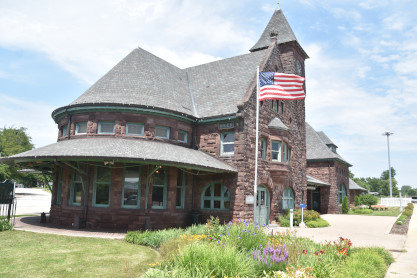
This year's National Railway Historical Society convention was headquartered in East Lansing, Michigan and it was a natural for both of us to attend, especially as Elizabeth was the bus host coordinator and on the Advisory Council. Convention registration and the accompanying booklet went online in May and we purchased all excursions and tours in June.
7/10/2025 The two of us left Columbia and drove to Springfield, Illinois, the state capital.
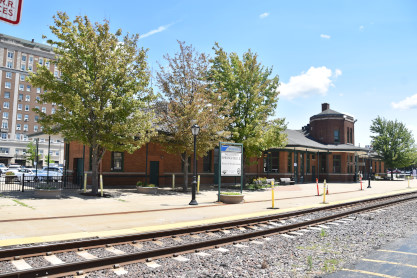
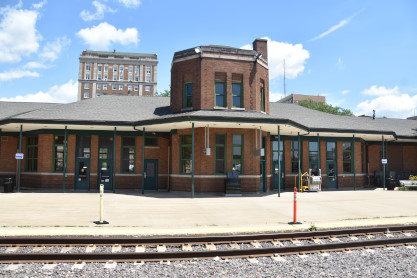
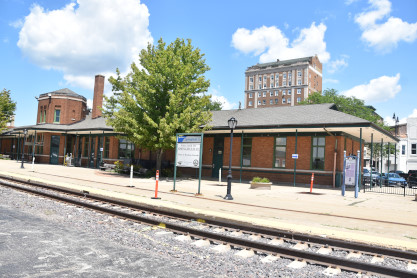
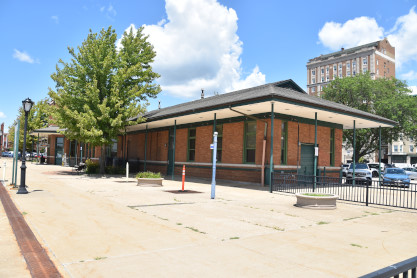
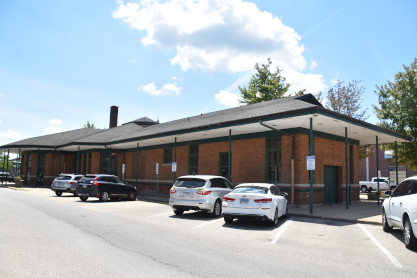
Springfield Chicago and Alton station built in 1895, one of three historic railroad stations still existing in the city. Prior to the start up of Amtrak on May 1, 1971, it was operated the Gulf, Mobile and Ohio Railroad and was served by a variety of named trains, including the Alton Limited, the Abraham Lincoln and the Midnight Special. Springfield was intended to be the southwestern terminus of the State House, predecessor of today's Lincoln Service. However, Amtrak extended this train to St. Louis at its own expense because the Chicago and Alton/GM&O station was not designed to turn trainsets around.
The station is decorated with a small mural atop the ticket office which features a route map of the post-1947 Gulf, Mobile and Ohio Railroad and the state seals of Alabama, Illinois, Kentucky, Louisiana, Mississippi, Missouri and Tennessee. The mural is the work of Louis Grell of Chicago. In a 2010–2011 project, authorities supervised the railroad station's comprehensive refurbishment and overhauled elements included the GM&O mural, trackside landscaping, passenger seating, handicapped accessibility, parking lot repaving and a new station roof. The $714,500 project was financed by the City and Amtrak with additional stakeholders being Union Pacific Railroad, which owns the track and platform, and the Illinois Historic Preservation Agency, which reviewed project plans to ensure that the station's historic elements were preserved.
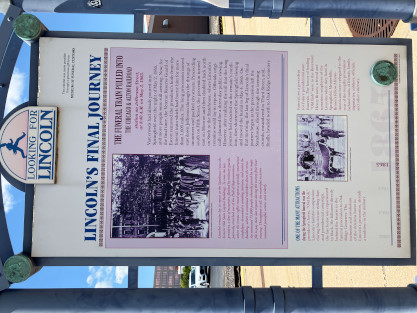
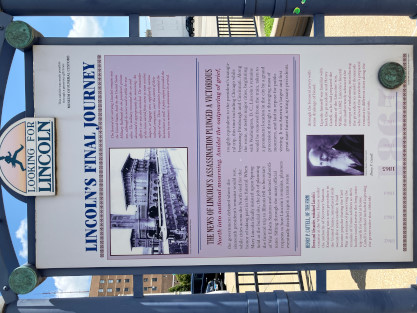
The dual panel Lincoln's Final Journey. The sub-heading states "The funeral train pulled into the Chicago and Alton Railroad station on Jefferson Street at 8:40 A.M. on May 3, 1865."
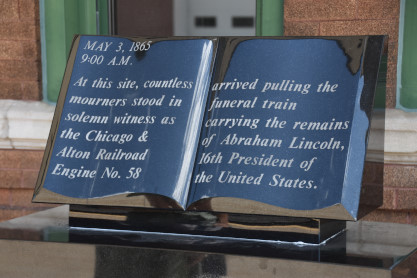
"May 3, 1865 9:00 A.M. At this site, countless mourners stood in solemn witness as the Chicago and Alton Railroad No. 58 arrived pulling the funeral train carrying the remains of Abraham Lincoln, 16th President of the United States.
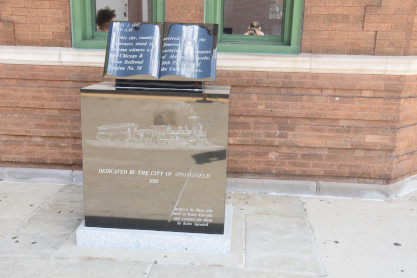
Dedicated by the City of Springfield 2010.
We drove to the second of four railroad structures in the city.
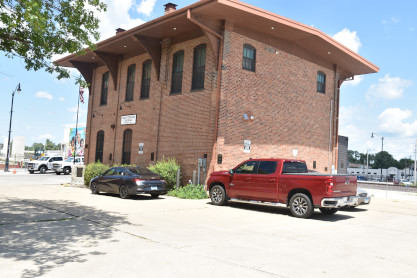
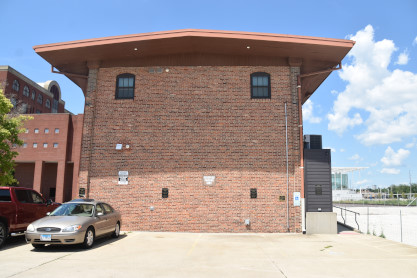
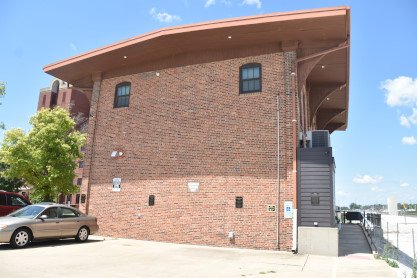
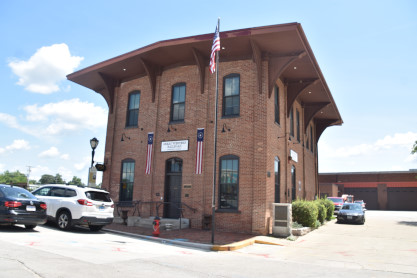
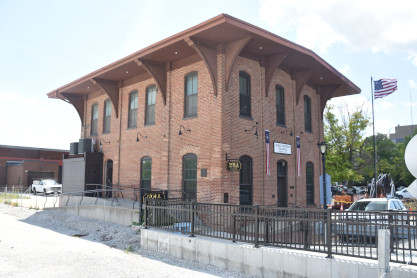
Great Western Railroad station in Springfield built in 1852. The modest structure housed an office and both male and female waiting areas offering travelers respite from the elements. Fire damaged the structure in 1857, but the building was soon remodeled. The Depot served its most famous patron on the grey, dismal morning of February 11, 1861. President-elect Abraham Lincoln rode a cart from his hotel, The Chenery House, to the Depot having already rented out his home on Eighth & Jackson Streets two blocks away. He used the simple office as a reception area while he waited for his train, shaking hands and talking with several supporters who had come to say their goodbyes. At 8 a.m. Lincoln stood on the back of the train that would take him from his home of 24 years to Washington D.C. and into history. More than a thousand residents of Springfield gathered that morning at the Great Western Depot to see him off. Lincoln, so moved by the outpouring of support by his fellow Illinoisans, gave an impromptu speech:
"My friends, no one, not in my situation, can appreciate my feeling of sadness at this parting. To this place and the kindness of these people, I owe everything. Here I have lived a quarter of a century, and have passed from a young to an old man. Here my children have been born, and one is buried. I now leave, not knowing when, or whether ever, I may return, with a task before me greater than that which rested upon Washington. Without the assistance of that Divine Being who ever attended him, I cannot succeed. With that assistance I cannot fail. Trusting in Him who can go with me, and remain with you, and be everywhere for good, let us confidently hope that all will yet be well. To His care commending you, as I hope in your prayers you will commend me, I bid you an affectionate farewell.Prompted only by his staff, the soon to be President started to commit the words to writing. After only a few sentences, the effects of the moving train and a hand bruised by countless handshakes prompted Lincoln to ask his personal secretary, John Nicolay, to finish. Shortly after Lincoln's farewell the railroad's passenger operations were moved and the Depot was operated as a freight house. Around 1900, a second story was added. When the, now Wabash, railroad consolidated operations in Decatur, Illinois the Depot was sold for storage and warehouse space.
In the 1960s a local group purchased the Depot with the intention of restoring it as a historic site. From 1965 to 1976 it operated as a paid entry museum. In 1968 another fire severely damaged the Depot. Arson was suspected but not proven. In 1977 Copley Press (parent company of The State Journal-Register, a local newspaper whose roots dated from 1831) bought the Depot and Sangamon State University operated the museum as part of its curriculum.
Copley Press became solely responsible for operation of the Depot in 1980, entering into a cooperative agreement with the Lincoln Home National Historic Site to provide park rangers to give tours through some summer months. After Copley Press sold The State Journal-Register to GateHouse Media in 2011, the fate of the Depot was in question. Tours ceased amid the need for handicapped accessibility to the site required by the National Park Service.
In 2012 the Depot was sold again to Pinky Noll to be the future home of Noll Law Office. Pinky's husband Jon Noll, a Springfield attorney, is a distant descendent of William Herndon, Lincoln's law partner at the time of the 1860 election. Following a major renovation and rehabilitation effort, the Depot reopened in early 2013. The first floor houses a self-guided museum while the second story exists as the Noll Law Office. In 2014 the Depot was added to the National Register of Historic Places.
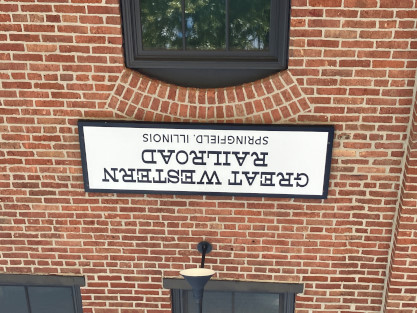
Great Western Railroad sign.
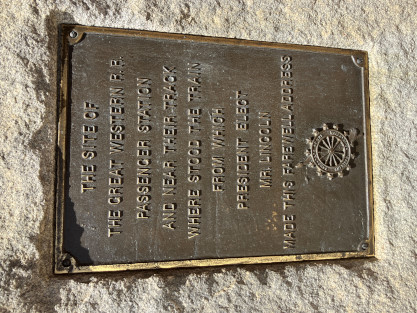
The site of the Great Western Station RR passenger station and near their track where stood the train from which President elect Mr. Lincoln made this farewell address.
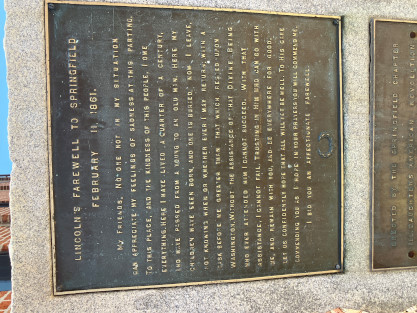
The text of President Lincoln's address.
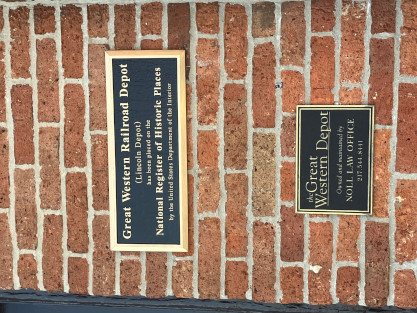
The top plaque states "Great Western Railroad Depot {Lincoln Depot} has been placed on the National Register of Historic Places by the United States Department of the Interior", while the bottom plaque reads "The Great Western Depot owned and maintained by Noll Law Office".
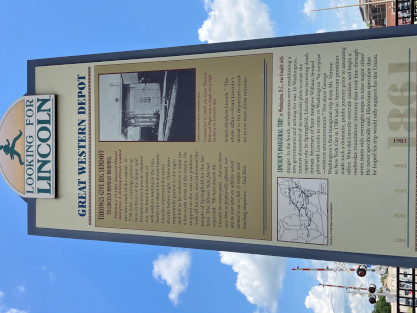
Looking for Lincoln - Great Western Depot.
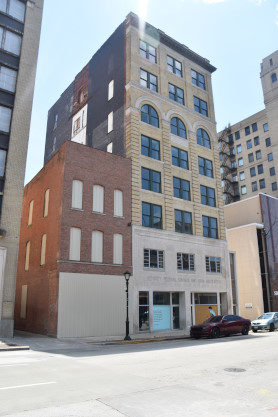
We then found the Illinois Terminal brick offices at 520 East Monroe Street, built between 1903 and 1905.
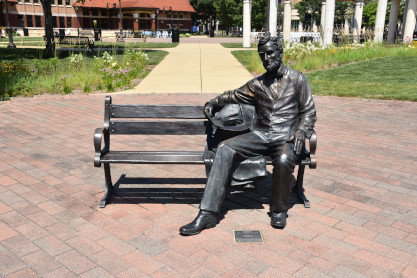
It was a short drive to Union Station, where we found "Lincoln" sculpted by Max Lundeen in tribute to the team of multi-talented and dedicated individuals who built the Abraham Lincoln Presidential Library and Museum.
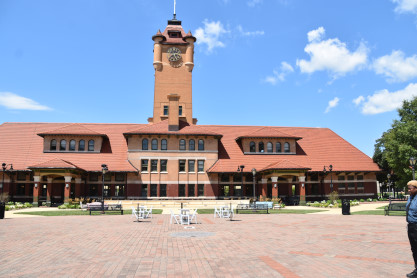
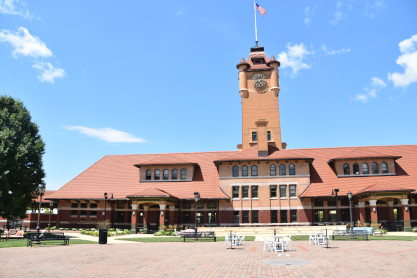
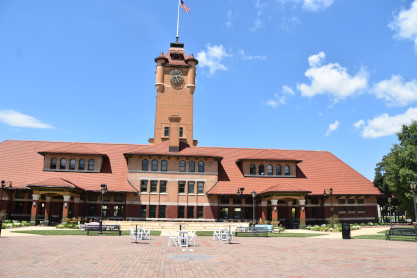
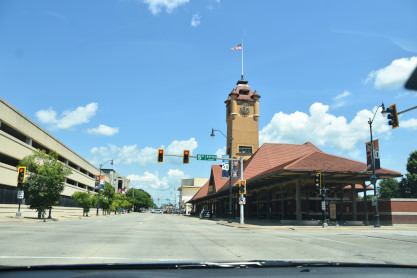
Union Station was opened on January 2, 1898 by the Illinois Central Railroad. It was designed by Francis T. Bacon, the railroad's architect in the Romanesque Revival style, evident in its decorative stone and brickwork, strong geometric form, and soaring clock tower at a cost of $75,000. Three sets of rails ran along the north side of the depot and passengers arrived and departed from the platform there. Running along the south side of the building was a coach island, called the carriageway, for horse-drawn coaches and wagons. Most of the bricks are original; vintage pavers were added as needed during the restoration.
Nearly all window frames, trim, and exterior doors are original. The perimeter benches and panelling on the first floor are original and made of quarter-sawn oak. The two large freestanding benches are reproductions based on historic photographs and the second floor is made of yellow cypress. Originally, all the floors in the building were of tongue-and-groove strips of white maple. During 1964 modernization, cream and black terrazzo were added on top of the maple on the first floor; the mezzanine and second floor retain most of their original maple flooring.
There were separate waiting rooms for men and women; their locations were labeled in the woodwork over the doorways. The mezzanine and second floor housed offices for the Illinois Central and four of their railway-system partners. The last passenger train left Union Station on April 30, 1971, and the building sat vacant for 14 years. In 1985, under threat of demolition, Union Station was rehabilitated by Michael and Nanchen Scully as a boutique shopping mall at a cost of $4.5 million. The most recent restoration was completed in March 2007, which included replacing the terrazzo on the first floor with maple.
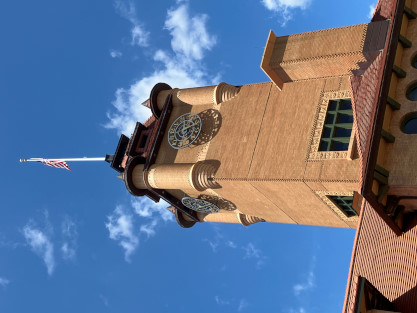
Union Station's original clock made by the Elgin Watch Company, was 110 feet tall and 150 feet to the top of the flagpole. The tower was removed in the 1940's for safety but a new one, designed by the Electric Time Company of Medfield, Massachusetts was constructed in 2006 and custom-made to match the original.
However, there are a few other differences between the new clock and the original. The old clock frames were probably wrought iron whereas the new clock faces are made of aluminium and painted black. The old clock ran with mechanical gears while the new clock is electric and use GPS satellite technology to keep time. Some facts about the clock are: each face weighs 300 pounds, the minute hands are more than 5.5 feet long, the hour hands measure roughly 4.5 feet and each number is 13.5 inches long. The clock uses Arabic numerals but had Roman numerals been used, the IV probably would have been represented as 1111, which is customary for large, public clocks.
It is set to chime every half hour and was programmed with 33 different chimes. It keeps time by receiving signals from the National Institute of Standards and Technology.
We next drove to Lincoln.
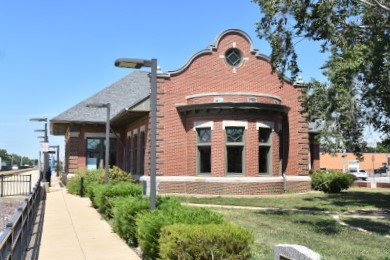
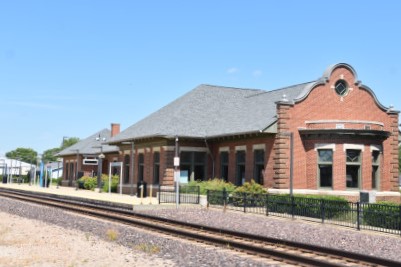
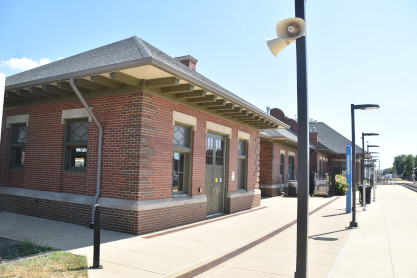
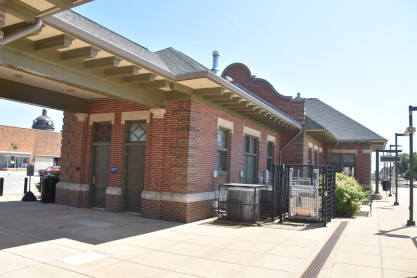
Lincoln Chicago and Alton brick station built in 1911. In the mid-late 19th Century, the City of Lincoln was a hub for the train and this depot replaced the original one built in 1853. It acted as a train station until most of the building was closed to the public in 1972. It was then sold and renovated in 1977-78 into the Depot Restaurant, a popular fixture for locals and travellers for many years. It later became a catering hall and was last known as McCarty's at the Depot, until it closed in 2013. The Depot went through a $4.04 million renovation project through the City and an Illinois Department of Transportation grant and was reopened at the end of 2017 as the home of the Logan County Tourism Bureau/Visitor Centre.
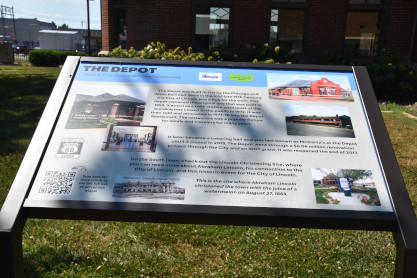
The Station history board.
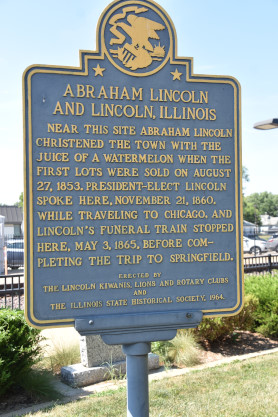
Abraham Lincoln and Lincoln, Illinois Historical Board. Near this site Abraham Lincoln christened the town with the juice of a watermelon when the first lots were sold on August 27, 1853. President-elect Lincoln spoke here, November 21, 1860 while traveling to Chicago, and Lincoln's funeral train stopped here, May 3, 1865, before completing the trip to Springfield.
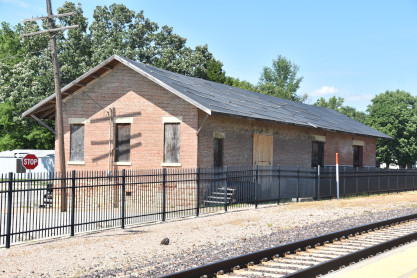
The Chicago and Alton stone freight house.
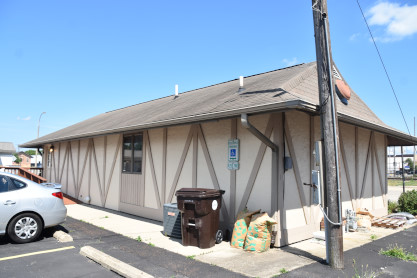
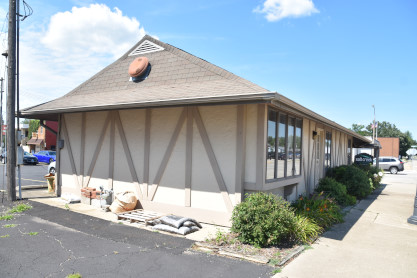
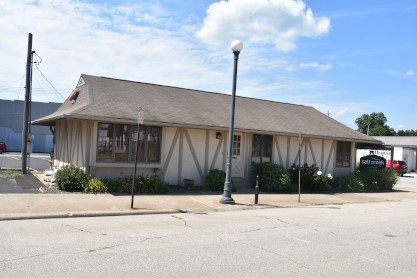
Lincoln Illinois Traction brick depot on Kickapoo Street, now Salt Creek Chiropractic.
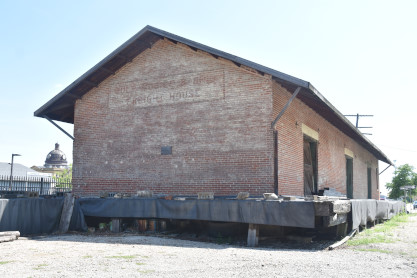
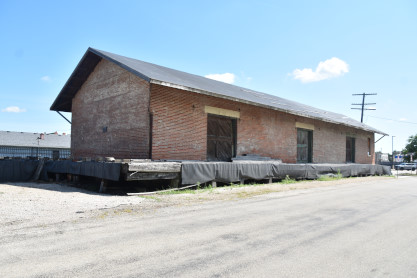
Lincoln Chicago & Alton Railroad stone freight house at 209 North Sangamon Street. We continued our journey to the next station in McLean.
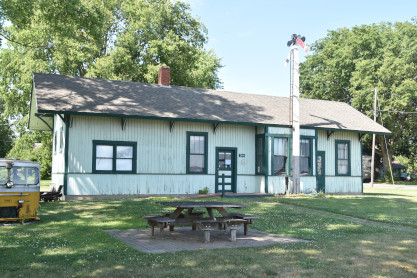
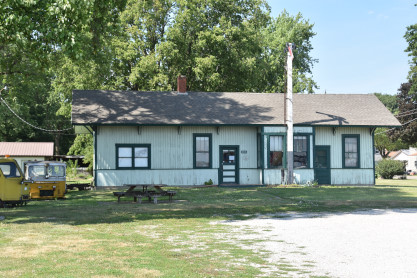
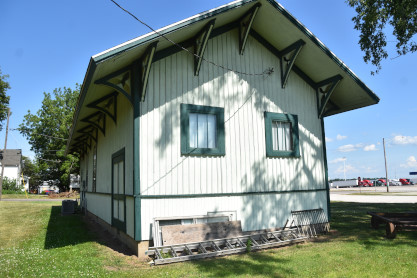
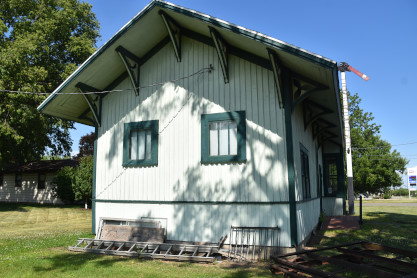
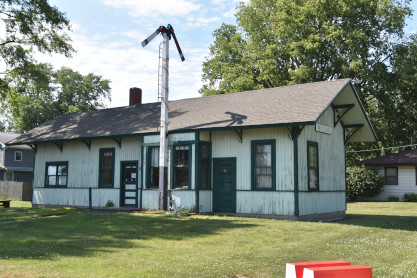
The historic Chicago and Alton McLean Depot was erected in 1855 and is said to have been the first building in town. It was moved from its original location along the tracks in 1970 and is still in use, now as the McLean Depot Train Shop, a hobby shop specializing in model railroading items available in stock and through special order.
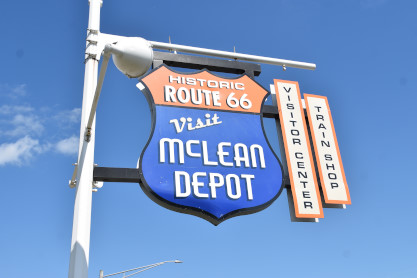
Historic Route 66 Visit McLean Depot sign.
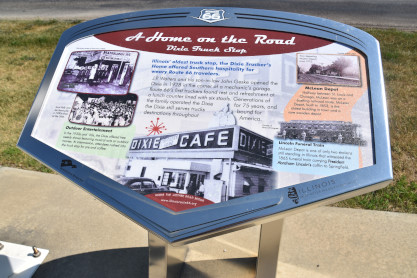
McLean is home to the historic Dixie Truck Stop, possibly the very first truck stop on Route 66. First opened in 1928 by J.P. Walters and John Geske, in a mechanic's garage with a single counter cafe and barstools, the truck stop has grown over the decades, but continues its old-fashioned, all-American eatery vibe with true southern hospitality. It was originally named Dixie Trucker's Home but over the decades it has changed names to Dixie Truck Stop and now The Dixie Travel Plaza. Later Charlotte "C.J." Beeler (John's daughter) worked it with her husband Chuck Beeler. It only closed for one day between 1928 and 2003 -because of the fire that burned down the original restaurant building in 1965. They moved it to a cabin and rebuilt an even larger restaurant. The new building opened in 1967 and could seat 250 and included sleeping rooms, laundry and a barber shop. It was a family-run operation until it hit bad times in 2003 and was sold to a corporation; it is still operating.
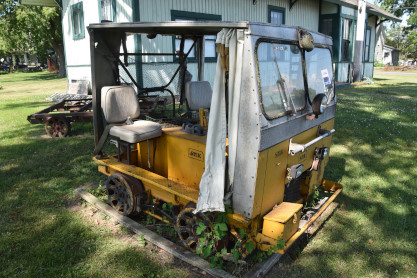
Fairmont MT 14 speeder.
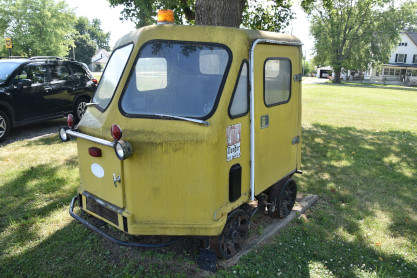
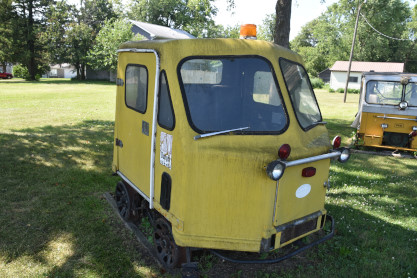
An enclosed speeder of unknown origin. We then drove to Funks Grove.
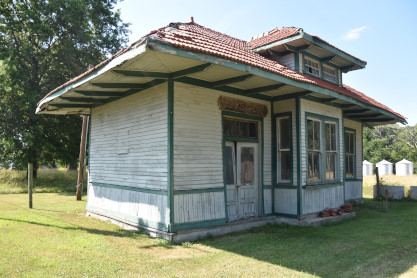
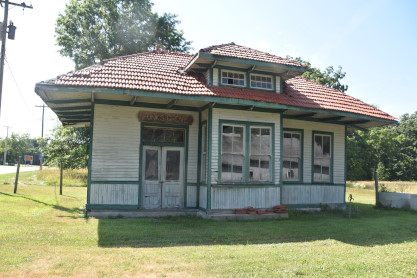
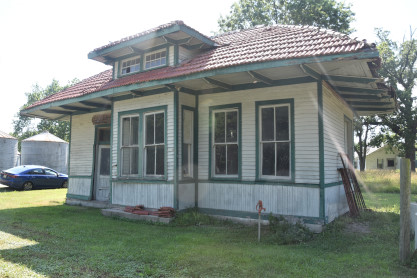
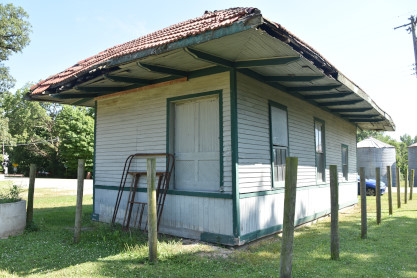
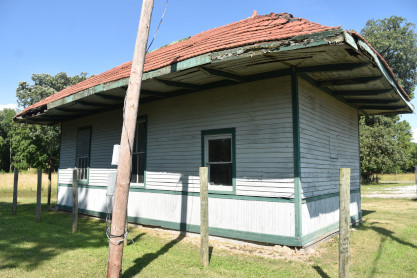
Funks Grove Chicago & Alton depot, relocated from Shirley 4.3 miles away.
Our route took us to Bloomington.
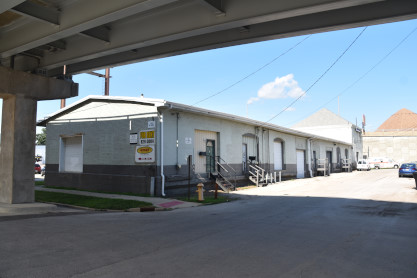
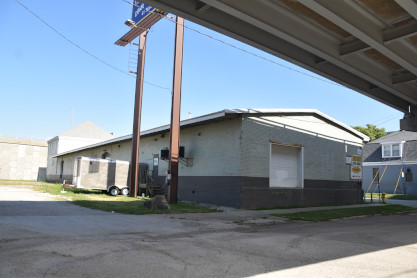
Bloomington Chicago & Alton freight house built in 1888, at the corner of Allin and Chestnut Streets. From the website steamlocomotive.com, we had learnt there was a steam engine on display so drove over to Miller Park.
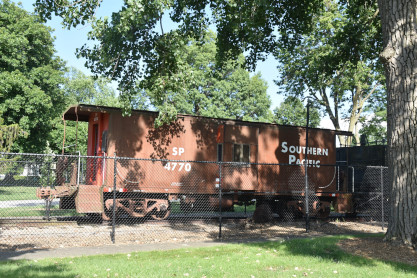
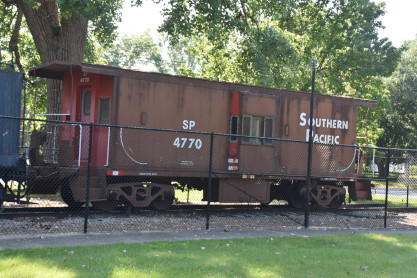
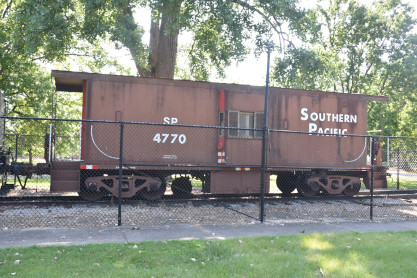
Southern Pacific caboose 4770, built by Pacific Car and Foundry in 1980.
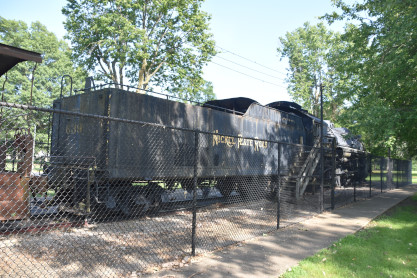
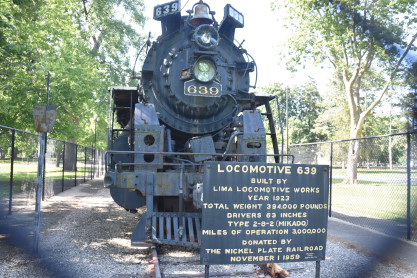
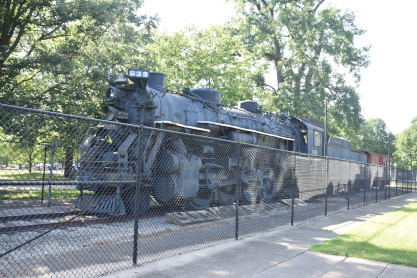
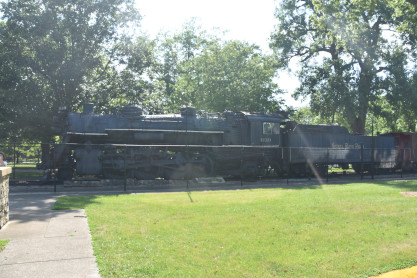
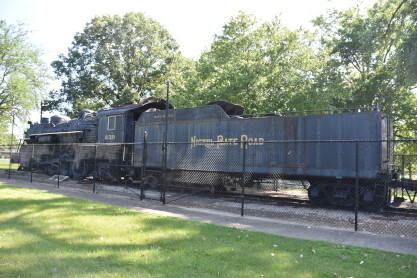
New York, Chicago & St. Louis RR 2-8-2 639 built by Lima in 1923. it was donated to the City of Bloomington by the New York, Chicago & St. Louis Railroad in 1959, after travelling 3,000,000 miles on the railroad.
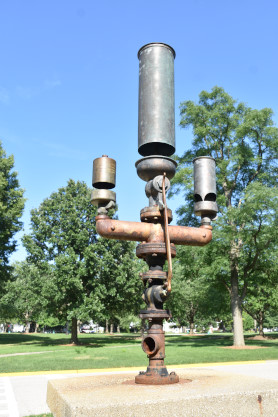
Railroad Workers' Monument in Miller Park. Dedicated in 1982, it commemorates the railroad car building and repair shop workers in the former Chicago & Alton Railroad Company shops in the city, which opened in 1854 and ceased operations in the late 1970's. It is composed of a six-foot tall whistle, which was blown for beginning and ending work and for lunch breaks at the old shops, mounted on limestone blocks salvaged from the steel car shop walls. The monument was built as a Comprehensive Employment and Training Act project, giving unemployed youth experience at the construction trades, under the leadership of retired union construction workers.
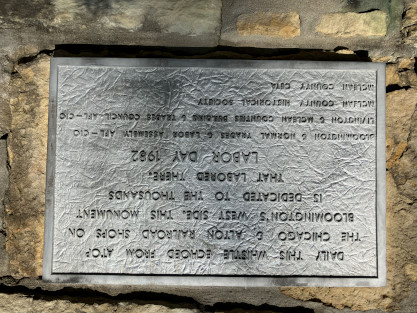
In part, this plaques states "Daily this whistle echoed from atop the Chicago and Alton Railroad Shops on Bloomington's west side. This monument is dedicated to the thousands that labored there."
We had dinner at Cracker Barrel before going to Quality Inn for the night.
7/11/2025 The two of us arose and after checking the Internet then having breakfast at Bob Evans, I drove us to Three Oaks, Michigan for the first station of the day.
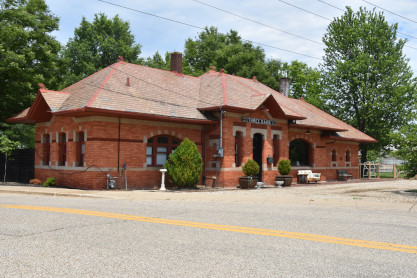
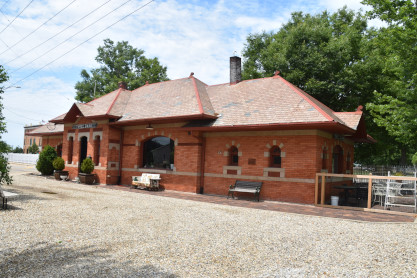
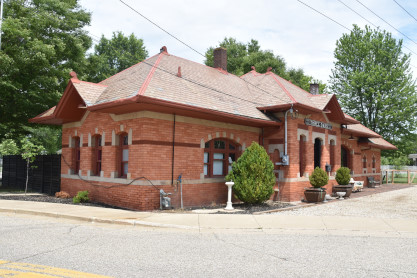
Three Oaks Michigan Central brick station built in 1898. We then made our way to Niles.
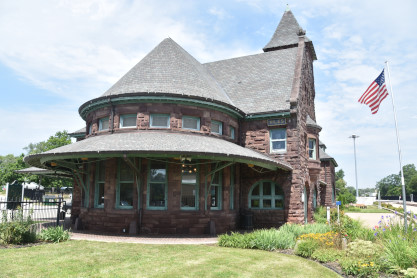
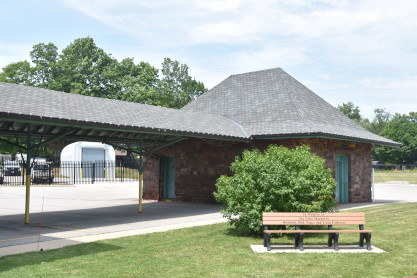
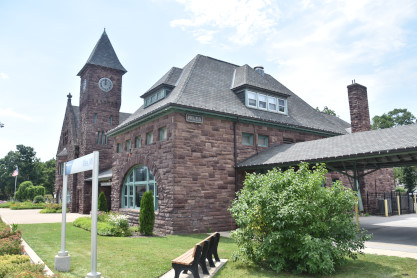
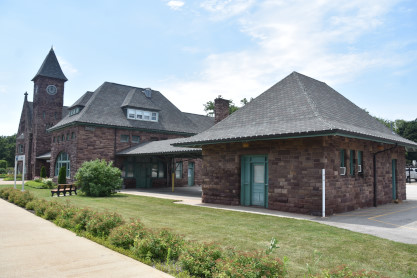
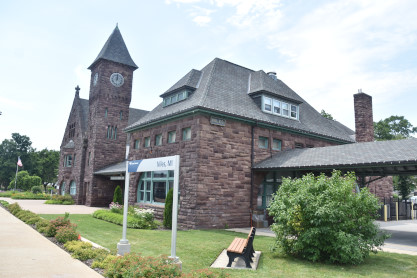
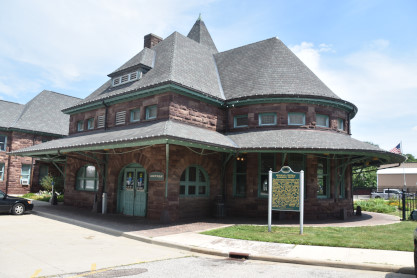
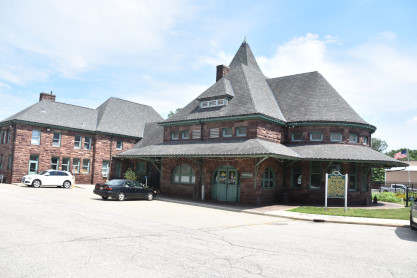
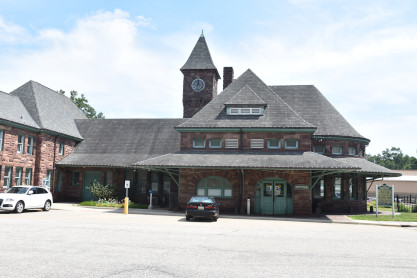
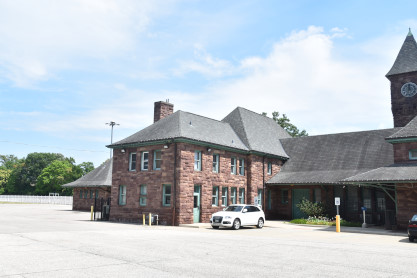
The Niles station was built for the Michigan Central Railroad in 1892, and was placed on the National Register of Historic Places in 1979 and on the Michigan State Register in 1992. The station was planned by architects Frederich Spier and William C. Rohns, and the extensive gardens surrounding the station were designed by John Gipner of Germany.
Still in use as a passenger depot, the station has changed little from its original structure. The asymmetrically-planned coursed brownstone structure was built in the Richardsonian Romanesque style, topped by high hipped and gabled roofs. The building is divided into three sections: a 125-foot single-story hip-roofed baggage collection area connected to the main building by a 50-foot-long hip-roofed covered walkway; the lobby, dining, and smoking rooms; and the circular waiting room. The main front gabled section features an arched entrance and second-story bay window, with an apsidal extension surrounded by a veranda. Dominating the station-side façade is a 60-foot high tower housing the station's clock, which was manufactured by Howard Brothers of Boston.
The original interior featured a waiting room with a fireplace in the rounded west end, a smoking room in the center of the building and a dining room in the east end; a 44-foot by 25-foot wing street-side of the dining room contained the kitchen on the first floor and an apartment for the restaurant manager on the second floor. The most major changes have been the conversion of the kitchen and dining room into the engineering offices and signals rooms. The Amtrak ticket office takes up the former Smoking Room, and the room that was the ticket office is the men's restroom now.
In 1935 the New York Central bought the Michigan Central, and the greenhouses were torn down—the station's gardens had supplied fresh flowers both for its dining room and the trains. While the original gardens have not been replaced, the landscaping is still well maintained, thanks in large part to the Four Flags Garden Club. Amtrak has owned the station and the former Michigan Central route since 1976. The station itself was renovated in 1988 and last received an exterior rehabilitation around 2003.
As it retains much of its grand 19th century character, the Niles station has been used for location shots in three movies: "Continental Divide", "Midnight Run" and "Only the Lonely". In the last movie, in 1990, the depot was decorated with Christmas lights for a scene. With the filming done, the movie company offered to donate the lights to Amtrak, which owns the building. Amtrak declined the offer, so the lights were given to the Four Flags Garden Club. Since that year, the station has been decorated and lit on the first of December through Christmas, with permanent wiring installed just for that purpose. The garden club hosts a ceremony in the depot each year for the lighting of the depot.
The story of Niles began with Fort St. Joseph, built by the French in 1691 on the east side of the St. Joseph River where it intersected the Sauk Trail, a road much used by the Native Americans of the time. The fort was under French control for almost 100 years, until the fall of New France in 1761, when the British 60th Regiment conquered the trading outpost and occupied it—until 1781, when a Spanish excursion from St. Louis overtook the fort without firing a shot. However, in 1783, the United States took possession as part of the Treaty of Paris, along with the rest of Michigan. When the Four Flags hotel opened in 1925 in Niles, the term “Four Flags Region” gained currency.
Niles, as such, was not settled until 1823 by Virginian Isaac Thompson. It was officially founded in 1839 and named after then-famous Baltimore journalist Hezekiah Niles. The town was incorporated as the first city in Berrigen County in 1859. The Michigan Central came through Niles in 1848-1849. The Michigan Air-Line and Big Four had also laid routes through the city by 1871 and 1882 respectively. The current passenger routes move on the former Michigan Central rails now owned by Amtrak, the other routes having been abandoned over the years.
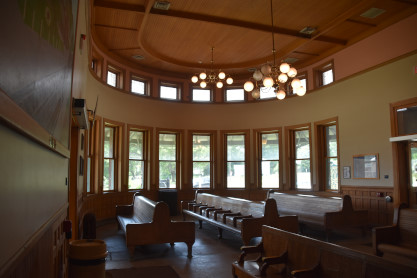
The waiting room.
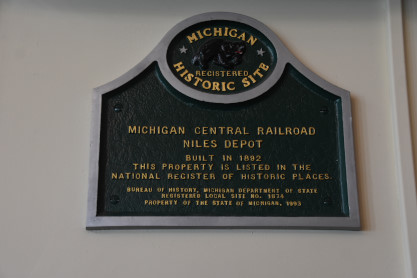
Michigan Historic site plaque.
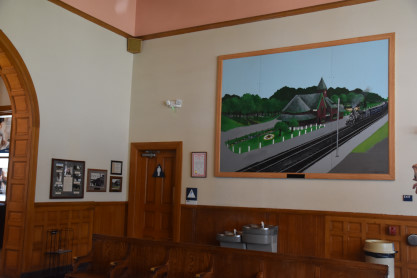
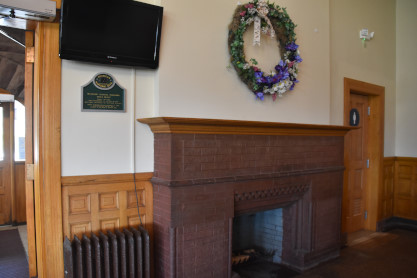
Interior views.
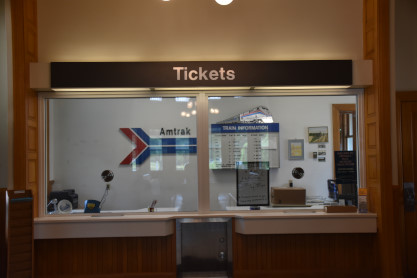
The Amtrak ticket counter.
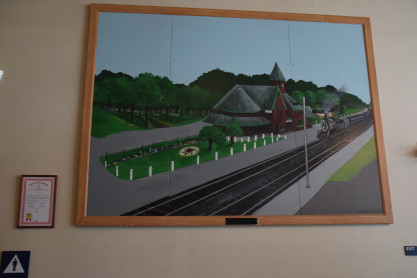
A painting of a train in front of the depot.
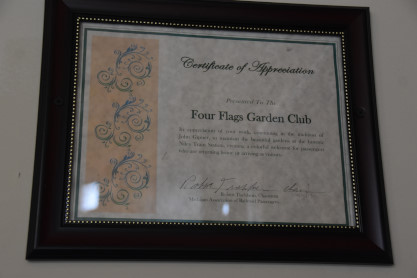
Certificate of Appreciation To the Four Flags Garden Club.
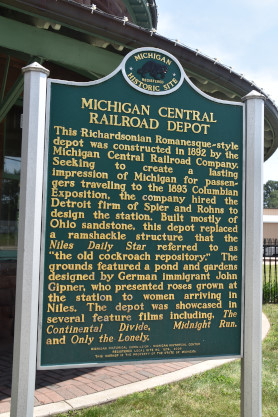 >
>
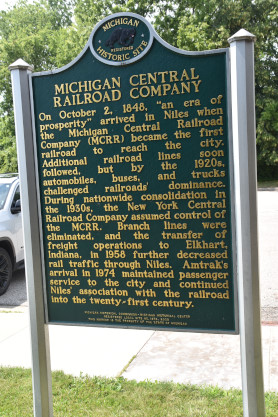
The dual-sided Michigan Central Railroad Depot information board. From here, we drove to Lansing.
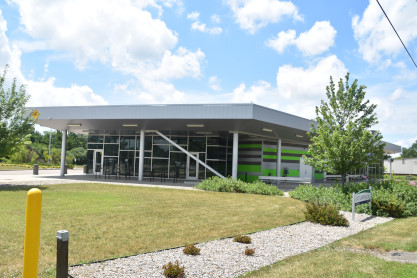
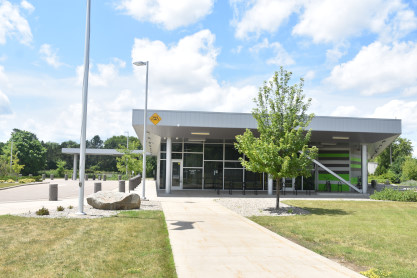
The Capital Area Multimodal Gateway, opened in 2015, brings together Amtrak trains, intercity and local CATA buses and bicycle-sharing in one convenient location. The car's GPS took us to the Graduate by Hilton Hotel, the convention hotel and after tackling the one-way streets in that neighbourhood, since the hotel is downtown in East Lansing, we arrived and handed the car over to the valet for parking as this was the only option.
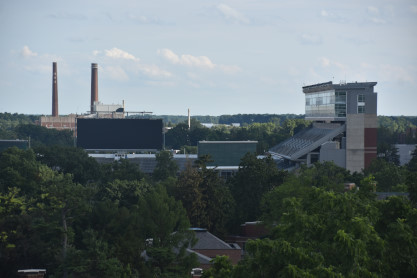
The Michigan State University Stadium as seen from our room. We had dinner at Jersey Mike's then called it a night.
7/11/2025I was not feeling too well that morning, so stayed in bed while Elizabeth went to Leo's Coney Island for breakfast then assisted with setting up the registration area. I went to that restaurant later and had French Toast and bacon. The afternoon was uneventful, then Elizabeth attended the Convention reception and I went to Subway for dinner.
| RETURN TO THE MAIN PAGE |