



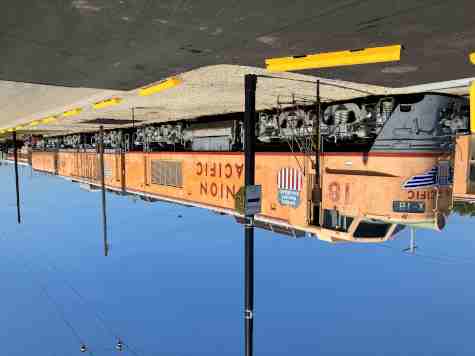
Elizabeth and I awoke at the Holiday Inn and after having a buffet breakfast, we boarded one of three buses which took us to the Illinois Railway Museum for the first event of the convention.
Illinois Railway Museum HistoryThe Illinois Railway Museum was founded in 1953 by ten men who each contributed $100 to purchase Indiana Railroad 65, an interurban car that had just been retired and was in imminent danger of being scrapped. The museum’s origins, however, actually go back further. In 1907 the Elgin & Belvidere Electric Railway, controlled by electric railway engineering expert Bion J. Arnold, opened for business. It was an electric interurban line paralleling the Chicago & North Western Railroad between the two cities in its name. One of its claims to fame was that it built the world’s first fully automatic substation in the town of Union. The E&B continued in operation until 1930, when automobile competition and the onset of the Depression drove it into bankruptcy. The tracks were torn up soon thereafter and the interurban cars were scrapped.
When IRM was founded in 1953 it was sited on the grounds of the Chicago Hardware Foundry in suburban North Chicago, along the tracks of the Chicago North Shore & Milwaukee interurban line. It was initially known as the Illinois Electric Railway Museum but the “Electric” was removed in 1962. Following acquisition of car 65 the collection continued to grow, reaching some 40 pieces of equipment by 1964. By that time the museum had outgrown its cramped space at the foundry and it relocated to an empty field east of Union. The reason this site was chosen was because the long-abandoned right-of-way of the E&B could be cheaply acquired simply by paying the back taxes. Initially a mile and a half of right-of-way and a small 26-acre plot where the depot now sits were purchased. The collection of 40 pieces of equipment was transported to Union in 1964.
Over the 60 years since, IRM has expanded steadily. The first electric car operated in 1966 and the first steam engine ran in 1968. The depot was moved from its original location in nearby Marengo in 1967, the first of 13 storage barns was built in 1972, and the streetcar loop was completed in 1981. Visitor amenities were improved with the opening of the Central Diner in 2003, the Schroeder Store in 2017, and the Multi-Purpose Building in 2021. The collection of historic equipment has grown over tenfold, to over 500 pieces of historic railway and transit equipment. The size of the developed property has expanded to 100 acres while the main line railroad has been extended to include nearly five miles of the former E&B right-of-way. Nearly four miles worth of track are now under cover, providing protected storage for the vast majority of the historic collection of trains.
The Illinois Railway Museum is a 501(c)3 not-for-profit organization which is owned entirely by its volunteers. The museum receives no state or federal money for its operations. All capital and operating costs are paid by individual donations and revenue derived from tickets and on-site sales.
The lifeblood of the museum is its volunteers. All train operation and the vast majority of restoration work done on the historic collection is performed by volunteers. The museum welcomes anyone, 18 years or older, who is interested in trains or history, or is looking for a hobby or a place they can make a difference. Most of the volunteers at IRM are not professional railroaders; the museum counts men and women who are electricians, lawyers, teachers, construction workers, doctors, and members of many other professions among its volunteer ranks.
The museum is organized into a number of departments, nearly all of them led by a volunteer curator. These departments include equipment departments, such as Electric Car, Steam, Diesel, and so on; facilities departments, such as Buildings & Grounds, Track & Signal, and Overhead Line; education-oriented departments, such as Libraries and Exhibits; and the Operating Department, which oversees actual train operations. Volunteers perform work in one or more departments which is overseen by that department’s curator, with two General Managers overseeing the activities of the department curators. The General Managers report directly to the museum’s Board of Directors, which is elected from the ranks of working volunteers.
The welcome sign.
Illinois Railway Museum 70 year banner.
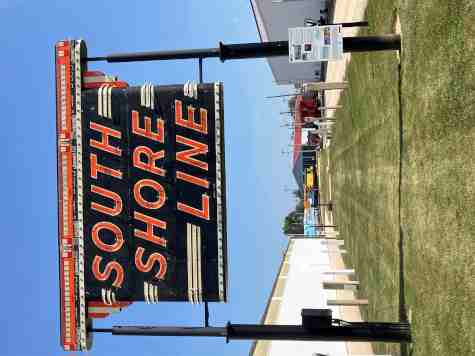
South Shore Line neon sign from Gary, Indiana.
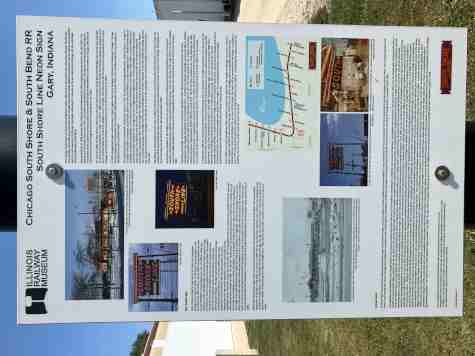
The neon sign story board.
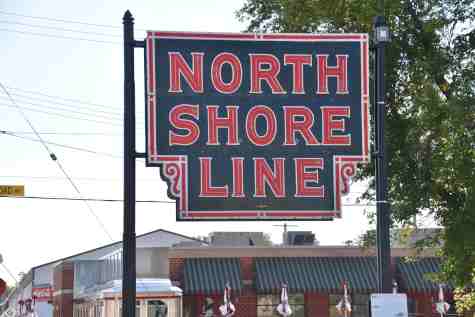
North Shore line neon sign.
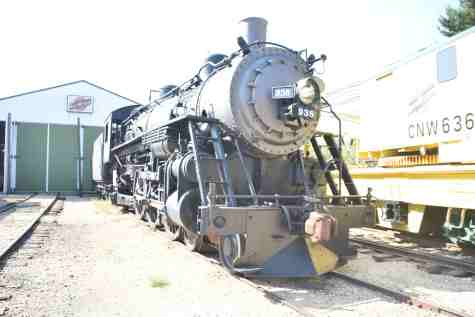
Illinois Railway Museum 4-6-2 938, ex. Fort Worth and Western 938 1990-1999, exx. Enid State School display in Enid, Oklahoma 1954-1990, nee Chicago, Rock Island and Pacific 938, built by American Locomotive Company in 1910.
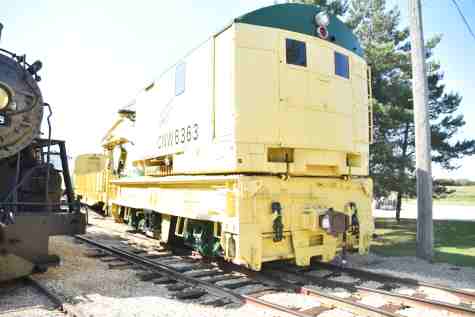
Chicago & North Western diesel-powered crane 6363, built by Bucyrus in 1925 designed for heavy-lift applications. Cranes like this are known as wreckers because they were often used for lifting locomotives and cars that had derailed in a wreck. This crane cannot move itself and a locomotive would have hauled it to and from the work site. It was acquired by the museum in 1990.
This crane is the only Bucyrus Foundry & Manufacturing Company product at IRM. Bucyrus dates back to 1880, when it got its start in Bucyrus, Ohio, building steam-powered shovels and cranes. Not long thereafter, it relocated to South Milwaukee, Wisconsin, in 1893. In the early 1900s, it famously built a number of huge steam shovels that saw use in excavating the Panama Canal. A famous photo of President Roosevelt operating a steam shovel in Panama in 1906 depicted a Bucyrus shovel. Then in 1927, Bucyrus merged with the Erie Steam Shovel Company, which specialized in smaller steam-powered cranes and shovels, to form Bucyrus-Erie. The company continued to build shovels, cranes, and mining equipment until Caterpillar acquired it in 2011.
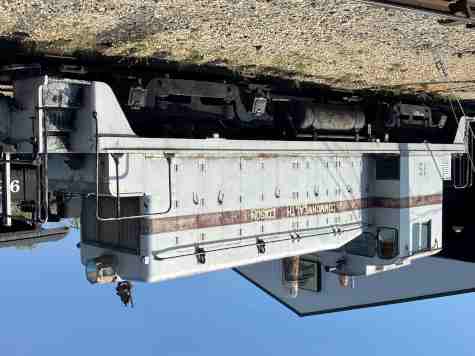
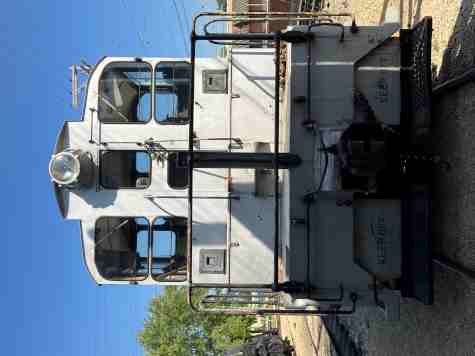
Commonwealth Edison SW1 15, built by Electro Motive Division in 1950 and designed to move freight cars around railroad yards at low speed. In its later years, it was used at the nuclear power plant in Byron, Illinois.
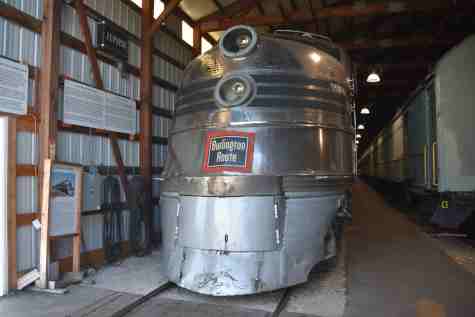
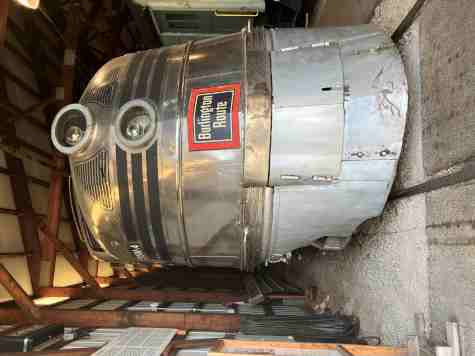
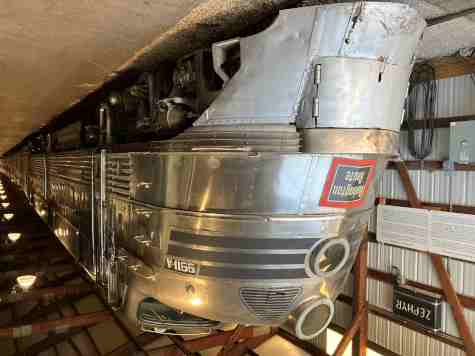
Chicago Burlington & Quincy E5A 9911A "Silver Pilot", ex. Electro-Motive Division 1968=1969 in McCook, Illinois, exx. Colorado & Southern 9952A 1955-1968, nee Chicago, Burlington and Quincy 9911A "Silver Pilot, built by Electro- Motive Corporation in 1940. This is the museum's most famous diesel locomotive and was built to haul the railroad's Zephyr passenger trains, designed for a top speed of 115 miles per hour. It was one of only a few passenger diesel locomotives ever clad entirely in stainless steel so that it could match its train. It was acquired in 1968 to pull the Nebraska Zephyr train set at the museum.
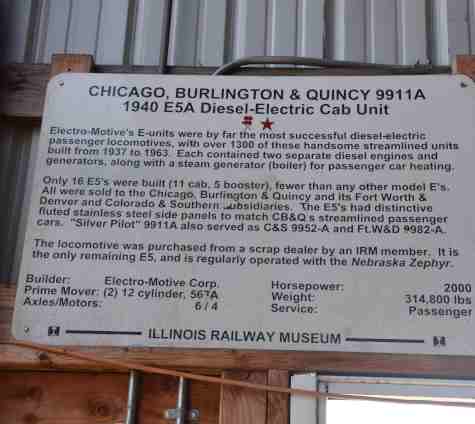
The 9911A story board.
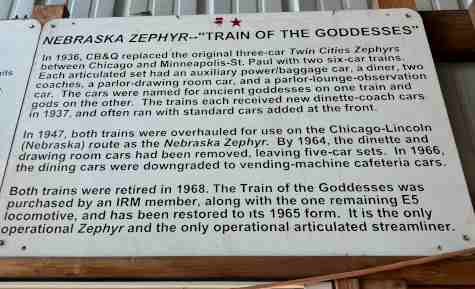
The Nebraska Zephyr story board.
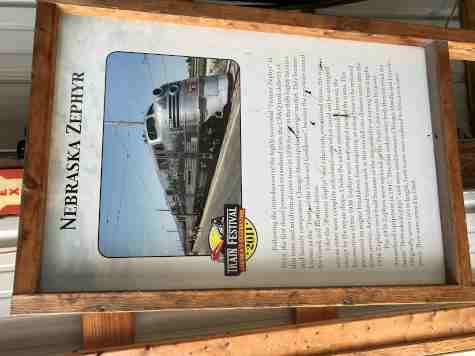
The full Nebraska Zephyr trainset was part of Train Festival 2011 in Rock Island and this story board brought back memories of the four-day event for both of us.
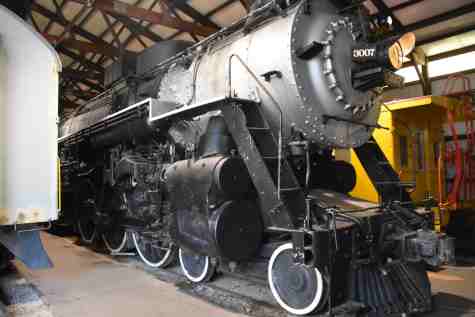
Chicago Burlington & Quincy 4-6-4 3007, ex. Atlantic & Pacific Railway 3007 in Atlantic, Iowa 1988-1995, exx. Purple Martin Junction 3007 in Griggsville, Illinois 1980-1988, exxx. display in City of Quincy, Illinois 1961-1980, nee Chicago, Burlington and Quincy 3007, built by Baldwin in 1930. It is one of the fastest and most modern steam engines at the museum, acquired in 1995, and one of only ten standard-gauge Hudsons preserved in the country. It was built for use hauling express passenger trains at high speed.
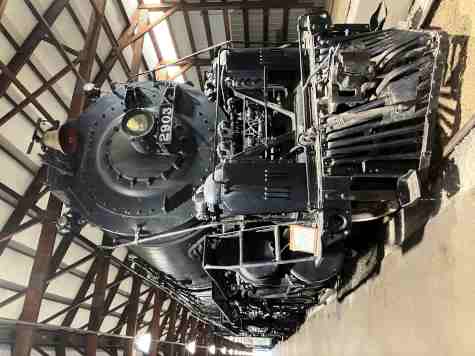
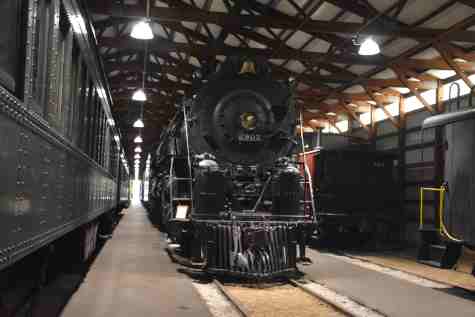
Santa Fe 4-8-4 2903, ex. display at Museum of Science & Industry, Chicago 1961-1995, nee Santa Fe 2903, built by Baldwin in 1943. It is the largest steam locomotive, by both weight and length, in the museum's collection. It is also one of the fastest, designed for top speeds exceeding 100 mph. This type of locomotive was built for mixed passenger and express freight use and ran for some 15 years before retirement in the late 1950s.
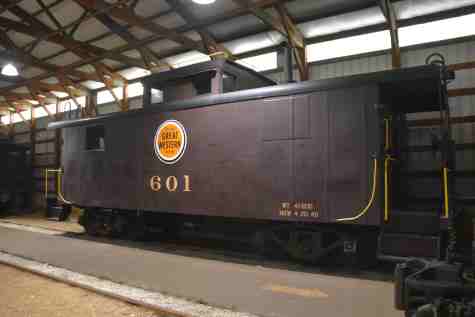
Chicago Great Western caboose 601, built by Pullman Standard in 1946, designed for general freight service over the CGW system in Illinois and Iowa. It has a centered cupola on the roof to provide the conductor better visibility over his train. Its design echoes that of cabooses built for railroads in the northeast, where clearances were shorter, giving it a lower profile than many railroad cabooses used in the Midwest.
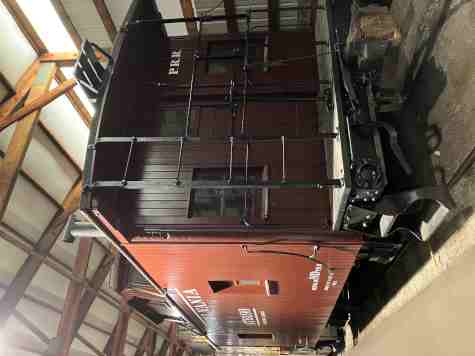
Pennsylvania Railroad bobber caboose 476199 built by the railroad in 1926. Small cabooses like this were uncommon after about 1930 but this ND-class caboose or "cabin car", as the PRR called cabooses, remained in service into the 1950s. It has a centered cupola on the roof to provide the conductor better visibility over his train.
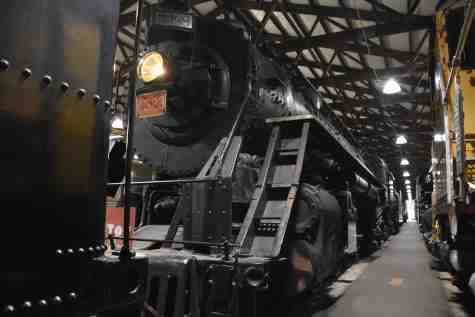
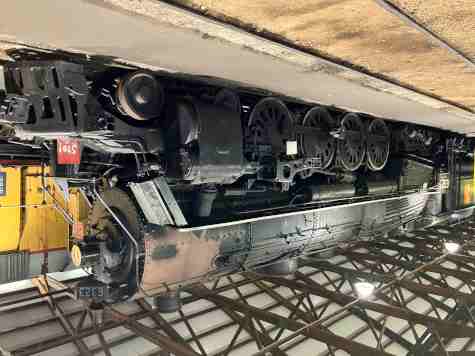
Grand Trunk Western 4-8-4 6323, ex. privately owned in Detroit, Michigan 1961-1981, nee Grand Trunk Western 6323, built by American Locomotive Company in 1942. It is the smallest of three of "Northerns" preserved at IRM and was designed for passenger and express freight service between Chicago and Detroit. During the 1950s, it was used on several famous railfan excursions that operated out of Detroit. It has a Vanderbilt style tender with a cylindrical, rather than squared-off, water tank and is the only engine at the museum with a fully-enclosed "all weather" cab designed specifically for use in cold northern winters.
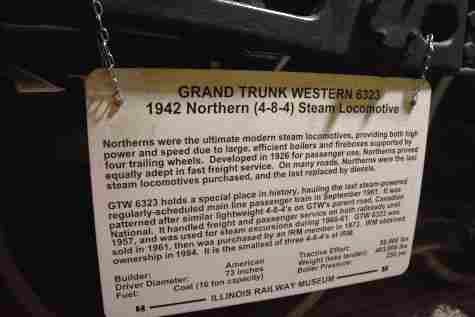
Grand Trunk Western 6323 story board.
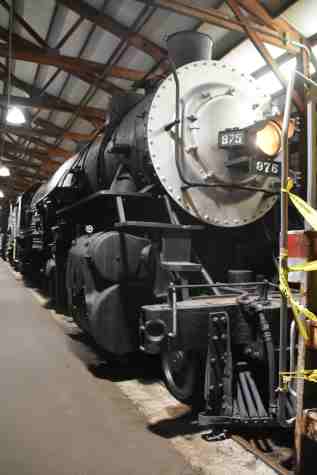
Southern Pacific 2-10-2 975, ex. display in City of Beaumont, Texas 1954-1995, nee Southern Pacific (Texas & New Orleans) 975, built by American Locomotive Company in 1918. It is one of only five 2-10-2s preserved intact. This wheel arrangement was popular around World War I but was later supplanted by 2-8-4 and 2-10-4 engines that were faster and more powerful. The museum acquired it from Beaumont to prevent it being scrapped.
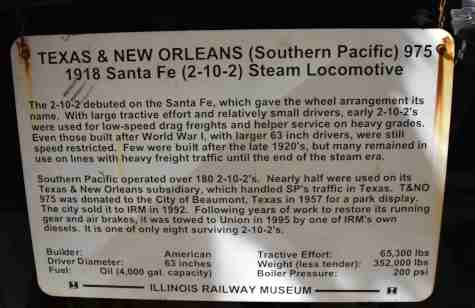
Southern Pacific 975 story board.
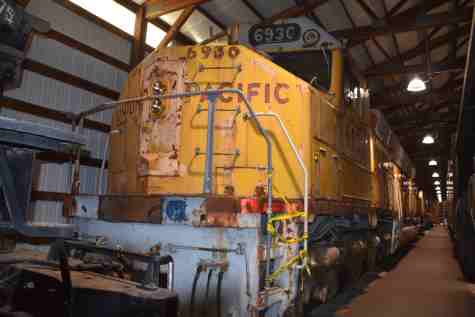
Union Pacific DD40AX 6930, built by Electro-Motive Division in 1970. It is the most powerful diesel-electric locomotive at the museum and was one of 47 identical locomotives built exclusively for the UP and called “Centennials” because they were delivered starting around the 100th anniversary of the “Golden Spike” that completed the UP's transcontinental railroad.
The locomotive features two separate diesel engines and eight powered axles. 6930 operated roughly 2,000,000 miles in service across the railroad's system then retired in early 1981 and put into storage in Yermo, California. In March 1983, UP was facing a traffic surge and placed 6930 and 24 other Centennials back into service. It ran for approximately two more years and was retired again in April 1985 and acquired by the Smoky Hill Railway and Historical Society in Kansas City, Missouri until 1991, when the museum took ownership.
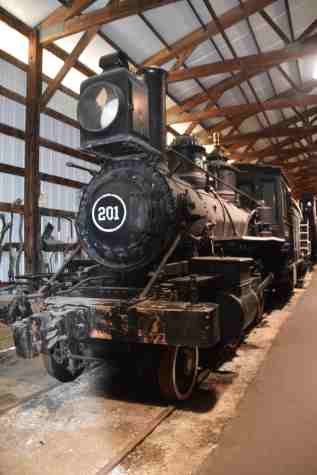
Illinois Central 2-4-4T 201, ex. private owner in Owatonna, Minnesota 1975-2002, exx. Vonachen's Junction in Peoria, Illinois 1965-1975, exxx. Illinois Central 201 1928-1965, exxxx. Illinois Central 1401 1900-1928, exxxxx. Illinois Central 201 1890-1900, exxxxxx. Illinois Central 221 1894-1890, nee Illinois Central 213, built by Rogers Locomotive in 1880. It is the oldest steam engine at IRM and the only preserved standard-gauge 2-4-4T locomotive in the world.
It was built it for suburban passenger service, hauling commuter trains south out of Chicago and remained in this role until the IC electrified its commuter operations in the 1920s. At that time, the IC retired number 201 but retained it as a museum piece.
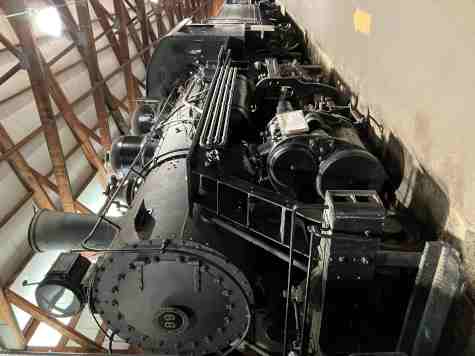
Louisiana & Arkansas 2-8-0 99 built by Baldwin Locomotive Works in 1919 as a branch line freight engine. The Consolidation was the most common wheel arrangement in the history of American steam engines, with more 2-8-0s built than any other one wheel arrangement. L&A 99 is a smaller example of the type and was built after Consolidations had fallen out of favour with larger railroads in favour of heavier freight engines like 2-8-2s and 2-10-2s.
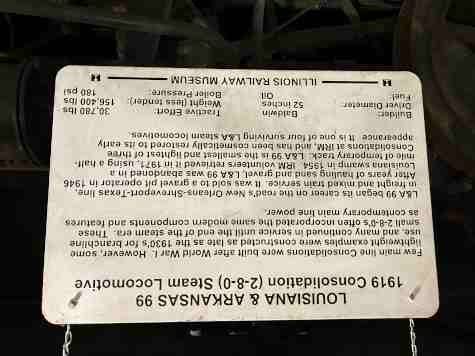
Louisiana and Arkansas 99 story board.
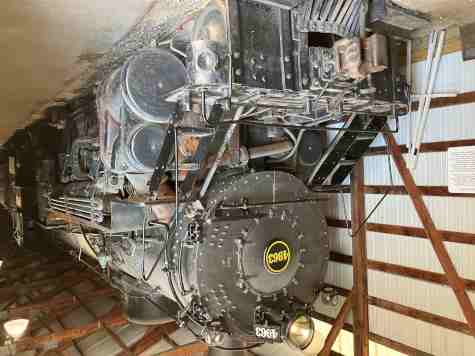
Chicago Burlington & Quincy 2-8-2 4963, built by Baldwin in 1923 and designed for pulling heavy freight trains at low speed. Engines like this were nearly ubiquitous in mainline freight service in America in the years following World War I. It sat in a scrap yard for decades after retirement until acquired by IRM in 1990.
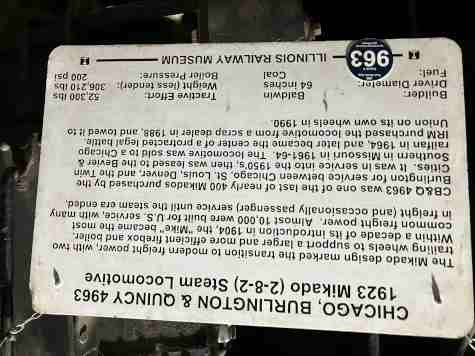
Chicago Burlington & Quincy 4963 story board.
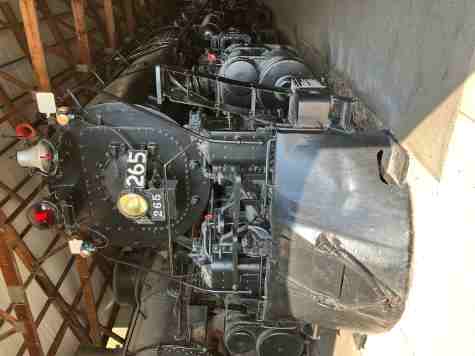
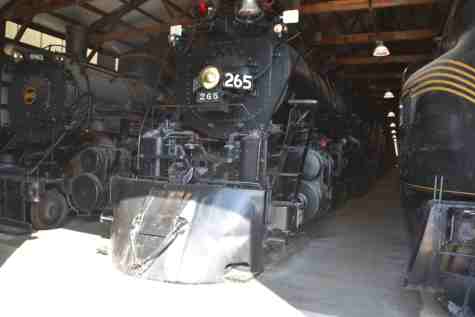
Milwaukee Road 4-8-4 265, ex. display in Milwaukee, Wisconsin 1957-1975, nee Chicago, Milwaukee, St. Paul & Pacific 265, built by American Locomotive Company in 1944. It is a heavy mixed-traffic locomotive designed for high-speed passenger and express freight use but was used for only a decade before being stored and replaced with diesels. It was nicknamed "Old Smokey" while in Milwaukee before coming to IRM in 1975.
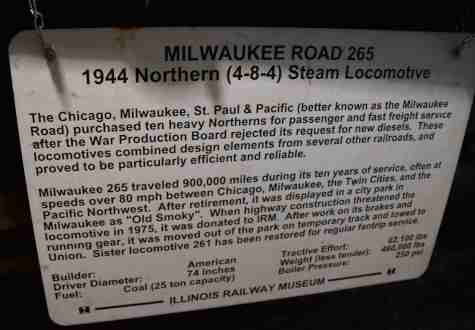
Milwaukee Road 265 story board.
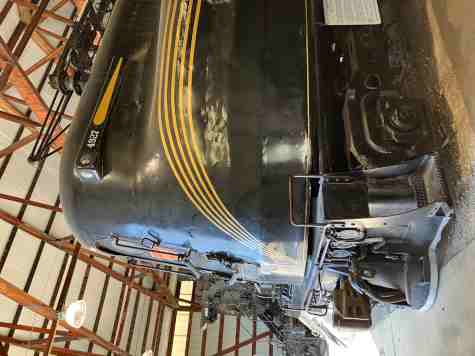
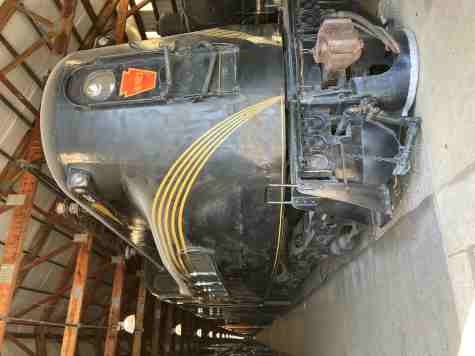
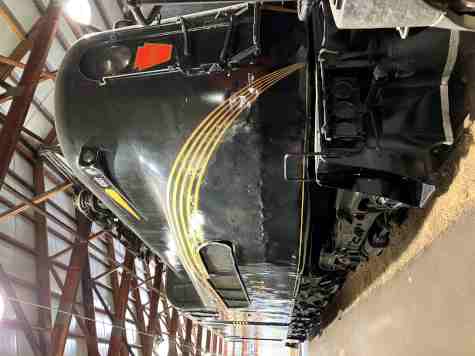
Pennsylvania Railroad GG-1 4927, ex. Amtrak 4939 1976-1981, exx. Penn Central 4927 1968-1976, nee Pennsylvania Railroad 4927, built by Pennsylvania Railroad and General Electric in 1942. More than 130 of this famous type of electric locomotive were built to pull both passenger and freight trains between Washington, DC and New York City for nearly 50 years and only fifteen survive, none of which are operational.
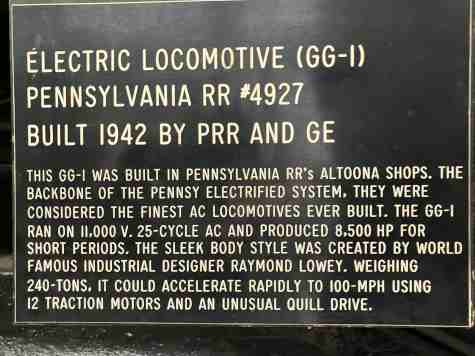
Pennsylvania Railroad 4927 story board.
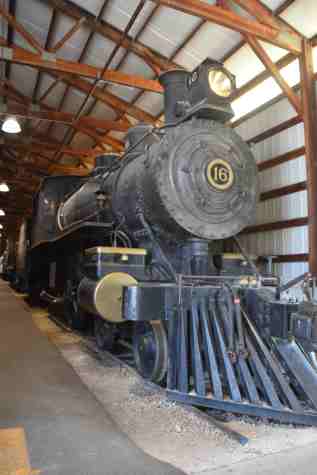
Toledo-Detroit Railroad 4-4-0 16, ex. Henry Ford Museum in Dearborn, Michigan 1930-1984, exx. Toledo-Detroit Railroad 16 1915-1916, nee Midland Pennsylvania 1 "T.E. Herrick", built by Baldwin in 1914. It is the only 4-4-0 at the museum and one of the most modern examples of that wheel arrangement in preservation. The 4-4-0 was so ubiquitous on American railroads between the 1850s and early 1900s that it was called the American type.
By the early 1900s, very few were being built, as larger types became more popular, but occasionally a few 4-4-0s were still built for passenger use. The Toledo-Detroit aspired to be an electric interurban line linking Toledo with Ann Arbor, but never electrified. Number 16 was used in passenger service in southeast Michigan until it was retired to the Henry Ford Museum, which traded it to IRM in 1984.
The Detroit Toledo & Ironton Railroad, or DT&I, formed in 1905 to operate a north-south railroad line linking Detroit, in southeastern Michigan, and Toledo, in northwestern Ohio, with Ironton, a town in southern Ohio on the Ohio River. The railroad went bankrupt in 1908 but Henry Ford purchased it in 1920. Ford infused it with capital and used it as a direct link between his automobile plants in the Detroit area and the national railroad network. The DT&I crossed a number of major east-west railroads on its route through Ohio, providing Ford with multiple routes for shipping supplies in and cars out.Ford sold the railroad in 1929 and over the ensuing decades railroads controlling the DT&I included the Pennsylvania Railroad, Penn Central, and the Grand Trunk Western in turn, before the DT&I fully merged with the GTW in 1983.
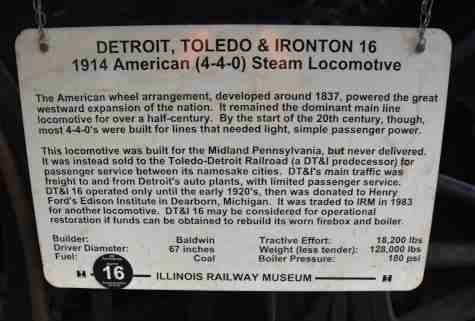
Toledo-Detroit Railroad 16 story board.
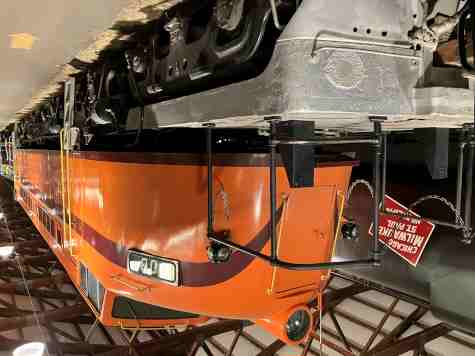
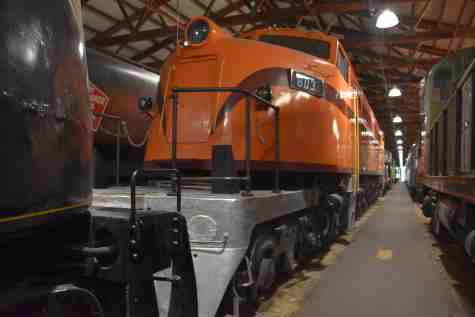
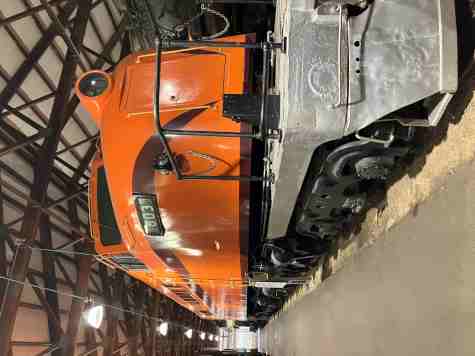
Chicago, South Shore and South Bend Line electric locomotive 803, built by General Electric in 1949. It is the largest operating electric locomotive in North America and was built for export to Russia but due to the advent of the Cold War, the sale was cancelled and the locomotive was instead sold to the South Shore for fast freight service. It was retired in 1981, by which time it and sister locomotive 802 were the last electric locomotives in mainline freight service on a U.S. common carrier railroad. It came to IRM that year in operating condition.
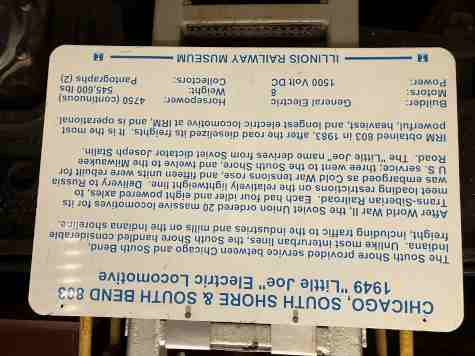
Chicago, South Shore and South Bend 803 story board.
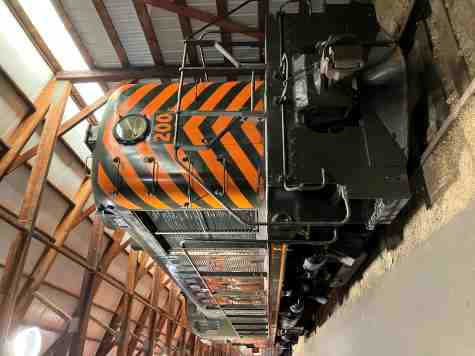
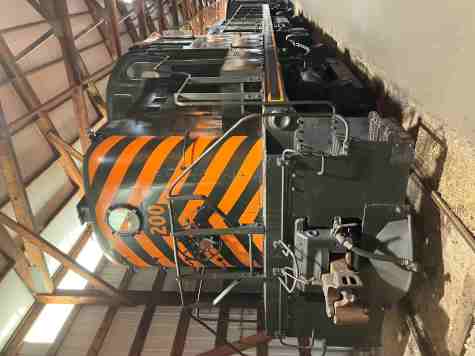
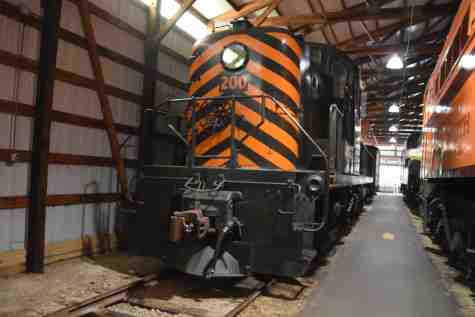
Minnesota Transfer RS3 200, ex. Interlake Steel 19 1977-1984, exx. Eastman Kodak 5 1973-1977, exxx. J. Groves & Sons 507 1970-1973, nee Minnesota Transfer 200, built by American Locomotive Company in 1951. It was designed as a "road switcher" for general freight train service and helped to build Interstate 280. In the early 1970s, highway contractor S.J. Groves & Sons laid railroad tracks along the planned route of Interstate 280 west of Newark, New Jersey to haul aggregate and fill for the huge construction project. This engine was bought used for this purpose and resold immediately once the highway was complete.
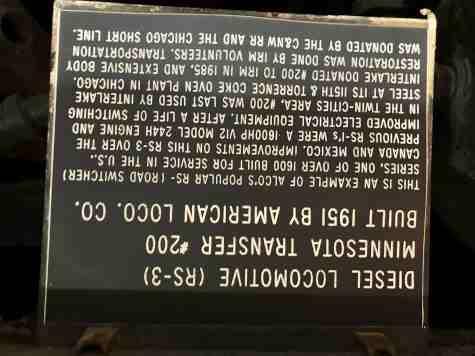
Minnesota Transfer 200 story board.
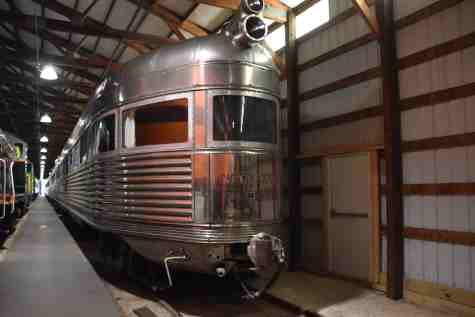
Chicago, Burlington and Quincy parlour-observation 225 "Juno", built by the Budd Company in 1936. It is one of the five cars that make up the Nebraska Zephyr streamlined train and features high-back rotating lounge chairs as well as panoramic views from the rear of the car. "Juno" is articulated at its forward end. As built, the train had two lounge cars, with another lounge car located just forward of "Juno", but the train was rebuilt in the early 1960s without its second lounge car.
Originally used between Chicago and Minneapolis-St. Paul, the Nebraska Zephyr was one of two identical train sets known as the Twin Zephyrs. In 1947 the Twin Zephyrs were replaced on the Chicago to Minneapolis-St. Paul route with more modern equipment. At that time, our train set was put into service between Chicago and Lincoln, Nebraska and renamed the Nebraska Zephyr.
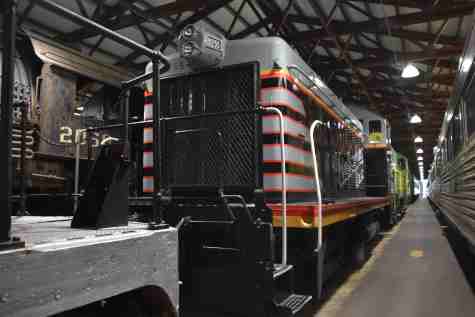
Chicago Burlington & Quincy SW7 9255, ex. Davenport, Rock Island & North Western 121 1983-1995, exx. Burlington Northern 121 1970-1983, nee Chicago Burlington & Quincy 9255, built by Electro-Motive Division in 1950. It was designed to move freight cars around railroad yards at low speed. For a time it was assigned to Clyde Yard in Cicero, Illiinois and has been restored to its original appearance.
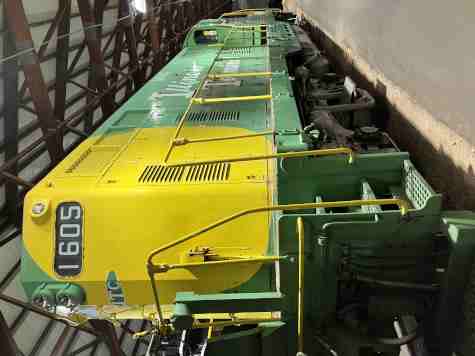
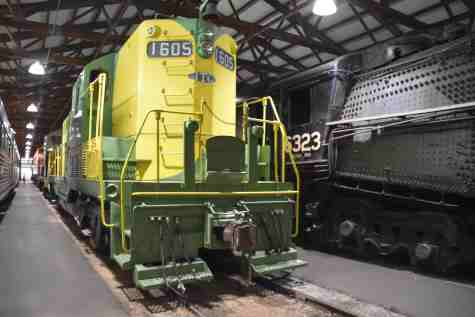
Illinois Terminal GP7 1605, built by Electro Motive Division in 1953, designed as a road switcher for general freight train service. It was acquired by the IT, an electric interurban line, so that the railroad could take down its overhead wires and convert to diesel-hauled freight service.
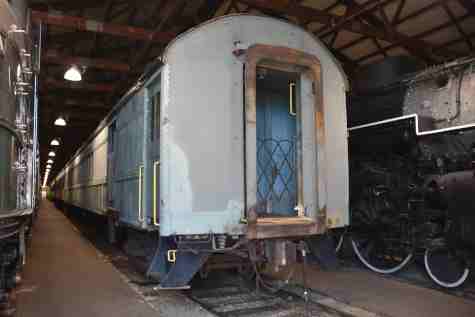
Chicago and North Western combine 7700, built by American Car & Foundry Company in 1923 for commuter service between Chicago and the suburbs to the west and north. Cars like this were used on commuter trains mainly for transporting passengers' luggage and express items such as newspapers.
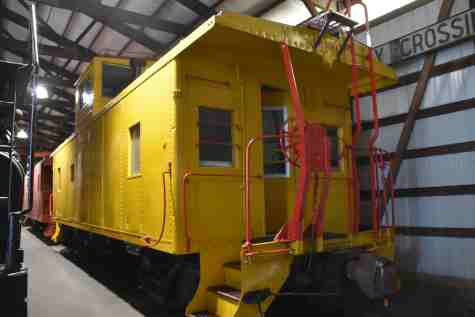
Union Pacific caboose 3786, built by Mt. Vernon in 1942 designed for general freight service over the UP system. It was re-numbered 25086 in 1959 and features a centered cupola on the roof to provide the conductor better visibility over his train. This class CA-3 caboose was the railroad's first type of caboose built entirely of steel instead of wood.
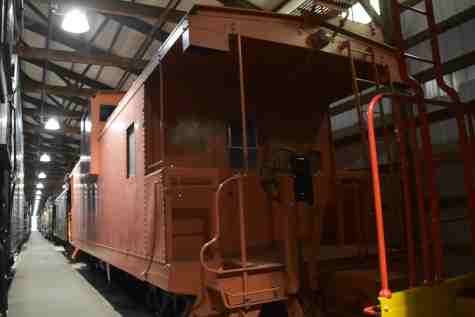
Illinois Central caboose 199458, built by International Car Company in 1960 designed for general freight service over the IC system. It has a widened centered cupola on the roof and has large porches at each end to aid in reverse movements where the conductor needs to ride on the outside of the caboose.
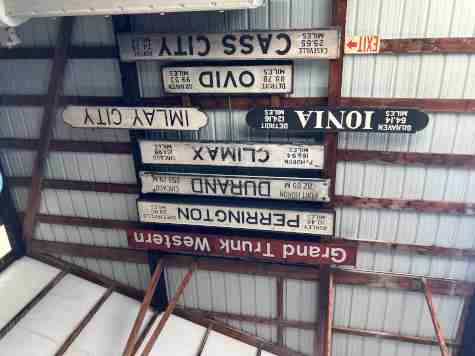
Grand Trunk Western station name signs on the wall of this barn.
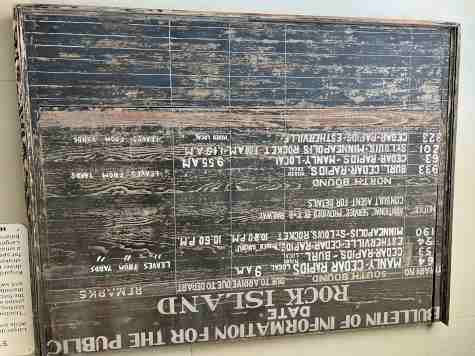
Chicago and Rock Pacific timetable board.
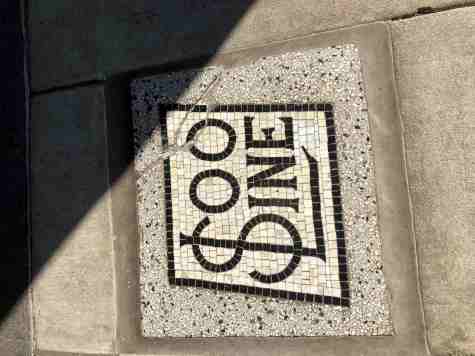
Soo Line emblem made from tiles in the floor by the entrance to the car barn.
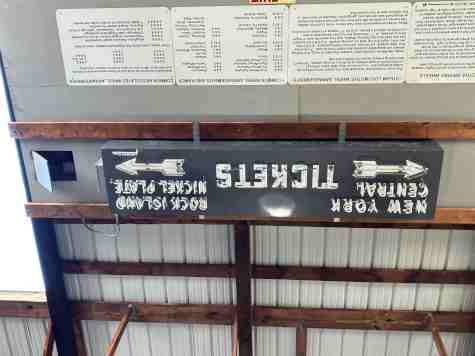
The neon ticket sign from La Salle Street Station in Chicago.
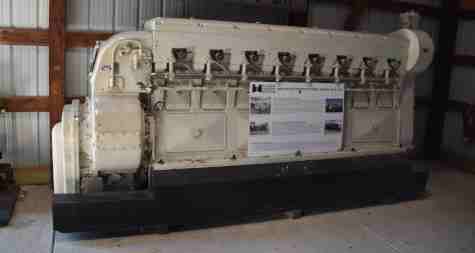
Winton 201 Prototype Diesel Engine built in 1933.
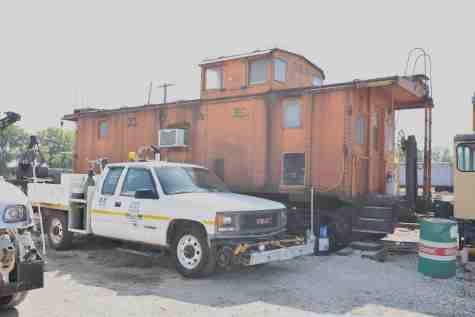
Elgin Joliet & Eastern caboose 529 built by International Car in 1956.
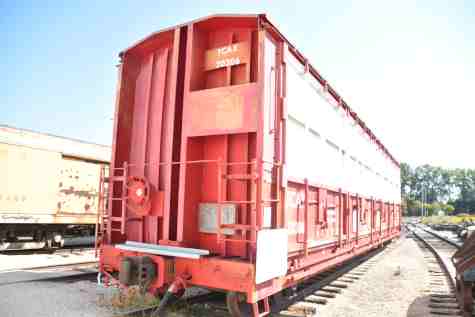
Thrall "all-door" boxcar 20306, built by Thrall Car Company in 1971 for carrying lumber and other large items. Its design features car sides comprised of four huge doors, all of which can be opened for easy access to the interior of the car for loading and unloading. This car remained in service until 1995 and in 1998 GE Railcar Services restored it to its original appearance for donation to IRM.
A.J. Thrall founded the Thrall Car Manufacturing Company in south suburban Chicago Heights, Illinois, in 1917. Initially the company concentrated on selling used and refurbished freight cars and components, but as time went on it began building its own freight cars. After World War II, the company began to build a variety of specialty freight cars. One type of car that was a specialty of Thrall was the all-door boxcar. The prototype all-door boxcar was built by another company in 1962, but the first production examples emerged from the Thrall shops in 1967. During the 1970s, Thrall built a number of all-door boxcars as well as high-cube boxcars and other large-capacity freight cars. Thrall became a part of Duchossois Industries in 1984 and Trinity Industries acquired the operation in 2001.
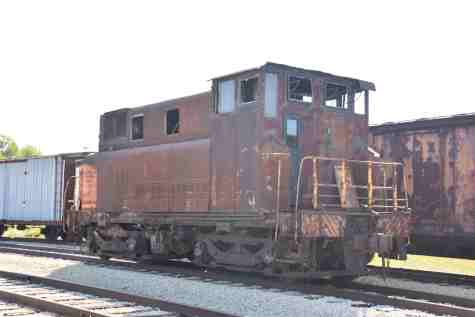
American Rolling Mill (Armco) B71, built by Baldwin-Westinghouse in 1930. It is very early example of a diesel locomotive built to switch cars for Armco at low speed and was among the first diesels built with a "visibility cab" in an elevated location at one end of the engine.
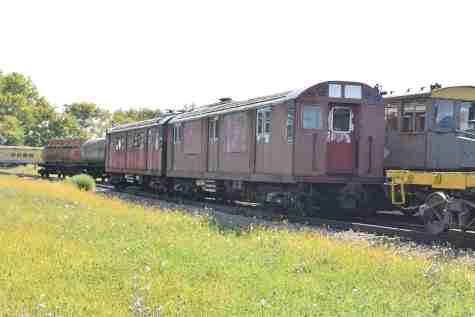
New York City Transit Authority R28-type Redbird subway car 7926, built by American Car & Foundry in 1961. It is permanently coupled to identical car 7927 to form a "married pair".
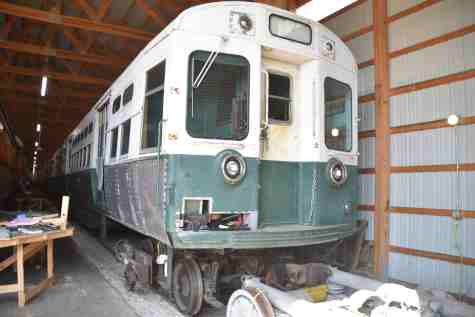
Chicago Transit Authority L car 6126 built by St. Louis Car Company in 1951. It was one of only a few 6000-series cars built with trolley poles so that it could operate on the CTA Evanston line, now the Purple Line, which at the time still used overhead trolley wire. Car 6126 is permanently coupled to identical car 6125 to form a married pair set.
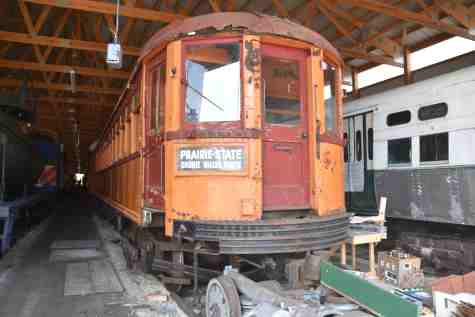
Chicago Rapid Transit L car 2872, ex. Chicago Transit Authority 1947-1981, exx. Chicago Rapid Transit 1924-1947, exxx. Chicago Elevated Railway 1913-1924, nee Metropolitan-West Side Elevated 872, built by Pullman and Pullman- Standard in 1906. It is one of only two cars from the "Met" preserved and is an example of the most modern cars that the MWSE operated.
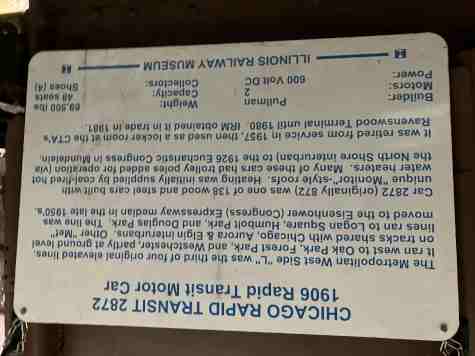
Chicago Rapid Transit 2872 story board.
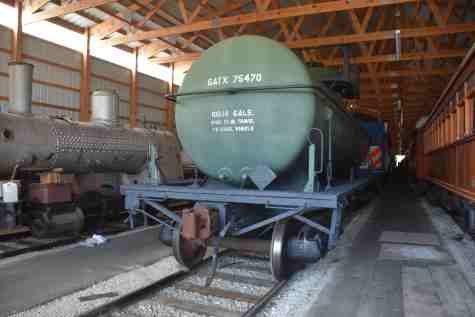
General American Transportation tank car 75470, built by the company in 1960, to carry as much as 10,000 gallons of liquid. It was leased out for use in transporting molasses and is typical of mid-century all-welded tank car construction.
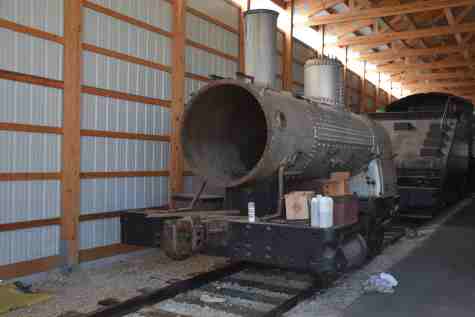
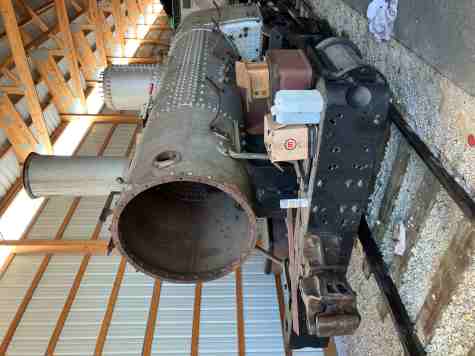
American Creosote Works 0-4-0T 7 1917-1942, nee United States Navy 7, built by Vulcan Iron Works in 1917. It is the smallest steam locomotive in the collection and the museum's only piece of equipment built by the Vulcan Iron Works.
The company was one several smaller manufacturers of steam and diesel locomotives in the United States. Richard Jones incorporated the company in 1866, soon after the Civil War, in Wilkes-Barre, Pennsylvania. Initially the company focused on constructing machinery and equipment for the coal mining industry in eastern Pennsylvania. In the late 1880s, Vulcan entered the steam locomotive business and began building small switchers and mining locomotives. It continued to specialize in these smaller locomotives well into the 20th century, with small tank engines like American Creosote Works 7 constituting the core of its sales. In the 1920s, Vulcan also began building small internal combustion locomotives for industrial use. Following World War II, however, steam locomotive sales dried up and the company’s diesel- and gas-powered offerings were unable to compete with larger builders. The company built its last locomotive in 1954.
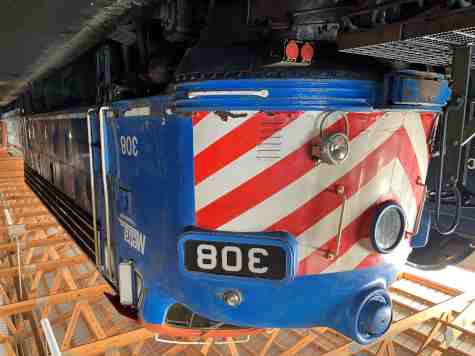
Metra F7A 308, ex. Chicago and North Western 414, nee Chicago and North Western 4083C, built by Electro-Motive Division in 1949. In 1961 it was rebuilt for use pulling bi-level commuter trains in the Chicago area and ended its career hauling ballast trains for Metra.
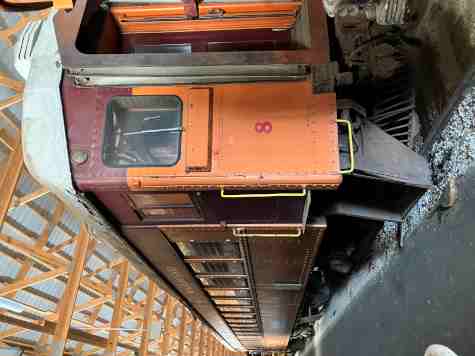
South Shore Line heavyweight steel interurban coach 8, built by Pullman/Pullman-Standard in 1926 built for service between Chicago and South Bend. It was part of the line's first order for steel cars and is the oldest passenger car from the railroad preserved at IRM. It was used for more than 55 years and was not retired until the early 1980s.
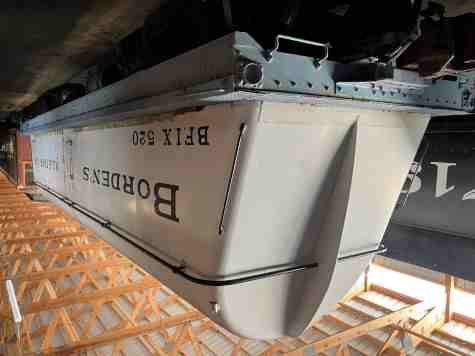
Bordens steel milk car 520, built by Merchants Despatch Transportation Company in 1935. It is a "butter dish" milk car, so-called because of its unusual Art Deco-inspired shape and was designed for hauling fresh milk inside large glass-lined tanks. At the end of its career, after the transportation of milk had switched to over-the-road trucking, this car was used to transport glue products.
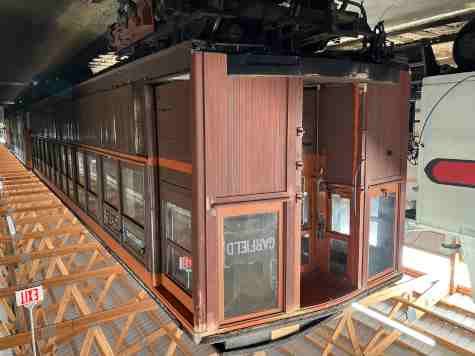
Chicago Rapid Transit Double End/Double Truck Deck Roof/Wood 2872, ex. Chicago Transit Authority 1947-1981, exx. Chicago Rapid Transit 1924-1947, exxx. Chicago Elevated Railway 1913-1924, nee Metropolitan-West Side Elevated 872, built Pullman/Pullman-Standard in 1906. It is one of only two cars from the "Met" preserved and is an example of the most modern cars that the MWSE operated.
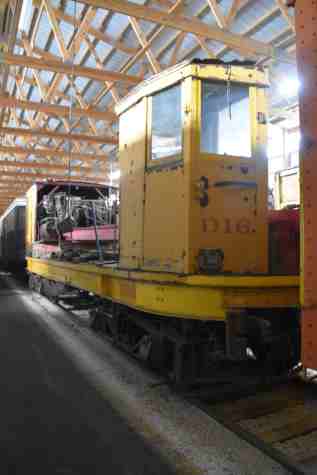
Milwaukee Electric Railway & Transport crane D16, ex. Wisconsin Electric Railway Historical Society in East Troy, Wisconsin 1980-1988, exx. Wisconsin Electric Power Company 1963-c1980, exxx. The Milwaukee Electric Railway & Transport Company 1938-1963, nee The Milwaukee Electric Railway & Light Company, built by Brown Hoisting Machinery Company in 1923. It was used on the Wisconsin interurban system and the Milwaukee streetcar network for transporting and lifting heavy equipment, lengths of rail and other items.
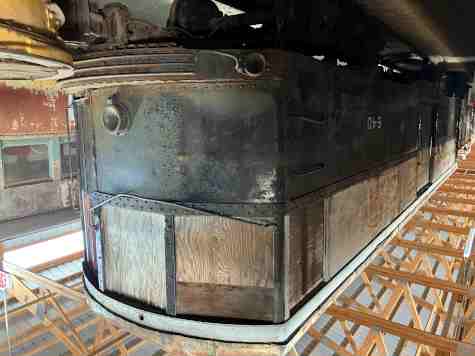
Cincinnati & Lake Erie double-truck steel freight motor 640, ex. Waterfront Electric Railway, Toledo, Ohio, exx. American Aggregates in Oxford, Michigan 1984-1994, nee Cincinnati & Lake Erie 640, built by Cincinnati Car Company in 1930. It was built to carry less-than-carload shipments and pull freight trains between Toledo, Columbus, Dayton and Cincinnati. In 1938, it was retired and rebuilt into a diesel-electric locomotive by American Aggregates.
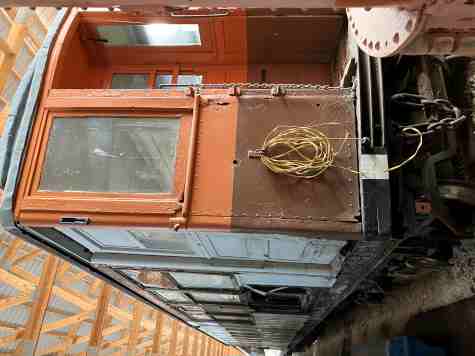
Chicago Rapid Transit rapid transit 2888, ex. Chicago Transit Authority 1947-1981, exx. Chicago Rapid Transit 1924-1947, exxx. Chicago Elevated Railway 1913-1924, nee Metropolitan-West Side Elevated 888, built by Pullman/ Pullman-Standard in 1906. It is one of only two cars from the Met preserved and is an example of the most modern cars that the MWSE operated.
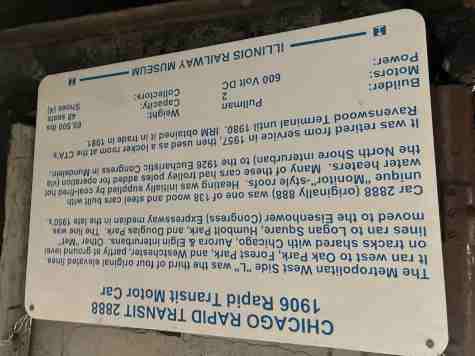
Chicago Rapid Transit 2888 story board.
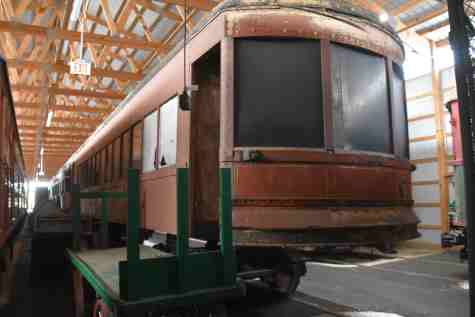
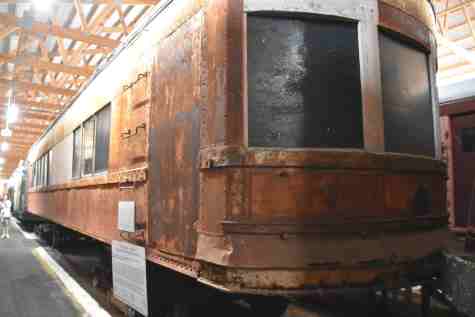
Fort-Wayne Lima Railroad single-end arch-roof interurban combine 91, ex. privately owned (house) 1935-1989, nee Fort Wayne-Lima Railroad 91, built by St. Louis Car Company in 1924. It was designed for service between Fort Wayne, Indiana and Lima, Ohio and typical of lightweight steel interurban cars built for Midwestern interurban lines during the 1920s.
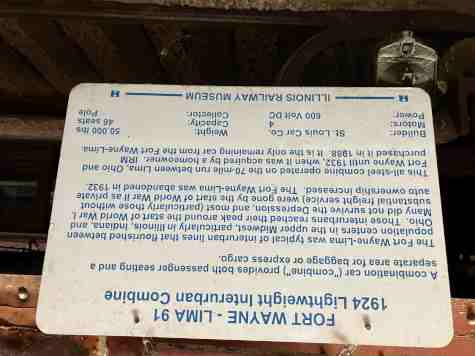
Fort Wayne-Lima Railroad 91 story board.
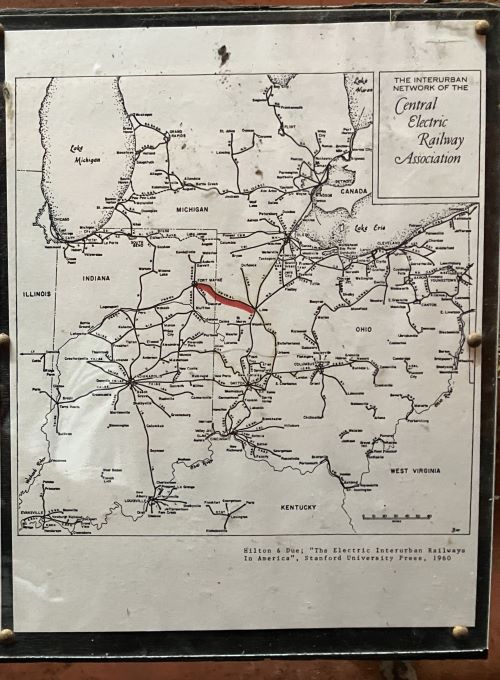
The Fort Wayne, Van Wert and Lima Traction Company, later known as the Fort Wayne–Lima Railroad, was an interurban railway which operated between Lima, Ohio and Fort Wayne, Indiana. It ran from 1905 to 1932. The company was organized in August 1902 in Lima, and consolidated with the nascent and formerly competing Lima, Delphos, Van Wert and Fort Wayne Traction Company in 1905 to complete the right of way between the two cities. Construction had begun by December 1904,[2] and the line between Lima and Van Wert, Ohio, was put into service on January 1, 1905. Operations in Indiana between Fort Wayne and New Haven, Indiana, commenced on September 19, 1905. Through service was delayed by lack of ballasting between New Haven and Monroeville but this was overcome on November 1 after a preview ride between Lima and Fort Worth by city officials and prominent businessmen from towns along the line the previous day.
Ohio Electric Railway would go on to lease and operate the line starting on September 1, 1907. The company entered receivership in 1920 after going bankrupt, and the line was thereafter operated by the Indiana Service Corporation, later the Indiana Railroad, for the receivers. The system remained independent until service ceased on June 30, 1932.
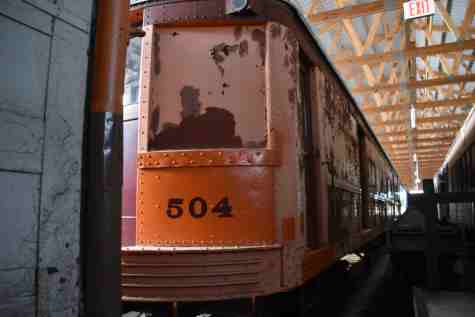
Chicago, South Shore and South Bend freight trailer 504, ex. Chicago South Shore & South Bend 504 1941-1975, exx. Indiana Railroad 377 1930-1941, nee Indiana Service Corporation 377, built by St. Louis Car Company in 1925. It was used to carry express packages, newspapers and small freight shipments between South Bend and Chicago and originally built as a powered interurban combine for the Indiana Service Corporation and was rebuilt in 1930 as a Railway Post Office car for carrying mail. It was converted into a freight trailer by the South Shore Line in 1941.
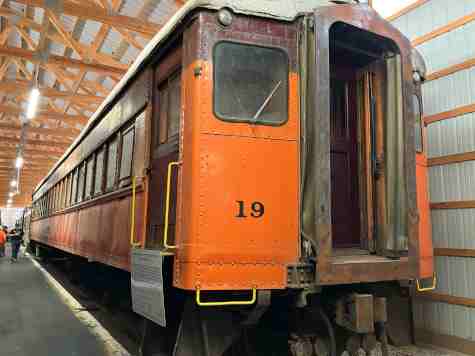
Chicago, South Shore and South Bend double end/double truck/arch roof/coach 19, ex. National Park Service 1983-1988, nee Chicago South Shore & South Bend 19, built by Pullman/Pullman-Standard in 1927 for interurban service between Chicago and South Bend. In the 1940's the car was cut in half and an 18 foot section was inserted into the middle of the body to lengthen the car, and the interior lights were changed to fluorescent fixtures. It remained in service for more than 55 years in all until it was retired in the early 1980's.
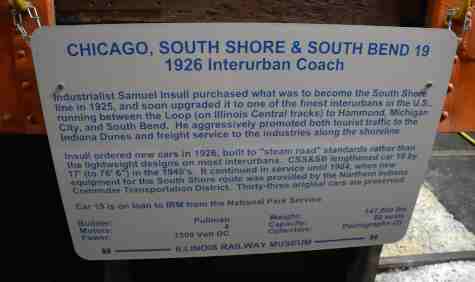
Chicago, South Shore and South Bend 19 story board.
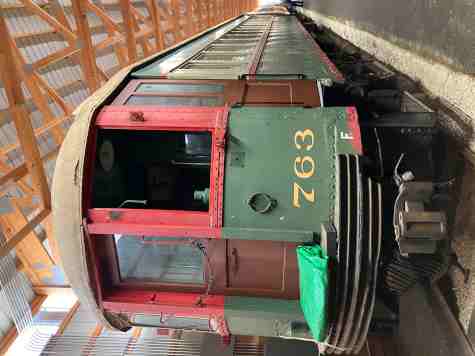
Chicago North Shore & Milwaukee coach 763, ex. Wisconsin Electric Railway Historical Society in East Troy c1967-1988, exx. privately owned 1963-c1967, nee Chicago North Shore & Milwaukee 763, built by Standard Steel Car Company in 1930 and designed for interurban service between Chicago and Milwaukee. In its later years, it went through the North Shore's "Silverliner" modernization program which included updated seating, interior lights and a faux-stainless- steel paint scheme.
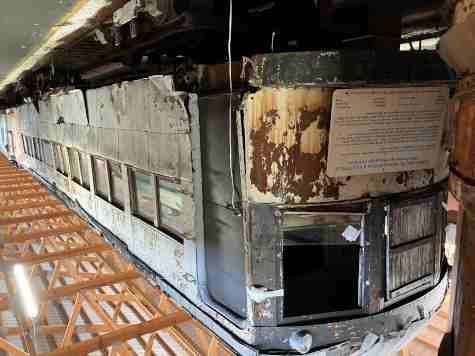
Terre Haute Indianapolis & Eastern double end/double truck/arch roof/combine 50, ex. privately owned (house) 1933-1996, exx. Indiana Railroad 50 1930-1933, exxx. Terre Haute Indianapolis & Eastern 50 1907-1930, nee Indianapolis & Northwestern 50, built by Laconia in 1904. It was named the "Clinton", as an all-wood combination passenger-baggage car designed for service on the THI&E interurban lines radiating out of Indianapolis. It was modernized and given its name by the Terre Haute Indianapolis & Eastern in the 1920s. The car was retired in 1933 and the body made into a cottage at Shafer Lake, Indiana. It was rescued by IRM in 1996 and is in storage awaiting full restoration.
This is one of only three surviving interurban cars built by the Laconia Car Company. Laconia started out in 1848 as the Ranlet Car Company of Laconia, New Hampshire, a company which built wooden freight cars. Business expanded markedly during the Civil War, and following the war the company started building passenger cars as well. In 1894 it expanded to building electric streetcars, and became a successful mid-size car builder, with New England street railway companies forming most of its customer base. Sales to electric lines outside of the northeast were rare, and these two THI&E cars are the only surviving Laconia products built for any property west of New York City. Laconia transitioned to building steel cars in the 1910s, but business decreased over the course of the 1920s. The last streetcars were built in 1928 and the company closed for good in 1931.
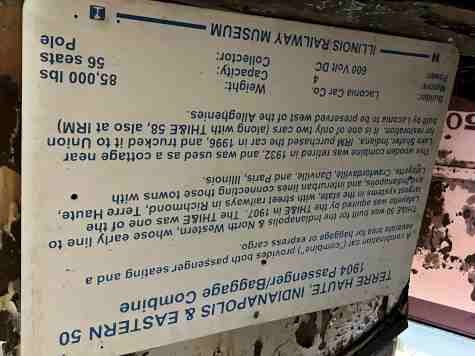
Terre Haute Indianapolis & Eastern 50 story board.
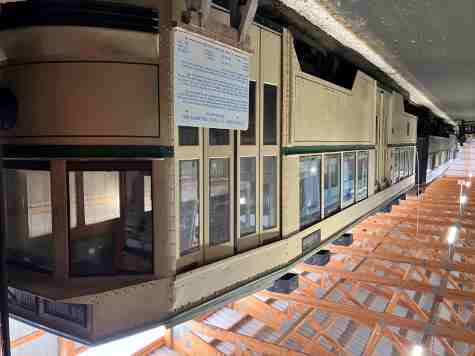
Detroit Street Railway single end/double truck/arch roof/safety/Peter Witt car 3865, ex. Henry Ford Museum in Dearborn, Michigan 1954-1998, nee Detroit Street Railway, built St. Louis Car Company in 1930. It is the only "Peter Witt" type streetcar at IRM and was developed to speed loading and unloading. Passengers entered through doors at the front of the car and exited through doors at the middle, with the conductor seated between them.
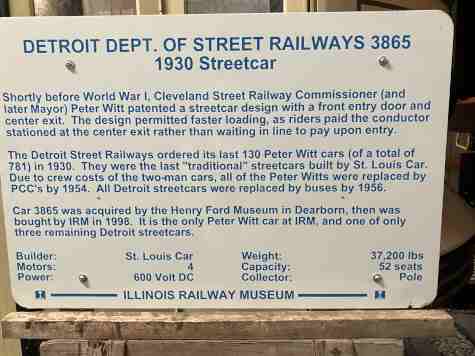
Detroit Street Railway 3865 story board.
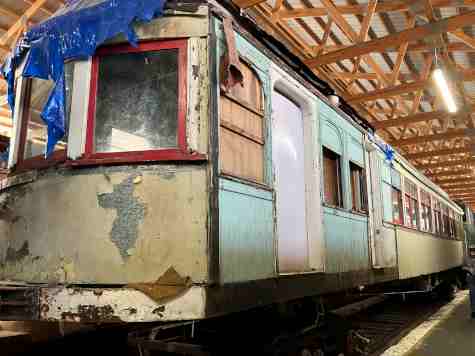
Terre Haute Indianapolis & Eastern combine 58, ex. privately owned (house) 1933-1996, exx. Indiana Railroad 58 1930-1933, exxx. Terre Haute Indianapolis & Eastern 58 1907-1930, nee Indianapolis and Northwestern 58, built by Laconia in 1904 designed for service on the THI&E interurban lines radiating out of Indianapolis. It is a rare example of a Midwestern car a car builder located in New Hampshire. Car 58 was retired in 1933 and the body made into a cottage at Shafer Lake, Indiana. It was rescued by IRM in 1996 and is in storage awaiting full restoration.
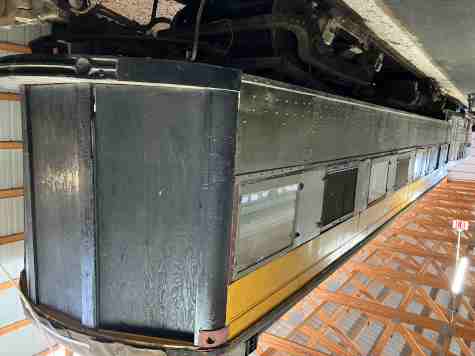
The Milwaukee Electric Railway and Light Company interurban parlour car 1136, ex. London and Port Stanley 16 1941-1955, exx. The Milwaukee Electric Railway and Transport Company 1136 1938-1941, exx. The Milwaukee Electric Railway and Light Company 1136 1926-1938, nee The Milwaukee Electric Railway & Light Company 2 "Menominee" built by the company in 1924. It is the only surviving interurban parlour car from Wisconsin's largest interurban network. Originally built as a wooden coach in 1909, it was completely torn down and rebuilt in 1924 by the Milwaukee Electric. Retaining only its basic wooden frame, it acquired a new roof, interior and steel exterior sheathing and was outshopped as the parlour car "Menominee".
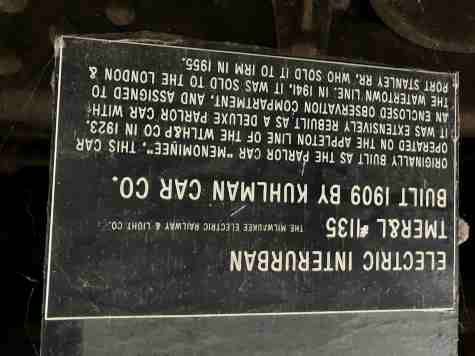
The Milwaukee Electric Railway & Light Company 1136 story board. When IRM initially acquired the car, it was thought that it was car 1135 and that it had been named "Mendota". It was not until museum volunteers sanded down the side of the car to repaint it that its true name, "Menominee" was revealed underneath layers of paint.
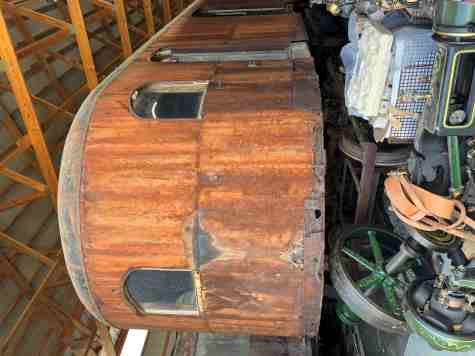
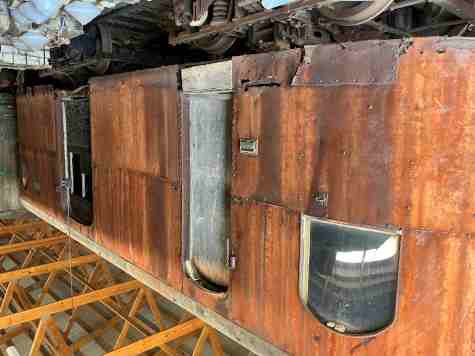
Union Pacific baggage/railway post office trailer T8, ex. private owner in Cheyenne, Wyoming 1991-1999, exx. private owner in Bellwood, Nebraska (shed) 1934-1991, nee Union Pacific T-8 1908, built by McKeen in 1908. It was designed by William McKeen of the Union Pacific to be hauled behind a self-propelled gas-powered passenger car and is a very early example of streamlined railroad car design. The body was donated by Jim Ehrenberger and arrived at the museum on July 7, 1999.
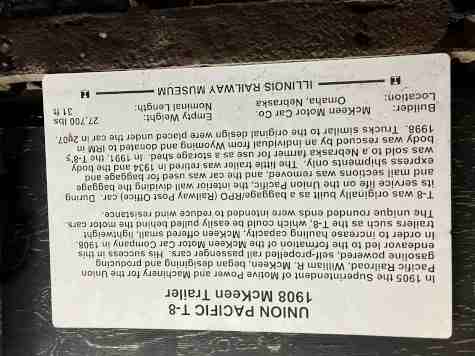
McKeen T8 trailer story board.
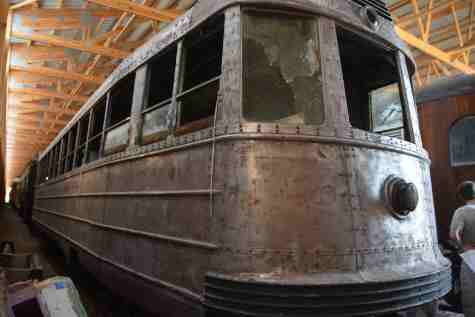
Chicago Surface Lines streamliner 4001, ex. Electric Railway Historical Society in Downers Grove, Illinois 1970-1973, exx. Chicago Transit Authority 4001 1947-1970, nee Chicago Surface Lines 4001, built by Pullman-Standard in 1934. It is the last surviving pre-PCC streamliners. During the early 1930s the Electric Railway Presidents Conference Committee, or PCC, worked to develop a modern streetcar. Chicago ordered car 4001 and one other as prototypes to test modern technologies.
Car 4001 was all-aluminium, to save weight, and used a variety of new control and braking features. It was retired after World War II, put to use as a storage shed and is preserved as acquired, with trucks and interior missing but with much of its electrical gear intact.
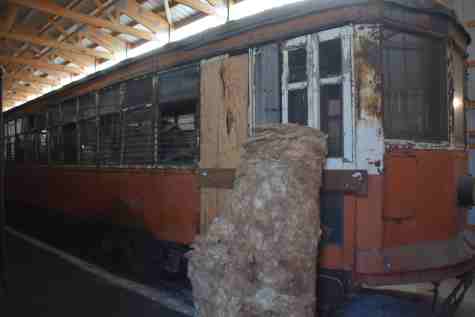
Milwaukee and Suburban Transport double end/double truck/arch roof/safety car 966 1953-1958, exx. The Milwaukee Electric Railway & Transport Company 1938-1953, nee The Milwaukee Electric Railway & Light Company 966, built by St. Louis Car Company is 1927. It is a standard lightweight steel streetcar similar to some 200 cars built for service in that city in the 1920s.
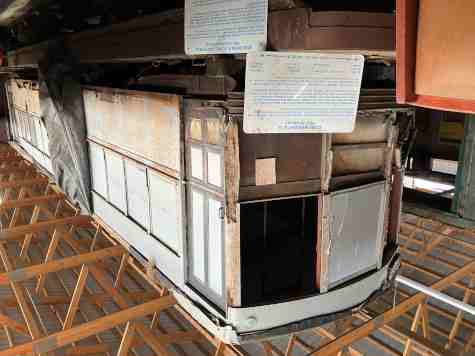
Gary Railways streetcar 19, ex. privately owned in Gary, Indiana (house) 1946-1989, nee Gary Railways 19, built by Cummings in 1927. It is the only surviving streetcar from Gary, Indiana and was designed for one-man operation. Components to restore the car are on hand and it is in storage awaiting rebuilding and restoration.
This car is sitting on Wisconsin Power & Light flat car 109 built by the company in 1915 for utility duties. It was constructed as a homebuilt "cab on flat" gravel car, basically a large wooden self-propelled gondola with a small cab in the center, then rebuilt in the 1930s as a "steeplecab" locomotive with sloped hoods. Sometime after conversion of switching operations at the Edgewater Power Plant in Sheboygan to diesels in 1941, WP&L 109 was cut down to a simple unpowered flat car.
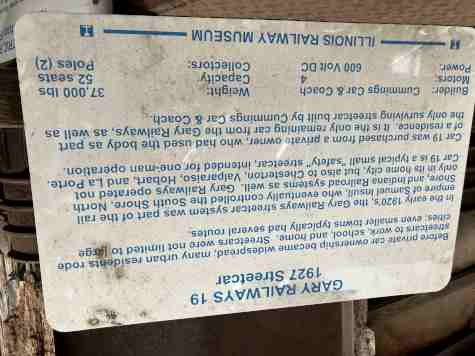
Gary Railways 19 story board.
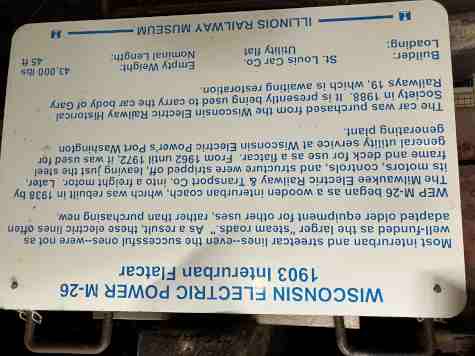
Wisconsin Power & Light 109 story board.
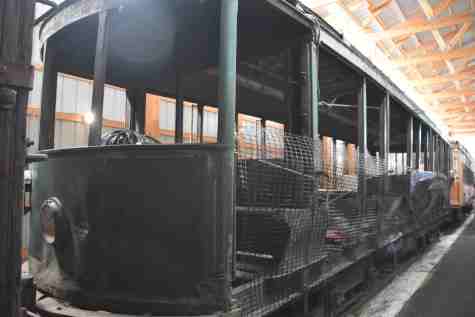
Rio de Janeiro Tramway Light & Power open car 1889, ex. Electric City Trolley Museum in Scranton, Pennsylvania c2000-2010, exx. private owner in Topton, Pennsylvania c1970-c2000, exxx. Magee Trolley Museum in Bloomsburg, Pennsylvania 1965-c1970, exxx. Companhia de Carris Luz e Forca do Rio de Janeiro 1889, exxxxx. Companhia de Carris Luz e Forca do Rio de Janeiro 1889 1926-1965, nee Rio de Janeiro Tramway Light & Power 1889, built by Cia de Transporte Colectivos in 1912. It was built following a St. Louis Car Company design and operated throughout Rio de Janeiro, Brazil, into the 1960's, including pulling trailers in regular service. In 1965, it was among several Rio open cars imported to the United States for use in museums. It was acquired by IRM in 2010 and is in storage awaiting restoration, the only piece of equipment at IRM from a different continent.
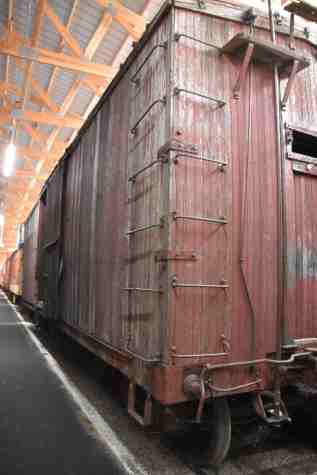
Northern Pacific wooden box car 49444, ex. Burlington Northern 20705 1970-1977, exx. Northern Pacific 207051 1946-1970, exxx. Northern Pacific 49444, nee Northern Pacific 43241, built by Pacific Car and Foundry in 1921 for general freight service over the NP system. It is a "double sheathed" car, with tongue-and-groove wooden siding concealing its major structural members as well as a late example of a car with truss rods for structural strength, rather than an all-steel underframe, and features an unusual radial (curved) roof. It was assigned to work service in 1946 and donated to IRM in 1977.
This was one of the earliest products of Pacific Car & Foundry. PC&F dated its founding to 1917, when Seattle Car & Foundry of Seattle, Washington, merged with the Twohy Brothers contracting company of Portland, Oregon. The company's main plants were in Renton, Washington and Portland, Oregon, and it specialized in railroad freight cars (especially tank cars and refrigerator cars) and over-the-road logging trucks. American Car & Foundry purchased PC&F in 1924 but sold it back to its original owners ten years later. During World War II, PC&F produced M4A1 Sherman tanks as well as M25 tank transporters. Following the war, PC&F purchased Kenworth Motor Truck in 1945 and then Peterbilt Motors in 1954. Railroad car manufacturing ceased by the early 1980s but the company survives today as a diversified corporation known as PACCAR.
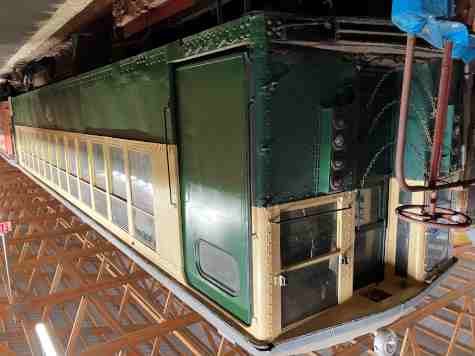
Chicago Transit Authority double end/double truck/arch roof/steel L car 4321, ex. Chicago Transit Authority 4321 1947-1978, exx. Chicago Rapid Transit 4321 1924-1947, nee Chicago Elevated Railway 4321 built by Cincinnati Car Company in 1922. This series was similar to the earlier “Baldies” but had wood-and-canvas rooves with trolley poles and cloth seats to which they owed the nickname "Plushies". Car 4321 ran in Chicago for more than 55 years, in later years on the Evanston line (now the Purple Line).
Chicago Transit Authority emblem.
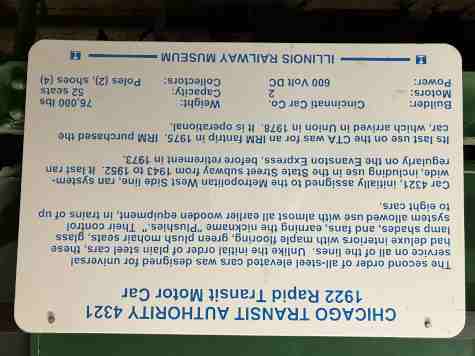
Chicago Transit Authority 4321 story board.
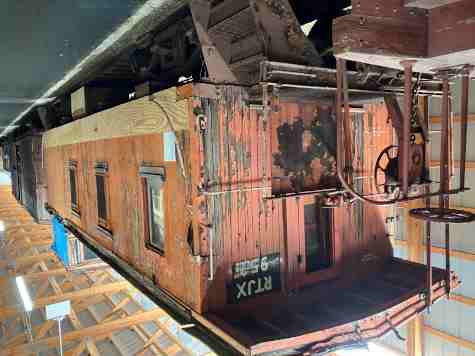
Grand Trunk Western caboose 77952, built by the company in 1873 and designed for general freight service over the GTW system in Michigan, Indiana and Illinois.
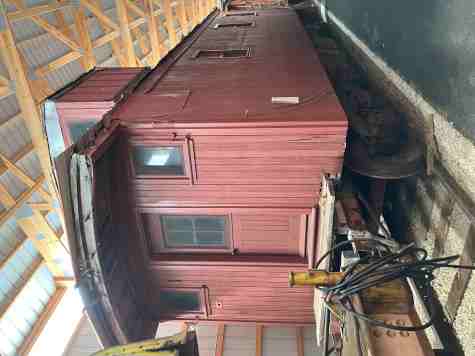
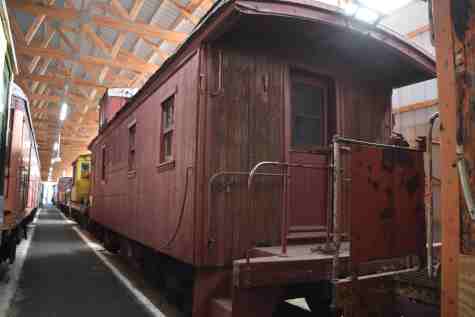
Santa Fe wood cupola caboose 1400, built by American Car & Foundry Company in 1923. It is one of the oldest cabooses from that railroad in existence and has a rare "wig-wag" signal mounted to the cupola that allowed a freight train's conductor to signal the engineer that the entire train was in motion.
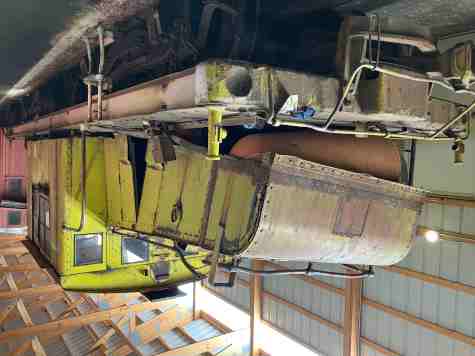
Toledo Edison steeplecab electric locomotive 1, ex. East Troy Electric Railroad in East Troy, Wisconsin 1997-2010, nee Toledo Edison 1, built by General Electric in 1923 to haul coal hoppers around a power plant in Toledo. The cab is in the center of the locomotive and there are sloping hoods on each side to provide good visibility in either direction for the engineer.
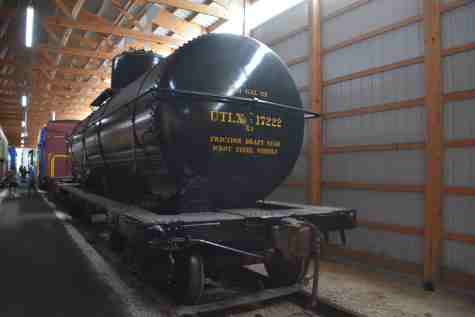
Union Tank Line tank car 17222, built by United Transit Company in 1937 to carry as much as 8,000 gallons of liquid, generally oil or other petroleum products. Like many tank cars, it was owned by a company which leased it out to railroads and industrial customers and is typical of pre-World War II riveted tank car construction.
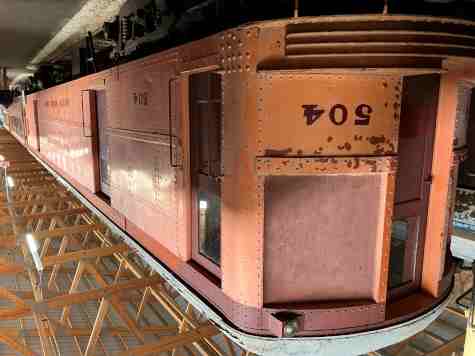
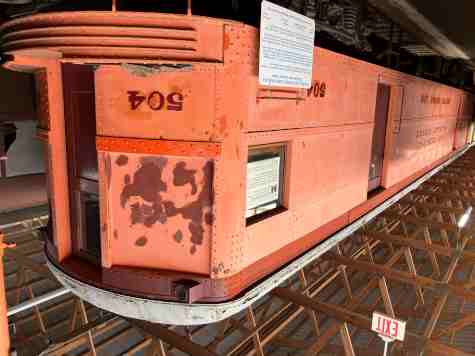
South Shore Line double truck steel box trailer 504, ex. Chicago South Shore & South Bend 504 1941-1975, exx. Indiana Railroad 377 1930-1941, nee Indiana Service Corporation 377, built by St. Louis Car Company in 1925 to carry express packages, newspapers and small freight shipments between South Bend and Chicago. It was originally built as a powered interurban combine for the Indiana Service Corporation and rebuilt in 1930 as a Railway Post Office car for carrying mail. It was converted into a freight trailer by the South Shore Line in 1941.
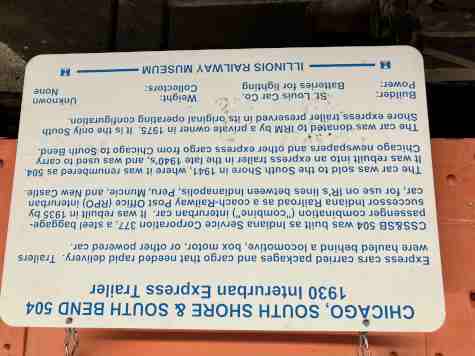
South Shore Line 504 story board.
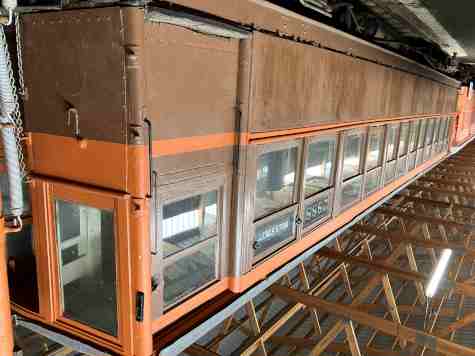
Chicago Rapid Transit double end/double truck/deck roof/wood L car 2888, ex. Chicago Transit Authority 1947-1981, exx. Chicago Rapid Transit 1924-1947, exxx. Chicago Elevated Railway 1913-1924, nee Metropolitan-West Side Elevated 2888, built by Pullman/Pullman-Standard in 1906. It is one of only two cars from the "Met" preserved and is an example of the most modern cars that the MWSE operated.
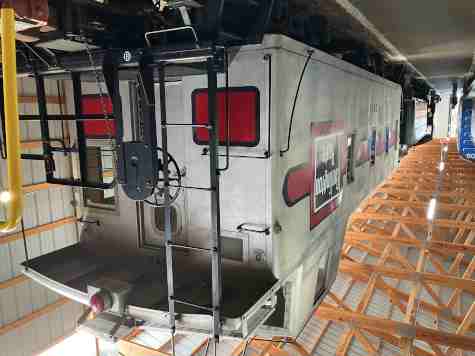
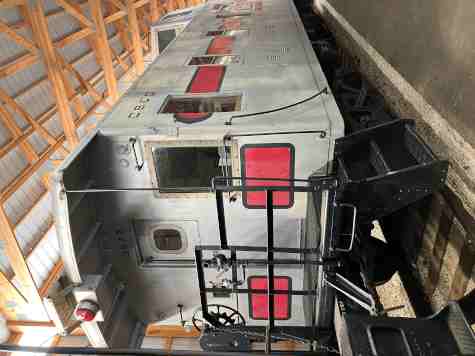
Chicago, Burlington and Quincy caboose 13572, built by the railroad in 1960, designed for general freight service over the CB&Q system.
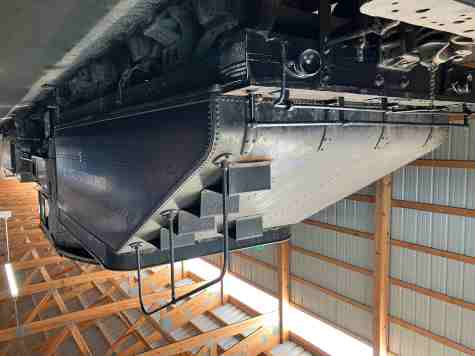
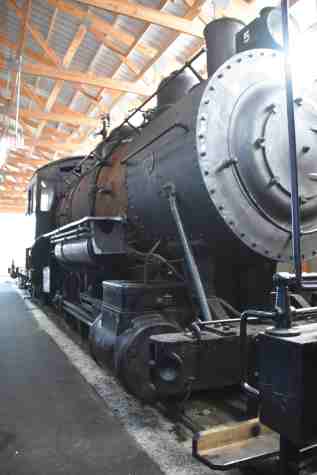
Commonwealth Edison 0-6-0 5, ex. privately owned in Elgin, Illinois 1967-1972, exx. privately owned in Summit, Illinois, nee Commonwealth Edison 5, built by Baldwin Locomotive Works in 1922 to haul trains of coal cars at low speed around power plants. It likely spent its entire career working at the Calumet Generating Station, located on 100th Street at the Calumet River in South Chicago. It operated at IRM during the 1970's but its short wheelbase and heavy weight made it punishing on the museum's tracks and it was retired.
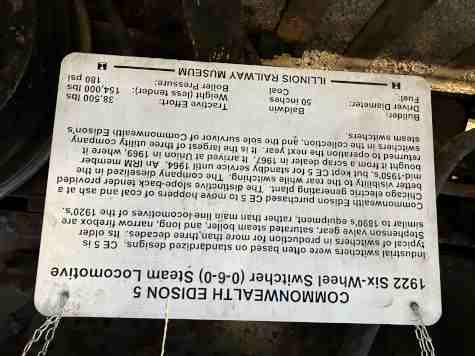
Commonwealth Edison 5 story board.
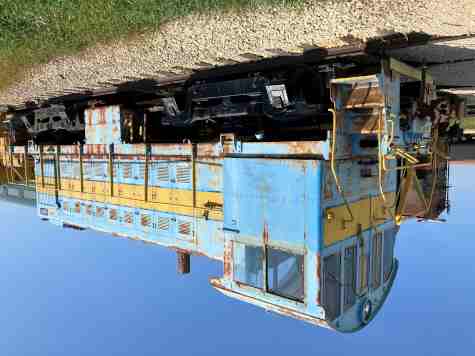
Nekoosa Paper S1 14, nee South Omaha Terminal Railway 5, built by American Locomotive Works in 1947.
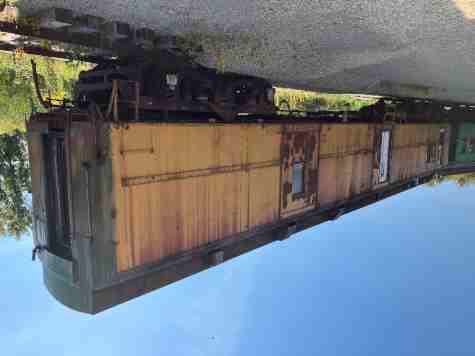
Chicago and North Western heavyweight baggage/railway post office car 8609, built by Pullman Standard in 1910 and were part of a passenger consist carrying luggage, express freight and other less-than-car-load shipments. It later became maintenance-of-way X301008.
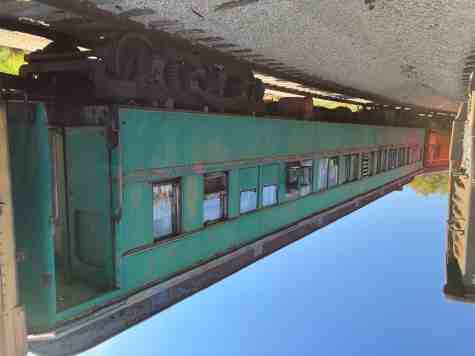
Chicago, Illinois and Midland camp car X117, nee Wabash coach, number unknown, built by American Car & Foundry, year unknown, as a rolling commissary for maintenance-of-way workers. Camp cars were typically moved to a siding near a work site and parked there until the job was done, providing workers with nearby meals and accommodation. Car X117 was originally constructed as a passenger coach, or "chair car", for the Wabash Railroad. Its early history is uncertain; research is continuing, per the museum's website.
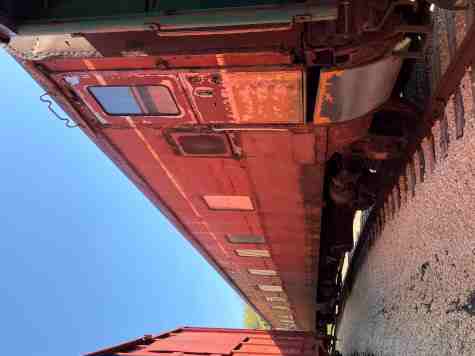
Ilinois Central car 6-6-4 sleeping car "King Cotton", built by Pullman/Pullman-Standard in 1942 and designed for long-distance travel between Chicago and New Orleans. It features a mixture of private rooms and open seating, that could be converted into bunks separated by heavy curtains for nighttime accommodation. The sections in this car feature small windows near the roof line designed to admit light to the upper bunks.
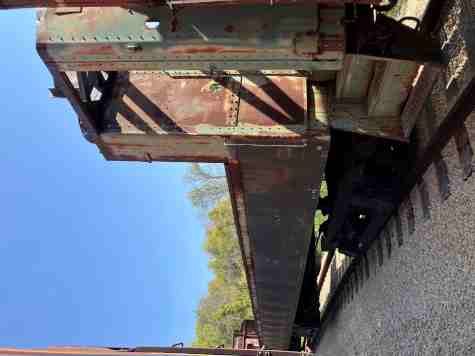
Chicago Burlington & Quincy heavyweight coach 7128, built in the Aurora Shops in 1924. In 1967, it was converted for work service, numbered 251182, and sold by the railroad in 1986. It was the victim of a fire while at IRM and has been cut down to the belt rail to make an open-air passenger car.
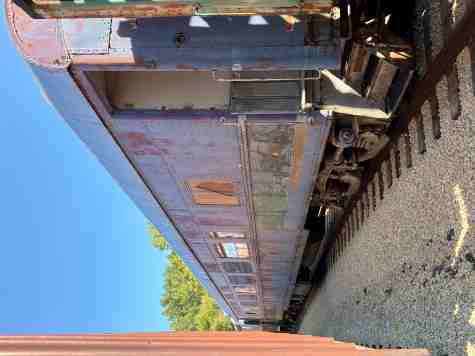
Union Pacific coach 501, ex. Missouri Central 501 1995-2004, exx. Atlantic & Pacific Railway in Atlantic, Iowa 1988-1995, exxx. Purple Martin Junction in Griggsville, Ilinois 1975-1988, exxxxx. Auto Liner in Omaha, Nebraska 1969-1975, exxxxxx. Union Pacific 501 1939-1969, nee Union Pacific 444, built by Pullman/Pullman-Standard in 1928. Built as a day coach with more typical seating, it was air-conditioned in 1935 and rebuilt as a chair car in 1936. The term chair car denoted its configuration with rotating armchairs rather than transverse seats, which made it ideal for longer-distance transportation, rather than short-haul commuter service. In 1939, it was overhauled for use on the famous Challenger then was modernized in 1948 with a streamlined roof and slightly greater seating capacity. The car is complete except for seats.
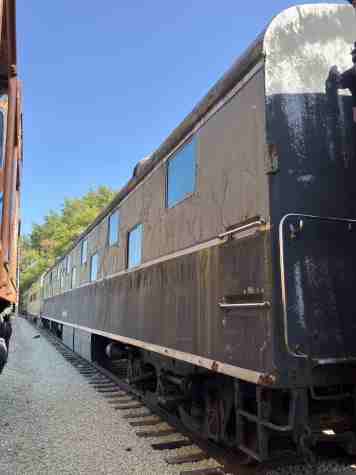
Canadian National 24 duplex roomette 2002 "Ingramport", built by Canadian Car & Foundry in 1950 and designed for long-distance accommodation and features private rooms that can be converted from daytime seating into nighttime bunks.
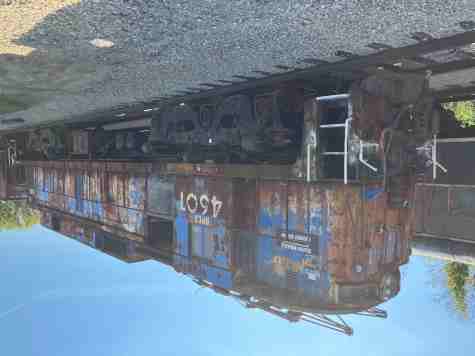
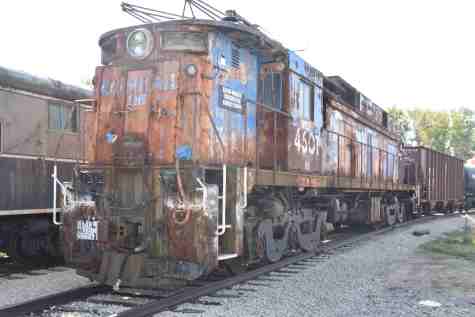
Conrail E-33 4601, ex. Railroad Museum of New England in Waterbury, Connecticut 1988-2015, exx. General Electric 4601 in Erie, Pennsylvania 1984-1988, exxx. Conrail 4601 1976-1984, exxxx. Penn Central 4601 1968-1976, exxxxx. New York New Haven & Hartford 300 1963-1968, exxxxxx. Norfolk & Western 231 1959-1963, nee Virginian 131, built by General Electric in 1956 to haul coal trains for the Virginian Railway. After retirement in the early 1980's, it was acquired by IRM and is the only former Virginian, as well as the only former New Haven, piece of equipment at the museum.
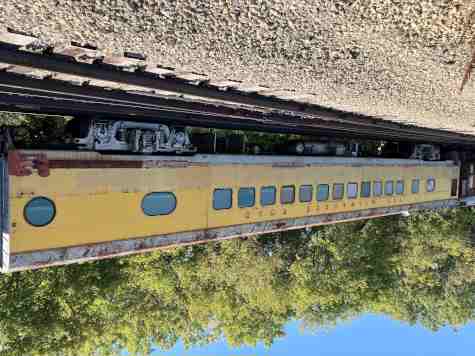
Milwaukee Road streamlined coach 542, built by the railroad in 1947 as a "day coach" to denote its configuration for longer-distance transportation, with more comfortable seating than a short-haul commuter coach.
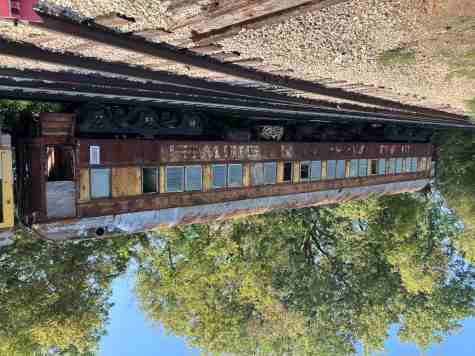
Pullman 6 compartment-3 double bedroom sleeper "Glen Alta", built by Pullman-Standard in 1925 and designed for long-distance accommodation and features private rooms that can be converted from daytime seating into nighttime bunks. It has a mix of six compartments, small rooms intended for two occupants, and three drawing rooms, larger compartments intended for 2-3 people. After it was retired by Pullman, this car was used for traveling circus performer accommodation as Royal American Shows car 81.
This specific car was highlighted in a Pullman brochure called "The Peripatetics of a Pullman Car". During 1929, car “Glen Alta” had traveled 149,784 miles; begun the year in New York City and ended it in Key West, Florida; and experienced temperatures between 6 degrees in Toronto and 86 degrees in Miami.
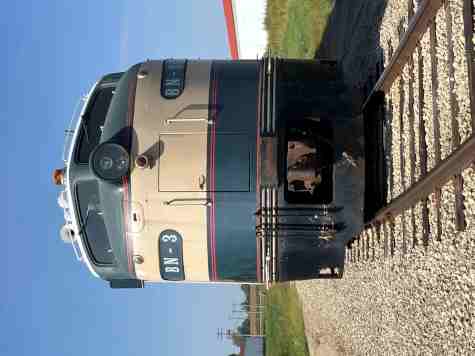
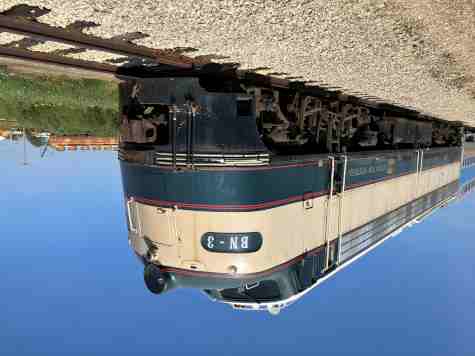
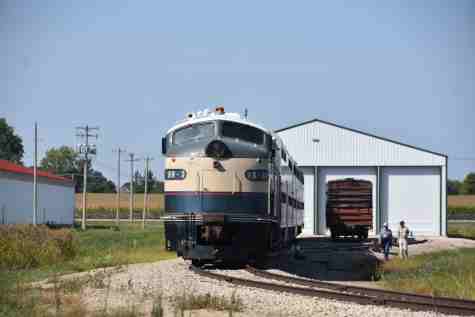
Burlington Northern E9AM BN3, ex. Burlington Northern Santa Fe BN3 1995-1997, exx. Burlington Northern BN3 1990-1995, exxx. Burlington Northern 9919 1973-1990, exxxx. Burlington Northern 9989 1970-1973, nee Chicago, Burlington and Quincy 9989A, built by Electro-Motive Division in 1956 to haul long-distance passenger trains such as the Denver Zephyr and was later rebuilt to pull commuter trains between Chicago and Aurora. In 1990, it was assigned to pull the BN executive train.
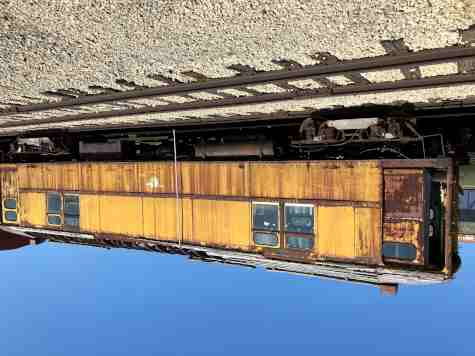
Chicago Transit Authority double end/double truck/line car S373, ex. privately owned in East Troy, Wisconsin 1987-1991, exx. Chicago Transit Authority 1972-1978, exxx. Chicago Transit Authority 4411, nee Chicago Rapid Transit 4411, built by Cincinnati Car Company in 1924. It is a self-propelled utility work car that was used for maintaining the Chicago elevated system in the 1970', originally built as a standard L car and modified for maintenance.
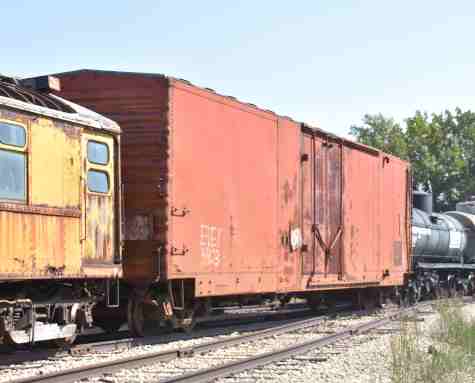
Santa Fe wooden boxcar 4403, built by American Car and Foundry in 1910 for general freight service over the AT&SF system. It is a "double sheathed" car, built with its major structural members concealed beneath tongue-and-groove wooden siding and is the oldest wooden boxcar preserved at IRM.
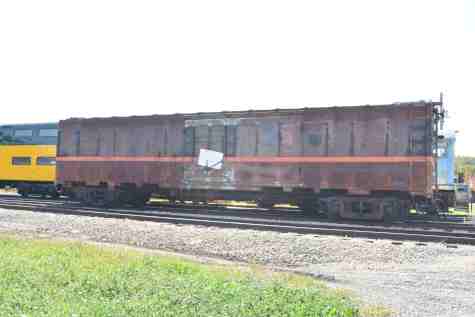
Department of Transportation refrigerated express box car 3, built by General American Transportation in 1957 and used for food products that required refrigeration. It is an ice reefer, with insulated sides and "bunkers" at each end where blocks of ice were loaded to keep the car's interior and contents cool. It was built for the Railway Express Agency and later rebuilt for utility use with the Urban Rapid Transit Program in the 1970s.
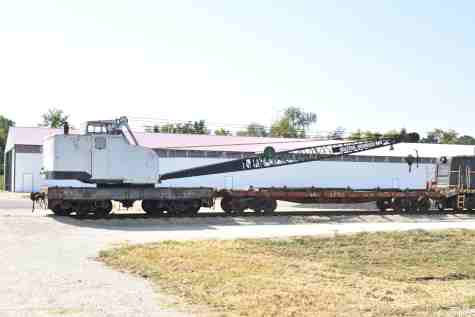
Commonwealth Edison self-propelled diesel-electric crane 19, built by Industrial Brownhoist in 1951 and designed for utility use. Cranes like this were commonly used for track maintenance and other chores. This crane was last used at ComEd's Fisk Generating Station, located in Chicago along the South Branch of the Chicago River near Cermak and Racine.
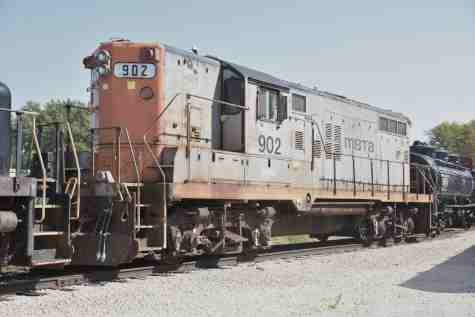
Illinois Railway Museum GP10 902, ex. Massachusetts Bay Transportation Authority GP9 902, exxx. South East Michigan Transportation Authority 902, nee Grand Trunk Western 4915, built by Electro-Motive Division in 1952.
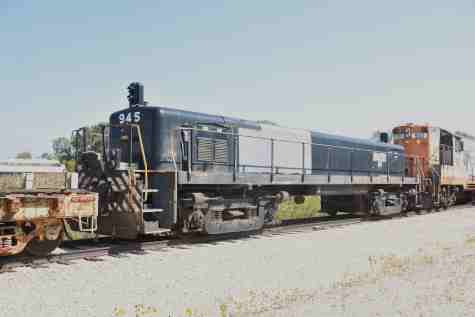
Norfolk Southern RP-A4U slug 945, ex. Norfolk Southern RP-A4U 9835, nee Southern Railway RS-3 2667, built by American Locomotive Company in 1977.
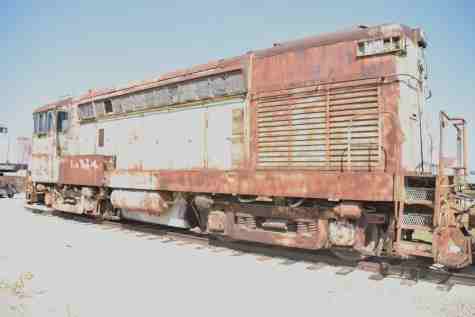
Union Pacific H20-44 1366, ex. Southwest Portland Cement 409 1969-c1984, exx. Southwest Portland Cement 66 1963-1969, exxx. Union Pacific 1366 1953-1963, exxxx. Union Pacific DS1366 1947-1953, nee demonstrator Fairbanks-Morse 2000, built by Fairbanks-Morse in 1947. As a demonstrator, it was painted for Fairbanks-Morse and sent to different railroads as a sales tool to demonstrate the design for potential customers.
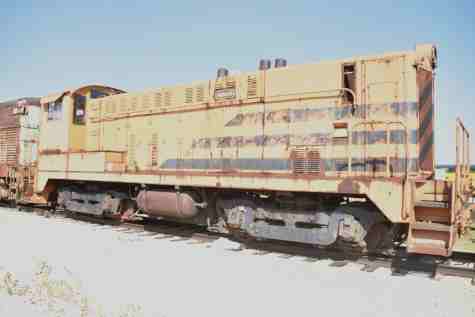
Wyandotte Terminal VO660 103, built by Baldwin Locomotive Works in 1945. It operated its entire career on the Wyandotte Terminal, a switching railroad located in a southern suburb of Detroit, Michigan.
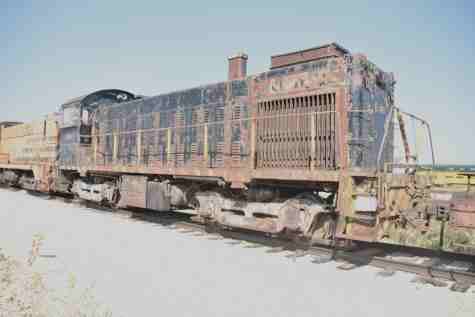
American Rolling Mill LS-1200 E110, built by Lima-Hamilton in 1951 to switch cars at low speed, but Lima failed to adapt well to the change from steam engines to diesels and went bankrupt in 1951. In fact, Armco E110 was the last locomotive built by the company and is one of only four Lima-Hamilton-built diesel locomotives in existence.
Lima-Hamilton was the result of a 1947 merger between the Lima Locomotive Works of Lima, Ohio and the General Machinery Corporation of Hamilton, Ohio. Lima was a renowned steam locomotive builder dating back to the 1870s. For decades, it concentrated on building low-speed geared freight locomotives known as Shays. Starting in the 1920s, it inaugurated the Super Power concept of high-tractive effort, high-speed steam locomotives. The company met with great success building these, but once World War II ended and railroads stopped ordering steam engines in favour of diesels, Lima was slow to adapt.
Its 1947 merger gave Lima the ability to use diesel engine technology already developed by General Machinery Corporation, but it did not sell its first diesel locomotive until 1949. Its engines also competed poorly with other, more established diesel manufacturers. Lima-Hamilton merged with the Baldwin Locomotive Works in 1951 to form Baldwin-Lima-Hamilton, but BLH discontinued the line of former Lima-Hamilton diesel locomotives in favour of more popular Baldwin diesel designs.
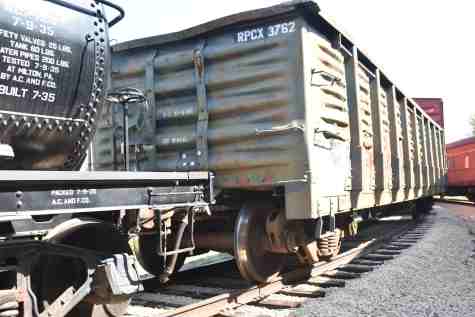
Atlantic & Western gondola 3762, nee Southern Pacific 8xxx, built by Gunderson Brothers Engineering Company in 1965 to haul ore and other heavy commodities. In later years it was used for hauling scrap steel or other heavy bulk freight over the A&W's railroad in North Carolina.
Gunderson got its start in 1919 when Chet and Alvin Gunderson opened a small electrical contracting company in Portland, Oregon. Their company began to specialize in automobile parts during the 1920s. In 1936 it began building truck trailers and then wheel hubs of a proprietary design. During World War II, the company engaged in ship building for the war effort. Gunderson worked as a subcontractor and built LCM-3 and LCM-6 landing craft as well as lifeboats.
After the war, Gunderson pivoted away from truck trailers and began supplementing its shipbuilding business with steel fabrication work, including bridges, industrial gates and water tanks and pipes. In 1958, it began building steel underframes for freight cars, and by the early 1960s, was constructing steel freight cars for several different railroads. Around the time A&W 3762 rolled out of the Gunderson plant in 1965, the Gunderson brothers retired and sold the company to FMC Corporation. The Gunderson plant has continued building freight cars up to the present, including development of a double-stack well car for intermodal service. Today it is a division of Greenbrier Corporation.
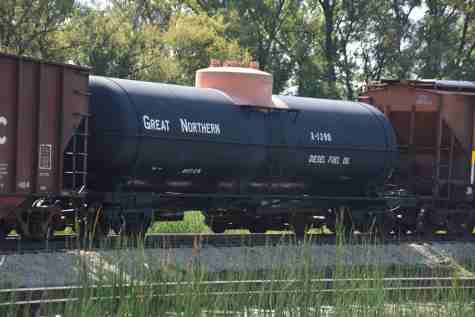
Great Northern single dome tank car X-1390, built by American Car and Foundry in 1956 to carry oil or other petroleum products with a 19,548 gallon capacity. It was used by the railroad for hauling waste oil and is the largest and most modern tank car preserved at IRM.
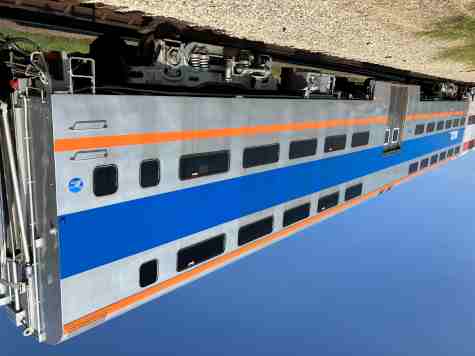
Metra bi-level commuter coach 7658, ex. Metra 7658 2014-2019, exx. Virginia Railway Express V430 2001-2014, exxx. Metra 7658 1983-2001, exxxx. Regional Transit Authority 7658, nee Chicago and North Western 25, built by Pullman- Standard in 1956. Designed for commuter service out of Chicago, it is known as a gallery car because the upper level is divided, with a gap down the middle to enable the conductor to collect fares from both levels while standing on the main or lower level. This car is from the second order for bi-level cars placed by the C&NW.
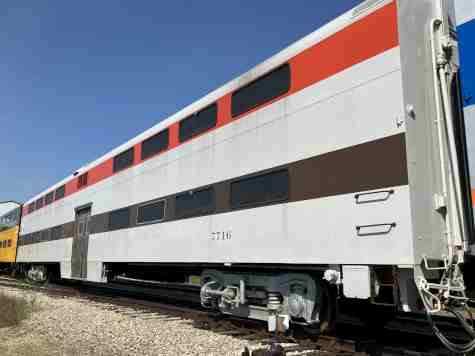
Regional Transportation Authority bi-level commuter coach 7716, ex. Hocking Valley Scenic Railway in Nelsonville, Ohio c2005-2024, exx. Metra 7716 1983-c2005, exxxx. Regional Transportation Authority 7716 1974-1983, nee Chicago and North Western 65, built by Pullman-Standard in 1960, designed for commuter service out of Chicago.
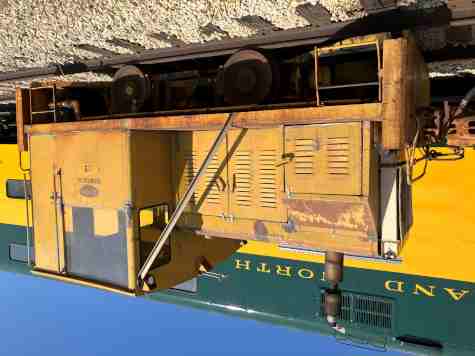
DuPont Diesel-TC-Mech JDT25 25, ex. DuPont 1963-2007, nee Bath & Hammondsport D2 1959-1963 built by Plymouth in 1959. Unlike most of the diesel locomotives at IRM, it does not have electric motors powering the wheels, but rather a mechanical clutch similar to a truck or automobile.
Plymouth was one of the most prolific builders of small internal combustion locomotives in America. Located in Plymouth, Ohio, the company – whose corporate name at the time was actually the Fate-Root-Heath Company – built its first gas-mechanical locomotive in 1910. It began constructing diesel-powered locomotives in the late 1920s. It built a handful of larger switchers, but almost all of its locomotives were small ones like this one and were built for industrial or mining operations. Plymouth remained in business until it was sold to Ohio Locomotive Crane in 1997.
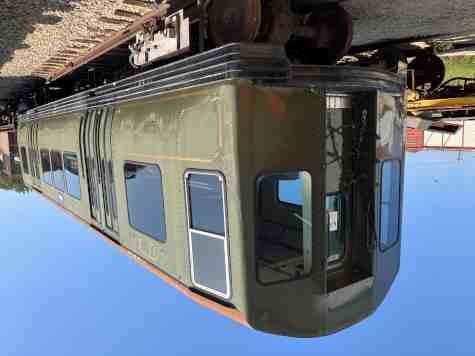
Chicago Transit Authority rapid transit car 2008, ex. Pullman Historic Site 2008 1999-2013, exx. Chicago Transit Authority 1992 1992-1999, nee Chicago Transit Authority 2008, built by Pullman in 1964. It was given a special livery as South Side Rapid Transit 1892-1992 and retired and stored in 1999.
Though they were fairly successful, they ran for fewer than 30 years, most of that time being spent on the Lake Street and Dan Ryan lines. In 1992, when the 2000's were being retired in favor of the new 3200-series cars, set 2007-2008 was repainted in a special livery of Pullman green with gold striping and a red roof. It was lettered "South Side Rapid Transit 1892-1992" to commemorate the 100th anniversary of the construction of Chicago's first elevated line.
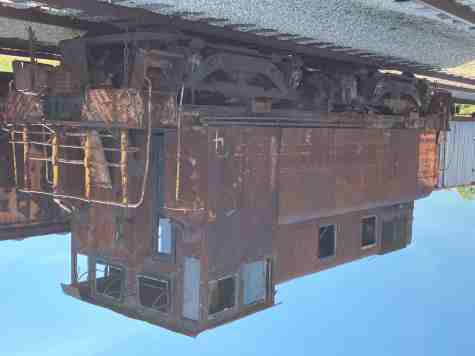
American Rolling Mill diesel-electric visibility B71, built by Baldwin-Westinghouse in 1930. A very early example of a diesel locomotive, it was built to switch cars for American Rolling Mill at low speed and was among the first diesels built with a "visibility cab" in an elevated location at one end of the engine, a feature later standard on diesel switchers.
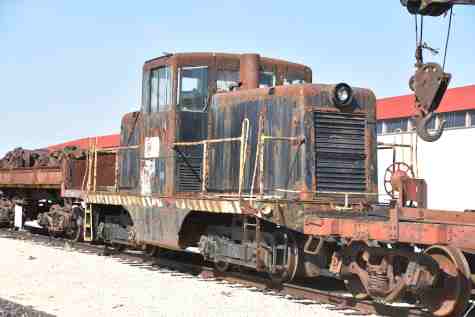
Terra Cotta Industries 44 ton switcher 501, nee United States Army 7492, built by General Electric in 1943 to move freight cars around the Terra Cotta manufacturing facility in Crystal Lake, Illinois.
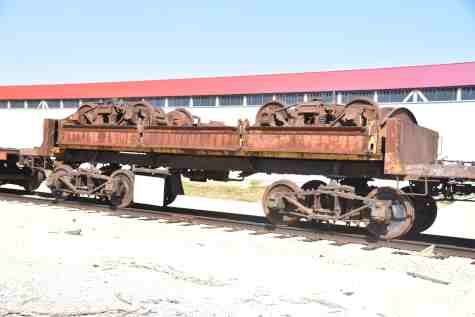
Milwaukee Electric Railway side dump trailer 208, built by Differential Car Company in 1921 for hauling gravel and other aggregate. It was designed to be hauled behind a motorized dump car and was used on the Wisconsin interurban system and the Milwaukee streetcar network in road and railway construction projects. Later in its life a cab and motors were added to make it into a self-propelled car, or dump motor.
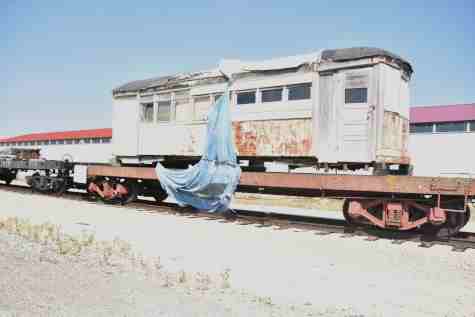
North Kankakee Electric Light & Railroad streetcar 116, ex. privately owned in Kankakee, Illinois, nee North Kankakee Electric Light & Railway 116, built by McGuire-Cummings Manfacturing Company in 1917. It is a rare example of a pre-Birney single-truck car. After World War I, those cars became ubiquitous, but before that it was common for streetcar builders to sell homegrown designs for single-truck streetcars. It ran between Kankakee and Bourbonnais, Illinois until streetcar service on the line ended in 1932, at which time it was made into a shed. The car body was acquired by IRM in 2003 and is in storage awaiting restoration.
The car is sitting on Milwaukee Electric flat car E117, built from a steel gondola, original builder and year unknown.
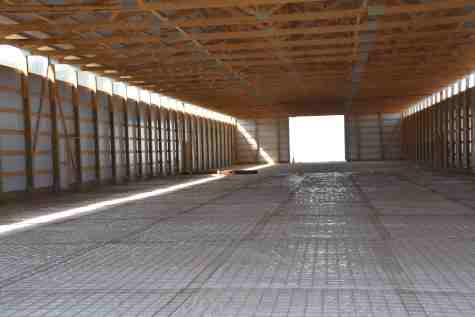
Car barn 15 under construction.
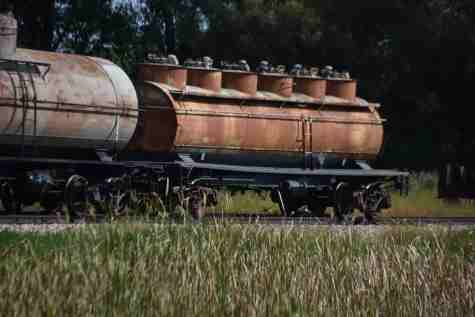
General American Transportation tank car 33519, built by the company in 1941 to carry as much as 6,000 gallons of wine in separate compartments. It is an unusual example of a tank car with six domes, one for each compartment. The car was acquired in 2008 from the California State Railroad Museum.
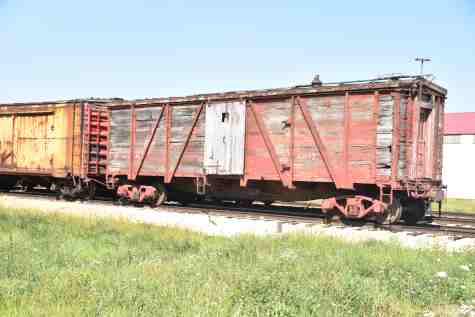
Wisconsin Central box car 131650, built by American Car & Foundry Company in 1914 for general freight service over the WC and Soo Line system in the upper Midwest. It is a very early example of a "single-sheathed" car, built with exposed structural members and only a single layer of siding. This particular series of car was known as a saw tooth car due to the appearance of the framing along the bottom of the car.
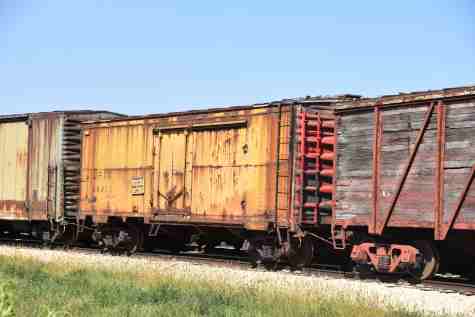
Union Refrigerator Transit refrigerated boxcar 66221, built by General American Transportation in 1964 for meat and other food products that required refrigeration. It has insulated sides and "bunkers' at each end where blocks of ice were loaded to keep the car's interior and contents cool. It was owned by a company which leased it out to railroads and industrial customers; 66221 was leased to the Oscar Mayer company.
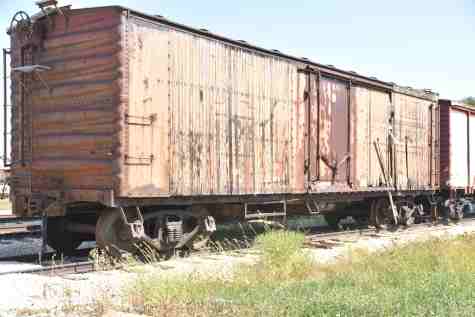
Chicago Rock Island & Pacific insulated boxcar 20519, built by North American Car Company in 1927 for transporting temperature-sensitive food products. Unlike a refrigerated boxcar, it is not designed to cool its contents using ice or mechanical means. The lack of ice cooling is why the car is lettered with the "Dri-Protecto" advertising slogan. It was owned by the North American Car Company and modernized in 1960 before being leased to the Chicago Rock Island & Pacific Railroad under CRIX reporting marks.
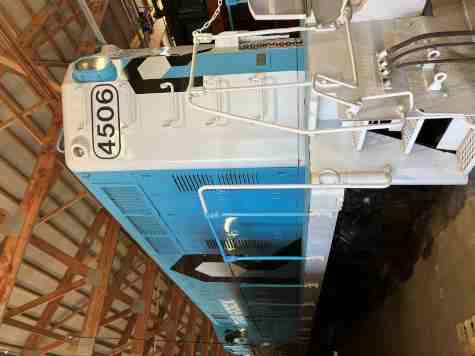
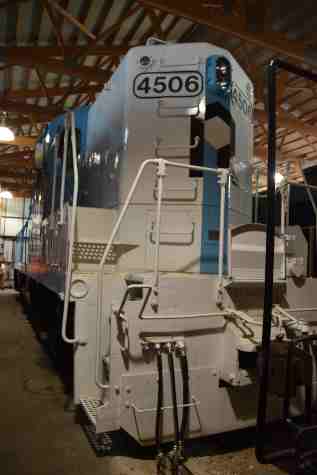
Chicago Rock Island & Pacific GP7R 4506, ex. Union Pacific 4160 1995-2007, exx. Chicago and North Western 4160 1981-1995, exxx. Precision National 4506 1980-1981, exxxxx. Chicago Rock Island and Pacific 4506 (leased from Precision National) 1976-1980, nee Chicago Rock Island and Pacific 1266, built by Electro-Motive Division in 1952. It was retired from service in 1998 acquired by IRM in 2007 and restored to its 1976 appearance in 2018.
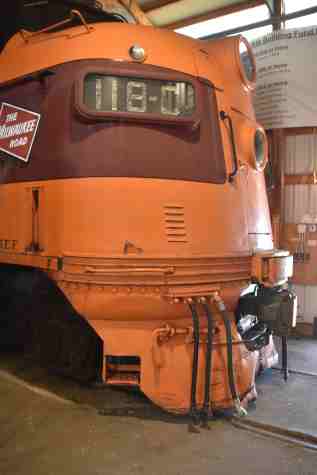
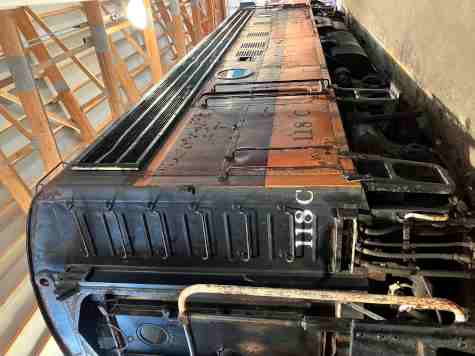
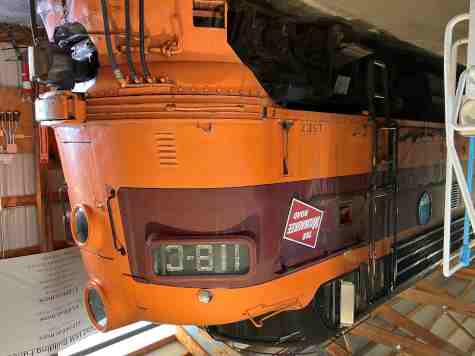
Milwaukee Road F&A 118C, built by Electro-Motive Division in 1951.
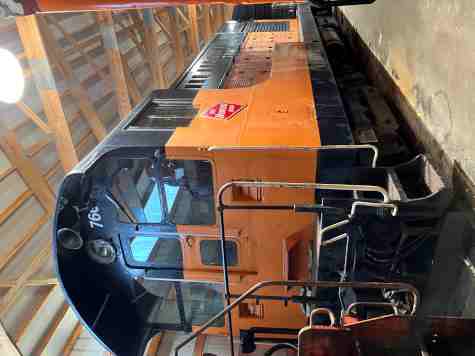
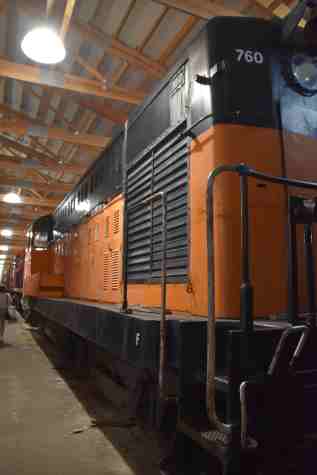
Milwaukee Road H10-44 760, built by Fairbanks Morse in 1944; the first diesel locomotive built by that company in Beloit, Wisconsin. Best known for marine engines (including submarine engines), 760 was the first of some 1,400 locomotives they built between 1944 and 1963.
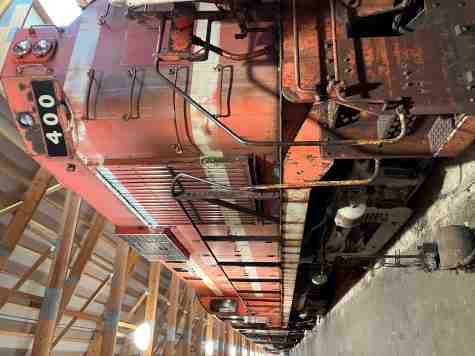
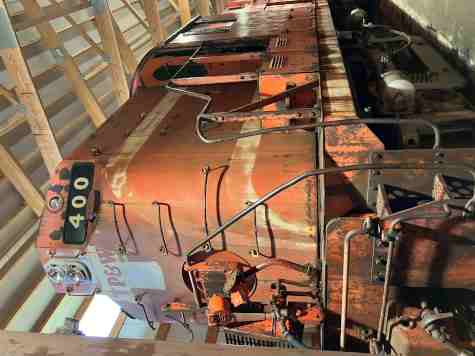
Toledo Peoria & Western RS11 400, built by American Locomotive Company in 1958.
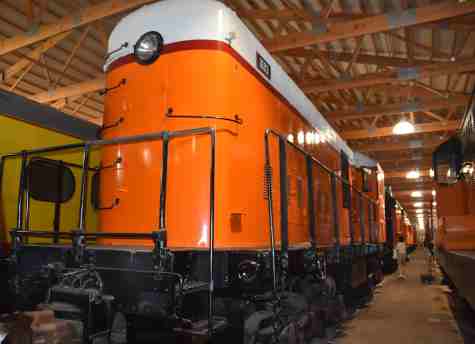
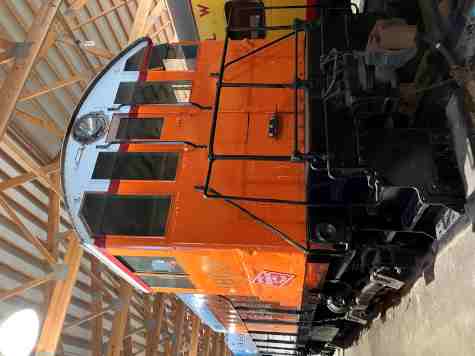
Milwaukee Road HH660 1603, built by American Locomotive Company in 1939.
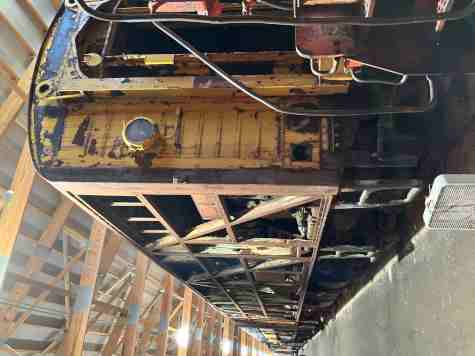
Milwaukee Road F&B 96B, built by Electro Motive Division in 1951. After retirement it was rebuilt as a generator car to power a rotary snow plough.
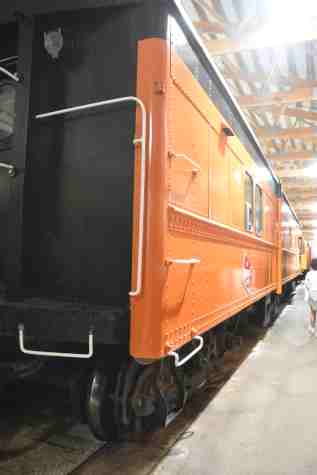
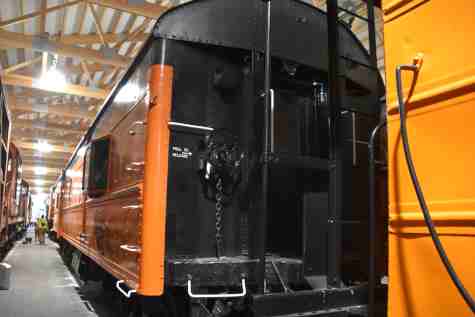
Milwaukee Road dynamometer car X5000, built by the railroad in 1929, used to measure locomotive performance in real-world conditions. It is fitted with test equipment for recording the power, speed and other information about the locomotive pulling it. It also has a kitchen and bunks for the equipment operators, who would travel around the railroad with the dynamometer car.
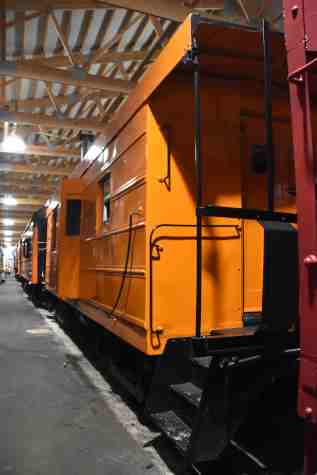
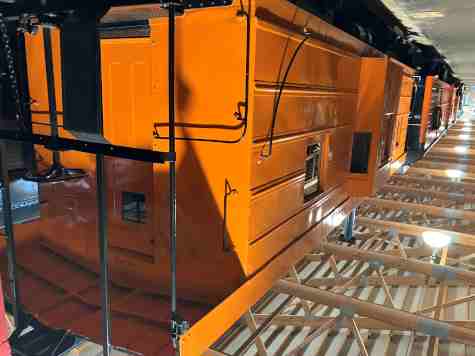
Milwaukee Road steel bay window caboose 01984, built by railroad in 1946. Instead of a cupola on the roof, the bay window on each side affords the conductor better visibility over his train.
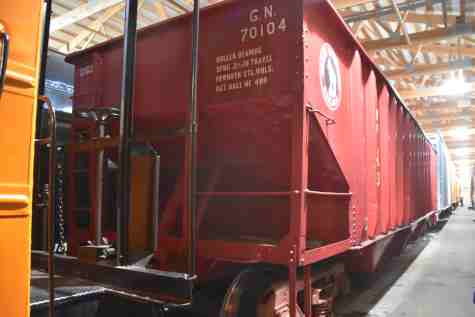
Great Northern hopper car 70104, built by Pullman-Standard in 1957 for hauling coal and other aggregate.
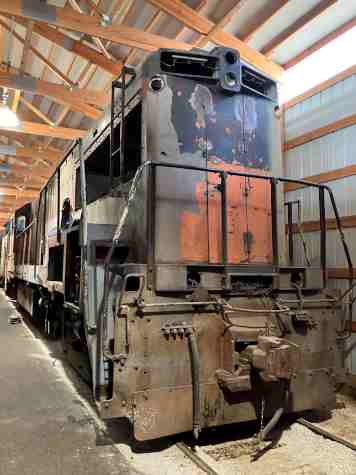
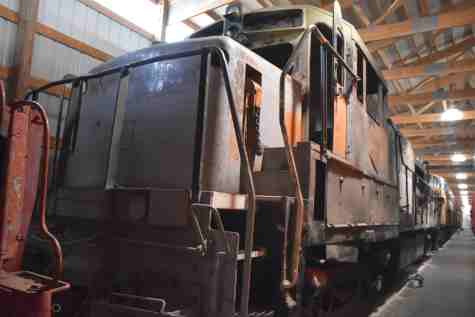
Milwaukee Road U25B 5056, ex. Miller Compressing in Milwaukee, Wisconsin 1984-1993, exx. Milwaukee Road 5056 1974-1984, exxx. Milwaukee Road 5006 1968-1974, nee Milwaukee Road 387, built by General Electric in 1965. It is an example of the first-commercially successful diesel locomotive built by General Electric and the oldest Universal-series locomotive at IRM.
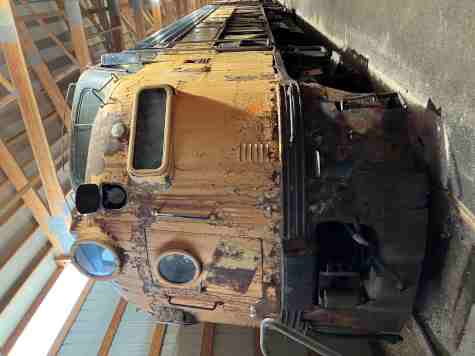
Milwaukee Road FP7A 104C, built by Electro-Motive Division in 1952.
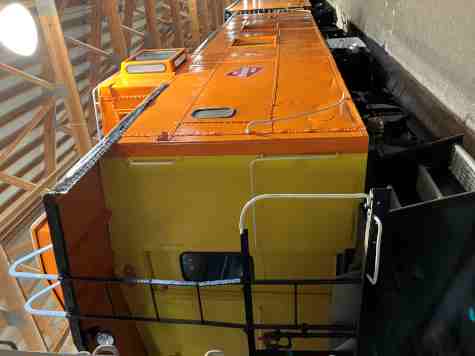
Milwaukee Road all-steel caboose X5001, ex. Soo Line X5001 1986-2001, exx. Chicago Milwaukee St. Paul and Pacific X5001 c1970-1986, nee Chicago, Milwaukee St. Paul & Pacific drovers caboose 01612, built by the railroad in 1929.
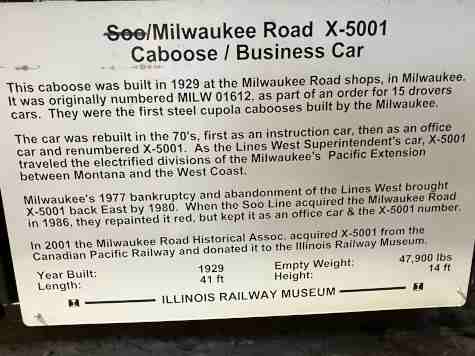
Milwaukee Road X5001 story board.
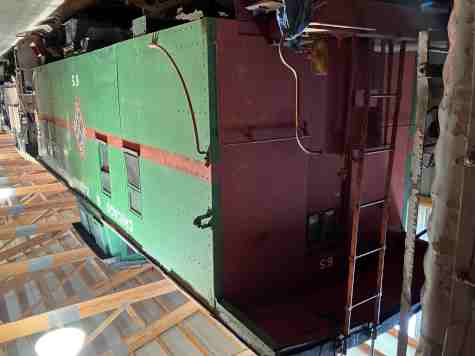
Chicago & Illinois Midland caboose 65 built by American Car and Foundry in 1927.
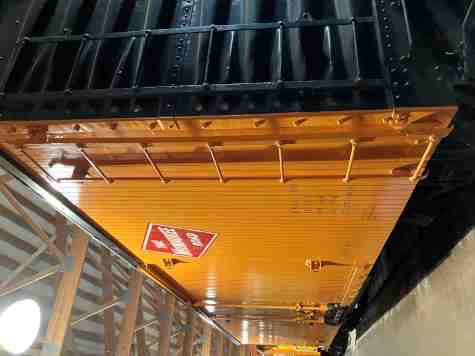
.
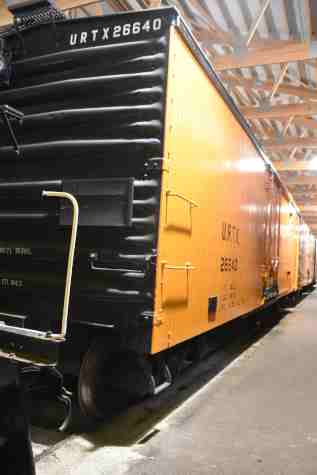
Union Refrigerator Transit refrigerator car 26640, built by General American Transportation in 1931.
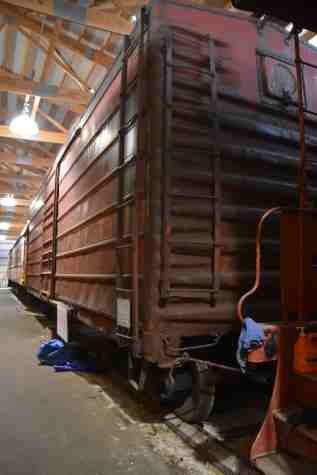
Milwaukee Road box car 19331, built by the railway in 1940.
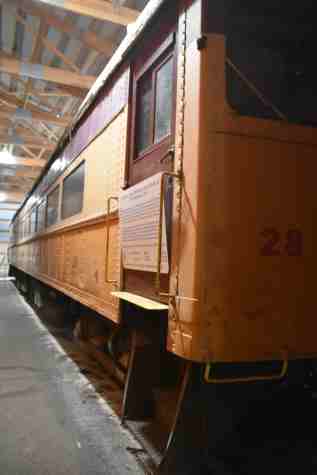
Chicago, South Shore and South Bend heavyweight steel coach 28, ex. Wisconsin Electric Railway Historical Society in East Troy, Wisconsin 1984-1989, nee Chicago South Shore & South Bend 28, built by Standard Steel Car Company in 1929. In the 1940s the car was modernized; cut in half and an 18 foot section was inserted into the middle of the body to lengthen the car while at the same time it gained widened sealed windows and was air-conditioned. It ran in service for 55 years until it was retired in 1984.
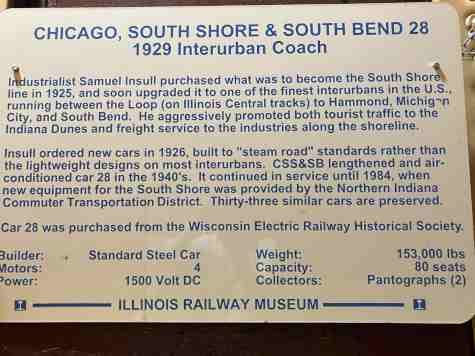
Chicago, South Shore and South Bend 28 story board.
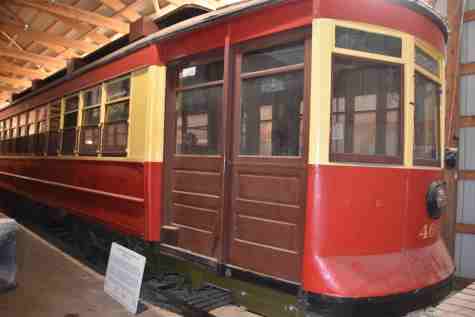
Chicago Transit Authority streetcar 460, ex. Chicago Transit Authority 1947-1985, exx. Chicago Surface Lines 1914-1947, nee Chicago Railways, built by Pullman Company in 1908. These cars were used all over the city but were best known on the north and west sides. They were used for more than 45 years in Chicago and were retired in the mid-1950s. Car 460 has been restored to its early 1950s appearance.
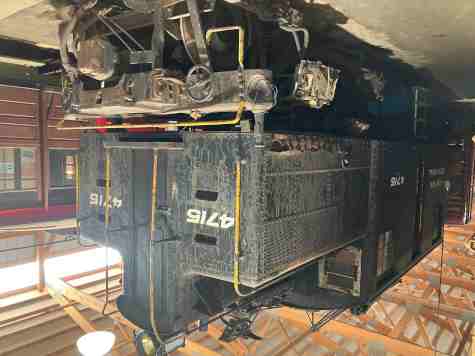
Penn Central "S" Motor 4715, ex. Conrail 4715 1976-1989, exx. Penn Central 4715 1969-1976, exxx. New York Central 115 1936-1969, exxxx. New York Central 1115 1917-1936, nee New York Central 3215, built by American Locomotive Company and General Electric in 1906. It is the oldest electric locomotive preserved at IRM and was built to haul passenger trains north out of Grand Central Terminal in New York City because steam engines could not be used in the Park Avenue Tunnel. It has a "bi-polar" motor design wherein the locomotive’s main axles form the core of the motor armatures.
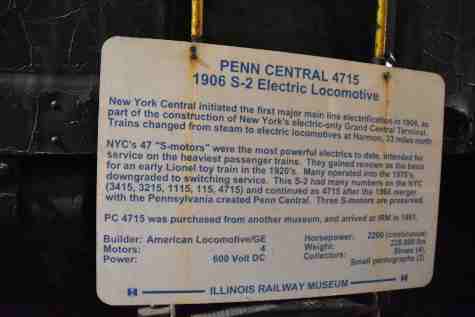
Penn Central 4715 story board.
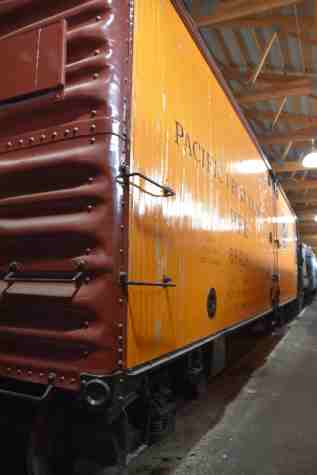
Pacific Fruit Express wooden refrigerator car 68428, built by the company in 1948.
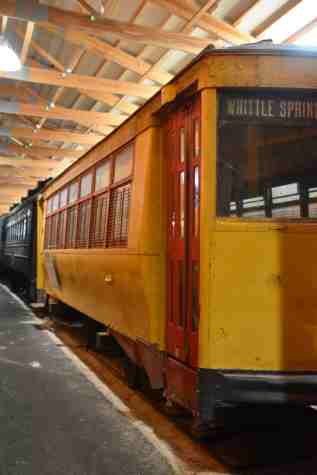
Knoxville Power & Light streetcar 419, ex. privately owned in Knoxville, Tennessee (shed) 1939-1992, nee Knoxville Power & Light 419, built by Cincinnati Car Company in 1925. Known as a Cincinnati curve-sider", it was built with curved sides to maintain strength while reducing weight, a design patented by the Cincinnati Car Company. Additionally, it is an unusual single-truck (four-wheel) version of the type and has the dubious distinction of being the only streetcar at IRM that was subject to Jim Crow segregation laws while it was in service. During its operating career in Knoxville, it racked up 362,773 miles.
Knoxville was the only city in the country where every streetcar was fitted with a mail slot. This practice dated to 1913, when the local postmaster decided making the city's streetcars roving mailboxes. Any person could walk up to a (hopefully stopped) streetcar and drop a letter into the side of the car. Car 419 still has its original exterior mail slots built into its sides.
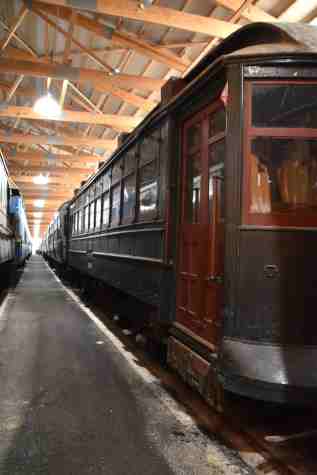
Chicago Surface Lines suburban car 2846, ex. Electric Railway Historical Society in Downers Grove, Illinois 1958-1973, exx. Chicago Transit Authority AA98 1947-1958, exxx. Chicago Surface Lines 2846 1914-1947, exxxx. Calumet & South Chicago 831 1908-1914, nee South Chicago City Railway 332, built by the company in 190. It is the only car of its type in existence and was one of eleven cars known as "Interstates" because for many years, they operated in through-service between 63rd Street in Chicago and East Chicago, Indiana over the tracks of the Hammond Whiting & East Chicago Railway. These cars were the only streetcars in Chicago that had railroad roofs. The CSL rebuilt car 2846 into a salt spreader during WWII. The car is largely intact but lacks its original trucks.
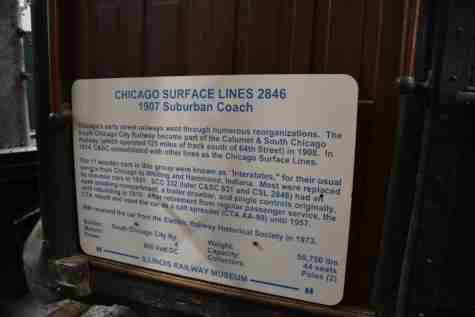
Chicago Surface Lines 2846 story board.
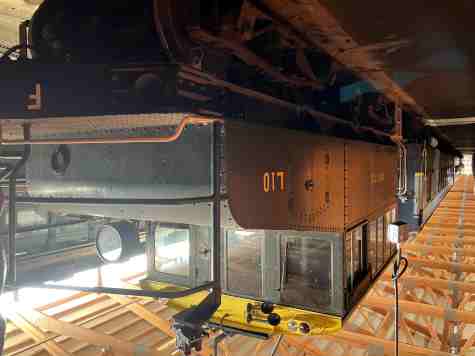
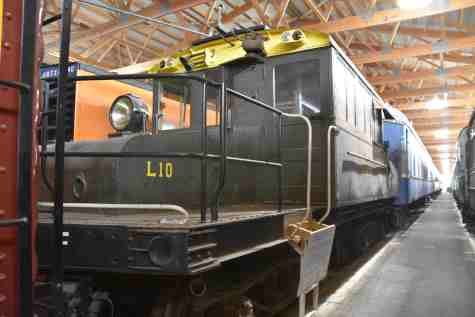
Milwaukee Electric Railway and Transport steeplecab electric L10, ex. Wisconsin Electric Power Company 1974-1988, exx. The Wisconsin Electric Railway Historical Society in East Troy, Wisconsin 1972-1974, exxx. Wisconsin Electric Power Company 1963-1972, nee The Milwaukee Electric Railway & Transport Company built by the company in 1944.
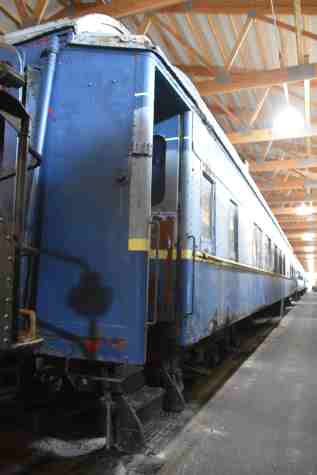
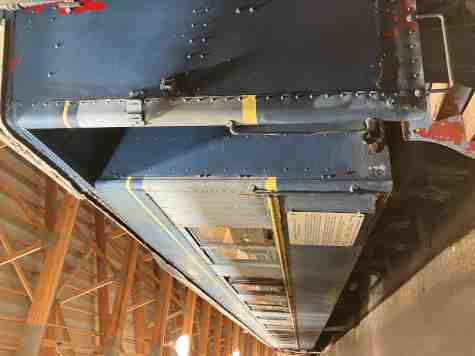
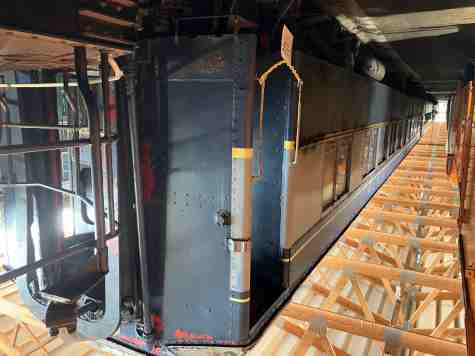
Pullman 10-section sleeping car "Villa Falls" 1930, nee Pullman "Delcambre", built by Pullman/Pullman-Standard in 1913.
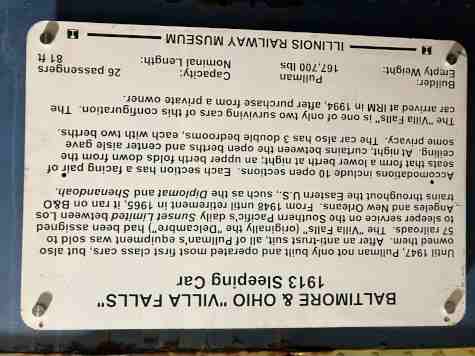
"Villa Falls" story board.
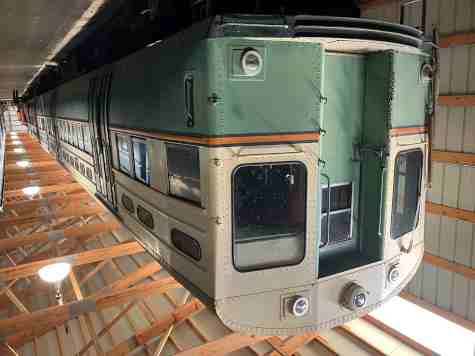
Chicago Transit Authority aluminium-bodied PCC "L" car 6461, nee Chicago Transit Authority 1954-1986, built by St. Louis Car Company in 1954. It is among the most original of the preserved 6000-series cars and retains its original controls and conductor's station.
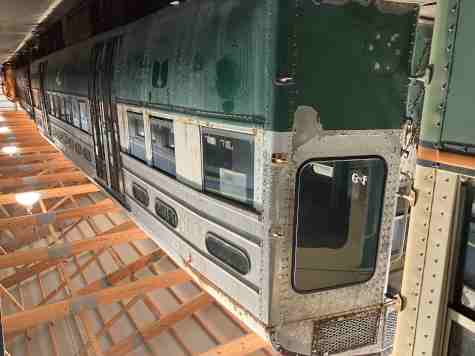
Chicago Transit Authority aluminium-bodied PCC "L" car 6462, nee Chicago Transit Authority 1955-1986, built by St. Louis Car Company in 1955.
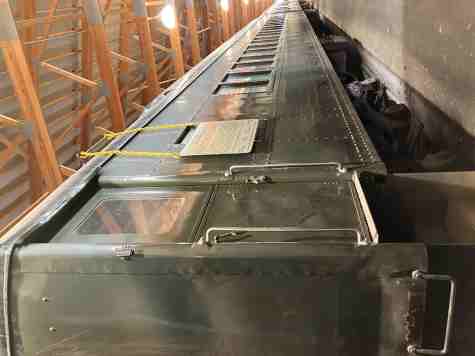
Ilinois Central all-steel heavyweight coach 2804, built by Pullman/Pullman-Standard in 1925. When new, it was segregated into White and Black seating areas complete with separate bathrooms due to “Jim Crow” laws in southern states through which the IC ran. In the 1950s it was rebuilt without these features.
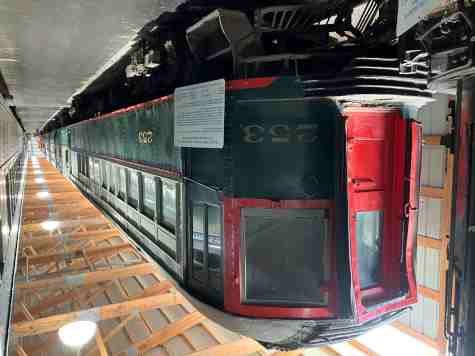
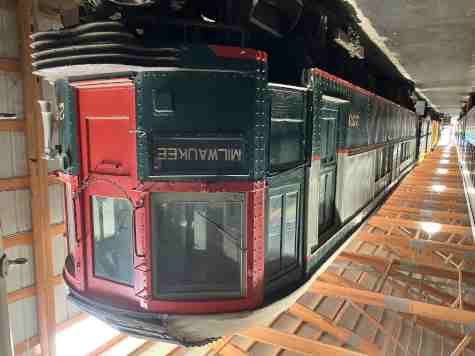
Chicago, North Shore and Milwaukee steel combination passenger-baggage 253, built by the Jewett Car Company in 1917 and designed for high-speed service between Chicago and Milwaukee. It retains a largely original interior with stained-and-varnished mahogany walls.
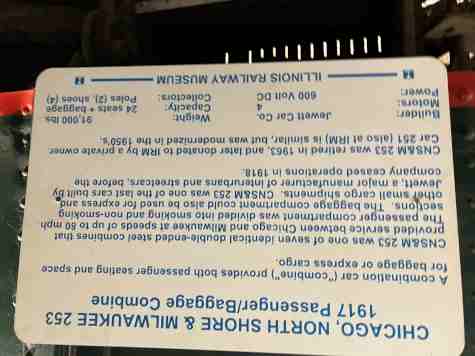
Chicago, North Shore and Milwaukee 253 story board.
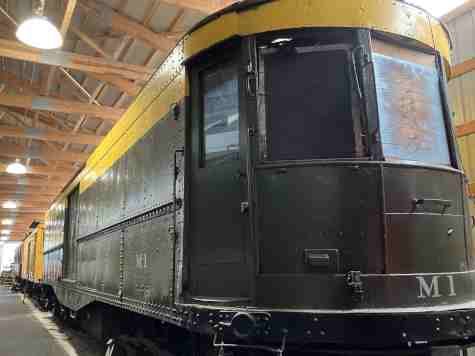
Milwaukee Electric electric freight motor M1, ex. Wisconsin Electric Railway Historical Society in East Troy, Wisconsin 1972-1988, exx. Wisconsin Electric Power Company M1 1963-1972, exx. The Milwaukee Electric Railway and Transport Company M1, nee The Milwaukee Electric Railway & Light Company M1, built by the company in 1917. In later years it was used as a utility car at the Port Washington Power Plant near Milwaukee.
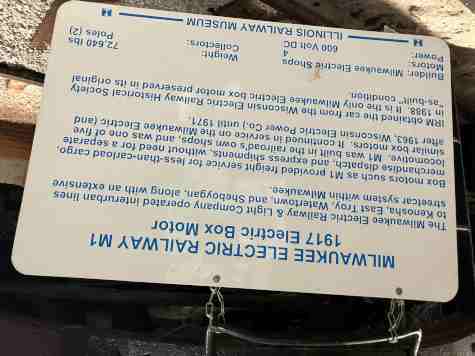
Milwaukee Electric M1 story board.
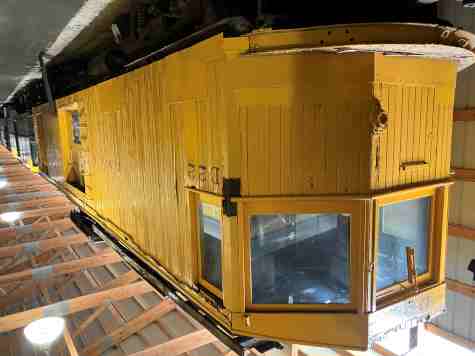
Milwaukee Electric overhead line car D22, ex. The Wisconsin Electric Railway Historical Society in East Troy, Wisconsin 1972-1989, exx. Wisconsin Electric Power Company D22, exxx. Milwaukee Electric Railway & Transport Company, nee Milwaukee Electric Railway & Light Company D22, built by the company in 1927 using components from a cab-on-flat locomotive constructed in 1907. It has a rooftop platform for workers maintaining the overhead trolley wire, and was used to maintain overhead wire on the Wisconsin interurban network into the late 1940s.
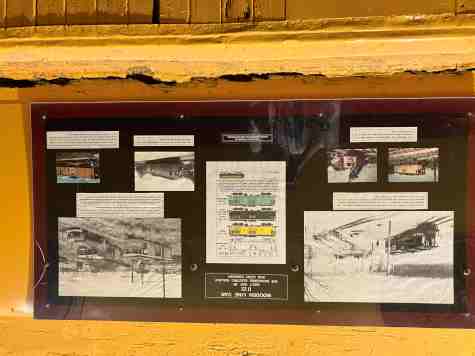
Milwaukee Electric D22 story board.
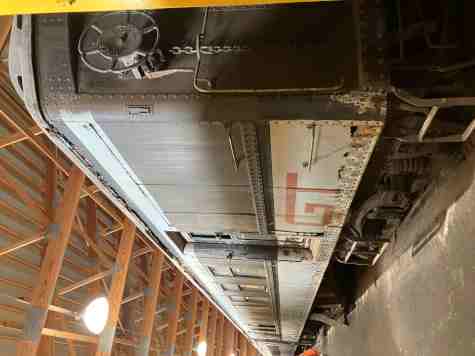
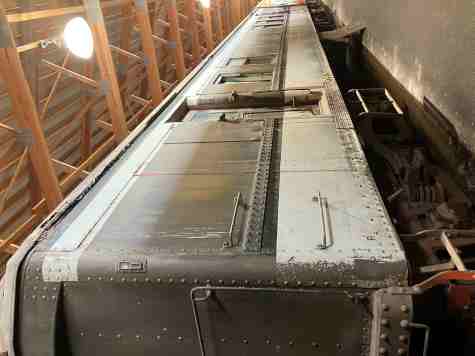
Grand Trunk Western steel railway post office car 9695, built by Pressed Steel Car Company in 1914.
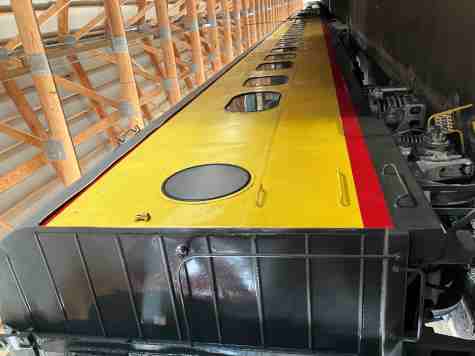
Milwaukee Road sleeping car 649, built by the company in 1947 as a "Touralux" sleeping car, a marketing name that the Milwaukee Road gave to its more modern cars fitted with open section sleeping accommodations, i.e. fold-down bunks separated only by curtains. In this guise the car was numbered 5772 and bore the name “Granite Falls.” In 1951 the car was rebuilt as a standard day coach, numbered 552 and in 1956 it was renumbered as 649.
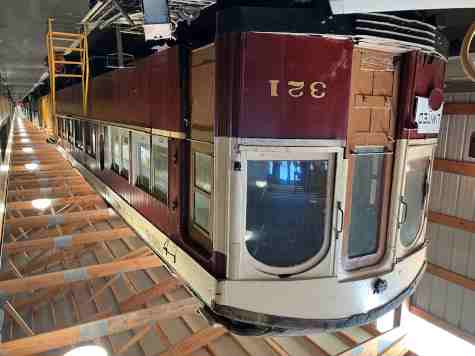
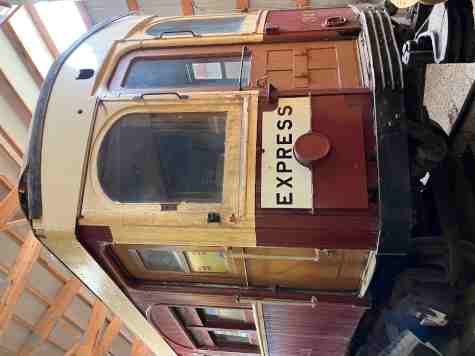
Chicago Aurora and Elgin double-end wooden interurban coach 321, nee Aurora Elgin and Chicago 321, built by Jewett Car Company in 1914 and designed for high-speed service between Chicago and the Fox River Valley. It was the last wooden car built new for the CA&E, and in fact when built, was already outdated because other companies had switched over to steel construction.
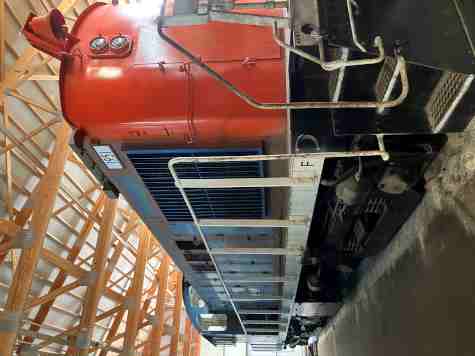
Grand Trunk Western RS1 1951, built by American Locomotive Company in 1957. It was the RS1 built for an American customer.