




After that great train ride on the Potomac Eagle Scenic Railroad, Chris Parker's and my next destination would be the Horseshoe Curve National Historical Landmark just west of Altoona, Pennsylvania. We went north on WV 28 back towards Cumberland. As we neared that town, we crossed the C&O Canal and found a place to park to get a picture.
The C&O Canal. Back on the move our next stop was less than a mile north at the CSX Cumberland Locomotive Maintenance Facility. All our photographs were taken through the fence as we never trespass.
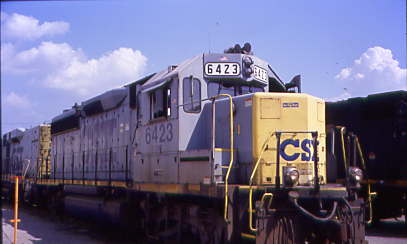
CSX 6423.
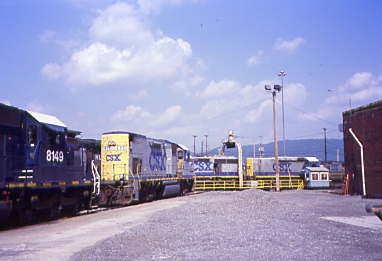
CSX 8149 and 1523.
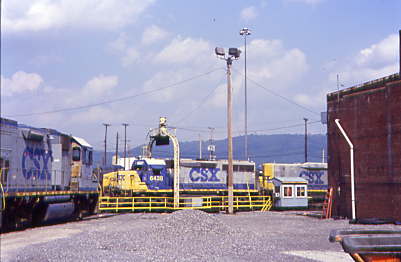
CSX 6438 rode the turntable on this afternoon.
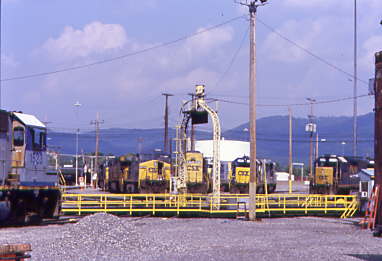
CSX 1523 overlooked the turntable.
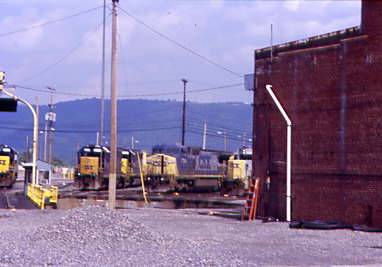
CSX 7704 kept on eye on its mates.
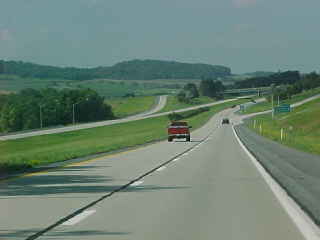
After seeing all this motive power, we took US 220 north to Bedford, which turned into Interstate 99, our route to Altoona. As we neared Duncanville, we crossed over some railroad tracks and spotted some locomotives. Four miles of back tracking took us right to them.
The Everett Railroad Company 7/15/2006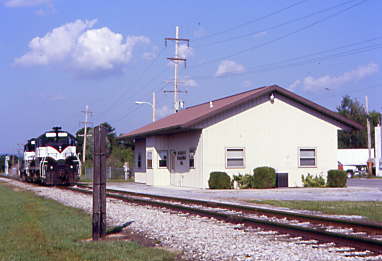
The Everett Railroad Company is a class-III common carrier railroad offering carload freight service in Blair County, Pennsylvania. The interchange carrier is Norfolk Southern at Hollidaysburg, Pennsylvania. The Everett Railroad Company (EV) and its affiliate, the Hollidaysburg & Roaring Spring Railroad Company (HRS), are both handling line carriers for Norfolk Southern. EV and HRS together operate 25 miles of track serving the communities of Roaring Spring, Martinsburg, Curryville and Claysburg.
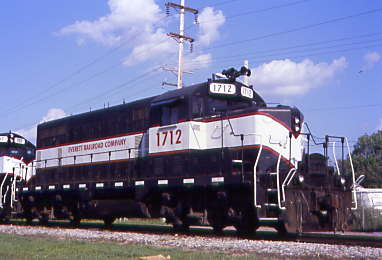
Everett Railroad 1712.
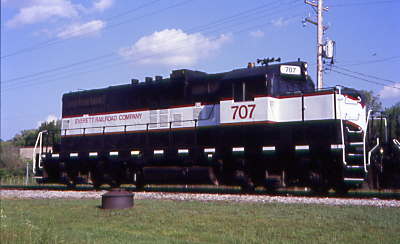
Everett Railroad 707.
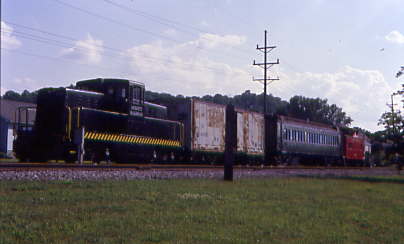
Everett Railroad Display Train.
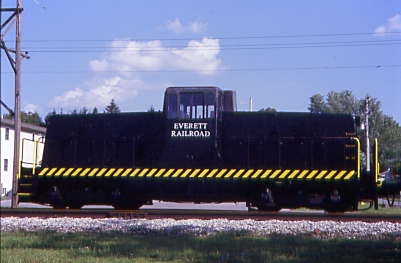
Everett Railroad 80 toner 4. After our photographs, we drove north stopping at a Sheetz gas station for a Krispy Creme donut and Coca-Cola. From there, we drove to the Horseshoe Curve for my first ever on-the-ground visit to this historic railroad location on July 15, 2006.
Horseshoe Curve National Historical Landmark - a first ground visit 7/15/2006Chief engineer and later president of the Pennsylvania Railroad, John Edgar Thomson, raised the funds and designed the solution to the problem which was to lay tracks on which trains could cross the mountains directly. The route that he chose proceeded west of Altoona here it rose 122 feet at a practical grade of less than 2% that a train of average length could manage with a helper locomotive. In order to construct this line, Thomson hired Irish laborers from Counties Cork, Mayo and Antrim who lived in camps along the way. They worked with the only tools available at that time--picks and shovels--to cut away the front of a mountain to form a ledge on which they could place the tracks that appear in the image by William T. Purviance made around 1858. The soil and rocks that they removed were hauled in mule-drawn carts to fill two deep intervening ravines on either side of the center of the curve that a careful look at the photograph reveals. The tracks went up the eastern side of the mountain, turned left to cross the valleys to the western side where they turned left again. The result resembled a horseshoe, which is obvious from the air.
The opening of the Horseshoe Curve on February 15, 1854, was the climax of numerous efforts during the previous century to develop a comparatively rapid and inexpensive method of joining the East and West through Pennsylvania. Travel time between Philadelphia and Pittsburgh was reduced from four days on the State Works to approximately fifteen hours. Initially, the cost was lower, as well. The rails' conquest of the mountains enabled the Pennsylvania Railroad to form alliances with other lines so that by the 1880s it had reached the Midwestern cities of Indianapolis, St. Louis, and Chicago. During the first half of the 1900s, the Horseshoe Curve was considered, along with the Panama Canal, the Empire State Building, and the Bay Bridge at San Francisco, one of the engineering "Wonders of the World." In time, the Horseshoe Curve became not only a vital link in the nation's transportation system, but also a tourist attraction. Pennsylvania Railroad officials promoted interest by requiring conductors to notify passengers that they were approaching the curve and featuring it on the covers of its calendars, annual reports, and other publicity. In 1865, they built a station on its eastern side at least partly for passengers who wanted to pause at the Curve. They beautified the area in 1879 by planting flowers and building a watchman's shack in the form of a Swiss cottage. The Columbian Exposition of 1893 in Chicago contained a model of the Curve that led curious passengers to board trains that rounded the area. With the increase in automobile traffic, sightseers drove to the park that had developed nearby. In 1932, the state's highway department placed a hard surface on the road to the curve and dedicated it with a "500-car motorcade."
Because of the public's continuing interest, in 1967, the National Park Service named the Horseshoe Curve a National Historic Site. The officials in the early 1990s worked with the state government, the "Pennsy's" successor, Conrail, and other agencies to develop the site by constructing new highways, an exhibit building, gift shop, and inclined plane to carry visitors up the mountain to the point where they can watch passing trains at close range. Still an important transportation artery connecting eastern and western sections of the state and nation, and a significant tribute to the vigorous efforts of engineers and laborers, the Horseshoe Curve has become one of Pennsylvania's most popular historic landmarks viewed by hundreds of thousands of visitors from all over the United States and many foreign countries.
The above information taken from http://www.docheritage.state.pa.us/documents/hshoe.asp
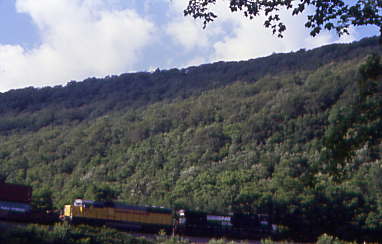
As I walked up the stairs the first train came around the curve NS 8356 East.
Just as I neared the top a westbound was going around and had these helpers on them.
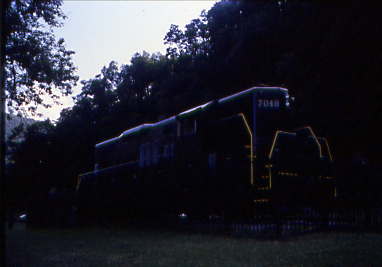
Pennsylvania Railroad 7048 on display at the Horseshoe Curve.
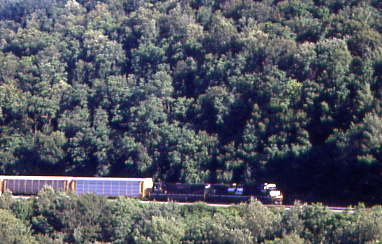
Next, NS 9905 East came around the curve in these three views on Track 2.
Then on Track 1, came NS 8351 East. With Chris Parker and I both hungry, we walked down the stairs but both knew we would be back here tomorrow afternoon much earlier and in better light. We drove to Altoona looking for a place to eat and found the Kings Family Restaurant where we had an excellent meal. After dinner on the way out of town, we stopped at the Railroaders Memorial.
Railroaders Memorial Museum Altoona, PA 7/15/2006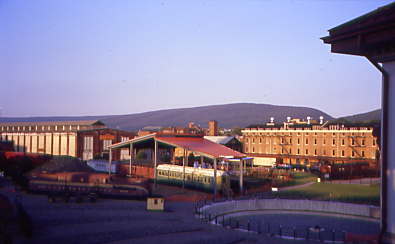
I walked in through the gate and started looking around.
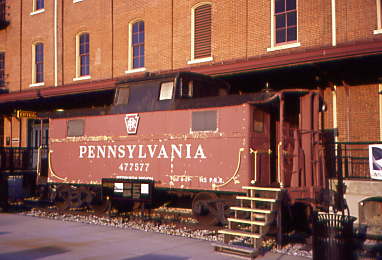
Pennsylvania Railroad Caboose 477577.
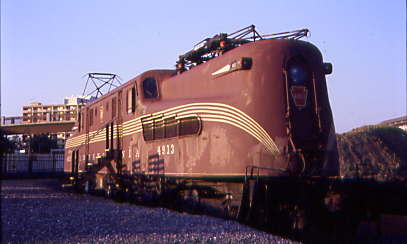
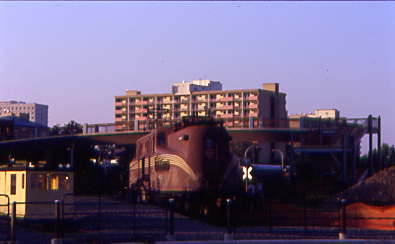
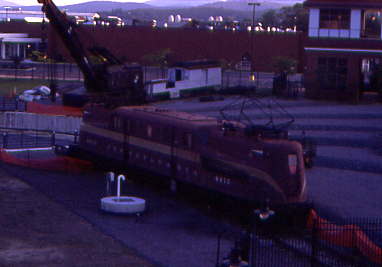
Pennsylvania Railroad GG-1 4913 on display here.
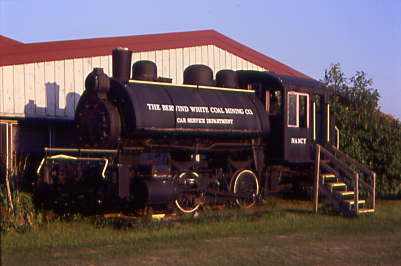
Berwind White Coal Mining Company 0-4-0T "Nancy".
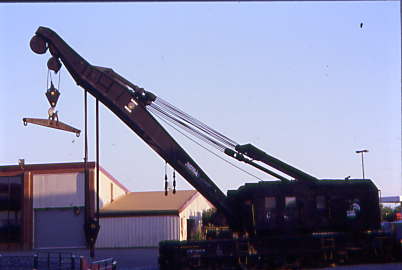
Conrail Crane.
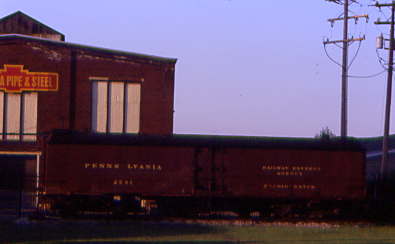
Pennsylvania Railroad 2561 Railway Express Agency Refrigerator. With that picture taken, Chris and I checked out both of the walkway bridges over the tracks. There were no trains but it gave us ideas for future visits. After that, we drove north on Interstate 22 to Tyronne then turned east onto PA 453 to US 22 which took us to Huntington.
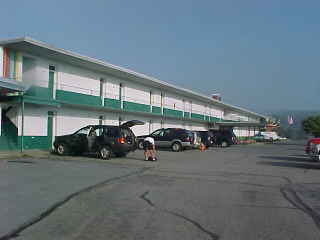
Here we spent the night at the Huntington Motor Inn and waited for our next two new rail experiences on the East Broad Top Railroad and Rockhill Trolley Museum.