




|
|
|
The Golden State Model Railroad Museum has a long
history in the East Bay. Operated by the East Bay Model Engineers Society,
the history of this group goes back to the early 1930's. The club was
originally located on Halleck St on the Oakland / Emeryville border, taking
up an old Santa Fe railroad warehouse. By the mid 1980's the group was
forced to find a new home. They relocated to their current location in
Point Richmond during the late 80's and re-opened to the public in 1991.
You can learn more
about GSMRM here
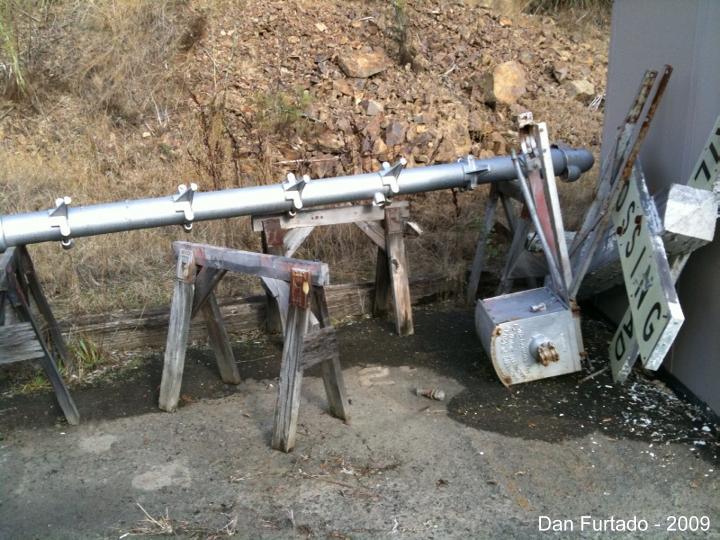
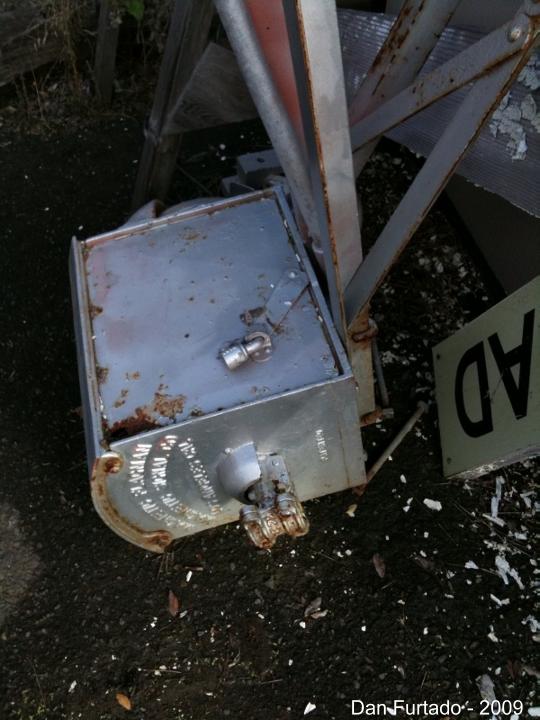
The club recently acquired a wigwag that came off of the old AT&SF "Backyard Line" that ran through the neighborhoods of Richmond, El Cerrito, Albany, Berkeley, Emeryville and North Oakland. This particular signal is said to be from Berkeley. The line was abandoned in 1979 and the wigwag had been stored since then. It was later donated to the club. The wigwag is to be restored back to operating condition and will be displayed near the entrance to the club's parking lot, visible from the street. 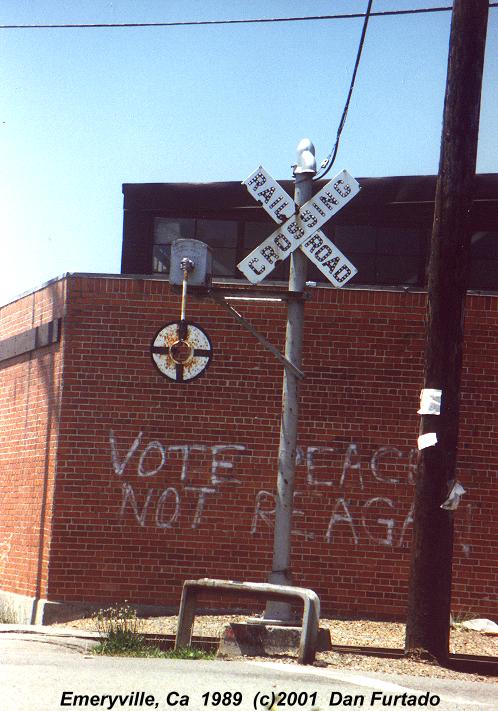
is not the same signal, it is typical of the wigwags that were used on the "Backyard Line": short mast and cantilever with the crossbuck mounted above the cantilever. The above photo was taken at the Powell St crossing in Emeryville around 1989. In October 2009, I was asked by museum GM John Morrison what it would take to restore their wigwag. I volunteered to restore it for them free of charge (except for materials). I will be updating this page as the project progresses... |
|
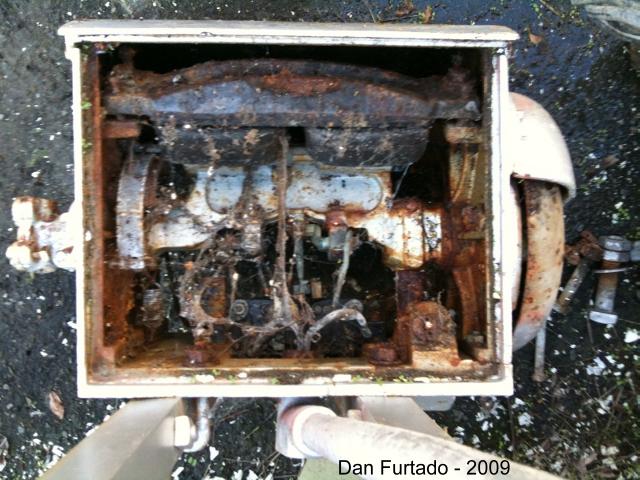
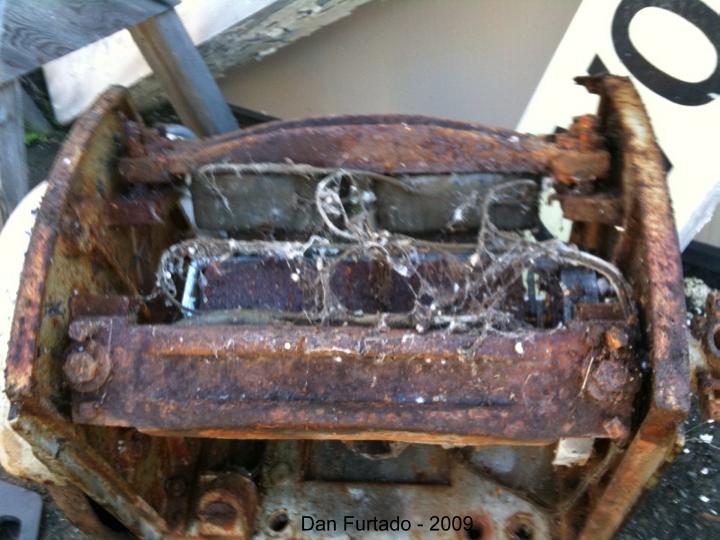
After removing one of the doors, we found that this
motor box was full of spider webs (and spiders) and a lot of rust. The armature
was frozen due to rusty bearings.
|
|
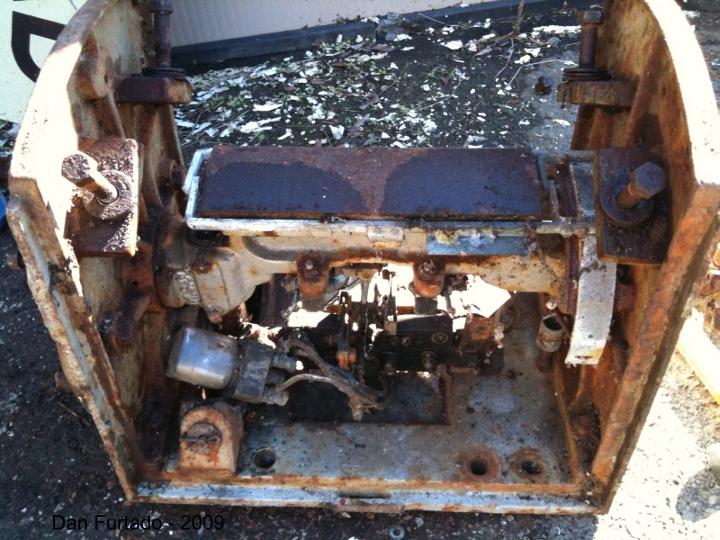
The roof casting and magnets were removed to make
it more manageable for transporting.
|
|
It took some time to remove the magnet bolts...
lots of penetrating oil and elbow grease.
|
|
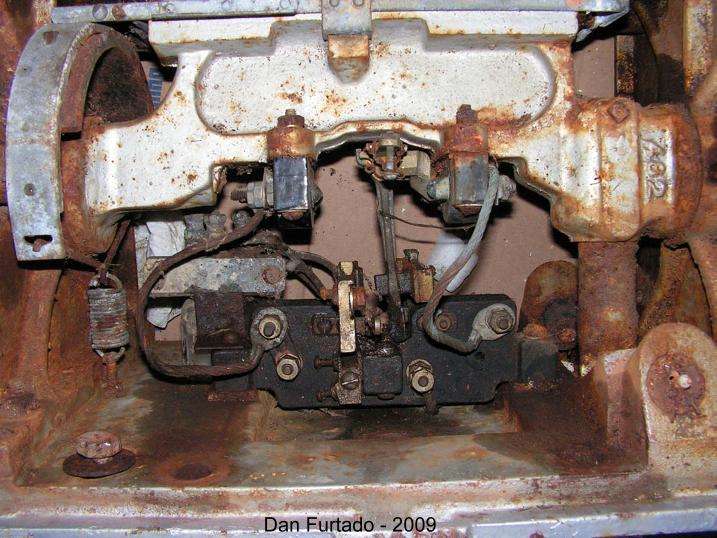
A closer look at the inside, showing the terminal
board, contacts, brake mechanism and other rusty parts. Armature is frozen
in the centered position.
|
|
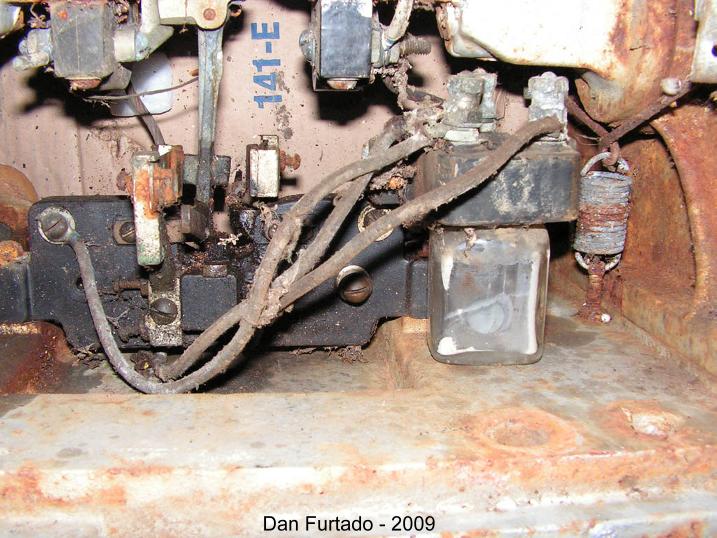
Rather than the typical selenium rectifier (typical
for AT&SF), I noticed this device that contains what appears to be 3
diodes in a jar. Most likely it was used to accomplish the same goal - arc
suppresion for the contacts.
|
|
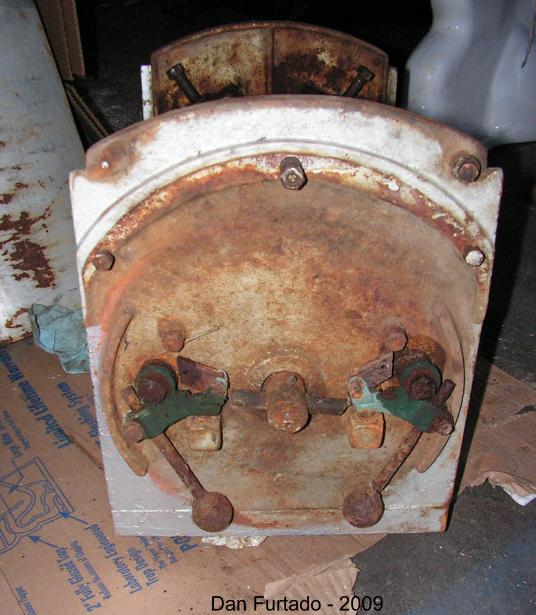
Bell mechanism parts with bell and bell holder casting
removed. The bell striker springs are too far gone to re-use. They will be
replaced with new ones. I will also be replacing the hammers. One of them
is too corroded to be restored.
|
|
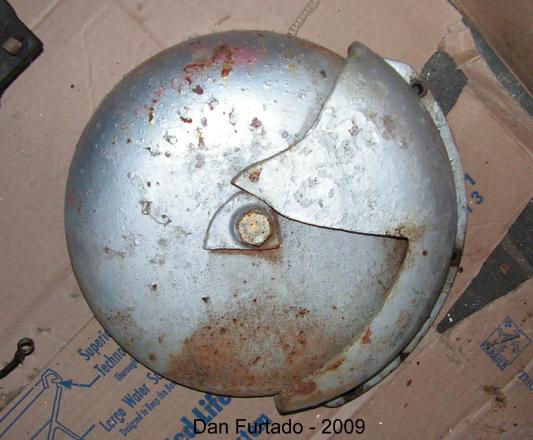
Bell holder casting and bell. A large piece of the
casting is missing and will need to be replaced. I am looking for a new one
now...
|
|
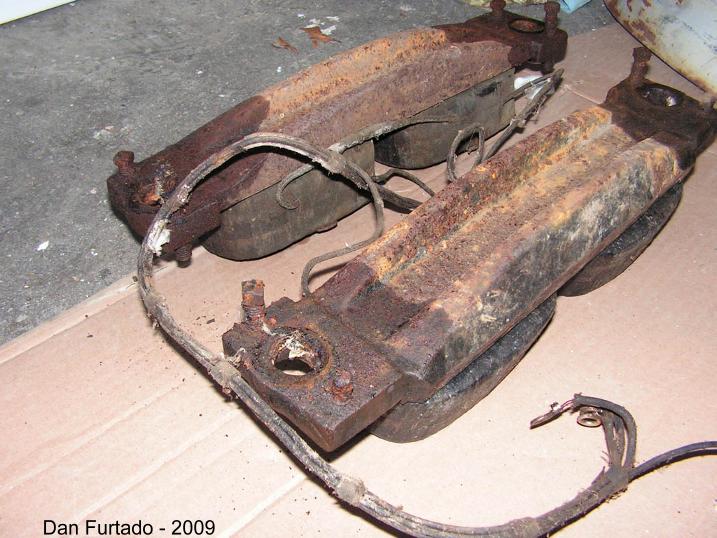
Magnets removed from motor box. These will have
to be cleaned up, repainted black and the wires will either be re-wrapped
or replaced.
|
|
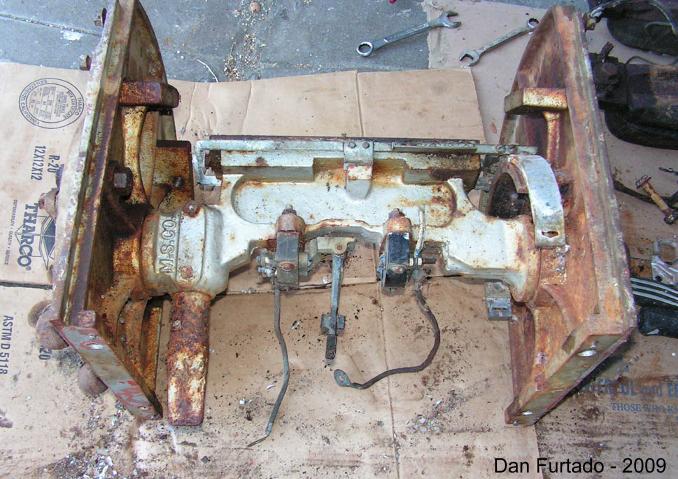
Base casting of motor box removed. That was the
easy part...
|
|
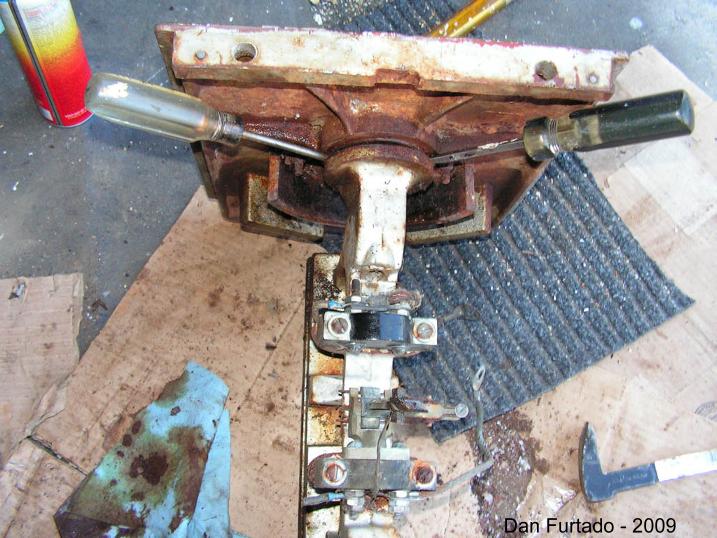
It took me a good 3 hours to separate the front
and rear castings from the armature. These use ball bearings, which were
rusted in place. |
|
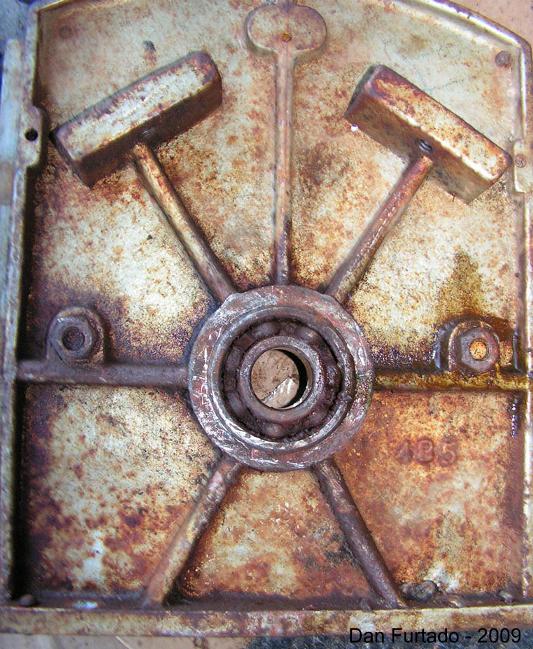
Finally separated from the armature, here is the
rear casting. You can clearly see the condition of the bearings. I was
able to obtain a new set of brearings to replace these with.
|
|
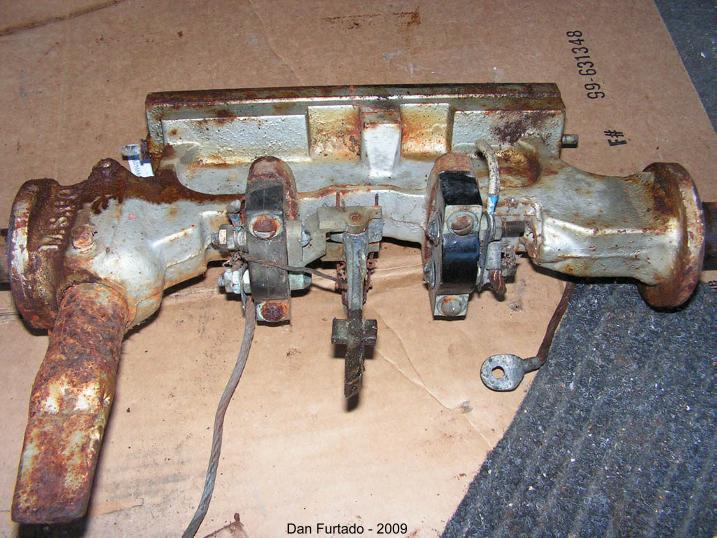
Armature finally freed up from the motor box. Upper
terminal blocks and movable finger contact shown here. The finger contact
is also stiffened up due to rust and will need some work to get it to operate
again. Brake beam was already removed.
|
|
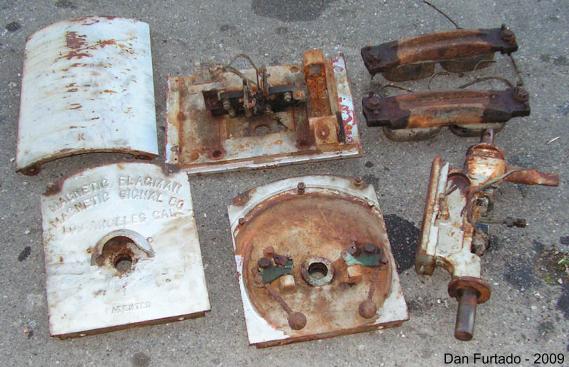
All the main components laid out - (L to R from
top) Roof casting, base casting with terminal board, magnets, front casting,
rear casting and armature.
|
|
|
I started on the magnets by cleaning up the pole
surfaces.
|
|
|
Paint stripping process begins. I used Jasco paint
remover, then wire-wheeled the parts to remove any loose paint that remained.
Additional cleaning was done before priming with rusty metal primer.
|
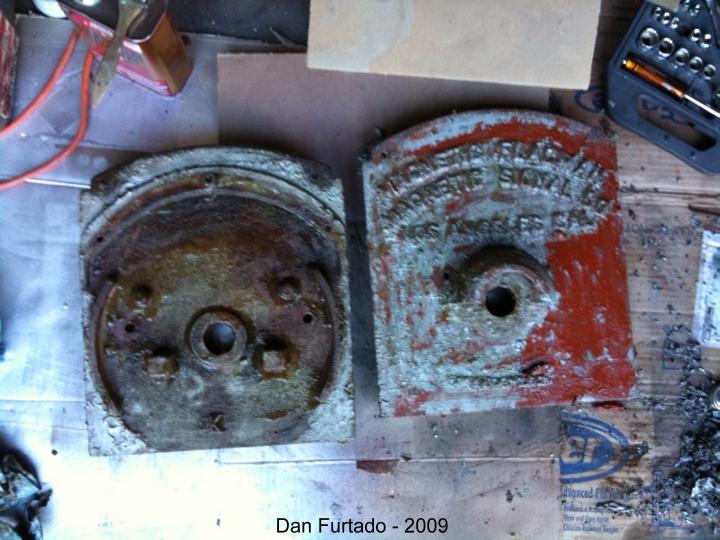
|
Stripping the paint off of the front and rear castings.
|
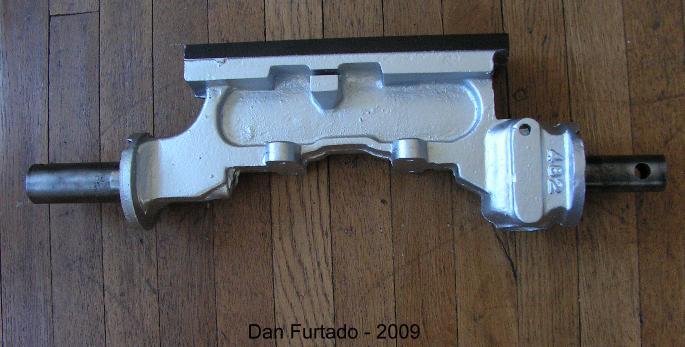
|
Restored armature.
|
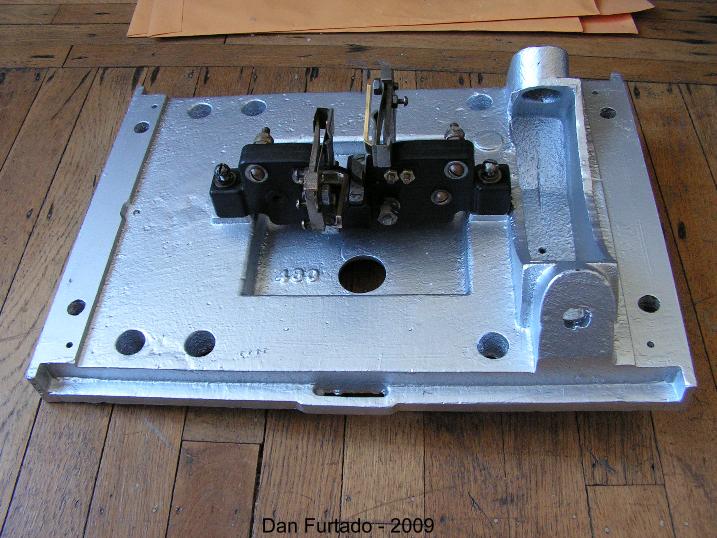
|
Base casting and restored contact board.
|
11/09