




As early as 1866 Horatio Gates Livermore was building what would become the American River Land & Lumber Company. This included buying timberlands near Camino,CA with the idea of floating logs down the South Fork of the American River to a mill built in Folsom,CA. Upon his death in 1879, his sons Horatio Putnam and Charles E. Livermore would go on to finish the dam, canal, mill, and powerhouse and incorporate the ARL & LCo. Logging began in 1890 with the first logs in the river in 1891. The whole endeavor eventually failed due to several factors making the river undrivable. The company was never profitable.
After ten years of operations, everything was sold and reorganized as the El Dorado Lumber Co and eventually the Michigan-California Lumber Co. Many remnants of the original company can still be found. 110+ years later, this tour starts at the woods and follows downriver to Folsom.
 |
 |
 |
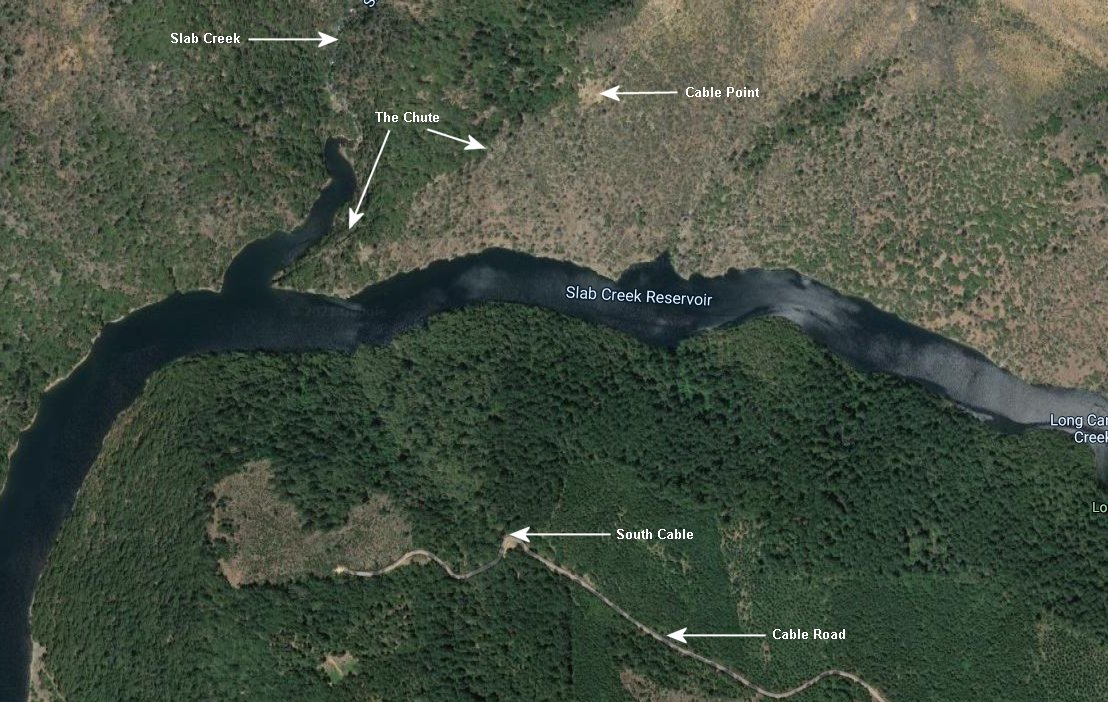 |
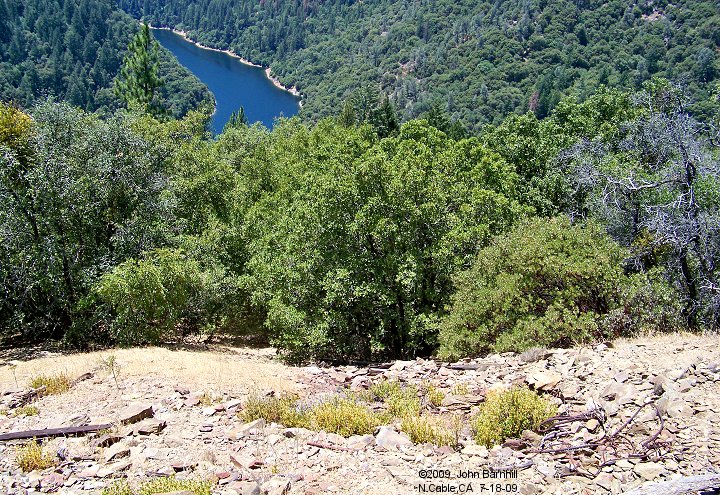
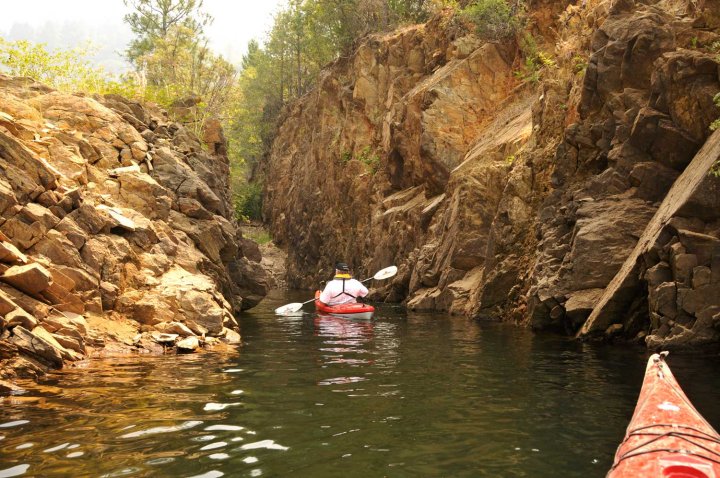
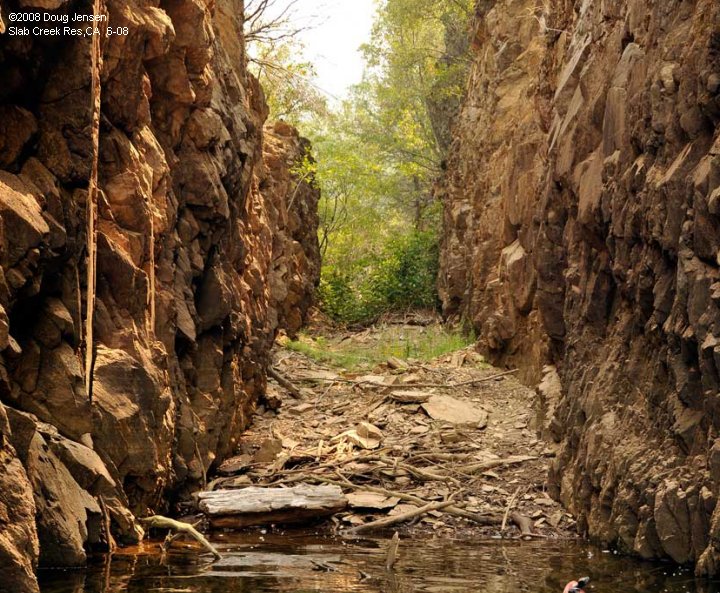
At first logging took place on the south side of the river at Iowa Canyon but soon moved to the north side near Slab Creek. The logs were brought out of the woods, eventually by narrow gauge train, at what is now North Cable or Cable Point and slid down a 2900ft chute into the river below. A view from the top of the chute appears in the first image. The next two images by Doug Jensen show the remains of this chute at water level on Slab Creek Resevoir which has since partially filled the canyon. The fourth image is a 2021 Google satellite view of the chute.
 |
 |
 |
 |
 |
 |
 |
 |
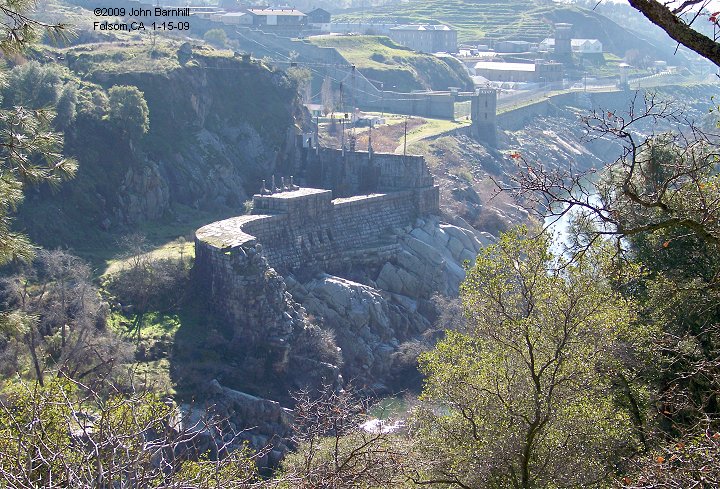
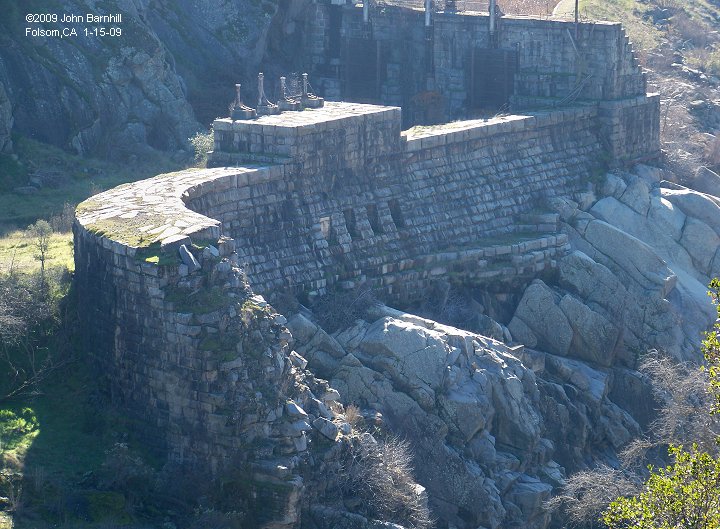
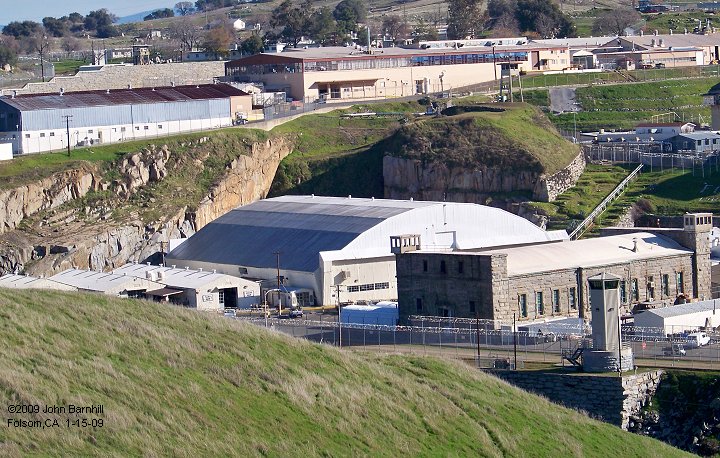
Completed by 1893, a 89ft high, 450ft long granite block dam was constructed across the river at Folsom to provide a stopping point for the logs. From here a canal fed water and logs to the mill and powerhouse downriver. All the granite blocks used in the dam and canal came from the prison quarry seen in the third image. Convicts provided most if not all the labor.
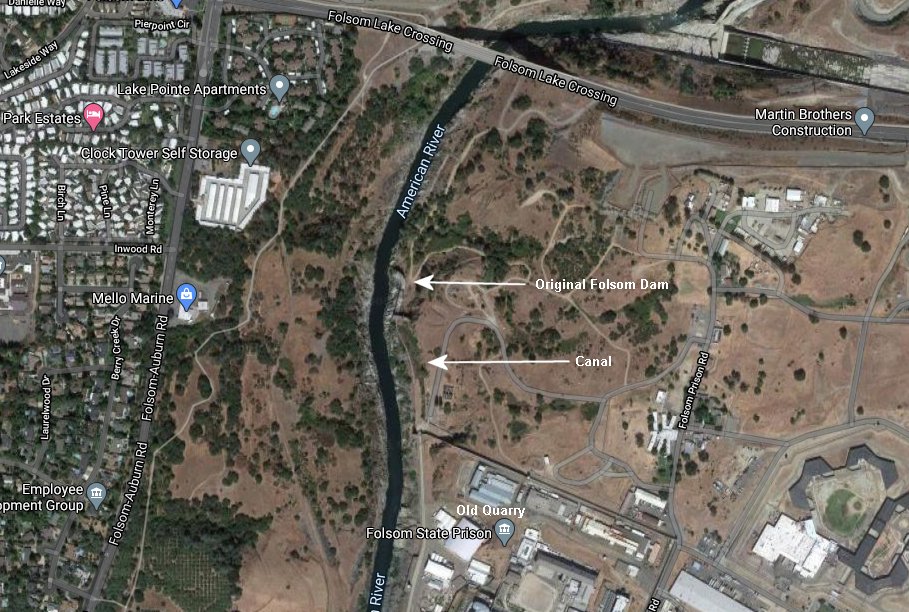
The dam was in use providing water to the Folsom power house until 1952 when it was partially removed and a much larger multipurpose Folsom Dam was constructed upriver. The quarry is now full of prison buildings. Also of note, the quarry was served by a branch of the Sacramento Valley Railroad which followed along the canal. The fourth image is a 2021 Google satellite view of the dam, canal, and quarry area.
 |
 |
 |
 |
 |
 |
With logs already in the river a push was made to finish the mill in 1896. Some sources tout it as one of the first ever electrically powered mills in the world. In 1901 the machinery was moved to Pino Grande and driven by steam.
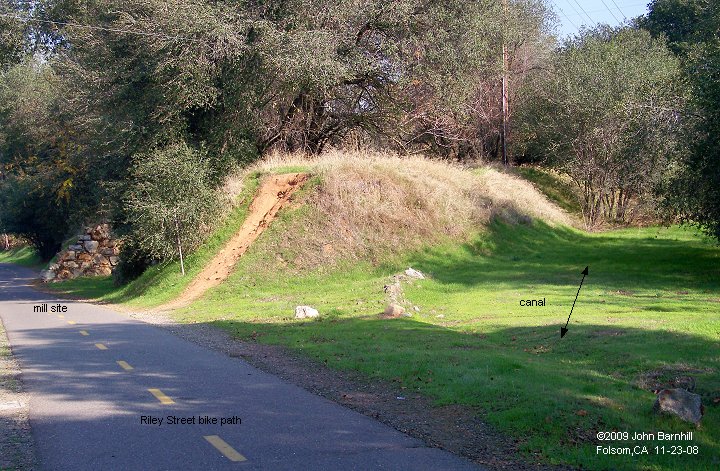
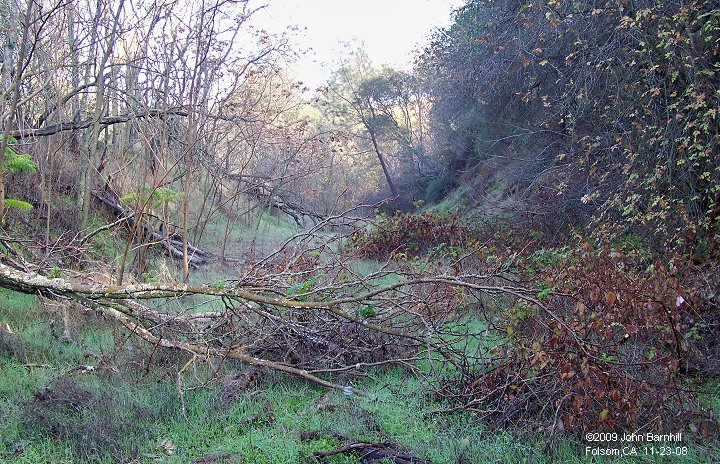
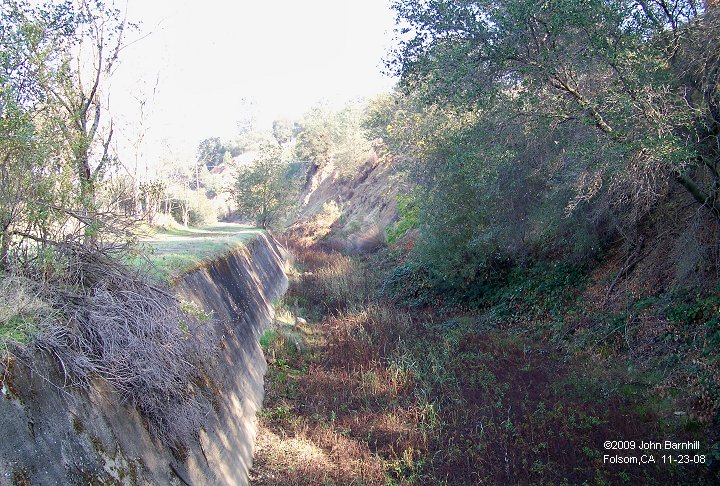
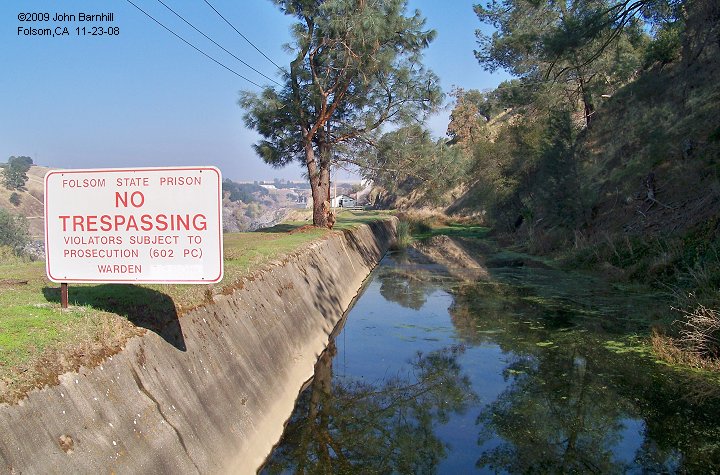
Starting with the first image taken at Riley Street, we see the 50ft wide 8ft deep canal and the only remaining portion of the mill. The second image gives you a close up of the mill remains. The following images travel along the canal upstream until the border of Folsom Prison prevents passage.
 |