TrainWeb.org Facebook Page
B&O Photo Tours - Railroad Photography


Railroad Photography Course
Safety

Accompanying each photo below are:

Click a photo to see a larger view. Please send your comments and corrections to Steve.


<< Previous (index) | THIS PAGE: 1) Safety | Next (Subjects) >>

Course Information:

Brief Background: Safety

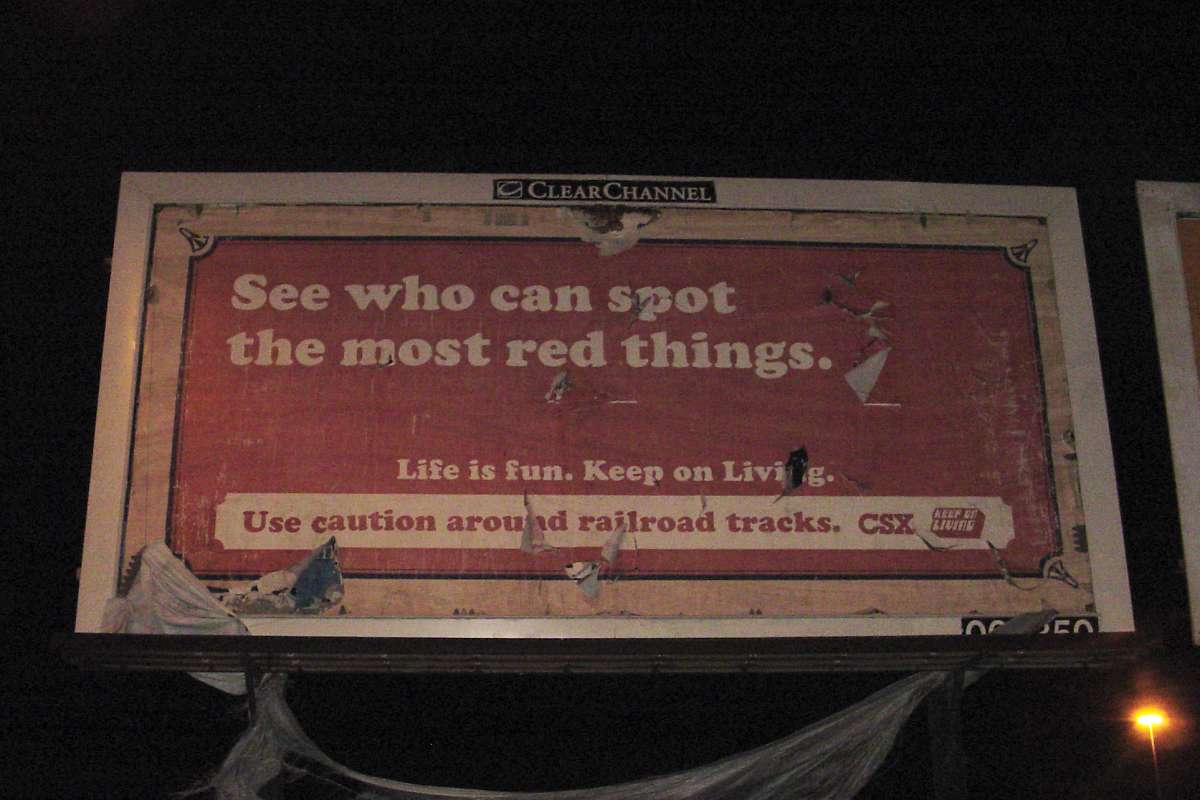
Red Things
Photo courtesy Dave Hiteshew

Red Things
Mile: Date: Feb 2009
Ease: View:
Area: Exposure: ?
Map: Ba Topographic Maps

CSX ran a series of "Keep On Living" safety ads like this during the 1980s. This one was revealed after subsequent billboard layers peeled off.

Presumably, by "red things", CSX means grade crossing warning flashers like those near the bottom of the red and white gate arms in the next panel.


Grade Crossing

Grade Crossing
Mile: 0.8 Date: Aug 2023
Ease: B View: N
Area: B Exposure:
Map: Ba 42 K 3 Topographic Maps

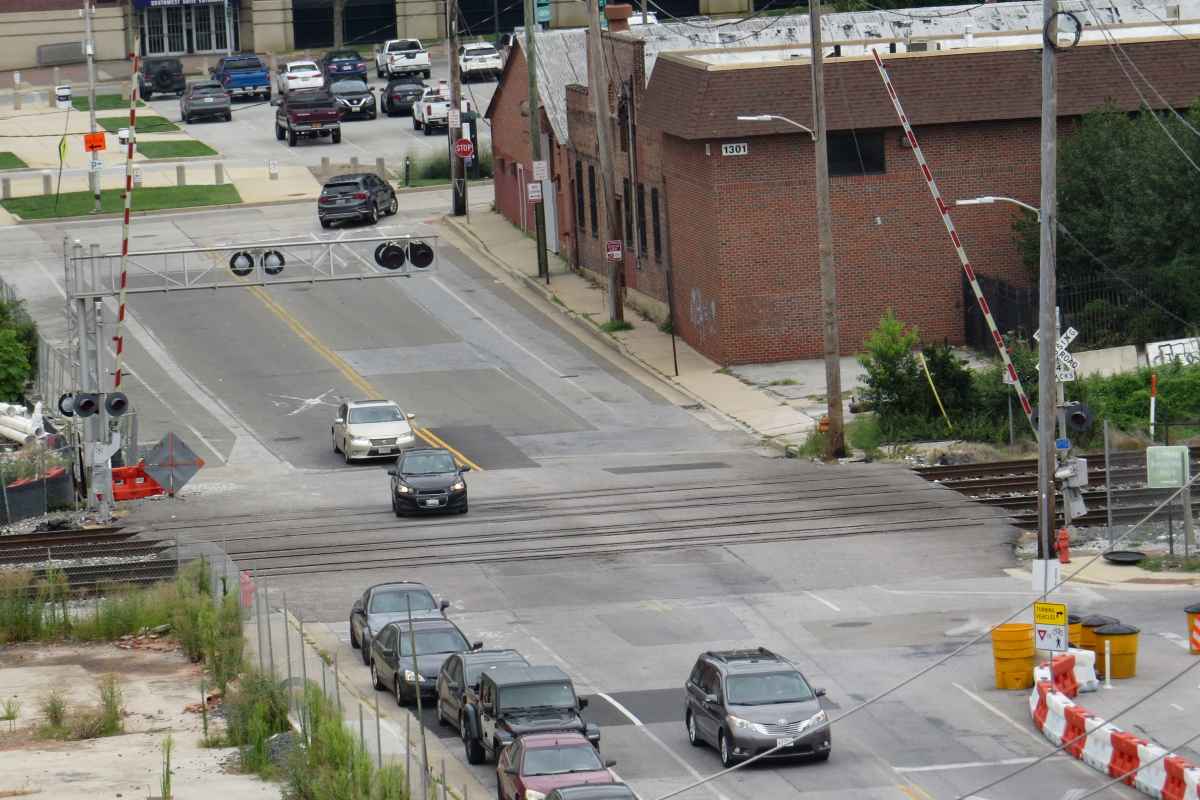
A grade crossing is where multiple forms of transportation meet at the same level. Warner Street has a 4-track grade crossing.

Grade crossings can be reasonable places from which to take photos if you stay clear of all the tracks. Use caution because one train might distract you from a second on another track. Even if you manage to survive getting hit, you could lose limbs and be relegated to a wheelchair for the rest of your life.

Link: warning, this video is graphic distracted woman is killed by train


Construction

Construction
Mile: 0.8 Date: Jul 2026
Ease: B View: N
Area: B Exposure:
Map: Ba 42 K 3 Topographic Maps

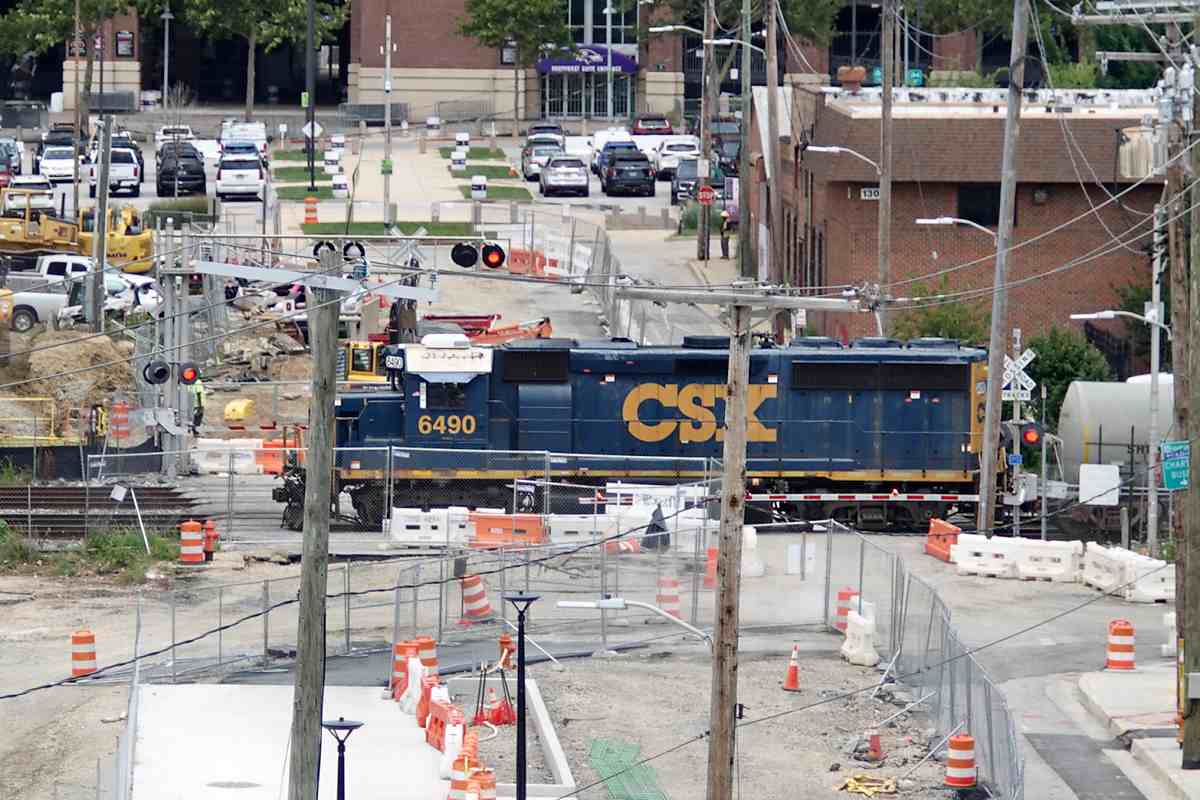
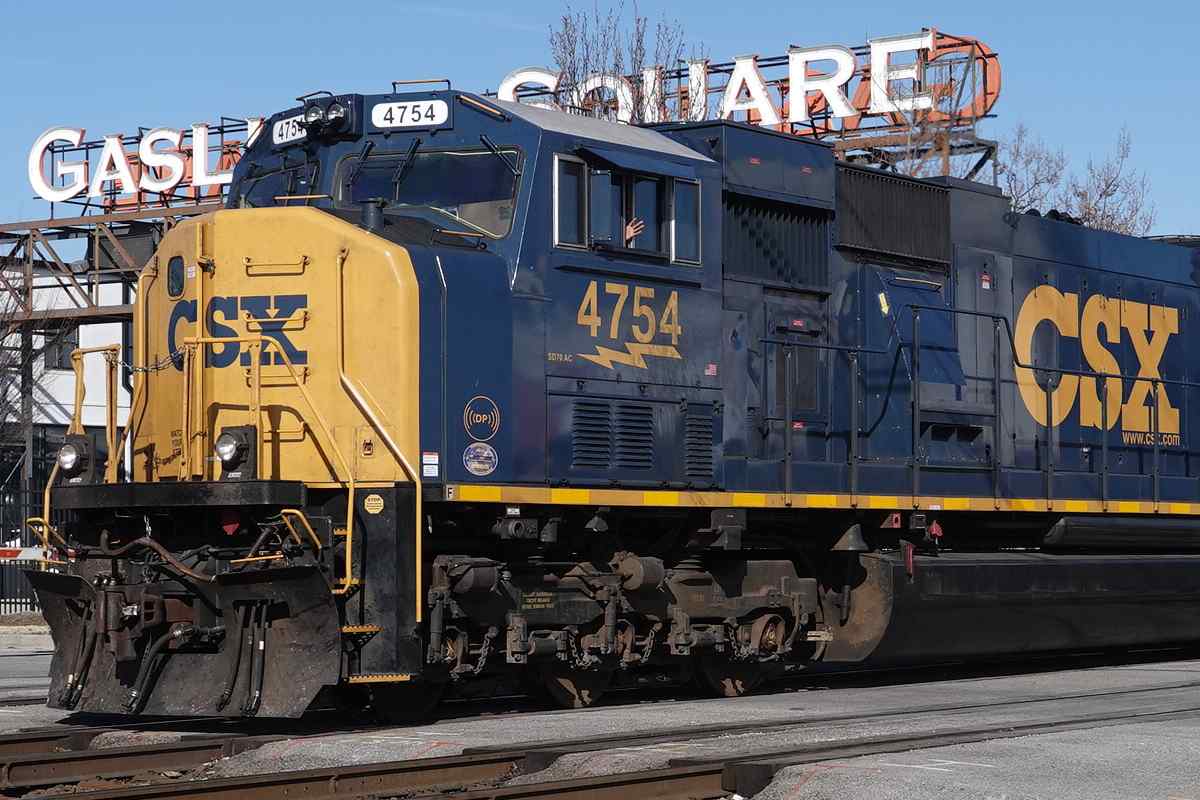
Flashing red things are visible despite all the construction clutter at Warner Street as CSX 6490 passes.


You May Be a Railfan

You May Be a Railfan
Mile: 14.9 Date: May 2025
Ease: A View: NW
Area: B Exposure: 0.001 s
Map: AA 5 J 2 Topographic Maps

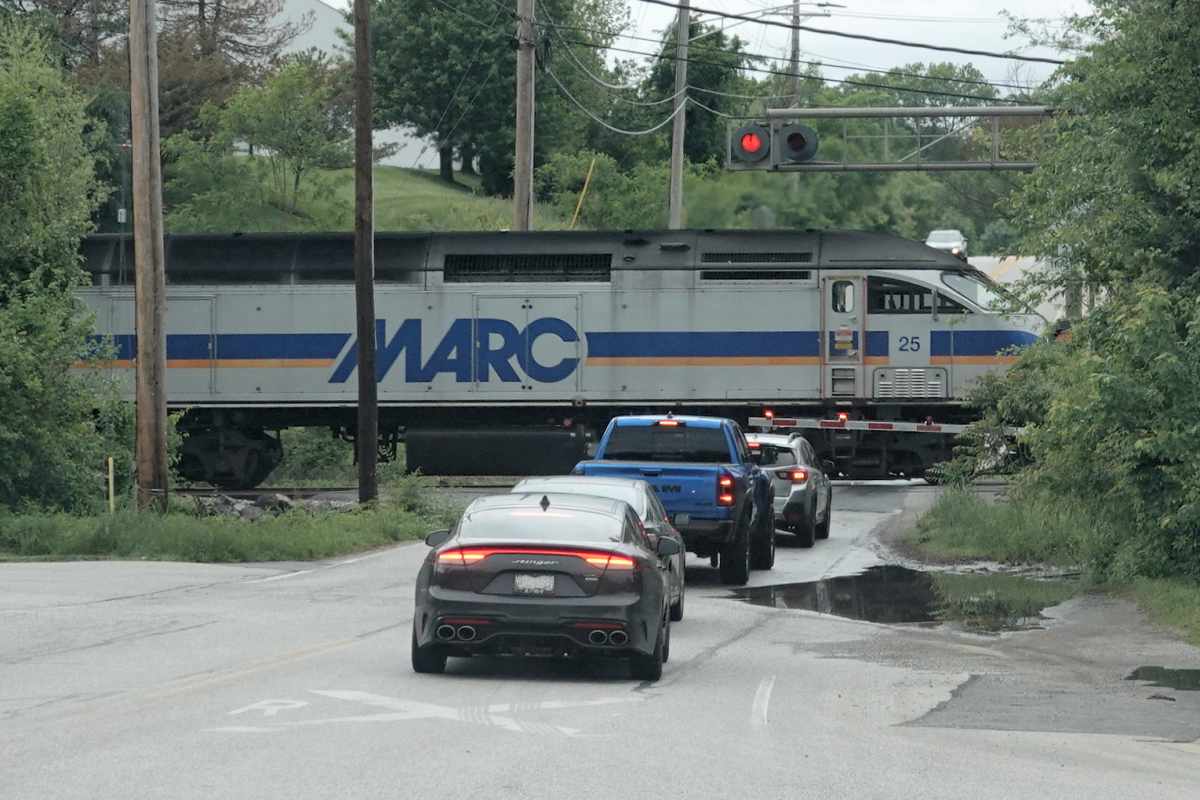
If you enjoy waiting for trains to pass a grade crossing, you may be a railfan. If you are annoyed yours is the fifth car back, you are a railfan.


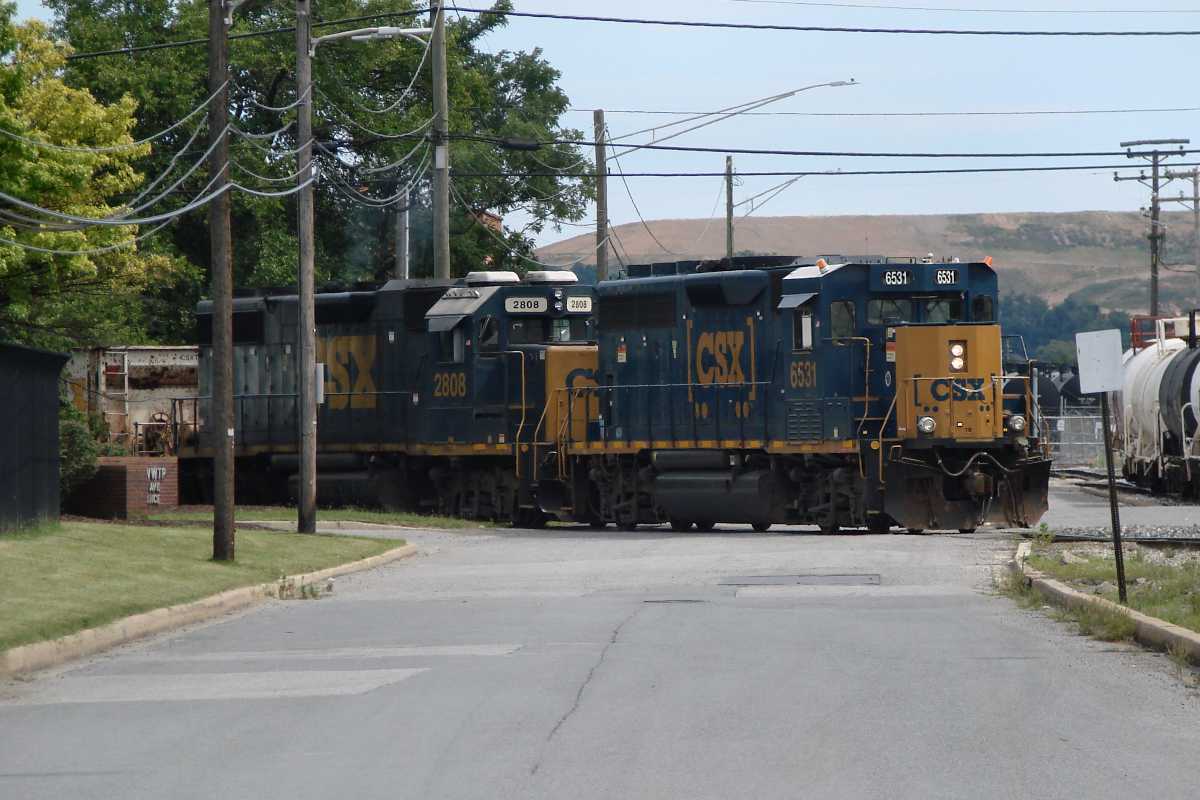
CSX 6531

CSX 6531
Mile: Date: Jul 2023
Ease: A View: S
Area: B- Exposure:
Map: Ba 43 J 10 Topographic Maps

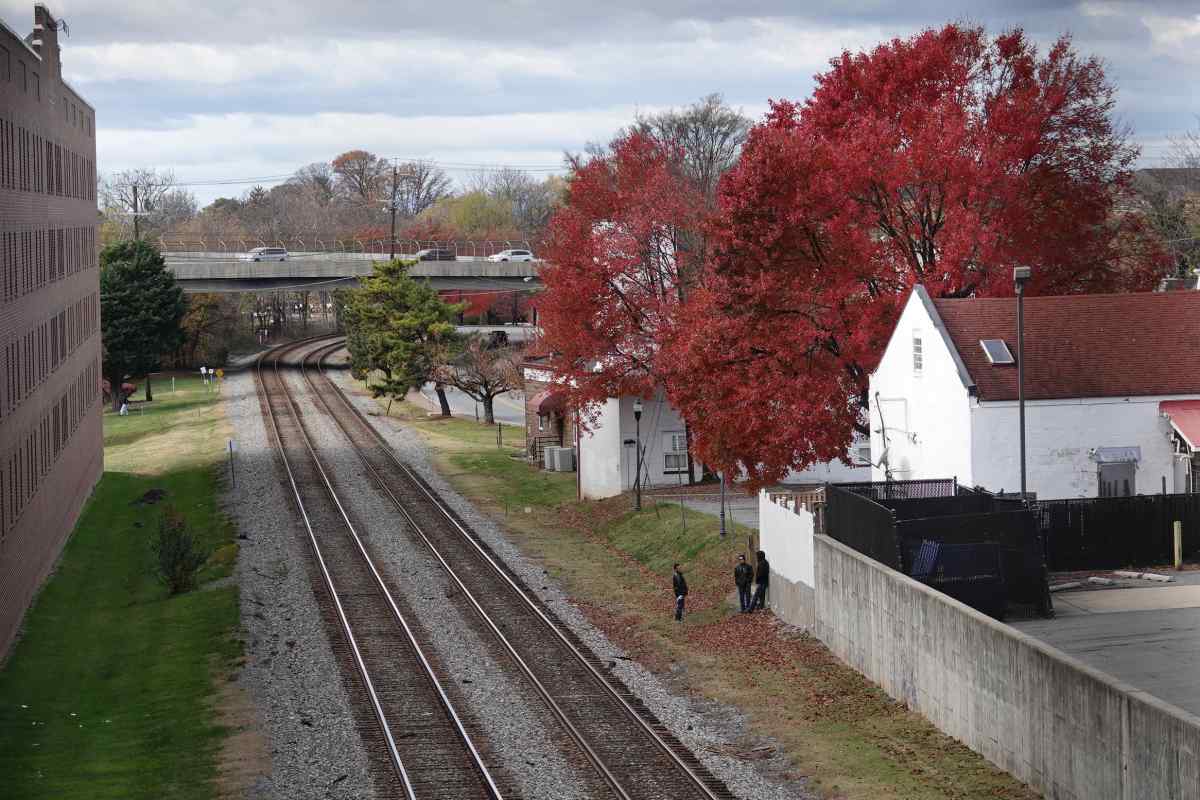
Even when far from a grade crossing (Asiatic Avenue), stay aware of surroundings, such as automobiles along a street.


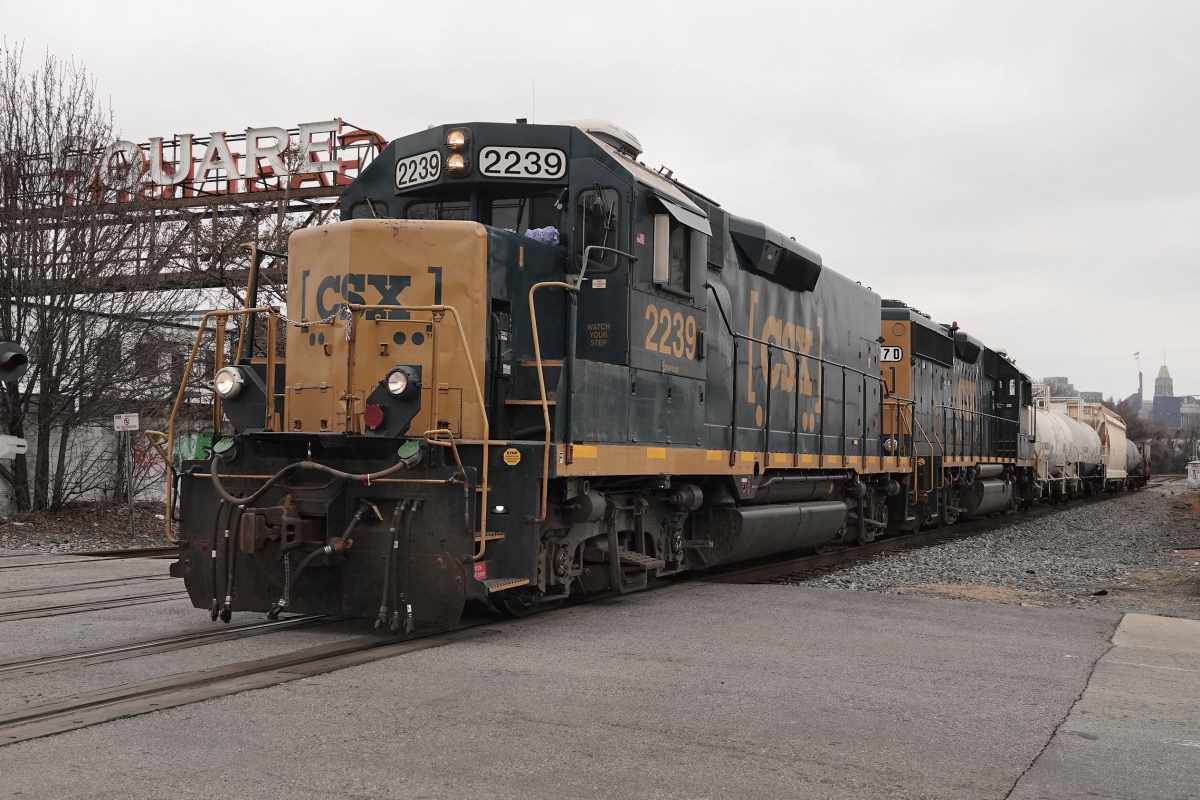
CSX 2239

CSX 2239
Mile: 1.2 Date: Mar 2025
Ease: A View: SE
Area: B- Exposure:
Map: Ba 42 J 3 Topographic Maps

Getting any closer than this to a moving train increases danger. This was a slow-moving local captured at the Bush Street grade crossing via a zoom lens. Staying back allows you to include more of the consist (train) that follows. I highly recommend cameras with zoom capabilities because you can get closeups from safer distances. A later page is devoted to cameras and their capabilities, such as zoom.


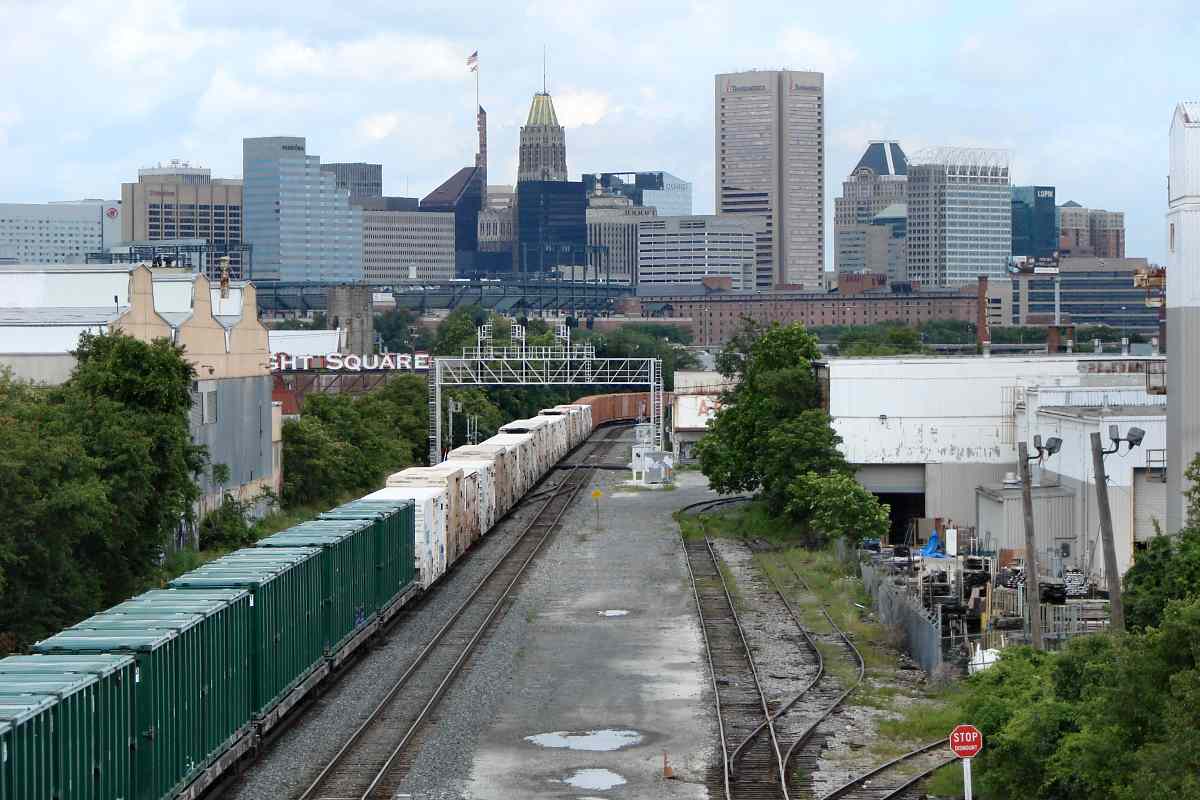
Overpass

Overpass
Mile: 1.5 Date: Jun 2021
Ease: A- View: NE
Area: B+ Exposure:
Map: Ba 42 J 3 Topographic Maps

Overpasses (bridges of public roads) are among my favorite locations for train photos. They keep you clear of the trains and offer many options for interesting composition. Baltimore's skyline provides the backdrop from Monroe Street.

A drawback is there are a limited number of overpasses, and they are often equipped with fences that interfere with the camera's view. Some have a pedestrian sidewalk on one side of the road only, and some have no sidewalk.


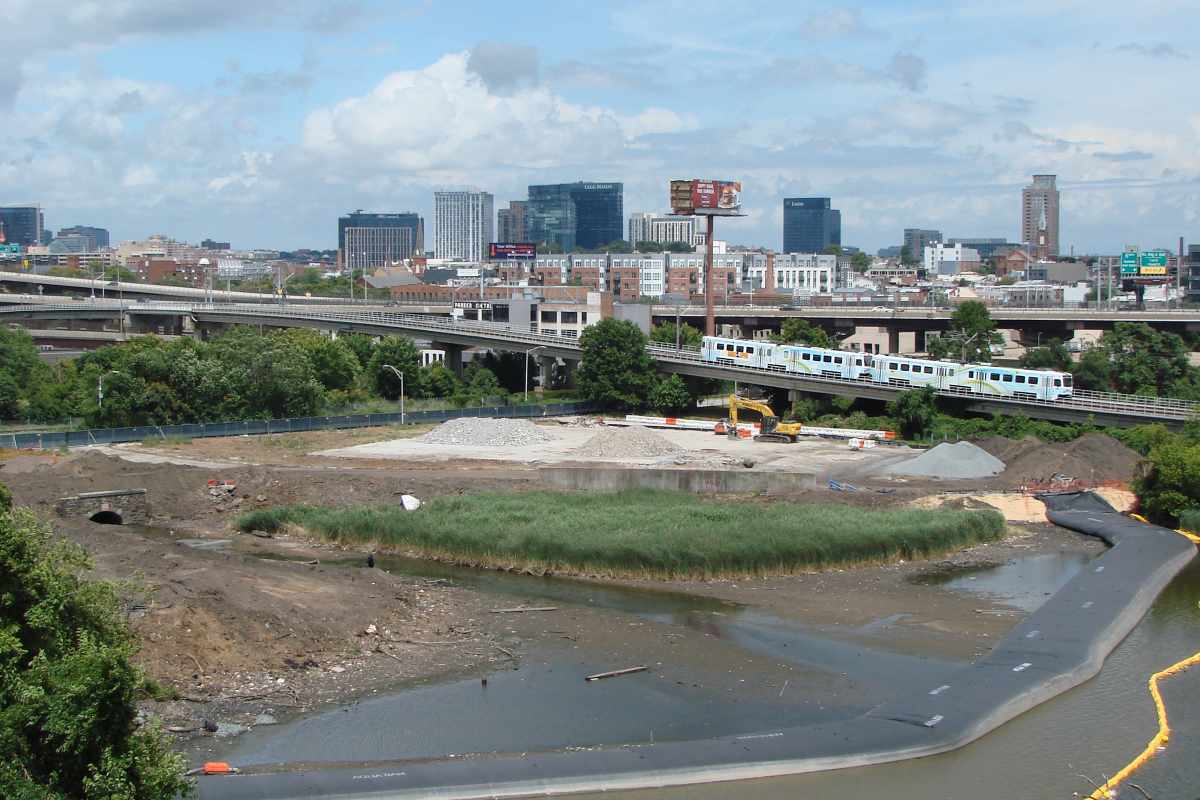
Parking Deck

Parking Deck
Mile: Date: Jun 2021
Ease: A- View: NE
Area: B Exposure:
Map: Ba 42 K 3 Topographic Maps

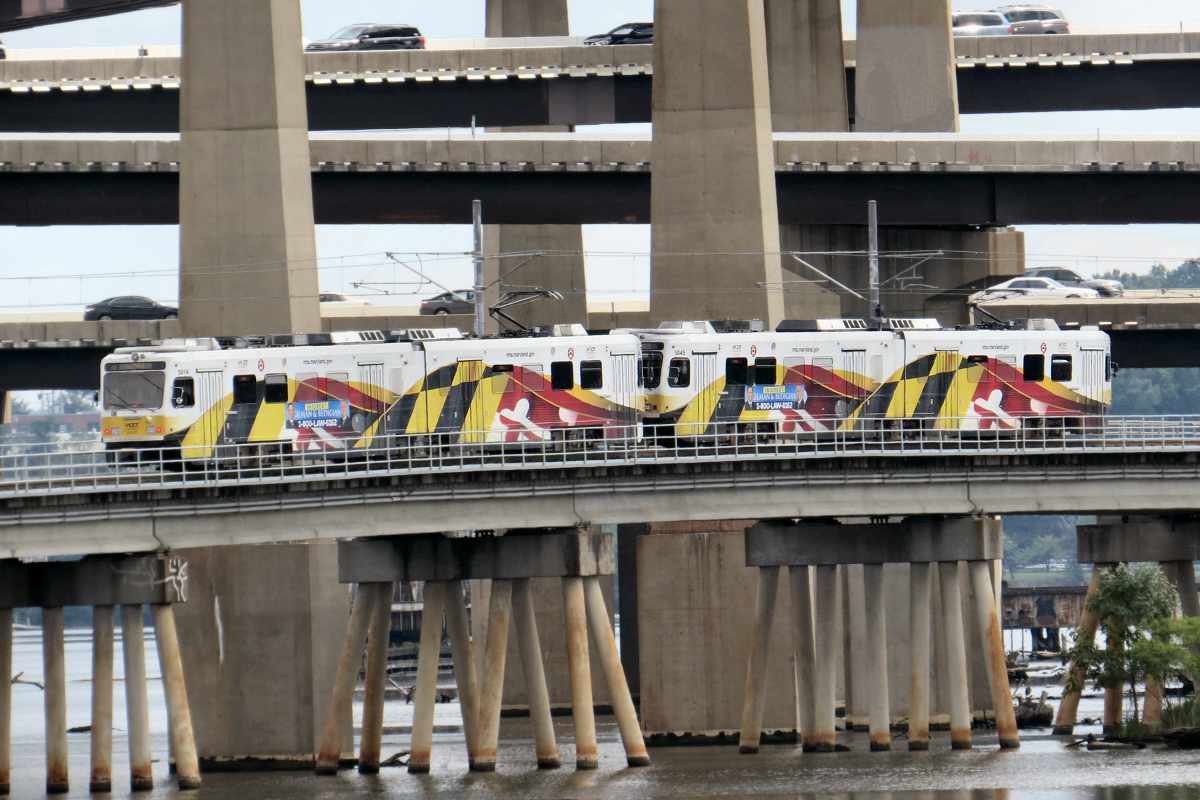
Like overpasses, public parking decks allow you to get overhead views of train action, such as Baltimore's light rail. The foreground area was being prepped for a new Top Golf location. The deck between Top Golf and a casino began charging more than $20 to park for less than an hour, even on an ordinary weekday, i.e. one without a Ravens or Orioles game. There is no signage to warn you of the cost.


MTA 5014

MTA 5014
Mile: Date: Aug 2023
Ease: A- View: SE
Area: B Exposure:
Map: Ba 42 K 3 Topographic Maps

This was shot with more zoom from the same parking deck. I-95 is the road in the background.


Platform

Platform
Mile: Date: Feb 2025
Ease: A- View: E
Area: B+ Exposure:
Map: Ba 24 H 5 Topographic Maps

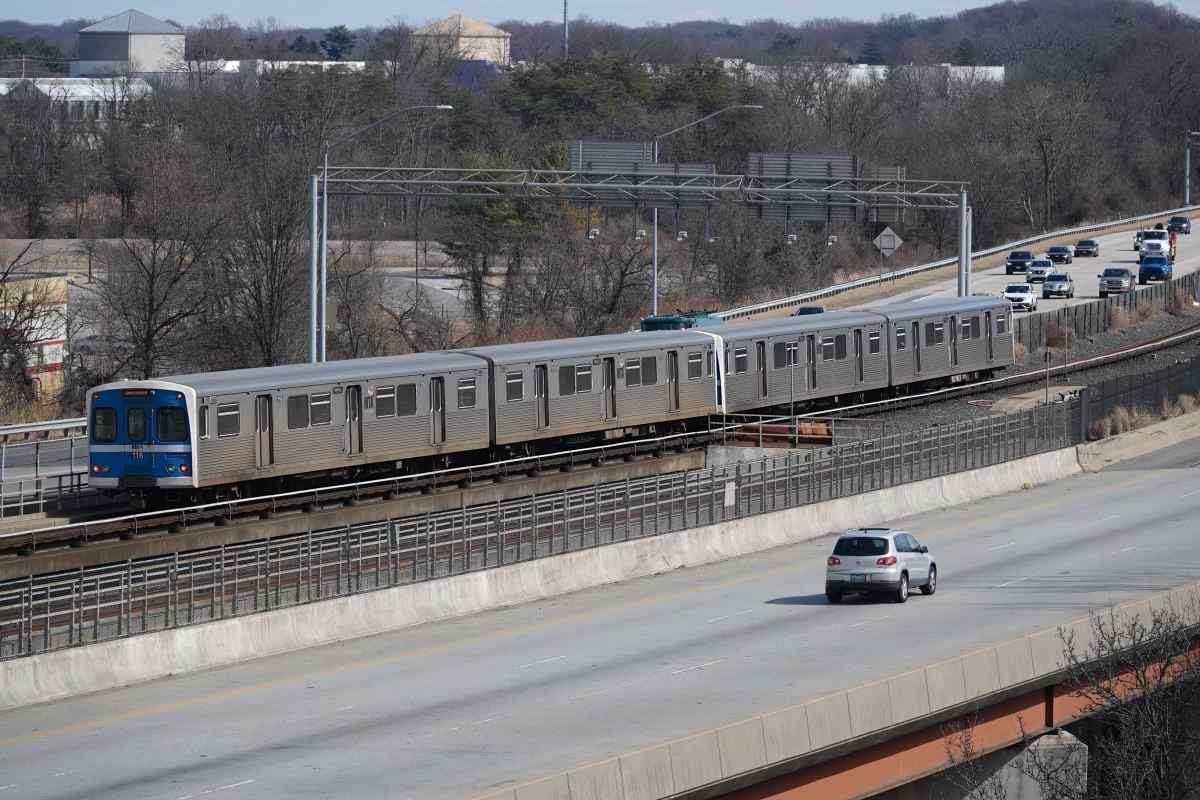
Some parking decks are found adjacent to commuter rail stations. The deck at Owings Mills provides views of an above-ground portion of Baltimore's subway.


Stations

Stations
Mile: Date: Mar 2025
Ease: A- View: N
Area: B- Exposure:
Map: Ba 35 A 10 Topographic Maps

At train stations, the trains come to you. Though mainly for passengers, stations will usually tolerate brief railfan visits if you behave responsibly. If you stand on the tracks, make a commotion, toss trash, get in the way of passengers, etc. you'll probably be chased or arrested eventually.


Darwin Award

Darwin Award
Mile: 25.2 Date: Aug 2018
Ease: A View: N
Area: B Exposure:
Map: PG 4 B 11 Topographic Maps

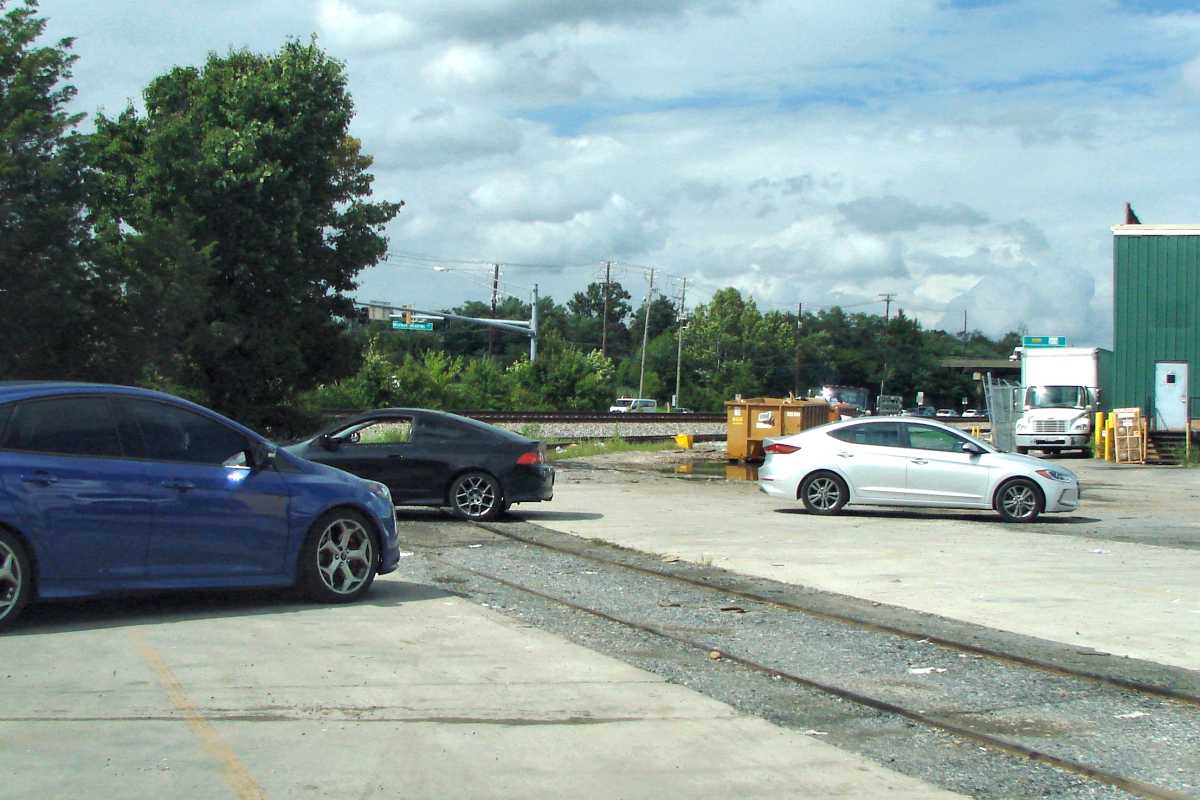
Parking on active tracks? That's a don't. The blue car's location is also unwise (probably too close). If rails have any shine, it's likely a train rolled over them recently. Don't have a train roll over your vehicle as well.


Groups

Groups
Mile: 21.7 Date: Nov 2024
Ease: A View: NW
Area: B Exposure:
Map: Mo 19 F 9 Topographic Maps

Be mindful of groups hanging out trackside: they're not all railfans. I've had close encounters with homeless I do not care to repeat.

Railfanning is best done from public property. Venturing onto private property, and that includes railroad property, without permission can get you into trouble. Heed "No Trespassing" signs. Do not attempt to photograph trains at night until you are familar with the locations and unique requirements.


Think Train

Think Train
Mile: Date:
Ease: View:
Area: Exposure:
Map: Topographic Maps

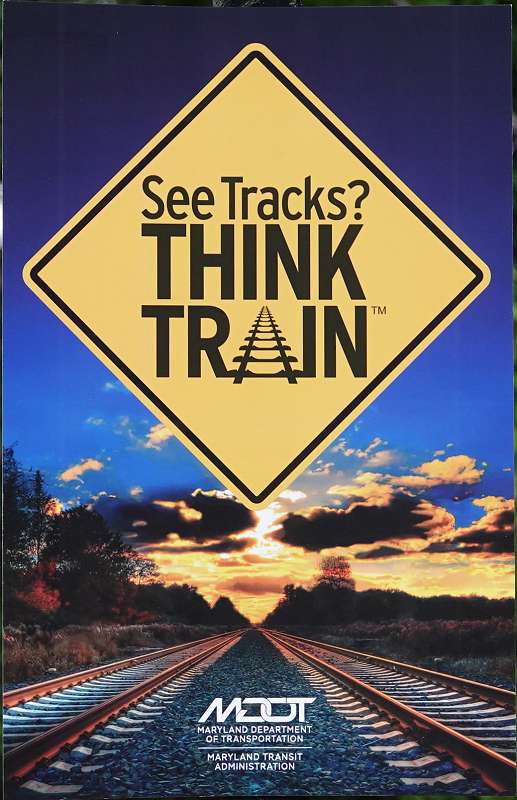
What distance does it take a train to stop? 100 feet? 1000 feet? The answer is given by this formula:
Stopping Distance = (Speed ^ 2) / (2 * Deceleration * Coefficient of Friction)

The exact stopping distance depends on the deceleration rate, which can vary due to factors such as the mass of the train, the condition of the tracks, weather, etc. A freight train moving at 60 mph typically needs 2000 to 5000 feet to stop. The train operator may not see you at the tracks until closer than that. Consequently, you must stay out of the way.

If you cross the tracks, check both directions for clearance then cross. Do not linger there to take photos, that's too distracting. Do not take photos of other people on the tracks. People have been killed by such posing. It's actually pretty simple: if you're not on the tracks, you probably will not get hit by a train.


cameras

Cameras
Mile: Date: Dec 2025
Ease: A- View: S
Area: C Exposure:
Map: Ba 42 C 2 Topographic Maps

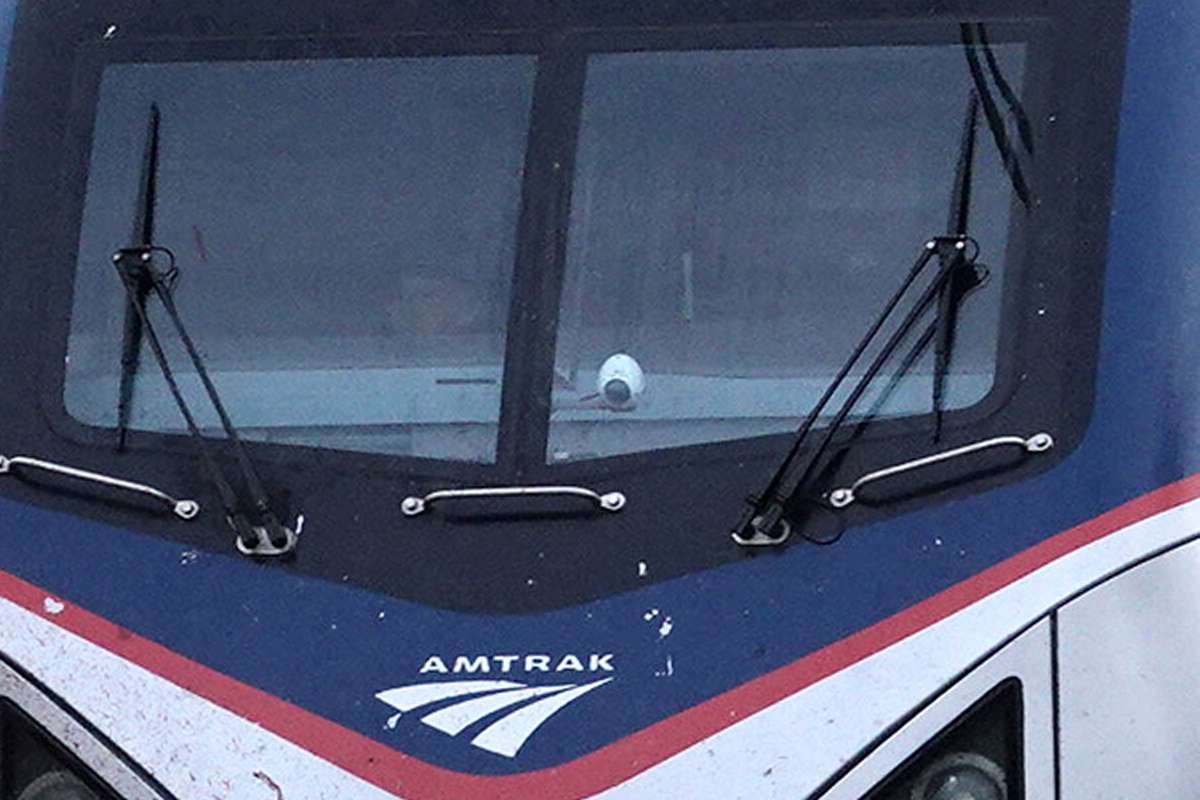
You won't be the only one with a camera. Cameras are everywhere now, even on the trains themselves.

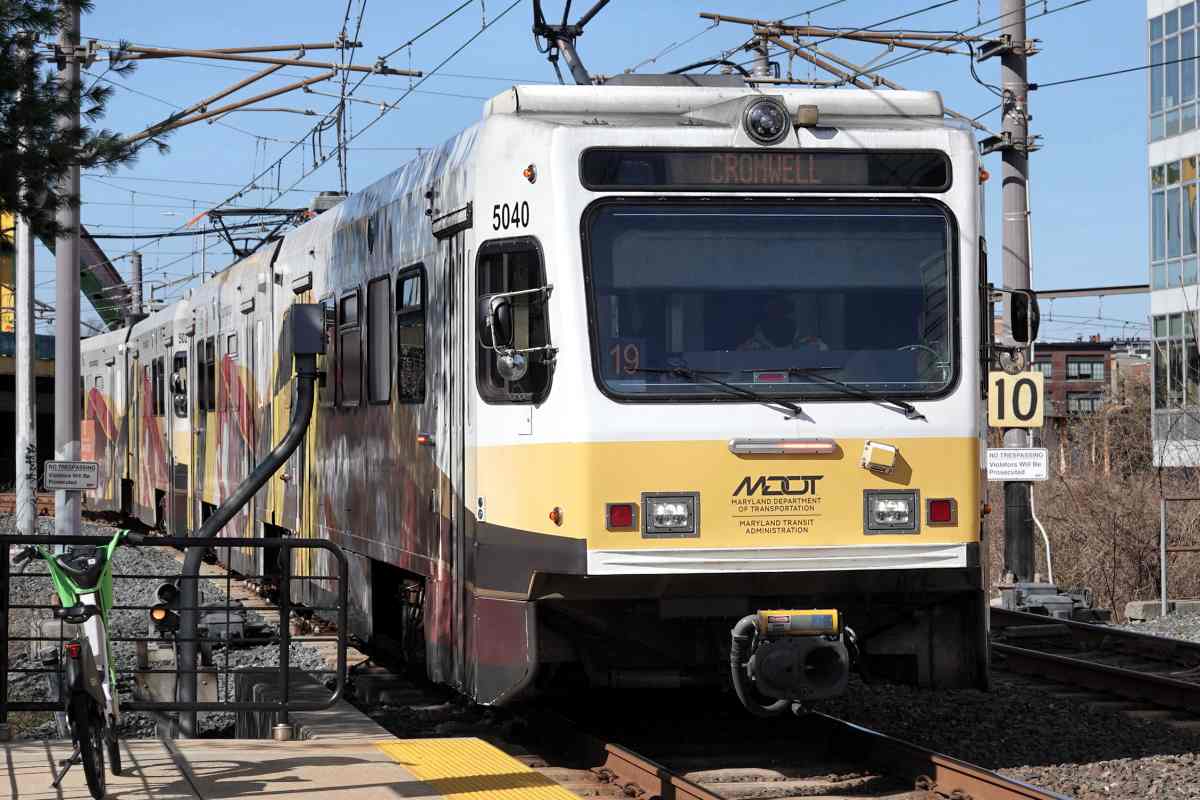
Electric Amtrak trains like this travel at high speeds and are quiet, so extra caution is needed along the lines they frequent. Since they do not stop at all stations, they zip through some at a startling speed. You might do well to observe them from afar until you are familiar with their speed.


Smile

Smile
Mile: 70.8 Date: Apr 2022
Ease: A- View:
Area: A Exposure:
Map: Ha Topographic Maps

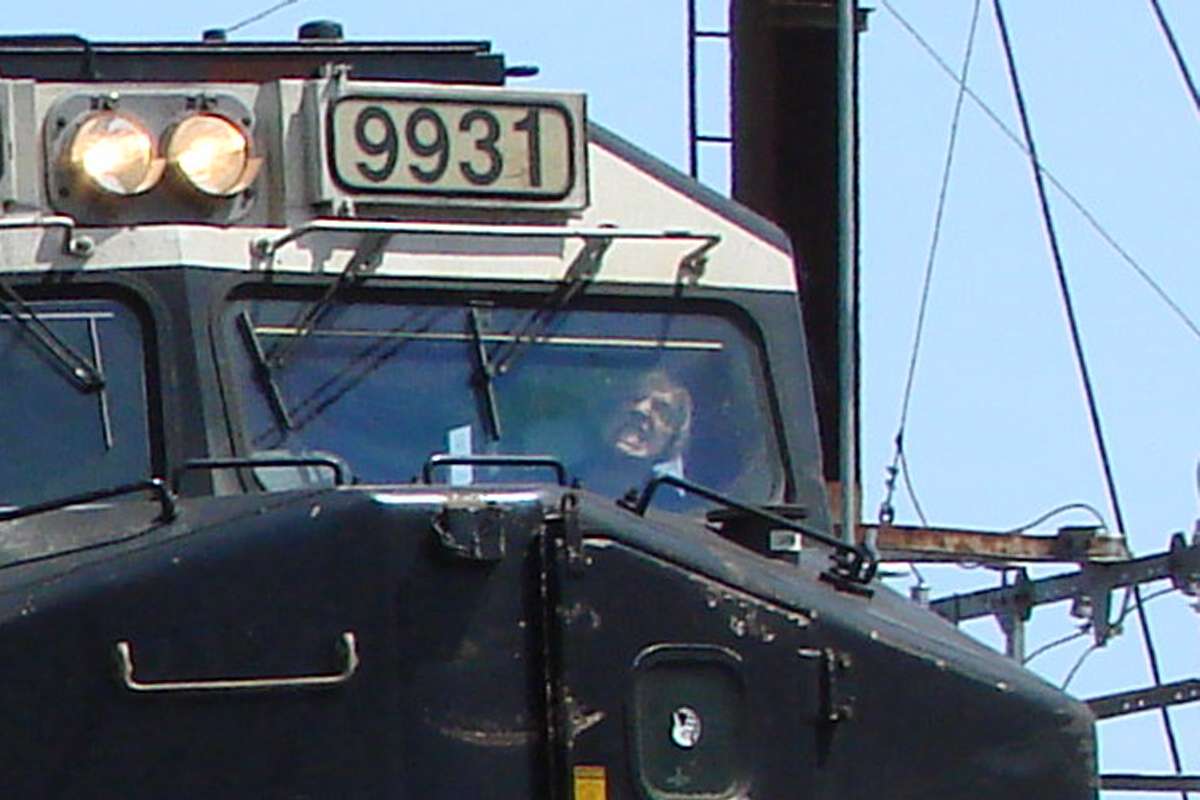
Train operators know of cameras and smile -- or grimace.


Wave

Wave
Mile: 1.2 Date: Jan 2026
Ease: A View:
Area: B- Exposure:
Map: Ba 42 J 3 Topographic Maps

I recommend you gently wave to the operator or just put one hand up in a friendly greeting. This lets the operator know you see the train. The last thing they want is for you to get run over. It makes a mess, and the paperwork isn't much fun either.

If the operator waves back, it's a sign your presence is accepted. A brief toot of the horn is more common than a wave, but also is a hello. If the operator leans on the horn for a long time, it may mean they believe you are too close or that another danger is present.


Switch

Switch
Mile: 33.1 Date: Aug 2014
Ease: B View: S
Area: A Exposure:
Map: Ca 33 K 4 Topographic Maps

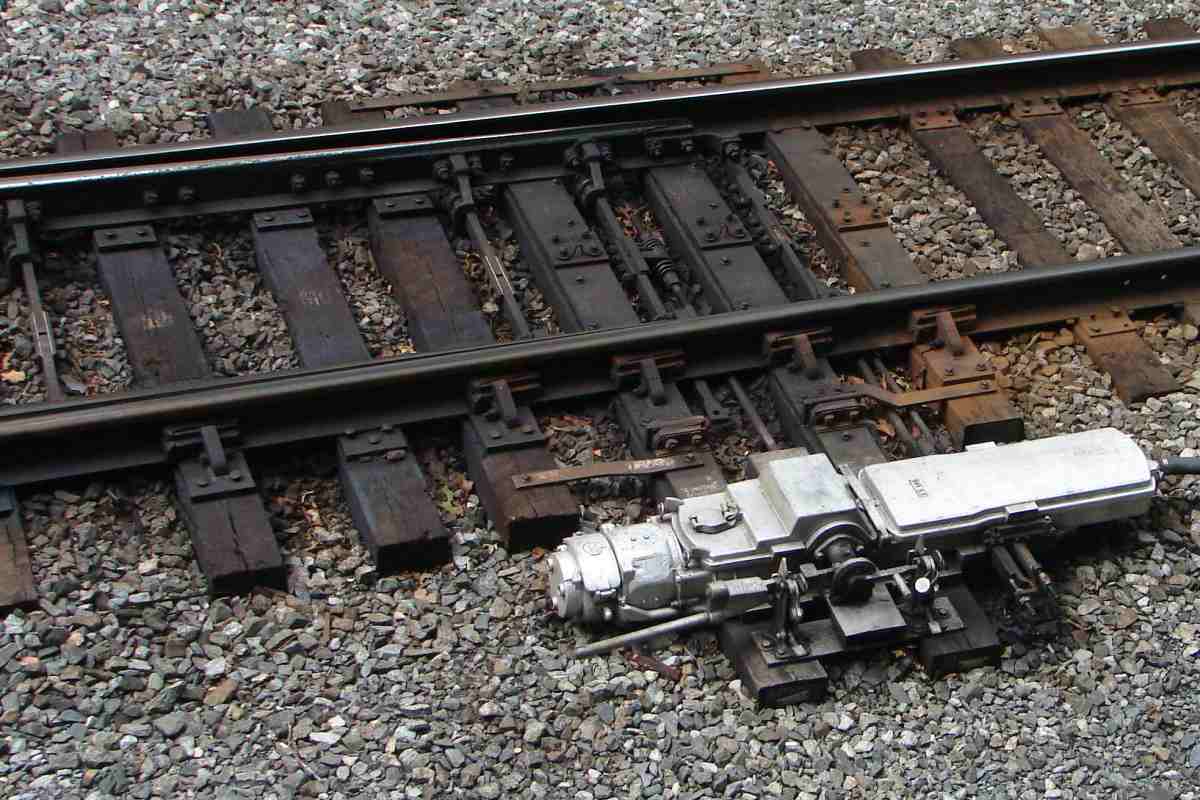
Preferentially avoid areas near track switches, also called points. Many switches are controlled remotely. If your foot slips between the two rails at upper left just as a remote controller changes the switch setting, the rails can move and trap your foot between. No one at the distant railroad office can hear you scream. You will be trapped there until the train arrives and finishes you off. That can kind of ruin your day.

Additionally, switches are one of the more common places for trains to begin to derail. You do not want to be around when heavy railcars begin to fold into one another and fall over. Stay clear.


Wires

Wires
Mile: 116.5 Date: Oct 2017
Ease: B View: S
Area: A- Exposure:
Map: AA 12 C 9 Topographic Maps

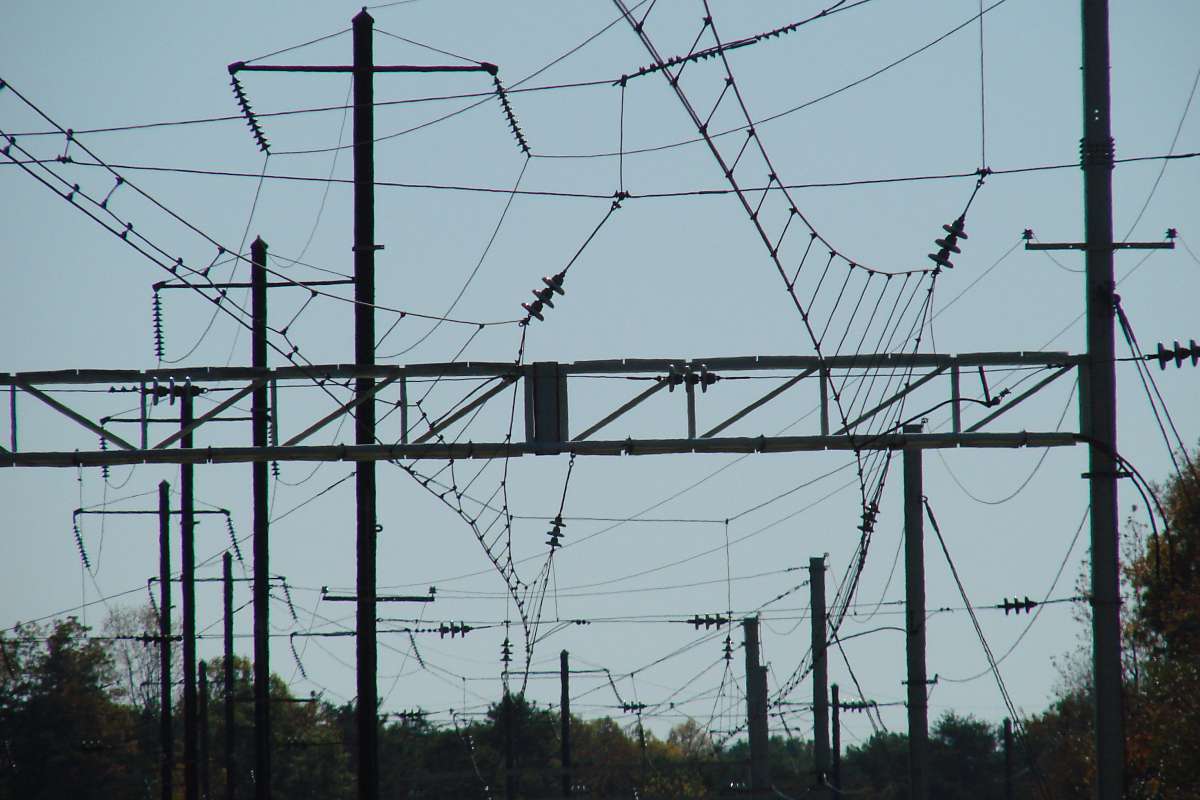
High voltage power lines are found above many train routes. They are designed to be out of reach under normal circumstances. Coming into contact with a live power wire is likely to result in electrocution. Should you see a downed power line, stay away and report it to authorities.


EM Fields

EM Fields
Mile: 110.1 Date: Nov 2017
Ease: A- View: SW
Area: B Exposure:
Map: AA 6 J 7 Topographic Maps

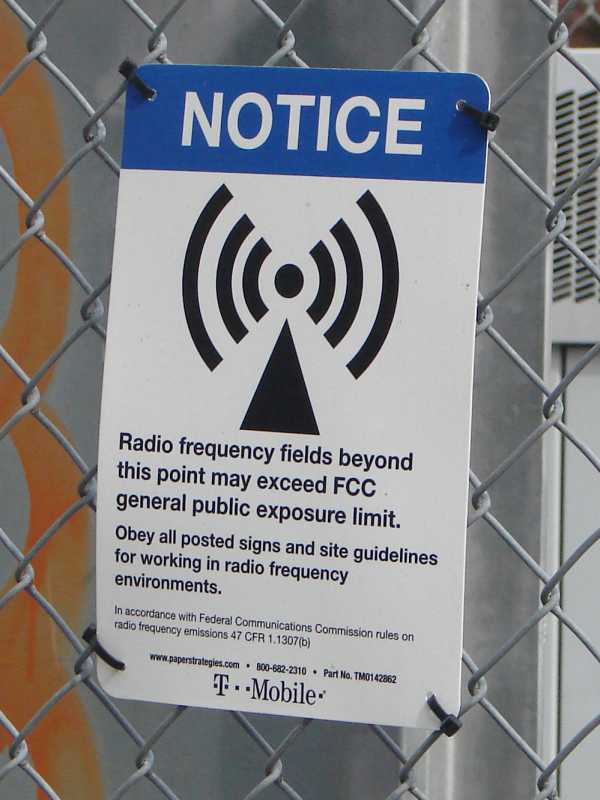
Communication lines often follow train routes. Cell phone towers are also found near railroads. They produce strong electromagnetic fields, ones that can exceed human safety limits. You may find your electronic devices malfunction in these areas; my camera's autofocus stopped working until I departed. You probably would be wise to not stay long in the vicinity.


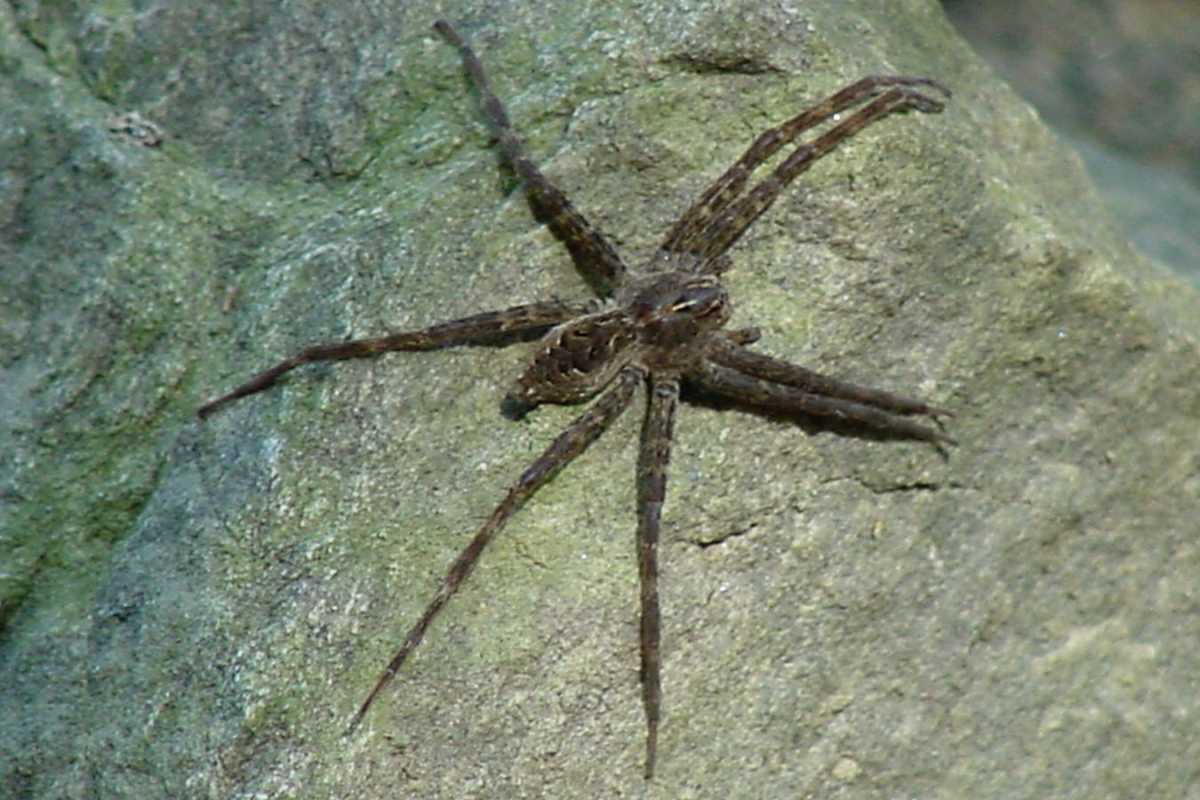
Spider

Spider
Mile: 27.1 Date: Oct 2003
Ease: C+ View: NE
Area: A- Exposure:
Map: Ca 35 D 4, Ho 5 D 5 Topographic Maps

Natural hazards exist too. Snakes will warm themselves near steel rails. Spiders, bees, wasps and more are trackside as well. Be alert.


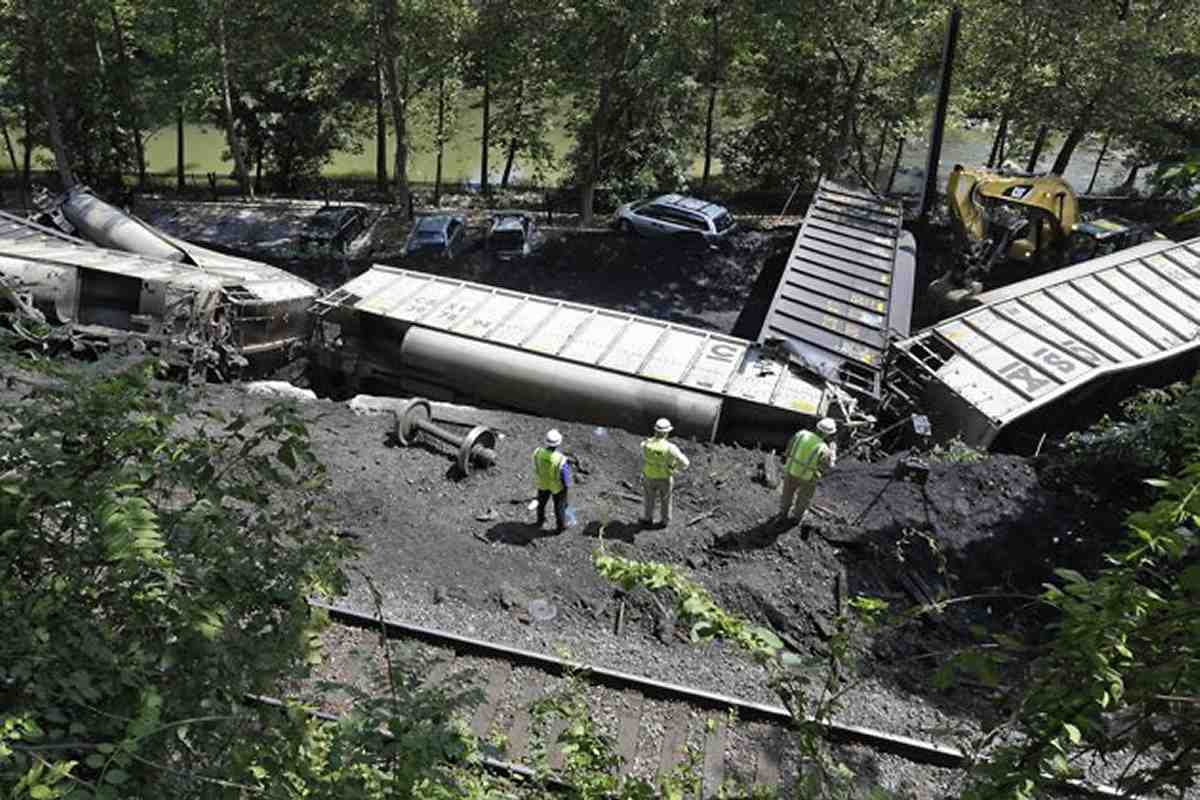
Derailment
Photo courtesy Associated Press

Derailment
Mile: 12.9 Date: Aug 2012
Ease: View: E
Area: A- Exposure:
Map: Ho 12 G 9 Topographic Maps

Even if you keep your distance, things can go wrong. This derailment in Ellicott City spilled coal hoppers onto automobiles below. Derailments are not common, but they do happen. There is non-zero risk in just about every activity, of course.


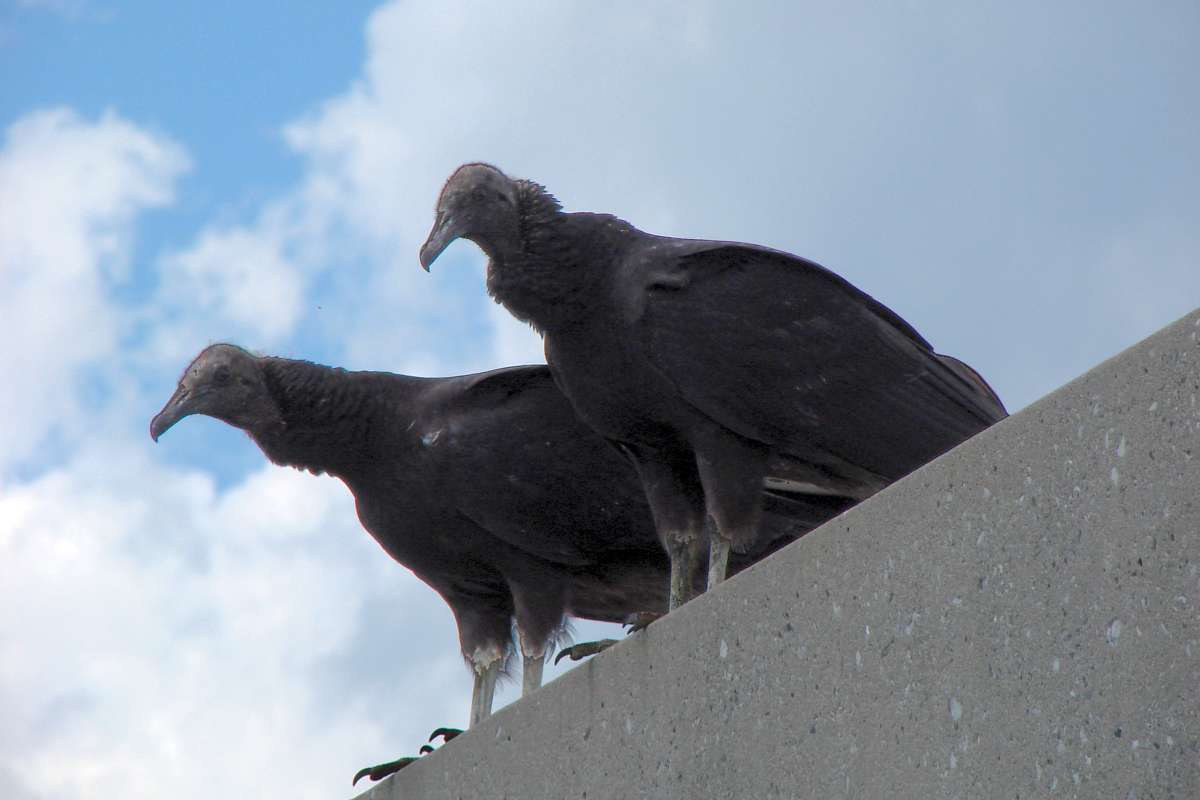
Hungry Vultures

Hungry Vultures
Mile: 31.3 Date: Aug 2022
Ease: A View: NW
Area: B Exposure:
Map: PG 7 F 13 Topographic Maps

Don't become vulture food. Minimize your exposure to the risks, especially the more dangerous ones, and you should live long enough to gather not only good train photos but also memories.

In the next lesson, we'll consider popular railroad photography subjects and how to find them.


<< Previous (index) | THIS PAGE: 1) Safety | Next (Subjects) >>

Return to main page

Copyright Notice