|
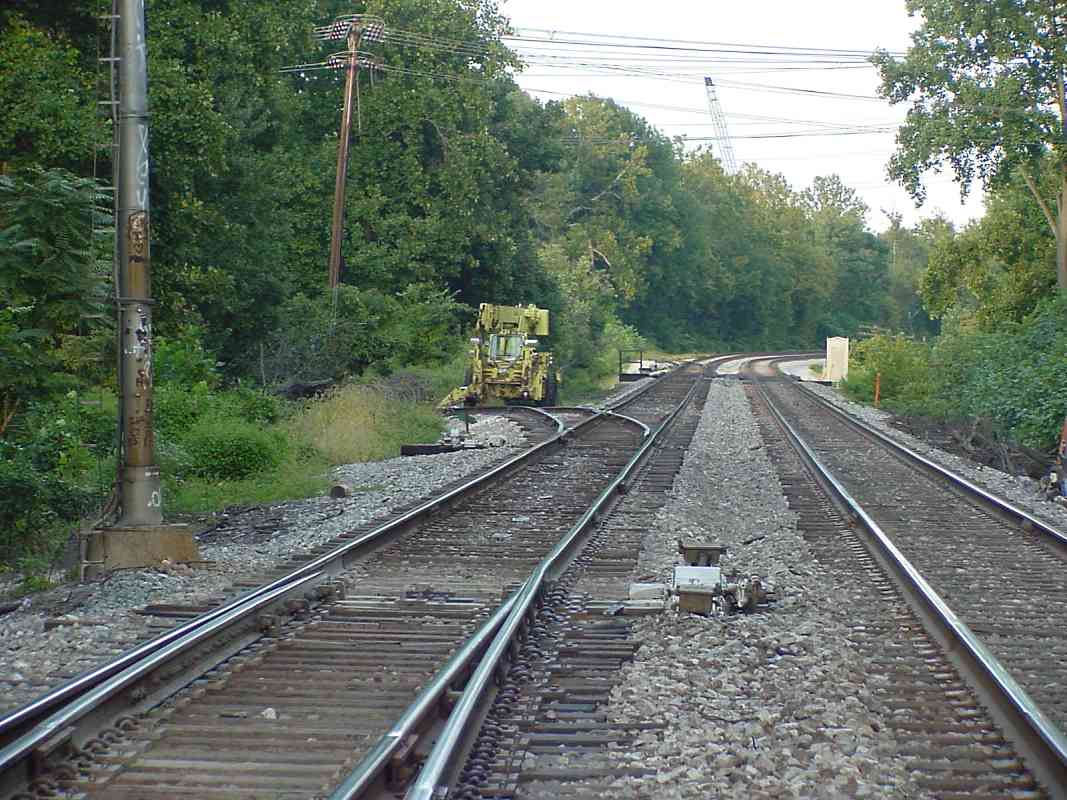
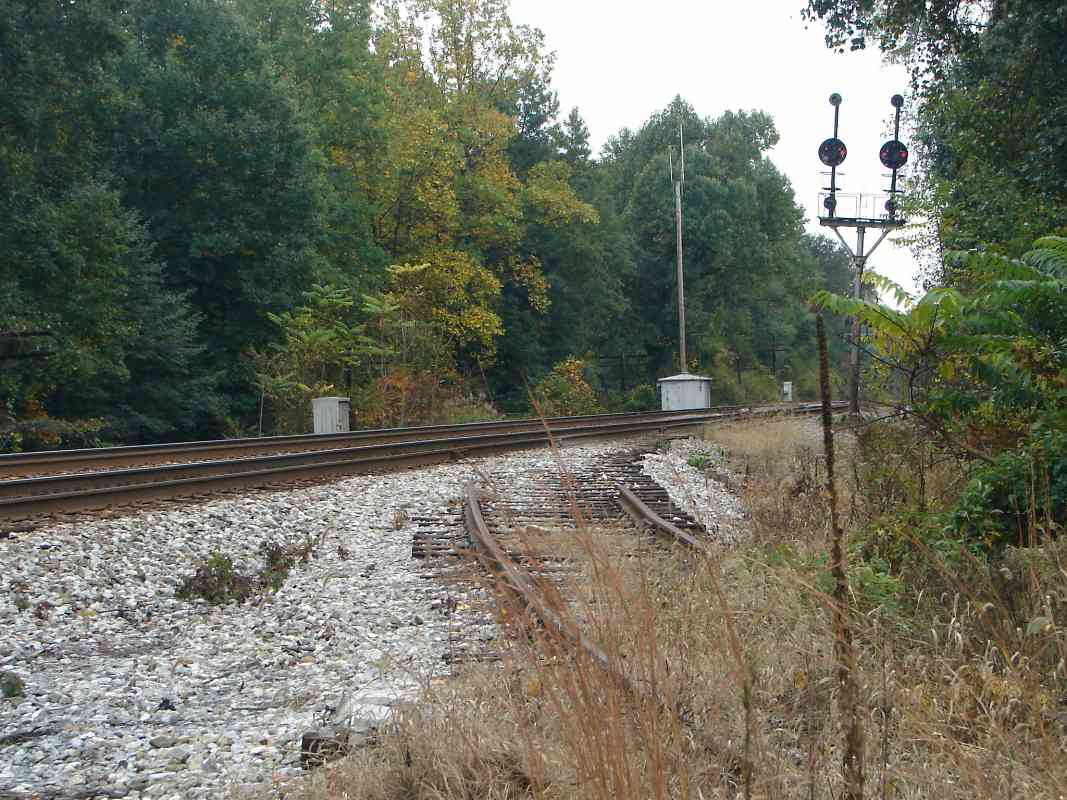
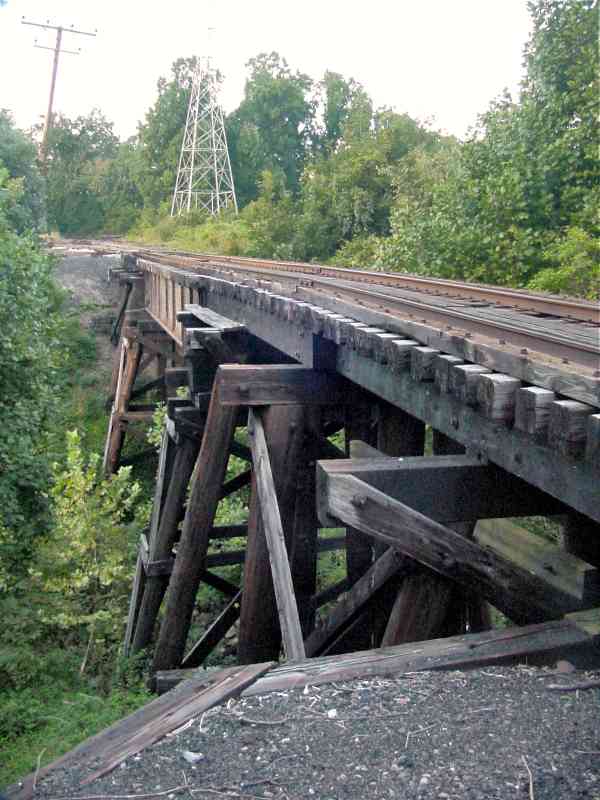
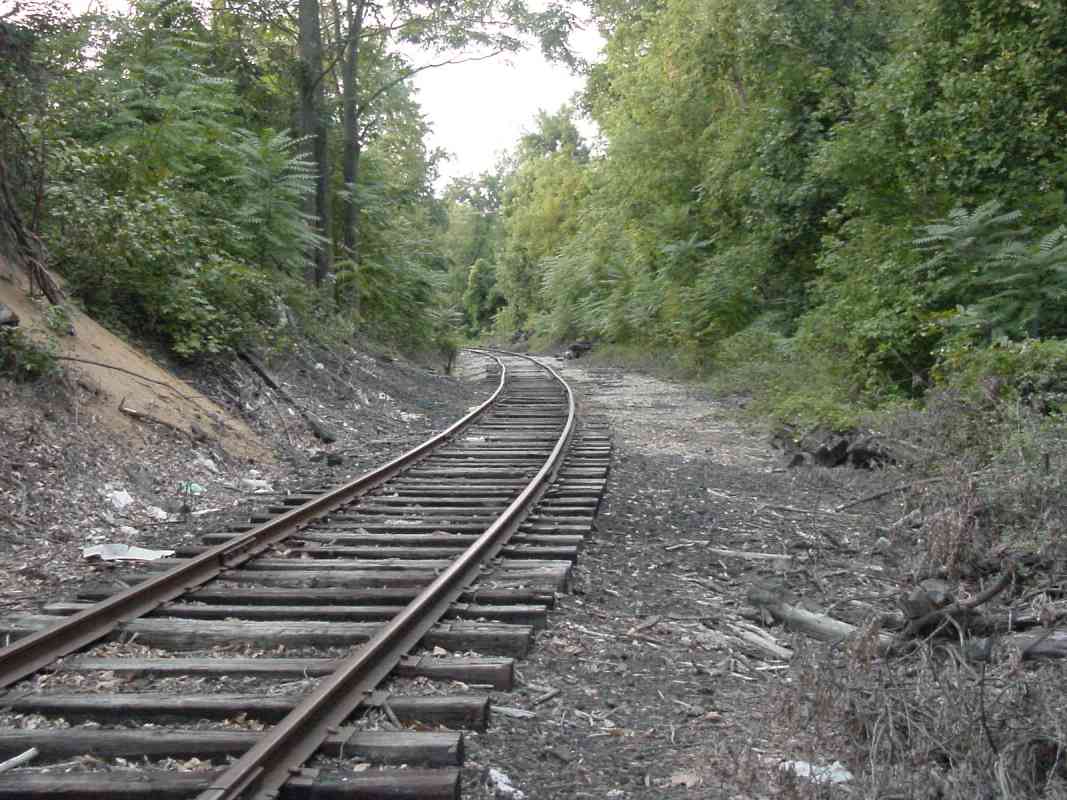
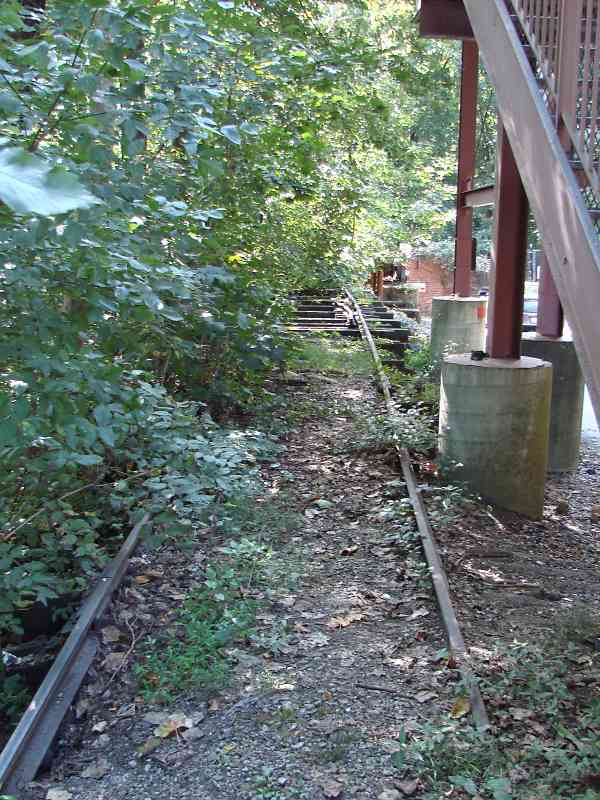
The ROW continues northward, hugging the west bank of the Little
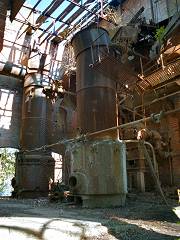
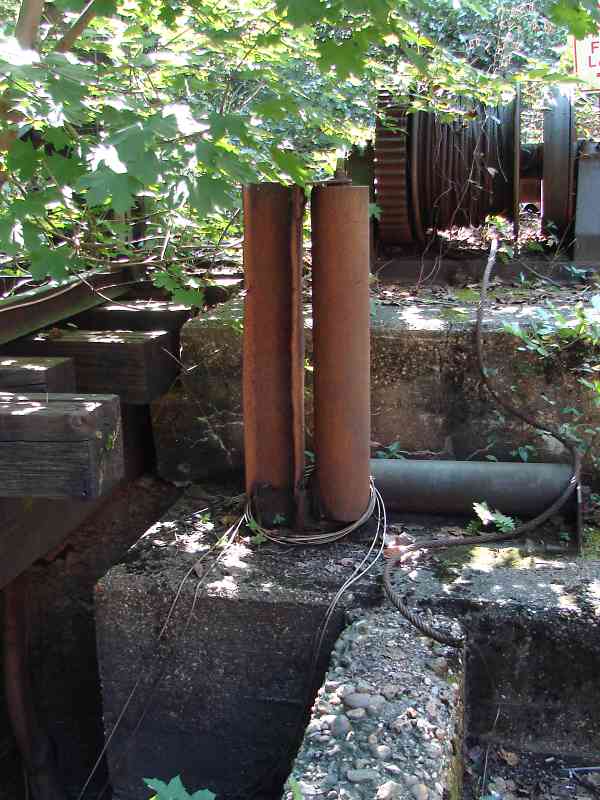
Patuxent River. Adjacent to the disused ROW and about midway between
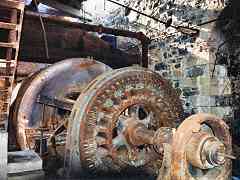
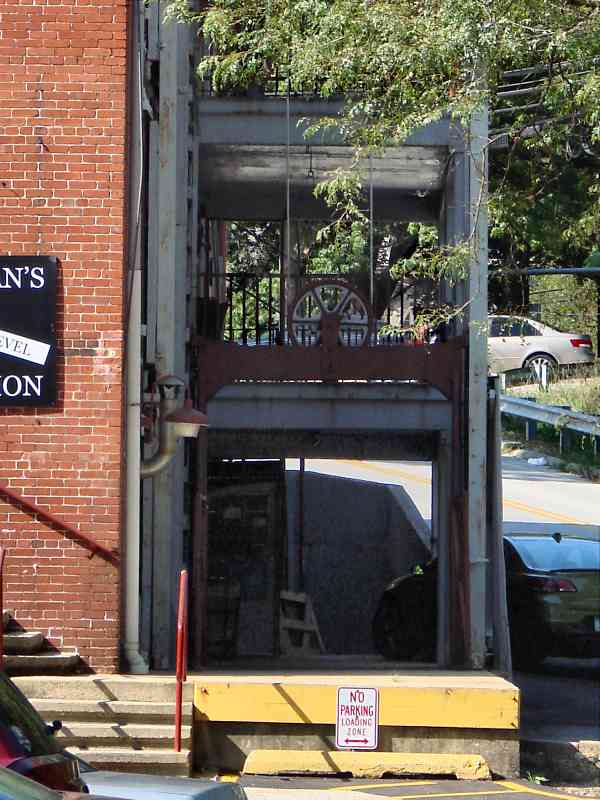
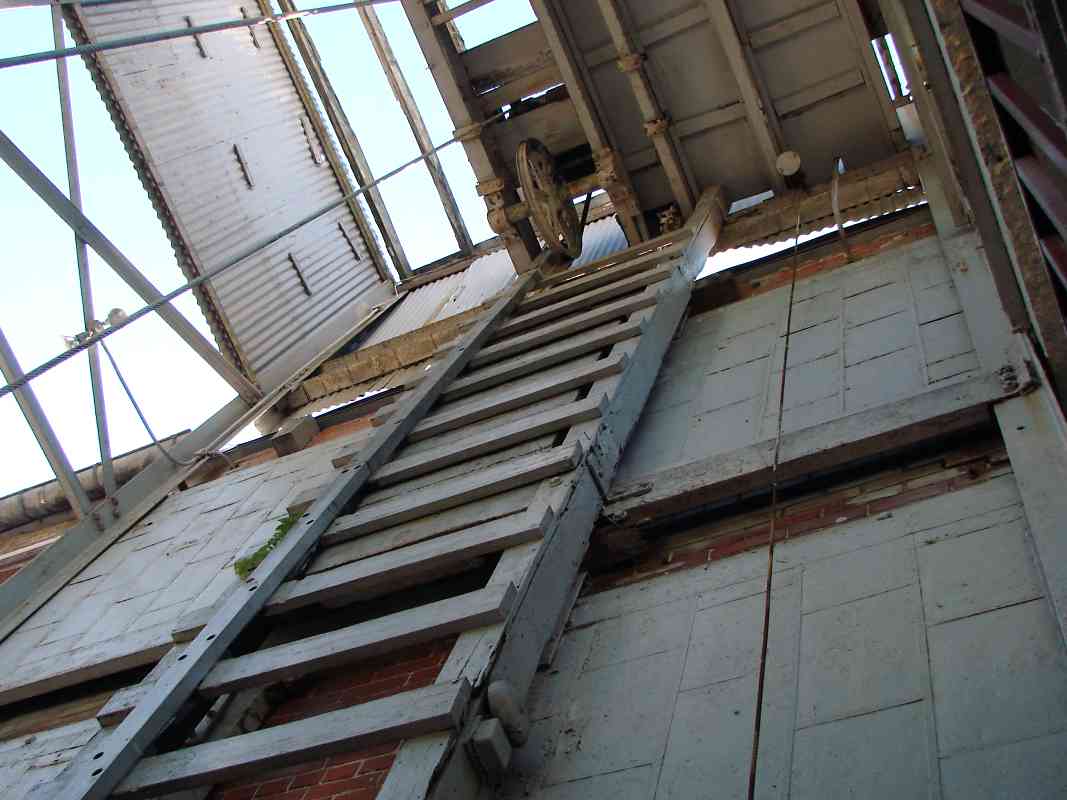
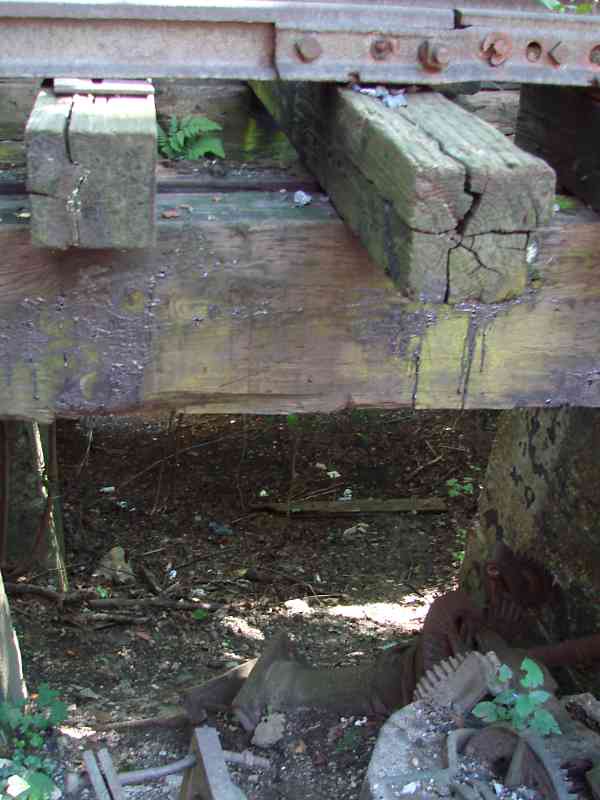
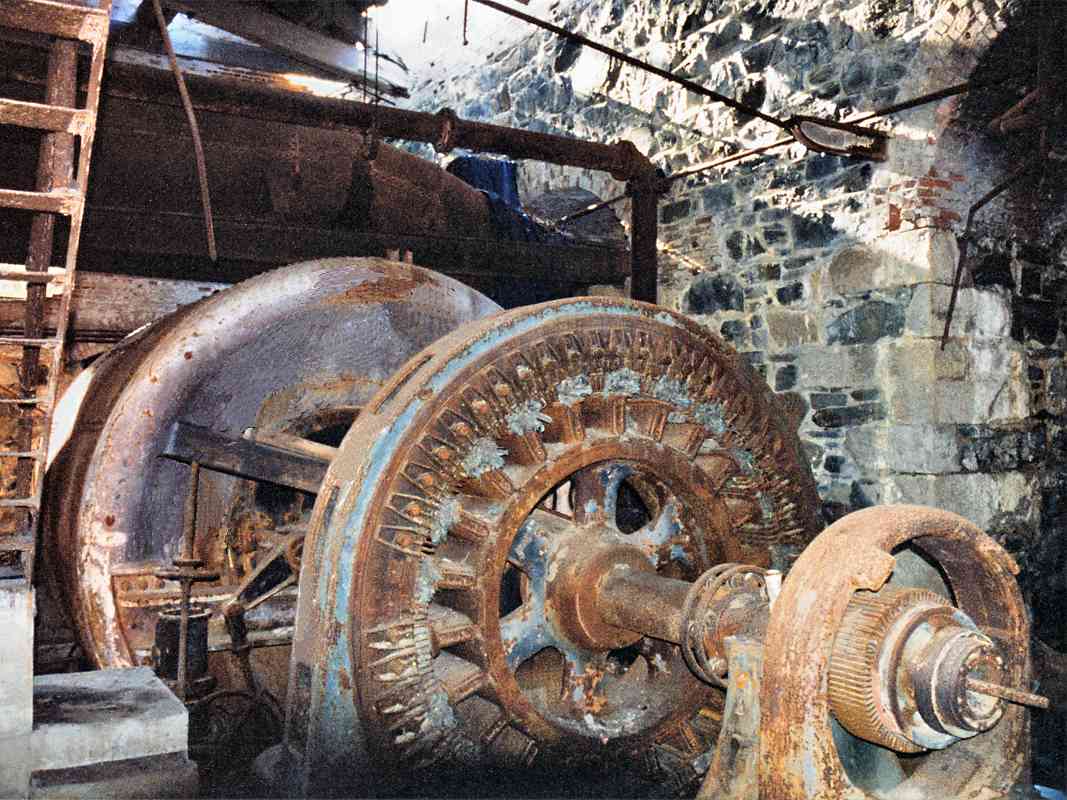
the Gabbro Bridge and Vollmerhausen Road stand these puzzling ruins which
still tower about 10 feet high. Not seen in this picture is a parallel
wall of equivalent height made of stone rather than concrete.
The proximity to the ROW implies it was involved in railroad
operations. A coaling tower? This is a remote location for
coaling.
Could this structure have been involved in water control for
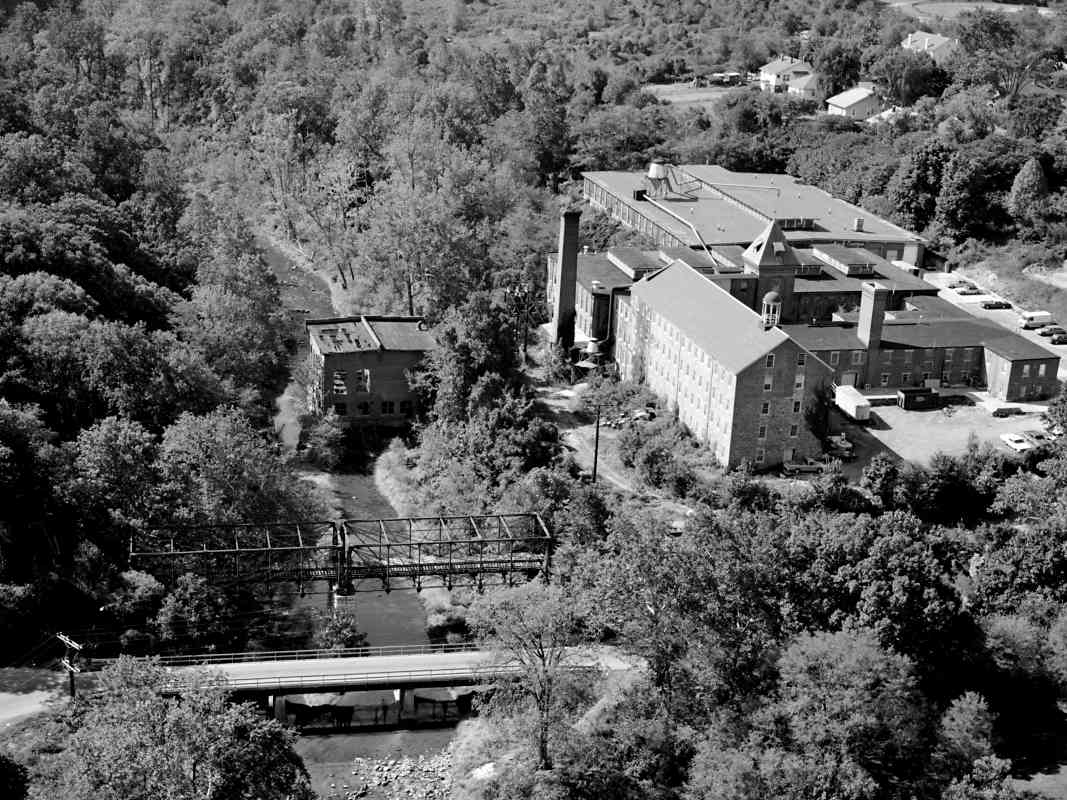
Savage Mill's dam system? This idea doesn't fit well either because
the mill is about 1.5 miles downstream.
The nearby name of Gabbro (iron-rich rock) could indicate this
site had been used for iron making.
Yet another possibility is one suggested by Herb Harwood, noted
B&O historian, who wrote:
"Steve - I can think of one other possibility for the Patuxent
branch mystery, but it's a real long shot. Some time
in the early 1900s the B&O planned a cutoff route
around Baltimore, leaving the OML at Gorsuch and
running generally NE roughly along the route of Old
Court and Joppa Roads, to eventually meet the Phila.
line at Van Bibber, MD (west of Edgewood). The idea
was to bypass the congestion around the Baltimore
terminal (especially the Howard St. tunnel) and reduce
mileage for OML freight traffic going to/from points
north of Baltimore. There also may have been vague
plans to join this with the Washington branch. From
what I've been told, some grading work was started at
Gorsuch, but obviously not much was ever done with the
plan.
"And about the time of WWI the PRR had a plan to use
this route jointly with the B&O. The PRR line (going
from south to north) would leave its Washington line
near Landover, swing NW north of Laurel, and follow
the Little Patuxent north to meet the "new" B&O cutoff
line at Granite. Perhaps -- just perhaps -- these
structures were built as part of that plan."
Still more information comes courtesy Ken Skrivseth,
a volunteer at the Laurel Historical Society which
operates the Laurel Museum on Main Street:
"Back in the 1870's there was a cotton mill in Guilford MD, (probably a small
one), so I wonder if some of what you are seeing in your photos might be
from a mill dam or mill race from that time. We know about the Guilford
cotton mill because we have the diaries of the Laurel Cotton Mill
Superintendent from that period, and he (George H. Nye) would travel up to
"The Guilford" as he called it, from time to time, with mill supplies, or to
borrow supplies. I will dig through my notes and see what else I may have
on it. I think the mill operator at Guilford was named Heath, and there are
one or two Heath graves in Guilford at the Alberta Gary (see below) memorial
Methodist Church there along old Rt. 32. There is a map from 1878 (a
Hopkins Atlas) that shows the Guilford community - I'll try to find a copy,
as it will show whether or not there was a rail line back then and will
provide you with an idea of how big an operation they had there. From your
web pages I suppose that there was no rail line there yet, back in 1878.
"By the way, Alberta Gary was the daughter of James A Gary, president of
James A. Gary & Sons of Baltimore, which operated mills in Laurel, Alberton,
and Guilford, among possibly others."
Monica Fortner relays info on signage in the area:
"The maps of Savage Park call your mystery structure a stone
finishing operation. My impression is that granite taken from the
nearby quarry was cut to desirable dimensions at teh stone finishing
operation and then loaded onto trains. The Park has identified large
metal coils on the hill above the mystery structure. The coils
supposedly held wood planks forming a water holding tank. There is also
a pipe leading from the water holding tank down towards the mystery
structure. The information on the kiosk at the Wincopin entrance to
Savage Park says that the water was used to cool the saws at the stone
finishing operation below."
Link:
Laurel Historical Society
|