|
|
|
|
|
|
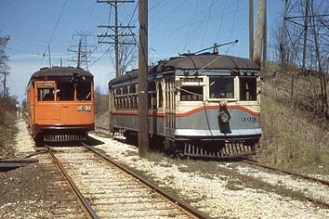
After most of TMER&L's interurban system had been abandoned or cutback, Rapid Transit service
remained from Milwaukee to Hales Corners and Waukesha. Following brief ownerships by Kenosha
Motor Coach Lines, Shore Line Transit and Northland Greyhound, these two lines were sold to Jay
Maeder from Cleveland. Maeder was very familiar with TM, having rode it many times while a cadet at
St. John's Military Academy.
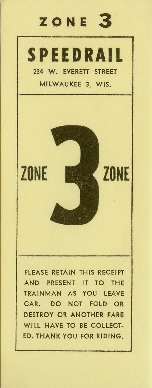
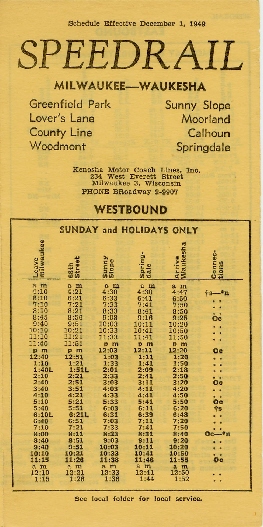
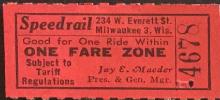
Maeder formed the Milwaukee Rapid Transit & Speedrail Co., which was more commonly known
simply as Speedrail. The first official run was Sept 2, 1949.
To save costs the company purchased the ten articulated streetcars (1031-32 to 1049-50) from
TMER&T and renumbered them 31-32 to 49-50. Maeder also brought six second hand one-man,
lightweight curveside cars from Cleveland (Shaker Heights) and numbered those 60 - 65. He later added
two more cars from Shaker Heights, numbers 300 and 301. Several of the heavyweight TM interurbans
remained on the roster for peak travel times.
Although they seemed to be holding their own financially, a major accident during a fan trip on Labor
Day of 1950 caused 10 deaths and many injuries. The resulting claims and loss of ridership put the
company in a downward spiral.
All service ended on June 30, 1951.
|
|
 |
|
|
|
|
 |
|
|
|
|
|
|
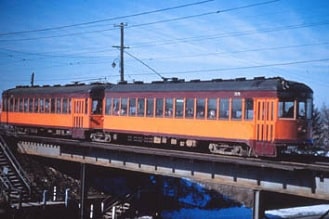
Built for TMER&L South Milwaukee
suburban service as 1031-1032 through
1049-1050 these ten units were acquired by
Speedrail to replace the heavy-weight
interurbans. They were renumbered 31-32
through 49-50.
Their seating capacity and light weight
made them ideal for the Rapid Transit
commuter service.
|
|
 |
|
|
|
|
|
|
|
|
 |
|
|
|
|
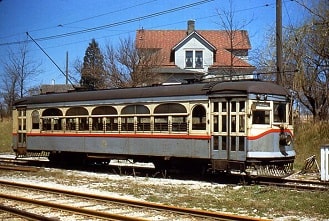
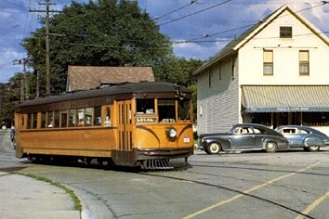
Maeder also bought several light-weight
one-man cars from Shaker Heights. The
60-series and the 300's having been built
years apart, were very different in style.
These lightweight cars were intended to
supplement the lightweight articulated cars
for smaller loads at off-peak times. The
60-series were usually found on the
Waukesha runs, while the 300's being older
and a bit wider (close clearances at
Waukesha loop) were confined to the Hales
Corners runs.
|
|
|
|
|
|
|
 |
|
|
|
|
|
|
|
|
 |
|
|
 |
|
|
|
|
|
|
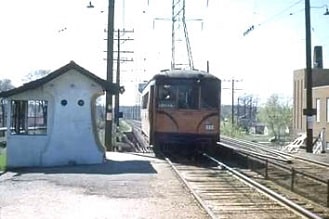
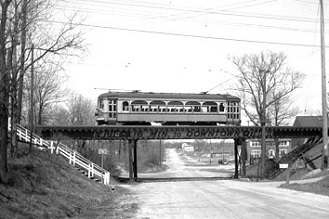
Left: Car 300 at Hales Corners.
Right: Car 60 in Waukesha,
coming off Lincoln onto Broadway.
|
|
|
|
|
|
|
|
|
|
 |
|
 |
|
|
|
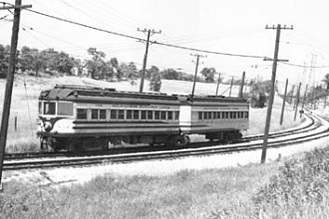
Left: One of the 60-series cars
eastbound at 76th Street. Pius XI
High School at right.
Right: A 300-series car westbound
at 92nd Street.
|
|
|
|
|
|
|
|
 |
|
 |
|
 |
|
|
|
|
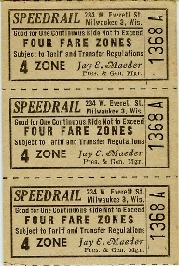
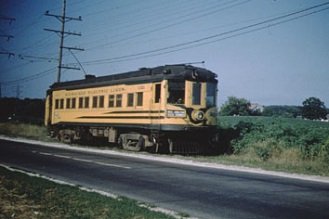
A heavy-weight duplex heads west from
West Junction. This area is now occupied
by I-894.
|
|
|
A single heavy-weight heads south-west
along North Cape Road towards the Hales
Corner Loop.
|
|
|
|
|
|
|
Ideally, Speedrail would have replaced all these heavy-weight interurbans with the lighter cars, but there weren't enough available
on the used car market and several single and duplex units were kept on hand.
Although use by Speedrail prolonged their lives, most met the scrapper in 1951. Four won a brief reprieve by going to the
London & Port Stanley line in Canada. The only two still in existence are now preserved at the Illinois Railway Museum.
|
|
|
|
 |
|
|