|
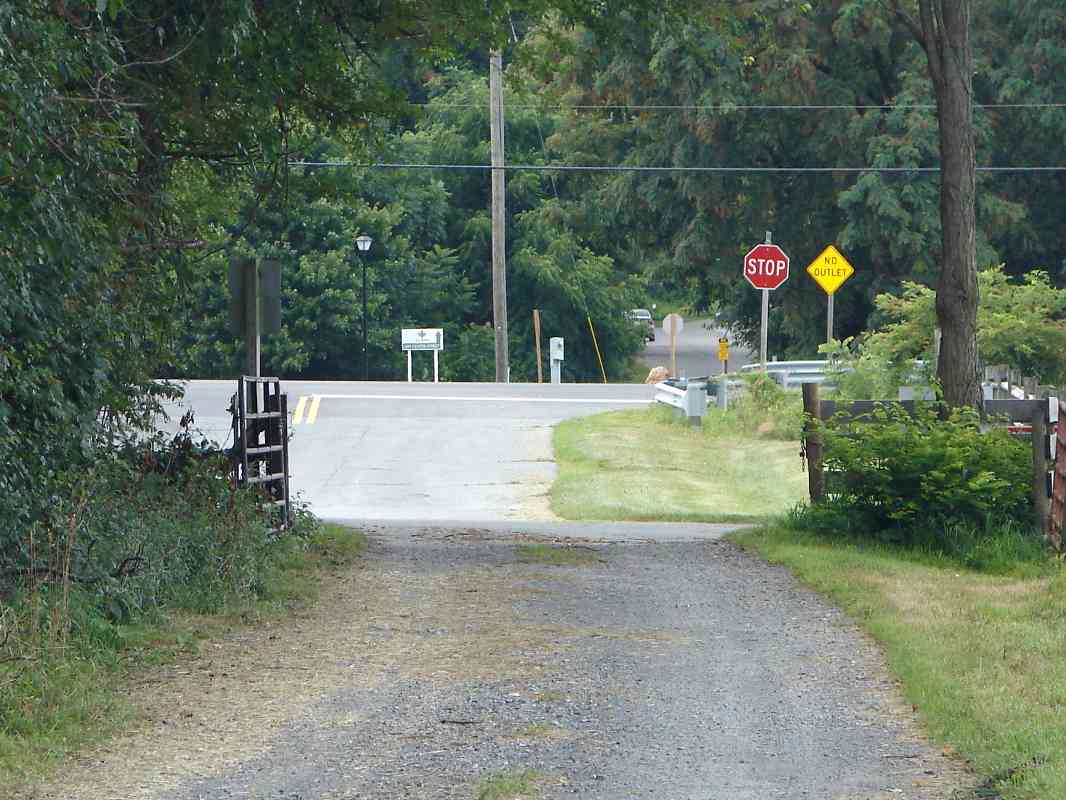
Now we've jumped to the opposite end of the Extension, at a spot the
railroad christened Watersville Junction.
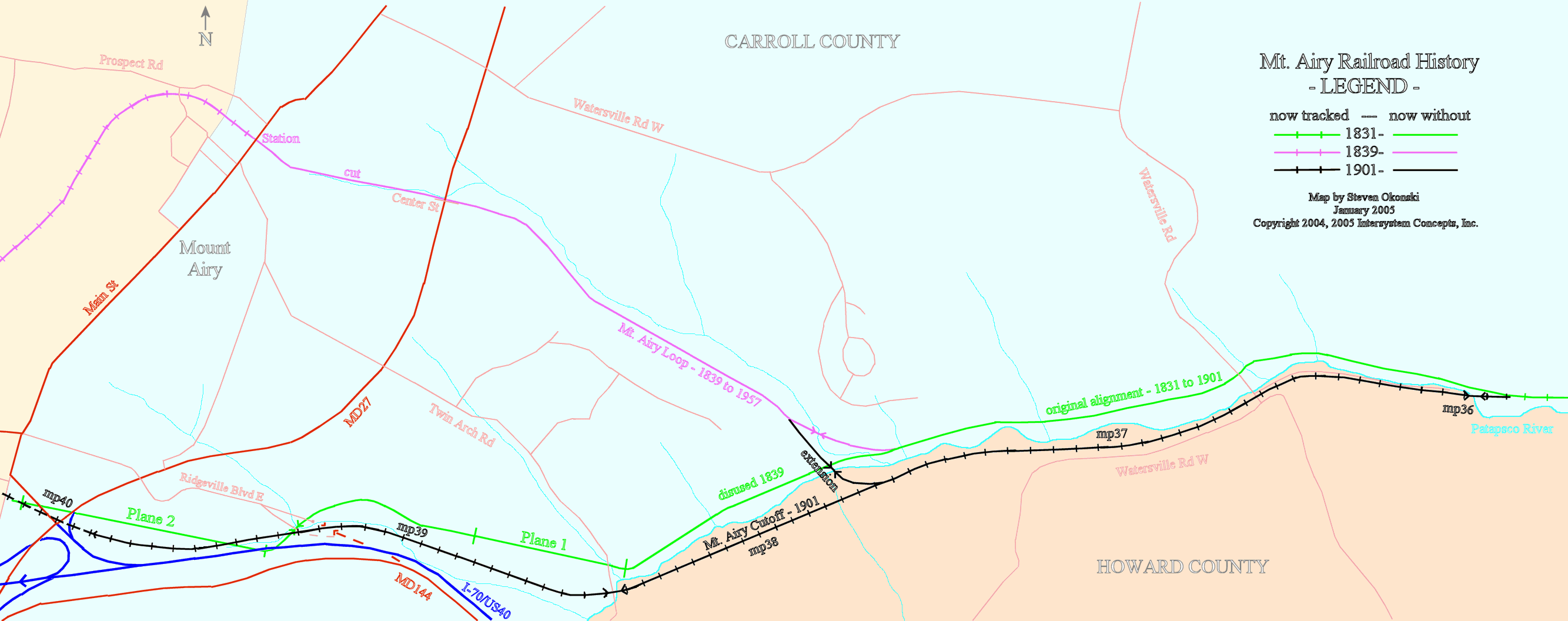
When B&O finally tired of circling Mt. Airy Loop, around 1900
it built what was called the Mt. Airy Cutoff. Rather than loop around
the town, the Cutoff roughly paralleled the original 1831 inclined-planes'
alignment. Instead of planes, B&O bored Mt. Airy tunnel through the
ridge, and regraded the ROW for many miles both east and west to spread
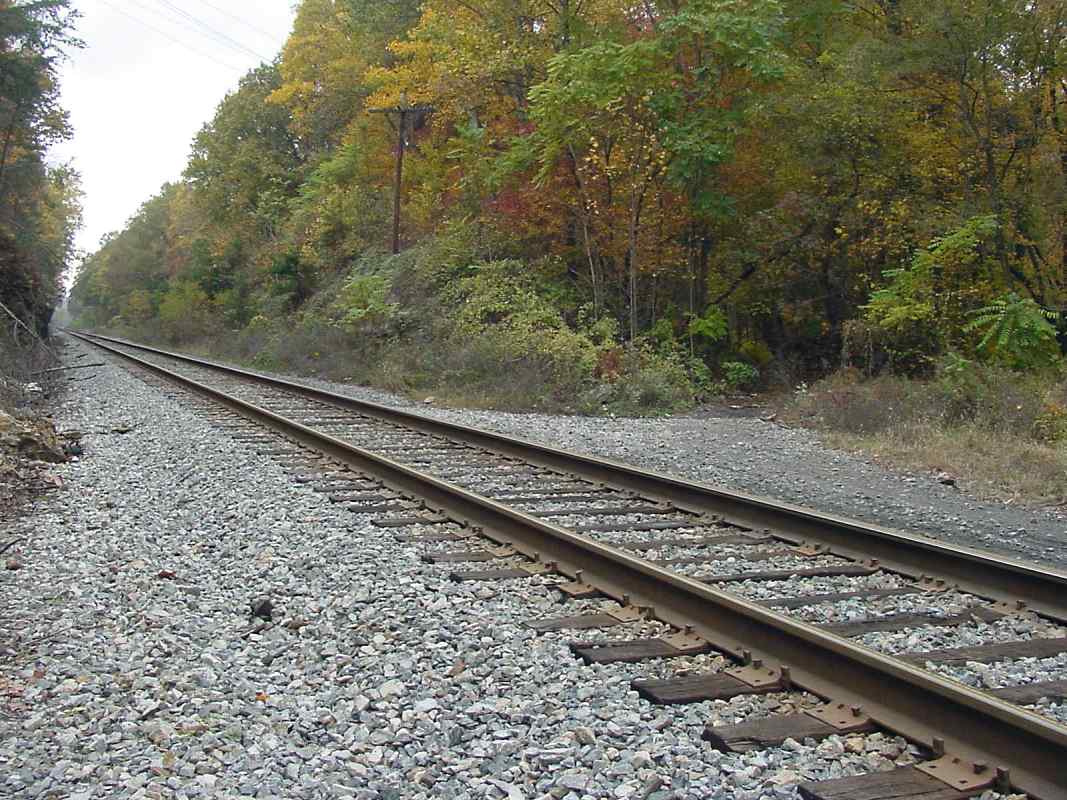
out the steepness. That remains the alignment still in use now as
evidenced by these shiny rails.
A totally new ROW was constructed gor the Cutoff on the south bank of
the Patapsco River beginning east of Watersville, with plans to abandon
the north bank's 1831-dated alignment. Because B&O still served
customers in Mt. Airy, and the passenger station was on the Loop,
it built a roughly half-mile long Extension to connect the Cutoff with
the Loop.
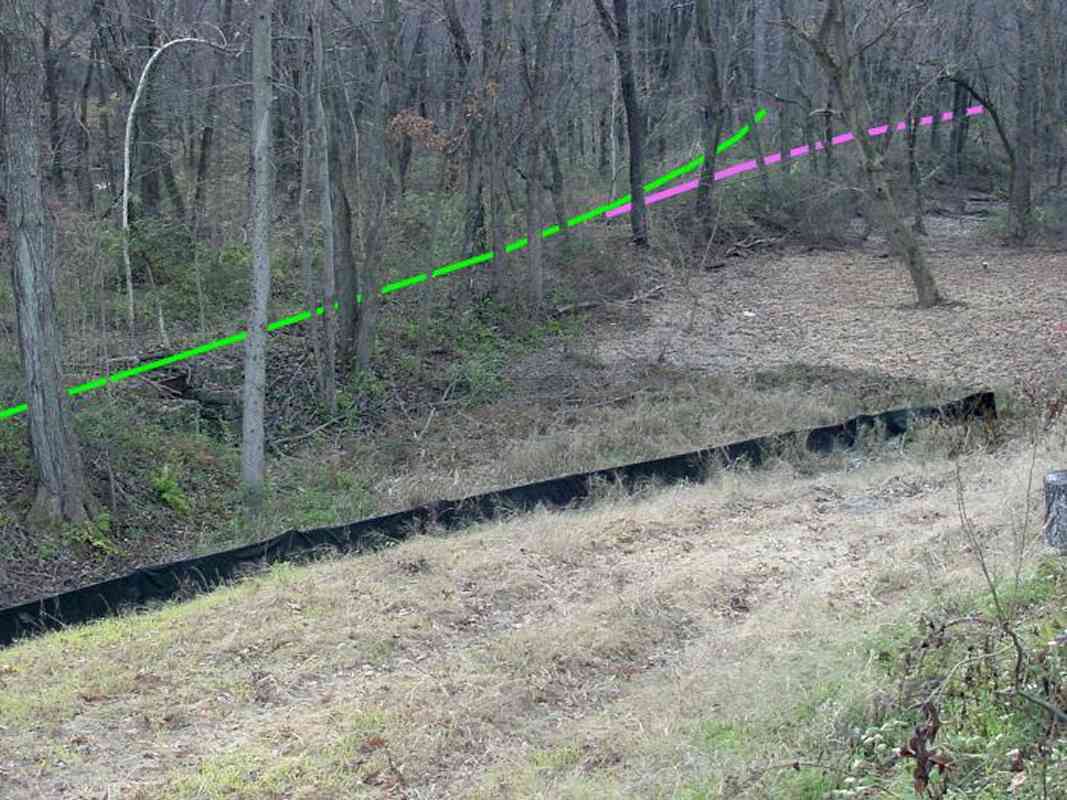
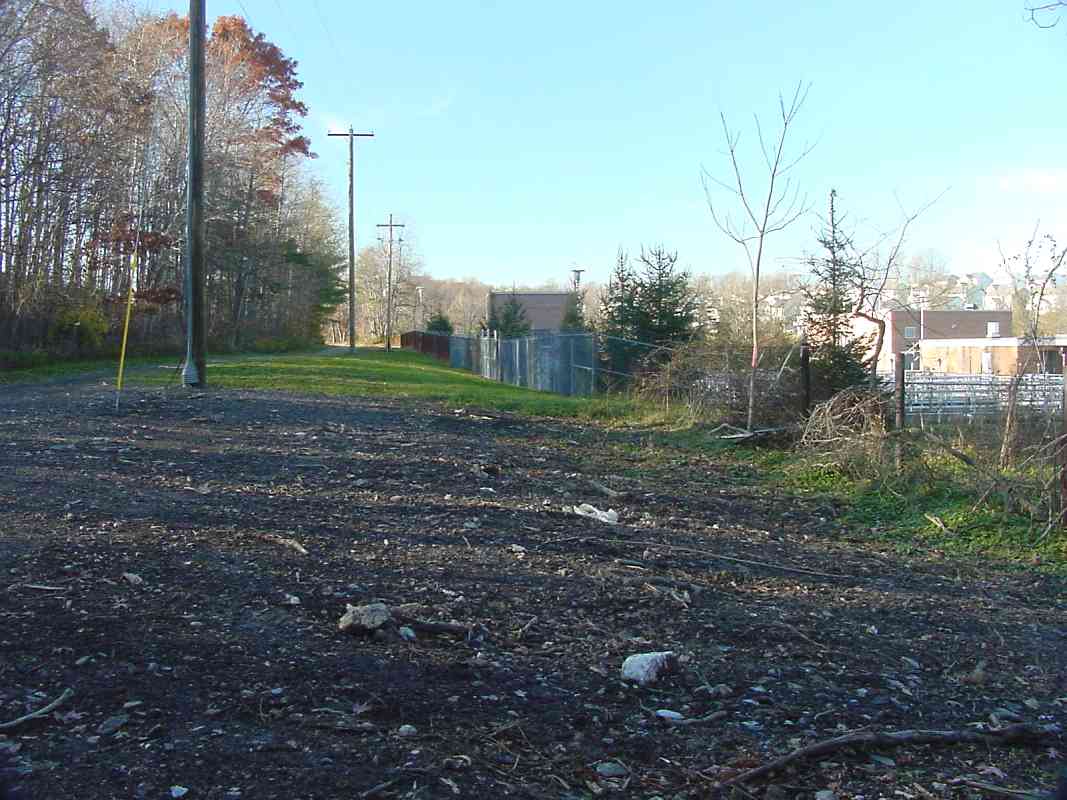
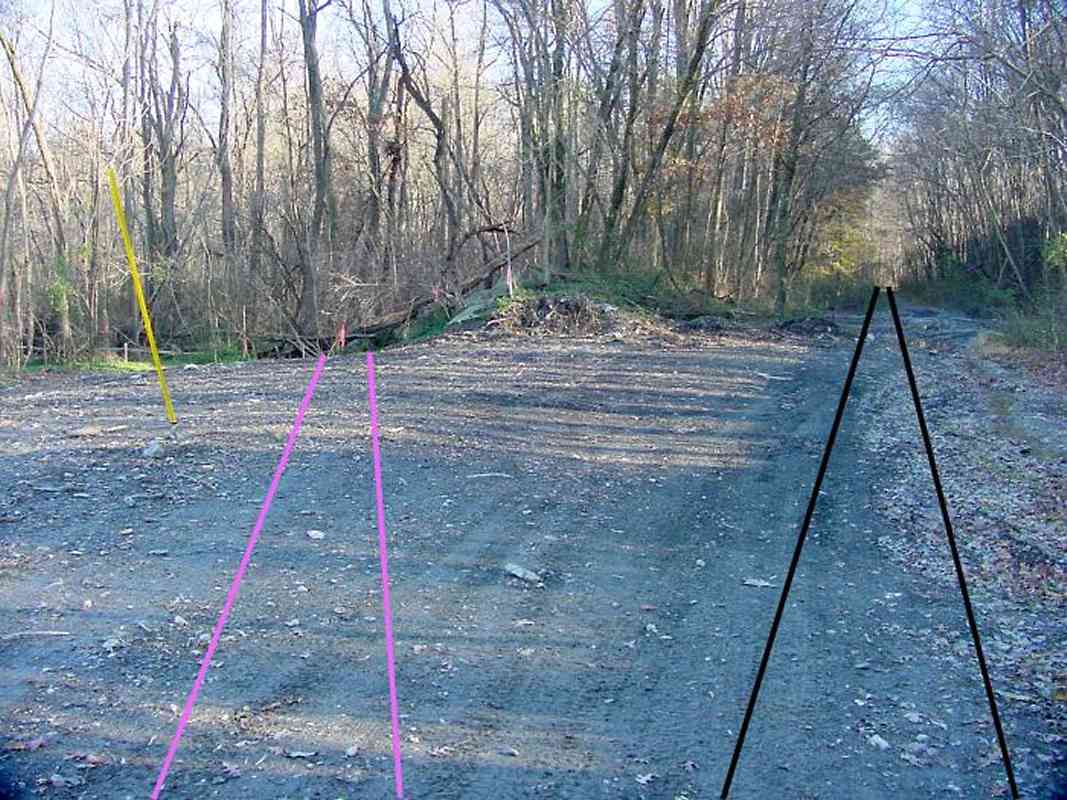
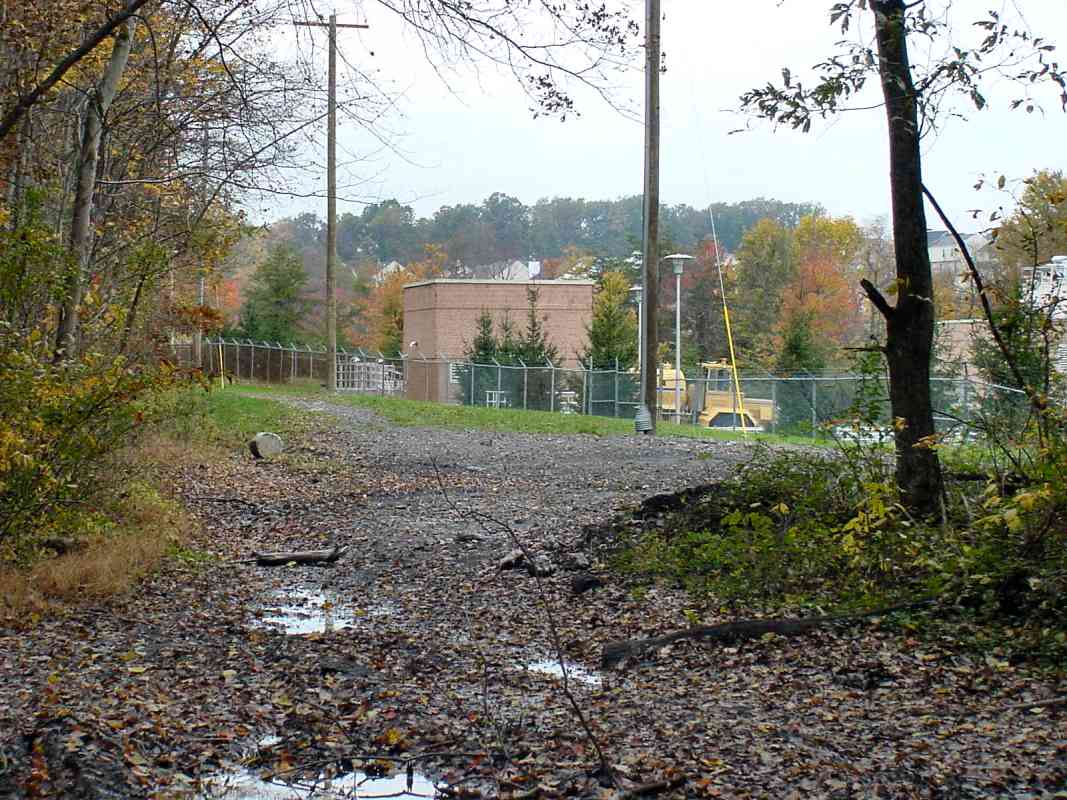
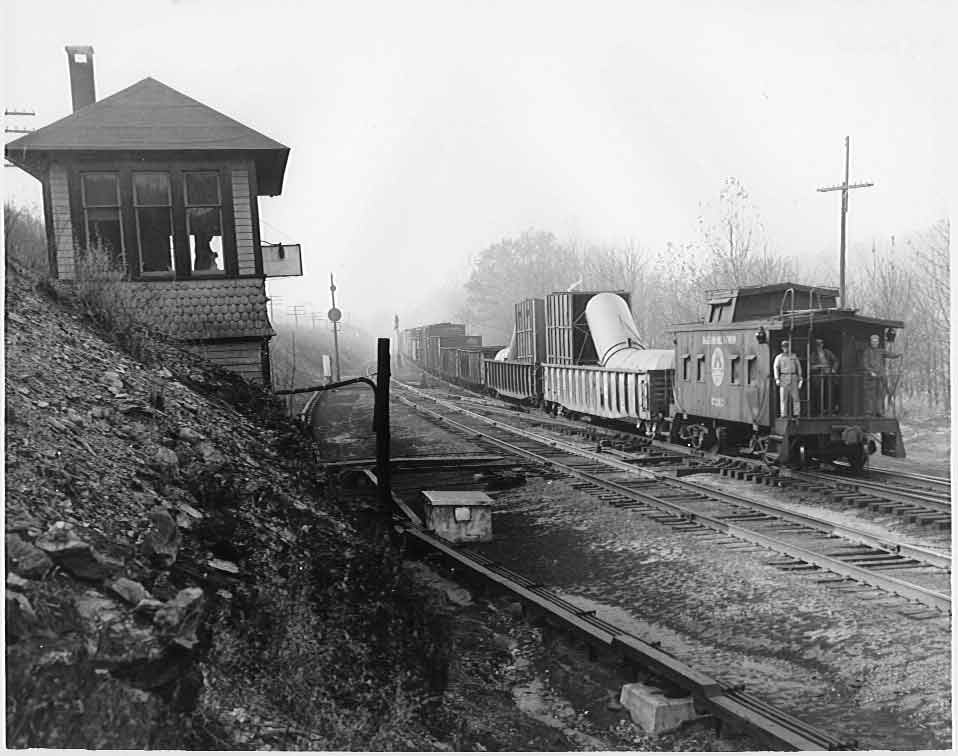
This photo shows where the Extension and Cutoff had diverged. WX tower
had once controlled the switch here, and may have resided near the utility
pole near the center of this photo. The connection to the Loop proceeded
through the gap in the trees at right. The tower lasted until disuse in
either 1932 or 1933.
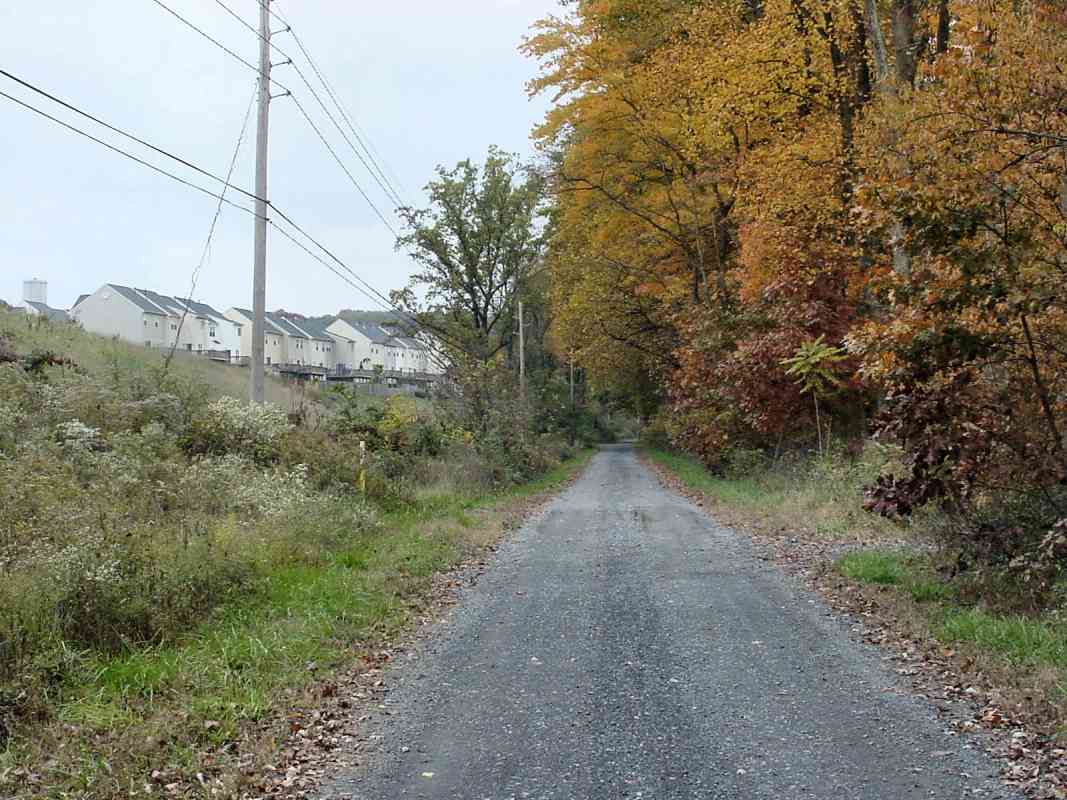
This spot was somewhat remote and lonely in 1901, and requires a long walk
even today, though encroaching housing developments nearby have made it
more accessible.
|