Visit the TrainWeb.org Fan Page on Facebook!
Old Main Line Photo Tour

B&O Old Main Line
Modern day photo tour

Accompanying each photo below are:

Click a photo to see a larger view. Please send your comments and corrections to Steve.


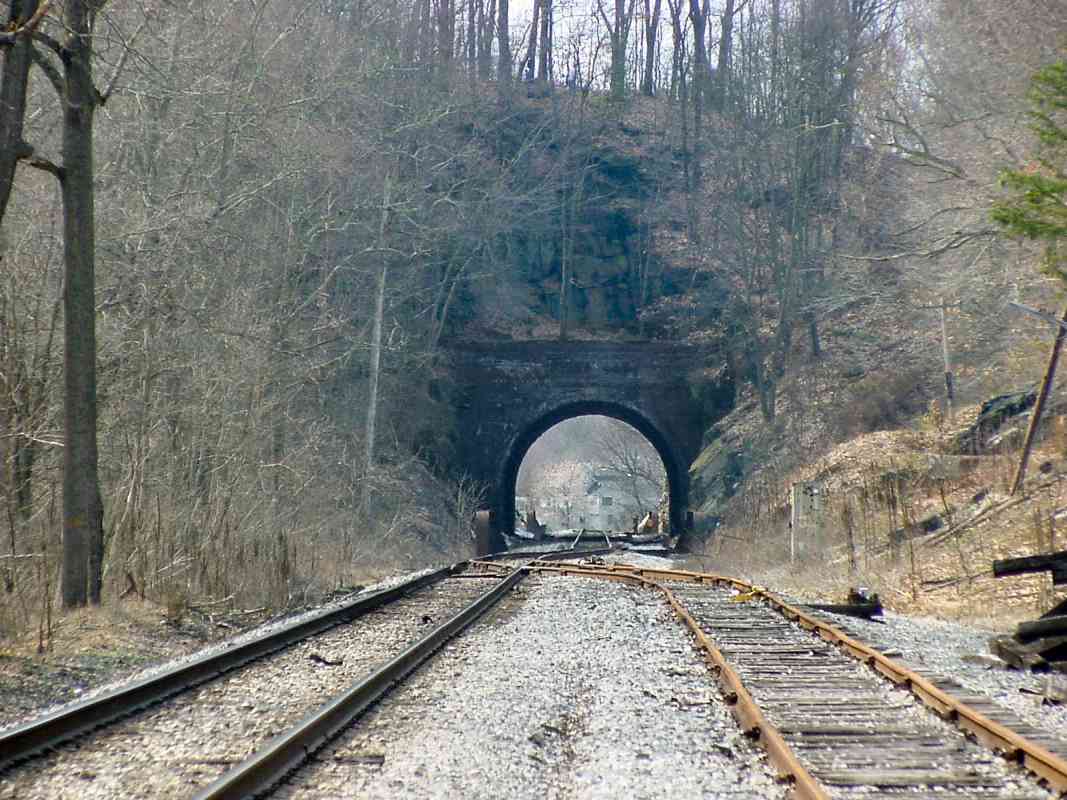
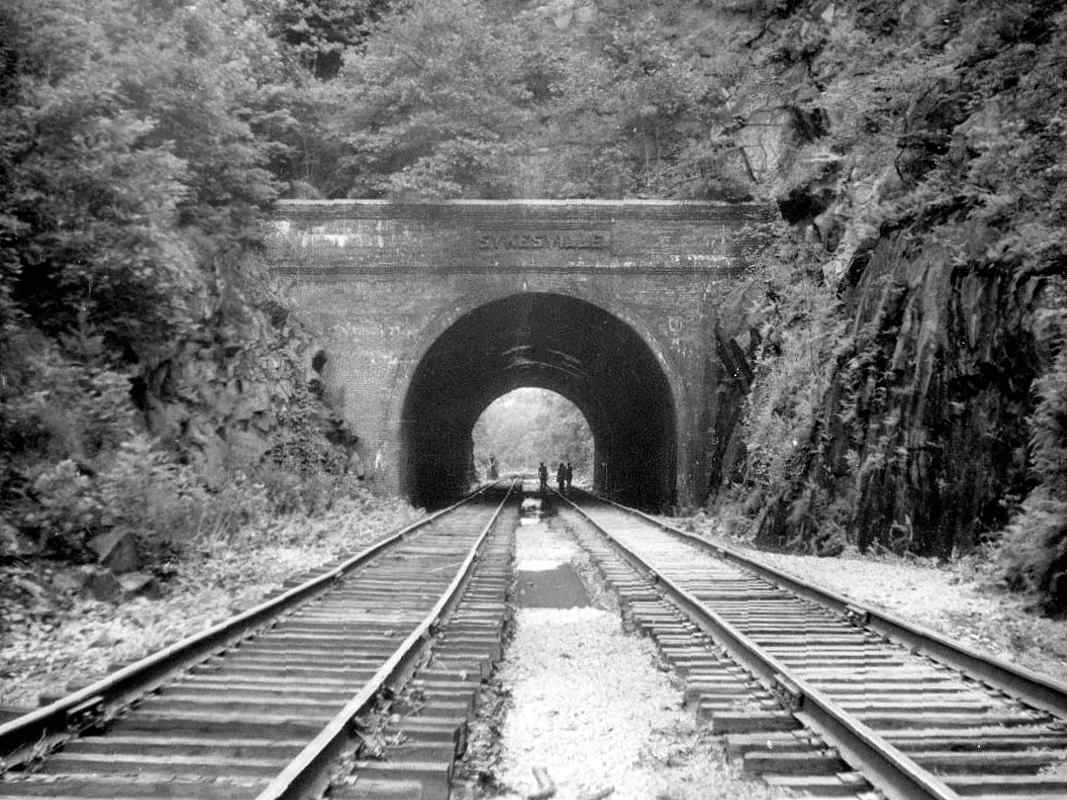
Sykesville Tunnel Approach

Sykesville Tunnel Approach
Mile: 29.2 Date: March 2003
Ease: C View: W
Area: B IC2:
Map: Ca 34 K 4, Ho 4 K 5 Topographic Maps

In a head on view that looks like a trademark angle from movie director Stanley Kubrick, we resume the tour where we left off on the OML. The Sykesville Tunnel with two bridges as bookends looms in the distance.

Notice how the tracks form the shape of an upside down letter y.


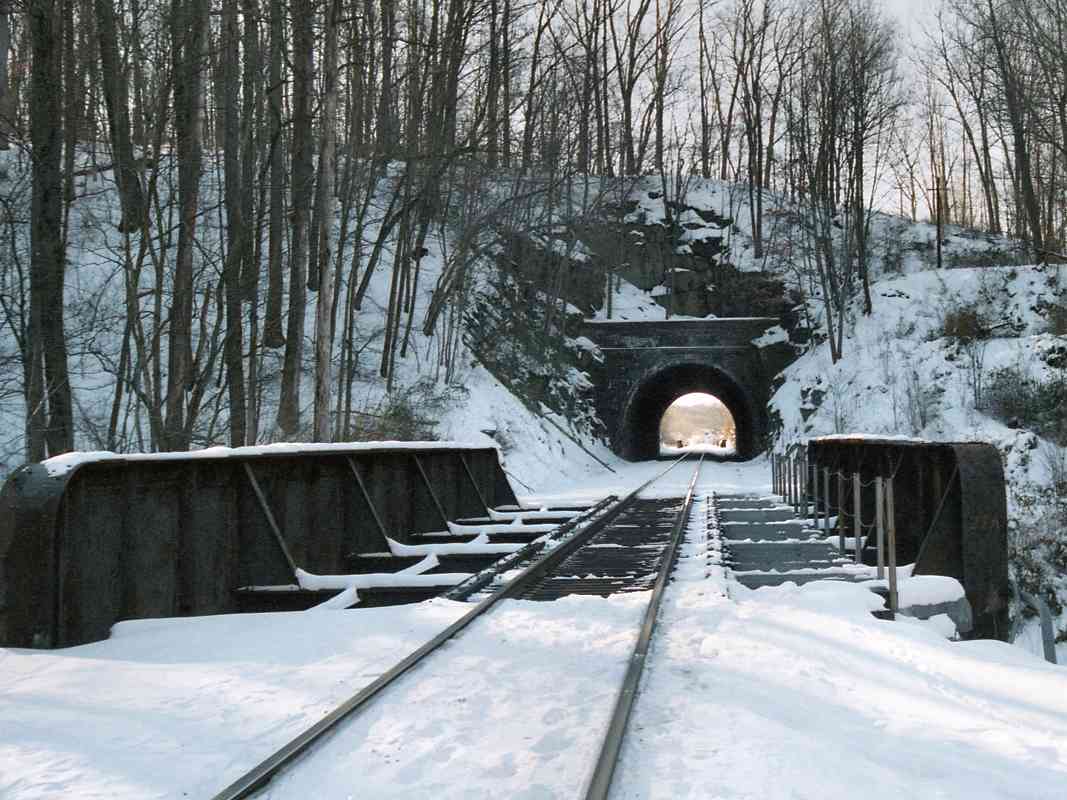
Bridge 27A

Bridge 27A
Mile: 29.4 Date: Jan 2000
Ease: C+ View: W
Area: B IC2:
Map: Ca 34 J 4, Ho 4 J 5 Topographic Maps

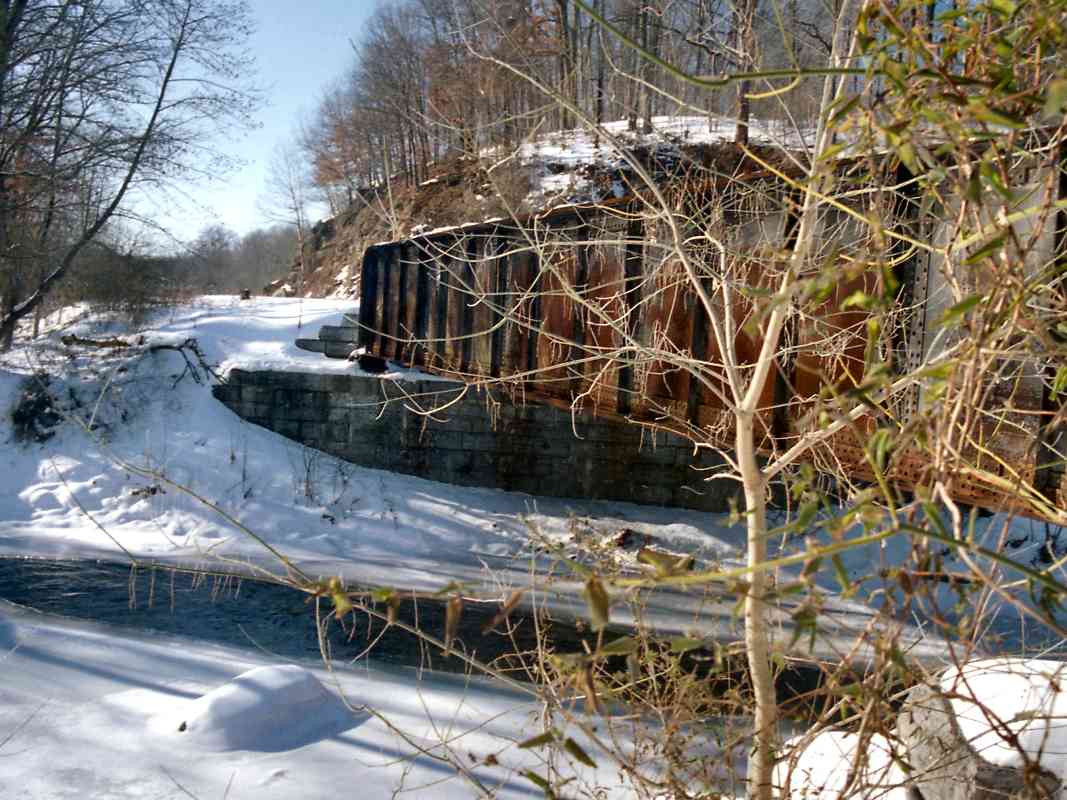
Bridge 27A carries the OML across the Patapsco for a brief ride in Howard County.


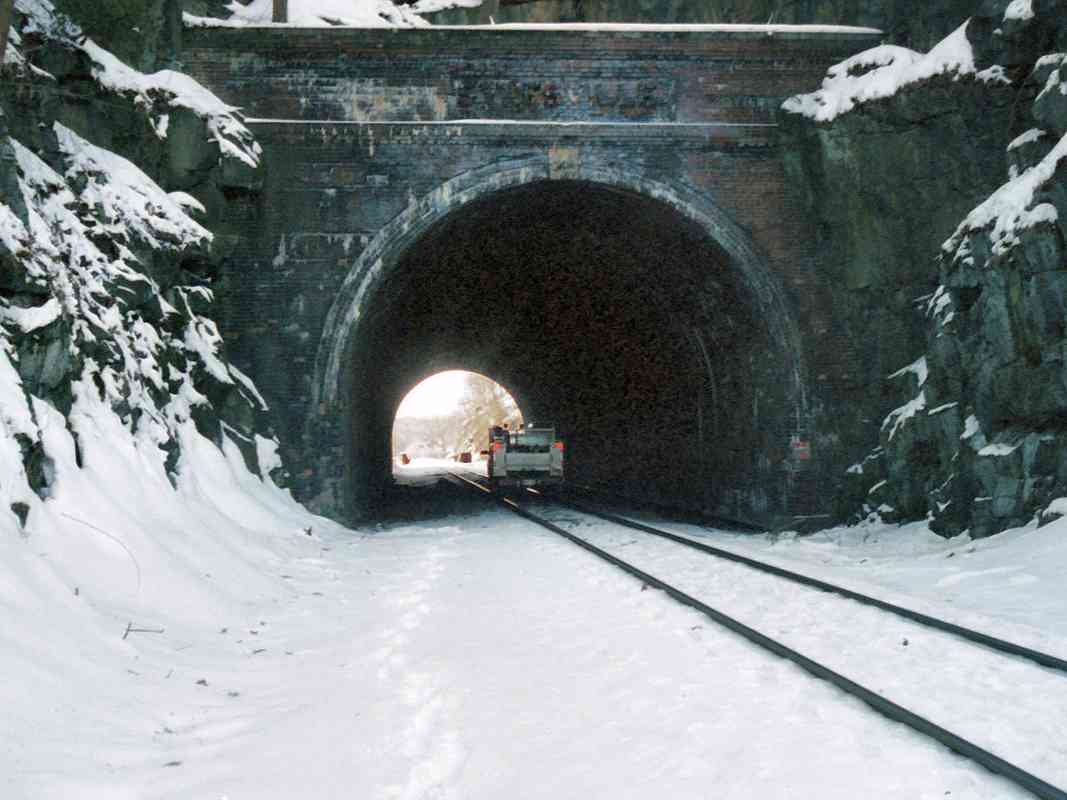
Sykesville Tunnel, East

Sykesville Tunnel, East
Mile: 29.5 Date: Jan 2000
Ease: C+ View: W
Area: B IC2:
Map: Ho 4 J 5, Ca 34 J 4 Topographic Maps

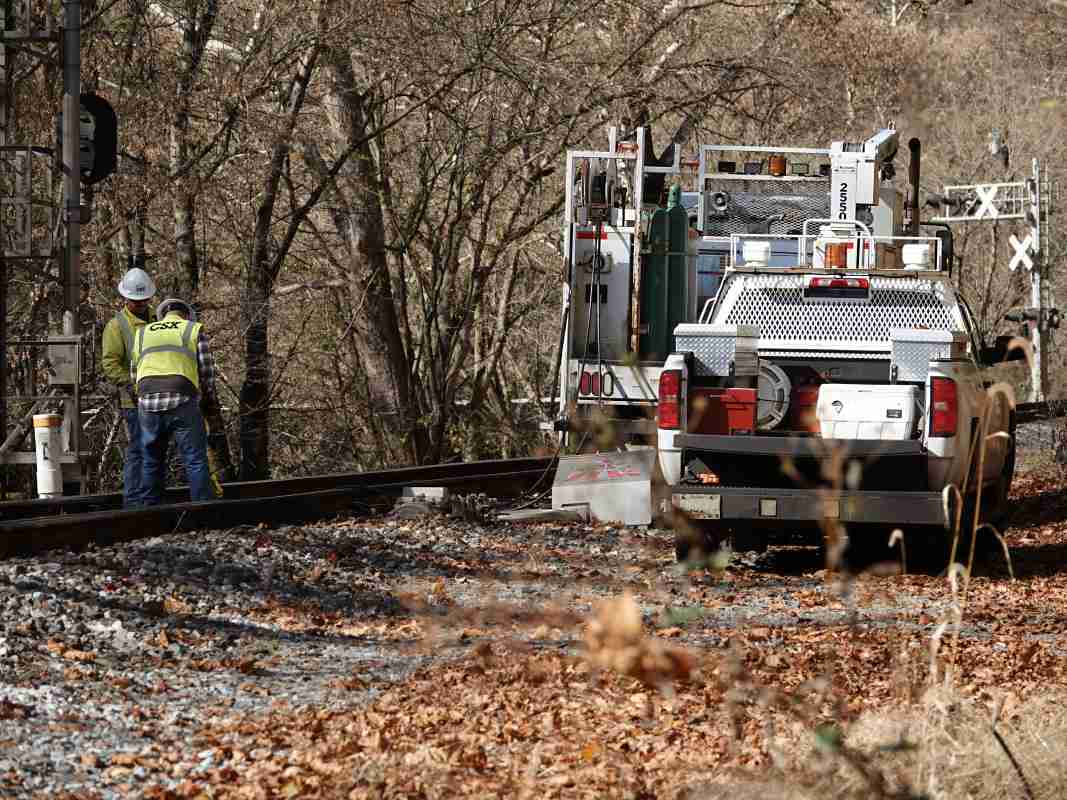
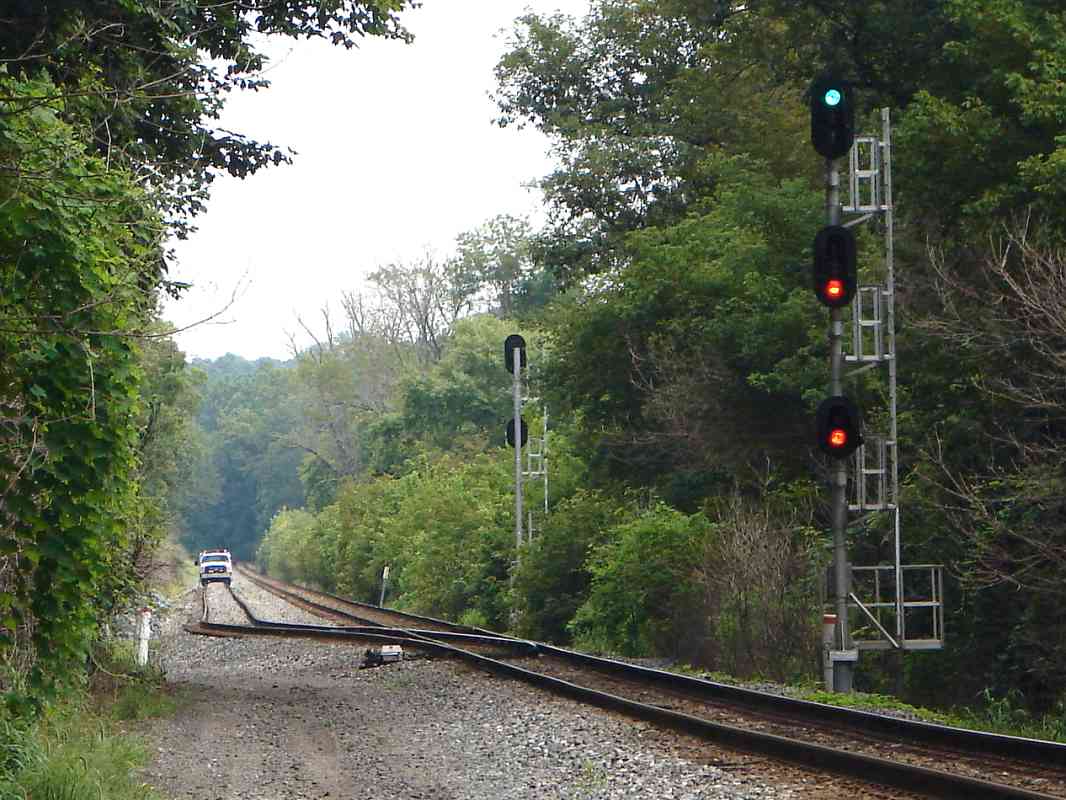
A CSX track inspection vehicle, out checking for frozen switches after a snowstorm, is dwarfed by the Sykesville Tunnel. This tunnel is the second shortest on the OML, measuring just under 240 feet long.


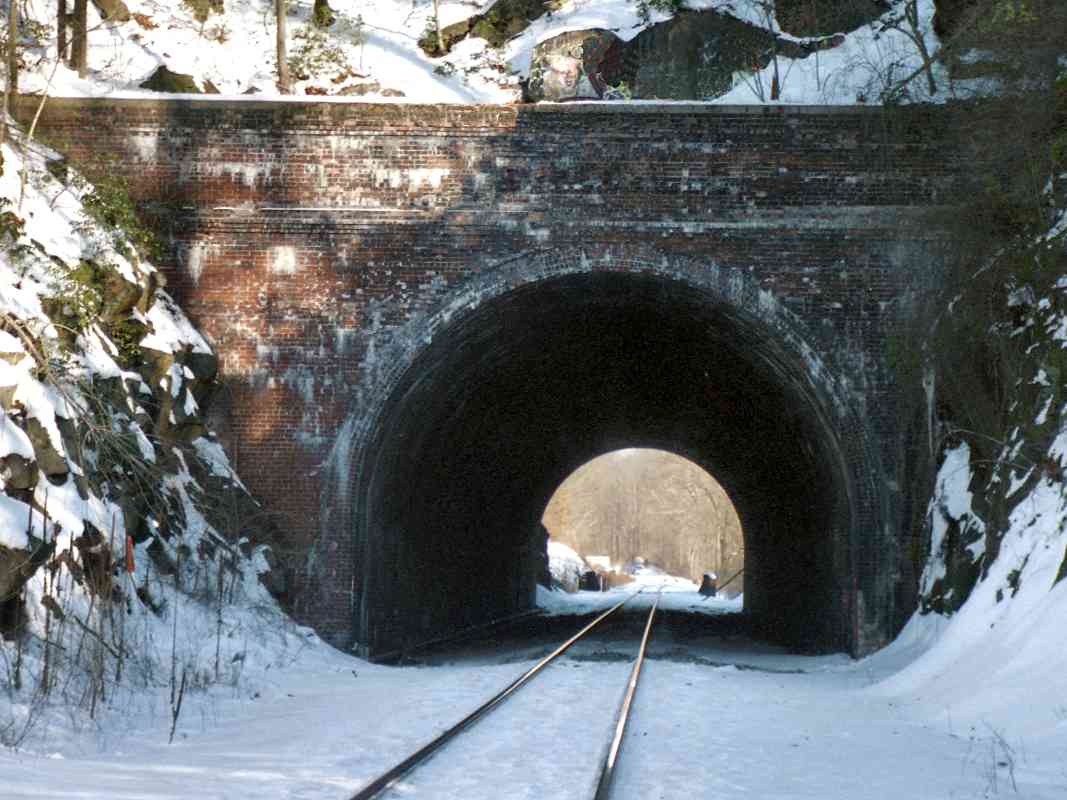
Sykesville Tunnel, West

Sykesville Tunnel, West
Mile: 29.6 Date: Jan 2000
Ease: B View: E
Area: B IC2:
Map: Ho 4 J 5, Ca 34 J 4 Topographic Maps

And, the same tunnel as seen from the west.


Bridge 27B

Bridge 27B
Mile: 29.6 Date: Jan 2000
Ease: B View: W
Area: B IC2:
Map: Ho 4 J 5, Ca 34 J 4 Topographic Maps

West of the tunnel, the OML crosses the river back into Carroll County.


>>> Detour to follow the disused original route around the hill <<<

Gaither Water Stop

Gaither Water Stop
Mile: 30.1 Date: Jul 2001
Ease: A View: NE
Area: B+ IC2: 280
Map: Ca 34 G 5, Ho 4 G 6 Topographic Maps

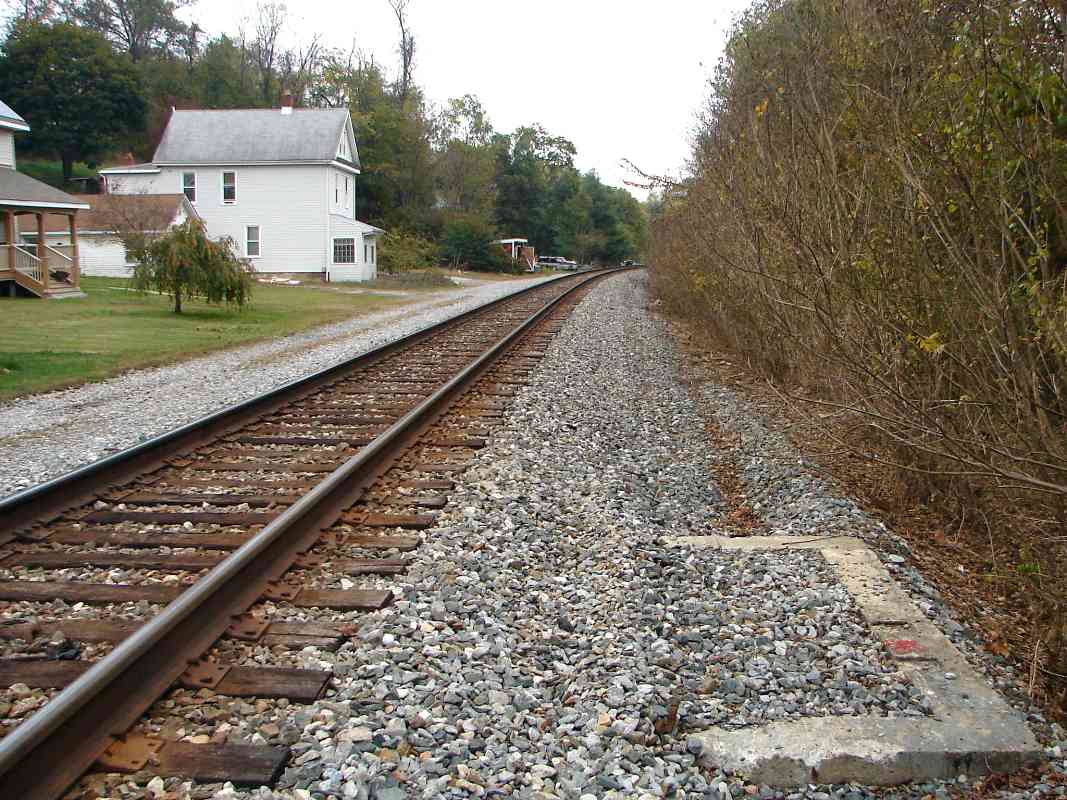
In the days of steam, Gaither had been an important stop for water as westbound locomotives began their ascent to Mt. Airy. Marked by the red circle is what I believe to be the remains of the base of one of the tall water spigots (what were these spigots called by the railroad?).

An anonymous reader emailed to say that the B&O called these penstocks. Can anyone confirm?

Reader Bill Barringer kindly wrote to say:

    "The term 'Penstock' is indeed the B&O preferred term. I am a former employee, who has followed the road for 53 years. It's the only term I have ever heard used for a water column."
Reader John Meyer added:
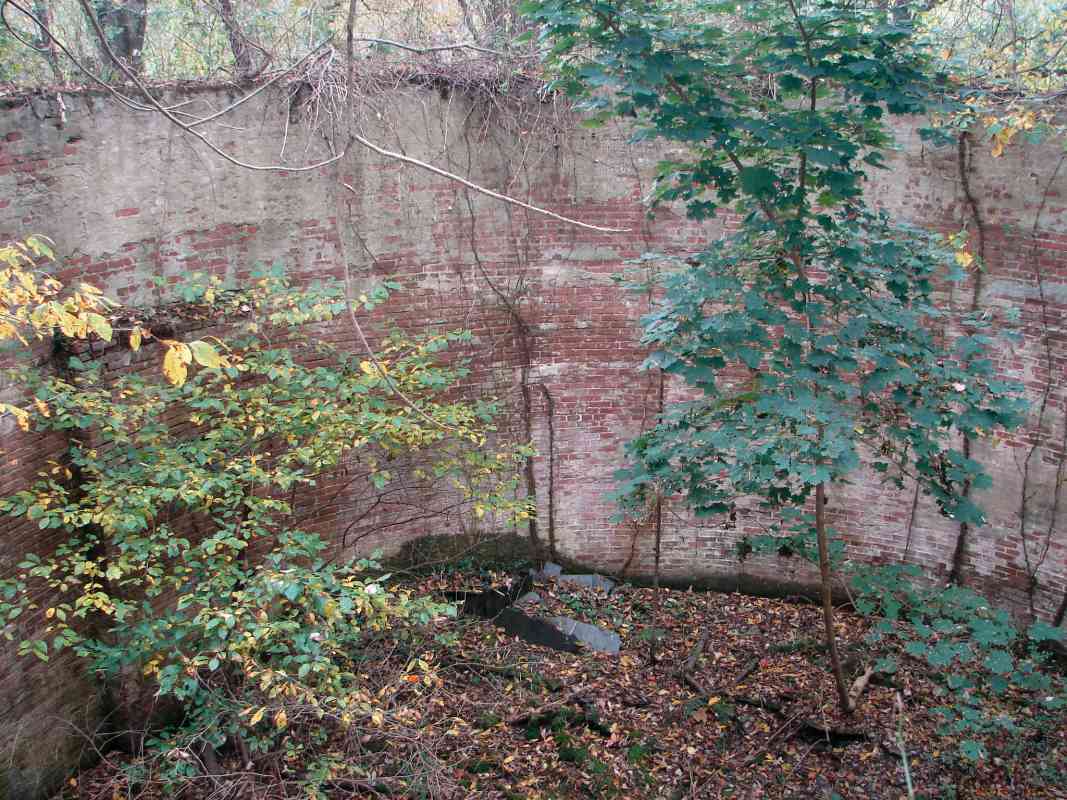
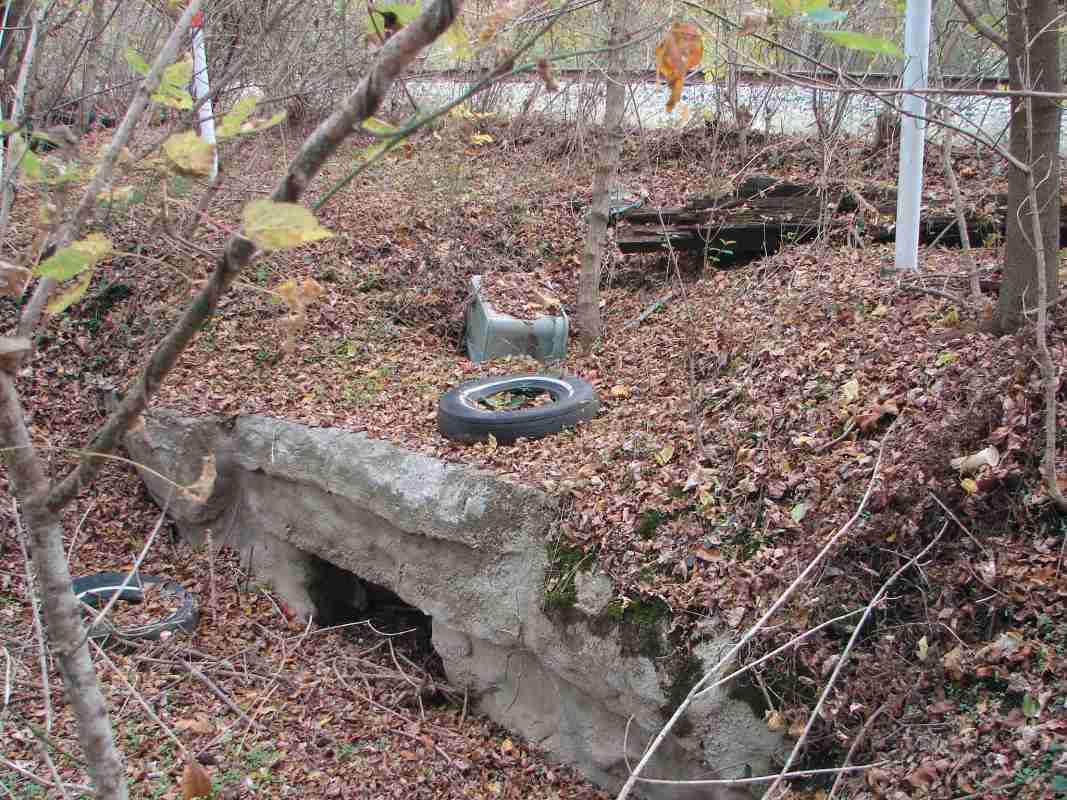
    "Steve, in my side yard is a 20 foot deep 20 foot diameter brick cistern that was the holding tank for the water column on the east end of Gaither. There is a duplicate tank on the west end of Gaither the fed the water column that you show the mount for. You can still find the hand operated pump that pulled the water in/out of the tank and also the iron pipe that heads down to the tracks. It’s very interesting and I’m surprised you don’t show a picture. I though possibly you did not see it as it is partially built into a bank and covered in weeds, I’m slowly trying to de weed the bank."

Compare this photo with the nearly identical view from 1948 on page 280 of Impossible Challenge II.


Hoods Mill Road

Hoods Mill Road
Mile: 31.4 Date: Jan 2000
Ease: A View: NW
Area: A IC2:
Map: Ca 34 D 6, Ho 4 D 7 Topographic Maps

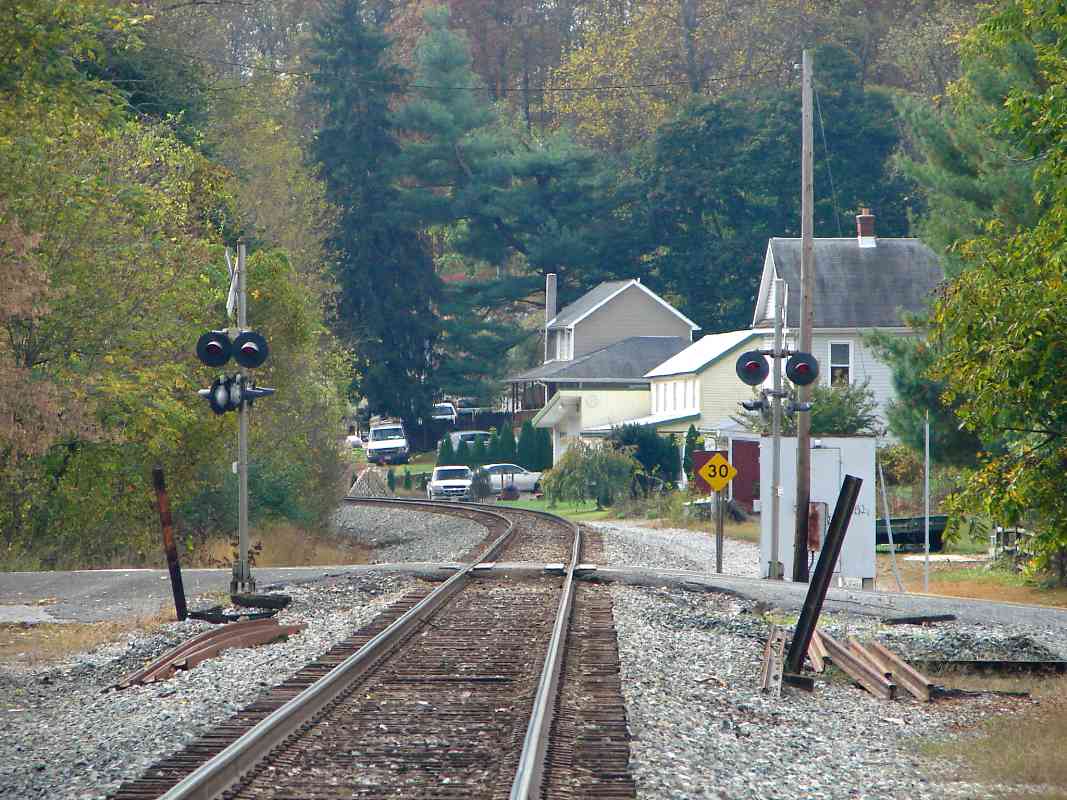
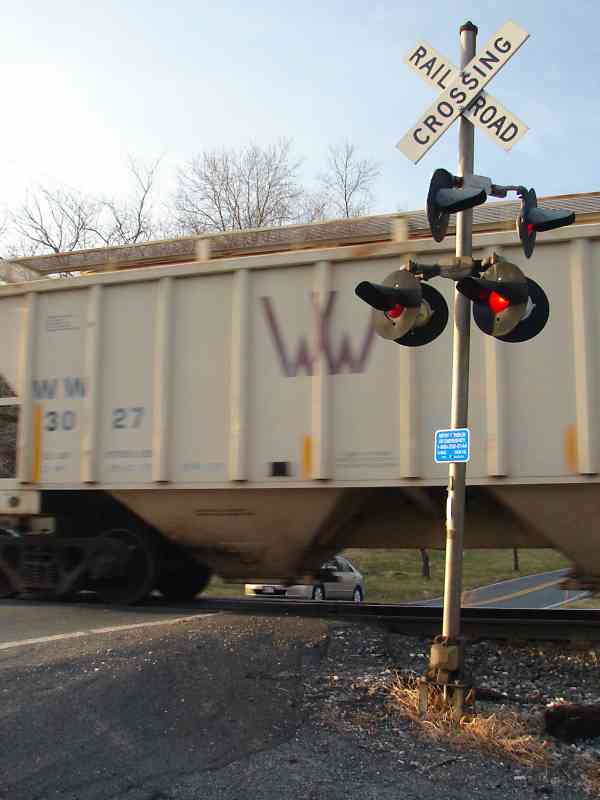
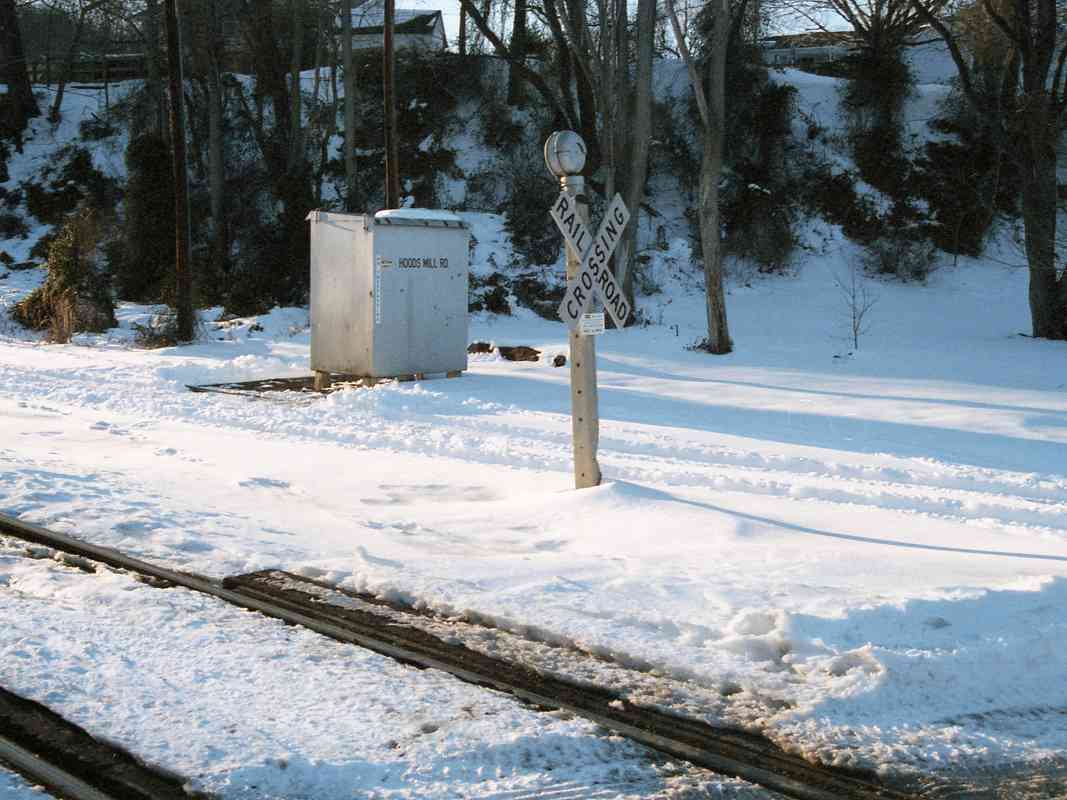
One of the quietest grade crossings on the OML, this Hoods Mill Road crossing warrants only a bell...now a rare relic of simpler times.

Link to older picture: 1979


Hoods Mill Telephone

Hoods Mill Telephone
Mile: 31.4 Date: Apr 2001
Ease: A View: S
Area: A IC2:
Map: Ca 34 D 6, Ho 4 D 7 Topographic Maps

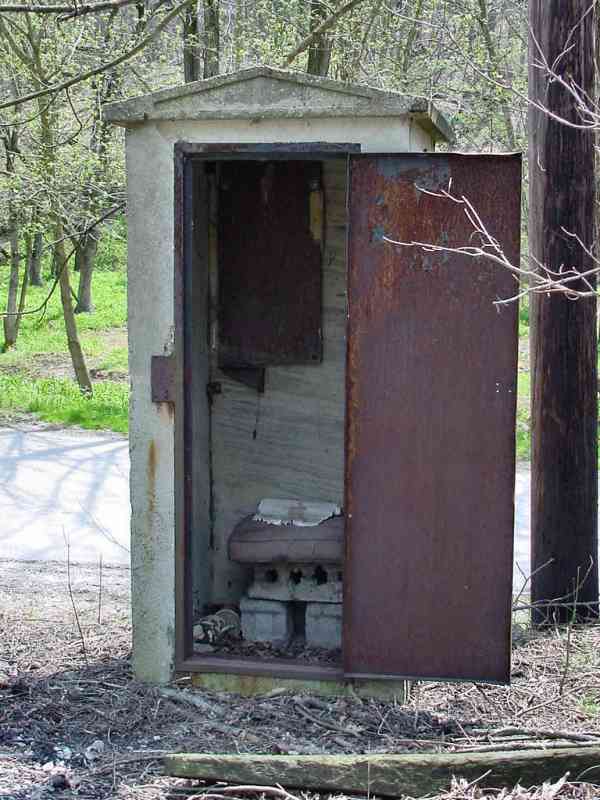
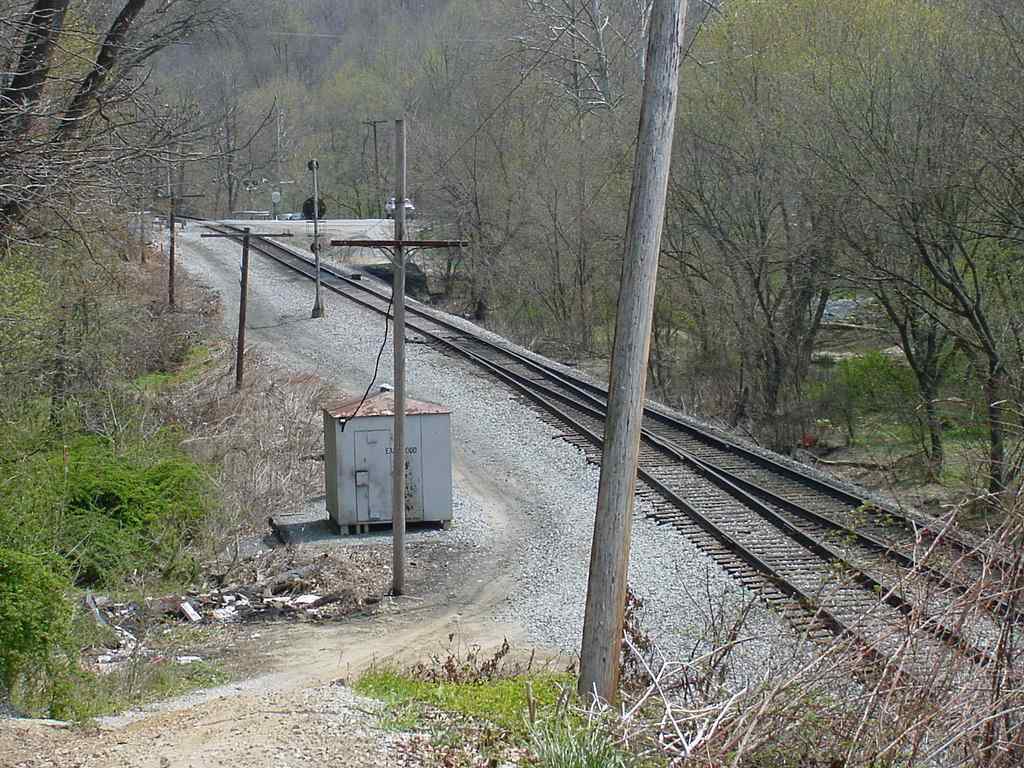
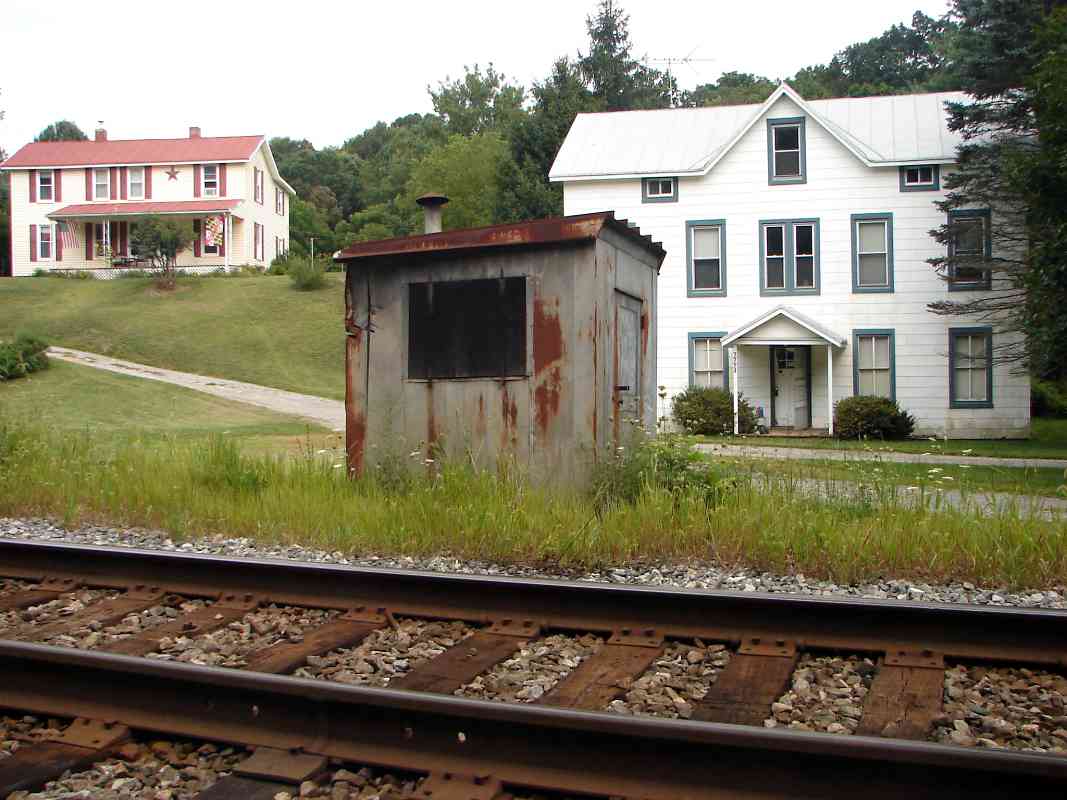
Another trackside telephone shack can be found at the Hoods Mill Road grade crossing. This shack has a different design than the one at Gun Road.

There's another shack of this design hidden within the Washington Branch's (Capital Subdivision's) Jessup Yards. They are the only two such survivors I've seen.


Siding

Siding
Mile: 31.8 Date: Apr 2001
Ease: B View: E
Area: A IC2:
Map: Ca 34 C 6, Ho 4 C 7 Topographic Maps

A hill west of MD 97, here also named Old Washington Road, supplies a convenient overlook. This view back east shows the grade crossing in the distance, and the east end of Hood siding in the foreground.

Link to older picture: 1982


Straightaway

Straightaway
Mile: 32.4 Date: Apr 2001
Ease: C View: W
Area: A IC2:
Map: Ca 34 A 6, Ho 4 A 6 Topographic Maps

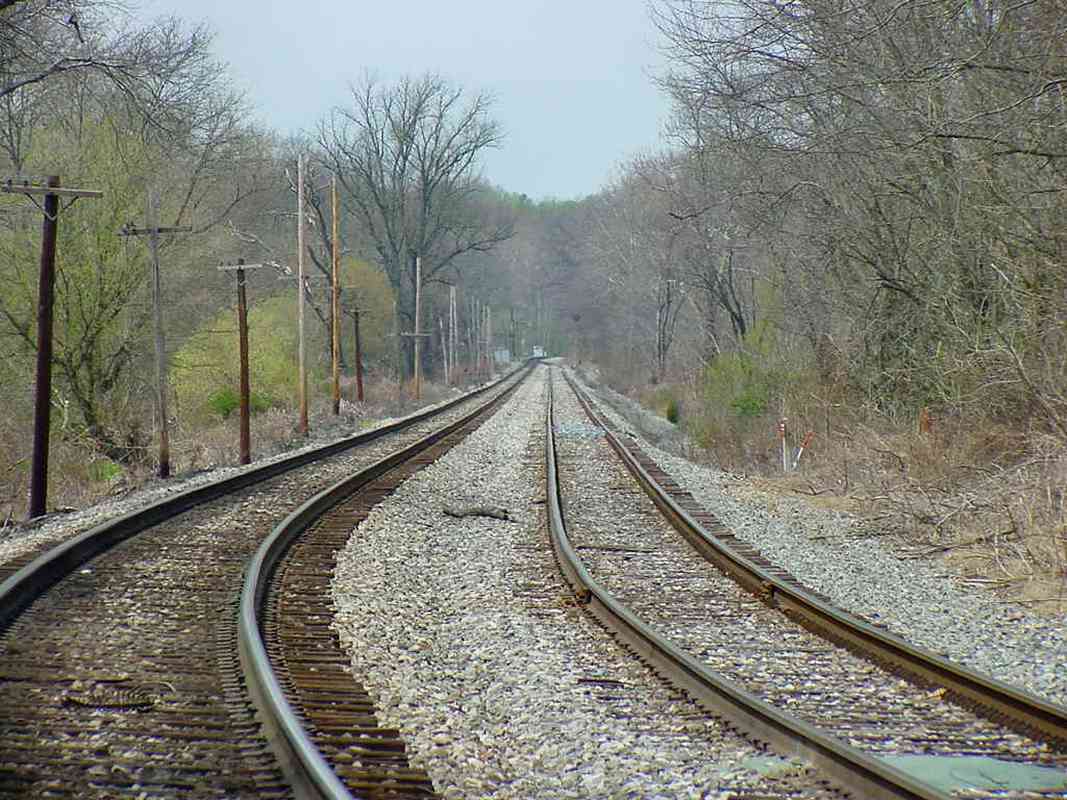
Nothing much to say about this view west to Morgan Road. Here, the OML finally gets to an area where straight track for about a mile is possible. Off in the distance, the other endpoint of the siding can be seen.

The stream that looks significant on the ADC maps in this vicinity is actually a tiny, swampy stream that creeps under the OML via a decidedly unphotogenic culvert. Not worth the hike to see.


CSX 388
NEW! Aug 2011

CSX 388
Mile: 33.1 Date: Aug 2011
Ease: B View: W
Area: A IC2:
Map: Ca 33 K 4, Ho 3 K 6 Topographic Maps

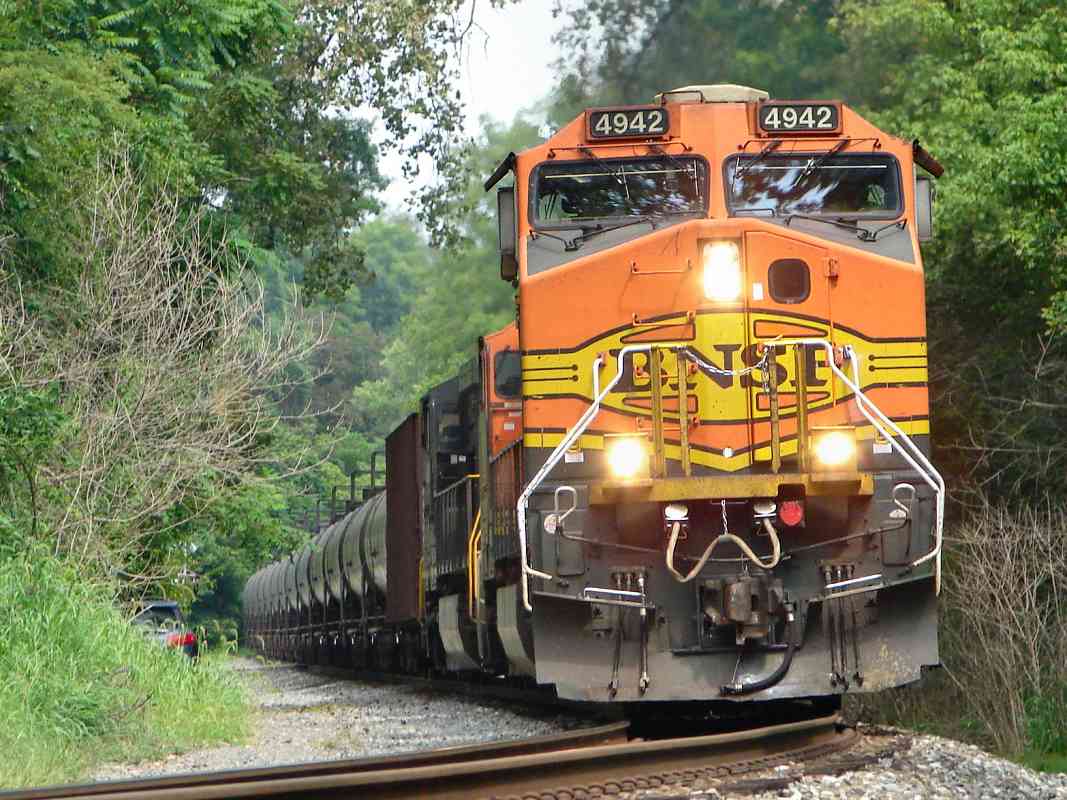
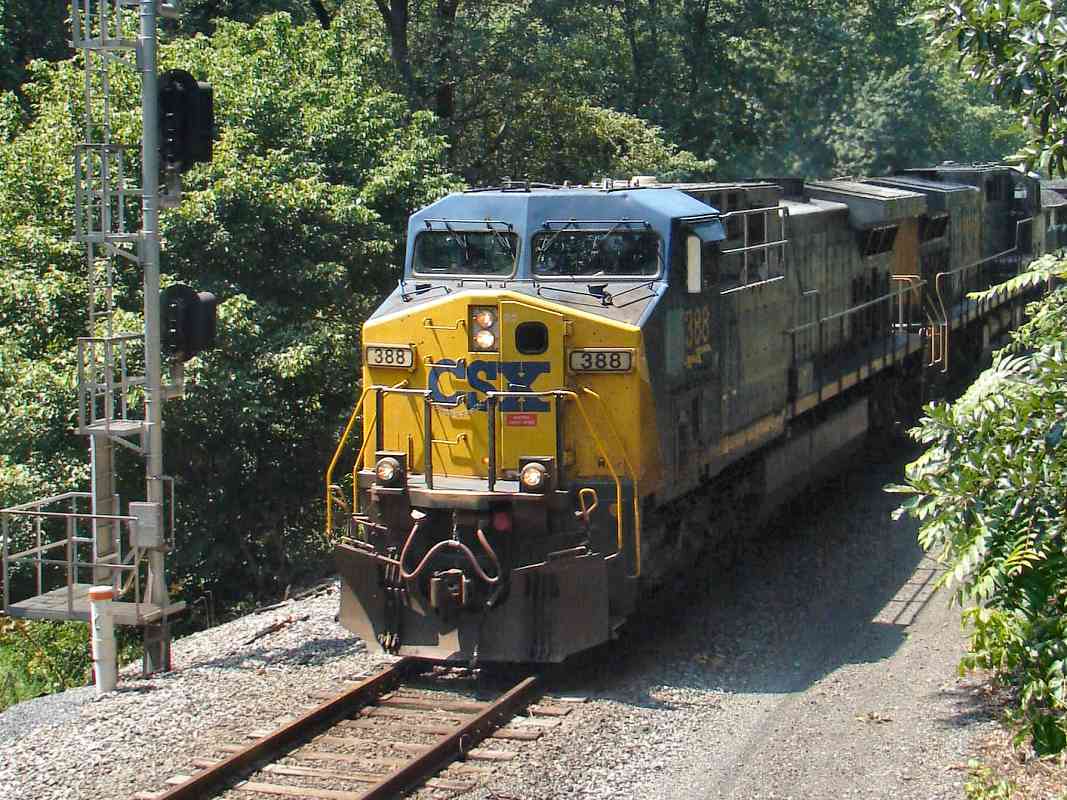
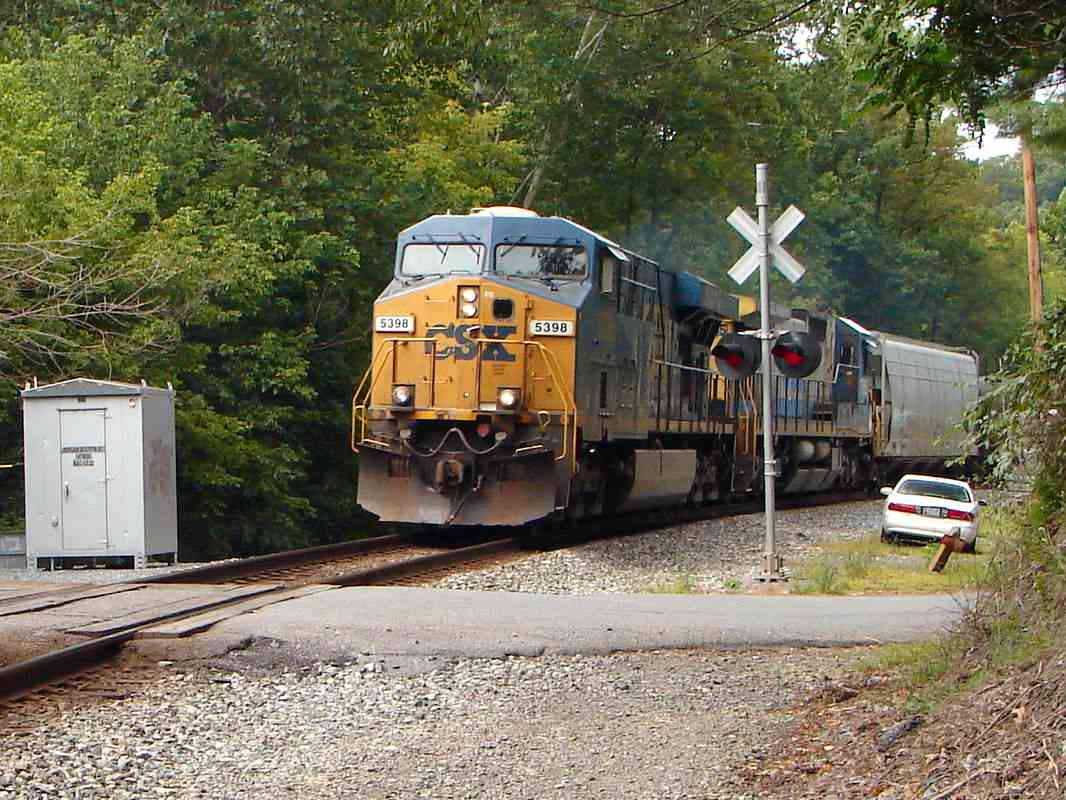
Eastbound for Baltimore, a mile of coal pushes CSX 388 downstream to signals at W.E. Hood, the west end of Hood siding.

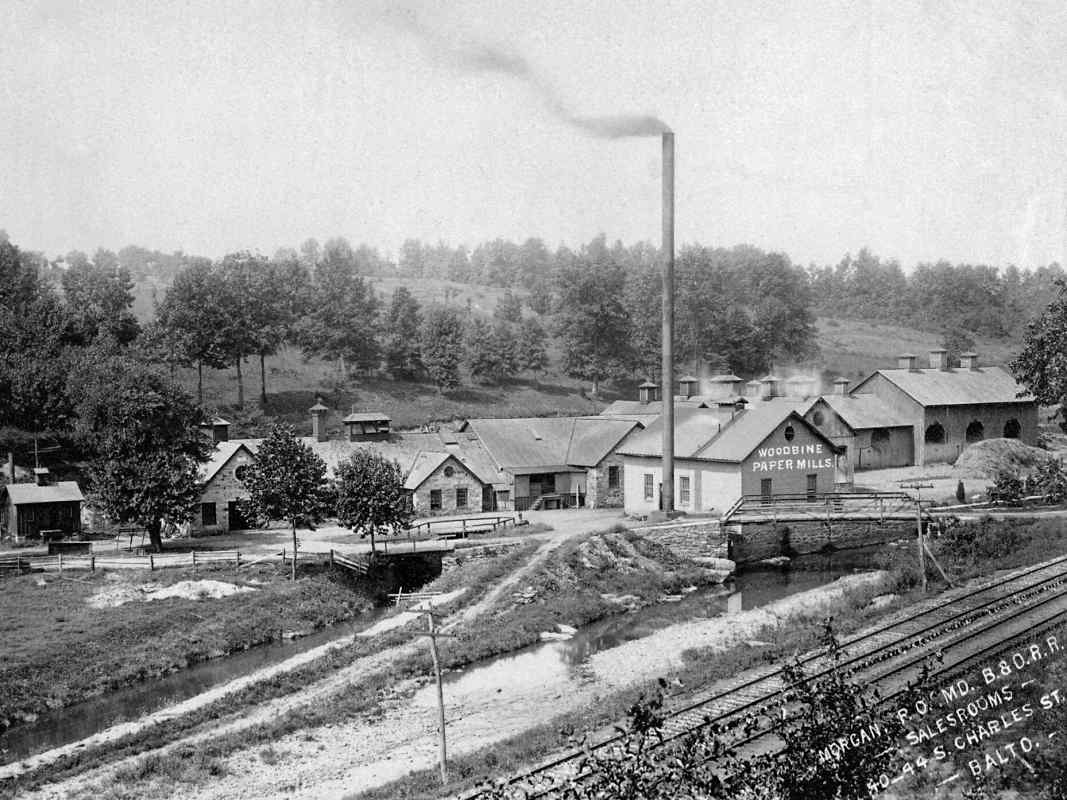
Link: 19th century Woodbine Paper Mill of Morgan with similar-view photo from 1800s


Double Track

Double Track
Mile: 33.2 Date: Mar 2005
Ease: A View: SE
Area: A IC2:
Map: Ca 33 J 4, Ho 3 J 5 Topographic Maps

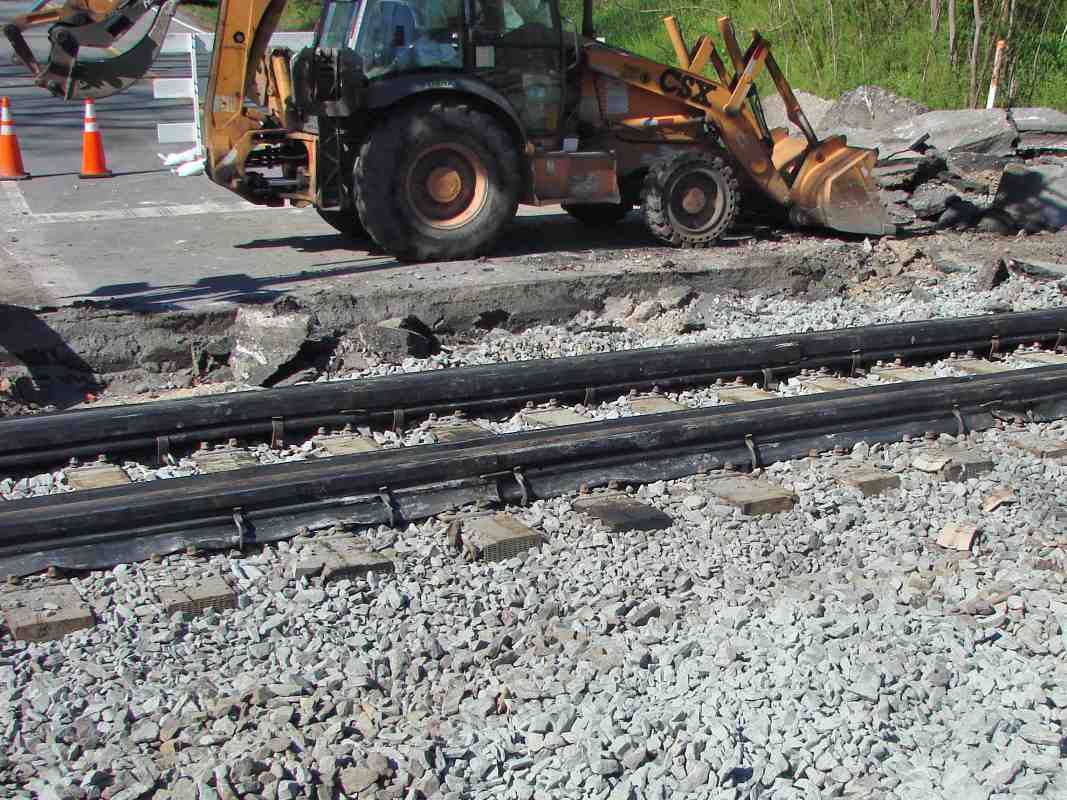
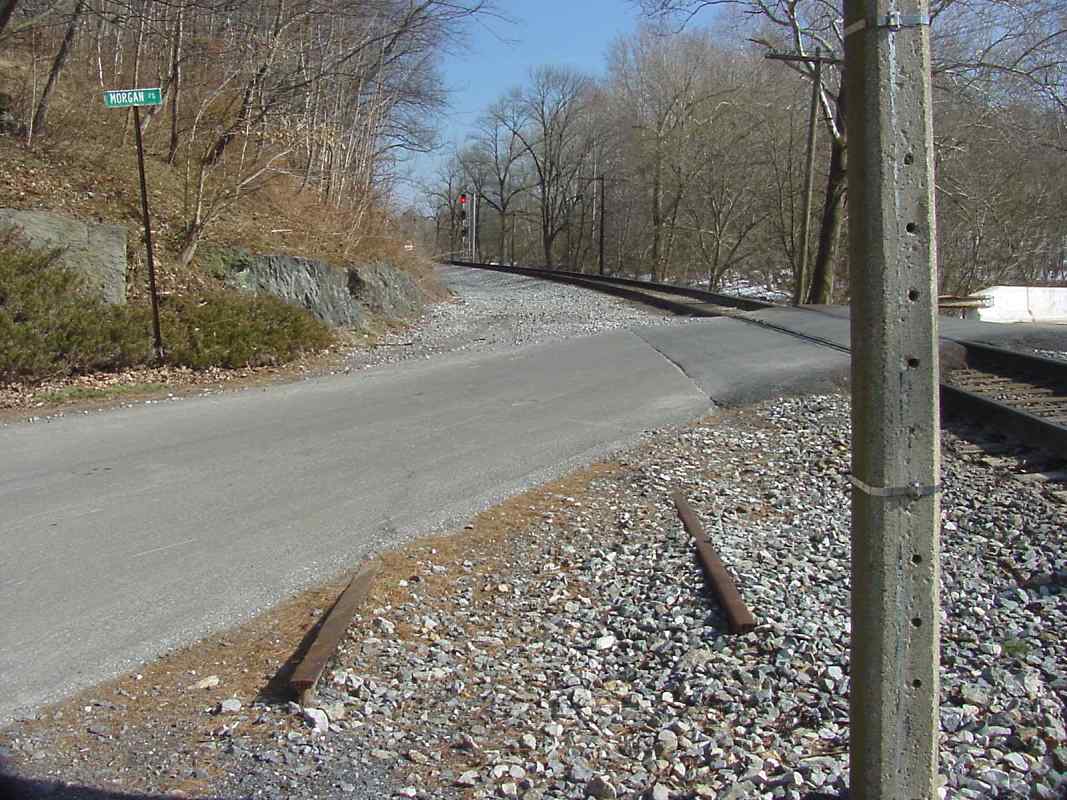
A glimpse of the OML in its double track days remained embedded in the pavement at the quiet Morgan Road grade crossing. It has since been removed.


Culvert

Culvert
Mile: 33.3 Date: Jun 2000
Ease: A View: N
Area: A IC2:
Map: Ca 33 J 4, Ho 3 J 5 Topographic Maps

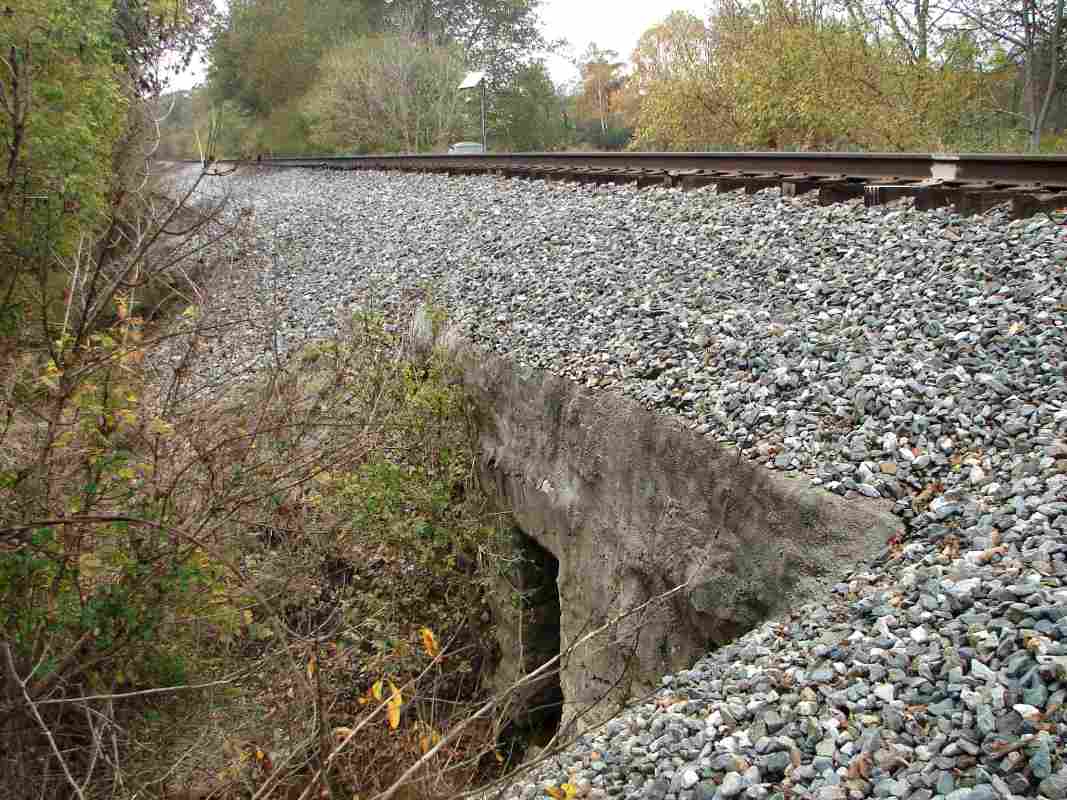
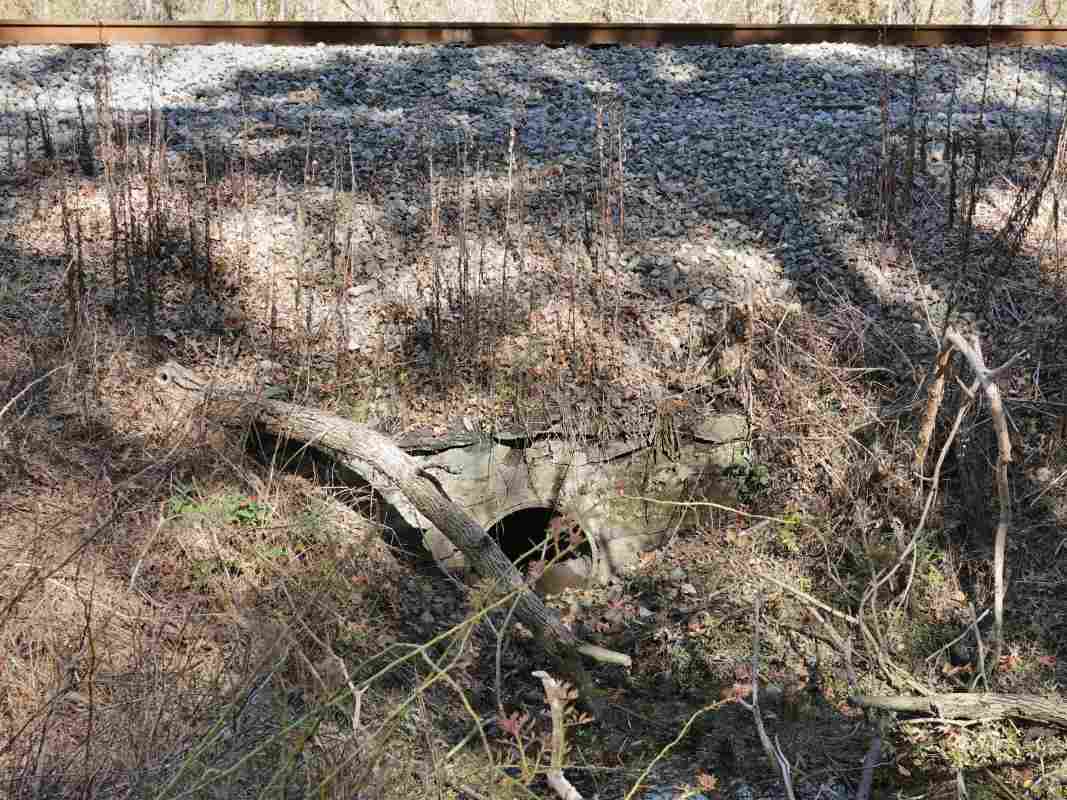
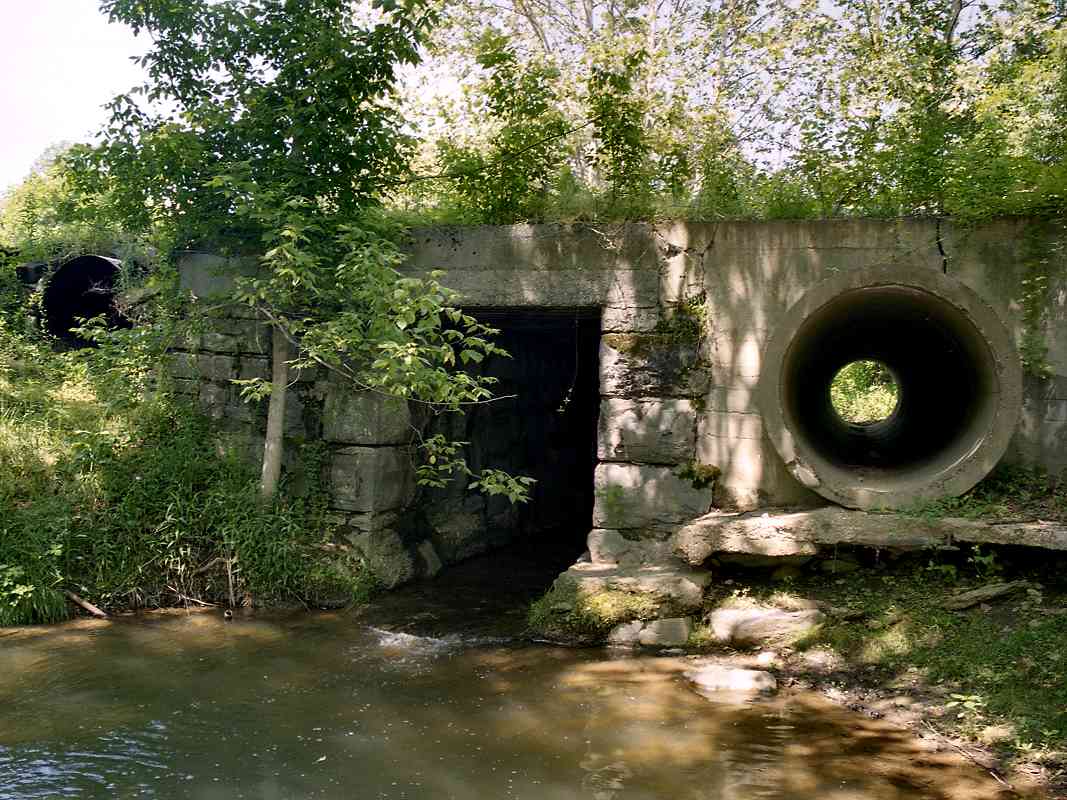
Just west of Morgan Road is this unusual culvert. The center square looks original, or at least the oldest. Perhaps it proved to be insufficient during heavy rain storms, and therefore overflow pipes were added on both sides.


Woodbine Tunnel, East

Woodbine Tunnel, East
Mile: 33.6 Date: Mar 2005
Ease: B View: W
Area: A IC2:
Map: Ca 33 J 4, Ho 3 J 5 Topographic Maps

Woodbine Tunnel was built in 1902 as part of the project to straighten the OML. At 385 feet long, it's one of the OML's shorter tunnels. The limestone used came from Marriottsville.


Woodbine Tunnel, West

Woodbine Tunnel, West
Mile: 33.7 Date: Mar 2005
Ease: B View: E
Area: A IC2:
Map: Ca 33 H 4, Ho 3 H 5 Topographic Maps

And, for the sake of completion, here's the West portal.


>>> Detour to follow the disused original route around the hill <<<

Woodbine

Woodbine
Mile: 34.1 Date: Oct 2004
Ease: A View: N
Area: A IC2: 260
Map: Ca 33 G 4, Ho 3 G 5 Topographic Maps

Downtown Woodbine, as seen here, may be sleepy but its main road is busy, so I'm surprised the grade crossing does not rate gates.

Initially I thought the small brick building on the right was the B&O station, but the Woodbine picture in IC2 disproves that.


Inspector

Inspector
Mile: 34.2 Date: Oct 2004
Ease: A View: E
Area: A IC2:
Map: Ca 33 G 4, Ho 3 G 5 Topographic Maps

In this view back to the crossing, a CSX track inspector drives east. Those specially equipped vehicles would certainly make viewing the OML much easier. I want one!

Woodbine Station had been on the right, but was demolished quite some time ago.


Straighten

Straighten
Mile: 34.2 Date: Oct 2004
Ease: A View: W
Area: A IC2:
Map: Ca 33 G 4, Ho 3 G 5 Topographic Maps

A tiny stub survives to provide a glimpse of the Old Main Line in its double track days. The original alignment had curved off to the right in the process of crossing Gillis Falls. Many such small kinks were straightened contemporaneously with the construction of most of the OML's tunnels, that is, between 1901 and 1906.

Only with hindsight can we say it may have initially been a financial mistake to invest so heavily into rebuilding the route at the dawn of the automobile. The Model T Ford debuted in 1908 and changed the transportation landscape. However, without that investment it is unlikely the OML would have survived as a railroad into the 21st century. As the population of this area continues to grow, the value of its transportation corridors increases, and the OML is once again an important link in the CSX network.


Gillis Falls

Gillis Falls
Mile: 34.2 Date: Apr 2001
Ease: A View: NW
Area: A IC2:
Map: Ca 33 G 4, Ho 3 G 5 Topographic Maps

A short distance west of Woodbine is where you'll find this bridge spanning Gillis Falls. Previously, a Bollman type bridge graced this spot.

Link: July 1923 flood report, 1985 pic


Rosetta Pole

Rosetta Pole
Mile: 35.4 Date: Mar 2005
Ease: C View: SW
Area: A IC2:
Map: Ca 33 D 3, Ho 3 D 4 Topographic Maps

As the B&O improved the route west from Baltimore, straightening curves, etc. the mileage along the line changed. This utility pole reflects an updated milepost measurement, and acts as a sort of Rosetta Stone to help us translate between the current mileage (35 and 20/40) and the previous (38 and 5/6ths).

I'm told the B&O placed the utility poles at 40 per mile and numbered them consecutively. Thus 35-20 is mile 35 post 20 (of 40), which translates to milepost 35.5. That value is about 3.1 miles less than the prior distance indicated by the nailed-on digits.

The bulk of the difference is likely due to the construction in the 1860s of the Camden Cutoff, which saved about 2 miles. I don't think this utility pole dates from the 1860s. Instead it's more likely the railroad retained the old mileposts, perhaps for decades, until finally recalculating them, maybe at the time the OML saw its substantial upgrades in the early 1900s.

Detour: Camden Cutoff tour


Private Crossing

Private Crossing
Mile: 35.5 Date: Mar 2005
Ease: C View: NE
Area: A IC2:
Map: Ho 3 D 4, Ca 33 C 3 Topographic Maps

The tiniest Patapsco River bridge I've ever seen leads up to the equally tiny (yet paved) Zepp's grade crossing. It appears the farm is in Howard County, and the farm house is in Carroll County, no doubt making for special fun come tax time.

In addition to RR photos, I snap photos of one-lane bridges in Howard County, so this find was an extra treat.

The CPL signals which had lived just west of here are no longer.


Mt. Airy Cutoff

Mt. Airy Cutoff
Mile: 36.0 Date: Mar 2005
Ease: C View: W
Area: A IC2:
Map: Ca 33 B 3, Ho 3 C 4 Topographic Maps

Like the farmer, the railroad also crosses the Patapsco River back into Howard County, but does so via a slightly more substantial bridge. Note modern mile marker 36 at center, juxtaposed with a whitewashed old "mile-marker-on-a-rail" on the left side of the tracks.

The tracks have been shouldered by the Patapsco ever since Relay, some 30 miles ago. But in reality the river is hardly more than a stream here; its source is Parrs Spring, about 4 miles ahead, so the easy river bank mileage is running out. Parrs Spring sits astride Parrs Ridge, a serious vertical challenge for the fledgling B&O.

The B&O's 1831 answer to the challenge was a series of inclined planes. That route traversed slightly north of but roughly parallel to the present-day trackage. In fact, in this photo, the gap in the trees on the right is a vestige of that alignment (green line). Sections of that original remained in use into the early 1900s until replaced by 10 new miles of track (and tunnel) known as the Mt. Airy Cutoff.

The Mt. Airy Cutoff remains the active alignment today. The bridge in the distance and track west date to about 1901. This tour continues westward along the Cutoff, however, the original Mt. Airy Plane route is also available as a virtual tour.

Detour: Mt. Airy Planes alignment tour


Patapsco Bridge

Patapsco Bridge
Mile: 36.0 Date: Jul 2000
Ease: B View: E
Area: A IC2:
Map: Ho 3 B 4, Ca 33 B 3 Topographic Maps

Here's a better view of bridge 29A, this time looking back from west to east.

This is the original bridge at this location. Prior to the building of Mt. Airy Cutoff and Tunnel, the ROW kept on the north bank of the river (the left side, in this photo).


Grade Crossing

Grade Crossing
Mile: 36.6 Date: Oct 2004
Ease: A View: SE
Area: A IC2:
Map: Ho 3 A 4, Ca 33 A 3 Topographic Maps

Watersville Road is the last grade crossing east of Mt. Airy.


Culvert

Culvert
Mile: 37.2 Date: Nov 2004
Ease: C View: S
Area: A IC2:
Map: Ca 32 J 3, Ho 2 J 4 Topographic Maps

Viewed from the north bank of the river, this circa 1900 culvert appears to use non-mortared stonework, a surprise since all others from that era rely on the "cement glue" to help hold them together. The iron pipe is a giveaway this is not 1830 construction. A closer inspection reveals the mortar is deteriorating and falling out.


Watersville Junction

Watersville Junction
Mile: 37.7 Date: Oct 2004
Ease: D+ View: W
Area: A IC2:
Map: Ho 2 H 5, Ca 32 H 4 Topographic Maps

Via a tunnel about 2 miles west, the Cutoff will soon bypass the town of Mt. Airy. When the Cutoff was built in 1901, the B&O still had customers in the town, and therefore built an extension from the Cutoff to its Mt. Airy Loop trackage. Photo evidence suggests the Cutoff's double track divided here at Watersville Junction, with one becoming the extension and proceeding through the gap in the trees, while the other continued west on its own. This could mean the Cutoff has never been double tracked through Mt. Airy Tunnel.

All this can be seen more clearly on the maps that accompany the tour of the Mt. Airy Loop.

Detour: Mt. Airy Loop alignment tour


Continue to the next page in this tour

Or, return to main page


Copyright Notice
Visit the TrainWeb.org Fan Page on Facebook!
Create your own free Rail Blog or Website!

Advertise | About Us | Contact Us | Sign up for our Newsletter | TrainWeb.com