|
ISO in photography is something of a misnomer since it is a measure
of light amplification that was co-opted from the name of the
International Organization for Standardization. Photography ISO is
a numeric value. The higher the number, the more the camera
amplifies the incoming light. The values originated as a measure of
film sensitivity to light but have been adopted by digital cameras.
Better digital cameras operating in an automatic mode will choose what
they deem a suitable ISO for the lighting conditions. In dim light,
they will choose a higher ISO, which means they will use amplification
to create an image from less light.
Since light is a limited commodity, you might quite logically
wonder why we don't just use a high ISO for everything. We don't
because a tradeoff exists. The higher the ISO, the "faster" the film
and the more randomness (noise) introduced into the image. The occurs
for both film and digital because when the sensitivity is high, the
ratio of noise (quantum uncertainty) increases relative to the signal
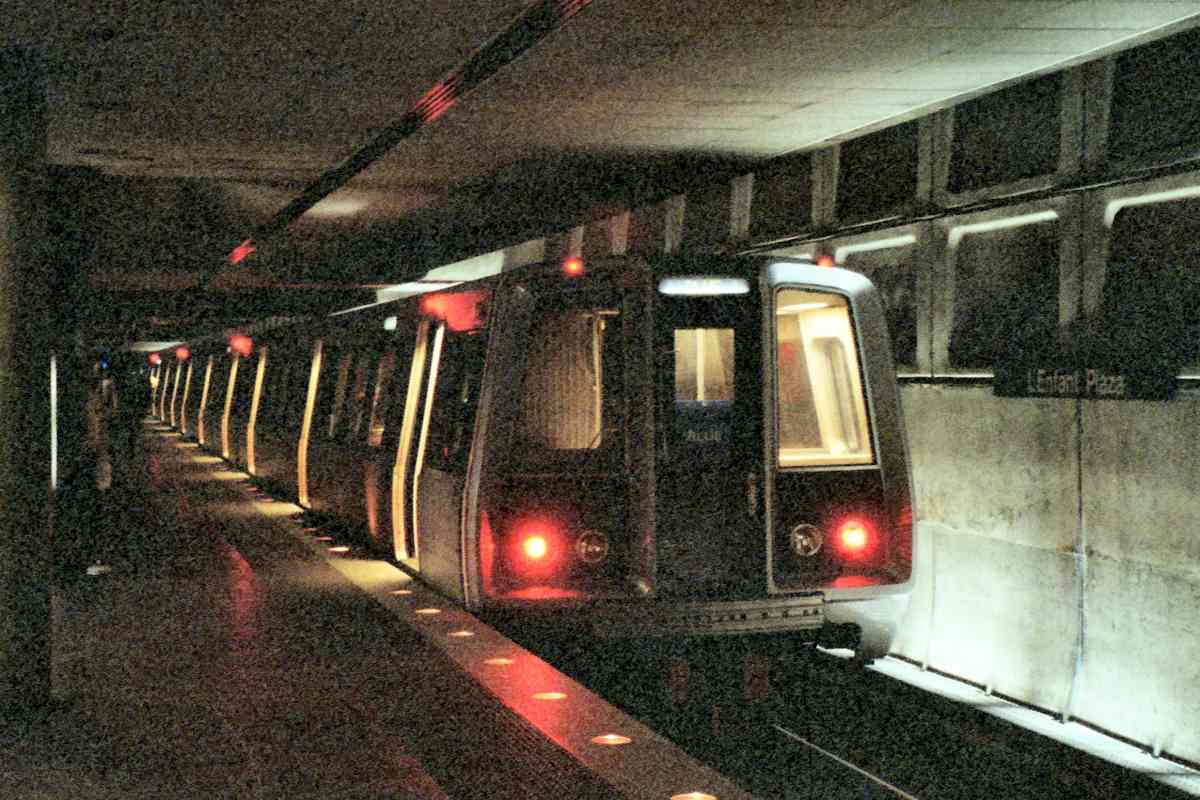
(desired light from the subject). Noisier images look less sharp. What
look like specks of dust on this high ISO film photo of a dimly-lit
DC Metro car is noise.
An older, common abbreviation for a film's speed rating was ASA (American
Standards Association). A film's ASA and ISO film speed numbers are
identical. Film speed has increased with improvements over time,
generally yielding better images from less light.
Original, three-color Kodachrome had an ASA of 6 (or 10, sources vary)
when introduced during 1935. That is very slow by modern standards and
is why early color movies such as 1939's The Wizard of Oz required
extensive lighting of their subjects. With good light, many modern digital
cameras will choose an ISO of about 100.
|