




 |
The Salisbury to
Exeter Line Stations since the 1967 singling |
|
|||||
|
|||||||
This is the second of two pages which describe the intermediate stations on the former London & South Western Railway (L&SWR) (later Southern Railway (SR)) line from Salisbury to Exeter since the reduction of much of this former main line to single-track in 1967. This page covers all locations from Sutton Bingham to Exeter Central and the other page covers Wilton South to Yeovil Junction. Any location on either page can be accessed directly from the Index below.
Other pages in RailWest deal with the background history of the line and the 1967 singling, the changes to the signalling arrangements and the individual signal-boxes.
SUTTON BINGHAM station was an early casualty of rationalisation. It lost its goods services on 4-Apr-1960 and became an unstaffed halt on 1st August the same year. It closed completely on 31-Dec-1962, although the signal-box remained in occasional use until 1965. All traces of this station have vanished now apart from a few pieces of rubble buried in the undergrowth.
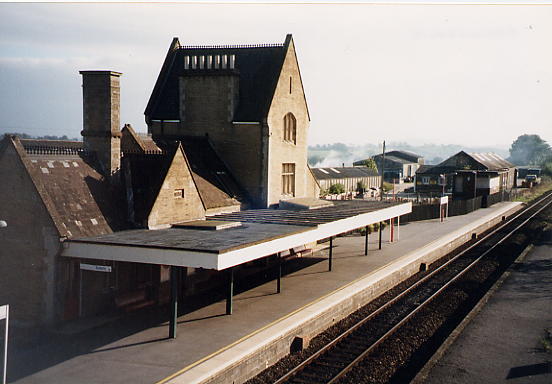
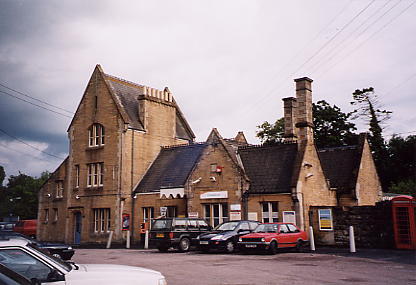
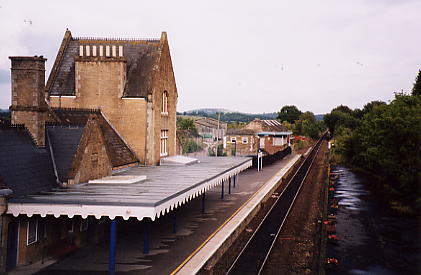
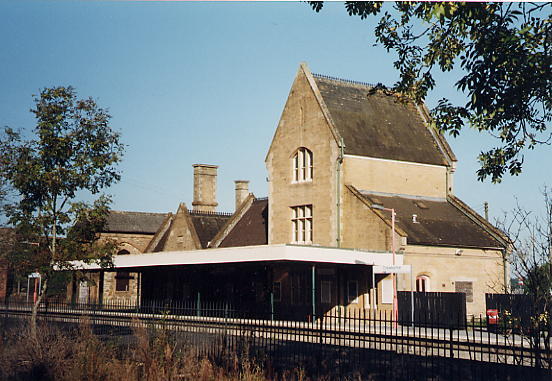
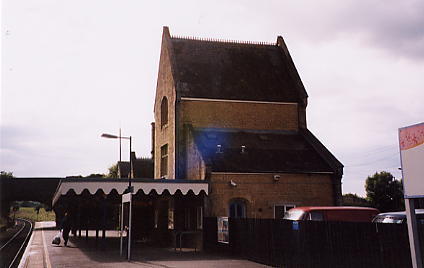
CREWKERNE station remains open for passenger traffic, but goods services were withdrawn on 18-Apr-1966 and the signal-box was closed on 26-Feb-1967. When the line was singled the down line and down platform were taken out of use, leaving the up platform to serve the single-line (formerly the up line) - there is no passing-loop at Crewkerne station. The main station building remained virtually intact and has been refurbished in recent years, now looking quite smart, whilst the (up) platform was extended in 1992.
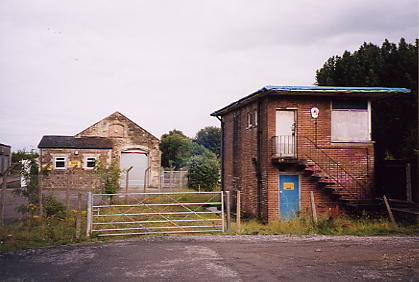
Surprisingly the old down platform was still in place in 2004, as was the disused signal-box, goods shed and several other buildings in the former goods yard on the up side. At one time there was a water-tower on the up platform close to the road overbridge at the Exeter end - although the water tank itself was removed a long time ago, the base of the structure was converted to commercial use and still exists.
| Crewkerne in 1990s |
Crewkerne station in July 2004 | |||||||
 |
 |
 |
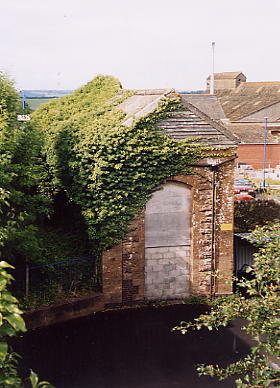 Disused old water tower on platform |
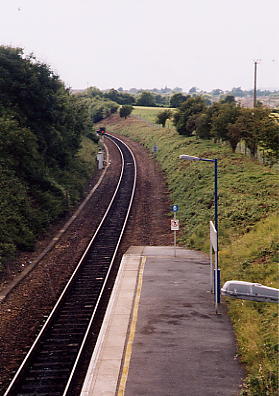 Looking west towards Chard Junction |
||||
| Station looking east | Station frontage | Station looking east | ||||||
 |
 |
 |
||||||
| Station viewed from down side |
Station looking west | Old signal-box and goods shed |
||||||
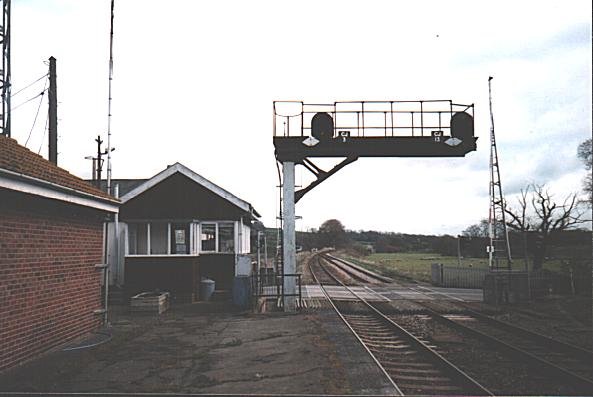
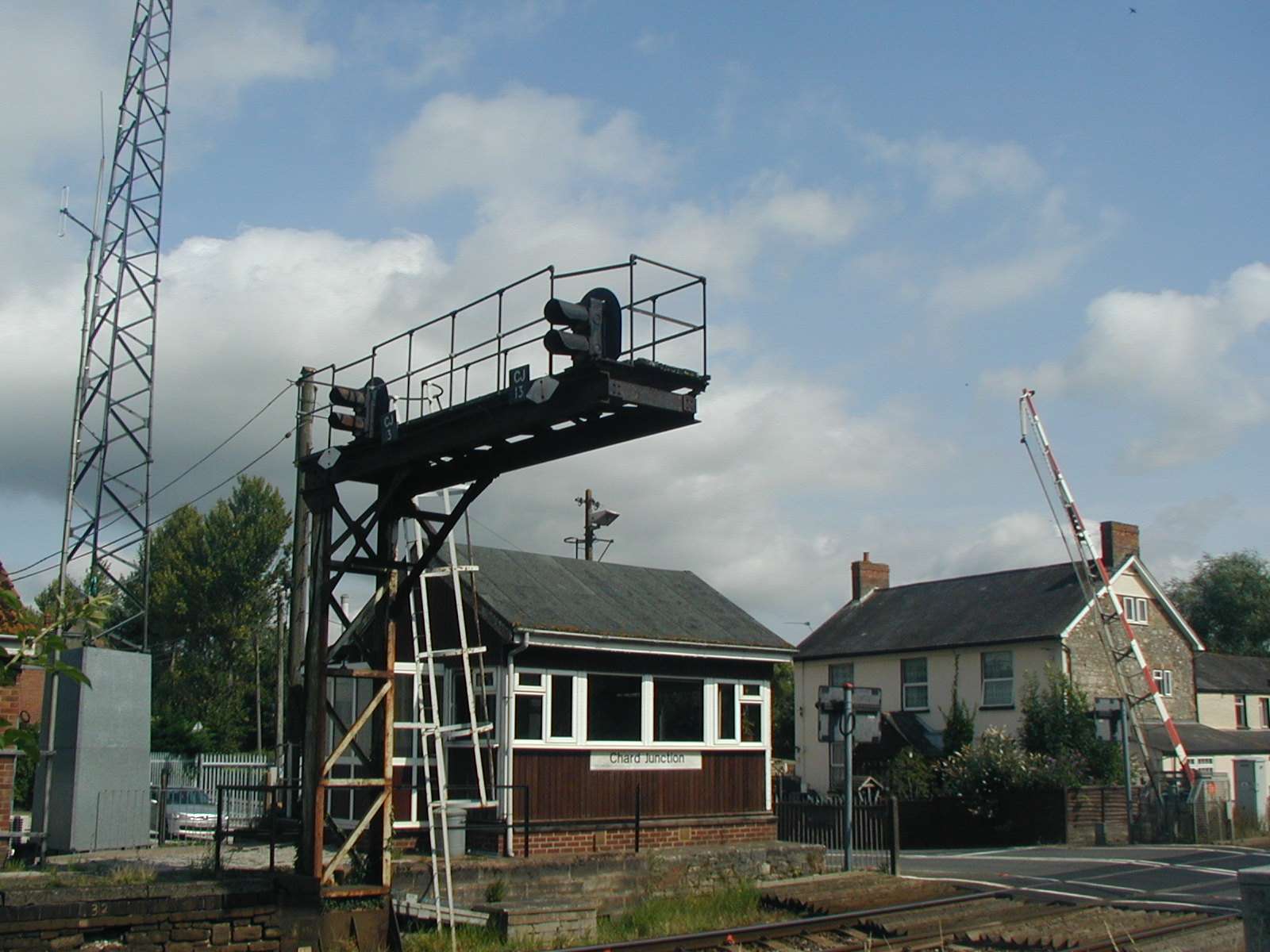
CHARD JUNCTION has ceased to exist as a station, but the location remains as a passing-loop on the single-line. This site seems to have had something of an identity crisis after the rationalisation, being described variously as 'Chard' or 'Chard Junction' in railway documents. Although no longer a junction, the latter name continued to be shown on the signal-box and remains in use now after the 2012 signalling alterations.
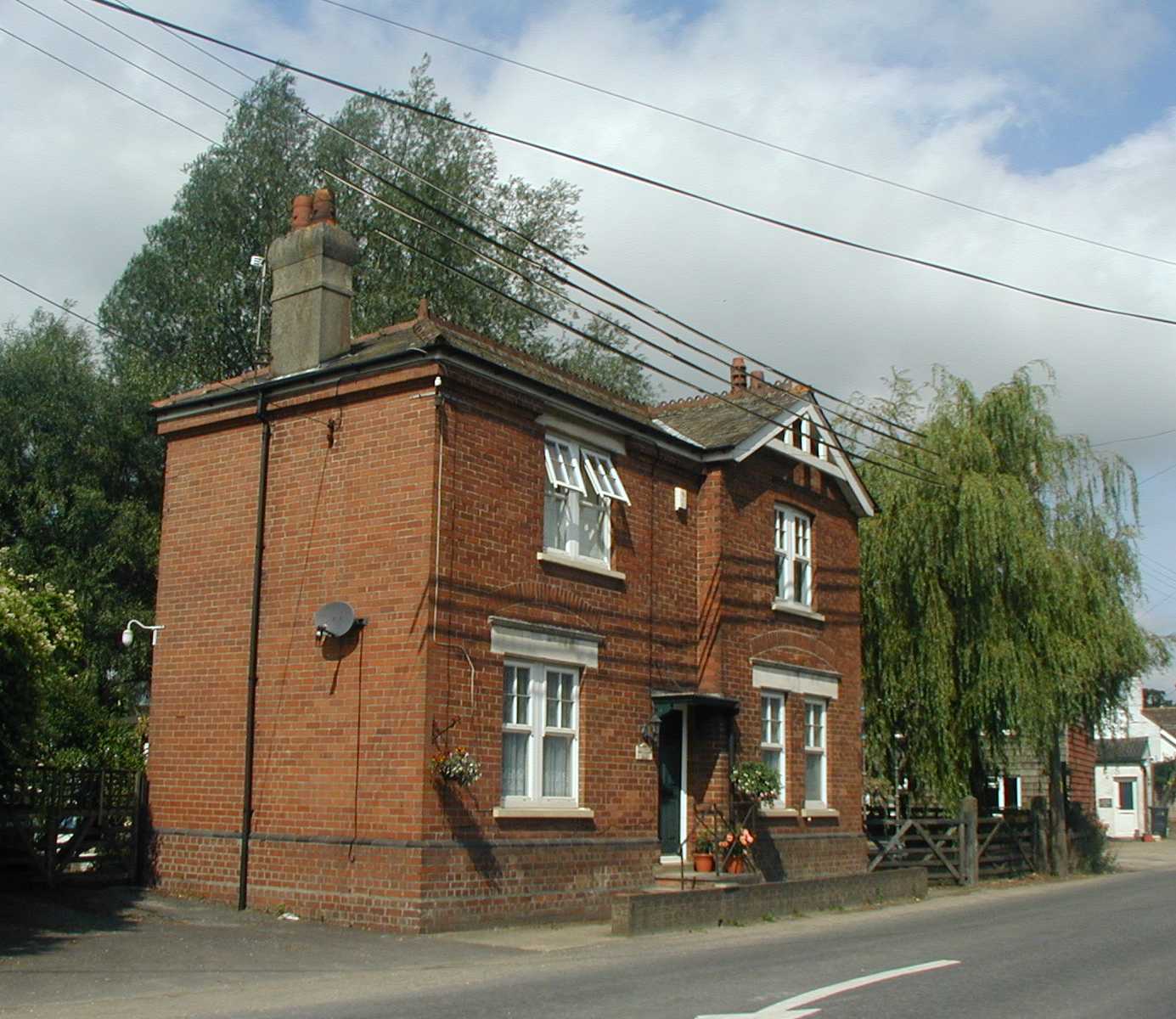
Passenger traffic on the branch to Chard ceased on 10-Sep-1963, although branch goods traffic survived until 2-May-1966. Chard Junction station itself was closed to passenger traffic on 7-Mar-1966 and the goods yard closed the following month on 18-Apr-1966. Since then virtually everything has been demolished apart from some of the former Up platform near to the level-crossing and the old Stationmaster's house, which remains as a private dwelling a short distance along the road.
The line east to Sherborne was singled on 7-May-1967 and then west to Pinhoe on 11-June-1967. The revised layout consisted of a passing-loop, signalled for bi-directional running on the Up Loop, and a trailing connection in the Down Loop to serve the Unigate creamery sidings (worked by a ground-frame released from the signal-box). There is a level-crossing at the Yeovil end of the loop, where the gates were replaced by full lifting barriers on 14-Jan-1968.
| Chard Junction | ||||
 |
 |
 |
||
| Looking east from the former Up platform in 2003 | New signal-box in 2011 with former Chard Road Hotel in background | Former Stationmaster's house in 2011 | ||
The original signal-box was an old L&SWR structure situated at the Yeovil end of the former Up platform next to the level-crossing, but in late 1982 this was demolished and replaced by a new structure built on the same site. The track layout remained unchanged. Since 1980 the creamery has ceased to handle its milk traffic by rail, but one siding remains on the connection off the Down loop. The new signal-box closed as part of the 2012 signalling alterations, but the structure remains available for use by railway staff. The level-crossing is now supervised by CCTV from Basingstoke ASC and both loops are now signalled for bi-directional working.
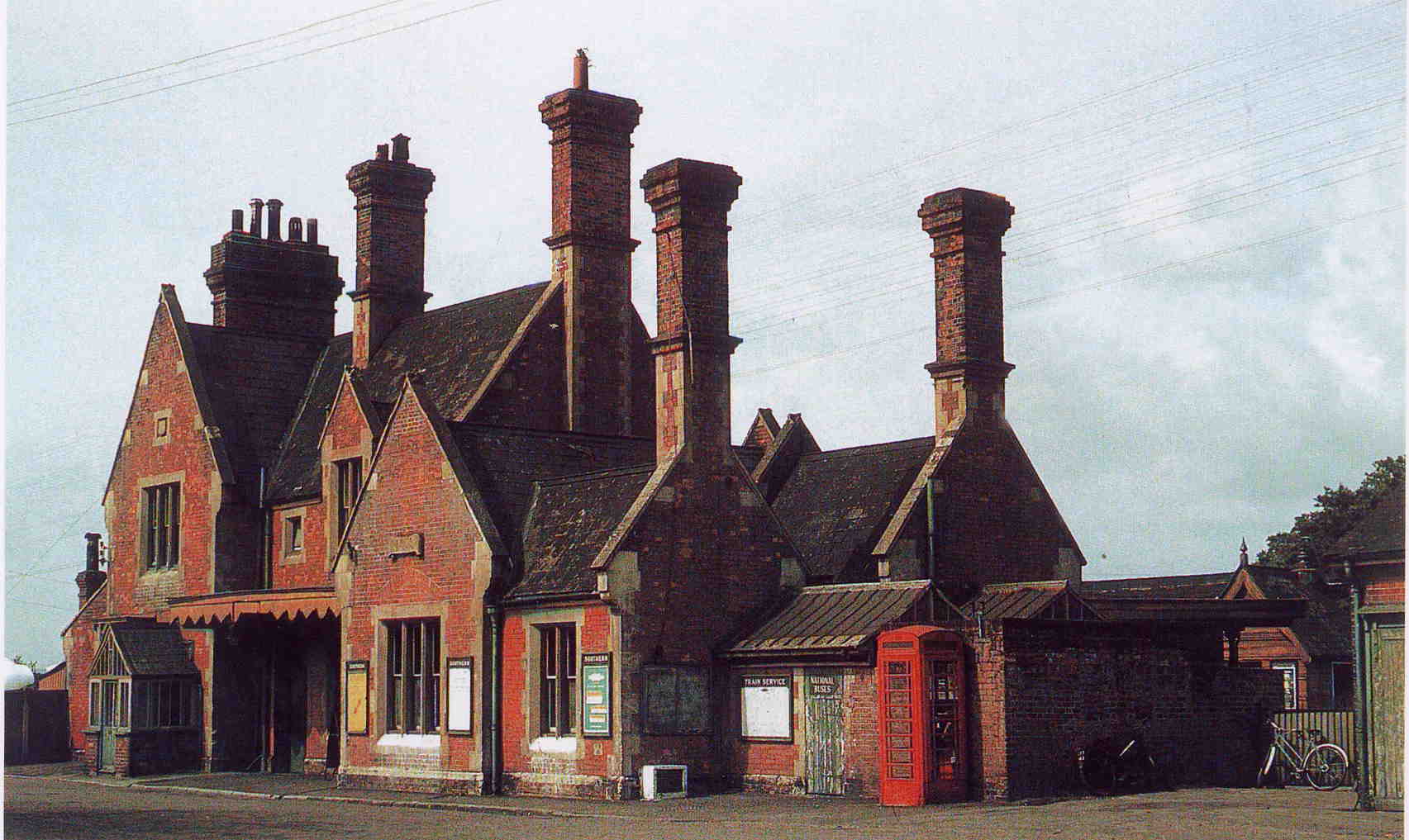
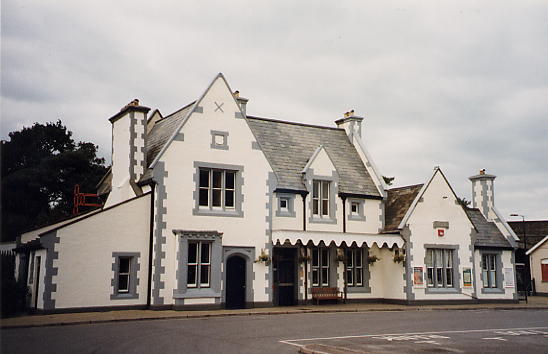
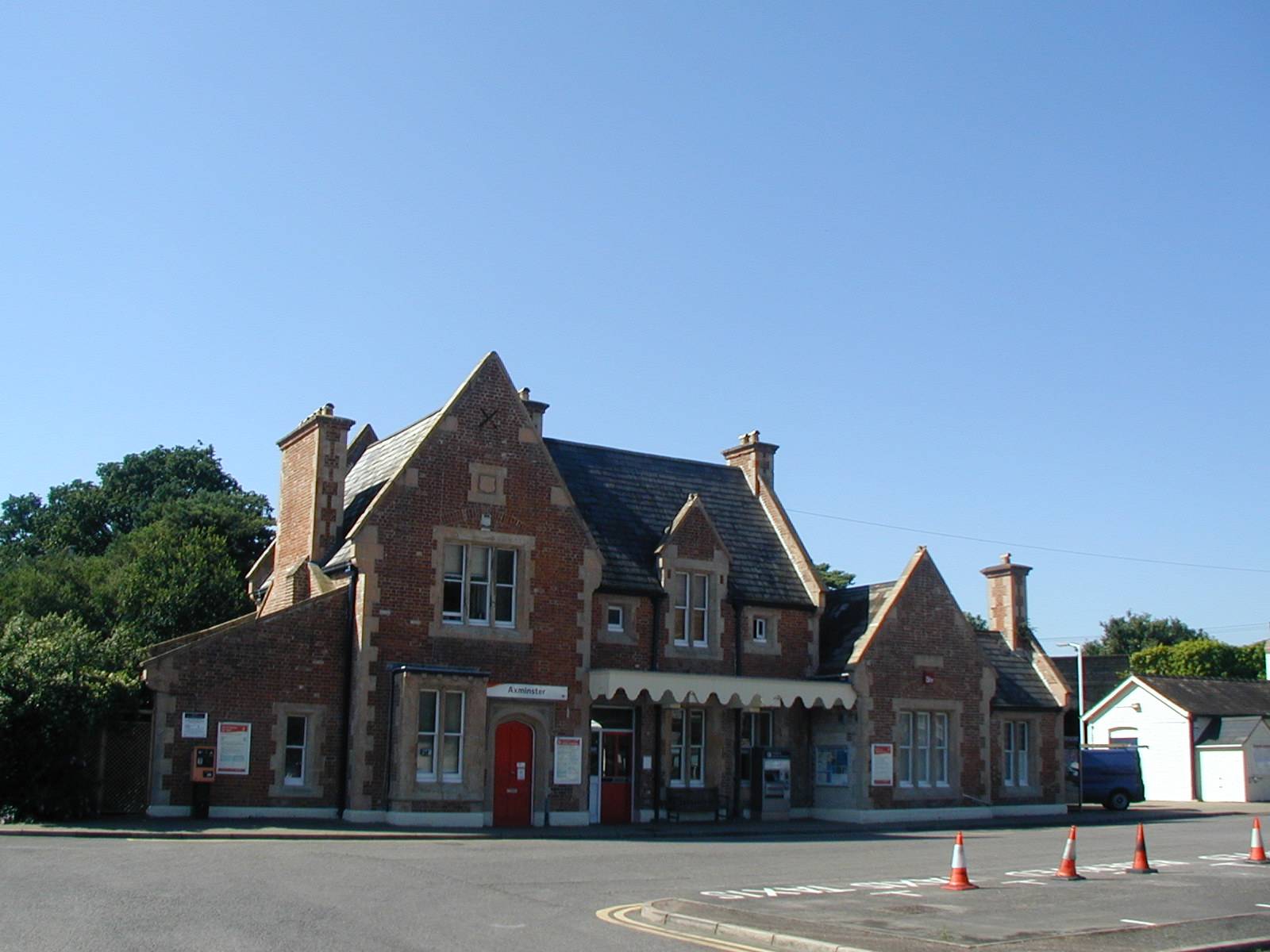
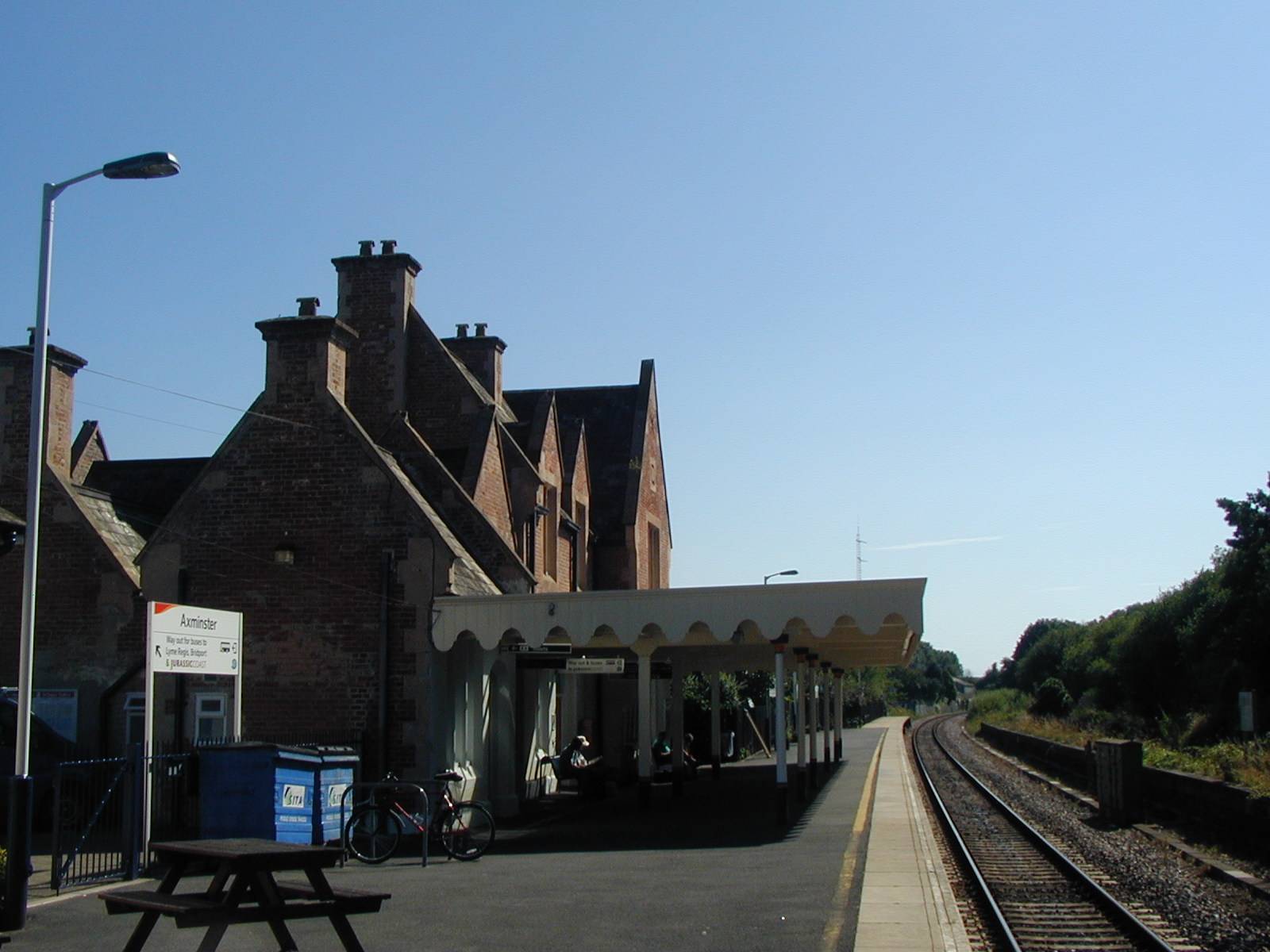
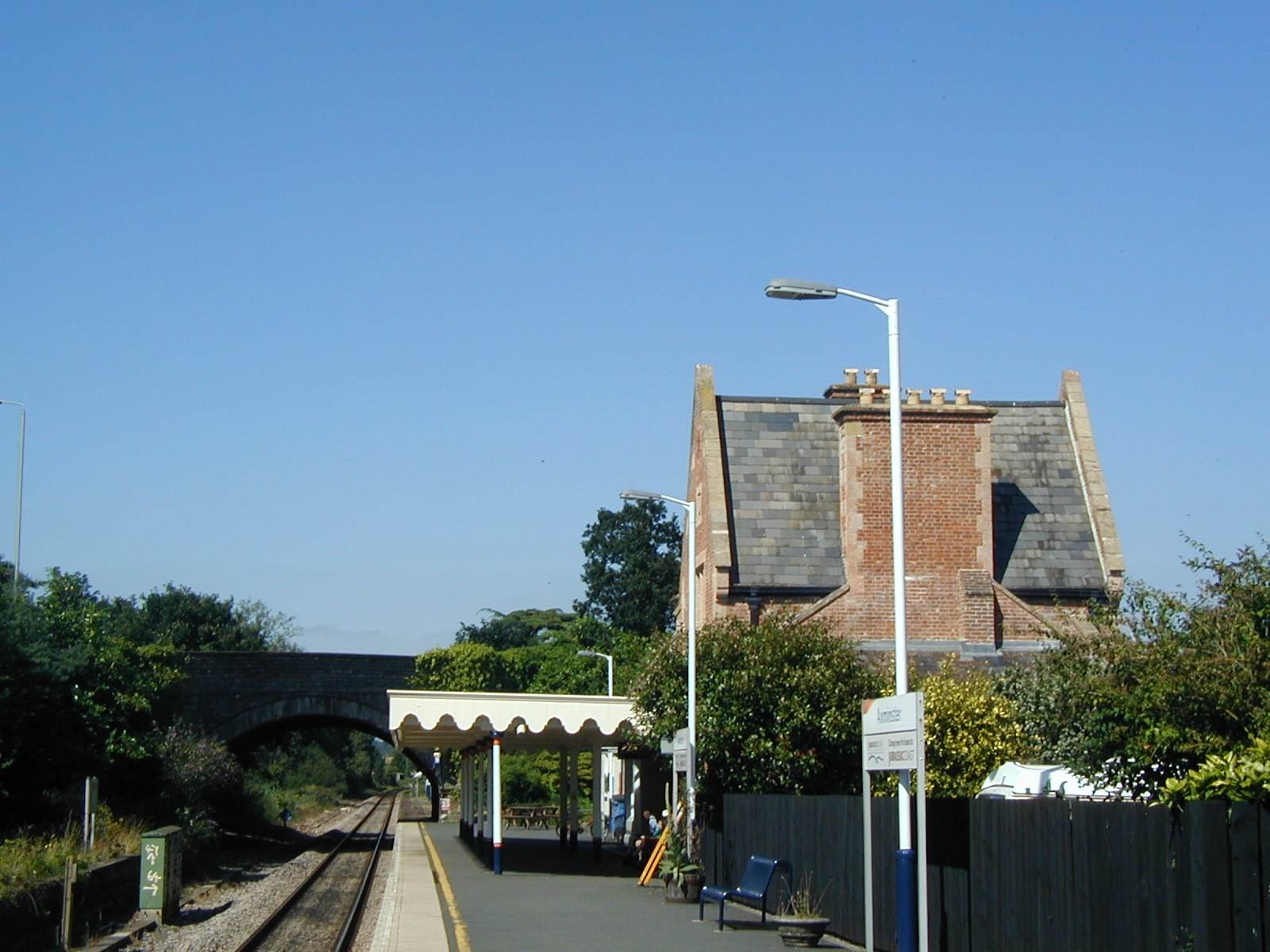
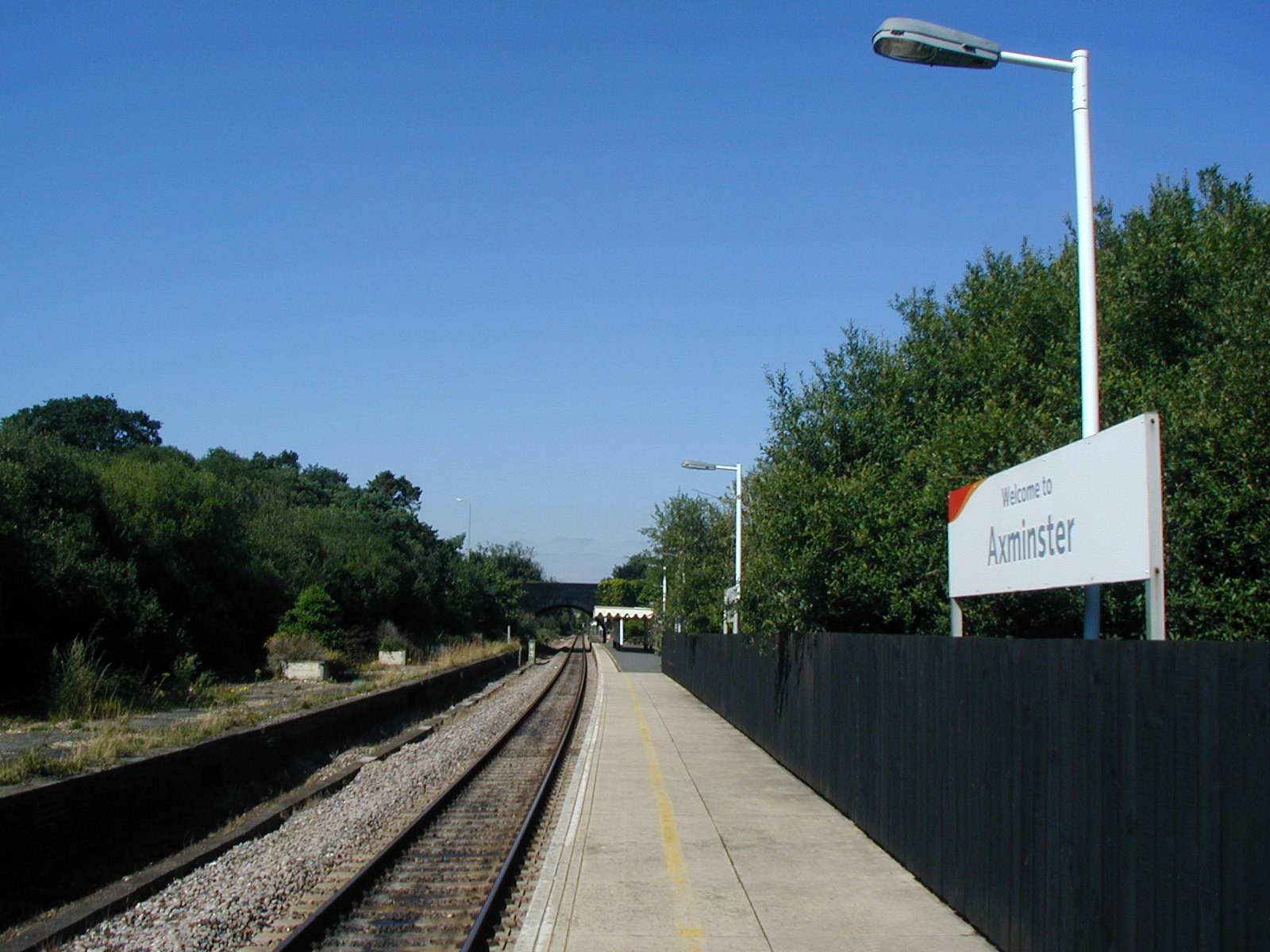
AXMINSTER station remains open for passenger traffic, but goods services have been withdrawn and the signal-box was closed on 5-Mar-1967. When the line was singled no passing-loop was provided at Axminster. The up line and up platform were taken out of use, leaving the down platform to serve the single-line (formerly the down line). However the portion of the down platform east of the road overbridge was taken out of public use. The main station building remained virtually intact and has been refurbished on a number of occasions. At one time during the 1990s all the exterior brickwork was covered with an off-white paint scheme, but fortunately that was removed in the early 2000s to reveal the brickwork once again. New lighting was provided on the station about that time, even on the disused section of the down platform!
| The changing face of Axminster station exterior over the years | ||||
 |
 |
 |
||
| pre-1967 | mid-1990s | 2008 | ||
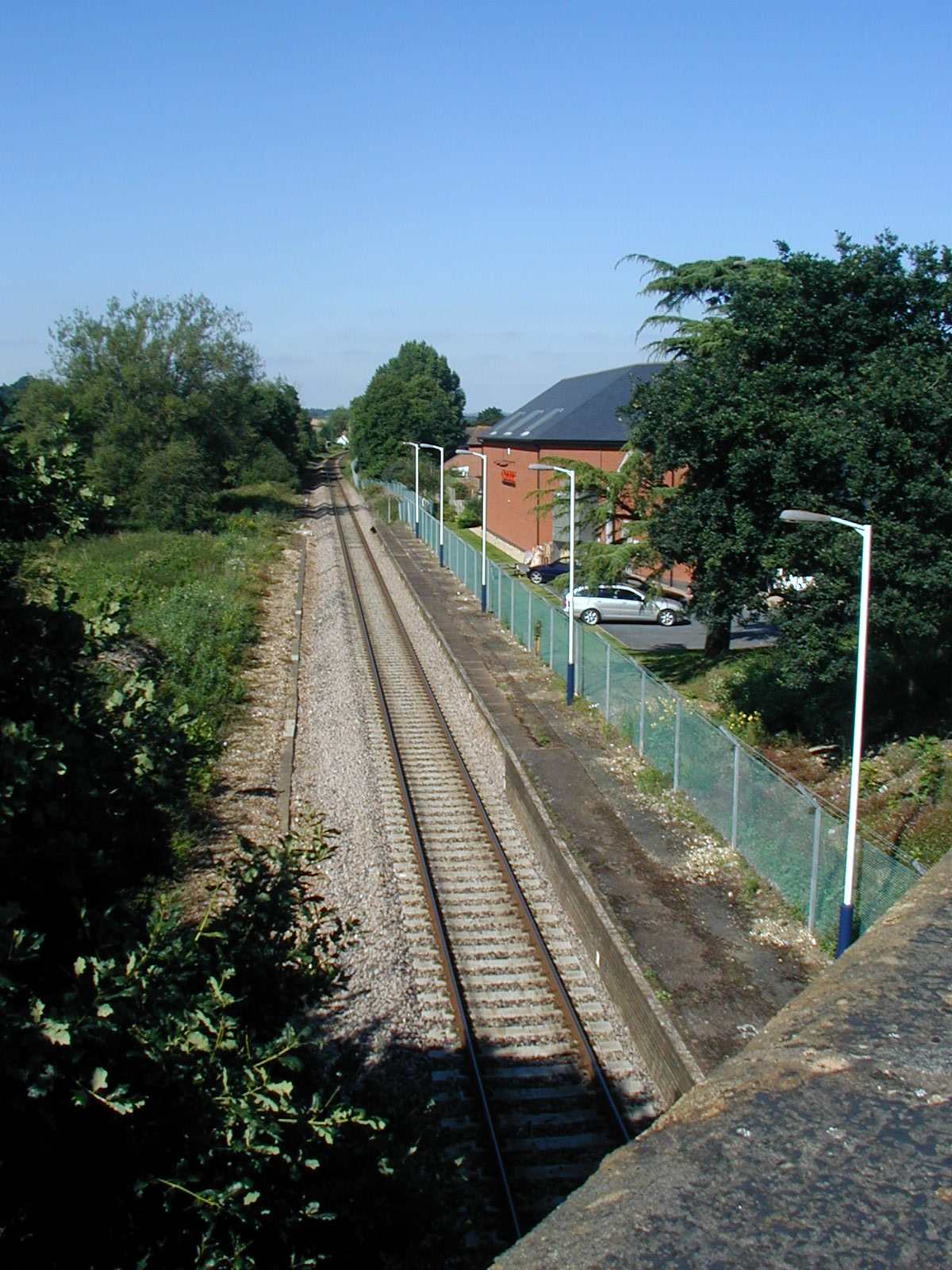
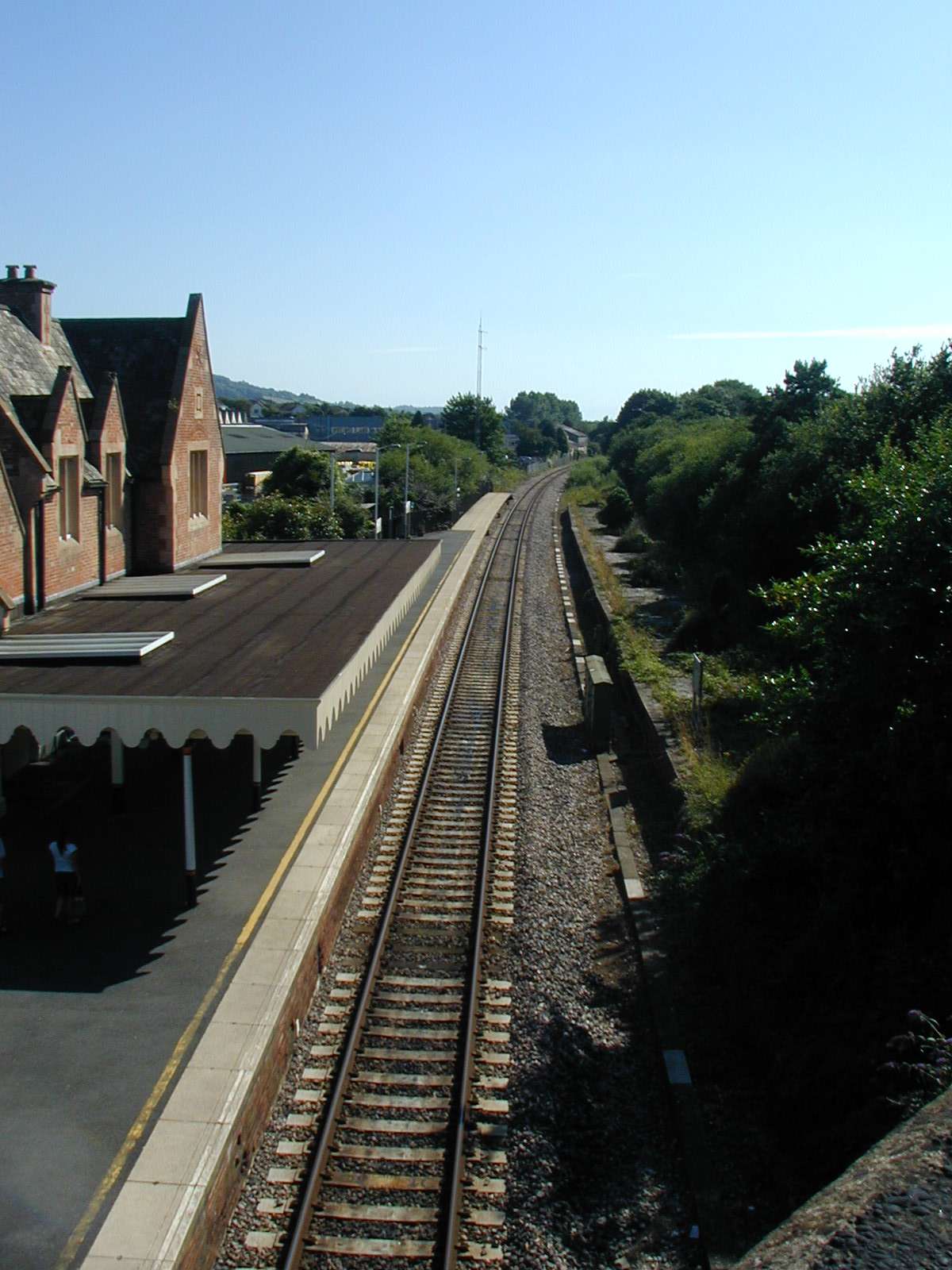
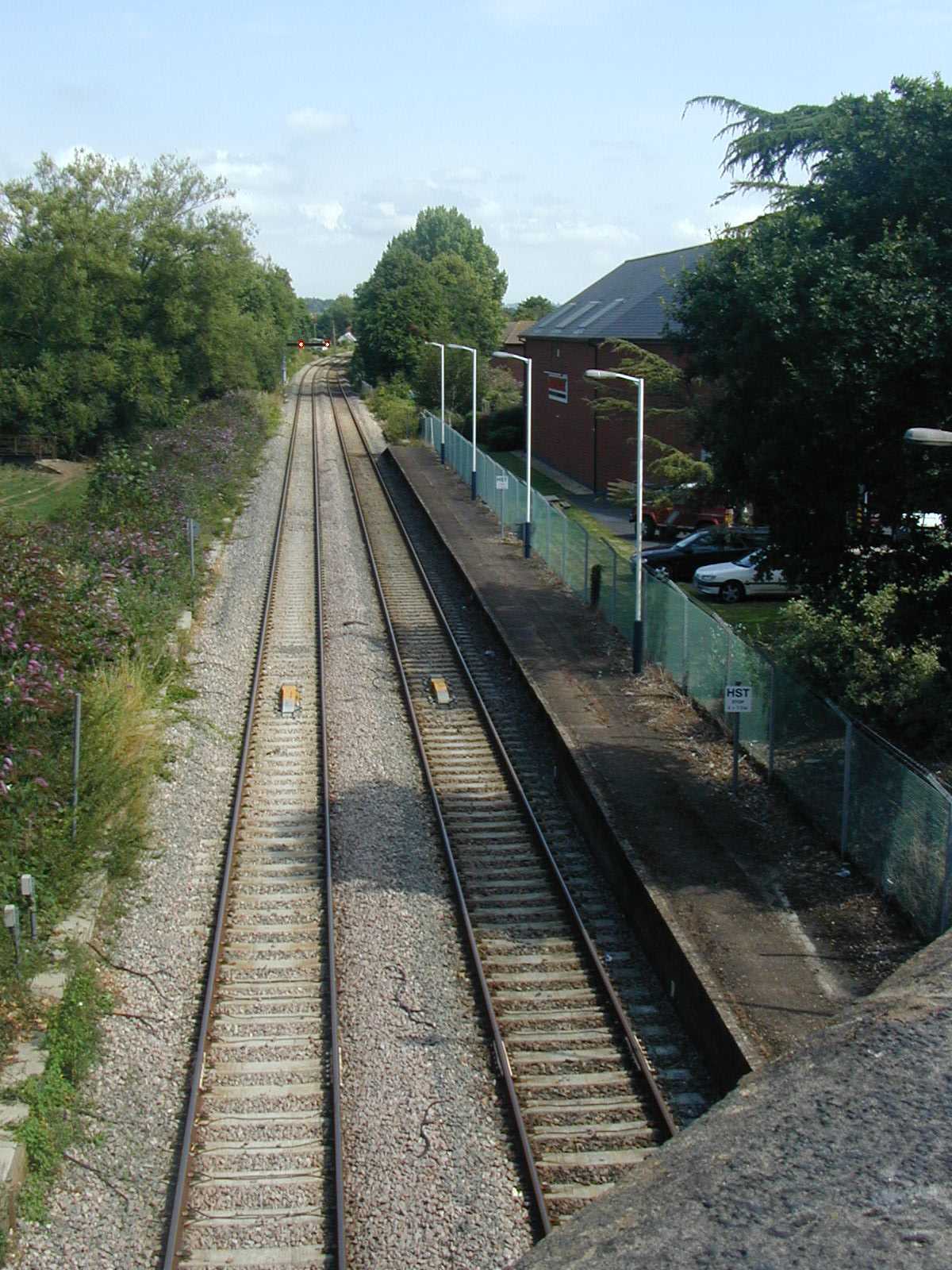
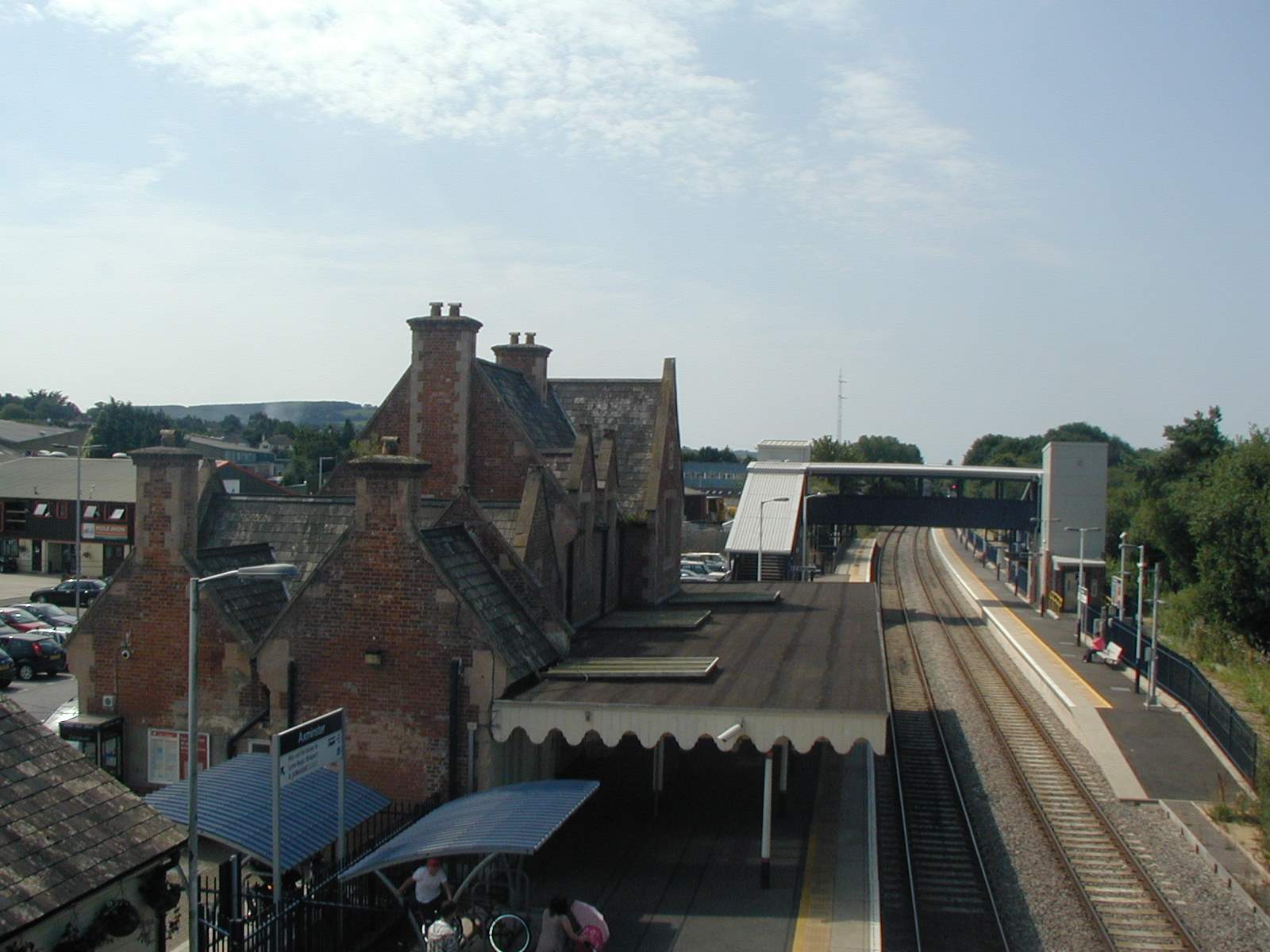
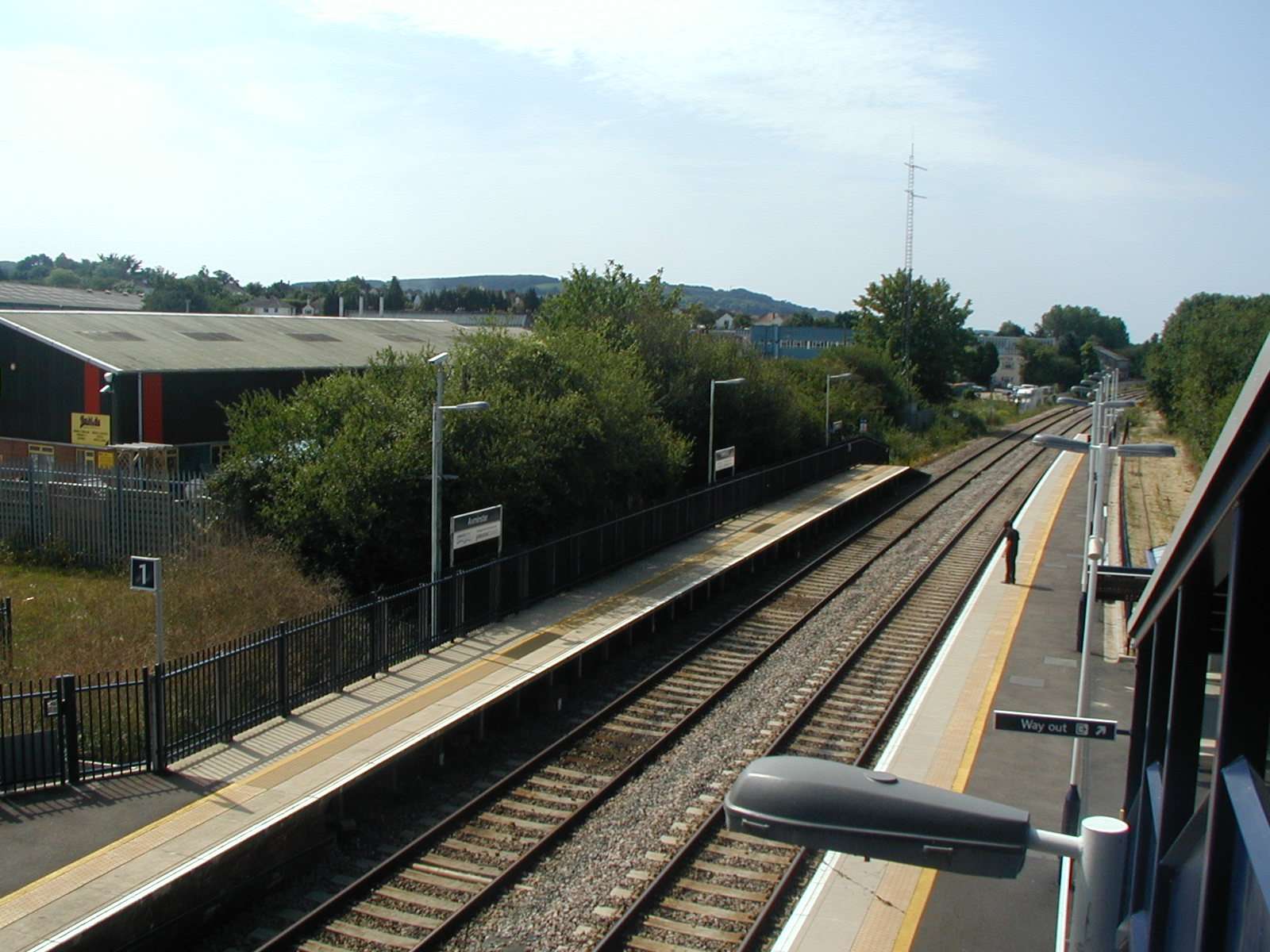
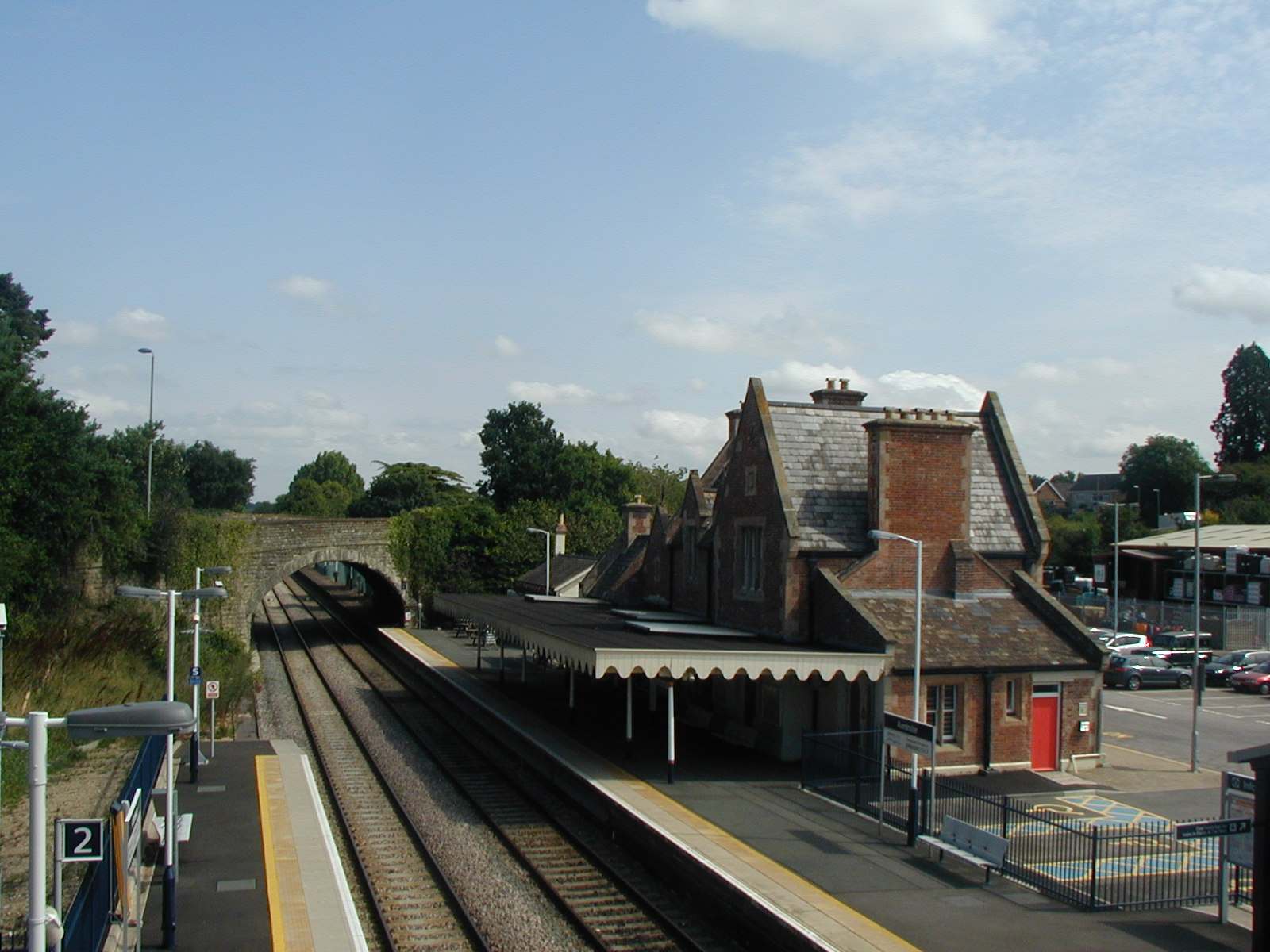
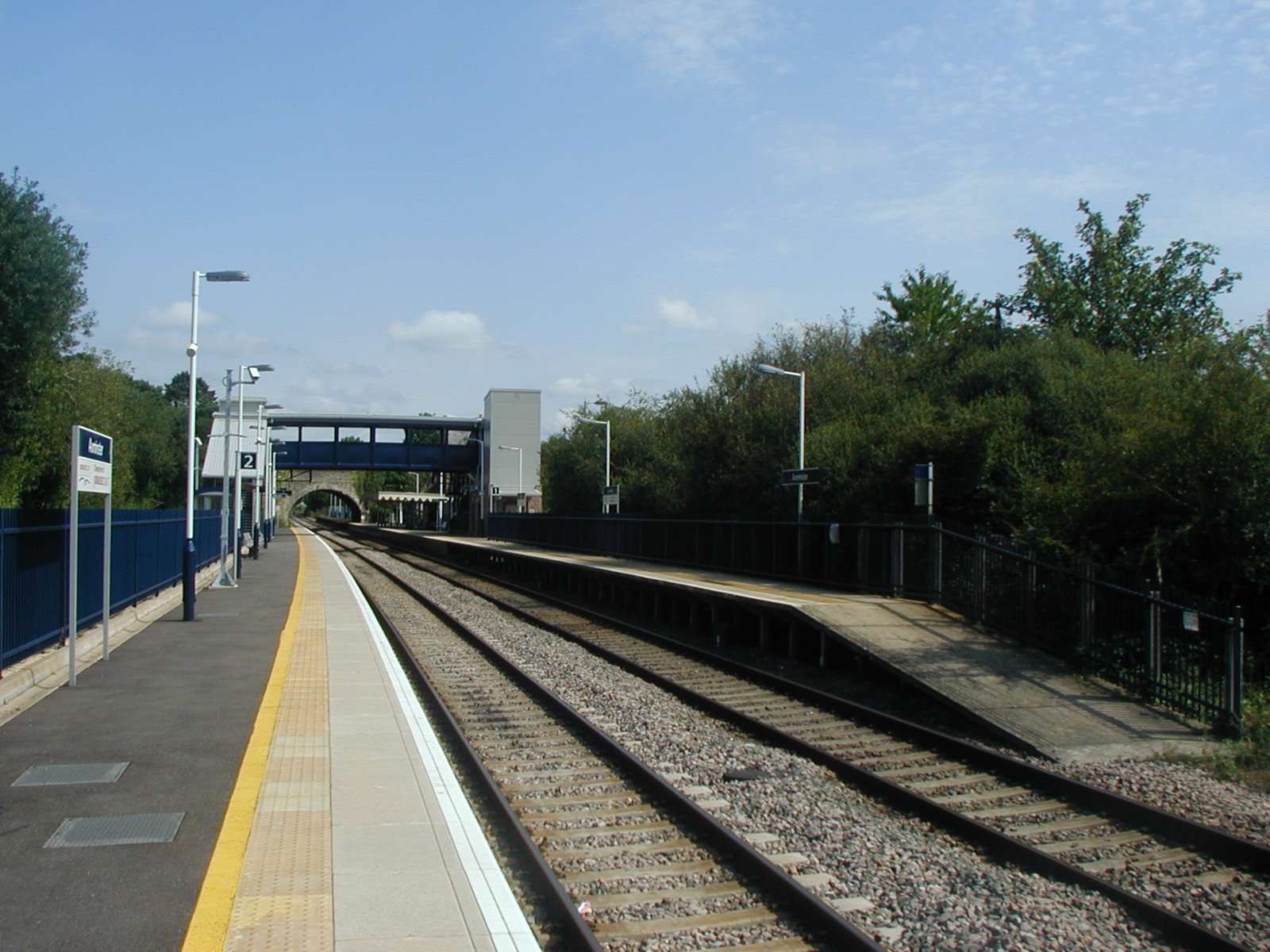
With the growing need to increase line capacity west of Yeovil Junction, it was decided eventually to provide a new passing-loop at Axminster, which was brought into use in December 2009. Unlike at (say) Honiton, this is not just a short loop at the station itself, but in effect a length of double-track about three miles long, with the station about half-way along, which allows trains to pass at speed. The former Up platform was re-built and a new footbridge provided near the Exeter end. Both lines are signalled for bi-directional working, but at first the unusual practice of 'right-hand running' was adopted, so that Up trains used the former Down platform and Down trains used the new platform on the Up side; however it is understood that a change to left-hand running was made in 2013. The loop was controlled initially from Chard Junction, but came under the control of Basingstoke ASC under the 2012 alterations.
| Axminster station in July 2008 | ||||||||
 |
 |
 |
 |
 |
||||
| Looking east from the road bridge | Looking west from the road bridge | Looking west along the platform | Looking east along the platform | Looking east from the Exeter end | ||||
| Axminster station in August 2011 | ||||||||
 |
 |
 |
 |
 |
||||
| Looking east from the road bridge | Looking west from the road bridge | Looking west from the footbridge | Looking east from the footbridge | Looking east from the Exeter end | ||||
Some distance on the Yeovil side of the station is the level-crossing formerly known as AXMINSTER GATES. At one time the barriers were controlled from the station office with supervision by CCTV, but now the control is exercised from Basingstoke ASC.
SEATON JUNCTION station had been rebuilt in 1927-8 with four tracks, the platforms being served by loops off the main through lines. At the rear of the Down platform there was another platform face to serve the Seaton branch. The Seaton branch closed to all traffic on 7-Mar-1966 and Seaton Junction station closed to passenger traffic on the same date. Some goods traffic lingered until 8-May-1967, after which the sidings were used only for milk traffic from the Express Dairies depot.
The signal-box was closed when the line between Chard Jcn and Pinhoe was singled. The new single line followed the course of the former Down Through line, all other track on the down side being recovered. Lines on the up side were retained to serve the milk depot and these connected to the single line at the Exeter end by a connection facing to Up trains and worked by a new ground-frame. In 1972 the sidings were re-arranged and the single-line was re-aligned onto the site of the former Up Through road. In 1973 the milk traffic ceased and most of the sidings were taken out of use. The ground-frame and connections were taken out of use in March 1987. The station buildings still remain on the Up side and a long concrete footbridge carries a public path across the line. |
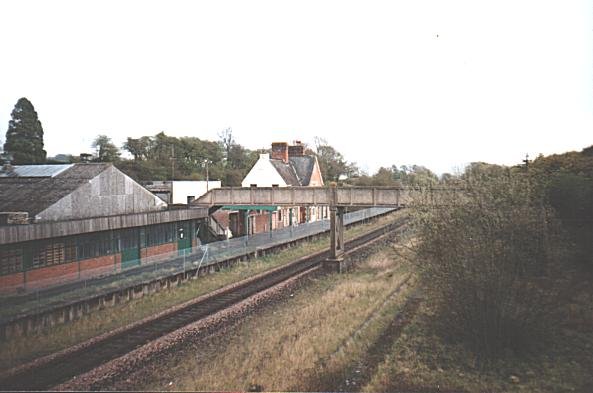 |
| Looking east in 2000 with former Up platform | |
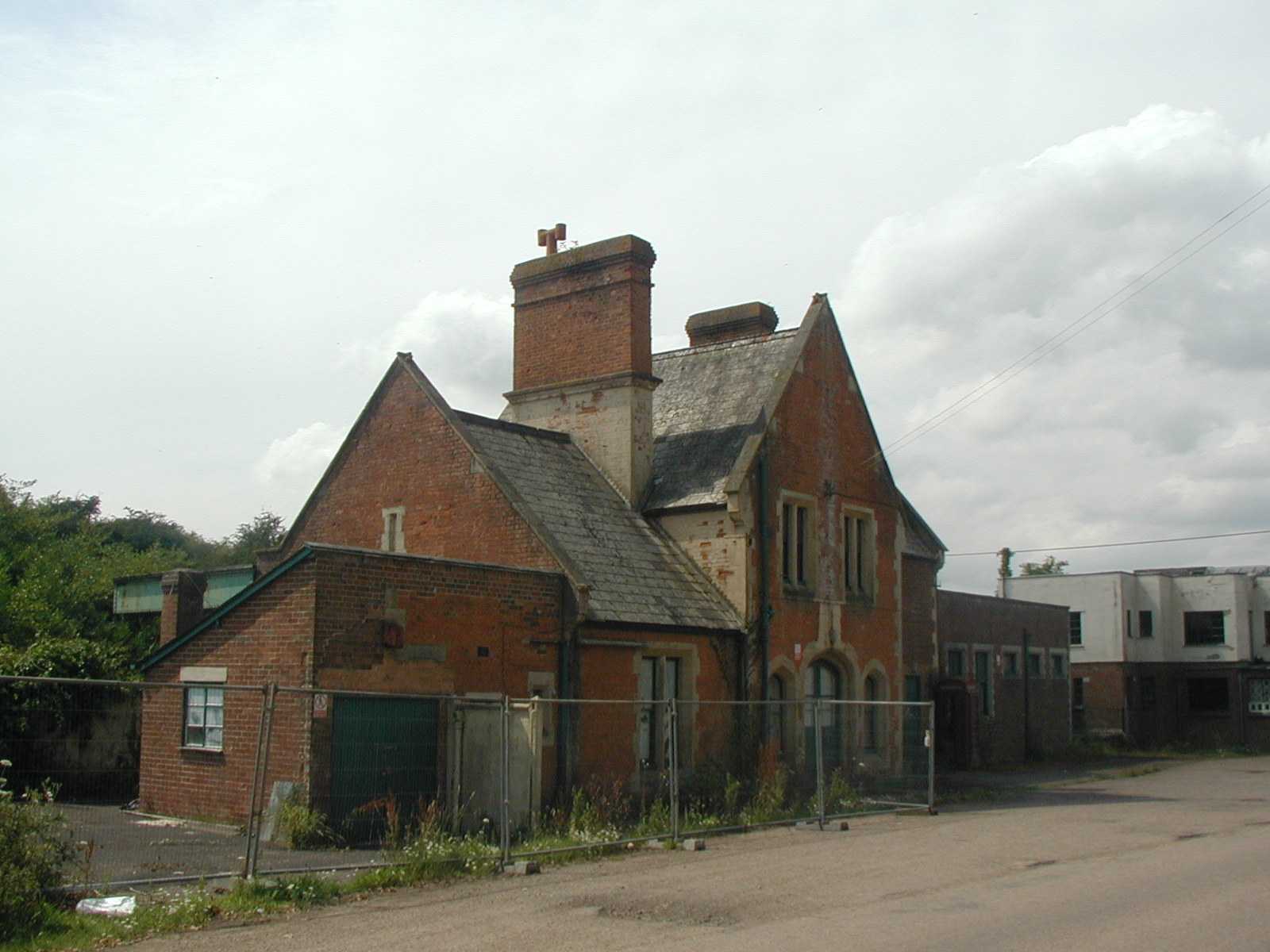 |
|
| Road side of station building in 2011 |
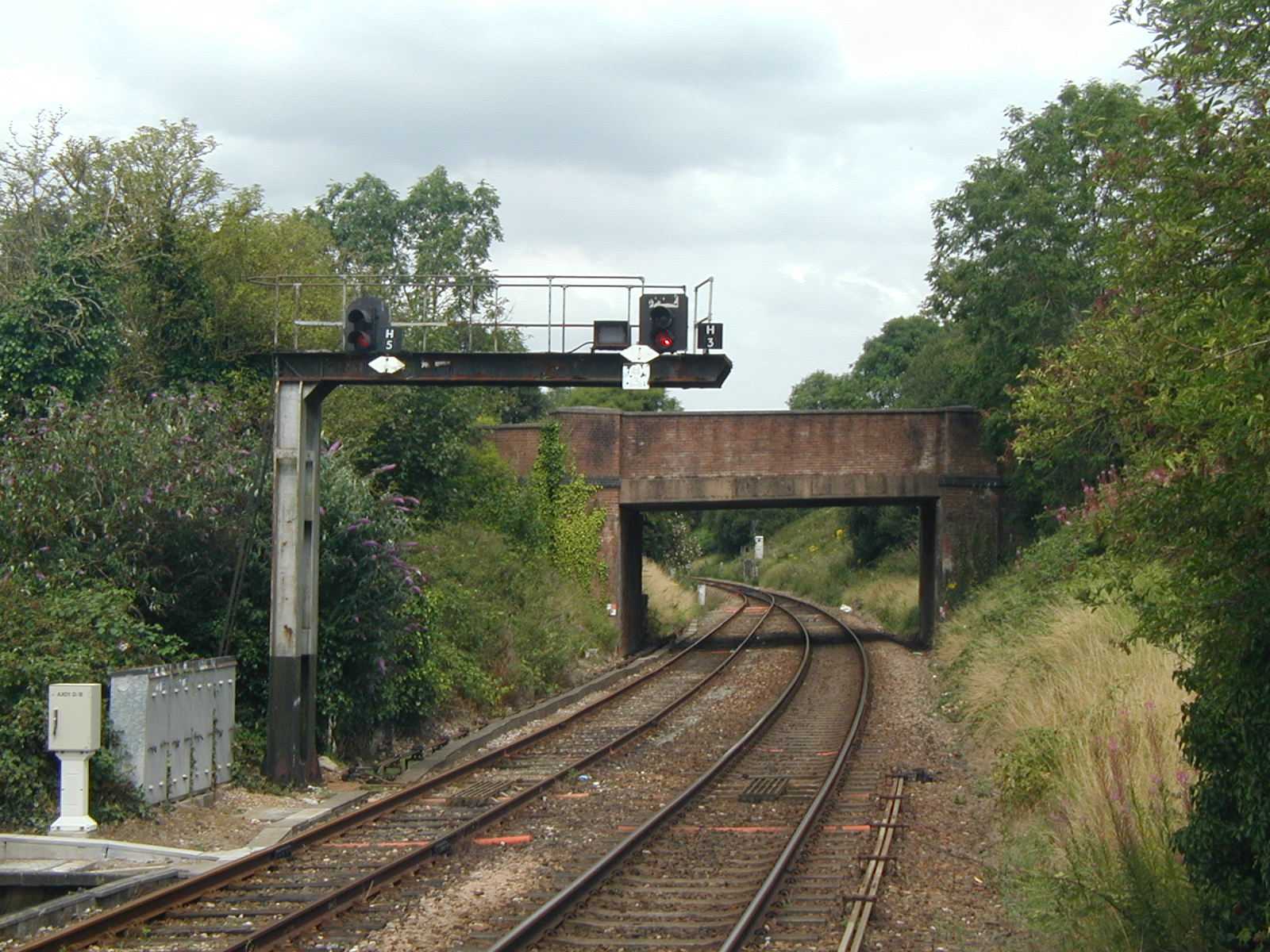
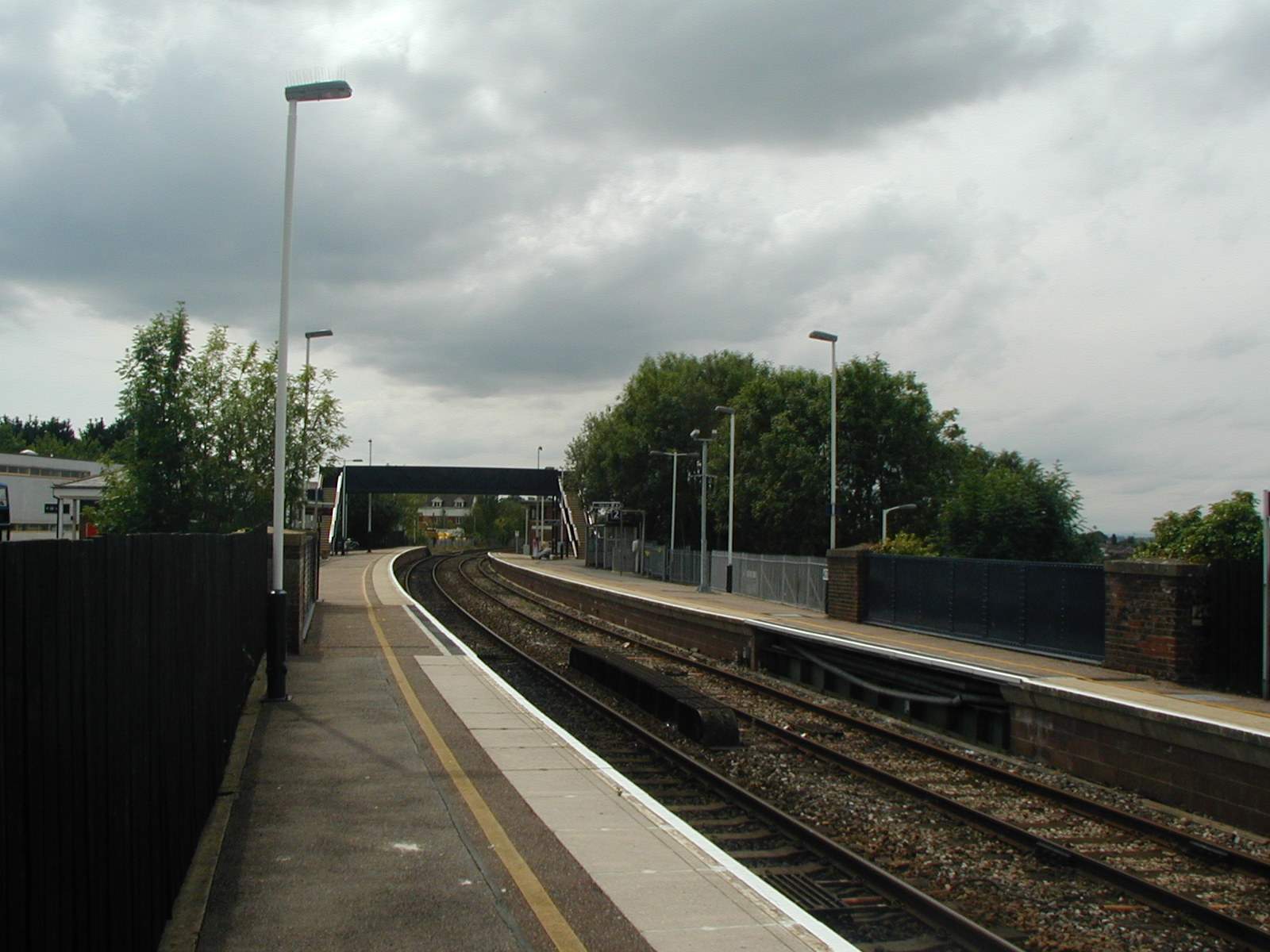
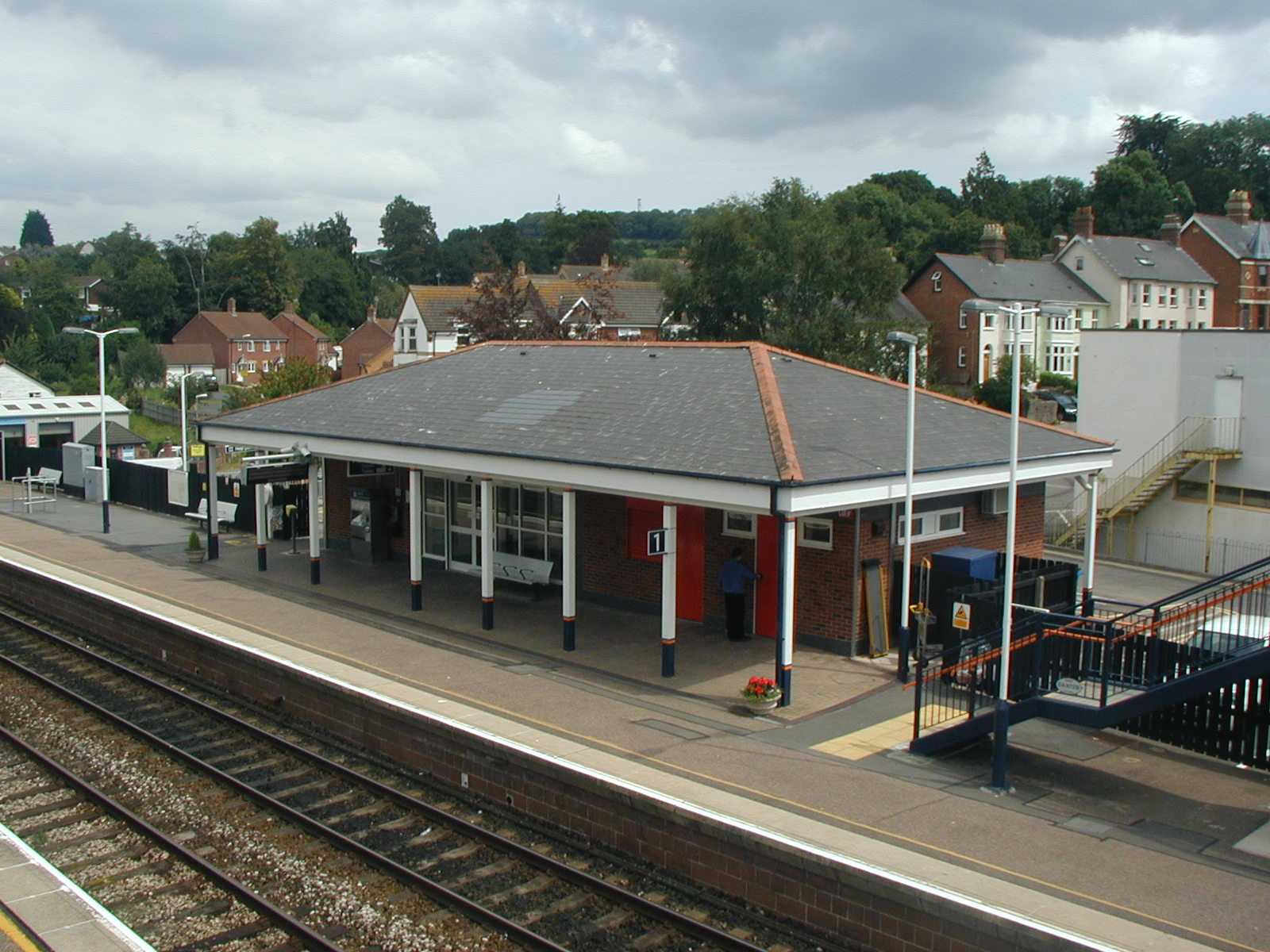
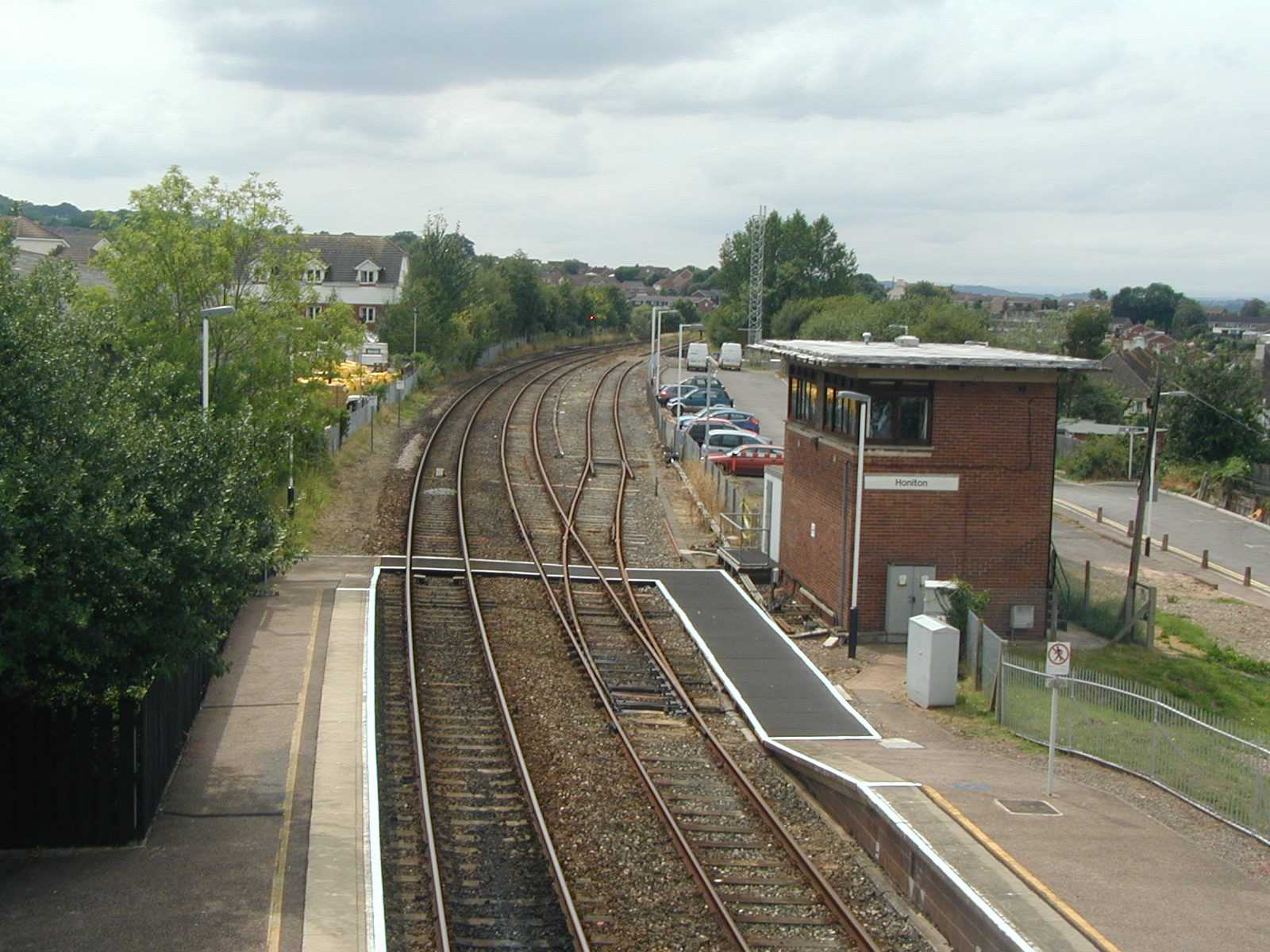
HONITON station remains open to passengers, but the goods yard on the Down side was closed on 8-May-1967 and the area sold into commercial use. The signal-box stood on the Up side at the Exeter end of the platform and was relatively modern, having been opened in 1957 as a replacement for the original signal-box. Under the 1967 rationalisation the layout was reduced to a basic passing-loop, with bi-directional signalling on the Down Loop, and a trailing connection off the Up Loop into the former Up Sidings which were retained for Engineers use. At first this connection was simply hand-worked, and normally clipped and padlocked, but later an adjacent ground-frame was provided.
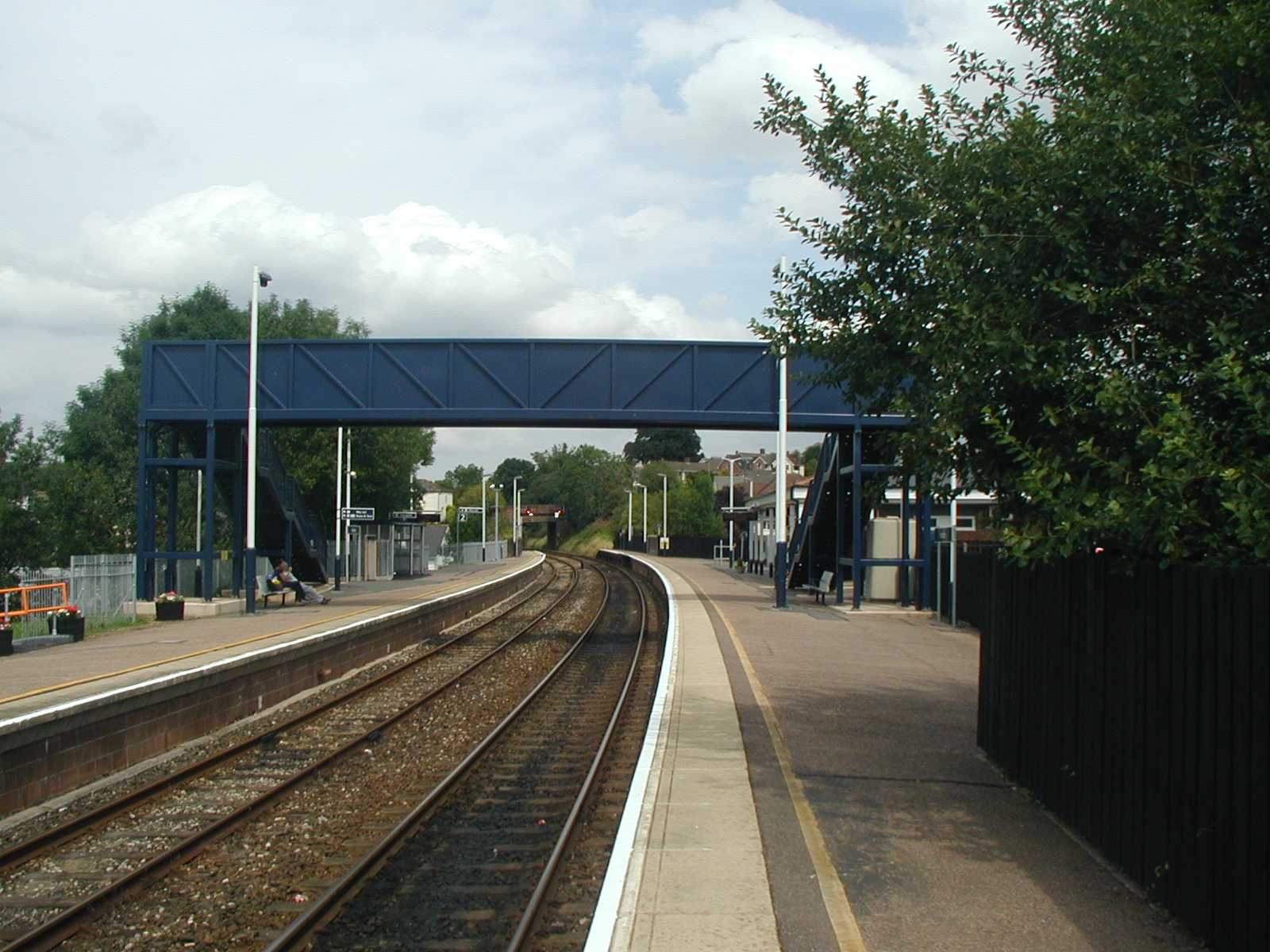
Sadly the original station buildings were demolished by British Railways and replaced by modern utilitarian structures of the CLASP design, although these have been improved during subsequent refurbishments. There used to be a footbridge between the two platforms immediately on the Yeovil side of the station buildings, but this was replaced in 2009 by one on the Exeter side of the buildings. The Up Siding and its ground-frame were abolished in December 2011 and the signal-box closed in 2012 (and subsequently demolished) when control passed to Basingstoke ASC.
| Honiton station in August 2011 | ||||||||
 |
 |
 |
 |
 |
||||
| Looking east from the station | Looking west through the station | Station building on Down platform | Looking east through the station | Looking west from new footbridge | ||||
SIDMOUTH JUNCTION station and the Sidmouth branch were closed to passenger traffic on 6-Mar-1967. The goods yard at Sidmouth Junction had closed on 6-Sep-1965, but goods traffic on the branch lingered until 8-May-1967. The signal-box were closed on 21-May-1967 when the main line was singled, but the existing ground-frame at the level-crossing was retained to work the crossing gates and protecting signals. All the station buildings were demolished in due course, but both platforms remained.
With the subsequent growth of new housing in the area the station was re-opened to passenger traffic on 3-May-1971 using a portion of the original Down platform and is now called FENITON (the original name of the station when it was opened first in 1860). A wooden hut was erected on the platform, with tickets issued by the ground-frame operator. In 1974 a new station office and waiting facility were constructed on the platform; the ground-frame was closed and the level-crossing gates were replaced by full lifting barriers controlled from a panel in the new station office. A further upgrade of the station facilities took place in 1993. Under the 2012 signalling alterations control of the level-crossing has passed to Basingstoke ASC with CCTV supervision. |
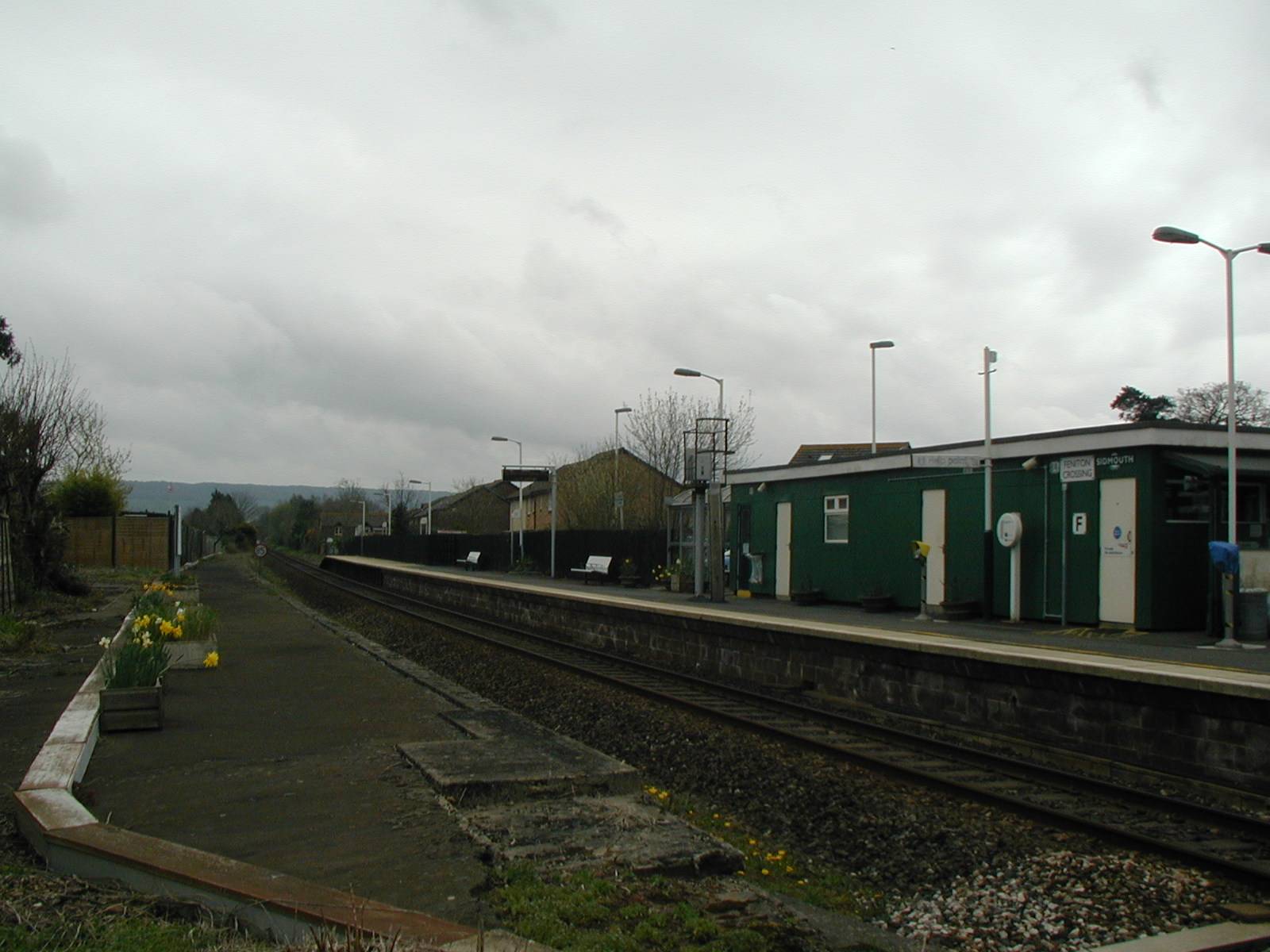 |
| Looking east in 2009 | |
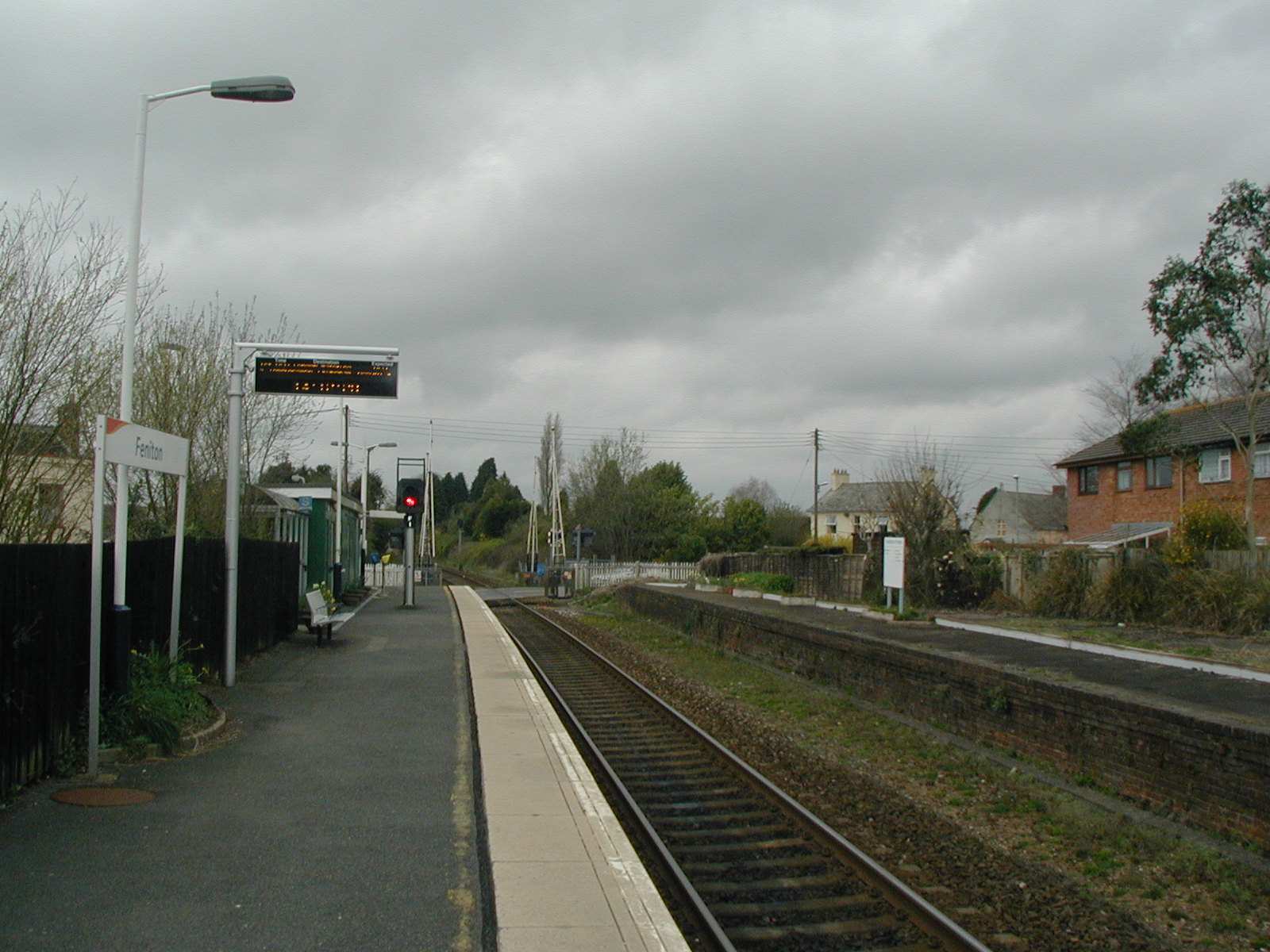 |
|
| Looking west in 2009 |
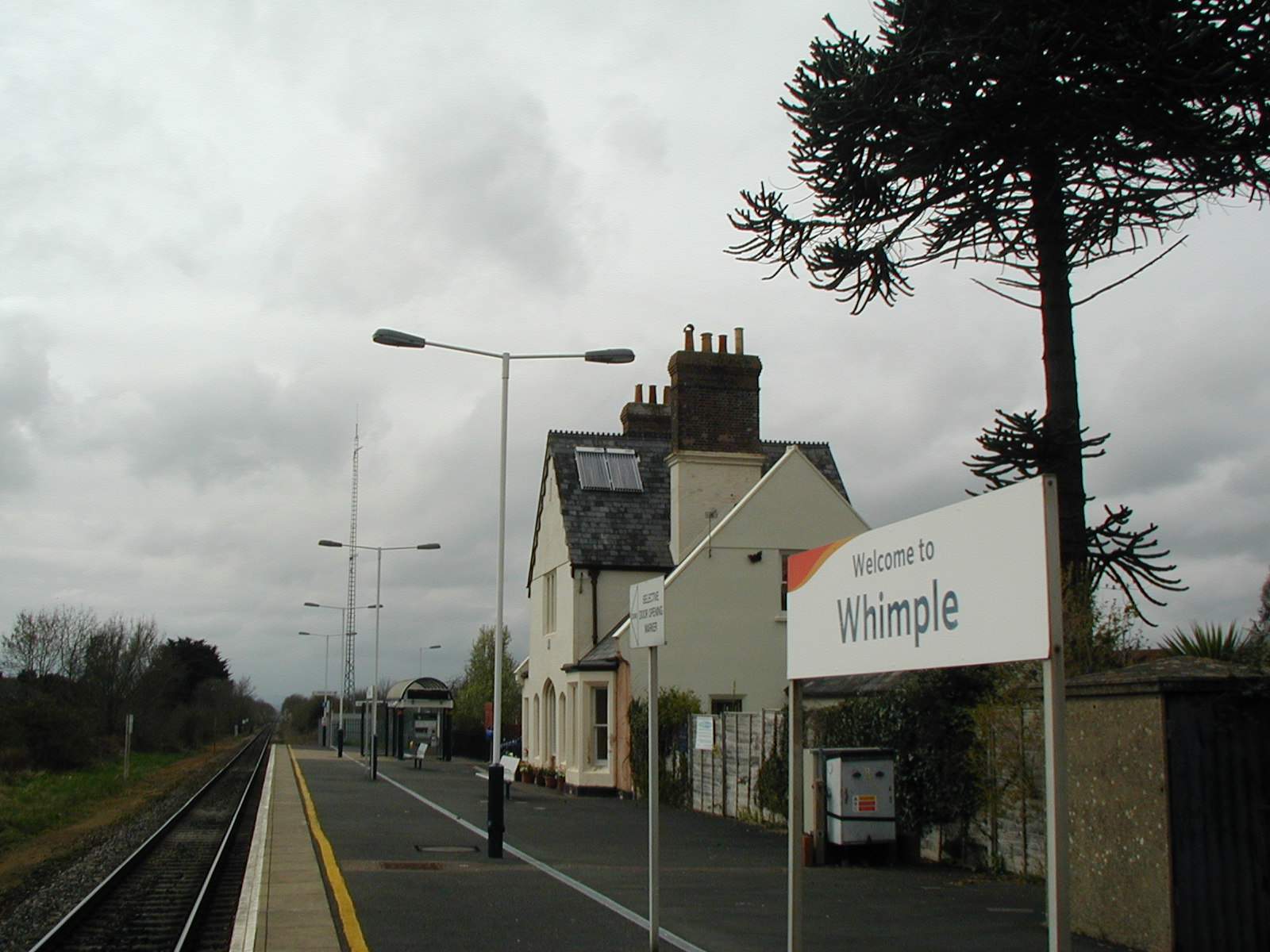
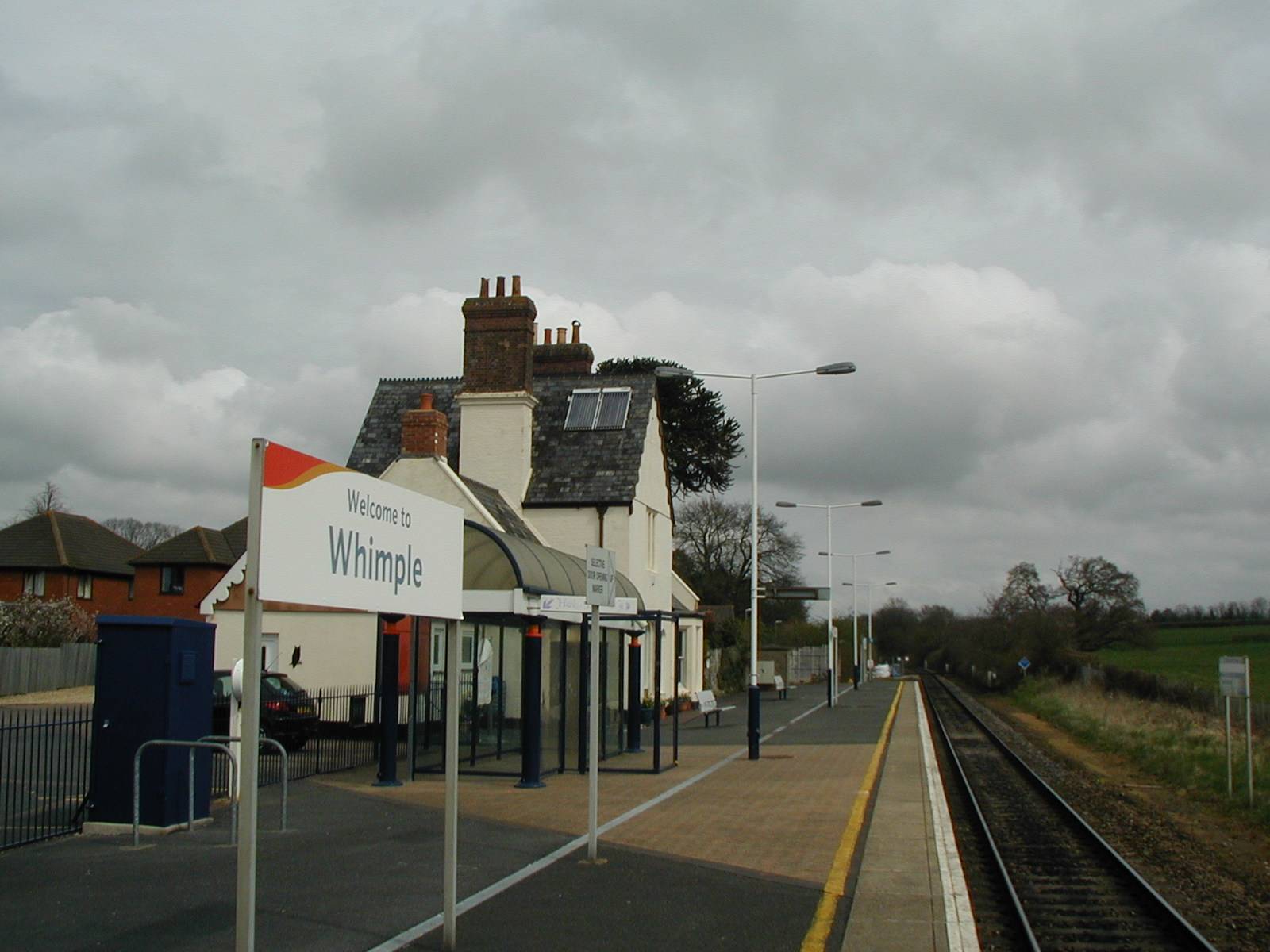
WHIMPLE station remains open for passenger traffic, but the signal-box was closed on 11-June-1967 when the line was singled and the public goods service ceased on 4th December of the same year. No passing-loop was created here - the single-line originally served the former Down platform with access via the footbridge, although the Up side remained reasonably intact. The up sidings and a portion of the former Up line were retained to serve traffic for the nearby Whiteway's Cider depot, with connections facing to Up trains at each end of the station controlled by new East and West ground-frames.
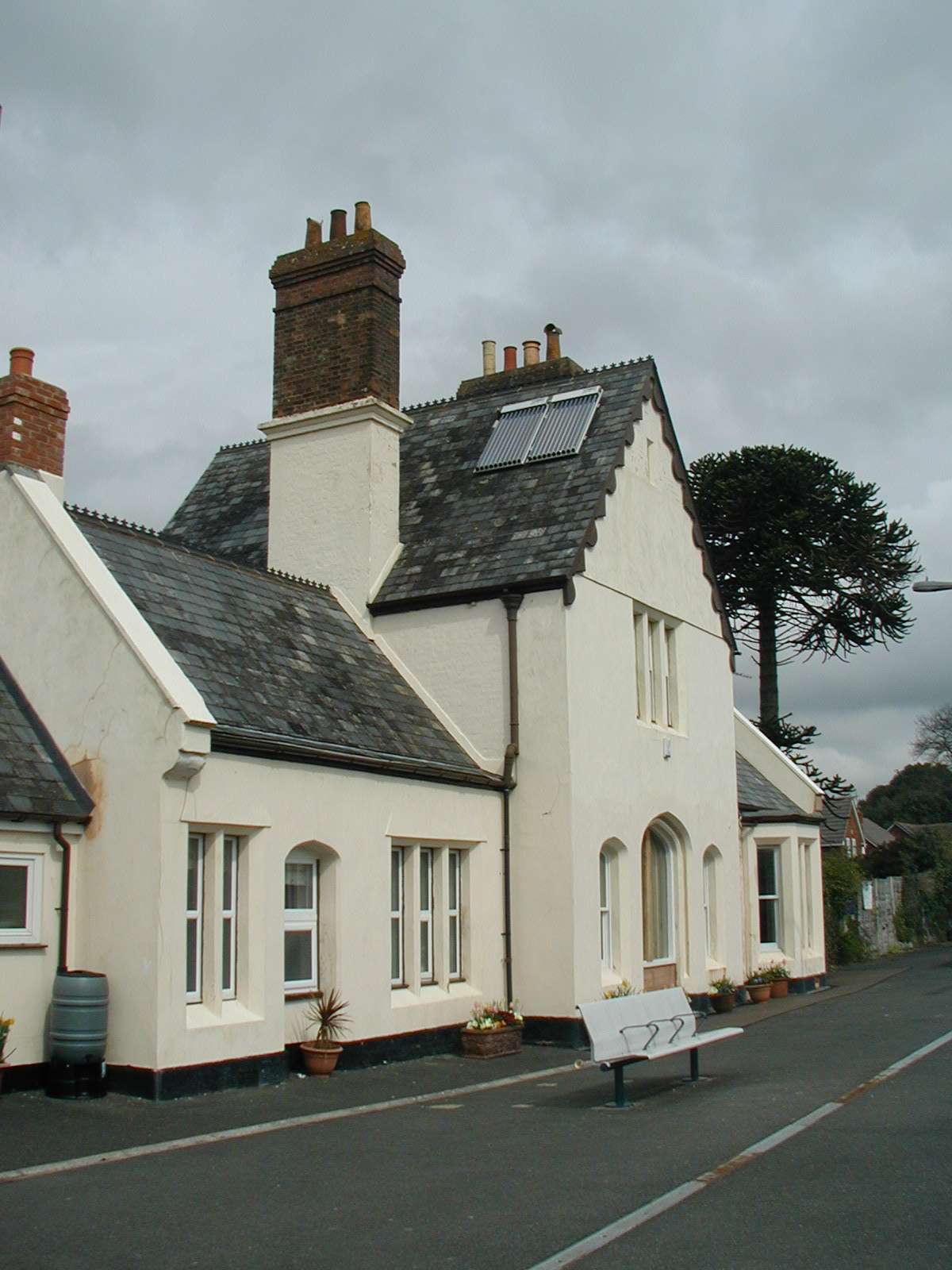
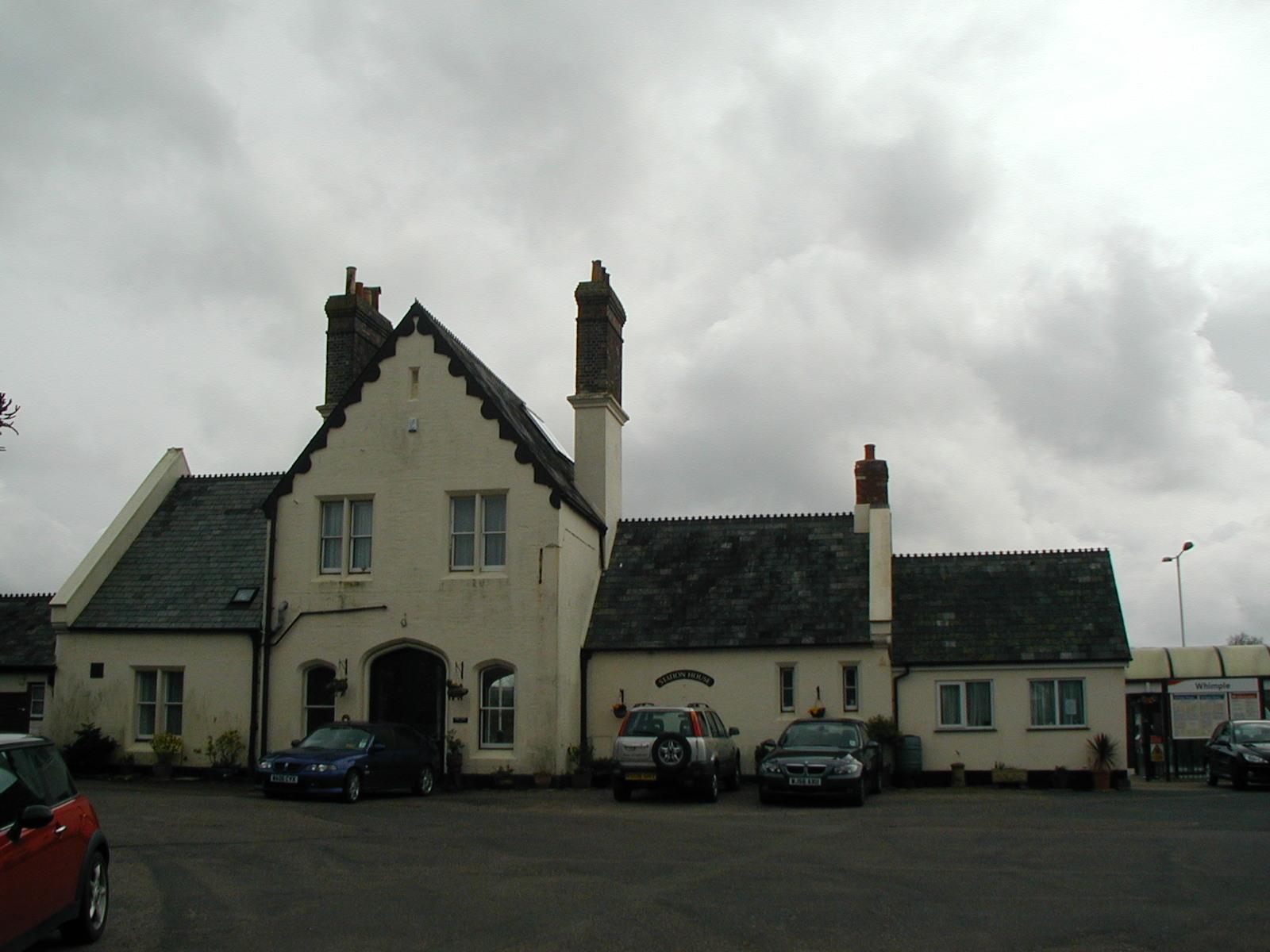
Commercial cider production ceased at Whimple in 1989 and on 6-July-1990 both ground-frames were closed and the sidings taken out of use, with the goods shed being demolished in 1991. During a subsequent station improvement scheme in late 1992 the former Up platform was rebuilt and extended outwards, with the single-line being re-aligned to serve it. The old Down platform were taken out of use and demolished, whilst the redundant footbridge was removed and subsequently re-erected at Grateley station. The original station building still exists on the remaining (Up) platform, but is now in private ownership.
| Whimple station in April 2009 | ||||||
 |
 |
 |
 |
|||
| Looking west along platform from Honiton end | Platform side of station building | Road side of station building | Looking east along platform from Exeter end | |||
BROAD CLYST station lost its goods traffic from 6-Sep-1965 and was closed to passengers on 7-Mar-1966. The signal-box had closed on 12-Dec-1965 and subsequently was demolished. The former station building and goods shed remain in commercial use on the down side.
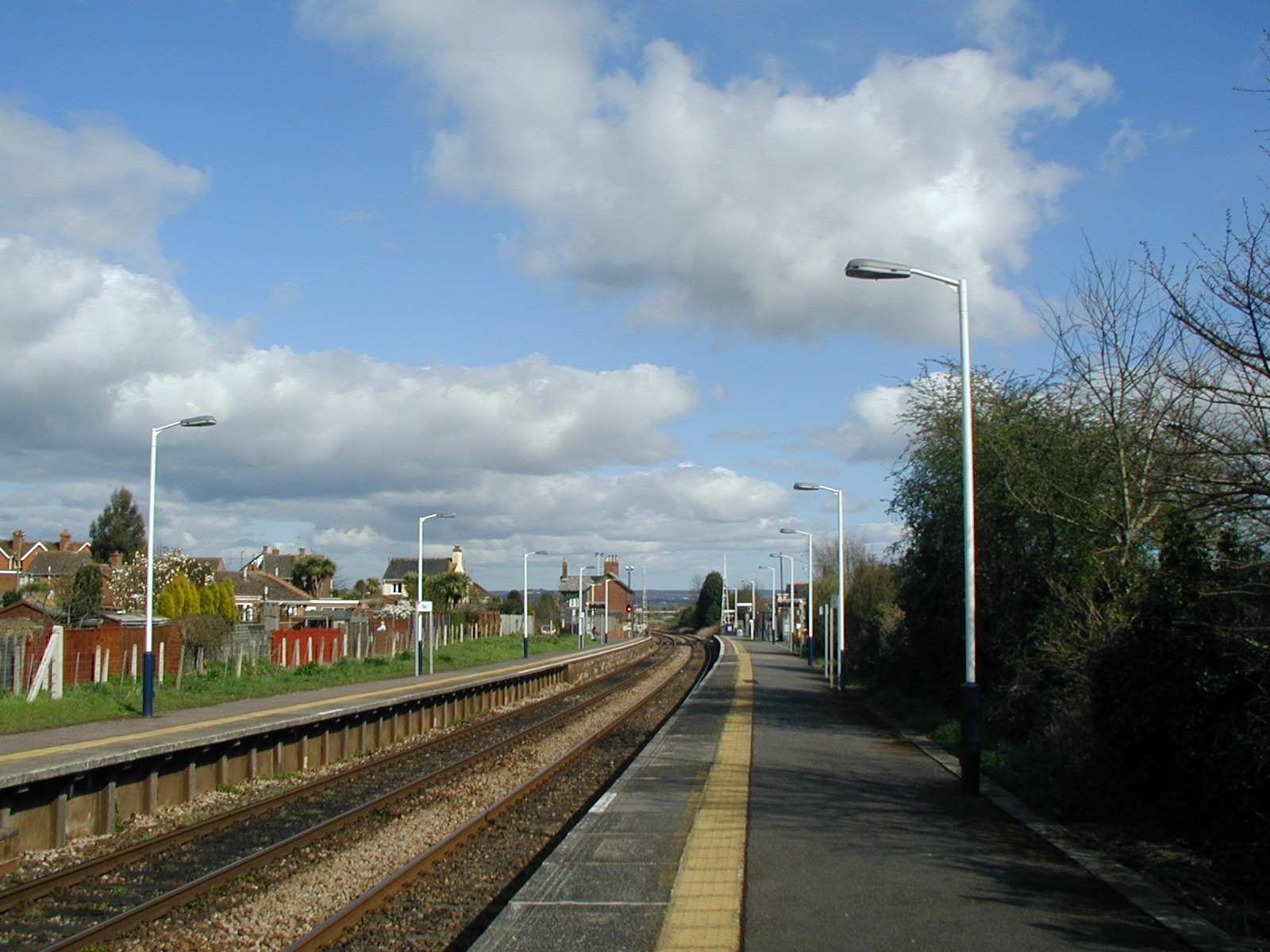
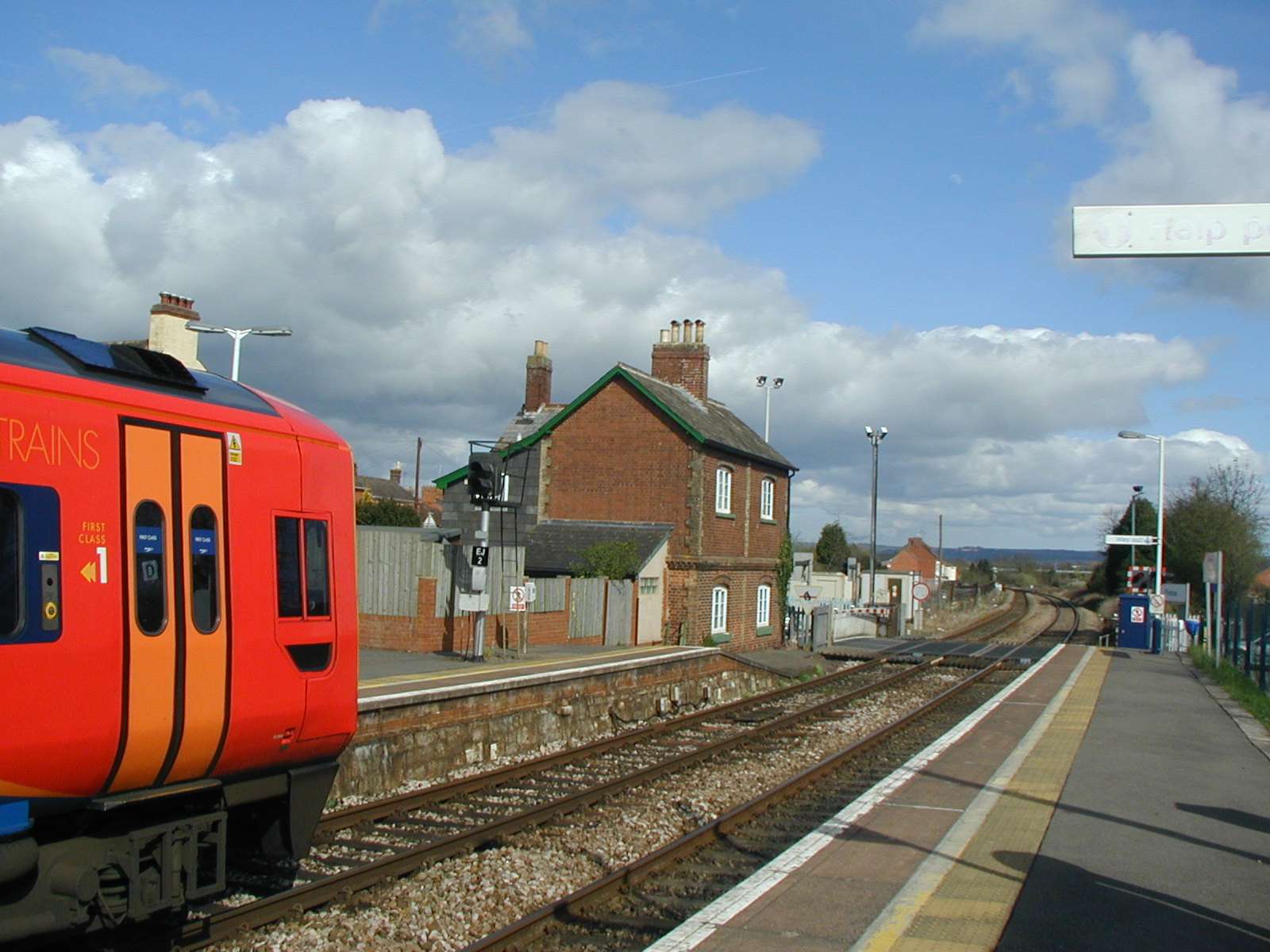
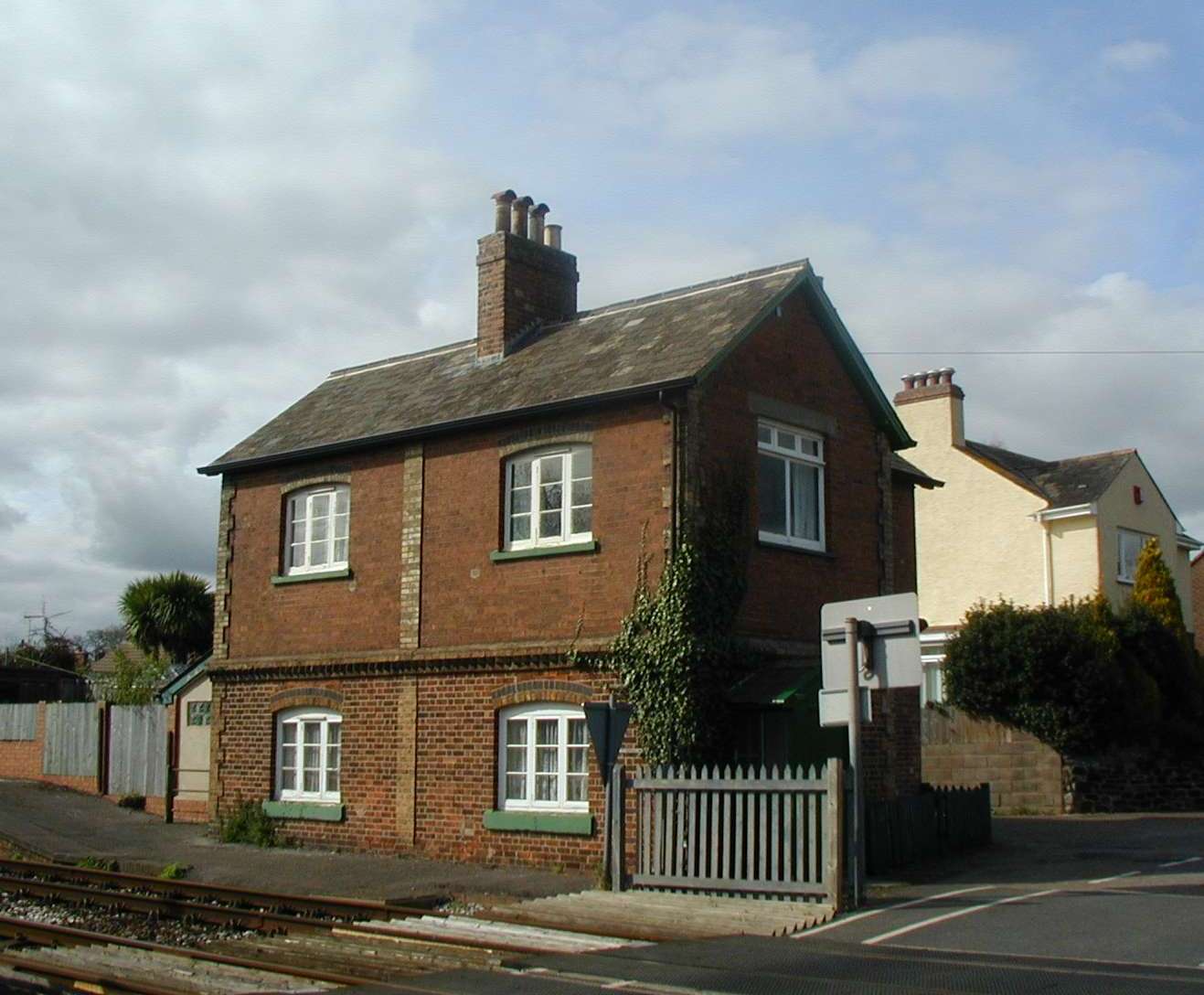
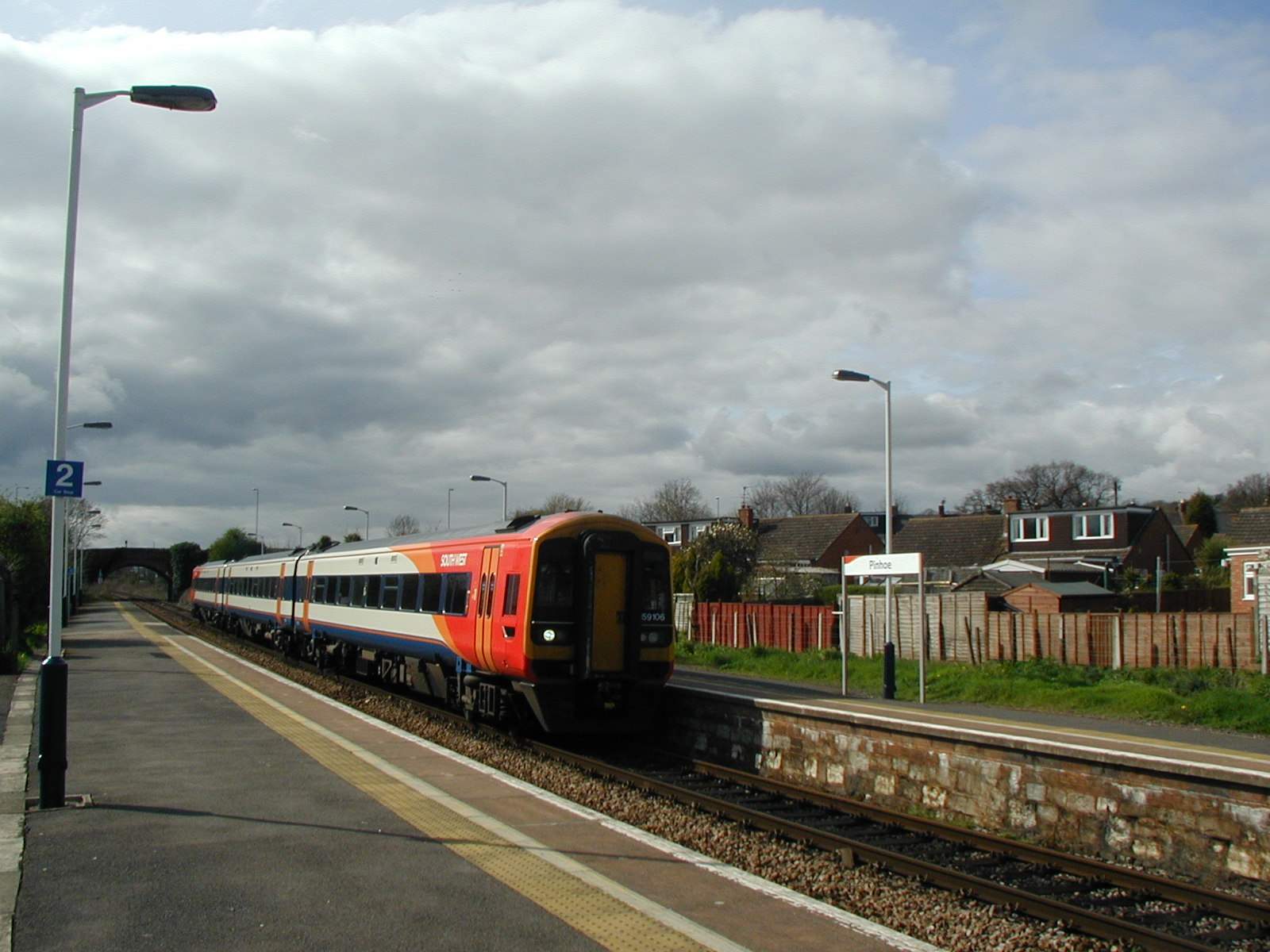
PINHOE station marks the start of the final section of double-track on the line. The station was closed to passenger on 7-Mar-1966 and general goods traffic ceased on 10-June-1967. After closure the footbridge was removed and all station buildings were demolished except for the station-master's house, which still survives, and also the signal-box remained open at that time. A siding trailing into the Up line at the Exeter end of the station was retained for access to a cold store. This siding was taken out of use on 1-Apr-1969 and, although re-opened subsequently, it was removed finally in 1979. There is a level-crossing at the Yeovil end of the station, where the gates were replaced by full lifting barriers on 17-Mar-1968.
With a growth in local housing and commuter traffic in the 1970-80s the station was re-opened to passenger traffic on 16-May-1983 (the second station to re-open on the line), but only with basic shelters for the passengers. However the signal-box was closed on 15-Feb-1988 and control of the area passed to Exmouth Junction signal-box with CCTV for the level-crossing. (The former Pinhoe signal-box and its contents were sold into private ownership and subsequently re-erected at Bere Ferrers station near Plymouth.) Control of Pinhoe has remained with Exmouth Junction after the 2012 signalling alterations.
| Pinhoe station in April 2009 | ||||||
 |
 |
 |
 |
|||
| Looking east from Exeter end | East end of station | Former stationmaster's house | Looking west from Honiton end | |||
Further westwards in the double-track section between Pinhoe and Exmouth Junction there were two separate sidings. Pye's Siding was accessed by a trailing connection in the Down line and worked by a ground-frame released from Pinhoe signal-box, while Poltimore Siding trailed into the Up line and was worked by a ground-frame released from Exmouth Junction signal-box. Pye's siding was taken out of use in 1969 and Poltimore siding was closed eventually on 6-Dec-1987.
The double track continues past Exmouth Junction, where the signal-box remains in use to control the junction for the branch line to Exmouth, which was reduced to single-track in 1973. Apart from being the junction for the branch to Exmouth this location was famous for being the site of Exmouth Junction locomotive depot (72A), the main Southern Region depot for the West of England in the days of steam power. With the decline of steam the depot was closed and demolished, and only a coal concentration depot remained in use. A private railway maintenance contractor has taken over some of the former Up yard.
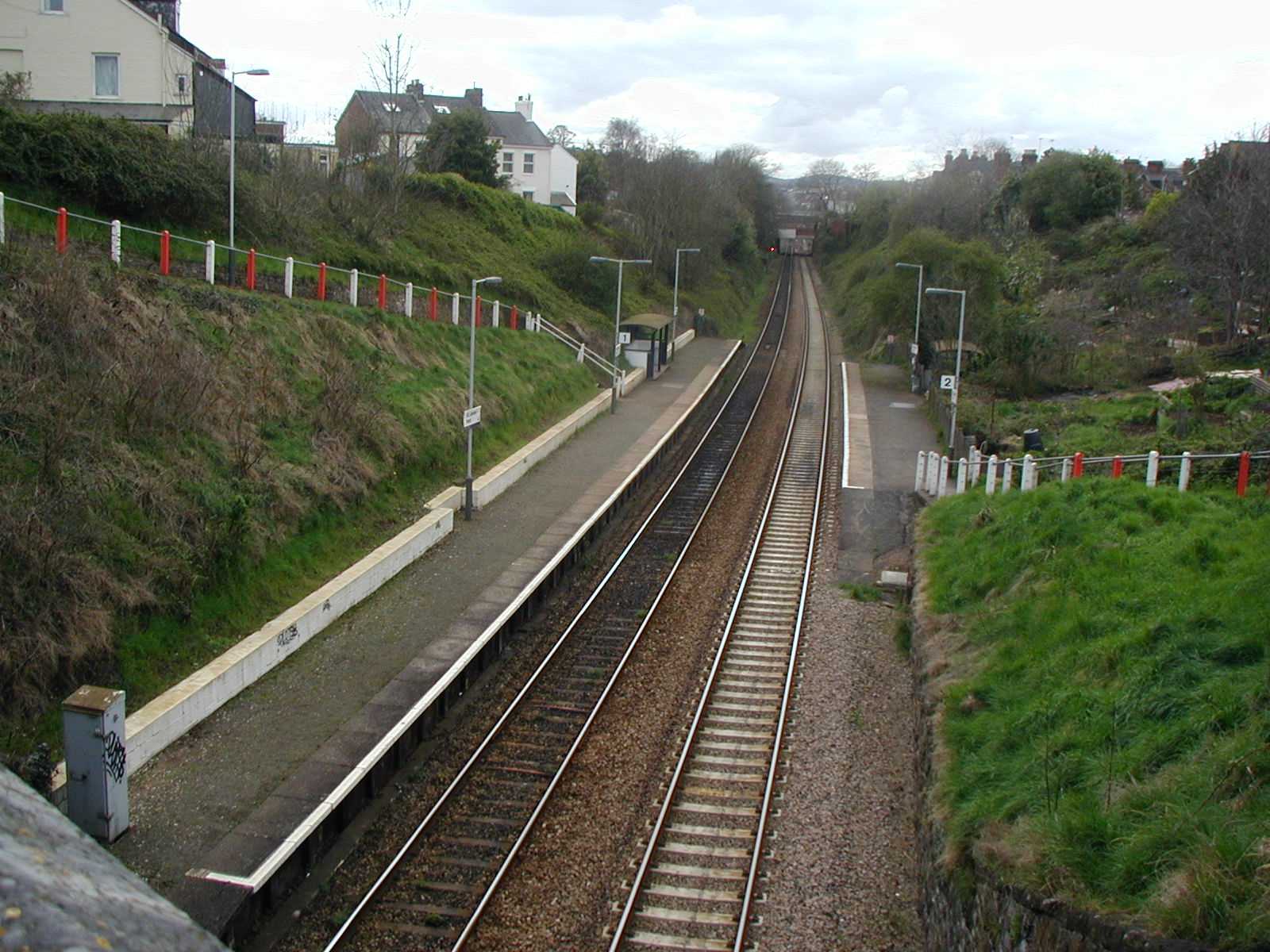 ST JAMES'S PARK halt
remains open with both platforms in use, but it is served only by local trains to/from the
Exmouth branch. The Down platform is about twice the length of the Up platform.
ST JAMES'S PARK halt
remains open with both platforms in use, but it is served only by local trains to/from the
Exmouth branch. The Down platform is about twice the length of the Up platform.
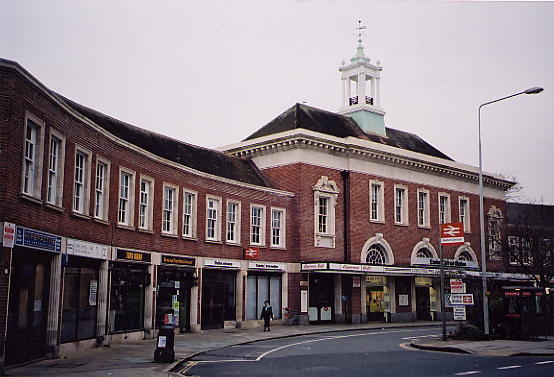
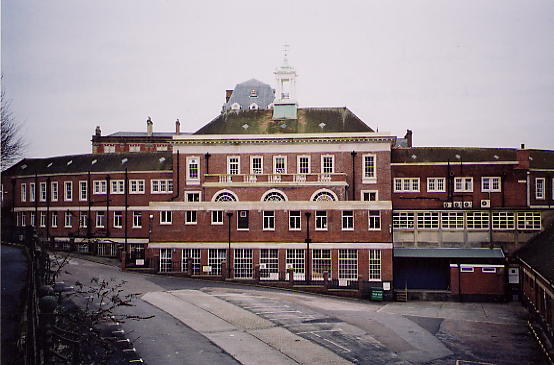
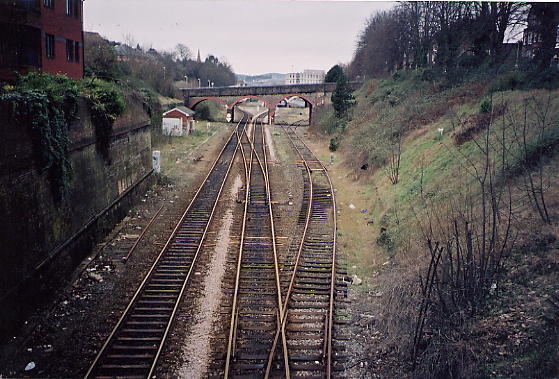
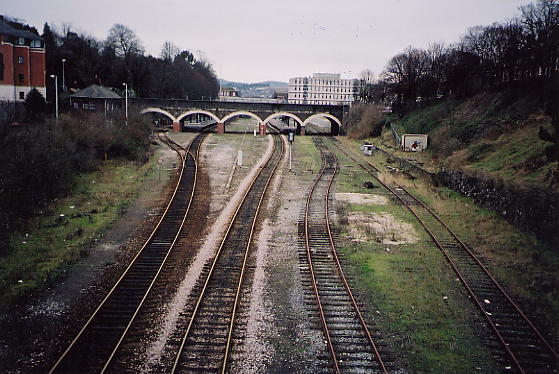
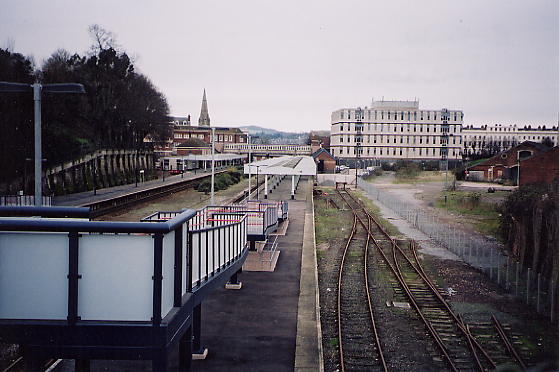
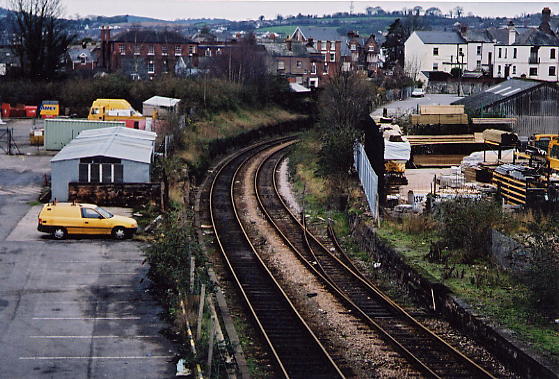
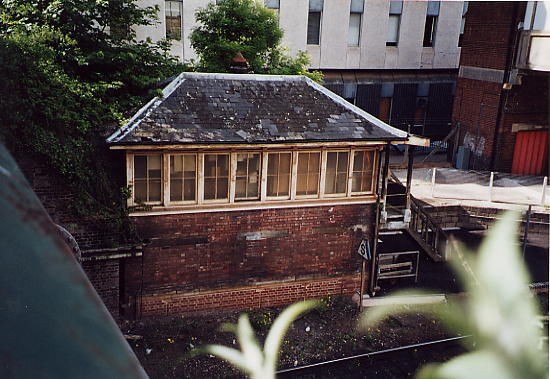
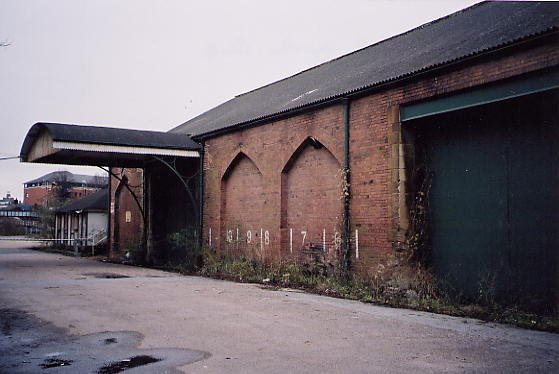
EXETER CENTRAL station (formerly Queen Street station) was re-built in 1927-33 and re-named in 1933. In its new form the lengthened platforms were served by loops off the main through lines, with bays at their outer faces at the east end for the Exmouth branch and other local trains. An extensive goods yard existed behind the Up platform, with other sidings next to the Down line at the east end and on both sides at the west end of the station, many being used for carriage storage in busy periods. The existing signal-boxes were replaced by new 'A' and 'B' boxes, the 'A' box being the largest on the Southern Railway west of Salisbury. Sadly this once-busy station declined substantially from the 1960s onwards to a shadow of its former self, becoming at one stage little more than a very large halt. However its proximity to the city centre ensures that it continues to support much commuter traffic.
During the 1960s increasing rationalisation took place here, culminating in the closure of the 'B' box on 23-Feb-1970. The former Up Through line had been taken out of use previously on 9-Nov-1969, but the Down Through remained in use, however all other sidings at the west end of the station were removed. The Down Through was taken out of use also in 1984, and with further rationalisation the layout was reduced to that of a basic double track with a single crossover at the east end, a facing connection into the Down Bay and a trailing connection into the Up Sidings. On 4-6th May 1985 the remaining 'A' signal-box was closed and control of the station passed to the new panel signal-box at Exeter St Davids station. As part of this work the Down line was signalled for two-way working between the crossover and Exeter St Davids station, thus enabling trains to come up the bank out of St Davids on either track.
| Exeter Central station in December 2000 | ||||||
 |
 |
 |
 |
|||
| Station Frontage | Rear of station frontage | Looking west towards station | Looking west towards station | |||
 |
 |
 |
 |
|||
| Up Bay and Goods Yard | Looking west down incline | Former 'B' signal-box | Rear view of Goods Shed | |||
© Chris Osment 2004 & 2013
Chard Junction 2003 and Seaton Junction 2000 photographs © Jon Tooke
|
|||||||
|
© West Country Railway Archives 2004 Page last updated: 23 Jan 2014 |
Home Page: http://www.railwest.org.uk E-Mail: railwest@bigfoot.com |
||||||