







| |

Articles previously published in the Waybill,
available with your Division Membership.
Available articles:

The
Washington State Grain Train
By
Bruce Fowler
Photos
by Bruce Fowler unless otherwise indicated.
 The
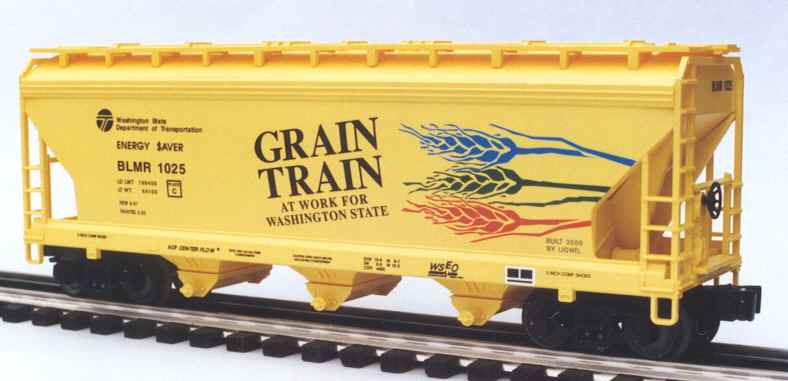
1999 Lionel Catalogue Volume 3 has a bright yellow covered hopper car with the
words "Grain Train at Work for Washington State" proudly displayed on
the side panels. Since I live in the Pacific Northwest, I had to order one for
my layout. In all my travels between Seattle, Portland and Spokane, I have never
seen a prototype car with this paint scheme. I wanted to know where Lionel found
the prototype cars and what railroad used BLMR as their reporting
marks. The
1999 Lionel Catalogue Volume 3 has a bright yellow covered hopper car with the
words "Grain Train at Work for Washington State" proudly displayed on
the side panels. Since I live in the Pacific Northwest, I had to order one for
my layout. In all my travels between Seattle, Portland and Spokane, I have never
seen a prototype car with this paint scheme. I wanted to know where Lionel found
the prototype cars and what railroad used BLMR as their reporting
marks.
I
wrote to the Washington State Department of Transportation and received a 30
page publication titled "An Economic Evaluation of the Performance of the
Washington Grain Train Project." Washington State's Department of
Transportation purchased twenty nine used covered hopper cars in 1994 for
a pilot project to reduce truck damage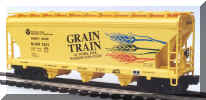 to the roads, to reduce oil consumption,
and to keep light density rail lines in the state from being scrapped. The
twenty nine cars were leased to the Blue Mountain Railroad (reporting marks BLMR) for grain
shipments between Dayton and Wallula, WA and between Pullman and Hooper Junction,
WA. Blue Mountain Railroad was formed in 1992 to operate the two separate
segments of former Union Pacific trackage in Southeastern Washington state. to the roads, to reduce oil consumption,
and to keep light density rail lines in the state from being scrapped. The
twenty nine cars were leased to the Blue Mountain Railroad (reporting marks BLMR) for grain
shipments between Dayton and Wallula, WA and between Pullman and Hooper Junction,
WA. Blue Mountain Railroad was formed in 1992 to operate the two separate
segments of former Union Pacific trackage in Southeastern Washington state. 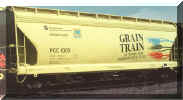 Washington's
Class 1 railroads do not have enough grain hoppers to satisfy the needs of the
small grain elevators. BNSF and UP railroads use their available cars for
the long haul market where revenue to the railroads is higher, leaving the short
haul markets of Wallula, Portland, Vancouver,
Tacoma, and Seattle to suffer from equipment shortages. The DOT program
eliminates these shortages, taking "grain train" cars and loading them
at the various elevators within the Blue Mountain Railroad. The cars are then assembled into twenty five car blocks to
take advantage of the unit train rates when they are interchanged to the Union Pacific at Wallula
or Hooper Junction. Washington's
Class 1 railroads do not have enough grain hoppers to satisfy the needs of the
small grain elevators. BNSF and UP railroads use their available cars for
the long haul market where revenue to the railroads is higher, leaving the short
haul markets of Wallula, Portland, Vancouver,
Tacoma, and Seattle to suffer from equipment shortages. The DOT program
eliminates these shortages, taking "grain train" cars and loading them
at the various elevators within the Blue Mountain Railroad. The cars are then assembled into twenty five car blocks to
take advantage of the unit train rates when they are interchanged to the Union Pacific at Wallula
or Hooper Junction.
I
wanted photographs of these grain cars so that I could compare the Lionel
graphics to the prototype, so in May 2000, I packed up my camera and headed over
the Cascade Mountains for Southeastern Washington hoping that I could find at least
one of these cars. I chose the Blue Mountain Railroad/Union Pacific interchange
at Hooper Junction for my first stop, hoping for the possibility of locating a
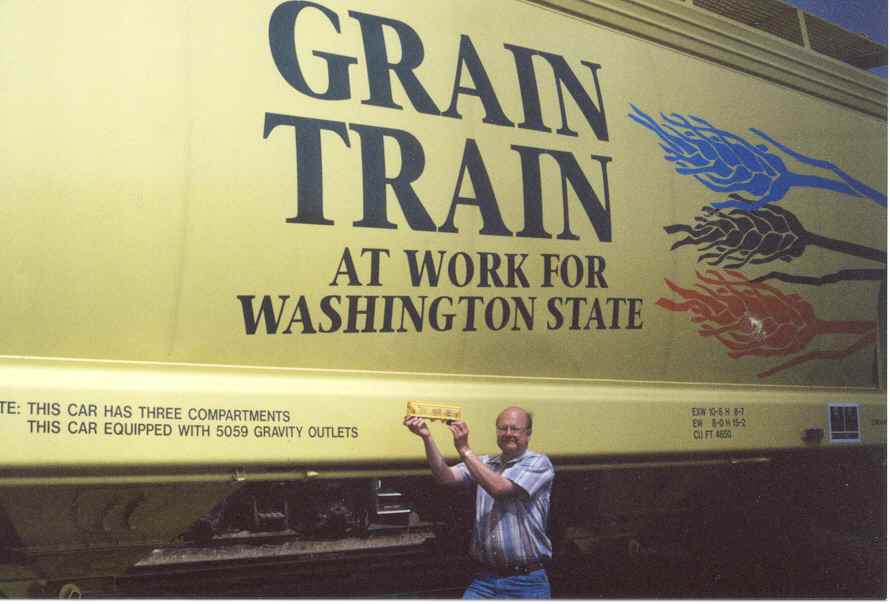
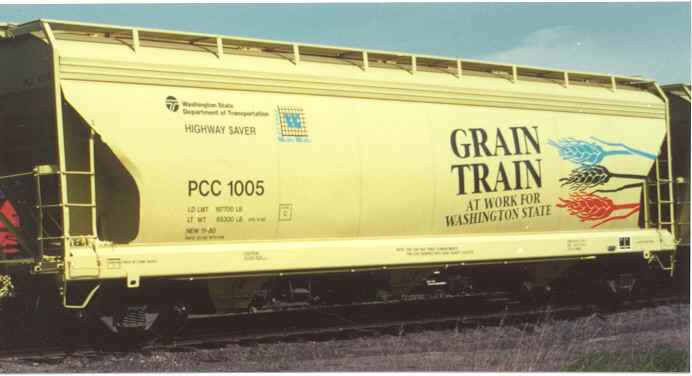
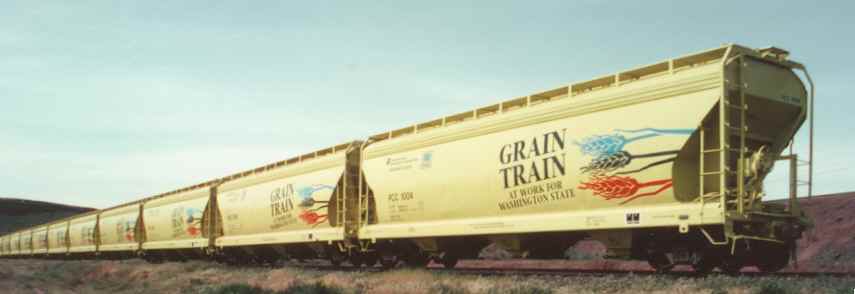
car. There they were! Twenty three brightly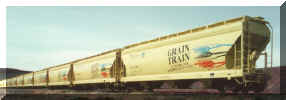 painted "grain train"
cars, all in a line ready for my camera under brilliant sunlight. Since I had my Lionel
grain car with, it was convenient to compare them: the Lionel yellow color is very close to the
fresh paint on these prototype cars. The reporting marks are PCC (not
BLMR) and
the words "Emergency Saver" is now "highway saver" with a port of Walla Walla herald added to the graphics. When
I drove east to Colfax, WA, I again located additional grain train cars that
also had the PCC reporting marks rather than Lionel's BLMR markings. Why the
discrepancy? Upon further study, I was informed that the WSDOT purchased a
second group of used hopper cars, repainted them in January 2000, and assigned
them to the Palouse River and Coulee City Railroad (PCC reporting marks). painted "grain train"
cars, all in a line ready for my camera under brilliant sunlight. Since I had my Lionel
grain car with, it was convenient to compare them: the Lionel yellow color is very close to the
fresh paint on these prototype cars. The reporting marks are PCC (not
BLMR) and
the words "Emergency Saver" is now "highway saver" with a port of Walla Walla herald added to the graphics. When
I drove east to Colfax, WA, I again located additional grain train cars that
also had the PCC reporting marks rather than Lionel's BLMR markings. Why the
discrepancy? Upon further study, I was informed that the WSDOT purchased a
second group of used hopper cars, repainted them in January 2000, and assigned
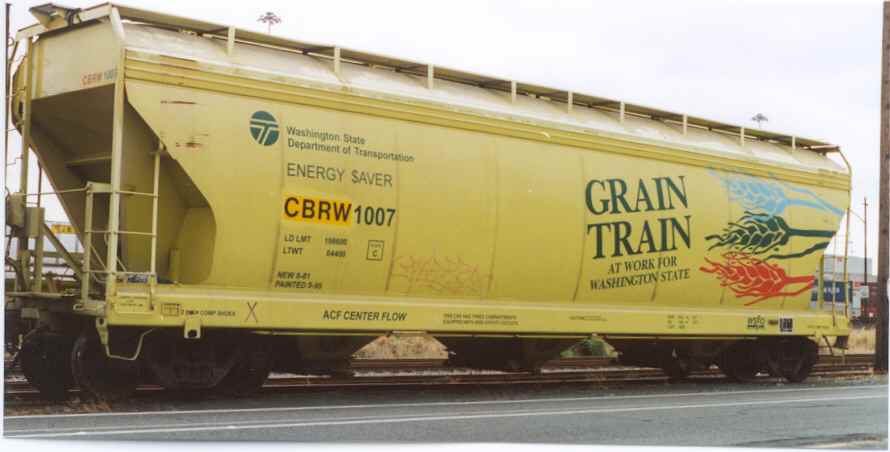
them to the Palouse River and Coulee City Railroad (PCC reporting marks). 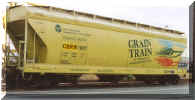 Pacific
Northwest Division TTOS member Gary Trapp saw a long string of WSDOT grain cars
in Seattle in August 2000. Along with the expected graffiti, the original
reporting marks had been painted over and they were now marked CBRW for Columbia
Basin Railroad. Columbia Basin Railroad is a short line operation over
former Northern Pacific and Milwaukee Railroad trackage between Connell and
Moses Lake, WA. Pacific
Northwest Division TTOS member Gary Trapp saw a long string of WSDOT grain cars
in Seattle in August 2000. Along with the expected graffiti, the original
reporting marks had been painted over and they were now marked CBRW for Columbia
Basin Railroad. Columbia Basin Railroad is a short line operation over
former Northern Pacific and Milwaukee Railroad trackage between Connell and
Moses Lake, WA.
The
Lionel grain train car is a very good representation of the first group of cars
that were assigned to the Blue Mountain
Railroad. Lionel had to selectively
compress the lettering and the grain graphics so that everything on the 50' long
prototype would fit on their 42' model of a three bay covered hopper, with
excellent results. Thanks to Lionel for producing the grain car that is unique to
the Pacific Northwest!
For
More Information:
Using O
Gauge Outdoors: Some Do’s and Don’ts
by Doug
Gray
Perhaps you have toyed with the
outdoor railroad ideas, but dismissed them having heard somewhere that only G
Scale can be used outdoors. And, since many of us have collections of O Gauge
trains, the added expense of starting a new G Gauge collection deters you from
outdoor railroading. The solution? Use your O gauge outdoors! A great advantage
is that you can finally have the long right of ways that you have no room for
indoors. Based upon my decade of experience, it does work, but there are some
precautions to observe.
First, let us start with the track
system. Gargraves, and other manufacturers, make track designed for outdoors,
utilizing stainless steel rails and UV treated plastic ties. Ordinary sectional
indoor track will last about a week before rust takes over. It will first appear
on the rail surfaces, and soon the pins will rust and there will be no
electrical conductivity. The cardboard insulators of the center rail will also
rot, and shorts will occur when the insulators get soaking wet. Forget it!
Stainless is the only way to go, or in the case of HO, nickel silver will do. In
our northwest climate, sun will take longer to make the plastic ties brittle
(unless they are UV treated), but it will happen. Painting the ties will
help.
One advantage of Gargraves outdoor
track is that the rails use nickel silver pins and there is good conductivity
for years. Forget about the usual advice given to new G scalers to use track
jumpers and frequent leads-this is not necessary with Gargraves, unless you have
very long rights of way and noticeable voltage drops.
With G scale, track may be free
floated in loose ballast. However, O gauge track is not as strong, and should be
fastened to treated wood roadbed or glued with silicone glue to concrete blocks
or bricks. Ballast can then be added for cosmetic purposes.
Ballast should be brushed below
the level of the top of the ties, and mother nature will then compact it if you
use chicken grit or other fine crushed rock. I do not recommend mixing the
ballast with cement due to the fact it will destroy your track sections if you
later want to pull them up.
Another of the main reasons for
not free floating the track is that even with plastic buried beneath the track,
grass blades will find a way and come up between the ties. Since O gauge
trains often have exposed gears designed for indoor running, tangled grass (or
ballast) in the gears is messy to extract. Though tweezers are a help in the
extraction process, it is something to be avoided. Fortunately, the engine will
come to a stop before any serious damage can be done.
Electrical safety is critical. Use
an outlet with a ground fault interrupter, and do not get your power pack wet.
Use a relatively inexpensive pack with a plastic case.
There is a myth that the sun will
warp trains not made for outdoor use. It may be due to our climate, but this has
not happened on my layout. I highly recommend that your rolling stock have metal
wheels-with stainless steel track, and metal wheels, there is practically never
a need to clean the track.
Another hint, from personal experience, is that if
you are over fifty, build your outdoor layout on a beam or shelf at or above
waist height. Your back will thank you!
Product
Review: MTH Z4 2-8-8-2
by
Gary Trapp
Photos
by Gary Trapp
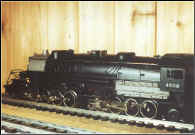 The
Camas Prairie Northern (CPN) was shopping for additional motive power for a
newly signed coal hauling contract. After much hair pulling and loud moaning and
groaning by CPN officials about the high cost of new engines and the present
state of the operating budget, one of the CPN’s parent companies came to the
rescue. A newly shopped articulated Z-4 steam engine that had been relegated to
inactive status by new diesel power, could be transferred out west. The N P Z-4
was just what the Camas Prairie Northern was looking for, at a price that was
within the budget. The
Camas Prairie Northern (CPN) was shopping for additional motive power for a
newly signed coal hauling contract. After much hair pulling and loud moaning and
groaning by CPN officials about the high cost of new engines and the present
state of the operating budget, one of the CPN’s parent companies came to the
rescue. A newly shopped articulated Z-4 steam engine that had been relegated to
inactive status by new diesel power, could be transferred out west. The N P Z-4
was just what the Camas Prairie Northern was looking for, at a price that was
within the budget.
Here is a short description/review
of the MTH Z-4, USRA, articulated, 2-8-8-2, RailKing engine that came on the
market in August of 2000. Actually this is probably way more than you ever
really wanted to know about N P Z-4s or the MTH engine, but anyway…
The engine comes lettered for the
Pennsylvania RR or the Northern Pacific (N P) RR. Each engine comes equipped
with either a QSI manufactured Proto-Sounds Digital Sounds system or a QSI DCRU
and whistle only. I opted for the N P version with the QSI DCRU and whistle.
Other than the locomotive paint schemes, the features listed here can apply to
any of the four engine versions.
The engine and tender is 25 3/8
inches long (see photo #1) and weighs 174.45 ounces (the engine alone weighs
125.60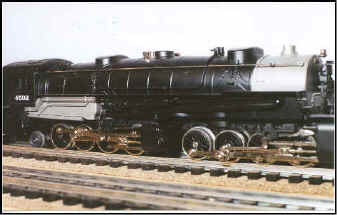 ounces and the
tender weighs 48.85 ounces). There is a wealth of detail cast into the die cast
boiler and tender. Boiler pipes, rivet detail, handrails, the unequal size of
the high and low pressure cylinders, the drive rods and complex linkage
apparatus, crisp lettering, and the detailed cab interior all contribute to a
very good looking engine. Two flywheel equipped DC can motors, controlled by the
QSI Electronics Reverse Unit (or Proto-Sound Digital Unit) in the tender, power
the two engine assemblies with traction tires on the rear set of axles on each
engine (a spare set of traction tires are included for each engine). The
protosmoke system is similar to other MTH steam engines, in that it smokes up a
storm and can quickly fill up your train room with a smoky haze. MTH did a good
job in designing the attachment of the drive wheel assemblies to the frame. The
Z-4 had no trouble negotiating 031 curves and it does so with no extreme
overhang of the boiler over the lead engine assembly. ounces and the
tender weighs 48.85 ounces). There is a wealth of detail cast into the die cast
boiler and tender. Boiler pipes, rivet detail, handrails, the unequal size of
the high and low pressure cylinders, the drive rods and complex linkage
apparatus, crisp lettering, and the detailed cab interior all contribute to a
very good looking engine. Two flywheel equipped DC can motors, controlled by the
QSI Electronics Reverse Unit (or Proto-Sound Digital Unit) in the tender, power
the two engine assemblies with traction tires on the rear set of axles on each
engine (a spare set of traction tires are included for each engine). The
protosmoke system is similar to other MTH steam engines, in that it smokes up a
storm and can quickly fill up your train room with a smoky haze. MTH did a good
job in designing the attachment of the drive wheel assemblies to the frame. The
Z-4 had no trouble negotiating 031 curves and it does so with no extreme
overhang of the boiler over the lead engine assembly.
Whether the engine is “coming or
going” (see photos), it has the appearance of being able to pull a long string
of loads, whether they be coal or any other freight your layout might offer.
Digging out some
measuring equipment, I came up with the following:
 |
Engine length; 15.5
in. or 62 scale feet. Drawings in the 1927 locomotive encyclopedia show N
P USRA’s to be 66 ft 11 7/8 in. long). |
|
Drive wheel diameter;
1.070 inches or approximately 50 scale inches. The prototype had driver
diameters of 62 inches. |
|
Tractive effort; 48.4
to 56.3 ounces (the 56.3 ounces was with both engines just barely starting
to slip, track voltage at 10.86 VAC and current draw at 4.18 Amperes. 50
ounces of pull represents about 130 RailKing sized coal hoppers, with coal
loads, on straight and level track. |
Z-4 engine and tender
only voltage-current draw versus approximate speed:
| 5.8VAC/0.92 Amp. = 10 feet in 30
seconds OR 9-10 MPH |
| 8.0VAC/1.19 Amp. = 10 feet in 13
seconds OR 22-25 MPH |
| 12VAC/1.38 Amp. = 10 feet in 4.86
seconds OR 60-62 MPH |
This engine runs very
well in the 5.8 to 8 VAC range, which is close to what the prototype speed range
was.
I only found a couple of
minor faults with the Z-4: The whistle tends to blow sporadically, without
pushing the whistle button, when operating in the 6 - 8 VAC range (at least with
the ZW & KW transformers I used) Also I thought the steam piping to the rear
high pressure cylinders could have been cast so that it appears to reach the
cylinders (there is a gap between the end of the pipe and the top of the
cylinder of 0.2 -0.25 inches). Lastly, I don’t know why the gear box between
the motor and the drive wheels couldn’t have been designed for a lower engine
speed capability. The prototype of this engine was designed for slow speed
operation. It would be nice for the model to also have a speed range in the 5 to
30 MPH, instead of the 10-15 to over 80 MPH range.
All in all, the MTH Z-4 is a great motive power
addition to the Camas Prairie Northern’s engine roster. It’s enjoyable
watching it pull long coal load consists and occasional freight consists on the
layout.
The
Trip of a Lifetime
by
Bill Weed
Photos
by Bill Weed
 Ever
since I was a kid, I wanted to see Seattle’s Great Northern roundhouse up
close. I would study it from the curbside, take my eyes off the road to glance
at it from the Dravus Street bridge and even drive the long way home, via
Fisherman’s Wharf, in hopes of seeing activity around the structure. But the
closest view I could get of it was through photos in GN historical books. Ever
since I was a kid, I wanted to see Seattle’s Great Northern roundhouse up
close. I would study it from the curbside, take my eyes off the road to glance
at it from the Dravus Street bridge and even drive the long way home, via
Fisherman’s Wharf, in hopes of seeing activity around the structure. But the
closest view I could get of it was through photos in GN historical books.
Then last spring I joined the
Great Northern Historical Society, which was holding their Year 2000 Convention
in Seattle. Included in the July convention activities was a tour of various
rail facilities; one of these was the Interbay roundhouse. So I took the day off
from work to fulfill a simple lifetime dream.
As our convention group got off the tour bus
behind the roundhouse, we were issued hard-hats and safety glasses. Then we
split up into four groups of about ten each and BNSF employees lead us through a
one hour railfan’s paradise. We came in through the north entrance, which is
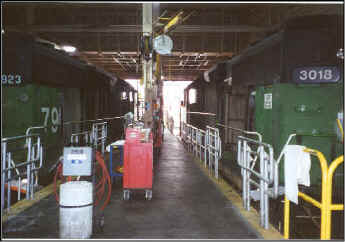
the newer part, completed in 1929. 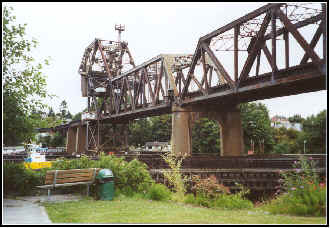 It
has a “modern” two layer floor system, with a large lowered work area to
access running gear and a second floor mezzanine to access engines and cabs.
Pallet loads of machined and prepped diesel cylinders were everywhere, ready to
“drop in” to the EMD power houses that sit in various states of undress.
Almost all the liveries were cascade green, but we did see a red, white and
black Washington Central SW switcher undergoing maintenance work. It
has a “modern” two layer floor system, with a large lowered work area to
access running gear and a second floor mezzanine to access engines and cabs.
Pallet loads of machined and prepped diesel cylinders were everywhere, ready to
“drop in” to the EMD power houses that sit in various states of undress.
Almost all the liveries were cascade green, but we did see a red, white and
black Washington Central SW switcher undergoing maintenance work.
Then we continued south to the
older stalls, dating back to the 1890’s, with their traditional shallow
troughs between the rails so mechanics could crawl underneath steaming,
dripping, fire breathing monsters to test their nuts and bolts with ball peen
hammers. (Those were the days!) A few of the stalls still had drop tables for
removing drive wheels from steamers. Parts of the beamed ceiling were
whitewashed, but most of the timbers looked like they had been painted black. We
learned that the black was firebox soot from the first part of the century. (How
marvelous--original soot!)
On the extreme southeast side of
the building is a large rectangular extension which had been added for major
steam loco rebuilding. It now holds racks and racks of pallets containing those
cylinder kits and other prime mover parts.
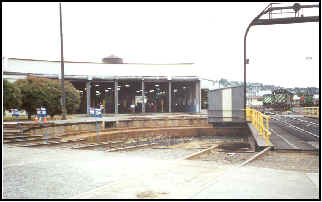 Currently
this is the only point on the division performing locomotive inspections, and
does any work not requiring the facilities of a major back shop. However, many
roundhouse stalls have been diverted from loco storage to other uses such as
pipe work, carpentry shop, material department storage, track department, radio
shop, crew lockers and a wash-up area. The building now has a loco storage
capacity of sixteen stalls. Currently
this is the only point on the division performing locomotive inspections, and
does any work not requiring the facilities of a major back shop. However, many
roundhouse stalls have been diverted from loco storage to other uses such as
pipe work, carpentry shop, material department storage, track department, radio
shop, crew lockers and a wash-up area. The building now has a loco storage
capacity of sixteen stalls.
Just as we were about to leave, the hostler
unknowingly obliged us by spinning a pumpkin orange six axle engine on the 110
foot turntable. We all left with smiles on our faces and continued the bus ride
to the next stop, a tour of the restoration work on the historic King Street
station. But that’s another story...
Tourist
Museums and Train Rides of the West

by Adelita
Balsalobre
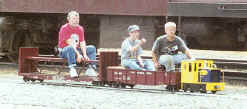
 Aaah, Spring. Freshly mowed grass, tulips, convertibles
and........train rides!! For those who may be planning their visits to
the first International TTOS Convention in
Vancouver this August, consider a side trip to a railroad
museum or a train trip through the beautiful surroundings of British Columbia. Aaah, Spring. Freshly mowed grass, tulips, convertibles
and........train rides!! For those who may be planning their visits to
the first International TTOS Convention in
Vancouver this August, consider a side trip to a railroad
museum or a train trip through the beautiful surroundings of British Columbia.  And
for those who may be planning trips elsewhere in the West, here is some useful
information to assist in planning a tourist railroad visit. Have a great
summer!! And
for those who may be planning trips elsewhere in the West, here is some useful
information to assist in planning a tourist railroad visit. Have a great
summer!!
| British
Columbia
|
Name |
Address1 |
Phone |
Season2 |
Admission3 |
E-Mail |
Website |
Description |
| Canadian Museum of Rail
Travel
|
1 Van Horn Street, Cranbrook |
(250) 489-3918
|
Varies,
see website. |
Varies,
see website. |

|
 |
Standard gauge
museum.
|
| British
Columbia Forest Discovery Centre |
2892
Drinkwater Rd., Duncan |
(250)
715-1170 |
May-Labor
Day |
$8 |
|
N/A |
Narrow gauge
train ride and museum. |
| BC
Rail |
1311
W. 1st St., Vancouver |
(800)
663-8238 |
May-October |
Varies
with train. |
|
|
Standard
gauge train ride, dinner train (Pacific Starlight, Royal Hudson, Cariboo
Prospector). |
| Alberni
Pacific Railway |
3100
Kingsway Ave., Port Alberni |
(250)
723-1376 |
May-October |
$11 |
|
|
Standard
gauge train ride and museum. |
| Revelstoke
Railway Museum |
719
Track St. W., Revelstoke |
(877)
837-6060 |
Year
round |
$6 |
|
|
Standard
gauge museum. Lots of Canadian history. |
| West
Coast Railway Historical Park |
39645
Government Rd., Squamish |
(604)
898-9336 |
Year
round |
$6 |
|
|
Standard
gauge train ride, museum, display, layout. |
| Kettle
Valley Steam Railway Society |
18404
Bathville Rd., Summerland |
(877)
494-8424 |
May-October |
$14 |
|
|
Standard
gauge train ride. |
| Bear
Creek Park Train |
13750
88th Ave., Surrey |
(604)
501-1658 |
January-November |
$2.50 |
N/A |
|
15"
gauge train ride. |
| Rocky
Mountain Railtours |
1150
Station St., Vancouver |
(800)
665-7245 |
April-October |
Varies
with train |
|
|
Regional travel
train. |
| Downtown
Railway |
1601
Ontario St,, Vancouver |
(604)
665-3903 |
May-October |
$2 |
|
|
Standard
gauge trolley train rides. |
|
Okanagan Valley Wine
Train |
600
Recreation Ave., Kelowna |
(888)
674-8725 |
See website for
information |
See website for
information |
|
|
Standard gauge train
ride, dinner train. |
| Fort
Steele Railway |
Fort
Steele Heritage Town, Ft. Steele |
(250)
426-7352 |
June-Labor
Day |
$5 |
|
|
Standard gauge
train ride. |
| Washington |
Remlinger
Farms Railroad |
32610
NE 32nd, Carnation |
(425)
333-4135 |
June-October |
$5 |
N/A |
N/A |
Steam train
rides on a working farm. |
| Chehalis-Centralia
Railroad Association |
1100
Sylvenus St., Chehalis |
(360)
748-9593 |
May-September |
$8 |
|
|
Standard gauge
train ride, dinner train. |
| Dayton
Historical Depot Society |
222
Commercial St., Dayton |
(509)
382-2026 |
Year round |
$2 |
N/A |
N/A |
Museum (oldest
depot in WA). |
| Spirit
of Washington Dinner Train |
Downtown
Renton |
(800)
876-RAIL |
Year
round |
Varies |
N/A |
|
Standard gauge dinner train, winery
trips and tours. |
| Waterfront
Streetcar |
3001 Alaskan Way,
Seattle |
(206) 684-1838 |
Year round |
$1 |
N/A |
N/A |
Restored Australian streetcars, now
part of the Metro Transit System. |
| Northwest
Railway Museum |
38625 SE King St.,
Snoqualmie |
(425) 888-3030 |
May-October |
$8 |
|
|
Standard gauge train rides, museum,
display. |
| Northern
Pacific Railway Museum |
10 Asotin Ave.,
Toppenish |
(509) 865-1911 |
May-November |
$2 |
N/A |
N/A |
Standard gauge dinner train, museum. |
| Yakima
Valley Railway Museum |
306 W. Pine, Yakima |
(800) 995-4836 |
May-October |
$4 |
N/A |
N/A |
Standard gauge electric train ride,
museum. |
| Oregon
|
Canby
Railroad Depot Museum |
888 NE 4th Ave.,
Canby |
(503) 266-6712 |
Call |
Donation |
N/A |
|
Museum. |
| Phoenix
& Holly Railway |
2512 N. Holly St.,
Canby |
(503) 263-4027 |
May-October |
$3 |
|
|
Narrow gauge train ride. |
| Mt.
Hood Railroad and Dinner Train |
110 Railroad Ave.,
Hood River |
(800) Train-61 |
April-December |
Varies |
|
|
Standard gauge train ride and dinner
train. |
| Oregon
Electric Railway Historical Society |
Lake Oswego |
(503) 222-2226 |
June-August |
$7 |
|
|
Standard gauge trolley ride. |
| Washington
Park and Zoo Railway |
4001 SW Canyon Rd.,
Portland |
(503) 226-1561 |
May-September |
$2.75 |
N/A |
|
30" gauge train ride. |
| Crooked
River Dinner Train |
4075 NE O-Neil Rd.,
Redmond |
(541) 548-8630 |
Year round |
Varies |
|
|
Dinner train. |
| Sumpter
Valley Railroad |
Dredge Loop Road,
Sumpter Valley |
(541) 894-2268 |
May-September |
$9 |
|
N/A |
36" gauge train ride, museum. |
| Samtrak |
8825 SE 11th St.,
Portland |
(503) 653-2380 |
July-Labor Day |
$5 |
N/A |
N/A |
Standard gauge train ride. |
| Idaho |
Thunder
Mountain Line Railroad |
Horseshoe Bend |
(877) IDA-RAIL |
Year round |
$24 |
|
|
Standard gauge train ride. |
| Lewiston
Excursion Dinner Train |
5th & Railroad,
Lewiston |
(888) RR-DINER |
Year round |
$75 |
N/A |
|
Standard gauge
dinner train. |
| Northern
Pacific Depot Railroad Museum |
219 6th St., Wallace |
(208) 752-0111 |
Varies |
$2 |
N/A |
N/A |
Museum. |
| Montana |
Izaak
Walton Inn |
290 Izaak Walton Inn
Rd., Essex |
(406) 888-5700 |
Year round |
Varies |
|
|
Historic RR Inn. |
| Montana
Rockies Rail Tours |
1055 Baldy Park Ave.,
Sandpoint |
(800) 519-7245 |
July-September |
Varies |
|
|
Standard gauge train ride. |
| Montana
Heritage Commission |
Nevada City |
(406) 843-5247 |
May-September |
Varies |
|
N/A |
30" gauge train ride, museum,
display. |
| Wyoming |
Roundhouse Restoration |
1200 Main St.,
Evanston |
(307) 783-6319 |
Varies |
Free |
|
N/A |
Museum, display. |
| Nevada |
Nevada State
Railroad Museum |
2180 S. Carson St.,
Carson City |
(775) 687-6953 |
Varies |
$2 |
N/A |
|
Standard and narrow gauge museum. |
| Nevada Northern
Railway Museum |
1100 Ave. A., East
Ely |
(775) 289-6284 |
May-September |
N/A |
|
|
Standard gauge train ride, museum,
dinner train, display. |
| Eureka &
Palisade Railway |
N/A |
(702) 383-3327 |
Varies |
Varies |
N/A |
N/A |
36" gauge train ride. |
| Virginia
& Truckee Railroad |
Washington & F
St., Virginia City |
(775) 847-0380 |
May-October |
$5.25 |
N/A |
N/A |
Standard gauge train ride. |
| Colorado |
Royal Gorge Route
Railroad |
401 Water St., Canon
City |
(888) RAILS-4-U |
Varies |
$26.95 |
|
|
Standard gauge train ride. |
| Denver & Rio
Grande |
US Hwy. 59, Cimarron |
(970) 249-1914 Ext.
23 |
Year round |
Free |
|
|
36" gauge, display. |
| Pike's Peak
Historical Street Railway Foundation |
2333 Steel Dr.,
Colorado Springs |
(719) 475-9508 |
Year round |
$2 |
N/A |
|
Standard gauge ride, museum,
display. |
| Cripple Creek and
Victor Narrow Gauge Railroad |
520 E. Carr, Cripple
Creek |
(719) 689-2640 |
May-October |
$9 |
|
N/A |
Narrow gauge train ride. |
| Platte Valley
Trolley |
I25, Exit 211, Denver |
(303) 458-6255 |
Varies |
$2 |
|
|
Standard gauge train ride. |
| The Ski Train |
Union Station, Denver |
(303) 298-8881 |
Varies |
$40 |
N/A |
|
Standard gauge train ride. |
| Galloping Goose
Historical Society |
421 Railroad Ave.,
Dolores |
(970) 882-2224 |
Year round |
Donation |
N/A |
|
36" gauge train ride, museum. |
| Durango
& Silverton Narrow Gauge Railroad |
479 Main Ave.,
Durango |
(970) 259-9349 |
Varies |
Varies |
N/A |
|
Narrow gauge train ride and museum. |
| Fort Collins
Municipal Railway |
Roosevelt, Ft.
Collins |
|
May-September |
$1 |
N/A |
N/A |
Standard gauge train ride. |
| Georgetown Loop
Railroad |
1106 Rose St.,
Georgetown |
(800) 691-4FUN |
May-October |
$14.50 |
|
|
Narrow gauge train ride. |
| Colorado Railroad
Museum |
17155 W. 44th Ave.,
Golden |
(800) 365-6263 |
Varies |
$6 |
|
|
36" gauge, standard gauge
museum. |
| Leadville, Colorado
& Southern Railroad |
327 E. 7th St.,
Leadville |
(719) 486-3936 |
May-September |
$22.50 |
|
|
Standard gauge train ride. |
| Manitou &
Pike's Peak Railway |
515 Ruxton Ave.,
Manitou Springs |
(719) 685-9033 |
May-October |
$23.50 |
|
|
Standard gauge cog railway train
ride. |
| Tiny Town Railroad |
6249 S. Turkey Creek
Rd., Morrison |
(303) 697-6829 |
May-September |
$3 |
N/A |
N/A |
15" train ride. |
| Pueblo Locomotive
& Rail Historical Museum |
200 W. B St., Pueblo |
(719) 250-3460 |
May-October |
Donation |
|
|
Standard and narrow gauge museum. |
| Alaska |
White Pass &
Yukon Route |
2nd & Spring St.,
Skagway |
(800) 343-7373 |
May-September |
Varies |
|
|
36" gauge train ride. |
| Museum of Alaska
Transportation & Industry |
3800 W. Neuser Dr.,
Wasilla |
(907) 376-3082 |
Varies |
$5 |
|
|
Standard gauge museum. |
| Arizona |
Verde Canyon
Railroad |
300 N. Broadway,
Clarkdale |
(520) 639-1653 |
Year round |
$54.95 |
|
|
Standard gauge train ride and museum. |
| Arizona Train Depot |
755 E. McKellips Rd.,
Mesa |
(888) 207-3564 |
Year round |
N/A |
N/A |
N/A |
Layout, retail. |
| McCormick Stillman
Railroad Park |
7301 E. Indian Bend
Rd., Scottsdale |
(480) 312-7001 |
Year round |
$1 |
N/A |
|
15" gauge train ride, museum. |
| Old Pueblo Trolley |
360 E. 8th St., Tuscon |
(520) 791-1802 |
Year round |
$1 |
|
|
Standard gauge trolley ride. |
| Grand
Canyon Railway |
235 N. Grand Canyon
Blvd., Williams |
(800) THE-TRAIN |
Year round |
$54.95 |
|
|
Standard gauge, steam & diesel
train ride. |
| New
Mexico |
Cumbres
& Toltec Scenic Railway |
500 Terrace Ave.,
Chama |
(505) 756-2151 |
May-October |
Varies |
|
|
36" gauge train ride. |
| Clovis Depot Model
Train Museum |
221 W. 1st. St.,
Clovis |
(888) 762-0064 |
Varies |
Call |
|
|
Museum, display, layout. |
| Santa
Fe Southern Railway |
410 S. Guadaloupe St.,
Santa Fe |
(888) 989-8600 |
Year round |
Varies |
|
|
Standard gauge train ride, dinner
train. |
| The Toy Train Depot |
1991 N. White Sands
Blvd., Alamagordo |
(505) 437-2855 |
Year round |
$2 |
|
|
16" gauge train ride, museum,
display, layout. |
1. This is the location of the ride or museum, not
necessarily the mailing address.
2. Seasons vary, please contact the facility directly to
confirm their dates.
3. Adult
price listed. Most have additional prices for
seniors, children, etc..
Important Note: the information listed above can change at
any time. The information listed may not reflect recent changes of operating
times, dates, or admission prices. Use this information as a reference only, but
contact the facility you plan to visit directly to confirm your plans. TTOS PNWD
is not responsible for any errors or omissions in the above listed information.
Microsoft's
Train Simulator Game: A Review
by Adelita
Balsalobre
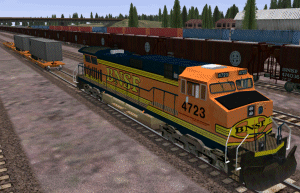 Microsoft
has considerable experience with flight simulator computer games, yet they have
refrained from expanding their expertise to other transportation modes. Until
now. The October release of Train Simulator heralds a new standard in rail
games, which until now, have remained primitive and restricted by DOS-like
graphics. But the new game has many of the advance graphics features that have
been thrilling computer users in the aircraft simulation field for years now:
this game takes practice, skill, and patience. Oh, and a very, very large hard
drive. Microsoft
has considerable experience with flight simulator computer games, yet they have
refrained from expanding their expertise to other transportation modes. Until
now. The October release of Train Simulator heralds a new standard in rail
games, which until now, have remained primitive and restricted by DOS-like
graphics. But the new game has many of the advance graphics features that have
been thrilling computer users in the aircraft simulation field for years now:
this game takes practice, skill, and patience. Oh, and a very, very large hard
drive.
Microsoft is not known for its tight code. They don’t have
to be, since their goal is presumably to encourage computer upgrades to keep up
with ever expanding programs. Yet, even with that, it seems pretty shocking that
the installation of this game will merrily eat nearly two gigabytes of your
machine’s hard drive. Shocking, but railfans are a hard core bunch, and
willing to sacrifice other programs to squeeze just one good train sim program
onto our machines. Providing the program is worth it’s weight in electrons….
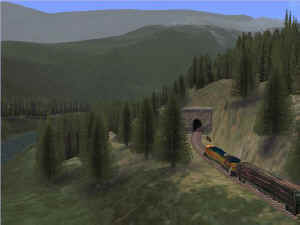 The
first thing you need to understand is that this is a complicated game. And a
hoggy game. Microsoft’s installation requirements state that you’ll need 4
MB of video RAM and 32 MB of system RAM, along with 500 MB installation space
and a Pentium II at 266 MHz. Sure, maybe in a perfect world. I’m not sure what
these Microsoft guys have been smokin’ in game land, but there is no way that
this game will operate at the stated Microsoft minimums! The
first thing you need to understand is that this is a complicated game. And a
hoggy game. Microsoft’s installation requirements state that you’ll need 4
MB of video RAM and 32 MB of system RAM, along with 500 MB installation space
and a Pentium II at 266 MHz. Sure, maybe in a perfect world. I’m not sure what
these Microsoft guys have been smokin’ in game land, but there is no way that
this game will operate at the stated Microsoft minimums!
Full installation of the game, as mentioned before, will take
about 1.8 Gigs. My system has 256 RAM, with a 32 Meg video card, and there are
points where the game seems to have to pause and think, as if it still does not
have enough memory. The most crucial element to successfully running the game
seems to be your video card and video RAM. Tom Regelein installed the game a
system that had a Diamond Viper 770 video card with 32 megs of RAM, and found
that the frame rate was limited to 3-5 frames per second (fps), clearly
insufficient to run the game. Tom then updated his video drivers, to no avail,
and wound up purchasing a new video card (NVidea256)
and the game now works. Other system details: AMD K6-450 with 128 Megs of RAM
and running Windows 98.
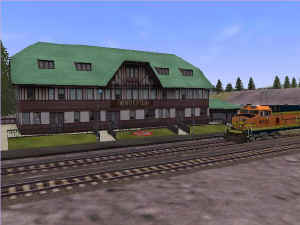 Gary
Trapp’s installation went a bit better, but he had a newer system running a
Pentium II at 600 MHz and 40 Gig HD. Though the program did lock up once, Gary
states that “The graphics on mine are pretty good” but he has “a small
amount of ‘shimmer’ as the scene moves along.” This shimmer is similar to
the glitches that I have seen when running the program, and is likely to be a
memory related issue. Gary continues with “the sound on mine is excellent. I
had a good sound system put into this Gary
Trapp’s installation went a bit better, but he had a newer system running a
Pentium II at 600 MHz and 40 Gig HD. Though the program did lock up once, Gary
states that “The graphics on mine are pretty good” but he has “a small
amount of ‘shimmer’ as the scene moves along.” This shimmer is similar to
the glitches that I have seen when running the program, and is likely to be a
memory related issue. Gary continues with “the sound on mine is excellent. I
had a good sound system put into this
system as…” his daughter “likes to play and Copy CDs on it”...and
continues to describe letting a “dash 9 run to the end of a siding” to see
how realistic a simulated derail event was, and happily reports that the “subsequent
snake like crash of the diesels plowing through the tie barrier and into DIRT
with the cars still pushing for 20 to 30 seconds was pretty realistic.”
Another member, Gary Klein, reports that his installation
also went well on a machine running Windows 98 first edition (I suggest that
anyone running the first edition upgrade to Win 98 SE just to be safe, it
includes some driver upgrades). He, too, was surprised at the amount of space
the program took, but has been enjoying it since installation with few problems.
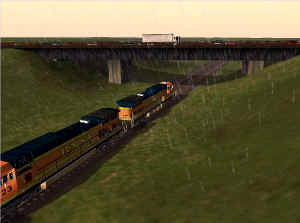 Some
additional complaints have surfaced about the fact that the program comes with
an electronic manual, not a printed one. Printing out the manual will cost you
90 pages, but from what I hear the manual is invaluable for troubleshooting and
learning how to play the game. If your eyes are good, try a print setting that
allows you to print out two manual pages for every electronic page...that’ll
hold it down to 45 pages. Some
additional complaints have surfaced about the fact that the program comes with
an electronic manual, not a printed one. Printing out the manual will cost you
90 pages, but from what I hear the manual is invaluable for troubleshooting and
learning how to play the game. If your eyes are good, try a print setting that
allows you to print out two manual pages for every electronic page...that’ll
hold it down to 45 pages.
And the name of the game is playing. Launching the game will
likely knock you off your chair, as the engine sounds realistically vibrate and
throb with enough depth to fool you into thinking you are actually inside the
engine. The game comes with steam and diesel engines along with various routes
and terrains to run on. Additionally, Microsoft allows you to pick terrain
details such as season, weather, and time of day to vary your operating
conditions. Operating the different trains will take practice and skill, and
settings are available to allow you to pick the a training run or the full
fledged game which scores you on your operating prowess and ability to complete
tasks as they are issued on your trainorders. The graphics are pretty good,
though this is extremely dependent on your system capabilities. The game allows
you to view your train from the cab as well as numerous exterior vantage points
along the train’s length-alternate views are supplied with accurate sounds for
that specific location. In an hilarious demonstration of budget programming, Tom
Regelein discovered that exiting the train into the forests of Marias Pass will
transport you to an amazing land of flat trees (the programmers did not think we
would view the trees from behind, so they left them as two dimensional objects)!
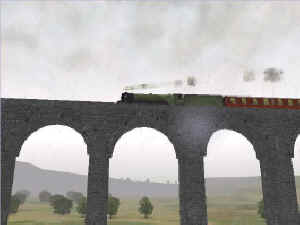 Other
complaints relate to the fact that there seem to be few people along the routes,
and none in the engines. This is true for the most part, but can be slightly
altered by adjusting some program settings. Additional engines are now available
for downloading at many web sites, but installation of these non-supported
engines can be tricky at best. The game also comes with advanced features that
allow you to edit routes and trainsets, but so far these have proven pretty
difficult for the average user to master. Other
complaints relate to the fact that there seem to be few people along the routes,
and none in the engines. This is true for the most part, but can be slightly
altered by adjusting some program settings. Additional engines are now available
for downloading at many web sites, but installation of these non-supported
engines can be tricky at best. The game also comes with advanced features that
allow you to edit routes and trainsets, but so far these have proven pretty
difficult for the average user to master.
Should you buy it? Yes, for under $50, it is great fun! But
first: upgrade your video drivers or replace your video card and install as much
RAM as you can afford. Then highball!
Screenshots from: Microsoft's
Train Sim Site
Train Simulation Discussion Group: Trainorders,
MSN,
FunnelFans Train Site
Download new engines: Auran,
3D Trains, TrainSim
Subscribe
to the Waybill Today!!
|