
Visit the TrainWeb.org Fan Page on Facebook!
Your Ad Here
B&O Metropolitan Branch Photo Tour

B&O Metropolitan Branch
Modern day photo tour

Accompanying each photo below are:

Click a photo to see a larger view. Please send your comments and corrections to Steve.


number 09
Photo courtesy Dave Hiteshew

Number 09
Mile: 9.0 Date: Aug 2008
Ease: B View: NW
Area: B IC2:
Map: Mo 36 H 8 Topographic Maps

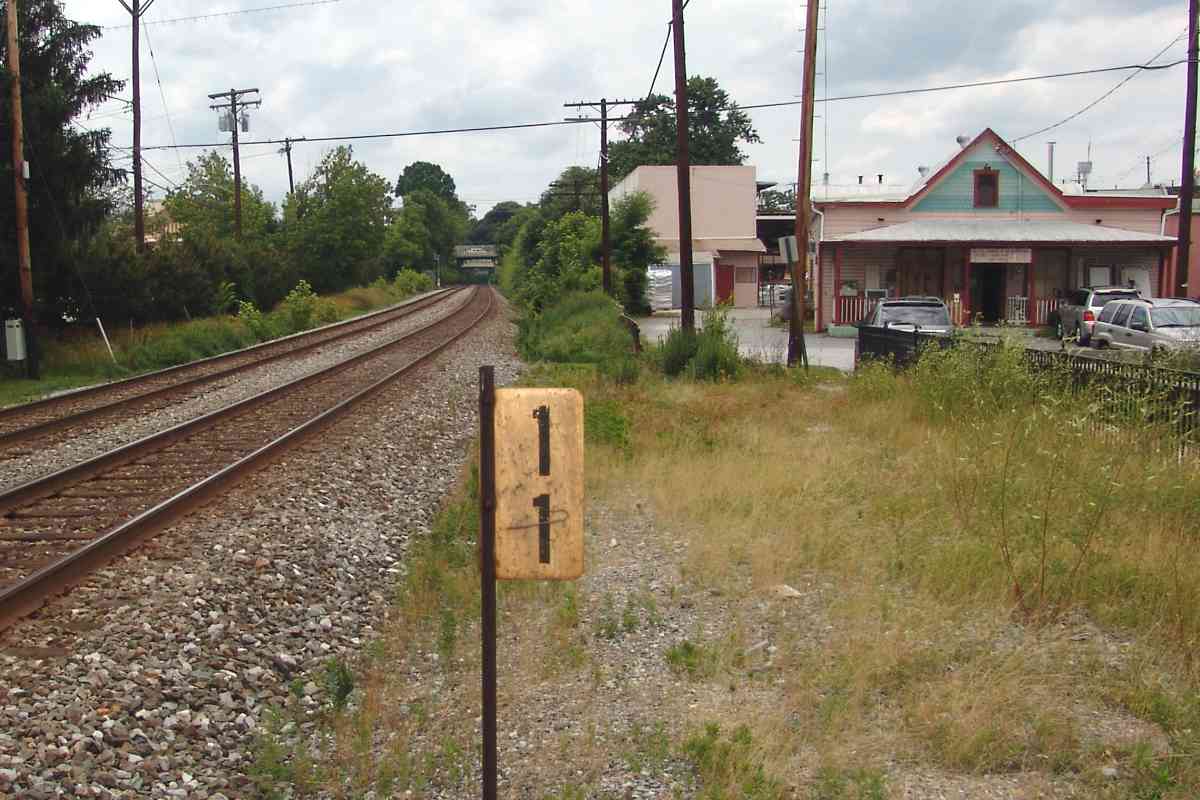
When the sign department is fresh out of 9s, everyone knows to use an upside-down 6. But what if they are all out of 6s too? Here's an inventive solution near Brookville Road (bridge number 10A, or perhaps that should be 010A). The older milepost-on-a-rail nods in approval at right.

As we'll learn later in the tour, this is only the first of several jerry–rigged Met mileposts.


CSX 693
Photo courtesy Dave Hiteshew

CSX 693
Mile: 9.3 Date: Aug 2008
Ease: B View: N
Area: B IC2:
Map: Mo 36 G 7 Topographic Maps

Max zoom spies CSX 693 eastbound under Linden Lane. The industry on the right is one of many that no longer receives shipments by train. The W whistle signpost is not an artifact: ahead is the Met's closest-to-DC grade crossing that survives.


I-495
Photo courtesy Dave Hiteshew

I-495
Mile: 9.7 Date: Jul 2008
Ease: B View: NW
Area: B IC2:
Map: Mo 36 G 6 Topographic Maps

Many DC-area residents have seen this bridge thousands of times, but not from this angle. Here CSX spans the busy I-495 Capital Beltway. Given that the Beltway dates to the 1960s, this railroad bridge is one of the Met's newer and was likely funded by Interstate Highway dollars.


Temple
Photo courtesy Dave Hiteshew

Temple
Mile: 9.7 Date: Jul 2008
Ease: B View: W
Area: B IC2:
Map: Mo 36 G 6 Topographic Maps

In DC, a railroad bridge can span the separation of church and state. Art, politics and statements of the human condition contrast with views of a Mormon Temple, more accurately the Washington D.C. Temple of The Church of Jesus Christ of Latter-day Saints.

This bridge is known for a "Surrender Dorothy" graffito inspired by a prank in 1974 by schoolgirls of nearby Holy Child School.

Links: Surrender Dorothy, schoolgirls, Wikipedia's entry


Castle
Photo courtesy Dave Hiteshew

Castle
Mile: 9.8 Date: Jul 2008
Ease: A View: N
Area: B+ IC2:
Map: Mo 36 G 6 Topographic Maps

B&O's Forest Glen station is no more, but the "Forest Glen Castle" survives at the Linden Lane grade crossing (CSX calls it St. Johns Road). Originally associated with the National Park Seminary, in the 1960s the building became a Hungarian restaurant, and is now home to various professional offices. Long views and easy access make this a decent railfan location, though noisey I-495 is nearby.

Links: B&O station, Seminary history


Bridge 10E
Photo courtesy Dave Hiteshew

Bridge 10 E
Mile: 9.9 Date: Jul 2008
Ease: B View: NE
Area: B IC2:
Map: Mo 36 F 6 Topographic Maps

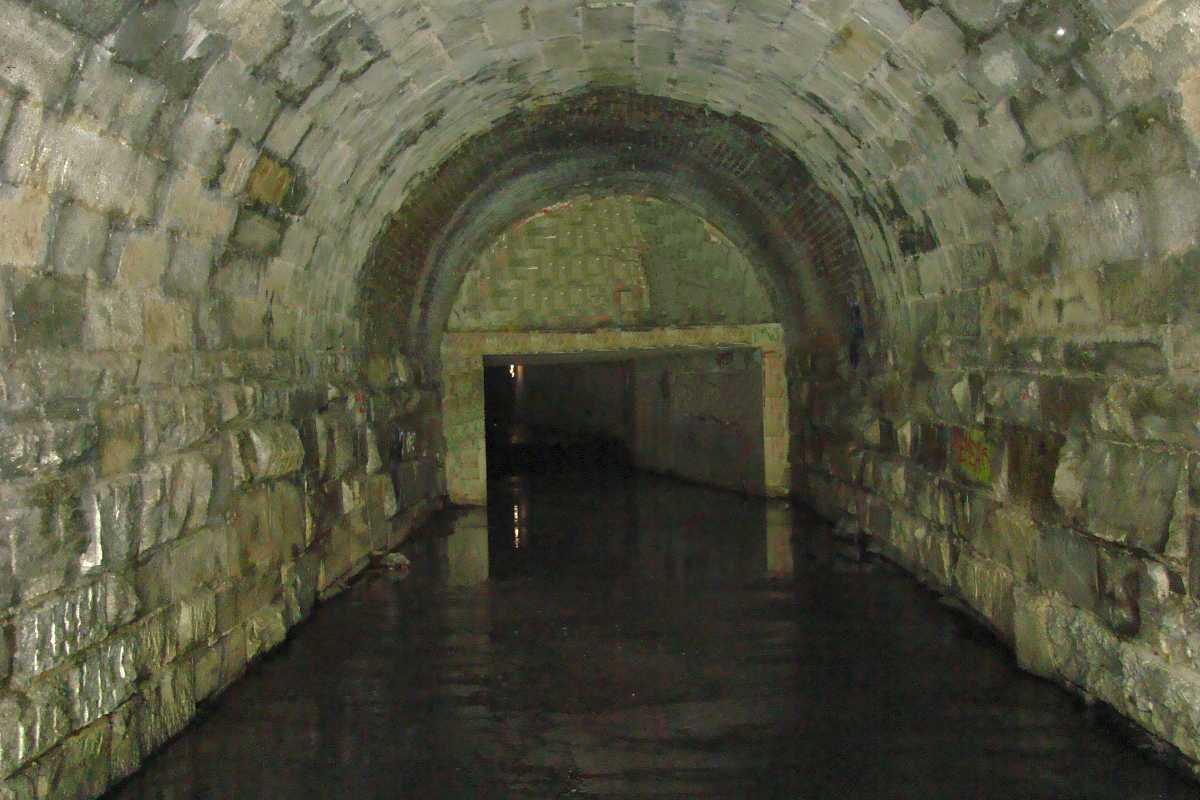
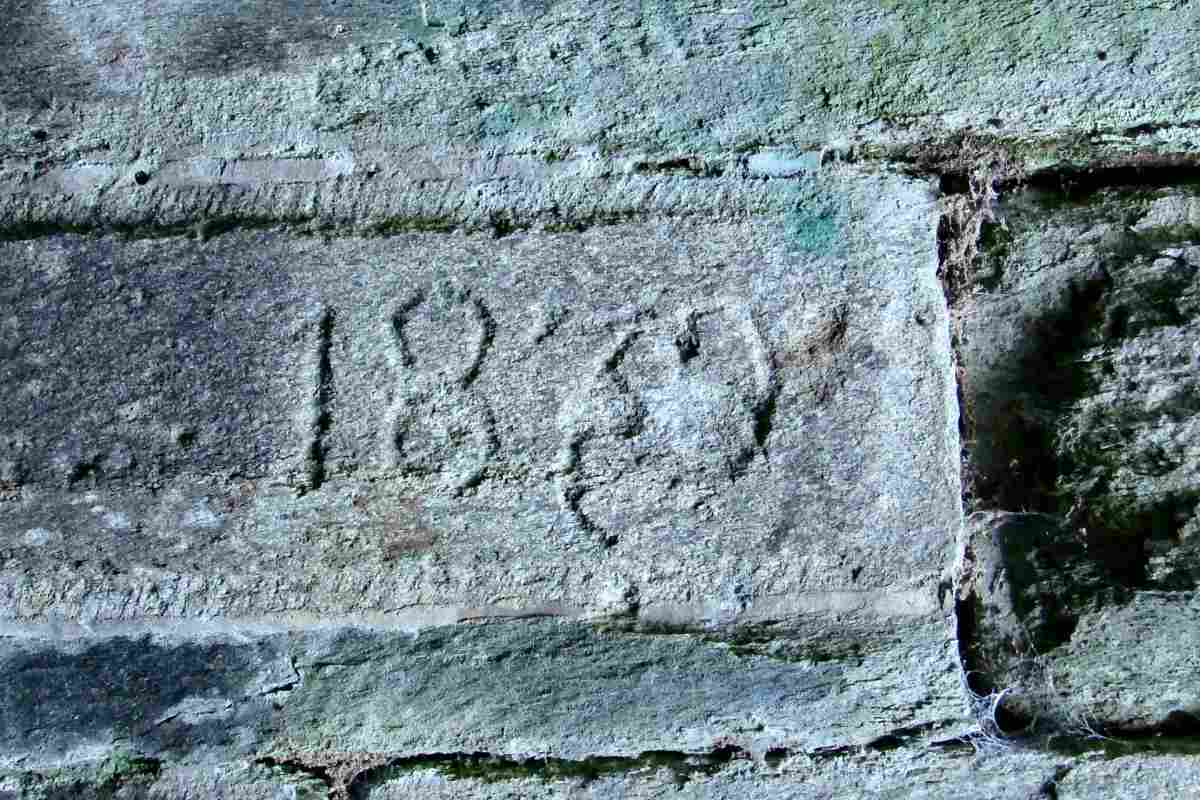
Just beyond the grade crossing one can find this substantial 1870s original stone arch bridge. A concrete portal on the opposite side shows the bridge was widened by a small amount in 1979, subsequent to what appears to be earlier widening work. The widening was likely associated with realignment driven by I-495 construction.


MARC 72
Photo courtesy Dave Hiteshew

MARC 72
Mile: 10.0 Date: Jul 2008
Ease: B View: NW
Area: B+ IC2:
Map: Mo 36 F 5 Topographic Maps

CSX shares the Met with a horse of a different color pulling DC-bound MARC commuters. Though the line began life in single-track form, traffic warranted completion by 1893 of double-tracking between DC and Gaithersburg.


Signals
Photo courtesy Dave Hiteshew

Signals
Mile: 10.6 Date: Jul 2008
Ease: B View: NW
Area: B+ IC2:
Map: Mo 36 E 4 Topographic Maps

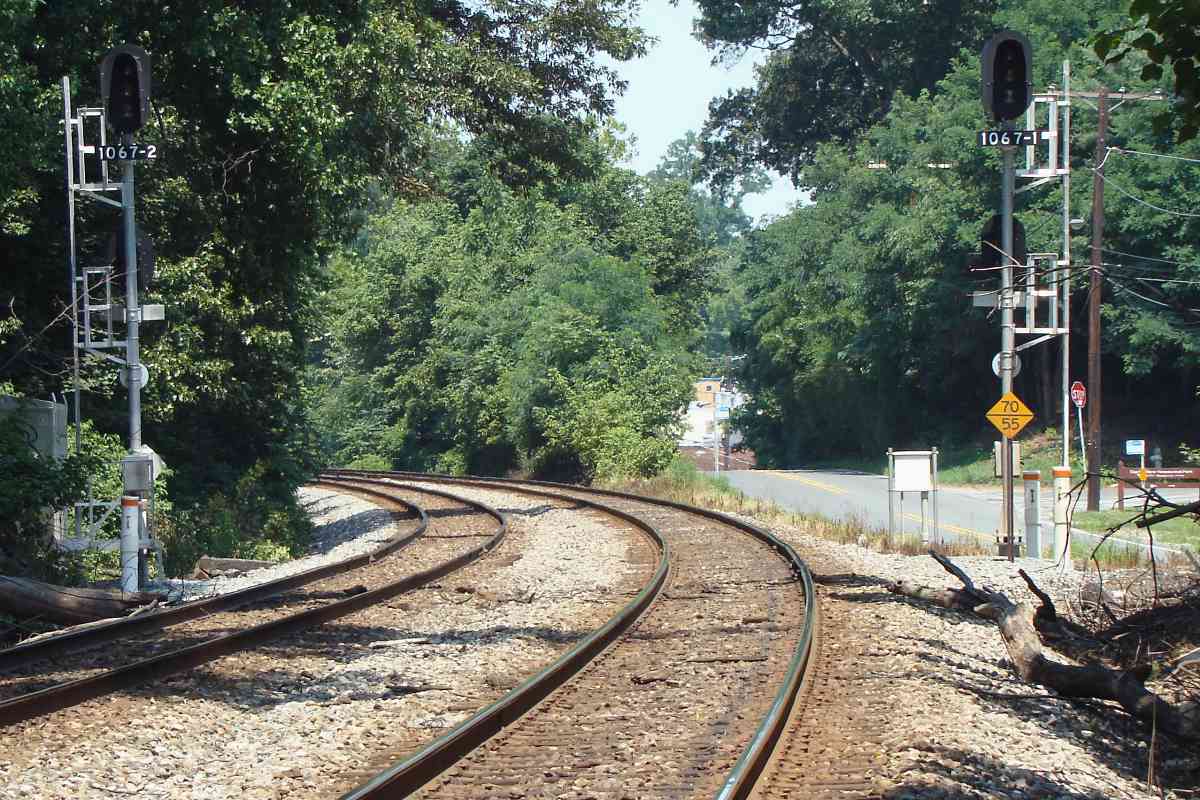
Within the past few years, the Met's CPL signals gave way to the inline design like those here adjacent to Metropolitan Avenue. Note the red collared white pipes, likely encapsulating sensors of some type... anyone know specifics?


Supports
Photo courtesy Dave Hiteshew

Supports
Mile: 10.9 Date: Jul 2008
Ease: B View: NW
Area: A IC2:
Map: Mo 36 E 4 Topographic Maps

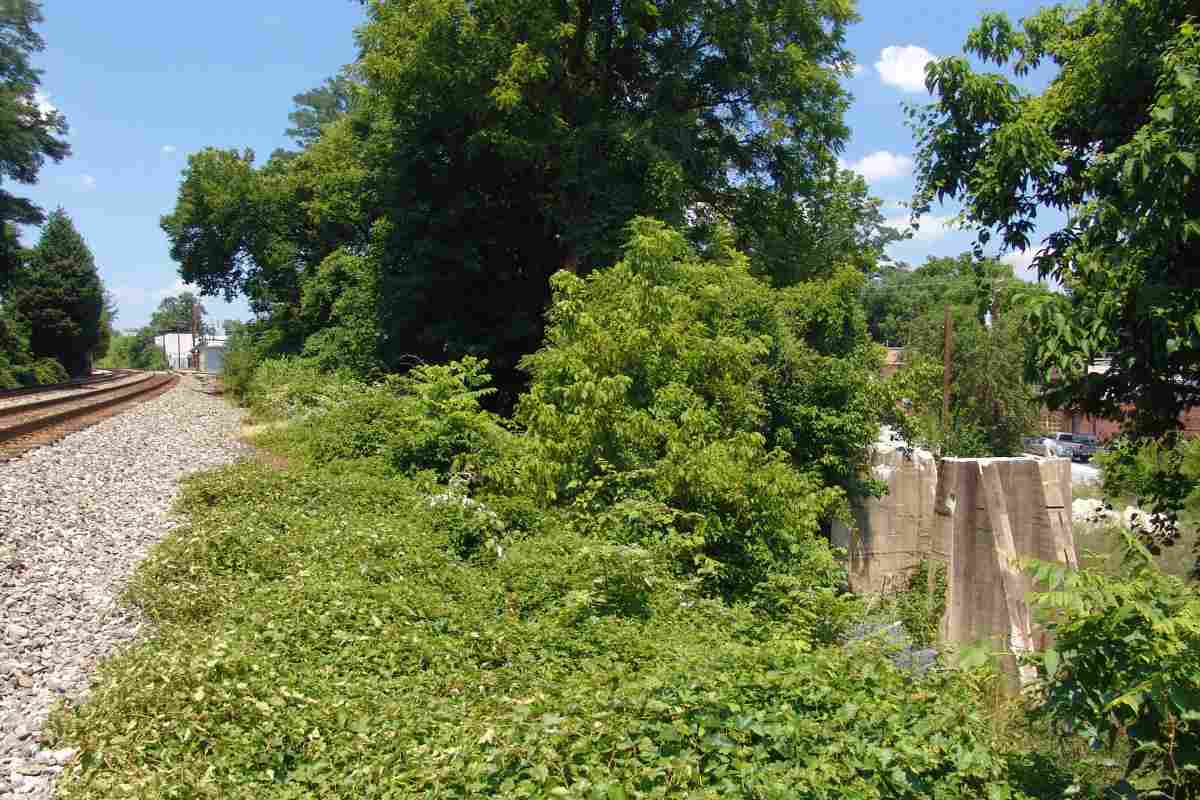
Decades ago rails spanned these supports designed to allow easy unloading by gravity of bulk materials like coal and stone from railcars. Similar supports can be found adjacent to the B&O in Elkridge and Hyattsville. This siding had room for 16 cars and is visible where it joins the Met in the 1980 photo linked below.

Link to older pics: Elkridge 2002, ~1980


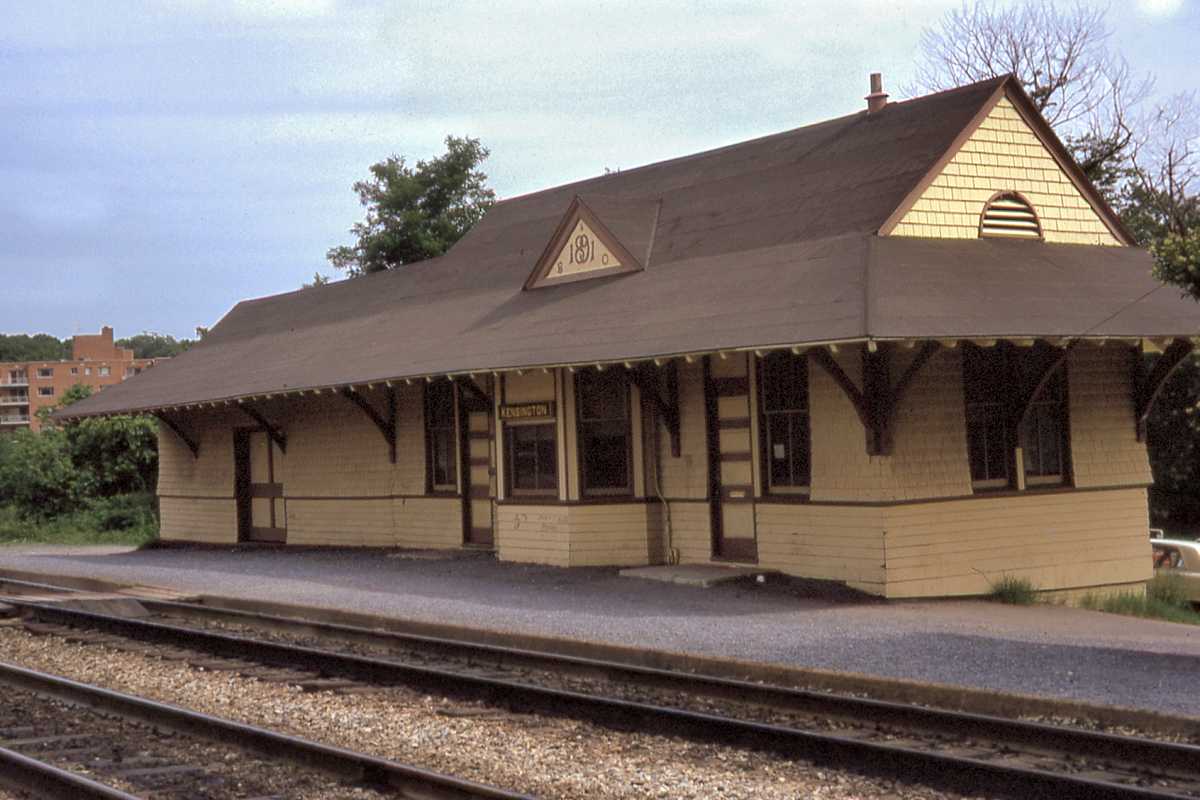
Kensington
Photo courtesy Dave Hiteshew

Kensington
Mile: 11.0 Date: Jul 2008
Ease: A View: W
Area: A IC2:
Map: Mo 36 D 4 Topographic Maps

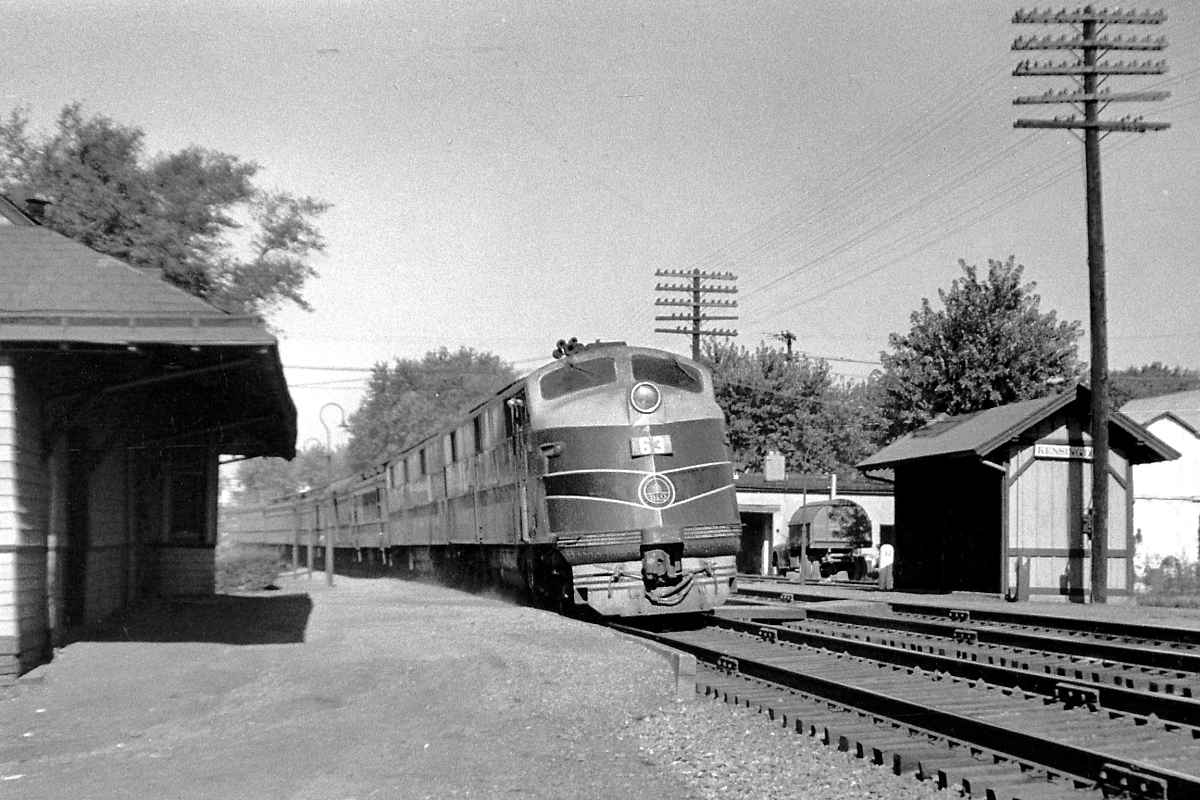
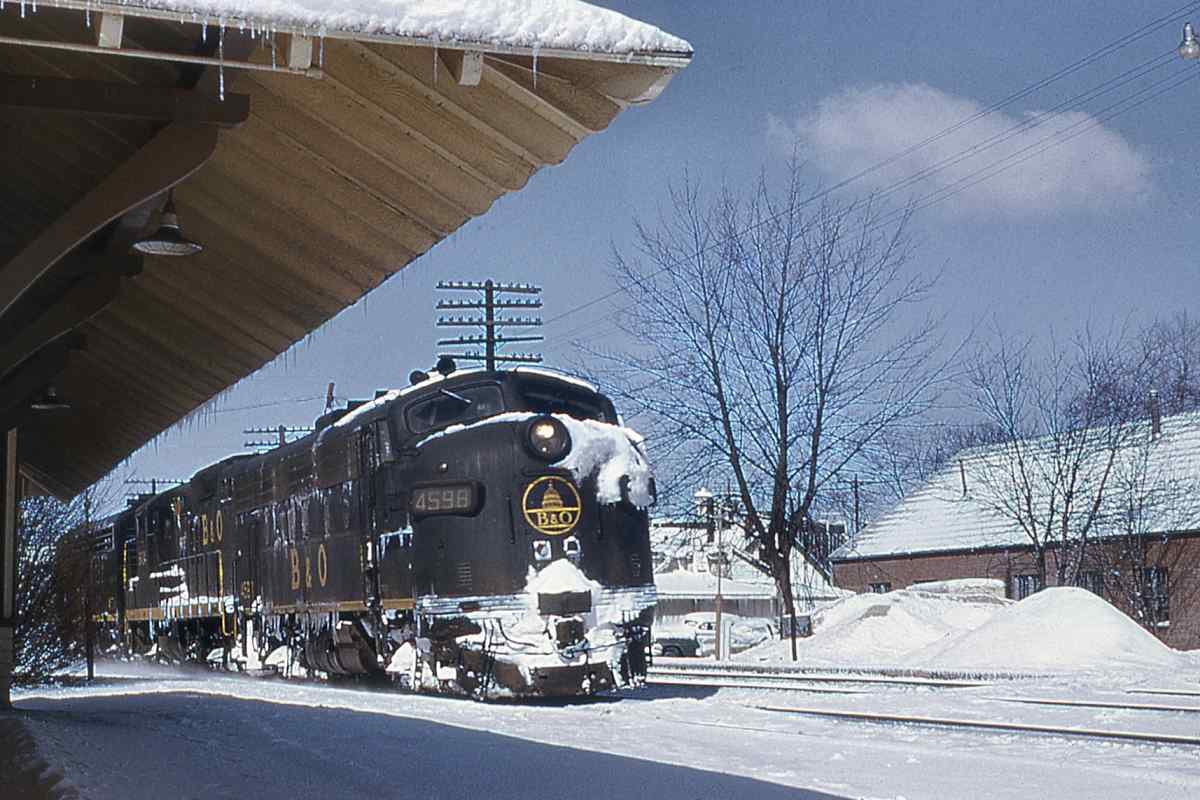
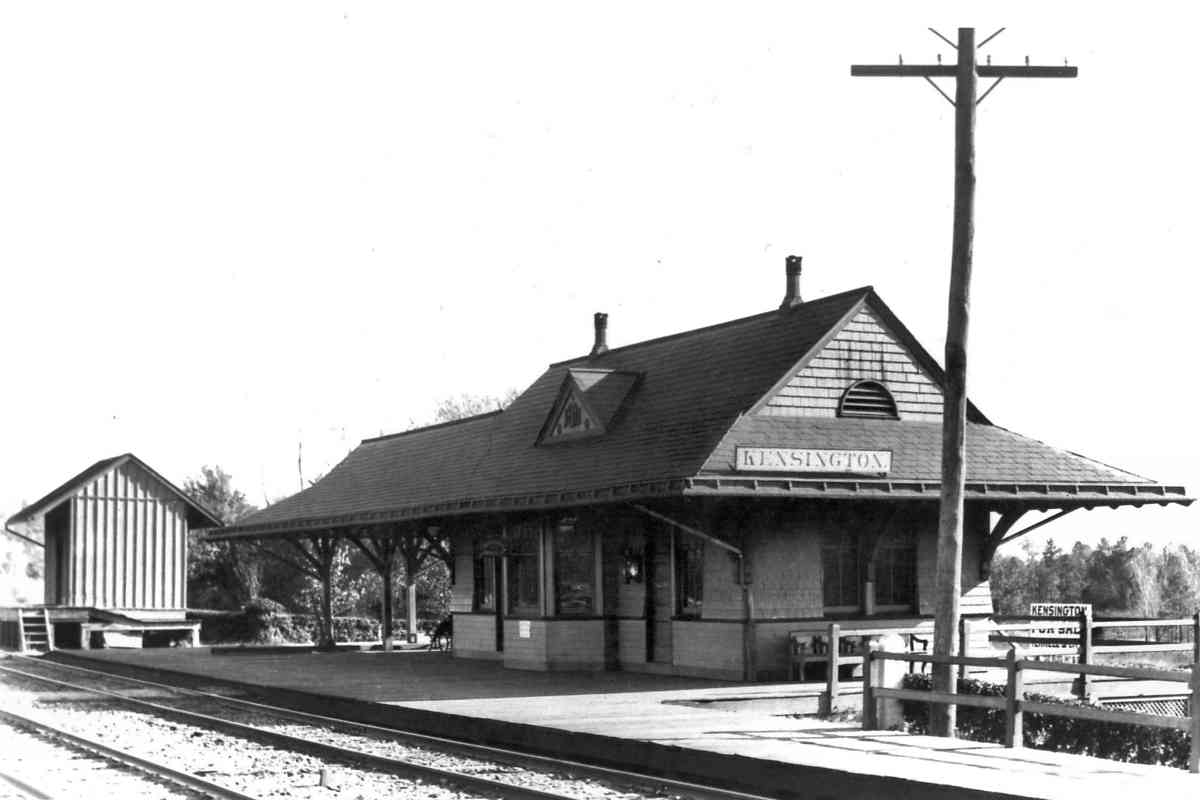
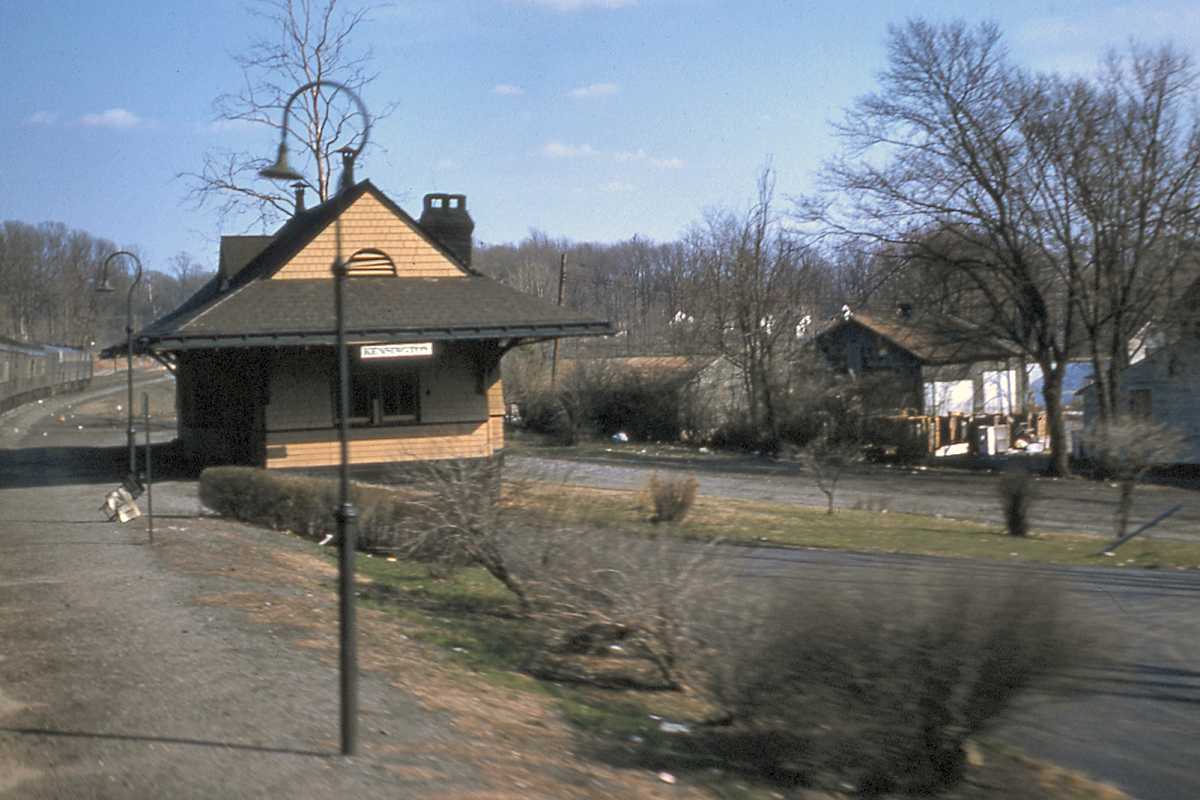
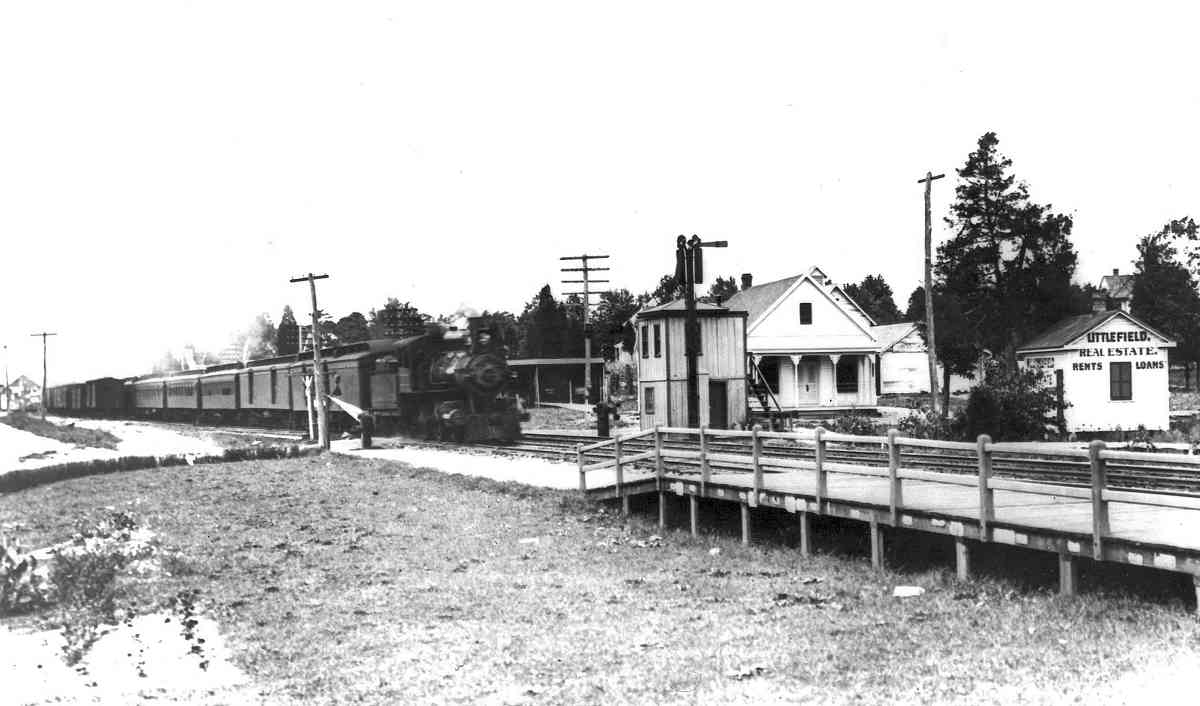
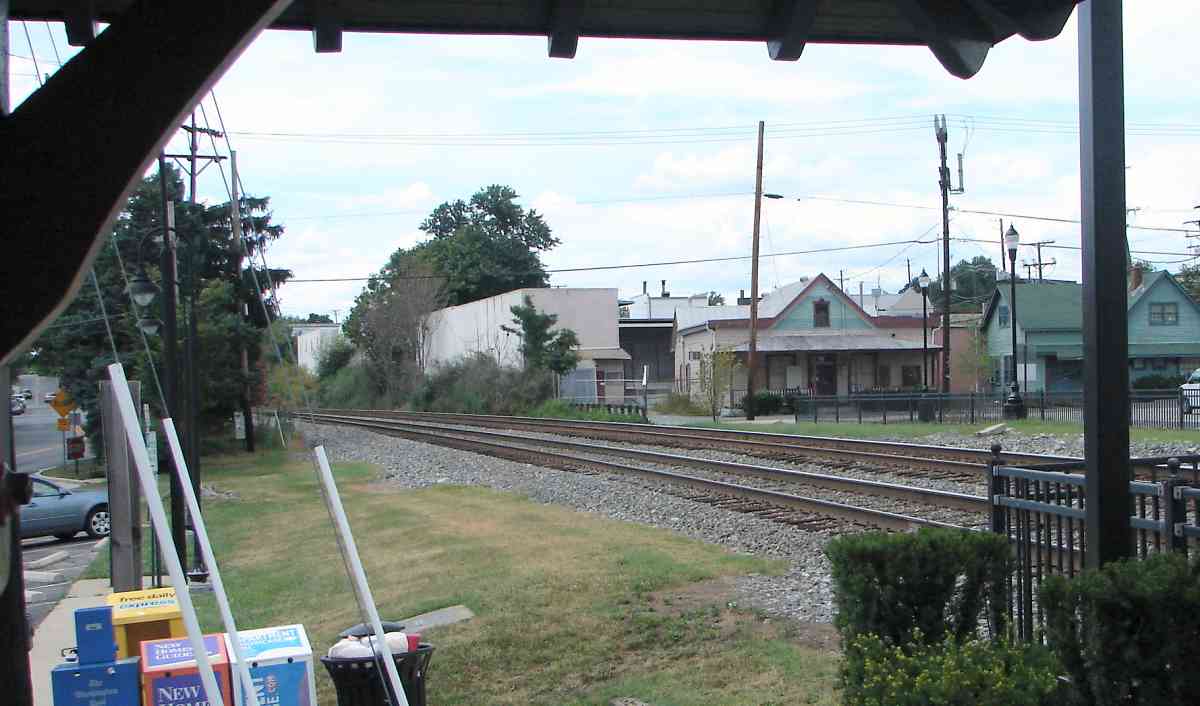
A summertime retreat community began in the 1880s when farmer George Knowles sold property where the B&O bisected the Rockville-Bladensburg road. Around 1890 Brainard Warner formed a planned community here, and chose the name Kensington.

Link to older pic: ~1980


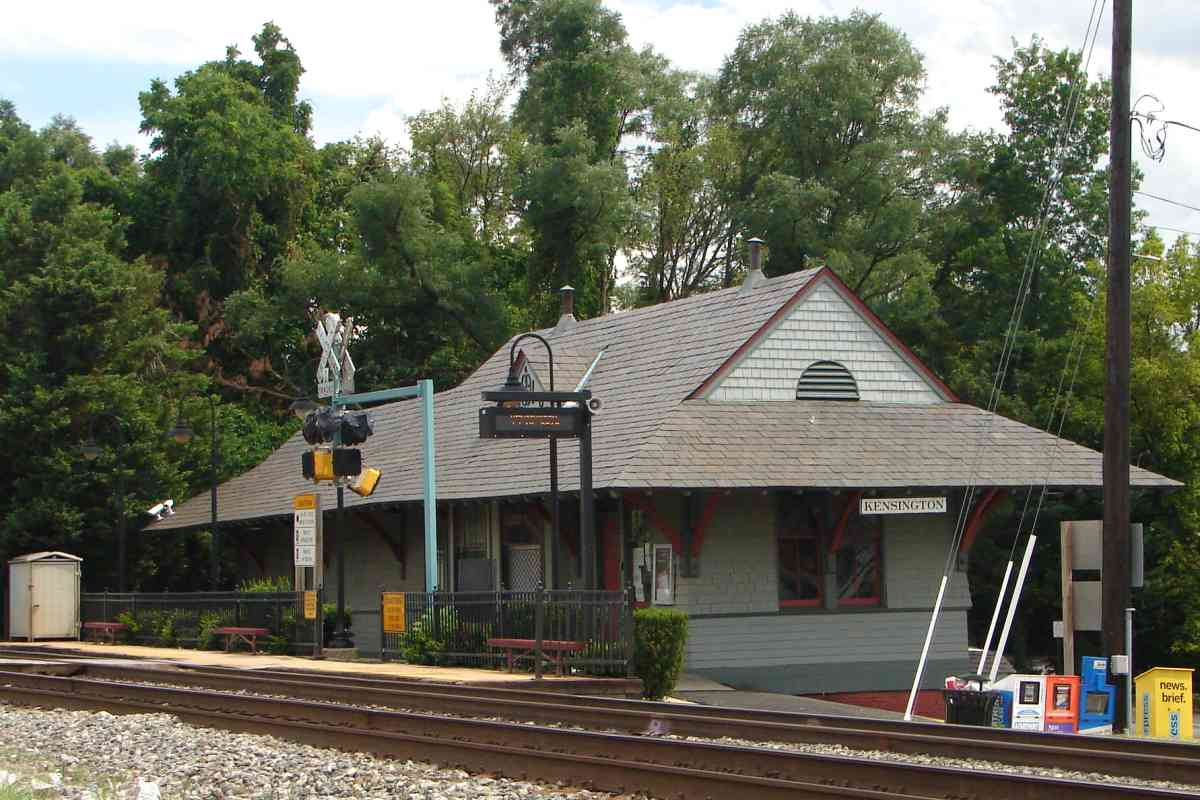
Kensington Station
Photo courtesy Dave Hiteshew

Kensington Station
Mile: 11.0 Date: Jun 2008
Ease: A View: S
Area: A IC2:
Map: Mo 36 D 4 Topographic Maps

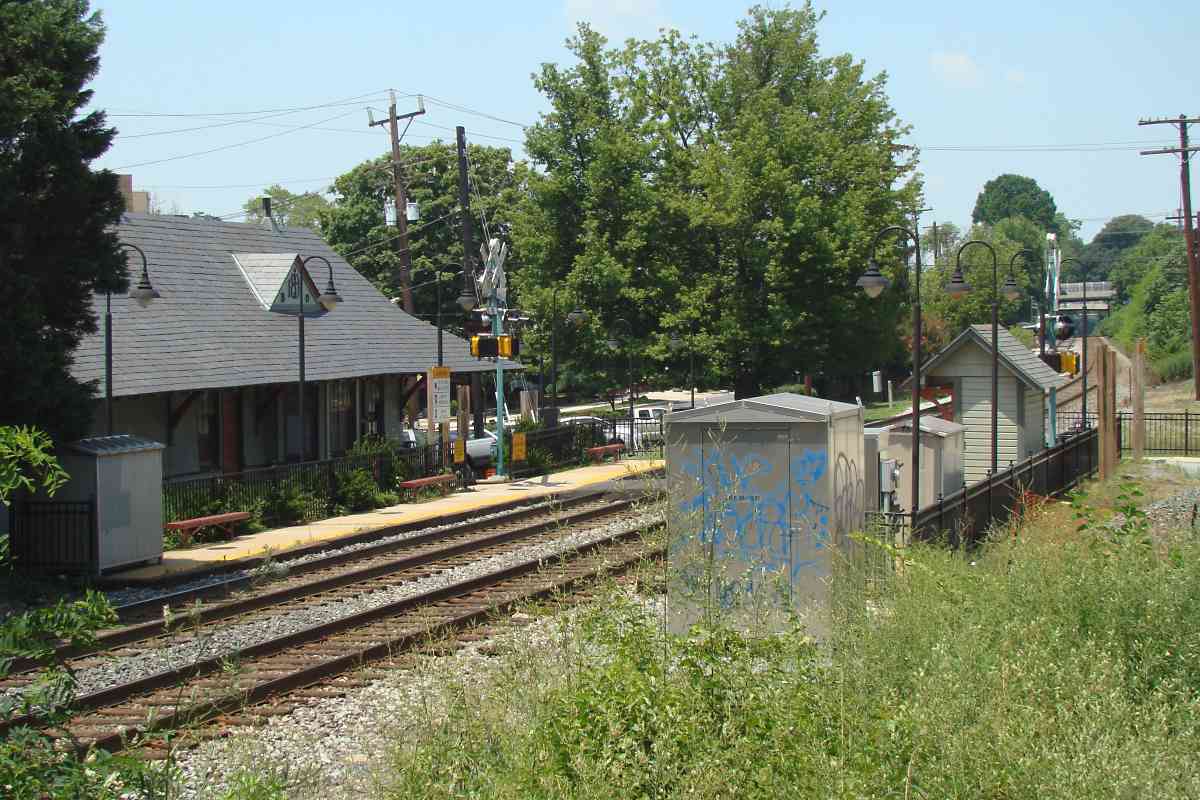
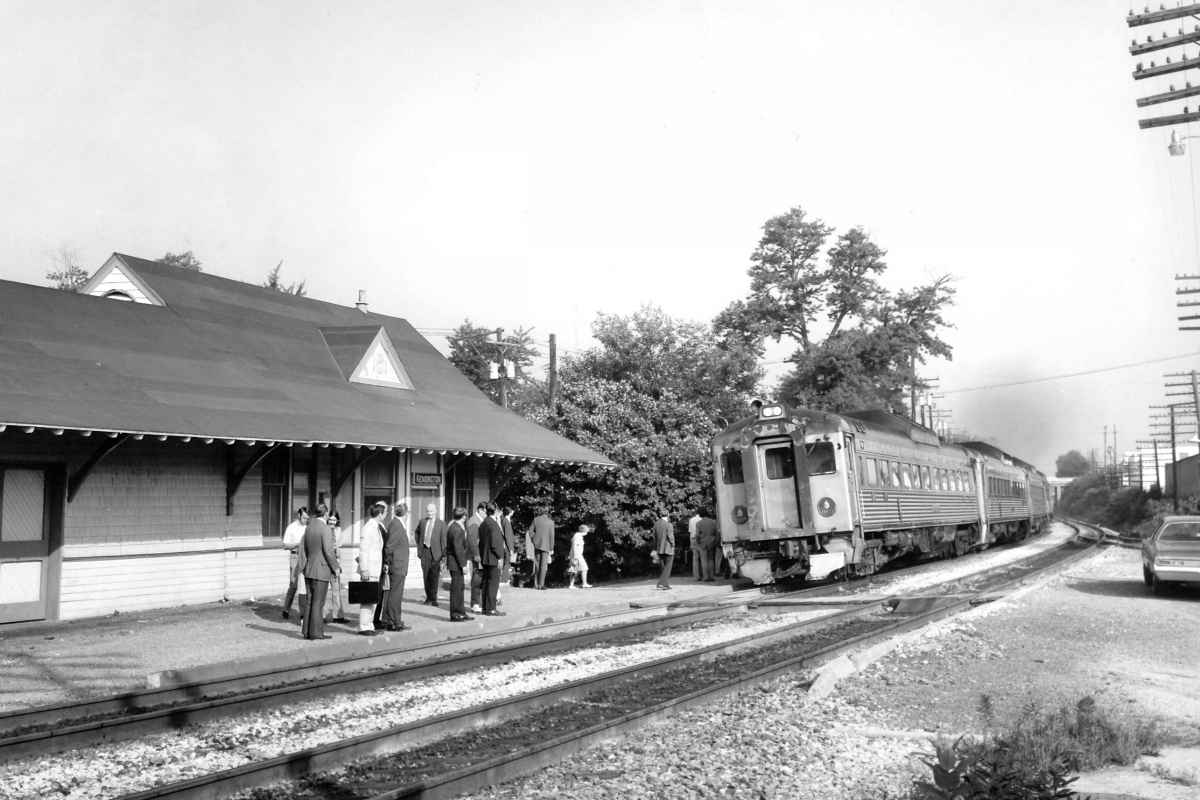
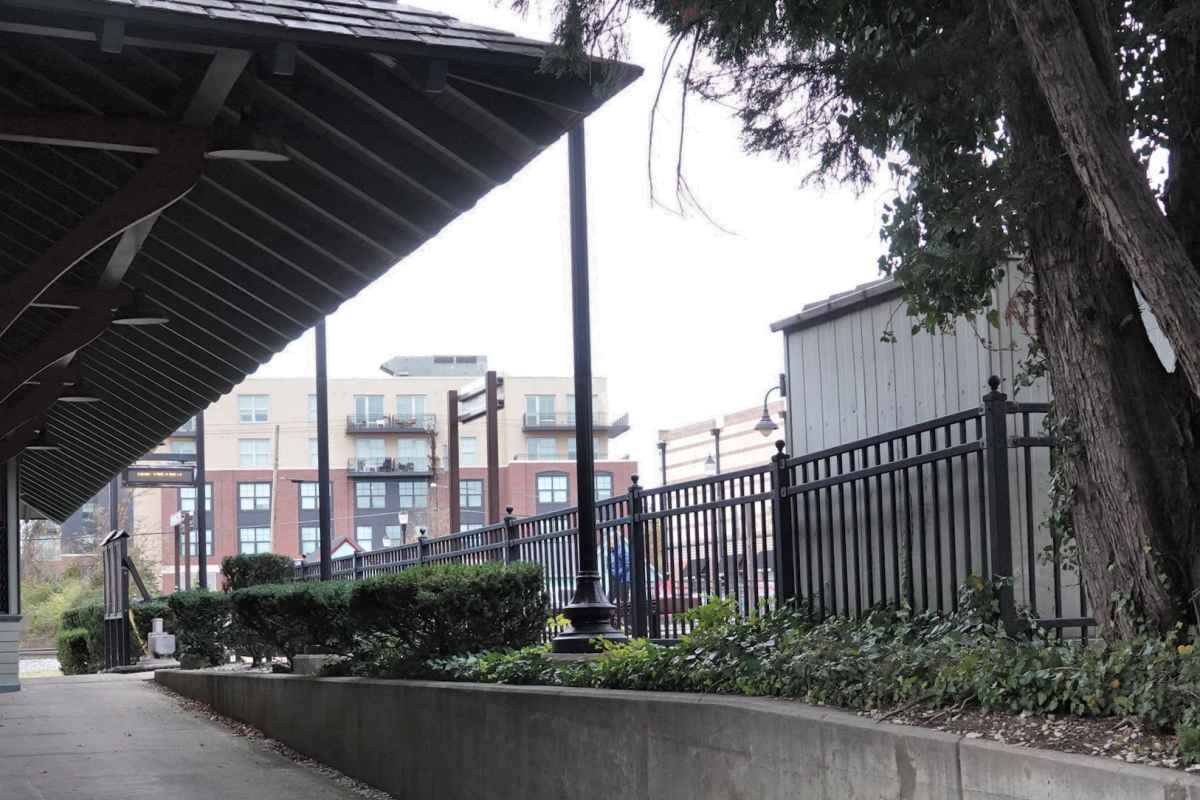
This Baldwin-designed building was originally named Knowles Station. It has been preserved via refurbishing into a MARC commuter station.


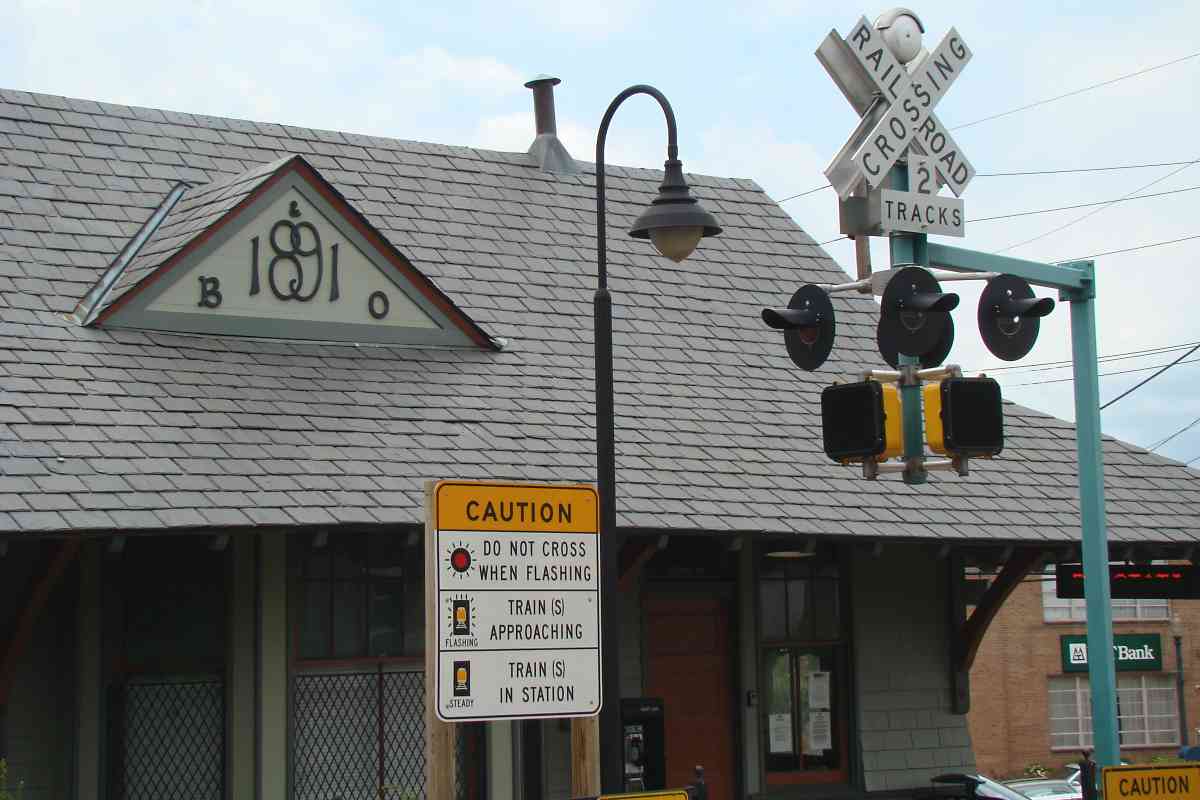
1891
Photo courtesy Dave Hiteshew

1891
Mile: 11.0 Date: Jun 2008
Ease: A View: W
Area: A IC2:
Map: Mo 36 D 4 Topographic Maps

The B&O name is remembered adjacent to the construction year. Note the unique signal combination that warns passengers. CSX trains operate at up to 70 mph here.


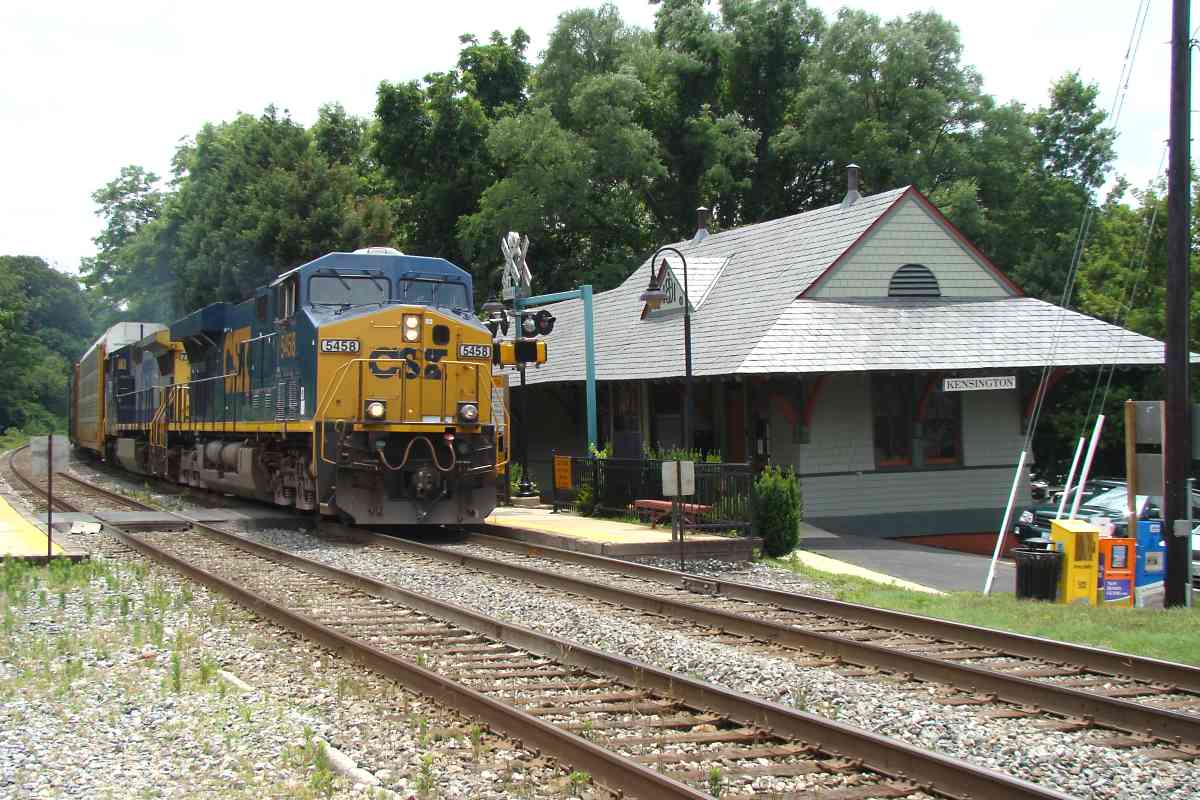
CSX 5458
Photo courtesy Dave Hiteshew

CSX 5458
Mile: 11.0 Date: Jun 2008
Ease: A View: S
Area: A IC2:
Map: Mo 36 D 4 Topographic Maps

Did someone mention a train?


Mile 11
Photo courtesy Dave Hiteshew
Updated Jul 2012

Mile 11
Mile: 11.0 Date: Jun 2008
Ease: A View: NW
Area: A IC2: 170
Map: Mo 36 D 4 Topographic Maps

For about a half-mile west the tracks run in what would appear to be a cut, but instead is earth mounded around the tracks to facilitate grade separation. Starting with the closest, the three bridges are Connecticut Avenue (bridge 11 C), Summit Avenue, followed by a 2008-new signal bridge 0.6 miles distant. Beyond that the tracks slope down as they approach Rock Creek.

The building on the right, home of Mizell Lumber and Hardware, is the same one seen in the 1901 photo on page 170 of Impossible Challenge II.


Rock Creek
Photo courtesy Dave Hiteshew
NEW! Jul 2012

Rock Creek
Mile: 11.8 Date: Jun 2008
Ease: A View: S
Area: A IC2:
Map: Mo 36 B 3 Topographic Maps

Creek, railroad and road make for a complex arrangement where the tracks cross Rock Creek Park at Beach Drive.


Winter
NEW! Jul 2012

Winter
Mile: 11.8 Date: Jan 2001
Ease: A View: NE
Area: A IC2:
Map: Mo 36 B 3 Topographic Maps

Less greenery reveals the B&O did some fill work here: the tracks traverse at an elevation roughly 50 feet above Beach Drive.


Substantial
Photo courtesy Dave Hiteshew
NEW! Jul 2012

Substantial
Mile: 11.8 Date: Jun 2008
Ease: A View: E
Area: A IC2:
Map: Mo 36 B 3 Topographic Maps

Stand close and it's tough to capture this bridge in a single photo. This is the most substantial stone arch we've seen on the Met tour so far. The pock marks on the stones are an artifact of circa-1900 quarrying methods.


Abutment
Photo courtesy Dave Hiteshew
NEW! Jul 2012

Abutment
Mile: 11.8 Date: Jun 2008
Ease: A View: ?
Area: A IC2:
Map: Mo 36 B 3 Topographic Maps

An adjacent abandoned abutment is notable for two platforms at separate levels... B&O bridge afficianados recognize this as the hallmark of the railroad's signature Bollman design. Indeed, a 450-foot multi-span Bollman bridge had graced this location before the stone arch behemoth supplanted it in 1896.

Link: Rock Creek Historic Districts (PDF)


Garrett Park
Photo courtesy Dave Hiteshew
NEW! Jul 2012

Garrett Park
Mile: 12.4 Date: Jun 2008
Ease: A View: NE
Area: A IC2:
Map: Mo 36 A 2 Topographic Maps

"It's a grade crossing." "It's a sign store." "Wait! You're both wrong."

Once upon a time, this location hosted both a B&O station and typical automobile grade crossing, but post-WWII decline in passenger demand led to their closure. Nearby residents enjoyed the solitude. Later in the 20th century fuel costs rose and more people wanted to again commute by train. This demand see-saw tug-of-war is nowhere better exhibited than at Garrett Park where competing desires produce the curious, confusing amalgam that sometimes evolves from compromise.

Perhaps fittingly, the adjacent park is named not Garrett but rather the hyphenated Waverly-Schuykill. The name Garrett originates with a B&O President, but the locals disagree whether it was John Garrett or Robert Garrett.

Link: the Met in winter


Shack
Photo courtesy Dave Hiteshew
NEW! Jul 2012

Shack
Mile: 12.4 Date: Jun 2008
Ease: A View: W
Area: A IC2:
Map: Mo 36 A 1 Topographic Maps

MARC commuters can await trains about 150 feet west of the quasi-grade crossing in this shack that originally - wait for it - belonged to the Pennsylvania Railroad (at Landover, Maryland).

Link: Historical Marker Database entry


Tiny
Photo courtesy Dave Hiteshew
NEW! Jul 2012

Tiny
Mile: 12.5 Date: Jun 2008
Ease: B View: N
Area: A IC2:
Map: Mo 36 A 1 Topographic Maps

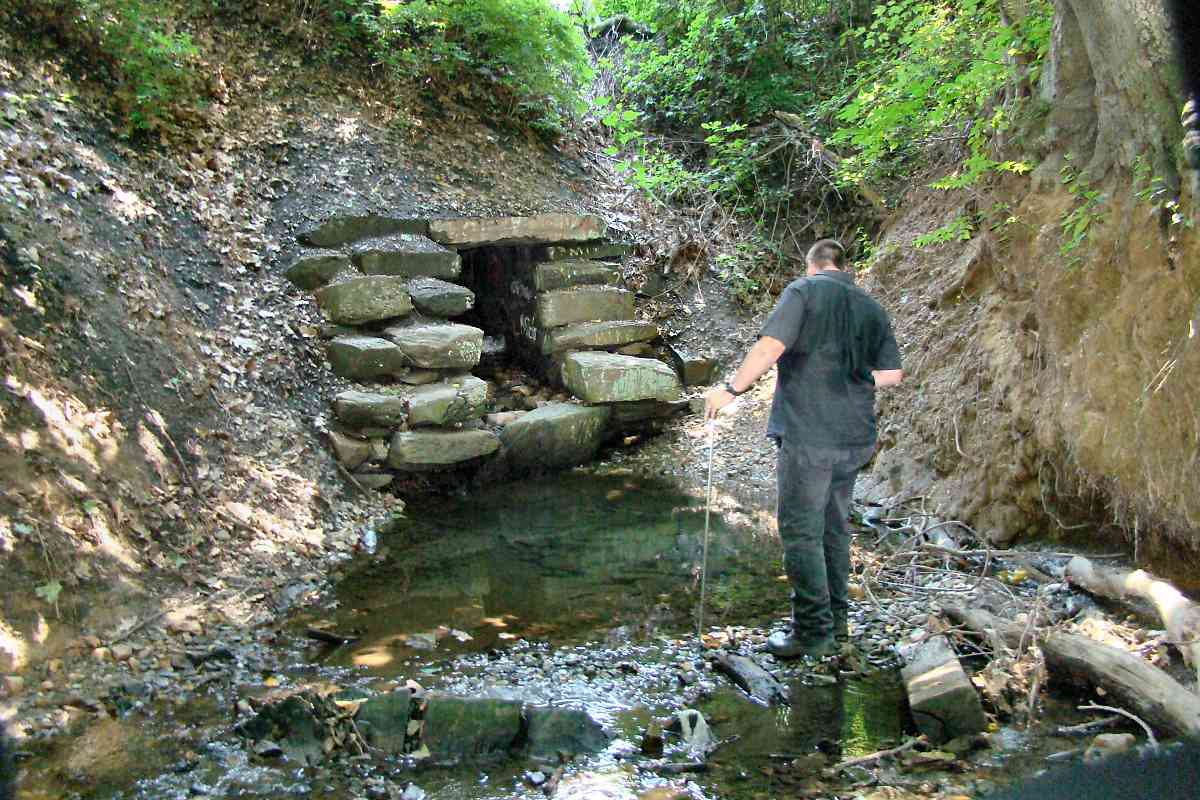
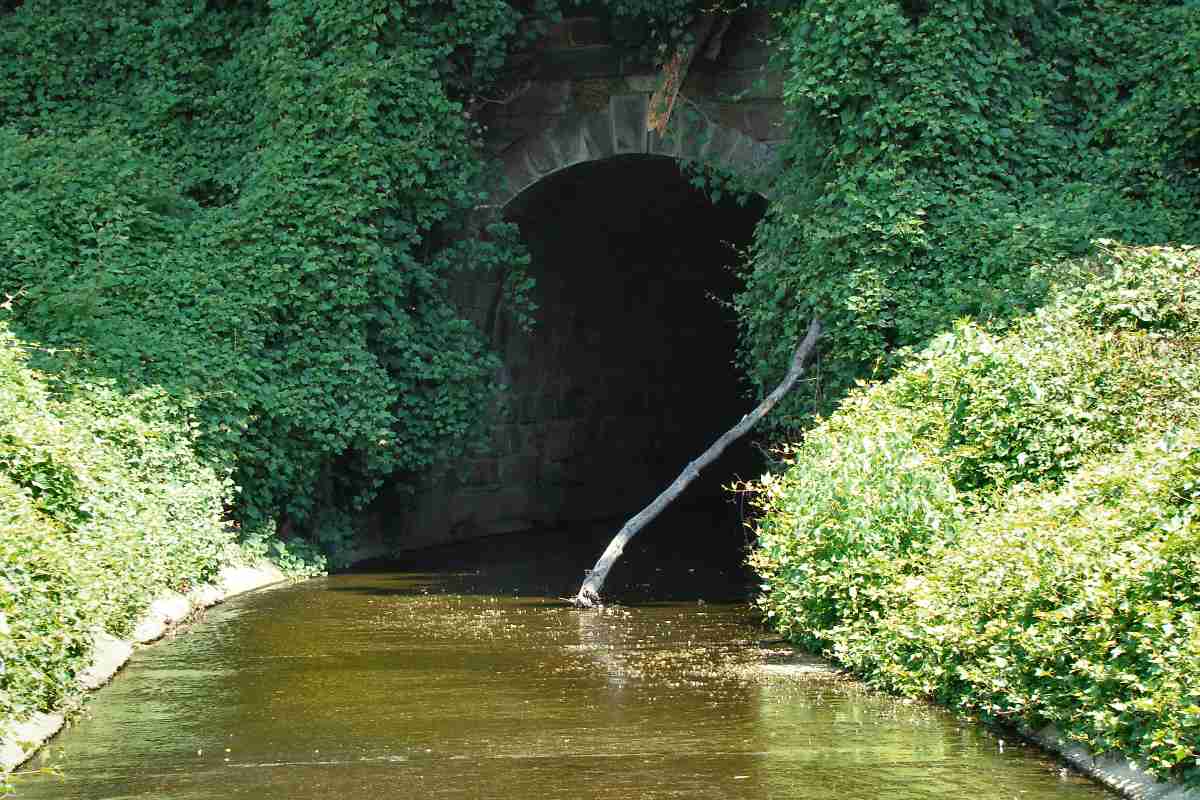
Culverts don't get much smaller than this one just a few feet across. Like many/most Met culverts, a masonry shelf extends the full length.


Railfox
Photo courtesy Dave Hiteshew
NEW! Jul 2012

Railfox
Mile: 12.6 Date: Jun 2008
Ease: B View: NW
Area: A IC2:
Map: Mo 36 A 1 Topographic Maps

Two wild and crazy foxes are Czeching out the rails. (Sometimes one SNL reference per tour page is not enough.) There's plenty of time to relax since a white SUV blocks the tracks beyond. Actually, no, that's the Randolph Road grade crossing seen through about a mile of max-zoom heat-distorted June air.

When trackside you need to be ready for critters of all kinds. Even black bears are known to venture this far east, particularly during May and June when younger males are establishing new territory.

You won't find this magnitude of grade change along the Old Main Line. By the time the Met was engineered (40 years after the OML), the B&O had learned to worry about keeping the track straight first, level second.

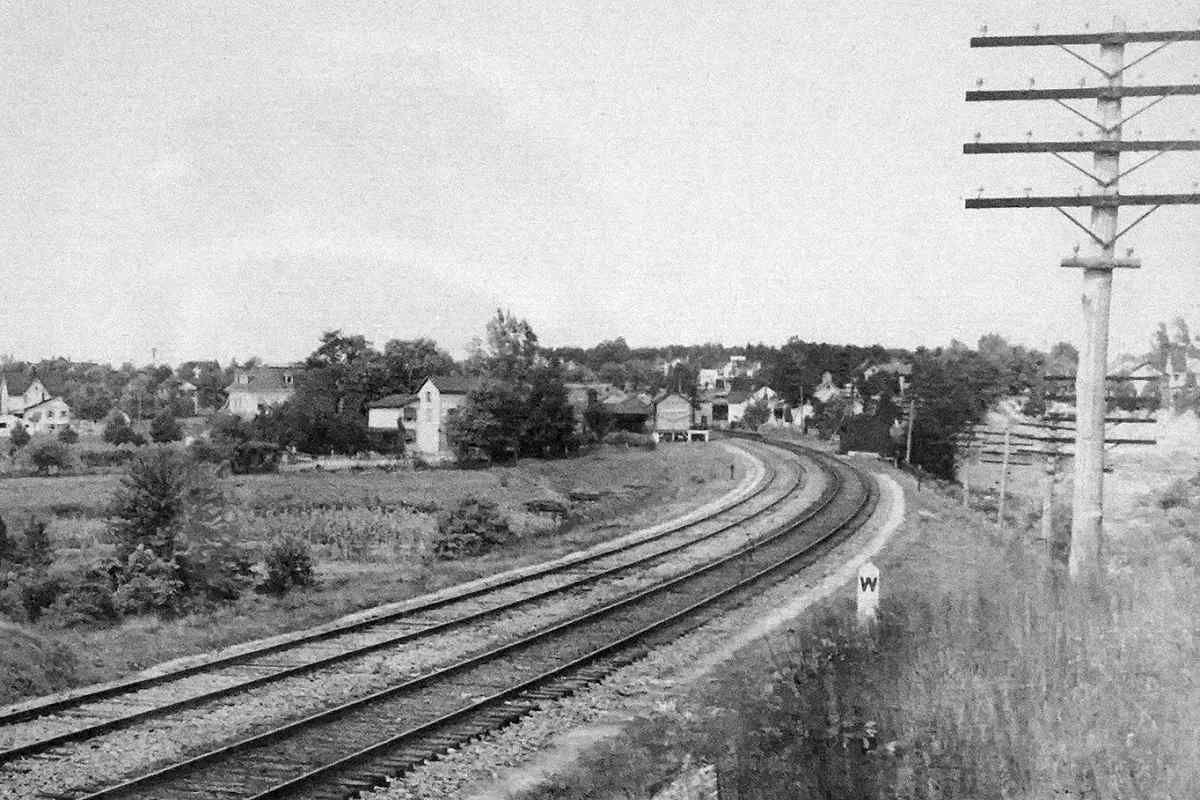
The white rectangle on the right is milepost 13, beyond that is a bridge for Nicholson Lane / Parklawn Drive, and a bit further is a forgotton B&O stop named Windham. Since I have not found any pictures of a Windham Station, I assume little more than a passenger waiting shack had existed.


Poles
NEW! Jul 2012

Poles
Mile: 13.0 Date: Jan 2001
Ease: A View: SE
Area: A IC2:
Map: Mo 35 K 1 Topographic Maps

Looking back both directionally and temporally reminds that when CSX removed the telephone poles, the right-of-way lost some traditional railroad flavor.


Randolph Road
Photo courtesy Dave Hiteshew
NEW! Jul 2012

Randolph Road
Mile: 13.7 Date: Jun 2008
Ease: A View: NW
Area: A IC2:
Map: Mo 29 J 12 Topographic Maps

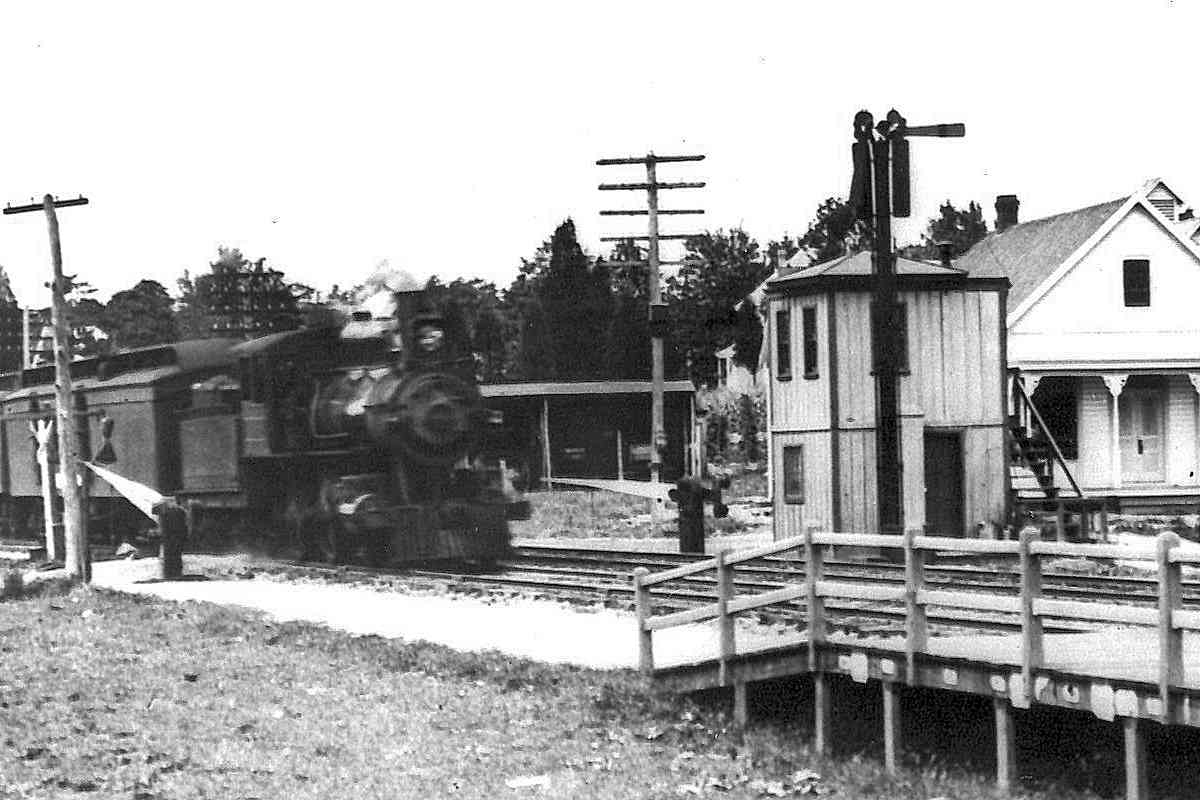
CPLs at Randolph Road sleep, saving their lamps for impending retirement. This is the Met's busiest at-grade crossing; grade separation has been on the drawing board for years. A century earlier the B&O's Randolph Station stood cater-corner (near the white building at center).

Link to older pics: Randolph Station


CSX 7366
Photo courtesy Dave Hiteshew
NEW! Jul 2012

CSX 7366
Mile: 13.8 Date: Jun 2008
Ease: A View: SE
Area: A IC2:
Map: Mo 29 J 12 Topographic Maps

Both CPLs awaken when CSX 7366 enters the block with empty racks westbound to pick up more autos.


Next page in the tour

Return to main page for other tours.


Copyright Notice

Visit the TrainWeb.org Fan Page on Facebook!
Create your own free Rail Blog or Website!

Advertise | About Us | Contact Us | Sign up for our Newsletter | TrainWeb.com

Your Ad Here
Your Ad Here