
TrainWeb.org Facebook Page
Maryland and Pennsylvania Railroad Photo Tour


Maryland and Pennsylvania Railroad
Modern day photo tour

Accompanying each photo below are:

Click a photo to see a larger view. Please send your comments and corrections to Steve.


<< Previous (index) | THIS PAGE: Baltimore Jones Falls | Next (north) >>

Brief Historical Background:

Swan Lake RR
Image courtesy Johns Hopkins University

Swan Lake RR
Mile: 0.0 to 1.3 Date: 1876
Ease: View: N (up)
Area: TM:
Map: Ba 35 A 8 (center) Topographic Maps

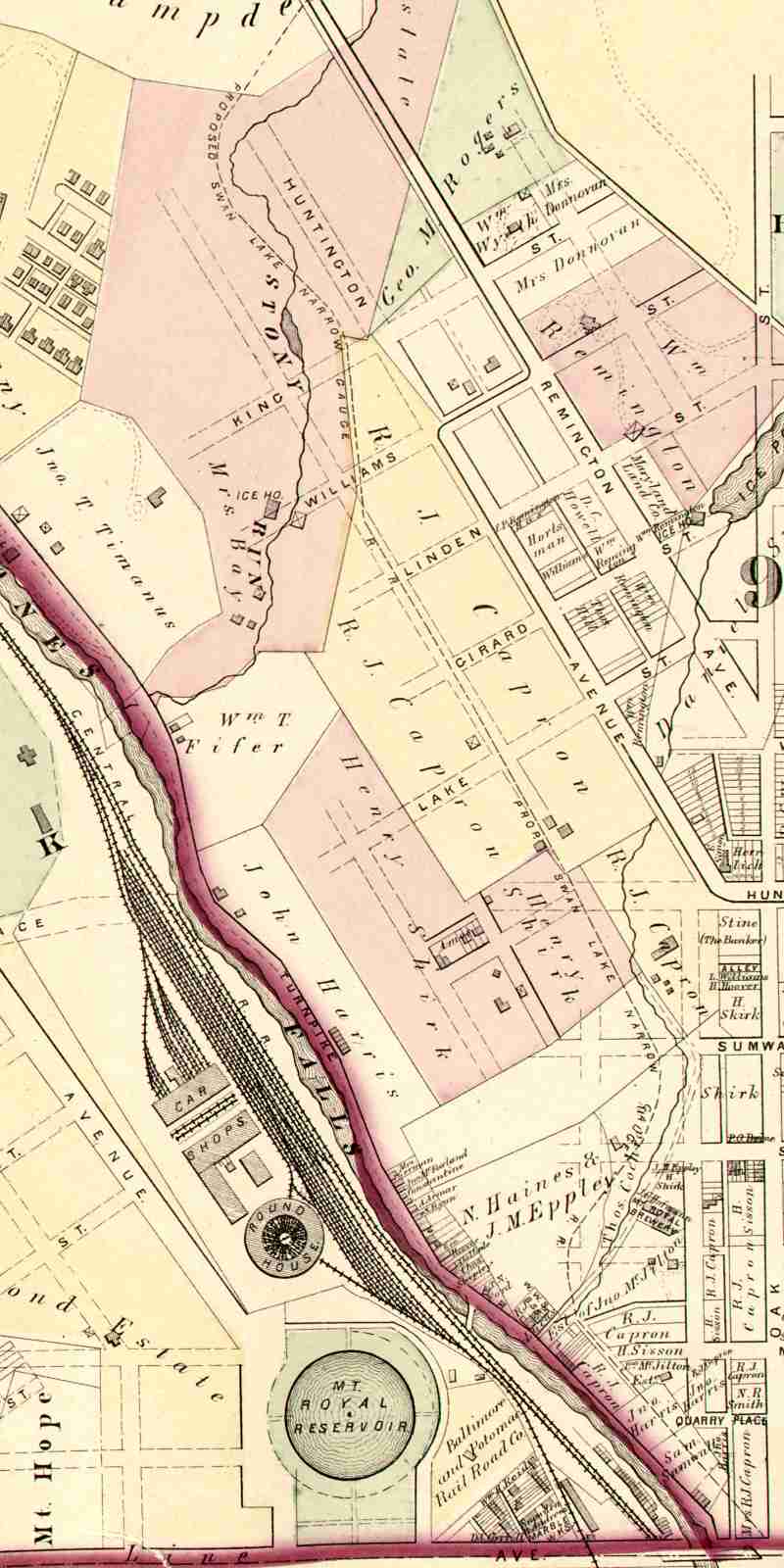
This 1876 GM Hopkins atlas page draws the proposed Swan Lake Narrow Gauge Railroad, one of several Ma & Pa predecessors, as a dashed line. The plan started near North Avenue (the bottom horizontal line) and Oak Street (now Howard, rightmost vertical), then headed northwest to Sumwalt Run (unlabeled).

After briefly following Sumwalt Run north, the plan turned northwest, where B&O would later build its Belt Line and Huntingdon Yard, then followed what is now Hampden Avenue to Stony Run. It would cross to Stony Run's west bank near where Wyman Park Drive now does. That marked Linden is now 29th Street.

No rails were laid on a similar alignment until 1878 under the name Baltimore and Delta Railway (B&D). B&D would be purchased by The Maryland Central Railway in 1889. The roundhouse depicted belongs to Northern Central Railway.

Link: Ma & Pa history


Baltimore & Lehigh
Image courtesy Johns Hopkins University

Baltimore & Lehigh
Mile: -0.3 to 0.1 Date: 1894
Ease: View: N (up)
Area: TM:
Map: Ba 35 A 10 Topographic Maps

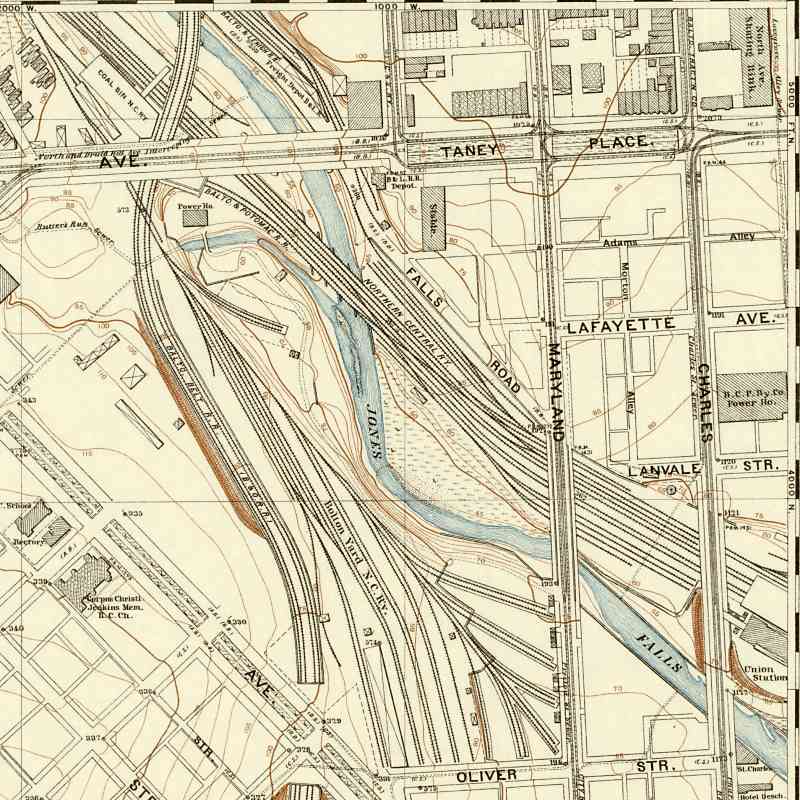
Maryland Central Railway merged with York and Peach Bottom Railway in 1891 to form the Baltimore and Lehigh Railroad (B&L).

Taney Place (upper right) lies within North Avenue's median. "B&L R.R. Depot", the railroad's primary Baltimore station, is labeled southwest of Taney Place. Union (later Pennsylvania) Station is at bottom right as a reference point.

You may need to squint to find "Balto. and Lehigh R.R." at upper left. B&L's narrow gauge tracks could not connect with standard-gauge Northern Central and other PRR affliates here, so goods had to be manually transferred between systems. Resizing to standard gauge happened in 1901 thanks to funding from Alexander Brown & Company. That was the same year B&L combined with York Southern Railroad Company to form Maryland and Pennsylvania Railroad.


Station 1917
Photo credit Detroit Publishing Company,
via Shorpy

Station 1917
Mile: -0.6 (photog's location) Date: 1917
Ease: View: NW
Area: TM:
Map: Ba 35 B 10 Topographic Maps

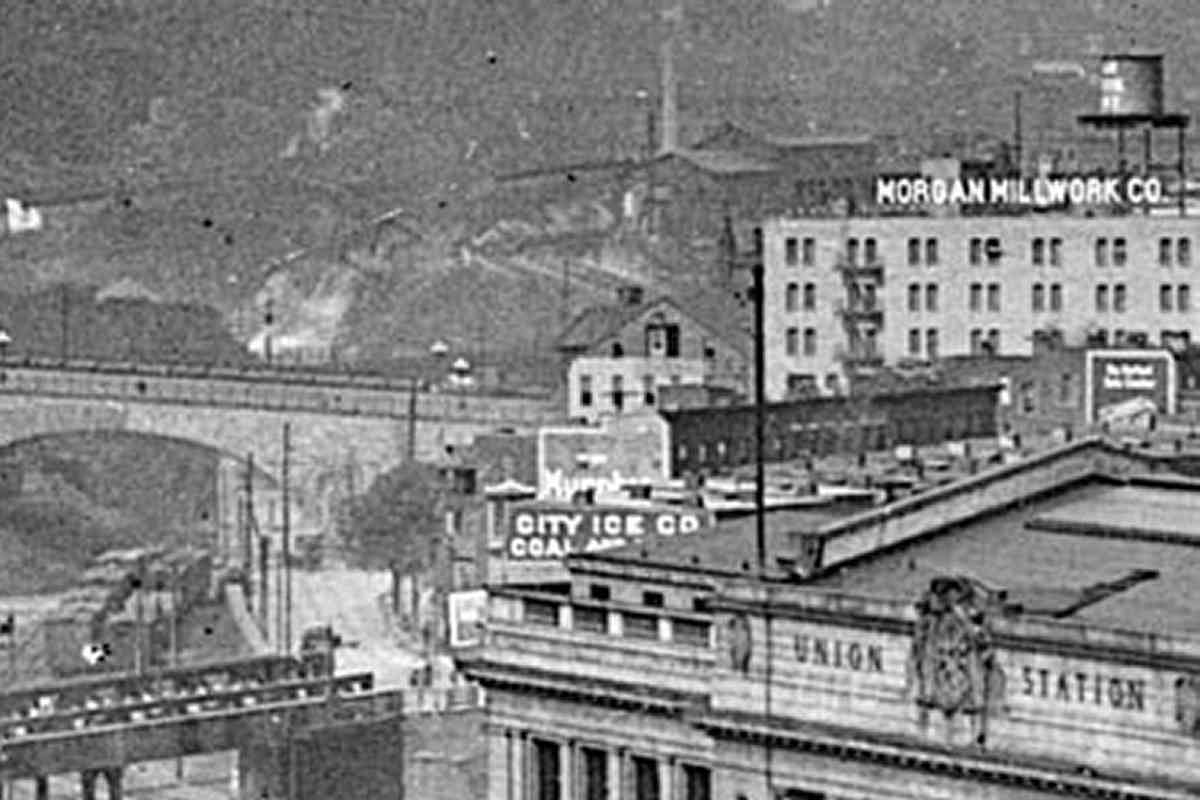
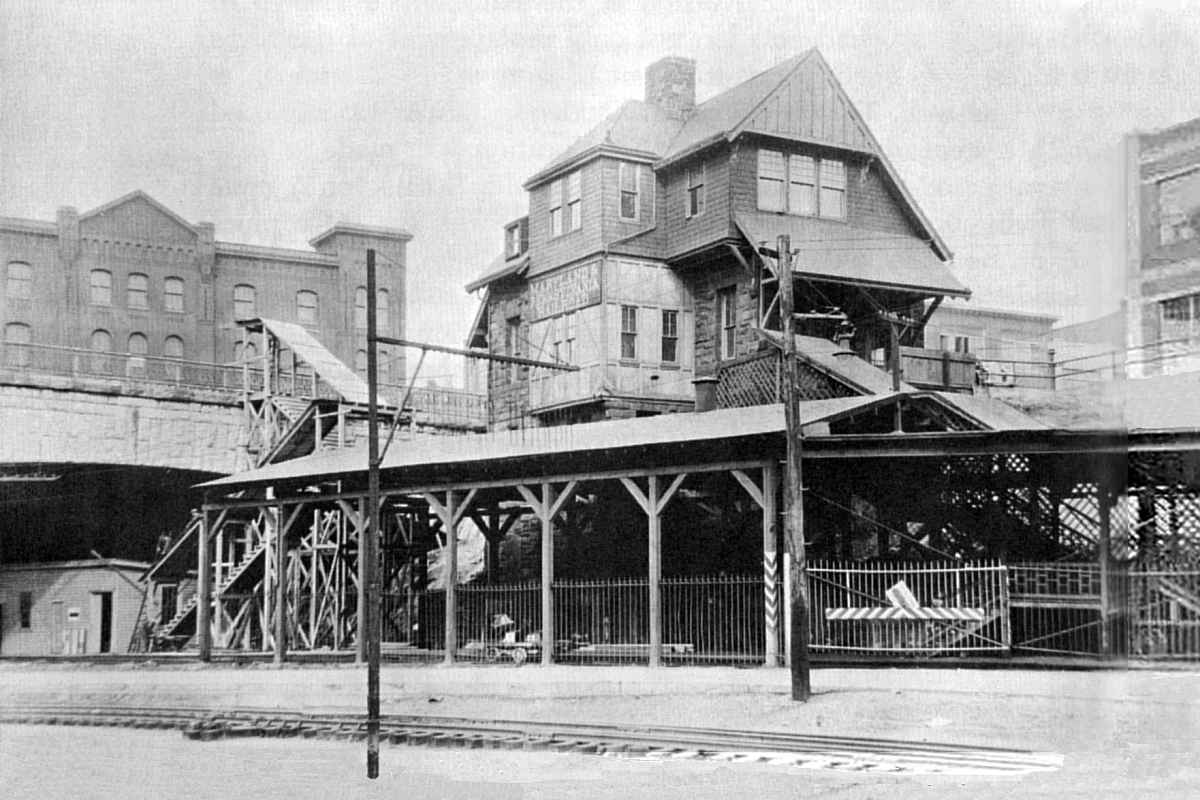
Looking more private home than train station, Ma & Pa's primary Baltimore Station is seen near photo center, visually above the "City Ice Co" sign.

This tour leans on old photos because few Ma & Pa artifacts remain extant.

Link: source DPC photo


PRR Interchange
Photo credit John W. Barriger III*

PRR Interchange
Mile: -0.1 Date: 1941
Ease: C View: SE
Area: C TM:
Map: Ba 35 B 10 Topographic Maps

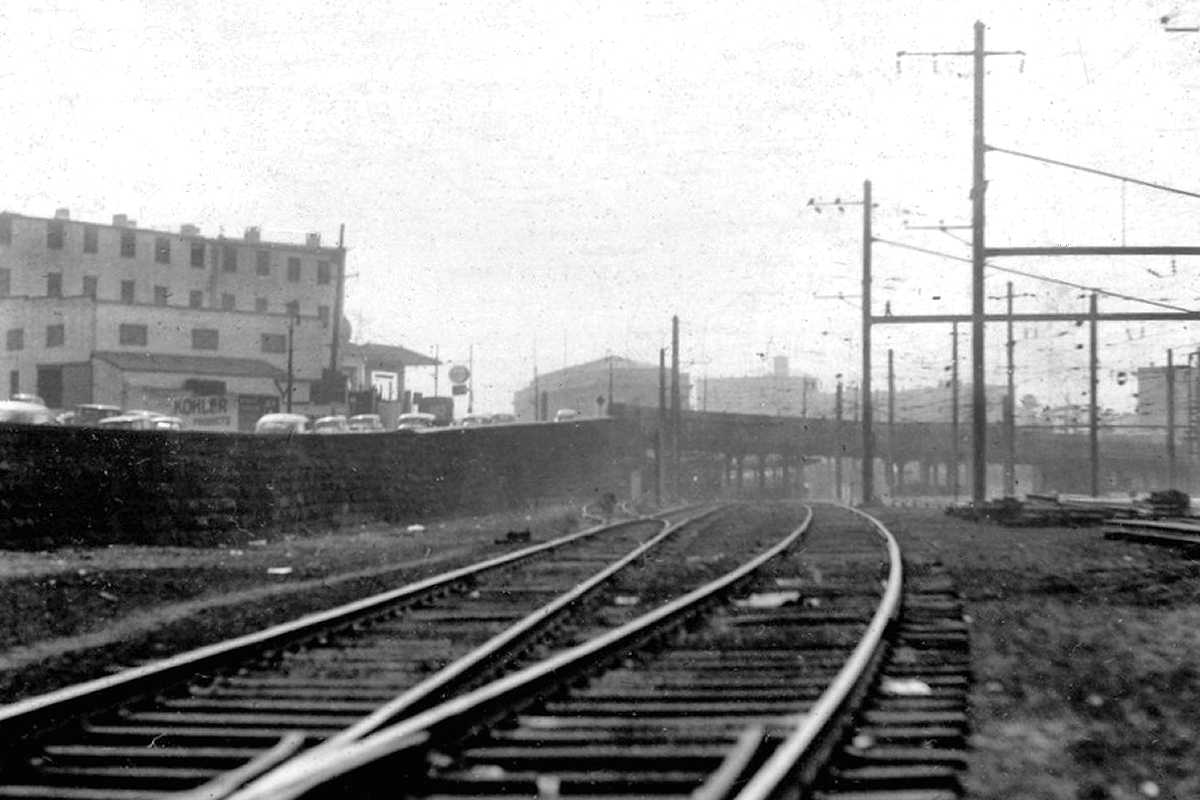
After resizing to standard gauge, Ma & Pa connected with PRR west of a Penn Station that is at center in the hazy distance. The nearest bridge carries Maryland Avenue.

Link: Ma & Pa photos


Under Howard Street
Photo credit John W. Barriger III*

Under Howard Street
Mile: 0.0 Date: 1941
Ease: A View: N
Area: C TM:
Map: Ba 35 A 9 Topographic Maps

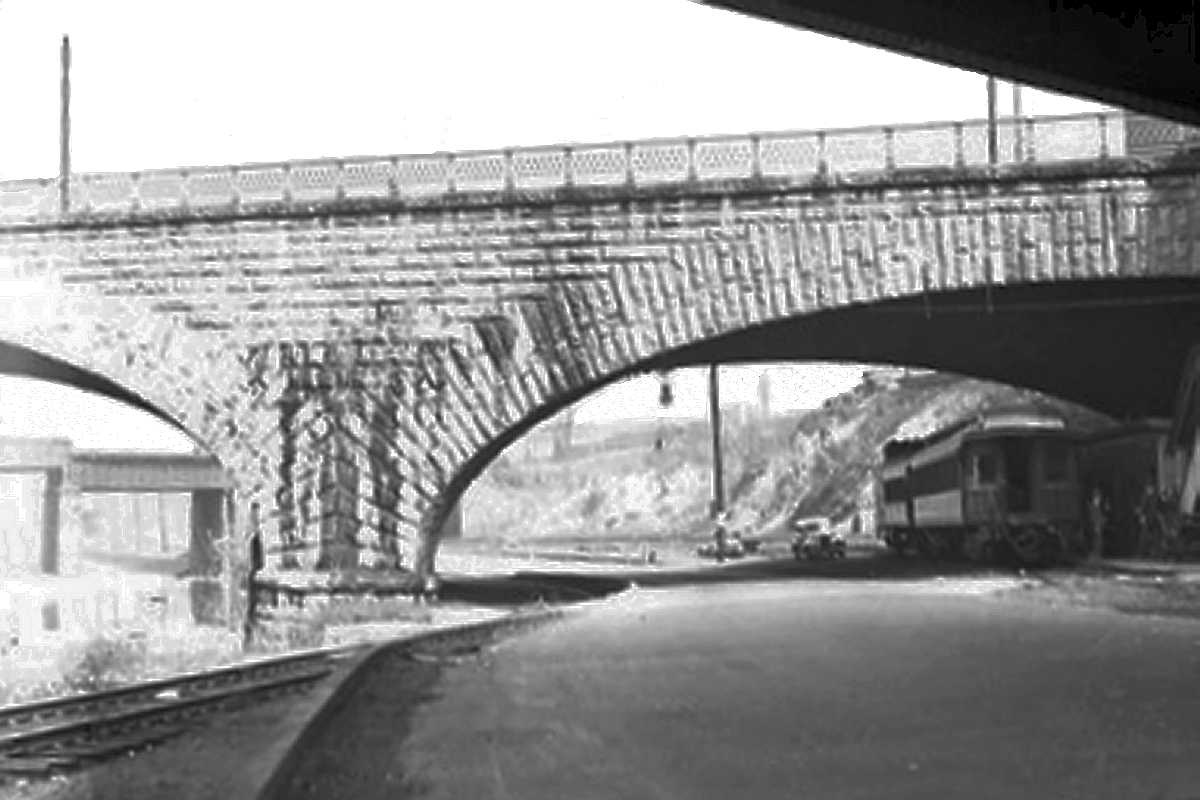
Maps show the track on the left as one of PRR's that extended to a customer upstream at Stony Run. The masonry bridge represents North Avenue. The Jones Falls bridge at distant left is part of B&O's Belt Line.

The addition of Howard Street bridge (overhead) four years prior to this photo removed Ma & Pa's station that had been up at street level at right. Subsequent passengers walked down a stairway from North Avenue to board trains here.

Link: Ma & Pa photos


Under Howard Street 2020

Under Howard Street 2020
Mile: 0.0 Date: Mar 2020
Ease: A View: N
Area: C TM:
Map: Ba 35 A 9 Topographic Maps

This is a similar, more-recent view from Falls Road.


North Avenue Station
Photo courtesy Cheney Collection
and
The Ma & Pa by George W. Hilton

North Avenue Station
Mile: 0.0 Date: ~1900?
Ease: A View: NE
Area: C MP: 64
Map: Ba 35 A 9 Topographic Maps

Baltimore's station was large by Ma & Pa's standards. Its home-like appearance mirrored Ma & Pa's local, neighborly approach, something PRR never exhibited in Maryland. The building stood in the southwest quadrant of North and Oak (later Howard) for 50 years after opening in 1887. According to the Maryland and Pennsylvania Railroad Historical Society, the first station here opened in 1882.

Link: Ma & Pa stations


Howard at North

Howard at North
Mile: 0.0 Date: Jun 2015
Ease: A View: S
Area: C MP: 64
Map: Ba 35 A 9 Topographic Maps

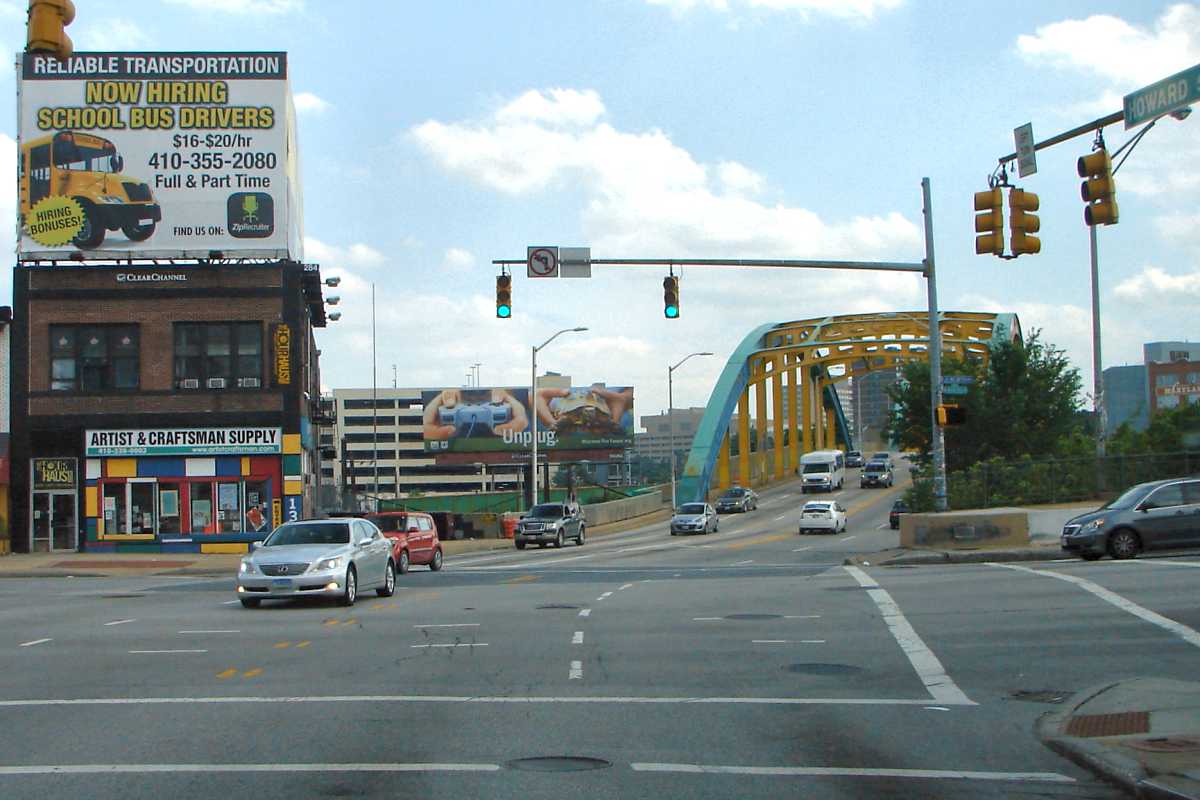
The pole supporting green traffic signals marks the site of Ma & Pa's station. I found no station remnants there.

Link: 1890s


MPA 30
Photo courtesy Trackside Maryland

MPA 30
Mile: 0.0 Date: ~1950
Ease: A View: E
Area: C TM: 144
Map: Ba 35 A 9 Topographic Maps

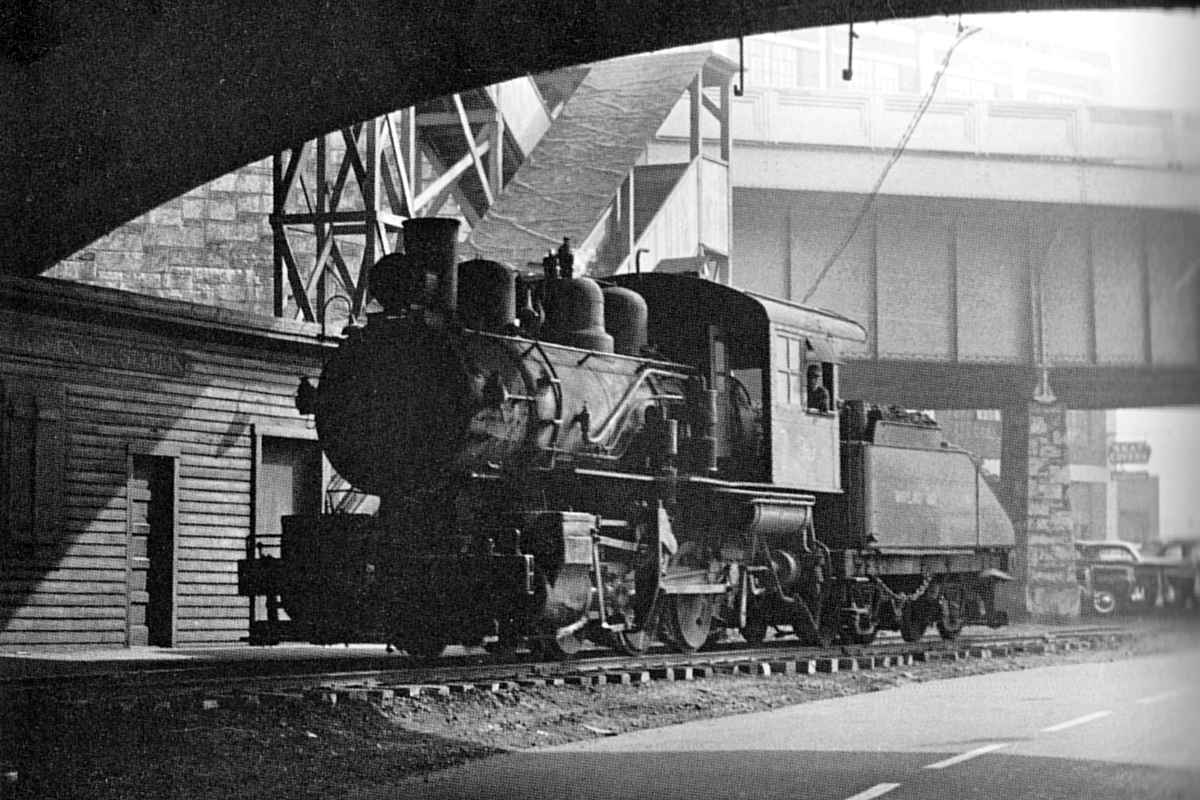
Despite the loss of its big station, Ma & Pa continued serving passengers, at least those that could deal with stairways. Passenger revenue declined steadily after WWI. Loss of its contract to carry mail prompted Ma & Pa to cease operation in 1958. At that time, Ma & Pa had three diesel engines on its roster. The Trackside Maryland book contains a fair number of large Ma & Pa photos like this one.


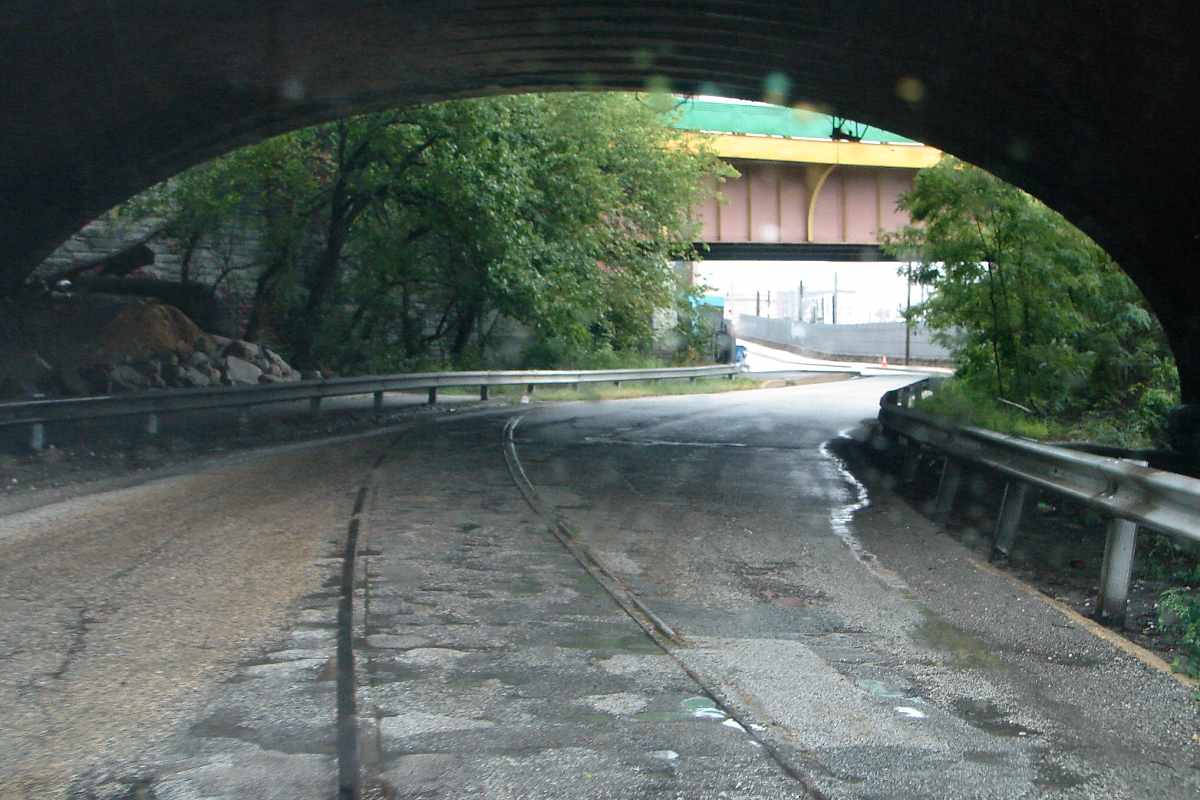
Falls Road

Falls Road
Mile: 0.0 Date: Oct 2010
Ease: A View: SE
Area: C TM:
Map: Ba 35 A 9 Topographic Maps

These old rails under North Avenue were paved over since photo time. Falls Road runs parallel to the former Ma & Pa for about a half mile behind the camera.


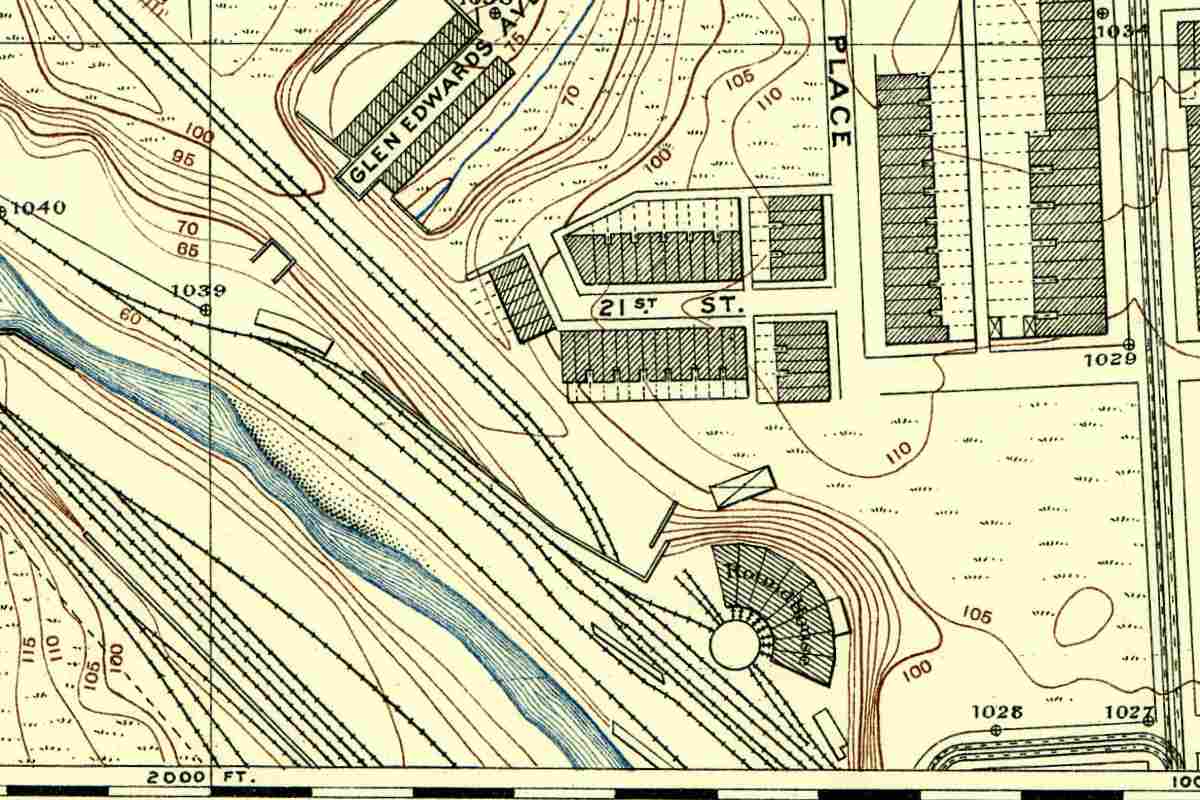
B&L Roundhouse
Image courtesy Johns Hopkins University

B&L Roundhouse
Mile: 0.0 to 0.2 Date: 1894
Ease: View: N (up)
Area: TM: 98
Map: Ba 35 A 9 Topographic Maps

Baltimore & Lehigh's 8-stall roundhouse northwest of North Avenue and Oak (now Howard) Street has largely been forgotten. It stood in an alcove between what is now Baltimore Streetcar Museum and the ex-B&O Belt Line (now CSX). The alcove may be a disused quarry, of which there are several in this vicinity. Fire destroyed the roundhouse on October 10, 1892, but this map says it was rebuilt at the same location.

Glen Edwards Avenue at upper left snuck under B&O's Belt Line to cross Ma & Pa at grade. Its tunnel has since been plugged.


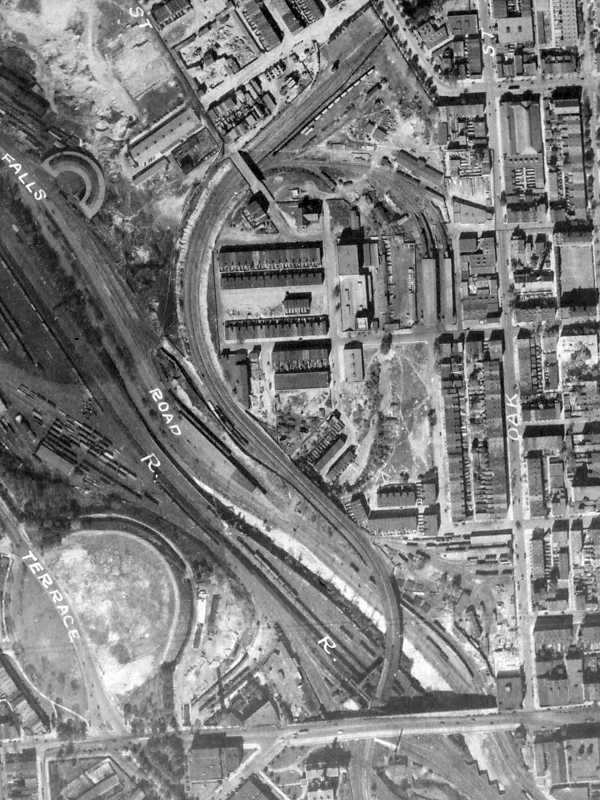
Aerial 1927
Photo courtesy Johns Hopkins University

Aerial 1927
Mile: 0.0 to 0.6 Date: 1927
Ease: View: N (up)
Area: TM:
Map: Ba 35 A 9 Topographic Maps

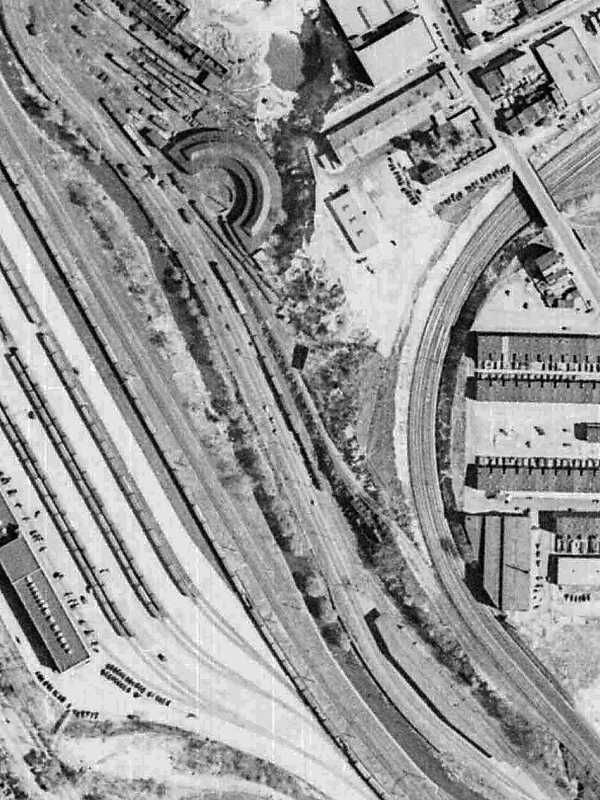
B&L's roundhouse was gone by the time of this aerial view, replaced by a small train yard near the lower right corner. Ma & Pa built its own roundhouse about a half mile northwest. It's the half-doughnut shape near "FALLS" at upper left. Ma & Pa's annual traffic level reached its zenith circa 1920.


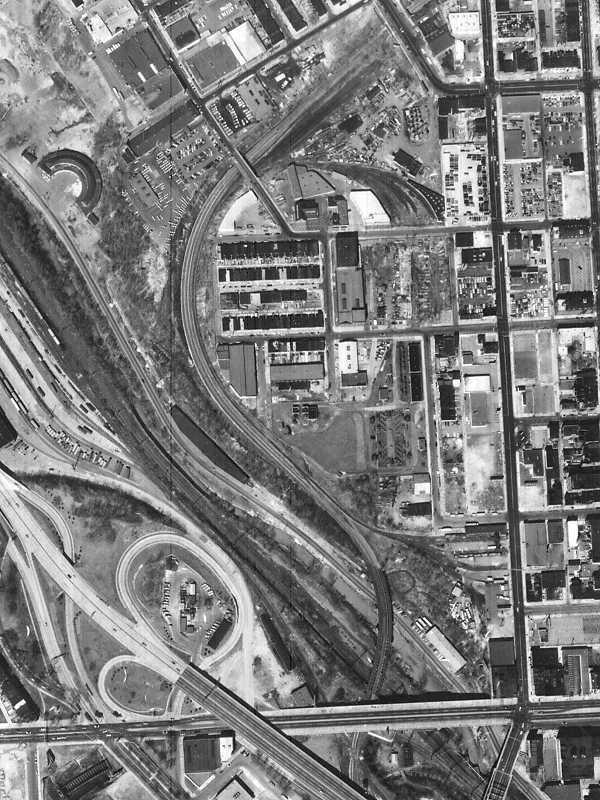
Aerial 1972
Photo courtesy Johns Hopkins University

Aerial 1972
Mile: 0.0 to 0.6 Date: Mar 1972
Ease: View: N (up)
Area: TM:
Map: Ba 35 A 9 Topographic Maps

By 1972, no Ma & Pa train had visited this area for about 15 years, but several railroad structures were still standing. About halfway between the roundhouse (upper left) and North Avenue (horizontal line across bottom) sits Ma & Pa's former freight shed. It is the dark-roofed, cigar-shaped building left of photo center. It remained extant as of 2025.

Occupying the site of B&L's roundhouse at lower right is the brightly-roofed building of the Baltimore Streetcar Museum.


Aerial 1974
Photo credit Library of Congress

Aerial 1974
Mile: 0.2 Date: 1974
Ease: View: SE
Area: TM:
Map: Ba 35 A 9 Topographic Maps

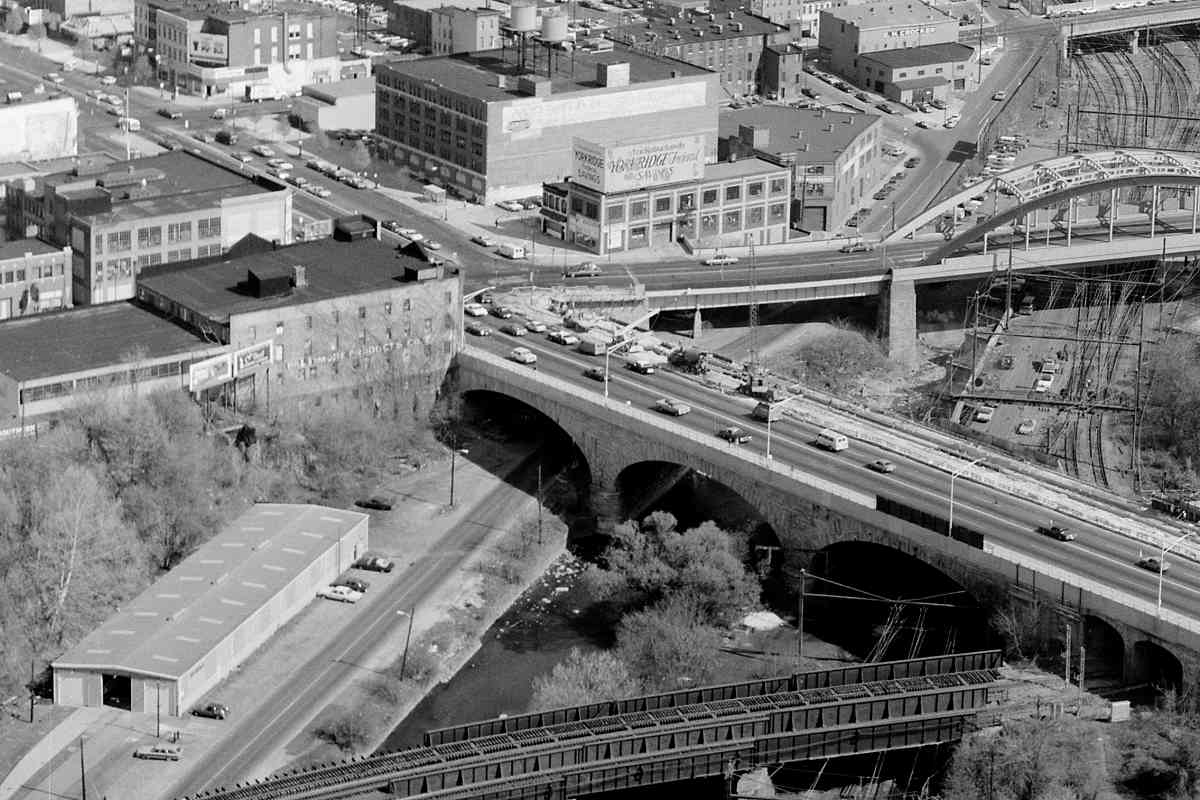
The Baltimore Streetcar Museum is the long building at lower left. Ma & Pa's Baltimore station stood adjacent to the clump of traffic near photo center.


BSM

BSM
Mile: 0.1 Date: Mar 2020
Ease: A View: N
Area: C TM:
Map: Ba 35 A 9 Topographic Maps

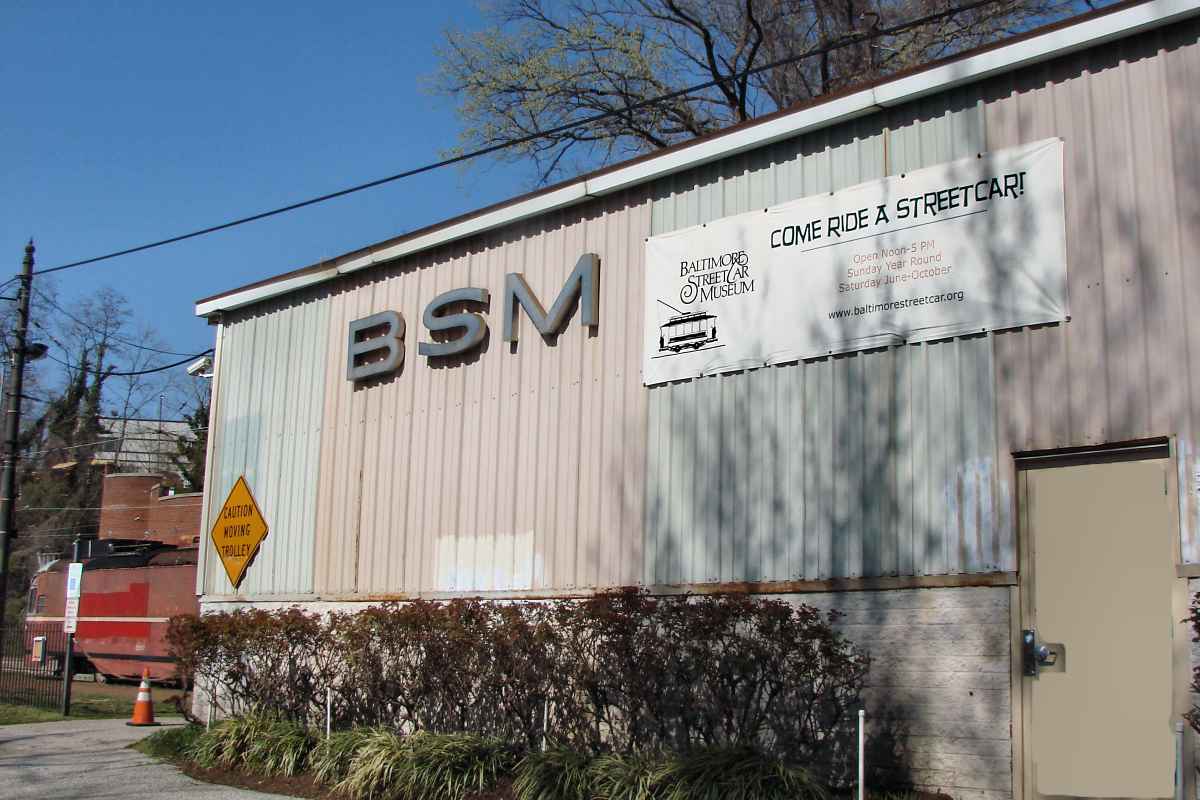
Baltimore Streetcar Museum (BSM) opened during 1968 after the City of Baltimore added these structures adjacent to the disused Ma & Pa rails. After Baltimore's streetcars ended revenue service in 1963, a few were temporarily stored in open air along the former Greenspring Branch of the Northern Central Railway before being moved here.

BSM operates streetcars along a mile-plus loop so you can experience what riding had been like. Some have appeared in movies directed by Baltimore-born Barry Levinson.

Detour: Greenspring Branch tour at this site


Collection
Photo courtesy Dave Hiteshew

Collection
Mile: 0.2 Date: Sep 2009
Ease: B View: S
Area: C- TM:
Map: Ba 35 A 9 Topographic Maps

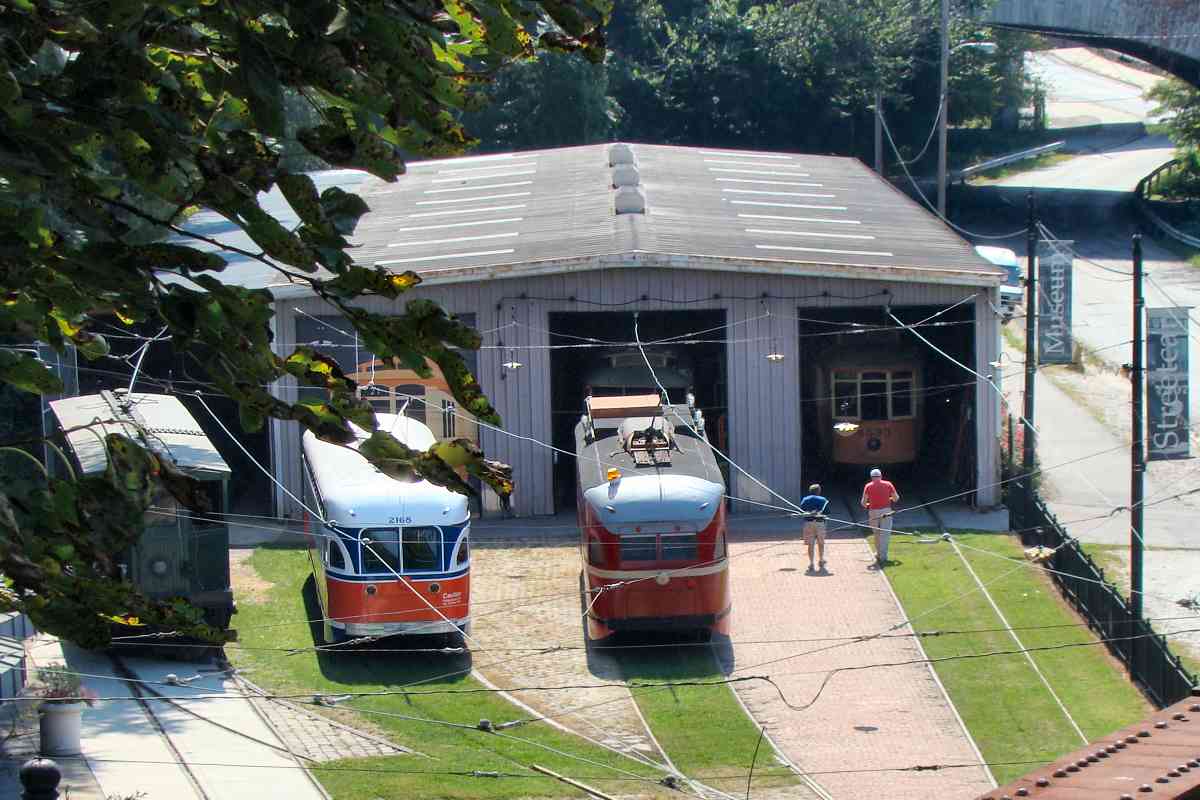
The BSM has a wonderful collection and should be a destination for most any railfan. BSM runs streetcars along part of Ma & Pa's former route.

Links: Baltimore Streetcar Museum


PCC 7407
Photo courtesy Dave Hiteshew

PCC 7407
Mile: 0.2 Date: Mar 2008
Ease: A- View: SE
Area: C TM:
Map: Ba 35 A 9 Topographic Maps

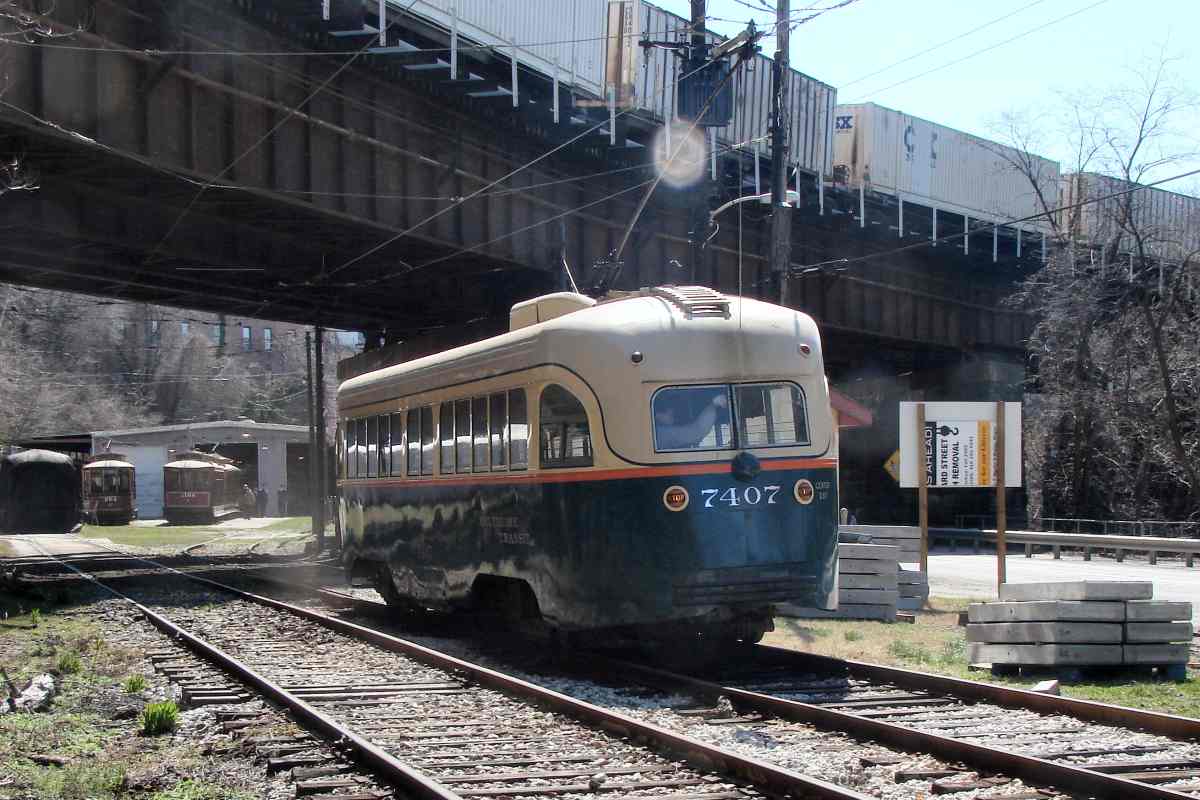
Under B&O's/CSX's Belt Line bridge, BSM exercises their number 7407 built by the Pullman-Standard Car Manufacturing Company during 1944 for the Baltimore Transit Company. Car 7407 was Baltimore's last used in revenue service. It was, and may still be, the only Presidents' Conference Committee (PCC) car that remains operational in the country.

Links: 1980, 2019 CSX derailment


Under B&O
Photo credit John W. Barriger III*

Under B&O
Mile: 0.3 Date: 1941
Ease: A- View: SE
Area: C TM:
Map: Ba 35 A 9 Topographic Maps

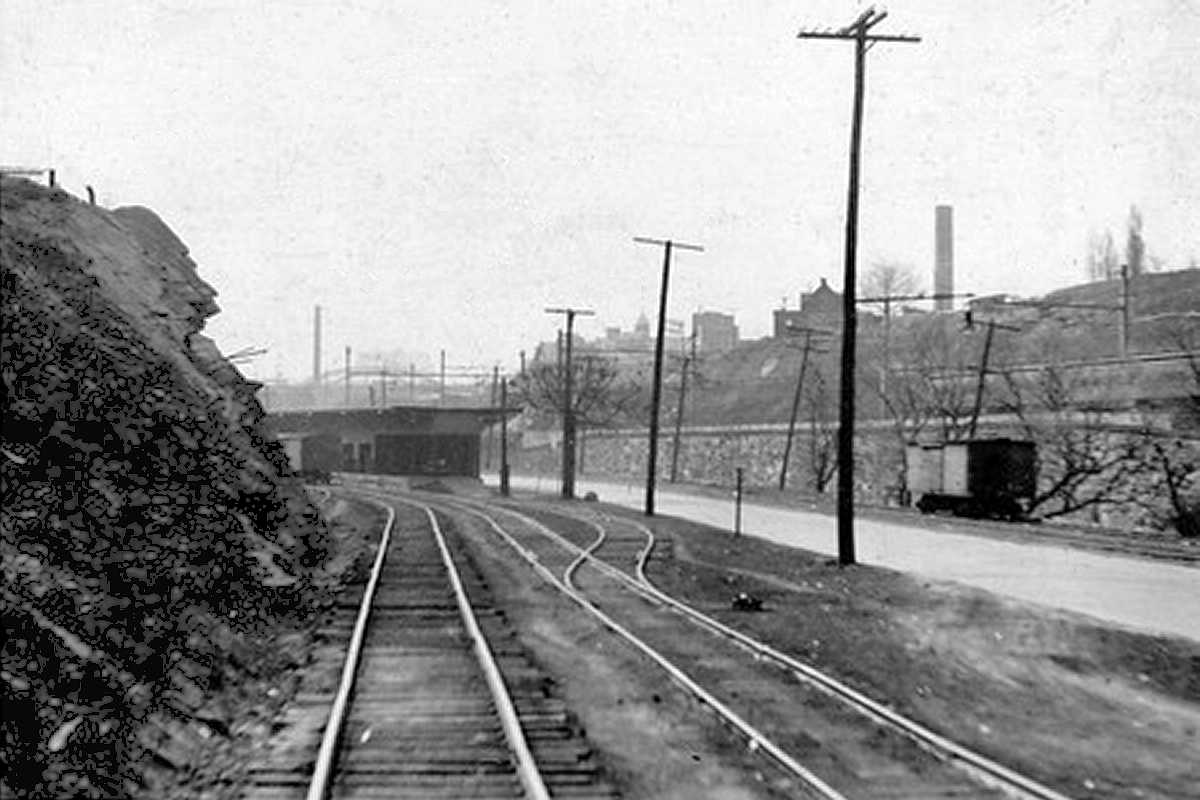
This looks back to the future BSM site and (nearer) B&O's Belt Line bridge. Dirt scratches across the foreground tracks tell us B&O's now-plugged Glen Edwards Avenue underpass (left) was still in use at photo time. Ma & Pa's freight shed is immediately behind the photog.

Change for: B&O Belt Line tour at this site


Freight Shed

Freight Shed
Mile: 0.3 Date: Mar 2020
Ease: A View: N
Area: C TM:
Map: Ba 35 A 9 Topographic Maps

Ma & Pa's freight shed is now used by BSM for storage and as a repair shop. It is the only building in the region where one can still find the Maryland and Pennsylvania name.


Museum Track

Museum Track
Mile: 0.3 Date: Mar 2020
Ease: A- View: NW
Area: C TM:
Map: Ba 35 A 9 Topographic Maps

BSM's track gauge of 5 feet 4.5 inches is wider than standard, replicating that originally required by city law to permit 19th century private wagons to share the rails. Ma & Pa first employed narrow gauge then widened it to standard gauge.


Sharing
Photo courtesy Baltimore Streetcar Museum and Digital Maryland

Sharing
Mile: Date: 1915
Ease: A View: W
Area: B TM:
Map: Ba 43 A 1 Topographic Maps

As demonstrated outside B&O's Camden Station, wagons did sometimes roll on streetcar rails.

Link: photo source


Aerial 1938
Photo courtesy Johns Hopkins University

Aerial 1938
Mile: 0.3 to 0.6 Date: Apr 1938
Ease: View: N (up)
Area: TM:
Map: Ba 35 A 8 Topographic Maps

The freight shed is the cigar-shaped building at lower right. The thin, bright \ diagonal at center is a track that connects Ma & Pa with B&O. It was added during the first decade of the 1900s after Ma & Pa converted to standard gauge. The connection's grade was a steep 4 to 5%. A chute carried dropped coal from the connection down to bins below. Coal was sold at an area called Coalmen's Row at bottom right.

The origin of this connection was none other than Maryland Central Railroad, one of Ma & Pa's progenitors. Maryland Central in 1888 prompted and joined in B&O's construction of the latter's Howard Street Tunnel, but the ambitious railroad soon failed and was auctioned. It was reorganized in 1889 as the Maryland Central Railway.


Reclamation
Photo courtesy Library of Congress

Reclamation
Mile: 0.3 Date: 1974
Ease: View: NW
Area: TM:
Map: Ba 35 B 11 Topographic Maps

Forty feet of elevation difference separate the ex-Ma & Pa at left and B&O perched at right. The steep connection between the two railroads, in the dark area left of the two people, saw its tracks removed by 1974. Nature was already busy reclaiming the route. The freight shed is at lower left.


Interconnect

Interconnect
Mile: 0.4 Date: Nov 2016
Ease: B- View: NW
Area: D+ TM:
Map: Ba 35 A 9 Topographic Maps

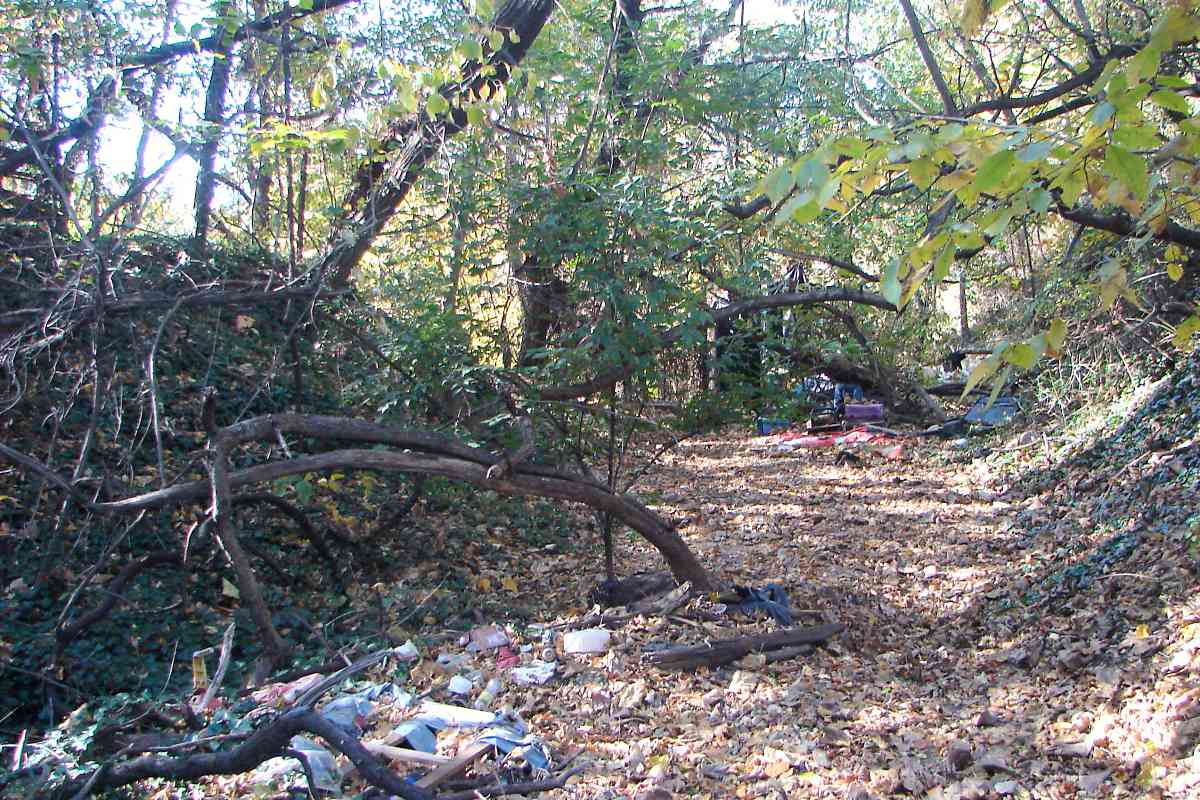
The connection still exists, but only as this overgrown path on which homeless have squatted. An individual had designs on reactivating this route, per links below.

Links: Riffin's RR, the new Northern Central


Back to Freight Shed
Photo credit John W. Barriger III*

Back to Freight Shed
Mile: 0.5 Date: 1941
Ease: A- View: SE
Area: C+ BSTPY: 171
Map: Ba 34 K 8 Topographic Maps

We're looking back to the freight shed. The connection with B&O was atop the ledge at left. Falls Road is on the right. Across the Jones Falls, a stone wall buttresses Northern Central's tracks.

Link: Ma & Pa photos
Change for: Northern Central tour at this site


Lombard Street Bridge

Lombard Street Bridge
Mile: 0.5 Date: Mar 2020
Ease: A View: E
Area: C+ MP:
Map: Ba 34 K 8 Topographic Maps

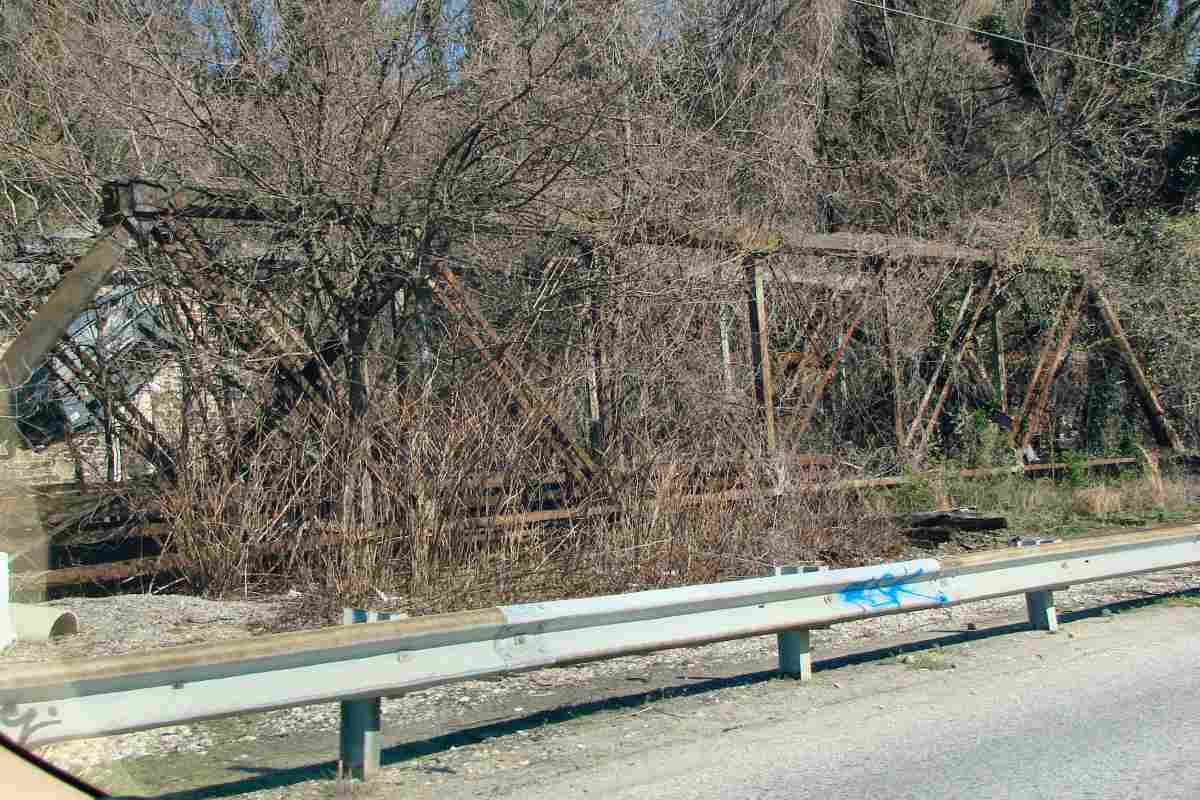
Waiting patiently along the museum's route is Lombard Street Bridge, a Wendell Bollman design built during the 1870s. Arches consisting of water main pipes supported Lombard Street's spanning of Jones Falls. Streetcar lines 5 and 18 crossed the bridge during the 1940s.

The cast iron structure was hauled here for preservation during the 1970s but has yet to find a new home. It waits near the location of the centermost automobile in the photo below.

Link: MHT entry with 1972 photo


Water Supply
Photo credit John W. Barriger III*

Water Supply
Mile: 0.5 Date: 1941
Ease: A- View: SE
Area: C+ MP: 121
Map: Ba 34 K 8 Topographic Maps

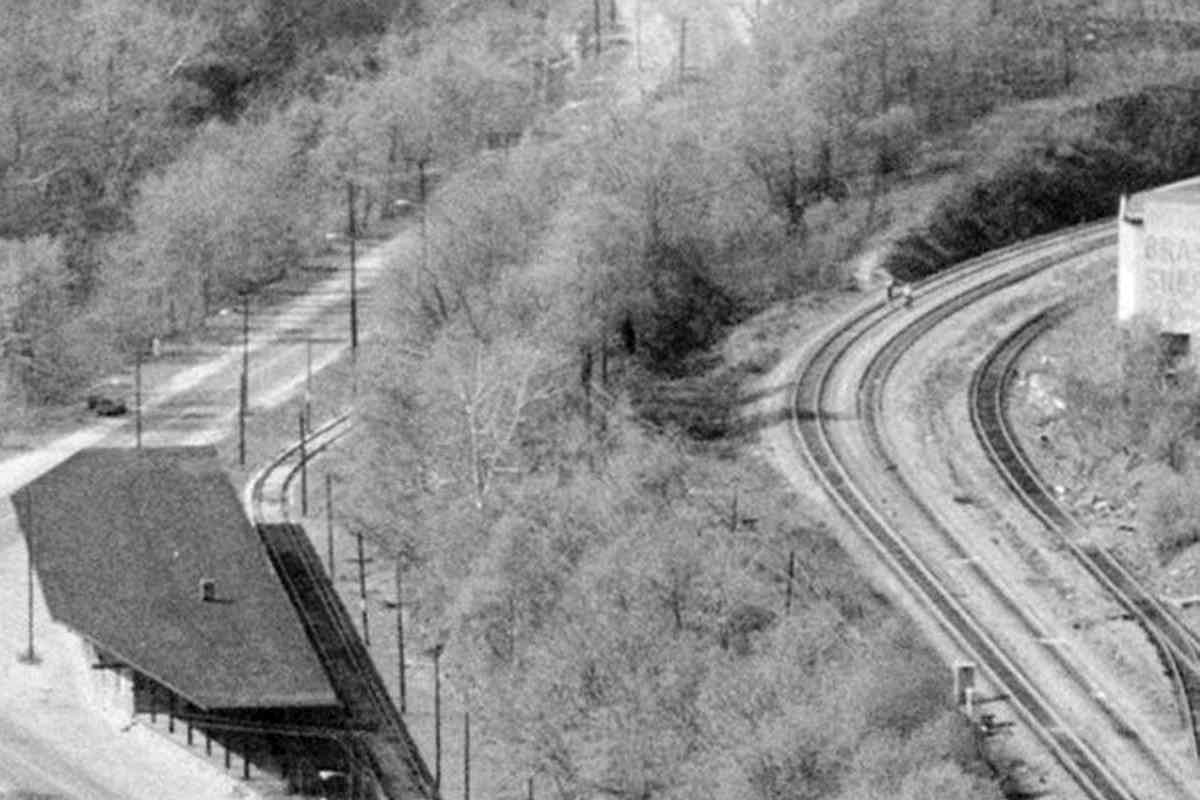
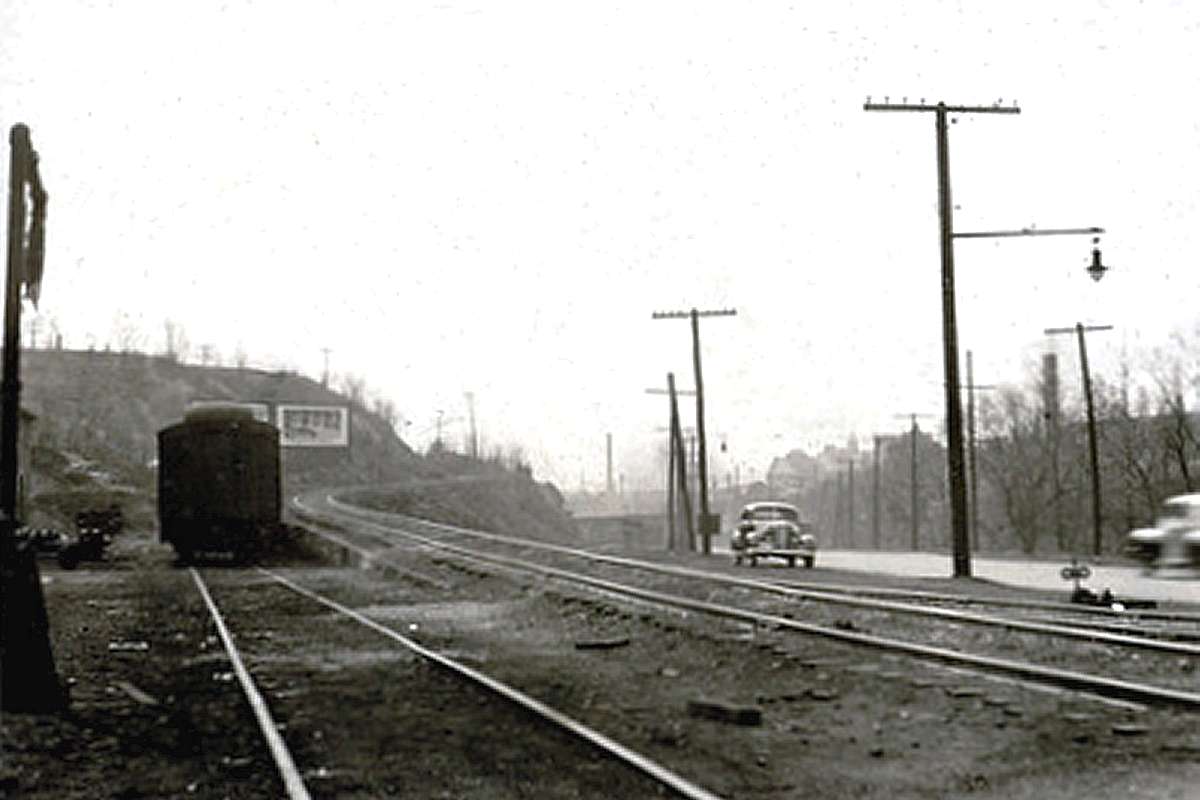
The interchange track with B&O descends along the hillside shelf as it approaches the camera. Trees now obscure modern views.

The pole and spigot on the left supplied water to steam engines. No trackside storage tank was needed because city mains provided the water.

Ma & Pa's roundhouse was off photo left. It will be shown on the next tour page.

Link: Ma & Pa photos


<< Previous (index) | THIS PAGE: Baltimore Jones Falls | Next (north) >>

Or, return to main page

* John W. Barriger III photos © 2005 St. Louis Mercantile Library at the University of Missouri St. Louis
Copyright Notice