
TrainWeb.org Facebook Page
B&O Metropolitan Branch Photo Tour


B&O Metropolitan Branch
Modern day photo tour

Accompanying each photo below are:

Click a photo to see a larger view. Please send your comments and corrections to Steve.

<< Previous (east) | THIS PAGE: QN Tower to University | Next (west) >>

QN Tower
Photo courtesy North American Interlockings
NEW! mid-Sep 2025

QN Tower
Mile: 2.1 Date: Jun 1976
Ease: B- View: NE
Area: C IC2:
Map: DC 10 F 10 Topographic Maps

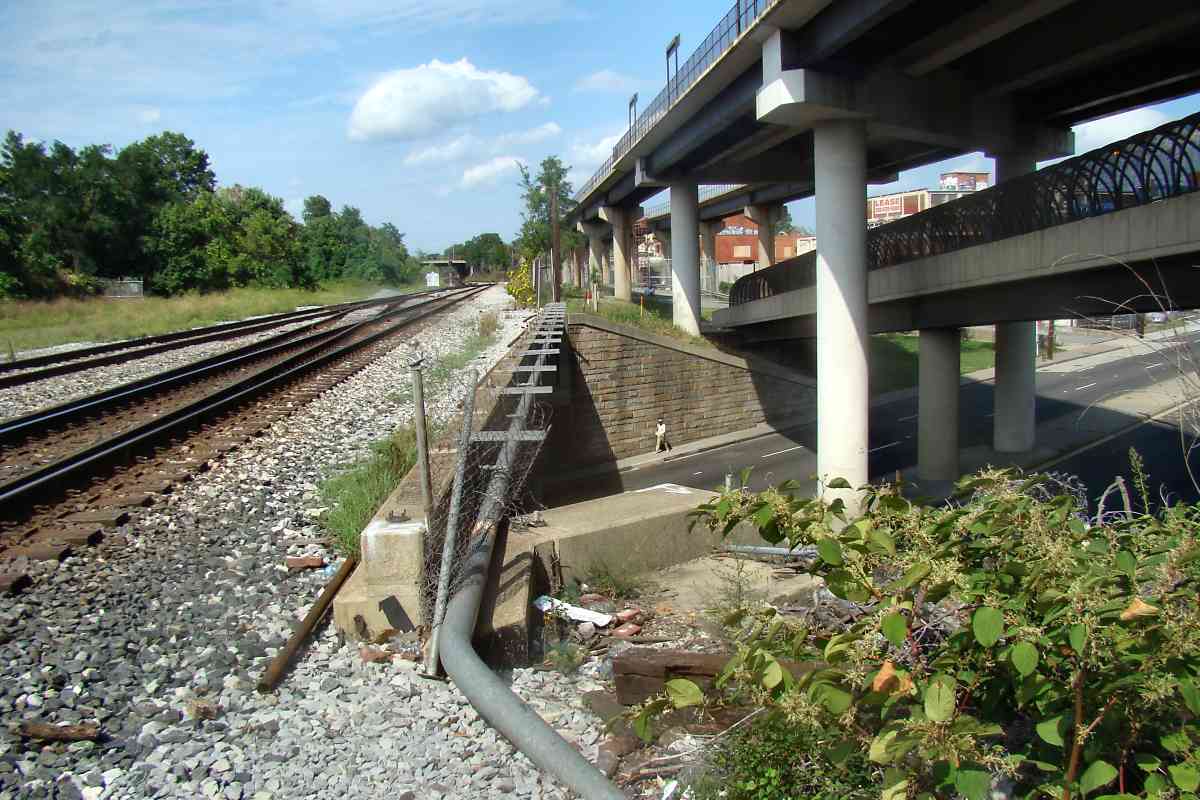
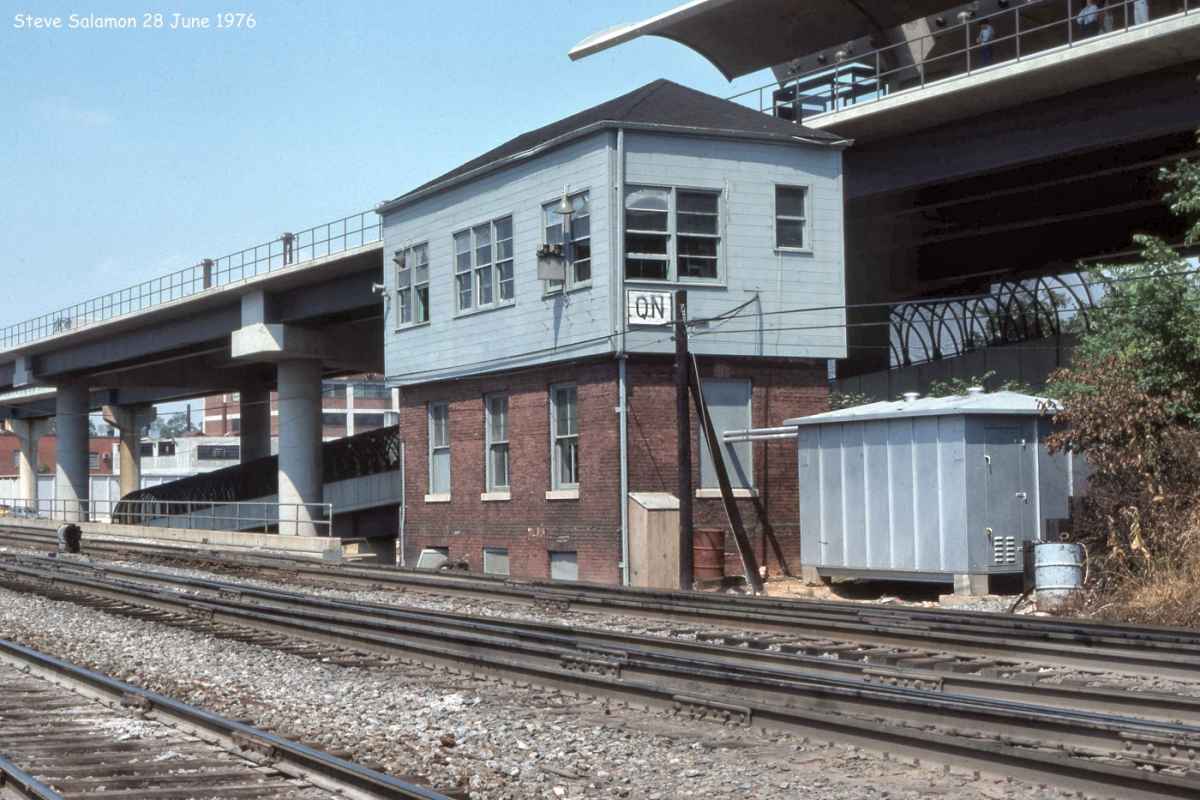
B&O's QN Tower was built in 1906 as part of the improvements associated with the opening of Union Station. QN, initially called Rhode Island Avenue Tower, oversaw train movement at Eckington and Georgetown Junction. The tower closed in 1992 when CSX transferred its operations to Jacksonville, Florida.

B&O's bridge (left) across Rhode Island Avenue looks mundane compared to the sweeping, column-supported Metro and passenger walkways. Metro's first revenue service train operated between here and Farragut North four months prior to this photo.

Links: photo source, 1977


QN Original
Photo courtesy B&O History Collection
NEW! mid-Sep 2025

QN Original
Mile: 2.1 Date: 1950s?
Ease: B- View: S
Area: C IC2:
Map: DC 10 F 10 Topographic Maps

Back when Metro was a figment of someone's imagination, this was QN's original appearance.

Link: QN Tower history


Rhode Island Avenue
Photo courtesy Dave Hiteshew

Rhode Island Avenue
Mile: 2.1 Date: Sep 2008
Ease: B- View: N
Area: C IC2:
Map: DC 10 F 10 Topographic Maps

The photographer is standing at the site of QN Tower. From here north, things are quieter for CSX than they were for B&O, though Metro keeps the former company by paralleling for the next 6 miles.

US 1 was rerouted from Bladensburg Road to Rhode Island Avenue in 1964. US 1 was formerly called Atlantic Highway, a route connecting cities along the eastern US fall line. It was renamed US 1 during the 1920s.

Link: US 1 history in DC


1906 Bridge
Photo courtesy District Department of Transportation (DDOT) Library
NEW! mid-Sep 2025

1906 Bridge
Mile: 2.1 Date: 1940s
Ease: B- View: W
Area: C IC2:
Map: DC 10 F 10 Topographic Maps

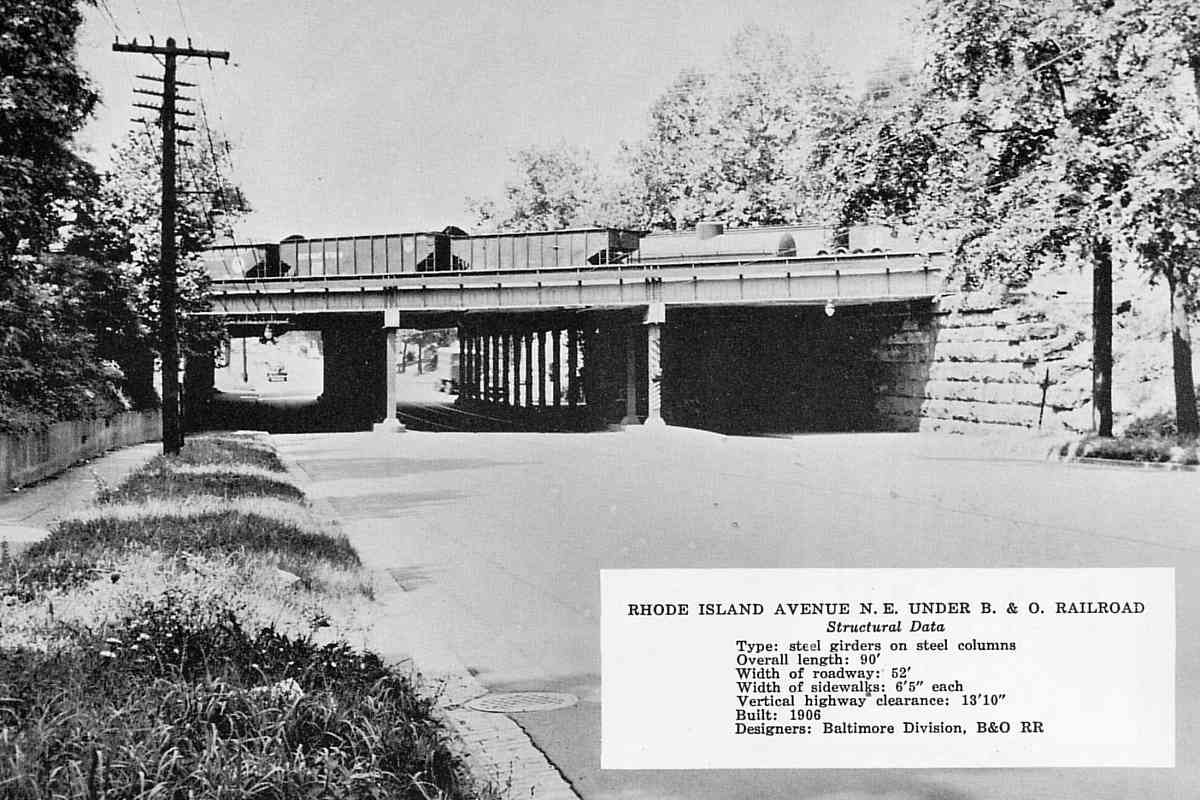
Has Rhode Island Avenue been grade separated since the Met's beginning? I have found no documentation to answer. It was probably separated by the time the Rhode Island Avenue Trolley arrived during the 1890s. Information with this photo reports B&O built this bridge in 1906. The structure would endure about 60 years before giving way to a bridge with room for two more automobile lanes underneath.

Under the middle section, light reflects off the trolley's rails.

Link: DDOT source
Change for: Rhode Island Avenue Trolley tour at this site


1960 Scene
Photo courtesy B&O History Collection
NEW! mid-Sep 2025

1960 Scene
Mile: 2.1 Date: ~1960
Ease: B- View: W
Area: C IC2:
Map: DC 10 F 10 Topographic Maps

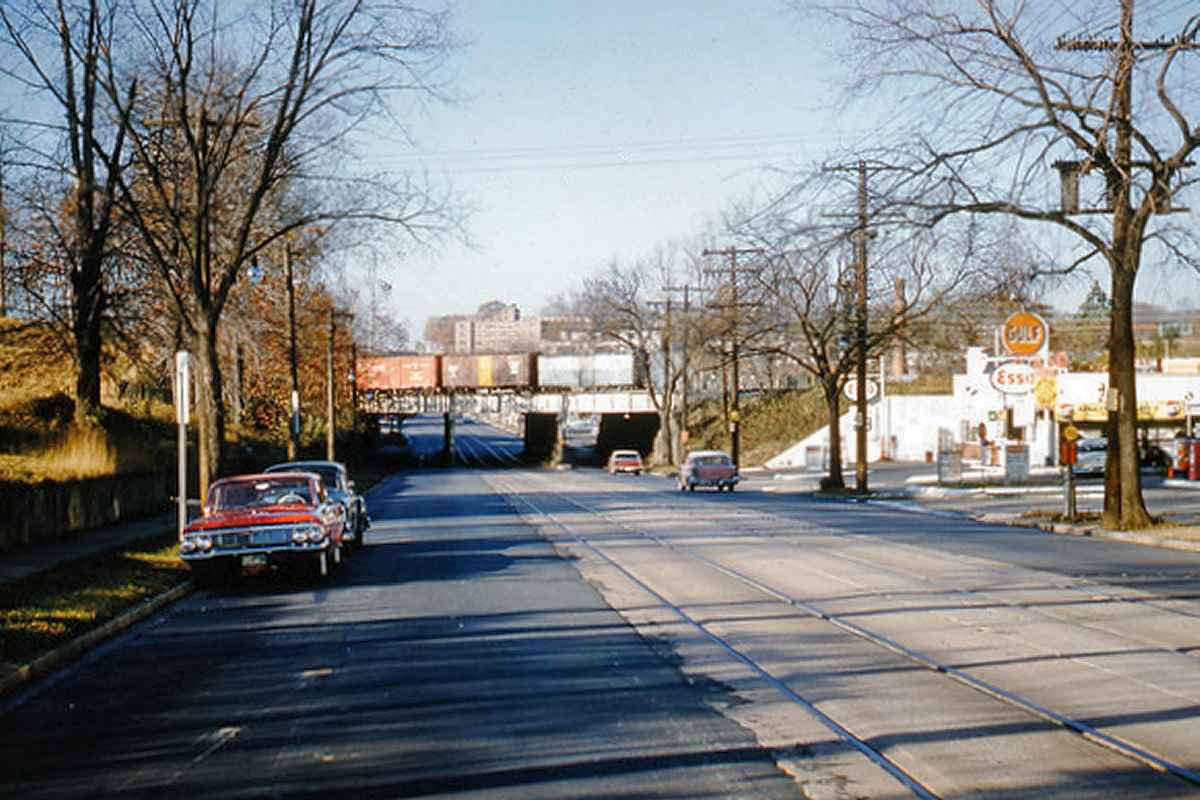
This appears to be a similar view from around 1960.


New Bridges
Photo courtesy District Department of Transportation (DDOT) Library

New Bridges
Mile: 2.1 Date: Apr 1965
Ease: View: N
Area: C IC2:
Map: DC 10 F 10 Topographic Maps

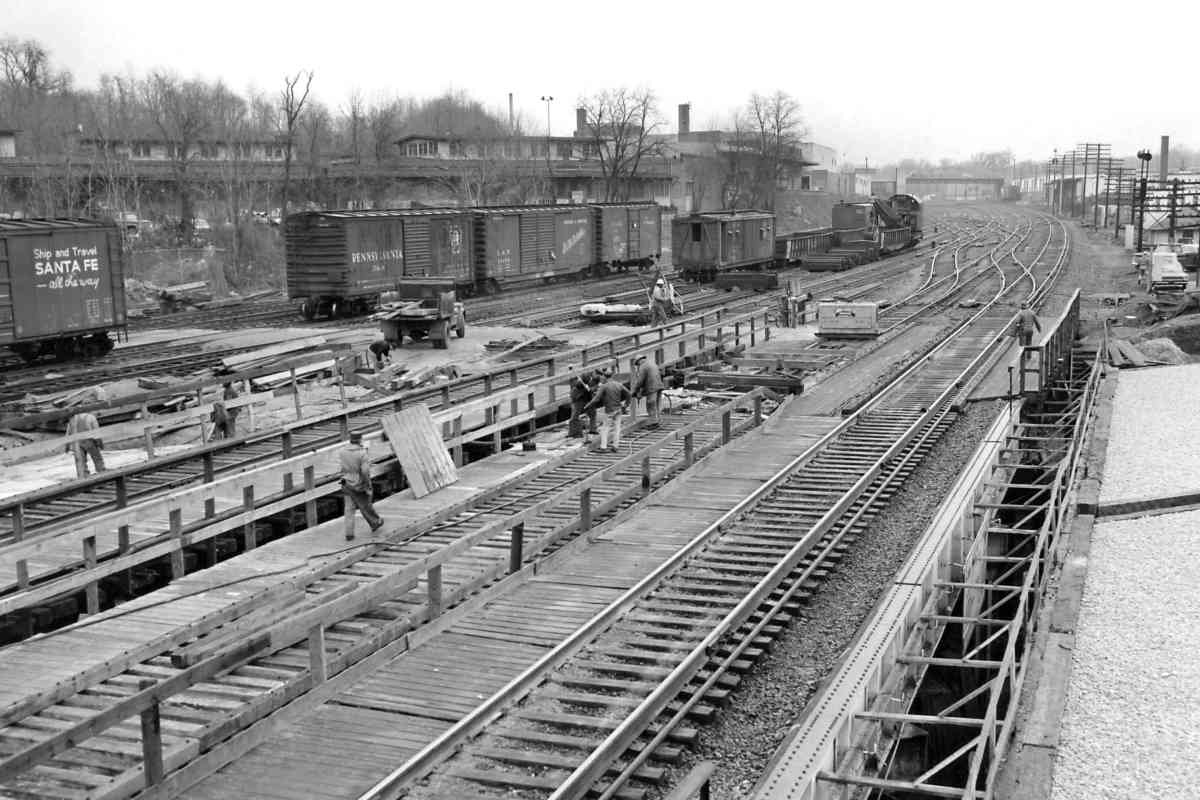
B&O got new bridges over Rhode Island Avenue in 1965, but those for B Yard at left were not used by trains very long because freight handling at Eckington was gradually phased out during the following decades. This photo appears to have been shot from QN Tower while the bridges over Rhode Island Avenue were being upgraded.

The boxcar's slogan at left reads, "Ship and Travel Santa Fe -- all the way". At the time, Santa Fe was the only railroad that connected Chicago and California.

Link: DDOT source


Bridge Construction
Photos courtesy District Department of Transportation (DDOT) Library
NEW! mid-Sep 2025

Bridge Construction
Mile: 2.1 Date: Aug 1964
Ease: B- View: NE
Area: C IC2:
Map: DC 10 F 10 Topographic Maps

I-1 Get busy building or get busy wrecking. The complex process of building a new structure while keeping the old one in service was well underway at photo time. Left to right, the nearest three railcars represent B&O, Western Maryland and Northern Pacific.

Construction signage (left) applies an Interstate 1 shield whereas actually the real I-1 is about 3000 miles away along the West Coast. This may reflect a signmaking error rather than indecision by Interstate numberers.

Links: DDOT source, US 1 signage


Completed
Photo courtesy District Department of Transportation (DDOT) Library
NEW! mid-Sep 2025

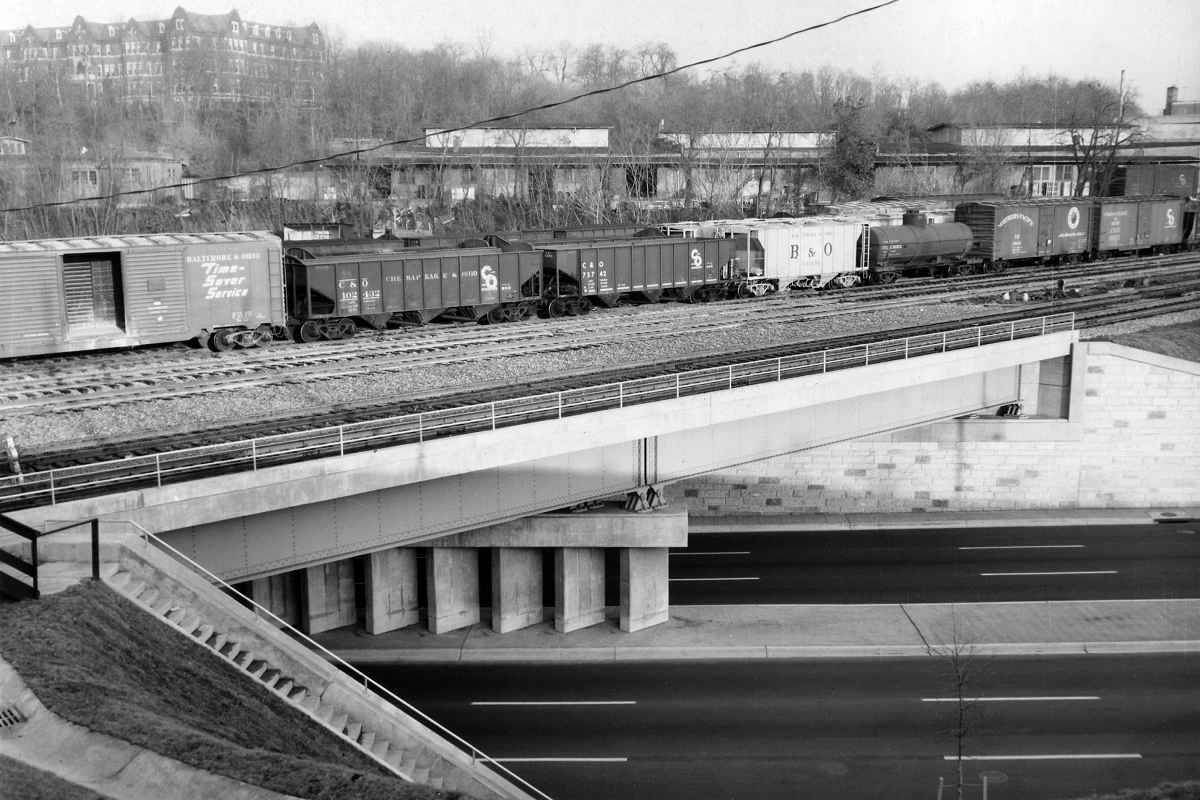
Completed
Mile: 2.1 Date: Dec 1965
Ease: B- View: NW
Area: C IC2:
Map: DC 10 F 10 Topographic Maps

The freshly-completed bridge over Rhode Ialand Avenue poses for the camera during December 1965. That's all it takes, really. Pressure and time.

The leftmost boxcar promotes Time-Saver Service, a less-than-carload, express transport service B&O introduced around 1950. C&O 102432 is the nearest coal hopper; it bears the "C&O For Progress" slogan. The distant Northern Pacific boxcar advertises the road as the "Main Street of the Northwest".

Link: DDOT source


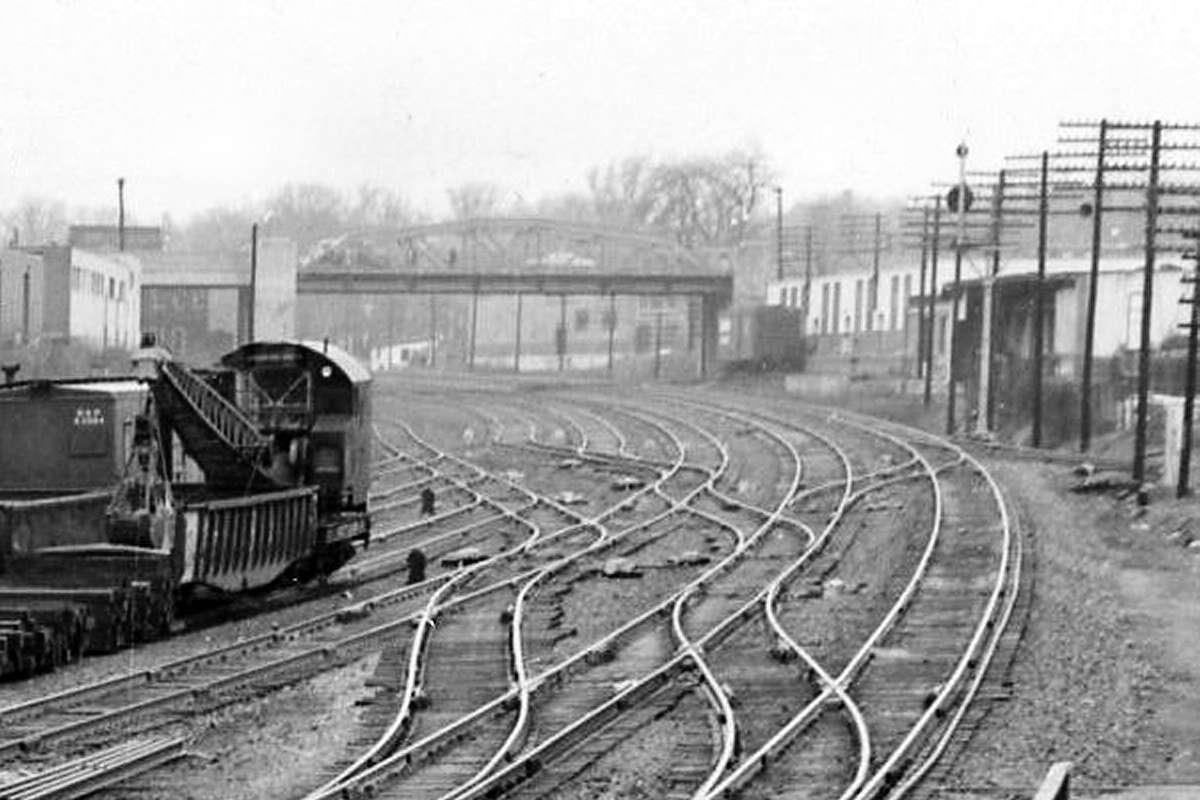
Zoom North
Photo courtesy District Department of Transportation (DDOT) Library
NEW! mid-Sep 2025

Zoom North
Mile: 2.1 Date: Apr 1965
Ease: B- View: N
Area: C IC2:
Map: DC 10 F 10 Topographic Maps

Eckington Yard trackage extended north of QN Tower as evidenced by the plethora of track switches. Sidings on the right served local businesses such as Capitol Ink, Merkle and the Rinaldi Coal Company whose trackside silos stood into the 1990s. Franklin Street bridges in the distance.

Links: DDOT source, Rinaldi Coal silos 1994


From Above
NEW! mid-Sep 2025

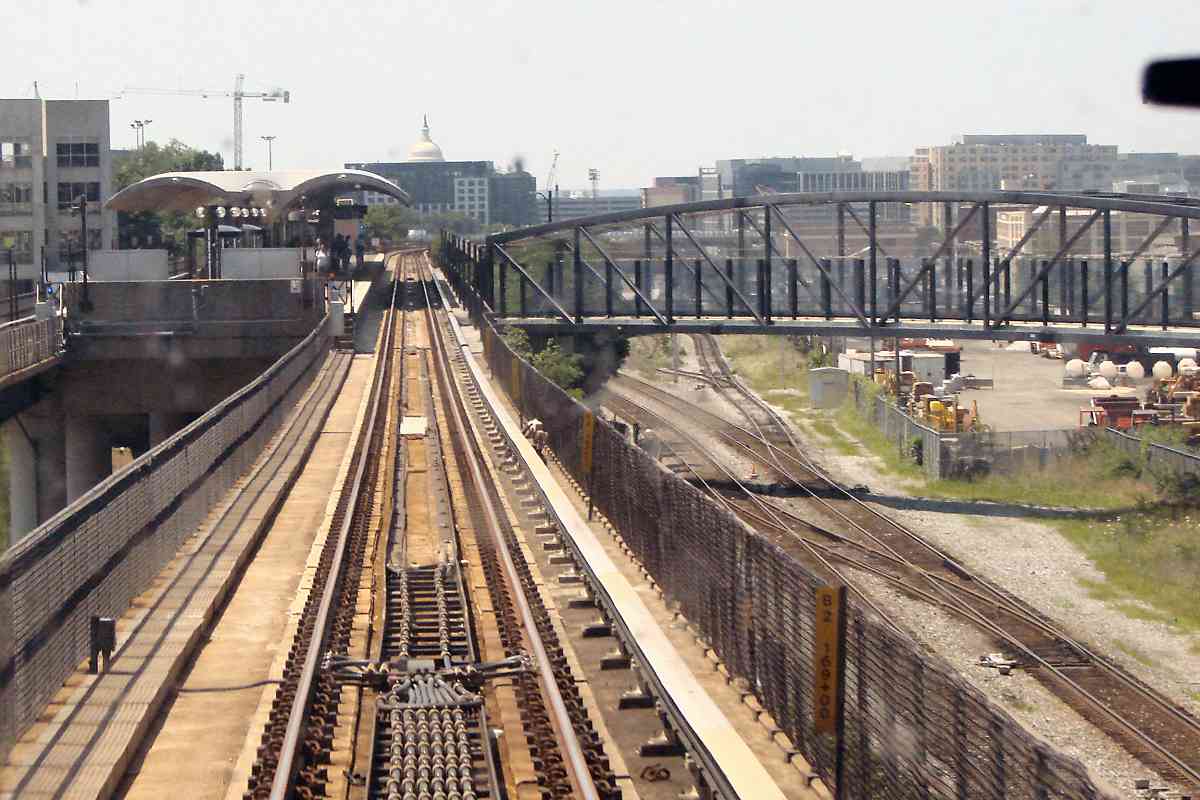
From Above
Mile: 2.2 Date: Jul 2019
Ease: B View: S
Area: B IC2:
Map: DC 10 F 10 Topographic Maps

If QN Tower had not yet been removed, it would be visible near photo center. The elevated walkway appears to lead to the Metro tracks but in reality leads to the station. The US Capitol dome is visible in the distance.


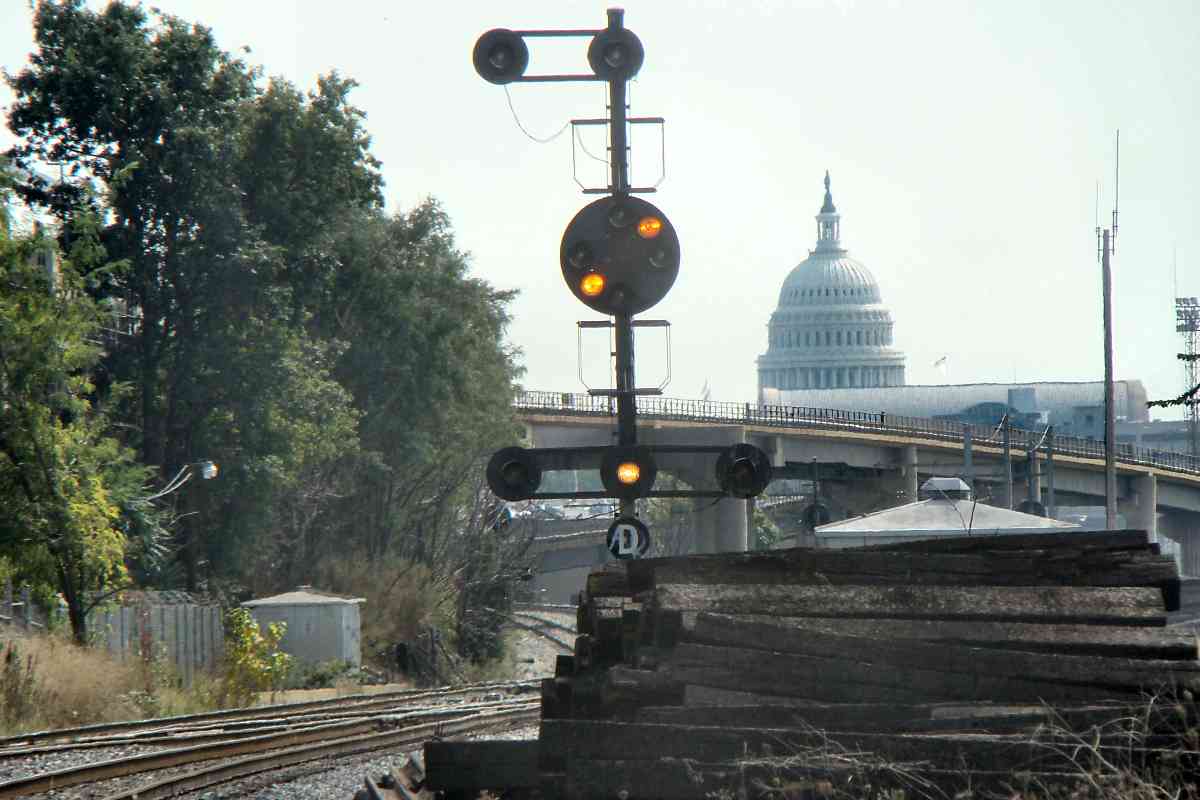
Looking Back
Photo courtesy Dave Hiteshew

Looking Back
Mile: 2.3 Date: Sep 2008
Ease: B View: S
Area: C IC2:
Map: DC 10 F 9 Topographic Maps

The last call to look back and see the US Capitol comes from the Metropolitan Branch Trail that parallels the tracks. The bridge carries Metro's Red Line over the ex-B&O tracks while the CPL signal advises Rule 286: "Proceed at medium speed, preparing to stop at next signal and be governed by the indication displayed by that signal."

QN Tower stood on the left.

Links: 1992, 1992, Trail


Franklin Street
Photo courtesy District Department of Transportation (DDOT) Library
NEW! mid-Sep 2025

Franklin Street
Mile: 2.4 Date: 1940s?
Ease: B View: W
Area: C IC2:
Map: DC 10 F 9 Topographic Maps

Grade separation at Franklin Street was one of several Depression Era Federal Aid projects. Metro would later be built through the nearer underpasses.

Link: DDOT source


8th Street
Photo courtesy Dave Hiteshew

8th Street
Mile: 2.4 Date: Sep 2008
Ease: A View: NE
Area: C IC2:
Map: DC 10 F 9 Topographic Maps

The shape of these warehouses along 8th Street just north of Franklin Street, as well as their proximity to the Met tracks (right), suggest they once had sidings. Please chime in if you know what these buildings had housed. The number of customers served directly from the Met has dwindled to but a few.


Center
Photo courtesy Dave Hiteshew

Center
Mile: 2.9 Date: Sep 2008
Ease: A View: S
Area: C IC2:
Map: DC 10 F 8 Topographic Maps

The view back from the Monroe Street bridge shows Metro's electric trains, which can dip and rise more easily than heavy freights, scoot underneath the latter to emerge in the middle. Putting Metro in the middle of the CSX tracks, rather than along side, permits CSX to continue to offer freight service along both sides of the Met.

This is where the Met finally curves west from its north and even northeast heading out of DC.


Brookland
Photo courtesy Dave Hiteshew

Brookland
Mile: 3.0 Date: Sep 2008
Ease: A View: NW
Area: C+ IC2:
Map: DC 10 F 8 Topographic Maps

Shortly after its tracks squeeze between those of CSX, Metro's Brookland-CUA station further sandwiches itself between Monroe Street and Michigan Avenue. CUA and University refer to The Catholic University of America. Found on the CUA campus is the Thomas W. Pangborn building; to my knowledge, Thomas is not related to B&O promoter Joseph Pangborn.

This is one of few Metro stations built on a curve. Station canopies never extend the full length of the platform, presumably to accomodate those who hope for solar redemption.

Prior to Metro, B&O's University Station had been located in the shadow of the Michigan Avenue bridge ahead.


Michigan Avenue
Photo courtesy District Department of Transportation (DDOT) Library
NEW! mid-Sep 2025

Michigan Avenue
Mile: 3.1 Date: 1940s?
Ease: B View: SE
Area: C+ IC2:
Map: DC 10 F 8 Topographic Maps

Michigan Avenue was grade separated in 1937. B&O's University Station is at left.

Link: DDOT source


University Station
Photo courtesy B&O History Collection

University Station
Mile: 3.1 Date: Aug 1962
Ease: B View: SW
Area: C+ IC2: 221
Map: DC 10 F 7 Topographic Maps

Dating to 1890, University Station may have been the line's smallest station of masonry construction, mostly stone. Even its chimney was made of stone. Its west side featured a covered entrance for carriages. Both this station and the first two CUA buildings were designed by E. Francis Baldwin. A similar station stood in Winchester, Virginia. Earlier, a station named Brooks was here.

Link: University Station ~1950


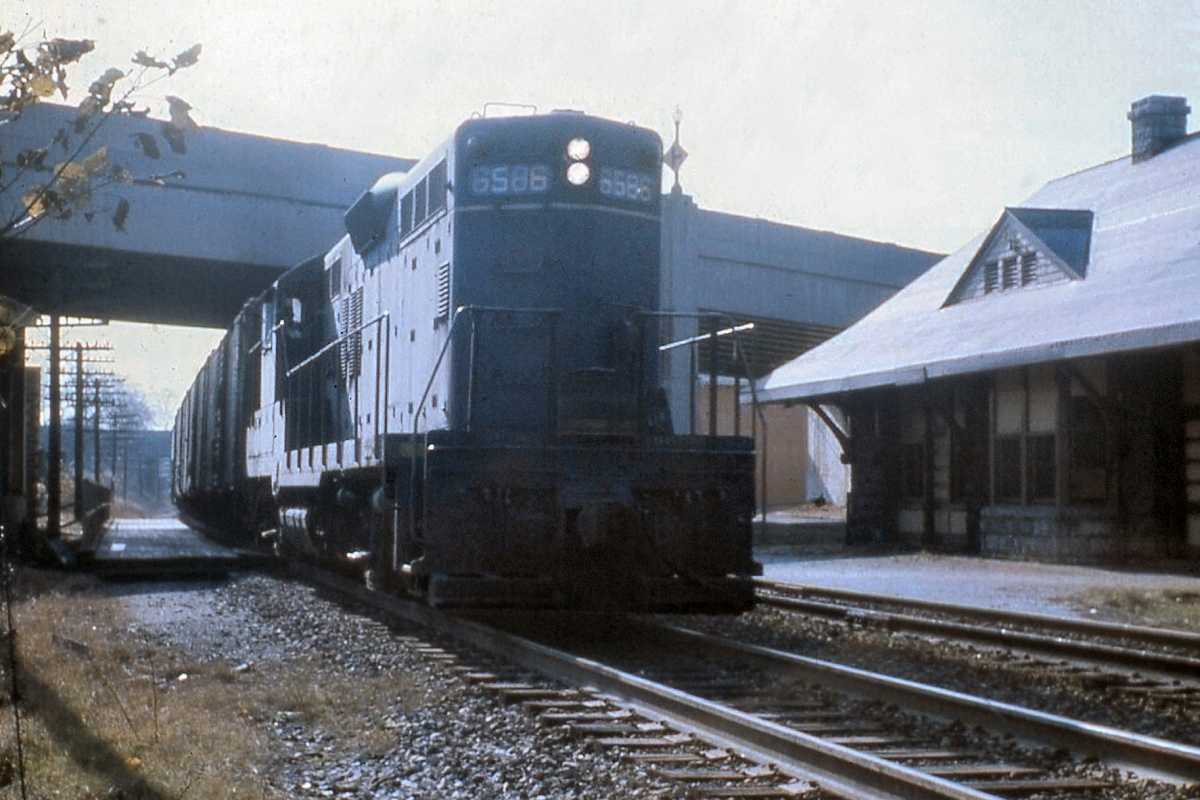
B&O 6586
Photo courtesy B&O History Collection
NEW! mid-Sep 2025

B&O 6586
Mile: 3.1 Date: Oct 1965
Ease: B View: S
Area: C+ IC2:
Map: DC 10 F 7 Topographic Maps

The station was demolished a few years after this photo to make room for Metro. That's the Michigan Avenue overpass overhead.


Four Trains
Photo courtesy Dave Hiteshew

Four Trains
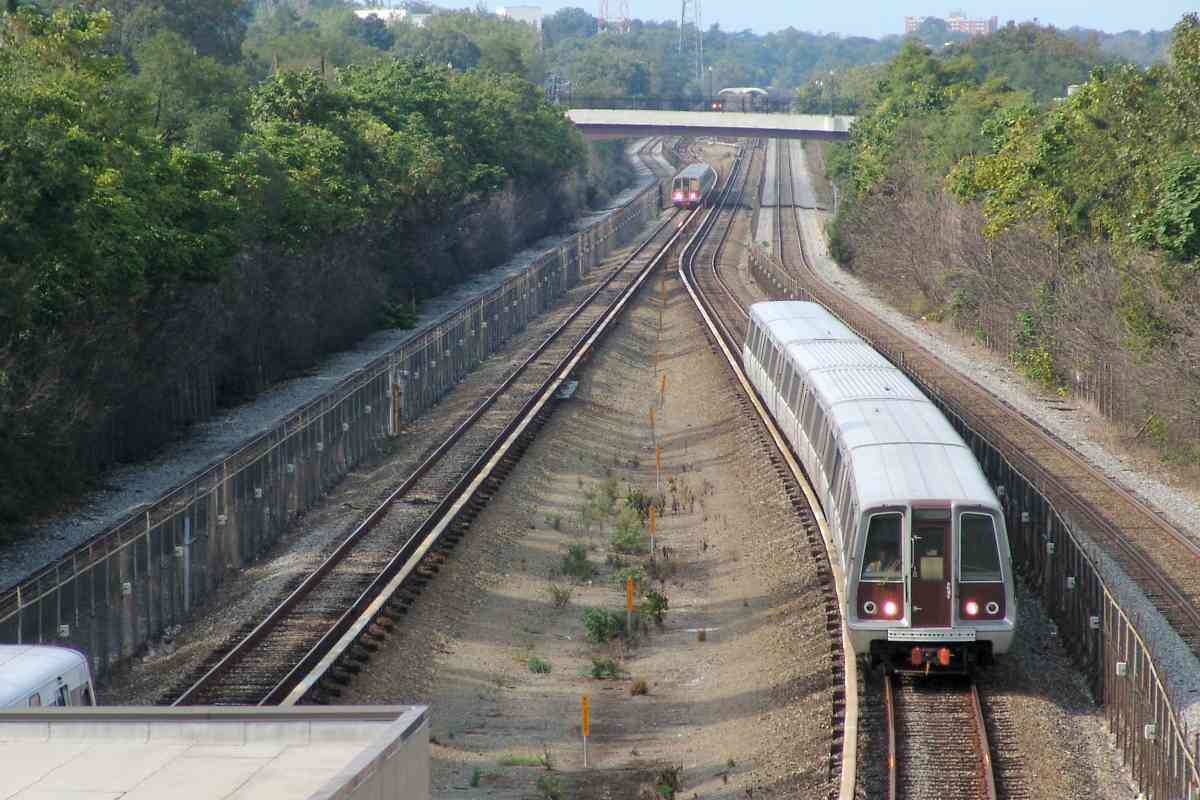
Mile: 3.1 Date: Sep 2008
Ease: A View: N
Area: C+ IC2:
Map: DC 10 F 7 Topographic Maps

The afternoon commuter rush is underway at 4 pm. Overpasses like Michigan Avenue provide an easy view of the action as Metro leads CSX by 4 trains to 0. That's the north end of Brookland Station at bottom left. Taylor Street bridges in the distance.


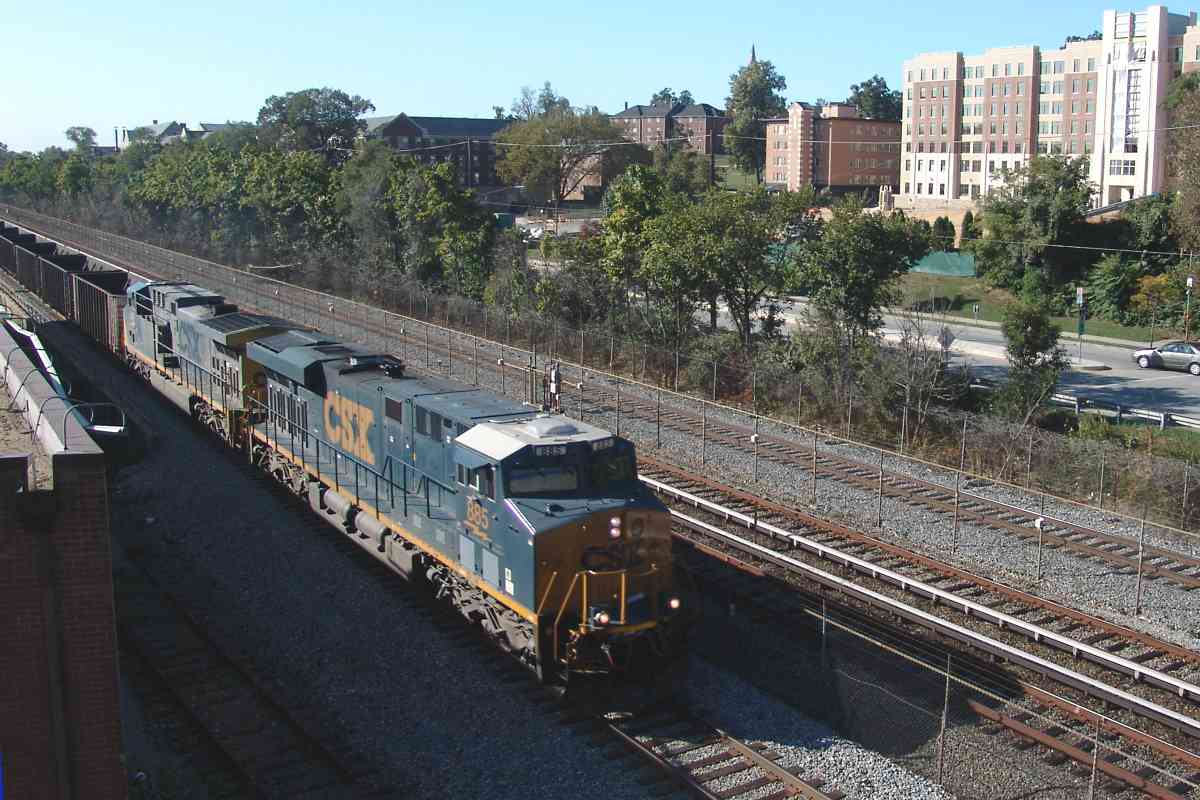
CSX 885
Photo courtesy Dave Hiteshew

CSX 885
Mile: 3.5 Date: Sep 2008
Ease: A View: SW
Area: B- IC2:
Map: DC 10 E 6 Topographic Maps

CSX 885 demonstrates that more than Metro runs here. The Met climbs out of Washington's Potomac River lowlands at varying grades of up to about 1.5%. Note the disused siding in the shadows at bottom left.


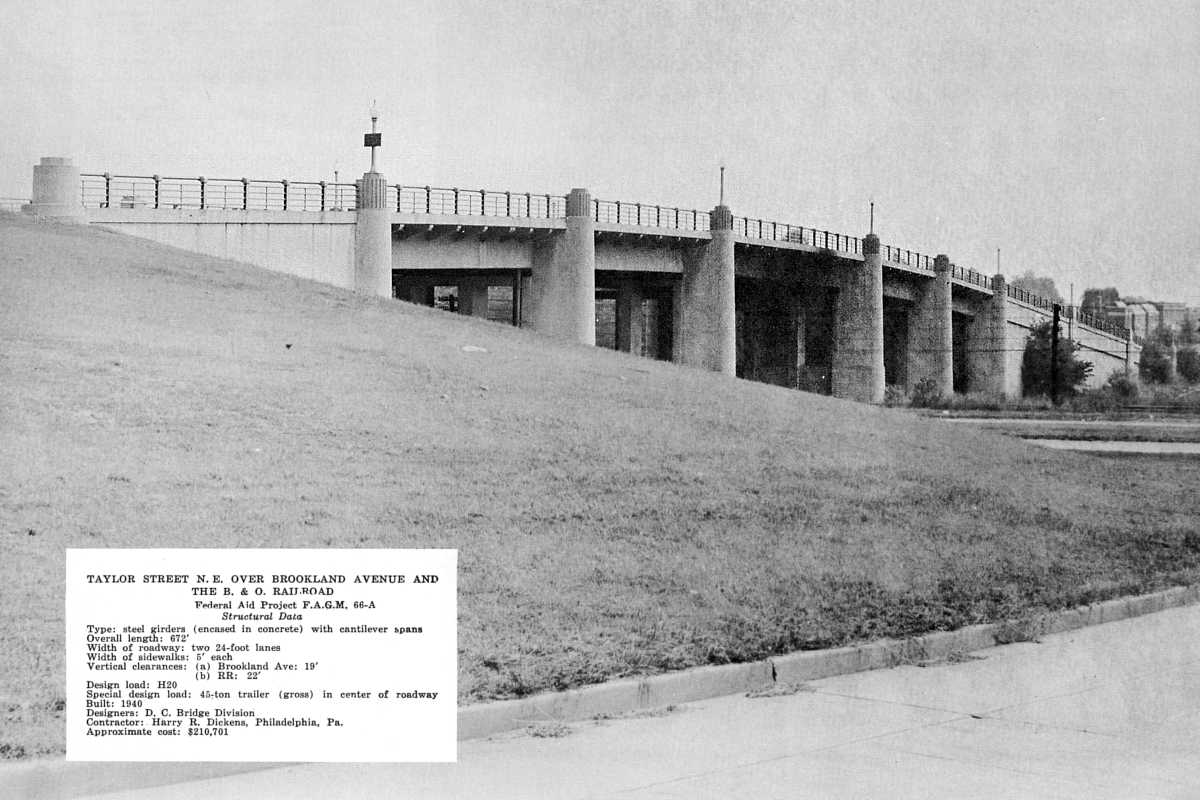
Taylor Street 1950
Photo courtesy District Department of Transportation (DDOT) Library

Taylor Street 1950
Mile: 3.5 Date: ~1950
Ease: A View: E
Area: B- IC2:
Map: DC 10 E 6 Topographic Maps

Grade separation for a nearby Bates Road grade crossing, site of B&O's Queenstown Station, arrived in 1940 via this Taylor Street bridge. This bridge version was partly torn down in 1967 to make room for the North Central Freeway. Work was halted for two years by successful challenges from local homeowners, then the demolished portion was rebuilt. After about 40 years, that bridge was rehabilitated.

Links: DDOT source, freeway fight


Taylor Street 2008
Photo courtesy Dave Hiteshew

Taylor Street 2008
Mile: 3.5 Date: Sep 2008
Ease: A View: NW
Area: B- IC2:
Map: DC 10 E 6 Topographic Maps

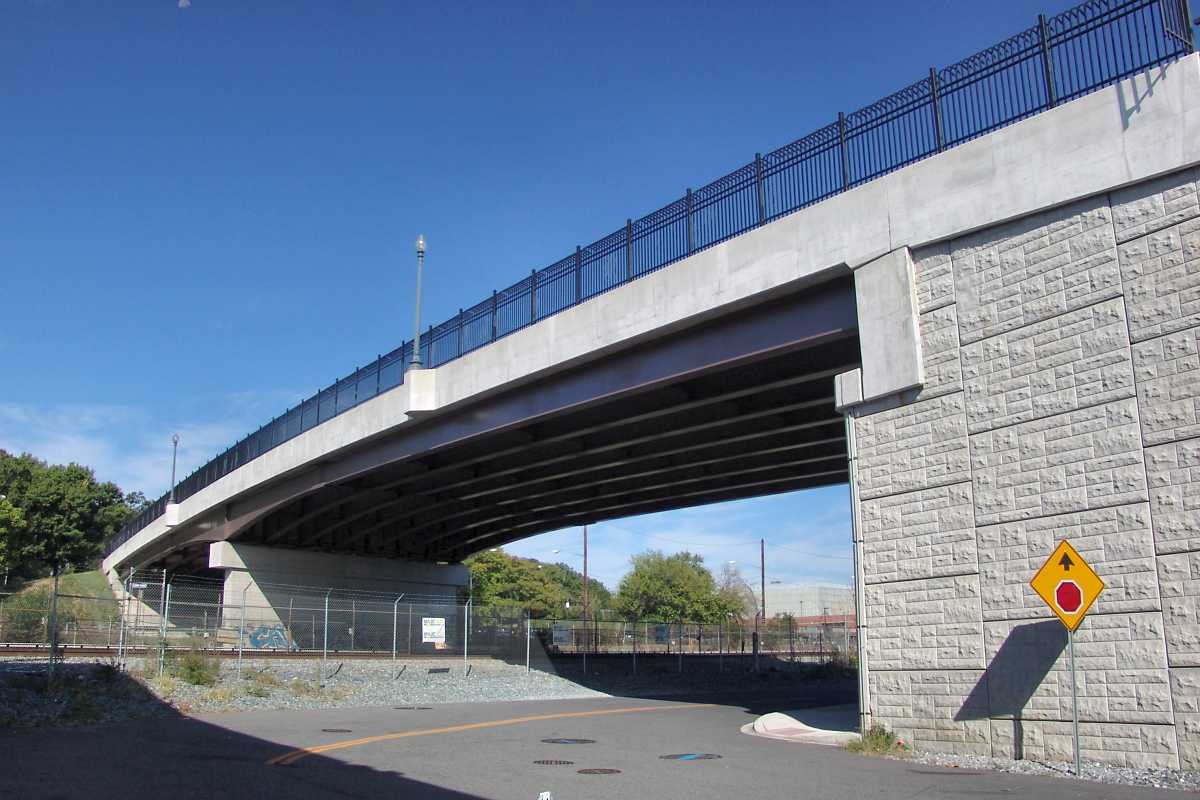
There are places in this world that aren't made out of stone. Patterned concrete is the hallmark of a recently updated bridge.


<< Previous (east) | THIS PAGE: QN Tower to University | Next (west) >>

Or, return to main page for other tours.

Copyright Notice