




 |
An Introduction
to The Callington Branch |
|
|||
|
|||||
This page is a brief introduction to the former Callington Branch railway line from Bere Alston to Callington. The terminus at Callington and most of the branch were situated in the county of Cornwall, but the junction at Bere Alston is located in the adjacent county of Devon. For more detailed information about various aspects of the railway please click here for an Index of all Callington Branch pages in RailWest.
 |
 |
|
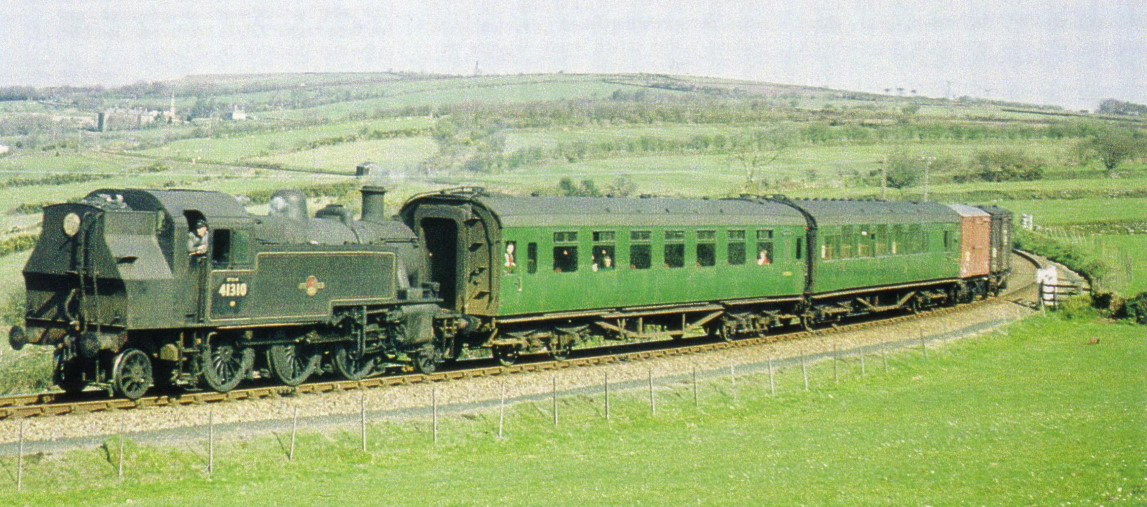
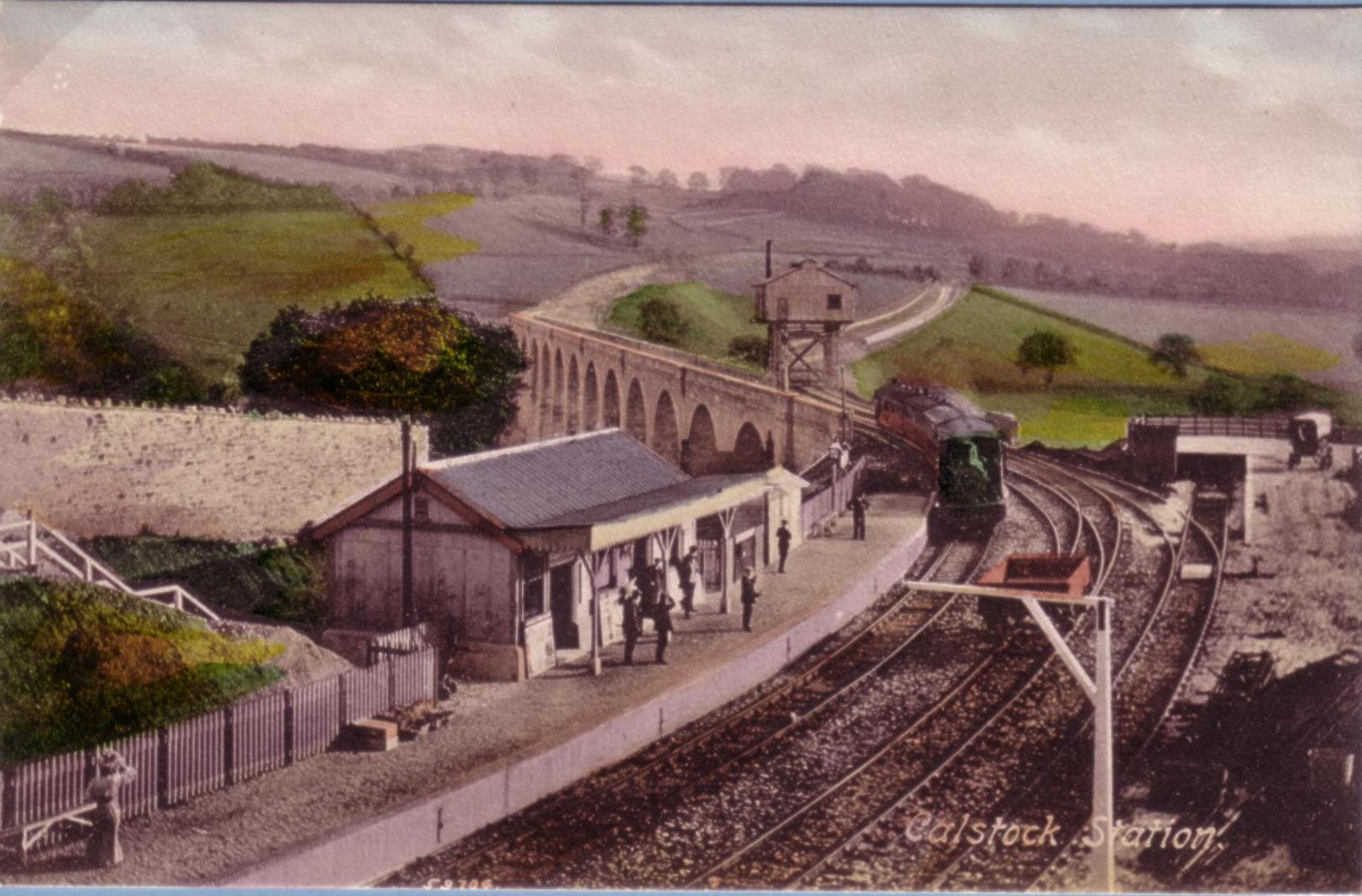
| A Callington Branch train in the 1960s | Calstock station circa-1908 |
The town of Callington is situated in the east of the county of Cornwall, in an area that once supported many mines and quarries. In 1872 the 3' 6" narrow-gauge East Cornwall Mineral Railway (ECMR) was opened to connect Callington and the mines to the quay on the River Tamar at Calstock. The line had been promoted originally as the "Tamar, Kit Hill and Callington Railway", and then became the "Callington and Calstock Railway", but it is best known as the ECMR and that name is used in these pages. The ECMR actually started at Kelly Bray, about 1¼ miles north of Callington itself, but the name 'Callington' is used in these pages as a general description for the western terminus. At its eastern end the line connected with a long rope-worked incline down to various sidings on the quays at Calstock.
In 1891 the ECMR was purchased by the nearby Plymouth, Devonport & South Western Junction Railway (PD&SWJR). The PD&SWJR line from Devonport (near Plymouth) to Lydford was leased to the London & South Western Railway (L&SWR), who worked it as part of their main line from Exeter to Plymouth. The PD&SWJR subsequently extended the ECMR eastwards to a new junction at their existing station at Bere Alston, crossing the River Tamar on a high viaduct at Calstock. At the same time the line was re-gauged to the 4' 8½" standard gauge, upgraded to carry passenger trains, and thereafter was worked as a Light Railway. New stations were built along the line to replace the old mineral depots of the ECMR and the signalling was upgraded to Light Railway standards. The new line opened in 1908 and appears to have become known generally as simply the Calstock Light Railway.
The Callington Branch followed a fairly tortuous route, with many steep gradients and sharp curves, and there was an overall maximum speed limit of 25mph. From Bere Alston the line runs down towards the River Tamar and then across Calstock Viaduct into Calstock station, which is on a sharp curve. From here the the line rises over 400 feet in the next 2½ miles until it reaches the the next station at Gunnislake, which was the main intermediate station and the only passing-loop on the line. From Gunnislake the line ran roughly westwards through intermediate stations at Chilsworthy, Latchley, Seven Stones Halt and Luckett, before finally reaching the terminus at Callington. Between Gunnislake and Callington there were also several intermediate sidings serving various mines and quarries. The total length of the branch was 9 miles 60 chains.
The PD&SWJR operated the line as an independent railway until 1922, when the company was absorbed by the L&SWR. In 1923 the L&SWR then became part of the Southern Railway at the "Grouping" of the major railways in Great Britain. When the railways were nationalised in 1948 the branch came under the control of the Southern Region of British Railways, although subsequently it was transferred to the Western Region. During the early 1960s the freight traffic declined and in 1966 the line was closed completely from Callington to the intermediate station at Gunnislake, but the rest of the branch from Gunnislake to Bere Alston remained open for passenger traffic. In 1968 the former L&SWR main line was closed north of Bere Alston and in 1970 the remainder was reduced to single track. Gunnislake is now the terminus of a long single-track line from Plymouth via Bere Alston, which is operated as a single branch.
The history of the Callington Branch can be divided therefore fairly neatly into four distinct periods, namely:-
and these periods are used when describing the branch in the various RailWest pages. In general the detailed coverage in RailWest ceases circa-1970, but some information is provided about subsequent changes (eg the new Gunnislake station opened in 1994).
© CJL Osment 2012-19. All images from WCRA collection.
|
|||||||
| © West Country Railway Archives 2012 Page last updated: 26 December 2019 |
URL: http://www.railwest.org.uk E-Mail: railwest@bigfoot.com |
||||||