




After fifty-nine years of electric service, in war and in peace, in boom and in bust, the streetcar era on the Hamilton Street Railway came to a close on April 6, 1951. But the reasons why streetcar service ended go back several years.
By the end of the Second World War, the Hamilton Street Railway's streetcar network was in poor shape. During the Great Depression the decline in ridership mean that the company had cut maintenance in order to save money. This was then followed by extremely high service loads during WWII. During the war years while there was finally money available to undertake repair work, the war effort meant that there was no steel available for new tracks except in the most dire needs, and so by 1945 the trackwork had seen nowhere near enough of the upkeep it needed for 15 years. There had also been no new streetcars bought during this time. The HSR's newest streetcars were the 500 series cars built by National Steel Car between 1927 and 1929. These streetcars had also been used hard with relatively low maintenance for a long time, and as a result were wearing out.
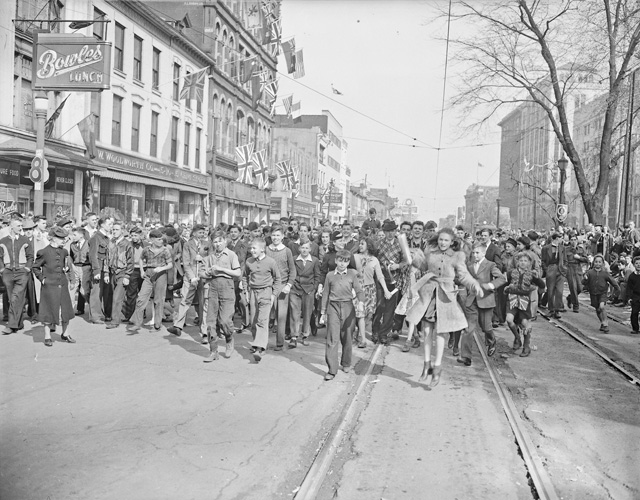
King St at Gore Park on VE Day. Notice in the foreground the condition of the streetcar tracks after years of neglect (Photo courtesy of the Hamilton Public Library, Local History & Archives, used with permission)
The HSR was owned by the Ontario Hydro-Electric Commission, and by this point was the last transit system owned by the power company. At one point the Commission had owned several electric railroads and transit systems in Ontario, acquired when the provincially owned power company had bought up the private power companies that owned those railroads, but by this point all of them had been shut down except the HSR. On June 12 1945 the City of Hamilton reached out to the Commission about buying the HSR. On June 29 the Commission offered the HSR to the City of Hamilton for $2 Million. After the City of Hamilton conducted their own appraisal of the value of the HSR's assets, a price of $1.3 million was agreed on November 1. This offer was voted on by Hamilton ratepayers as part of the December 3, 1945 municipal election, who rejected it by a vote of 11950 to 10112 (54.17% to 45.83%)
On February 14, 1946, HSR general manager George Waller detailed to Hamilton city council the magnitude of reconstruction required, saying that it would take more than 3 years to rebuild the entire system. Faced with a large bill for capital upgrades at a time when the provincial power grid was suffering brown outs as the post war boom began, the Commission decided to get rid of the HSR in the spring of 1946. It was again offered to the City of Hamilton on April 15 for the purchase price of $1.3 Million.
On April 29 Hamilton city council voted 11-10 not to bring the proposal to the ratepayers, thereby declining the offer. Most of those who voted no did so based on the response of the voters five months earlier, saying it was too soon after that vote to approach them again. And so the Ontario Hydro-Electric Commission put the HSR up for sale by tender on June 4, 1946.
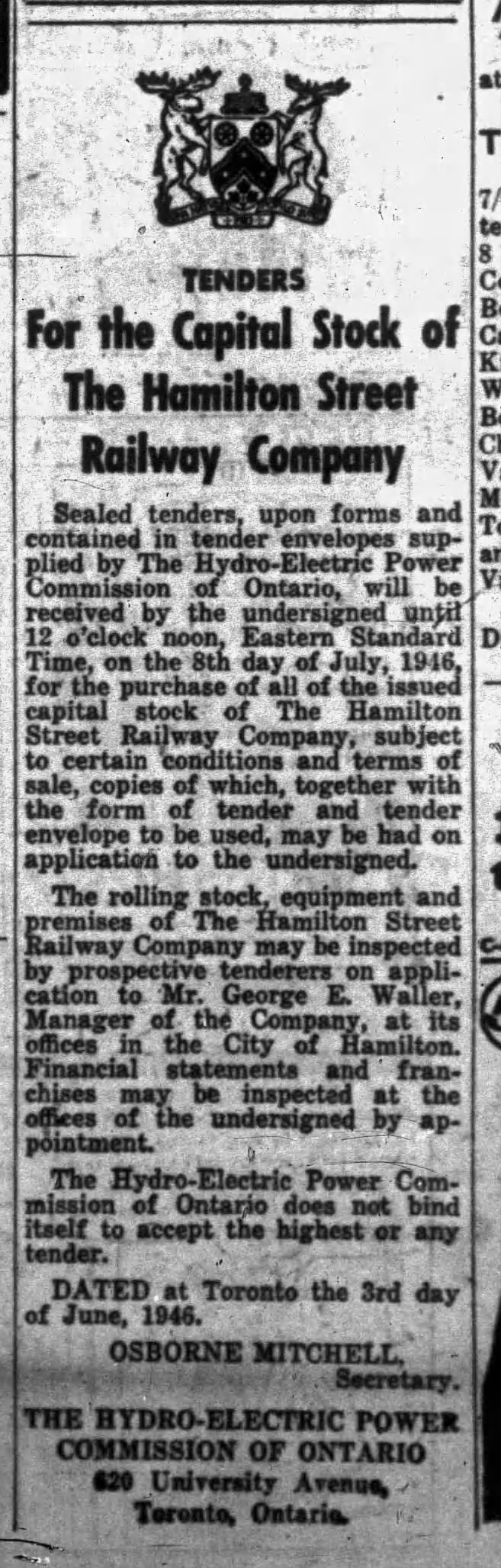
Call for tenders to buy the Hamilton Street Railway (From the Hamilton Spectator, June 4, 1946, pg 20)
On July 12 it was announced that the winning bid for the HSR was by the Canada Coach Lines bus company for $1.4 Million. The CCL was a close relative of the HSR, the descendant of the bus lines that at one point had been owned by the Hamilton radial lines and had been sold off by Ontario Hydro-Electric Commission in 1931. The HSR consisted of 70 streetcars, 83 buses, 400 employees and 42 miles (67.6 km) of active track. The handover of ownership occurred on Sept 16. George Waller remained as general manager, with the new president being Francis Farwell
On October 8 Farwell announced the long term plans of the HSR's new owners. At a cost of over $2.6 Million, the HSR would replace all streetcar routes. The existing track was too light to handle the weight of PCC streetcars like the ones used in Toronto and so trolley buses would replace the Belt Line and Burlington routes, and all others would be done with gas buses. Because of delays in bus manufacturing it was estimated that this would take 5 years. As a result repairs would be made to tracks on King st East between James and Mary and on James between Burlington and Strachan. Removal of already abandoned streetcar tracks on Locke and Main West began on October 4.
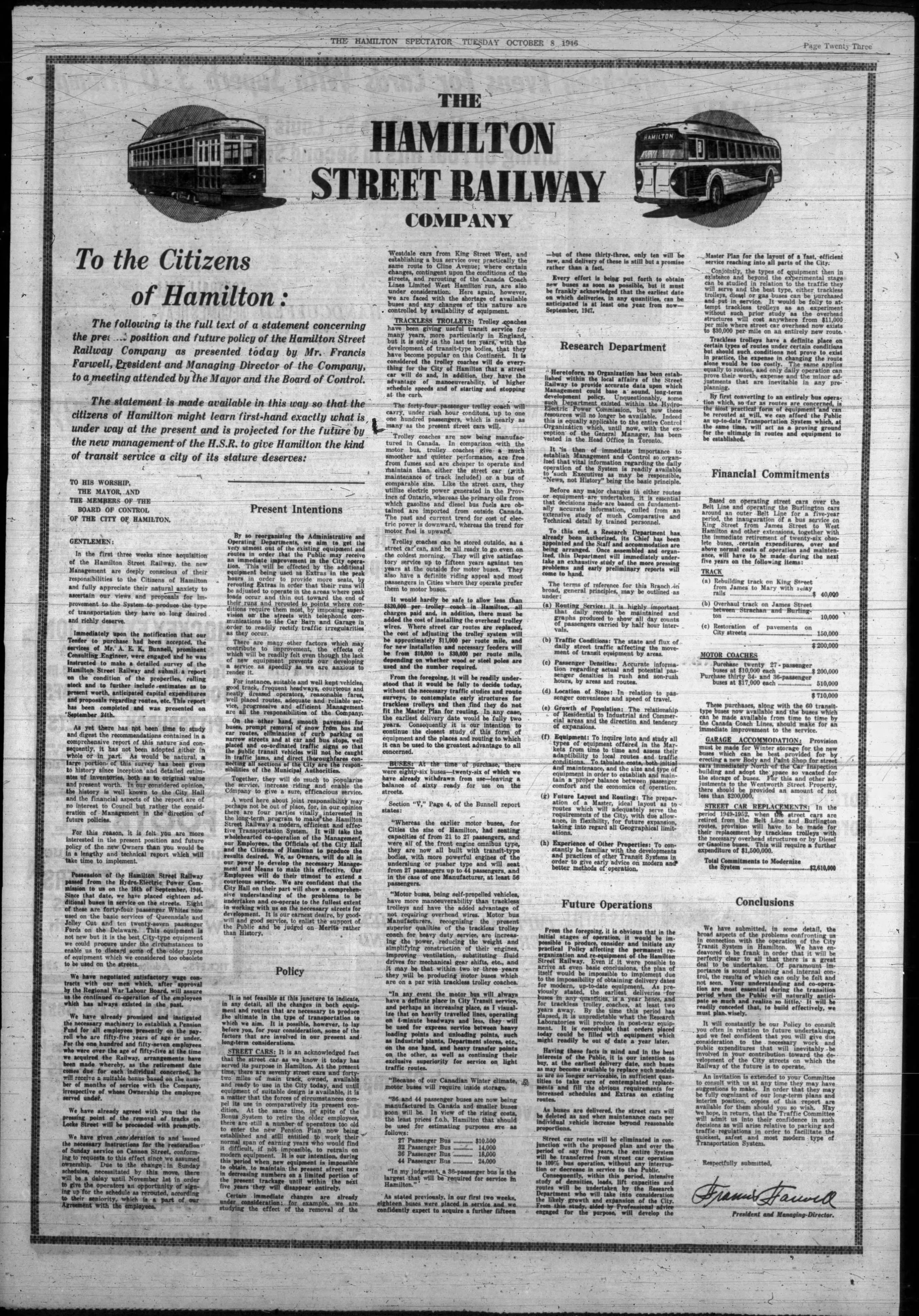
The HSR's long term plans were published in the Hamilton Spectator on October 8, 1946, pg 23
New buses began arriving at the start of April 1947, allowing the HSR to begin a gradual shutdown of Hamilton's streetcar lines. The York & Aberdeen route had already been replaced by buses in 1942, but was ordered back to streetcars due to the war. It was converted for good on June 26, 1947. Track removal began on July 21 and was completed in early September
The Crosstown route was closed on January 31, 1948. By February 1948, the HSR fleet was at 113 buses and 61 streetcars. The previously mentioned repairs to King and James street tracks began in May 1948, along with emergency repairs to the tracks on Main St east between Kenilworth and Ottawa. Bus manufacturers continued to have delays in meeting bus orders to the point that in June 1948 the HSR announced that it would likely be another 5 years until the last of the streetcars could be replaced.
On February 2, 1949 the HSR announced that in return for a fare increase from 4 adult tickets for 25 cents (6.25 cents) to 3 tickets for 25 cents (8.33 cents), it would convert the Cannon route to trolley bus service as a test bed, with an eye to replacing all streetcar routes and some bus routes to trolley bus over the next few years:
At a total cost of $3.25 Million, including 95 trolley buses. After some negotiations that included the discovery of an old law still in effect that limited streetcar fares to 5 cents for the first 3 miles and 2 cents for each additional mile, the city and the HSR settled on 4 adult tickets for 30 cents (7.5 cents), which went into effect on May 20, 1949.
Track conditions on King West were poor enough that the entire line was to be removed as soon as possible. A proposal was put forth on May 25 to build a loop of track around Gore Park to act as the end of the line for the shortened Burlington route after the Westdale end had been removed. This was retracted on June 7 when it was shown that Hughson St was too narrow for the curve needed to get around the east end of Gore Park. Burlington streetcars would instead travel along King West and loop through Sanford Yard.
The Westdale portion of the Westdale-Burlington route was closed shortly after 1 am on August 5, 1949. Service was replaced by the Westdale route that served McMaster University, and the West Hamilton bus route that had been operated by the CCL. Several residents objected strongly to the service on Sterling St, and soon matched by a group who wanted the new route to stay. The entire affair eventually ended up in front of city council who ordered that service on Stirling be cancelled, only for the HSR to refuse the order. The matter would eventually end up in front of the Ontario Municipal Board, who would decide in April 1950 that the route stays in service, on the grounds that it was a public necessity.
Track removal began on King West on August 8 at Westdale loop at Stirling and King. The site was suggested to be the site of a fire and ambulance station, but would instead be turned into shops. Track removal had reached Queen St by September 21, with the final work finished in early November.
In February 1950 the HSR announced that construction of the Cannon trolley bus line would begin in August, with an estimated cost of $650,000 for the overhead wiring and 20 trolley buses. The first trolley bus arrived by train on April 16, and was unveiled to Hamiltonians at the Hamilton Industrial Fair at the Hamilton Armouries on James St on April 26. Trolley buses would arrive gradually all summer, with the last few delayed because of the 1950 Canadian railway strike. Construction on the Cannon St route began on June 1, with several city crews at work widening the roadway. Work on the line took most of the summer, with the last of the poles for the overhead wires not being installed until the end of August. Road paving was delayed until mid September due to a strike by city workers.
In service training and troubleshooting began on October 25 on Cannon Street between the Sanford Yard and Kenilworth. On October 27 it was announced that the Burlington route would be replaced with buses the day before the start of trolley buses on the Cannon line. The aforementioned strike meant that paving of the route was still ongoing as of November 14, and did not finish until November 29. On December 3 a full test of the entire route began
The Cannon trolley bus route was officially opened by Mayor Lloyd Jackson in a ceremonial ribbon cutting at 10:30 am on December 9, 1950 at Cannon and Sanford. That night at 1:25 am the last Burlington streetcar completed its run, and on the morning of December 10 the Burlington bus route and the Cannon trolley bus started revenue service. Free rides were offered on the Cannon route between 1:30 and 4:30 PM, and an estimated 5,000 people took advantage of the offer.
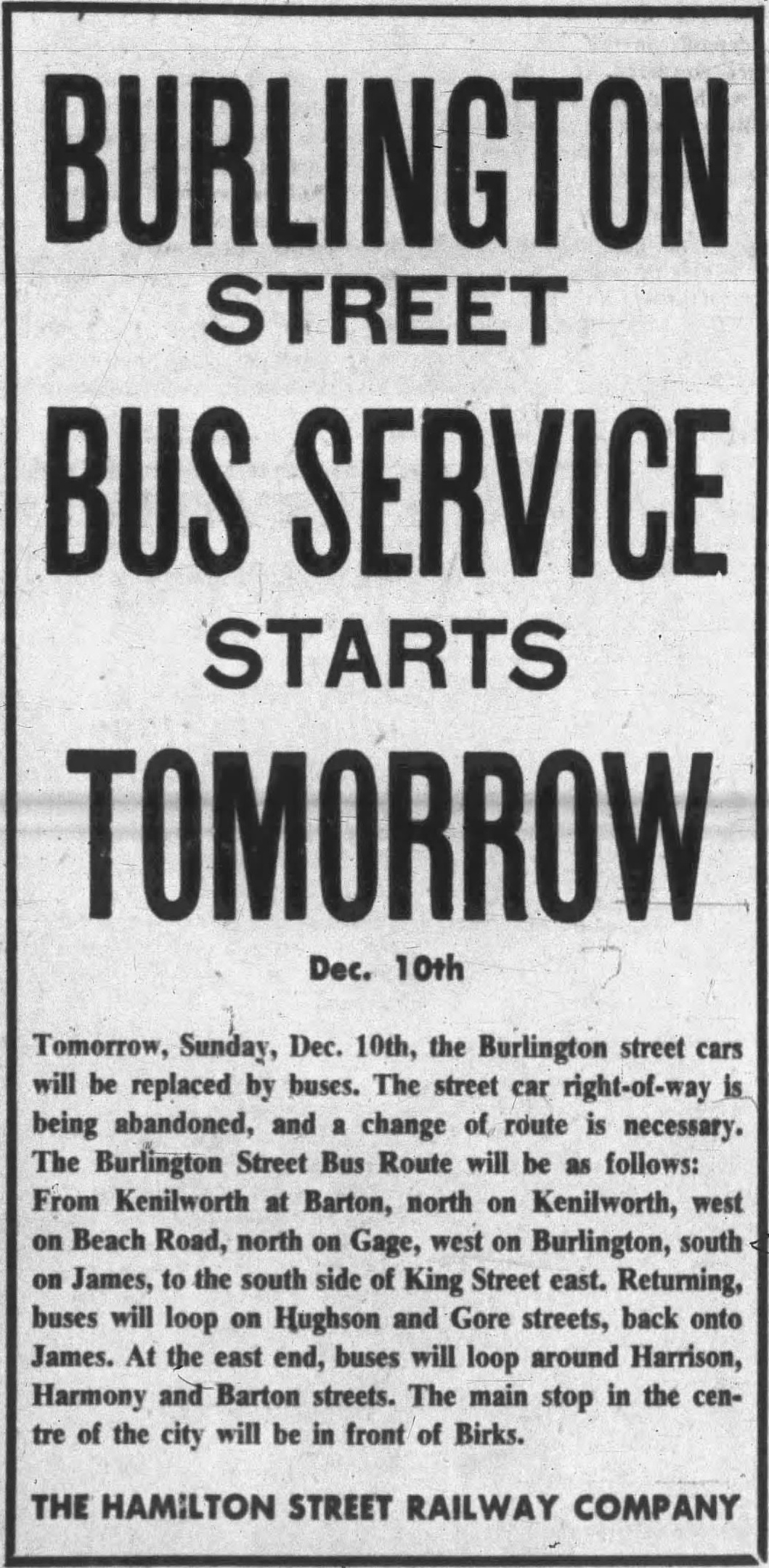
Announcement of closing of Burlington streetcar and replacement with buses (From the Hamilton Spectator, December 9, 1950, pg 33)
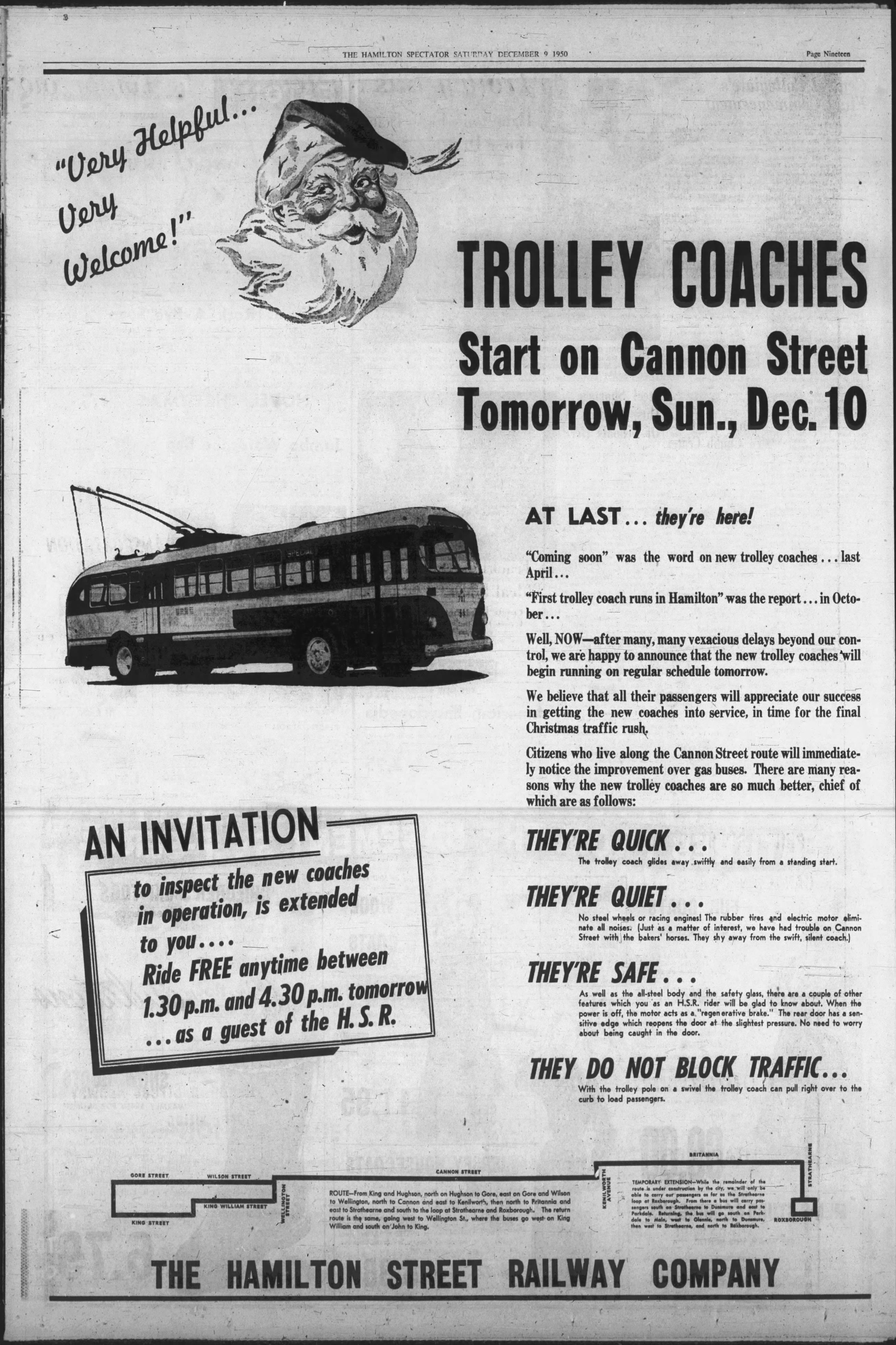
Announcement of opening of Cannon trolley bus (From the Hamilton Spectator, December 9, 1950, pg 19)
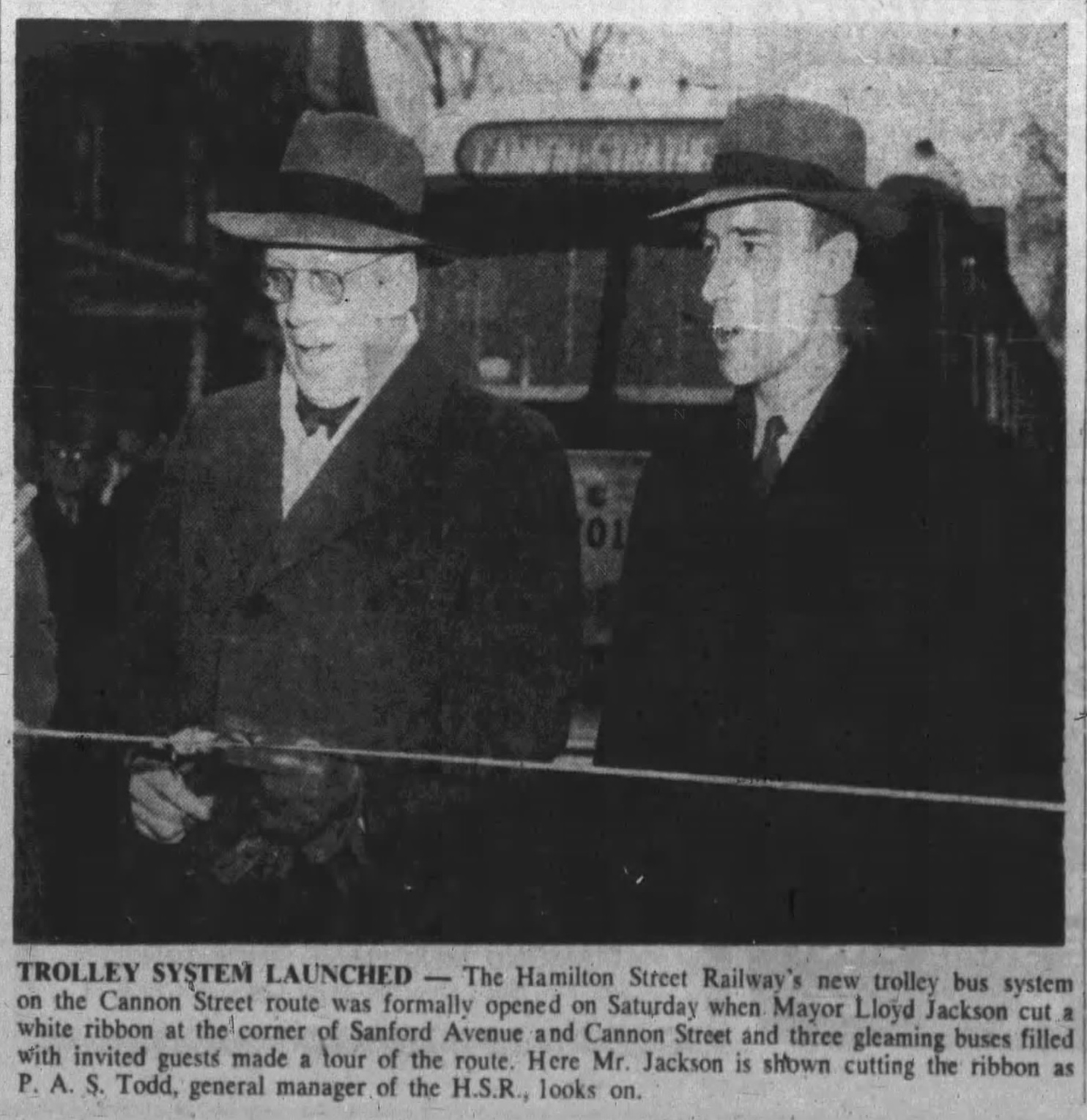
Ribbon cutting on the Cannon trolley bus (From the Hamilton Spectator, December 11, 1950, pg 7)
In the end, what killed off Hamilton's streetcars was a tax. Since the 1890s a four percent levy on the HSR's gross earnings had been placed by the city of Hamilton to cover road damage caused by HSR vehicles. In the summer of 1950 a strike by HSR employees had been narrowly averted with a negotiated pay raise, but the HSR argued with the city that if they wanted to avoid further labour trouble and a transit strike, the 4% levy had to go.
On January 11 1951 HSR President Farwell came to city council with a warning and a promise. The warning was that as of January 31 the HSR would no longer be able to pay the full 17 cent increase to wages, and seven cents of the increase would have to be clawed back, likely leading to a strike. City council could either allow another fare increase, or remove the 4% levy.
The promise was that if the levy was removed, the HSR would speed up its plan to remove streetcars by replacing the Belt Line streetcars after the delivery of the next batch of buses in April, and then convert the line to trolley buses by the end of the year at a cost of $2.24 Million. This included track removal, upgrades to the Sanford Shops, overhead wire installation, and the purchase of 60 trolley and diesel buses. Hamilton City Council approved the HSR's offer on January 29, by a vote of 14-7
On February 20 it was announced that the Belt Line Route would be replaced by the King-Barton bus, which would run from Parkdale and Barton through the downtown to Main & Strathearne. Service on Kenilworth would now be handled by the Burlington bus being extended to Main & Kenilworth. The final date for streetcar operation of April 6 was announced on March 7th, and large announcements were placed on the side of the streetcars. The HSR's order for 25 buses from General Motors was blocked by the US government, so only 10 buses built by CC&F arrived in time for the planned closure of the Belt Line, forcing the HSR to rely on secondhand buses and rentals.
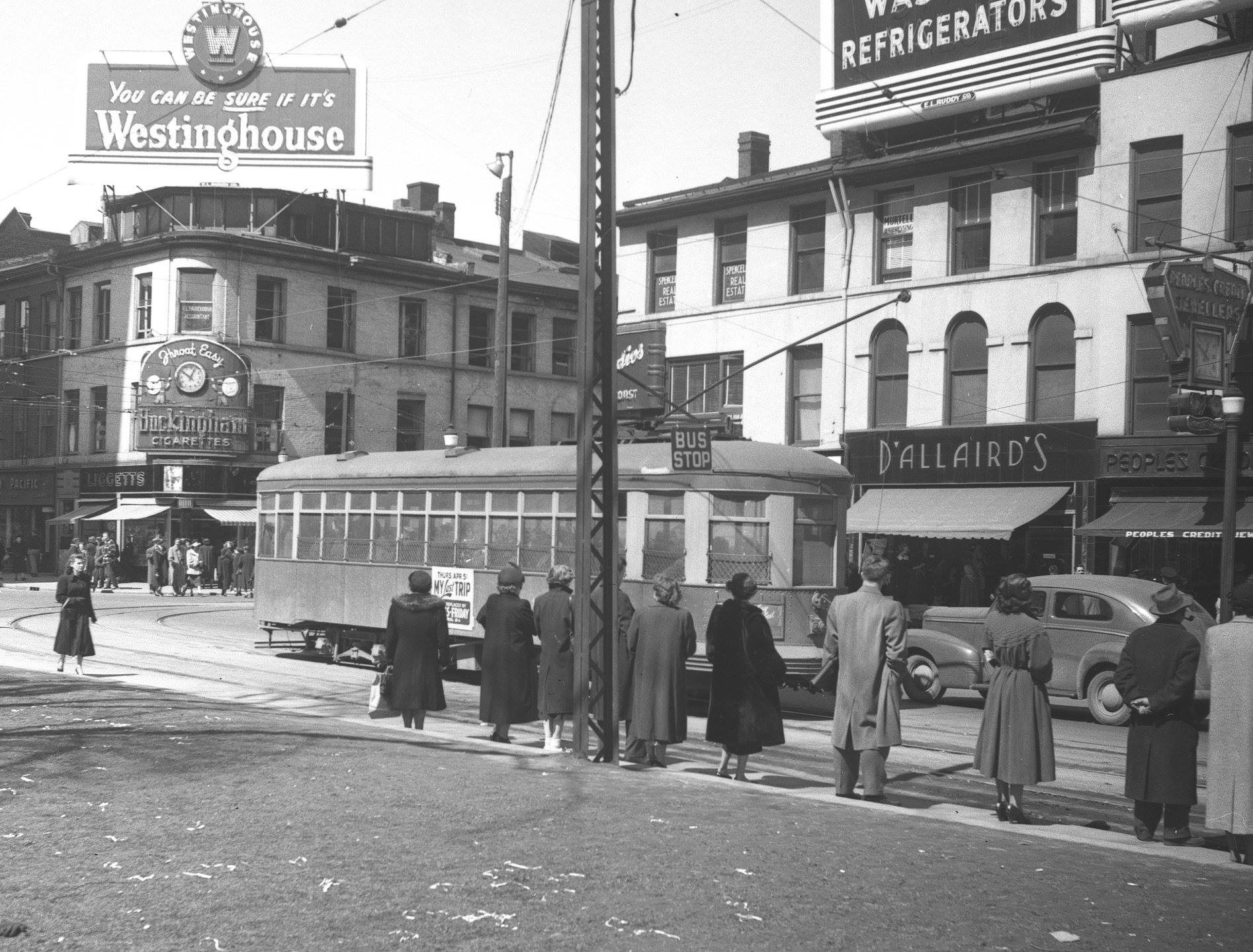
HSR 500 series streetcar at King & James in March 1951 (Photo courtesy of the Hamilton Public Library, Local History & Archives, used with permission)
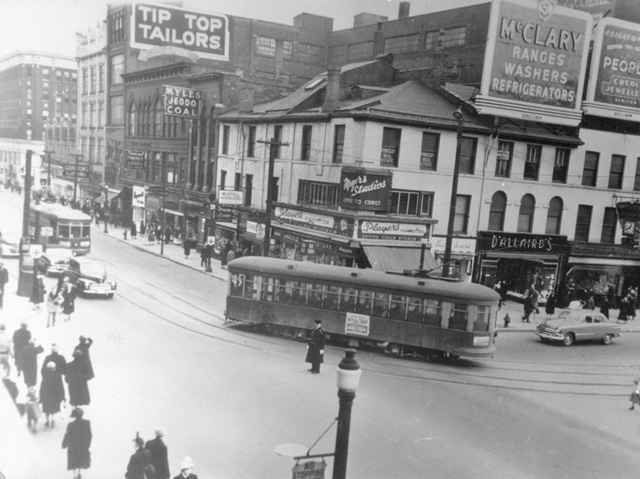
HSR 500 series streetcar turning onto James in March 1951 (Photo courtesy of the Hamilton Public Library, Local History & Archives, used with permission)
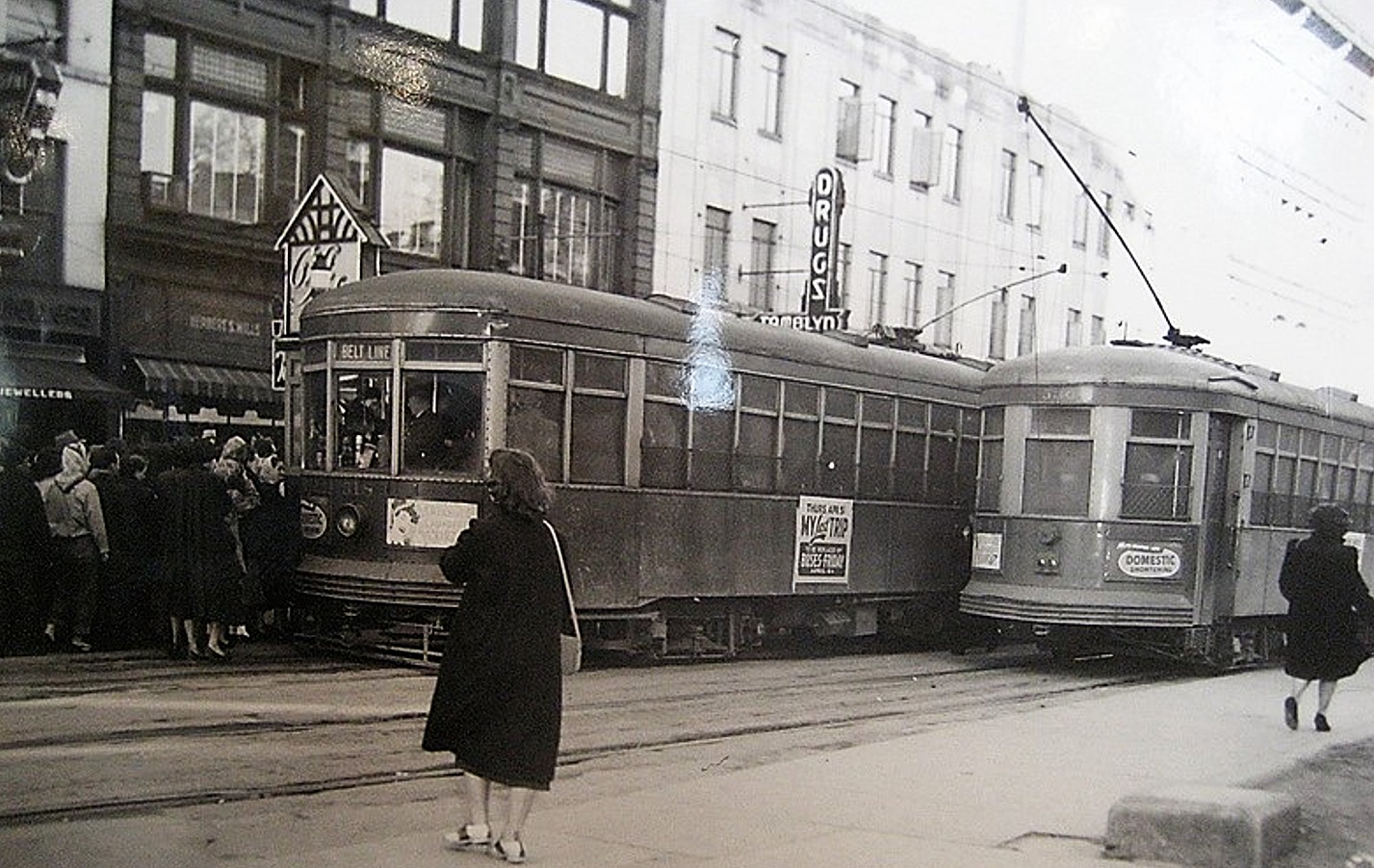
HSR #518 and #530 at King and James in March 1951.
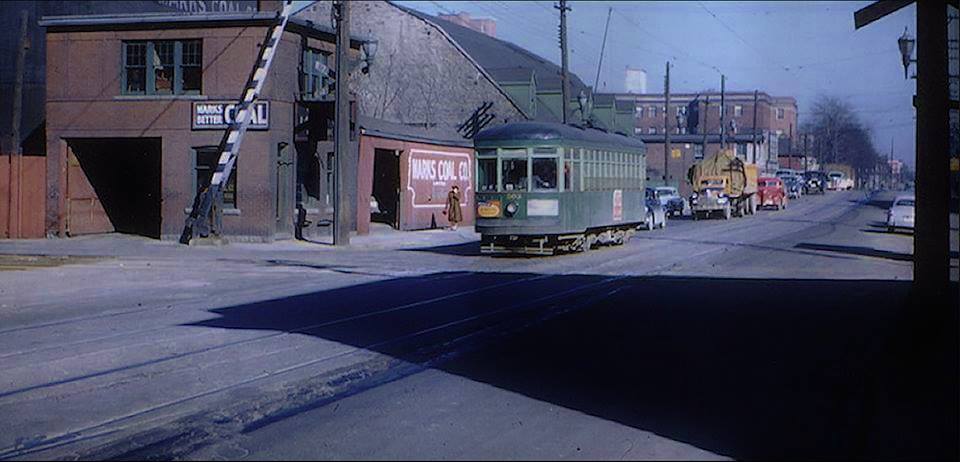
HSR #503 at Barton and Ferguson, April 5 1951 (Photo courtesy of the Canadian Railroad Historical Association)
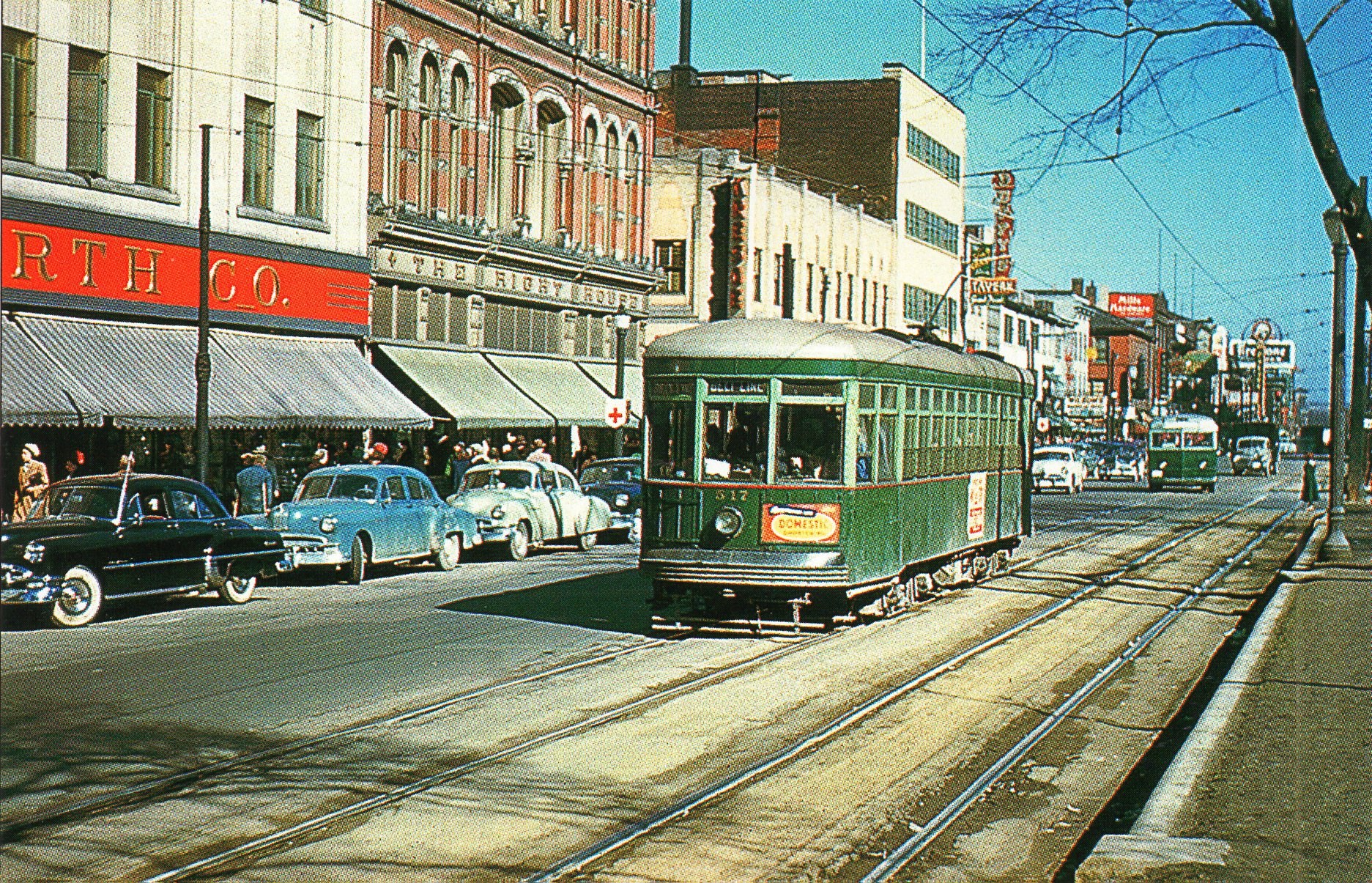
HSR #517 at King and James, April 5 1951 (Photo courtesy of the Canadian Railroad Historical Association)
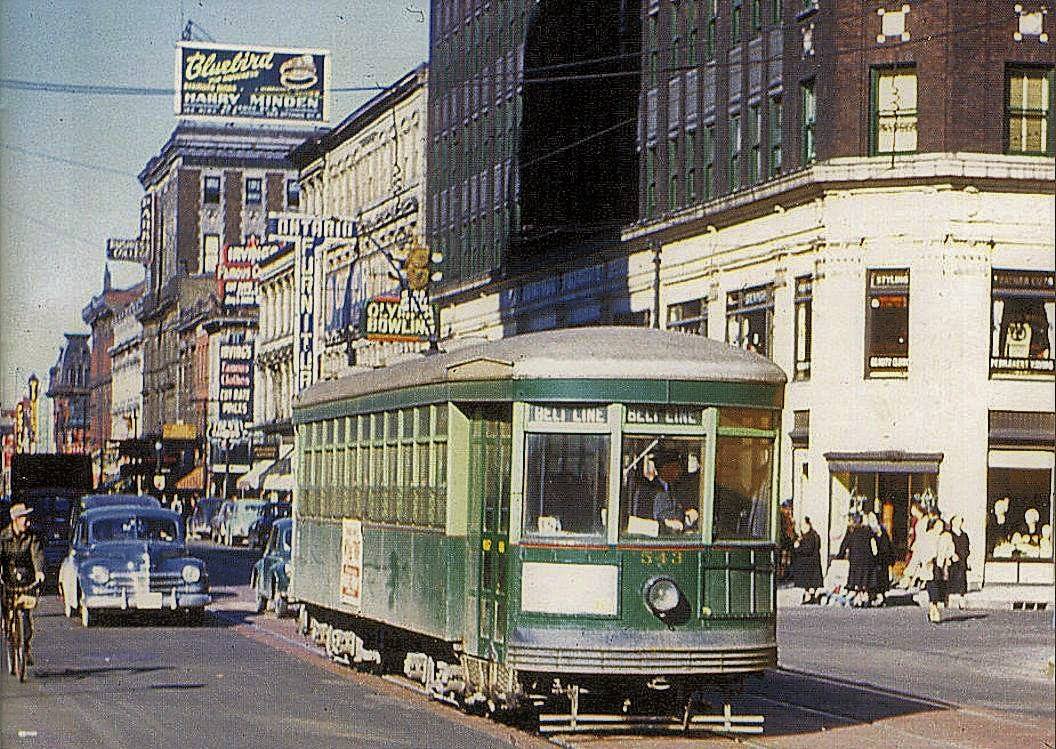
HSR #543 at James and York, April 5 1951 (Photo courtesy of the Canadian Railroad Historical Association)
On the last day of regular streetcar service, two streetcars were involved in incidents. At 6:00 pm HSR #541 suffered damage when a short circuit set fire to the streetcar at the corner of Barton & Gage. The fire department reacted quickly, and the fire was put out with little damage. At 7:00 pm at Barton & Wellington, HSR #536 was in a collision with a car, but the streetcar suffered no damage. No passengers or employees were injured in either accident. HSR #519 made the final streetcar run early on the morning of April 6, operated by Frank Crowhurst and arriving at Sanford Yard at 2:27 am. Railfan Paul Ogden was the last HSR streetcar passenger, having been the final passenger on three previous HSR route closures. HSR #304 made the first run of the King-Barton Bus a few hours later, operated by Arthur Donohue and with Louis Pors as the first passenger
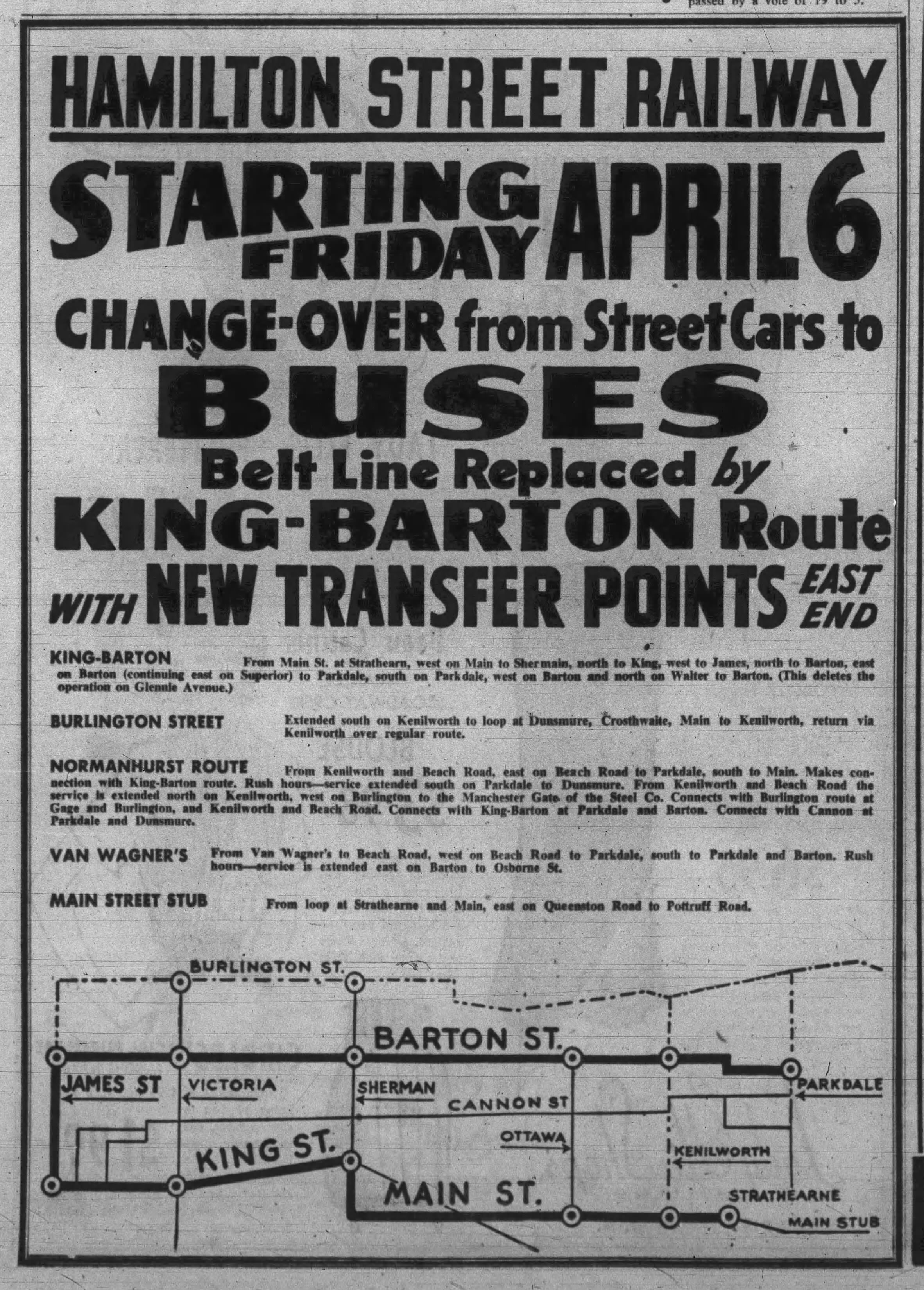
New bus routes starting after the closing of the Belt Line (From the Hamilton Spectator, April 5, 1951, pg 24)
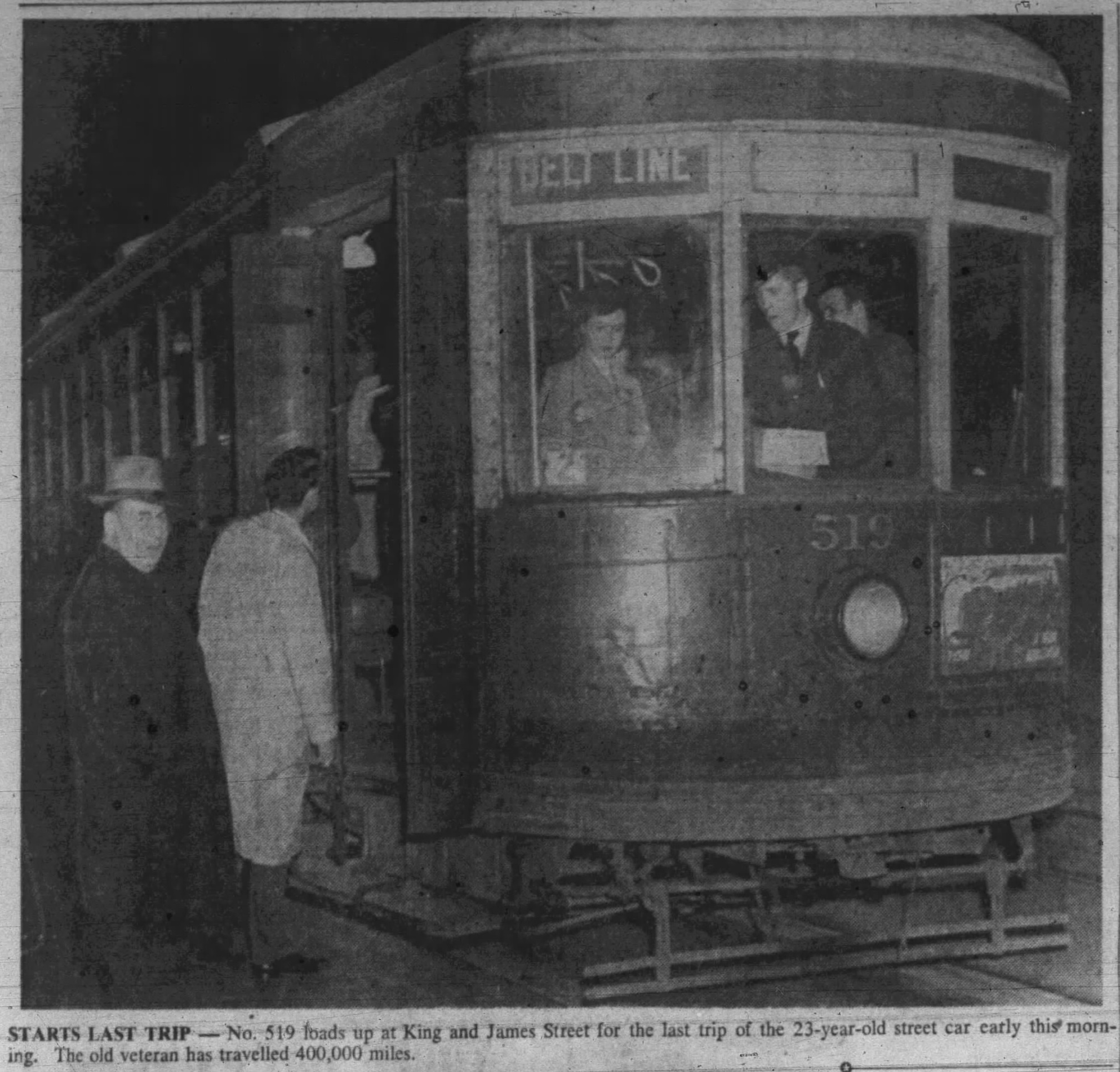
HSR #519 making the last run of the Belt Line, April 6, 1951. (From the Hamilton Spectator, April 6, 1951, pg 42)
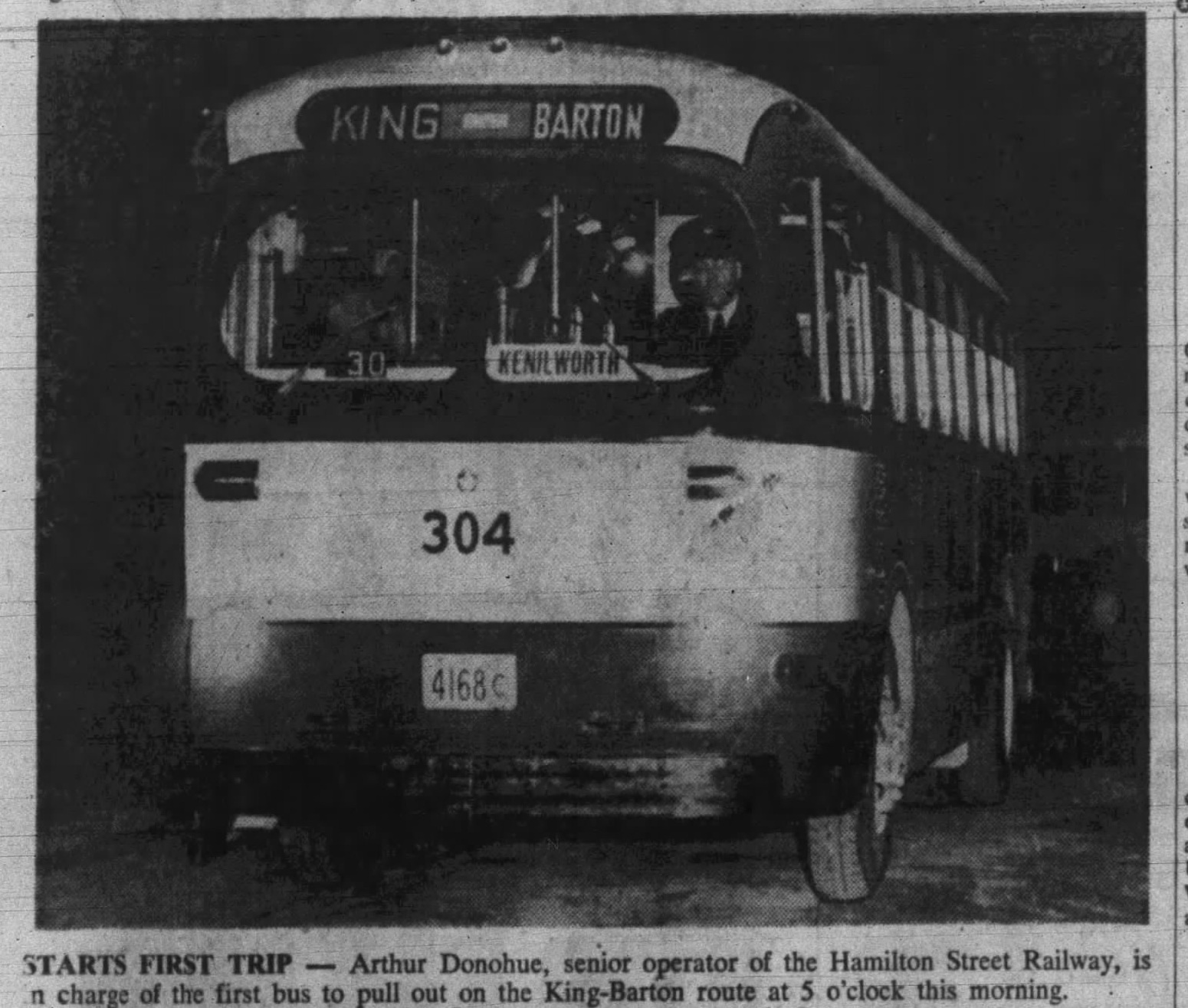
HSR #304 making the first run of the King-Barton Bus, April 6, 1951. (From the Hamilton Spectator, April 6, 1951, pg 42)
The official closing ceremony took place at 11 am next to Gore Park. HSR #515 and #529 were decorated for the occasion, with a face added to the front, the message "My Last Trip, Goodbye Forever" on the side, and a rollsign that read "Nowhere". Complete with pipers and an honour guard made up of over 40 employees, and speeches from both HSR General Manager P. Todd and Hamilton Mayor Lloyd Jackson. At 11:30 invited guests took one last ride to Sanford Yard.
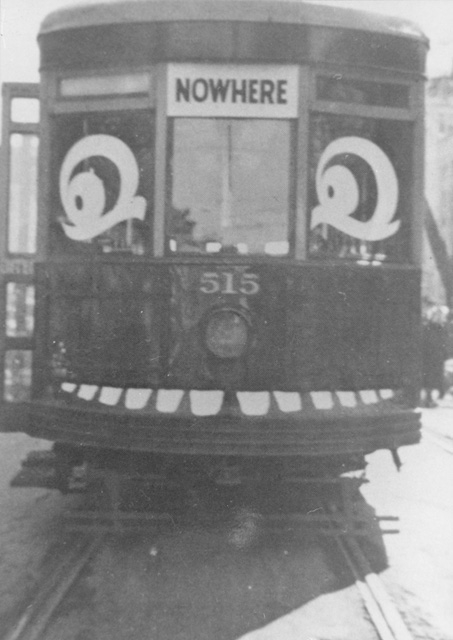
HSR #515 is decorated as part of the streetcar farewell on April 6, 1951. (Photo courtesy of the Canadian Railroad Historical Association)
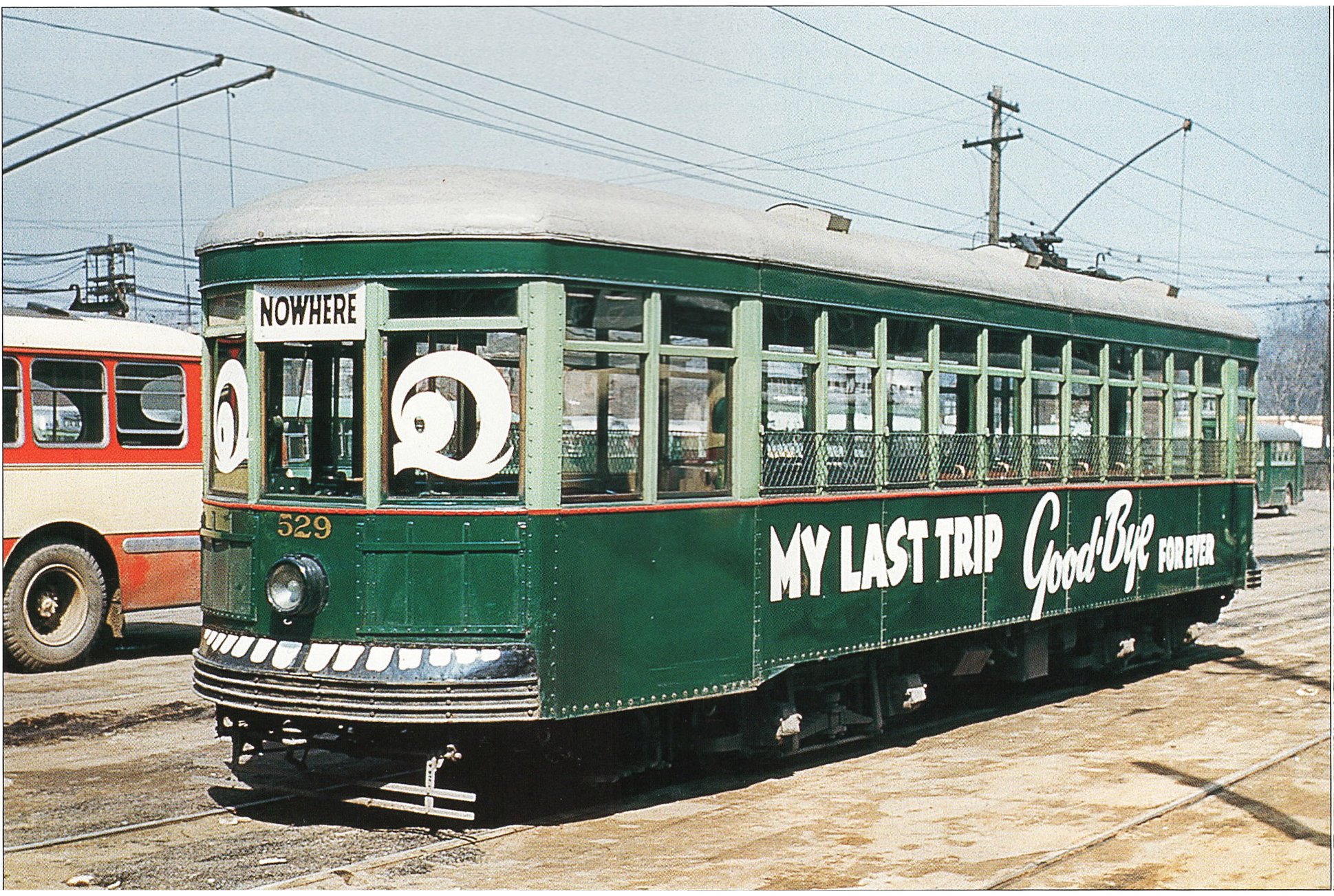
HSR #529 at Sanford yard decorated as part of the streetcar farewell on April 6, 1951. (Photo courtesy of the Canadian Railroad Historical Association)
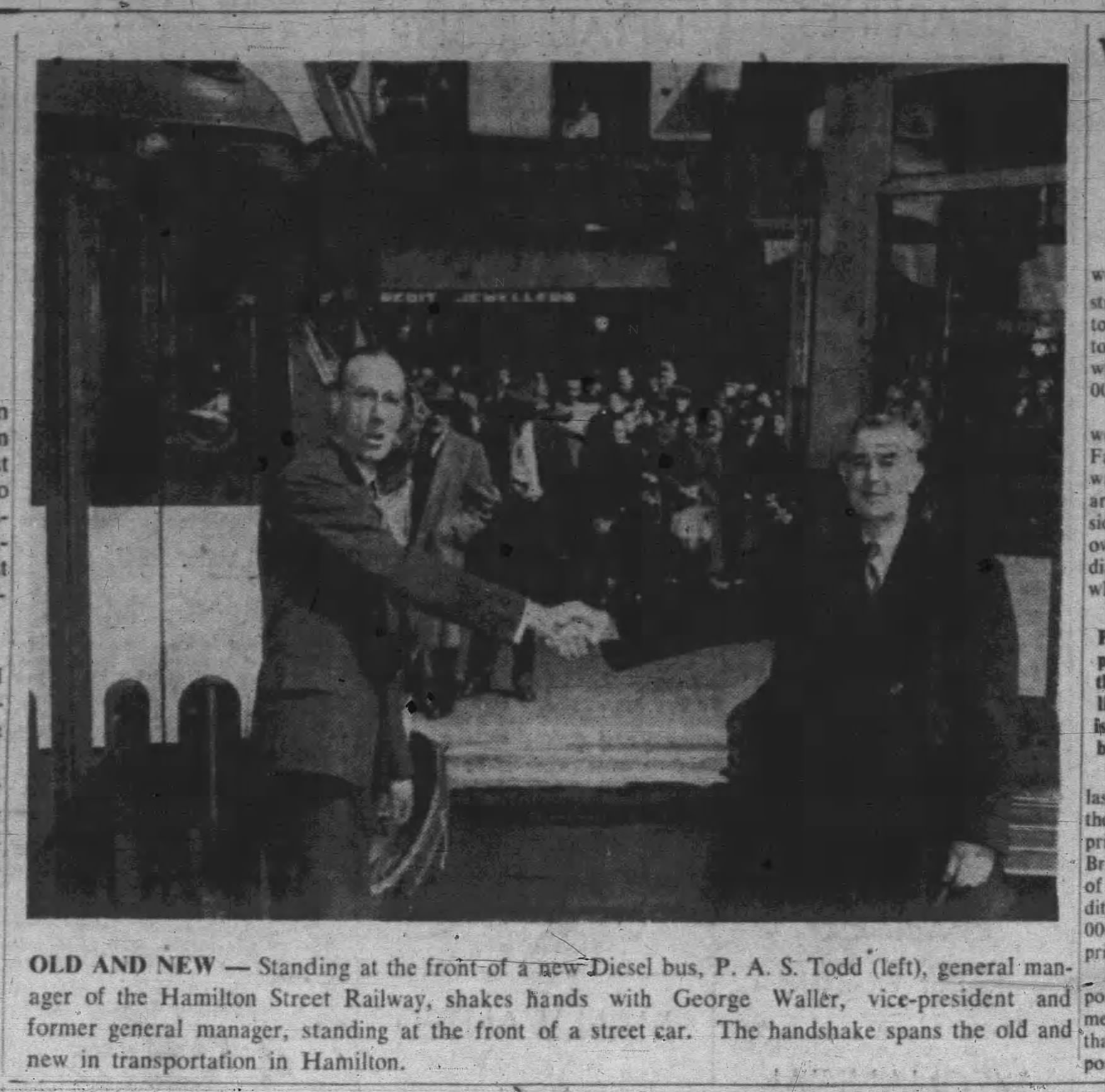
General Manager P. Todd shakes hands with former General Manager George Waller at the streetcar farewell ceremony, April 6, 1951. (From the Hamilton Spectator, April 10, 1951, pg 19)
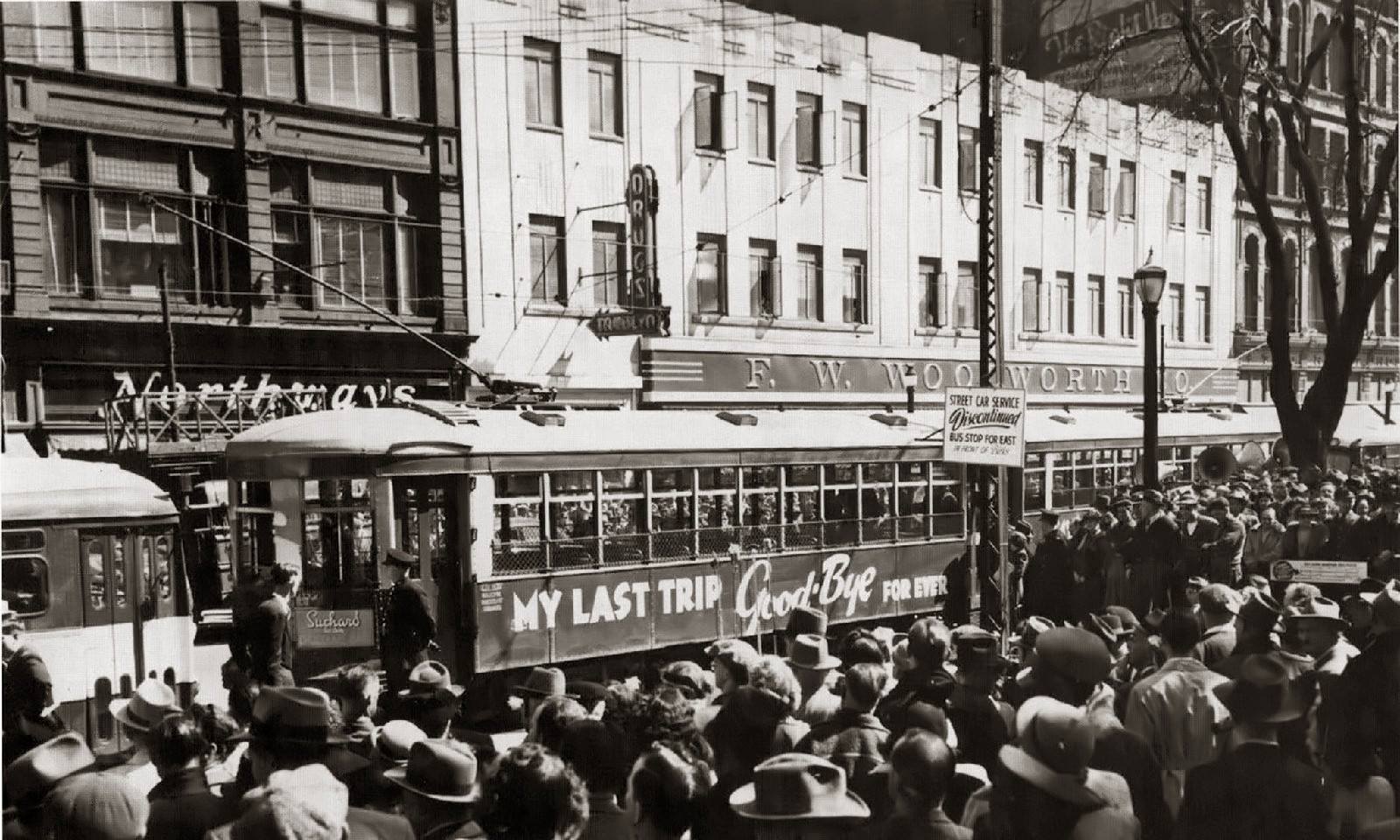
Hamiltonians say goodbye to the streetcars, April 6, 1951. (Photo courtesy of the Hamilton Street Railway)
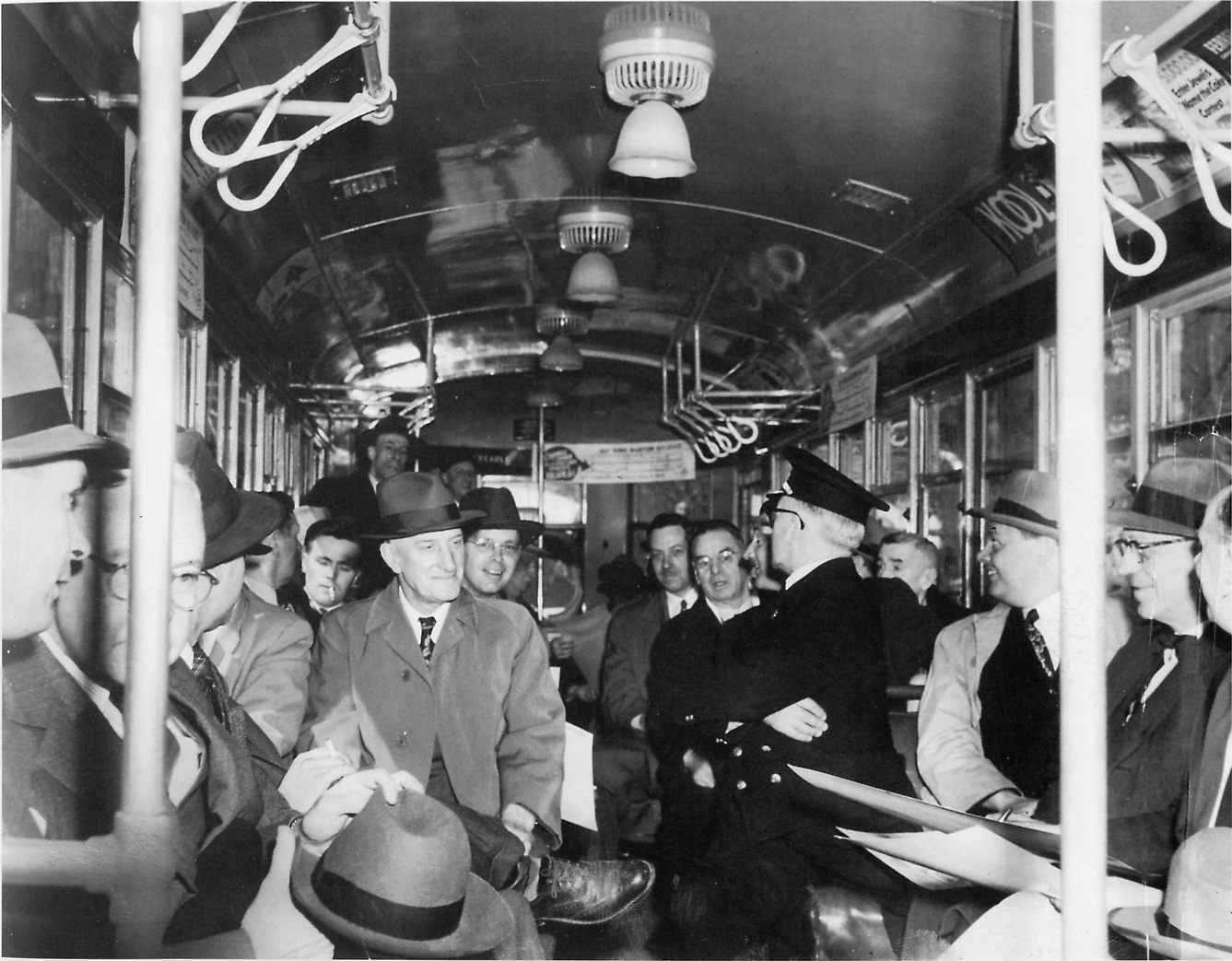
Invited guests taking one final ride on an HSR streetcar, April 6, 1951. From left to right is unknown, City Clerk James F. Berry (behind the pole), unknown, Alderman Fred Partridge, Controller Jack MacDonald, former Mayor Sam Lawrence, Controller William K. Warrender, Alderman Crockett, Alderman Bill Harris, unknown, Fire Chief Ed Nixon (wearing cap looking away from camera), unknown, Alderman Mac Cline, Mayor Lloyd Jackson. Standing at the back is HSR General Manager P.A.S. Todd and Alderman Dr. Charlie McCabe. (Photo courtesty of the Hamilton Spectator)
The end of streetcar service predated TV in Hamilton or even Toronto, (CBC Television started on September 2, 1951 and CHCH would not start operating until June 7, 1954) so there is no known footage of the ceremony itself. Radio station CJSH (102.9FM) covered the run of the final streetcar, the first bus run, and the ceremony. On April 7 CJSH broadcast an hour long documentary on the history of the HSR. But there is some footage online of the HSR Streetcars in operation in the days leading up to retirement.
Removal of the streetcar infrastructure began almost immediately. First to go were the tracks on King between Wentworth and Sanford, and the overhead wires on Main and Barton between Ottawa and Kenilworth. King East reconstruction in the downtown core would be complete and the street reopened on June 21.
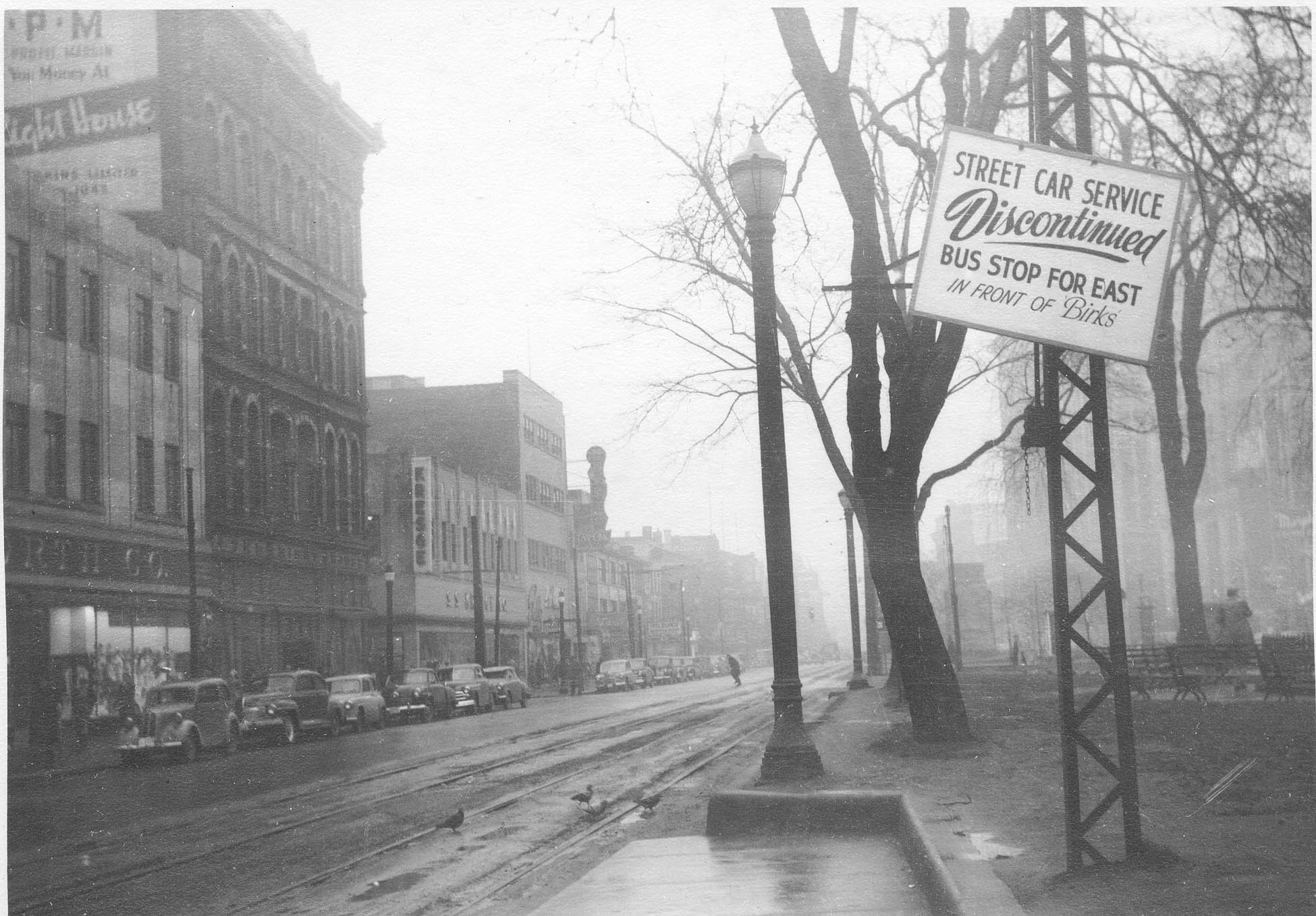
The closed streetcar stop next to Gore Park, very shortly after the end of service
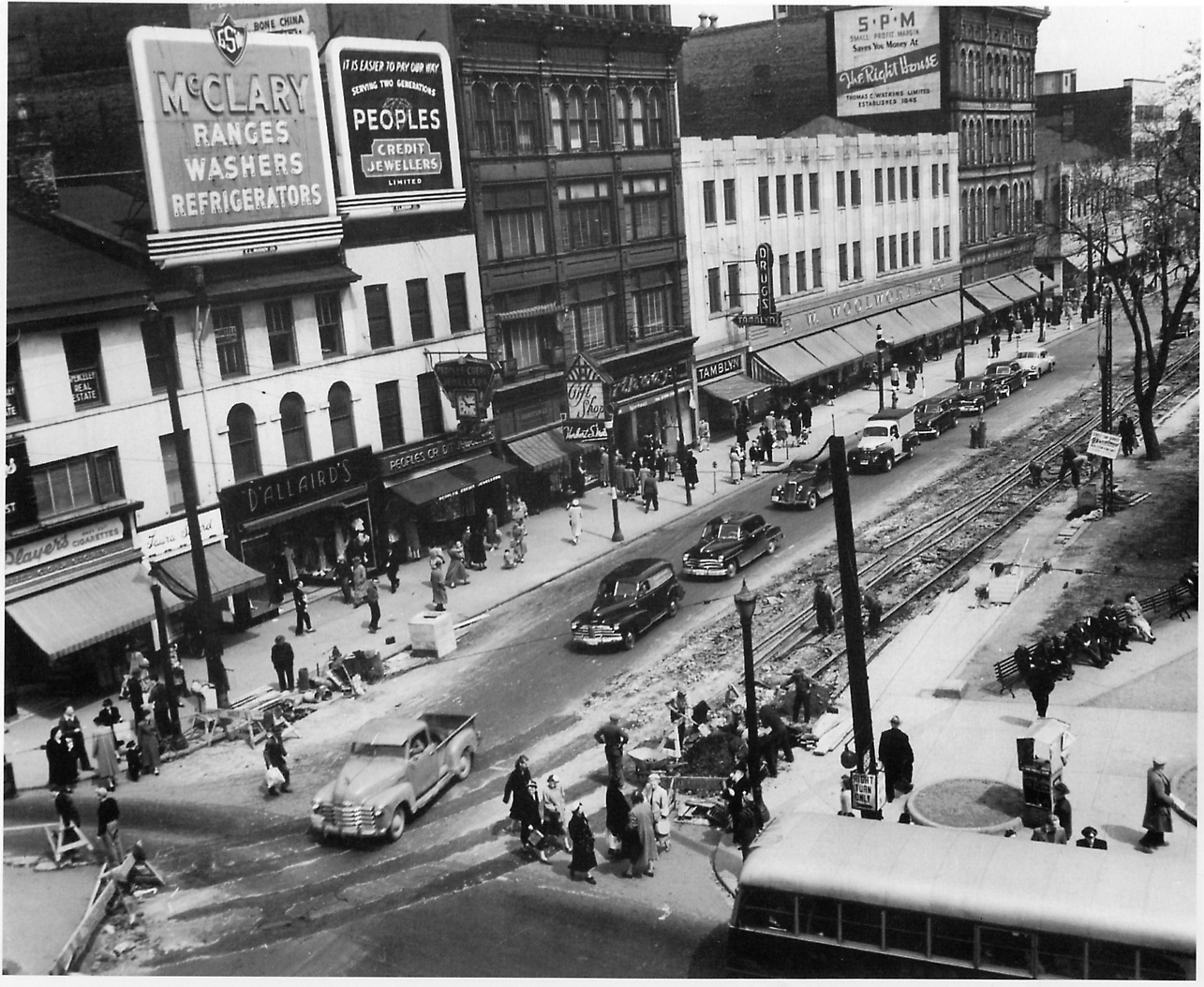
Track removal on King St at James, April 1951 (Photo courtesy of the Hamilton Street Railway)
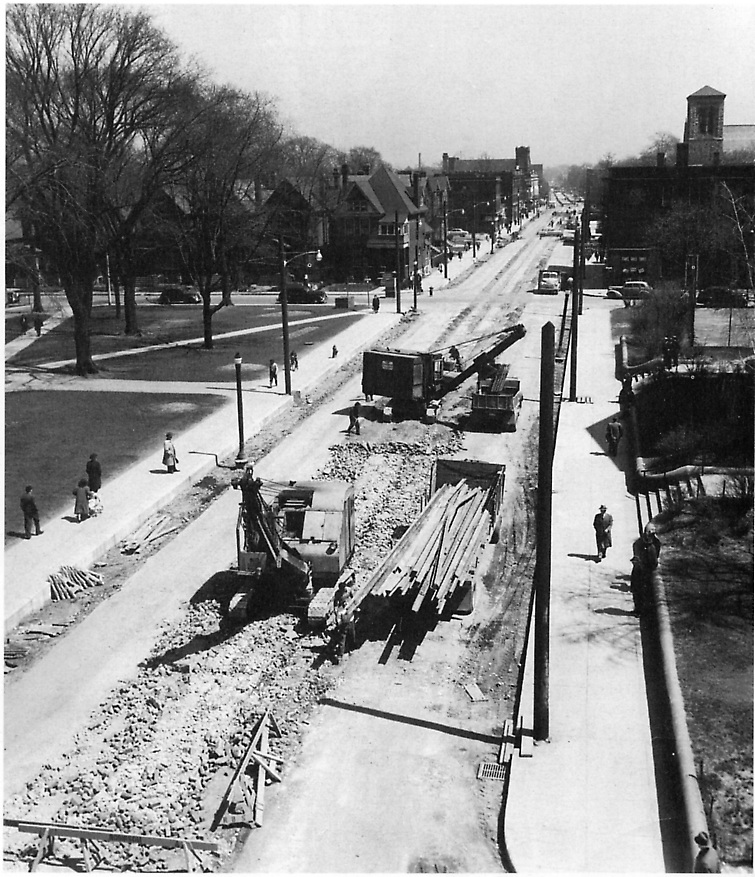
Track removal on King St at Wellington, April 1951 (Photo courtesy of the Hamilton Street Railway)
The now out of use track alongside Birch Ave was turned into a storage yard for the now unwanted streetcars. As streetcars failed in the last months they were moved out of Sanford Yard and stored, and with the end of service all remaining streetcars, work cars and sweepers were moved as well. Streetcar fans dubbed these tracks the Birch Street Boneyard, while the HSR looked for a buyer. On April 25 it was announced that the winning bid for the 62 vehicles had been accepted from the International Metal Company, and that they had 60 days to remove the cars.
Not all the cars would be scrapped. Several car bodies would be sold off and turned into everything from cabins to chicken coops. Twenty years later HSR #521 would be rescued from such a fate by the Halton County Radial Railway and moved where she awaits preservation
One expected benefit of the removal of streetcars failed to appear, as the flow of traffic in downtown Hamilton did not improve. The advertised faster traffic flow due to the faster buses was countered by the number of buses required to replace the streetcars, which slowed traffic by pulling in and out of traffic to load and unload passengers at the curb. One proposal was to turn the south side of Gore Park into a bus loading zone, which became a 30 day trial on July 1.
Rebuilding of King Street East in the downtown core was complete by July 25. Overhead wire installation on James, and on Barton and King west of Kenilworth was nearly complete by mid August, as was a new electrical substation on Kenilworth, with the electrical equipment scheduled for installation as soon as the roof was on. At this point the primary uncertainty regarding an opening date was the delivery of 30 new trolley buses, but it was hoped that things would be ready for October 11. The buses were a week late in arriving, and so on September 6 it was formally announced that October 19 would be the first day of Trolley service on the King-Barton route
Work was interrupted in mid October due to the arrival of then Princess Elizabeth and Prince Philip on October 14 as part of their trans Canada tour. On that day the HSR set a new record, hauling 75,000 people in a day using their entire fleet of 168 buses. But the interruption meant that construction on a water main at Main & Balsam was delayed, pushing the opening of the trolley line back a few days. On October 16 test runs were conducted on the King-Barton route using the newly delivered trolley buses.
Service on the King-Barton Trolley bus began at 5:30 am on October 24, 1951. This was 5 years and 2 weeks after HSR President Farwell's promise to replace the HSR streetcars within 5 years. However the rest of Farwell's plans did not come to pass. HSR ridership declined even after the upgrades as Hamiltonians bought more cars, combined with the recessions of 1951 and 1953 would put a freeze on HSR plans for more trolley bus lines. Instead the HSR would reroute the trolley buses when the city converted to one-way streets in October 1956 and extend the trolley bus lines further east in 1959 and 1960.
Removal of streetcar tracks would continue for several years, and even today there are still some tracks that are buried under the asphalt.
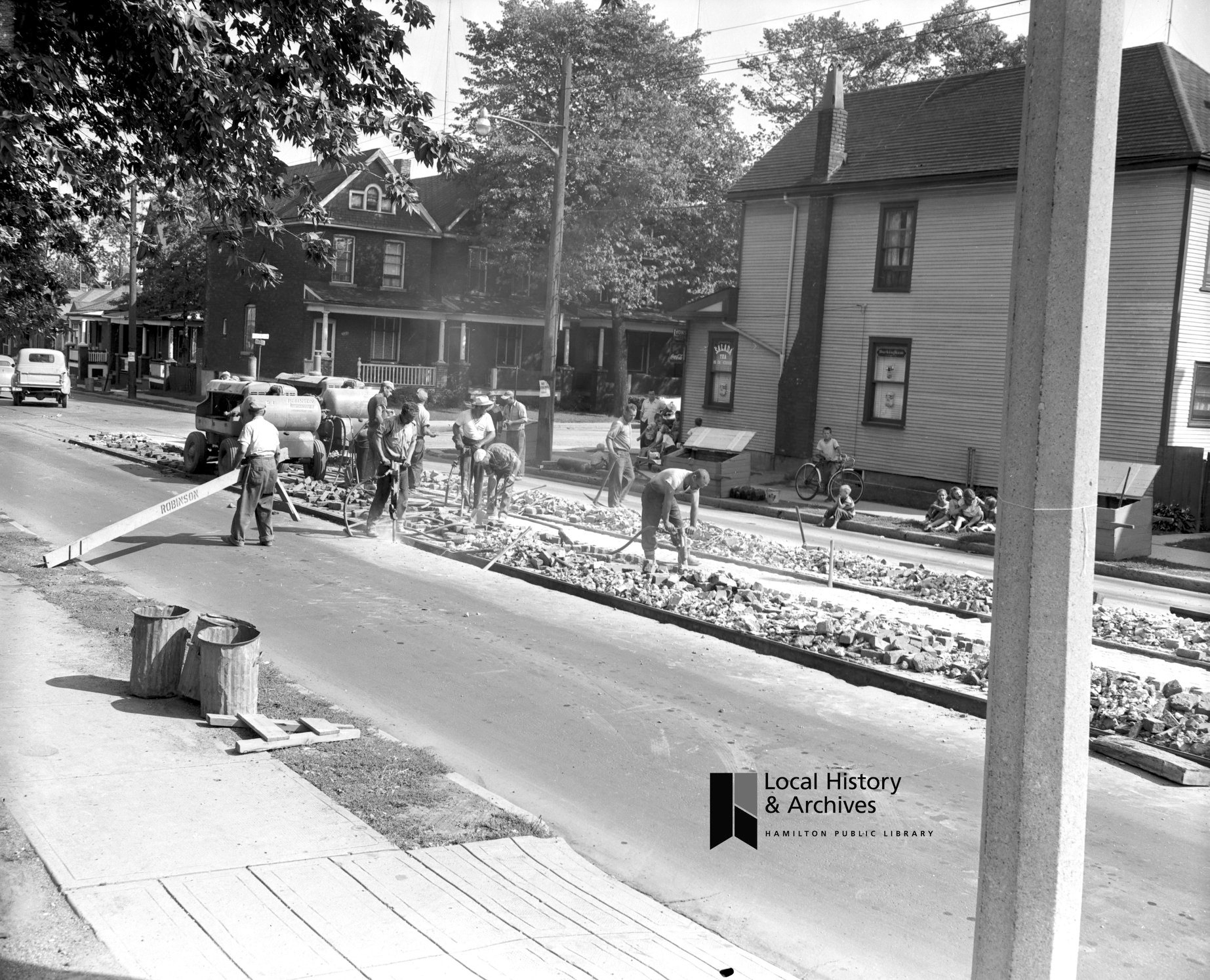
HSR tracks being removed on Burlington at Hughson, August 1955 (Photo courtesy of the Hamilton Public Library, Local History & Archives, used with permission)
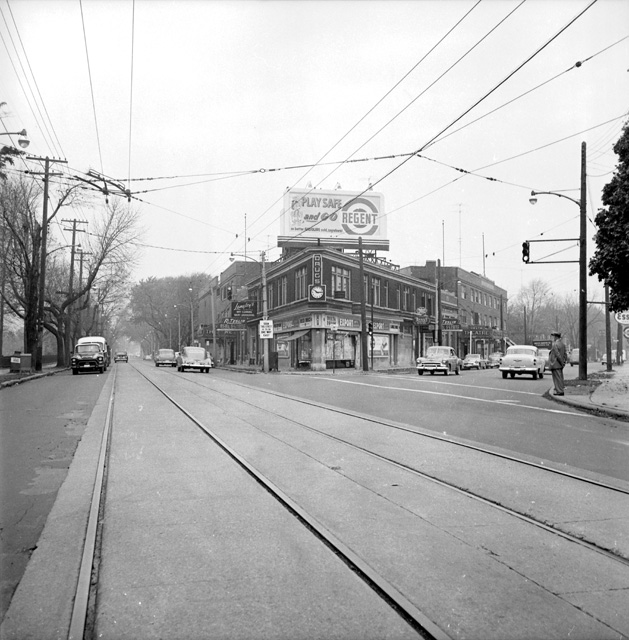
HSR tracks at the Delta survived for several years, as seen in this photo from October 23, 1956. (Photo courtesy of the Hamilton Public Library, Local History & Archives, used with permission)
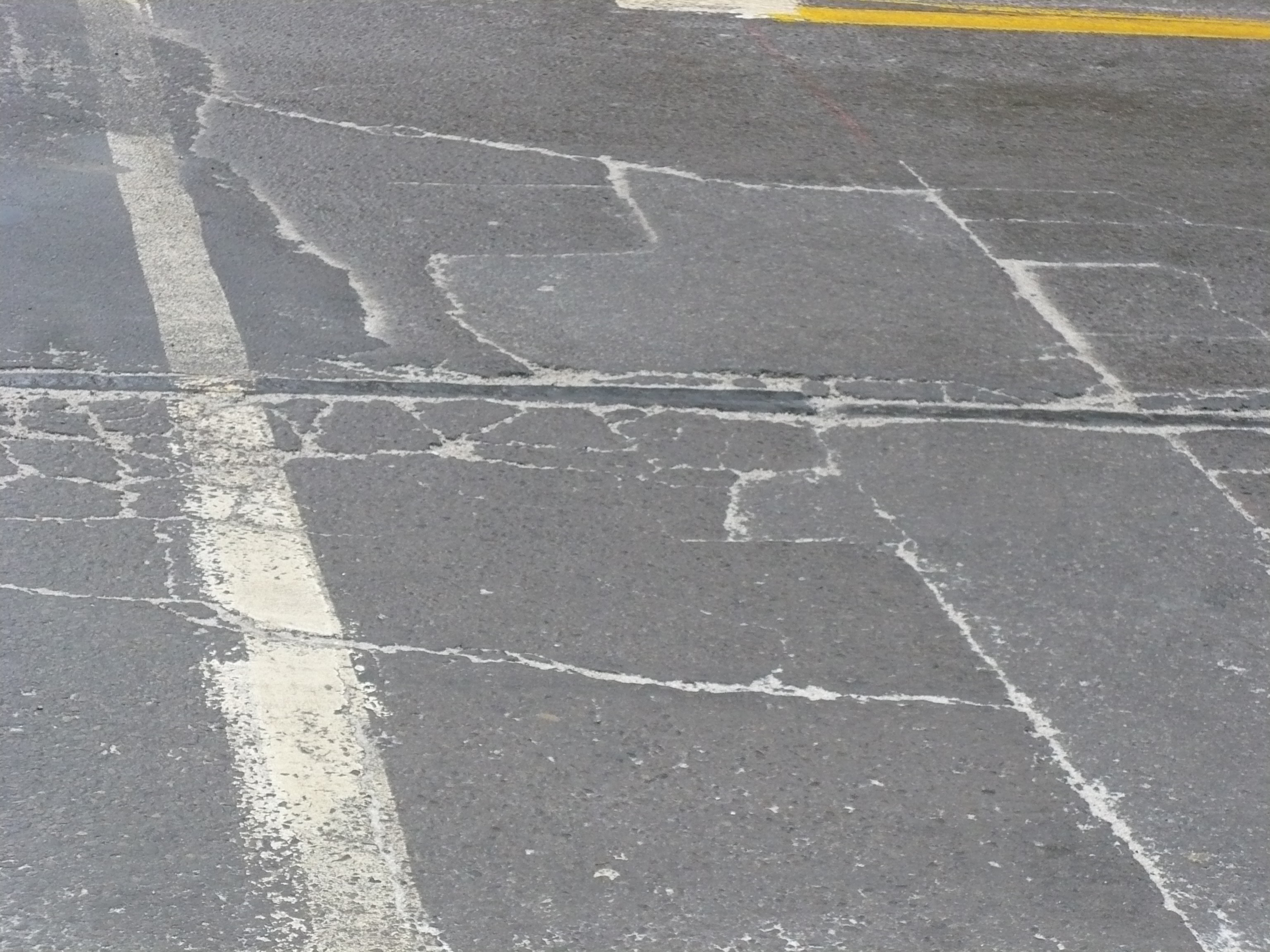
Old streetcar track working its way through the pavement at James & Bold, January 11, 2011. The street was repaved shortly after, but judging by the cracks in the pavement it's just a matter of time before the rail resurfaces
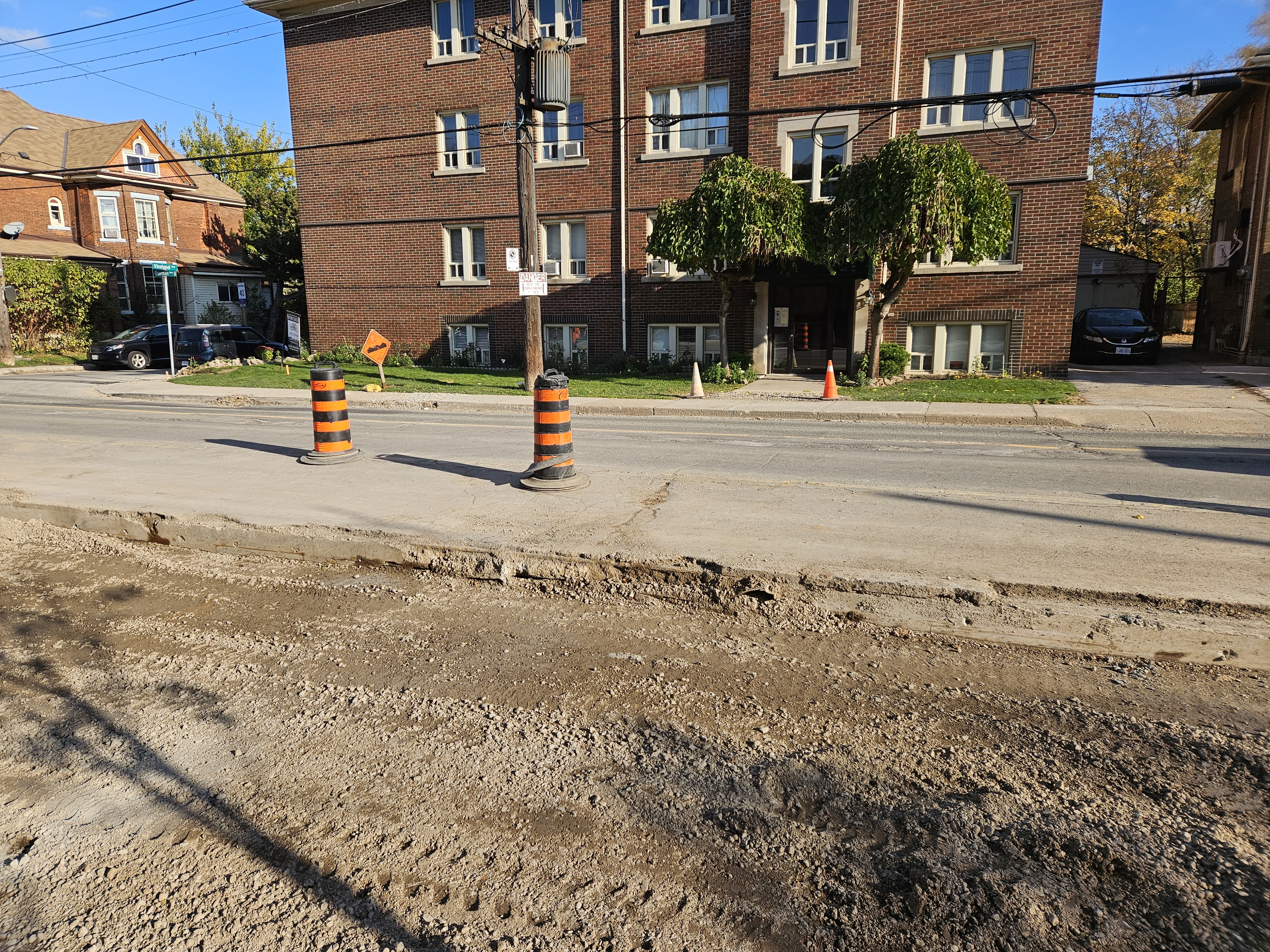
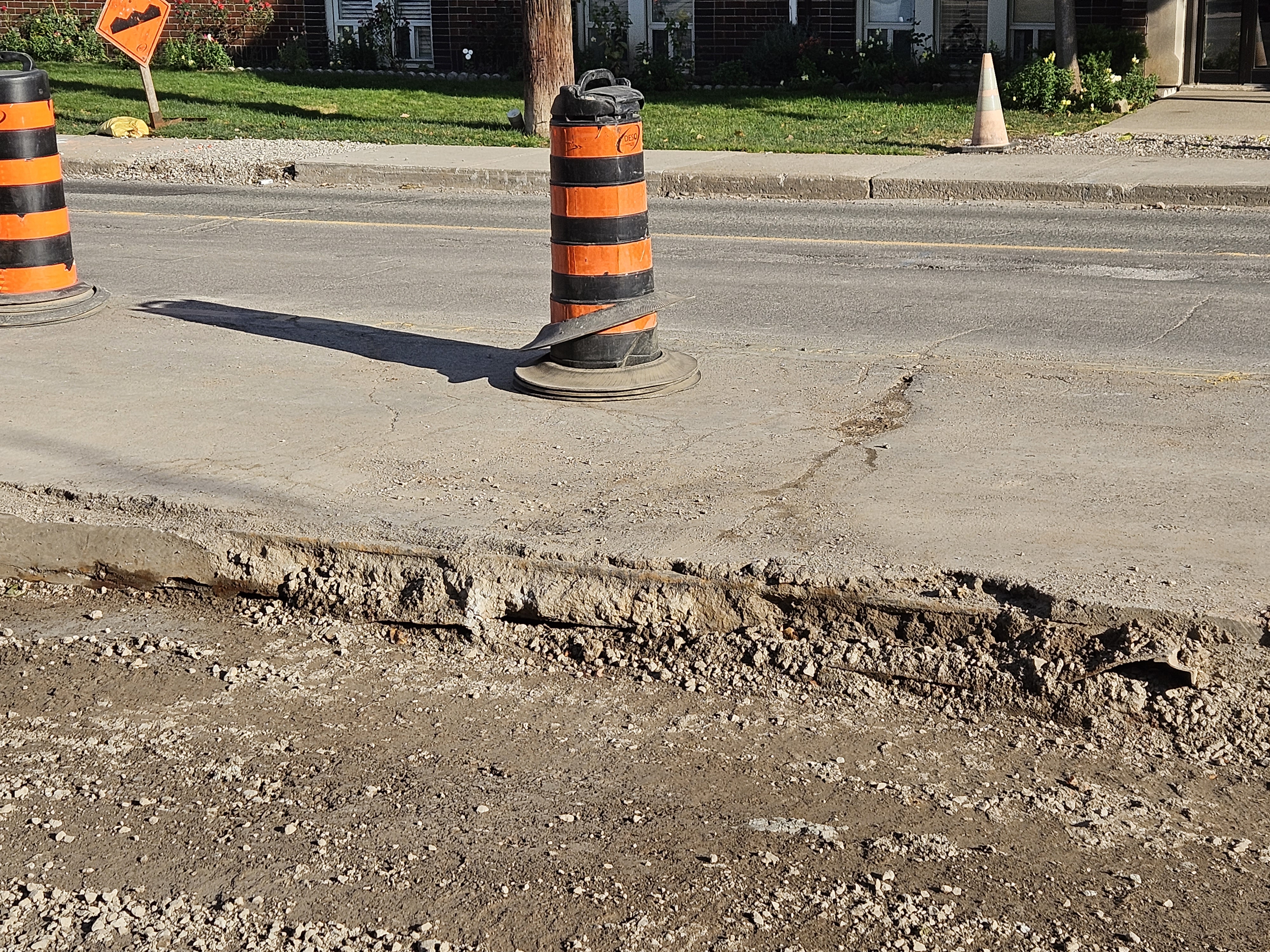
Streetcar tracks at Sherman & Vineland uncovered during preliminary construction for the Hamilton LRT, November 12, 2023.
Mills, John M. Cataract Traction: The Railways of HamiltonCanadian Traction Series Vol 2, Toronto, 1971
Schwarzkopf, Tom Tires and Wires: The story of electric trolley coaches serving sixteen Canadian cities. Pickering, Ontario: Railfare DC Books, 2018
Hamilton Spectator
"Committee Will Consider Street Railway Purchase" June 6, 1945, pg 7
"Members Seek Railway Price" June 13, 1945, pg 13
"City Can Purchase Street Railway For $2,000,000" June 29, 1945, pg 7
"Engage Expert for Appraisal" August 16, 1945, pg 31
"Place Value of $1,202,315 on Street Railway System" October 18, 1945, pg 7
"City Council to Consider Street Railway Offer Monday" November 2, 1945, pg 7
"Hamilton Voters Approve Shorter Week for Firemen" December 4, 1945, pg 13
"Declares Years Required to revamp Street Railway" February 15, 1946, pg 15
"August 31 is Deadline set for Trolley Line Purchase" April 15, 1946, pg 7
"Citizens Will Not Vote on Street Railway Ownership" April 30, 1946, pg 15
"Local Group Buys Railway - Hydro Disposes of Car System for $1,400,000" July 12, 1946, pg 1
"Add 18 Busses to System as New Owners Take Over" September 16, 1946, pg 7
"Are Removing Tracks from Locke St" October 4, 1946, pg 7
"Busses Will In Time Displace Hamilton Street Cars" October 8, 1946, pg 7
"To Remove South-West Car Tracks" May 1, 1947, pg 7
"Start Work Removing Car Tracks from Aberdeen Avenue - Busses Replace Trolley Service" July 21, 1947, pg 7
"Street railway Problems Placed Before Rotarians" February 27, 1948, pg 31
"Will Start Improving Street Car Tracks In Few Weeks" May 15, 1948, pg 7
"Corner Busy Spot As Road Repaired" May 28 1948, pg 14
"Buses In Spring May Replace Cars On Westdale Run" June 2, 1948, pg 31
"Engineers Told Of Street-Car Problems Here" October 22, 1948, pg 47
"Plan trolley Busses for Hamilton System" February 16, 1949, pg 7
"Clause In Railway Act Limits Tram Fares To Five Cents" May 12, 1949, pg 7
"Municipal Board Approves Latest Fare Proposal" May 18, 1949, pg 18
"Increased Street Car, Bus Fares In Effect 5 a.m Friday - Rates in Force Until June, '50" May 19, 1949, pg 7
"Tracks South of Gore Proposed to Form Loop" May 25, 1949, pg 7
"Hughson Street Said Too Narrow" May 30, 1949, pg 28
"Gore Park Track Plan Abandoned" June 7, 1949, pg 31
"End of an Era - King West Tram Makes Final Run" August 3, 1949, pg 8
"Better Service Promised - Buses to Replace Trams on King Street West Run" August 4, 1949, pg 7
"Start King West Work on Monday" August 4, 1949, pg 30
"Battle of Busses to be Resumed on Wednesday" August 15, 1949, pg 21
"Ask Fire Hall South of Main In Frame Area" August 17, 1949, pg 8
"Street Railway Balks Council on Sterling Run" September 9, 1949, pg 8
"Repaving work on King Street Proceeds Well" September 21, 1949, pg 35
"Merchants Say Paving Street Hurts Business" October 18, 1949, pg 7
"King West Ready in Three Days" November 8, 1949, pg 8
"Cannon Trolley Project to cost About $650,000" February 17, 1950, pg 7
"Trolley Buses May Start Operating Next August" April 13, 1950, pg 7
"Municipal Board Permits Buses to Run On Sterling Street - Declares Service Necessary One" April 15, 1950, pg 7
"City's First Trolley Bus At Station" April 17, 1950, pg 7
"City Puts Men To Work On Cannon Street Widening" June 1, 1950, pg 7
"Finish Cannon Widening To Kenilworth By Sept 1" July 15, 1950, pg 7
"Erect Last H.S.R. Poles" August 23, 1950, pg 7
"Local Five Strike Delays Arrival Of Trolley Bus Service - Lack of Paving Crews At Fault" August 28, 1950, pg 7
"H.S.R. Wants to Operate Buses Over Burlington Route" September 6, 1950, pg 34
"Trolley Buses To Make Debut Here This Week" October 24, 1950, pg 7
"First Driver - On Trial Run" October 25, 1950, pg 7
"Burlington Street Route Trolleys Will Be Removed - Make Switch Day Before Trolley Buses Operate" October 27, 1950, pg 7
"Delay Operation of Trolley Buses" November 14, 1950, pg 36
"Trolley Buses Run Monday But Not For Passengers" November 30, 1950, pg 33
"Mayor Formally Opens New Trolley Bus Route" December 9, 1950, pg 7
"Trolley Buses Prove Popular With Students" December 11, 1950, pg 7
"Franchise Tax Issue Avoided At Inaugural" January 2, 1951, pg 22
"Operate Diesel Buses On Belt Line If Franchise Tax Cancelled - Trolley Buses Proposed Later" January 11, 1951, pg 7
"Council Abolishes Tax H.S.R. To Improve Service" January 30, 1951, pg 17
"Hope Belt Line To Have Trolley Buses This Year" February 20, 1951, pg 14
"Board Approves Trolley Buses on Belt Line" February 22, 1951, pg 32
"Many To Take One-way Ride on Old Trams" April 2, 1951, pg 25
"Street Railway Denied New Buses For Belt Line" April 4, 1951, pg 7
"Form Guard of Honor For Trams" April 5, 1951, pg 7
"Destination: Scrap Heap - Noisy, Swaying Trams Leave Hamilton Scene" April 6, 1951, pg 37
"Starts Last Trip-Starts First Trip" April 6, 1951, pg 42
"Extra Checkers Posted To Aid Traffic Speed Up - Start Taking Down Trolley Wires" April 9, 1951, pg 7
"Down they Go - Up They Come" April 13, 1951, pg 8
"To Scrapheap - Discarded Street Cars Are Sold" April 25, 1951, pg 7
"Study Limiting South of Gore To Bus Traffic" May 12, 1951, pg 7
"Finish King Street East Surfacing In Six Weeks" May 31, 1951, pg 7
"Plan Change For Traffic On King E." June 19, 1951, pg 7
"Mayor Reopens King Street East" June 21, 1951, pg 7
"Pavement Work Almost Finished On King Street" July 24, 1951, pg 7
"Will Convert Bus Route October 11" August 9, 1951, pg 7
"Work Proceeds On Schedule In Trolley Change" August 9, 1951, pg 30
"New Bus Scheme Will Speed Up City Transport" September 6, 1951, pg 7
"Street Railway Sets New Record For Royal Visit" October 15, 1951, pg 8
"Testing Buses on King-Barton" October 16, 1951, pg 8
"Traffic Slowed As City Speeds To Finish Jobs" October 20, 1951, pg 8
"New Trolley Bus Route Starts Here Tomorrow" October 23, 1951, pg 7
"Gasolene Buses To Augment Trolleys In Rush Hour - New Service Started On King-Barton" October 24, 1951, pg 7
"Mountain Trolley Bus Routes Set" November 18, 1954, pg 38